

Initial Severity and Antidepressant Benefits: A Meta-Analysis of Data Submitted to the Food and Drug Administration
Open accessThe DOI matches its Crossref record; 49 of the 49 references it cites were found in a registry or an index.
Abstract
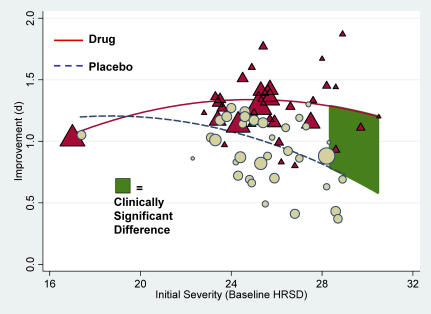
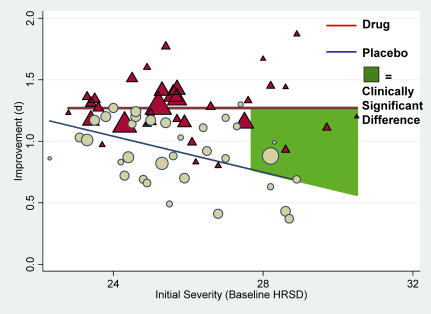
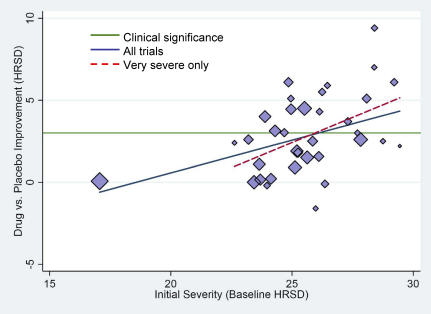
BACKGROUND: Meta-analyses of antidepressant medications have reported only modest benefits over placebo treatment, and when unpublished trial data are included, the benefit falls below accepted criteria for clinical significance. Yet, the efficacy of the antidepressants may also depend on the severity of initial depression scores. The purpose of this analysis is to establish the relation of baseline severity and antidepressant efficacy using a relevant dataset of published and unpublished clinical trials. METHODS AND FINDINGS: We obtained data on all clinical trials submitted to the US Food and Drug Administration (FDA) for the licensing of the four new-generation antidepressants for which full datasets were available. We then used meta-analytic techniques to assess linear and quadratic effects of initial severity on improvement scores for drug and placebo groups and on drug-placebo difference scores. Drug-placebo differences increased as a function of initial severity, rising from virtually no difference at moderate levels of initial depression to a relatively small difference for patients with very severe depression, reaching conventional criteria for clinical significance only for patients at the upper end of the very severely depressed category. Meta-regression analyses indicated that the relation of baseline severity and improvement was curvilinear in drug groups and showed a strong, negative linear component in placebo groups. CONCLUSIONS: Drug-placebo differences in antidepressant efficacy increase as a function of baseline severity, but are relatively small even for severely depressed patients. The relationship between initial severity and antidepressant efficacy is attributable to decreased responsiveness to placebo among very severely depressed patients, rather than to increased responsiveness to medication.
Overview
The claims and statistics of this paper haven’t been checked yet.
Free: it reads the open-access text and checks the first 5 claims that cite a source we can check. Create a free account to check every claim.
Integrity signals
Registry
Cites
Statistics
Figures
Verification
Claims the paper makes
The claims and statistics of this paper haven’t been checked yet.
Free: it reads the open-access text and checks the first 5 claims that cite a source we can check. Create a free account to check every claim.
Claims other papers make about this one
Each is checked against this paper’s own text: does it say what the citing paper says it does?
The source backs part of the claim, not all of it — or backs it for a different population, condition or comparison.
In the citing paper
“Individual-level meta-analyses have found a direct relationship between the magnitude of depressive symptoms and the effectiveness of antidepressants.8–10”
From Comparative effectiveness of exercise, antidepressants and their combination in treating non-severe depression: a systematic review and network meta-analysis of randomised controlled trials (2022) · cites this paper as [9]
Experimental — accuracy not yet measuredThe cited source says what the claim attributes to it.
In the citing paper
“An understanding of users’ own experiences of antidepressant use is increasingly important in the context of growing doubts about the effectiveness of antidepressant treatment [5, 26], concerns about side effects [27] and withdrawal effects [28].”
From ‘In my life antidepressants have been…’: a qualitative analysis of users’ diverse experiences with antidepressants (2016) · cites this paper as [5]
In the citing paper
“In this study, 84 % of participants in this study answered in the affirmative to a question about whether they felt antidepressants had reduced their depression, a number well above that suggested by efficacy studies”
From ‘In my life antidepressants have been…’: a qualitative analysis of users’ diverse experiences with antidepressants (2016) · cites this paper as [5]
In the citing paper
“Other studies have found support for increasing benefit with increasing severity of depression,21 but the effects size even for patients with the most severe depression was still minimal.21”
From Should antidepressants be used for major depressive disorder? (2020) · cites this paper as [21]
Self-check
Percentages, sums and reported differences re-computed from the paper’s own numbers.
The self-check needs the paper’s full text.
Citations
Cites
Measuring inconsistency in meta-analyses
Higgins, J. P. T., Thompson, S. G., Deeks, J. J., & Altman, D. G. (2003) · BMJ · doi:10.1136/bmj.327.7414.557 · Cited by 63,139 · cited 1×
“Both Q [15] and I2 [ 16 ] indices were used to assess”
MethodStatistical Methods for Meta-Analysis
Wasserman, S., Hedges, L. V., & Olkin, I. (1988) · Journal of Educational Statistics · doi:10.2307/1164953 · Cited by 10,326
Statistical Methods for Meta-Analysis.
Freeman, P. R., Hedges, L. V., & Olkin, I. (1986) · Biometrics · doi:10.2307/2531069 · Cited by 4,784
Meta-analysis in social research
(1982) · Evaluation and Program Planning · doi:10.1016/0149-7189(82)90011-8 · Cited by 3,853 · cited 1×
“Finally, to show directly the amount of improvement for each study’s drug group against its placebo group, we calculated the difference between the change for the drug group minus the change for the placebo group, leaving the difference in raw units and deriving its analytic weight from its standard error [11,12,20].”
MethodImputing missing standard deviations in meta-analyses can provide accurate results
Furukawa, T. A., Barbui, C., Cipriani, A., Brambilla, P., & Watanabe, N. (2006) · Journal of Clinical Epidemiology · doi:10.1016/j.jclinepi.2005.06.006 · Cited by 1,568 · cited 1×
“s were known for 28 groups, could be calculated from other inferential statistics in nine comparisons (18 groups), and were imputed in 12 comparisons (24 groups) (47.38%) [”
InfluentialPublication bias in meta-analysis its causes and consequences
Thornton, A. (2000) · Journal of Clinical Epidemiology · doi:10.1016/s0895-4356(99)00161-4 · Cited by 1,291 · cited 1×
“Examination of publication bias often relies on inspections of effect sizes in relation to sample size (or inverse variance) [22].”
BackgroundThe power of statistical tests for moderators in meta-analysis
Hedges, L. V., & Pigott, T. D. (2004) · Psychological Methods · doi:10.1037/1082-989x.9.4.426 · Cited by 672 · cited 1×
“A last, mixedeffects analysis for the amount of change used a randomeffects constant along with fixed-effects moderator dimensions; these models provide more conservative assessments of moderation [19].”
MethodMelander, H., Ahlqvist-Rastad, J., Meijer, G., & Beermann, B. (2003) · BMJ · doi:10.1136/bmj.326.7400.1171 · Cited by 635 · cited 2×
“In the case of antidepressant medication, this limitation has been found to result in considerable reporting bias characterized by multiple publication, selective publication, and selective reporting in studies sponsored by pharmaceutical companies [5].”
BackgroundPlacebo Theory, Research , and Mechanisms
WHITE, L. E., Tursky, B., & SCHWARTZ, G. E. R. (1985) · Guilford Press eBooks · Cited by 485
Khan, A., Leventhal, R. M., Khan, S. R., & Brown, W. A. (2002) · Journal of Clinical Psychopharmacology · doi:10.1097/00004714-200202000-00007 · Cited by 456 · cited 2×
“Similar to prior reports [3,4], this analysis of U.”
BackgroundResult
Research works printed but not linked: 3
- Lipsey MW Wilson DB 2001 Practical meta-analysis. Applied social research methods Volume 49. Thousand Oaks (California) Sage Publications 247
- Evans FJ 1974 The placebo response in pain reduction Adv Neurol 4 289 296
- Fabre LF Crimson L 1985 Efficacy of fluoxetine in outpatients with major depression Curr Ther Res Clin Exp 37 115 123
Cited by
Items 501–600 of 1,013
Adler, U. C., Paiva, N. M. P., César, A., Adler, M. S., Molina, A., Padula, A. E. M., & Calil, H. M. (2009) · Evidence-based Complementary and Alternative Medicine · doi:10.1093/ecam/nep114 · Cited by 68
“Nevertheless, it also has to be taken into consideration that the antidepressant-placebo difference seems to be smaller in the trials aiming at mild to moderate depression (40,41) and the present sample consisted of patients suffering from moderate to severe depression.”
BackgroundDecreased functional connectivity to posterior cingulate cortex in major depressive disorder
Yang, R., Gao, C., Wu, X., Yang, J., Li, S., & Cheng, H. (2016) · Psychiatry Research Neuroimaging · doi:10.1016/j.pscychresns.2016.07.010 · Cited by 59
“Interestingly, the FC increase showed a positive correlation with the Hamilton depression score, suggesting that the treatment was more effective on patients with more severe conditions (Kirsch et al., 2008).”
Gitlin, L. N., Harris, L. F., McCoy, M. C., Chernett, N. L., Pizzi, L. T., Jutkowitz, E., Hess, E., & Hauck, W. W. (2013) · Annals of Internal Medicine · doi:10.7326/0003-4819-159-4-201308200-00005 · Cited by 54
Assessing the overuse of medicines
Busfield, J. (2014) · Social Science & Medicine · doi:10.1016/j.socscimed.2014.10.061 · Cited by 66
Raz, A., Campbell, N., Guindi, D., Holcroft, C., Déry, C., & Cukier, O. (2011) · The Canadian Journal of Psychiatry · doi:10.1177/070674371105600403 · Cited by 64
Efficacy of escitalopram compared to citalopram: a meta-analysis
Montgomery, S., Hansen, T., & Kasper, S. (2011) · The International Journal of Neuropsychopharmacology · doi:10.1017/s146114571000115x · Cited by 52
“8 (Kirsch et al. 2008).”
Molecular Autopsy for Sudden Unexpected Death
Torkamani, A., Muse, E. D., Spencer, E. G., Rueda, M., Wagner, G. N., Lucas, J. R., & Topol, E. J. (2016) · JAMA · doi:10.1001/jama.2016.11445 · Cited by 54
The Emperor’s New Drugs: Medication and Placebo in the Treatment of Depression
Kirsch, I. (2014) · Handbook of experimental pharmacology · doi:10.1007/978-3-662-44519-8_16 · Cited by 63
Self-citationLako, I. M., Taxis, K., Bruggeman, R., Knegtering, H., Burger, H., Wiersma, D., & Slooff, C. J. (2012) · European Psychiatry · doi:10.1016/j.eurpsy.2010.10.007 · Cited by 53
Hegerl, U., & Mergl, R. (2010) · Journal of Psychopharmacology · doi:10.1177/0269881109106930 · Cited by 56
“For example, based on this definition of clinical relevance, the conclusion of a recent meta-analysis on antidepressants was that these drugs are not clinically relevant even in patients with moderate and severe depression and should only be used for patients with severe depression (Kirsch et al., 2008).”
BackgroundMethodInfluentialLieb, K., Dreimüller, N., Wagner, S., Schlicht, K., Falter, T., Neyazi, A., Müller-Engling, L., Bleich, S., Tadić, A., & Frieling, H. (2018) · Frontiers in Psychiatry · doi:10.3389/fpsyt.2018.00511 · Cited by 54
“Although depression severity is one important factor associated with the response to antidepressants, with patients with more severe depression showing a higher likelihood to become responders (37), it is unclear how depression severity interacts with epigenetic modifications of the BDNF promoter to modulate treatment…”
BackgroundPrimum non nocere. The case for a critical approach to global mental health
Bracken, P., Giller, J., & Summerfield, D. (2016) · Epidemiology and Psychiatric Sciences · doi:10.1017/s2045796016000494 · Cited by 53
“Two widely reported meta-analyses have demonstrated that the greatest therapeutic benefit of anti-depressant drugs in drug trials is due to the placebo effect (Kirsch et al. 2008; Fournier et al. 2010).”
BackgroundEvidence-Based Applications of Combination Psychotherapy and Pharmacotherapy for Depression
Dunlop, B. W. (2016) · FOCUS The Journal of Lifelong Learning in Psychiatry · doi:10.1176/appi.focus.20150042 · Cited by 112
Muscat, S.-A., Hartelius, G., Crouch, C., & Morin, K. W. (2021) · Frontiers in Psychiatry · doi:10.3389/fpsyt.2021.710338 · Cited by 63
“Clinical trials have consistently revealed that the effectiveness of traditional antidepressants of all classes over and above placebo is small and falls well-below the recommended criteria for clinical effectiveness (3).”
BackgroundChen, S., Conwell, Y., Xue, J., Li, L., Zhao, T., Tang, W., Bogner, H. R., & Dong, H. (2022) · PLoS Medicine · doi:10.1371/journal.pmed.1004019 · Cited by 62
“Therefore, our study was amply powered for that outcome [38].”
Möller, H.-J., Bitter, I., Bobes, J., Fountoulakis, K., Höschl, C., & Kasper, S. (2012) · European Psychiatry · doi:10.1016/j.eurpsy.2011.08.002 · Cited by 53
“[87] were so far the only group questioning the clinically relevant efficacy of antidepressants and recommending instead alternative approaches like cognitive therapy as a conclusion of their study, although they did not study this subject in their investigation.”
BackgroundResultInfluentialThe Mistreatment of Major Depressive Disorder
Paris, J. (2014) · The Canadian Journal of Psychiatry · doi:10.1177/070674371405900306 · Cited by 62
Acupuncture for chronic pain and depression in primary care: a programme of research
MacPherson, H., Vickers, A. J., Bland, M., Torgerson, D. J., Corbett, M. S., Spackman, E., Saramago, P., Woods, B. S., Weatherly, H. L. A., Sculpher, M., et al. (2017) · Programme Grants for Applied Research · doi:10.3310/pgfar05030 · Cited by 71
Doleman, B., Sutton, A. J., Sherwin, M., Lund, J. N., & Williams, J. P. (2017) · Anesthesia & Analgesia · doi:10.1213/ane.0000000000002237 · Cited by 57
The Shared Decision-Making Process in the Pharmacological Management of Depression
Hopwood, M. (2019) · Patient · doi:10.1007/s40271-019-00383-w · Cited by 57
“Following a stepped approach in depression care, the physician may start prescribing nonpharmacological therapies [2, 3] before proceeding to pharmacological treatments that can effectively mitigate the burden of depression, though this approach is sometimes subject to controversy [4, 5].”
BackgroundMultidisciplinary intervention in the treatment of mixed anxiety and depression disorder
Clemente-Suárez, V. J. (2020) · Physiology & Behavior · doi:10.1016/j.physbeh.2020.112858 · Cited by 51
Möller, H. J. (2008) · European Archives of Psychiatry and Clinical Neuroscience · doi:10.1007/s00406-008-0836-5 · Cited by 53
Froud, R., Eldridge, S., Lall, R., & Underwood, M. (2009) · BMC Medical Research Methodology · doi:10.1186/1471-2288-9-35 · Cited by 53
Depression in adults: drug and physical treatments.
Barbui, C., Butler, R., Cipriani, A., Geddes, J. R., & Hatcher, S. (2007) · Europe PMC (PubMed Central) · Cited by 56
Diagnosing and treating premenstrual syndrome in five western nations
Weisz, G., & Knaapen, L. (2009) · Social Science & Medicine · doi:10.1016/j.socscimed.2009.01.036 · Cited by 55
Hegarty, K. L., Gunn, J. M., Blashki, G. A., Griffiths, F. E., Dowell, T., & Kendrick, T. (2009) · British Journal of General Practice · doi:10.3399/bjgp09x420581 · Cited by 53
“There is insufficient evidence to support decisions about the use of antidepressants in general practice for patients who do not meet the criteria for major depressive disorders — a common situation in general practice.(16) Additionally, trials usually exclude people with significant psychiatric and physical comorbidi…”
BackgroundMindful learning: Why attention matters in education
Hassed, C. S. (2016) · International Journal of School & Educational Psychology · doi:10.1080/21683603.2016.1130564 · Cited by 82
“In fact, according to recent reviews, antidepressants are no better than placebo for mild to moderate depression and only produce a relatively small effect over and above placebo even for severe depression (Fournier et al., 2010; Kirsch et al., 2008).”
BackgroundMadhoo, M., & Levine, S. Z. (2016) · European Neuropsychopharmacology · doi:10.1016/j.euroneuro.2016.09.368 · Cited by 58
Hengartner, M. P. (2017) · Frontiers in Psychiatry · doi:10.3389/fpsyt.2017.00275 · Cited by 52
“As concerns treatment recommendations, my reading of the literature is that some patients may benefit from acute pharmacotherapy, but on average clinical benefits are debatable and should be weighed against adverse side effects (38, 39, 51).”
BackgroundExploring the Potential Antidepressant Mechanisms of TNFα Antagonists
Brymer, K. J., Romay-Tallón, R., Allen, J., Caruncho, H. J., & Kalynchuk, L. E. (2019) · Frontiers in Neuroscience · doi:10.3389/fnins.2019.00098 · Cited by 58
Lieblich, S. M., Castle, D. J., Pantelis, C., Hopwood, M., Young, A. H., & Everall, I. P. (2015) · BJPsych Open · doi:10.1192/bjpo.bp.115.000786 · Cited by 52
Lever-van Milligen, B. A., Verhoeven, J. E., Schmaal, L., van Velzen, L. S., Révész, D., Black, C. N., Han, L. K. M., Horsfall, M., Batelaan, N. M., van Balkom, A. J. L. M., et al. (2019) · BMC Psychiatry · doi:10.1186/s12888-019-2404-0 · Cited by 51
Blackmore, C., Tantam, D., Parry, G. D., & Chambers, E. (2012) · Group Analysis · doi:10.1177/0533316411424356 · Cited by 58
“…also point out the shortcomings of the evaluations of drugs themselves in psychological treatments that have been biased by selective reporting (Kirsch et al., 2008), some would argue driven by companies or special interest groups like psychiatrists who sought to increase their dominance or…”
BackgroundBaghai, T. C., Blier, P., Baldwin, D. S., Bauer, M., Goodwin, G. M., Fountoulakis, K. Ν., Kasper, S. F., Leonard, B. E., Malt, U. F., Stein, D. J., et al. (2011) · European Archives of Psychiatry and Clinical Neuroscience · doi:10.1007/s00406-011-0259-6 · Cited by 57
“stated that drug/placebo differences in efficacy trials increased as a function of baseline severity of the disorder of the included patients [239].”
BackgroundThe sweetest pill to swallow: How patient neurobiology can be harnessed to maximise placebo effects
Jubb, J., & Bensing, J. M. (2013) · Neuroscience & Biobehavioral Reviews · doi:10.1016/j.neubiorev.2013.09.006 · Cited by 63
Webb, C. A., DeRubeis, R. J., Dimidjian, S., Hollon, S. D., Amsterdam, J. D., & Shelton, R. C. (2012) · Journal of Consulting and Clinical Psychology · doi:10.1037/a0027663 · Cited by 51
“…entering treatment with lower depression severity, there are at most minor differences in symptom change between active treatments and placebo, both in pharmacotherapy (Fournier et al., 2010; Kirsch et al., 2008) and psychotherapy (Driessen, Cuijpers, Hollon, & Dekker, 2010) outcome studies.”
Meister, R., Abbas, M., Antel, J., Peters, T., Pan, Y., Bingel, U., Nestoriuc, Y., & Hebebrand, J. (2018) · European Child & Adolescent Psychiatry · doi:10.1007/s00787-018-1244-7 · Cited by 55
Chen, C., & Shan, W. (2019) · Psychiatry Research · doi:10.1016/j.psychres.2019.112595 · Cited by 49
Elucidating the Possible Role of FoxO in Depression
Rana, T., Behl, T., Sehgal, A., Mehta, V., Singh, S., Sharma, N., & BUNGAU, S. G. (2021) · Neurochemical Research · doi:10.1007/s11064-021-03364-4 · Cited by 52
Weisskopf, E., Fumeaux, C. J. F., Graz, M. B., Harari, M. M., Tolsa, J., Claris, O., Vial, Y., Eap, C. B., Csajka, C., & Panchaud, A. (2015) · Expert Opinion on Drug Safety · doi:10.1517/14740338.2015.997708 · Cited by 55
“Effectiveness of SSRI antidepressants in the general population [26,27] 1 Moderate and correlated to disease severity Large number of randomized controlled trials Effectiveness of SSRI antidepressants in pregnant women [38-40] 3 Probably moderate Very few cohort studies investigating the risk of relapse during pregnan…”
BackgroundResultCommittee for Medicinal Products for Human Use (CHMP) assessment on efficacy of antidepressants
Broich, K. (2009) · European Neuropsychopharmacology · doi:10.1016/j.euroneuro.2009.01.012 · Cited by 53
“Focusing only on statistically significant mean differences versus placebo in changes in rating scales such as the Hamilton Depression Rating Scale, as is done in the metaanalysis of Kirsch et al. (2008), is not an adequate basis for the evaluation of clinical relevance and is not sufficient for the approval of an ant…”
BackgroundMethodSinyor, M., Rezmovitz, J., & Zaretsky, A. E. (2016) · BMJ · doi:10.1136/bmj.i1617 · Cited by 59
de Vries, Y. A., de Jonge, P., van den Heuvel, E., Turner, E. H., & Roest, A. M. (2016) · British Journal of Psychiatry · doi:10.1192/bjp.bp.115.173450 · Cited by 50
Angelucci, M., & Bennett, D. (2023) · American Economic Review · doi:10.1257/aer.20210687 · Cited by 81
Büttner, M., Ježová, D., Greene, B., Konrad, C., Kircher, T. T. J., & Murck, H. (2015) · Journal of Psychiatric Research · doi:10.1016/j.jpsychires.2015.04.012 · Cited by 53
Bishop, F. L., Jacobson, E., Shaw, J. R., & Kaptchuk, T. J. (2012) · Social Science & Medicine · doi:10.1016/j.socscimed.2011.11.020 · Cited by 53
“For certain conditions including IBS (Ford & Moayyedi, 2010), depression (Kirsch et al., 2008), osteoarthritic pain (Zhang et al., 2008), and insomina (Bélanger et al., 2007), an understanding that placebos can produce specific beneficial effects is more consistent with the scientific literature on…”
NHG-Standaard Depressie (tweede herziening)
van Weel-Baumgarten, E. M., van Gelderen, G., Grundmeijer, H. G. L. M., Licht-Strunk, E., van Marwijk, H., van Rijswijk, E., Tjaden, B., Verduijn, M. M., Wiersma, T., Burgers, J. S., et al. (2012) · Huisarts en Wetenschap · Cited by 67
Corbett, B. F., Luz, S., Arner, J., Pearson-Leary, J., Sengupta, A., Taylor, D. M., Gehrman, P., Ross, R. J. M., & Bhatnagar, S. (2019) · Nature Communications · doi:10.1038/s41467-019-10904-8 · Cited by 58
Read, J., & Harper, D. J. (2020) · Journal of Constructivist Psychology · doi:10.1080/10720537.2020.1773356 · Cited by 61
Smith, R., Allen, J. J. B., Thayer, J. F., & Lane, R. D. (2015) · Biological Psychology · doi:10.1016/j.biopsycho.2015.03.007 · Cited by 49
History, background, concepts and current use of comedication and polypharmacy in psychiatry
Möller, H. ‐., Seemüller, F., Schennach-Wolff, R., Stübner, S., Rüther, E., & Grohmann, R. (2013) · The International Journal of Neuropsychopharmacology · doi:10.1017/s1461145713000837 · Cited by 57
“However, the efficacy of modern ADs has been criticised as too low regarding clinical relevance by some authors (Kirsch et al., 2008), a criticism that can be rejected when carefully reviewing all data (Möller, 2008b; Fountoulakis and Möller, 2011).”
BackgroundTrivedi, M. H., South, C. C., Jha, M. K., Rush, A. J., Cao, J., Kurian, B. T., Phillips, M. L., Pizzagalli, D. A., Trombello, J. M., Oquendo, M. A., et al. (2018) · Psychotherapy and Psychosomatics · doi:10.1159/000491093 · Cited by 50
Borud, E. K., Alræk, T., White, A. R., & Grimsgaard, S. (2010) · Menopause The Journal of The North American Menopause Society · doi:10.1097/gme.0b013e3181c07275 · Cited by 54
“Factors that may affect the placebo response in clinical studies include the consent process, increased therapeutic attention and surveillance, and increased self-surveillance.(15,16)”
BackgroundStaying on, and coming off, antidepressants: The experiences of 752 UK adults
Read, J., Gee, A., Diggle, J., & Butler, H. (2019) · Addictive Behaviors · doi:10.1016/j.addbeh.2018.08.021 · Cited by 48
The Limits of Evidence-Based Medicine in Psychiatry
Thomas, P., Bracken, P. J., & Timimi, S. B. (2012) · Project Muse (Johns Hopkins University) · Cited by 59
Mrazek, D. A., Biernacka, J. M., McAlpine, D. E., Benitez, J., Karpyak, V. M., Williams, M. D., Hall-Flavin, D. K., Netzel, P. J., Passov, V., Rohland, B. M., et al. (2014) · Journal of Clinical Psychopharmacology · doi:10.1097/jcp.0000000000000099 · Cited by 47
Popper, C. W. (2014) · Child and Adolescent Psychiatric Clinics of North America · doi:10.1016/j.chc.2014.04.001 · Cited by 83
Tadić, A., Wachtlin, D., Berger, T., Braus, D. F., van Calker, D., Dahmen, N., Dreimüller, N., Engel, A., Gorbulev, S., Helmreich, I., et al. (2016) · European Neuropsychopharmacology · doi:10.1016/j.euroneuro.2016.02.003 · Cited by 50
“On the one hand, the cut-off of Z18 points on the HAMD-17 scale is most often used in other clinical trials and assures the inclusion of at least moderately depressed patients; on the other hand, studies showed that the superiority of antidepressant treatment over placebo increases as a function of baseline severity (…”
MethodGardarsdottir, H., Egberts, T. C., Stolker, J. J., & Heerdink, E. R. (2009) · American Journal of Epidemiology · doi:10.1093/aje/kwp142 · Cited by 47
McGlone, F. P., Moberg, K. U., Norholt, H., Eggart, M., & Müller-Oerlinghausen, B. (2024) · Frontiers in Psychiatry · doi:10.3389/fpsyt.2024.1390673 · Cited by 52
Castelo, N., Kushlev, K., Ward, A. F., Esterman, M. S., & Reiner, P. B. (2025) · PNAS Nexus · doi:10.1093/pnasnexus/pgaf017 · Cited by 71
“The observed effect of the intervention on depression symptoms ( d z = 0.56) was larger than the meta-analytic effect of antidepressants (29) and similar to that of cognitive behavioral therapy (30).”
InfluentialDepicting estimates using the intercept in meta‐regression models: The moving constant technique
Johnson, B. T., & Huedo‐Medina, T. B. (2011) · Research Synthesis Methods · doi:10.1002/jrsm.49 · Cited by 48
Self-citationPlacebo and nocebo responses in drug trials of epilepsy
Zaccara, G., Giovannelli, F., & Schmidt, D. (2015) · Epilepsy & Behavior · doi:10.1016/j.yebeh.2014.12.004 · Cited by 51
“has suggested that the effect size of placebo is virtually always around 75% of that seen with active drug, regardless of medication class [23].”
BackgroundMechanisms of the placebo effect in pain and psychiatric disorders
Holmes, R. D., Tiwari, A. K., & Kennedy, J. L. (2016) · The Pharmacogenomics Journal · doi:10.1038/tpj.2016.15 · Cited by 58
Guo, L., Kong, Z., & Zhang, Y. (2019) · International Journal of Environmental Research and Public Health · doi:10.3390/ijerph16050826 · Cited by 46
“, psychotherapy, pharmaceutics (antidepressants), or a combination of these two first-line therapies) [3].”
BackgroundDepression in post-traumatic stress disorder
Radell, M. L., Hamza, E. A., & Moustafa, A. A. (2020) · Reviews in the Neurosciences · doi:10.1515/revneuro-2020-0006 · Cited by 60
“…2019), and was put into question after a metaanalysis conducted on data from clinical trials suggested that for cases with moderate depression, these drugs appear to show a statistically significant but relatively small benefit over treatment with placebo (Kirsch 2009; Kirsch et al. 2008).”
BackgroundGambrill, E. D. (2013) · Research on Social Work Practice · doi:10.1177/1049731513499411 · Cited by 65
Feiger, A. D., Tourian, K. A., Rosas, G. R., & Padmanabhan, S. K. (2009) · CNS Spectrums · doi:10.1017/s1092852900020046 · Cited by 48
“// 22 ( 19 ) 24 (21) 0.66 * Data presented as adjusted mean change from baseline (standard error) unless otherwise indicated.”
BackgroundInfluentialHjorth, O. R., Frick, A., Gingnell, M., Hoppe, J. M., Faria, V., Hultberg, S., Alaie, I., Månsson, K. N. T., Rosén, J., Reis, M., et al. (2021) · Translational Psychiatry · doi:10.1038/s41398-021-01682-3 · Cited by 46
Challenging Received Wisdom: Antidepressants and the Placebo Effect
Kirsch, I. (2020) · McGill Journal of Medicine · doi:10.26443/mjm.v11i2.571 · Cited by 45
Self-citationMeta-analysis: Fact or fiction? How to interpret meta-analyses
Huf, W., Kalcher, K., Pail, G., Friedrich, M.-E., Filzmoser, P., & Kasper, S. (2011) · The World Journal of Biological Psychiatry · doi:10.3109/15622975.2010.551544 · Cited by 48
“Indeed, Figures 2 and 3 demonstrate that an inappropriate level of aggregation can obfuscate trends of subgroups in the data and thus severely bias overall results, as in the publication of Kirsch et al. (2008).”
BackgroundMethodResultInfluentialPatient-Centered Perspectives on Antidepressant Use: A Narrative Review
Gibson, K., Cartwright, C., & Read, J. (2014) · International Journal of Mental Health · doi:10.2753/imh0020-7411430105 · Cited by 46
Liebert, R. J., & Gavey, N. (2009) · Social Science & Medicine · doi:10.1016/j.socscimed.2009.02.047 · Cited by 56
“In other words, as Kramer (2004) described, risks of suicidality from SSRIs are best conceptualised as simply a ‘‘matter of scale’’.”
BackgroundBarth, M., Kriston, L., Klostermann, S., Barbui, C., Cipriani, A., & Linde, K. (2016) · British Journal of Psychiatry · doi:10.1192/bjp.bp.114.150136 · Cited by 46
Placebo responses and placebo effects in functional bowel disorders
Enck, P., Horing, B., Weimer, K., & Klosterhalfen, S. (2012) · European Journal of Gastroenterology & Hepatology · doi:10.1097/meg.0b013e32834bb951 · Cited by 45
Zimmerman, M. A., Balling, C. E., Chelminski, I., & Dalrymple, K. L. (2019) · Psychotherapy and Psychosomatics · doi:10.1159/000499917 · Cited by 49
Late life depression and incident activity limitations: Influence of gender and symptom severity
Carrière, I., Gutierrez, L. A., Pérès, K., Berr, C., Barberger‐Gateau, P., Ritchie, K. A., & Ancelin, M. (2011) · Journal of Affective Disorders · doi:10.1016/j.jad.2011.03.020 · Cited by 51
“Most elderly people who have clinically significant depressive symptoms do not meet the full diagnostic criteria for major depression (Blazer, 2003; Rollman and Reynolds, 1999), however, sub-syndromal depression has both a high prevalence in later life and poor response to anti-depressant treatment (Kirsch et al., 200…”
BackgroundWork and Unemployment as Stressors
Lennon, M. C., & Limonic, L. (2009) · Cambridge University Press eBooks · doi:10.1017/cbo9780511984945.015 · Cited by 55
Verhaak, P. F. M., de Beurs, D., & Spreeuwenberg, P. (2019) · BMJ Open · doi:10.1136/bmjopen-2018-024051 · Cited by 45
Commercial Interests and the Erosion of Trust in Science
Pinto, M. F. (2020) · Philosophy of Science · doi:10.1086/710521 · Cited by 51
Merlo‐Pich, E., Alexander, R., D, M. F. M., & Goméni, R. (2010) · Clinical Pharmacology & Therapeutics · doi:10.1038/clpt.2010.159 · Cited by 46
Antidepressant Treatment for Postnatal Depression
Molyneaux, E., Trevillion, K., & Howard, L. M. (2015) · JAMA · doi:10.1001/jama.2015.2276 · Cited by 46
Prescribing of Psychotropic Medications to Patients Without a Psychiatric Diagnosis
Wiechers, I. R., LESLIE, D. L., & Rosenheck, R. A. (2013) · Psychiatric Services · doi:10.1176/appi.ps.201200557 · Cited by 45
Coverdale, J., McCullough, L. B., & Chervenak, F. A. (2008) · Obstetrics and Gynecology · doi:10.1097/aog.0b013e31818c2a27 · Cited by 52
Patients' view on screening for depression in general practice
Wittkampf, K. A., van Zwieten, M. C. B., Smits, F., Schene, A. H., Huyser, J., & van Weert, H. C. P. M. (2008) · Family Practice · doi:10.1093/fampra/cmn057 · Cited by 49
Taylor, S. J., Carnes, D., Homer, K., Pincus, T., Kahan, B. C., Hounsome, N., Eldridge, S., Spencer, A., Diaz-Ordaz, K., Rahman, A., et al. (2016) · Programme Grants for Applied Research · doi:10.3310/pgfar04140 · Cited by 44
Pryce, C. R., & Seifritz, E. (2010) · Psychoneuroendocrinology · doi:10.1016/j.psyneuen.2010.05.003 · Cited by 52
“6 compounds relative to placebo and existing reference-standard therapies (e.g. (Kirsch et al., 2008; Fournier et al., 2010).”
InfluentialFani, N., Ashraf, A., Afzal, N., Jawed, F., Kitayama, N., Reed, L., & Bremner, J. D. (2011) · Neuroscience Letters · doi:10.1016/j.neulet.2011.01.037 · Cited by 43
Walach, H., & Loef, M. (2015) · Journal of Clinical Epidemiology · doi:10.1016/j.jclinepi.2015.03.027 · Cited by 55
“[50] Kirsch I, Deacon BJ, Huedo-Medina TB, Scoboria A, Moore TJ, Johnson BT.”
BackgroundFann, J. R., Bombardier, C. H., Richards, J. S., Wilson, C. S., Heinemann, A. W., Warren, A. M., Brooks, L., McCullumsmith, C. B., Temkin, N. R., Warms, C., et al. (2015) · JAMA Psychiatry · doi:10.1001/jamapsychiatry.2014.2482 · Cited by 44
The antidepressant impact of minocycline in rodents: A systematic review and meta-analysis
Reis, D. J., Casteen, E. J., & Ilardi, S. S. (2019) · Scientific Reports · doi:10.1038/s41598-018-36507-9 · Cited by 49
Making the DSM-5: Concepts and Controversies
Paris, J., & Phillips, J. E. (2013) · Springer eBooks · doi:10.1007/978-1-4614-6504-1 · Cited by 76
Poluzzi, E., Piccinni, C. P., Sangiorgi, E., Clo, M., Tarricone, I., Menchetti, M., & Ponti, F. D. (2013) · European Journal of Clinical Pharmacology · doi:10.1007/s00228-013-1567-8 · Cited by 52
“AD drugs showed a clear superiority in comparison with placebo only in moderate to severe depression [11], while there is lack of “important advantage for antidepressants in individuals with sub-threshold or minor depression” [12].”
BackgroundSchutter, D. J. L. G., Martin Laman, D., van Honk, J., Vergouwen, A. C., & Frank Koerselman, G. (2009) · The International Journal of Neuropsychopharmacology · doi:10.1017/s1461145708009553 · Cited by 45
“Although the antidepressant efficacy of rTMS is comparable to several commercially available pharmacological agents (Kirsch et al., 2008), several suggestions have been made to further improve the effectiveness of rTMS.”
Biomarkers Predicting Treatment Outcome in Depression: What is Clinically Significant?
Uher, R., Tansey, K. E., Malki, K., & Perlis, R. H. (2012) · Pharmacogenomics · doi:10.2217/pgs.11.161 · Cited by 45
Read, J., Renton, J., Harrop, C., Geekie, J., & Dowrick, C. (2020) · Therapeutic Advances in Psychopharmacology · doi:10.1177/2045125320950124 · Cited by 43
“The most common theme was increasing social connectedness/reducing isolation (15), followed by reducing inequality (9), improving children’s wellbeing/safety (8) and improving work culture (7).”
Gibson, K., Cartwright, C., & Read, J. (2016) · BMC Psychiatry · doi:10.1186/s12888-016-0844-3 · Cited by 43
“sant treatment [5, 26], concerns about side effects [27]”
BackgroundSearching for unpublished data for Cochrane reviews: cross sectional study
Schroll, J. B., Bero, L., & Gotzsche, P. C. (2013) · BMJ · doi:10.1136/bmj.f2231 · Cited by 43
Gommoll, C. P., Greenberg, W. M., & Chen, C. (2014) · Journal of Drug Assessment · doi:10.3109/21556660.2014.884505 · Cited by 43
Social Factors in the Personality Disorders: Finding a Niche
Paris, J. (2020) · Cambridge University Press eBooks · doi:10.1017/9781108867542 · Cited by 43
Metadata
- Authors
- Kirsch, I., Deacon, B. J., Huedo-Medina, T. B., Scoboria, A., Moore, T. J., & Johnson, B. T.
- Affiliations
- University of Hull (GB)
- University of Wyoming (US)
- University of Connecticut (US)
- University of Windsor (CA)
- Institute for Safe Medication Practices (US)
- Corresponding author
- Kirsch, Irving
- Venue
- PLoS Medicine
- Publisher
- Public Library of Science (PLoS)
- Published
- 2008-02-26
- Volume
- 5
- Issue
- 2
- Pages
- e45
- ISSN
- 1549-1277 (ISSN-L)
- 1549-1676
- PMC
- PMC2253608
- OpenAlex
- W2153403353
- Cited by
- 2,442
- References
- 49
- Citations by year
- 2026: 47 · 2025: 53 · 2024: 63 · 2023: 65 · 2022: 90 · 2021: 81 · 2020: 132 · 2019: 100 · 2018: 159 · 2017: 154 · 2016: 142 · 2015: 130 · 2014: 156 · 2013: 191 · 2012: 179
- FWCI
- 24.87
- Type
- journal article
- Language
- en
- Open access
- gold
- doi.org
- Licence
- cc-by
- Locations
- PLoS Medicine (publishedVersion, cc-by)
- PubMed Central (publishedVersion, cc-by)
- PubMed (publishedVersion)
- RePEc: Research Papers in Economics (publishedVersion)
- Research Online (University of Wollongong) (submittedVersion)
- DOAJ (DOAJ: Directory of Open Access Journals) (submittedVersion, cc-by-sa)
- Figshare (submittedVersion)
- Topics
- Health Sciences › Medicine › Pharmacology (medical) › Treatment of Major Depression
- Social Sciences › Psychology › Clinical Psychology › Psychotherapy Techniques and Applications
- Health Sciences › Medicine › Psychiatry and Mental health › Mental Health Treatment and Access
- Keywords
- antidepressants, antidepressant efficacy, placebo response, severe depression, clinical significance
- MeSH terms
- Antidepressive Agents, Clinical Trials as Topic, Depressive Disorder, Humans, Severity of Illness Index, United States, United States Food and Drug Administration, Databases, Factual
About these checks
Registry, retraction, Cites and statistics results are computed, not judged, with one exception: a printed reference that no index lists is read once by a model before it counts as a citation error. Claims are extracted by a model and kept only when their quote appears verbatim in the text; each cited source is then checked, with a model’s help, for whether it says what the claim relies on. Those verdicts can be wrong — read the claim’s quote and the cited source before relying on one.
Statistics and arithmetic are recomputed, not judged.
Confidence bands are shown only for fields calibrated on our annotated test set. None is calibrated yet, so no band is shown.
What counts as a claim ›How we measure confidence ›How we check this ›
Are you an author, or do you see a problem with this page? Request a review
Data sources
Bibliographic data: Semantic Scholar, OpenAlex, Crossref.
Contains information from the Semantic Scholar Academic Graph Datasets, made available under the ODC Attribution License (ODC-BY 1.0).
Semantic Scholar’s data is described in: Kinney, R., et al. (2023). The Semantic Scholar Open Data Platform. arXiv:2301.10140.
