

World Health Organization Global Estimates and Regional Comparisons of the Burden of Foodborne Disease in 2010
Open accessThe DOI matches its Crossref record; 38 of the 40 references it cites were found in a registry or an index; 6 of the 25 sources its claims cite were checked for support.
Abstract
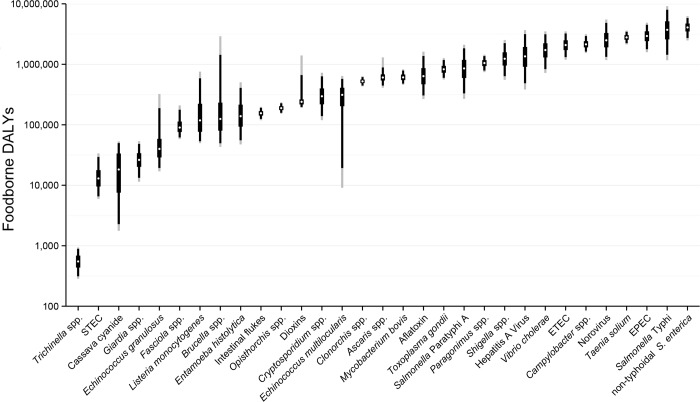
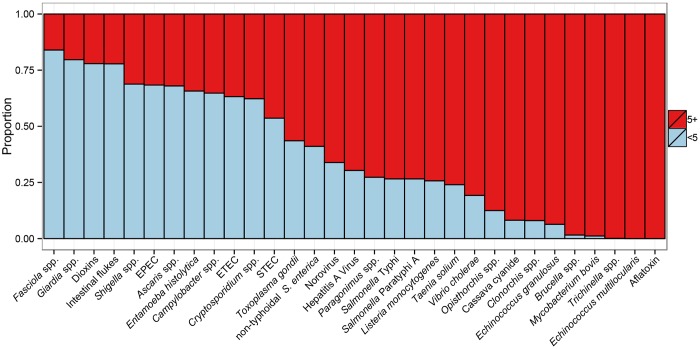
The global burden of foodborne disease caused by 31 hazards in 2010 was 33 million DALYs; children under five years old bore 40% of this burden.
Overview
CoChat Summary
## TL;DR
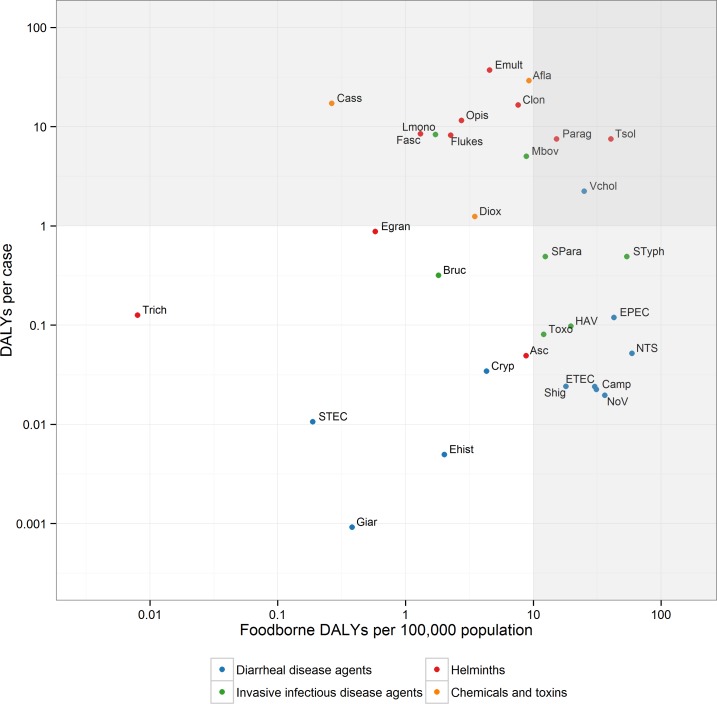
The WHO Foodborne Disease Burden Epidemiology Reference Group estimated that 31 foodborne hazards caused 600 million illnesses, 420,000 deaths, and 33 million DALYs worldwide in 2010. The burden was concentrated in low-income regions and in children under 5, with diarrheal disease agents—especially norovirus, Campylobacter spp., and non-typhoidal Salmonella enterica—accounting for most illness and death.
## Key findings
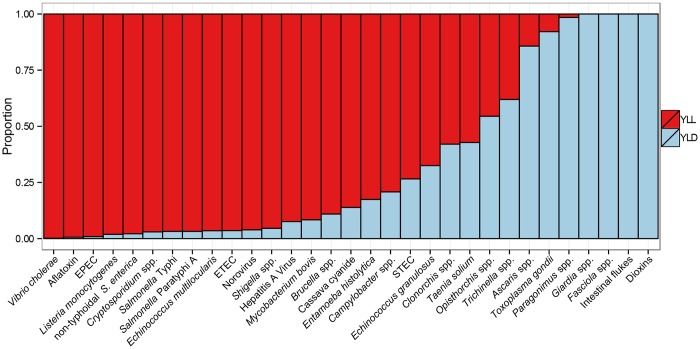
- Thirty-one hazards caused an estimated 600 million (95% UI 420–960 million) illnesses, 420,000 (95% UI 310,000–600,000) deaths, and 33 million (95% UI 25–46 million) DALYs in 2010.
- Diarrheal disease agents accounted for 550 million illnesses and 230,000 deaths; the most frequent illness agents were norovirus (120 million cases) and Campylobacter spp. (96 million cases).
- Non-typhoidal Salmonella enterica caused 59,000 deaths and 4.0 million DALYs; other major death causes included Salmonella Typhi (52,000 deaths), Taenia solium (28,000), hepatitis A virus (28,000), and aflatoxin (20,000; 95% UI 8,000–51,000).
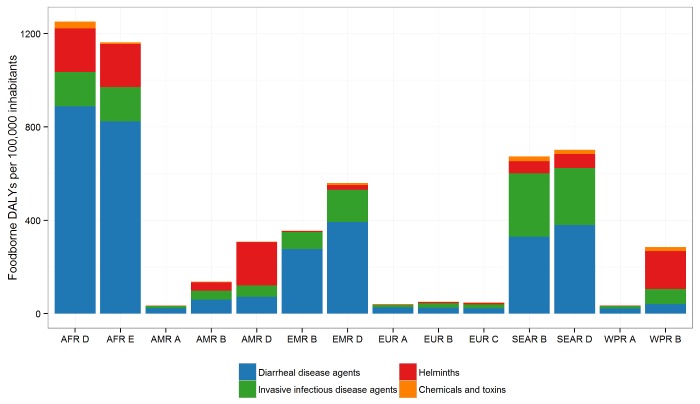
- 40% of the foodborne disease burden was borne by children under 5; the highest burden per 100,000 population was in AFR D (1,300 DALYs) and AFR E (1,200 DALYs), with SEAR B (690), SEAR D (710), and EMR D (570) also high.
## Methods
- The study was a WHO FERG global burden estimation using 31 selected foodborne hazards identified on the basis of high incidence/mortality and data availability.
- It estimated incidence, duration, mortality, YLLs, YLDs, and DALYs for 2010 using systematic reviews, other literature, surveillance data, and expert inputs; estimates were made at country level (194 countries) and then presented at subregional level because of uncertainty.
- For attribution, 12 hazards were judged 100% foodborne; for the other 19 hazards, the authors used structured expert elicitation (Cooke’s Classical Method) to estimate the foodborne fraction, and propagated uncertainty with Monte Carlo simulation in R.
## Limitations
- The paper states its estimates are limited by data gaps and attribution uncertainty; for most hazards, the 95% DALY uncertainty interval ranged from one-fourth to four times the median.
- The authors say the estimates are conservative (underestimates rather than overestimates) because they focused on a subset of more than 100 potential hazards, excluded some hazards or outcomes, and could not always include all relevant disease outcomes.
- They note that country-level estimates were not reliable enough to present, so results are shown at subregion level; this follows from the text and is not presented as a separate explicit limitation.
Model-written summary. Check it against the paper before relying on it.
Integrity signals
Registry
Cites
Statistics
Figures
Verification
Claims the paper makes
5 Valid · 5 Not valid · 16 Not checked · 102 Own results and interpretations
The cited sources that could be checked couldn’t confirm or dispute this claim.
In the paper
“Contaminants in food were not even included as risk factors in previous studies of the global burden of all diseases [3].”
§ World Health Organization Global Estimates and Regional Comparisons of the Burden of Foodborne Disease in 2010 > Introduction
What the sources say
- Could not verifycites [3] Lim SS, Vos T, Flaxman AD, Danaei G, Shibuya K, Adair-Rohani H, et al A comparative risk assessment of burden of disease and injury attributable to 67 risk factors and risk factor clusters in 21 regions, 1990–2010: a systematic analysis for the Global Burden of Disease Study 2010. Lancet. 2012; 380(9859): 2224– 60. 10.1016/S0140-6736(12)61766-8 23245609 PMC4156511 sourceExperimental — accuracy not yet measured
The Discussion describes dietary risk factors such as sodium intake and diets low in fruits or vegetables, but does not address contaminants in food. Searches for food contaminants, foodborne disease, and specific contaminants found no passage establishing whether previous global burden studies included them as risk factors. Page numbers were not available in our copy. (LLM, conf=0.73)
plain- Asserted: passes — The authors put it forward as true.
- Checkable: passes — It can be checked against evidence.
- Load-bearing: passes — The paper’s conclusions depend on it.
- Based: passes — The paper gives a reason why it holds.
- Could not verify
Every source the paper cites for this claim was checked and supports it.
In the paper
“Inclusion of these outcomes would likely considerably increase the burden of enteric infections [43].”
§ World Health Organization Global Estimates and Regional Comparisons of the Burden of Foodborne Disease in 2010 > Introduction > Limitations
What the sources say
- Supportedcites [43] Haagsma JA, Siersema PD, De Wit NJ, Havelaar AH. Disease burden of post-infectious irritable bowel syndrome in The Netherlands. Epidemiol Infect. 2010; 138: 1650– 6. 10.1017/S0950268810000531 20223049 source
The DISCUSSION of our copy states that the annual non-fatal burden of PI-IBS (over 2300 YLD) 'almost doubl[es] the total non-fatal burden of disease for the selected pathogens' and that ignoring PI-IBS in burden-of-disease studies results in an underestimation; it further concludes that including PI-IBS in estimates for the selected bacterial pathogens 'might still underestimate the burden of disease of foodborne disease'. The RESULTS quantify this (Salmonella +86%, Campylobacter +92%, Shigella +151% when PI-IBS is included), and the Abstract repeats the underestimation point, so the hedged claim that including functional bowel disorders would considerably increase the burden of enteric infections is stated by the source. The source's own scope is three bacterial pathogens in The Netherlands (with norovirus PI-IBS discussed as comparable to Campylobacter), which the citing sentence generalises to enteric infections, but the paper itself makes that extrapolation. (LLM, conf=0.85)
hedgedstates a possible cause- Asserted: passes — The authors put it forward as true.
- Checkable: passes — It can be checked against evidence.
- Load-bearing: unclear — It is unclear whether the paper’s conclusions depend on it.
- Based: passes — The paper gives a reason why it holds.
- Supported
A result the paper states — it cites no source for it, so there is none to check. The quote shows it is in the paper.
In the paper
“Foodborne diarrheal disease agents, particularly non-typhoidal Salmonella enterica, caused 230,000 (95% UI 160,000–320,000) deaths”
§ World Health Organization Global Estimates and Regional Comparisons of the Burden of Foodborne Disease in 2010 > Summary Points
plainstates a cause- Asserted: passes — The authors put it forward as true.
- Checkable: passes — It can be checked against evidence.
- Load-bearing: unclear — It is unclear whether the paper’s conclusions depend on it.
- Based: passes — The paper gives a reason why it holds.
A result the paper states — it cites no source for it, so there is none to check. The quote shows it is in the paper.
In the paper
“the burden of Opisthorchis spp. was concentrated in the SEAR B region”
§ World Health Organization Global Estimates and Regional Comparisons of the Burden of Foodborne Disease in 2010 > Summary Points
plainstates an association- Asserted: passes — The authors put it forward as true.
- Checkable: passes — It can be checked against evidence.
- Load-bearing: unclear — It is unclear whether the paper’s conclusions depend on it.
- Based: passes — The paper gives a reason why it holds.
A result the paper states — it cites no source for it, so there is none to check. The quote shows it is in the paper.
In the paper
“The burden of aflatoxin was high in the AFR D, Western Pacific (WPR) B and SEAR B subregions”
§ World Health Organization Global Estimates and Regional Comparisons of the Burden of Foodborne Disease in 2010 > Summary Points
plain- Asserted: passes — The authors put it forward as true.
- Checkable: passes — It can be checked against evidence.
- Load-bearing: unclear — It is unclear whether the paper’s conclusions depend on it.
- Based: passes — The paper gives a reason why it holds.
48 more claims
Create a free account to see all 128 claims and to verify the 5 references still open.
- Probably not a substantial claim. 63
- It may state two separate claims as one. 28
Claims other papers make about this one
Each is checked against this paper’s own text: does it say what the citing paper says it does?
The source backs part of the claim, not all of it — or backs it for a different population, condition or comparison.
In the citing paper
“The FERG found that hazards accounted for around 420,000 deaths in LMIC, imposing a burden of around 33 million DALY lost each year (Havelaar et al., 2015).”
From Burden of foodborne disease in low-income and middle-income countries and opportunities for scaling food safety interventions (2023) · cites this paper as Havelaar et al., 2015
Experimental — accuracy not yet measuredThe source backs part of the claim, not all of it — or backs it for a different population, condition or comparison.
In the citing paper
“Children aged under 5 years were disproportionately affected.This group makes up 9% of the world's population, yet they experience 38% of all FBD, represent 30% of deaths related to FBD, and bear 40% of global DALY lost from FBD (Havelaar et al., 2015).”
From Burden of foodborne disease in low-income and middle-income countries and opportunities for scaling food safety interventions (2023) · cites this paper as Havelaar et al., 2015
Experimental — accuracy not yet measuredThe cited source says what the claim attributes to it.
In the citing paper
“This paper, which represents the work of more than 60 experts over a period of 10 years, can be considered the most definitive and comprehensive guide to the health burden of FBD (Havelaar et al., 2015).”
From Burden of foodborne disease in low-income and middle-income countries and opportunities for scaling food safety interventions (2023) · cites this paper as Havelaar et al., 2015
The cited source says what the claim attributes to it.
In the citing paper
“Although LLMICs bear a high burden of foodborne disease [2]”
From Food Safety Knowledge, Attitude, and Practices (KAP) of Urban Consumers in Low-Income and Lower-Middle-Income Countries (LLMICs): A Scoping Review (2026) · cites this paper as [2]
Citations
Cites
R: A Language and Environment for Statistical Computing
R Core Team (2025) · doi:10.32614/r.manuals · Cited by 352,181
Lim, S. S., Vos, T., Flaxman, A. D., Danaei, G., Shibuya, K., Adair-Rohani, H., AlMazroa, M. A., Amann, M., Anderson, H. R., Andrews, K. G., et al. (2012) · The Lancet · doi:10.1016/s0140-6736(12)61766-8 · Cited by 11,805 · cited 1×
“Contaminants in food were not even included as risk factors in previous studies of the global burden of all diseases [3].”
BackgroundMurray, C. J. L., Vos, T., Lozano, R., Naghavi, M., Flaxman, A. D., Michaud, C., Ezzati, M., Shibuya, K., Salomon, J. A., Abdalla, S., et al. (2012) · The Lancet · doi:10.1016/s0140-6736(12)61689-4 · Cited by 8,888
Foodborne illness acquired in the United States—Major pathogens
Scallan, E., Hoekstra, R. M., Angulo, F. J., Tauxe, R. V., Widdowson, M.-A., Roy, S. L., Jones, J. L., & Griffin, P. M. (2011) · Emerging Infectious Diseases · doi:10.3201/eid1701.p11101 · Cited by 7,657 · cited 1×
“Several high-income countries have published national estimates of FBD. Estimates of food-related illnesses and deaths in the USA were reported in the late 1990s [28] and updated to cover the period 2000 – 2008 [29,30].”
BackgroundSelf-citationFood-Related Illness and Death in the United States
Mead, P. S., Slutsker, L., Dietz, V., McCaig, L. F., Bresee, J. S., Shapiro, C., Griffin, P. M., & Tauxe, R. V. (1999) · Emerging Infectious Diseases · doi:10.3201/eid0505.990502 · Cited by 7,235
Global mortality, disability, and the contribution of risk factors: Global Burden of Disease Study
Murray, C. J., & Lopez, A. D. (1997) · The Lancet · doi:10.1016/s0140-6736(96)07495-8 · Cited by 4,492 · cited 1×
“The DALY measure combines the years of life lost (YLL) due to premature death and the years lived with disability (YLD) from a disease or condition, for varying degrees of severity, making time the common metric for death and disability [20].”
BackgroundSelected major risk factors and global and regional burden of disease
Ezzati, M., Lopez, A. D., Rodgers, A., Vander Hoorn, S., & Murray, C. J. (2002) · The Lancet · doi:10.1016/s0140-6736(02)11403-6 · Cited by 3,594
Kirk, M. D., Pires, S. M., Black, R. E., Caipo, M., Crump, J. A., Devleesschauwer, B., Döpfer, D., Fazil, A., Fischer-Walker, C. L., Hald, T., et al. (2015) · PLoS Medicine · doi:10.1371/journal.pmed.1001921 · Cited by 1,625 · cited 2×
“Detailed descriptions of methods to estimate incidence and mortality of all 31 hazards can be found in papers in the collection on enteric diseases [11], parasitic diseases [18], and chemicals and toxins [19].”
BackgroundMethodSelf-citationSalomon, J. A., Vos, T., Hogan, D. R., Gagnon, M., Naghavi, M., Mokdad, A., Begum, N., Shah, R., Karyana, M., Kosen, S., et al. (2012) · The Lancet · doi:10.1016/s0140-6736(12)61680-8 · Cited by 1,322
Global burden of aflatoxin-induced hepatocellular carcinoma: A risk assessment
Liu, Y., & Wu, F. (2010) · Environmental Health Perspectives · doi:10.1289/ehp.0901388 · Cited by 1,224
Research works printed but not linked: 2
- Gibb H, Devleesschauwer B, Bolger PM, Bellinger D, Wu F, Ezendam J, et al WHO estimates of the global and regional burden from chemicals and toxins in food, 2010. F1000Research. In Press. PMC4755404 26918123
- Devleesschauwer B, Haagsma JA, Angulo FJ, Bellinger D, Cole D, Döpfer D, et al Methodological Framework for World Health Organization Estimates of the Global Burden of Foodborne Disease. PLoS ONE 10: e0142498 10.1371/journal.pone.0142498 PMC4668830 26633883 · DOI · Paper page
Cited by
Items 1,901–2,000 of 2,051
Lassen, B., Helwigh, B., Petersen, C. K., & Ellis‐Iversen, J. (2022) · Figshare · doi:10.6084/m9.figshare.21069707
van Wagenberg, C. P. A., Delele, T. G., & Havelaar, A. H. (2022) · Figshare · doi:10.6084/m9.figshare.21582194
Self-citationGutema, F. D., Abdi, R. D., Agga, G. E., et al. (2021) · Figshare · doi:10.6084/m9.figshare.14908078
van Wagenberg, C. P. A., Delele, T. G., & Havelaar, A. H. (2022) · Figshare · doi:10.6084/m9.figshare.21582197
Self-citationAdditional file 5 of The burden of legionnaires’ disease in Belgium, 2013 to 2017
Fastl, C., Devleesschauwer, B., van Cauteren, D., et al. (2020) · Figshare · doi:10.6084/m9.figshare.13065469
Self-citationAhmed, A. D., Hiko, A., Belina, D., et al. (2024) · Figshare · doi:10.6084/m9.figshare.26756599
Additional file 2 of The burden of legionnaires’ disease in Belgium, 2013 to 2017
Fastl, C., Devleesschauwer, B., van Cauteren, D., et al. (2020) · Figshare · doi:10.6084/m9.figshare.13065460
Self-citationWu, Y., Deng, X., Wu, Z., Liu, D., Fu, X., Tang, L., He, S., Lv, J., Wang, J., Li, Q., et al. (2023) · Figshare · doi:10.6084/m9.figshare.23972840
Additional file 1 of The burden of legionnaires’ disease in Belgium, 2013 to 2017
Fastl, C., Devleesschauwer, B., van Cauteren, D., et al. (2020) · Figshare · doi:10.6084/m9.figshare.13065457
Self-citationHan, L., Zang, T., Tan, L., et al. (2024) · Figshare · doi:10.6084/m9.figshare.26655172
Yousefi, M. H., Wagemans, J., Shekarforoush, S. S., et al. (2024) · Figshare · doi:10.6084/m9.figshare.26628700
Thystrup, C., Hald, T., Belina, D., & Gobena, T. (2024) · Figshare · doi:10.6084/m9.figshare.26839058
Self-citationvan Wagenberg, C. P. A., Delele, T. G., & Havelaar, A. H. (2022) · Figshare · doi:10.6084/m9.figshare.21582203
Self-citationThe Zoonotic Diseases: Public Health Concerns of Animal-Based Foods
Kharate, A., & Kashappanavar, S. R. (2025) · Springer eBooks · doi:10.1007/978-3-032-00575-5_13
He, Y., Zhu, Y., Zhang, H., Chen, J., Zhu, B., Wang, J., Zhang, R., Chen, L., Qi, X., & Zhang, J. (2025) · Food Microbiology · doi:10.1016/j.fm.2025.104988
Islam, M. R., Banik, A., Anjum, H., Fariha, N. N., Rushni, Z., Abony, M., Bhowmik, D. R., & Ahmed, Z. (2025) · Recent Progress in Nutrition · doi:10.21926/rpn.2504025
Madilo, F. K., Letsyo, E., Kortei, N. K., & Adzinyo, O. A. (2025) · Journal of Food Quality · doi:10.1155/jfq/6693381
Singh, N., Marshall, Q., Bliznashka, L., Zakayo, R., Mukasa, L., Chavez, J. L. T., Malindisa, E., Jeremiah, K., Kinabo, J., Bellows, A. L., et al. (2025) · medRxiv · doi:10.64898/2025.12.17.25342242 · Cited by 1
Hou, S., Zhang, L., Wang, X., Yang, X., Wang, Q., & Bian, S. (2025) · Nephrology · doi:10.1111/nep.70159
“Since 2010, the WHO and other international organisations have placed greater emphasis on tracking and analysing disease burdens [33, 34].”
Plasma-Activated Water: An Emerging Technology for the Control of Eggshell-Associated BiofilmsPreprint
Vyas, H. K. N., Abdo, A. I., Kolbe, B. H., Boahen, A., Jia, S., McWhorter, A. R., Coad, B. R., & Richter, K. (2026) · bioRxiv (Cold Spring Harbor Laboratory) · doi:10.64898/2026.01.12.699152
Draper, A. D. K., Kirk, M. D., Colquhoun, S., Glass, K., Lomas, K., Harlock, M., Francis, J. R., Yan, J., & Krause, V. (2026) · Foodborne Pathogens and Disease · doi:10.1177/15353141251412319
Self-citationScreening for Biological Hazards in Agricultural Products Using Newly Developed Methods: A Review
Chon, J., Seo, K., Han, K. S., et al. (2025) · Journal of Dairy Science and Biotechnology · doi:10.22424/jdsb.2025.43.4.214
“특히 5세 이하 어린이가 전체 감염의 40%를 차지하며, 살모넬라와 노로바이러스가 주요 원인으로 지목된다[4].”
Kox, L. F. F., & Sijm, D. T. H. M. (2026) · Food Risk Assess Europe · doi:10.2903/fr.efsa.2026.fr-0092
Fei, X., Moussa, J., Guerra, P. R., Nisar, S., Ma, Y., Wang, W., Saraiva, M. M. S., Li, H., Zhou, Z., & Olsen, J. E. (2026) · Microbiological Research · doi:10.1016/j.micres.2026.128453 · Cited by 1
Manzanares-Pedrosa, A., Correa‐Fiz, F., Obregón-Gutierrez, P., et al. (2026) · Research Square · doi:10.21203/rs.3.rs-8346657/v1
Epidemiological patterns of salmonellosis incidence among the population of Armenia in 2009–2024
Palozyan, G. H., Hovhannisyan, A. S., Grigoryan, N. A., Abovyan, R. A., Tsakanyan, A. V., Margaryan, A. V., Khachatryan, T. S., Melik-Andreasyan, G., & Atoyan, S. A. (2025) · Russian Journal of Infection and Immunity · doi:10.15789/2220-7619-epo-17963
Food Systems Policy Coherence: A Ten-Country AssessmentPreprint
Nordhagen, S., Tankari, M. R., Morrison, J. A., Collins, J., Parsons, K., Resnick, D., & Bedeau, J. V. (2026) · doi:10.12688/verixiv.2855.1
Monthly incidence prediction of foodborne diseases: case study in Nanning City of China
Li, P., Cen, L., Siyan, L. I., Zhang, J., Li, Q., Li, X., & Hui, L. (2026) · Microbial Risk Analysis · doi:10.1016/j.mran.2026.100368
Interactions between human norovirus virus-like particles and bacteria: Impact on thermal resistance
Mas, P., Estienney, M., Lesniewska, É., Urbain, V., Magallon, A., Tristan, A., de Rougemont, A., Belliot, G., & Guyot, S. (2026) · LWT · doi:10.1016/j.lwt.2026.119136
González-Linares, J. I., Ynfante-Acuña, H., Vara-Allhuirca, S., Quispe-Sanca, D., & Morales-García, W. C. (2026) · Foods · doi:10.3390/foods15040683 · Cited by 1
Ambike, V., Ebner, P., Mosimann, S., et al. (2026) · Journal of Agricultural Biological and Environmental Statistics · doi:10.1007/s13253-026-00725-w
Girma, A., Wondie, S. G., Dereje, R., Ayelew, E., & Alemayehu, B. (2026) · Health Science Reports · doi:10.1002/hsr2.71847
“Approximately 70% of diarrheal disease cases in developing nations are linked to the consumption of contaminated food [13].”
Umegaki, K., Nishijima, C., Yokotani, K., et al. (2026) · Food Hygiene and Safety Science (Shokuhin Eiseigaku Zasshi) · doi:10.3358/shokueishi.67.31
Maus, D., Putrianti, E. D., Hoffmann, T., Laue, M. M., Seeber, F., & Blume, M. (2026) · eLife · doi:10.7554/elife.102511.2 · Cited by 1
Ganser, C., Kagambèga, A., Dione, M., Ilboudo, G. S., Knight-Jones, T. J. D., Danyluk, M. D., Tiendrébéogo, W. P. B., & Havelaar, A. H. (2026) · Journal of Food Protection · doi:10.1016/j.jfp.2026.100741 · Cited by 1
Self-citationLaiveling, A., Wiesner-Friedman, C., & Jahne, M. A. (2026) · The Science of The Total Environment · doi:10.1016/j.scitotenv.2026.181630
Tian, Y., Huang, Y., Liu, Z., et al. (2026) · SSRN Electronic Journal · doi:10.2139/ssrn.6366921
Bjöersdorff, O. G., Okello, P., Erume, J., Hansson, I., Söderlund, R., Magnusson, U., Roesel, K., & Boqvist, S. (2026) · Journal of Global Antimicrobial Resistance · doi:10.1016/j.jgar.2026.03.006
Integrated analysis of MALDI-TOF MS and whole-genome sequencing for subtyping Salmonella
Liu, Y., Qiao, J., Xiao, Y., Zhang, T., & Wu, Y. (2026) · Frontiers in Microbiology · doi:10.3389/fmicb.2026.1782552 · Cited by 1
“Non-typhoidal Salmonella is a leading cause of foodborne gastroenteritis globally (Stanaway et al., 2019; Havelaar et al., 2015).”
Ghiffari, M. A., Herdiani, F. D., Ariawan, I., & Rusmawati, D. A. (2026) · Sakarya University Journal of Computer and Information Sciences · doi:10.35377/saucis...1777006 · Cited by 1
Source attribution of foodborne pathogens in the Netherlands using structured expert elicitation
Wijnen, L. I., Nane, G. F., Benincà, E., Pijnacker, R., Franz, E., Cooke, R. M., & Mughini‐Gras, L. (2026) · International Journal of Food Microbiology · doi:10.1016/j.ijfoodmicro.2026.111735
Holdsworth, W. E., Manjang, B., Martin, J., Harris-Snell, E., Cairncross, S., Chen, Y.-F., Burton, M., Khalid, A., Asamane, E., Crowe, F., et al. (2026) · BMJ Global Health · doi:10.1136/bmjgh-2024-017026
Verghetta, N. L., Phillips, M. J., Maxwell‐Smith, C., & Mullan, B. A. (2026) · Behavioral Sciences · doi:10.3390/bs16030447
“Consumer knowledge regarding safe food handling remains low (Charlesworth & Mullan, 2023; Moreb et al., 2017; Mullan et al., 2015b), contributing to rising rates of household food poisoning (Charlesworth et al., 2021; Havelaar et al., 2015).”
Linn, K. Z., Lwin, S. Z. C., Maung, A. T., Abdelaziz, M. N. S., Damaso, C. H., Lin, Y., Ye, H., Masuda, Y., Miyamoto, T., & Honjoh, K. (2026) · Microbiology Research · doi:10.3390/microbiolres17030063 · Cited by 1
“Foodborne disease outbreaks are prevalent and often result in substantial morbidity and mortality [1].”
Liu, Z., Cao, S., Xu, L., Zhou, Q., Lou, P., Xiao, C., Bai, Q., Yan, S., & Chen, L. (2026) · Foodborne Pathogens and Disease · doi:10.1177/15353141261435243
Medium-aware multi-task learning for robust bacterial identification using Raman spectroscopy
Shi, W., Xie, H., Song, X., Shi, L., Bi, C., & Li, B. (2026) · Spectrochimica Acta Part A Molecular and Biomolecular Spectroscopy · doi:10.1016/j.saa.2026.127831 · Cited by 1
Épidémiologie des maladies infectieuses chez les personnes sans domicile fixe à Marseille, France
Ly, T. D. A. (2020) · theses.fr (ABES) · doi:10.70675/0c08e964zf53ez4b80z8ee5z789b0b7142d8
Toxoplasma gondii in pork production : a stable to table approach
Dámek, F. (2023) · theses.fr (ABES) · doi:10.70675/a083df93z3f88z493fzb10aze88e07562fef · Cited by 2
Abou-Hamad, N. (2023) · theses.fr (ABES) · doi:10.70675/15981830zbcc6z4c43z981czc1f68484b939
Li, X., Ojeda, A. E., Deblais, L., Mummed, B., Bhrane, M., Rajashekara, G., Liang, S., Hassen, J. Y., McKune, S. L., Havelaar, A. H., et al. (2026) · GeoHealth · doi:10.1029/2024gh001146
“Species in the genus Campylobacter are known as the most common bacterial cause of foodborne illness worldwide and contribute to approximately 166 million cases each year in both industrialized and developing nations (A. H. Havelaar et al., 2015).”
Self-citationZhang, Y., Ba, W.-J., Gan, J., Yang, Y.-J., Zuo, J., Li, Y., Li, Z.-Q., Li, Z.-P., Yu, J.-J., Liao, A.-M., et al. (2026) · Scientific Reports · doi:10.1038/s41598-026-48236-5 · Cited by 1
Adane, B., Ayele, A., Teym, A., Jemere, T. S., Sewunet, B., Kindu, M., Moges, M., & Bewket, Y. (2026) · Scientific Reports · doi:10.1038/s41598-026-49925-x · Cited by 1
“Most existing Ethiopian studies have focused either on microbial contamination or isolated behavioral factors among meat handlers, without integrating human, veterinary, and environmental health components 3,5 .”
Baulckim, L. T. (2026) · INQUIRY The Journal of Health Care Organization Provision and Financing · doi:10.1177/00469580261441133
Chen, Y., Fang, Y., Huang, K., et al. (2026) · Microbiology Spectrum · doi:10.1128/spectrum.04063-25
Assefa, A. Y., Bitew, A. B., Endalamew, S. G., et al. (2026) · Infection Genetics and Evolution · doi:10.1016/j.meegid.2026.105947
Custodio, M., Peñaloza, R., Crispin-Ayala, J., Paredes-Alhua, R., & Rodriguez, C. (2026) · Foods · doi:10.3390/foods15091596
“The WHO/FAO microbiological risk assessment framework establishes a tolerable annual infection risk of 10 − 4 (1 in 10,000) as a benchmark for food safety interventions [51,52].”
Karakayali, O., Özdemir, M. A., Özturan, İ. U., et al. (2026) · Foodborne Pathogens and Disease · doi:10.1177/15353141261449289
Sang, X., Fan, Y., Liang, X., Li, J. J., & Chen, Y. (2026) · BMC Public Health · doi:10.1186/s12889-026-27563-2
“Non-typhoidal Salmonella enterica , Shigella and norovirus are common causes of foodborne disease [15].”
Бадамшина, Г. Г., Gafarova, L. F., Анатольевна, П. Е., et al. (2026) · Health Care of the Russian Federation · doi:10.47470/0044-197x-2026-70-2-156-163
Glonti, S., Talakvadze, T., & Pkhakadze, G. (2026) · Georgian Medical Journal · doi:10.66636/gmj.v1.i1.a11
“…(WHO) has estimated that contaminated food causes approximately 600 gmj.ge | ISSN 3088-4322 | doi:10.66636/gmj.v1.i1.a11 | CC BY 4.0 million illness episodes and 420,000 deaths annually worldwide, with children under five years bearing 40% of the disability-adjusted life-year burden [9, 10].”
InfluentialRole of Underutilized Plant-Derived Nanoparticles in Combating Food-Borne Bacteria
Aman, J., Khirwar, R., & Iqbal, M. (2026) · Springer eBooks · doi:10.1007/978-3-032-20384-7_4
Liu, Y., Tang, Q., Liu, Y., Zhanhong, Y., & Wang, J. (2026) · Journal of Hazardous Materials · doi:10.1016/j.jhazmat.2026.142408
Tomar, S., Pise, K. H., Ramdasi, A. Y., et al. (2026) · The Indian Journal of Medical Research · doi:10.25259/ijmr_2295_2025
Kivali, V., Dohoo, I., Dang-Xuan, S., et al. (2026) · Journal of Food Protection · doi:10.1016/j.jfp.2026.100814
Yılmaz, E. S. A., Erol, A., Celebi-Birand, D., Yukselen, E., & Duman, M. (2026) · Biomicrofluidics · doi:10.1063/5.0327040
Dai, J., Liu, C., Zhang, J., Yang, Y., Chen, S., Guo, R., Jia, Y., Li, J. L., Ding, K., Liao, C., et al. (2026) · Poultry Science · doi:10.1016/j.psj.2026.107156
“…to the World Health Organization ’ s first global estimates, foodborne non-typhoidal Salmonella causes approximately 93.8 million illnesses and 155,000 deaths annually worldwide, imposing a substantial socioeconomic burden on healthcare systems and agricultural sectors (Havelaar et al., 2015).”
InfluentialChen, S., Ma, Y., Zhang, W., Lai, T., Zhang, L., Yuan, Q., Zhan, Z., & Liu, F. (2026) · Frontiers in Microbiology · doi:10.3389/fmicb.2026.1840000
Zhou, Z., Liu, Y., Yu, S., An, H., Fu, Y., Yang, F., Dong, Q., & Peng, S. (2026) · International Journal of Food Microbiology · doi:10.1016/j.ijfoodmicro.2026.111883 · Cited by 1
Paddy, E. N., Sohail, M., & Afolabi, O. O. D. (2026) · Risk Analysis · doi:10.1111/risa.70260
“…risk alone, the disease burden associated with diarrheal diseases caused by bacteria in terms of DALYs was estimated using the following equation (Havelaar et al. 2015 ; Shi et al. 2018 ): where DB represents disease health burden (DALYs pppy), 𝑃 annual is the annual CDI risk pppy, and HB…”
InfluentialJiya, N., Sha, S. P., Khudai, W., Yadav, S., Sasane, R., Sah, S. P., Ghatani, K., & Sharma, A. (2026) · Frontiers in Microbiology · doi:10.3389/fmicb.2026.1850075 · Cited by 1
“In addition, Vibrio cholerae is a well-established causative agent of foodborne diarrheal disease (Havelaar et al., 2015).”
Food Systems Policy Coherence: A Ten-Country AssessmentPreprint
Nordhagen, S., Tankari, M., Morrison, J., Collins, J., Parsons, K., Resnick, D., & Bedeau, J. V. (2026) · doi:10.12688/verixiv.2855.2
Cohen, H., Shem-Tov, R., Tawil, H., Adani, B., Bähre, H., Seifert, R., Zarivach, R., & Gal‐Mor, O. (2026) · bioRxiv (Cold Spring Harbor Laboratory) · doi:10.64898/2026.06.04.730116
González-Navarro, M. P., Manzanares-Pedrosa, A., Correa‐Fiz, F., et al. (2026) · Poultry Science · doi:10.1016/j.psj.2026.107271
“Campylobacter is one of the main causes of human gastroenteritis worldwide (Havelaar et al., 2015; EFSA and ECDC, 2025a) Since 2005, campylobacteriosis has been the most reported zoonotic infection in the European Union ( EU ), surpassing salmonellosis and causing more than 168,396 human cases and…”
Papoyan, H., Robertson, L. J., Gevorgyan, H. S., et al. (2026) · Food and Waterborne Parasitology · doi:10.1016/j.fawpar.2026.e00350
Shaheen, N., Stricklin, M. L., Kordesch, M., et al. (2026) · Frontiers in Cellular and Infection Microbiology · doi:10.3389/fcimb.2026.1837303
“Globally, foodborne Shigella infection accounts for an estimated 1 – 3 million disability-adjusted life years (DALYs) annually (Havelaar et al., 2015).”
Adult Fasciola hepatica in the rectus abdominis muscle: a case report
Hashemi, S. A., Shayeghi-Kelyani, M., Ebrahimi, S., et al. (2026) · Journal of Medical Case Reports · doi:10.1186/s13256-026-06168-8
“The WHO report indicates that between 2.4 to 17 million people are currently infected with the parasite, with a further 180 million at risk in Europe, the Middle East, North Africa, Asia, and South America [1].”
InfluentialInnovation/revolution in thermal processing
Adal, S. (2026) · Elsevier eBooks · doi:10.1016/b978-0-443-40397-2.00009-5
Coordination chemistry-enabled sensors for rapid monitoring of food quality and safety
Azhar, M., Chandra, P., Sridhar, S. B., et al. (2026) · Discover Food · doi:10.1007/s44187-026-01075-9
“The economic impact consists of direct medical costs, productivity losses of labor, and trade interruptions to producers and consumers across borders [1].”
InfluentialRašeta, M., Mrdović, B., Jovanović, J., Lukić, M., Paskaš, S., Tarić, E., & Becskei, Z. (2026) · Archives of Veterinary Medicine · doi:10.46784/e-avm.v19i1.591
“…serovars Salmonella enterica subsp . enterica serovar Enteritidis ( further S. Enteritidis ) and S. Typhimurium, which have been responsible for more than 78 million cases of illness, 59,153 deaths (Havelaar et al., 2015), and roughly 4,068,000 disability-adjusted life years (DALYs) lost.”
Kong, S. J., Park, S. E., & Yoon, K. S. (2026) · Food Reviews International · doi:10.1080/87559129.2026.2692564
Zhou, L., Zhang, Y., Zhou, Q., Zheng, L., Zhu, S., Xiang, J., 罗信旭, Liu, Y., & Li, S. (2026) · BMC Microbiology · doi:10.1186/s12866-026-05310-2
“The World Health Organization (WHO) estimated that in 2010, up to 600 million people (almost 1 in 10 individuals) suffered from FBD [20, 28].”
Natural color-based sustainable food freshness indicator
Seke, F., Shinga, M. H., & Fawole, O. A. (2026) · Elsevier eBooks · doi:10.1016/b978-0-443-43964-3.00010-5
Janarthanan, G., Paramasivam, V., Kumaravel, P., Parthiban, A. B. R., Fournié, G., Blake, D. P., Tomley, F. M., & Azhahianambi, P. (2026) · Discover Public Health · doi:10.1186/s12982-026-02430-y · Cited by 1
“The World Health Organization (WHO) has estimated that 600 million people experience foodborne disease worldwide each year, resulting in 420,000 deaths [36].”
Meta-Analysis on Foodborne Pathogens in Animal-Derived Foodstuffs in Maghreb Countries
Nahal, A., & Tamendjari, S. (2026) · Foodborne Pathogens and Disease · doi:10.1177/15353141261464403
Bilgin, M., & Soycan, A. (2026) · Food Analytical Methods · doi:10.1007/s12161-026-03189-3
“These pathogens are also included among the major foodborne hazards identified in WHO global burden assessments (Havelaar et al. 2015; Pires et al. 2021).”
Zhang, Z., Gao, J., Liao, Y., Zhao, X., Li, S., Liu, D., & Xue, L. (2026) · Viruses · doi:10.3390/v18070731
Ahmed, M. J., Bhandari, P., Bhuiyan, M. I. H., Chalise, R., Sarker, S., Yousuf, M. S. B., Easin, M., Rahi, M. R. U., Chakrabarty, H., Paul, A., et al. (2026) · Veterinary Medicine International · doi:10.1155/vmi/3617712
Campylobacter jejuni in Wild Birds: Current Status and Challenges
ZHANG, L., Liu, Z., Du, J., et al. (2026) · Veterinary Sciences · doi:10.3390/vetsci13070649
“In humans, C. jejuni infection can result in clinical manifestations such as fever, vomiting, cramping abdominal pain, and watery or bloody diarrhea, representing a significant threat to public health [3,4].”
Kaddouri, M., Chaji, S., Alia, O. A. E., Mrabet, A. E., Melloul, A. A., Al-Zharani, M., Nasr, F. A., & Boutoial, K. (2026) · Frontiers in Sustainable Food Systems · doi:10.3389/fsufs.2026.1761089
Emerging Foodborne Enteric Bacterial Pathogens
Rodrigo, D., Alcaine-Bellido, B., Fernández-Felipe, M. T., et al. (2026) · Elsevier eBooks · doi:10.1016/b978-0-443-40344-6.00239-8
Removal and analysis of foodborne-associated pathogens via peptide functionalized nanoparticles
Hausen, E., Knorr, S., Lyer, S., Alexiou, C., Tietze, R., & Lick, S. (2026) · Applied Microbiology and Biotechnology · doi:10.1007/s00253-026-13922-x
“The WHO reported 600 million diseases and 420,000 deaths worldwide (2010), caused by 31 foodborne hazards, most of them due to pathogens like Campylobacter spp., Salmonella enterica , and Escherichia coli (Havelaar et al. 2015).”
Porous Silicon‐Based Biosensors for Food Safety and Quality Monitoring: A Comprehensive Review
Kumar, D. M., Shtenberg, G., & Keri, R. S. (2026) · Advanced Materials Technologies · doi:10.1002/admt.71149 · Cited by 1
“Conventional culture-based methods, although reliable, are labor-intensive and unsuitable for real-time monitoring [ 66, 67 ].”
Macheka, L., Mubaiwa, J., Nyarugwe, S. P., Mugadza, D. T., Chiwanza, T. Y., Ntuli, V., & Manditsera, F. A. (2026) · Food and Humanity · doi:10.1016/j.foohum.2026.101354
Liang, J., Huang, Y., Chen, W., et al. (2026) · Spectrochimica Acta Part A Molecular and Biomolecular Spectroscopy · doi:10.1016/j.saa.2026.128441
Jalgoankar, T., Badgujar, C., Kluever, B. M., & Klug, P. E. (2026) · Smart Agricultural Technology · doi:10.1016/j.atech.2026.102403
Nasiri, M., Gassler, B., & Teuber, R. (2026) · Journal of Agribusiness in Developing and Emerging Economies · doi:10.1108/jadee-09-2024-0290
Pal, H., Bettridge, J., Domínguez-Salas, P., & Grace, D. (2026) · Global Health Action · doi:10.1080/16549716.2026.2698281
Mou, X., Cui, X., Zhang, Y., Pan, Y., Cai, Y., Chen, W., & Le, T. (2026) · The Analyst · doi:10.1039/d6an00499g
Metadata
- Authors
- Havelaar, A. H., Kirk, M. D., Torgerson, P. R., Gibb, H. J., Hald, T., Lake, R. J., Praet, N., Bellinger, D. C., de Silva, N. R., Gargouri, N., Speybroeck, N., Cawthorne, A., Mathers, C., Stein, C., Angulo, F. J., Devleesschauwer, B., & on behalf of World Health Organization Foodborne Disease Burden Epidemiology Reference Group
- Affiliations
- Utrecht University (NL)
- Australian National University (AU)
- University of Zurich (CH)
- Technical University of Denmark (DK)
- New Zealand Institute for Public Health and Forensic Science (NZ)
- Instituut voor Tropische Geneeskunde (BE)
- Boston Children's Hospital (US)
- UCLouvain (BE)
- World Health Organization (CH)
- Centers for Disease Control and Prevention (US)
- Ghent University (BE)
- Corresponding author
- Havelaar, Arie H.
- ORCID
- Venue
- PLoS Medicine
- Publisher
- Public Library of Science (PLoS)
- Published
- 2015-12-03
- Volume
- 12
- Issue
- 12
- Pages
- e1001923
- ISSN
- 1549-1277 (ISSN-L)
- 1549-1676
- PMC
- PMC4668832
- OpenAlex
- W2186140012
- Cited by
- 2,067
- References
- 40
- Citations by year
- 2026: 220 · 2025: 251 · 2024: 235 · 2023: 267 · 2022: 217 · 2021: 219 · 2020: 206 · 2019: 153 · 2018: 149 · 2017: 90 · 2016: 51 · 2015: 3
- FWCI
- 130.65
- Type
- journal article
- Language
- en
- Open access
- gold
- doi.org
- Licence
- Locations
- PLoS Medicine (publishedVersion, cc-by)
- Europe PMC (PubMed Central) (publishedVersion, cc-by)
- PubMed Central (publishedVersion, cc-by)
- PubMed (publishedVersion)
- EUR Research Repository (Erasmus University Rotterdam) (publishedVersion, cc-by)
- Zurich Open Repository and Archive (University of Zurich) (acceptedVersion, cc-by)
- ResearchOnline (Glasgow Caledonian University) (acceptedVersion, cc-by)
- Ghent University Academic Bibliography (Ghent University) (submittedVersion, other-oa)
- EUR Research Repository (Erasmus University Rotterdam) (submittedVersion, other-oa)
- CGSPace A Repository of Agricultural Research Outputs (Consultative Group for International Agricultural Research) (submittedVersion, other-oa)
- Digital Access to Libraries (submittedVersion, other-oa)
- DOAJ (DOAJ: Directory of Open Access Journals) (submittedVersion, cc-by-sa)
- Utrecht University Repository (Utrecht University) (submittedVersion, other-oa)
- ANU Open Research (Australian National University) (submittedVersion)
- Technical University of Denmark, DTU Orbit (Technical University of Denmark, DTU) (submittedVersion, cc-by)
- Bristol Research (University of Bristol) (submittedVersion, cc-by)
- Rivm (National Institute for Public Health and the Environment) (submittedVersion)
- Zurich Open Repository and Archive (University of Zurich) (submittedVersion, cc-by)
- Zurich Open Repository and Archive (University of Zurich)
- Funders
- World Health Organization
- University of Pittsburgh
- Institute for Health Metrics and Evaluation
- Topics
- Life Sciences › Agricultural and Biological Sciences › Food Science › Salmonella and Campylobacter epidemiology
- Life Sciences › Agricultural and Biological Sciences › Food Science › Food Safety and Hygiene
- Health Sciences › Medicine › Infectious Diseases › Viral gastroenteritis research and epidemiology
- Keywords
- food poisoning, disease burden, disability-adjusted life years, food safety hazards, diarrheal disease, norovirus, Campylobacter, non-typhoidal Salmonella, Salmonella typhi, Taenia solium, hepatitis A virus, parasitic helminths, child mortality, regional comparison, food safety policy
- MeSH terms
- Foodborne Diseases, Humans, Global Health, World Health Organization, Incidence, Prevalence, Cost of Illness, Quality-Adjusted Life Years
About these checks
Registry, retraction, Cites and statistics results are computed, not judged, with one exception: a printed reference that no index lists is read once by a model before it counts as a citation error. Claims are extracted by a model and kept only when their quote appears verbatim in the text; each cited source is then checked, with a model’s help, for whether it says what the claim relies on. Those verdicts can be wrong — read the claim’s quote and the cited source before relying on one.
The claim verdicts this report counts are experimental: their accuracy is not yet measured.
A language model drew the claims from the paper on 2026-10-10, under version 3 of the claim definition (model deepseek-v4.1-flash, prompt extract-v3).
A second model labelled each claim on 2026-10-10 (model jev-1.13-20260917, definition revision gold-guideline-v0.2).
Cited sources are checked with a language model’s help (gpt-6-sol and qwen3.8-omni-flash).
Statistics and arithmetic are recomputed, not judged.
Confidence bands are shown only for fields calibrated on our annotated test set. None is calibrated yet, so no band is shown.
What counts as a claim ›How we measure confidence ›How we check this ›
Are you an author, or do you see a problem with this page? Request a review
Data sources
Bibliographic data: Semantic Scholar, OpenAlex, Crossref.
Contains information from the Semantic Scholar Academic Graph Datasets, made available under the ODC Attribution License (ODC-BY 1.0).
Semantic Scholar’s data is described in: Kinney, R., et al. (2023). The Semantic Scholar Open Data Platform. arXiv:2301.10140.
