

Plant-Based Dietary Patterns and Incidence of Type 2 Diabetes in US Men and Women: Results from Three Prospective Cohort Studies
Open accessThe DOI matches its Crossref record; 56 of the 56 references it cites were found in a registry or an index.
Abstract
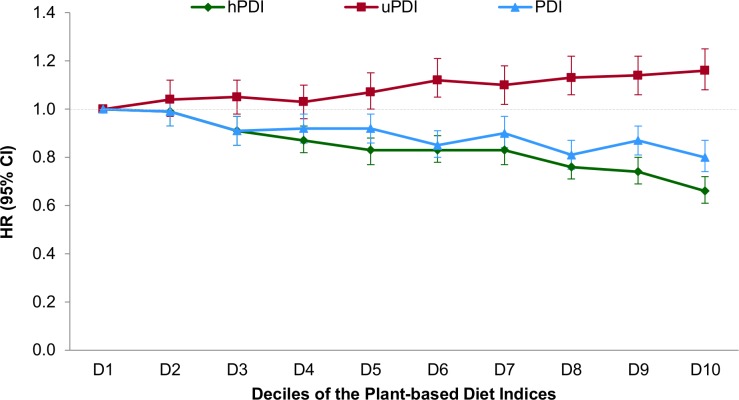
BACKGROUND: Plant-based diets have been recommended to reduce the risk of type 2 diabetes (T2D). However, not all plant foods are necessarily beneficial. We examined the association of an overall plant-based diet and hypothesized healthful and unhealthful versions of a plant-based diet with T2D incidence in three prospective cohort studies in the US. METHODS AND FINDINGS: We included 69,949 women from the Nurses' Health Study (1984-2012), 90,239 women from the Nurses' Health Study 2 (1991-2011), and 40,539 men from the Health Professionals Follow-Up Study (1986-2010), free of chronic diseases at baseline. Dietary data were collected every 2-4 y using a semi-quantitative food frequency questionnaire. Using these data, we created an overall plant-based diet index (PDI), where plant foods received positive scores, while animal foods (animal fats, dairy, eggs, fish/seafood, poultry/red meat, miscellaneous animal-based foods) received reverse scores. We also created a healthful plant-based diet index (hPDI), where healthy plant foods (whole grains, fruits, vegetables, nuts, legumes, vegetable oils, tea/coffee) received positive scores, while less healthy plant foods (fruit juices, sweetened beverages, refined grains, potatoes, sweets/desserts) and animal foods received reverse scores. Lastly, we created an unhealthful plant-based diet index (uPDI) by assigning positive scores to less healthy plant foods and reverse scores to healthy plant foods and animal foods. We documented 16,162 incident T2D cases during 4,102,369 person-years of follow-up. In pooled multivariable-adjusted analysis, both PDI and hPDI were inversely associated with T2D (PDI: hazard ratio [HR] for extreme deciles 0.51, 95% CI 0.47-0.55, p trend < 0.001; hPDI: HR for extreme deciles 0.55, 95% CI 0.51-0.59, p trend < 0.001). The association of T2D with PDI was considerably attenuated when we additionally adjusted for body mass index (BMI) categories (HR 0.80, 95% CI 0.74-0.87, p trend < 0.001), while that with hPDI remained largely unchanged (HR 0.66, 95% CI 0.61-0.72, p trend < 0.001). uPDI was positively associated with T2D even after BMI adjustment (HR for extreme deciles 1.16, 95% CI 1.08-1.25, p trend < 0.001). Limitations of the study include self-reported diet assessment, with the possibility of measurement error, and the potential for residual or unmeasured confounding given the observational nature of the study design. CONCLUSIONS: Our study suggests that plant-based diets, especially when rich in high-quality plant foods, are associated with substantially lower risk of developing T2D. This supports current recommendations to shift to diets rich in healthy plant foods, with lower intake of less healthy plant and animal foods.
Overview
The claims and statistics of this paper haven’t been checked yet.
Free: it reads the open-access text and checks the first 5 claims that cite a source we can check. Create a free account to check every claim.
Integrity signals
Registry
Cites
Statistics
Figures
Verification
Claims the paper makes
The claims and statistics of this paper haven’t been checked yet.
Free: it reads the open-access text and checks the first 5 claims that cite a source we can check. Create a free account to check every claim.
Claims other papers make about this one
Each is checked against this paper’s own text: does it say what the citing paper says it does?
The source backs part of the claim, not all of it — or backs it for a different population, condition or comparison.
In the citing paper
“Diets emphasizing whole, minimally processed foods—such as vegetables, fruits, whole grains, legumes, nuts, seeds, and lean protein sources—have been consistently associated with a reduced risk of obesity, type 2 diabetes, hypertension, and cardiovascular disease [164,165,166,167].”
From Lifestyle Medicine for Obesity in the Era of Highly Effective Anti-Obesity Treatment (2025) · cites this paper as [166]
Experimental — accuracy not yet measuredThe source backs part of the claim, not all of it — or backs it for a different population, condition or comparison.
In the citing paper
“There is consistent evidence that links well-balanced, minimally processed plant-based diets with a lower incidence of type 2 diabetes, improved glycaemic control and reduced cardiometabolic risk [2,3,4].”
From Dietary Nitrate-Rich Vegetables as Natural Modulators of Health: Mechanisms and Benefits in Ageing Populations (2026) · cites this paper as [3]
Experimental — accuracy not yet measuredThe cited source says what the claim attributes to it.
In the citing paper
“In three US cohorts, we previously documented that the PDI was inversely associated with type 2 diabetes risk with a stronger inverse association for hPDI, and a positive association for uPDI(14).”
From Healthful and Unhealthful Plant-Based Diets and the Risk of Coronary Heart Disease in U.S. Adults (2017) · cites this paper as [14]
Self-check
Percentages, sums and reported differences re-computed from the paper’s own numbers.
The self-check needs the paper’s full text.
Citations
Cites
Measuring inconsistency in meta-analyses
Higgins, J. P. T., Thompson, S. G., Deeks, J. J., & Altman, D. G. (2003) · BMJ · doi:10.1136/bmj.327.7414.557 · Cited by 63,139
Report of the Expert Committee on the Diagnosis and Classification of Diabetes Mellitus
The Expert Committee on the Diagnosis and Classification of Diabetes Mellitus* (2002) · Diabetes Care · doi:10.2337/diacare.25.2007.s5 · Cited by 10,338
Report of the Expert Committee on the Diagnosis and Classification of Diabetes Mellitus
The Expert Committee on the Diagnosis and Classification of Diabetes Mellitus (1997) · Diabetes Care · doi:10.2337/diacare.20.7.1183 · Cited by 6,220
The combination of estimates from different experiments
Cochran, W. G. (1954) · Biometrics · doi:10.2307/3001666 · Cited by 5,380
Classification and diagnosis of diabetes mellitus and other categories of glucose intolerance.
National Diabetes Data Group (1979) · Diabetes · doi:10.2337/diab.28.12.1039 · Cited by 4,909
Reproducibility and validity of a semiquantitative food frequency questionnaire
WILLETT, W. C., SAMPSON, L., STAMPFER, M. J., ROSNER, B., BAIN, C., WITSCHI, J., HENNEKENS, C. H., & SPEIZER, F. E. (1985) · American Journal of Epidemiology · doi:10.1093/oxfordjournals.aje.a114086 · Cited by 4,274
Self-citationStandards of medical care in diabetes 2010
American Diabetes Association (2010) · Diabetes Care · doi:10.2337/dc10-s011 · Cited by 3,470
Basevi, V., Di Mario, S., Morciano, C., Nonino, F., & Magrini, N. (2011) · Diabetes Care · doi:10.2337/dc11-0174 · Cited by 3,055
Changes in diet and lifestyle and long-term weight gain in women and men
Mozaffarian, D., Hao, T., Rimm, E. B., Willett, W. C., & Hu, F. B. (2011) · New England Journal of Medicine · doi:10.1056/nejmoa1014296 · Cited by 2,527
Self-citationSugar-Sweetened Beverages and Risk of Metabolic Syndrome and Type 2 Diabetes
Malik, V. S., Popkin, B. M., Bray, G. A., Després, J.-P., Willett, W. C., & Hu, F. B. (2010) · Diabetes Care · doi:10.2337/dc10-1079 · Cited by 2,116
Self-citation
Research works printed but not linked: 1
- Willett W. Nutritional epidemiology 3rd ed. Oxford: Oxford University Press; 2013.
Cited by
Items 901–1,000 of 1,000
(2022) · Bulletin of The Royal College of Surgeons of England · doi:10.1308/rcsbull.2022.73
Moloudpour, B., Jam, S. A., Darbandi, M., Janati, A., Gholizadeh, M., Najafi, F., & Pasdar, Y. (2022) · Research Square · doi:10.21203/rs.3.rs-1790740/v1
Moloudpour, B., Jam, S. A., Darbandi, M., Janati, A., Gholizadeh, M., Najafi, F., & Pasdar, Y. (2022) · Research Square · doi:10.21203/rs.3.rs-1843740/v1
Changing the Way Babies Eat: Supporting Early Allergen Feeding Around the World
Mikkelsen, A., Nadeau, K. C., & Swanson, W. S. (2022) · EMJ Allergy & Immunology · doi:10.33590/emjallergyimmunol/10046575
XXXIII Congreso de la SED 2022 en Las Palmas de Gran Canaria
Vela, N. S. (2022) · Diabetes práctica · doi:10.52102/diabet/pract/2022.2/art6
Food consumption disparities, public health and sustainability in latin america and the caribbean
(2023) · Frontiers research topics · doi:10.3389/978-2-83251-902-8
Diabetes and Gut Health: From Pathophysiology to Use of Various Biotics
Kelly, K. L., & Klinger, S. (2023) · ADCES in Practice · doi:10.1177/2633559x231166930
Gut Microbial Mechanisms in Nutrition and Health
Ishiguro, E. E., Haskey, N., & Campbell, K. (2023) · Elsevier eBooks · doi:10.1016/b978-0-323-91387-4.00004-1
Neil, A. E., Winaktu, G. J. M. T., Angka, R. N., & Sutanto, L. B. (2023) · Jurnal MedScientiae · doi:10.36452/jmedscientiae.v2i2.2807
“Penelitian kohort yang dilakukan selama tiga periode waktu pada 289.660 responden oleh Satija et al. (2016) menyatakan bahwa secara berturutturut, selama tiga periode, pada data ditemukan indeks glikemik yang lebih rendah pada jika dibandingkan dengan peserta dengan pola makan…”
BackgroundInfluentialJiménez-Bojórquez, K. (2020) · Acta de Ciencia en Salud · doi:10.32870/acs.i10.227 · Cited by 1
Empfehlungen zur Ernährungsprävention des Typ-2-Diabetes mellitus
Skurk, T., Grünerbel, A., Hummel, S., Kabisch, S., Keuthage, W., Müssig, K., Nussbaumer, H., Rubin, D., Simon, M., Tombek, A., et al. (2023) · Diabetologie und Stoffwechsel · doi:10.1055/a-2109-9410
“PLANT BASED-DIET”: TRATAMENTO PARA DIABETES MELLITUS 2
Oliveira, L. M. M. D., Teixeira, B. B. D. S., & Leão, F. M. (2023) · Revista Contemporânea · doi:10.56083/rcv3n12-101
Аnalysis of global trends in the use of whole-grain products in the nutrition of the population
Pyrieva, E. A., Safronova, A. I., & Gurchenkova, M. A. (2023) · Voprosy Pitaniya · doi:10.33029/0042-8833-2023-92-6-38-44
Liang, F., Fu, J., Turner‐McGrievy, G. M., Wang, Y., Ding, K., Zeng, J., Moore, J. B., & Li, R. (2024) · Food Science and Human Wellness · doi:10.26599/fshw.2023.9250037
The Impacts of Plant-Based Diets on Diabetes and Relative Problems
Yang, H. (2023) · Highlights in Science Engineering and Technology · doi:10.54097/q29ynm55
Ren, S. (2023) · Highlights in Science Engineering and Technology · doi:10.54097/v083xf93
Food safety knowledge and practices of vegetarian food processors in Hanoi in 2022-2023
Hong, H. L. T., Hoang, A. N., Thanh, H. N. T., Thi, G. N., Như, T. P., Thành, T. N., Quang, T. P., Minh, T. N. T., Viết, C. Đ., Anh, N. N. T., et al. (2024) · Heavy metals and arsenic concentrations in water agricultural soil and rice in Ngan Son district Bac Kan province Vietnam · doi:10.47866/2615-9252/vjfc.4211
Empfehlungen zur Ernährungsprävention des Typ‑2‑Diabetes mellitus
Skurk, T., Grünerbel, A., Hummel, S., der DDG, D. A. D. &. S., Kabisch, S., Keuthage, W., Müssig, K., Nussbaumer, H., Rubin, D., Simon, M., et al. (2024) · Die Diabetologie · doi:10.1007/s11428-024-01173-1 · Cited by 1
Bouwman, L., Rosen, L., Antonelli, M., Castaldi, S., & Dembska, K. (2024) · Elsevier eBooks · doi:10.1016/b978-0-323-91227-3.00005-6 · Cited by 1
Effect of plant based diets and GK3 decoction in type 2 diabetes mellitus
Yadav, R. A., Joshi, A. M., & Shrestha, S. (2024) · Journal of Diabetes Metabolic Disorders & Control · doi:10.15406/jdmdc.2024.11.00270
Plant-based diets and the risk of age-related cataract: a case-control study
Nikparast, A., Rahmani, J., Thomas, J. A., Etesami, E., Javid, Z., & Ghanavati, M. (2024) · Nutrition & Food Science · doi:10.1108/nfs-11-2023-0244
In symphony: nutrient combinations for healthy brain ageing
van Soest, A. P. M. (2024) · doi:10.18174/652954
Sharma, S., Dabhi, M., Dhruv, G., & Gokulakrishnan (2024) · InterConf · doi:10.51582/interconf.19-20.06.2024.028
Lipska, J., Hamerska, L., Hamerska, J., Bocianiak, B., Antczak, J., Kajka, A., Fenrych, U., Wojtczak, K., Skupińska, O., & Ruta, D. (2024) · Quality in Sport · doi:10.12775/qs.2024.15.52229 · Cited by 1
The role of plant-based dietary approach in managing type 2 diabetes in South Africa
Nedzingahe, V., & Mbhenyane, X. G. (2024) · South African Journal of Clinical Nutrition · doi:10.1080/16070658.2024.2375119
Oncina-Cánovas, A., Vioqué, J., González‐Palacios, S., Martínez‐González, M. Á., Salas‐Salvadó, J., Corella, D., Zomeño, M. D., Martínez, J. A., Alonso‐Gómez, Á. M., Wärnberǵ, J., et al. (2024) · doi:10.32920/26540980.v1
Martínez, C. G., Babió, N., Júlvez, J., Nishi, S. K., Fernández‐Aranda, F., Martínez‐González, M. Á., Cuenca‐Royo, A., Fernández, R., Jiménez‐Múrcia, S., de la Torre, R., et al. (2024) · doi:10.32920/26540968
Eating plant-based for better health
Kassam, S. (2024) · Routledge eBooks · doi:10.4324/9781032684369-12 · Cited by 1
Exploring Consumers' Willingness To Adopt Climate-Friendly Diets
(2024) · Frontiers research topics · doi:10.3389/978-2-8325-5371-8
Association of plant-based diets with odds of teratozoospermia in China: A case-control study
Sun, M.-H., Wang, X.-B., Xiao, Q., Nan, Y.-X., Guo, R.-H., Leng, X., Du, Q., Chen, H., Pan, B., Wu, Q., et al. (2024) · Journal of Functional Foods · doi:10.1016/j.jff.2024.106451 · Cited by 1
Fabios, E., Zazpe, I., Martínez‐González, M. Á., Arias, M., Ruiz-Chércoles, E., & Martín‐Calvo, N. (2024) · European Journal of Pediatrics · doi:10.1007/s00431-024-05808-9
“…provegetarian FP score and its healthful version are associated with favorable health outcomes in adults, such as lower risk of nutritional inadequacy [14], overweight and obesity [15], cardiometabolic disease [13, 16, 17], diabetes [4], specific cancers [18], and all-cause mortality [12, 16, 19].”
BackgroundMethodInfluentialErnährungs- und Gesundheitsaspekte pflanzlicher Lebensmittelalternativen
McClements, D. J., Großmann, L., & Wagemans, A. M. (2024) · Springer eBooks · doi:10.1007/978-3-031-52639-8_5
Empfehlungen zur Ernährungsprävention des Typ-2-Diabetes mellitus
Skurk, T., Grünerbel, A., Hummel, S., Kabisch, S., Keuthage, W., Müssig, K., Nussbaumer, H., Rubin, D., Simon, M., Tombek, A., et al. (2024) · Diabetologie und Stoffwechsel · doi:10.1055/a-2312-0058
Dietary patterns and cancer prognosis
Zhang, C.-Y., Zhang, G., Cheng, H.-Q., Guo, P., Fida, S., & Song, C. (2024) · journal of nutritional oncology · doi:10.1097/jn9.0000000000000028
Vegane Ernährung aus osteologischer und endokrinologischer Sicht
Reif, A., & Amrein, K. (2025) · Journal für Endokrinologie Diabetologie und Stoffwechsel · doi:10.1007/s41969-024-00257-z
Wang, X., Qiao, Y., Zhang, Y., Cui, Y. Y., Ren, H., Hao, C., & Qiu, L. (2025) · Frontiers in Aging Neuroscience · doi:10.3389/fnagi.2024.1498454 · Cited by 1
Nutrition and Cardiovascular Disease: Modulation by Plant-Based Diets
Riera, M., & Sotos‐Prieto, M. (2025) · Springer eBooks · doi:10.1007/978-3-031-32047-7_92-1
Insights from omics research on plant-based diets and cardiometabolic health
Kim, H., & Rebholz, C. M. (2025) · Trends in Endocrinology and Metabolism · doi:10.1016/j.tem.2025.01.007 · Cited by 3
Macronutrient Intake and Disease: A Focus on Diabetes
Kooshki, M., Askari, V. R., & Rahimi, V. B. (2025) · Springer eBooks · doi:10.1007/978-3-031-32047-7_79-1 · Cited by 1
Kiani, S., Naghshi, S., Faramarzi, E., & Saghafi‐Asl, M. (2025) · BMJ Open · doi:10.1136/bmjopen-2024-088083
“15 16 Therefore, adherence to plant-based diet indices (PDIs), as developed by Satija et al 17 , can be rigorously evaluated, taking into account the quality of plant-based foods.”
Plant-based Dietary Index Scores are Not Associated with Body Composition in Young Children
Leung, H., Acosta, P. F. C., Landon, O. A., Ribau, Z. J., Vallis, L. A., Darlington, G., Duncan, A. M., Haines, J., David, W. L., Buchholz, A. C., et al. (2025) · Canadian Journal of Dietetic Practice and Research · doi:10.3148/cjdpr-2025-006
Routine Change in Obesity and Type 2 Diabetes
Bassin, S. R., Vaca, R., & Srinath, R. (2025) · Springer eBooks · doi:10.1007/978-3-031-82888-1_29
Do Vegetarian Dietary Patterns Affect the Risk of Breast Cancer?
Sichani, P. H., Makhtoomi, M., Kahrizsangi, M. A., Shateri, Z., Nouri, M., & Mahmoodi, M. (2025) · IntechOpen eBooks · doi:10.5772/intechopen.1007445
Main Dietary Patterns for Healthy Aging and Well-Being
Vinci, G., Davì, F., Pellegrino, T., Fusco, R., Cordaro, M., & Paola, R. D. (2025) · Nutrients · doi:10.3390/nu17122009
“To address these limitations, they utilize the three Satija dietary indices: the overall plant-based diet index (PDI), the healthy PDI (hPDI), and the unhealthy PDI (uPDI) [89].”
Empfehlungen zur Ernährungsprävention des Typ-2-Diabetes mellitus
Skurk, T., Grünerbel, A., Hummel, S., der DDG, A. D. &. S., Kabisch, S., Keuthage, W., Müssig, K., Nussbaumer, H., Rubin, D., Simon, M., et al. (2025) · Die Diabetologie · doi:10.1007/s11428-025-01340-y
Ramos‐Vera, C., Basauri-Delgado, M., Casas-Gálvez, C., Díaz, N. D. C. G., Saintila, J., & Calizaya-Milla, Y. E. (2025) · Discover Social Science and Health · doi:10.1007/s44155-025-00261-x
“The positive impact of healthy eating practices extends to body weight management and obesity prevention [13].”
IKE, P. C., ENYINNAYA, A. C., Ujam, C. G., Ayinde, M., GOLDEN, F. I., Olatokun, T. P., & NASIR, K. (2025) · International Journal of Convergent and Informatics Science Research · doi:10.70382/hijcisr.v08i9.035
Huang, L., Qiu, Y., Long, Z., Ding, C., Gong, W., & Liu, A. (2025) · Frontiers in Nutrition · doi:10.3389/fnut.2025.1593057
Eliminating food deserts won’t help poorer Americans eat healthier
Allcott, H., Dubé, J., & Schnell, M. K. (2019) · doi:10.64628/aai.ur3qhagjw
Bartsch, M., Kerlikowksy, F., Hahn, A., Berkemeyer, S., Woltemate, S., Vital, M., & Müller, M. (2025) · Nutrition and Healthy Aging · doi:10.1177/24519502251365105
Huang, F., Zhang, X., Li, J., Li, X., Chen, R., Wang, S., Liu, F., & Wei, W. (2025) · Cancer Causes & Control · doi:10.1007/s10552-025-02073-5
“Similarly, the plant-based dietary patterns proposed in 2016 also highlight the legume as a healthy plant group [37].”
Healthy dietary patterns in relation to multimorbidity among schoolteachers
Shen, J., Yan, M., Gong, Y., He, M., Huang, L., Zhu, Y., Shen, T., Zhao, D., Xu, X., Zhang, R., et al. (2025) · Food & Function · doi:10.1039/d5fo00333d
Fontes, T., Lopes, S., Cebola, M., Carolino, E., Menezes, R., Rodrigues, L. M., & Ferreira‐Pêgo, C. (2025) · Scientific Reports · doi:10.1038/s41598-025-09421-0
“To assess the quality of the VG diet, the healthful Plant-based Diet Index (hPDI) 27 was applied, using the dietary intake data derived from the FFQ to calculate the daily consumption (in g/day) of 18 predefined food groups included in the index.”
Yehia, N. A., Santaren, I. D., Johnston, L., Sievenpiper, J. L., Giacca, A., Retnakaran, R. R., Harris, S. B., Bazinet, R. P., & Hanley, A. J. (2025) · Clinical Nutrition · doi:10.1016/j.clnu.2025.10.012
Anderson, K. R., Kern, P. A., Steele, A., Lancaster, B. D., Bee, M., Zagzoog, A. M., Slone, S. A., Long, D. E., & Fry, J. L. (2025) · Nutrients · doi:10.3390/nu17213460
“Previous studies have demonstrated that higher intakes of whole grains, legumes, and plant-derived bioactive compounds are associated with improved glucose metabolism and lower risk of type 2 diabetes in men [26,27].”
Morimoto, N., Mandai, S., Fujiki, T., Ando, F., Mori, T., Susa, K., Naito, S., Sohara, E., Anzai, T., Takahashi, K., et al. (2025) · Nutrition in Clinical Practice · doi:10.1002/ncp.70063
Linking Diet Quality with Measures of Frailty
Eilat-Adar, S., Goldbourt, U., & Gerbr, Y. (2025) · Springer eBooks · doi:10.1007/978-3-031-32047-7_105-1
Exploring the Role of Plant-Based Nutrition in Polycystic Kidney Disease
Sarmad, A., Ebrahimi, N., Chebib, F. T., Garimella, P. S., Bruen, D., Abdipour, A., & Norouzi, S. (2025) · Nutrients · doi:10.3390/nu17223518 · Cited by 1
“Plant-based diets may also improve cardiovascular health, particularly in individuals with kidney disease [28].”
InfluentialKahleová, H., Smith, R., Fischer, I. P., Brennan, H., Znayenko‐Miller, T., Holubkov, R., & Barnard, N. D. (2025) · Frontiers in Nutrition · doi:10.3389/fnut.2025.1666807 · Cited by 1
The type of provegetarian food pattern modifies long-term cardiovascular risk in young individuals
Martínez-Tabar, A., Ruiz‐Canela, M., Bullón‐Vela, V., de la Fuente‐Arrillaga, C., Sayón-Orea, C., Díaz‐Gutiérrez, J., Martínez‐González, M. Á., & Bes‐Rastrollo, M. (2025) · Revista Española de Cardiología (English Edition) · doi:10.1016/j.rec.2025.11.008
Lee, J., Lee, H., Gunathilake, M. N., Jung, S.-Y., & Kim, J. (2025) · Journal of Korean Medical Science · doi:10.3346/jkms.2026.41.e12
“8,10,11 There are numerous studies examining the association between plant-based diets and chronic diseases, including cancer, however, few studies have investigated the association between the PDI and breast cancer.”
Vitale, S., Palumbo, E., D'Angelo, A., Maso, M. D., Polesel, J., Grimaldi, M., Porciello, G., Luongo, A., Pica, R., Crispo, A., et al. (2025) · Nutrients · doi:10.3390/nu17233782 · Cited by 1
“This could adversely affect the pathways contributing to obesity [74] and other CVD risk factors, resulting in increased chronic diseases, including breast cancer [15,16].”
InfluentialThe Association Between Plant-Based Diet and Gallstone Disease: A Case-Control Study
Ebrahimizadeh, M. H., Kheirizadeh, A., Hekmatdoost, A., Ghorbani, M., Sadeghi, A., & Yari, Z. (2025) · Middle East Journal of Digestive Diseases · doi:10.34172/mejdd.2025.430
The Influence of Sleep and Diet on Human Peripheral Immunity and Chronic Health Conditions
Zhao, Y., Li, W., Li, B., Zhou, S., Zhao, X., Wang, Q., Cheng, Y., Luo, Y., Han, J., Han, X., et al. (2025) · Research · doi:10.34133/research.1081
“The intake frequency of different food groups was calculated by summing the intake frequency of all the related foods in that group, and the food items constituting the 16 food groups were referred to previous studies [ 55 – 57 ].”
Metabolomic Signatures of Prediabetes in Mexican Americans: The Role of Genetics and Macronutrients
Chung, S., Evans, C. R., Burant, C., Chen, H., Yu, B., Aguilar, D. A., Brown, E. L., Hanis, C. L., & Jun, G. (2025) · Advanced Genetics · doi:10.1002/ggn2.202500032
“Mediterranean, low-fat, low-glycemic index, vegetarian, and lower-carbohydrate diets have been shown to be associated with improved glycemic control and better insulin sensitivity [ 11–14 ].”
Plant-based dietary orientation and body composition: a cross-sectional study
Lombardo, M. (2025) · Discover Food · doi:10.1007/s44187-025-00754-3
“…component (food diary), legumes and soy products were selected as representative sources of plant protein in the Mediterranean dietary context, as they provide the main non-animal contribution to protein intake and have been used as key indicators in previous plant-based diet indices [21].”
Lv, Y., Rong, S., Deng, Y., Bao, W., Xia, Y., & Chen, L. (2023) · Figshare · doi:10.6084/m9.figshare.24123774
Liu, F., Lv, Y., Peng, Y., Qiao, Y., Wang, P., Si, C., Wang, X., Gong, J., Zhou, H., Zhang, M., et al. (2023) · Figshare · doi:10.6084/m9.figshare.24209048
Dwaraka, V. B., Aronica, L., Carreras-Gallo, N., Robinson, J. L., Hennings, T., Carter, M. M., Corley, M. J., Lin, A., Turner, L., Smith, R., et al. (2024) · Figshare · doi:10.6084/m9.figshare.26751362
Wennberg, M., Kastenbom, L., Eriksson, L., Winkvist, A., & Johansson, I. (2024) · Figshare · doi:10.6084/m9.figshare.26753155
Gómez-Martínez, C., Babió, N., Júlvez, J., Nishi, S. K., Fernández-Aranda, F., Martínez‐González, M. Á., Cuenca‐Royo, A., Fernández, R., Jiménez‐Múrcia, S., de la Torre, R., et al. (2022) · Figshare · doi:10.6084/m9.figshare.20454491
Wang, S., Li, W., Li, S., Tu, H., Jia, J., Zhao, W., Xu, A., Xu, W., Tsai, M. K., Chu, D. T., et al. (2023) · Figshare · doi:10.6084/m9.figshare.23983335
Winkvist, A., Johansson, I., Ellegård, L., & Lindqvist, H. M. (2024) · Figshare · doi:10.6084/m9.figshare.25329685
Dwaraka, V. B., Aronica, L., Carreras-Gallo, N., Robinson, J. L., Hennings, T., Carter, M. M., Corley, M. J., Lin, A., Turner, L., Smith, R., et al. (2024) · Figshare · doi:10.6084/m9.figshare.26391705
Gómez-Martínez, C., Babió, N., Júlvez, J., Nishi, S. K., Fernández‐Aranda, F., Martínez‐González, M. Á., Cuenca‐Royo, A., Fernández, R., Jiménez‐Múrcia, S., de la Torre, R., et al. (2022) · Figshare · doi:10.6084/m9.figshare.20454497
Dwaraka, V. B., Aronica, L., Carreras-Gallo, N., Robinson, J. L., Hennings, T., Carter, M. M., Corley, M. J., Lin, A., Turner, L., Smith, R., et al. (2024) · Figshare · doi:10.6084/m9.figshare.26391680
Gómez-Martínez, C., Babió, N., Júlvez, J., Nishi, S. K., Fernández-Aranda, F., Martínez‐González, M. Á., Cuenca‐Royo, A., Fernández, R., Jiménez-Murcia, S., de la Torre, R., et al. (2022) · Figshare · doi:10.6084/m9.figshare.20454494
Dwaraka, V. B., Aronica, L., Carreras-Gallo, N., Robinson, J. L., Hennings, T., Carter, M. M., Corley, M. J., Lin, A., Turner, L., Smith, R., et al. (2024) · Figshare · doi:10.6084/m9.figshare.26751365
Pagliere, M. G., Piu, L., Saravia, W. A., Agù, M., Vacca, A. P., Álvarez, F. Y., & Sero, O. A. (2024) · ReDSal · doi:10.54789/rs.v3i2.40
Plant-Based Diet Adherence and Type 2 Diabetes Risk Factors
Bashir, T., Mehmood, A., & Nazeer, R. (2025) · DIET FACTOR (Journal of Nutritional & Food Sciences) · doi:10.54393/df.v6i2.187
Empfehlungen zur Ernährungsprävention des Typ-2-Diabetes mellitus
Skurk, T., Grünerbel, A., Hummel, S., Kabisch, S., Keuthage, W., Kleinridders, A., Müssig, K., Nussbaumer, H., Rubin, D. F., Simon, M., et al. (2025) · Diabetologie und Stoffwechsel · doi:10.1055/a-2592-9481
Schmalle, V., Renz, J., Ferrario, P. G., Seifert, S., Engelbert, A. K., Wittek, O., Merz, B., Brennan, L., Manach, C., Rist, M. J., et al. (2026) · JMIR Research Protocols · doi:10.2196/77571
“…between healthful (eg, whole grains, unprocessed fruits and vegetables, nuts, and seeds) and unhealthful (eg, refined grains, sugar-sweetened beverages, and unfavorable vegetable oils) plant foods made it possible to obtain more detailed data on the relationship between diet and disease [1, 2].”
InfluentialPurohit, P. P., Kumar, R., Durgaraju, S., Dawra, S., Duche, S. G., & Ashta, K. K. (2025) · International Journal of Research in Medical Sciences · doi:10.18203/2320-6012.ijrms20254375
Ike, P. O., ENYINNAYA, A. C., Ujam, C. G., Ayinde, M. K., GOLDEN, F. I., Olatokun, T. P., & NASIR, K. (2026) · International Journal of Convergent and Informatics Science Research · doi:10.70382/hijcisr.v10i9.035
Martínez-Tabar, A., Ruiz‐Canela, M., Bullón‐Vela, V., de la Fuente‐Arrillaga, C., Sayón-Orea, C., Díaz‐Gutiérrez, J., Martínez‐González, M. Á., & Bes‐Rastrollo, M. (2026) · Revista Española de Cardiología · doi:10.1016/j.recesp.2025.10.015
Yin, Y., Ye, M., Shi, M., Miao, Z., Wang, X., Lu, S., Wu, Y., Hu, W., & Fu, Y. (2026) · Nutrition & Metabolism · doi:10.1186/s12986-026-01092-6
“In recent years, the plant-based dietary pattern emerged as a research focus in GDM nutritional interventions due to its potential to improve insulin sensitivity, modulate inflammatory responses, and reduce oxidative stress [6].”
Ismail, L. C., Kassem, H., Hashim, M., Hasan, H., Osaili, T. M. I., Mohamad, M. N., Zeb, F., Daour, R. A., Stojanovska, L., & Dhaheri, A. S. A. (2026) · Frontiers in Sustainable Food Systems · doi:10.3389/fsufs.2026.1622234
Nutritional Epidemiology: Advances in the Analysis of Healthy and Sustainable Dietary Patterns
(2026) · Frontiers research topics · doi:10.3389/978-2-8325-7564-2
Han, J., Deng, K., Hong, Z., Zhang, Z., Godneva, N., de Mutsert, R., Vlieg, A. V. H., Rosendaal, F. R., Mook‐Kanamori, D. O., Zheng, J., et al. (2026) · medRxiv · doi:10.64898/2026.02.23.26346874
Jamali, M., Behrooz, M., Pam, P., Ghorbani, H., Pourfeizi, A. H., Tavakolifar, Y., & Ghoreishi, Z. (2026) · BMC Nutrition · doi:10.1186/s40795-026-01269-5
Adherence to Plant-Based Dietary Patterns and Digestive Cancers: A Scoping Review
Oncina-Cánovas, A., Cabañas-Alite, L., Comino, I., & Mustieles, V. (2026) · Nutrients · doi:10.3390/nu18050756
“…FFQs with 70, 90, or 120 items can yield comparable estimates when they systematically cover the food groups (e.g., fruits, vegetables, legumes, whole grains, nuts) that constitute the 12 components of the gPVG/PDI or the 18 components of their complementary healthful and unhealthful scales [8,13].”
Li, R. Q., Peng, S. X., Zhang, R. H., Lu, T. Y., Zhang, W. S., Wang, J., Wang, Y., Yang, L., Yeung, S. B., Lam, T. H., et al. (2026) · Aging Cell · doi:10.1111/acel.70422 · Cited by 1
“…un-healthy plant foods, such as fruit juices, refined grains, potatoes, sugar-sweetened beverages, sweets and desserts; and (3) animal-derived foods, including animal fat, dairy, eggs, fish or seafood, meat, and other miscellaneous animal-derived foods (Satija et al. 2016; Thompson et al. 2023).”
Li, D.-R., Li, K.-R., Wang, Y., Zheng, J.-Q., Zheng, W.-R., Liu, B.-Q., Liu, J.-C., Bao, R.-H., Gong, T.-T., Sheng, Q., et al. (2026) · Nutrition Journal · doi:10.1186/s12937-026-01297-8
“…Spearman correlations between DI-GM and three established healthy dietary patterns including Mediterranean Diet Score [39], EAT-Lancet Planetary Health Diet Index [40], and Healthful Plant-based Diet Index [41], and conducted sensitivity analyses mutually adjusting for these dietary indices.”
Kronsteiner-Gicevic, S., Thompson, A. S., Córdova, R., Gaggl, M., Woodside, J. V., Cassidy, A., Rohrmann, S., & Kühn, T. (2026) · European Journal of Nutrition · doi:10.1007/s00394-025-03877-6 · Cited by 1
Moreira, M., Serpa, J., Salgado, A., Guerreiro, C. S., Santos, I., & Almeida, A. S. (2026) · Research Square · doi:10.21203/rs.3.rs-9169337/v1
The Theoretical Intersection of Plant-Based Diets, Alzheimer’s, and Cardiovascular Disease
VanCleef, T. R., & Jones, E. J. (2026) · Biological Research For Nursing · doi:10.1177/10998004261439115
“PBDs contain no cholesterol, are low in saturated fat, and are high in antioxidants, fi ber, plant proteins, and phytochemicals, all cardioprotective (Satija et al., 2017).”
Diet Quality Indices: Measures for Bridging Nutrition and Public Health
Fisberg, R. M., Félix, P. V., Pereira, J. L., Norde, M. M., de Mello, A. V., & Bastos, A. A. (2025) · Springer eBooks · doi:10.1007/978-3-031-32047-7_194-1
Nishikori, S. (2025) · Institutional Repositories DataBase (IRDB) · doi:10.34382/0002002188
Metadata
- Authors
- Satija, A., Bhupathiraju, S. N., Rimm, E. B., Spiegelman, D., Chiuve, S. E., Borgi, L., Willett, W. C., Manson, J. E., Sun, Q., & Hu, F. B.
- Affiliations
- Harvard University (US)
- Brigham and Women's Hospital (US)
- Corresponding author
- Satija, Ambika
- ORCID
- Venue
- PLOS Medicine
- Publisher
- Public Library of Science (PLoS)
- Published
- 2016-06-14
- Volume
- 13
- Issue
- 6
- Pages
- e1002039
- ISSN
- 1549-1277 (ISSN-L)
- 1549-1676
- PMC
- PMC4907448
- OpenAlex
- W2430898493
- Cited by
- 1,069
- References
- 56
- Citations by year
- 2026: 133 · 2025: 169 · 2024: 179 · 2023: 135 · 2022: 124 · 2021: 99 · 2020: 103 · 2019: 55 · 2018: 47 · 2017: 20 · 2016: 4
- FWCI
- 41.65
- Type
- journal article
- Language
- en
- Open access
- gold
- doi.org
- Licence
- Locations
- PLoS Medicine (publishedVersion, cc-by)
- Europe PMC (PubMed Central) (publishedVersion, cc-by)
- PubMed Central (publishedVersion, cc-by)
- PubMed (publishedVersion)
- Digital Access to Scholarship at Harvard (DASH) (Harvard University) (submittedVersion, cc-by)
- DOAJ (DOAJ: Directory of Open Access Journals) (submittedVersion, cc-by-sa)
- Figshare (submittedVersion, cc-by)
- Funders
- National Institutes of Health (UM1-CA-176726, UM1-CA167552, CA176726, CA-167552, CA186107, DK58845, UM1 CA186107, UM1 CA176726)
- National Cancer Institute (UM1CA176726, UM1CA186107, UM1CA167552)
- National Institute of Diabetes and Digestive and Kidney Diseases (R01DK058845)
- Topics
- Health Sciences › Medicine › Public Health, Environmental and Occupational Health › Nutritional Studies and Diet
- Physical Sciences › Environmental Science › Ecology › Agriculture Sustainability and Environmental Impact
- Health Sciences › Medicine › Physiology (medical) › Dietary Effects on Health
- Keywords
- plant-based diet, type 2 diabetes, diabetes incidence, dietary habits, healthful plant-based diet index, unhealthful plant-based diet index, body mass index, dairy consumption, red and processed meat, fruit and vegetable intake, Nurses' Health Study, Health Professionals Follow-up Study, sex differences, United States adults, pooled analysis of cohort studies
- MeSH terms
- Adult, Diabetes Mellitus, Type 2, Diet, Female, Fruit, Humans, Male, Middle Aged, Prospective Studies, United States, Vegetables, Diet, Vegetarian, Cohort Studies, Incidence
About these checks
Registry, retraction, Cites and statistics results are computed, not judged, with one exception: a printed reference that no index lists is read once by a model before it counts as a citation error. Claims are extracted by a model and kept only when their quote appears verbatim in the text; each cited source is then checked, with a model’s help, for whether it says what the claim relies on. Those verdicts can be wrong — read the claim’s quote and the cited source before relying on one.
Statistics and arithmetic are recomputed, not judged.
Confidence bands are shown only for fields calibrated on our annotated test set. None is calibrated yet, so no band is shown.
What counts as a claim ›How we measure confidence ›How we check this ›
Are you an author, or do you see a problem with this page? Request a review
Data sources
Bibliographic data: Semantic Scholar, OpenAlex, Crossref.
Contains information from the Semantic Scholar Academic Graph Datasets, made available under the ODC Attribution License (ODC-BY 1.0).
Semantic Scholar’s data is described in: Kinney, R., et al. (2023). The Semantic Scholar Open Data Platform. arXiv:2301.10140.
