

Plant-Based Dietary Patterns and Incidence of Type 2 Diabetes in US Men and Women: Results from Three Prospective Cohort Studies
Open accessThe DOI matches its Crossref record; 56 of the 56 references it cites were found in a registry or an index.
Abstract
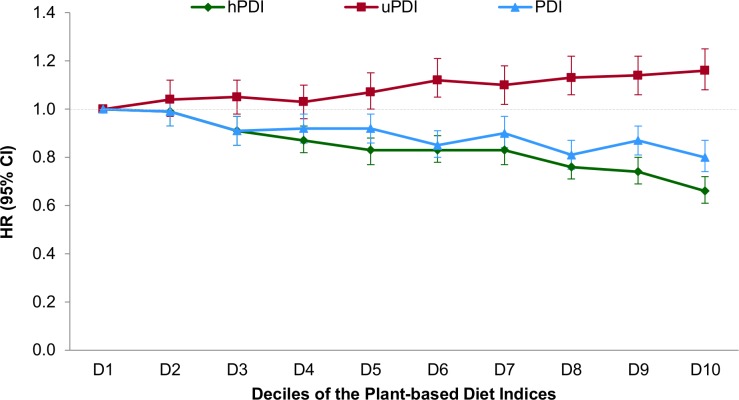
BACKGROUND: Plant-based diets have been recommended to reduce the risk of type 2 diabetes (T2D). However, not all plant foods are necessarily beneficial. We examined the association of an overall plant-based diet and hypothesized healthful and unhealthful versions of a plant-based diet with T2D incidence in three prospective cohort studies in the US. METHODS AND FINDINGS: We included 69,949 women from the Nurses' Health Study (1984-2012), 90,239 women from the Nurses' Health Study 2 (1991-2011), and 40,539 men from the Health Professionals Follow-Up Study (1986-2010), free of chronic diseases at baseline. Dietary data were collected every 2-4 y using a semi-quantitative food frequency questionnaire. Using these data, we created an overall plant-based diet index (PDI), where plant foods received positive scores, while animal foods (animal fats, dairy, eggs, fish/seafood, poultry/red meat, miscellaneous animal-based foods) received reverse scores. We also created a healthful plant-based diet index (hPDI), where healthy plant foods (whole grains, fruits, vegetables, nuts, legumes, vegetable oils, tea/coffee) received positive scores, while less healthy plant foods (fruit juices, sweetened beverages, refined grains, potatoes, sweets/desserts) and animal foods received reverse scores. Lastly, we created an unhealthful plant-based diet index (uPDI) by assigning positive scores to less healthy plant foods and reverse scores to healthy plant foods and animal foods. We documented 16,162 incident T2D cases during 4,102,369 person-years of follow-up. In pooled multivariable-adjusted analysis, both PDI and hPDI were inversely associated with T2D (PDI: hazard ratio [HR] for extreme deciles 0.51, 95% CI 0.47-0.55, p trend < 0.001; hPDI: HR for extreme deciles 0.55, 95% CI 0.51-0.59, p trend < 0.001). The association of T2D with PDI was considerably attenuated when we additionally adjusted for body mass index (BMI) categories (HR 0.80, 95% CI 0.74-0.87, p trend < 0.001), while that with hPDI remained largely unchanged (HR 0.66, 95% CI 0.61-0.72, p trend < 0.001). uPDI was positively associated with T2D even after BMI adjustment (HR for extreme deciles 1.16, 95% CI 1.08-1.25, p trend < 0.001). Limitations of the study include self-reported diet assessment, with the possibility of measurement error, and the potential for residual or unmeasured confounding given the observational nature of the study design. CONCLUSIONS: Our study suggests that plant-based diets, especially when rich in high-quality plant foods, are associated with substantially lower risk of developing T2D. This supports current recommendations to shift to diets rich in healthy plant foods, with lower intake of less healthy plant and animal foods.
Overview
The claims and statistics of this paper haven’t been checked yet.
Free: it reads the open-access text and checks the first 5 claims that cite a source we can check. Create a free account to check every claim.
Integrity signals
Registry
Cites
Statistics
Figures
Verification
Claims the paper makes
The claims and statistics of this paper haven’t been checked yet.
Free: it reads the open-access text and checks the first 5 claims that cite a source we can check. Create a free account to check every claim.
Claims other papers make about this one
Each is checked against this paper’s own text: does it say what the citing paper says it does?
The source backs part of the claim, not all of it — or backs it for a different population, condition or comparison.
In the citing paper
“Diets emphasizing whole, minimally processed foods—such as vegetables, fruits, whole grains, legumes, nuts, seeds, and lean protein sources—have been consistently associated with a reduced risk of obesity, type 2 diabetes, hypertension, and cardiovascular disease [164,165,166,167].”
From Lifestyle Medicine for Obesity in the Era of Highly Effective Anti-Obesity Treatment (2025) · cites this paper as [166]
Experimental — accuracy not yet measuredThe source backs part of the claim, not all of it — or backs it for a different population, condition or comparison.
In the citing paper
“There is consistent evidence that links well-balanced, minimally processed plant-based diets with a lower incidence of type 2 diabetes, improved glycaemic control and reduced cardiometabolic risk [2,3,4].”
From Dietary Nitrate-Rich Vegetables as Natural Modulators of Health: Mechanisms and Benefits in Ageing Populations (2026) · cites this paper as [3]
Experimental — accuracy not yet measuredThe cited source says what the claim attributes to it.
In the citing paper
“In three US cohorts, we previously documented that the PDI was inversely associated with type 2 diabetes risk with a stronger inverse association for hPDI, and a positive association for uPDI(14).”
From Healthful and Unhealthful Plant-Based Diets and the Risk of Coronary Heart Disease in U.S. Adults (2017) · cites this paper as [14]
Self-check
Percentages, sums and reported differences re-computed from the paper’s own numbers.
The self-check needs the paper’s full text.
Citations
Cites
Measuring inconsistency in meta-analyses
Higgins, J. P. T., Thompson, S. G., Deeks, J. J., & Altman, D. G. (2003) · BMJ · doi:10.1136/bmj.327.7414.557 · Cited by 63,139
Report of the Expert Committee on the Diagnosis and Classification of Diabetes Mellitus
The Expert Committee on the Diagnosis and Classification of Diabetes Mellitus* (2002) · Diabetes Care · doi:10.2337/diacare.25.2007.s5 · Cited by 10,338
Report of the Expert Committee on the Diagnosis and Classification of Diabetes Mellitus
The Expert Committee on the Diagnosis and Classification of Diabetes Mellitus (1997) · Diabetes Care · doi:10.2337/diacare.20.7.1183 · Cited by 6,220
The combination of estimates from different experiments
Cochran, W. G. (1954) · Biometrics · doi:10.2307/3001666 · Cited by 5,380
Classification and diagnosis of diabetes mellitus and other categories of glucose intolerance.
National Diabetes Data Group (1979) · Diabetes · doi:10.2337/diab.28.12.1039 · Cited by 4,909
Reproducibility and validity of a semiquantitative food frequency questionnaire
WILLETT, W. C., SAMPSON, L., STAMPFER, M. J., ROSNER, B., BAIN, C., WITSCHI, J., HENNEKENS, C. H., & SPEIZER, F. E. (1985) · American Journal of Epidemiology · doi:10.1093/oxfordjournals.aje.a114086 · Cited by 4,274
Self-citationStandards of medical care in diabetes 2010
American Diabetes Association (2010) · Diabetes Care · doi:10.2337/dc10-s011 · Cited by 3,470
Basevi, V., Di Mario, S., Morciano, C., Nonino, F., & Magrini, N. (2011) · Diabetes Care · doi:10.2337/dc11-0174 · Cited by 3,055
Changes in diet and lifestyle and long-term weight gain in women and men
Mozaffarian, D., Hao, T., Rimm, E. B., Willett, W. C., & Hu, F. B. (2011) · New England Journal of Medicine · doi:10.1056/nejmoa1014296 · Cited by 2,527
Self-citationSugar-Sweetened Beverages and Risk of Metabolic Syndrome and Type 2 Diabetes
Malik, V. S., Popkin, B. M., Bray, G. A., Després, J.-P., Willett, W. C., & Hu, F. B. (2010) · Diabetes Care · doi:10.2337/dc10-1079 · Cited by 2,116
Self-citation
Research works printed but not linked: 1
- Willett W. Nutritional epidemiology 3rd ed. Oxford: Oxford University Press; 2013.
Cited by
Items 601–700 of 1,000
Healthy and Unhealthy Plant-Based Diets and Glioma in the Chinese Population
Zhang, W., Yue, P., Kang, X., Wang, C., Chen, F., He, Y., & Li, W. (2023) · Brain Sciences · doi:10.3390/brainsci13101401 · Cited by 5
“…the limitations of previous studies, this study introduced the diet index as a comprehensive measure of an individual’s plant-based food intake [4,5] and further divided it into the overall plant-based diet index (PDI), healthy plant-based diet index (hPDI), and unhealthy plant-based diet index…”
Backgroundda Conceição, A. R., da Silva, A., Juvanhol, L. L., Marcadenti, A., Bersch-Ferreira, Â. C., Weber, B., Shivappa, N., & Bressan, J. (2023) · Nutrition Research · doi:10.1016/j.nutres.2023.10.007 · Cited by 6
Exploring culinary diversity to enhance Mediterranean diet adherence: A randomized controlled trial
Shavit, Y., Tepper, S., & Teodorescu, K. (2024) · Appetite · doi:10.1016/j.appet.2024.107597 · Cited by 5
A plant-based diet index and all-cause and cause-specific mortality: a prospective study
Xu, X., Yan, M., Huo, S., Meng, S., Yuan, C., & Wang, P. (2025) · Food & Function · doi:10.1039/d4fo04242e · Cited by 5
Shi, R., Mendoza-Sanchez, M., Qadir, M., & Joshi, S. (2025) · Cardiology Clinics · doi:10.1016/j.ccl.2024.12.006 · Cited by 10
Sciacca, S., Giudice, A. L., Asmundo, M. G., Cimino, S., Morgia, G., Alshatwi, A. A., Cocci, A., & Russo, G. I. (2023) · Nutrition and Cancer · doi:10.1080/01635581.2023.2279240 · Cited by 5
Fernández, M. L. (2018) · Journal of Nutrition · doi:10.1093/jn/nxy317 · Cited by 6
Jannati, N., Mahmoodi, M. R., & Azadbakht, L. (2024) · PLoS ONE · doi:10.1371/journal.pone.0298454 · Cited by 4
“In contrast, the uPDI focuses on less nutritious plant foods that increase the risk of chronic conditions [19].”
BackgroundNoormohammadi, M., Eslamian, G., Kazemi, S. N., Rashidkhani, B., & Yeganeh, S. J. (2024) · International Journal of Gynecology & Obstetrics · doi:10.1002/ijgo.15886 · Cited by 4
“Assessment of the plant-based dietary pattern utilizing the approach developed by Satija et al. 13,26 T A B L E 1 G e n e r a l c h a r a c t e r i s t i c s s e p a r a t e l y a c r o ss t e r t i l e s o f d i e t a r y i n f l a mm a t o r y i n d e x .”
Liu, X., Yin, L., Wang, F., Ao, Y., Zhuang, P., Zhang, Y., & Jiao, J. (2025) · Food & Function · doi:10.1039/d4fo05107f · Cited by 4
Factors involved in human healthy aging: insights from longevity individuals
Yin, F.-Q., Xiao, F., & Kong, Q.-P. (2025) · Frontiers of Medicine · doi:10.1007/s11684-024-1120-4 · Cited by 4
Tolstova, N. Y., Machado, P. P., Marchese, L. E., & Livingstone, K. M. (2025) · Nutrients · doi:10.3390/nu17071244 · Cited by 5
“In short, all single food items and the individual ingredients from handmade recipes were classified according to the four NOVA system groups: (1) unprocessed or minimally processed foods (examples: fruits, nuts, cereals and eggs); (2) processed culinary ingredients (examples: oils and table…”
InfluentialMarchese, L. E., McNaughton, S. A., Hendrie, G. A., Machado, P. P., O’Sullivan, T. A., Beilin, L. J., Mori, T. A., Dickinson, K. M., & Livingstone, K. M. (2025) · International Journal of Behavioral Nutrition and Physical Activity · doi:10.1186/s12966-025-01765-0 · Cited by 6
“The three plant-based diet indices developed and validated by Satija et al. [28] were used to capture the over-all quality of plant-based dietary patterns.”
Mindful eating is associated with a healthier plant-based diet in the NutriNet-Santé study
Paolassini-Guesnier, P., Beekum, M. V., Kesse‐Guyot, E., Baudry, J., Shankland, R., Rodhain, A., Bellicha, A., Leys, C., Herçberg, S., Touvier, M., et al. (2025) · Scientific Reports · doi:10.1038/s41598-025-02195-5 · Cited by 5
Dunk, M. M., Dove, A. E., Wang, J., Sakakibara, S., Carballo‐Casla, A., & Xu, W. (2025) · JACC Advances · doi:10.1016/j.jacadv.2025.102229 · Cited by 5
Roosyidah, D. A., Habibah, K., Syauqy, A., Sulchan, M., Nugroho, H., & Pramono, A. (2025) · Nutrition & Food Science · doi:10.1108/nfs-03-2025-0109 · Cited by 4
Not All Plants Are Equal: Diet Quality and Inflammation in Vegans and Vegetarians in Urban Poland
Mrozik, M., Grygorczuk, O., Lipert, A., Białas, A. J., Kamińska, S., Drygas, W., Rębowska, E., Łęgocki, S., Jegier, A., Szmigielska, K., et al. (2025) · Nutrients · doi:10.3390/nu17213361 · Cited by 6
“Participants with the highest consumption of healthy plant-based foods received a score of 3, while participants with the highest consumption of unhealthy plant-based foods and animal-based foods received a score of 1 [50].”
InfluentialVegetarian Dietary Patterns for Adults: A Position Paper of the Academy of Nutrition and Dietetics
Raj, S., Guest, N. S., Landry, M. J., Mangels, A. R., Pawlak, R., & Rozga, M. (2025) · Journal of the Academy of Nutrition and Dietetics · doi:10.1016/j.jand.2025.156227 · Cited by 7
“Higher hPDI scores have been associated with health bene fi ts, such as a lower risk of T2DM, 29 CVD, 30 and obesity, 42 whereas higher uPDI scores are associated with a higher risk of several chronic diseases.”
InfluentialHuang, Z., Qiu, G., Yang, B., Shao, Y., Lin, S., Zhou, H., Sun, L., & Wang, Y. (2026) · Nutrients · doi:10.3390/nu18020316 · Cited by 4
“While hPDI is well-established in cardiometabolic research—linked, for example, to a 34–45% reduction in type 2 diabetes risk—its relationship with cognitive function remains inconsistent and controversial across studies [8].”
Tan, B., li, Z., Chen, P., Wang, K., Li, Q., Feng, Y., Wang, X., Qian, F., Hu, W., Feng, C., et al. (2026) · European Journal of Preventive Cardiology · doi:10.1093/eurjpc/zwag220 · Cited by 4
Optimal Dietary Patterns for Lower Weight Gain and Risk of Obesity Surrounding Menopause
Xia, T., Haslam, D. E., Eliassen, A. H., Manson, J. E., Sun, Q., Willett, W. C., Bhupathiraju, S. N., Zhang, C., & Hu, F. B. (2026) · JAMA Network Open · doi:10.1001/jamanetworkopen.2026.13102 · Cited by 6
Self-citationLifestyle Medicine: An Antidote to Cardiovascular Diseases
Reddy, K. R., & Freeman, A. M. (2022) · American Journal of Lifestyle Medicine · doi:10.1177/15598276221130684 · Cited by 4
“142 Similarly, during a 7 year follow up of a very large Chinese cohort, it was noted that higher compared to lower fruit consumption was associated with signi fi cantly (adjusted HR = .88 [CI .83 – .93 P = .001] lower risk of developing diabetes and higher fruit consumption among diabetics was…”
BackgroundComparison of fermentable carbohydrate consumption in plant-based vs western-style diet groups
Jadhav, A., Vadiveloo, M. K., Laforge, R. G., & Melanson, K. J. (2022) · Human Nutrition & Metabolism · doi:10.1016/j.hnm.2022.200177 · Cited by 4
Kwiatkowska, I., Olszak, J., Brożek, A., Blacha, A., Nowicki, M., Maćkowiak, K., Formanowicz, P., & Formanowicz, D. (2023) · International Journal of Environmental Research and Public Health · doi:10.3390/ijerph20032237 · Cited by 4
“Other research from the Nurses’ Health Study also shows that adherence to a healthy plant-based diet may reduce the risk of breast cancer [110], developing type 2 diabetes [111], or stroke [112].”
MethodLopes, T., Zemlin, A. E., Sekgala, M. D., Mchiza, Z. J., Erasmus, R. T., & Kengne, A. P. (2023) · Nutrients · doi:10.3390/nu15071789 · Cited by 4
“…patterns consisted of plant foods that were nutrient-poor and energy-dense, such as refined grains (from the refined grains and meat pattern), potatoes consumed as French fries (from the fish/seafood, potatoes, and vegetables pattern), and cold/energy drinks (from the SSBs and egg pattern) [17,23].”
BackgroundMethodResultInfluentialPlant-based dietary index in relation to gut microbiota in Arab women
Aljuraiban, G. S., Aljazairy, E. A., Alsahli, A. S., Sabico, S., & Al-Musharaf, S. (2023) · Medicine · doi:10.1097/md.0000000000035262 · Cited by 5
Kendrick, K. N., Kim, H., Rebholz, C. M., Selvin, E., Steffen, L. M., & Juraschek, S. P. (2023) · Nutrients · doi:10.3390/nu15194265 · Cited by 7
“We constructed an overall plant-based diet index (PDI), healthy plant-based diet index (HPDI), and a less healthy plant-based diet index (UPDI) based on responses to the FFQ, using methodology described previously [5–8].”
BackgroundMethodPlant-based dietary patterns and risk of insomnia: a prospective study
Gan, Z. H., Chiu, T. H. T., Lin, C., Lin, M., & Kuo, P. (2023) · European Journal of Clinical Nutrition · doi:10.1038/s41430-023-01380-x · Cited by 7
“A healthful plant-based index (hPDI) was developed for a graded adherence approach following a methodology from previous research [33].”
Oncina-Cánovas, A., Torres‐Collado, L., de la Hera, M. G., Gabucio, L. M. C., González‐Palacios, S., Signes‐Pastor, A. J., & Vioqué, J. (2024) · The journal of nutrition health & aging · doi:10.1016/j.jnha.2024.100239 · Cited by 5
Zheng, Y., Wang, J., Li, Y., Wang, Y., Suo, C., Jiang, Y., Li, J., Xu, K., & Chen, X. (2024) · Preventive Medicine · doi:10.1016/j.ypmed.2024.108103 · Cited by 7
Cao, F., Wang, R., Wang, L., Li, Y.-Z., Wei, Y., Zheng, G., Nan, Y.-X., Sun, M.-H., Liu, F.-H., Xu, H.-L., et al. (2024) · Ecotoxicology and Environmental Safety · doi:10.1016/j.ecoenv.2024.116894 · Cited by 5
Djoussé, L., Zhou, X., Lim, J., Kim, E., Sesso, H. D., Lee, I.-M. M., Buring, J. E., McClelland, R. L., Gaziano, J. M., Steffen, L. M., et al. (2024) · Journal of Nutrition · doi:10.1016/j.tjnut.2024.07.020 · Cited by 5
Self-citationTabar, M. S., Fotros, D., Hekmatdoost, A., Pashayee-Khamene, F., Karimi, S., Ahmadzadeh, S., Saberifiroozi, M., Hatami, B., & Yari, Z. (2024) · BMC Gastroenterology · doi:10.1186/s12876-024-03475-6 · Cited by 4
Ni, J., Lu, H., Chen, W., Zhao, Y., Yang, S., Zhang, J., Wang, Z., Shi, Y., Yi, J., Li, J., et al. (2024) · European Journal of Nutrition · doi:10.1007/s00394-024-03527-3 · Cited by 4
“…score (GDQS) [27], Healthful global diet quality score (hGDQS), Unhealthful global diet quality score (uGDQS), Plant-based diet index (PDI) [ 28 , 29], Healthful plant-based diet index (hPDI), Unhealthful plant-based diet index (uPDI), Overall low-carbohydrate diet (LCD) [22], Animal-rich…”
Zhao, J., Gao, Q., Zhang, J., Zhang, Y., Araki, T., Zhang, L., Wang, J., & Zhao, Y. (2024) · Nutrition Journal · doi:10.1186/s12937-024-01053-w · Cited by 6
“Following the basic scoring methods described in previous studies [9–12], we divided each food group into quintiles of intakes and assigned integer scores ranging from 1 to 5.”
InfluentialZhu, Q., Liu, X., Qu, Y., Jiang, Y. Y., Liu, X., Yu, X., Lv, K., Xu, Y., & Liu, K. (2024) · The journal of nutrition health & aging · doi:10.1016/j.jnha.2024.100431 · Cited by 4
Lv, Y., Wu, M., Liu, W., Liu, K., Wang, Y., Cui, Z., Ma, Q., & Meng, H. (2025) · Nutrients · doi:10.3390/nu17071152 · Cited by 4
“These findings were consistent with prior reports [11,15,16,20,25–29].”
InfluentialYu, Y., Cheng, Y., Cheng, N., Zhang, J., Xu, Q., Wang, Y., Zhou, W., Yan, C., Li, H., & Gong, Z. (2025) · Frontiers in Nutrition · doi:10.3389/fnut.2025.1567436 · Cited by 4
Plant based diet and cardio-metabolic disease
Dąbrowska, J., Wójcik, M., Borowik, J., Kuśmierczuk, K., & Piecewicz‐Szczęsna, H. (2020) · Journal of Education Health and Sport · doi:10.12775/jehs.2020.10.05.015 · Cited by 5
“However, plant based diet focused on healthy plant food was linked to even lower risk of diabetes [52].”
BackgroundDietary Treatments to Reduce Insulin Resistance and Inflammation in Type-2 Diabetic Patients
Fernández, M. L., & Murillo, A. G. (2022) · Medical Research Archives · doi:10.18103/mra.v10i4.2768 · Cited by 5
“In a large prospective study, Satija et al. 55 evaluated T2D incidence according to dietary choices using the Nurses ’ Health Study, the Nurses ’ Health Study II and the Health Professionals follow up study.”
Ahmed, A., Afzaal, M., Ali, S. W., Muzammil, H. S., Masood, A., Saleem, M. A., Saeed, F., Hussain, M., Rasheed, A., & Jbawi, E. M. A. (2022) · International Journal of Food Properties · doi:10.1080/10942912.2022.2120495 · Cited by 4
RetractedThe Gut Microbiome in Vegetarians
de Moraes, A. C. F., de Almeida-Pititto, B., & Ferreira, S. R. G. (2019) · Elsevier eBooks · doi:10.1016/b978-0-12-815249-2.00041-5 · Cited by 5
Antioxidants, vegetarian diets, and age-related disease
Bulmer, A. C., Anoopkumar‐Dukie, S., & Benzie, I. F. F. (2020) · Elsevier eBooks · doi:10.1016/b978-0-12-818698-5.00035-3 · Cited by 4
Lopes, T., Zemlin, A. E., Erasmus, R. T., Faber, M., & Kengne, A. P. (2020) · BMJ Open · doi:10.1136/bmjopen-2020-036792 · Cited by 4
Derbyshire, E. J. (2020) · doi:10.46715/jfsn2020.07.1000102 · Cited by 6
“diabetes [17] and of all-cause mortality in US adults [18].”
BackgroundSetiawan, B., & Masfufatun, M. (2021) · IntechOpen eBooks · doi:10.5772/intechopen.96610 · Cited by 7
Global burden of colorectal cancer: epidemiology, risk factors
Medvedeva, E. A., Maryin, G. G., Leshchenko, A. A., Черногорова, М. В., Mb, D., Назаров, Д. А., & Иванов, С. А. (2022) · Research and Practical Medicine Journal · doi:10.17709/2410-1893-2022-9-4-13 · Cited by 4
Koemel, N. A., Shah, S., Senior, A. M., Severi, G., Mancini, F. R., Gill, T. P., Simpson, S. J., Raubenheimer, D., Boutron‐Ruault, M., Laouali, N., et al. (2024) · European Journal of Nutrition · doi:10.1007/s00394-024-03379-x · Cited by 4
Gardner, C. D. (2019) · American Journal of Clinical Nutrition · doi:10.1093/ajcn/nqz101 · Cited by 4
“The current work builds on a previous publication of PDI, hPDI, uPDI, and incidence of type 2 diabetes by many of the same investigators (4).”
MethodKurhaluk, N., Kołodziejska, R., Buyun, L., Kamiński, P., & Tkaczenko, H. (2026) · International Journal of Molecular Sciences · doi:10.3390/ijms27083461 · Cited by 3
Plant-Based Diet as a Sustainable Diet or a New Diet Trend
Mujezin, L., Salkić, A., & Taljić, I. (2023) · Lecture notes in bioengineering · doi:10.1007/978-3-031-47467-5_25 · Cited by 3
Zhu, A., Kan, H., Shi, X., Zeng, Y., & Ji, J. S. (2024) · The Journals of Gerontology Series A · doi:10.1093/gerona/glae302 · Cited by 3
Ma, S., Zhang, Y., Xie, S., Li, X., Chen, R., Wang, S., & Wei, W. (2025) · International Journal of Cancer · doi:10.1002/ijc.35402 · Cited by 4
“17 This nuanced approach enables the identification of dietary patterns that may be protective versus those that could increase cancer risk — even within the broader plant-based framework.”
Kim, H., Chen, J., Prescott, B. R., Walker, M. E., Grams, M. E., Yu, B., Vasan, R. S., Floyd, J. S., Sotoodehnia, N., Smith, N. L., et al. (2025) · Journal of Nutrition · doi:10.1016/j.tjnut.2025.04.011 · Cited by 4
Yang, H., Wang, Y., Luo, K., Mossavar‐Rahmani, Y., Cordero, C., Ostfeld, R. J., Martinez, C. A., Maldonado, L. E., Pirzada, A., Daviglus, M. L., et al. (2025) · American Journal of Clinical Nutrition · doi:10.1016/j.ajcnut.2025.05.008 · Cited by 3
Self-citationSex-based differences in in vitro digestibility of milk and oat drink, and powder counterparts
Mashiah, L., Beck, E., Levi, C. S., & Lesmes, U. (2025) · Food Research International · doi:10.1016/j.foodres.2025.116610 · Cited by 3
Neacsu, M., Sayegh, M., Vaughan, N. J., Duncan, G., Cantlay, L. L., Anderson, S. E., Henderson, D., Fyfe, C., Farquharson, F. M., Saibu, S., et al. (2025) · European Journal of Nutrition · doi:10.1007/s00394-025-03726-6 · Cited by 6
“Micro-bial-derived metabolites of aromatic amino acids found in plasma such as indole-3-propionic acid was also associated with a lower likelihood of developing T2D [20] in people with impaired glucose tolerance.”
Microbiota awareness of Turkish adults is associated with plant-based dietary patterns
Kenger, E. B., Karahan, T. Ö., Bayram, H. M., & Ozturkcan, S. A. (2025) · Nutrition & Food Science · doi:10.1108/nfs-09-2024-0289 · Cited by 3
Fan, R., Zhang, Y., Yaqing, M., Wenli, Z., & Wang, J. (2025) · Journal of Nutrition · doi:10.1016/j.tjnut.2025.06.008 · Cited by 3
Mahmoodi, M., Soltani, M., Nouri, M., Shateri, Z., Shoja, M., Rajabzadeh-Dehkordi, M., Nasimi, N., & Dabbaghmanesh, M. H. (2025) · BMC Public Health · doi:10.1186/s12889-025-25047-3 · Cited by 3
“The final score for each PDI, uPDI, and hPDI was calculated between 18 and 180; thus, a higher final score was related to greater adherence to the dietary pattern [26–28].”
Healthy plant‐based dietary pattern is associated with a lower risk of rosacea
Zhang, Y., Yang, F., Zheng, W., Liu, P., Zhang, X., Liu, J., Gong, T., Gao, S., Wu, Q., & Wu, Y. (2025) · Journal of the European Academy of Dermatology and Venereology · doi:10.1111/jdv.70163 · Cited by 3
“15 These indices have demonstrated associations with inflammatory skin diseases.”
Li, Y., Xu, X., Zheng, Y., Li, R., Zhang, X., Wang, J., Gao, N., Wang, J., Wang, Y., Li, J., et al. (2025) · Communications Medicine · doi:10.1038/s43856-025-01222-w · Cited by 5
The Gut Microbiota as a Mediator in the Relationship Between Dietary Patterns and Depression
Hernández-Cacho, A., Ni, J., García-Gavilán, J. F., Konstanti, P., Belzer, C., Vioqué, J., Corella, D., Fitó, M., Vidal, J., Torres‐Collado, L., et al. (2026) · MedComm · doi:10.1002/mco2.70562 · Cited by 6
van Kalkeren, C. A. J., Adam, T. C., & Blaak, E. E. (2026) · Advances in Nutrition · doi:10.1016/j.advnut.2026.100610 · Cited by 4
“Finally, lower fat-free mass was found in Iranian women consuming an unhealthy plant-based diet compared with healthy plant-based diet consumption based on the Plant-based dietary index [119], which rates plant-based products on their healthiness [154].”
Moosavi, D., Lim, U., Hullar, M. A. J., Rettenmeier, C., Kwee, S. A., Monroe, K. R., Ernst, T., Randolph, T., Wilkens, L. R., Marchand, L. L., et al. (2026) · European Journal of Clinical Nutrition · doi:10.1038/s41430-026-01743-0 · Cited by 3
“Diets rich in whole grains, vegetables, legumes, and nuts are associated with improved insulin sensitivity, reduced adiposity, and lower systemic in fl am-mation [21 – 23].”
InfluentialShen, J., Sun, Z., Song, H., Pu, Y., Wang, P., Hailili, G., Huang, Y., Mei, Z., Chen, H., Huang, L., et al. (2026) · Cell Reports Medicine · doi:10.1016/j.xcrm.2026.102797 · Cited by 4
“The mHPDI, adapted from the original healthful plant-based diet index (HPDI) 27,28 to additionally award positive scores for fish and seafood, comprised 16 food groups, with higher scores for healthy plant foods (whole grains, fresh vegetables, fresh fruits, nuts, legumes, tea, and vegetable oils)…”
(Poly)phenol profiles of plant-based diets assessed through dietary intake and urinary biomarkers
Casas-Albertos, E., Rodriguez-Martín, N. M., Alcalá-Santiago, Á., Reina-Borrego, M., Keski‐Rahkonen, P., Marchiandi, J., Sarriá, B., Ruiz-Moreno, E., Piernas, C., Ruiz-López, M. D., et al. (2026) · Food & Function · doi:10.1039/d6fo01259k · Cited by 3
Sawicki, C. M., Ren, Y., Kanaya, A. M., Kandula, N. R., Gadgil, M. D., Liang, L., Haslam, D. E., & Bhupathiraju, S. N. (2024) · Journal of Nutrition · doi:10.1016/j.tjnut.2024.06.007 · Cited by 3
Self-citationBeasley, J. M., Hussain, B. M., Gadgil, M. D., Talegawkar, S. A., Parekh, N., Bhupathiraju, S. N., Islam, N. S., & Kanaya, A. M. (2024) · BMJ Nutrition Prevention & Health · doi:10.1136/bmjnph-2023-000853 · Cited by 4
“25 To derive the overall plant-based diet index (PDI), plant foods received positive scores, while animal foods (eg, animal fats, dairy, eggs, fish/seafood) received reverse scores.”
Self-citationSong, X., Tian, Z., Jiang, K., He, K., Huang, Y., Hu, C., He, X., Jin, L., & Tao, Y. (2024) · Gerontology · doi:10.1159/000540611 · Cited by 4
“Because the nutritional quality of plant-based foods is not identical, Satija et al. [20] developed three indices for plant-based dietary patterns: the overall plant-based diet index (PDI), the healthy plant-based diet index (hPDI), and the unhealthy plant-based diet index (uPDI).”
InfluentialMumtaz, S., Akhtar, N., Ahmed, A., & Qazi, A. S. (2024) · Cancer treatment and research · doi:10.1007/978-3-031-55622-7_8 · Cited by 3
Healthy Plant-Based Diet, Genetic Predisposition, and the Risk of Incident Venous Thromboembolism
Guo, J., He, Y.-Y., Suo, X. H., Liu, Y., Xiao, L., Zhou, Y., Hao, Z., Liang, R., Bo, Y., Lyu, Q., et al. (2024) · JACC Advances · doi:10.1016/j.jacadv.2024.101318 · Cited by 5
Brunin, J., Baudry, J., Allès, B., Ghozal, M., Touvier, M., Herçberg, S., Lairon, D., de Lauzon‐Guillain, B., & Kesse‐Guyot, E. (2024) · British Journal Of Nutrition · doi:10.1017/s000711452400117x · Cited by 4
“More information can be found elsewhere (29) .”
Plant-based dietary patterns and fasting insulin: a cross-sectional study from NHANES 2017–2018
Curlin, D., Hare, M. E., Tolley, E. A., & Gatwood, J. D. (2023) · BMC Nutrition · doi:10.1186/s40795-023-00780-3 · Cited by 5
“Using the FPED 2017–2018 data, we calculated an overall plant-based diet index score (PDI) and a healthy [3, 10].”
BackgroundMethodResultImpacts of Food on Mind, Health, and Relationships: A Synthesis of Current Research
Shuaibu, F. M., Gasma, M. A., & Abubakar, A. (2023) · International Journal of Health Sciences and Research · doi:10.52403/ijhsr.20231128 · Cited by 4
“Moreover, plant-based diets have been shown to improve heart health by reducing blood pressure, cholesterol levels, and inflammation (Satija et al., 2017).”
BackgroundHoes, L. L. F., Geleijnse, J. M., Bonekamp, N. E., Dorresteijn, J. A. N., van der Meer, M. G., van der Schouw, Y. T., Visseren, F. L. J., & Koopal, C. (2024) · Nutrition Metabolism and Cardiovascular Diseases · doi:10.1016/j.numecd.2024.01.015 · Cited by 3
Use of Medical Foods to Fight Chronic Diseases: A Narrative Review
Meral, H., & Demirdöven, A. (2024) · Tarım Bilimleri Dergisi · doi:10.15832/ankutbd.1357154 · Cited by 4
Bock, N., Langmann, F., Johnston, L., Ibsen, D. B., & Dahm, C. C. (2024) · Nutrients · doi:10.3390/nu16152383 · Cited by 4
“Animal-based and healthy and unhealthy plant-based food foods were grouped based on plant-based diet indices from previous studies [33–36].”
MethodTurner‐McGrievy, G. M., Wirth, M. D., Okpara, N., Jones, M., Kim, Y., Wilcox, S., Friedman, D. B., Sarzynski, M. A., & Liese, A. D. (2024) · Nutrition Research · doi:10.1016/j.nutres.2024.09.005 · Cited by 3
Bullón‐Vela, V., Martínez-Tabar, A., Etxezarreta-Uranga, M., Martínez‐González, M. Á., Basterra-Gortari, F. J., & Bes‐Rastrollo, M. (2024) · Medicina · doi:10.3390/medicina60111881 · Cited by 4
Plant-based diets: analyzing their impact on cardiovascular and cerebrovascular diseases
Fu, H. (2025) · Theoretical and Natural Science · doi:10.54254/2753-8818/2024.la19833 · Cited by 3
Kahleová, H., Fischer, I. P., Smith, R., Himmelfarb, J., Znayenko‐Miller, T., Holubkov, R., & Barnard, N. D. (2025) · Frontiers in Nutrition · doi:10.3389/fnut.2025.1605769 · Cited by 3
Hajmir, M. M., Mirzababaei, A., Abaj, F., Aali, Y., Samadi, M., & Mirzaei, K. (2025) · Scientific Reports · doi:10.1038/s41598-025-09726-0 · Cited by 3
“Recent studies reported that adherence to hPDI could decrease the risk of chronic diseases and improve CVDs, while diets focused on uPDI resulted in a higher risk of chronic diseases 25–29 .”
InfluentialNjike, V. Y., Annam, R., Costales, V. C., Yarandi, N., & Katz, D. L. (2017) · BMJ Open Diabetes Research & Care · doi:10.1136/bmjdrc-2017-000411 · Cited by 3
The role of diet in the obesity epidemic
Kiwanuka, E. (2020) · Elsevier eBooks · doi:10.1016/b978-0-12-818839-2.00008-9 · Cited by 3
Njike, V. Y., Kela, G., Treu, J. A., Ayettey, R. G., Kussaga, F. M., Khan, N., Comerford, B., & Agboola, O. J. (2022) · Journal of the American Nutrition Association · doi:10.1080/07315724.2021.2006824 · Cited by 4
Ketogenic vs plantogenic diets for health: a review article
Santos, H. D., Han, D., Perez, M., Johnson, S., & Shaheen, R. (2022) · Nutrition & Food Science · doi:10.1108/nfs-11-2021-0344 · Cited by 4
Kent, G., Kehoe, L., McNulty, B. A., Nugent, A. P., Flynn, A., & Walton, J. (2022) · Journal of Food Composition and Analysis · doi:10.1016/j.jfca.2022.104727 · Cited by 3
Борисова, В. І., Stöckelová, T., Ouřadová, A., & Gojda, J. (2023) · Central European Journal of Public Health · doi:10.21101/cejph.a7693 · Cited by 5
Cheng, W., Lin, X., Wang, T., Zhang, X., Xu, F., Wang, L., Wang, M., Zhang, M., Xia, T., Zhang, D., et al. (2023) · International Journal of Food Sciences and Nutrition · doi:10.1080/09637486.2023.2279916 · Cited by 4
“…improvements in the limitations of the previous vegan diet, including the failure to exclude animal foods and distinguish the quality of plant foods (Martínez-González et al. 2014), and its value in predicting diseases has been reported (Satija et al. 2016; Kim et al. 2020; Zamani et al. 2020).”
BackgroundResultStull, V. J., & Patz, J. A. (2024) · Oxford University Press eBooks · doi:10.1093/oso/9780197683293.003.0014 · Cited by 3
Zhang, X., He, F., Li, J., Chen, R., Li, X., Li, L., Liu, F., Wang, S., & Wei, W. (2024) · Chinese Journal of Cancer Research · doi:10.21147/j.issn.1000-9604.2024.01.04 · Cited by 3
Plant Protein, Animal Protein, and Cardiometabolic Health
Mariotti, F. (2017) · Elsevier eBooks · doi:10.1016/b978-0-12-803968-7.00036-8 · Cited by 4
Dietary Patterns in Plant-Based, Vegetarian, and Omnivorous Diets
Walsh, S., Hebbelinck, M., Deriemaeker, P., & Clarys, P. (2017) · Elsevier eBooks · doi:10.1016/b978-0-12-803968-7.00011-3 · Cited by 6
Rahman, V. J., Horberg, M. A., Hu, H., & Vupputuri, S. X. (2021) · Journal of Primary Care & Community Health · doi:10.1177/21501327211053198 · Cited by 5
Plant-based diets: human and planetary health
Karamnova, N. S., Izmailova, O. V., Shvabskaya, O. B., & Drapkina, O. M. (2022) · Russian Journal of Preventive Medicine · doi:10.17116/profmed202225111113 · Cited by 3
The Handbook of Wellness Medicine
Snellings, J. E. (2021) · Family Medicine · doi:10.22454/fammed.2021.204951 · Cited by 3
Karimi, E., Heidari, H., Kazemi, M., Hadi, A., Askari, G., Khorvash, F., & Arab, A. (2025) · Nutritional Neuroscience · doi:10.1080/1028415x.2025.2454168 · Cited by 2
“For uPDI, higher scores were given for greater consumption of less healthy plant foods, while reverse scores were applied to healthy plant and animal foods [33].”
Zhang, L., Chen, S., Xu, L., Tang, S., Huang, C., Zhou, J., Liu, C., Wang, S., Yang, C., Li, T., et al. (2025) · npj Science of Food · doi:10.1038/s41538-025-00399-7 · Cited by 3
Hünninghaus, K., Schäfer, H. C., Plonka, M., Vallejo, R. M., Dobos, G., & Haller, H. (2025) · International Journal of Behavioral Nutrition and Physical Activity · doi:10.1186/s12966-025-01793-w · Cited by 4
“In addition, following a plant-based diet is associated with a lower risk of obesity and diet-related secondary diseases such as type 2 diabetes mellitus and cardiovascular disease [5, 6, 7, 8].”
Metadata
- Authors
- Satija, A., Bhupathiraju, S. N., Rimm, E. B., Spiegelman, D., Chiuve, S. E., Borgi, L., Willett, W. C., Manson, J. E., Sun, Q., & Hu, F. B.
- Affiliations
- Harvard University (US)
- Brigham and Women's Hospital (US)
- Corresponding author
- Satija, Ambika
- ORCID
- Venue
- PLOS Medicine
- Publisher
- Public Library of Science (PLoS)
- Published
- 2016-06-14
- Volume
- 13
- Issue
- 6
- Pages
- e1002039
- ISSN
- 1549-1277 (ISSN-L)
- 1549-1676
- PMC
- PMC4907448
- OpenAlex
- W2430898493
- Cited by
- 1,069
- References
- 56
- Citations by year
- 2026: 133 · 2025: 169 · 2024: 179 · 2023: 135 · 2022: 124 · 2021: 99 · 2020: 103 · 2019: 55 · 2018: 47 · 2017: 20 · 2016: 4
- FWCI
- 41.65
- Type
- journal article
- Language
- en
- Open access
- gold
- doi.org
- Licence
- Locations
- PLoS Medicine (publishedVersion, cc-by)
- Europe PMC (PubMed Central) (publishedVersion, cc-by)
- PubMed Central (publishedVersion, cc-by)
- PubMed (publishedVersion)
- Digital Access to Scholarship at Harvard (DASH) (Harvard University) (submittedVersion, cc-by)
- DOAJ (DOAJ: Directory of Open Access Journals) (submittedVersion, cc-by-sa)
- Figshare (submittedVersion, cc-by)
- Funders
- National Institutes of Health (UM1-CA-176726, UM1-CA167552, CA176726, CA-167552, CA186107, DK58845, UM1 CA186107, UM1 CA176726)
- National Cancer Institute (UM1CA176726, UM1CA186107, UM1CA167552)
- National Institute of Diabetes and Digestive and Kidney Diseases (R01DK058845)
- Topics
- Health Sciences › Medicine › Public Health, Environmental and Occupational Health › Nutritional Studies and Diet
- Physical Sciences › Environmental Science › Ecology › Agriculture Sustainability and Environmental Impact
- Health Sciences › Medicine › Physiology (medical) › Dietary Effects on Health
- Keywords
- plant-based diet, type 2 diabetes, diabetes incidence, dietary habits, healthful plant-based diet index, unhealthful plant-based diet index, body mass index, dairy consumption, red and processed meat, fruit and vegetable intake, Nurses' Health Study, Health Professionals Follow-up Study, sex differences, United States adults, pooled analysis of cohort studies
- MeSH terms
- Adult, Diabetes Mellitus, Type 2, Diet, Female, Fruit, Humans, Male, Middle Aged, Prospective Studies, United States, Vegetables, Diet, Vegetarian, Cohort Studies, Incidence
About these checks
Registry, retraction, Cites and statistics results are computed, not judged, with one exception: a printed reference that no index lists is read once by a model before it counts as a citation error. Claims are extracted by a model and kept only when their quote appears verbatim in the text; each cited source is then checked, with a model’s help, for whether it says what the claim relies on. Those verdicts can be wrong — read the claim’s quote and the cited source before relying on one.
Statistics and arithmetic are recomputed, not judged.
Confidence bands are shown only for fields calibrated on our annotated test set. None is calibrated yet, so no band is shown.
What counts as a claim ›How we measure confidence ›How we check this ›
Are you an author, or do you see a problem with this page? Request a review
Data sources
Bibliographic data: Semantic Scholar, OpenAlex, Crossref.
Contains information from the Semantic Scholar Academic Graph Datasets, made available under the ODC Attribution License (ODC-BY 1.0).
Semantic Scholar’s data is described in: Kinney, R., et al. (2023). The Semantic Scholar Open Data Platform. arXiv:2301.10140.
