

Plant-Based Dietary Patterns and Incidence of Type 2 Diabetes in US Men and Women: Results from Three Prospective Cohort Studies
Open accessThe DOI matches its Crossref record; 56 of the 56 references it cites were found in a registry or an index.
Abstract
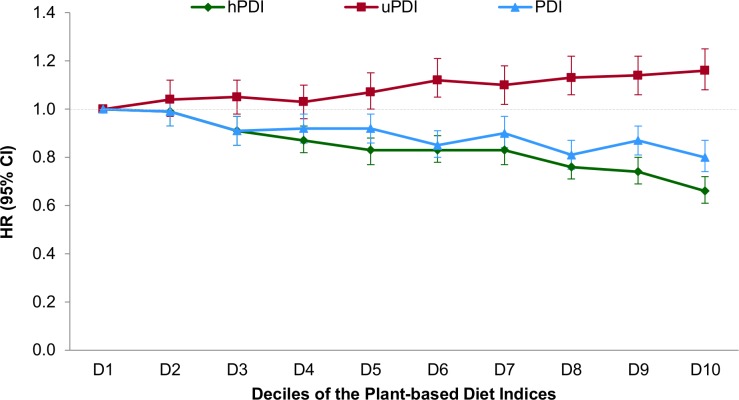
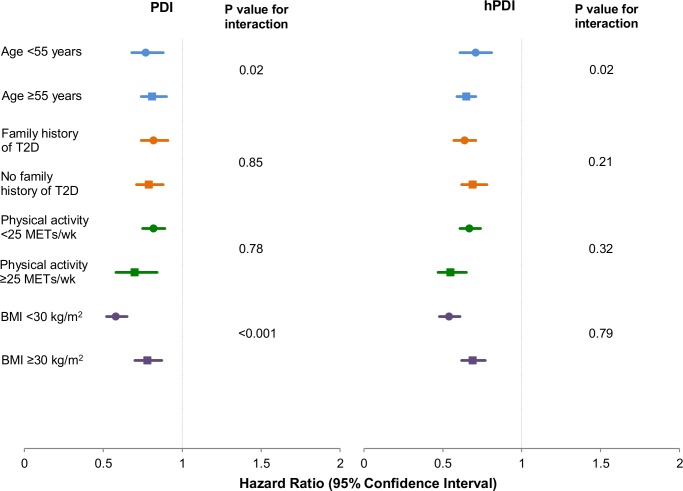
BACKGROUND: Plant-based diets have been recommended to reduce the risk of type 2 diabetes (T2D). However, not all plant foods are necessarily beneficial. We examined the association of an overall plant-based diet and hypothesized healthful and unhealthful versions of a plant-based diet with T2D incidence in three prospective cohort studies in the US. METHODS AND FINDINGS: We included 69,949 women from the Nurses' Health Study (1984-2012), 90,239 women from the Nurses' Health Study 2 (1991-2011), and 40,539 men from the Health Professionals Follow-Up Study (1986-2010), free of chronic diseases at baseline. Dietary data were collected every 2-4 y using a semi-quantitative food frequency questionnaire. Using these data, we created an overall plant-based diet index (PDI), where plant foods received positive scores, while animal foods (animal fats, dairy, eggs, fish/seafood, poultry/red meat, miscellaneous animal-based foods) received reverse scores. We also created a healthful plant-based diet index (hPDI), where healthy plant foods (whole grains, fruits, vegetables, nuts, legumes, vegetable oils, tea/coffee) received positive scores, while less healthy plant foods (fruit juices, sweetened beverages, refined grains, potatoes, sweets/desserts) and animal foods received reverse scores. Lastly, we created an unhealthful plant-based diet index (uPDI) by assigning positive scores to less healthy plant foods and reverse scores to healthy plant foods and animal foods. We documented 16,162 incident T2D cases during 4,102,369 person-years of follow-up. In pooled multivariable-adjusted analysis, both PDI and hPDI were inversely associated with T2D (PDI: hazard ratio [HR] for extreme deciles 0.51, 95% CI 0.47-0.55, p trend < 0.001; hPDI: HR for extreme deciles 0.55, 95% CI 0.51-0.59, p trend < 0.001). The association of T2D with PDI was considerably attenuated when we additionally adjusted for body mass index (BMI) categories (HR 0.80, 95% CI 0.74-0.87, p trend < 0.001), while that with hPDI remained largely unchanged (HR 0.66, 95% CI 0.61-0.72, p trend < 0.001). uPDI was positively associated with T2D even after BMI adjustment (HR for extreme deciles 1.16, 95% CI 1.08-1.25, p trend < 0.001). Limitations of the study include self-reported diet assessment, with the possibility of measurement error, and the potential for residual or unmeasured confounding given the observational nature of the study design. CONCLUSIONS: Our study suggests that plant-based diets, especially when rich in high-quality plant foods, are associated with substantially lower risk of developing T2D. This supports current recommendations to shift to diets rich in healthy plant foods, with lower intake of less healthy plant and animal foods.
Overview
The claims and statistics of this paper haven’t been checked yet.
Free: it reads the open-access text and checks the first 5 claims that cite a source we can check. Create a free account to check every claim.
Integrity signals
Registry
Cites
Statistics
Figures
Verification
Claims the paper makes
The claims and statistics of this paper haven’t been checked yet.
Free: it reads the open-access text and checks the first 5 claims that cite a source we can check. Create a free account to check every claim.
Claims other papers make about this one
Each is checked against this paper’s own text: does it say what the citing paper says it does?
The source backs part of the claim, not all of it — or backs it for a different population, condition or comparison.
In the citing paper
“Diets emphasizing whole, minimally processed foods—such as vegetables, fruits, whole grains, legumes, nuts, seeds, and lean protein sources—have been consistently associated with a reduced risk of obesity, type 2 diabetes, hypertension, and cardiovascular disease [164,165,166,167].”
From Lifestyle Medicine for Obesity in the Era of Highly Effective Anti-Obesity Treatment (2025) · cites this paper as [166]
Experimental — accuracy not yet measuredThe source backs part of the claim, not all of it — or backs it for a different population, condition or comparison.
In the citing paper
“There is consistent evidence that links well-balanced, minimally processed plant-based diets with a lower incidence of type 2 diabetes, improved glycaemic control and reduced cardiometabolic risk [2,3,4].”
From Dietary Nitrate-Rich Vegetables as Natural Modulators of Health: Mechanisms and Benefits in Ageing Populations (2026) · cites this paper as [3]
Experimental — accuracy not yet measuredThe cited source says what the claim attributes to it.
In the citing paper
“In three US cohorts, we previously documented that the PDI was inversely associated with type 2 diabetes risk with a stronger inverse association for hPDI, and a positive association for uPDI(14).”
From Healthful and Unhealthful Plant-Based Diets and the Risk of Coronary Heart Disease in U.S. Adults (2017) · cites this paper as [14]
Self-check
Percentages, sums and reported differences re-computed from the paper’s own numbers.
The self-check needs the paper’s full text.
Citations
Cites
Measuring inconsistency in meta-analyses
Higgins, J. P. T., Thompson, S. G., Deeks, J. J., & Altman, D. G. (2003) · BMJ · doi:10.1136/bmj.327.7414.557 · Cited by 63,139
Report of the Expert Committee on the Diagnosis and Classification of Diabetes Mellitus
The Expert Committee on the Diagnosis and Classification of Diabetes Mellitus* (2002) · Diabetes Care · doi:10.2337/diacare.25.2007.s5 · Cited by 10,338
Report of the Expert Committee on the Diagnosis and Classification of Diabetes Mellitus
The Expert Committee on the Diagnosis and Classification of Diabetes Mellitus (1997) · Diabetes Care · doi:10.2337/diacare.20.7.1183 · Cited by 6,220
The combination of estimates from different experiments
Cochran, W. G. (1954) · Biometrics · doi:10.2307/3001666 · Cited by 5,380
Classification and diagnosis of diabetes mellitus and other categories of glucose intolerance.
National Diabetes Data Group (1979) · Diabetes · doi:10.2337/diab.28.12.1039 · Cited by 4,909
Reproducibility and validity of a semiquantitative food frequency questionnaire
WILLETT, W. C., SAMPSON, L., STAMPFER, M. J., ROSNER, B., BAIN, C., WITSCHI, J., HENNEKENS, C. H., & SPEIZER, F. E. (1985) · American Journal of Epidemiology · doi:10.1093/oxfordjournals.aje.a114086 · Cited by 4,274
Self-citationStandards of medical care in diabetes 2010
American Diabetes Association (2010) · Diabetes Care · doi:10.2337/dc10-s011 · Cited by 3,470
Basevi, V., Di Mario, S., Morciano, C., Nonino, F., & Magrini, N. (2011) · Diabetes Care · doi:10.2337/dc11-0174 · Cited by 3,055
Changes in diet and lifestyle and long-term weight gain in women and men
Mozaffarian, D., Hao, T., Rimm, E. B., Willett, W. C., & Hu, F. B. (2011) · New England Journal of Medicine · doi:10.1056/nejmoa1014296 · Cited by 2,527
Self-citationSugar-Sweetened Beverages and Risk of Metabolic Syndrome and Type 2 Diabetes
Malik, V. S., Popkin, B. M., Bray, G. A., Després, J.-P., Willett, W. C., & Hu, F. B. (2010) · Diabetes Care · doi:10.2337/dc10-1079 · Cited by 2,116
Self-citation
Research works printed but not linked: 1
- Willett W. Nutritional epidemiology 3rd ed. Oxford: Oxford University Press; 2013.
Cited by
Food in the Anthropocene: the EAT–Lancet Commission on healthy diets from sustainable food systems
Willett, W., Rockström, J., Loken, B., Springmann, M., Lang, T., Vermeulen, S., Garnett, T., Tilman, D., DeClerck, F., Wood, A., et al. (2019) · The Lancet · doi:10.1016/s0140-6736(18)31788-4 · Cited by 10,880
Self-citationHeart Disease and Stroke Statistics—2020 Update: A Report From the American Heart Association
Virani, S. S., Alonso, A., Benjamin, E. J., Bittencourt, M. S., Callaway, C. W., Carson, A. P., Chamberlain, A. M., Chang, A. R., Cheng, S., Delling, F. N., et al. (2020) · Circulation · doi:10.1161/cir.0000000000000757 · Cited by 9,175
Heart Disease and Stroke Statistics—2019 Update: A Report From the American Heart Association
Benjamin, E. J., Muntner, P., Alonso, A., Bittencourt, M. S., Callaway, C. W., Carson, A. P., Chamberlain, A. M., Chang, A. R., Cheng, S., Das, S. R., et al. (2019) · Circulation · doi:10.1161/cir.0000000000000659 · Cited by 9,036
Heart disease and stroke statistics-2018 update: a report from the american heart association
Benjamin, E. J., Virani, S. S., Callaway, C. W., Chamberlain, A. M., Chang, A. R., Cheng, S., Chiuve, S. E., Cushman, M., Delling, F. N., Deo, R., et al. (2018) · Circulation · doi:10.1161/cir.0000000000000558 · Cited by 7,146
Self-citationLichtenstein, A. H., Appel, L. J., Vadiveloo, M., Hu, F. B., Kris-Etherton, P. M., Rebholz, C. M., Sacks, F. M., Thorndike, A. N., Van Horn, L., Wylie-Rosett, J., et al. (2021) · Circulation · doi:10.1161/cir.0000000000001031 · Cited by 1,065
“For example, plant-based diets high in refined carbohydrate and added sugar have been associated with increased risk of type 2 diabetes 159 and CVD. 160”
BackgroundSelf-citationAsnicar, F., Berry, S. E., Valdes, A. M., Nguyen, L. H., Piccinno, G., Drew, D. A., Leeming, E., Gibson, R., Le Roy, C., Khatib, H. A., et al. (2021) · Nature Medicine · doi:10.1038/s41591-020-01183-8 · Cited by 995
Healthful and Unhealthful Plant-Based Diets and the Risk of Coronary Heart Disease in U.S. Adults
Satija, A., Bhupathiraju, S. N., Spiegelman, D., Chiuve, S. E., Manson, J. E., Willett, W., Rexrode, K. M., Rimm, E. B., & Hu, F. B. (2017) · Journal of the American College of Cardiology · doi:10.1016/j.jacc.2017.05.047 · Cited by 991
“Using this dietary data, we created 3 versions of a plant-based diet for each food frequency questionnaire cycle for each cohort: PDI; hPDI; and uPDI (14).”
BackgroundMethodInfluentialSelf-citationEnvironmental/lifestyle factors in the pathogenesis and prevention of type 2 diabetes
Kolb, H., & Martin, S. (2017) · BMC Medicine · doi:10.1186/s12916-017-0901-x · Cited by 717
Medina-Leyte, D. J., Zepeda-García, O., Domínguez-Pérez, M., González-Garrido, A., Villarreal-Molina, T., & Jacobo-Albavera, L. (2021) · International Journal of Molecular Sciences · doi:10.3390/ijms22083850 · Cited by 623
Plant-based diets and cardiovascular health
Satija, A., & Hu, F. B. (2018) · Trends in Cardiovascular Medicine · doi:10.1016/j.tcm.2018.02.004 · Cited by 550
“We found varying cardio-metabolic effects of these diet indices (16, 17), pointing to the importance of defining plant-based diets in terms of the quality of plant foods they emphasize.”
BackgroundSelf-citationKim, H., Caulfield, L. E., Garcia‐Larsen, V., Steffen, L. M., Coresh, J., & Rebholz, C. M. (2019) · Journal of the American Heart Association · doi:10.1161/jaha.119.012865 · Cited by 437
Qian, F., Liu, G., Hu, F. B., Bhupathiraju, S. N., & Sun, Q. (2019) · JAMA Internal Medicine · doi:10.1001/jamainternmed.2019.2195 · Cited by 366
Self-citationThe Safe and Effective Use of Plant-Based Diets with Guidelines for Health Professionals
Craig, W. J., Mangels, A. R., Fresán, U., Marsh, K., Miles, F. L., Saunders, A. V., Haddad, E. H., Heskey, C. E., Johnston, P., Larson-Meyer, E., et al. (2021) · Nutrients · doi:10.3390/nu13114144 · Cited by 325
A review of statistical methods for dietary pattern analysis
Zhao, J., Li, Z., Gao, Q., Zhao, H., Chen, S., Huang, L., Wang, W., & Wang, T. (2021) · Nutrition Journal · doi:10.1186/s12937-021-00692-7 · Cited by 318
“Unlike other dietary quality scores, these plant-based dietary indexes focus on the quality of plant foods in the diet; all animal foods, including those animal foods known to promote health, are negatively scored when calculating the plant-based dietary indexes [44, 45].”
BackgroundA plant-based diet for the prevention and treatment of type 2 diabetes.
(2017) · Europe PMC (PubMed Central) · doi:10.11909/j.issn.1671-5411.2017.05.009 · Cited by 320
Guasch-Ferré, M., Merino, J., Sun, Q., Fitó, M., & Salas-Salvadó, J. (2017) · Oxidative Medicine and Cellular Longevity · doi:10.1155/2017/6723931 · Cited by 297
“Fruits, vegetables, whole grains, legumes, and coffee are also primary sources of polyphenols [8] and are beneficial for glycemic control and prevention of T2D [4, 69].”
BackgroundSelf-citationOptimal dietary patterns for prevention of chronic disease
Wang, P., Song, M., Eliassen, A. H., Wang, M., Fung, T. T., Clinton, S. K., Rimm, E. B., Hu, F. B., Willett, W. C., Tabung, F. K., et al. (2023) · Nature Medicine · doi:10.1038/s41591-023-02235-5 · Cited by 286
Self-citationLynch, H., Johnston, C., & Wharton, C. (2018) · Nutrients · doi:10.3390/nu10121841 · Cited by 267
“Observational data show that vegetarians tend to have better cardiovascular outcomes compared to those consuming omnivorous diets, including a reduced risk of morbidity and mortality from ischemic heart disease [23,41,42]; reduced incidence of cancers, particularly among vegans [42]; decreased risk of developing Type…”
BackgroundPlant-Based Diets for Personal, Population, and Planetary Health
Hemler, E. C., & Hu, F. B. (2019) · Advances in Nutrition · doi:10.1093/advances/nmy117 · Cited by 264
Self-citationOverweight and diabetes prevention: Is a low-carbohydrate-high-fat diet recommendable?
Brouns, F. (2018) · European Journal of Nutrition · doi:10.1007/s00394-018-1636-y · Cited by 235
Changes in Plant-Based Diet Quality and Total and Cause-Specific Mortality
Baden, M. Y., Liu, G., Satija, A., Li, Y., Sun, Q., Fung, T. T., Rimm, E. B., Willett, W. C., Hu, F. B., & Bhupathiraju, S. N. (2019) · Circulation · doi:10.1161/circulationaha.119.041014 · Cited by 225
Self-citationChen, Z., Zuurmond, M. G., van der Schaft, N., Nano, J., Wijnhoven, H. A. H., Ikram, M. A., Franco, O. H., & Voortman, T. (2018) · European Journal of Epidemiology · doi:10.1007/s10654-018-0414-8 · Cited by 221
“Moreover, our observed associations confirmed the observations of Satija and colleagues in a US sample [11], the only other prospective study examining Table 2 Associations of the plant-based dietary index with longitudinal insulin resistance (HOMA-IR), risk of prediabetes, and risk of type 2 diabetes”
BackgroundMethodResultInfluentialPlant-based and vegetarian diets: an overview and definition of these dietary patterns
Hargreaves, S. M., Rosenfeld, D. L., Moreira, A. V. B., & Zandonadi, R. P. (2023) · European Journal of Nutrition · doi:10.1007/s00394-023-03086-z · Cited by 211
“Previous studies have addressed this topic [4, 76, 77], and a healthful plant-based diet index (hPDI) has already been created [31].”
BackgroundDiet strategies for promoting healthy aging and longevity: An epidemiological perspective
Hu, F. B. (2024) · Journal of Internal Medicine · doi:10.1111/joim.13728 · Cited by 216
“In the NHS and HPFS, there were divergent associations for healthy versus unhealthy plant-based diet indices and risk of type 2 diabetes [137], CHD [138], and stroke [139].”
BackgroundSelf-citationGehring, J., Touvier, M., Baudry, J., Julia, C., Buscail, C., Srour, B., Hercberg, S., Péneau, S., Kesse-Guyot, E., & Allès, B. (2021) · The Journal of Nutrition · doi:10.1093/jn/nxaa196 · Cited by 202
Vegetarian and vegan diets: benefits and drawbacks
Wang, T., Masedunskas, A., Willett, W. C., & Fontana, L. (2023) · European Heart Journal · doi:10.1093/eurheartj/ehad436 · Cited by 197
“4,5,89 The effects of vegetarian diets on major cardiometabolic risk factors (i.e. hypercholesterolaemia, dyslipidaemia, hypertension, T2DM, and obesity) are more consistent.”
BackgroundSelf-citationDiet quality and risk and severity of COVID-19: a prospective cohort study
Merino, J., Joshi, A. D., Nguyen, L. H., Leeming, E. R., Mazidi, M., Drew, D. A., Gibson, R., Graham, M. S., Lo, C.-H., Capdevila, J., et al. (2021) · Gut · doi:10.1136/gutjnl-2021-325353 · Cited by 205
Self-citationPlant-Based Diets for Cardiovascular Disease Prevention: All Plant Foods Are Not Created Equal
Hemler, E. C., & Hu, F. B. (2019) · Current Atherosclerosis Reports · doi:10.1007/s11883-019-0779-5 · Cited by 205
Self-citationPlant-Based Diets and Incident CKD and Kidney Function
Kim, H., Caulfield, L. E., Garcia-Larsen, V., Steffen, L. M., Grams, M. E., Coresh, J., & Rebholz, C. M. (2019) · Clinical Journal of the American Society of Nephrology · doi:10.2215/cjn.12391018 · Cited by 204
Thompson, A. S., Tresserra-Rimbau, A., Karavasiloglou, N., Jennings, A., Cantwell, M., Hill, C., Perez-Cornago, A., Bondonno, N. P., Murphy, N., Rohrmann, S., et al. (2023) · JAMA Network Open · doi:10.1001/jamanetworkopen.2023.4714 · Cited by 203
Healthy Plant-Based Diets Are Associated with Lower Risk of All-Cause Mortality in US Adults
Kim, H., Caulfield, L. E., & Rebholz, C. M. (2018) · The Journal of Nutrition · doi:10.1093/jn/nxy019 · Cited by 188
“Previous studies reported an elevated risk of all-cause and cardiovascular disease mortality with higher intakes of red and processed meat (59, 60) and a higher risk of type 2 diabetes and coronary artery disease with greater adherence to less-healthy plant-based diets (29, 30).”
BackgroundMethodResultInfluentialvan Vliet, S., Bain, J. R., Muehlbauer, M. J., Provenza, F. D., Kronberg, S. L., Pieper, C. F., & Huffman, K. M. (2021) · Scientific Reports · doi:10.1038/s41598-021-93100-3 · Cited by 159
Gardner, C. D., Vadiveloo, M. K., Petersen, K. S., Anderson, C. A. M., Springfield, S., Van Horn, L., Khera, A., Lamendola, C., Mayo, S. M., Joseph, J. J., et al. (2023) · Circulation · doi:10.1161/cir.0000000000001146 · Cited by 172
Toumpanakis, A., Turnbull, T., & Alba-Barba, I. (2018) · BMJ Open Diabetes Research & Care · doi:10.1136/bmjdrc-2018-000534 · Cited by 169
“A plant-based diet pattern seems to offer high protection against the development of diabetes as it contains antioxidants, fiber, micronutrients and unsaturated fatty acids, which are considered to act as protective factors against diabetes.(22) In addition, Mayo(28) states that the management of diabetes is mostly ba…”
BackgroundPlant-based diets: a review of the definitions and nutritional role in the adult diet
Kent, G., Kehoe, L., Flynn, A., & Walton, J. (2021) · Proceedings of The Nutrition Society · doi:10.1017/s0029665121003839 · Cited by 190
“While it has been acknowledged that not all PB diets are necessarily healthy, few studies have differentiated between ‘healthful’ and ‘unhealthful’ PB diets((23,24)).”
Diet Quality Assessment and the Relationship between Diet Quality and Cardiovascular Disease Risk
Petersen, K. S., & Kris‐Etherton, P. M. (2021) · Nutrients · doi:10.3390/nu13124305 · Cited by 201
“5 Points AHEI-2010 [16] 0–110 Points Original MDS [17] 0–8 Points MDS [11] 0–9 Points AMED [12] 0–9 Points HPDI [13] 0–90 Points DASH [14] 0–8 Points”
BackgroundMethodInfluentialThomas, M. S., Calle, M. C., & Fernández, M. L. (2022) · Advances in Nutrition · doi:10.1016/j.advnut.2022.10.002 · Cited by 179
Kahleova, H., Fleeman, R., Hlozkova, A., Holubkov, R., & Barnard, N. D. (2018) · Nutrition & Diabetes · doi:10.1038/s41387-018-0067-4 · Cited by 153
Tharrey, M., Mariotti, F., Mashchak, A., Barbillon, P., Delattre, M., & Fraser, G. E. (2018) · International Journal of Epidemiology · doi:10.1093/ije/dyy030 · Cited by 145
Uric acid and plant-based nutrition
Jakše, B., Jakše, B., Pajek, M., & Pajek, J. (2019) · Nutrients · doi:10.3390/nu11081736 · Cited by 132
Metabolically healthy obesity: what–s in a name?
Magkos, F. (2019) · American Journal of Clinical Nutrition · doi:10.1093/ajcn/nqz133 · Cited by 160
Fackelmann, G., Manghi, P., Carlino, N., Heidrich, V., Piccinno, G., Ricci, L., Piperni, E., Arrè, A., Bakker, E., Creedon, A. C., et al. (2025) · Nature Microbiology · doi:10.1038/s41564-024-01870-z · Cited by 142
Domínguez Avila, J., Rodrigo García, J., González Aguilar, G., & De la Rosa, L. (2017) · Molecules · doi:10.3390/molecules22060903 · Cited by 143
Gardner, C. D., Hartle, J. C., Garrett, R. D., Offringa, L. C., & Wasserman, A. S. (2019) · Nutrition Reviews · doi:10.1093/nutrit/nuy073 · Cited by 140
A plant-based diet for overweight and obesity prevention and treatment.
Turner‐McGrievy, G. M., Mandes, T., & Crimarco, A. E. (2017) · PubMed Central · doi:10.11909/j.issn.1671-5411.2017.05.002 · Cited by 145
Wu, J., Song, X., Chen, G.-C., Neelakantan, N., van Dam, R. M., Feng, L., Yuan, J.-M., Pan, A., & Koh, W.-P. (2019) · The American Journal of Clinical Nutrition · doi:10.1093/ajcn/nqz150 · Cited by 134
“(22) based on less healthy and healthy plant foods and animal foods.”
BackgroundViroli, G., Kalmpourtzidou, Α., & Cena, H. (2023) · Nutrients · doi:10.3390/nu15224723 · Cited by 183
“Unhealthy PBDs have indeed been correlated to a higher risk of dyslipidemia [67], incidence of type 2 diabetes [68] and coronary heart disease [69].”
The Diet, Health, and Environment Trilemma
Clark, M., Hill, J., & Tilman, D. G. (2018) · Annual Review of Environment and Resources · doi:10.1146/annurev-environ-102017-025957 · Cited by 156
Healthy Aging—Nutrition Matters: Start Early and Screen Often
Roberts, S. B., Silver, R. E., Das, S. K., Fielding, R. A., Gilhooly, C. H., Jacques, P. F., Kelly, J. M., Mason, J. B., McKeown, N. M., Reardon, M. A., et al. (2021) · Advances in Nutrition · doi:10.1093/advances/nmab032 · Cited by 154
“DASH, and HEI (109), plant-based (110), low”
Changes in intake of plant-based diets and weight change: Results from 3 prospective cohort studies
Satija, A., Malik, V., Rimm, E. B., Sacks, F., Willett, W., & Hu, F. B. (2019) · The American Journal of Clinical Nutrition · doi:10.1093/ajcn/nqz049 · Cited by 131
“In our previous analyses these indices predicted risk of developing type 2 diabetes (9) and coronary heart disease (10), with inverse associations for hPDI, and positive associations for uPDI.”
BackgroundMethodSelf-citationZong, G., Li, Y., Sampson, L., Dougherty, L., Willett, W. C., Wanders, A. J., Alssema, M., Zock, P. L., Hu, F. B., & Sun, Q. (2018) · American Journal of Clinical Nutrition · doi:10.1093/ajcn/nqx004 · Cited by 149
Self-citationAnimal and Plant Protein Sources and Cardiometabolic Health
Mariotti, F. (2018) · Advances in Nutrition · doi:10.1093/advances/nmy110 · Cited by 158
“(42) studied the relation between health and overall score of adherence to a plant-based diet or to a healthy plant-based diet (as measured using a plantbased diet index that positively counts plant food groups that are not fruit juices, sweetened beverages, refined grains, potatoes, and sweets or dessert).”
BackgroundResultA Fad too Far? Dietary Strategies for the Prevention and Treatment of NAFLD
Moore, M. P., Cunningham, R. P., Dashek, R. J., Mucinski, J. M., & Rector, R. S. (2020) · Obesity · doi:10.1002/oby.22964 · Cited by 128
Espinosa‐Marrón, A., Adams, K., Sinno, L., Cantu-Aldana, A., Taméz, M., Marrero, A., Bhupathiraju, S. N., & Mattei, J. (2022) · Frontiers in Sustainability · doi:10.3389/frsus.2022.841106 · Cited by 156
“The healthful plant-based diet index is based on whole grains, fruits, vegetables, nuts, legumes, vegetable oils, and tea/coffee, whereas the unhealthful plant-based diet index includes fruit juices, sugar-sweetened beverages, refined grains, potatoes, and sweets/desserts consistently associated with the risk of healt…”
BackgroundSelf-citationPlant-Based Dairy Alternatives—A Future Direction to the Milky Way
Plamada, D., Teleky, B., Nemeș, S. A., Mitrea, L., Szabo, K., Călinoiu, L. F., Pascuta, M. S., Varvara, R.-A., Ciont, C., Martău, G. A., et al. (2023) · Foods · doi:10.3390/foods12091883 · Cited by 154
Kim, H., Lee, K., Rebholz, C. M., & Kim, J. (2020) · PLOS Medicine · doi:10.1371/journal.pmed.1003371 · Cited by 123
“For instance, the “overall plant-based diet index” (PDI) assesses adherence to diets higher in plant foods and lower in animal foods [13–15].”
InfluentialQuek, J., Lim, G., Lim, W. H., Ng, C. H., So, W. Z., Toh, J. Z. K., Pan, X. H., Chin, Y. H., Muthiah, M. D., Chan, S. P., et al. (2021) · Frontiers in Cardiovascular Medicine · doi:10.3389/fcvm.2021.756810 · Cited by 134
Development of a Danish Adapted Healthy Plant-Based Diet Based on the EAT-Lancet Reference Diet
Lassen, A. D., Christensen, L. M., & Trolle, E. (2020) · Nutrients · doi:10.3390/nu12030738 · Cited by 137
Association of plant-based diet index with prostate cancer risk
Loeb, S., Fu, B. C., Bauer, S. R., Pernar, C. H., Chan, J. M., Blarigan, E. L. V., Giovannucci, E. L., Kenfield, S. A., & Mucci, L. A. (2021) · American Journal of Clinical Nutrition · doi:10.1093/ajcn/nqab365 · Cited by 122
Should dietary guidelines recommend low red meat intake?
Leroy, F., & Cofnas, N. (2019) · Critical Reviews in Food Science and Nutrition · doi:10.1080/10408398.2019.1657063 · Cited by 150
“Evidently, health effects of plant-based approaches depend largely on the dietary composition (Satija et al., 2016).”
BackgroundMagkos, F., Tetens, I., Bügel, S. G., Felby, C., Schacht, S. R., Hill, J. O., Ravussin, E., & Astrup, A. (2020) · Advances in Nutrition · doi:10.1093/advances/nmz090 · Cited by 119
“(38, 39) reported that plant-based diets containing higher amounts of healthy foods such as wholegrains, fruits, vegetables, nuts, legumes, oils, tea, and coffee were associated with a lower risk of coronary artery disease and type 2 diabetes, but plantbased diets including higher amounts of less healthy plant foods,…”
Chen, H., Shen, J., Xuan, J., Zhu, A., Ji, J. S., Liu, X., Cao, Y., Zong, G., Zeng, Y., Wang, X., et al. (2021) · Nature Aging · doi:10.1038/s43587-022-00180-5 · Cited by 124
Vegetarian diet, change in dietary patterns, and diabetes risk: A prospective study
Chiu, T. H. T., Pan, W.-H., Lin, M.-N., & Lin, C.-L. (2018) · Nutrition & Diabetes · doi:10.1038/s41387-018-0022-4 · Cited by 116
Wagenaar, C. A., van de Put, M., Bisschops, M., Walrabenstein, W., de Jonge, C. S., Herrema, H., & van Schaardenburg, D. (2021) · Nutrients · doi:10.3390/nu13093208 · Cited by 133
Vegetarian Diets and the Risk of Diabetes
Olfert, M. D., & Wattick, R. A. (2018) · Current Diabetes Reports · doi:10.1007/s11892-018-1070-9 · Cited by 106
Impact of Plant-Based Meat Alternatives on the Gut Microbiota of Consumers: A Real-World Study
Toribio-Mateas, M. A., Bester, A., & Klimenko, N. S. (2021) · Foods · doi:10.3390/foods10092040 · Cited by 124
“In fact, it was only recently (2016–2017) that researchers from the Department of Nutrition at the Chan School of Public Health at Harvard University published the first studies that demonstrated the divergent effects of healthy and unhealthy plant-based diets on cardiovascular disease and type 2 diabetes risk in adul…”
BackgroundHeianza, Y., Zhou, T., Sun, D., Hu, F. B., & Qi, L. (2021) · Clinical Nutrition · doi:10.1016/j.clnu.2021.06.018 · Cited by 120
Self-citationPeña-Jorquera, H., Cid-Jofré, V., Landaeta-Díaz, L., Petermann-Rocha, F., Martorell, M., Zbinden-Foncea, H., Ferrari, G., Jorquera-Aguilera, C., & Cristi-Montero, C. (2023) · Nutrients · doi:10.3390/nu15143244 · Cited by 103
“This outcome remains unchanged after the authors adjusted for body mass index [208].”
BackgroundPlant-Based Diets in the Reduction of Body Fat: Physiological Effects and Biochemical Insights
Najjar, R. S., & Feresin, R. G. (2019) · Nutrients · doi:10.3390/nu11112712 · Cited by 100
Zhu, A., Chen, H., Shen, J., Wang, X., Li, Z., Zhao, A., Shi, X., Yan, L. L., Zeng, Y., Yuan, C., et al. (2022) · The Lancet Regional Health - Western Pacific · doi:10.1016/j.lanwpc.2021.100372 · Cited by 122
Guasch‐Ferré, M., Zong, G., Willett, W. C., Zock, P. L., Wanders, A. J., Hu, F. B., & Sun, Q. (2019) · Circulation Research · doi:10.1161/circresaha.118.313996 · Cited by 110
Self-citationChen, Z., Drouin-Chartier, J.-P., Li, Y., Baden, M. Y., Manson, J. E., Willett, W. C., Voortman, T., Hu, F. B., & Bhupathiraju, S. N. (2021) · Diabetes Care · doi:10.2337/dc20-1636 · Cited by 100
“Due to changes in the fatty acid compositionofmargarineover time from high trans fat to high unsaturated fat, we also excludedmargarine from the indices (19).”
BackgroundResultInfluentialSelf-citationLonnie, M., & Johnstone, A. M. (2020) · Nutrition Bulletin · doi:10.1111/nbu.12453 · Cited by 115
“…diets, which have been associated with lowering the risk of type 2 diabetes, cardiovascular diseases, hypertension, obesity, metabolic syndrome and all-cause mortality in prospective cohort studies (Yokoyama et al. 2014; Satija et al. 2016; Satija et al. 2017; Dinu et al. 2017; Kim et al. 2019).”
BackgroundQuality of Plant-Based Diet and Risk of Total, Ischemic, and Hemorrhagic Stroke
Baden, M. Y., Shan, Z., Wang, F., Li, Y., Manson, J. E., Rimm, E. B., Willett, W. C., Hu, F. B., & Rexrode, K. M. (2021) · Neurology · doi:10.1212/wnl.0000000000011713 · Cited by 110
“NHS (2002) NHSII (2003) HPFS (2002) Nonvegetarians (n = 65,987) Vegetarians (n = 473) Nonvegetarians (n = 90,539) Vegetarians (n = 978) Nonvegetarians (n = 37,095) Vegetarians (n = 320) Age, y 68 (7) 69 (7) 48 (5) 48 (5) 68 (9) 68 (9) PDI score 55 (7) 60 (10) 55 (8) 61 (11) 54 (8) 58 (12) hPDI score 55 (7) 64 (7) 54 (…”
Self-citationPlasma metabolite profiles related to plant-based diets and the risk of type 2 diabetes
Wang, F., Baden, M. Y., Guasch‐Ferré, M., Wittenbecher, C., Li, J., Li, Y., Wan, Y., Bhupathiraju, S. N., Tobias, D. K., Clish, C. B., et al. (2022) · Diabetologia · doi:10.1007/s00125-022-05692-8 · Cited by 107
“One explanation could be that the strength of the association between diet index uPDI and type 2 diabetes risk was weaker than that for PDI and hPDI [5].”
BackgroundResultSelf-citationFresán, U., Martínez‐González, M. Á., Sabaté, J., & Bes‐Rastrollo, M. (2019) · BMJ Open · doi:10.1136/bmjopen-2018-021541 · Cited by 120
“Animal fats 1 (1) 2 (4) 2 (3) 1 (2) 2 (3) 0 (2)”
Jafari, S., Hezaveh, E., Jalilpiran, Y., Jayedi, A., Wong, A., Safaiyan, A., & Barzegar, A. (2021) · Critical Reviews in Food Science and Nutrition · doi:10.1080/10408398.2021.1918628 · Cited by 106
“…from three large-scale prospective cohort studies in the USA suggested an inverse association between healthy plant-based eating pattern and the risk of type 2 diabetes; while indicating a positive association for an unhealthy plant-based dietary patterns with this condition (Satija et al. 2016).”
BackgroundInfluentialFaber, I., Castellanos-Feijoó, N. A., de Sompel, L. V., Davydova, A., & Pérez-Cueto, F. J. A. (2019) · Appetite · doi:10.1016/j.appet.2019.104498 · Cited by 116
Wang, Y. B., Page, A. J., Gill, T. K., & Melaku, Y. A. (2023) · European Journal of Nutrition · doi:10.1007/s00394-023-03191-z · Cited by 102
Fresán, U., Martínez‐González, M. Á., Sabaté, J., & Bes‐Rastrollo, M. (2018) · Public Health Nutrition · doi:10.1017/s1368980017003986 · Cited by 107
Vegetarian diets in the prevention and management of diabetes and its complications
Pawlak, R. (2017) · Diabetes Spectrum · doi:10.2337/ds16-0057 · Cited by 90
Les, F., Cásedas, G., Rincón, C. G., Moliner, C., Valero, M. S., & López, V. (2020) · Journal of Physiology and Biochemistry · doi:10.1007/s13105-020-00739-z · Cited by 92
Anthocyanins in Chronic Diseases: The Power of Purple
Panchal, S. K., John, O. D., Mathai, M. L., & Brown, L. (2022) · Nutrients · doi:10.3390/nu14102161 · Cited by 107
“Large prospective cohort trials in the USA have shown an inverse relationship between a healthy plant-based diet and the risk of developing diabetes [211].”
BackgroundSawicki, C. M., Ramesh, G., Bui, L., Nair, N. K., Hu, F. B., Rimm, E. B., Stampfer, M. J., Willett, W. C., & Bhupathiraju, S. N. (2024) · The Lancet Planetary Health · doi:10.1016/s2542-5196(24)00170-0 · Cited by 104
Self-citationInsulin resistance is associated with subclinical vascular disease in humans
Adeva‐Andany, M. M., Ameneiros-Rodríguez, E., Fernández‐Fernández, C., Domínguez-Montero, A., & Funcasta-Calderón, R. (2019) · World Journal of Diabetes · doi:10.4239/wjd.v10.i2.63 · Cited by 98
Higher adherence to plant-based diets are associated with lower likelihood of fatty liver
Mazidi, M., & Kengne, A. P. (2018) · Clinical Nutrition · doi:10.1016/j.clnu.2018.08.010 · Cited by 92
Diet Quality Indices and Risk of Type 2 Diabetes Mellitus
Chen, G., Koh, W., Neelakantan, N., Yuan, J., Qin, L., & van Dam, R. M. (2018) · American Journal of Epidemiology · doi:10.1093/aje/kwy183 · Cited by 99
Jardine, M., Kahleová, H., Levin, S., Ali, Z., Trapp, C., & Barnard, N. D. (2021) · Advances in Nutrition · doi:10.1093/advances/nmab063 · Cited by 98
“It was reported that when participants followed a healthy plant-based diet that focused on whole grains, fruits, and vegetables, and was low in refined grains, sugar-sweetened beverages, and red and processed meats, there was an associated 34% reduction in diabetes risk (15).”
BackgroundAssociation of dietary insulinemic potential and colorectal cancer risk in men and women
Tabung, F. K., Wang, W., Fung, T. T., Smith‐Warner, S. A., Keum, N., Wu, K., Fuchs, C. S., Hu, F. B., & Giovannucci, E. L. (2018) · American Journal of Clinical Nutrition · doi:10.1093/ajcn/nqy093 · Cited by 88
Self-citationBaden, M. Y., Satija, A., Hu, F. B., & Huang, T. (2018) · Journal of Nutrition · doi:10.1093/jn/nxy301 · Cited by 92
“Our results provide supporting evidence for the antiinflammatory mechanisms through which a healthy plant-based dietary pattern is associated with lower risk of CHD and T2D (21, 22).”
BackgroundMethodResultInfluentialSelf-citationSalomé, M., Huneau, J., Baron, C. L., Kesse‐Guyot, E., Fouillet, H., & Mariotti, F. (2021) · Journal of Nutrition · doi:10.1093/jn/nxab146 · Cited by 97
Vegan diet: nutritional components, implementation, and effects on adults’ health
Łuszczki, E., Boakye, F., Zielińska, M., Dereń, K., Bartosiewicz, A., Oleksy, Ł., & Stolarczyk, A. (2023) · Frontiers in Nutrition · doi:10.3389/fnut.2023.1294497 · Cited by 99
Gómez‐Donoso, C., Martínez‐González, M. Á., Martínez, J. A., Gea, A., Sanz-Serrano, J., Pérez-Cueto, F. J. A., & Bes‐Rastrollo, M. (2019) · Nutrients · doi:10.3390/nu11071553 · Cited by 94
“The scoring criteria for the overall, healthful and unhealthful provegetarian food patterns (FPs) are showed in Table 1, as described in previous studies [10,23].”
MethodMiao, Z., Du, W., Xiao, C., Su, C., Gou, W., Shen, L., Zhang, J., Fu, Y., Jiang, Z., Wang, Z., et al. (2022) · BMC Medicine · doi:10.1186/s12916-022-02402-4 · Cited by 90
Ramezani, F., Pourghazi, F., Eslami, M., Gholami, M., Khonsari, N. M., Ejtahed, H., Larijani, B. A., & Qorbani, M. (2023) · Clinical Nutrition · doi:10.1016/j.clnu.2023.11.005 · Cited by 88
Eckl, M. R., Biesbroek, S., Veer, P. V., & Geleijnse, J. M. (2021) · Nutrients · doi:10.3390/nu13103602 · Cited by 89
Embracing complexity: making sense of diet, nutrition, obesity and type 2 diabetes
Forouhi, N. G. (2023) · Diabetologia · doi:10.1007/s00125-023-05873-z · Cited by 98
“In one study, plant-based diets that were high in refined carbohydrates or were ultra-processed were associated positively with the incidence of type 2 diabetes [62].”
BackgroundPetersen, K. H., Flock, M. R., Richter, C. K., Mukherjea, R., Slavin, J. L., & Kris‐Etherton, P. M. (2017) · Current Developments in Nutrition · doi:10.3945/cdn.117.001289 · Cited by 86
Yu, Z., DeClercq, V., Cui, Y., Forbes, C. C., Grandy, S. A., Keats, M. R., Parker, L., Sweeney, E., & Dummer, T. (2018) · BMJ Open · doi:10.1136/bmjopen-2017-018060 · Cited by 88
“2 diabetes.(31) Regular potato intake, especially french fries, was associated with obesity.”
BackgroundFardet, A., & Rock, E. (2018) · Advances in Nutrition · doi:10.1093/advances/nmy044 · Cited by 92
Metadata
- Authors
- Satija, A., Bhupathiraju, S. N., Rimm, E. B., Spiegelman, D., Chiuve, S. E., Borgi, L., Willett, W. C., Manson, J. E., Sun, Q., & Hu, F. B.
- Affiliations
- Harvard University (US)
- Brigham and Women's Hospital (US)
- Corresponding author
- Satija, Ambika
- ORCID
- Venue
- PLOS Medicine
- Publisher
- Public Library of Science (PLoS)
- Published
- 2016-06-14
- Volume
- 13
- Issue
- 6
- Pages
- e1002039
- ISSN
- 1549-1277 (ISSN-L)
- 1549-1676
- PMC
- PMC4907448
- OpenAlex
- W2430898493
- Cited by
- 1,069
- References
- 56
- Citations by year
- 2026: 133 · 2025: 169 · 2024: 179 · 2023: 135 · 2022: 124 · 2021: 99 · 2020: 103 · 2019: 55 · 2018: 47 · 2017: 20 · 2016: 4
- FWCI
- 41.65
- Type
- journal article
- Language
- en
- Open access
- gold
- doi.org
- Licence
- Locations
- PLoS Medicine (publishedVersion, cc-by)
- Europe PMC (PubMed Central) (publishedVersion, cc-by)
- PubMed Central (publishedVersion, cc-by)
- PubMed (publishedVersion)
- Digital Access to Scholarship at Harvard (DASH) (Harvard University) (submittedVersion, cc-by)
- DOAJ (DOAJ: Directory of Open Access Journals) (submittedVersion, cc-by-sa)
- Figshare (submittedVersion, cc-by)
- Funders
- National Institutes of Health (UM1-CA-176726, UM1-CA167552, CA176726, CA-167552, CA186107, DK58845, UM1 CA186107, UM1 CA176726)
- National Cancer Institute (UM1CA176726, UM1CA186107, UM1CA167552)
- National Institute of Diabetes and Digestive and Kidney Diseases (R01DK058845)
- Topics
- Health Sciences › Medicine › Public Health, Environmental and Occupational Health › Nutritional Studies and Diet
- Physical Sciences › Environmental Science › Ecology › Agriculture Sustainability and Environmental Impact
- Health Sciences › Medicine › Physiology (medical) › Dietary Effects on Health
- Keywords
- plant-based diet, type 2 diabetes, diabetes incidence, dietary habits, healthful plant-based diet index, unhealthful plant-based diet index, body mass index, dairy consumption, red and processed meat, fruit and vegetable intake, Nurses' Health Study, Health Professionals Follow-up Study, sex differences, United States adults, pooled analysis of cohort studies
- MeSH terms
- Adult, Diabetes Mellitus, Type 2, Diet, Female, Fruit, Humans, Male, Middle Aged, Prospective Studies, United States, Vegetables, Diet, Vegetarian, Cohort Studies, Incidence
About these checks
Registry, retraction, Cites and statistics results are computed, not judged, with one exception: a printed reference that no index lists is read once by a model before it counts as a citation error. Claims are extracted by a model and kept only when their quote appears verbatim in the text; each cited source is then checked, with a model’s help, for whether it says what the claim relies on. Those verdicts can be wrong — read the claim’s quote and the cited source before relying on one.
Statistics and arithmetic are recomputed, not judged.
Confidence bands are shown only for fields calibrated on our annotated test set. None is calibrated yet, so no band is shown.
What counts as a claim ›How we measure confidence ›How we check this ›
Are you an author, or do you see a problem with this page? Request a review
Data sources
Bibliographic data: Semantic Scholar, OpenAlex, Crossref.
Contains information from the Semantic Scholar Academic Graph Datasets, made available under the ODC Attribution License (ODC-BY 1.0).
Semantic Scholar’s data is described in: Kinney, R., et al. (2023). The Semantic Scholar Open Data Platform. arXiv:2301.10140.
