

Plant-Based Dietary Patterns and Incidence of Type 2 Diabetes in US Men and Women: Results from Three Prospective Cohort Studies
Open accessThe DOI matches its Crossref record; 56 of the 56 references it cites were found in a registry or an index.
Abstract
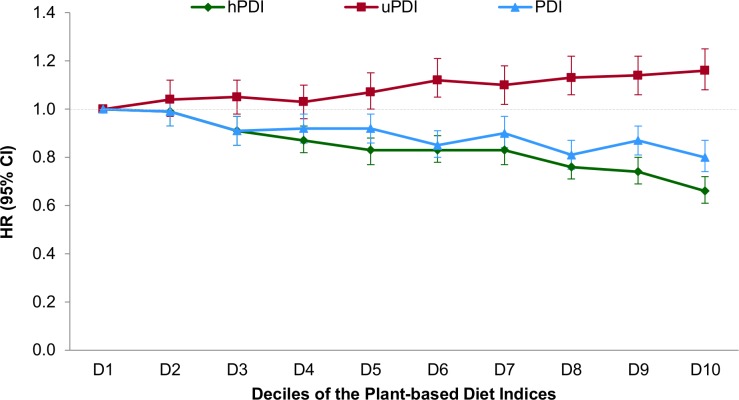
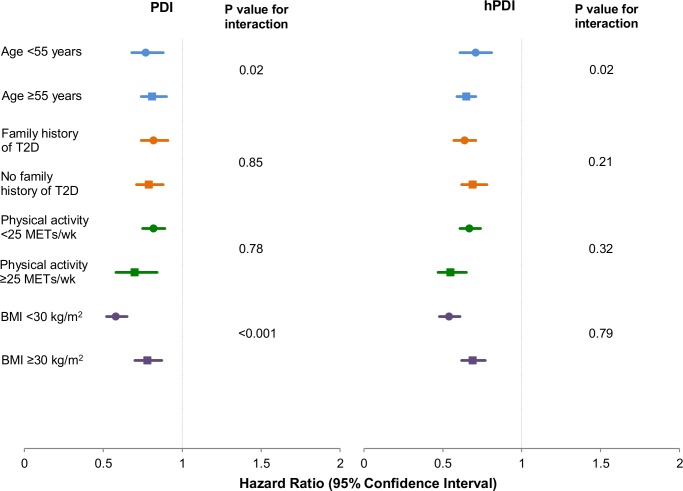
BACKGROUND: Plant-based diets have been recommended to reduce the risk of type 2 diabetes (T2D). However, not all plant foods are necessarily beneficial. We examined the association of an overall plant-based diet and hypothesized healthful and unhealthful versions of a plant-based diet with T2D incidence in three prospective cohort studies in the US. METHODS AND FINDINGS: We included 69,949 women from the Nurses' Health Study (1984-2012), 90,239 women from the Nurses' Health Study 2 (1991-2011), and 40,539 men from the Health Professionals Follow-Up Study (1986-2010), free of chronic diseases at baseline. Dietary data were collected every 2-4 y using a semi-quantitative food frequency questionnaire. Using these data, we created an overall plant-based diet index (PDI), where plant foods received positive scores, while animal foods (animal fats, dairy, eggs, fish/seafood, poultry/red meat, miscellaneous animal-based foods) received reverse scores. We also created a healthful plant-based diet index (hPDI), where healthy plant foods (whole grains, fruits, vegetables, nuts, legumes, vegetable oils, tea/coffee) received positive scores, while less healthy plant foods (fruit juices, sweetened beverages, refined grains, potatoes, sweets/desserts) and animal foods received reverse scores. Lastly, we created an unhealthful plant-based diet index (uPDI) by assigning positive scores to less healthy plant foods and reverse scores to healthy plant foods and animal foods. We documented 16,162 incident T2D cases during 4,102,369 person-years of follow-up. In pooled multivariable-adjusted analysis, both PDI and hPDI were inversely associated with T2D (PDI: hazard ratio [HR] for extreme deciles 0.51, 95% CI 0.47-0.55, p trend < 0.001; hPDI: HR for extreme deciles 0.55, 95% CI 0.51-0.59, p trend < 0.001). The association of T2D with PDI was considerably attenuated when we additionally adjusted for body mass index (BMI) categories (HR 0.80, 95% CI 0.74-0.87, p trend < 0.001), while that with hPDI remained largely unchanged (HR 0.66, 95% CI 0.61-0.72, p trend < 0.001). uPDI was positively associated with T2D even after BMI adjustment (HR for extreme deciles 1.16, 95% CI 1.08-1.25, p trend < 0.001). Limitations of the study include self-reported diet assessment, with the possibility of measurement error, and the potential for residual or unmeasured confounding given the observational nature of the study design. CONCLUSIONS: Our study suggests that plant-based diets, especially when rich in high-quality plant foods, are associated with substantially lower risk of developing T2D. This supports current recommendations to shift to diets rich in healthy plant foods, with lower intake of less healthy plant and animal foods.
Overview
The claims and statistics of this paper haven’t been checked yet.
Free: it reads the open-access text and checks the first 5 claims that cite a source we can check. Create a free account to check every claim.
Integrity signals
Registry
Cites
Statistics
Figures
Verification
Claims the paper makes
The claims and statistics of this paper haven’t been checked yet.
Free: it reads the open-access text and checks the first 5 claims that cite a source we can check. Create a free account to check every claim.
Claims other papers make about this one
Each is checked against this paper’s own text: does it say what the citing paper says it does?
The source backs part of the claim, not all of it — or backs it for a different population, condition or comparison.
In the citing paper
“Diets emphasizing whole, minimally processed foods—such as vegetables, fruits, whole grains, legumes, nuts, seeds, and lean protein sources—have been consistently associated with a reduced risk of obesity, type 2 diabetes, hypertension, and cardiovascular disease [164,165,166,167].”
From Lifestyle Medicine for Obesity in the Era of Highly Effective Anti-Obesity Treatment (2025) · cites this paper as [166]
Experimental — accuracy not yet measuredThe source backs part of the claim, not all of it — or backs it for a different population, condition or comparison.
In the citing paper
“There is consistent evidence that links well-balanced, minimally processed plant-based diets with a lower incidence of type 2 diabetes, improved glycaemic control and reduced cardiometabolic risk [2,3,4].”
From Dietary Nitrate-Rich Vegetables as Natural Modulators of Health: Mechanisms and Benefits in Ageing Populations (2026) · cites this paper as [3]
Experimental — accuracy not yet measuredThe cited source says what the claim attributes to it.
In the citing paper
“In three US cohorts, we previously documented that the PDI was inversely associated with type 2 diabetes risk with a stronger inverse association for hPDI, and a positive association for uPDI(14).”
From Healthful and Unhealthful Plant-Based Diets and the Risk of Coronary Heart Disease in U.S. Adults (2017) · cites this paper as [14]
Self-check
Percentages, sums and reported differences re-computed from the paper’s own numbers.
The self-check needs the paper’s full text.
Citations
Cites
Measuring inconsistency in meta-analyses
Higgins, J. P. T., Thompson, S. G., Deeks, J. J., & Altman, D. G. (2003) · BMJ · doi:10.1136/bmj.327.7414.557 · Cited by 63,139
Report of the Expert Committee on the Diagnosis and Classification of Diabetes Mellitus
The Expert Committee on the Diagnosis and Classification of Diabetes Mellitus* (2002) · Diabetes Care · doi:10.2337/diacare.25.2007.s5 · Cited by 10,338
Report of the Expert Committee on the Diagnosis and Classification of Diabetes Mellitus
The Expert Committee on the Diagnosis and Classification of Diabetes Mellitus (1997) · Diabetes Care · doi:10.2337/diacare.20.7.1183 · Cited by 6,220
The combination of estimates from different experiments
Cochran, W. G. (1954) · Biometrics · doi:10.2307/3001666 · Cited by 5,380
Classification and diagnosis of diabetes mellitus and other categories of glucose intolerance.
National Diabetes Data Group (1979) · Diabetes · doi:10.2337/diab.28.12.1039 · Cited by 4,909
Reproducibility and validity of a semiquantitative food frequency questionnaire
WILLETT, W. C., SAMPSON, L., STAMPFER, M. J., ROSNER, B., BAIN, C., WITSCHI, J., HENNEKENS, C. H., & SPEIZER, F. E. (1985) · American Journal of Epidemiology · doi:10.1093/oxfordjournals.aje.a114086 · Cited by 4,274
Self-citationStandards of medical care in diabetes 2010
American Diabetes Association (2010) · Diabetes Care · doi:10.2337/dc10-s011 · Cited by 3,470
Basevi, V., Di Mario, S., Morciano, C., Nonino, F., & Magrini, N. (2011) · Diabetes Care · doi:10.2337/dc11-0174 · Cited by 3,055
Changes in diet and lifestyle and long-term weight gain in women and men
Mozaffarian, D., Hao, T., Rimm, E. B., Willett, W. C., & Hu, F. B. (2011) · New England Journal of Medicine · doi:10.1056/nejmoa1014296 · Cited by 2,527
Self-citationSugar-Sweetened Beverages and Risk of Metabolic Syndrome and Type 2 Diabetes
Malik, V. S., Popkin, B. M., Bray, G. A., Després, J.-P., Willett, W. C., & Hu, F. B. (2010) · Diabetes Care · doi:10.2337/dc10-1079 · Cited by 2,116
Self-citation
Research works printed but not linked: 1
- Willett W. Nutritional epidemiology 3rd ed. Oxford: Oxford University Press; 2013.
Cited by
Items 501–600 of 1,000
Impact of Nutrition on the Gut Microbiota
Ishiguro, E. E., Haskey, N., & Campbell, K. (2018) · Elsevier eBooks · doi:10.1016/b978-0-12-810541-2.00006-3 · Cited by 9
Ritter, J. D. A., Cureau, F. V., Ronca, D. B., Blume, C. A., Teló, G. H., Camey, S. A., de Carvalho, K. M. B., & Schaan, B. D. (2021) · Nutrition · doi:10.1016/j.nut.2021.111216 · Cited by 11
“Additionally, recent studies have showed that a high quality of diet is a protective factor for cardiometabolic alterations and cardiovascular disease in children and adolescents [38], reinforcing the idea that a low-quality diet is an important modifiable risk factor for cardiometabolic abnormalities in youth.”
Pani, A., Baratta, F., Pastori, D., Coronati, M., Scaglione, F., & Ben, M. D. (2021) · Current Medicinal Chemistry · doi:10.2174/0929867328666210902131021 · Cited by 8
Associations of plant-based dietary patterns with cardiovascular risk factors in women
Shirzadi, Z., Daneshzad, E., Motlagh, A. D., Surkan, P. J., & Azadbakht, L. (2022) · Journal of Cardiovascular and Thoracic Research · doi:10.34172/jcvtr.2022.01 · Cited by 10
Jung, S., & Park, S. (2022) · Epidemiology and Health · doi:10.4178/epih.e2022063 · Cited by 9
“In this context, 3 recently developed plantbased diet indices (PDIs), which consider less healthy plant foods and animal foods, can holistically assess not only the degree of adherence to overall plant-based diets, but also the quality of plantbased diets [7].”
BackgroundKim, Y. J., Kim, Y., Shin, M., Koh, S. B., Kim, H. C., & Kim, M. K. (2022) · Clinical Nutrition · doi:10.1016/j.clnu.2022.07.038 · Cited by 12
Ma, E., Ohira, T., Hirai, H., Okazaki, K., Nagao, M., Hayashi, F., Nakano, H., Suzuki, Y., Sakai, A., Takahashi, A., et al. (2022) · Nutrients · doi:10.3390/nu14224872 · Cited by 9
“Similar to previous studies [7,27,28], the NHNS 2012 observed that the vegetable dietary pattern was associated with a decreased prevalence of high HbA1c levels [8].”
ResultGoode, J. P., Smith, K. J., Breslin, M. C., Kilpatrick, M., Dwyer, T., Venn, A., & Magnussen, C. G. (2023) · Journal of Nutrition · doi:10.1016/j.tjnut.2023.03.017 · Cited by 13
Effect of a plant-based diet on oxidative stress biomarkers in male footballers
Zare, M., Shoaei, N., Karimian, J., Nouri, M., Zare, S., Leilami, K., Shateri, Z., Sarbakhsh, P., Eftekhari, M. H., & Gargari, B. P. (2024) · Scientific Reports · doi:10.1038/s41598-024-54198-3 · Cited by 14
Abaj, F., Mirzababaei, A., Hosseininasab, D., Bahrampour, N., Clark, C. C. T., & Mirzaei, K. (2022) · Scientific Reports · doi:10.1038/s41598-022-12913-y · Cited by 12
Plant-Based Diets and Cardiovascular Disease in Older Adults: An Integrative Literature Review
VanCleef, T. R., & Hutchens, A. (2024) · Biological Research For Nursing · doi:10.1177/10998004241268287 · Cited by 8
“Current literature suggests differences in the quality of PBDs may affect health outcomes because PBDs may contain unhealthy foods (Satija et al., 2016).”
Bazshahi, E., Pourreza, S., Jayedi, A., Mirmohammadkhani, M., Emadi, A., & Shab‐Bidar, S. (2024) · BMC Nutrition · doi:10.1186/s40795-024-00949-4 · Cited by 9
Jaeger, S. R., Chheang, S. L., & Schouteten, J. J. (2025) · Foods · doi:10.3390/foods14030445 · Cited by 7
“Additionally, there is evidence linking PB diets to improved health outcomes, including lower risks of chronic diseases such as heart disease, obesity, and type 2 diabetes [9–11].”
Ashtary‐Larky, D. (2025) · Nutrition · doi:10.1016/j.nut.2025.112742 · Cited by 7
Li, S., Xia, R. Z., Gong, X., Wang, C., Liu, H., Dong, H., Su, Z., Liang, Y., Wang, S., & Yang, T. (2025) · BMC Endocrine Disorders · doi:10.1186/s12902-025-01892-6 · Cited by 9
“Conversely, RRR-DP2—encompassing rice, wheat, and dairy—displayed an inverse association with T2DM, underscoring how biomarker-driven methods (RRR) can highlight potentially protective dietary components, such as high-fiber carbohydrates and certain dairy products [38, 39].”
Barkhidarian, B., Soveid, N., Samadi, M., Lesani, A., Aghakhani, A., Yekaninejad, M. S., Saedisomeolia, A., Karbasian, M., Siadat, S. D., & Mirzaei, K. (2025) · European Journal of Nutrition · doi:10.1007/s00394-025-03671-4 · Cited by 7
“…the consumption of plant foods associated with improving overall health outcomes, such as fruits, whole grains, and vegetables; and the unhealthful plant-based diet index (uPDI), emphasizes the consumption of less healthful plant foods associated with an increased risk of various diseases [42].”
Fermentation of Plant-Based Yogurt and Its Effects on Phytochemicals: A Review
Xu, X., Wang, G., Xie, F., Song, X., Zhang, H., Xiong, Z., Ai, L., & Xia, Y. (2025) · Food Reviews International · doi:10.1080/87559129.2025.2502867 · Cited by 12
“[3,4] For example, soy yogurt fermented by Lactobacillus plantarum 200655 and fructooligosaccharides has been shown to prevent neurodegenerative diseases by preventing oxidative damage to nerve cells caused by free radicals.”
Yamasaki, H., Naomasa, R. F., Mizumoto, K. B., & Cohen, M. F. (2025) · Stresses · doi:10.3390/stresses5020037 · Cited by 11
Schorr, K., Beekman, M., Agayn, V., de Vries, J. H. M., de Groot, C. P. G. M., & Slagboom, P. E. (2025) · Journal of Nutritional Science · doi:10.1017/jns.2025.10023 · Cited by 7
Jurek, J. M., Zabłocka-Słowińska, K. A., Pieczyńska, J. M., Clavero-Mestres, H., & Auguet, T. (2025) · Nutrients · doi:10.3390/nu17183020 · Cited by 9
“Adherence to plant-based diets, particularly the MED, has been associated with improved insulin sensitivity, reduced liver fat, and lower hepatic enzyme levels, likely due to their high content of fiber, monounsaturated fats, and polyphenols [19,45].”
Dong, B., Qi, Y., Sundas, H., Yang, R., Zhou, J., & Li, Z. (2022) · Journal of the Science of Food and Agriculture · doi:10.1002/jsfa.12388 · Cited by 8
Desjardins, C., Leblay, L., Bélanger, A., Filiatrault, M., Barbier, O., Guénette, L., Leclerc, J., Lefèbvre, J., Zongo, A., & Drouin‐Chartier, J. (2023) · CJC Open · doi:10.1016/j.cjco.2023.09.015 · Cited by 7
“27 The hPDI emphasizes high intakes of minimally processed plant foods,and low intakes of animal foods as well as processed and starchy plant foods.”
BackgroundDoes diet quality matter? A secondary analysis of a randomized clinical trial
Kahleová, H., Brennan, H., Znayenko‐Miller, T., Holubkov, R., & Barnard, N. D. (2023) · European Journal of Clinical Nutrition · doi:10.1038/s41430-023-01371-y · Cited by 7
“Based on observational studies, some have proposed quantifying the healthfulness of plant-food dietary patterns, creating plant-based (PDI), healthful plant-based (hPDI), and unhealthful (uPDI) plant-based dietary indices [1].”
Diet to Stop Hypertension: Should Fats be Included?
Nestel, P. J., & Mori, T. A. (2024) · Current Hypertension Reports · doi:10.1007/s11906-024-01310-7 · Cited by 10
Carey, M. T., Millar, S., Elliott, P. S., Navarro, P., Harrington, J. M., Perry, I. J., & Phillips, C. M. (2024) · European Journal of Nutrition · doi:10.1007/s00394-024-03399-7 · Cited by 8
“Considering this, it is unsurprising that unhealthful PBDs have been found to be associated with a greater risk of cardiometabolic diseases in previous large cohort studies [24, 39, 40].”
BackgroundMirzababaei, A., Abaj, F., Roumi, Z., Clark, C. C. T., & Mirzaei, K. (2024) · Journal of Renal Nutrition · doi:10.1053/j.jrn.2024.07.015 · Cited by 7
Abebe, G. K., Ismail, M. R., Kevany, K. M., Haileslassie, H. A., & Pauley, T. (2024) · Journal of Agriculture and Food Research · doi:10.1016/j.jafr.2024.101354 · Cited by 8
Ferreri, D. M., Sutliffe, J. T., Lopez, N. V., Sutliffe, C. A., Smith, R. S., Carreras-Gallo, N., Dwaraka, V. B., Prestrud, A. A., & Fuhrman, J. (2024) · Current Developments in Nutrition · doi:10.1016/j.cdnut.2024.104497 · Cited by 8
“Plant-based diets rich in vegetables, le-gumes, nuts and seeds, fruits, and whole grains or diets higher in plant protein and lower in animal protein have been associated with a reduction in risk of cardiovascular disease, diabetes, cancers, and all-cause mortality [2 – 10].”
Chen, Z., Qian, F., Liu, B., Zong, G., Li, Y., Hu, F. B., & Sun, Q. (2025) · Diabetologia · doi:10.1007/s00125-024-06353-8 · Cited by 9
“Similarly, beneficial plant compounds including dietary fibre, vitamins/ minerals, polyphenols and antioxidants could partially contribute to the associations observed for MUFA-Ps [33, 34].”
Self-citationThe association of maternal plant-based diets and the growth of breastfed infants
Daneshzad, E., Moradi, M., Maracy, M. R., Brett, N. R., Bellissimo, N., & Azadbakht, L. (2020) · Health Promotion Perspectives · doi:10.34172/hpp.2020.25 · Cited by 10
Advances in Breeding in Vegetable Brassica rapa Crops
Cartea, M. E., Cámara‐Martos, F., Obregón, S., Badenes‐Pérez, F. R., & Haro, A. D. (2021) · IntechOpen eBooks · doi:10.5772/intechopen.95769 · Cited by 7
“It is well known that the change from a Western dietary pattern (high consumption of calories, animal products and sugars) to a Mediterranean diet (high consumption of fruits, vegetables, grains, legumes and reduced amounts of animal products, with the use of olive oil as the preferred fat) reduces the risk of diabete…”
BackgroundMurillo, A. G., Gómez, G., Durán‐Agüero, S., Parra-Soto, S. L., Araneda, J., Morales, G. I., Ríos-Castillo, I., Carpio-Arias, T. V., Cavagnari, B. M., Nava‐González, E. J., et al. (2022) · Frontiers in Sustainable Food Systems · doi:10.3389/fsufs.2022.836299 · Cited by 8
Meeting report: plant-rich dietary patterns and health
Woodside, J. V., Sun, Q., de Roos, B., Rimm, E. B., Hu, F. B., Heinen, M. M., McEvoy, C. T., Piernas, C., Scheelbeek, P., Rushton, J., et al. (2022) · Proceedings of The Nutrition Society · doi:10.1017/s002966512200266x · Cited by 8
Self-citationKarimi, E., Tirani, S. A., Azimi, E. S., Askari, G., As’habi, A., & Arab, A. (2023) · Frontiers in Nutrition · doi:10.3389/fnut.2023.1117740 · Cited by 7
Nutritional Recommendations for the Prevention of Type 2 Diabetes Mellitus
Skurk, T., Grünerbel, A., Hummel, S., Kabisch, S., Keuthage, W., Müssig, K., Nussbaumer, H., Rubin, D., Simon, M., Tombek, A., et al. (2024) · Experimental and Clinical Endocrinology & Diabetes · doi:10.1055/a-2166-6943 · Cited by 9
“To investigate whether a plant-based diet can also be beneficial for T2DM, Satija et al. [49] evaluated data from the Nurses’ Health Study (69,949 participants/f), Nurses’ Health Study 2 (90,239 participants/f) and the Health Profession Follow-up Study (40,539 participants/m).”
BackgroundHu, E. A., Turner‐McGrievy, G. M., Wilson, M. J., Davey, M., Bailey, S., Okpara, N., Frongillo, E. A., & Wilcox, S. (2024) · Nutrition Research · doi:10.1016/j.nutres.2024.01.010 · Cited by 7
Global research landscape and trends of plant-based meat analogs: a bibliometric analysis
Xie, Y., Cai, L., Zhou, G., & Li, C. (2024) · Food Materials Research · doi:10.48130/fmr-0024-0011 · Cited by 15
Integrative Medicine Is a Good Prescription for Patients and Planet
Nusrat, A. Z., Majd, I., & Wayne, P. M. (2019) · The Journal of Alternative and Complementary Medicine · doi:10.1089/acm.2019.0421 · Cited by 10
Alkhaldy, A. A., Rizq, N. K., Jaylan, S. A., Alkendi, E. A., Alghamdi, W. M., & Alfaraidi, S. M. (2019) · Preventive Nutrition and Food Science · doi:10.3746/pnf.2019.24.4.373 · Cited by 8
“Risk factors of insulin resistance include genetics and lifestyle factors, such as diet and physical inactivity (Ro- berts et al., 2013; Satija et al., 2016; Hu et al., 2001; Hanson et al., 2001).”
BackgroundZhu, W., Shi, Z., Yan, X., Lei, Z., Wang, Q., Lei, L., & Wei, S. (2025) · European Journal of Nutrition · doi:10.1007/s00394-025-03606-z · Cited by 7
“Satija et al. developed three diet indices: the overall plant-based diet index (PDI), a healthy PDI (hPDI), and an unhealthy PDI (uPDI) [ 7 ].”
Mombert, P., Huneau, J., Wang, J., Membré, J., & Mariotti, F. (2025) · European Journal of Nutrition · doi:10.1007/s00394-025-03714-w · Cited by 7
“We then described dietary patterns of the PB+ and PB− and assessed their level of adherence to more plant-based diets using the Plant-based Diet Indices (PDI) developed by Satija et al. [22].”
Zhou, M., Zhao, Y., He, M., Su, D., Han, D., Huang, L., Xu, P., & Zhang, R. (2025) · Nutrients · doi:10.3390/nu17132159 · Cited by 6
“We calculated the overall Plant-based diet index (PDI), healthy plant-based diet index (hPDI), and unhealthy plant-based diet index (uPDI) using the scoring criteria proposed by Satija et al. [11], with slight modifications to account for dietary habits in both Western and Chinese populations.”
Bartsch, M., Hemmelrath, L., Kerlikowsky, F., Bruns, A., Burhop, M., Nebl, J., Greupner, T., Strowig, T., Lesker, T. R., Amend, L., et al. (2026) · Nutrition & Metabolism · doi:10.1186/s12986-026-01077-5 · Cited by 6
Nutritional and Health Aspects
McClements, D. J., & Großmann, L. (2022) · Springer eBooks · doi:10.1007/978-3-030-96764-2_5 · Cited by 8
Acosta, P. F. C., Landon, O. A., Ribau, Z. J., Haines, J., David, W. L., Duncan, A. M., & Study, O. B. O. T. G. F. H. (2023) · Nutrients · doi:10.3390/nu15214617 · Cited by 8
“The metrics include an overall PDI as well as a healthful PDI and an unhealthful PDI that reflect intake of plant-based foods that are healthy (e.g., fruits, whole grains) or less healthy (e.g., sweets and desserts, sugar sweetened beverages (SSBs)) [12].”
BackgroundMethodResultInfluentialGoon, S., & Chapman‐Novakofski, K. (2023) · Journal of Nutrition Education and Behavior · doi:10.1016/j.jneb.2023.10.004 · Cited by 6
“28 Although studies have identified unhealthy plant-based diets associated with T2DM in the US population, 29,30 these data are limited among South Asian individuals.”
BackgroundŞahin, K., & Yıldıran, H. (2024) · Current Nutrition Reports · doi:10.1007/s13668-023-00515-7 · Cited by 6
“The plant-based diet ındex (PDI) can be used to evaluate plant-based diet quality [96].”
Zheng, Y., Gao, N., Li, Y., Fan, M., Tian, W., Jiang, Y., Wang, Y., Cui, M., Suo, C., Zhang, T., et al. (2024) · Current Research in Food Science · doi:10.1016/j.crfs.2024.100687 · Cited by 8
“…between healthy and unhealthy plant-based foods based on existing knowledge regarding the association of these foods with various chronic diseases (cardiovascular disease, diabetes, cancer, etc.) and intermediate states (obesity, hypertension, lipids, inflammation) (Satija et al., 2016).”
BackgroundMethodOncina-Cánovas, A., Vioqué, J., Riutort‐Mayol, G., Soler-Blasco, R., Irizar, A., Barroeta, Z., Fernández‐Somoano, A., Tardón, A., Vrijheid, M., Guxens, M., et al. (2024) · International Journal of Hygiene and Environmental Health · doi:10.1016/j.ijheh.2024.114344 · Cited by 6
Vasmehjani, A. A., Darabi, Z., Ghayour‐Mobarhan, M., Ferns, G. A., & Khayyatzadeh, S. S. (2024) · Scientific Reports · doi:10.1038/s41598-024-61952-0 · Cited by 8
Li, L., Liu, C., Xia, T., Li, H.-M., Yang, J., Pu, M., Zhang, S., Ma, Y., & Zhang, T. (2024) · PLoS ONE · doi:10.1371/journal.pone.0305822 · Cited by 6
“PDI, hPDI, uPDI were calculated using methods similar to previous studies [11,13].”
BackgroundMethodWang, J., Yang, C., Dong, X., Huang, Y., Cong, Y., Wang, L., Qiu, Z., & Cao, B. (2024) · Nutrition Research · doi:10.1016/j.nutres.2024.10.005 · Cited by 8
Thompson, A. S., Tresserra‐Rimbau, A., Jennings, A., Bondonno, N. P., Candussi, C. J., O’Neill, J. K., Hill, C., Gaggl, M., Cassidy, A., & Kuhn, T. E. (2024) · Journal of the American Nutrition Association · doi:10.1080/27697061.2024.2415917 · Cited by 8
da Conceição, A. R., Bressan, J., Cuervo, M., Mansego, M. L., Martínez, J. A., Riezu‐Boj, J. I., & Milagro, F. I. (2024) · The Journal of Nutritional Biochemistry · doi:10.1016/j.jnutbio.2024.109805 · Cited by 6
Peng, J., Li, X., Wang, J., Li, F., Gao, J., Deng, Y., Li, B., Li, T., Li, Y., Tang, S., et al. (2024) · Journal of Alzheimer s Disease · doi:10.1177/13872877241300253 · Cited by 9
“…(e.g., pickled foods, fruit juices), which has been associated with an elevated risk of various cardiometabolic diseases, including diabetes, 22 coronary artery disease, 35 and mortality risk, 36 and these cardiometabolic and neurodegenerative diseases share common pathophysiological…”
Kenger, E. B., Karahan, T. Ö., & Koç, B. M. (2024) · Journal of the Science of Food and Agriculture · doi:10.1002/jsfa.14102 · Cited by 9
Role of a Whole Plant Foods Diet in Breast Cancer Prevention and Survival
Jiménez, M. D. C. F.-F. (2025) · Journal of the American Nutrition Association · doi:10.1080/27697061.2024.2442631 · Cited by 10
Eckart, A. C., & Ghimire, P. S. (2025) · Journal of Clinical Medicine · doi:10.3390/jcm14020458 · Cited by 6
da Silva, F. M. O., Pimenta, A. M., Juvanhol, L. L., Hermsdorff, H. H. M., & Bressan, J. (2025) · Nutrition · doi:10.1016/j.nut.2025.112711 · Cited by 6
The association between plant-based diet indices and the risk of breast cancer: a case-control study
Souni, F., Mansouri, F., Jafari, F., Sharifi, R., PourvatanDoust, S., Shateri, Z., Nouri, M., & Rashidkhani, B. (2025) · Journal of Health Population and Nutrition · doi:10.1186/s41043-025-00879-2 · Cited by 6
“Three models of plant-based diets, including uPDI, hPDI, and PDI, were categorized into eighteen food groups based on similarities in nutrient composition [25–27].”
Cheng, E., Hong, C., Ergas, I. J., Caan, B. J., Kwan, M. L., Roh, J. M., Cheng, T. D., Sharma, N. J., Hanson, J. R., Minderman, H., et al. (2025) · British Journal Of Nutrition · doi:10.1017/s0007114525000856 · Cited by 7
“We computed three previously established plant-based diet indices: (20,21) (1) PDI, which emphasises consumption of all plant foods (regardless of healthfulness) while reducing consumption of animal food; (2) hPDI, which emphasises intakes of healthful plant food groups; and (3) uPDI, which…”
Diet and health—finding a path to Veritas
Willett, W. C. (2018) · European Journal of Epidemiology · doi:10.1007/s10654-018-0378-8 · Cited by 8
“Taking this another step further, Ambika Satija created a plantbased diet score giving positive points for plant foods, and negative points for animal-sourced foods; this score was inversely related to risks of diabetes and coronary heart disease [37, 38].”
BackgroundSelf-citationKawasaki, Y., Akamatsu, R., & Fujiwara, Y. (2020) · The Japanese Journal of Nutrition and Dietetics · doi:10.5264/eiyogakuzashi.78.254 · Cited by 6
Pang, X., Cai, C., Dong, H., Lan, X., Zhang, Y., Bai, D., Hao, L., Sun, H., Li, F., & Zeng, G. (2022) · The Journal of Maternal-Fetal & Neonatal Medicine · doi:10.1080/14767058.2021.2017872 · Cited by 6
“antioxidants, and plant protein [22,23], which could”
Darand, M., Hassanizadeh, S., Martami, F., Shareghfarid, E., Hosseinpour‐Niazi, S., & Hosseinzadeh, M. (2022) · Journal of Affective Disorders · doi:10.1016/j.jad.2022.06.006 · Cited by 6
Mirzababaei, A., Taheri, A., Rasaei, N., Mehranfar, S., Jamili, S., Clark, C. C. T., & Mirzaei, K. (2022) · BMC Women s Health · doi:10.1186/s12905-022-01894-9 · Cited by 6
“Polyphenols in fruits and vegetables, soybeans and soybean products, spices, coffee and tea, such as quercetin, naringenin, routine, hesperidin, resveratrol, anthocyanin, isoflavones, phytosterol, cinnamon, caffeine, and catechins, can reduce appetite, regulate the metabolism of carbohydrates and lipids, and increase…”
BackgroundJakše, B., Godnov, U., Fras, Z., & Mis, N. F. (2024) · Nutrients · doi:10.3390/nu16060796 · Cited by 9
Development of metabolic signatures of plant-rich dietary patterns using plant-derived metabolites
Li, Y., Xu, Y., Sayec, M. L., Spector, T. D., Steves, C. J., Menni, C., Gibson, R., & Rodriguez‐Mateos, A. (2024) · European Journal of Nutrition · doi:10.1007/s00394-024-03511-x · Cited by 7
“Furthermore, most of these patterns employ a scoring system based on relative food intake, categorizing consumption into quintiles (e.g., DASH [23] and PDI [24]) or medians (e.g., A-MED [22] and O-MED [25]).”
Lessem, A., Gould, S. M., Evans, J., & Dunemn, K. (2020) · Journal of the American Association of Nurse Practitioners · doi:10.1097/jxx.0000000000000305 · Cited by 7
Benavides, H., Meireles, C. L., Benavente, V. G., Mays, M. H., & Wang, J. (2021) · JMIR Aging · doi:10.2196/25327 · Cited by 6
“However, there is enough scientific evidence supporting plant-based diets to help combat obesity and associated diseases [11-13], and such programs should be considered for large-scale implementation and effectiveness testing.”
BackgroundMcGovern, C. J. P. (2022) · American Journal of Clinical Nutrition · doi:10.1093/ajcn/nqac228 · Cited by 6
Asoudeh, F., Mousavi, S. M., Keshteli, A. H., Hasani‐Ranjbar, S., Larijani, B. A., Esmaillzadeh, A., & Adibi, P. (2023) · Journal of Diabetes & Metabolic Disorders · doi:10.1007/s40200-022-01166-1 · Cited by 8
Pro-vegetarian dietary pattern and risk of breast cancer: a case–control study
Hosseini, Y., Sichani, P. H., Moslemi, E., Nouri, M., Rajabzadeh-Dehkordi, M., Jalali, S., Heidari, Z., Shateri, Z., & Rashidkhani, B. (2024) · Breast Cancer Research and Treatment · doi:10.1007/s10549-024-07243-8 · Cited by 7
“…it is known that diets higher in plant-based foods and lower in foods derived from animals are beneficial for losing weight [6] and decreasing the risk of cardiovascular disease [7], hypertension [8], type 2 diabetes [9], chronic kidney disease [10], cancer [11], and ultimately mortality [12].”
Midlife susceptibility to the effects of poor diet on diabetes risk
Walsh, E., Jacka, F. N., Butterworth, P., Anstey, K. J., & Cherbuin, N. (2020) · European Journal of Clinical Nutrition · doi:10.1038/s41430-020-0673-9 · Cited by 7
For breast cancer prevention, not all plant-based diets are created equal
Romanos-Nanclares, A., & Eliassen, A. H. (2023) · American Journal of Clinical Nutrition · doi:10.1016/j.ajcnut.2022.12.017 · Cited by 6
Dietary Habits, Residential Air Pollution, and Chronic Obstructive Pulmonary Disease
Liu, D., Ma, J., Cui, X.-L., Zhang, Y., Liu, T., & Chen, L. (2025) · Nutrients · doi:10.3390/nu17122029 · Cited by 6
Wu, S., Bo, Y., Li, Z.-Y., Hu, X., Ning, Y.-Y., Huang, J., Zhang, J.-X., Zhu, Y., Yu, Z., & Liu, H. (2025) · Frontiers in Nutrition · doi:10.3389/fnut.2025.1589424 · Cited by 5
“Similarly, a UK Biobank study suggested that plant-based diets were associated with a 22 and 26% reduction in MASLD risk, respectively (16, 29).”
Lee, H., Ludwig-Borycz, E. F., McEvoy, C. T., Heeringa, S. G., Wolfson, J. A., & Leung, C. W. (2025) · American Journal of Clinical Nutrition · doi:10.1016/j.ajcnut.2025.07.029 · Cited by 7
Schaefer, E., Barbaresko, J., Roden, M., Kuß, O., & Schlesinger, S. (2025) · Diabetes Care · doi:10.2337/dc25-0344 · Cited by 5
“This limitation has been addressed by the plant-based dietary indices by Satija et al. (8), reflecting adherence to an overall plant-based dietary index (PDI), a healthy PDI, and an unhealthy PDI.”
Shen, J., Chen, H., Gong, Y., Huang, Y., Wu, M., Gu, Y., Wang, T., Fontana, L., Rong, S., Qian, S., et al. (2026) · The Journal of Prevention of Alzheimer s Disease · doi:10.1016/j.tjpad.2025.100457 · Cited by 6
“Fourth, based on previously documented beneficial effects of fish on health outcomes [34], we constructed a modified hPDI by assigning positive scores to fish and aquatic products [31].”
Ganbat, K., Ulzii, B. N., & Shin, S. (2024) · Epidemiology and Health · doi:10.4178/epih.e2024035 · Cited by 5
“The unhealthy plant-based diet index (uPDI) evaluates diets with a higher intake of less healthy plant foods and lower consumption of healthy plant and animal foods [18,20,22].”
BackgroundInfluentialThe association between score of plant-based diet and non-alcoholic fatty liver disease in adults
Fallah, A., abdolazimi, H., Darabi, Z., Talenezhad, N., Mirzavandi, F., Rahimpour, S., & Hosseinzadeh, M. (2024) · Clinical Nutrition ESPEN · doi:10.1016/j.clnesp.2024.04.013 · Cited by 5
“Whole PDI, healthy PDI, and unhealthy PDI were created based on previous studies (23, 24).”
MethodDevelopment of the VEGANScreener, a Tool for a Quick Diet Quality Assessment among Vegans in Europe
Kronsteiner-Gicevic, S., Bogl, L. H., Wakolbinger, M., Müller, S., Dietrich, J., Keyzer, W. D., Bullón‐Vela, V., Selinger, E., Keller, V. D. R., Martínez-Tabar, A., et al. (2024) · Nutrients · doi:10.3390/nu16091344 · Cited by 5
“Consumption of some plant-Nutrients based foods, such as white potatoes, refined grains, sugar-sweetened beverages, sweets and desserts, and salty snacks was associated with higher risks of major chronic diseases and mortality among non-meat eaters [35–37].”
BackgroundSelf-citationThe Influence of Plant-Based Diets on Metabolic Syndrome
Fernandes, I., Mariana, M., Lorigo, M., & Cairrão, E. (2024) · Diabetology · doi:10.3390/diabetology5030020 · Cited by 6
Identifying the Leading Sources of Saturated Fat and Added Sugar in U.S. Adults
Taylor, C. A., Madril, P., Weiss, R., Thomson, C. A., Dunton, G. F., Jospe, M. R., Richardson, K. M., Bedrick, E. J., & Schembre, S. M. (2024) · Nutrients · doi:10.3390/nu16152474 · Cited by 7
Ulzii, B. N., Lim, K., & Shin, S. (2024) · Nutrition · doi:10.1016/j.nut.2024.112579 · Cited by 7
Brennan, H., Znayenko‐Miller, T., Sutton, M., Holubkov, R., Barnard, N. D., & Kahleová, H. (2024) · BMC Women s Health · doi:10.1186/s12905-024-03467-4 · Cited by 5
da Silva, F. M. O., Pimenta, A. M., Juvanhol, L. L., Hermsdorff, H. H. M., & Bressan, J. (2025) · Nutrients · doi:10.3390/nu17020227 · Cited by 7
“Categorization of healthful and less healthful plant foods was based on nutrient similarities, culinary use, and food associations with T2DM, cardiovascular disease, cancer, obesity, high blood pressure, hyperlipidemia, and inflammation [21,22].”
InfluentialDong, X., Zhang, M., Shu, J., Li, Y., Tan, P., Peng, T., Lu, J., Zhang, Y., Zhong, X., & Fang, A. (2025) · Clinical Nutrition ESPEN · doi:10.1016/j.clnesp.2025.03.166 · Cited by 5
Ghelijli, M., Salari-Moghaddam, A., Aminianfar, A., Moosazadeh, M., Gholami, F., Azadbakht, M., Hosseini, A., & Soltani, S. (2025) · Scientific Reports · doi:10.1038/s41598-025-98370-9 · Cited by 5
“According the method developed by Satija et al. 19 we constructed a plant-based diet index (PDI) and two versions of a healthful plant-based diet index (hPDI) and unhealthful plant-based diet index (uPDI) plant-based diet index.”
Kim, C., Marples, L., Platts, A., Bermingham, K. M., Amati, F., Hamoda, H., Pounis, G., Wolf, J., Spector, T. D., Hall, W. L., et al. (2025) · Post Reproductive Health · doi:10.1177/20533691251335807 · Cited by 7
Candussi, C. J., Bell, W., Thompson, A. S., Knüppel, S., Gaggl, M., Světnička, M., Gojda, J., Cassidy, A., Weikert, C., Córdova, R., et al. (2025) · BMC Medicine · doi:10.1186/s12916-025-04045-7 · Cited by 6
“Previous research has shown that plant-based diets are associated with lower risks of chronic diseases such as type 2 diabetes [3], total cancer [4], cardiovascular disease [5] as well as all-cause mortality [6, 7].”
Berthy, F., Allès, B., Fezeu, L., Lairon, D., Pointereau, P., Touvier, M., Herçberg, S., Galan, P., Baudry, J., & Kesse‐Guyot, E. (2025) · International Journal of Epidemiology · doi:10.1093/ije/dyaf011 · Cited by 5
“6 In the case of the EAT-Lancet diet, while it does not prescribe to completely exclude animal products, it greatly encourages to limit them.”
Jin, Z., Zhou, T., Ye, K., Jiang, W., Liu, Z., Luo, L., Wang, Y., & Shen, Z. (2025) · Molecular Nutrition & Food Research · doi:10.1002/mnfr.70151 · Cited by 5
Wang, T., Nova, A., Cassidy, S., Livingstone, K. M., Fazia, T., Mitra, S., Kroeger, C. M., Masedunskas, A., Bernardinelli, L., Willett, W. C., et al. (2025) · Nutrients · doi:10.3390/nu17162675 · Cited by 7
“We therefore developed a “heart-protective diet score” (HPDS) based on three previously validated plant-based diet indices (PDI): PDI, hPDI, and uPDI [9,10], which distinguishes the healthiness of plant-based foods based on the existing evidence of those foods with cardiometabolic diseases.”
InfluentialSelf-citationLi, Y., Xu, Q., Wang, J., Xin, Y., Zhang, Y., Qin, X., Xu, K., Yang, X., & Wang, X. (2025) · Journal of Agricultural and Food Chemistry · doi:10.1021/acs.jafc.5c07282 · Cited by 7
Six Applications of Plant Based Diets for Health Promotion
Stancic, S., Cullimore, J., & Barnard, N. D. (2022) · American Journal of Lifestyle Medicine · doi:10.1177/15598276221104023 · Cited by 6
“A Harvard study which included participants from three large established cohorts, (the Health Professionals FollowUp Study, Nurses’ Health Study, and the Nurses’ Health Study II) concluded those subjects who consumed a healthy plant-based diet rich in fruits, vegetables, and whole grains, could expect a 34% reduction…”
MethodYehia, N. A., Isai, L., Semnani‐Azad, Z., Lai, K. Z. H., Retnakaran, R. R., Harris, S. B., Beaudry, J. L., Bazinet, R. P., & Hanley, A. J. (2023) · Lipids · doi:10.1002/lipd.12373 · Cited by 5
Gholami, F., Samadi, M., Rasaei, N., Yekaninejad, M. S., Keshavarz, S. A., Javdan, G., Shiraseb, F., Bahrampour, N., & Mirzaei, K. (2023) · Clinical Nutrition Research · doi:10.7762/cnr.2023.12.3.199 · Cited by 6
“Consumption of potatoes was considered in the unhealthy plant food group to be consistent with the methods in previous studies [13,14].”
BackgroundResultAn Unhealthy Plant-Based Diet Increases Risk of Hypertension but not Framingham Risk Score in Adults
Mokhtari, E., Rouhani, P., Shahdadian, F., Mohammadi, S., Heidari, Z., & Saneei, P. (2023) · Current Developments in Nutrition · doi:10.1016/j.cdnut.2023.102008 · Cited by 5
“According to a previously proposed procedure by Satija et al. [24 – 26], 3 different plant-based diet indices (PDIs) were de fi ned by the use of dietary intakes data: 1 ) an overall PDI, 2 ) a healthy plant-based diet index (hPDI(, and 3 ) an unhealthy plant-based diet index (uPDI).”
Method
Metadata
- Authors
- Satija, A., Bhupathiraju, S. N., Rimm, E. B., Spiegelman, D., Chiuve, S. E., Borgi, L., Willett, W. C., Manson, J. E., Sun, Q., & Hu, F. B.
- Affiliations
- Harvard University (US)
- Brigham and Women's Hospital (US)
- Corresponding author
- Satija, Ambika
- ORCID
- Venue
- PLOS Medicine
- Publisher
- Public Library of Science (PLoS)
- Published
- 2016-06-14
- Volume
- 13
- Issue
- 6
- Pages
- e1002039
- ISSN
- 1549-1277 (ISSN-L)
- 1549-1676
- PMC
- PMC4907448
- OpenAlex
- W2430898493
- Cited by
- 1,069
- References
- 56
- Citations by year
- 2026: 133 · 2025: 169 · 2024: 179 · 2023: 135 · 2022: 124 · 2021: 99 · 2020: 103 · 2019: 55 · 2018: 47 · 2017: 20 · 2016: 4
- FWCI
- 41.65
- Type
- journal article
- Language
- en
- Open access
- gold
- doi.org
- Licence
- Locations
- PLoS Medicine (publishedVersion, cc-by)
- Europe PMC (PubMed Central) (publishedVersion, cc-by)
- PubMed Central (publishedVersion, cc-by)
- PubMed (publishedVersion)
- Digital Access to Scholarship at Harvard (DASH) (Harvard University) (submittedVersion, cc-by)
- DOAJ (DOAJ: Directory of Open Access Journals) (submittedVersion, cc-by-sa)
- Figshare (submittedVersion, cc-by)
- Funders
- National Institutes of Health (UM1-CA-176726, UM1-CA167552, CA176726, CA-167552, CA186107, DK58845, UM1 CA186107, UM1 CA176726)
- National Cancer Institute (UM1CA176726, UM1CA186107, UM1CA167552)
- National Institute of Diabetes and Digestive and Kidney Diseases (R01DK058845)
- Topics
- Health Sciences › Medicine › Public Health, Environmental and Occupational Health › Nutritional Studies and Diet
- Physical Sciences › Environmental Science › Ecology › Agriculture Sustainability and Environmental Impact
- Health Sciences › Medicine › Physiology (medical) › Dietary Effects on Health
- Keywords
- plant-based diet, type 2 diabetes, diabetes incidence, dietary habits, healthful plant-based diet index, unhealthful plant-based diet index, body mass index, dairy consumption, red and processed meat, fruit and vegetable intake, Nurses' Health Study, Health Professionals Follow-up Study, sex differences, United States adults, pooled analysis of cohort studies
- MeSH terms
- Adult, Diabetes Mellitus, Type 2, Diet, Female, Fruit, Humans, Male, Middle Aged, Prospective Studies, United States, Vegetables, Diet, Vegetarian, Cohort Studies, Incidence
About these checks
Registry, retraction, Cites and statistics results are computed, not judged, with one exception: a printed reference that no index lists is read once by a model before it counts as a citation error. Claims are extracted by a model and kept only when their quote appears verbatim in the text; each cited source is then checked, with a model’s help, for whether it says what the claim relies on. Those verdicts can be wrong — read the claim’s quote and the cited source before relying on one.
Statistics and arithmetic are recomputed, not judged.
Confidence bands are shown only for fields calibrated on our annotated test set. None is calibrated yet, so no band is shown.
What counts as a claim ›How we measure confidence ›How we check this ›
Are you an author, or do you see a problem with this page? Request a review
Data sources
Bibliographic data: Semantic Scholar, OpenAlex, Crossref.
Contains information from the Semantic Scholar Academic Graph Datasets, made available under the ODC Attribution License (ODC-BY 1.0).
Semantic Scholar’s data is described in: Kinney, R., et al. (2023). The Semantic Scholar Open Data Platform. arXiv:2301.10140.
