

Plant-Based Dietary Patterns and Incidence of Type 2 Diabetes in US Men and Women: Results from Three Prospective Cohort Studies
Open accessThe DOI matches its Crossref record; 56 of the 56 references it cites were found in a registry or an index.
Abstract
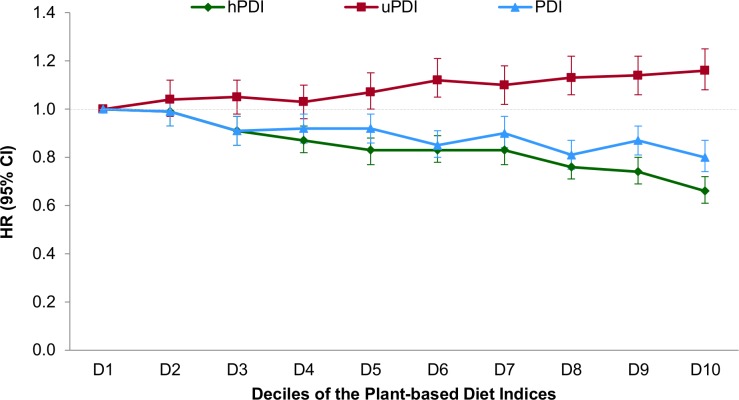
BACKGROUND: Plant-based diets have been recommended to reduce the risk of type 2 diabetes (T2D). However, not all plant foods are necessarily beneficial. We examined the association of an overall plant-based diet and hypothesized healthful and unhealthful versions of a plant-based diet with T2D incidence in three prospective cohort studies in the US. METHODS AND FINDINGS: We included 69,949 women from the Nurses' Health Study (1984-2012), 90,239 women from the Nurses' Health Study 2 (1991-2011), and 40,539 men from the Health Professionals Follow-Up Study (1986-2010), free of chronic diseases at baseline. Dietary data were collected every 2-4 y using a semi-quantitative food frequency questionnaire. Using these data, we created an overall plant-based diet index (PDI), where plant foods received positive scores, while animal foods (animal fats, dairy, eggs, fish/seafood, poultry/red meat, miscellaneous animal-based foods) received reverse scores. We also created a healthful plant-based diet index (hPDI), where healthy plant foods (whole grains, fruits, vegetables, nuts, legumes, vegetable oils, tea/coffee) received positive scores, while less healthy plant foods (fruit juices, sweetened beverages, refined grains, potatoes, sweets/desserts) and animal foods received reverse scores. Lastly, we created an unhealthful plant-based diet index (uPDI) by assigning positive scores to less healthy plant foods and reverse scores to healthy plant foods and animal foods. We documented 16,162 incident T2D cases during 4,102,369 person-years of follow-up. In pooled multivariable-adjusted analysis, both PDI and hPDI were inversely associated with T2D (PDI: hazard ratio [HR] for extreme deciles 0.51, 95% CI 0.47-0.55, p trend < 0.001; hPDI: HR for extreme deciles 0.55, 95% CI 0.51-0.59, p trend < 0.001). The association of T2D with PDI was considerably attenuated when we additionally adjusted for body mass index (BMI) categories (HR 0.80, 95% CI 0.74-0.87, p trend < 0.001), while that with hPDI remained largely unchanged (HR 0.66, 95% CI 0.61-0.72, p trend < 0.001). uPDI was positively associated with T2D even after BMI adjustment (HR for extreme deciles 1.16, 95% CI 1.08-1.25, p trend < 0.001). Limitations of the study include self-reported diet assessment, with the possibility of measurement error, and the potential for residual or unmeasured confounding given the observational nature of the study design. CONCLUSIONS: Our study suggests that plant-based diets, especially when rich in high-quality plant foods, are associated with substantially lower risk of developing T2D. This supports current recommendations to shift to diets rich in healthy plant foods, with lower intake of less healthy plant and animal foods.
Overview
The claims and statistics of this paper haven’t been checked yet.
Free: it reads the open-access text and checks the first 5 claims that cite a source we can check. Create a free account to check every claim.
Integrity signals
Registry
Cites
Statistics
Figures
Verification
Claims the paper makes
The claims and statistics of this paper haven’t been checked yet.
Free: it reads the open-access text and checks the first 5 claims that cite a source we can check. Create a free account to check every claim.
Claims other papers make about this one
Each is checked against this paper’s own text: does it say what the citing paper says it does?
The source backs part of the claim, not all of it — or backs it for a different population, condition or comparison.
In the citing paper
“Diets emphasizing whole, minimally processed foods—such as vegetables, fruits, whole grains, legumes, nuts, seeds, and lean protein sources—have been consistently associated with a reduced risk of obesity, type 2 diabetes, hypertension, and cardiovascular disease [164,165,166,167].”
From Lifestyle Medicine for Obesity in the Era of Highly Effective Anti-Obesity Treatment (2025) · cites this paper as [166]
Experimental — accuracy not yet measuredThe source backs part of the claim, not all of it — or backs it for a different population, condition or comparison.
In the citing paper
“There is consistent evidence that links well-balanced, minimally processed plant-based diets with a lower incidence of type 2 diabetes, improved glycaemic control and reduced cardiometabolic risk [2,3,4].”
From Dietary Nitrate-Rich Vegetables as Natural Modulators of Health: Mechanisms and Benefits in Ageing Populations (2026) · cites this paper as [3]
Experimental — accuracy not yet measuredThe cited source says what the claim attributes to it.
In the citing paper
“In three US cohorts, we previously documented that the PDI was inversely associated with type 2 diabetes risk with a stronger inverse association for hPDI, and a positive association for uPDI(14).”
From Healthful and Unhealthful Plant-Based Diets and the Risk of Coronary Heart Disease in U.S. Adults (2017) · cites this paper as [14]
Self-check
Percentages, sums and reported differences re-computed from the paper’s own numbers.
The self-check needs the paper’s full text.
Citations
Cites
Measuring inconsistency in meta-analyses
Higgins, J. P. T., Thompson, S. G., Deeks, J. J., & Altman, D. G. (2003) · BMJ · doi:10.1136/bmj.327.7414.557 · Cited by 63,139
Report of the Expert Committee on the Diagnosis and Classification of Diabetes Mellitus
The Expert Committee on the Diagnosis and Classification of Diabetes Mellitus* (2002) · Diabetes Care · doi:10.2337/diacare.25.2007.s5 · Cited by 10,338
Report of the Expert Committee on the Diagnosis and Classification of Diabetes Mellitus
The Expert Committee on the Diagnosis and Classification of Diabetes Mellitus (1997) · Diabetes Care · doi:10.2337/diacare.20.7.1183 · Cited by 6,220
The combination of estimates from different experiments
Cochran, W. G. (1954) · Biometrics · doi:10.2307/3001666 · Cited by 5,380
Classification and diagnosis of diabetes mellitus and other categories of glucose intolerance.
National Diabetes Data Group (1979) · Diabetes · doi:10.2337/diab.28.12.1039 · Cited by 4,909
Reproducibility and validity of a semiquantitative food frequency questionnaire
WILLETT, W. C., SAMPSON, L., STAMPFER, M. J., ROSNER, B., BAIN, C., WITSCHI, J., HENNEKENS, C. H., & SPEIZER, F. E. (1985) · American Journal of Epidemiology · doi:10.1093/oxfordjournals.aje.a114086 · Cited by 4,274
Self-citationStandards of medical care in diabetes 2010
American Diabetes Association (2010) · Diabetes Care · doi:10.2337/dc10-s011 · Cited by 3,470
Basevi, V., Di Mario, S., Morciano, C., Nonino, F., & Magrini, N. (2011) · Diabetes Care · doi:10.2337/dc11-0174 · Cited by 3,055
Changes in diet and lifestyle and long-term weight gain in women and men
Mozaffarian, D., Hao, T., Rimm, E. B., Willett, W. C., & Hu, F. B. (2011) · New England Journal of Medicine · doi:10.1056/nejmoa1014296 · Cited by 2,527
Self-citationSugar-Sweetened Beverages and Risk of Metabolic Syndrome and Type 2 Diabetes
Malik, V. S., Popkin, B. M., Bray, G. A., Després, J.-P., Willett, W. C., & Hu, F. B. (2010) · Diabetes Care · doi:10.2337/dc10-1079 · Cited by 2,116
Self-citation
Research works printed but not linked: 1
- Willett W. Nutritional epidemiology 3rd ed. Oxford: Oxford University Press; 2013.
Cited by
Items 301–400 of 1,000
Lim, S. X., Loy, S. L., Colega, M., Lai, J. S., Godfrey, K. M., Lee, Y. S., Tan, K. H., Yap, F. K. P., Shek, L. P., Chong, Y. S., et al. (2021) · American Journal of Clinical Nutrition · doi:10.1093/ajcn/nqab344 · Cited by 21
Wu, B., Zhou, R., Ou, Q., Chen, Y., Fang, Y., & Zhang, C. (2022) · Food & Function · doi:10.1039/d2fo01745h · Cited by 23
A scoping review of approaches used to develop plant-based diet quality indices
Marchese, L. E., McNaughton, S. A., Hendrie, G. A., Wingrove, K., Dickinson, K. M., & Livingstone, K. M. (2023) · Current Developments in Nutrition · doi:10.1016/j.cdnut.2023.100061 · Cited by 24
Plant-Based Diet and Risk of Frailty in Older Chinese Adults
Duan, Y., Qi, Q., Gao, T., Du, J., Zhang, M. Q., & Liu, H. (2023) · The journal of nutrition health & aging · doi:10.1007/s12603-023-1918-9 · Cited by 23
“A plant-based diet index (PDI) can be used to assess compliance with plant-based diet and low consumption of animal products (16).”
Ding, K., Zeng, J., Zhang, X., Wang, Y., Liang, F., Wang, L., Guo, T., Moore, J. B., & Li, R. (2023) · American Journal of Clinical Nutrition · doi:10.1016/j.ajcnut.2023.05.018 · Cited by 22
Liu, F., Lv, Y., Peng, Y., Qiao, Y., Wang, P., Si, C., Wang, X., Gong, J., Zhou, H., Zhang, M., et al. (2023) · Journal of Translational Medicine · doi:10.1186/s12967-023-04522-8 · Cited by 23
“We calculated the PDI, hPDI, and uPDI using established methods (containing 18 food groups) to assess the adherence to overall, healthful, and unhealthful plant-based diets, respectively [25, 26], except vegetable oils which were not available in the UK Biobank dataset.”
MethodYu, Z., Zheng, Q., Huang, L., Jiang, X., Gao, X., Li, J., & Liu, R. (2023) · PLoS ONE · doi:10.1371/journal.pone.0291732 · Cited by 25
Plant-Based Food for the Prevention of Type 2 Diabetes: Scoping Review
Silva, J. C. D. E., Anghinoni, I. C. A. B., & Gomes, M. B. (2024) · Nutrients · doi:10.3390/nu16111671 · Cited by 24
“Randomized clinical trials demonstrate the beneficial effects of diets that are rich in viscose and soluble fibers in improving post-prandial glucose levels, as well as in long-term glucose metabolism [21].”
BackgroundResultInfluentialPlant Foods, Healthy Plant-Based Diets, and Type 2 Diabetes: A Review of the Evidence
del Carmen Fernández-Fígares Jiménez, M. (2024) · Nutrition Reviews · doi:10.1093/nutrit/nuad099 · Cited by 20
Sustainable Diets for Cardiovascular Disease Prevention and Management
Mendoza-Vasconez, A. S., Landry, M. J., Crimarco, A., Bladier, C., & Gardner, C. D. (2021) · Current Atherosclerosis Reports · doi:10.1007/s11883-021-00929-0 · Cited by 20
Hu, E. A., Martínez‐González, M. Á., Salas‐Salvadó, J., Corella, D., Ros, E., Fitó, M., García-Rodríguez, A., Estruch, R., Arós, F., Fiol, M., et al. (2017) · Journal of Nutrition · doi:10.3945/jn.117.252254 · Cited by 24
Wang, H., Huang, L., Lin, L., Chen, X., Zhong, C., Li, Q., Li, N., Gao, D., Zhou, X., Chen, R., et al. (2021) · British Journal Of Nutrition · doi:10.1017/s0007114521000234 · Cited by 23
“Although there are very few studies on the association between a plant-based diet and GDM risk, numerous epidemiology studies have revealed the protective effect of a plant-based diet on the development of T2D (27,28) .”
InfluentialInflammatory, oxidative and DNA damage status in vegetarians: is the future of human diet green?
Gajski, G., Gerić, M., Jakaša, I., Peremin, I., Domijan, A., Lovrenčić, M. V., Kežić, S., Bituh, M., & de Andrade, V. M. (2021) · Critical Reviews in Food Science and Nutrition · doi:10.1080/10408398.2021.1986464 · Cited by 22
Oncina-Cánovas, A., González‐Palacios, S., Notario-Barandiarán, L., Collado, L. T., Signes‐Pastor, A. J., de‐Madaria, E., Santibáñez, M., de la Hera, M. G., & Vioqué, J. (2022) · Nutrients · doi:10.3390/nu14245288 · Cited by 21
“including what we know from the scientific literature about plant-based foods’ healthiness, formulating two derivations, one healthful (hPVG) and another unhealthful (uPVG) [18].”
BackgroundMethodThe association between adherence to a plant-based diet and cognitive ageing
van Soest, A. P. M., van de Rest, O., Witkamp, R. F., van der Velde, N., & de Groot, C. P. G. M. (2023) · European Journal of Nutrition · doi:10.1007/s00394-023-03130-y · Cited by 23
“[12] based on an overall, healthful and unhealthful plantbased dietary index.”
BackgroundMethodResultInfluentialLanuza, F., Meroño, T., Zamora‐Ros, R., Bondonno, N. P., Rostgaard‐Hansen, A. L., Sánchez‐Pla, Á., Miró, B., Carmona, F., Riccardi, G., Tjønneland, A. M., et al. (2023) · Atherosclerosis · doi:10.1016/j.atherosclerosis.2023.117285 · Cited by 24
Adokwe, J. B., Waeyeng, D., Suwan, K., Camsanit, K., Kaiduong, C., Nuanrat, P., Pouyfung, P., Yimthiang, S., Petchoo, J., Satarug, S., et al. (2024) · Nutrients · doi:10.3390/nu16050619 · Cited by 24
“…particularly those abundant in high-quality plant foods, is strongly linked to a considerable decrease in the risk of developing type 2 diabetes [17]; (ii) the Women’s Health Initiative (WHI) Clinical Trials in the USA found that greater adherence to a plant-predominant diet is associated with…”
BackgroundThe EAT-Lancet diet associated cardiovascular health parameters: evidence from a Brazilian study
Neta, R. S. D. O., Lima, S. C. V. C., de Medeiros, M. F. A., Araújo, D. B. M., Bernardi, N., de Araújo, A. A. N. G., Jacob, M. C. M., Neta, A. D. C. P. D. A., Marchioni, D. M. L., Lyra, C. D. O., et al. (2024) · Nutrition Journal · doi:10.1186/s12937-024-01021-4 · Cited by 23
“The WHO recommends consuming 400 g of fruits and vegetables daily to promote health and reduce chronic diseases [4, 13, 16, 55, 64].”
Backgroundde la Cruz, S., Gutierrez-Mariscal, F. M., Alcala-Diaz, J. F., Quintana‐Navarro, G. M., Podadera-Herreros, A., Cardelo, M. P., Torres-Peña, J. D., Larriva, A. P. A.-D., Pérez‐Martínez, P., Delgado‐Lista, J., et al. (2021) · Nutrients · doi:10.3390/nu13041217 · Cited by 21
“On the other hand, Satija and collaborators (2019) created a healthful plant-based diet index that conferred positive scores to the intake of whole grains, vegetables, fruits, nuts, pulses, and vegetable oils, and negatively evaluated the intake of less healthy plant-based foods, such as fruit juices, refined grains,…”
BackgroundYehia, N. A., Lai, K. Z. H., Semnani‐Azad, Z., Mejía, S. B., Bazinet, R. P., Beaudry, J. L., & Hanley, A. J. (2022) · Nutrition Reviews · doi:10.1093/nutrit/nuac051 · Cited by 23
Differences in the Association of Select Dietary Measures With Risk of Incident Type 2 Diabetes
Tison, S. E., Shikany, J. M., Long, D. L., Carson, A. P., Cofield, S. S., Pearson, K. E., Howard, G., & Judd, S. E. (2022) · Diabetes Care · doi:10.2337/dc22-0217 · Cited by 21
Baleato, C. L., Ferguson, J. J. A., Oldmeadow, C. J., Mishra, G. D., & Garg, M. L. (2022) · Nutrients · doi:10.3390/nu14194152 · Cited by 23
“Long-term adherence to a vegetarian diet has been associated with a 20–74% reduced risk of developing T2D [16,20].”
BackgroundResultInfluentialSustainability implications of Rwanda’s Vision 2050 long-term development strategy
Pérez-Guzmán, K., Imanirareba, D., Jones, S. K., Neubauer, R., Niyitanga, F., & Naramabuye, F. X. (2022) · Sustainability Science · doi:10.1007/s11625-022-01266-0 · Cited by 30
“…universal healthy reference diet suggests an increase in consumption of some foods (i.e., nuts), whose benefits should not be understated (Satija et al. 2016, 2017) but which moves Rwanda toward a deeper import dependency on some of these foods (i.e., increased imports of nuts from 0.3…”
BackgroundInfluentialHuang, Y. C., Li, X., Zhang, T., Zeng, X., Li, M., Li, H., Hu, Y., Zhang, C., Zhou, Z., Zhu, Y., et al. (2023) · European Journal of Nutrition · doi:10.1007/s00394-023-03170-4 · Cited by 24
Kokkorou, M., Spinelli, S., Dinnella, C., & Monteleone, E. (2024) · Comprehensive Reviews in Food Science and Food Safety · doi:10.1111/1541-4337.13312 · Cited by 23
Xia, B., Li, Y., Hu, L., Xie, P., Mi, N., Lv, L., Liang, Z., Sun, Y., Li, Y., Jiang, X., et al. (2024) · BMC Medicine · doi:10.1186/s12916-024-03809-x · Cited by 22
A plant-based diet and stroke.
Campbell, T. M. (2017) · PubMed Central · doi:10.11909/j.issn.1671-5411.2017.05.010 · Cited by 21
The Mediterranean diet and cardiovascular disease
Barbería-Latasa, M., & Martínez‐González, M. Á. (2025) · Cardiovascular Research · doi:10.1093/cvr/cvaf218 · Cited by 22
Vegetarianism, microbiota, and cardiovascular health: looking back, and forward
Kumar, A., Chidambaram, V., & Mehta, J. L. (2022) · European Journal of Preventive Cardiology · doi:10.1093/eurjpc/zwac128 · Cited by 20
Lotfi, M., Nouri, M., Jalil, A. T., Rezaianzadeh, A., Babajafari, S., Johari, M. G., & Faghih, S. (2022) · Food Science & Nutrition · doi:10.1002/fsn3.3164 · Cited by 21
“In this study, Satije et al. approach was used to calculate the PDI, hPDI, and uPDI (Satija et al., 2016).”
MethodAugustin, L. S. A., Taborelli, M., Montella, M., Libra, M., Vecchia, C. L., Tavani, A., Crispo, A., Grimaldi, M., Facchini, G., Jenkins, D. J. A., et al. (2017) · British Journal Of Nutrition · doi:10.1017/s0007114517002574 · Cited by 20
“slowing carbohydrate absorption or reducing glucose toxicity to the beta cells)((40,41)).”
BackgroundRadd‐Vagenas, S., Singh, M. A. F., Daniel, K., Noble, Y., Jain, N., O’Leary, F., Mavros, Y., Heffernan, M., Meiklejohn, J., Guerrero, Y., et al. (2018) · Nutrients · doi:10.3390/nu10121913 · Cited by 18
“Some findings in the literature ascribed to the ‘traditional’ Mediterranean diet may simply represent increased adherence to healthier plant-based dietary patterns, which have also been associated with benefits, such as reduced risk of type 2 diabetes and mortality, outside the context of a particular diet [20,21].”
BackgroundHeart Failure and a Plant-Based Diet. A Case-Report and Literature Review
Allen, K., Gumber, D., & Ostfeld, R. J. (2019) · Frontiers in Nutrition · doi:10.3389/fnut.2019.00082 · Cited by 18
“A PBD results in a lower incidence of diabetes (104, 105) and hemoglobin A1c levels (106, 107) and may reduce insulin requirements despite a lack of weight loss (108).”
BackgroundShahinfar, H., Amini, M. R., Payandeh, N., Naghshi, S., Sheikhhossein, F., Djafarian, K., & Shab‐Bidar, S. (2021) · Food Science & Nutrition · doi:10.1002/fsn3.2258 · Cited by 18
“These reports were converted to daily intakes, then we used this dietary data to generate three versions of a plant-based diet: an overall PDI, hPDI, and uPDI [22].”
MethodEhsani, M., Westphalen, H., Doan, H. D., Lohi, A., & Abdelrasoul, A. (2024) · Journal of Composites Science · doi:10.3390/jcs8010015 · Cited by 20
Daas, M. C., Vellinga, R. E., de Pinho, M. G. M., Boer, J. M. A., Verschuren, W. M. M., van der Schouw, Y. T., Veer, P. V., & Biesbroek, S. (2024) · European Journal of Nutrition · doi:10.1007/s00394-024-03477-w · Cited by 23
“In order to assess participants’ adherence to a healthy and less healthy plant-based diet, the healthful plant-based diet index (hPDI) and unhealthful plant-based diet index (uPDI) were calculated based on the procedure used by Martínez-González et al. [58] and adapted by Satija et al. [32].”
Plant-Based Diets and Cognitive Outcomes: A Systematic Review and Meta-analysis
Bigras, C., Mazzoli, R., Laurin, D., Malavolti, M., Barbolini, G., Vinceti, M., Drouin‐Chartier, J., & Filippini, T. (2025) · Advances in Nutrition · doi:10.1016/j.advnut.2025.100537 · Cited by 19
“The plant-based diet indices created by Satija et al. [18] offer a convenient way of studying the impact of increasing levels of adherence to a plant-based diet that can be applied to any population.”
Lopes, T., Zemlin, A. E., Erasmus, R. T., Madlala, S. S., Faber, M., & Kengne, A. P. (2022) · BMC Public Health · doi:10.1186/s12889-022-12724-w · Cited by 18
“Several variations of this term exists: “whole-food plant-based diet” [14], “plant-based diet” [11, 15–25], “plant-based dietary patterns” [26, 27] and “plant-based dietary practices” [28].”
Plant-based diets and the incidence of cardiovascular disease: the Million Veteran Program
Li, Y., Wang, D. D., Nguyen, X. T., Song, R. J., Ho, Y.-L. A., Hu, F. B., Willett, W. C., Wilson, P. W. F., Cho, K., Gaziano, J. M., et al. (2023) · BMJ Nutrition Prevention & Health · doi:10.1136/bmjnph-2021-000401 · Cited by 19
“However, studies that examined associations be-tween plant-based diets and stroke mortality largely yielded null results.”
ResultSelf-citationProspective Study of Plant-Based Dietary Patterns and Diabetes in Puerto Rican Adults
Flores, A. C., Heron, C. R., Kim, J. I., Martin, B., Al‐Shaar, L., Tucker, K. L., & Gao, X. (2021) · Journal of Nutrition · doi:10.1093/jn/nxab301 · Cited by 17
Shahdadian, F., Saneei, P., Lotfi, K., Feizi, A., Askari, G., & Safavi, S. M. (2023) · Frontiers in Nutrition · doi:10.3389/fnut.2023.1077709 · Cited by 19
“All plant-based diet indices theoretically ranged from 18 to 90 and higher scores were associated with greater adherence to the diet index (29).”
BackgroundKim, J., Setiawan, V. W., Wilkens, L. R., Marchand, L. L., & Park, S. (2023) · American Journal of Clinical Nutrition · doi:10.1016/j.ajcnut.2023.04.031 · Cited by 18
Versele, V., Stas, L., Aerenhouts, D., Deliens, T., Matthys, C., Gucciardo, L., Devlieger, R., Clarys, P., & Bogaerts, A. (2023) · Frontiers in Public Health · doi:10.3389/fpubh.2023.1092843 · Cited by 17
Plant-based diet and survival among patients with metastatic colorectal cancer
Cheng, E., Ou, F., Gatten, C. A., Ma, C., Venook, A. P., Lenz, H., O'Reilly, E. M., Campbell, P. T., Kuang, C., Caan, B. J., et al. (2024) · JNCI Journal of the National Cancer Institute · doi:10.1093/jnci/djae213 · Cited by 20
Indices of healthy and unhealthy plant-based diets and the risk of selected digestive cancers
Turati, F., Mignozzi, S., Esposito, G., Bravi, F., D’Angelo, A., Alicandro, G., Garavello, W., Augustin, L. S. A., Vitale, S., Giacosa, A., et al. (2024) · Clinical Nutrition · doi:10.1016/j.clnu.2024.11.039 · Cited by 17
The effect of plant-based diets on thrombotic risk factors
Pieters, M., & Swanepoel, A. C. (2021) · Polskie Archiwum Medycyny Wewnętrznej · doi:10.20452/pamw.16123 · Cited by 18
Wilson, S. M. G., Peterson, E. J., Gaston, M. E., Kuo, W., & Miles, M. P. (2022) · Nutrition Research · doi:10.1016/j.nutres.2022.08.002 · Cited by 17
Gutierrez-Mariscal, F. M., Alcala-Diaz, J. F., Quintana‐Navarro, G. M., de la Cruz, S., Torres-Peña, J. D., Cardelo, M. P., Larriva, A. P. A.-D., Malagón, M. M., Romero‐Cabrera, J. L., Ordovás, J. M., et al. (2023) · European Journal of Nutrition · doi:10.1007/s00394-022-03080-x · Cited by 17
“suggested a healthful plant-based diet index conferring positive scores to the intake of whole grains, vegetables, fruits, nuts, pulses, and vegetable oils, and negative ones to the intake of less healthy plant-based foods, such as fruit juices or refined grains [30].”
Background6-Gingerol prevents MEHP-induced DNA damage in human umbilical vein endothelia cells
Yang, G., Gao, X. J., Jiang, L., Sun, X., Liu, X., Chen, M., Yao, X., Sun, Q., & Wang, S. (2016) · Human & Experimental Toxicology · doi:10.1177/0960327116681650 · Cited by 18
Self-citationDavis, B. C., Jamshed, H., Peterson, C. M., Sabaté, J., Harris, R. D., Koratkar, R., SPENCE, J. W., & Kelly, J. H. (2019) · Frontiers in Nutrition · doi:10.3389/fnut.2019.00079 · Cited by 19
Whole-Food Plant-Based Lifestyle Program and Decreased Obesity
Jakše, B., Jakše, B., Pinter, S., Pajek, J., & Mis, N. F. (2020) · American Journal of Lifestyle Medicine · doi:10.1177/1559827620949205 · Cited by 20
Lee, S. J., & Cartmell, K. B. (2021) · Journal of Personalized Medicine · doi:10.3390/jpm11050366 · Cited by 17
“In addition, it has been confirmed in a large number of prospective cohorts that the detailed assessment of dietary habit such as plant-based dietary pattern is beneficial to differentiate high or low cardiovascular disease risk in the general population [47,48].”
BackgroundPlant-based diets and risk of type 2 diabetes: systematic review and dose–response meta-analysis
Murciano, A., Malavolti, M., Fairweather‐Tait, S. J., Paduano, S., Vinceti, M., & Filippini, T. (2025) · British Journal Of Nutrition · doi:10.1017/s0007114525104157 · Cited by 22
“Overall, the analysis based on the assessment of overall PDI available in thirteen studies (49,52,56,57,60,62,64,65,69,70,79) showed an inverse and almost linear relationship with T2D risk (Figure 4).”
Role of Glucosinolates in the Nutraceutical Potential of Selected Cultivars of Brassica rapa
Merinas-Amo, T., Lozano-Baena, M.-D., Obregón, S., Alonso-Moraga, Á., & Bailón, A. D. H. (2021) · Foods · doi:10.3390/foods10112720 · Cited by 15
“The consumption of plant-based foods with nutraceutical properties is one of the crucial factors contributing to well-being, and to the promotion of health, to prevent various pathologies such as diabetes, cancer and cardiovascular and neurodegenerative diseases [1,2].”
BackgroundThe Association between Vegan Dietary Patterns and Physical Activity—A Cross-Sectional Online Survey
Haider, S., Sima, A., Kuhn, T. E., & Wakolbinger, M. (2023) · Nutrients · doi:10.3390/nu15081847 · Cited by 21
“In addition to data-driven dietary patterns, we assessed diet quality by the modified plant-based diet index (PDI; a priori approach) [23].”
MethodPlant-based diets for kidney disease prevention and treatment
Kim, H., & Rebholz, C. M. (2024) · Current Opinion in Nephrology & Hypertension · doi:10.1097/mnh.0000000000001015 · Cited by 19
Bermingham, K. M., Smith, H., Duncan, E. L., Gonzalez, J. T., Valdes, A. M., Franks, P. W., Delahanty, L. M., Dashti, H. S., Davies, R., Hadjigeorgiou, G. M., et al. (2026) · Nature Communications · doi:10.1038/s41467-026-70308-3 · Cited by 21
“Plant-based diet index scores were calculated as a measure of diet quality, whereby higher scores indicate a diethighinlesshealthyplant-basedoptions,suchasre fi nedgrainsand added sugars, rather than whole grains, fruits, and vegetables 43 .”
Morel, S., Amre, D. K., Teasdale, E., Caru, M., Laverdière, C., Krajinović, M., Sinnett, D., Curnier, D. Y., Levy, E. H., & Marcil, V. (2019) · Nutrients · doi:10.3390/nu11122977 · Cited by 18
Payandeh, N., Shahinfar, H., Amini, M. R., Jafari, A., Safabakhsh, M., Imani, H., & Shab‐Bidar, S. (2021) · Clinical Nutrition Research · doi:10.7762/cnr.2021.10.2.115 · Cited by 19
“This index does not include juices, refined grains and, sweets, but these are part of the hPDI and uPDI [18,21].”
BackgroundMethodAljuraiban, G. S., Gibson, R., Alfreeh, L., Al-Musharaf, S., Shivappa, N., Hébert, J. R., Griep, L. M. O., & Chan, Q. M. (2021) · Journal of the Academy of Nutrition and Dietetics · doi:10.1016/j.jand.2021.08.111 · Cited by 19
Whatnall, M. C., Clarke, E. D., Adam, M. T. P., Ashton, L., Burrows, T. L., Hutchesson, M., & Collins, C. E. (2022) · Nutrients · doi:10.3390/nu14194072 · Cited by 17
“People following a vegetarian diet, whether for ethical or health reasons, can have a healthier dietary intake due to higher intakes of plant-based sources of protein, fruit, vegetables and wholegrains in place of animalbased foods [17], although this is not always the case [18].”
BackgroundInfluentialAdherence to plant-based dietary patterns in relation to glioma: a case–control study
Mousavi, S. M., Shayanfar, M., Rigi, S., Mohammad-Shirazi, M., Sharifi, G., & Esmaillzadeh, A. (2021) · Scientific Reports · doi:10.1038/s41598-021-01212-7 · Cited by 15
Diet and Diabetes Prevention: Is a Plant-Based Diet the Solution?
Schlesinger, S. (2022) · Diabetes Care · doi:10.2337/dci22-0041 · Cited by 16
Association Between Plant-based Diet and Kidney Function in Adults
Moloudpour, B., Jam, S. A., Darbandi, M., Janati, A., Gholizadeh, M., Najafi, F., & Pasdar, Y. (2023) · Journal of Renal Nutrition · doi:10.1053/j.jrn.2023.09.002 · Cited by 15
Arrazat, L., Nicklaus, S., de Lauzon‐Guillain, B., & Marty, L. (2023) · Frontiers in Nutrition · doi:10.3389/fnut.2023.1323648 · Cited by 19
“In contrast, some plant-based foods with a relatively low environmental impact are not healthy (i.e., sugary, salty or fatty foods such as cakes, sweetened beverages, or fried potatoes) (48).”
BackgroundPre-diagnosis dietary patterns and risk of multiple myeloma in the NIH-AARP diet and health study
Castro, F., Parikh, R., Eustaquio, J. C., Derkach, A., Joseph, J. M., Lesokhin, A. M., Usmani, S. Z., & Shah, U. A. (2023) · Leukemia · doi:10.1038/s41375-023-02132-3 · Cited by 16
“…developed by splitting 18 dietary components into three groups: healthful plant foods (vegetables, whole grains, fruits, legumes, nuts, vegetable oils, tea/coffee), unhealthful plant foods (fruit juices, re fi ned grains, potatoes, sugar sweetened beverages, sweets/desserts), and animal foods [14].”
Nikparast, A., Etesami, E., Rahmani, J., Rafiei, N., & Ghanavati, M. (2024) · Frontiers in Nutrition · doi:10.3389/fnut.2023.1305755 · Cited by 20
Plant-Based Diets and Risk of Hip Fracture in Postmenopausal Women
Sotos‐Prieto, M., Rodríguez‐Artalejo, F., Fung, T. T., Meyer, H. E., Hu, F. B., Willett, W. C., & Bhupathiraju, S. N. (2024) · JAMA Network Open · doi:10.1001/jamanetworkopen.2024.1107 · Cited by 17
Self-citationThe origins and growth of the Meatless Monday movement
Semba, R. D., Neu, P., Rhubart-Berg, P., Harding, J., McKenzie, S. E., & Ramsing, R. (2024) · Frontiers in Nutrition · doi:10.3389/fnut.2024.1283239 · Cited by 18
Plant-Based Diets and Risk of Multimorbidity: The Health and Retirement Study
Vega-Cabello, V., Al-Hinai, M., Yévenes‐Briones, H., Caballero, F. F., López‐García, E., & Baylín, A. (2024) · Journal of Nutrition · doi:10.1016/j.tjnut.2024.04.037 · Cited by 15
Adherence to Healthy and Unhealthy Plant-Based Diets and the Risk of Gout
Rai, S. K., Wang, S., Hu, Y., Hu, F. B., Wang, M., Choi, H. K., & Sun, Q. (2024) · JAMA Network Open · doi:10.1001/jamanetworkopen.2024.11707 · Cited by 18
Self-citationZhang, S., Jiang, Y., Wang, H., Liu, Q., He, X., Pan, M., Chen, Y., Xiong, J., Chen, Z., Liu, P., et al. (2025) · Food & Function · doi:10.1039/d4fo03384a · Cited by 17
Lunken, G., Murphy, R. A., Butts, C. A., Brough, L., Rosendale, D., Blatchford, P. A., Stoklosinski, H. M., & Coad, J. (2017) · Bioactive Carbohydrates and Dietary Fibre · doi:10.1016/j.bcdf.2017.07.001 · Cited by 17
Hartwell, M. L., Torgerson, T., Essex, R., Campbell, B., Belardo, D., & Vassar, M. B. (2021) · American Journal of Lifestyle Medicine · doi:10.1177/15598276211044106 · Cited by 19
Association between Unhealthful Plant-Based Diets and Possible Risk of Dyslipidemia
Song, S., Lee, K., Park, S., Shin, N., Kim, H., & Kim, J. (2021) · Nutrients · doi:10.3390/nu13124334 · Cited by 18
“was inversely but uPDI was positively related to the risk of incident coronary heart disease as well as type 2 diabetes among US adults [13,15].”
BackgroundMethodInfluentialThe associations of plant-based food and metabolic syndrome using NHANES 2015–16 data
Jovanovic, C. E. S., Hoelscher, D. M., Chen, B., Ranjit, N., & van den Berg, A. E. (2021) · Journal of Public Health · doi:10.1093/pubmed/fdab403 · Cited by 15
Zhu, R., Fogelholm, M., Jalo, E., Poppitt, S. D., Silvestre, M. P., Møller, G., Huttunen‐Lenz, M., Stratton, G., Sundvall, J., Macdonald, I. A., et al. (2022) · Clinical Nutrition · doi:10.1016/j.clnu.2022.02.002 · Cited by 17
D’Angelo, S., Ferrara, L., & Joksimović, M. (2022) · Current Nutrition & Food Science · doi:10.2174/1573401318666220317140717 · Cited by 15
Siqueira, C. H. I. A., Esteves, L. G., & Duarte, C. K. (2022) · Nutrition Research · doi:10.1016/j.nutres.2022.05.005 · Cited by 15
Dietary Patterns and Indicators of Cognitive Function
Chen, H., Cortese, M., Flores‐Torres, M. H., Tessier, A., Wang, D. D., Kang, J. H., Eliassen, A. H., Stampfer, M. J., Ascherio, A., Willett, W. C., et al. (2026) · JAMA Neurology · doi:10.1001/jamaneurol.2026.0062 · Cited by 15
Self-citationA Comparative Study of Healthy Dietary Patterns for Incident and Fatal Digestive System Cancer
Kim, J., Zhang, Y., Kim, H., Zhang, Y., Zhang, X., & Giovannucci, E. L. (2023) · The American Journal of Gastroenterology · doi:10.14309/ajg.0000000000002448 · Cited by 14
“The healthful Plant-Based Diet Index (hPDI) score, which gives positive weights to healthy plant foods and negative weights to animal and less healthy plant foods, contains 18 food groups and each group is assigned from 1 to 5 points according to its intake quintile (15).”
BackgroundPrepregnancy plant-based diets and risk of hypertensive disorders of pregnancy
Mitsunami, M., Wang, S., Soria‐Contreras, D. C., Mínguez‐Alarcón, L., Ortiz‐Panozo, E., Stuart, J. J., Souter, I. C., Rich-Edwards, J. W., & Chavarro, J. E. (2023) · American Journal of Obstetrics and Gynecology · doi:10.1016/j.ajog.2023.07.057 · Cited by 17
Wu, M., Li, S., Lv, Y., Liu, K., Wang, Y., Cui, Z., Wang, X., & Meng, H. (2023) · Food & Function · doi:10.1039/d3fo02579a · Cited by 16
Gerber, S., Silver, R. E., Das, S. K., Greene, S. S., Dix, S. R., Ramirez, I., Morcos, C. L., Dao, M. C., Ceglia, L., & Roberts, S. B. (2024) · Nutrients · doi:10.3390/nu16070930 · Cited by 14
“Participants were introduced to the healthy Mediterranean [55], DASH [56], MIND [57], and healthy plant-based [58] diet plans in the first session and were encouraged to follow preferred plans while strongly emphasizing three main targets: (1) dietary fiber > 25–35 g/day, by adding a daily serving…”
MethodPlant-based diets and urological health
Loeb, S., Borin, J. F., Venigalla, G., Narasimman, M., Gupta, N., Cole, A. P., & Amin, K. A. (2024) · Nature Reviews Urology · doi:10.1038/s41585-024-00939-y · Cited by 13
“The plant-based diet index (PDI) or healthy plant-based diet index (hPDI) was used in many studies to quantify the relative proportion of plant-based and animal-based foods within the diet 71 .”
Etesami, E., Nikparast, A., Rahmani, J., Rezaei, M., & Ghanavati, M. (2025) · Food & Function · doi:10.1039/d4fo04741a · Cited by 14
Komati, N., Ríboli, E., Dore, J. M., Boyland, E. J., Cravedi, J., Folkvord, F., Lecerf, J., Lescourret, F., Peeters, A., Reynolds, C. J., et al. (2025) · European Journal of Nutrition · doi:10.1007/s00394-025-03610-3 · Cited by 14
“…diet (healthy PDI) including food such as FV, whole grains and cereals, legumes, etc.; and on the contrary, an unhealthy plantbased diet indicator (unhealthy uPDI) for diets rich in sugary drinks, sweet and fatty or salty foods (cakes and pastries, chocolate bars, French fries, etc.) [80].”
Advancing life expectancy in Saudi Arabia: insights from global best practices
Alosaimi, H. A., Alnouri, H., Alasiri, I., Almushawah, S., Mohammed, M., Abdulrahman, A., Alotaibi, R. A., Alfawaz, R. A., Abdulbaqi, A. H., Banjar, W. M., et al. (2025) · Archives of Gerontology and Geriatrics Plus · doi:10.1016/j.aggp.2025.100163 · Cited by 13
Dietary patterns and glycemic indexes in type 2 diabetes patients
STUDART, E. P. M., Arruda, S. P. M., Sampaio, H. A. D. C., Passos, T. U., & Carioca, A. A. F. (2018) · Revista de Nutrição · doi:10.1590/1678-98652018000100001 · Cited by 13
Mohamadi, A., Shiraseb, F., Mirzababaei, A., Hosseininasab, D., Rasaei, N., Clark, C. C. T., & Mirzaei, K. (2022) · International Journal of Clinical Practice · doi:10.1155/2022/8099382 · Cited by 16
“In this study, we generated an overall plant-based diet index (PDI) based on the algorithm developed by Martinez-Gonzalez et al. [39], and as suggested by Satija et al. two fitted versions of a healthful plant-based diet index (hPDI), and an unhealthful plant-based diet index (uPDI) [40].”
Kouvari, M., Tsiampalis, T., Kosti, R. I., Naumovski, N., Chrysohoou, C. A., Skoumas, J., Pitsavos, C. S., Panagiotakos, D. B., & Mantzoros, C. S. (2022) · Clinical Nutrition · doi:10.1016/j.clnu.2022.07.026 · Cited by 17
Asfura-Carrasco, D., Santiago, S., Zazpe, I., Gómez‐Donoso, C., Bes‐Rastrollo, M., & Martínez‐González, M. Á. (2022) · Public Health Nutrition · doi:10.1017/s136898002200204x · Cited by 14
“foods and simultaneously reducing animal foods(9,16).”
Santos, C. F. D. S., Santos, B. D. C., de Carvalho, G. B., Oliveira, J. D. S., Santos, C. B., Reis, A. R., Santos, R. K. F., Brandão‐Lima, P. N., da Costa, S. S. L., dos Santos, S. H., et al. (2023) · Biological Trace Element Research · doi:10.1007/s12011-023-03601-7 · Cited by 20
“These nutrients improve glycemic control by reducing postprandial glycemia [42] and %HbA1c levels [45] as well as by improving insulin resistance [42].”
BackgroundHu, W., Zhang, H., Ni, R., Cao, Y., Fang, W., Chen, Y., & Pan, G. (2023) · International Journal of Hygiene and Environmental Health · doi:10.1016/j.ijheh.2023.114147 · Cited by 14
Jafari, F. M., Kahrizsangi, M. A., Najam, W., Fattahi, M. R., Nouri, M., Ghalandari, H., Askarpour, M., Shirazi, M. H., & Akbarzadeh, M. (2023) · International Journal of Food Sciences and Nutrition · doi:10.1080/09637486.2023.2187328 · Cited by 15
Elliott, P. S., Harrington, J. M., Millar, S., Otvos, J. D., Perry, I. J., & Phillips, C. M. (2023) · Atherosclerosis · doi:10.1016/j.atherosclerosis.2023.117190 · Cited by 13
Waterplas, J., Versele, V., D’Hondt, E., Lefevre, J., Mertens, E., Charlier, R., Knaeps, S., & Clarys, P. (2019) · Nutrition & Dietetics · doi:10.1111/1747-0080.12578 · Cited by 16
Association between vegetarian diet and risk of frailty in Chinese older adults: a prospective study
Huang, Y., Jigeer, G., Lv, Y., Wang, K., Ma, X., Zou, J., Xia, R., Shen, X., Shi, X., Li, Y., et al. (2025) · BMC Medicine · doi:10.1186/s12916-025-04232-6 · Cited by 16
Prioux, C., Kesse‐Guyot, E., Srour, B., Fezeu, L., Baudry, J., Wagner, S., Herçberg, S., Touvier, M., & Allès, B. (2025) · The Lancet Regional Health - Europe · doi:10.1016/j.lanepe.2025.101470 · Cited by 17
“The healthy Plant-Diet Index (hPDI) and the unhealthy Plant-Diet Index (uPDI) were developed according to the methodology used by Sajita et al. 23 to assess the consumption of nutritionally “healthy” plant-based foods (hPDI), known to be associated with a lower risk of certain diseases, and the consumption of nutritio…”
Ait‐hadad, W., Bédard, A., Delvert, R., Orsi, L., Chanoine, S., Dumas, O., Laouali, N., Moual, N. L., Leynaert, B., Siroux, V., et al. (2022) · Nutrients · doi:10.3390/nu15010052 · Cited by 14
“It has been shown that a plant-based diet that favors “healthy” plant foods (such as whole grains, fruit, and vegetables) over less-healthy plant foods (such as refined grains), as evaluated by the “healthful Plant-based Diet Index” (hPDI), was associated with substantially lower risk of chronic diseases such as diabe…”
BackgroundMethod
Metadata
- Authors
- Satija, A., Bhupathiraju, S. N., Rimm, E. B., Spiegelman, D., Chiuve, S. E., Borgi, L., Willett, W. C., Manson, J. E., Sun, Q., & Hu, F. B.
- Affiliations
- Harvard University (US)
- Brigham and Women's Hospital (US)
- Corresponding author
- Satija, Ambika
- ORCID
- Venue
- PLOS Medicine
- Publisher
- Public Library of Science (PLoS)
- Published
- 2016-06-14
- Volume
- 13
- Issue
- 6
- Pages
- e1002039
- ISSN
- 1549-1277 (ISSN-L)
- 1549-1676
- PMC
- PMC4907448
- OpenAlex
- W2430898493
- Cited by
- 1,069
- References
- 56
- Citations by year
- 2026: 133 · 2025: 169 · 2024: 179 · 2023: 135 · 2022: 124 · 2021: 99 · 2020: 103 · 2019: 55 · 2018: 47 · 2017: 20 · 2016: 4
- FWCI
- 41.65
- Type
- journal article
- Language
- en
- Open access
- gold
- doi.org
- Licence
- Locations
- PLoS Medicine (publishedVersion, cc-by)
- Europe PMC (PubMed Central) (publishedVersion, cc-by)
- PubMed Central (publishedVersion, cc-by)
- PubMed (publishedVersion)
- Digital Access to Scholarship at Harvard (DASH) (Harvard University) (submittedVersion, cc-by)
- DOAJ (DOAJ: Directory of Open Access Journals) (submittedVersion, cc-by-sa)
- Figshare (submittedVersion, cc-by)
- Funders
- National Institutes of Health (UM1-CA-176726, UM1-CA167552, CA176726, CA-167552, CA186107, DK58845, UM1 CA186107, UM1 CA176726)
- National Cancer Institute (UM1CA176726, UM1CA186107, UM1CA167552)
- National Institute of Diabetes and Digestive and Kidney Diseases (R01DK058845)
- Topics
- Health Sciences › Medicine › Public Health, Environmental and Occupational Health › Nutritional Studies and Diet
- Physical Sciences › Environmental Science › Ecology › Agriculture Sustainability and Environmental Impact
- Health Sciences › Medicine › Physiology (medical) › Dietary Effects on Health
- Keywords
- plant-based diet, type 2 diabetes, diabetes incidence, dietary habits, healthful plant-based diet index, unhealthful plant-based diet index, body mass index, dairy consumption, red and processed meat, fruit and vegetable intake, Nurses' Health Study, Health Professionals Follow-up Study, sex differences, United States adults, pooled analysis of cohort studies
- MeSH terms
- Adult, Diabetes Mellitus, Type 2, Diet, Female, Fruit, Humans, Male, Middle Aged, Prospective Studies, United States, Vegetables, Diet, Vegetarian, Cohort Studies, Incidence
About these checks
Registry, retraction, Cites and statistics results are computed, not judged, with one exception: a printed reference that no index lists is read once by a model before it counts as a citation error. Claims are extracted by a model and kept only when their quote appears verbatim in the text; each cited source is then checked, with a model’s help, for whether it says what the claim relies on. Those verdicts can be wrong — read the claim’s quote and the cited source before relying on one.
Statistics and arithmetic are recomputed, not judged.
Confidence bands are shown only for fields calibrated on our annotated test set. None is calibrated yet, so no band is shown.
What counts as a claim ›How we measure confidence ›How we check this ›
Are you an author, or do you see a problem with this page? Request a review
Data sources
Bibliographic data: Semantic Scholar, OpenAlex, Crossref.
Contains information from the Semantic Scholar Academic Graph Datasets, made available under the ODC Attribution License (ODC-BY 1.0).
Semantic Scholar’s data is described in: Kinney, R., et al. (2023). The Semantic Scholar Open Data Platform. arXiv:2301.10140.
