

Plant-Based Dietary Patterns and Incidence of Type 2 Diabetes in US Men and Women: Results from Three Prospective Cohort Studies
Open accessThe DOI matches its Crossref record; 56 of the 56 references it cites were found in a registry or an index.
Abstract
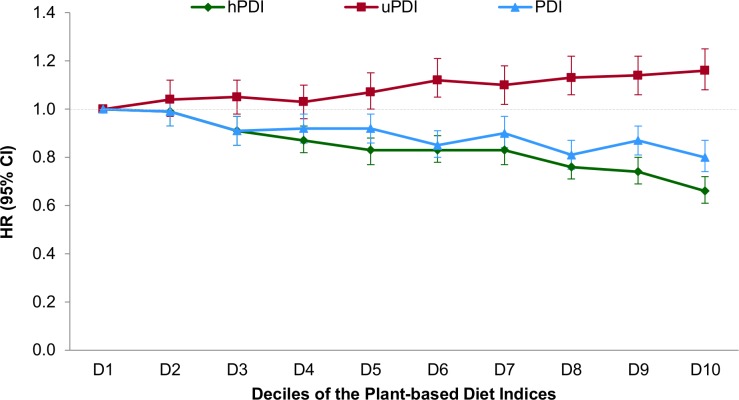
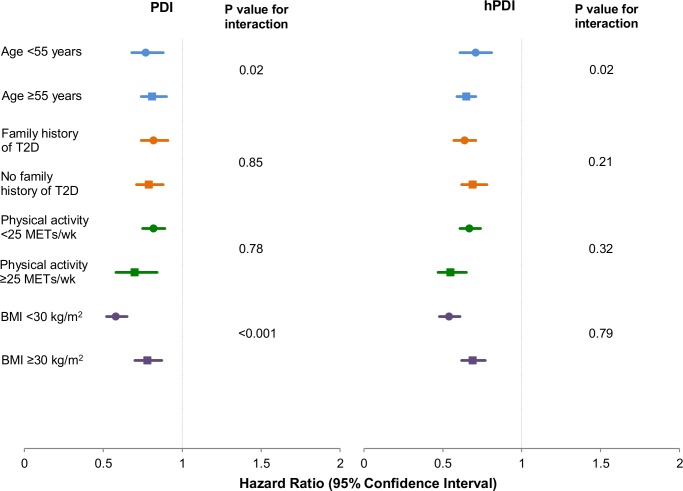
BACKGROUND: Plant-based diets have been recommended to reduce the risk of type 2 diabetes (T2D). However, not all plant foods are necessarily beneficial. We examined the association of an overall plant-based diet and hypothesized healthful and unhealthful versions of a plant-based diet with T2D incidence in three prospective cohort studies in the US. METHODS AND FINDINGS: We included 69,949 women from the Nurses' Health Study (1984-2012), 90,239 women from the Nurses' Health Study 2 (1991-2011), and 40,539 men from the Health Professionals Follow-Up Study (1986-2010), free of chronic diseases at baseline. Dietary data were collected every 2-4 y using a semi-quantitative food frequency questionnaire. Using these data, we created an overall plant-based diet index (PDI), where plant foods received positive scores, while animal foods (animal fats, dairy, eggs, fish/seafood, poultry/red meat, miscellaneous animal-based foods) received reverse scores. We also created a healthful plant-based diet index (hPDI), where healthy plant foods (whole grains, fruits, vegetables, nuts, legumes, vegetable oils, tea/coffee) received positive scores, while less healthy plant foods (fruit juices, sweetened beverages, refined grains, potatoes, sweets/desserts) and animal foods received reverse scores. Lastly, we created an unhealthful plant-based diet index (uPDI) by assigning positive scores to less healthy plant foods and reverse scores to healthy plant foods and animal foods. We documented 16,162 incident T2D cases during 4,102,369 person-years of follow-up. In pooled multivariable-adjusted analysis, both PDI and hPDI were inversely associated with T2D (PDI: hazard ratio [HR] for extreme deciles 0.51, 95% CI 0.47-0.55, p trend < 0.001; hPDI: HR for extreme deciles 0.55, 95% CI 0.51-0.59, p trend < 0.001). The association of T2D with PDI was considerably attenuated when we additionally adjusted for body mass index (BMI) categories (HR 0.80, 95% CI 0.74-0.87, p trend < 0.001), while that with hPDI remained largely unchanged (HR 0.66, 95% CI 0.61-0.72, p trend < 0.001). uPDI was positively associated with T2D even after BMI adjustment (HR for extreme deciles 1.16, 95% CI 1.08-1.25, p trend < 0.001). Limitations of the study include self-reported diet assessment, with the possibility of measurement error, and the potential for residual or unmeasured confounding given the observational nature of the study design. CONCLUSIONS: Our study suggests that plant-based diets, especially when rich in high-quality plant foods, are associated with substantially lower risk of developing T2D. This supports current recommendations to shift to diets rich in healthy plant foods, with lower intake of less healthy plant and animal foods.
Overview
The claims and statistics of this paper haven’t been checked yet.
Free: it reads the open-access text and checks the first 5 claims that cite a source we can check. Create a free account to check every claim.
Integrity signals
Registry
Cites
Statistics
Figures
Verification
Claims the paper makes
The claims and statistics of this paper haven’t been checked yet.
Free: it reads the open-access text and checks the first 5 claims that cite a source we can check. Create a free account to check every claim.
Claims other papers make about this one
Each is checked against this paper’s own text: does it say what the citing paper says it does?
The source backs part of the claim, not all of it — or backs it for a different population, condition or comparison.
In the citing paper
“Diets emphasizing whole, minimally processed foods—such as vegetables, fruits, whole grains, legumes, nuts, seeds, and lean protein sources—have been consistently associated with a reduced risk of obesity, type 2 diabetes, hypertension, and cardiovascular disease [164,165,166,167].”
From Lifestyle Medicine for Obesity in the Era of Highly Effective Anti-Obesity Treatment (2025) · cites this paper as [166]
Experimental — accuracy not yet measuredThe source backs part of the claim, not all of it — or backs it for a different population, condition or comparison.
In the citing paper
“There is consistent evidence that links well-balanced, minimally processed plant-based diets with a lower incidence of type 2 diabetes, improved glycaemic control and reduced cardiometabolic risk [2,3,4].”
From Dietary Nitrate-Rich Vegetables as Natural Modulators of Health: Mechanisms and Benefits in Ageing Populations (2026) · cites this paper as [3]
Experimental — accuracy not yet measuredThe cited source says what the claim attributes to it.
In the citing paper
“In three US cohorts, we previously documented that the PDI was inversely associated with type 2 diabetes risk with a stronger inverse association for hPDI, and a positive association for uPDI(14).”
From Healthful and Unhealthful Plant-Based Diets and the Risk of Coronary Heart Disease in U.S. Adults (2017) · cites this paper as [14]
Self-check
Percentages, sums and reported differences re-computed from the paper’s own numbers.
The self-check needs the paper’s full text.
Citations
Cites
Measuring inconsistency in meta-analyses
Higgins, J. P. T., Thompson, S. G., Deeks, J. J., & Altman, D. G. (2003) · BMJ · doi:10.1136/bmj.327.7414.557 · Cited by 63,139
Report of the Expert Committee on the Diagnosis and Classification of Diabetes Mellitus
The Expert Committee on the Diagnosis and Classification of Diabetes Mellitus* (2002) · Diabetes Care · doi:10.2337/diacare.25.2007.s5 · Cited by 10,338
Report of the Expert Committee on the Diagnosis and Classification of Diabetes Mellitus
The Expert Committee on the Diagnosis and Classification of Diabetes Mellitus (1997) · Diabetes Care · doi:10.2337/diacare.20.7.1183 · Cited by 6,220
The combination of estimates from different experiments
Cochran, W. G. (1954) · Biometrics · doi:10.2307/3001666 · Cited by 5,380
Classification and diagnosis of diabetes mellitus and other categories of glucose intolerance.
National Diabetes Data Group (1979) · Diabetes · doi:10.2337/diab.28.12.1039 · Cited by 4,909
Reproducibility and validity of a semiquantitative food frequency questionnaire
WILLETT, W. C., SAMPSON, L., STAMPFER, M. J., ROSNER, B., BAIN, C., WITSCHI, J., HENNEKENS, C. H., & SPEIZER, F. E. (1985) · American Journal of Epidemiology · doi:10.1093/oxfordjournals.aje.a114086 · Cited by 4,274
Self-citationStandards of medical care in diabetes 2010
American Diabetes Association (2010) · Diabetes Care · doi:10.2337/dc10-s011 · Cited by 3,470
Basevi, V., Di Mario, S., Morciano, C., Nonino, F., & Magrini, N. (2011) · Diabetes Care · doi:10.2337/dc11-0174 · Cited by 3,055
Changes in diet and lifestyle and long-term weight gain in women and men
Mozaffarian, D., Hao, T., Rimm, E. B., Willett, W. C., & Hu, F. B. (2011) · New England Journal of Medicine · doi:10.1056/nejmoa1014296 · Cited by 2,527
Self-citationSugar-Sweetened Beverages and Risk of Metabolic Syndrome and Type 2 Diabetes
Malik, V. S., Popkin, B. M., Bray, G. A., Després, J.-P., Willett, W. C., & Hu, F. B. (2010) · Diabetes Care · doi:10.2337/dc10-1079 · Cited by 2,116
Self-citation
Research works printed but not linked: 1
- Willett W. Nutritional epidemiology 3rd ed. Oxford: Oxford University Press; 2013.
Cited by
Items 201–300 of 1,000
Wang, F., Ugai, T., Haruki, K., Wan, Y., Akimoto, N., Arima, K., Zhong, R., Twombly, T. S., Wu, K., Yin, K., et al. (2022) · Clinical and Translational Medicine · doi:10.1002/ctm2.893 · Cited by 43
Self-citationA model for ‘sustainable’ US beef production
Eshel, G., Shepon, A., Shaket, T., Cotler, B., Gilutz, S., Giddings, D., Raymo, M. E., & Milo, R. (2017) · Nature Ecology & Evolution · doi:10.1038/s41559-017-0390-5 · Cited by 49
Chen, Y., Chen, G., Abittan, N., Xing, J., Mossavar‐Rahmani, Y., Sotres‐Alvarez, D., Mattei, J., Daviglus, M. L., Isasi, C. R., Hu, F. B., et al. (2022) · American Journal of Clinical Nutrition · doi:10.1093/ajcn/nqac199 · Cited by 41
Self-citationWebster, C. C., Murphy, T., Larmuth, K., Noakes, T. D., & Smith, J. A. H. (2019) · Diabetes Metabolic Syndrome and Obesity · doi:10.2147/dmso.s227090 · Cited by 41
Shahavandi, M., Djafari, F., Shahinfar, H., Davarzani, S., Babaei, N., Ebaditabar, M., Djafarian, K., Clark, C. C. T., & Shab‐Bidar, S. (2020) · Complementary Therapies in Medicine · doi:10.1016/j.ctim.2020.102531 · Cited by 40
Wang, D. D., Li, Y., Nguyen, X.-M. T., Song, R. J., Ho, Y.-L., Hu, F. B., Willett, W. C., Wilson, P. W. F., Cho, K., Gaziano, J. M., et al. (2022) · Public Health Nutrition · doi:10.1017/s1368980022000659 · Cited by 43
“The associations for deaths due to diabetes and respiratory disease were consistent with previous findings on healthy dietary patterns and the incident disease outcomes(3,47), whereas the results for deaths due to chronic liver disease and”
Self-citationChen, G., Chai, J. C., Xing, J., Moon, J., Shan, Z., Yu, B., Mossavar‐Rahmani, Y., Sotres‐Alvarez, D., Li, J., Mattei, J., et al. (2022) · Diabetologia · doi:10.1007/s00125-022-05690-w · Cited by 41
“While the aMED and HEI-2015 include both food and nutrient components, the hPDI comprises solely food groups that were coded based on intake quintiles [34].”
BackgroundSelf-citationScoping review of the association of plant-based diet quality with health outcomes
Rosenfeld, R. M., Juszczak, H. M., & Wong, M. A. (2023) · Frontiers in Nutrition · doi:10.3389/fnut.2023.1211535 · Cited by 37
“Using this general approach to assessing diet quality, pooled analyses of cohort studies have shown the benefits of a healthful PDI for cardiovascular disease (5, 6), type 2 diabetes (4, 7), and weight reduction (8, 9).”
BackgroundMethodInfluentialAkbar, Z., Fituri, S., Ouagueni, A., Alalwani, J., Sukik, A., Al-Jayyousi, G. F., Bassil, M. S., & Tayyem, R. (2023) · Diabetes Metabolic Syndrome and Obesity · doi:10.2147/dmso.s427412 · Cited by 40
“98 This negative association could be explained by the high content of bio-active substances known as phytochemicals found in plants, mainly the green leafy vegetables.”
BackgroundToh, D. W. K., Fu, A. S., Mehta, K. A., Lam, N. Y. L., Haldar, S., & Henry, C. J. (2024) · American Journal of Clinical Nutrition · doi:10.1016/j.ajcnut.2024.04.006 · Cited by 40
Qi, R., Yang, Y., Sheng, B., Li, H., & Zhang, X. (2023) · Nutrients · doi:10.3390/nu15245120 · Cited by 41
Laouali, N., Shah, S., MacDonald, C.-J., Mahamat‐Saleh, Y., Fatouhi, D. E., Mancini, F. R., Fagherazzi, G., & Boutron‐Ruault, M. (2021) · Journal of Nutrition · doi:10.1093/jn/nxab158 · Cited by 40
Peters, B. A., Xing, J., Chen, G.-C., Usyk, M., Wang, Z., McClain, A. C., Thyagarajan, B., Daviglus, M. L., Sotres‐Alvarez, D., Hu, F. B., et al. (2022) · American Journal of Clinical Nutrition · doi:10.1016/j.ajcnut.2022.11.020 · Cited by 43
Self-citationThe Association between the EAT–Lancet Diet and Diabetes: A Systematic Review
Lin, X., Wang, S., & Huang, J. (2023) · Nutrients · doi:10.3390/nu15204462 · Cited by 38
“Other cohort studies have also yielded evidence indicating that diminishing the intake of red meat can reduce the incidence of T2DM [37,42].”
BackgroundEnglish, L., Raghavan, R., Obbagy, J., Callahan, E. H., Fultz, A. K., Nevins, J. E. H., Scinto-Madonich, S., Reigh, N. A., & Stoody, E. E. (2024) · Journal of Nutrition Education and Behavior · doi:10.1016/j.jneb.2023.10.001 · Cited by 43
Systematic review of the impact of a plant-based diet on prostate cancer incidence and outcomes
Gupta, N., Patel, H. D., Taylor, J. I., Borin, J. F., Jacobsohn, K. M., Kenfield, S. A., Eggener, S. E., Price, C. L., Davuluri, M., Byrne, N. K., et al. (2022) · Prostate Cancer and Prostatic Diseases · doi:10.1038/s41391-022-00553-2 · Cited by 35
Sullivan, V. K., Kim, H., Caulfield, L. E., Steffen, L. M., Selvin, E., & Rebholz, C. M. (2024) · Diabetes Care · doi:10.2337/dc23-2013 · Cited by 36
The rise of plant-based meat alternatives: Challenges and perspectives
Ali, A., & Bharali, P. (2025) · Food Bioscience · doi:10.1016/j.fbio.2025.106640 · Cited by 39
Post-diagnosis dietary insulinemic potential and survival outcomes among colorectal cancer patients
Tabung, F. K., Noonan, A. M., Lee, D. H., Song, M., Clinton, S. K., Spakowicz, D. J., Wu, K., Cheng, E., Meyerhardt, J. A., Fuchs, C. S., et al. (2020) · BMC Cancer · doi:10.1186/s12885-020-07288-0 · Cited by 215
Rossa-Roccor, V., Richardson, C. G., Murphy, R. A., & Gadermann, A. (2021) · PLoS ONE · doi:10.1371/journal.pone.0252358 · Cited by 40
“Certain plant-based foods such as whole grains, vegetables, legumes, nuts, and fruits are indeed known to have health benefits while high intake of others such as refined grains, fried potatoes, sweets and desserts, or fruit juices are generally considered unhealthy [32].”
BackgroundHaghighatdoost, F., Mahdavi, A., Mohammadifard, N., Hassannejad, R., Najafi, F., Farshidi, H., Lotfizadeh, M., Kazemi, T., Karimi, S., Roohafza, H., et al. (2023) · PLoS ONE · doi:10.1371/journal.pone.0284446 · Cited by 39
“The development of three plant-based diet indices (PDI, hPDI and uPDI) has also been described based on previous studies [10, 23, 24].”
MethodReuzé, A., Méjean, C., Sirieix, L., Baudry, J., Kesse‐Guyot, E., Druesne‐Pecollo, N., Brunin, J., Herçberg, S., Touvier, M., Péneau, S., et al. (2023) · Journal of Nutrition · doi:10.1016/j.tjnut.2023.09.017 · Cited by 38
Noli, S. A., Ricci, E. D., Cipriani, S., Ferrari, S., Castiglioni, M., Vecchia, I. L., Somigliana, E., & Parazzini, F. (2020) · Nutrients · doi:10.3390/nu12061568 · Cited by 39
“Although in our study no difference emerged in the effect of GI, GL, carbohydrate intake and oocyte and embryo quality in strata of vegetable intake, it could be speculated that the effect of GL and GI on reproductive outcomes may be less evident in a cohort of Italian infertile women due to the mean higher intake of…”
ResultChanges in plant-based diet quality and health-related quality of life in women
Baden, M. Y., Kino, S., Liu, X., Li, Y., Kim, Y., Kubzansky, L. D., Pan, A., Okereke, O. I., Willett, W. C., Hu, F. B., et al. (2020) · British Journal Of Nutrition · doi:10.1017/s0007114520002032 · Cited by 35
“Our results on hPDI and physical HRQoL are in line with previous studies that implicate hPDI in the prevention of chronic diseases(13,14,17).”
ResultSelf-citationNeacsu, M., Vaughan, N. J., Multari, S., Haljas, E., Scobbie, L., Duncan, G., Cantlay, L. L., Fyfe, C., Anderson, S. E., Horgan, G. W., et al. (2021) · European Journal of Nutrition · doi:10.1007/s00394-021-02711-z · Cited by 38
“It is important to understand the effect of plant-based foods on the modulation of these hormones as diets rich in high-protein crops are inversely associated with the risk of metabolic syndrome [19], with lower incidence of T2D [20], and with the improvement of several biomarkers of CVD [21].”
BackgroundLi, A., Qiu, B., Goettsch, M., Chen, Y., Ge, S., Xu, S., & Tjakkes, G. E. (2023) · Journal Of Clinical Periodontology · doi:10.1111/jcpe.13785 · Cited by 32
“PDI, hPDI, and uPDI were defined as the exposure variables in all analyses (Figure 1b) and calculated based on the food frequency questionnaire (FFQ) data as a previously used method (Satija et al., 2016; Kim et al., 2018).”
BackgroundMethodKim, J., Khil, J., Kim, H., Keum, N., Zhang, X., & Giovannucci, E. L. (2023) · European Journal of Epidemiology · doi:10.1007/s10654-023-01007-2 · Cited by 34
“Briefly, 18 food groups were included based on nutrients and culinary similarities with three broader classifications [15, 16]: healthy plant foods (whole grains, fruits, vegetables, vegetable oils, nuts, legumes, and tea/coffee), less healthy plant foods (refined grains, fruit juices, potatoes, sugar sweetened”
BackgroundMethodDiversity of plant DNA in stool is linked to dietary quality, age, and household income
Petrone, B. L., Aqeel, A., Jiang, S., Durand, H. K., Dallow, E. P., McCann, J. R., Dressman, H. K., Hu, Z., Tenekjian, C. B., Yancy, W. S., et al. (2023) · Proceedings of the National Academy of Sciences · doi:10.1073/pnas.2304441120 · Cited by 37
Precision Medicine in Type 2 Diabetes Mellitus: Utility and Limitations
Galiero, R., Caturano, A., Vetrano, E., Monda, M., Marfella, R., Sardu, C., Salvatore, T., Rinaldi, L., & Sasso, F. C. (2023) · Diabetes Metabolic Syndrome and Obesity · doi:10.2147/dmso.s390752 · Cited by 41
Plant‐based and sustainable diet: A systematic review of its impact on obesity
Mambrini, S. P., Penzavecchia, C., Menichetti, F., Foppiani, A., Leone, A., Pellizzari, M., Sileo, F., Battezzati, A., Bertoli, S., & Amicis, R. S. D. (2025) · Obesity Reviews · doi:10.1111/obr.13901 · Cited by 31
Dietary habits contribute to define the risk of type 2 diabetes in humans
Adeva‐Andany, M. M., Rañal-Muíño, E., Vila-Altesor, M., Fernández‐Fernández, C., Funcasta-Calderón, R., & Castro-Quintela, E. (2019) · Clinical Nutrition ESPEN · doi:10.1016/j.clnesp.2019.08.002 · Cited by 40
Romanos-Nanclares, A., Toledo, E., Sánchez-Bayona, R., Sánchez‐Quesada, C., Martínez‐González, M. Á., & Gea, A. (2020) · Nutrition · doi:10.1016/j.nut.2020.110884 · Cited by 36
The Merits and the Pitfalls of Low Carbohydrate Diet: A Concise Review
Mooradian, A. D. (2020) · The journal of nutrition health & aging · doi:10.1007/s12603-020-1417-1 · Cited by 37
Oncina-Cánovas, A., Vioqué, J., González‐Palacios, S., Martínez‐González, M. Á., Salas‐Salvadó, J., Corella, D., Zomeño, M. D., Martínez, J. A., Alonso‐Gómez, Á. M., Wärnberǵ, J., et al. (2021) · European Journal of Nutrition · doi:10.1007/s00394-021-02647-4 · Cited by 34
Jakše, B., Jakše, B., Pinter, S., Jug, B., Godnov, U., Pajek, J., & Fidler Mis, N. (2019) · Nutrients · doi:10.3390/nu12010055 · Cited by 30
Schorr, K., Agayn, V., de Groot, C. P. G. M., Slagboom, P. E., & Beekman, M. (2024) · The journal of nutrition health & aging · doi:10.1016/j.jnha.2024.100272 · Cited by 35
“Further, per 10-unit increase in hPDI a 10% higher insulin sensitivity was observed [15,26,33 – 40].”
InfluentialConrad, Z., Thorne‐Lyman, A., Wu, S., DiStaso, C., Korol, M., & Love, D. C. (2024) · American Journal of Clinical Nutrition · doi:10.1016/j.ajcnut.2024.11.027 · Cited by 30
Diet quality patterns and chronic kidney disease incidence: a UK Biobank cohort study
Maroto-Rodríguez, J., Ortolá, R., Cabanas‐Sánchez, V., Martínez‐Gómez, D., Rodríguez‐Artalejo, F., & Sotos‐Prieto, M. (2024) · American Journal of Clinical Nutrition · doi:10.1016/j.ajcnut.2024.12.005 · Cited by 35
Kawasaki, Y., Akamatsu, R., Fujiwara, Y., Omori, M., Sugawara, M., Yamazaki, Y., Matsumoto, S., Iwakabe, S., & Kobayashi, T. (2021) · Eating and Weight Disorders - Studies on Anorexia Bulimia and Obesity · doi:10.1007/s40519-020-01093-1 · Cited by 38
Brunin, J., Allès, B., Péneau, S., Reuzé, A., Pointereau, P., Touvier, M., Herçberg, S., Lairon, D., Baudry, J., & Kesse‐Guyot, E. (2022) · Cleaner and Responsible Consumption · doi:10.1016/j.clrc.2022.100062 · Cited by 36
“More information is available elsewhere (Satija et al., 2016).”
Lifestyle Medicine for Obesity in the Era of Highly Effective Anti-Obesity Treatment
Sannidhi, D., Abeles, R., Andrew, W., Bonnet, J. P., Vitale, K., Niranjan, V., Gulati, M., Pauly, K., Moran, R., Alexander, L., et al. (2025) · Nutrients · doi:10.3390/nu17142382 · Cited by 29
Bioactive Exploration in Functional Foods: Unlocking Nature's Treasures
Mittal, R. K., Mishra, R., Sharma, V., & Purohit, P. (2023) · Current Pharmaceutical Biotechnology · doi:10.2174/0113892010282580231120041659 · Cited by 42
Achieving High Protein Quality Is a Challenge in Vegan Diets: A Narrative Review
Soh, B. X. P., Smith, N. W., von Hurst, P. R., & McNabb, W. C. (2024) · Nutrition Reviews · doi:10.1093/nutrit/nuae176 · Cited by 38
“192,193 However, this does not accurately account for the discrepancies of specific nutrients, and foods grouped in the healthy category may not sufficiently address the gap of protein adequacy, 190 especially for bioavailable AAs.”
Zhang, R., Zhang, M., & Wang, P. (2025) · Frontiers in Nutrition · doi:10.3389/fnut.2025.1539355 · Cited by 36
Córdova, R., Kim, J., Thompson, A. S., Noh, H., Shah, S., Dahm, C. C., Jensen, C. F., Mellemkjær, L., Tjønneland, A. M., Katzke, V. A., et al. (2025) · The Lancet Healthy Longevity · doi:10.1016/j.lanhl.2025.100742 · Cited by 33
Livingston, K. A., Freeman, K. J., Friedman, S. M., Stout, R., Lianov, L. S., Drozek, D. S., Shallow, J., Shurney, D. W., Patel, P. M., Campbell, T. M., et al. (2021) · International Journal of Environmental Research and Public Health · doi:10.3390/ijerph182111364 · Cited by 36
Yuan, S., Song, C., Zhang, R., He, J., & Dou, K. (2022) · Nutrients · doi:10.3390/nu14132556 · Cited by 33
“An analysis of 200,727 US participants from three prospective cohort studies conducted over 20 years revealed that eating more healthy plant foods and eating fewer animal foods was associated with a 20% reduction in diabetic risk [37].”
Plant-based diets and the risk of pancreatic cancer: a large prospective multicenter study
Zhong, G., Li, Z., You, A.-J., Zhu, Q., Wang, C., & Yang, P.-F. (2023) · American Journal of Clinical Nutrition · doi:10.1016/j.ajcnut.2022.11.013 · Cited by 32
Grant, W. B., van Amerongen, B. M., & Boucher, B. J. (2023) · Nutrients · doi:10.3390/nu15122787 · Cited by 39
Lee, J. J., Srebot, S., Ahmed, M., Mulligan, C., Hu, G., & L’Abbé, M. R. (2023) · Journal of Food Science · doi:10.1111/1750-3841.16691 · Cited by 37
Plant-based diet and risk of all-cause mortality: a systematic review and meta-analysis
Tan, J., Zhang, S., Jiang, Y., Li, J., & Yang, C. (2024) · Frontiers in Nutrition · doi:10.3389/fnut.2024.1481363 · Cited by 32
Huang, T., Ploner, A., Chang, E. T., Liu, Q., Cai, Y., Zhang, Z., Chen, G., Huang, Q., Xie, S.-H., Cao, S., et al. (2021) · American Journal of Clinical Nutrition · doi:10.1093/ajcn/nqab114 · Cited by 30
“Recent studies on type 2 diabetes and cardiovascular diseases have suggested an overall plant-based diet index (constituted by 18 healthy plant food groups and animal food groups) as a feasible assessment of adherence to different types of plant-based diets (healthy and unhealthy) (31, 32).”
BackgroundMartínez, C. G., Babió, N., Júlvez, J., Nishi, S. K., Fernández‐Aranda, F., Martínez‐González, M. Á., Cuenca‐Royo, A., Fernández, R., Jiménez‐Múrcia, S., de la Torre, R., et al. (2022) · International Journal of Behavioral Nutrition and Physical Activity · doi:10.1186/s12966-022-01335-8 · Cited by 34
Cai, Y., Hong, C., Han, J., Fan, L., Xiao, X., Xiao, J. F., Wei, Y., Zhu, Y., Tian, J., Zhu, X., et al. (2023) · American Journal of Clinical Nutrition · doi:10.1016/j.ajcnut.2023.11.015 · Cited by 28
Acculturation is Associated with Dietary Patterns in South Asians in America
Gadgil, M. D., Kandula, N. R., & Kanaya, A. M. (2020) · Journal of Immigrant and Minority Health · doi:10.1007/s10903-020-01016-3 · Cited by 34
Weber, K. S., Ratjen, I., Enderle, J., Seidel, U., Rimbach, G. H., & Lieb, W. (2021) · European Journal of Nutrition · doi:10.1007/s00394-021-02730-w · Cited by 27
“Thus, the three plant-based diet indices may range from 18 to 90 with a higher index reflecting a more plant-based (either overall, healthy or unhealthy) and less animal-based diet [13, 22, 23].”
BackgroundResultThe association of plant-based dietary patterns and psychological disorders among Iranian adults
Mousavi, S. M., Ebrahimi-Mousavi, S., Keshteli, A. H., Afshar, H., Esmaillzadeh, A., & Adibi, P. (2022) · Journal of Affective Disorders · doi:10.1016/j.jad.2022.01.028 · Cited by 30
Ruskovska, T., Budić-Leto, I., Corral‐Jara, K. F., Ajdžanović, V. Z., Arola‐Arnal, A., Bravo, F. I., Deligiannidou, G.-E., Havlík, J., Janeva, M., Kistanova, E. K., et al. (2022) · Ageing Research Reviews · doi:10.1016/j.arr.2022.101649 · Cited by 32
A Healthful Plant-Based Diet Is Associated with Lower Odds of Nonalcoholic Fatty Liver Disease
Li, X., Peng, Z., Li, M., Zeng, X., Li, H., Zhu, Y., Chen, H., Hu, A., Zhao, Q., Zhang, Z., et al. (2022) · Nutrients · doi:10.3390/nu14194099 · Cited by 27
“[8] developed three dietary indices, including an overall plant-based diet index (PDI), a healthful PDI (hPDI), and an unhealthful PDI (uPDI).”
BackgroundPlant‐based diet associated with better quality of life in prostate cancer survivors
Loeb, S., Hua, Q., Bauer, S. R., Kenfield, S. A., Morgans, A. K., Chan, J. M., Blarigan, E. L. V., Shreves, A. H., & Mucci, L. A. (2024) · Cancer · doi:10.1002/cncr.35172 · Cited by 29
“These indices were developed and reported in earlier HPFS studies focusing on diabetes and heart disease 2,19 and were previously used by our group to study prostate cancer incidence.”
BackgroundChen, J., Sun, Y., Dan, L., Wellens, J., Yuan, S., Yang, H., Tong, T. Y. N., Cross, A. J., Papadimitriou, N., Meyer, A., et al. (2025) · The Lancet Regional Health - Europe · doi:10.1016/j.lanepe.2025.101264 · Cited by 32
“26,27 The overall PDI assigned positive scores to all plant foods.”
Ratjen, I., Enderle, J., Burmeister, G., Koch, M., Nöthlings, U., Hampe, J., & Lieb, W. (2021) · American Journal of Clinical Nutrition · doi:10.1093/ajcn/nqab061 · Cited by 28
Antoniak, M. A., Szymkowiak, A., & Pepliński, B. (2022) · Applied Sciences · doi:10.3390/app12094128 · Cited by 37
“Additionally, in various studies, it has been confirmed that a plant-based diet, which should be considered healthy, brings numerous benefits in terms of improving personal health, such as reducing the risk of obesity, diabetes, heart disease, certain types of cancer, improved life longevity [47,48] and finally, reduc…”
BackgroundZheng, Y., Wang, J., Wang, Y., Xu, K., & Chen, X. (2023) · Nutrients · doi:10.3390/nu15071794 · Cited by 30
“conceptualized a graded dietary pattern comprising three plantbased dietary indexes: overall plant-based diet index (PDI), healthy plant-based diet index (hPDI), and unhealthy plant-based diet index (uPDI) [10].”
BackgroundPlant-based dietary patterns and the risk of dementia: a population-based study
de Crom, T. O. E., Steur, M., Ikram, M. K., Ikram, M. A., & Voortman, T. (2023) · Age and Ageing · doi:10.1093/ageing/afad178 · Cited by 27
“Indeed, diets with relatively more plant-and fewer animal-based foods have been linked to a lower risk of type 2 diabetes [3, 4] and cardiovascular diseases [5, 6], which are in turn important risk factors for dementia [7–9].”
Kim, J., Wilkens, L. R., Haiman, C. A., Marchand, L. L., & Park, S. (2024) · Clinical Nutrition · doi:10.1016/j.clnu.2024.04.035 · Cited by 28
Plant-based meat alternatives and cardiometabolic health: a systematic review and meta-analysis
Fernández‐Rodríguez, R., Bizzozero‐Peroni, B., Goñi, V. D., Garrido‐Miguel, M., Bertotti, G., Roldán‐Ruiz, A., & López‐Moreno, M. (2024) · American Journal of Clinical Nutrition · doi:10.1016/j.ajcnut.2024.12.002 · Cited by 33
Defraeye, T., Bahrami, F., Kowatsch, T., Annaheim, S., Bragt, M. C. E., Rossi, R. M., & Greger, M. (2025) · Advances in Nutrition · doi:10.1016/j.advnut.2025.100421 · Cited by 33
“The same group con fi rmed a substantially lower risk of developing type 2 diabetes with diets rich in plant foods based on data obtained from the same studies mentioned above, including a total of 160,188 women and 40,539 men [28].”
Modeling Dairy-Free Vegetarian and Vegan USDA Food Patterns for Nonpregnant, Nonlactating Adults
Hess, J. (2022) · Journal of Nutrition · doi:10.1093/jn/nxac100 · Cited by 26
Willey, J., Wakefield, M., & Silver, H. J. (2020) · Nutrients · doi:10.3390/nu12072027 · Cited by 34
“Nurses Health and the Health Professionals studies showed that it was plant foods of higher quality that were associated with reduced T2DM risk [44].”
BackgroundBermingham, K. M., May, A., Asnicar, F., Pujol, J. C., Leeming, E. R., Franks, P. W., Valdes, A. M., Wolf, J., Hadjigeorgiou, G. M., Delahanty, L. M., et al. (2023) · European Journal of Nutrition · doi:10.1007/s00394-023-03241-6 · Cited by 31
“Habitual intakes of the 147 foods were used to calculate the oPDI, which was used as a measure of habitual diet quality [25].”
MethodResultWang, X., Yin, Z., Yang, Y., Fu, X., Guo, C., Pu, K., & Zang, S. (2024) · Journal of Affective Disorders · doi:10.1016/j.jad.2024.01.159 · Cited by 28
Dietary patterns and periodontitis: A systematic review
Shi, X., Zhu, P., Du, M., Deng, K., Li, P., Sáenz‐Ravello, G., Xu, S., & Li, A. (2024) · Journal of Periodontal Research · doi:10.1111/jre.13346 · Cited by 26
Food-based indexes and their association with dietary inflammation
Reyneke, G. L., Lambert, K., & Beck, E. J. (2025) · Advances in Nutrition · doi:10.1016/j.advnut.2025.100400 · Cited by 29
The association between plant-based diet indices and metabolic syndrome in Iranian older adults
Amini, M. R., Shahinfar, H., Djafari, F., Sheikhhossein, F., Naghshi, S., Djafarian, K., Clark, C. C. T., & Shab‐Bidar, S. (2021) · Nutrition and Health · doi:10.1177/0260106021992672 · Cited by 30
“It was documented that the PDI was inversely associated with T2D risk and hypertension, with a potent inverse association for hPDI, and a positive relationship for uPDI (Chen et al., 2018a; Kim et al., 2020c; Satija et al., 2016).”
BackgroundMethodInfluentialKhalid, W., Maqbool, Z., Arshad, M. S., Kousar, S., Akram, R., Siddeeg, A., Ali, A., Qin, H., Aziz, A., Saeed, A., et al. (2022) · International Journal of Food Properties · doi:10.1080/10942912.2022.2070643 · Cited by 25
“eating regimens are eating designs that derscore vegetables, entire grains, vegetables, organic products, nuts and seeds.([110]) Plant-based food and supplement parts of plant-based are played important role in diminishing the danger of type 2 diabetes by weight control plans.”
BackgroundRetractedMokhtari, E., Mirzaei, S., Asadi, A., Akhlaghi, M., & Saneei, P. (2022) · Scientific Reports · doi:10.1038/s41598-022-17969-4 · Cited by 25
Shah, S., Mahamat‐Saleh, Y., Ait‐hadad, W., Koemel, N. A., Varraso, R., Boutron‐Ruault, M., & Laouali, N. (2023) · American Journal of Clinical Nutrition · doi:10.1016/j.ajcnut.2022.11.019 · Cited by 28
Tang, S., Zhou, J., Liu, C., Wang, S., Yang, C., Chen, L., Zhang, L., Tan, X. W., Li, T., Li, Y., et al. (2023) · Sleep Health · doi:10.1016/j.sleh.2023.04.003 · Cited by 25
Kharaty, S. S., Harrington, J. M., Millar, S., Perry, I. J., & Phillips, C. M. (2023) · European Journal of Nutrition · doi:10.1007/s00394-023-03242-5 · Cited by 27
“To overcome such limitations, PBD scores have been developed to differentiate between lower and higher quality PBDs [9].”
BackgroundMethodInfluentialChristensen, R., Heitmann, B. L., Andersen, K. W., Nielsen, O. H., Sørensen, S. B., Jawhara, M., Bygum, A., Hvid, L., Grauslund, J., Wied, J., et al. (2018) · BMJ Open · doi:10.1136/bmjopen-2017-018166 · Cited by 27
Konieczna, J., Chaplin, A. M. L., Paz‐Graniel, I., Croker, H. A., Becerra‐Tomás, N., Markozannes, G., Tsilidis, K. K., Dossus, L., González‐Gil, E. M., Park, Y., et al. (2024) · American Journal of Clinical Nutrition · doi:10.1016/j.ajcnut.2024.10.003 · Cited by 29
Yang, X., Li, Y., Wang, C., Mao, Z., Chen, Y., Ren, P., Fan, M., Cui, S., Niu, K., Gu, R., et al. (2021) · Journal of Diabetes Investigation · doi:10.1111/jdi.13522 · Cited by 28
Huo, Y., Cao, S., Liu, J., Zhang, B., Xu, K., Wang, Y., Liu, H., Yang, P., Zeng, L., Yan, H., et al. (2023) · Nutrients · doi:10.3390/nu15061341 · Cited by 26
“Based on the responses, hPDI and uPDI are consistent with the previously introduced calculation methods [11,28,29].”
ResultVajdi, M., Karimi, A., Tousi, A. Z., Hosseini, B., Nikniaz, Z., & Farhangi, M. A. (2023) · BMC Endocrine Disorders · doi:10.1186/s12902-023-01358-7 · Cited by 29
Modern Challenges in Type 2 Diabetes: Balancing New Medications with Multifactorial Care
Caturano, A., Galiero, R., Rocco, M. P., Tagliaferri, G., Piacevole, A., Nilo, D., Lorenzo, G. D., Sardu, C., Vetrano, E., Monda, M., et al. (2024) · Biomedicines · doi:10.3390/biomedicines12092039 · Cited by 28
“Several studies have shown that a lifestyle characterized by moderate weekly physical exercise and a healthy diet can significantly reduce the risk of metabolic diseases and cardiovascular complications (RR: 0.84; 95% CI: 0.77, 0.91) [182,183].”
BackgroundInfluentialAssociation of healthy and unhealthy plant-based diets with telomere length
Li, X., Li, M., Cheng, J., Guan, S., Hou, L., Zu, S., Yang, L., Wu, H., Li, H., Fan, Y., et al. (2024) · Clinical Nutrition · doi:10.1016/j.clnu.2024.06.004 · Cited by 21
Plant-based diets and metabolic syndrome: Evaluating the influence of diet quality
McGrath, L., & Fernández, M. L. (2022) · Journal of Agriculture and Food Research · doi:10.1016/j.jafr.2022.100322 · Cited by 31
Perraud, E., Wang, J., Salomé, M., Huneau, J., Lapidus, N., & Mariotti, F. (2022) · Frontiers in Nutrition · doi:10.3389/fnut.2022.924526 · Cited by 30
Plant-Based Diets and All-cause and Cardiovascular Mortality in a Nationwide Cohort in Spain
Delgado-Velandía, M., Maroto-Rodríguez, J., Ortolá, R., García‐Esquinas, E., Rodríguez‐Artalejo, F., & Sotos‐Prieto, M. (2022) · Mayo Clinic Proceedings · doi:10.1016/j.mayocp.2022.06.008 · Cited by 23
Torreggiani, M., Fois, A., Lippi, F., Attini, R., Longhitano, E., Matarazzo, I., Masturzo, B., Cabiddu, G., Versino, E., & Piccoli, G. B. (2022) · Clinical Kidney Journal · doi:10.1093/ckj/sfac267 · Cited by 25
Vegetarian Nutrition in Chronic Kidney Disease
Narasaki, Y., Kalantar‐Zadeh, K., Rhee, C. M., Brunori, G., & Zarantonello, D. (2023) · Nutrients · doi:10.3390/nu16010066 · Cited by 28
“…found within plant-based diets are associated with numerous health benefits, including improved blood pressure, glycemic control, lipid levels, body mass index (BMI), and acid–base parameters, as well as lower risk of complications such as diabetes [2], cardiovascular disease [3], and death [4].”
BackgroundMaroto-Rodríguez, J., Ortolá, R., García‐Esquinas, E., Kales, S. N., Rodríguez‐Artalejo, F., & Sotos‐Prieto, M. (2024) · Age and Ageing · doi:10.1093/ageing/afae092 · Cited by 24
Thompson, A. S., Gaggl, M., Bondonno, N. P., Jennings, A., O’Neill, J. K., Hill, C., Karavasiloglou, N., Rohrmann, S., Cassidy, A., & Kuhn, T. E. (2024) · Clinical Nutrition · doi:10.1016/j.clnu.2024.09.021 · Cited by 24
Mayra, S. T., Ugarte, N., & Johnston, C. S. (2019) · Nutrients · doi:10.3390/nu11061427 · Cited by 28
“To more fully investigate the link between plant-based diets and disease risk, recent investigations have categorized plant-based diets as ‘healthful’ (plant-based diets rich in whole grains, fruits, vegetables, nuts, legumes, vegetable oils, tea/coffee) or ‘unhealthful’ (plant-based diets rich in fruit juices, sugar-…”
BackgroundWill the plant-based movement redefine physicians’ understanding of chronic disease?
Storz, M. A. (2020) · The New Bioethics · doi:10.1080/20502877.2020.1767921 · Cited by 23
Later chronotype is associated with unhealthful plant-based diet quality in young Japanese women
Kawasaki, Y., Akamatsu, R., Fujiwara, Y., Omori, M., Sugawara, M., Yamazaki, Y., Matsumoto, S., Iwakabe, S., & Kobayashi, T. (2021) · Appetite · doi:10.1016/j.appet.2021.105468 · Cited by 22
Brunin, J., Pointereau, P., Allès, B., Touvier, M., Herçberg, S., Lairon, D., Baudry, J., & Kesse‐Guyot, E. (2021) · European Journal of Nutrition · doi:10.1007/s00394-021-02631-y · Cited by 28
Nikparast, A., Mirzaei, P., Tadayoni, Z. S., & Asghari, G. (2024) · Nutrition Reviews · doi:10.1093/nutrit/nuae049 · Cited by 26
Bizzozero‐Peroni, B., Goñi, V. D., Fernández‐Rodríguez, R., Martínez‐Vizcaíno, V., Jiménez‐López, E., Visier‐Alfonso, M. E., Garrido‐Miguel, M., & Mesas, A. E. (2025) · Nutrition Reviews · doi:10.1093/nutrit/nuaf080 · Cited by 21
Metadata
- Authors
- Satija, A., Bhupathiraju, S. N., Rimm, E. B., Spiegelman, D., Chiuve, S. E., Borgi, L., Willett, W. C., Manson, J. E., Sun, Q., & Hu, F. B.
- Affiliations
- Harvard University (US)
- Brigham and Women's Hospital (US)
- Corresponding author
- Satija, Ambika
- ORCID
- Venue
- PLOS Medicine
- Publisher
- Public Library of Science (PLoS)
- Published
- 2016-06-14
- Volume
- 13
- Issue
- 6
- Pages
- e1002039
- ISSN
- 1549-1277 (ISSN-L)
- 1549-1676
- PMC
- PMC4907448
- OpenAlex
- W2430898493
- Cited by
- 1,069
- References
- 56
- Citations by year
- 2026: 133 · 2025: 169 · 2024: 179 · 2023: 135 · 2022: 124 · 2021: 99 · 2020: 103 · 2019: 55 · 2018: 47 · 2017: 20 · 2016: 4
- FWCI
- 41.65
- Type
- journal article
- Language
- en
- Open access
- gold
- doi.org
- Licence
- Locations
- PLoS Medicine (publishedVersion, cc-by)
- Europe PMC (PubMed Central) (publishedVersion, cc-by)
- PubMed Central (publishedVersion, cc-by)
- PubMed (publishedVersion)
- Digital Access to Scholarship at Harvard (DASH) (Harvard University) (submittedVersion, cc-by)
- DOAJ (DOAJ: Directory of Open Access Journals) (submittedVersion, cc-by-sa)
- Figshare (submittedVersion, cc-by)
- Funders
- National Institutes of Health (UM1-CA-176726, UM1-CA167552, CA176726, CA-167552, CA186107, DK58845, UM1 CA186107, UM1 CA176726)
- National Cancer Institute (UM1CA176726, UM1CA186107, UM1CA167552)
- National Institute of Diabetes and Digestive and Kidney Diseases (R01DK058845)
- Topics
- Health Sciences › Medicine › Public Health, Environmental and Occupational Health › Nutritional Studies and Diet
- Physical Sciences › Environmental Science › Ecology › Agriculture Sustainability and Environmental Impact
- Health Sciences › Medicine › Physiology (medical) › Dietary Effects on Health
- Keywords
- plant-based diet, type 2 diabetes, diabetes incidence, dietary habits, healthful plant-based diet index, unhealthful plant-based diet index, body mass index, dairy consumption, red and processed meat, fruit and vegetable intake, Nurses' Health Study, Health Professionals Follow-up Study, sex differences, United States adults, pooled analysis of cohort studies
- MeSH terms
- Adult, Diabetes Mellitus, Type 2, Diet, Female, Fruit, Humans, Male, Middle Aged, Prospective Studies, United States, Vegetables, Diet, Vegetarian, Cohort Studies, Incidence
About these checks
Registry, retraction, Cites and statistics results are computed, not judged, with one exception: a printed reference that no index lists is read once by a model before it counts as a citation error. Claims are extracted by a model and kept only when their quote appears verbatim in the text; each cited source is then checked, with a model’s help, for whether it says what the claim relies on. Those verdicts can be wrong — read the claim’s quote and the cited source before relying on one.
Statistics and arithmetic are recomputed, not judged.
Confidence bands are shown only for fields calibrated on our annotated test set. None is calibrated yet, so no band is shown.
What counts as a claim ›How we measure confidence ›How we check this ›
Are you an author, or do you see a problem with this page? Request a review
Data sources
Bibliographic data: Semantic Scholar, OpenAlex, Crossref.
Contains information from the Semantic Scholar Academic Graph Datasets, made available under the ODC Attribution License (ODC-BY 1.0).
Semantic Scholar’s data is described in: Kinney, R., et al. (2023). The Semantic Scholar Open Data Platform. arXiv:2301.10140.
