

Plant-Based Dietary Patterns and Incidence of Type 2 Diabetes in US Men and Women: Results from Three Prospective Cohort Studies
Open accessThe DOI matches its Crossref record; 56 of the 56 references it cites were found in a registry or an index.
Abstract
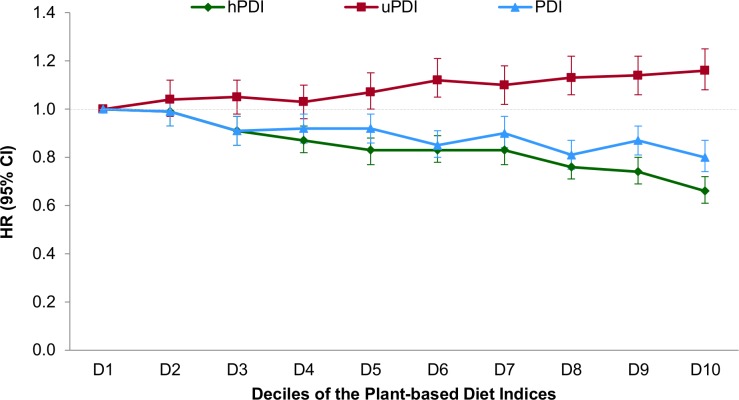
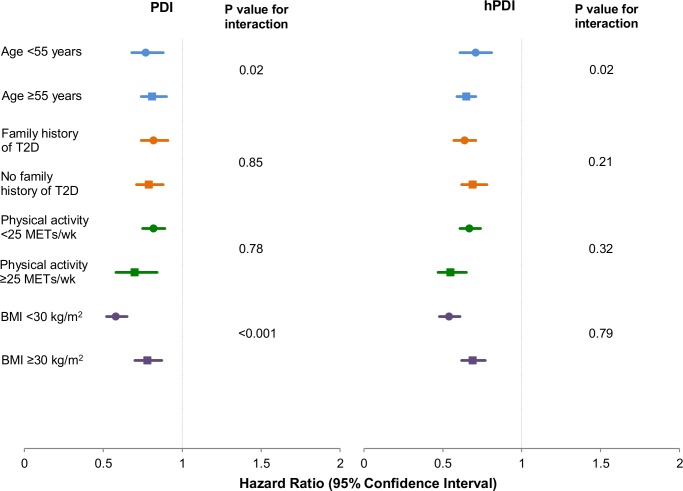
BACKGROUND: Plant-based diets have been recommended to reduce the risk of type 2 diabetes (T2D). However, not all plant foods are necessarily beneficial. We examined the association of an overall plant-based diet and hypothesized healthful and unhealthful versions of a plant-based diet with T2D incidence in three prospective cohort studies in the US. METHODS AND FINDINGS: We included 69,949 women from the Nurses' Health Study (1984-2012), 90,239 women from the Nurses' Health Study 2 (1991-2011), and 40,539 men from the Health Professionals Follow-Up Study (1986-2010), free of chronic diseases at baseline. Dietary data were collected every 2-4 y using a semi-quantitative food frequency questionnaire. Using these data, we created an overall plant-based diet index (PDI), where plant foods received positive scores, while animal foods (animal fats, dairy, eggs, fish/seafood, poultry/red meat, miscellaneous animal-based foods) received reverse scores. We also created a healthful plant-based diet index (hPDI), where healthy plant foods (whole grains, fruits, vegetables, nuts, legumes, vegetable oils, tea/coffee) received positive scores, while less healthy plant foods (fruit juices, sweetened beverages, refined grains, potatoes, sweets/desserts) and animal foods received reverse scores. Lastly, we created an unhealthful plant-based diet index (uPDI) by assigning positive scores to less healthy plant foods and reverse scores to healthy plant foods and animal foods. We documented 16,162 incident T2D cases during 4,102,369 person-years of follow-up. In pooled multivariable-adjusted analysis, both PDI and hPDI were inversely associated with T2D (PDI: hazard ratio [HR] for extreme deciles 0.51, 95% CI 0.47-0.55, p trend < 0.001; hPDI: HR for extreme deciles 0.55, 95% CI 0.51-0.59, p trend < 0.001). The association of T2D with PDI was considerably attenuated when we additionally adjusted for body mass index (BMI) categories (HR 0.80, 95% CI 0.74-0.87, p trend < 0.001), while that with hPDI remained largely unchanged (HR 0.66, 95% CI 0.61-0.72, p trend < 0.001). uPDI was positively associated with T2D even after BMI adjustment (HR for extreme deciles 1.16, 95% CI 1.08-1.25, p trend < 0.001). Limitations of the study include self-reported diet assessment, with the possibility of measurement error, and the potential for residual or unmeasured confounding given the observational nature of the study design. CONCLUSIONS: Our study suggests that plant-based diets, especially when rich in high-quality plant foods, are associated with substantially lower risk of developing T2D. This supports current recommendations to shift to diets rich in healthy plant foods, with lower intake of less healthy plant and animal foods.
Overview
The claims and statistics of this paper haven’t been checked yet.
Free: it reads the open-access text and checks the first 5 claims that cite a source we can check. Create a free account to check every claim.
Integrity signals
Registry
Cites
Statistics
Figures
Verification
Claims the paper makes
The claims and statistics of this paper haven’t been checked yet.
Free: it reads the open-access text and checks the first 5 claims that cite a source we can check. Create a free account to check every claim.
Claims other papers make about this one
Each is checked against this paper’s own text: does it say what the citing paper says it does?
The source backs part of the claim, not all of it — or backs it for a different population, condition or comparison.
In the citing paper
“Diets emphasizing whole, minimally processed foods—such as vegetables, fruits, whole grains, legumes, nuts, seeds, and lean protein sources—have been consistently associated with a reduced risk of obesity, type 2 diabetes, hypertension, and cardiovascular disease [164,165,166,167].”
From Lifestyle Medicine for Obesity in the Era of Highly Effective Anti-Obesity Treatment (2025) · cites this paper as [166]
Experimental — accuracy not yet measuredThe source backs part of the claim, not all of it — or backs it for a different population, condition or comparison.
In the citing paper
“There is consistent evidence that links well-balanced, minimally processed plant-based diets with a lower incidence of type 2 diabetes, improved glycaemic control and reduced cardiometabolic risk [2,3,4].”
From Dietary Nitrate-Rich Vegetables as Natural Modulators of Health: Mechanisms and Benefits in Ageing Populations (2026) · cites this paper as [3]
Experimental — accuracy not yet measuredThe cited source says what the claim attributes to it.
In the citing paper
“In three US cohorts, we previously documented that the PDI was inversely associated with type 2 diabetes risk with a stronger inverse association for hPDI, and a positive association for uPDI(14).”
From Healthful and Unhealthful Plant-Based Diets and the Risk of Coronary Heart Disease in U.S. Adults (2017) · cites this paper as [14]
Self-check
Percentages, sums and reported differences re-computed from the paper’s own numbers.
The self-check needs the paper’s full text.
Citations
Cites
Measuring inconsistency in meta-analyses
Higgins, J. P. T., Thompson, S. G., Deeks, J. J., & Altman, D. G. (2003) · BMJ · doi:10.1136/bmj.327.7414.557 · Cited by 63,139
Report of the Expert Committee on the Diagnosis and Classification of Diabetes Mellitus
The Expert Committee on the Diagnosis and Classification of Diabetes Mellitus* (2002) · Diabetes Care · doi:10.2337/diacare.25.2007.s5 · Cited by 10,338
Report of the Expert Committee on the Diagnosis and Classification of Diabetes Mellitus
The Expert Committee on the Diagnosis and Classification of Diabetes Mellitus (1997) · Diabetes Care · doi:10.2337/diacare.20.7.1183 · Cited by 6,220
The combination of estimates from different experiments
Cochran, W. G. (1954) · Biometrics · doi:10.2307/3001666 · Cited by 5,380
Classification and diagnosis of diabetes mellitus and other categories of glucose intolerance.
National Diabetes Data Group (1979) · Diabetes · doi:10.2337/diab.28.12.1039 · Cited by 4,909
Reproducibility and validity of a semiquantitative food frequency questionnaire
WILLETT, W. C., SAMPSON, L., STAMPFER, M. J., ROSNER, B., BAIN, C., WITSCHI, J., HENNEKENS, C. H., & SPEIZER, F. E. (1985) · American Journal of Epidemiology · doi:10.1093/oxfordjournals.aje.a114086 · Cited by 4,274
Self-citationStandards of medical care in diabetes 2010
American Diabetes Association (2010) · Diabetes Care · doi:10.2337/dc10-s011 · Cited by 3,470
Basevi, V., Di Mario, S., Morciano, C., Nonino, F., & Magrini, N. (2011) · Diabetes Care · doi:10.2337/dc11-0174 · Cited by 3,055
Changes in diet and lifestyle and long-term weight gain in women and men
Mozaffarian, D., Hao, T., Rimm, E. B., Willett, W. C., & Hu, F. B. (2011) · New England Journal of Medicine · doi:10.1056/nejmoa1014296 · Cited by 2,527
Self-citationSugar-Sweetened Beverages and Risk of Metabolic Syndrome and Type 2 Diabetes
Malik, V. S., Popkin, B. M., Bray, G. A., Després, J.-P., Willett, W. C., & Hu, F. B. (2010) · Diabetes Care · doi:10.2337/dc10-1079 · Cited by 2,116
Self-citation
Research works printed but not linked: 1
- Willett W. Nutritional epidemiology 3rd ed. Oxford: Oxford University Press; 2013.
Cited by
Items 101–200 of 1,000
Dietary Change and Global Sustainable Development Goals
Chen, C., Chaudhary, A., & Mathys, A. (2022) · Frontiers in Sustainable Food Systems · doi:10.3389/fsufs.2022.771041 · Cited by 99
“Studies also found that the adherence to an alternative dietary pattern such as Mediterranean and Vegetarian diets is associated a lower risk of multiple chronic diseases (Orlich et al., 2013; Satija et al., 2016; Dinu et al., 2018).”
BackgroundEAT-Lancet Healthy Reference Diet score and diabetes incidence in a cohort of Mexican women
López, G. E., Batis, C., González, C., Chávez, M., Cortés-Valencia, A., López‐Ridaura, R., Lajous, M., & Stern, D. (2022) · European Journal of Clinical Nutrition · doi:10.1038/s41430-022-01246-8 · Cited by 84
An integrated look at the effect of structure on nutrient bioavailability in plant foods
Capuano, E., & Pellegrini, N. (2018) · Journal of the Science of Food and Agriculture · doi:10.1002/jsfa.9298 · Cited by 83
Ansari, S., Bari, A., Ullah, R., Mathanmohun, M., Veeraraghavan, V. P., & Sun, Z. (2019) · Journal of Photochemistry and Photobiology B Biology · doi:10.1016/j.jphotobiol.2019.111643 · Cited by 81
Liang, F., Fu, J., Turner‐McGrievy, G. M., Wang, Y., Nan, Q., Ding, K., Zeng, J., Moore, J. B., & Li, R. (2022) · Nutrients · doi:10.3390/nu14153132 · Cited by 81
“In the present study, we divided the 16 food groups into 3 categories according to their potentially divergent health effects, including healthful plant-based foods (whole grains, fresh fruits, fresh vegetables, legumes, garlic, vegetable oils, nuts, and tea), unhealthful plant-based foods (refined grains, preserved v…”
BackgroundMethodPandey, S., Ritz, C., & Perez-Cueto, F. J. A. (2021) · Foods · doi:10.3390/foods10010148 · Cited by 67
Romanos-Nanclares, A., Willett, W. C., ROSNER, B. A., Collins, L. C., Hu, F. B., Toledo, E., & Eliassen, A. H. (2021) · Cancer Epidemiology Biomarkers & Prevention · doi:10.1158/1055-9965.epi-21-0352 · Cited by 81
Self-citationLi, H., Zeng, X., Wang, Y., Zhang, Z., Zhu, Y., Li, X., Hu, A., Zhao, Q., & Yang, W. (2021) · European Journal of Nutrition · doi:10.1007/s00394-021-02660-7 · Cited by 75
Vegetarian Dietary Patterns for Adults: A Position Paper of the Academy of Nutrition and Dietetics
Raj, S., Guest, N. S., Landry, M. J., Mangels, A. R., Pawlak, R., & Rozga, M. (2025) · Journal of the Academy of Nutrition and Dietetics · doi:10.1016/j.jand.2025.02.002 · Cited by 85
Levy, E. H., DELVIN, E. E., Marcil, V., & Spahis, S. (2020) · American Journal of Physiology-Endocrinology and Metabolism · doi:10.1152/ajpendo.00298.2020 · Cited by 79
“For example, persons that consume polyphenol-rich foods can reduce the risk of T2D (189).”
BackgroundInfluentialKim, J., Kim, H., & Giovannucci, E. L. (2021) · Clinical Nutrition · doi:10.1016/j.clnu.2021.10.013 · Cited by 73
Benefits of a plant-based diet and considerations for the athlete
Shaw, K. A., Zello, G. A., Rodgers, C. D., Warkentin, T. D., Baerwald, A., & Chilibeck, P. D. (2022) · European Journal of Applied Physiology · doi:10.1007/s00421-022-04902-w · Cited by 96
Laddu, D., & Hauser, M. E. (2018) · Progress in Cardiovascular Diseases · doi:10.1016/j.pcad.2018.12.004 · Cited by 81
The impact of vegan diet in the prevention and treatment of type 2 diabetes: A systematic review
Pollakova, D., Andreadi, A., Pacifici, F., Della-Morte, D., Lauro, D., & Tubili, C. (2021) · Nutrients · doi:10.3390/nu13062123 · Cited by 67
“Satija (2015) [8] US Nurses Health Study + Nurses Health Study-2 + Health Professionals F–up Study M/F 20 200,727 fair”
BackgroundInfluentialThe association between plant-based dietary patterns and risk of breast cancer: a case–control study
Rigi, S., Mousavi, S. M., Benisi-Kohansal, S., Azadbakht, L., & Esmaillzadeh, A. (2021) · Scientific Reports · doi:10.1038/s41598-021-82659-6 · Cited by 77
Yue, Y., Hur, J., Cao, Y., Tabung, F. K., Wang, M., Wu, K., Song, M., Zhang, X., Liu, Y., Meyerhardt, J. A., et al. (2021) · Annals of Oncology · doi:10.1016/j.annonc.2021.03.200 · Cited by 69
Self-citationAssociation of plant-based dietary patterns with psychological profile and obesity in Iranian women
Zamani, B., Daneshzad, E., Siassi, F., Guilani, B., Bellissimo, N., & Azadbakht, L. (2019) · Clinical Nutrition · doi:10.1016/j.clnu.2019.07.019 · Cited by 74
He, J., Fang, A., Yu, S., Shen, X., & Li, K. (2020) · Diabetes Care · doi:10.2337/dc19-2202 · Cited by 70
Landry, M. J., & Ward, C. (2024) · American Journal of Lifestyle Medicine · doi:10.1177/15598276241237766 · Cited by 77
“58,59 Consulting with a Registered Dietitian Nutritionist (RDs or RDNs) or a health care professional can provide personalized guidance to address individual nutritional needs.”
Drewnowski, A. (2021) · Advances in Nutrition · doi:10.1093/advances/nmab089 · Cited by 71
Daneshzad, E., Keshavarz, S. A., Qorbani, M., Larijani, B. A., Bellissimo, N., & Azadbakht, L. (2019) · British Journal Of Nutrition · doi:10.1017/s0007114519003179 · Cited by 72
“We created a whole PDI, healthful PDI (hPDI) and unhealthful PDI (uPDI) as reported in previous studies(18,19).”
MethodGenetic susceptibility, plant-based dietary patterns, and risk of cardiovascular disease
Heianza, Y., Zhou, T., Sun, D., Hu, F. B., Manson, J. E., & Qi, L. (2020) · American Journal of Clinical Nutrition · doi:10.1093/ajcn/nqaa107 · Cited by 66
“Further, differences in characteristics across healthful-PDI scores were consistent with previous studies (7, 11), indicating that we could reasonably categorize the participants using healthful-PDI.”
BackgroundMethodResultInfluentialSelf-citationPolyphenols Rich Diets and Risk of Type 2 Diabetes
Porto, A. D., Cavarape, A., Colussi, G., Casarsa, V., Catena, C., & Sechi, L. A. (2021) · Nutrients · doi:10.3390/nu13051445 · Cited by 69
“Similar findings were obtained from the pooled analysis of three big databases (Nurses’ Health Study, Nurses’ Health Study 2 and Health Professionals Follow-Up Study) [13] in which a healthful plant-based diet rich in whole grains, fruits, vegetables, nuts, legumes, vegetable oils, and tea/coffee was associated with s…”
ResultWu, H., Gu, Y., Meng, G., Wu, H., Zhang, S., Wang, X., Zhang, J., Huang, T., & Niu, K. (2023) · Age and Ageing · doi:10.1093/ageing/afad070 · Cited by 70
Chen, Z., Schoufour, J. D., Rivadeneira, F., Lamballais, S., Ikram, M. A., Franco, O. H., & Voortman, T. (2018) · Epidemiology · doi:10.1097/ede.0000000000000961 · Cited by 76
Papier, K., Appleby, P. N., Fensom, G. K., Knuppel, A., Perez-Cornago, A., Schmidt, J. A., Tong, T. Y. N., & Key, T. J. (2019) · Nutrition & Diabetes · doi:10.1038/s41387-019-0074-0 · Cited by 58
Kim, H., Rebholz, C. M., García-Larsen, V., Steffen, L. M., Coresh, J., & Caulfield, L. E. (2019) · Journal of Nutrition · doi:10.1093/jn/nxz275 · Cited by 71
“A higher score on a “healthful” PDI (hPDI), representing diets that are higher in fruits, vegetables, whole grains, and plant protein, and lower in refined carbohydrates and animal foods, had a stronger inverse association with incident chronic kidney disease, type 2 diabetes, and coronary heart disease than the oPDI…”
BackgroundMethodResultInfluentialWang, T., Kroeger, C. M., Cassidy, S., Mitra, S., Ribeiro, R. V., Jose, S., Masedunskas, A., Senior, A. M., & Fontana, L. (2023) · JAMA Network Open · doi:10.1001/jamanetworkopen.2023.25658 · Cited by 60
Martemucci, G., Khalil, M., Luca, A. D., Abdallah, H., & D‘Alessandro, A. G. (2024) · Metabolites · doi:10.3390/metabo14060327 · Cited by 70
DUFF, W. R. D., Haskey, N., Potter, G., Alcorn, J., Hunter, P. V., & Fowler, S. A. (2018) · World Journal of Gastroenterology · doi:10.3748/wjg.v24.i28.3055 · Cited by 76
Association between the quality of plant‐based diets and risk of frailty
Sotos‐Prieto, M., Struijk, E. A., Fung, T. T., Rodríguez‐Artalejo, F., Willett, W. C., Hu, F. B., & López‐García, E. (2022) · Journal of Cachexia Sarcopenia and Muscle · doi:10.1002/jcsm.13077 · Cited by 63
Self-citationChen, H., Wang, X., Ji, J. S., Huang, L., Qi, Y., Wu, Y., He, P., Li, Y., Bodirsky, B. L., Müller, C., et al. (2024) · The Lancet Planetary Health · doi:10.1016/s2542-5196(24)00143-8 · Cited by 68
“30 In this study, we referred to the Chinese Food Life Cycle Assessment Database (CFLCAD) to calculate individual-level diet-related environmental impacts, 29 including greenhouse gas emissions, total water footprint (TWF), and land appropriation per 2000 kcal per day.”
MethodSelf-citationGut micro-organisms associated with health, nutrition and dietary interventions
Asnicar, F., Manghi, P., Fackelmann, G., Baldanzi, G., Bakker, E., Ricci, L., Piccinno, G., Piperni, E., Mladenović, K., Amati, F., et al. (2025) · Nature · doi:10.1038/s41586-025-09854-7 · Cited by 82
“By leveraging diet scores such as the healthy eating index or the healthful PDI, and health estimators such as blood glucose, HDL and triglycerides, we identified species that are expected to characterize hosts in healthier conditions, as well as other species that are enriched in hosts with more unfavourable health r…”
InfluentialLandberg, R., Manach, C., Kerckhof, F., Minihane, A. M., Saleh, R. N. M., de Roos, B., Tomás-Barberán, F. A., Morand, C., & de Wiele, T. V. (2019) · European Journal of Nutrition · doi:10.1007/s00394-019-02095-1 · Cited by 60
Weston, L. J., Kim, H., Talegawkar, S. A., Tucker, K. L., Correa, A., & Rebholz, C. M. (2022) · PLoS Medicine · doi:10.1371/journal.pmed.1003863 · Cited by 63
“We also did not include alcohol in our index, and instead controlled for it in our multivariable models, similar to previous studies [7, 9,17,18].”
BackgroundMethodResultInfluentialKoebnick, C., Black, M. H., Wu, J., Shu, Y., MacKay, A. W., Watanabe, R. M., Buchanan, T. A., & Xiang, A. H. (2018) · British Journal Of Nutrition · doi:10.1017/s0007114518002726 · Cited by 61
Gibney, E. R., Milenković, D., Combet, E., Ruskovska, T., Greyling, A., González‐Sarrías, A., de Roos, B., Tomás-Barberán, F. A., Morand, C., & Rodriguez‐Mateos, A. (2019) · European Journal of Nutrition · doi:10.1007/s00394-019-02066-6 · Cited by 62
Maroto-Rodríguez, J., Delgado-Velandía, M., Ortolá, R., Carballo‐Casla, A., García‐Esquinas, E., Rodríguez‐Artalejo, F., & Sotos‐Prieto, M. (2022) · GeroScience · doi:10.1007/s11357-022-00614-3 · Cited by 56
Chen, G., Koh, W., Yuan, J., Qin, L., & van Dam, R. M. (2018) · British Journal Of Nutrition · doi:10.1017/s0007114518000119 · Cited by 63
Impact of Genes and Environment on Obesity and Cardiovascular Disease
Heianza, Y., & Qi, L. (2018) · Endocrinology · doi:10.1210/en.2018-00591 · Cited by 58
Plant-Based Diet Index and Metabolic Risk in Men: Exploring the Role of the Gut Microbiome
Li, Y., Wang, D. D., Satija, A., Ivey, K. L., Li, J., Wilkinson, J. E., Li, R., Baden, M. Y., Chan, A. T., Huttenhower, C., et al. (2021) · Journal of Nutrition · doi:10.1093/jn/nxab175 · Cited by 59
Self-citationLiu, X., Dhana, K., Barnes, L. L., Tangney, C., Agarwal, P., Aggarwal, N. T., Holland, T. M., Beck, T. L., Evans, D. A., & Rajan, K. B. (2022) · American Journal of Clinical Nutrition · doi:10.1093/ajcn/nqac204 · Cited by 55
Wang, S., Li, W., Li, S., Tu, H., Jia, J., Zhao, W., Xu, A., Xu, W., Tsai, M. K., Chu, D. T., et al. (2023) · BMC Medicine · doi:10.1186/s12916-023-02974-9 · Cited by 59
“Based on the most recent evidence [12, 36], we further classified the abovementioned plant foods into two categories: healthy plant foods (whole grains, fruits, vegetables, rhizomes, legumes) and less healthy plant foods (sugar, refined grains, and salt-preserved vegetable).”
BackgroundMethodInfluentialDiallo, A., Srour, B., Sellem, L., Deschasaux, M., Latino‐Martel, P., Herçberg, S., Galan, P., Fassier, P., Guéraud, F., Pierre, F. H. F., et al. (2018) · International Journal of Cancer · doi:10.1002/ijc.31593 · Cited by 64
Bhupathiraju, S. N., Sawicki, C. M., Goon, S., Gujral, U. P., Hu, F. B., Kandula, N. R., & Kanaya, A. M. (2022) · American Journal of Clinical Nutrition · doi:10.1093/ajcn/nqac174 · Cited by 58
“We previously developed 3 plant-based diet indices to reflect the quality of plant-based foods in a person’s diet (17).”
Self-citationImpact of Vegan and Vegetarian Diets on Neurological Health: A Critical Review
Clemente‐Suárez, V. J., Redondo-Flórez, L., Martín-Rodríguez, A., Curiel-Regueros, A., Rubio-Zarapuz, A., & Tornero-Aguilera, J. F. (2025) · Nutrients · doi:10.3390/nu17050884 · Cited by 54
“This finding highlights the interconnectedness of systemic and neurological health, illustrating how the vascular benefits of vegan and vegetarian diets extend to cognitive preservation [22].”
InfluentialAssociation between dietary protein intake and type 2 diabetes varies by dietary pattern
Ke, Q., Chen, C., He, F., Ye, Y., Bai, X., Cai, L., & Xia, M. (2018) · Diabetology & Metabolic Syndrome · doi:10.1186/s13098-018-0350-5 · Cited by 61
“Besides, nowadays dietary guidelines also focus on dietary patterns [25].”
BackgroundElliott, P. S., Kharaty, S. S., & Phillips, C. M. (2022) · Nutrients · doi:10.3390/nu14245371 · Cited by 64
“In a similar vein, highest versus lowest adherence to the PDI and hPDI showed significant 20% and 34% reductions in the risk of T2DM, respectively, whereas the uPDI was associated with a significant 16% increase in risk, in the NHS I and II and HPFS cohorts [56].”
Long-term Diet Quality and Risk of Type 2 Diabetes Among Urban Chinese Adults
Yu, D., Zheng, W., Cai, H., Xiang, Y., Li, H., Gao, Y., & Shu, X. (2017) · Diabetes Care · doi:10.2337/dc17-1626 · Cited by 56
“…with an overall healthy diet, such as the Mediterranean-style diet; the Dietary Approaches to Stop Hypertension (DASH) diet, a healthy plant-based diet; and a diet following the Dietary Guidelines for Americans were found to have an ; 25% lower risk of the development of diabetes (3,5 – 7).”
Amir, S., Kim, H., Hu, E. A., Ricardo, A. C., Mills, K. T., He, J., Fischer, M. J., Pradhan, N., Tan, T. C., Navaneethan, S. D., et al. (2023) · American Journal of Kidney Diseases · doi:10.1053/j.ajkd.2023.09.020 · Cited by 55
Plant- and animal-based diet quality and mortality among US adults: a cohort study
Keaver, L., Ruan, M., Chen, F., Du, M., Ding, C., Wang, J., Shan, Z., Liu, J., & Zhang, F. F. (2020) · British Journal Of Nutrition · doi:10.1017/s0007114520003670 · Cited by 56
“To assess the quality of both plant-and animal-based food components of the diet, we developed a de novo c DQI score based on a previously validated plant-based dietary index (11,19) .”
Adherence to a plant-based diet in relation to adipose tissue volumes and liver fat content
Ratjen, I., Morze, J., Enderle, J., Both, M., Borggrefe, J., Müller, H., Kassubek, J., Koch, M., & Lieb, W. (2020) · American Journal of Clinical Nutrition · doi:10.1093/ajcn/nqaa119 · Cited by 55
“The distinction of healthy and less healthy plant foods was based on existing knowledge regarding the relations of different foods with chronic disease outcomes (19).”
BackgroundPérez-Nájera, V. C., Gutierrez-Uribe, J. A., Antunes‐Ricardo, M., Hidalgo‐Figueroa, S., Del‐Toro‐Sánchez, C. L., Salazar‐Olivo, L. A., & Lugo‐Cervantes, E. (2018) · Evidence-based Complementary and Alternative Medicine · doi:10.1155/2018/6247306 · Cited by 49
Salomé, M., Arrazat, L., Wang, J., Dufour, A., Dubuisson, C., Volatier, J., Huneau, J., & Mariotti, F. (2021) · European Journal of Nutrition · doi:10.1007/s00394-021-02576-2 · Cited by 58
“Plant protein intake and plantbased diets are generally considered as healthy but there are some unhealthful versions of plant-based diets [15, 16].”
BackgroundMethodPlant‐Centered Diet and Risk of Incident Cardiovascular Disease During Young to Middle Adulthood
Choi, Y., Larson, N., Steffen, L. M., Schreiner, P. J., Gallaher, D. D., Duprez, D. A., Shikany, J. M., Rana, J. S., & Jacobs, D. R. (2021) · Journal of the American Heart Association · doi:10.1161/jaha.120.020718 · Cited by 59
Zhu, A., Yuan, C., Pretty, J., & Ji, J. S. (2022) · Brain and Behavior · doi:10.1002/brb3.2670 · Cited by 54
“We evaluated plant-based dietary patterns by constructing the overall plant-based diet index (PDI), healthful plant-based diet index (hPDI), and unhealthful plant-based diet index (uPDI), the adapted approach used by Satija et al. (2016).”
MethodPlant-based diets and the gut microbiome: findings from the Baltimore Longitudinal Study of Aging
Shen, X., Tilves, C., Kim, H., Tanaka, T., Spira, A. P., Chia, C. W., Talegawkar, S. A., Ferrucci, L., & Mueller, N. T. (2024) · American Journal of Clinical Nutrition · doi:10.1016/j.ajcnut.2024.01.006 · Cited by 56
D’Alessandro, A., Lampignano, L., & De Pergola, G. (2019) · Nutrients · doi:10.3390/nu11061296 · Cited by 46
“It is a plant-based dietary pattern [124] rich in high quality plant food that lowers the risk of T2DM [125] and CHD [126].”
BackgroundStanford, J., Charlton, K. E., Stefoska‐Needham, A., Zheng, H., Bird, L., Borst, A., Fuller, A., & Lambert, K. (2020) · Journal of Renal Nutrition · doi:10.1053/j.jrn.2020.07.008 · Cited by 51
Dietary patterns and risk of colorectal cancer: a comparative analysis
Wang, P., Song, M., Eliassen, A. H., Wang, M., & Giovannucci, E. L. (2022) · International Journal of Epidemiology · doi:10.1093/ije/dyac230 · Cited by 54
Hruby, A., Guasch‐Ferré, M., Bhupathiraju, S. N., Manson, J. E., Willett, W. C., McKeown, N. M., & Hu, F. B. (2017) · Diabetes Care · doi:10.2337/dc17-1143 · Cited by 50
Self-citationHow Do Consumers Perceive Cultured Meat in Croatia, Greece, and Spain?
Franceković, P., García-Torralba, L., Sakoulogeorga, E., Vučković, T., & Pérez-Cueto, F. J. A. (2021) · Nutrients · doi:10.3390/nu13041284 · Cited by 59
Krishnan, S., Adams, S. H., Allen, L. H., Laugero, K. D., Newman, J. W. I., Stephensen, C. B., Burnett, D. J., Witbracht, M. G., Welch, L., Que, E. S., et al. (2018) · American Journal of Clinical Nutrition · doi:10.1093/ajcn/nqy113 · Cited by 54
Berthy, F., Brunin, J., Allès, B., Reuzé, A., Touvier, M., Herçberg, S., Lairon, D., Pointereau, P., Mariotti, F., Baudry, J., et al. (2023) · American Journal of Clinical Nutrition · doi:10.1016/j.ajcnut.2023.03.029 · Cited by 50
Plant-based diets, genetic predisposition and risk of non-alcoholic fatty liver disease
Lv, Y., Rong, S., Deng, Y., Bao, W., Xia, Y., & Chen, L. (2023) · BMC Medicine · doi:10.1186/s12916-023-03028-w · Cited by 59
“We calculated the overall PDI, hPDI, and uPDI using the established method conceptualized by Satija et al. [11, 21].”
BackgroundMethodKim, J., Boushey, C. J., Wilkens, L. R., Haiman, C. A., Marchand, L. L., & Park, S. (2022) · BMC Medicine · doi:10.1186/s12916-022-02623-7 · Cited by 47
“We modified the original 18 food groups used for PDI, hPDI, and uPDI [12, 13] by combining sugar sweetened beverages and sweets and desserts into added sugars and excluding miscellaneous animal-based foods because we primarily used the MyPyramid Equivalent Database (MPED) values (cup equivalents or ounce equivalents)…”
BackgroundMethodOjo, O., Jiang, Y., Ojo, O. O., & Wang, X. (2023) · Healthcare · doi:10.3390/healthcare11081120 · Cited by 55
“This is particularly important as the mechanisms through which a healthy plant-based diet could lower the risk of type 2 diabetes include being rich in dietary fibre, unsaturated fatty acids, antioxidants and micronutrients, and low in saturated fat [31].”
BackgroundThompson, A. S., Candussi, C. J., Tresserra‐Rimbau, A., Jennings, A., Bondonno, N. P., Hill, C., Sowah, S. A., Cassidy, A., & Kuhn, T. E. (2023) · Diabetes & Metabolism · doi:10.1016/j.diabet.2023.101499 · Cited by 54
Dwaraka, V. B., Aronica, L., Carreras-Gallo, N., Robinson, J. L., Hennings, T., Carter, M. M., Corley, M. J., Lin, A., Turner, L., Smith, R. C., et al. (2024) · BMC Medicine · doi:10.1186/s12916-024-03513-w · Cited by 57
“Previous studies have suggested vegan diets associated with lower T2D risk [40, 41].”
BackgroundBolori, P., Setaysh, L., Rasaei, N., Jarrahi, F., Yekaninejad, M. S., & Mirzaei, K. (2019) · Diabetes & Metabolic Syndrome Clinical Research & Reviews · doi:10.1016/j.dsx.2019.07.019 · Cited by 52
Vegetarian Epidemiology: Review and Discussion of Findings from Geographically Diverse Cohorts
Orlich, M. J., Chiu, T. H. T., Dhillon, P. K., Key, T. J., Fraser, G. E., Shridhar, K., Agrawal, S., & Kinra, S. (2018) · Advances in Nutrition · doi:10.1093/advances/nmy109 · Cited by 53
Gao, Q. F., Zhong, C., Zhou, X., Chen, R., Xiong, T., Hong, M., Li, Q., Kong, M., Xiong, G., Han, W., et al. (2020) · Clinical Nutrition · doi:10.1016/j.clnu.2020.05.053 · Cited by 49
Jarvis, S. E., Nguyen, M., & Malik, V. (2022) · Applied Physiology, Nutrition, and Metabolism · doi:10.1139/apnm-2022-0059 · Cited by 51
González-Ortíz, A., Xu, H., Ramos-Acevedo, S., Avesani, C. M., Lindholm, B., Correa‐Rotter, R., Espinosa-Cuevas, Á., & Carrero, J. J. (2020) · Nephrology Dialysis Transplantation · doi:10.1093/ndt/gfaa194 · Cited by 51
Gauci, S., Young, L. M., Arnoldy, L., Lassemillante, A. M., Scholey, A. B., & Pipingas, A. (2022) · Nutrition Reviews · doi:10.1093/nutrit/nuab047 · Cited by 49
“The outcome was also not measured at both time points for 13 studies.(29,31,33,37,39,44,46,47,50,51,54,56,60) Twelve studies failed to report reasons that follow-up was not completed, 44,57,66,68 and another 15 studies did not use any strategies to account for incomplete follow-up.”
Chen, B., Zeng, J., Qin, M., Xu, W., Zhang, Z., Li, X., & Xu, S. (2022) · Frontiers in Nutrition · doi:10.3389/fnut.2022.881901 · Cited by 51
Lazarova, S. V., Sutherland, J. M., & Jessri, M. (2022) · American Journal of Clinical Nutrition · doi:10.1093/ajcn/nqac062 · Cited by 47
Sex-Specific Variation in Metabolic Responses to Diet
Andrews, R. R., Anderson, K. R., & Fry, J. L. (2024) · Nutrients · doi:10.3390/nu16172921 · Cited by 49
“…2 (NHS 1 and NHS2; female participants) and the Health Professionals Follow-Up Study (male participants), study authors created three plant-food index scores to define plant-based diets (plant-based diet index; PDI), healthy plant-based diets (hPDI), and un-healthy plant-based diets (uPDI) [84,85].”
BackgroundPlant-based diets, insulin sensitivity and inflammation in elderly men with chronic kidney disease
González-Ortíz, A., Xu, H., Avesani, C. M., Lindholm, B., Cederholm, T., Risérus, U., Ärnlöv, J., Espinosa-Cuevas, Á., & Carrero, J. J. (2020) · Journal of Nephrology · doi:10.1007/s40620-020-00765-6 · Cited by 46
Plant-Based Dietary Patterns and Breast Cancer Recurrence and Survival in the Pathways Study
Anyene, I., Ergas, I. J., Kwan, M. L., Roh, J. M., Ambrosone, C. B., Kushi, L. H., & Feliciano, E. M. C. (2021) · Nutrients · doi:10.3390/nu13103374 · Cited by 44
Zhu, R., Fogelholm, M., Poppitt, S. D., Silvestre, M. P., Møller, G., Huttunen‐Lenz, M., Stratton, G., Sundvall, J., Råman, L., Jalo, E., et al. (2021) · Nutrients · doi:10.3390/nu13113916 · Cited by 47
“To best represent the long-term dietary and PA patterns of participants during WLM, a cumulative average method [24,27] based on all available measurements of self-reported diet and device-measured PA was used.”
MethodResultHealthful Plant-Based Diet and Incidence of Type 2 Diabetes in Asian Population
Kim, J., & Giovannucci, E. L. (2022) · Nutrients · doi:10.3390/nu14153078 · Cited by 51
“We distinguished between healthy plant foods and less healthy plant foods depending on the associations of food items with disease risk [14,15,18,19].”
BackgroundMethodInfluentialNajjar, R. S., & Feresin, R. G. (2021) · International Journal of Molecular Sciences · doi:10.3390/ijms22041668 · Cited by 44
“Plant-based diets are associated with reduced body weight [17], hypertension [18], type II diabetes [19,20] and low-density lipoproteins [21], all of which are known risk factors in the development of HF [22–25].”
BackgroundMetaproteomic strategies and applications for gut microbial research
Xiao, M., Yang, J., Feng, Y., Zhu, Y., Chai, X., & Wang, Y. (2017) · Applied Microbiology and Biotechnology · doi:10.1007/s00253-017-8215-7 · Cited by 45
“Plant-based diets have been recommended to reduce the risk of colon cancer, type 2 diabetes, and heart diseases (Martin et al. 2013; Westergaard et al. 2014; Satija et al. 2016).”
BackgroundAssociation of a plant‐based dietary pattern in relation to gestational diabetes mellitus
Zamani, B., Milajerdi, A., Tehrani, H. G., Bellissimo, N., Brett, N. R., & Azadbakht, L. (2019) · Nutrition & Dietetics · doi:10.1111/1747-0080.12512 · Cited by 46
Azemati, B., Rajaram, S., Jaceldo‐Siegl, K., Sabaté, J., Shavlik, D. J., Fraser, G. E., & Haddad, E. H. (2017) · Current Developments in Nutrition · doi:10.3945/cdn.116.000299 · Cited by 48
“Plant protein intake (10) and plant-based dietary patterns low in animal foods (40) were associated with a reduced risk of T2D or not found to have an effect (9).”
BackgroundSustainable Diets for Athletes
Meyer, N. L., Reguant-Closa, A., & Nemecek, T. (2020) · Current Nutrition Reports · doi:10.1007/s13668-020-00318-0 · Cited by 48
Quality of plant-based diets and risk of hypertension: a Korean genome and examination study
Kim, J., Kim, H., & Giovannucci, E. L. (2021) · European Journal of Nutrition · doi:10.1007/s00394-021-02559-3 · Cited by 44
Elliott, P. S., Devine, L. D., Gibney, E. R., & O’Sullivan, A. M. (2024) · Nutrition Research · doi:10.1016/j.nutres.2024.03.004 · Cited by 46
Plant-Based Diets and Disease Progression in Men With Prostate Cancer
Liu, V. N., Blarigan, E. L. V., Zhang, L., Graff, R. E., Loeb, S., Langlais, C. S., Cowan, J. E., Carroll, P. R., Chan, J. M., & Kenfield, S. A. (2024) · JAMA Network Open · doi:10.1001/jamanetworkopen.2024.9053 · Cited by 44
Mycoproteins and their health‐promoting properties: Fusarium species and beyond
Lee, D., Pan, J. H., Kim, D., Heo, W., Shin, E., Kim, Y. J., Shim, Y. Y., Reaney, M. J. T., Ko, S., Hong, S., et al. (2024) · Comprehensive Reviews in Food Science and Food Safety · doi:10.1111/1541-4337.13365 · Cited by 42
Kim, H., Lee, K., Rebholz, C. M., & Kim, J. (2020) · British Journal Of Nutrition · doi:10.1017/s0007114520002895 · Cited by 46
“Among 30 709 individuals ≥ 19 years (6293 in 2012, 6113 in 2013, 5976 in 2014, 5945 in 2015 and 6382 in 2016), we excluded the following individuals: 7755 with missing values on FFQ; 105 participants had extraordinary energy intake ( < 2092 or > 20 920 kJ/d); 482 participants with CVD or stroke or cancer; 570 with mis…”
BackgroundMethodResultInfluentialLee, K., Kim, H., Rebholz, C. M., & Kim, J. (2021) · Nutrients · doi:10.3390/nu13010220 · Cited by 43
“For the calculation of the PDI, hPDI, and uPDI scores, we used the approaches outlined in previous studies [10].”
MethodFigueroa, C., Echeverría, G., Villarreal, G. A., Martínez, X., Ferreccio, C., & Rigotti, A. (2021) · Frontiers in Nutrition · doi:10.3389/fnut.2021.680452 · Cited by 47
Plant-Based Diets and Cancer Risk: What is the Evidence?
DeClercq, V., Nearing, J. T., & Sweeney, E. (2022) · Current Nutrition Reports · doi:10.1007/s13668-022-00409-0 · Cited by 47
“Unhealthy plant-based diets can include large amounts of processed plant foods that are high in refined grains, salt, and saturated fat and have been associated with increased risk of chronic disease such coronary heart disease (CHD) and T2DM [23, 24].”
BackgroundPlant‐Based Dietary Patterns and Parkinson's Disease: A Prospective Analysis of the UK Biobank
Tresserra‐Rimbau, A., Thompson, A. S., Bondonno, N. P., Jennings, A., Kuhn, T. E., & Cassidy, A. (2023) · Movement Disorders · doi:10.1002/mds.29580 · Cited by 42
“16,17 Therefore, in the present study we explore the prospective associations between healthful and unhealthful plant-based dietary indices 18 and incidence of PD in the large-scale population-based UK Biobank cohort.”
BackgroundPourreza, S., Khademi, Z., Mirzababaei, A., Yekaninejad, M. S., Sadeghniiat‐Haghighi, K., Naghshi, S., & Mirzaei, K. (2021) · International Journal of Clinical Practice · doi:10.1111/ijcp.14429 · Cited by 44
Chen, Z., Qian, F., Liu, G., Li, M., Voortman, T., Tobias, D. K., Ley, S. H., Bhupathiraju, S. N., Li, L., Chavarro, J. E., et al. (2021) · American Journal of Clinical Nutrition · doi:10.1093/ajcn/nqab275 · Cited by 45
Self-citationSerum metabolomic signatures of plant-based diets and incident chronic kidney disease
Kim, H., Yu, B., Li, X., Wong, K. E., Boerwinkle, E., Seidelmann, S. B., Levey, A. S., Rhee, E. P., Coresh, J., & Rebholz, C. M. (2022) · American Journal of Clinical Nutrition · doi:10.1093/ajcn/nqac054 · Cited by 41
Romão, B., Botelho, R. B. A., Nakano, E. Y., Raposo, A., Han, H., Vega-Muñoz, A., Ariza‐Montes, A., & Zandonadi, R. P. (2022) · Frontiers in Public Health · doi:10.3389/fpubh.2022.900598 · Cited by 55
Metadata
- Authors
- Satija, A., Bhupathiraju, S. N., Rimm, E. B., Spiegelman, D., Chiuve, S. E., Borgi, L., Willett, W. C., Manson, J. E., Sun, Q., & Hu, F. B.
- Affiliations
- Harvard University (US)
- Brigham and Women's Hospital (US)
- Corresponding author
- Satija, Ambika
- ORCID
- Venue
- PLOS Medicine
- Publisher
- Public Library of Science (PLoS)
- Published
- 2016-06-14
- Volume
- 13
- Issue
- 6
- Pages
- e1002039
- ISSN
- 1549-1277 (ISSN-L)
- 1549-1676
- PMC
- PMC4907448
- OpenAlex
- W2430898493
- Cited by
- 1,069
- References
- 56
- Citations by year
- 2026: 133 · 2025: 169 · 2024: 179 · 2023: 135 · 2022: 124 · 2021: 99 · 2020: 103 · 2019: 55 · 2018: 47 · 2017: 20 · 2016: 4
- FWCI
- 41.65
- Type
- journal article
- Language
- en
- Open access
- gold
- doi.org
- Licence
- Locations
- PLoS Medicine (publishedVersion, cc-by)
- Europe PMC (PubMed Central) (publishedVersion, cc-by)
- PubMed Central (publishedVersion, cc-by)
- PubMed (publishedVersion)
- Digital Access to Scholarship at Harvard (DASH) (Harvard University) (submittedVersion, cc-by)
- DOAJ (DOAJ: Directory of Open Access Journals) (submittedVersion, cc-by-sa)
- Figshare (submittedVersion, cc-by)
- Funders
- National Institutes of Health (UM1-CA-176726, UM1-CA167552, CA176726, CA-167552, CA186107, DK58845, UM1 CA186107, UM1 CA176726)
- National Cancer Institute (UM1CA176726, UM1CA186107, UM1CA167552)
- National Institute of Diabetes and Digestive and Kidney Diseases (R01DK058845)
- Topics
- Health Sciences › Medicine › Public Health, Environmental and Occupational Health › Nutritional Studies and Diet
- Physical Sciences › Environmental Science › Ecology › Agriculture Sustainability and Environmental Impact
- Health Sciences › Medicine › Physiology (medical) › Dietary Effects on Health
- Keywords
- plant-based diet, type 2 diabetes, diabetes incidence, dietary habits, healthful plant-based diet index, unhealthful plant-based diet index, body mass index, dairy consumption, red and processed meat, fruit and vegetable intake, Nurses' Health Study, Health Professionals Follow-up Study, sex differences, United States adults, pooled analysis of cohort studies
- MeSH terms
- Adult, Diabetes Mellitus, Type 2, Diet, Female, Fruit, Humans, Male, Middle Aged, Prospective Studies, United States, Vegetables, Diet, Vegetarian, Cohort Studies, Incidence
About these checks
Registry, retraction, Cites and statistics results are computed, not judged, with one exception: a printed reference that no index lists is read once by a model before it counts as a citation error. Claims are extracted by a model and kept only when their quote appears verbatim in the text; each cited source is then checked, with a model’s help, for whether it says what the claim relies on. Those verdicts can be wrong — read the claim’s quote and the cited source before relying on one.
Statistics and arithmetic are recomputed, not judged.
Confidence bands are shown only for fields calibrated on our annotated test set. None is calibrated yet, so no band is shown.
What counts as a claim ›How we measure confidence ›How we check this ›
Are you an author, or do you see a problem with this page? Request a review
Data sources
Bibliographic data: Semantic Scholar, OpenAlex, Crossref.
Contains information from the Semantic Scholar Academic Graph Datasets, made available under the ODC Attribution License (ODC-BY 1.0).
Semantic Scholar’s data is described in: Kinney, R., et al. (2023). The Semantic Scholar Open Data Platform. arXiv:2301.10140.
