

Plant-Based Dietary Patterns and Incidence of Type 2 Diabetes in US Men and Women: Results from Three Prospective Cohort Studies
Open accessThe DOI matches its Crossref record; 56 of the 56 references it cites were found in a registry or an index.
Abstract
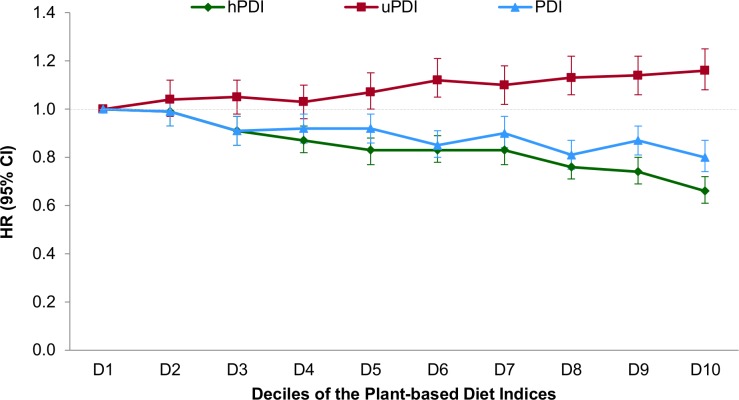
BACKGROUND: Plant-based diets have been recommended to reduce the risk of type 2 diabetes (T2D). However, not all plant foods are necessarily beneficial. We examined the association of an overall plant-based diet and hypothesized healthful and unhealthful versions of a plant-based diet with T2D incidence in three prospective cohort studies in the US. METHODS AND FINDINGS: We included 69,949 women from the Nurses' Health Study (1984-2012), 90,239 women from the Nurses' Health Study 2 (1991-2011), and 40,539 men from the Health Professionals Follow-Up Study (1986-2010), free of chronic diseases at baseline. Dietary data were collected every 2-4 y using a semi-quantitative food frequency questionnaire. Using these data, we created an overall plant-based diet index (PDI), where plant foods received positive scores, while animal foods (animal fats, dairy, eggs, fish/seafood, poultry/red meat, miscellaneous animal-based foods) received reverse scores. We also created a healthful plant-based diet index (hPDI), where healthy plant foods (whole grains, fruits, vegetables, nuts, legumes, vegetable oils, tea/coffee) received positive scores, while less healthy plant foods (fruit juices, sweetened beverages, refined grains, potatoes, sweets/desserts) and animal foods received reverse scores. Lastly, we created an unhealthful plant-based diet index (uPDI) by assigning positive scores to less healthy plant foods and reverse scores to healthy plant foods and animal foods. We documented 16,162 incident T2D cases during 4,102,369 person-years of follow-up. In pooled multivariable-adjusted analysis, both PDI and hPDI were inversely associated with T2D (PDI: hazard ratio [HR] for extreme deciles 0.51, 95% CI 0.47-0.55, p trend < 0.001; hPDI: HR for extreme deciles 0.55, 95% CI 0.51-0.59, p trend < 0.001). The association of T2D with PDI was considerably attenuated when we additionally adjusted for body mass index (BMI) categories (HR 0.80, 95% CI 0.74-0.87, p trend < 0.001), while that with hPDI remained largely unchanged (HR 0.66, 95% CI 0.61-0.72, p trend < 0.001). uPDI was positively associated with T2D even after BMI adjustment (HR for extreme deciles 1.16, 95% CI 1.08-1.25, p trend < 0.001). Limitations of the study include self-reported diet assessment, with the possibility of measurement error, and the potential for residual or unmeasured confounding given the observational nature of the study design. CONCLUSIONS: Our study suggests that plant-based diets, especially when rich in high-quality plant foods, are associated with substantially lower risk of developing T2D. This supports current recommendations to shift to diets rich in healthy plant foods, with lower intake of less healthy plant and animal foods.
Overview
The claims and statistics of this paper haven’t been checked yet.
Free: it reads the open-access text and checks the first 5 claims that cite a source we can check. Create a free account to check every claim.
Integrity signals
Registry
Cites
Statistics
Figures
Verification
Claims the paper makes
The claims and statistics of this paper haven’t been checked yet.
Free: it reads the open-access text and checks the first 5 claims that cite a source we can check. Create a free account to check every claim.
Claims other papers make about this one
Each is checked against this paper’s own text: does it say what the citing paper says it does?
The source backs part of the claim, not all of it — or backs it for a different population, condition or comparison.
In the citing paper
“Diets emphasizing whole, minimally processed foods—such as vegetables, fruits, whole grains, legumes, nuts, seeds, and lean protein sources—have been consistently associated with a reduced risk of obesity, type 2 diabetes, hypertension, and cardiovascular disease [164,165,166,167].”
From Lifestyle Medicine for Obesity in the Era of Highly Effective Anti-Obesity Treatment (2025) · cites this paper as [166]
Experimental — accuracy not yet measuredThe source backs part of the claim, not all of it — or backs it for a different population, condition or comparison.
In the citing paper
“There is consistent evidence that links well-balanced, minimally processed plant-based diets with a lower incidence of type 2 diabetes, improved glycaemic control and reduced cardiometabolic risk [2,3,4].”
From Dietary Nitrate-Rich Vegetables as Natural Modulators of Health: Mechanisms and Benefits in Ageing Populations (2026) · cites this paper as [3]
Experimental — accuracy not yet measuredThe cited source says what the claim attributes to it.
In the citing paper
“In three US cohorts, we previously documented that the PDI was inversely associated with type 2 diabetes risk with a stronger inverse association for hPDI, and a positive association for uPDI(14).”
From Healthful and Unhealthful Plant-Based Diets and the Risk of Coronary Heart Disease in U.S. Adults (2017) · cites this paper as [14]
Self-check
Percentages, sums and reported differences re-computed from the paper’s own numbers.
The self-check needs the paper’s full text.
Citations
Cites
Measuring inconsistency in meta-analyses
Higgins, J. P. T., Thompson, S. G., Deeks, J. J., & Altman, D. G. (2003) · BMJ · doi:10.1136/bmj.327.7414.557 · Cited by 63,139
Report of the Expert Committee on the Diagnosis and Classification of Diabetes Mellitus
The Expert Committee on the Diagnosis and Classification of Diabetes Mellitus* (2002) · Diabetes Care · doi:10.2337/diacare.25.2007.s5 · Cited by 10,338
Report of the Expert Committee on the Diagnosis and Classification of Diabetes Mellitus
The Expert Committee on the Diagnosis and Classification of Diabetes Mellitus (1997) · Diabetes Care · doi:10.2337/diacare.20.7.1183 · Cited by 6,220
The combination of estimates from different experiments
Cochran, W. G. (1954) · Biometrics · doi:10.2307/3001666 · Cited by 5,380
Classification and diagnosis of diabetes mellitus and other categories of glucose intolerance.
National Diabetes Data Group (1979) · Diabetes · doi:10.2337/diab.28.12.1039 · Cited by 4,909
Reproducibility and validity of a semiquantitative food frequency questionnaire
WILLETT, W. C., SAMPSON, L., STAMPFER, M. J., ROSNER, B., BAIN, C., WITSCHI, J., HENNEKENS, C. H., & SPEIZER, F. E. (1985) · American Journal of Epidemiology · doi:10.1093/oxfordjournals.aje.a114086 · Cited by 4,274
Self-citationStandards of medical care in diabetes 2010
American Diabetes Association (2010) · Diabetes Care · doi:10.2337/dc10-s011 · Cited by 3,470
Basevi, V., Di Mario, S., Morciano, C., Nonino, F., & Magrini, N. (2011) · Diabetes Care · doi:10.2337/dc11-0174 · Cited by 3,055
Changes in diet and lifestyle and long-term weight gain in women and men
Mozaffarian, D., Hao, T., Rimm, E. B., Willett, W. C., & Hu, F. B. (2011) · New England Journal of Medicine · doi:10.1056/nejmoa1014296 · Cited by 2,527
Self-citationSugar-Sweetened Beverages and Risk of Metabolic Syndrome and Type 2 Diabetes
Malik, V. S., Popkin, B. M., Bray, G. A., Després, J.-P., Willett, W. C., & Hu, F. B. (2010) · Diabetes Care · doi:10.2337/dc10-1079 · Cited by 2,116
Self-citation
Research works printed but not linked: 1
- Willett W. Nutritional epidemiology 3rd ed. Oxford: Oxford University Press; 2013.
Cited by
Items 401–500 of 1,000
Plant-based diet and COVID-19 severity: results from a cross-sectional study
Soltanieh, S., Salavatizadeh, M., Ghazanfari, T., Jahromi, S. R., Yari, Z., Mansournia, M. A., Nazemipour, M., Kheradmand, J. A., Ardestani, S. K., Karimi, S., et al. (2023) · BMJ Nutrition Prevention & Health · doi:10.1136/bmjnph-2023-000688 · Cited by 17
Heidarzadeh‐Esfahani, N., Darbandi, M., Khamoushi, F., Najafi, F., Soleimani, D., Moradi, M., Shakiba, E., & Pasdar, Y. (2024) · Scientific Reports · doi:10.1038/s41598-024-52946-z · Cited by 15
“The cumulative scores of all food groups were then calculated to derive the overall index scores, ranging theoretically from 18 to 90 and representing the lowest to the highest possible scores 27 .”
MethodKim, H., Chen, J., Prescott, B. R., Walker, M. E., Grams, M. E., Yu, B., Vasan, R. S., Floyd, J. S., Sotoodehnia, N., Smith, N. L., et al. (2024) · Clinical Nutrition · doi:10.1016/j.clnu.2024.07.005 · Cited by 14
Zheng, X., Liu, J., Wang, S., Xiao, Y., Jiang, Q., Li, C., & Shang, H. (2024) · Parkinsonism & Related Disorders · doi:10.1016/j.parkreldis.2024.107125 · Cited by 13
Jin, K., Mi, N., He, W., Zhong, R., Jin, B., Liu, Z., Dong, C., Lin, Y., Yue, P., Xia, B., et al. (2024) · Frontiers in Nutrition · doi:10.3389/fnut.2024.1469789 · Cited by 14
Jafarnezhad, F., Nazarzadeh, A., Bazavar, H., Keramat, S., Ryszkiel, I., & Stanek, A. (2025) · Nutrients · doi:10.3390/nu17162656 · Cited by 18
“Their high fiber content slows glucose absorption, stabilizes blood sugar, and promotes satiety, aiding in weight management [21].”
Afrianto, W. F., Tamnge, F., Hidayatullah, T., & Hasanah, L. N. (2021) · Asian Journal of Ethnobiology · doi:10.13057/asianjethnobiol/y040106 · Cited by 15
“…et al. 2015; Tantamango-Bartley et al. 2016), mortality and morbidity caused by ischemic heart disease (Szeto et al. 2004; Kwok et al. 2014; Dinu et al. 2017), Diabetes type 2 (Tonstad et al. 2013; Satija et al. 2016), Metabolic syndrome (MetS) (Burkert et al. 2014; Turner-McGrievy et al. 2016).”
Wang, Y., Xu, L., Wang, N., Zhu, L., Zhao, F., Xu, K., Liu, T., & Fu, C. (2022) · Frontiers in Public Health · doi:10.3389/fpubh.2022.773172 · Cited by 17
A Longitudinal Study of Exposure to Manganese and Incidence of Metabolic Syndrome
Riseberg, E., Chui, K. K. H., James, K. A., Melamed, R., Alderete, T. L., & Corlin, L. (2022) · Nutrients · doi:10.3390/nu14204271 · Cited by 12
A Novel Model to Predict Plant-Based Food Choice-Empirical Study in Southern Vietnam
Nguyễn, T. L., Tai, D. H., Hien, L. T., Quynh, D. M., & Son, P. N. (2020) · Sustainability · doi:10.3390/su12093847 · Cited by 17
Diabetes in the Asia Pacific Region
Binns, C. W., & Low, W. Y. (2016) · Asia Pacific Journal of Public Health · doi:10.1177/1010539516663938 · Cited by 14
Processed and Packed: How Refined Are the Foods That Children Bring to School for Snack and Lunch?
Blondin, S. A., AlSukait, R., Bleiweiss-Sande, R., Economos, C. D., Tanskey, L. A., & Goldberg, J. P. (2021) · Journal of the Academy of Nutrition and Dietetics · doi:10.1016/j.jand.2020.07.017 · Cited by 11
van Hoeven, W. S., Simons, M., Czymoniewicz‐Klippel, M. T., & Veling, H. (2024) · BMC Public Health · doi:10.1186/s12889-024-19121-5 · Cited by 21
“Lower health risks (e.g., diabetes 2 and coronary heart disease) are associated with diets relatively high in plant-based foods, and in particular with diets high in healthy plant-based foods such as whole grains, fruits, vegetables, nuts and legumes [4, 5].”
BackgroundValidation of a digital food frequency questionnaire for the Northern Sweden Diet Database
Wennberg, M., Kastenbom, L., Eriksson, L., Winkvist, A., & Johansson, I. (2024) · Nutrition Journal · doi:10.1186/s12937-024-00984-8 · Cited by 12
“…analyses per se, or to calculate scores for three a priori diet pattern indices (relative Mediterranean Diet Index, rMED [15], Healthy Nordic Food Index, HNFI [16], and Plant-based Diet Index, PDI [17]), and to evaluate data-driven diet patterns from the test and reference recordings (Table S1).”
MethodAssociation of plant-based diet indexes with the metabolomic profile
Hillesheim, E., Liu, W., Yin, X., Smith, T., & Brennan, L. (2024) · Scientific Reports · doi:10.1038/s41598-024-68522-4 · Cited by 12
Faecal microbiota composition and impulsivity in a cohort of older adults with metabolic syndrome
Konstanti, P., Martínez, C. G., Muralidharan, J., Vioqué, J., Corella, D., Fitó, M., Vidal, J., Tinahones, F. J., Torres‐Collado, L., Coltell, Ó., et al. (2024) · Scientific Reports · doi:10.1038/s41598-024-78527-8 · Cited by 11
Sun, H., Steur, M., Mou, Y., & Voortman, T. (2025) · Clinical Nutrition · doi:10.1016/j.clnu.2025.01.010 · Cited by 11
Healthy dietary patterns in relation to cognitive performance and Alzheimer's disease mortality
Gong, Y., Chen, H., Gu, Y., Shen, J., Shen, T., Ding, Y., Lu, M., Huang, L., Yan, M., Song, P., et al. (2025) · The Journal of Prevention of Alzheimer s Disease · doi:10.1016/j.tjpad.2025.100100 · Cited by 15
Diet Quality and the Risk of Impaired Speech Reception Threshold in Noise: The UK Biobank cohort
Yévenes‐Briones, H., Caballero, F. F., Struijk, E. A., Machado‐Fragua, M. D., Ortolá, R., Rodríguez‐Artalejo, F., & López‐García, E. (2021) · Ear and Hearing · doi:10.1097/aud.0000000000001108 · Cited by 11
“2012), and the healthful Plant-Based Diet Index (hPDI) (Satija et al. 2016).”
BackgroundMethodPreventing potential pitfalls of a liberalized potassium diet in the hemodialysis population
Sussman, E. J., Joshi, S., Dupuis, L., White, J., Siavoshi, M., Slukhinsky, S., Singh, B. P., & Kalantar‐Zadeh, K. (2021) · Seminars in Dialysis · doi:10.1111/sdi.13006 · Cited by 12
“55 There is evidence to suggest that following a plant-dominant diet or a whole-food, plant-based diet composed of foods that are not heavily processed or refined, and thus higher in fiber and lower in lipids and protein, can not only slow the progression of CKD but also decrease the risk of T2DM…”
Dietary Patterns and Risk of Type 2 Diabetes: A Systematic Review
Boushey, C. J., Ard, J. D., Bazzano, L., Heymsfield, S. B., Mayer‐Davis, E. J., Sabaté, J., Snetselaar, L., Horn, L. V., Schneeman, B. O., English, L., et al. (2020) · doi:10.52570/nesr.dgac2020.sr0103 · Cited by 20
Plant‐based diet index and erectile dysfunction in the Health Professionals Follow‐Up Study
Yang, H., Breyer, B. N., Rimm, E. B., Giovannucci, E. L., Loeb, S., Kenfield, S. A., & Bauer, S. R. (2022) · British Journal of Urology · doi:10.1111/bju.15765 · Cited by 12
Self-citationChen, G., Su, M., Chu, X., Wei, Y., Chen, S., Zhou, Y., Liu, Z., & Zhang, Z. (2022) · Frontiers in Nutrition · doi:10.3389/fnut.2022.918944 · Cited by 12
The role of metabolites under the influence of genes and lifestyles in bone density changes
Lv, X., Jiang, Y., Yang, D., Zhu, C., Yuan, H., Yuan, Z., Suo, C., Chen, X., & Xu, K. (2022) · Frontiers in Nutrition · doi:10.3389/fnut.2022.934951 · Cited by 11
Brandner, M. M. E., Fyfe, C., Horgan, G. W., & Johnstone, A. M. (2022) · Nutrients · doi:10.3390/nu14214706 · Cited by 16
Nutritional Epidemiology and Dietary Assessment for Patients With Kidney Disease: A Primer
Sullivan, V. K., & Rebholz, C. M. (2023) · American Journal of Kidney Diseases · doi:10.1053/j.ajkd.2022.11.014 · Cited by 14
Effects of Mediterranean diets and nutrigenomics on cardiovascular health
Bakrim, S., Aboulaghras, S., Aanniz, T., Benali, T., Omari, N. E., El‐Shazly, M., Lee, L., Mustafa, S. K., Sahib, N., Ребезов, М. Б., et al. (2023) · Critical Reviews in Food Science and Nutrition · doi:10.1080/10408398.2023.2187622 · Cited by 16
“These diets are primarily derived from plant-based foods such as vegetables, legumes, fruits, nuts, and grains with restricted amounts of animal-based foods (Satija et al. 2016).”
Levasseur, P., Mariotti, F., Denis, I., & Davidenko, O. (2024) · Agricultural and Food Economics · doi:10.1186/s40100-024-00298-7 · Cited by 13
Tao, H.-W., Han, W.-W., Fang, F., Miao, M.-Y., Du, H., Li, Z., Chen, J., Qin, L., & Chen, G. (2024) · Food & Function · doi:10.1039/d3fo04793h · Cited by 11
TEMİZ, M. A., & Temur, A. (2019) · Ankara Üniversitesi Veteriner Fakültesi Dergisi · doi:10.33988/auvfd.423491 · Cited by 11
“Due to these characteristic effects, they may be preferred over various antidiabetic medications (5, 22).”
BackgroundThe Handbook of Wellness Medicine
Snellings, J. E. (2020) · Cambridge University Press eBooks · doi:10.1017/9781108650182 · Cited by 12
Research Progress on the Relationship between Dietary Patterns and Hyperuricemia
Long, T., & Liu, L. (2022) · Applied Bionics and Biomechanics · doi:10.1155/2022/5658423 · Cited by 12
RetractedNouri, M., Abdollahi, N., Leilami, K., & Shirani, M. (2022) · PubMed Central · doi:10.22074/ijfs.2021.538675.1184 · Cited by 15
“The sugges ted mechanism that a healthy diet is correlated with better semen quality maybe is related to a high amount of fiber sources such as fruits, vegetables, and whole-grain can bind to es trogen and reduce its level in the blood (23, 24).”
BackgroundRebello, C. J., Beyl, R. A., Greenway, F. L., Atteberry, K. C., Hoddy, K. K., & Kirwan, J. P. (2022) · Journal of Medicinal Food · doi:10.1089/jmf.2022.0072 · Cited by 11
Root Cause for Metabolic Syndrome and Type 2 Diabetes
Baskin, R. G., & Alfakara, D. (2022) · Endocrinology and Metabolism Clinics of North America · doi:10.1016/j.ecl.2022.10.007 · Cited by 16
Characteristics of Slovenian Adults in Community-Based Whole-Food Plant-Based Lifestyle Program
Jakše, B., Jakše, B., Pinter, S., Pajek, J., & Mis, N. F. (2020) · Journal of Nutrition and Metabolism · doi:10.1155/2020/6950530 · Cited by 12
Daneshzad, E., Jahangir, F., Heshmati, J., Larijani, B. A., Surkan, P. J., & Azadbakht, L. (2020) · International Journal of Diabetes in Developing Countries · doi:10.1007/s13410-020-00862-z · Cited by 11
Astbury, N. M. (2024) · Diabetes Obesity and Metabolism · doi:10.1111/dom.15855 · Cited by 12
“51 Epidemiological evidence suggests that both vegetarian diets and vegan diets are consistently associated with a lower risk of type 2 diabetes, 52,53 although some people argue that these findings can be attributed to the overall healthier life-style followed by those who chose to adopt diets…”
Hu, F., Qin, W., & Xu, L. (2024) · Nutrients · doi:10.3390/nu16172830 · Cited by 14
“Similarly, another study classified food intake information into three categories: healthful plant foods, less-healthful plant foods, and animal foods, offering a comprehensive view of the dietary habits of the elderly population [39].”
BackgroundSelf-citationBigman, G., Rusu, M. E., Kleckner, A. S., Sorkin, J. D., Jin, Y., Talegawkar, S. A., Tanaka, T., Ferrucci, L., & Ryan, A. S. (2024) · Nutrients · doi:10.3390/nu16234249 · Cited by 10
“…based on prior research and included age, sex, race/ethnicity, years of education, smoking status, body mass index (BMI), physical activity, number of chronic diseases at the time of the first diet visit, time since the first diet visit, alcohol intake in the past 12 month in gram/day, and…”
Lu, Y.-P., Xia, B., Wang, X.-H., He, Q., Qu, C.-B., Xie, Y., Cui, T.-J., Wu, S., Zhao, J.-Y., Zheng, Z., et al. (2025) · BMC Public Health · doi:10.1186/s12889-025-21652-4 · Cited by 13
“Four dietary patterns were examined: the Healthy Plant-Based Diet Index (hPDI) [22], Healthy Eating Index (HEI)-2015 [23], Mediterranean Diet (MED) Score [24], and Alternative Mediterranean Diet (AMED) Score [25].”
Zhu, M., Wang, Q., Yang, Y., Liu, X., Zhang, J., Li, G., Liu, W., Xiang, X., & Chen, J. (2025) · Nutrition Journal · doi:10.1186/s12937-025-01116-6 · Cited by 11
“Based on the research of Satija [11] and Miao et al. [12]., Chinese Food Composition Table 2018 and the Chinese Dietary Guideline 2022, and taken into account the local dietary patterns in northwestern China as a basis for classification, the foods were categorized into 14 distinct food groups.”
Vegetarian diet and healthy aging among Chinese older adults: a prospective study
Jigeer, G., Wang, K., Lv, Y., Tucker, K. L., Shen, X., Chen, F., Sun, L., Shi, X., Li, Y., & Gao, X. (2025) · npj Aging · doi:10.1038/s41514-025-00213-4 · Cited by 11
The Influence of Diet and Physical Activity on Periodontal Health: A Narrative Review
Balice, G., Paolantonio, M., Murmura, G., Serroni, M., Gregorio, S. D., & Femminella, B. (2025) · Dentistry Journal · doi:10.3390/dj13050200 · Cited by 13
“Li et al. [115] evaluated the quantitative and qualitative influence of PDs on periodontitis using the plant-based diet index (PDI) [116,117].”
Nair, N. K., Bui, L. P., Sawicki, C. M., Kandula, N. R., Kanaya, A. M., Lee, K. H., Stampfer, M. J., Willett, W. C., & Bhupathiraju, S. N. (2025) · Current Developments in Nutrition · doi:10.1016/j.cdnut.2025.107468 · Cited by 12
“The plant-based, nutrient-dense foods emphasized by the EAT-Lancet diet are rich in dietary fi ber, antioxidants, unsaturated fats, and micronutrients, which support improved glycemic control, enhanced insulin sensitivity, decreased chronic in fl ammation, and improved weight control [44,45].”
Self-citationde la Riera, M. D. C. A., Ortolá, R., Kales, S. N., García‐Esquinas, E., Rodríguez‐Artalejo, F., & Sotos‐Prieto, M. (2025) · Cardiovascular Diabetology · doi:10.1186/s12933-025-02909-z · Cited by 11
“The 3 knots were set at the 10th, 50th and 90th percentiles (62.9, 80.8 and 97.7 points, respectively) Healthy dietary patterns, such as the aMED, hPDI, DASH or AHEI-2010 have been associated with lower risk of type 2 diabetes [4–7].”
InfluentialHigher adherence to (poly)phenol-rich diet is associated with lower CVD risk in the TwinsUK cohort
Li, Y., Yan, X., Xu, Y., Pope, R., Spector, T. D., Falchi, M., Steves, C. J., Bell, J. T., Small, K. S., Menni, C., et al. (2025) · BMC Medicine · doi:10.1186/s12916-025-04481-5 · Cited by 13
“It is classified as a less healthy food in the graded dietary pattern plant-based dietary index (PDI), where higher intake of less healthy plant foods has been associated with a 16.0% increased risk of type 2 diabetes [75, 76].”
InfluentialBethancourt, H. J., Kratz, M., & O’Connor, K. A. (2019) · British Journal Of Nutrition · doi:10.1017/s0007114519001533 · Cited by 10
“confer no cardiometabolic health benefit if they contain high amounts of refined grains, added sugars and fried potato products(23,24,76).”
BackgroundLuong, R., Ribeiro, R. V., Cunningham, J., Chen, S., & Hirani, V. (2022) · Nutrition Reviews · doi:10.1093/nutrit/nuab032 · Cited by 13
Association between different types of plant-based diet and dyslipidaemia in Korean adults
Shin, N., & Kim, J. (2021) · British Journal Of Nutrition · doi:10.1017/s0007114521003482 · Cited by 10
“The detailed procedure was modified from the original plant-based diet indices used in the prior studies (14, 15) .”
BackgroundMethodInfluentialA prospective cohort study of starchy and non-starchy vegetable intake and mortality risk
Zhang, T., Peng, Z., Li, H., Liang, S., Liu, M., Ye, S., Huang, Y. P., Zhu, Y., Li, X., Wang, D., et al. (2022) · British Journal Of Nutrition · doi:10.1017/s0007114522003518 · Cited by 10
“However, a high intake of vegetables has long been recommended to prevent chronic diseases, including CVD (2) , cancer (3) and diabetes (4) .”
BackgroundMirza, S., Kandasamy, S., de Souza, R. J., Wahi, G., Desai, D., Anand, S. S., & Ritvo, P. (2022) · BMJ Open · doi:10.1136/bmjopen-2021-060385 · Cited by 11
Koeder, C., Alzughayyar, D., Anand, C., Kranz, R., Husain, S., Schoch, N., Hahn, A., & Englert, H. S. (2022) · Obesity Science & Practice · doi:10.1002/osp4.649 · Cited by 16
“The plant‐based diet index (PDI), healthful PDI (hPDI), and unhealthful PDI (uPDI) have been used in a considerable number of studies since these indices were first published in 2016.(11) The PDI is a measure of adherence to a plant‐based diet in general, while hPDI and uPDI are measures of adherence to a healthy and…”
MethodHu, J., Li, Y., Wang, Z., Li, X., Hou, T., Ning, Z., Huang, R., Ma, C., Yuan, X., & Wang, D. (2023) · Osteoporosis International · doi:10.1007/s00198-023-06700-2 · Cited by 10
Association of dietary patterns with diabetes-related comorbidities varies among diabetes endotypes
Weber, K. S., Schlesinger, S., Lang, A., Straßburger, K., Maalmi, H., Zhu, A., Zaharia, O., Strom, A., Bönhof, G. J., Goletzke, J., et al. (2024) · Nutrition Metabolism and Cardiovascular Diseases · doi:10.1016/j.numecd.2023.12.026 · Cited by 14
Lin, W., Zhou, X., & Liu, X. (2024) · The journal of nutrition health & aging · doi:10.1016/j.jnha.2023.100024 · Cited by 11
A healthful plant-based diet can reduce the risk of developing colorectal cancer: case-control study
Yarmand, S., Rashidkhani, B., Alimohammadi, A., Shateri, Z., Shakeri, M., Sohrabi, Z., & Nouri, M. (2024) · Journal of Health Population and Nutrition · doi:10.1186/s41043-024-00605-4 · Cited by 12
“The Satije et al. method [22–24] was employed to create three variants of the plant-based diet index: PDI, uPDI, and hPDI.”
MethodWong, M. M. H., & Louie, J. C. Y. (2021) · Critical Reviews in Food Science and Nutrition · doi:10.1080/10408398.2021.1897517 · Cited by 11
Njike, V. Y., Treu, J. A., Kela, G., Ayettey, R. G., Comerford, B. P., & Siddiqui, W. T. (2021) · Journal of Nutrition · doi:10.1093/jn/nxab283 · Cited by 13
McNaughton, S. A. (2020) · Elsevier eBooks · doi:10.1016/b978-0-12-818460-8.00013-7 · Cited by 23
Bethancourt, H. J., Kratz, M., & O–Connor, K. (2019) · American Journal of Clinical Nutrition · doi:10.1093/ajcn/nqz153 · Cited by 12
“coronary heart disease relative to diets higher in both animal products and healthy plant-based foods (5, 6).”
BackgroundRingling, K. M., & Marquart, L. F. (2020) · Frontiers in Sustainable Food Systems · doi:10.3389/fsufs.2020.00070 · Cited by 12
Madhab, M., Mangla, C., Vijaya, S., Patil, D. N., Joseph, R. A., Anuradha, S. N., Ekashinge, M. R., Khan, Y., Prakash, V., Shrivastava, R., et al. (2023) · International Journal of Membrane Science and Technology · doi:10.15379/ijmst.v10i4.3507 · Cited by 7
“It also investigates the advantages of plant-based diets in the prevention of chronic diseases such as cardiovascular disease, diabetes, and certain malignancies, as well as weight control and digestive health (Melina et al., 2016 ; Satija et al., 2017).”
BackgroundLeydon, C. L., Harrington, J. M., Millar, S., & McCarthy, S. N. (2024) · Journal of Cleaner Production · doi:10.1016/j.jclepro.2024.142189 · Cited by 9
Health and functional advantages of cheese containing soy protein and soybean-derived casein
Messina, M. J., & Messina, V. (2024) · Frontiers in Plant Science · doi:10.3389/fpls.2024.1407506 · Cited by 11
Jiménez, M. D. C. F.-F. (2024) · Journal of the American Nutrition Association · doi:10.1080/27697061.2024.2406887 · Cited by 12
Murat-Ringot, A., Lan, R., Fraticelli, L., Fayet, Y., Bourgeois, D. M., Nugem, R. D. C., Piton, M., Goetz, E., Préau, M., Dutertre, F., et al. (2024) · Nutrients · doi:10.3390/nu16203495 · Cited by 9
“Conversely, plant-based diets, including the PHD, Mediterranean diet, and Dietary Approaches to Stop Hypertension diet, offer significant health benefits [6,24,25].”
BackgroundZhang, H., Zuo, H., Xiang, Y., Cai, J., Zhang, N., Yang, F., Huang, S., Zhang, Y., Chen, H., Li, S., et al. (2024) · British Journal Of Nutrition · doi:10.1017/s0007114524002733 · Cited by 10
“…tea, vegetable oil, preserved vegetables, fine grain (rice and wheat products), red and processed meats, poultry, fish/sea food, eggs, dairy products and animal oil), categorised into healthy plant foods, unhealthy plant foods and animal foods according to their varying health effects (18,31,32) .”
Schorr, K., Rodríguez‐Girondo, M., van den Berg, N., de Groot, C. P. G. M., Slagboom, P. E., & Beekman, M. (2024) · The journal of nutrition health & aging · doi:10.1016/j.jnha.2024.100463 · Cited by 9
Race and Ethnicity, Lifestyle, Diet, and Survival in Patients With Prostate Cancer
Wang, A., Blarigan, E. L. V., Cheng, I. C., Chan, J. M., Wan, P. C., Park, S., Xiong, W., Hamilton, A. S., Chen, F., Marchand, L. L., et al. (2025) · JAMA Network Open · doi:10.1001/jamanetworkopen.2024.60785 · Cited by 12
Association of dietary patterns with osteoporosis risk: a meta-analysis of observational studies
Tan, B., Su, H., Wei, L., & Liang, M. (2025) · Journal of Orthopaedic Surgery and Research · doi:10.1186/s13018-025-05896-9 · Cited by 9
“Plant-based diets constitute diverse dietary patterns for flexitarians and vegetarians, with an emphasis on diminishing the intake of animal-based foods and elevating the intake of plant-based foods [59, 60].”
Wang, X. J., Steur, M., Kavousi, M., & Voortman, T. (2025) · American Journal of Clinical Nutrition · doi:10.1016/j.ajcnut.2025.05.012 · Cited by 11
Individualized Diets in Patients with Kidney Disease and Kidney Transplants: A Narrative Review
Hu, L., Borelli, G., Gessaroli, E., Ruotolo, C., Bin, S., Papalia, G., Patella, G., Liberti, M. E., Baraldi, O., Zaza, G., et al. (2025) · Life · doi:10.3390/life15060896 · Cited by 10
“In fact, plant-based diets have been shown to be effective in improving blood pressure (BP), dyslipidemia, glycemic control, the body mass index (BMI), and the acid–base balance, thus lowering the risk of complications such as diabetes [73], cardiovascular disease [74], and mortality [75].”
Domínguez-Lacueva, P., Beriain, M. J., & Aldaya, M. M. (2025) · Renewable Agriculture and Food Systems · doi:10.1017/s1742170525100112 · Cited by 11
“This concept is particularly relevant in the context of plant-based diets, which have been associated with multiple health benefits, including lower risks of cardiovascular disease, obesity, and type 2 diabetes, as high-lighted by Satija et al. (2016) and Willett et al. (2019).”
Obese Vegetarians and Omnivores Show Different Metabolic Changes: Analysis of 1340 Individuals
Slywitch, E., Savalli, C., Duarte, A. C. G., & Escrivão, M. A. M. S. (2022) · Nutrients · doi:10.3390/nu14112204 · Cited by 12
“Vegetarian habits are associated with better glycemic control [24,27,47,48], but our data indicate that in the condition of overweight and obesity, the IR increases, both in vegetarians and in omnivores.”
BackgroundBai, S., Zhang, Y., Guo, C., Liu, Y., Zhang, Q. H., Liu, L., Sun, S., Wang, X., Zhou, M., Jia, Q., et al. (2023) · Food & Function · doi:10.1039/d2fo03993a · Cited by 10
Österdahl, M. F., Whiston, R., Sudre, C. H., Asnicar, F., Cheetham, N. J., Blanco‐Míguez, A., Bowyer, V., Antonelli, M., Snell, O., Canas, L. S., et al. (2023) · Scientific Reports · doi:10.1038/s41598-023-34598-7 · Cited by 13
Gamba, M., Pano, O., Raguindin, P. F., Roa‐Díaz, Z. M., Muka, T., Glišić, M., Franco, O. H., & Marques-Vidal, P. M. (2023) · Nutrients · doi:10.3390/nu15224793 · Cited by 9
“The hPBD, categorizing food groups as “healthy plant-based”, “less-healthy plant-based”, and “animal”, was adapted from its original version [27].”
BackgroundResultZhang, Z., Liu, F., Yin, X., Wu, B., Li, H., Peng, F., Cheng, M., Li, J., Xiang, J., Yao, P., et al. (2024) · European Journal of Nutrition · doi:10.1007/s00394-023-03321-7 · Cited by 12
“In addition, a pooled analysis of three US cohort populations indicated a substantially inverse linear relationship between diabetes and the plant-based diet index (PDI) [24].”
Ames, M. L., Karlsen, M. C., Sundermeir, S. M., Durrwachter, N., Hemmingson, T. A., Reznar, M. M., Livingston, K. A., Weeks, B., & Gittelsohn, J. (2024) · JMIR Research Protocols · doi:10.2196/51562 · Cited by 11
“These innovative and comprehensive approaches, especially those related to diet, have been shown to promote healthy weight, decrease the risk of type 2 diabetes, reduce cardiovascular risk factors, and improve quality of life [6-15].”
Katz, D. L., Rhee, L. Q., & Aronson, D. L. (2025) · Frontiers in Nutrition · doi:10.3389/fnut.2025.1511230 · Cited by 9
Escalante-Araiza, F., Monroy, G. R., Loza-López, C. E., & Gutiérrez-Salmeán, G. (2022) · Nutrition Reviews · doi:10.1093/nutrit/nuac020 · Cited by 10
Jayedi, A., Zeraattalab-Motlagh, S., Moosavi, H., Mirmohammadkhani, M., Emadi, A., & Shab‐Bidar, S. (2023) · European Journal of Clinical Nutrition · doi:10.1038/s41430-023-01275-x · Cited by 11
Plant-based dietary patterns and lung cancer mortality: a perspective cohort study
Wang, Q., Cui, Q., Gao, J., & Zhao, Y. (2023) · Food & Function · doi:10.1039/d3fo01803b · Cited by 11
Alsulami, S., Bodhini, D., Sudha, V., Rani, C. S. S., Pradeepa, R., Anjana, R. M., Radha, V., Lovegrove, J. A., Gayathri, R., Mohan, V., et al. (2021) · Nutrients · doi:10.3390/nu13093064 · Cited by 12
“based diet and a lower risk of T2D [72,73].”
BackgroundRostgaard‐Hansen, A. L., Esberg, A., Dicksved, J., Hansen, T. F., Pelve, E. A., Brunius, C. F., Halkjær, J., Tjønneland, A. M., Johansson, I., & Landberg, R. (2024) · American Journal of Clinical Nutrition · doi:10.1016/j.ajcnut.2024.01.027 · Cited by 8
Plant-based and vegetarian diets are associated with reduced obstructive sleep apnoea risk
Melaku, Y. A., Zhao, L., Adams, R., & Eckert, D. J. (2024) · ERJ Open Research · doi:10.1183/23120541.00739-2023 · Cited by 9
“Despite considerable variation among studies, healthy plant-based diets, defined by a low frequency of animal food consumption, have been shown to reduce the risk of developing CVD [16], obesity [14, 17] and type 2 diabetes [18].”
BackgroundMethodHealthy and unhealthy dietary patterns and sperm quality from the Led‐Fertyl study
Cordova, J. E. D., Salas‐Huetos, A., Valle‐Hita, C., de la Puente, M. F., Martínez, M. Á., Galindo, A. P., Egido‐González, C. D., Manzanares, J. M., Sánchez‐Resino, E., Salas‐Salvadó, J., et al. (2024) · Andrology · doi:10.1111/andr.13789 · Cited by 10
Arrazat, L., Teil, F., Nicklaus, S., & Marty, L. (2025) · Appetite · doi:10.1016/j.appet.2025.107856 · Cited by 6
“Increasing the consumption of plant-based foods is not necessarily associated with healthier eating habits (Satija et al., 2016).”
Are Dietary Patterns Relevant for Reducing the Risk of Fractures and Sarcopenia?
Welch, A. A., Scott, J., Cameron, D., & Yates, M. M. (2025) · Current Osteoporosis Reports · doi:10.1007/s11914-024-00899-7 · Cited by 11
“B a s e d D i e t I nd e x ( P D I) [ 54 ] W ho l e g r a i n s ; fr u it s ; v e g e t a b l e s ; nu t s ; l e gu m e s ; v e g e t a b l e o il s ; t ea a nd c o ff ee ; fr u it j u i ce s ; r e fi n e d g r a i n s ; po t a t o e s ; s ug a r-s w ee t e n e d b e v e r a g e s ; s w ee t s a nd…”
Yuan, F., Wen, W., Shu, X., Lipworth, L., Shrubsole, M. J., Yu, D., & Zheng, W. (2025) · American Journal of Clinical Nutrition · doi:10.1016/j.ajcnut.2025.04.004 · Cited by 8
Li, Z., Ye, K. X., Yang, M., Lee, T.-S. W., Suckling, J., Feng, L., Wang, Z., & Chen, C. (2025) · Food Research International · doi:10.1016/j.foodres.2025.116977 · Cited by 9
Pham, Y. T., Wang, R., Behari, J., Chen, G., van Dam, R. M., Yuan, J., & Luu, H. N. (2025) · International Journal of Cancer · doi:10.1002/ijc.70057 · Cited by 8
“We also excluded the “ miscellaneous animal-based foods ” component 26,27 because it overlapped with other components, including red and processed meat and vegetables for which the consumption was derived from mixed dishes in SCHS.”
InfluentialTsai, J., Tsai, T., Li, H., Wang, C.-Y., Tu, Y.-K., HUANG, H.-K., Ma, H., Hsieh, Y.-L., Hung, C.-S., Shao, S., et al. (2026) · The Journal of Prevention of Alzheimer s Disease · doi:10.1016/j.tjpad.2026.100521 · Cited by 8
“Satija et al. distinguished healthful from un-healthful plant-based dietary patterns to address this heterogeneity [16].”
Wang, L., Li, Y., Liu, Y., Zhang, H., Qiao, T., Chu, L., Luo, T., Zhang, Z., & Dai, J. (2023) · Nutrients · doi:10.3390/nu15010230 · Cited by 8
“We calculated PDI, hPDI, and uPDI as previously reported [16].”
BackgroundMethodPro-Vegetarian Food Patterns and Cancer Risk among Italians from the Moli-Sani Study Cohort
Martínez, C. F., Castelnuovo, A. F. D., Costanzo, S., Panzera, T., Esposito, S., Cerletti, C., Donati, M. B., de Gaetano, G., Iacoviello, L., Bonaccio, M., et al. (2023) · Nutrients · doi:10.3390/nu15183976 · Cited by 10
“Although based on prior evidence, the identification of healthful plant foods has an element of subjectivity [11].”
InfluentialNejad, E. T., Moslemi, E., Souni, F., Mahmoodi, M., Vali, M., Vatanpour, M., Nouri, M., Ramezani, A., Shateri, Z., & Rashidkhani, B. (2023) · BMC Research Notes · doi:10.1186/s13104-023-06606-6 · Cited by 10
“PDP and plant-based diets are known to be beneficial for non-communicable diseases such as cardiovascular disease [8], hypertension [9], type 2 diabetes [10], and cancer [11].”
BackgroundYe, Z. T., Tseng, S. F., Tsou, S. X., & Tsai, C. W. (2024) · Discover Nano · doi:10.1186/s11671-023-03948-9 · Cited by 8
Huang, S., Lou, Y., Wang, S., You, Q., Jiang, Q., & Cao, S. (2024) · The journal of nutrition health & aging · doi:10.1016/j.jnha.2023.100027 · Cited by 8
Plant-based diets and total and cause-specific mortality: a meta-analysis of prospective studies
Mo, Q., Wu, J., Lü, Y., & Zhang, X. (2025) · Frontiers in Nutrition · doi:10.3389/fnut.2025.1518519 · Cited by 12
Metadata
- Authors
- Satija, A., Bhupathiraju, S. N., Rimm, E. B., Spiegelman, D., Chiuve, S. E., Borgi, L., Willett, W. C., Manson, J. E., Sun, Q., & Hu, F. B.
- Affiliations
- Harvard University (US)
- Brigham and Women's Hospital (US)
- Corresponding author
- Satija, Ambika
- ORCID
- Venue
- PLOS Medicine
- Publisher
- Public Library of Science (PLoS)
- Published
- 2016-06-14
- Volume
- 13
- Issue
- 6
- Pages
- e1002039
- ISSN
- 1549-1277 (ISSN-L)
- 1549-1676
- PMC
- PMC4907448
- OpenAlex
- W2430898493
- Cited by
- 1,069
- References
- 56
- Citations by year
- 2026: 133 · 2025: 169 · 2024: 179 · 2023: 135 · 2022: 124 · 2021: 99 · 2020: 103 · 2019: 55 · 2018: 47 · 2017: 20 · 2016: 4
- FWCI
- 41.65
- Type
- journal article
- Language
- en
- Open access
- gold
- doi.org
- Licence
- Locations
- PLoS Medicine (publishedVersion, cc-by)
- Europe PMC (PubMed Central) (publishedVersion, cc-by)
- PubMed Central (publishedVersion, cc-by)
- PubMed (publishedVersion)
- Digital Access to Scholarship at Harvard (DASH) (Harvard University) (submittedVersion, cc-by)
- DOAJ (DOAJ: Directory of Open Access Journals) (submittedVersion, cc-by-sa)
- Figshare (submittedVersion, cc-by)
- Funders
- National Institutes of Health (UM1-CA-176726, UM1-CA167552, CA176726, CA-167552, CA186107, DK58845, UM1 CA186107, UM1 CA176726)
- National Cancer Institute (UM1CA176726, UM1CA186107, UM1CA167552)
- National Institute of Diabetes and Digestive and Kidney Diseases (R01DK058845)
- Topics
- Health Sciences › Medicine › Public Health, Environmental and Occupational Health › Nutritional Studies and Diet
- Physical Sciences › Environmental Science › Ecology › Agriculture Sustainability and Environmental Impact
- Health Sciences › Medicine › Physiology (medical) › Dietary Effects on Health
- Keywords
- plant-based diet, type 2 diabetes, diabetes incidence, dietary habits, healthful plant-based diet index, unhealthful plant-based diet index, body mass index, dairy consumption, red and processed meat, fruit and vegetable intake, Nurses' Health Study, Health Professionals Follow-up Study, sex differences, United States adults, pooled analysis of cohort studies
- MeSH terms
- Adult, Diabetes Mellitus, Type 2, Diet, Female, Fruit, Humans, Male, Middle Aged, Prospective Studies, United States, Vegetables, Diet, Vegetarian, Cohort Studies, Incidence
About these checks
Registry, retraction, Cites and statistics results are computed, not judged, with one exception: a printed reference that no index lists is read once by a model before it counts as a citation error. Claims are extracted by a model and kept only when their quote appears verbatim in the text; each cited source is then checked, with a model’s help, for whether it says what the claim relies on. Those verdicts can be wrong — read the claim’s quote and the cited source before relying on one.
Statistics and arithmetic are recomputed, not judged.
Confidence bands are shown only for fields calibrated on our annotated test set. None is calibrated yet, so no band is shown.
What counts as a claim ›How we measure confidence ›How we check this ›
Are you an author, or do you see a problem with this page? Request a review
Data sources
Bibliographic data: Semantic Scholar, OpenAlex, Crossref.
Contains information from the Semantic Scholar Academic Graph Datasets, made available under the ODC Attribution License (ODC-BY 1.0).
Semantic Scholar’s data is described in: Kinney, R., et al. (2023). The Semantic Scholar Open Data Platform. arXiv:2301.10140.
