

Plant-Based Dietary Patterns and Incidence of Type 2 Diabetes in US Men and Women: Results from Three Prospective Cohort Studies
Open accessThe DOI matches its Crossref record; 56 of the 56 references it cites were found in a registry or an index.
Abstract
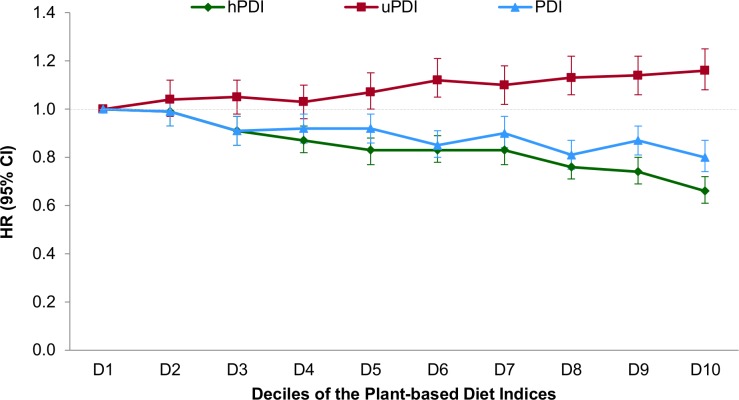
BACKGROUND: Plant-based diets have been recommended to reduce the risk of type 2 diabetes (T2D). However, not all plant foods are necessarily beneficial. We examined the association of an overall plant-based diet and hypothesized healthful and unhealthful versions of a plant-based diet with T2D incidence in three prospective cohort studies in the US. METHODS AND FINDINGS: We included 69,949 women from the Nurses' Health Study (1984-2012), 90,239 women from the Nurses' Health Study 2 (1991-2011), and 40,539 men from the Health Professionals Follow-Up Study (1986-2010), free of chronic diseases at baseline. Dietary data were collected every 2-4 y using a semi-quantitative food frequency questionnaire. Using these data, we created an overall plant-based diet index (PDI), where plant foods received positive scores, while animal foods (animal fats, dairy, eggs, fish/seafood, poultry/red meat, miscellaneous animal-based foods) received reverse scores. We also created a healthful plant-based diet index (hPDI), where healthy plant foods (whole grains, fruits, vegetables, nuts, legumes, vegetable oils, tea/coffee) received positive scores, while less healthy plant foods (fruit juices, sweetened beverages, refined grains, potatoes, sweets/desserts) and animal foods received reverse scores. Lastly, we created an unhealthful plant-based diet index (uPDI) by assigning positive scores to less healthy plant foods and reverse scores to healthy plant foods and animal foods. We documented 16,162 incident T2D cases during 4,102,369 person-years of follow-up. In pooled multivariable-adjusted analysis, both PDI and hPDI were inversely associated with T2D (PDI: hazard ratio [HR] for extreme deciles 0.51, 95% CI 0.47-0.55, p trend < 0.001; hPDI: HR for extreme deciles 0.55, 95% CI 0.51-0.59, p trend < 0.001). The association of T2D with PDI was considerably attenuated when we additionally adjusted for body mass index (BMI) categories (HR 0.80, 95% CI 0.74-0.87, p trend < 0.001), while that with hPDI remained largely unchanged (HR 0.66, 95% CI 0.61-0.72, p trend < 0.001). uPDI was positively associated with T2D even after BMI adjustment (HR for extreme deciles 1.16, 95% CI 1.08-1.25, p trend < 0.001). Limitations of the study include self-reported diet assessment, with the possibility of measurement error, and the potential for residual or unmeasured confounding given the observational nature of the study design. CONCLUSIONS: Our study suggests that plant-based diets, especially when rich in high-quality plant foods, are associated with substantially lower risk of developing T2D. This supports current recommendations to shift to diets rich in healthy plant foods, with lower intake of less healthy plant and animal foods.
Overview
The claims and statistics of this paper haven’t been checked yet.
Free: it reads the open-access text and checks the first 5 claims that cite a source we can check. Create a free account to check every claim.
Integrity signals
Registry
Cites
Statistics
Figures
Verification
Claims the paper makes
The claims and statistics of this paper haven’t been checked yet.
Free: it reads the open-access text and checks the first 5 claims that cite a source we can check. Create a free account to check every claim.
Claims other papers make about this one
Each is checked against this paper’s own text: does it say what the citing paper says it does?
The source backs part of the claim, not all of it — or backs it for a different population, condition or comparison.
In the citing paper
“Diets emphasizing whole, minimally processed foods—such as vegetables, fruits, whole grains, legumes, nuts, seeds, and lean protein sources—have been consistently associated with a reduced risk of obesity, type 2 diabetes, hypertension, and cardiovascular disease [164,165,166,167].”
From Lifestyle Medicine for Obesity in the Era of Highly Effective Anti-Obesity Treatment (2025) · cites this paper as [166]
Experimental — accuracy not yet measuredThe source backs part of the claim, not all of it — or backs it for a different population, condition or comparison.
In the citing paper
“There is consistent evidence that links well-balanced, minimally processed plant-based diets with a lower incidence of type 2 diabetes, improved glycaemic control and reduced cardiometabolic risk [2,3,4].”
From Dietary Nitrate-Rich Vegetables as Natural Modulators of Health: Mechanisms and Benefits in Ageing Populations (2026) · cites this paper as [3]
Experimental — accuracy not yet measuredThe cited source says what the claim attributes to it.
In the citing paper
“In three US cohorts, we previously documented that the PDI was inversely associated with type 2 diabetes risk with a stronger inverse association for hPDI, and a positive association for uPDI(14).”
From Healthful and Unhealthful Plant-Based Diets and the Risk of Coronary Heart Disease in U.S. Adults (2017) · cites this paper as [14]
Self-check
Percentages, sums and reported differences re-computed from the paper’s own numbers.
The self-check needs the paper’s full text.
Citations
Cites
Measuring inconsistency in meta-analyses
Higgins, J. P. T., Thompson, S. G., Deeks, J. J., & Altman, D. G. (2003) · BMJ · doi:10.1136/bmj.327.7414.557 · Cited by 63,139
Report of the Expert Committee on the Diagnosis and Classification of Diabetes Mellitus
The Expert Committee on the Diagnosis and Classification of Diabetes Mellitus* (2002) · Diabetes Care · doi:10.2337/diacare.25.2007.s5 · Cited by 10,338
Report of the Expert Committee on the Diagnosis and Classification of Diabetes Mellitus
The Expert Committee on the Diagnosis and Classification of Diabetes Mellitus (1997) · Diabetes Care · doi:10.2337/diacare.20.7.1183 · Cited by 6,220
The combination of estimates from different experiments
Cochran, W. G. (1954) · Biometrics · doi:10.2307/3001666 · Cited by 5,380
Classification and diagnosis of diabetes mellitus and other categories of glucose intolerance.
National Diabetes Data Group (1979) · Diabetes · doi:10.2337/diab.28.12.1039 · Cited by 4,909
Reproducibility and validity of a semiquantitative food frequency questionnaire
WILLETT, W. C., SAMPSON, L., STAMPFER, M. J., ROSNER, B., BAIN, C., WITSCHI, J., HENNEKENS, C. H., & SPEIZER, F. E. (1985) · American Journal of Epidemiology · doi:10.1093/oxfordjournals.aje.a114086 · Cited by 4,274
Self-citationStandards of medical care in diabetes 2010
American Diabetes Association (2010) · Diabetes Care · doi:10.2337/dc10-s011 · Cited by 3,470
Basevi, V., Di Mario, S., Morciano, C., Nonino, F., & Magrini, N. (2011) · Diabetes Care · doi:10.2337/dc11-0174 · Cited by 3,055
Changes in diet and lifestyle and long-term weight gain in women and men
Mozaffarian, D., Hao, T., Rimm, E. B., Willett, W. C., & Hu, F. B. (2011) · New England Journal of Medicine · doi:10.1056/nejmoa1014296 · Cited by 2,527
Self-citationSugar-Sweetened Beverages and Risk of Metabolic Syndrome and Type 2 Diabetes
Malik, V. S., Popkin, B. M., Bray, G. A., Després, J.-P., Willett, W. C., & Hu, F. B. (2010) · Diabetes Care · doi:10.2337/dc10-1079 · Cited by 2,116
Self-citation
Research works printed but not linked: 1
- Willett W. Nutritional epidemiology 3rd ed. Oxford: Oxford University Press; 2013.
Cited by
Items 701–800 of 1,000
Plant-based diet and risk of arthritis: a nationwide cohort study of the Chinese elderly population
Zhang, H., Liang, J., Han, Y., Tian, J., Tu, Y., Fan, R., Zhu, W., Zhang, Z., & Zhao, H. (2025) · Food & Function · doi:10.1039/d5fo02192h · Cited by 3
Wang, J. G., Li, W., Liu, B., Varraso, R., Wharton, R. C., Ponce, J., Hart, J. E., Camargo, C. A., Hanson, C., & Bose, S. (2025) · Annals of the American Thoracic Society · doi:10.1513/annalsats.202501-054oc · Cited by 3
Martínez-Tabar, A., Ruiz‐Canela, M., Bullón‐Vela, V., Sayón-Orea, C., Carlos, S., Martínez‐González, M. Á., & Bes‐Rastrollo, M. (2025) · Nutrients · doi:10.3390/nu17152472 · Cited by 2
“Previous studies showed that a healthy plant-based diet has a beneficial effect on cardiovascular disease and its risk factors [18,31,52–54].”
InfluentialXiao, H., Zhou, Z., Ma, Y., Li, X., Ding, K., Wu, Y., Wu, T., Hu, Y., & Chen, D. (2025) · Human Genetics · doi:10.1007/s00439-025-02780-8 · Cited by 2
“It is well-known that diets, such as vegetables (Satija et al. 2016) and fat intake (Tang et al. 2024), are associated with metabolic status, but few research examines such relationships via the indirect genetic effect pathways.”
Effect of Plant-Based Diets on Energy Metabolism and Metabolic Functions
Karademir, E., & Tek, N. A. (2025) · Current Nutrition Reports · doi:10.1007/s13668-025-00710-8 · Cited by 2
“…into three main groups: healthy plant foods (whole grains, fruits, vegetables etc.), unhealthy plant foods (fruit juices, sugary drinks, refined grains, potatoes etc.), and animal-based foods (animal fats, dairy products, eggs, fish/seafood, meat (white and red meat), other animal foods) [18].”
Lee, H., Lee, J. E., & Kang, M. (2025) · Scientific Reports · doi:10.1038/s41598-025-24698-x · Cited by 2
Zhang, B., Li, M., & Li, X. (2025) · BMC Public Health · doi:10.1186/s12889-025-25748-9 · Cited by 2
“In order to overcome these constraints, Satija et al. [33]. devised three plant-based dietary indices, including an overall plant-based diet index (PDI), a healthful PDI (hPDI), and an unhealthful PDI (uPDI).”
Yuan, F., Wang, L., Nguyen, S. M., Shu, X., Shrubsole, M. J., Wen, W., Cai, Q., Yu, D., & Zheng, W. (2025) · American Journal of Clinical Nutrition · doi:10.1016/j.ajcnut.2025.101135 · Cited by 4
Balbino, K. P., Kravchychyn, A. C. P., Cândido, F. G., Dias, M. D. M. E., Mendes, T. A. D. O., de Oliveira, L. L., Castro, L. C. V., Bressan, J., de la Garza, A. L., Milagro, F. I., et al. (2026) · Diabetes Obesity and Metabolism · doi:10.1111/dom.70414 · Cited by 2
“38,39”
Mis, N. F., Jakše, B., Kreft, S., Vovk, A., & Fras, Z. (2026) · Foods · doi:10.3390/foods15040656 · Cited by 2
Jiménez, M. D. C. F.-F., López-Gil, J. F., Marrero‐Fernández, P., & López‐Moreno, M. (2025) · Nutrition Reviews · doi:10.1093/nutrit/nuaf315 · Cited by 3
Li, H.-N., Gao, Y., Li, Z.-K., Qiao, J.-J., Peng, Y.-X., Liu, S., & Yan, X. (2026) · Frontiers in Nutrition · doi:10.3389/fnut.2026.1763010 · Cited by 4
Association of the Planetary Health Diet with dementia risk and brain pathology
Yang, R., Wang, J., Dove, A. E., Sakakibara, S., Agarwal, P., Bennett, D. A., & Xu, W. (2026) · Alzheimer s & Dementia · doi:10.1002/alz.71327 · Cited by 3
Gil‐Lespinard, M., Iglesias‐Vázquez, L., & Jakszyn, P. G. (2026) · European Journal of Nutrition · doi:10.1007/s00394-026-03948-2 · Cited by 3
“The search covered publications from 1st June 2018 to 16th December 2025 due to the relatively recent emergence of this exposure in the literature [3, 7 ].”
InfluentialCourtney, A., Sweeney, R., McNulty, B. A., Wallace, M., & Brennan, L. (2026) · Nutrition Reviews · doi:10.1093/nutrit/nuag058 · Cited by 4
Iron Deficiency in Vegetarian Athletes: A Narrative Review
Luna, F. J., Rossi, E. V., López‐Moreno, M., Heim, T., & Arrieta, E. M. (2026) · Current Nutrition Reports · doi:10.1007/s13668-026-00765-1 · Cited by 3
Millar, S., Perry, I. J., & Phillips, C. M. (2026) · European Journal of Nutrition · doi:10.1007/s00394-026-04000-z · Cited by 2
“PBD indices (PDIs) which distinguish between healthy and unhealthy PBDs have also been created, in recognition that not all plant-based dietary components are healthy [ 11].”
Healthy Dietary Patterns and Risk of Parkinson's Disease
Chen, X., Chen, H., Wang, P., Schwarzschild, M. A., Hung, A. Y., Gao, X., Ascherio, A., Flores‐Torres, M. H., & Bjørnevik, K. (2026) · Movement Disorders · doi:10.1002/mds.70358 · Cited by 3
“…the Alternative Healthy Eating Index-2010 (AHEI-2010), 19 the Alternate Mediterranean Diet (AMED), 20 the healthful Plant-based Diet Index (hPDI), 21 the Dietary Approaches to Stop Hypertension (DASH), 22 the MIND, 23 the Planetary Health Diet Index (PHDI), 24 the reversed Empirical Dietary In fl…”
Oliveira, L. J. G. D., & Lucas, M. R. (2026) · Sustainability · doi:10.3390/su18125938 · Cited by 2
de Souza, M. H. G., Amaral, M. J. M., & Lima, L. C. V. (2026) · Journal of Clinical and Experimental Hepatology · doi:10.1016/j.jceh.2026.103653 · Cited by 3
A content and quality analysis of free, popular mHealth apps supporting ‘plant-based’ diets
Lee, J. J., Ahmed, M., Mouhaffel, R., & L’Abbé, M. R. (2023) · PLOS Digital Health · doi:10.1371/journal.pdig.0000360 · Cited by 4
Heo, S., Han, M., Ryu, H., Kang, E., Kim, M., Ahn, C., Yang, S. J., & Oh, K. (2024) · Nutrients · doi:10.3390/nu16162749 · Cited by 3
“…Nutrition Society, Seoul, Republic of Korea). hPDI), and an unhealthful PDI ( The three types of PDI (overall PDI, a healthful PDI (hPDI), and an unhealthful PDI (uPDI)) were calculated according to the PDI scoring sys-tem [17]. uPDI)) were calculated according to the PDI scoring system [17].”
MethodHuang, Y., Li, Z., Jing, H., Lin, X., Chacha, S., Lin, J., Kang, Y., Wang, D., Yan, H., & Dang, S. (2025) · Human Nutrition & Metabolism · doi:10.1016/j.hnm.2025.200338 · Cited by 2
Sanchez, P. F., Muilwijk, M., Nicolaou, M., Snijder, M. B., Peters, R. J. G., & van Valkengoed, I. G. M. (2020) · Public Health Nutrition · doi:10.1017/s1368980019004968 · Cited by 4
“Several studies have reported an inverse association between a diet rich in fruits and vegetables and T2D(7,8).”
BackgroundResultEngaging the Five Senses: Taste, Smell, See, Listen, and Touch
Bokarius, V., & Bokarius, A. V. (2020) · Cambridge University Press eBooks · doi:10.1017/9781108650182.037 · Cited by 2
Associations between Obesity and Sleep Quality among Older Adults in a Health Center in Iran
Binazir, M. B. (2021) · Current Research in Diabetes & Obesity Journal · doi:10.19080/crdoj.2021.14.555883 · Cited by 2
Risk factors, prevention, and treatment of type 2 diabetes
Qasim, R., Moin, F., Ashraf, M., Khan, A., Sarwar, B., & Liaqat, A. (2022) · International Journal of Health Sciences · doi:10.53730/ijhs.v6ns6.12362 · Cited by 2
“Diets that are modelled after the Mediterranean diet have been found to be associated with a lower risk of developing type 2 diabetes in prospective cohort studies (Satija et al., 2016; Esposito et al., 2015).”
BackgroundPilot Study of the Feasibility of a Worksite Plant-Based Diabetes Prevention Program
Almousa, Z., & Contento, I. R. (2023) · AJPM Focus · doi:10.1016/j.focus.2023.100064 · Cited by 2
The Mediterranean diet and lifestyle
García-Hernández, S., Monserrat-Mesquida, M., Tur, J. A., & Bouzas, C. (2023) · Arhiv za farmaciju · doi:10.5937/arhfarm73-45492 · Cited by 2
Dietary Consumption on Glycemic Control Among Prediabetes: A Review of the Literature
Thipsawat, S. (2023) · SAGE Open Nursing · doi:10.1177/23779608231218189 · Cited by 4
“…adopting a dietary approach characterized by low fat, high fi ber, adherence to the Mediterranean diet, and a plant-based focus, along with incorporating moderate exercise, effectively deterred or postponed the onset of T2DM in individuals with prediabetes (Santos et al., 2012; Satija et al., 2016).”
BackgroundWinkvist, A., Johansson, I., Ellegård, L., & Lindqvist, H. M. (2024) · Nutrition Journal · doi:10.1186/s12937-024-00929-1 · Cited by 3
“A plant-based diet index, PDI, was developed as described by Satija et al. [25].”
MethodZheng, G., Ran, S., Qian, Z. M., Tian, F., Shi, H., Elliott, M., Tabet, M., Yang, Y., & Lin, H. (2024) · American Journal of Epidemiology · doi:10.1093/aje/kwae400 · Cited by 3
Cendra‐Duarte, E., Becerra‐Tomás, N., Canals, J., Jardí, C., & Arija, V. (2025) · Nutrients · doi:10.3390/nu17081372 · Cited by 3
“…the administration of a validated participants participants , weekly or was estimated intake [19]. des Aliments composition The by Satija et al. [16] was employed to construct two plant-based diet indices based on their less-healthy plant-based each food the lowest were assigned food groups…”
InfluentialChen, Y., Sun, Y., Chen, Y., Cao, Y., Fang, W., Sannoh, M., & Pan, G. (2025) · European Journal of Nutrition · doi:10.1007/s00394-025-03667-0 · Cited by 3
“…etc.), tea (green tea, black tea, oolong tea, white tea, yellow tea, dark tea, brick tea, scented tea, etc.) According to Satija’s method, the indices of plant-based diet, healthful plant-based diet, unhealthful plant-based diet, and animal-based diet were measured by the frequency of intake [44].”
Association of plant-based diets with subclinical cardiovascular disease in U.S. adults, 1999-2004
Ting, A. W., Wallace, A. S., Rooney, M. R., Kim, H., Sullivan, V. K., Selvin, E., & Rebholz, C. M. (2025) · American Journal of Preventive Cardiology · doi:10.1016/j.ajpc.2025.101029 · Cited by 2
“Previous studies have documented differences in the significance and strength of relationships between plant-based dietary patterns and cardiovascular disease, cardiometabolic outcomes, and chronic kidney disease when comparing overall plant-based diets versus healthy plant-based diets [11,24,25].”
Wellness Interventions in the Workplace
Chernoff, R. A. (2020) · Cambridge University Press eBooks · doi:10.1017/9781108650182.020 · Cited by 3
Sharma‐Brymer, V., Dashper, K. L., & Brymer, E. (2020) · Cambridge University Press eBooks · doi:10.1017/9781108650182.034 · Cited by 3
Dietas basadas en plantas y factores de riesgo cardio-metabólicos. ¿Qué dice la evidencia?
Morales, G. I., Ruíz, F., Bes‐Rastrollo, M., Schifferli, I., Muñoz, A., & Celedón-Celis, N. (2021) · Revista chilena de nutrición · doi:10.4067/s0717-75182021000300425 · Cited by 8
Jarvis, S., & Malik, V. (2023) · Journal of the Indian Institute of Science · doi:10.1007/s41745-023-00358-9 · Cited by 2
Awareness and Perception of Plant-Based Diets at an Urban Community College
Caravello, S. M., Helzner, E., Hall, M. N., & Hoepner, L. (2023) · Journal of Hunger & Environmental Nutrition · doi:10.1080/19320248.2023.2296016 · Cited by 2
Yang, F., Jin, J., Liu, J., Lu, X., Jiang, H., Tan, H., Zhou, F., & Zeng, P. (2024) · Aging Clinical and Experimental Research · doi:10.1007/s40520-024-02838-z · Cited by 2
“Among various diet patterns, the plant-based diet primarily focused on eating foods derived from plants, such as fruit, vegetables, whole grains, gained considerable atten - tion due to its potential benefit to diabetes mellitus (DM), cardiovascular diseases, cognitive impairment [ 14 – 18 ].”
BackgroundPerera, D. M., & Moe, J. L. (2020) · Cambridge University Press eBooks · doi:10.1017/9781108650182.005 · Cited by 2
Hong, J. Y., Kim, Y., Shin, M., Lee, Y. H., Om, A., & Kim, M. K. (2022) · Nutrition Research · doi:10.1016/j.nutres.2022.04.006 · Cited by 2
Ilamathi, K. R., Aditi, R., Praveena Daya, A., Ramkumar, M., Umeshkumar, P. M., & Bargavi, R. (2023) · International journal of Nutrition Pharmacology Neurological Diseases · doi:10.4103/ijnpnd.ijnpnd_54_22 · Cited by 2
IsHak, W. W. (2020) · Cambridge University Press eBooks · doi:10.1017/9781108650182.052 · Cited by 2
Wang, F., Baden, M. Y., & Hu, F. B. (2022) · Diabetologia · doi:10.1007/s00125-022-05766-7 · Cited by 2
“We distinguished ‘healthy’ and ‘unhealthy’ plant foods based on existing knowledge of the associations between intakes of these foods and chronic disease outcomes [3], rather than their metabolite profiles.”
BackgroundSelf-citationThe Current Evidence for Vegetarian and Vegan Diets in the Management of Type 2 Diabetes
Schlesinger, S., & Schwingshackl, L. (2024) · Advances in Nutrition · doi:10.1016/j.advnut.2024.100296 · Cited by 2
“Notably, the diet quality of the plant-based regimes is crucial, with evidence indicating a decreased risk for high-quality plant-based diets, and even an increased risk of type 2 diabetes for those following low-quality plant-based diets [6].”
BackgroundWell-Being and Work–Life Balance: Cultural, Positive Psychology, and Practical Perspectives
Bolton, M. A., Lobben, I., Pruzinsky, T., & Stern, T. A. (2020) · Cambridge University Press eBooks · doi:10.1017/9781108650182.046 · Cited by 3
Forgiveness, Gratitude, and Spirituality
Idicula, S. A., Thrower, N., & Lomax, J. W. (2020) · Cambridge University Press eBooks · doi:10.1017/9781108650182.029 · Cited by 1
Wellness Interventions in Patients Living with Chronic Medical Conditions
Steiner, A. J., Aguilar-Hernandez, L., Pizano, D. R., Dascal, J., & IsHak, W. W. (2020) · Cambridge University Press eBooks · doi:10.1017/9781108650182.014 · Cited by 2
Nutritional Benefits of Selected Plant-Based Proteins as Meat Alternatives
Yıkmış, S., Atan, R. M., Kağan, N., Gülüm, L., Aksu, H., & Alpaslan, M. (2020) · IGI Global eBooks · doi:10.4018/978-1-7998-5354-1.ch058 · Cited by 1
Alharbi, M. S., Albalawi, W. I., Jumah, F. F., Al-Qarni, A. M., Alashjaee, M. S., Aljabri, A. M., & Al-Gayyar, M. M. H. (2024) · Current Diabetes Reviews · doi:10.2174/0115733998313114240611102335 · Cited by 1
Associations of dietary patterns with risk of gastrointestinal disorders: a prospective cohort study
Chen, W., Zhao, Y., Lu, H., Yi, J., Li, J., Song, X., Zhang, J., Yang, S., Ni, J., Wang, Z., et al. (2024) · Food & Function · doi:10.1039/d4fo01668h · Cited by 1
The Impact of Plant-Based Diets on Cardiovascular Disease and Its Risk Factors
Allen, K., Bassin, S. R., & Ostfeld, R. J. (2024) · Springer eBooks · doi:10.1007/978-3-031-63083-5_26 · Cited by 1
Darand, M., Golpour-Hamedani, S., Karimi, E., Hassanizadeh, S., Mirzaei, M., Arabi, V., Nadjarzadeh, A., & Hosseinzadeh, M. (2024) · BMC Infectious Diseases · doi:10.1186/s12879-024-10115-7 · Cited by 1
“For uPDI, a score between 1 and 5 was given to the lowest through the highest quintile of less healthy plant foods, while reverse scores were assigned to healthy plant and animal food groups [40].”
BackgroundCai, D., Zeng, Y., Liang, X., Song, A., & Ye, M. (2024) · Nutrients · doi:10.3390/nu16234011 · Cited by 1
“Based on previous studies, we scored the PDI based on frequency of consumption [27,28].”
Cousineau, B., Mitchell, E. L., Hodge, R. A., Vaccarino, V., Alvarez, J. A., Flanders, W. D., Stein, A. D., Mitchell, D. C., McCullough, M. L., & Hartman, T. J. (2024) · Journal of Nutrition · doi:10.1016/j.tjnut.2024.11.017 · Cited by 1
Balanced diets are associated with a lower risk of type 2 diabetes than plant-based diets
Kang, B., Yin, X., Chen, D., Wang, Y., Lv, J., Zhou, J., Chen, X., Kou, X., Hang, X., Yang, Q., et al. (2024) · Diabetes Research and Clinical Practice · doi:10.1016/j.diabres.2024.111977 · Cited by 1
Association between the quality of plant-based diets and risk of thyroid dysfunction
Zhang, J., He, Y. N., Tang, Z., Liu, C., Song, B., Liu, C., & Xia, Y. (2025) · Food & Function · doi:10.1039/d4fo04287e · Cited by 1
Scoring adherence to voluntary restriction diets (SAVoReD) in the ADAPT study
Gerber, S., Jacques, P. F., Staffier, K. L., Karlsen, M. C., Roberts, S. B., Folta, S. C., Economos, C. D., & McKeown, N. M. (2025) · Appetite · doi:10.1016/j.appet.2025.108039 · Cited by 1
“…2019; Mokhtari et al., 2017), maintenance duration (Kwasnicka et al., 2019), and the diet quality of specific diets like plant-based diets (PBDs) (Satija et al., 2016) heterogeneous dietary assessment methods, definitions of adherence and diets, and nonspecific adherence metrics may conflate the…”
Dickinson, K. M., Marchese, L. E., & Livingstone, K. M. (2025) · Nutrients · doi:10.3390/nu17101621 · Cited by 1
“In previous research [27] margarine was excluded from the PDI as the fatty-acid composition of margarines in the US has changed.”
InfluentialAssessing Plant-Based Diets in Taiwan Using a Harmonized Food Description-Incorporated Framework
Wei, Y.-S., Lin, M.-H., Chen, F.-J., & Chiu, S.-Y. (2025) · Nutrients · doi:10.3390/nu17142268 · Cited by 1
“Second, the O-PDI, H-PDI, and Lh-PDI scores were calculated [13,23].”
Quality of plant-based diets and healthy aging: A community-based prospective cohort study
Han, B. E., Park, C., & Lee, Y. (2025) · Clinical Nutrition · doi:10.1016/j.clnu.2025.07.020 · Cited by 2
Li, K., Xia, Y., Sun, X., Shi, B., & Wu, J. (2025) · Journal of Multidisciplinary Healthcare · doi:10.2147/jmdh.s537988 · Cited by 1
“24 The applicability of findings from studies of PBD in the general population to CKD patients has not yet been established, as CKD patients often exhibit unique dietary patterns and nutrient needs.”
Plant Based Diets in the Prevention and Management of Chronic Diseases: An updated Review
Aslam, M. M., Ain, Q. U., Amin, J., Fatima, S., Ain, Q. U., Fatima, K., & Suhail, J. (2025) · Journal of Microbiological Sciences · doi:10.38211/jms.2025.04.156 · Cited by 1
“A study conducted back in 2016, concluded that the plant-based diets correspond to a lower risk of diabetes onset, and these are alsoinvolved in improving insulin sensitivity through multiple pathways mention any 2-3 pathways (Satija et al ., 2016).”
Yang, Y., Liu, H., Chen, L., & Filippidis, F. T. (2025) · Nutrients · doi:10.3390/nu17193115 · Cited by 2
Let the food be medicine: A paradigm shift post Covid-19
Habib, M., Singh, S., Jan, S., Jan, K., Maqsood, S., & Bashir, K. (2025) · Food and Humanity · doi:10.1016/j.foohum.2025.100849 · Cited by 1
Llavanera, M., de la Puente, M. F., Cordova, J. E. D., Eigbefoh-Addeh, A., Agarwal, R., Valle‐Hita, C., Babió, N., Salas‐Salvadó, J., Yeste, M., & Salas‐Huetos, A. (2025) · Reproductive BioMedicine Online · doi:10.1016/j.rbmo.2025.105356 · Cited by 1
Markiewicz, M., Galanty, A., Prochownik, E., Kołodziejczyk, A. M., & Paśko, P. (2025) · Applied Sciences · doi:10.3390/app152111668 · Cited by 1
Correia, P. E., Bisi, L. E., Zhang, M., Sun, Y., Martins, B. A. E. T., Porepp, O. D. S. C., Colpani, V., Kunzler, L. B., Teixeira, P. P., Ferrari, G. T., et al. (2025) · Nutrients · doi:10.3390/nu17213448 · Cited by 2
Cara, K. C., Scott, T. M., Jacques, P. F., & Chung, M. (2025) · Current Developments in Nutrition · doi:10.1016/j.cdnut.2025.107599 · Cited by 7
“…association for the HEI and PDIs in our study could also be partly explained by the hPDI and uPDI scoring algorithms, which count all fruit juices and white potatoes, regardless of their form, among the less healthy food groups due to their positive associations with type 2 diabetes outcomes [30].”
InfluentialLombardo, M., Aiello, G., Gonzalez, A., Muthanna, F. M. S., Scoditti, E., Tripodi, G., & Baldelli, S. (2025) · Nutrition Reviews · doi:10.1093/nutrit/nuaf237 · Cited by 1
Association between plant-based dietary patterns and dementia among Chinese older adults
Xian, X., Chen, Y., Fu, Y., Chen, Z., Xiang, J., Han, Z., Zeng, L., Li, J., Wang, Y., & Shen, K. (2025) · Frontiers in Nutrition · doi:10.3389/fnut.2025.1669647 · Cited by 1
EAT-Lancet and plant-based diets, plasma metabolomic signatures, and biological aging
Li, J., Li, J., Xu, X., Zhang, K., Wang, N., Lu, Q., Wang, B., & Lu, Y. (2025) · npj Aging · doi:10.1038/s41514-025-00306-0 · Cited by 3
Mahjourian, M. M., Nasli‐Esfahani, E., Zeinalabedini, M., Seyedmahalleh, M. H., Salehi, Z., & Azadbakht, L. (2025) · Scientific Reports · doi:10.1038/s41598-025-32909-8 · Cited by 1
“The overall Plant-Based Diet Index (PDI) was constructed using the scoring system proposed by Martinez-Gonzalez et al. 30 , while two additional indices, the Healthy Plant-Based Diet Index (hPDI) and the Unhealthy Plant-Based Diet Index (uPDI), were derived based on the framework introduced by Satija et al. 31 .”
Tucker, A. C., Mueller, M. P., Taillie, L. S., Block, J. P., Leung, C. W., & Wolfson, J. A. (2026) · American Journal of Preventive Medicine · doi:10.1016/j.amepre.2026.108264 · Cited by 1
Shen, C.-H., Lin, M.-N., Chang, C.-H., Chen, C.-J., & Chen, M.-Y. (2026) · Journal of Health Population and Nutrition · doi:10.1186/s41043-025-01231-4 · Cited by 1
“Substantial evidence links PBDs to lower risks of cardiometabolic diseases, including cardiovascular disease, type 2 diabetes, obesity, and certain cancers, as well as reduced systemic inflammation and healthcare expenditures [3–8].”
Genetic influences on diet in young Swedish adults: a twin study
Kastenbom, L., Haworth, S. J., Eriksson, L., Kuja‐Halkola, R., Johansson, I., & Esberg, A. (2026) · American Journal of Clinical Nutrition · doi:10.1016/j.ajcnut.2026.101199 · Cited by 1
“The 3 food indices were calculated according to original definitions [25,26,27], with the modification that “ olive oil ” in rMED was calculated from total vegetable oil use, as the FFQ2020 does not distinguish olive oil from other cooking oils (Supplemental Table 3).”
The Role of Plant-Based Diets for Cancer Survivors and Planetary Health
Kwok, K., Hedley, T. E., & Mariano, C. J. (2026) · Current Oncology · doi:10.3390/curroncol33020072 · Cited by 1
“Other studies included a plant-based dietary index (PDI) to examine adherence to a plant-based eating pattern, which scored and quantified healthy plant foods positively, such as fruits and vegetables, whereas less healthy plant-based food and animal products scored negatively [5,8,9].”
Tabung, F. K., & Giovannucci, E. L. (2026) · Advances in Nutrition · doi:10.1016/j.advnut.2026.100607 · Cited by 4
da Conceição, A. R., Cruz, M. A., Hermsdorff, H. H. M., Pimenta, A. M., & Bressan, J. (2026) · Nutrition Metabolism and Cardiovascular Diseases · doi:10.1016/j.numecd.2026.104633 · Cited by 1
Xu, X., Li, J., Li, J., Shen, W., Tan, X., Xu, F., Zhang, W., Wang, N., Lu, Y., & Wang, B. (2026) · GeroScience · doi:10.1007/s11357-026-02189-9 · Cited by 1
Plant-based dietary patterns are associated with slower epigenetic aging
Kim, H., Castellani, C. A., Ma, J., Wood, A. C., Ting, A. W., Grams, M. E., Yu, B., Ruggles, K. V., Floyd, J. S., Arking, D. E., et al. (2026) · Aging · doi:10.18632/aging.206362 · Cited by 2
Alaqdawi, A. H. T., Al-Samarraee, M. F., Ahmed, S. A., & Abdulla, J. K. (2026) · Clinical Nutrition Open Science · doi:10.1016/j.nutos.2026.100657 · Cited by 1
Park, S., Setiawan, V. W., Crimmins, E. M., White, L. R., Haiman, C. A., Wilkens, L. R., Marchand, L. L., & Lim, U. (2026) · Neurology · doi:10.1212/wnl.0000000000214916 · Cited by 1
Mutailipu, K., Yang, L., Fang, Y., LEI, S., Guo, J., Yuan, H., Liu, S., Chen, Y., Zhu, C., Qu, S., et al. (2026) · Frontiers in Nutrition · doi:10.3389/fnut.2026.1805225 · Cited by 1
Enhancing a plant-based diet can reduce the risk of multimorbidity in older adults
Tu, W., Cai, L., LIU, Y. Z., & Han, A. (2026) · BMC Geriatrics · doi:10.1186/s12877-026-07444-4 · Cited by 1
“However, studies have also shown that uPDI has a negative impact on the occurrence of some chronic diseases. uPDI is positively correlated with the occurrence of diabetes [30].”
InfluentialPlant-Based Diet and Pregnancy-Related Disorders: A Narrative Review
Çelik, F., Türkoğlu, İ., Saçıntı, K. G., Bülbül, R., Şanlıer, N. T., & Şanlıer, N. (2026) · Current Nutrition Reports · doi:10.1007/s13668-026-00759-z · Cited by 2
“This definition was determined a priori based on widely accepted descriptions in the literature [9, 10].”
Chen, S., Chen, C., Lin, L., Wu, J., & Zeng, Z. (2026) · The journal of nutrition health & aging · doi:10.1016/j.jnha.2026.100860 · Cited by 2
“For participants with multiple recalls, the average intake across all available recalls was used to estimate food consumption and construct the plant-based diet indices [10,18].”
InfluentialGolzarand, M., Nikparast, A., Khodayari, G., Vakilbashi, N., Mirmiran, P., & Azizi, F. (2026) · Nutrition & Metabolism · doi:10.1186/s12986-026-01134-z · Cited by 1
“The hPDI score was derived from Satija et al. [31].”
Guo, Z., Sun, Y., Zhang, Y., Wei, K., Cao, J., Shen, Q., & Xue, Y. (2026) · Nutrients · doi:10.3390/nu18101571 · Cited by 1
“In this regard, plant-derived foods emerge as highly promising candidates, as they provide a synergistic matrix of dietary fibers, proteins, unsaturated lipids, and phytochemicals [5,6].”
Sun, R., Li, X., Liu, X., Guo, D., Chen, Y., Zhao, Y., Yin, Y., & Zhai, X. (2026) · Diabetes Metabolic Syndrome and Obesity · doi:10.2147/dmso.s602342 · Cited by 1
“51 Broadly, greater adherence to healthy plant-based diets is associated with a lower risk of major chronic diseases, including type 2 diabetes.”
Sustainable diets deliver synergistic benefits to global resources, environment, and health
Zhu, X., Zhao, R., Zou, P., Zhu, Y., & Guo, Y. (2026) · Applied Geography · doi:10.1016/j.apgeog.2026.104066 · Cited by 1
Mihalache, O. A., Mignogna, C., Torrijos, R., de Alvarenga, J. F. R., Monica, E., Morandini, M. S., Burgo-Gutiérrez, C. D., Bonaccio, M., Ruggiero, E., Rio, D. D., et al. (2026) · Environment International · doi:10.1016/j.envint.2026.110372 · Cited by 1
Healthier and greener? Evaluating diet quality and sustainability indicators in Turkish adults
Bayram, H. M., & Öztürkcan, A. (2026) · International Journal of Environmental Health Research · doi:10.1080/09603123.2026.2690593 · Cited by 1
Planetary health diet index and risk of irritable bowel syndrome: a prospective cohort study
Xu, X., Dong, Y., Hu, J., He, Z., Borné, Y., Sonestedt, E., Huang, T., & Zhang, S. (2026) · European Journal of Nutrition · doi:10.1007/s00394-026-04055-y · Cited by 1
“…dietary assessment data ( n = 291,506), implausible total energy intake (males: <800 or > 4200 kcal/day or females: <600 or > 3500 kcal/day [15, 16]; n = 2805), a history of cardiovascular disease ( n = 9906) or cancer ( n = 17,227) because these diseases could result in important dietary…”
Kamrani, F., Khorasanchi, Z., & Karbasi, S. (2026) · Scientific Reports · doi:10.1038/s41598-026-61111-7 · Cited by 1
“The development of three plant-based diet indices—PDI, hPDI, and uPDI—has enabled us to differentiate between healthy and unhealthy plant-based diets 32 .”
InfluentialCasas-Albertos, E., Rodríguez-Martín, N. M., Alcalá-Santiago, Á., Sarriá, B., Obón‐Santacana, M., García‐Villanova, B., Ruiz‐López, M. D., Requena, M., Jiménez-Zabala, A., Rodríguez‐Barranco, M., et al. (2026) · European Journal of Nutrition · doi:10.1007/s00394-026-04046-z · Cited by 1
“Several a priori diet indices have been developed for this purpose, including the Plant-based diet index (PDI) [21], which is an extension of the proveg-etarian food pattern developed in 2014 [22]; the Mediterranean diet (MD) Score [23], which prioritizes whole grains, olive oil, fish, fruits,…”
Ma, L., Hu, Y., Liu, G., Rexrode, K. M., Manson, J. E., Hu, F. B., Rimm, E. B., & Sun, Q. (2026) · Circulation · doi:10.1161/circulationaha.126.079972 · Cited by 1
Self-citationAssociations between diet quality, epigenetic aging and epigenome in two population-based cohorts
Tavares, J. F., Liu, D., Talevi, V., Eichelmann, F., Jannasch, F., Schulze, M. B., Aziz, N. A., Nöthlings, U., & Breteler, M. M. B. (2026) · Nature Communications · doi:10.1038/s41467-026-77064-4 · Cited by 4
“The strati fi ed analyses also mirrored the fi ndings from the Rhineland Study, with no subgroup differences for BMI and sex (Supplementary Data 14 and 15).”
Influential
Metadata
- Authors
- Satija, A., Bhupathiraju, S. N., Rimm, E. B., Spiegelman, D., Chiuve, S. E., Borgi, L., Willett, W. C., Manson, J. E., Sun, Q., & Hu, F. B.
- Affiliations
- Harvard University (US)
- Brigham and Women's Hospital (US)
- Corresponding author
- Satija, Ambika
- ORCID
- Venue
- PLOS Medicine
- Publisher
- Public Library of Science (PLoS)
- Published
- 2016-06-14
- Volume
- 13
- Issue
- 6
- Pages
- e1002039
- ISSN
- 1549-1277 (ISSN-L)
- 1549-1676
- PMC
- PMC4907448
- OpenAlex
- W2430898493
- Cited by
- 1,069
- References
- 56
- Citations by year
- 2026: 133 · 2025: 169 · 2024: 179 · 2023: 135 · 2022: 124 · 2021: 99 · 2020: 103 · 2019: 55 · 2018: 47 · 2017: 20 · 2016: 4
- FWCI
- 41.65
- Type
- journal article
- Language
- en
- Open access
- gold
- doi.org
- Licence
- Locations
- PLoS Medicine (publishedVersion, cc-by)
- Europe PMC (PubMed Central) (publishedVersion, cc-by)
- PubMed Central (publishedVersion, cc-by)
- PubMed (publishedVersion)
- Digital Access to Scholarship at Harvard (DASH) (Harvard University) (submittedVersion, cc-by)
- DOAJ (DOAJ: Directory of Open Access Journals) (submittedVersion, cc-by-sa)
- Figshare (submittedVersion, cc-by)
- Funders
- National Institutes of Health (UM1-CA-176726, UM1-CA167552, CA176726, CA-167552, CA186107, DK58845, UM1 CA186107, UM1 CA176726)
- National Cancer Institute (UM1CA176726, UM1CA186107, UM1CA167552)
- National Institute of Diabetes and Digestive and Kidney Diseases (R01DK058845)
- Topics
- Health Sciences › Medicine › Public Health, Environmental and Occupational Health › Nutritional Studies and Diet
- Physical Sciences › Environmental Science › Ecology › Agriculture Sustainability and Environmental Impact
- Health Sciences › Medicine › Physiology (medical) › Dietary Effects on Health
- Keywords
- plant-based diet, type 2 diabetes, diabetes incidence, dietary habits, healthful plant-based diet index, unhealthful plant-based diet index, body mass index, dairy consumption, red and processed meat, fruit and vegetable intake, Nurses' Health Study, Health Professionals Follow-up Study, sex differences, United States adults, pooled analysis of cohort studies
- MeSH terms
- Adult, Diabetes Mellitus, Type 2, Diet, Female, Fruit, Humans, Male, Middle Aged, Prospective Studies, United States, Vegetables, Diet, Vegetarian, Cohort Studies, Incidence
About these checks
Registry, retraction, Cites and statistics results are computed, not judged, with one exception: a printed reference that no index lists is read once by a model before it counts as a citation error. Claims are extracted by a model and kept only when their quote appears verbatim in the text; each cited source is then checked, with a model’s help, for whether it says what the claim relies on. Those verdicts can be wrong — read the claim’s quote and the cited source before relying on one.
Statistics and arithmetic are recomputed, not judged.
Confidence bands are shown only for fields calibrated on our annotated test set. None is calibrated yet, so no band is shown.
What counts as a claim ›How we measure confidence ›How we check this ›
Are you an author, or do you see a problem with this page? Request a review
Data sources
Bibliographic data: Semantic Scholar, OpenAlex, Crossref.
Contains information from the Semantic Scholar Academic Graph Datasets, made available under the ODC Attribution License (ODC-BY 1.0).
Semantic Scholar’s data is described in: Kinney, R., et al. (2023). The Semantic Scholar Open Data Platform. arXiv:2301.10140.
