

Socioeconomic Inequality in the Prevalence of Autism Spectrum Disorder: Evidence from a U.S. Cross-Sectional Study
Open accessThe DOI matches its Crossref record; 41 of the 41 references it cites were found in a registry or an index.
Abstract
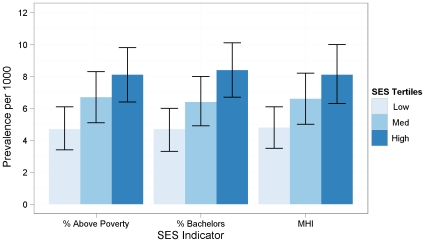
BACKGROUND: This study was designed to evaluate the hypothesis that the prevalence of autism spectrum disorder (ASD) among children in the United States is positively associated with socioeconomic status (SES). METHODS: A cross-sectional study was implemented with data from the Autism and Developmental Disabilities Monitoring Network, a multiple source surveillance system that incorporates data from educational and health care sources to determine the number of 8-year-old children with ASD among defined populations. For the years 2002 and 2004, there were 3,680 children with ASD among a population of 557,689 8-year-old children. Area-level census SES indicators were used to compute ASD prevalence by SES tertiles of the population. RESULTS: Prevalence increased with increasing SES in a dose-response manner, with prevalence ratios relative to medium SES of 0.70 (95% confidence interval [CI] 0.64, 0.76) for low SES, and of 1.25 (95% CI 1.16, 1.35) for high SES, (P<0.001). Significant SES gradients were observed for children with and without a pre-existing ASD diagnosis, and in analyses stratified by gender, race/ethnicity, and surveillance data source. The SES gradient was significantly stronger in children with a pre-existing diagnosis than in those meeting criteria for ASD but with no previous record of an ASD diagnosis (p<0.001), and was not present in children with co-occurring ASD and intellectual disability. CONCLUSIONS: The stronger SES gradient in ASD prevalence in children with versus without a pre-existing ASD diagnosis points to potential ascertainment or diagnostic bias and to the possibility of SES disparity in access to services for children with autism. Further research is needed to confirm and understand the sources of this disparity so that policy implications can be drawn. Consideration should also be given to the possibility that there may be causal mechanisms or confounding factors associated with both high SES and vulnerability to ASD.
Overview
The claims and statistics of this paper haven’t been checked yet.
Free: it reads the open-access text and checks the first 5 claims that cite a source we can check. Create a free account to check every claim.
Integrity signals
Registry
Cites
Statistics
Figures
Verification
Claims the paper makes
The claims and statistics of this paper haven’t been checked yet.
Free: it reads the open-access text and checks the first 5 claims that cite a source we can check. Create a free account to check every claim.
Self-check
Percentages, sums and reported differences re-computed from the paper’s own numbers.
The self-check needs the paper’s full text.
Citations
Cites
(1943) · The Nervous child · Cited by 8,870
Autistic disturbances of affective contact.
Kanner, L. (1968) · PubMed · Cited by 3,140
Easy SAS Calculations for Risk or Prevalence Ratios and Differences
Spiegelman, D. (2005) · American Journal of Epidemiology · doi:10.1093/aje/kwi188 · Cited by 1,738 · cited 1×
“We computed x(2) tests and 95% confidence intervals based on a Poisson distribution and log-link function [37].”
MethodEpidemiological Surveys of Autism and Other Pervasive Developmental Disorders: An Update
Fombonne, E. (2003) · Journal of Autism and Developmental Disorders · doi:10.1023/a:1025054610557 · Cited by 1,505 · cited 1×
“A number of investigators and recent reviews of the epidemiology of autism have concluded that any association observed between autism risk and SES has been due to such bias [26,27,30,31].”
BackgroundThe Epidemiology of Autism Spectrum Disorders
Newschaffer, C. J., Croen, L. A., Daniels, J., Giarelli, E., Grether, J. K., Levy, S. E., Mandell, D. S., Miller, L. A., Pinto-Martin, J., Reaven, J., et al. (2007) · Annual Review of Public Health · doi:10.1146/annurev.publhealth.28.021406.144007 · Cited by 1,228 · cited 1×
“A number of investigators and recent reviews of the epidemiology of autism have concluded that any association observed between autism risk and SES has been due to such bias [26,27,30,31].”
BackgroundSelf-citationRacial/Ethnic Disparities in the Identification of Children With Autism Spectrum Disorders
Mandell, D. S., Wiggins, L. D., Carpenter, L. A., Daniels, J., DiGuiseppi, C., Durkin, M. S., Giarelli, E., Morrier, M. J., Nicholas, J. S., Pinto-Martin, J. A., et al. (2009) · American Journal of Public Health · doi:10.2105/ajph.2007.131243 · Cited by 946 · cited 1×
“In a previous analysis of ADDM Network data for children identified by the surveillance system as meeting diagnostic criteria for ASD, Mandell and colleagues found nonHispanic white and Asian children to be more likely than nonHispanic black and Hispanic children to have a pre-existing ASD diagnosis [39].”
MethodSelf-citationApplying an equity lens to child health and mortality: more of the same is not enough
Victora, C. G., Wagstaff, A., Schellenberg, J. A., Gwatkin, D., Claeson, M., & Habicht, J.-P. (2003) · The Lancet · doi:10.1016/s0140-6736(03)13917-7 · Cited by 820
Epidemiology of autistic conditions in young children: 1. Prevalence
Lotter, V. (1966) · Social Psychiatry · doi:10.1007/bf00584048 · Cited by 780
Risk Factors for Autism: Perinatal Factors, Parental Psychiatric History, and Socioeconomic Status
Larsson, H. J., Eaton, W. W., Madsen, K. M., Vestergaard, M., Olesen, A. V., Agerbo, E., Schendel, D., Thorsen, P., & Mortensen, P. B. (2005) · American Journal of Epidemiology · doi:10.1093/aje/kwi123 · Cited by 727 · cited 1×
“However, a nearly equivalent number of studies, both clinical [19–23] and epidemiological [24–28], have failed to find associations between SES and ASD, and one casecontrol study found lower educational attainment of mothers of children with autism compared to controls [29].”
Result
Research works printed but not linked: 3
- Susser MW Hopper K Watson W 1985 Sociology in medicine, third edition. New York Oxford University Press 603
- Durkin MS Schupf N Stein ZA Susser MW 2007 Childhood cognitive disability. Wallace RB Hightstown, NJ McGraw-Hill 1173 1184 Public health and preventive medicine, fifteenth edition
- American Psychiatric Association 2000 Diagnostic and Statistical Manual of Mental Disorders (DSM-IV-TR) Edition 4, Text Revision. Arlington, VA American Psychiatric Association
Cited by
Baio, J., Wiggins, L., Christensen, D. L., Maenner, M. J., Daniels, J., Warren, Z., Kurzius-Spencer, M., Zahorodny, W., Robinson, C., Rosenberg, et al. (2018) · MMWR. Surveillance Summaries · doi:10.15585/mmwr.ss6706a1 · Cited by 6,078
“Although ASD prevalence has increased over time at all levels of SES, the absolute difference in prevalence between high, middle, and lower SES did not change from 2002 to 2010 (14,15).”
BackgroundResultSelf-citationAn atlas of genetic correlations across human diseases and traits
ReproGen Consortium, Bulik-Sullivan, B., Psychiatric Genomics Consortium, Genetic Consortium for Anorexia Nervosa of the Wellcome Trust Case Control Consortium 3, Finucane, H. K., Anttila, V., Gusev, A., Day, F. R., Loh, P.-R., Duncan, L., et al. (2015) · Nature Genetics · doi:10.1038/ng.3406 · Cited by 4,255
The Changing Epidemiology of Autism Spectrum Disorders
Lyall, K., Croen, L., Daniels, J., Fallin, M. D., Ladd-Acosta, C., Lee, B. K., Park, B. Y., Snyder, N. W., Schendel, D., Volk, H., et al. (2017) · Annual Review of Public Health · doi:10.1146/annurev-publhealth-031816-044318 · Cited by 1,011
“Disparities in prevalence have narrowed over time in some US regions and are less prominent when ASD is accompanied by intellectual disability (53).”
BackgroundMaternal immune activation and neuroinflammation in human neurodevelopmental disorders
Han, V. X., Patel, S., Jones, H. F., & Dale, R. C. (2021) · Nature Reviews Neurology · doi:10.1038/s41582-021-00530-8 · Cited by 683
Russell, A. E., Ford, T., Williams, R., & Russell, G. (2016) · Child Psychiatry & Human Development · doi:10.1007/s10578-015-0578-3 · Cited by 473
“On the other hand, not all childhood neurodevelopmental disorders are clearly associated with socio-economic disadvantage; for example, US studies have found autism is more prevalent in high SES groups [69].”
BackgroundThe Economic Costs of Autism Spectrum Disorder: A Literature Review
Rogge, N., & Janssen, J. (2019) · Journal of Autism and Developmental Disorders · doi:10.1007/s10803-019-04014-z · Cited by 384
Vitamin D hormone regulates serotonin synthesis. Part 1: Relevance for autism
Patrick, R. P., & Ames, B. N. (2014) · The FASEB Journal · doi:10.1096/fj.13-246546 · Cited by 414
“Therefore, when the confounding factor of socioeconomic status is controlled for, individuals with darker skin, and belonging to a higher socioeconomic status, are twice as likely to have a child with autism, as compared with lighter-skinned individuals from the same socioeconomic status (78, 79).”
BackgroundGillespie-Lynch, K., Brooks, P. J., Someki, F., Obeid, R., Shane-Simpson, C., Kapp, S. K., Daou, N., & Smith, D. S. (2015) · Journal of Autism and Developmental Disorders · doi:10.1007/s10803-015-2422-9 · Cited by 363
Han, V. X., Patel, S., Jones, H. F., Nielsen, T. C., Mohammad, S. S., Hofer, M. J., Gold, W., Brilot, F., Lain, S. J., Nassar, N., et al. (2021) · Translational Psychiatry · doi:10.1038/s41398-021-01198-w · Cited by 378
The prevalence of neurodevelopmental disorders in children prenatally exposed to antiepileptic drugs
Bromley, R. L., Mawer, G. E., Briggs, M., Cheyne, C., Clayton-Smith, J., Garcia-Finana, M., Kneen, R., Lucas, S. B., Shallcross, R., Baker, G. A., et al. (2013) · Journal of Neurology, Neurosurgery & Psychiatry · doi:10.1136/jnnp-2012-304270 · Cited by 367
Ambient Air Pollution and Autism in Los Angeles County, California
Becerra, T. A., Wilhelm, M., Olsen, J., Cockburn, M., & Ritz, B. (2013) · Environmental Health Perspectives · doi:10.1289/ehp.1205827 · Cited by 355
“…variety of adverse birth outcomes (Ritz and Yu 1999; Ritz et al. 2000; Srám et al. 2005; Williams et al. 1977) and neuropsychological effects later in childhood (CalderónGarcidueñas et al. 2008; Edwards et al. 2010; Perera et al. 2006, 2012; Suglia et al. 2008; Tang et al. 2008; Wang et al. 2009).”
BackgroundThe prevalence of parent-reported autism spectrum disorder among US children
Kogan, M. D., Vladutiu, C. J., Schieve, L. A., Ghandour, R. M., Blumberg, S. J., Zablotsky, B., Perrin, J. M., Shattuck, P., Kuhlthau, K. A., Harwood, R. L., et al. (2018) · Pediatrics · doi:10.1542/peds.2017-4161 · Cited by 354
Self-citationA Scoping Review of Health Disparities in Autism Spectrum Disorder
Bishop-Fitzpatrick, L., & Kind, A. J. H. (2017) · Journal of Autism and Developmental Disorders · doi:10.1007/s10803-017-3251-9 · Cited by 351
“Children from lower socioeconomic status households (Durkin et al. 2010) and children from neighborhoods with high neighborhood disadvantage (Mazumdar et al. 2013) are also less likely to receive a timely ASD diagnosis.”
BackgroundDurkin, M. S., Maenner, M. J., Baio, J., Christensen, D., Daniels, J., Fitzgerald, R., Imm, P., Lee, L.-C., Schieve, L. A., Van Naarden Braun, K., et al. (2017) · American Journal of Public Health · doi:10.2105/ajph.2017.304032 · Cited by 347
“For example, in a previous analysis of public health surveillance data for children in communities included in the Centers for Disease Control and Prevention’s Autism and Developmental Disabilities Monitoring (ADDM) Network in 2002 and 2004, we found a dose–response association between SES and ASD prevalence, and a pr…”
BackgroundMethodResultInfluentialSelf-citationThe Diagnosis of Autism: From Kanner to DSM-III to DSM-5 and Beyond
Rosen, N. E., Lord, C., & Volkmar, F. R. (2021) · Journal of Autism and Developmental Disorders · doi:10.1007/s10803-021-04904-1 · Cited by 302
Idring, S., Lundberg, M., Sturm, H., Dalman, C., Gumpert, C., Rai, D., Lee, B. K., & Magnusson, C. (2015) · Journal of Autism and Developmental Disorders · doi:10.1007/s10803-014-2336-y · Cited by 296
“However, these findings are not concordant to multiple studies from the USA which instead have reported an association between increasing socio-economic status and offspring ASD (Croen et al. 2002; Bhasin and Schendel 2007; Durkin et al. 2010; Fountain et al. 2011; Windham et al. 2011).”
ResultConstantino, J. N., & Charman, T. (2016) · The Lancet Neurology · doi:10.1016/s1474-4422(15)00151-9 · Cited by 294
Comorbidities in autism spectrum disorder and their etiologies
Khachadourian, V., Mahjani, B., Sandin, S., Kolevzon, A., Buxbaum, J. D., Reichenberg, A., & Janecka, M. (2023) · Translational Psychiatry · doi:10.1038/s41398-023-02374-w · Cited by 291
Environmental factors influencing the risk of autism
Karimi, P., Kamali, E., Mousavi, S. M., & Karahmadi, M. (2017) · Journal of Research in Medical Sciences · doi:10.4103/1735-1995.200272 · Cited by 243
Rai, D., Lewis, G., Lundberg, M., Araya, R., Svensson, A., Dalman, C., Carpenter, P., & Magnusson, C. (2012) · Journal of the American Academy of Child & Adolescent Psychiatry · doi:10.1016/j.jaac.2012.02.012 · Cited by 267
Participation in Social Activities among Adolescents with an Autism Spectrum Disorder
Shattuck, P. T., Orsmond, G. I., Wagner, M., & Cooper, B. P. (2011) · PLoS ONE · doi:10.1371/journal.pone.0027176 · Cited by 234
“This is consistent with other research indicating that autism is identified at a higher rate among more affluent families, suggesting that poorer children with autism are commonly under-identified [24].”
ResultThe association of autism diagnosis with socioeconomic status
Thomas, P., Zahorodny, W., Peng, B., Kim, S., Jani, N., Halperin, W., & Brimacombe, M. (2012) · Autism · doi:10.1177/1362361311413397 · Cited by 218
“Our findings support the recent findings by Durkin et al. (2010), showing a gradient in ASD prevalence across SES strata.”
MethodResultRoman-Urrestarazu, A., van Kessel, R., Allison, C., Matthews, F. E., Brayne, C., & Baron-Cohen, S. (2021) · JAMA Pediatrics · doi:10.1001/jamapediatrics.2021.0054 · Cited by 242
Translational animal models of autism and neurodevelopmental disorders
Crawley, J. N. (2012) · Dialogues in Clinical Neuroscience · doi:10.31887/dcns.2012.14.3/jcrawley · Cited by 230
“This rapid rise is largely a function of better diagnostic instruments and public awareness, although possible environmental causes and gene x environment interactions are under investigation.(91-93) C l i n i c a l r e s e a r c h”
BackgroundAbbas, H., Garberson, F., Glover, E., & Wall, D. P. (2018) · Journal of the American Medical Informatics Association · doi:10.1093/jamia/ocy039 · Cited by 198
“Diagnosis within the first few years of life dramatically improves the outlook of children with autism, as it allows for treatment while the child’s brain is still rapidly developing 1,2 .”
BackgroundSocioeconomic Disparities and Prevalence of Autism Spectrum Disorders and Intellectual Disability
Delobel-Ayoub, M., Ehlinger, V., Klapouszczak, D., Maffre, T., Raynaud, J.-P., Delpierre, C., & Arnaud, C. (2015) · PLOS ONE · doi:10.1371/journal.pone.0141964 · Cited by 210
“In contrast, some studies reported an inverse relationship with a higher prevalence of ASD in more favored environments but only for ASD without ID [1, 4, 5].”
Evaluating changes in the prevalence of the autism spectrum disorders (ASDs).
Rice, C. E., Rosanoff, M., Dawson, G., Durkin, M. S., Croen, L. A., Singer, A., & Yeargin-Allsopp, M. (2012) · Public health reviews · doi:10.1007/bf03391685 · Cited by 210
“Examining SES among ADDM Network data, it was found that the ASD prevalence increased with increasing SES in a stepwise manner, suggesting either increased risk with increasing SES or, perhaps more likely, identification disparities.(39) ASD prevalence estimates likely underestimate prevalence in lower SES groups.”
BackgroundSelf-citationSocioeconomic Status and the Increased Prevalence of Autism in California
King, M. D., & Bearman, P. S. (2011) · American Sociological Review · doi:10.1177/0003122411399389 · Cited by 180
Obeid, R., Daou, N., DeNigris, D., Shane-Simpson, C., Brooks, P. J., & Gillespie-Lynch, K. (2015) · Journal of Autism and Developmental Disorders · doi:10.1007/s10803-015-2499-1 · Cited by 166
“Although ASD is diagnosed more frequently among people of higher socioeconomic status in the US, this is likely largely attributable to greater access to health care among the wealthy in the US (Durkin et al. 2010).”
BackgroundInfluentialAl-Farsi, O. A., Al-Farsi, Y. M., Al‐Sharbati, M. M., & Al‐Adawi, S. (2016) · Neuropsychiatric Disease and Treatment · doi:10.2147/ndt.s107103 · Cited by 226
“49 The first hypothesis of this study is to explore whether there is variation in symptoms of stress among CASD, CID, and CTD as defined by DASS.”
Cascio, M. A., Weiss, J. A., & Racine, É. (2020) · Review Journal of Autism and Developmental Disorders · doi:10.1007/s40489-020-00204-z · Cited by 193
“Scholars and advocates have expressed concerns about inequities in access to diagnosis by class and race/ethnicity (Begeer et al. 2009; Di Pietro and Illes 2014; Durkin et al. 2010; Liptak et al. 2008; Mandell et al. 2007; Mandell et al. 2009; Pierce et al. 2014).”
BackgroundPickard, K. E., & Ingersoll, B. R. (2016) · Autism · doi:10.1177/1362361315569745 · Cited by 170
“Specifically, low SES has been associated with a later age of ASD diagnosis (Durkin et al., 2010; Thomas et al., 2011) and decreased ASD service use (Liptak et al.”
BackgroundZwaigenbaum, L., Bryson, S. E., Brian, J., Smith, I. M., Roberts, W., Szatmari, P., Roncadin, C., Garon, N., & Vaillancourt, T. (2016) · Autism Research · doi:10.1002/aur.1585 · Cited by 165
Perinatal stress, brain inflammation and risk of autism-Review and proposal
Angelidou, A., Asadi, S., Alysandratos, K.-D., Karagkouni, A., Kourembanas, S., & Theoharides, T. C. (2012) · BMC Pediatrics · doi:10.1186/1471-2431-12-89 · Cited by 153
“In the majority of cases, however, the cause of ASD is unknown [8], in spite of the apparent increase in ASD prevalence [9-11].”
Autism As a Disorder of High Intelligence
Crespi, B. J. (2016) · Frontiers in Neuroscience · doi:10.3389/fnins.2016.00300 · Cited by 156
“…variable results, most of which, however, find that autism is positively related to indicators or strong correlates of high socioeconomic status (Durkin et al., 2010; Van Meter et al., 2010; King and Bearman, 2011; Leonard et al., 2011; Thomas et al., 2012; Bakian et al., 2015); other studies…”
ResultSchendel, D. E., DiGuiseppi, C., Croen, L. A., Fallin, M. D., Reed, P. L., Schieve, L. A., Wiggins, L. D., Daniels, J., Grether, J., Levy, S. E., et al. (2012) · Journal of Autism and Developmental Disorders · doi:10.1007/s10803-012-1461-8 · Cited by 154
“…the United States (Minnesota Department of Health 2009), higher rates among immigrant populations in Northern European countries (Hultman et al. 2002; Maimburg and Vaeth 2006), and variations in ASD prevalence by socioeconomic status (defined by household education and income) (Durkin et al. 2010).”
BackgroundSelf-citationThe impact of the COVID-19 pandemic on children with autism spectrum disorders
Bellomo, T. R., Prasad, S., Munzer, T. G., & Laventhal, N. T. (2020) · Journal of Pediatric Rehabilitation Medicine · doi:10.3233/prm-200740 · Cited by 165
Support Needs of Fathers and Mothers of Children and Adolescents with Autism Spectrum Disorder
Hartley, S. L., & Schultz, H. M. (2015) · Journal of Autism and Developmental Disorders · doi:10.1007/s10803-014-2318-0 · Cited by 123
“White children and children from high SES groups are significantly more likely to receive an ASD diagnosis than are black and Hispanic children (ADDMN 2014), and children from low SES groups (Durkin et al. 2010).”
Differences in Autism Symptoms Between Minority and Non-Minority Toddlers
Tek, S., & Landa, R. J. (2012) · Journal of Autism and Developmental Disorders · doi:10.1007/s10803-012-1445-8 · Cited by 143
Khowaja, M. K., Hazzard, A. P., & Robins, D. L. (2015) · Journal of Autism and Developmental Disorders · doi:10.1007/s10803-014-2339-8 · Cited by 137
“Authors of studies which have found higher rates of ASD with increasing income (Durkin et al. 2010; Bhasin and Schendel 2007; Palmer et al. 2005) and maternal education (Bilder et al.”
Walker, D., Sepulveda, S. J., Hoff, E., Rowe, M. L., Schwartz, I. S., Dale, P. S., Peterson, C. A., Diamond, K. E., Goldin-Meadow, S., Levine, S. C., et al. (2019) · Early Childhood Research Quarterly · doi:10.1016/j.ecresq.2019.02.010 · Cited by 153
Wagner, L., Corona, L. L., Weitlauf, A. S., Marsh, K. L., Berman, A. F., Broderick, N. A., Francis, S., Hine, J., Nicholson, A., Stone, C., et al. (2021) · Journal of Autism and Developmental Disorders · doi:10.1007/s10803-020-04767-y · Cited by 138
Leonard, H., Glasson, E., Nassar, N., Whitehouse, A., Bebbington, A., Bourke, J., Jacoby, P., Dixon, G., Malacova, E., Bower, C., et al. (2011) · PLoS ONE · doi:10.1371/journal.pone.0017875 · Cited by 138
“Using data from the Autism and Developmental Disabilities Monitoring Network, the most recent of the US studies [2] identified a SES gradient but only in ASD without ID.”
BackgroundMethodResultInfluentialAgeing in people with autistic spectrum disorder
Mukaetova‐Ladinska, E. B., Perry, E., Baron, M., Povey, C., & on behalf of the Autism Ageing Writing Group (2012) · International Journal of Geriatric Psychiatry · doi:10.1002/gps.2711 · Cited by 129
“This estimate is largely based on childhood studies that report the overall prevalence rates between 0.70% and 1.25% (for low and high socioeconomic status, respectively) (Durkin et al., 2010).”
BackgroundInfluentialEnnis-Cole, D., Durodoye, B. A., & Harris, H. L. (2013) · The Family Journal · doi:10.1177/1066480713476834 · Cited by 94
“A surveillance-based study by Durkin et al. (2010) was conducted to determine whether or not the prevalence of ASD in children in a cross section of the United States was positively associated with SES.”
BackgroundRisk factors diagnosis prognosis and treatment of autism
Al-Dewik, N. I. E. (2020) · Frontiers in bioscience · doi:10.2741/4873 · Cited by 156
Prevalence and Disparities in the Detection of Autism Without Intellectual Disability
Shenouda, J., Barrett, E. S., Davidow, A. L., Sidwell, K., Lescott, C., Halperin, W., Silenzio, V., & Zahorodny, W. M. (2023) · PEDIATRICS · doi:10.1542/peds.2022-056594 · Cited by 131
Prevalence and Incidence of Autism Spectrum Disorder in an Israeli Population
Davidovitch, M., Hemo, B., Manning-Courtney, P., & Fombonne, E. (2013) · Journal of Autism and Developmental Disorders · doi:10.1007/s10803-012-1611-z · Cited by 120
“However, these low prevalence rates are similar to those reported in other studies that include ethnic minorities (Mandell et al. 2009; ADDMNS 2009, 2012) and lower SES groups (Durkin et al. 2010), and it is therefore unlikely that they would be sufficient to explain the lower prevalence in Israel.”
Kelly, B., Williams, S., Collins, S., Mushtaq, F., Mon-Williams, M. A., Wright, B., Mason, D., & Wright, J. (2017) · Autism · doi:10.1177/1362361317733182 · Cited by 136
“…where most of these studies originate, a consistent finding has been that autism rates are higher for children of higher socioeconomic status (Durkin et al., 2010; Fountain et al., 2011; Thomas et al., 2012) and for children whose parents have higher levels of education (Dickerson et al.,…”
BackgroundElder, J. H., Brasher, S., & Alexander, B. (2016) · Issues in Mental Health Nursing · doi:10.3109/01612840.2016.1153174 · Cited by 117
“…have found that significant ethnic (Mandell et al., 2009), geographic (Rosenberg, Landa, Law, Stuart, & Law, 2011), and socioeconomic disparities (Durkin et al., 2010) exist among families of children with ASD, and that these disparities inhibit a critical early diagnosis and intervention in…”
BackgroundEarly Identification of ASD Through Telemedicine: Potential Value for Underserved Populations
Juárez, A. P., Weitlauf, A. S., Nicholson, A., Pasternak, A., Broderick, N., Hine, J., Stainbrook, J. A., & Warren, Z. (2018) · Journal of Autism and Developmental Disorders · doi:10.1007/s10803-018-3524-y · Cited by 116
“Moreover, groups from traditionally underserved communities are much less likely to be diagnosed at young ages, including children from families of lower socioeconomic status, children whose parents report lower levels of educational attainment, and children from racial and ethnic minority groups (Christensen et al. 2…”
BackgroundIn utero exposure to selective serotonin reuptake inhibitors and risk for autism spectrum disorder
Gidaya, N. B., Lee, B. K., Burstyn, I., Yudell, M., Mortensen, E. L., & Newschaffer, C. J. (2014) · Journal of Autism and Developmental Disorders · doi:10.1007/s10803-014-2128-4 · Cited by 115
Testing the accuracy of an observation-based classifier for rapid detection of autism risk
Duda, M., Kosmicki, J. A., & Wall, D. P. (2014) · Translational Psychiatry · doi:10.1038/tp.2014.65 · Cited by 109
Smith-Young, J., Chafe, R., & Audas, R. (2020) · Health Services Insights · doi:10.1177/1178632920902141 · Cited by 126
Zablotsky, B., Colpe, L. J., Pringle, B. A., Kogan, M. D., Rice, C., & Blumberg, S. J. (2017) · American Journal on Intellectual and Developmental Disabilities · doi:10.1352/1944-7558-122.1.49 · Cited by 105
“Several demographic characteristics have been associated with later age of diagnosis; being female or a racial/ethnic minority, living in rural areas, having lower household income, and having multiple primary care physicians (Durkin et al. 2010; Giarelli et al., 2010).”
BackgroundEmerson, N. D., Morrell, H. E. R., & Neece, C. L. (2015) · Journal of Autism and Developmental Disorders · doi:10.1007/s10803-015-2555-x · Cited by 116
Hickey, E. J., Hartley, S. L., & Papp, L. (2020) · Family Process · doi:10.1111/famp.12432 · Cited by 97
“The prevalence of diagnosed ASD differs by racial/ethnic group (Durkin et al., 2010; Baio et al., 2018; Jo et al., 2015), and is likely reflective of racial/ethnic disparities in access to healthcare, language barriers, differences in cultural perspectives and preferences, and diagnostic biases…”
BackgroundRandall, M., Sciberras, E., Brignell, A., Ihsen, E., Efron, D., Dissanayake, C., & Williams, K. (2016) · Australian & New Zealand Journal of Psychiatry · doi:10.1177/0004867415595287 · Cited by 109
“In contrast, several previous studies (Durkin et al., 2010; Grether et al., 2009; Hultman et al., 2011) found that older parents tend to be at higher risk to have a child with ASD than younger parents.”
BackgroundResultHeffler, K. F., Sienko, D. M., Subedi, K., McCann, K. A., & Bennett, D. S. (2020) · JAMA Pediatrics · doi:10.1001/jamapediatrics.2020.0230 · Cited by 92
The changing prevalence of autism in three regions of Canada
Ouellette-Kuntz, H. M. J., Coo, H., Lam, M., Breitenbach, M. M., Hennessey, P. E., Jackman, P. D., Lewis, M. E. S., Dewey, D., Bernier, F. P., & Chung, A. M. (2013) · Journal of Autism and Developmental Disorders · doi:10.1007/s10803-013-1856-1 · Cited by 149
“confounders of the observed association (Durkin et al. 2010).”
Hahler, E.-M., & Elsabbagh, M. (2015) · Current Developmental Disorders Reports · doi:10.1007/s40474-014-0033-3 · Cited by 94
Urbanicity and Autism Spectrum Disorders
Lauritsen, M. B., Astrup, A., Pedersen, C. B., Obel, C., Schendel, D. E., Schieve, L., Yeargin-Allsopp, M., & Parner, E. T. (2014) · Journal of Autism and Developmental Disorders · doi:10.1007/s10803-013-1875-y · Cited by 100
“Our finding of an increased risk of ASD in urban areas compared to rural areas is in accordance with findings from studies of geographically and ethnically diverse areas such as Japan (Hoshino et al. 1982), Taiwan (Chen et al. 2008), and the United States (Rosenberg et al. 2009).”
ResultSelf-citationPrevalence of Autism Spectrum Disorders in Hispanic and Non-Hispanic White Children
Pedersen, A., Pettygrove, S., Meaney, F. J., Mancilla, K., Gotschall, K., Kessler, D. B., Grebe, T. A., & Cunniff, C. (2012) · Pediatrics · doi:10.1542/peds.2011-1145 · Cited by 100
Self-citationAngell, A. M., Empey, A., & Zuckerman, K. E. (2018) · International review of research in developmental disabilities · doi:10.1016/bs.irrdd.2018.08.003 · Cited by 122
Hospitalization Burden Among Individuals with Autism
Lokhandwala, T., Khanna, R., & West-Strum, D. S. (2011) · Journal of Autism and Developmental Disorders · doi:10.1007/s10803-011-1217-x · Cited by 102
“This is consistent with previous literature, which has also reported common occurrence of these conditions in this population ( Creon et al. 2006; Leslie and Martin 2007).”
BackgroundMethodResultInfluentialEpidemiology of Autism Spectrum Disorders
Presmanes Hill, A., Zuckerman, K., & Fombonne, E. (2015) · Translational Approaches to Autism Spectrum Disorder · doi:10.1007/978-3-319-16321-5_2 · Cited by 94
Prenatal maternal stress events and phenotypic outcomes in Autism Spectrum Disorder
Varcin, K. J., Alvares, G. A., Uljarević, M., & Whitehouse, A. J. O. (2017) · Autism Research · doi:10.1002/aur.1830 · Cited by 85
“, 2012]; the opposite pattern has been observed amongst US-based studies, where there is increased ASD risk amongst high SES families [Durkin et al., 2010; King & Bearman, 2011].”
ResultParent Perceptions of Caregiver-Mediated Telemedicine Tools for Assessing Autism Risk in Toddlers
Corona, L. L., Weitlauf, A. S., Hine, J. F., Berman, A. F., Miceli, A., Nicholson, A. G., Stone, C., Broderick, N. A., Francis, S. M. S., Juárez, A. O. R., et al. (2020) · Journal of Autism and Developmental Disorders · doi:10.1007/s10803-020-04554-9 · Cited by 97
Gillespie-Lynch, K., Daou, N., Sanchez-Ruiz, M.-J., Kapp, S. K., Obeid, R., Brooks, P. J., Someki, F., Silton, N., & Abi-Habib, R. (2019) · Autism · doi:10.1177/1362361318823550 · Cited by 88
“…of Autism Research Coordination, 2012) and the US government is required to provide appropriate educational services to all public school children with disabilities, striking disparities in access to diagnosis and treatment for autism remain apparent in the United States (Durkin et al., 2010).”
BackgroundBejarano‐Martín, Á., Canal‐Bedia, R., Magán‐Maganto, M., Fernández-Álvarez, C. J., Cilleros, M. V. M., Gómez, M. C. S., Primo, P. G., Rose-Sweeney, M., Boilson, A. M., Linertová, R., et al. (2019) · Journal of Autism and Developmental Disorders · doi:10.1007/s10803-019-04253-0 · Cited by 99
“1 3 with ASD belonging to families with a high parental socioeconomic status (SES) and high parental educational level are diagnosed earlier, and that their families report greater satisfaction with the diagnostic process (Durkin et al. 2010; Goin-Kochel et al. 2006; Irvin et al. 2012; Moh and Magiati 2012; Thomas, Za…”
BackgroundDrahota, A., Sadler, R., Hippensteel, C., Ingersoll, B., & Bishop, L. (2020) · Autism · doi:10.1177/1362361320931265 · Cited by 85
“Children from low SES households and racial and ethnic minority families are less likely to receive a diagnosis of ASD, and experience a later age of diagnosis than higher SES and nonracial and ethnic minority families (Durkin et al., 2010; Mandell et al., 2002, 2009; Zuckerman et al., 2014).”
BackgroundDickerson, A. S., Rahbar, M. H., Bakian, A. V., Bilder, D. A., Harrington, R. A., Pettygrove, S. D., Kirby, R. S., Durkin, M. S., Han, I., Moyé, L. A., et al. (2016) · Environmental Monitoring and Assessment · doi:10.1007/s10661-016-5405-1 · Cited by 88
“Although the relationship between lead exposure and poverty is well established, ASD diagnosis and prevalence has been associated with higher socioeconomic status (SES) in some studies (Bhasin & Schendel 2007; Durkin et al. 2010), while some have shown no association (Pinborough-Zimmerman et al.”
BackgroundSelf-citationZuckerman, K. E., Lindly, O. J., Reyes, N., Chavez, A. E., Cobian, M., Macias, K., Reynolds, A., & Smith, K. A. (2018) · Journal of Autism and Developmental Disorders · doi:10.1007/s10803-018-3586-x · Cited by 92
Kalkbrenner, A. E., Braun, J. M., Durkin, M. S., Maenner, M. J., Cunniff, C., Lee, L.-C., Pettygrove, S., Nicholas, J. S., & Daniels, J. L. (2012) · Environmental Health Perspectives · doi:10.1289/ehp.1104556 · Cited by 82
“Selected potential confounders included maternal education (modeled using restricted quadratic splines) (Durkin et al. 2010), race and ethnicity (categorized as non-Hispanic white, non-Hispanic black, Hispanic, or other) (Mandell et al.”
BackgroundInfluentialSelf-citationInterpersonal Trauma and Posttraumatic Stress in Autistic Adults
Reuben, K. E., Stanzione, C. M., & Singleton, J. L. (2021) · Autism in Adulthood · doi:10.1089/aut.2020.0073 · Cited by 72
“51,52 The generalizability of this study may also be limited because it oversamples autistic individuals with high literacy and membership in online communities.”
Sex Differences in Age of Diagnosis and First Concern among Children with Autism Spectrum Disorder
McDonnell, C. G., DeLucia, E. A., Hayden, E. P., Penner, M., Curcin, K., Anagnostou, E., Nicolson, R., Kelley, E., Georgiades, S., Liu, X., et al. (2021) · Journal of Clinical Child & Adolescent Psychology · doi:10.1080/15374416.2020.1823850 · Cited by 69
“Broader socioeconomic status (SES) indicators, such as income and parental education, have been linked with disparities in ASD identification such as later diagnosis (Brett et al., 2016; Durkin et al., 2010; Mandell et al., 2005).”
BackgroundAutism spectrum disorders: Toward a gendered embodiment model
Cheslack-Postava, K., & Jordan-Young, R. M. (2012) · Social Science & Medicine · doi:10.1016/j.socscimed.2011.06.013 · Cited by 80
Dahiya, A. V., McDonnell, C., DeLucia, E., & Scarpa, A. (2020) · Practice Innovations · doi:10.1037/pri0000121 · Cited by 70
“…may be due to significant challenges regarding the availability and adequacy of services for children with ASD, including economic challenges, geographic distance between families and providers, lack of professional resources, and cultural characteristics (Durkin et al., 2010; Janvier et al., 2016).”
BackgroundSchool-Based Autism Identification: Prevalence, Racial Disparities, and Systemic Correlates
Sullivan, A. L. (2013) · School Psychology Review · doi:10.1080/02796015.2013.12087475 · Cited by 88
“and Hispanic children (Durkin et al., 2010). Mandell and colleagues (2009) utilized data from a subset of CDC study participants and found that (a) only 58% of all children identified with ASDs by the researchers using criteria based on the Diagnostic and Statistical Manual of Mental Disorders (DSM-IV-TR; American Psy…”
BackgroundMethodInfluentialFrequency and Pattern of Documented Diagnostic Features and the Age of Autism Identification
Maenner, M. J., Schieve, L. A., Rice, C. E., Cunniff, C., Giarelli, E., Kirby, R. S., Lee, L.-C., Nicholas, J. S., Wingate, M. S., & Durkin, M. S. (2013) · Journal of the American Academy of Child & Adolescent Psychiatry · doi:10.1016/j.jaac.2013.01.014 · Cited by 76
Self-citationMaternal Smoking and Autism Spectrum Disorder: A Meta-analysis
Rosen, B. N., Lee, B. K., Lee, N. L., Yang, Y., & Burstyn, I. (2015) · Journal of Autism and Developmental Disorders · doi:10.1007/s10803-014-2327-z · Cited by 78
“For example, it is commonly observed in the US that ASD is overrepresented in the high SES strata (Durkin et al. 2010).”
BackgroundSchieve, L. A., Clayton, H. B., Durkin, M. S., Wingate, M. S., & Drews-Botsch, C. (2015) · Journal of Autism and Developmental Disorders · doi:10.1007/s10803-015-2402-0 · Cited by 71
“While studies suggest the underlying reason for the association between increased ASD prevalence and high family SES likely relates to ASD ascertainment differences among low versus high SES families (Mazumdar et al. 2013; Durkin et al. 2010), the strong associations observed between ID”
InfluentialSelf-citationChisholm, A. K., Anderson, V. A., Pride, N. A., Malarbi, S., North, K. N., & Payne, J. M. (2018) · Neuropsychology Review · doi:10.1007/s11065-018-9380-x · Cited by 84
Rivera-Figueroa, K., Marfo, N. Y. A., & Eigsti, I. (2022) · American Journal on Intellectual and Developmental Disabilities · doi:10.1352/1944-7558-127.1.42 · Cited by 82
Janvier, Y. M., Harris, J. F., Coffield, C. N., Louis, B., Xie, M., Cidav, Z., & Mandell, D. S. (2016) · Autism · doi:10.1177/1362361315585055 · Cited by 75
“Children from families of low socio-economic status (SES) receive a diagnosis of ASD at a later age, on average, than more affluent children (Durkin et al., 2010; Fountain et al., 2010).”
BackgroundBowden, N., Thabrew, H., Kokaua, J., Audas, R. P., Milne, B. J., Smiler, K., Stace, H., Taylor, B. J., & Gibb, S. (2020) · Autism · doi:10.1177/1362361320939329 · Cited by 88
“…that socioeconomic status was not related to rates of ASD is similar to that of some studies (Hrdlicka et al., 2016; Kelly et al., 2019; Larsson et al., 2005), but different from that of others (Durkin et al., 2010; Fountain et al., 2011; Li et al., 2014; Rai et al., 2012; Thomas et al., 2012).”
ResultLopez, K., Magaña, S., Morales, M., & Iland, E. (2019) · Journal of Ethnic & Cultural Diversity in Social Work · doi:10.1080/15313204.2019.1570890 · Cited by 79
“Research indicates disparities by socioeconomic status, race, and ethnicity among children with ASD in age of diagnosis and access to services (Durkin et al., 2010; Harstad, Huntington, Bacic, & Barbaresi, 2013; Mandell et al., 2009).”
BackgroundInherent Tensions and Possibilities: Behavior Analysis and Cultural Responsiveness
Miller, K. L., Cruz, A. R., & Ala’i-Rosales, S. (2019) · Behavior and Social Issues · doi:10.1007/s42822-019-00010-1 · Cited by 81
Satisfaction With Individualized Education Programs Among Parents of Young Children With ASD
Slade, N., Eisenhower, A., Carter, A. S., & Blacher, J. (2017) · Exceptional Children · doi:10.1177/0014402917742923 · Cited by 81
“…are less likely to receive an ASD diagnosis, have decreased access to services, receive fewer evaluations, and are diagnosed at later ages (Durkin et al., 2010; Liptak et al., 2008; Mandell, Novak, & Zubritsky, 2005; Thomas et al., 2012) relative to children with ASD from higher-income…”
BackgroundPham, A. V., & Charles, L. C. (2023) · Current Psychiatry Reports · doi:10.1007/s11920-023-01417-9 · Cited by 76
Developmental and Autism Screening Through 2-1-1
Roux, A. M., Herrera, P., Wold, C. M., Dunkle, M. C., Glascoe, F. P., & Shattuck, P. T. (2012) · American Journal of Preventive Medicine · doi:10.1016/j.amepre.2012.08.011 · Cited by 68
Socioeconomic Status and Pediatric Neurologic Disorders: Current Evidence
Durkin, M. S., & Yeargin‐Allsopp, M. (2018) · Seminars in Pediatric Neurology · doi:10.1016/j.spen.2018.03.003 · Cited by 72
Self-citationCrespi, B. J., & Go, M. C. (2015) · Evolution, Medicine, and Public Health · doi:10.1093/emph/eov021 · Cited by 63
What the DSM-5 Portends for Research, Diagnosis, and Treatment of Autism Spectrum Disorders
Mahjouri, S., & Lord, C. E. (2012) · Current Psychiatry Reports · doi:10.1007/s11920-012-0327-2 · Cited by 66
“Additionally, autism diagnoses have been positively associated with high socioeconomic status [22–25] likely because of the implications for increased levels of parental education or access to health care.”
BackgroundWindham, G. C., Smith, K. S., Rosen, N. J., Anderson, M., Grether, J. K., Coolman, R. B., & Harris, S. (2014) · Journal of Autism and Developmental Disorders · doi:10.1007/s10803-014-2032-y · Cited by 73
Casagrande, K. A., & Ingersoll, B. R. (2017) · Journal of Child and Family Studies · doi:10.1007/s10826-017-0759-8 · Cited by 73
Self-reported sex differences in high-functioning adults with autism: a meta-analysis
Moseley, R. L., Hitchiner, R., & Kirkby, J. A. (2018) · Molecular Autism · doi:10.1186/s13229-018-0216-6 · Cited by 56
Autism spectrum disorder reporting in lower socioeconomic neighborhoods
Dickerson, A. S., Rahbar, M. H., Pearson, D. A., Kirby, R. S., Bakian, A. V., Bilder, D. A., Harrington, R. A., Pettygrove, S., Zahorodny, W. M., Moyé, L. A., et al. (2017) · Autism · doi:10.1177/1362361316650091 · Cited by 63
“…were drawn had a greater percentage of ASD cases identified through both school and healthcare sources, which also agrees with the results of a study using data from 12 ADDM sites in 2002 and 2004 showing more children with ASD in census blocks with higher-educated residents (Durkin et al., 2010).”
BackgroundResultSelf-citationEarly Detection and Intervention of ASD: A European Overview
Magán‐Maganto, M., Bejarano‐Martín, Á., Fernández-Álvarez, C. J., Narzisi, A., Primo, P. G., Kawa, R., de la Paz, M. P., & Canal‐Bedia, R. (2017) · Brain Sciences · doi:10.3390/brainsci7120159 · Cited by 80
Amor and Social Stigma: ASD Beliefs Among Immigrant Mexican Parents
Cohen, S. R., & Miguel, J. (2018) · Journal of Autism and Developmental Disorders · doi:10.1007/s10803-017-3457-x · Cited by 69
Metadata
- Authors
- Durkin, M. S., Maenner, M. J., Meaney, F. J., Levy, S. E., DiGuiseppi, C., Nicholas, J. S., Kirby, R. S., Pinto-Martin, J. A., & Schieve, L. A.
- Affiliations
- University of Wisconsin–Madison (US)
- University of Arizona (US)
- University of Pennsylvania (US)
- Colorado School of Public Health (US)
- Medical University of South Carolina (US)
- University of South Florida (US)
- Centers for Disease Control and Prevention (US)
- Corresponding author
- Durkin, Maureen S.
- ORCID
- Venue
- PLoS ONE
- Publisher
- Public Library of Science (PLoS)
- Published
- 2010-07-12
- Volume
- 5
- Issue
- 7
- Pages
- e11551
- ISSN
- 1932-6203 (ISSN-L)
- PMC
- PMC2902521
- OpenAlex
- W2158452837
- Semantic Scholar
- ebd9777ee15fcbb04421b4123da8c17d267be1e1
- Cited by
- 509
- References
- 41
- Citations by year
- 2026: 87 · 2025: 20 · 2024: 26 · 2023: 31 · 2022: 25 · 2021: 39 · 2020: 34 · 2019: 36 · 2018: 34 · 2017: 31 · 2016: 23 · 2015: 36 · 2014: 25 · 2013: 19 · 2012: 27
- FWCI
- 11.99
- Type
- journal article
- Language
- en
- Open access
- gold
- doi.org
- Licence
- Locations
- PLoS ONE (publishedVersion, public-domain)
- PubMed Central (publishedVersion, public-domain)
- PubMed (publishedVersion)
- RePEc: Research Papers in Economics (submittedVersion)
- DOAJ (DOAJ: Directory of Open Access Journals) (submittedVersion, cc-by-sa)
- Funders
- Centers for Disease Control and Prevention (UR3/CCU523235, UR3DD000078)
- U.S. Public Health Service (UR3/CCU523235)
- Topics
- Life Sciences › Neuroscience › Cognitive Neuroscience › Autism Spectrum Disorder Research
- Health Sciences › Medicine › Psychiatry and Mental health › Child Nutrition and Feeding Issues
- Social Sciences › Psychology › Clinical Psychology › Family and Disability Support Research
- Keywords
- autism spectrum disorder, socioeconomic status, socioeconomic disparities, autism prevalence, children, diagnostic bias, access to services, intellectual disability, racial and ethnic disparities, gender disparities
- MeSH terms
- Child, Child Development Disorders, Pervasive, Cross-Sectional Studies, Female, Humans, Male, Social Class, United States
About these checks
Registry, retraction, Cites and statistics results are computed, not judged, with one exception: a printed reference that no index lists is read once by a model before it counts as a citation error. Claims are extracted by a model and kept only when their quote appears verbatim in the text; each cited source is then checked, with a model’s help, for whether it says what the claim relies on. Those verdicts can be wrong — read the claim’s quote and the cited source before relying on one.
Statistics and arithmetic are recomputed, not judged.
Confidence bands are shown only for fields calibrated on our annotated test set. None is calibrated yet, so no band is shown.
What counts as a claim ›How we measure confidence ›How we check this ›
Are you an author, or do you see a problem with this page? Request a review
Data sources
Bibliographic data: Semantic Scholar, OpenAlex, Crossref.
Contains information from the Semantic Scholar Academic Graph Datasets, made available under the ODC Attribution License (ODC-BY 1.0).
Semantic Scholar’s data is described in: Kinney, R., et al. (2023). The Semantic Scholar Open Data Platform. arXiv:2301.10140.
