

The DOI matches its Crossref record; 49 of the 49 references it cites were found in a registry or an index.
Homocysteine-Lowering by B Vitamins Slows the Rate of Accelerated Brain Atrophy in Mild Cognitive Impairment: A Randomized Controlled Trial
Open accessAbstract
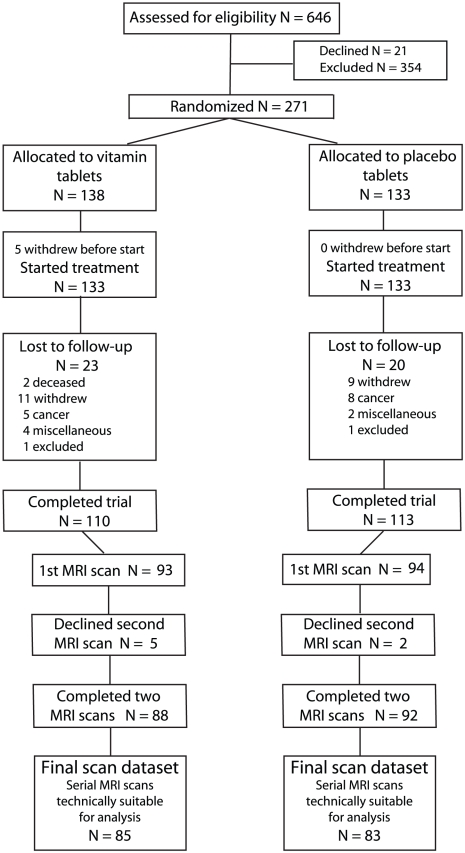
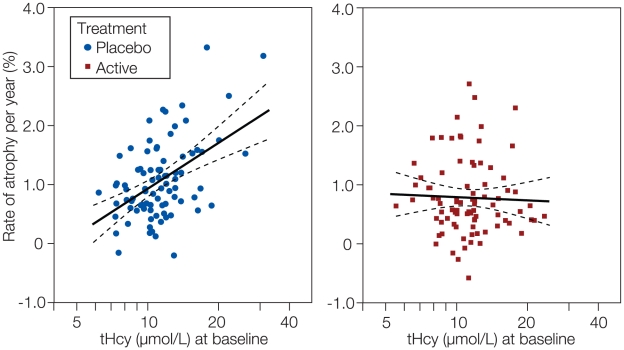
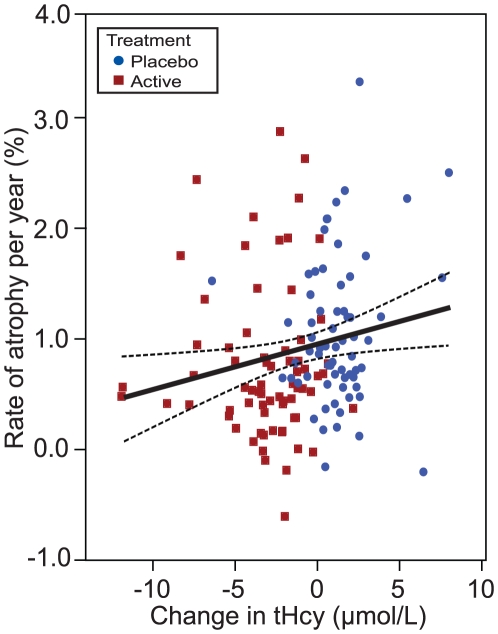
BACKGROUND: An increased rate of brain atrophy is often observed in older subjects, in particular those who suffer from cognitive decline. Homocysteine is a risk factor for brain atrophy, cognitive impairment and dementia. Plasma concentrations of homocysteine can be lowered by dietary administration of B vitamins. OBJECTIVE: To determine whether supplementation with B vitamins that lower levels of plasma total homocysteine can slow the rate of brain atrophy in subjects with mild cognitive impairment in a randomised controlled trial (VITACOG, ISRCTN 94410159). METHODS AND FINDINGS: Single-center, randomized, double-blind controlled trial of high-dose folic acid, vitamins B(6) and B(12) in 271 individuals (of 646 screened) over 70 y old with mild cognitive impairment. A subset (187) volunteered to have cranial MRI scans at the start and finish of the study. Participants were randomly assigned to two groups of equal size, one treated with folic acid (0.8 mg/d), vitamin B(12) (0.5 mg/d) and vitamin B(6) (20 mg/d), the other with placebo; treatment was for 24 months. The main outcome measure was the change in the rate of atrophy of the whole brain assessed by serial volumetric MRI scans. RESULTS: A total of 168 participants (85 in active treatment group; 83 receiving placebo) completed the MRI section of the trial. The mean rate of brain atrophy per year was 0.76% [95% CI, 0.63-0.90] in the active treatment group and 1.08% [0.94-1.22] in the placebo group (P = 0.001). The treatment response was related to baseline homocysteine levels: the rate of atrophy in participants with homocysteine >13 µmol/L was 53% lower in the active treatment group (P = 0.001). A greater rate of atrophy was associated with a lower final cognitive test scores. There was no difference in serious adverse events according to treatment category. CONCLUSIONS AND SIGNIFICANCE: The accelerated rate of brain atrophy in elderly with mild cognitive impairment can be slowed by treatment with homocysteine-lowering B vitamins. Sixteen percent of those over 70 y old have mild cognitive impairment and half of these develop Alzheimer's disease. Since accelerated brain atrophy is a characteristic of subjects with mild cognitive impairment who convert to Alzheimer's disease, trials are needed to see if the same treatment will delay the development of Alzheimer's disease. TRIAL REGISTRATION: Controlled-Trials.com ISRCTN94410159.
Overview
The claims and statistics of this paper haven’t been checked yet.
Run the check — free, no account needed. It reads the open-access text and checks the sources it cites.
Integrity signals
Registry
Cites
Statistics
Figures
Verification
Claims the paper makes
The claims and statistics of this paper haven’t been checked yet.
Run the check — free, no account needed. It reads the open-access text and checks the sources it cites.
Claims other papers make about this one
Each is checked against this paper’s own text: does it say what the citing paper says it does?
The source backs part of the claim, not all of it — or backs it for a different population, condition or comparison.
In the citing paper
“Finally, dietary approaches in terms of nutrition supplementation, such as combined formulation of specific active ingredients or probiotics, or nutritional guidance, such as fasting intermitting or Mediterranean diet, ameliorate both cognition and function of prodromal and mild AD patients [200,201,202].”
From Treatment of Alzheimer’s Disease: Beyond Symptomatic Therapies (2023) · cites this paper as [200]
Experimental — accuracy not yet measuredThe cited source says what the claim attributes to it.
In the citing paper
“While some degree of brain atrophy is common in older age, even in people who are cognitively healthy, atrophy is accelerated in people with Alzheimer's dementia.”
From 2024 Alzheimer's disease facts and figures (2024) · cites this paper as [20]
Self-check
Percentages, sums and reported differences re-computed from the paper’s own numbers.
The self-check needs the paper’s full text.
Citations
Cites
Folstein, M. F., Folstein, S. E., & McHugh, P. R. (1975) · Journal of Psychiatric Research · doi:10.1016/0022-3956(75)90026-6 · Cited by 88,282 · cited 5×
“First, in studies over longer periods (up to 5 years) it has been found that the rate of whole brain atrophy in MCI is correlated with cognitive decline in several tests, including the MMSE [5].”
InfluentialMoms, J. C., Heyman, A., Mohs, R. C., Hughes, J. P., van Belle, G., Fillenbaum, G., Mellits, E. D., & Clark, C. (1989) · Neurology · doi:10.1212/wnl.39.9.1159 · Cited by 4,130 · cited 1×
“…daily living based on the Cambridge Behavioural Inventory [26], an objective memory problem assessed with the ‘Telephone interview of cognitive status, modified’ (TICS-M) [27], a test without a ceiling effect [28], and category fluency [29] based on previously defined cut-off scores for MCI [28].”
Consortium to Establish a Registry for Alzheimer's Disease (CERAD)
Fillenbaum, G., & Heyman, A. (2002) · doi:10.1002/0470846410.ch42(iii · Cited by 2,859
Accurate, Robust, and Automated Longitudinal and Cross-Sectional Brain Change Analysis
Smith, S. M., Zhang, Y., Jenkinson, M., Chen, J. M., Matthews, P. M., Federico, A., & Stefano, N. D. (2002) · NeuroImage · doi:10.1006/nimg.2002.1040 · Cited by 2,013 · cited 3×
“A cross-sectional method (SIENAX) was used to estimate normalized brain volume from a single image, using the skull to normalize spatially, with respect to a standard image [31].”
InfluentialSelf-citationMild Cognitive Impairment: Ten Years Later
Petersen, R. C., Roberts, R. O., Knopman, D. S., Boeve, B. F., Geda, Y. E., Ivnik, R. J., Smith, G. E., & Jack, C. R. (2009) · Archives of Neurology · doi:10.1001/archneurol.2009.266 · Cited by 1,447
Longitudinal Magnetic Resonance Imaging Studies of Older Adults: A Shrinking Brain
Resnick, S. M., Pham, D. L., Kraut, M. A., Zonderman, A. B., & Davatzikos, C. (2003) · The Journal of Neuroscience · doi:10.1523/jneurosci.23-08-03295.2003 · Cited by 1,425 · cited 1×
“The atrophy occurs even in cognitively healthy subjects [1] but is much accelerated in patients suffering from Alzheimer’s disease [2,3,4,5].”
Folate, Vitamin B12, and Serum Total Homocysteine Levels in Confirmed Alzheimer Disease
Clarke, R., Smith, A. D., Jobst, K. A., Refsum, H., Sutton, L., & Ueland, P. M. (1998) · Archives of Neurology · doi:10.1001/archneur.55.11.1449 · Cited by 1,408 · cited 3×
“The results also fit with our earlier finding that raised tHcy predicts the rate of shrinkage of the medial temporal lobe in patients with Alzheimer’s disease [12].”
Self-citationMorris, J. C., Mohs, R. C., Rogers, H., Fillenbaum, G. G., & Heyman, A. (1988) · PubMed · Cited by 1,131
Facts and recommendations about total homocysteine determinations: an expert opinion
Refsum, H., Smith, A. D., Ueland, P. M., Nexo, E., Clarke, R., McPartlin, J., Johnston, C., Engbaek, F., Schneede, J., McPartlin, C., et al. (2004) · Clinical Chemistry · doi:10.1373/clinchem.2003.021634 · Cited by 1,056 · cited 1×
“The tissue and plasma concentrations of homocysteine are largely determined by the body’s status of certain B vitamins (folate, B6 and B12), which are cofactors or substrates for enzymes involved in homocysteine metabolism [22].”
Self-citationPrevalence of Cognitive Impairment without Dementia in the United States
Plassman, B. L., Langa, K. M., Fisher, G. G., Heeringa, S. G., Weir, D. R., Ofstedal, M. B., Burke, J. R., Hurd, M. D., Potter, G. G., Rodgers, W. L., et al. (2008) · Annals of Internal Medicine · doi:10.7326/0003-4819-148-6-200803180-00005 · Cited by 946 · cited 1×
“The prevalence of MCI is between 14% and 18% in those over 70 years-old [24,41], which means that about 5 million people in the USA and 14 million in greater Europe suffer from this condition.”
Cited by
Sorted by citations
Items 301–400 of 813
Multidimensional biomarkers for multiple system atrophy: an update and future directions
Wan, L., Zhu, S., Chen, Z., Qiu, R., Tang, B., & Jiang, H. F. (2023) · Translational Neurodegeneration · doi:10.1186/s40035-023-00370-0 · Cited by 26
“Besides, a randomized controlled trial showed that the serum level of Hcy is positively correlated with the rate of brain atrophy [95].”
BackgroundNeuroimaging, nutrition, and iron-related genes
Jahanshad, N., Rajagopalan, P., & Thompson, P. M. (2013) · Cellular and Molecular Life Sciences · doi:10.1007/s00018-013-1369-2 · Cited by 22
“In fact, recently, dietary supplements of B-vitamins, such as folic acid, have been reported to lower the risk for cognitive decline and AD, and they may work by lowering homocysteine levels [48].”
BackgroundHomocysteine, antioxidant micronutrients and late onset dementia
Whalley, L. J., Duthie, S. J., Collins, A. R., Starr, J. M., Deary, I. J., Lemmon, H. A., Duthie, A. C., Murray, A. D., & Staff, R. T. (2013) · European Journal of Nutrition · doi:10.1007/s00394-013-0526-6 · Cited by 23
Prevention Trials in Alzheimer’s Disease: Current Status and Future Perspectives
Wang, J., Tan, L., & Yu, J. (2016) · Journal of Alzheimer s Disease · doi:10.3233/jad-150826 · Cited by 24
“According to these risk factors, several lifestyle interventions, including nutrition supplement [54–67], cognitivetraining[68–74],physicalexercise[75–82], andmultidomaininterventions[83–90],havebeen investigated(SupplementaryTable1),orarebeing tested(SupplementaryTable2),inRCTstomeasure…”
Homocysteine and Real-Space Navigation Performance among Non-Demented Older Adults
Pařízková, M., Andel, R., Lerch, O., Marková, H., Gažová, I., Vyhnálek, M., Hort, J., & Laczó, J. (2016) · Journal of Alzheimer s Disease · doi:10.3233/jad-160667 · Cited by 24
“This is supported by findings from recent studies with older adults with MCIinwhichHcywasassociatedwithgreaterwhole-brainatrophyrates[35]andatrophyratesofgrey matterofAD-specificbrainregions[36],whichwere alsolinkedtofastercognitivedecline[36,37].”
Gut microbiota and the periodontal disease: role of hyperhomocysteinemia
Stanišić, D., Jovanović, M., George, A. K., Homme, R. P., Tyagi, N., Singh, M., & Tyagi, S. C. (2020) · Canadian Journal of Physiology and Pharmacology · doi:10.1139/cjpp-2020-0215 · Cited by 23
Noreik, M., Kuhn, J., Hardenacke, K., Lenartz, D., Bauer, A., Bührle, C., Häussermann, P., Hellmich, M., Klosterkötter, J., Wiltfang, J., et al. (2015) · The journal of nutrition health & aging · doi:10.1007/s12603-015-0595-8 · Cited by 23
“The role of B vitamins in the development and treatment of cognitive impairment is controversial (43-46).”
Understanding Alzheimer's Disease and Other Dementias
Draper, B. (2013) · Cited by 23
Malcomson, F. C., & Mathers, J. C. (2018) · Sub-cellular biochemistry/Subcellular biochemistry · doi:10.1007/978-981-13-2835-0_13 · Cited by 21
Brenowitz, W. D., Robbins, N. M., Strotmeyer, E. S., & Yaffe, K. S. (2022) · Neurology · doi:10.1212/wnl.0000000000200185 · Cited by 21
Wiedemann, A., Oussalah, A., Lamireau, N., Théron, M., Julien, M., Mergnac, J.-P., Augay, B., Deniaud, P., Alix, T., Frayssinoux, M., et al. (2022) · Cell Reports Medicine · doi:10.1016/j.xcrm.2022.100670 · Cited by 22
Moon, S. Y., Kim, S., Choi, S. H., Hong, C. H., Park, Y. K., Na, H. R., Song, H., Park, H. K., Choi, M., Lee, S. M., et al. (2022) · Neurotherapeutics · doi:10.1007/s13311-022-01276-x · Cited by 22
“While randomized controlled trials assessing 6- to 24-month single-domain lifestyle interventions including physical activity [16, 17], a multimodal social engagement program [18], or nutrition-related interventions [19, 20] have reported promising effects on various gray matter measures including Alzheimer’s disease…”
BackgroundHyperhomocysteinemia and Risk of Cognitive Decline: A Meta-Analysis of Prospective Cohort Studies
Nie, T., Lu, T., Xie, L., Huang, P., Lü, Y., & Jiang, M. (2014) · European Neurology · doi:10.1159/000363054 · Cited by 23
Wu, Y., Smith, A. D., Refsum, H., & Kwok, T. C. Y. (2021) · The journal of nutrition health & aging · doi:10.1007/s12603-021-1708-1 · Cited by 23
“The pooled data analysis reaffirmed the significant reduction in brain atrophy with B vitamins, which was initially found in the VITACOG trial (7).”
InfluentialSelf-citationBreimer, L. H., & Nilsson, T. (2012) · Scandinavian Journal of Clinical and Laboratory Investigation · doi:10.3109/00365513.2012.657230 · Cited by 22
Genetic defects in folate and cobalamin pathways affecting the brain
Kirsch, S. H., Herrmann, W., & Obeid, R. (2012) · Clinical Chemistry and Laboratory Medicine (CCLM) · doi:10.1515/cclm-2012-0673 · Cited by 22
Consensus statement on exploring the Nexus between nutrition, brain health and dementia prevention
Johnstone, A. M., Albanese, E., Crabtree, D. R., Dalile, B., Grabrucker, S., Gregory, J. M., Grosso, G., Holliday, A., Hughes, C., Itsiopoulos, C., et al. (2025) · Nutrition & Metabolism · doi:10.1186/s12986-025-00981-6 · Cited by 24
“…the strongest RCT evidence is from the VITACOG trial, which demonstrated that B-vitamin supplementation significantly slowed cognitive decline and reduced the rate of brain atrophy in participants with MCI, with the greatest benefits observed in those with elevated plasma homocysteine [27, 78].”
Vora, R. M., Alappattu, M. J., Zarkar, A. D., Soni, M. S., Karmarkar, S. J., & Antony, A. C. (2021) · BMJ Nutrition Prevention & Health · doi:10.1136/bmjnph-2020-000209 · Cited by 21
Reagan, A. M., Christensen, K. E., Graham, L. C., Bedwell, A. A., Eldridge, K., Speedy, R., Figueiredo, L. L., Persohn, S. A., Bottiglieri, T., Nho, K. T., et al. (2022) · Journal of Cerebral Blood Flow & Metabolism · doi:10.1177/0271678x221122644 · Cited by 22
“…Diet modification has been used in clinical trials to lower blood homocysteine levels; although some studies reported a reduction in brain atrophy, 36,37 trials were generally unsuccessful in modulating cognitive decline, suggesting a plasma homocysteine-independent mechanism of damage in the…”
Folate is related to phosphorylated neurofilament‐H and P‐tau (Ser396) in rat brain
Obeid, R., Schlundt, J. C., Umanskaya, N., Herrmann, W., & Herrmann, M. (2011) · Journal of Neurochemistry · doi:10.1111/j.1471-4159.2011.07280.x · Cited by 21
Suszyńska-Zajczyk, J., Łuczak, M., Marczak, Ł., & Jakubowski, H. (2014) · Journal of Alzheimer s Disease · doi:10.3233/jad-132714 · Cited by 21
Translating Current Knowledge Into Dementia Prevention
Román, G. C., Nash, D. T., & Fillit, H. M. (2012) · Alzheimer Disease & Associated Disorders · doi:10.1097/wad.0b013e31825cbc4b · Cited by 21
Let Food Be Thy Medicine: Diet, Nutrition, and Biomarkers’ Risk of Alzheimer’s Disease
Mosconi, L., & McHugh, P. F. (2015) · Current Nutrition Reports · doi:10.1007/s13668-014-0111-5 · Cited by 22
Utility of imaging for nutritional intervention studies in Alzheimer's disease
de Wilde, M. C., Kamphuis, P. J. G. H., Sijben, J., & Scheltens, P. (2011) · European Journal of Pharmacology · doi:10.1016/j.ejphar.2011.07.011 · Cited by 21
Xiu, L., Lee, M., Wahlqvist, M. L., Chen, R. C.-Y., Huang, Y.-C., Chen, K., & Li, D. (2012) · Nutrition Research · doi:10.1016/j.nutres.2012.09.005 · Cited by 20
“support a homocysteinemia pathway for B-group vitamin effects on cognition or brain atrophy may still have circumstantial findings [21,22].”
BackgroundInfluentialWang, T., Sun, Z., Shao, L.-Q., Xu, X.-B., Liu, Y., Mao, Q., Weng, X., & Zhang, Y. (2017) · Medical Science Monitor · doi:10.12659/msm.901652 · Cited by 21
“A novel treatment targeting Hcy via a high dose of supplementary B vitamins might decrease the accelerated rate of brain atrophy in MCI [29].”
BackgroundPuga, A. M., Ruperto, M., Samaniego-Vaesken, M. D. L., Montero-Bravo, A., Partearroyo, T., & Varela‐Moreiras, G. (2021) · Nutrients · doi:10.3390/nu13092966 · Cited by 23
“Moreover, there was an interaction between supplementation and Hcy levels at baseline [70].”
BackgroundWhy are drug trials in Alzheimer's disease failing?
Smith, A. D. (2010) · The Lancet · doi:10.1016/s0140-6736(10)61994-0 · Cited by 21
Self-citationArslan, S., Aydın, A., Gerboğa, R., ARSLAN, H. B., Kırbıyık, K. B., Matar, A., Karabıyık, D., & Solak, E. (2024) · Clinical Science of Nutrition · doi:10.62210/clinscinutr.2024.93 · Cited by 20
“116 At this point, plant-based diets for Alzheimer’s disease reduce the risk of systemic inflammation, T2DM and obesity, proinflammatory bacteria in the gut, and plasma TMAO levels.”
BackgroundThe Role of Nutrition in Individualized Alzheimer’s Risk Reduction
Amini, Y., Saif, N., Greer, C. E., Hristov, H., & Isaacson, R. (2020) · Current Nutrition Reports · doi:10.1007/s13668-020-00311-7 · Cited by 20
Holmes, H. E., Valentin, R. E., Jernerén, F., Loots, C. A. D. J., Refsum, H., Smith, A. D., Guarente, L., Dellinger, R. W., Sampson, D. L., & Initiative, A. D. N. (2024) · Aging Cell · doi:10.1111/acel.14255 · Cited by 19
“In this analysis of the 2-year, placebo-controlled VITACOG study (Smith et al., 2010 ), we evaluated the impact of tHcy levels on epi - 2-year study period, and this was reduced or abolished by the B-vitamin complex.”
InfluentialSelf-citationDementia in C hinese populations: Current data and future research
Feng, L., Chiu, H. F. K., Chong, M., Yu, X., & Kua, E. H. (2011) · Asia-Pacific Psychiatry · doi:10.1111/j.1758-5872.2011.00137.x · Cited by 20
“…must test whether targeting each of those promising factors (for example, optimizing B vitamin level and lowering homocysteine [Seshadri et al., 2002; Feng et al., 2006, 2009b; Smith et al., 2010]) could actually reduce dementia risk or modify the disease course (surrogate markers could be used).”
BackgroundHypohomocysteinemia: A Potentially Treatable Cause of Peripheral Neuropathology?
Cullen, C. E., Carter, G. T., Weiss, M. D., Grant, P. A., & Saperstein, D. (2011) · Physical Medicine and Rehabilitation Clinics of North America · doi:10.1016/j.pmr.2011.11.001 · Cited by 20
Steiner, G. Z., Mathersul, D. C., MacMillan, F., Camfield, D., Klupp, N. L., Seto, S. W., Huang, Y., Hohenberg, M. I., & Chang, D. (2017) · Evidence-based Complementary and Alternative Medicine · doi:10.1155/2017/6083629 · Cited by 18
Dean, K., Jenkinson, C., Wilcock, G. K., & Walker, Z. (2013) · International Psychogeriatrics · doi:10.1017/s1041610213002251 · Cited by 20
Association Between Homocysteine and Vitamin Levels in Demented Patients
Hoffmann, J., Busse, S., von Hoff, F., Borucki, K., Frodl, T., & Busse, M. (2021) · Journal of Alzheimer s Disease · doi:10.3233/jad-201481 · Cited by 23
“Neverthe-less,itwasshownthatsupplementationofBvitamins coulddecreasethehomocysteinelevelandbrainatro-phyin271olderpeoplewithMCI[54].”
Nieraad, H., Pannwitz, N., de Bruin, N. M. W. J., Geißlinger, G., & Till, U. (2021) · Biomolecules · doi:10.3390/biom11101546 · Cited by 21
You, M., Zhou, X., Yin, W., Wan, K., Zhang, W., Li, C., Li, M., Zhu, W., Zhu, X., & Sun, Z. (2021) · Frontiers in Neuroscience · doi:10.3389/fnins.2021.778123 · Cited by 19
Hooshmand, B., Appold, F., Fissler, P., Perneczky, R., Otto, M., Tumani, H., Kivipelto, M., & Arnim, C. A. F. V. (2023) · Annals of Neurology · doi:10.1002/ana.26673 · Cited by 19
“The Homocysteine and B-Vitamins in Cognitive Impairment (VITACOG) trial has already shown that B vitamin treatment in people with mild cognitive impairment who have raised tHcy levels markedly slows regional gray matter atrophy and cognitive decline.(37,38) However, further adequately timed and powered trials preferab…”
BackgroundBeaudry‐Richard, A., Abdelhak, A., Saloner, R., Sacco, S., Montes, S. C., Oertel, F. C., Cordano, C., Jabassini, N., Ananth, K., Gomez, A., et al. (2025) · Annals of Neurology · doi:10.1002/ana.27200 · Cited by 19
“…B vitamin supplementation including B12 in older adults with mild cognitive impairment (MCI) leads to both functional and structural bene fi ts. 12,13 According to their foundational work, B12 supplementation slows the progression of brain atrophy in MCI and of clinical decline in multiple areas…”
Driving and dementia: a clinician's guide
Wilson, S., & Pinner, G. (2013) · Advances in Psychiatric Treatment · doi:10.1192/apt.bp.111.009555 · Cited by 19
Tsiachristas, A., & Smith, A. D. (2016) · Alzheimer s & Dementia Translational Research & Clinical Interventions · doi:10.1016/j.trci.2016.07.002 · Cited by 19
“The VITACOG trial showed that elderly people with mild cognitive impairment who had concentrations of tHcy above 13 mmol/L responded to B-vitamin treatment with a 53% reduction in the rate of whole brain atrophy [10], a 9-fold slowing of the rate of atrophy of specific brain regions involved in Alzheimer’s disease [11…”
BackgroundMethodInfluentialSelf-citationAntony, A. C. (2017) · Nutrition Reviews · doi:10.1093/nutrit/nux032 · Cited by 19
Hyperhomocysteinemia: an instigating factor for periodontal disease
Stanišić, D., George, A. K., Smolenkova, I. A., Singh, M., & Tyagi, S. C. (2020) · Canadian Journal of Physiology and Pharmacology · doi:10.1139/cjpp-2020-0224 · Cited by 19
Zellner, M., Babeluk, R., Jakobsen, L. H., Gerner, C., Umlauf, E., Volf, I., Roth, E., & Kondrup, J. (2011) · Journal of Neural Transmission · doi:10.1007/s00702-011-0617-6 · Cited by 21
Association of homocysteine with ventricular dilatation and brain atrophy in Parkinson's disease
Sapkota, S., Gee, M., Sabino, J., Emery, D. J., & Camicioli, R. M. (2014) · Movement Disorders · doi:10.1002/mds.25798 · Cited by 19
“Furthermore, a recent randomized and double-blind controlled study showed decreased Hcy levels and slowed brain atrophy in older adults with MCI with B-vitamin supplementation.(20) The increase in Hcy levels because of L-dopa treatment with or without additional environmental risk factors such as insufficient vitamin…”
BackgroundFu, Q., DeJager, J., & Gardner, E. M. (2024) · Nutrients · doi:10.3390/nu16203567 · Cited by 24
“The only valuable trial study used a combination of 0.8 mg of folic acid, 0.5 mg of vitamin B12, and 20 mg of vitamin B6 daily performed alone [36].”
BackgroundMethodInfluentialPrecision Nutrition and Gut–Brain Axis Modulation in the Prevention of Neurodegenerative Diseases
Tuigunov, D. N., Sinyavskiy, Y. A., Nurgozhin, T. S., Zholdassova, Z., Smagul, G., Omarov, Y., Dolmatova, O., Yeshmanova, A., & Omarova, I. (2025) · Nutrients · doi:10.3390/nu17193068 · Cited by 24
“B vitamins participate in the prevention of neurological disorders, reduce homocysteine levels and slow down brain atrophy in cognitive disorders, which emphasizes their neuroprotective potential [73].”
Mishra, E., & Thakur, M. K. (2023) · The Journal of Nutritional Biochemistry · doi:10.1016/j.jnutbio.2023.109536 · Cited by 20
Tian, D., Jia, W., Liu, X.-W., Wang, D., Liu, J., Dong, J., Li, L., Du, F., Xu, F., Wang, F.-Q., et al. (2015) · Acta Pharmacologica Sinica · doi:10.1038/aps.2015.20 · Cited by 18
B Vitamins and Cognitive Performance in Older Adults: Review
Reay, J. L., Smith, M., & Riby, L. M. (2013) · ISRN Nutrition · doi:10.5402/2013/650983 · Cited by 18
Nutritional issues for older adults: addressing degenerative ageing with long-term studies
de Groot, C. P. G. M. (2016) · Proceedings of The Nutrition Society · doi:10.1017/s0029665116000033 · Cited by 18
“So far, only one relatively small study demonstrated that high doses of B vitamins can be used to reduce the rate of atrophy of the brain in elderly people with mild cognitive impairment((29)).”
Impact of diet-derived signaling molecules on human cognition: exploring the food–brain axis
Rodriguez, R. L., Albeck, J. G., Taha, A. Y., Ori-McKenney, K. M., Recanzone, G. H., Stradleigh, T. W., Hernandez, B. C., Tang, F., Chiang, E. I., & Cruz‐Orengo, L. (2017) · npj Science of Food · doi:10.1038/s41538-017-0002-4 · Cited by 18
“In humans, the accelerated rate of brain atrophy in the elderly with mild cognitive impairment can be alleviated with vitamin B-complex supplementation.(132) Interventions with folinate, a folate coenzyme, helps stabilize treatment for schizophrenia associated with folate receptor autoantibodies.”
BackgroundNutrition research in cognitive impairment/dementia, with a focus on soya and folate
Hogervorst, E., Kassam, S., Kridawati, A., Soni, M., Xu, X., Shifu, X., & Rahardjo, T. B. W. (2017) · Proceedings of The Nutrition Society · doi:10.1017/s0029665117000404 · Cited by 18
van der Spek, A., Broer, L., Draisma, H. H. M., Pool, R., Albrecht, E., Beekman, M., Mangino, M., Raag, M., Nyholt, D. R., Dharuri, H. K., et al. (2019) · Scientific Reports · doi:10.1038/s41598-019-47282-6 · Cited by 18
Current Status of Folic Acid Supplementation on Colorectal Cancer Prevention
Kim, Y. (2016) · Current Pharmacology Reports · doi:10.1007/s40495-016-0046-1 · Cited by 18
Huang, Z., Shi, Y., Bao, P., Cai, H., Hong, Z., Ding, D., Jackson, J. C., Shu, X., & Dai, Q. (2018) · Breast Cancer Research and Treatment · doi:10.1007/s10549-018-4805-z · Cited by 18
Homocysteine lowering, B vitamins, and cognitive aging
Smith, A. D., de Jager, C. A., Refsum, H., & Rosenberg, I. H. (2015) · American Journal of Clinical Nutrition · doi:10.3945/ajcn.114.098467 · Cited by 18
“Furthermore, the effect on cognition in several of the B-vitamin trials may have been modified by concomitant aspirin use, which appears to negate the beneficial effect of B vitamins on cardiovascular disease (5, 6) and on brain atrophy (7).”
BackgroundSelf-citationJochemsen, H. M., Kloppenborg, R. P., de Groot, C. P. G. M., Kampman, E., Mali, W. P. T. M., van der Graaf, Y., Geerlings, M. I., & SMART Study Group (2012) · Alzheimer s & Dementia · doi:10.1016/j.jalz.2011.11.008 · Cited by 17
“Two recent randomized controlled trials found that homocysteinelowering treatment showed modest positive effects on cognition [43] and slowed the rate of brain atrophy in elderly patients presenting with mild cognitive impairment [44].”
BackgroundVitamins: a nutritional intervention to modulate the Alzheimer’s disease progression
Alam, J. (2020) · Nutritional Neuroscience · doi:10.1080/1028415x.2020.1826762 · Cited by 18
Jakubowski, H., Zioła‐Frankowska, A., Frankowski, M., Perła‐Kaján, J., Refsum, H., de Jager, C. A., & Smith, A. D. (2021) · Journal of Alzheimer s Disease · doi:10.3233/jad-215085 · Cited by 18
“Other patients’ characteristics were collected at baseline and have been previously described, as was the study protocol [8].”
BackgroundMethodResultInfluentialSelf-citationYassine, H. N., Arellanes, I. C., Mazmanian, A., de la Cruz‐Merino, L., Martínez, J. A. B., Contreras, L., Kono, N., Liu, B. S., Badie, D. S., Bantugan, M. A., et al. (2023) · The Journal of Prevention of Alzheimer s Disease · doi:10.14283/jpad.2023.77 · Cited by 19
“In the VITACOG trial, the brain’s atrophy rate, along with cognitive decline, were slowed by the intake of B vitamins and high levels of ω-3 fatty acids (34).”
BackgroundPlasma homocysteine in Alzheimer's disease with or without co-morbid depressive symptoms.
Kitzlerová, E., Fišar, Z., Jirák, R., Zvěřová, M., Hroudová, J., Benaková, H., & Raboch, J. (2014) · PubMed · Cited by 17
Rankin, D., Black, M. M., Flanagan, B., Hughes, C., Moore, A., Hoey, L., Wallace, J. G., Gill, C. I. R., Carlin, P. F., Molloy, A. M., et al. (2020) · JMIR Medical Informatics · doi:10.2196/20995 · Cited by 17
Peters, R. K., Breitner, J. C. S., James, S., Jicha, G. A., Meyer, P., Richards, M., Smith, A. D., Yassine, H. N., Abner, E. L., Hainsworth, A. H., et al. (2021) · Alzheimer s & Dementia Translational Research & Clinical Interventions · doi:10.1002/trc2.12202 · Cited by 19
Self-citationScott, T. M., Rogers, G. T., Weiner, D. E., Livingston, K. A., Selhub, J., Jacques, P. F., Rosenberg, I. H., & Troen, A. M. (2017) · The Journal of Prevention of Alzheimer s Disease · doi:10.14283/jpad.2017.15 · Cited by 17
“Such an effect would be consistent with the prevention of cortical damage by B-vitamin therapy as observed in the VITACOG trial (20), and in a similar recent intervention (51, 52), and which is associated with decline in executive function as recently described by Zhang (53).”
ResultJayaraman, S., Eswaran, A., Rajagopal, P., Palanisamy, C. P., Veerakumar, P., Veeraraghavan, V. P., & Sirasanagandla, S. R. (2026) · Biogerontology · doi:10.1007/s10522-026-10402-7 · Cited by 17
Plasma Vitamin B12 Levels, High-Dose Vitamin B12 Treatment, and Risk of Dementia
Arendt, J. F. H., Horváth–Puhó, E., Sørensen, H. T., Nexø, E., Pedersen, L. H., Ording, A. G., & Henderson, V. W. (2021) · Journal of Alzheimer s Disease · doi:10.3233/jad-201096 · Cited by 16
“Although, high-dose B vitamins that include B12 might reduce cerebral atrophy [4, 5], meta-analyses of trials report that oral B vitamin treatment does not prevent cognitive decline or Alzheimer’s disease [6–9].”
BackgroundFairbairn, P., Dyall, S. C., & Tsofliou, F. (2022) · British Journal Of Nutrition · doi:10.1017/s0007114522001283 · Cited by 16
“Participants from the study by Smith and co-workers (14) , which provided B vitamin supplementation (daily dose 0.”
BackgroundResultInfluentialFutschek, I. E., Schernhammer, E. S., Haslacher, H., Stögmann, E., & Lehrner, J. P. (2022) · Experimental Gerontology · doi:10.1016/j.exger.2022.112045 · Cited by 16
Scott, T. M., Bhadelia, R. A., Qiu, W. Q., Folstein, M. F., & Rosenberg, I. H. (2018) · Journal of Alzheimer s Disease · doi:10.3233/jad-180366 · Cited by 16
“Homocysteine lowering has been shown to have a beneficial effect on cognition in community dwelling elders [19], mild cognitive impairment (MCI) [20, 21], kidney transplant [22], and patients with mild, and presumably early, AD, but not in moderately advanced AD [23].”
Homocysteine: A modifiable culprit of cognitive impairment for us to conquer?
Ji, Y., Lyu, P., Jin, W., Li, X., Li, X., & Dong, Y. (2019) · Journal of the Neurological Sciences · doi:10.1016/j.jns.2019.07.015 · Cited by 19
Delrieu, J., Voisin, T., Saint‐Aubert, L., Carrié, I., Cantet, C., Vellas, B. J., Payoux, P., & Andrieu, S. (2020) · Alzheimer s Research & Therapy · doi:10.1186/s13195-020-00683-6 · Cited by 16
Christian, A. M., Krishnaveni, G. V., Kehoe, S. H., Veena, S. R., Khanum, R., Marley‐Zagar, E., Edwards, P. J., Margetts, B., & Fall, C. H. D. (2014) · Public Health Nutrition · doi:10.1017/s1368980014000974 · Cited by 16
Therapeutic Cocktail Approach for Treatment of Hyperhomocysteinemia in Alzheimer’s Disease
Leon, M., Sawmiller, D. R., Shytle, R. D., & Tan, J. (2018) · Cell Medicine · doi:10.1177/2155179017722280 · Cited by 16
“B12 is nontoxic, inexpensive, and well tolerated.(4,56,57) This study involved a clinical case of an 83-yr-old female with a Mini–Mental State Examination score of 14, demonstrating a moderate degree of cognitive impairment.”
BackgroundInfluentialHope, K. W. (2020) · British Journal of Nursing · doi:10.12968/bjon.2020.29.8.460 · Cited by 16
“Previous studies have looked at a range of nutritional factors to modify clinical progression of Alzheimer’s disease (Le Bars et al, 1997; Freund-Levi et al, 2006; Smith et al, 2010; Jernerén et al, 2015; Charemboon and Jaisin, 2015).”
BackgroundHyperhomocysteinemia in Adult Patients: A Treatable Metabolic ConditionPreprint
González‐Lamuño, D., Blanco, F. J. A., Fuentes, E. D., Forga, M., Morales‐Conejo, M., Quintana, L. P., & Vitoria, I. (2023) · Preprints.org · doi:10.20944/preprints202311.1296.v1 · Cited by 16
Lauretta, M. P., Melotti, R. M., Sangermano, C., George, A. M., Badenes, R., & Bilotta, F. (2022) · Journal of Clinical Medicine · doi:10.3390/jcm11020394 · Cited by 15
“Recent evidence suggests that Hcy worsens acute brain injury (ABI) and other neurological conditions, such as post-stroke early neurological dementia (END), brain atrophy, Parkinson & Alzheimer disease and epilepsy, although its molecular mechanism in this role is not fully clarified [8].”
BackgroundYang, Q., Zhou, L. Q., Bai, X., Huang, J., & Tan, Y. (2023) · Nutrición Hospitalaria · doi:10.20960/nh.04394 · Cited by 15
Folate and Vitamin B12: Function and Importance in Cognitive Development
Troen, A. M. (2012) · Nestlé Nutrition Institute Workshop series · doi:10.1159/000337684 · Cited by 15
Folic acid for fragile X syndrome
Rueda, J.-R., Ballesteros, J., Guillén, V., Tejada, M., & Solà, I. (2011) · Cochrane Database of Systematic Reviews · doi:10.1002/14651858.cd008476.pub2 · Cited by 15
Brain Imaging and Human Nutrition: Which Measures to Use in Intervention Studies?
Sizonenko, S. V., Babiloni, C., Sijben, J., & Walhovd, K. B. (2013) · Advances in Nutrition · doi:10.3945/an.113.004283 · Cited by 18
“However, this possibility has recently been weakened by a large well-controlled intervention study((84)).”
Falasca, K., Nicola, M. D., Martino, G. D., Ucciferri, C., Vignale, F., Occhionero, A., & Vecchiet, J. (2019) · BMC Infectious Diseases · doi:10.1186/s12879-019-3742-8 · Cited by 15
“In older HIV-negative adults, higher blood levels of homocysteine have also been associated with brain atrophy [9] and with increase of white matter lesions volume over time [10], although more studies are needed to confirm these data [11].”
ResultA Multi-Organ Murine Metabolomics Atlas Reveals Molecular Dysregulations in Alzheimer’s DiseasePreprint
Zuffa, S., Allaband, C., Charron‐Lamoureux, V., Caraballo‐Rodríguez, A. M., Patan, A., Mohanty, I., Agongo, J., Bostick, J. W., Connerly, T. J., Thron, T., et al. (2025) · bioRxiv (Cold Spring Harbor Laboratory) · doi:10.1101/2025.04.28.651123 · Cited by 15
“Supplementation of these molecules has been linked to improve cognition in both humans and animal models 96–100 and vitamin B5 deficiency has been correlated with neuronal damage in AD-associated brain regions 101 .”
Barberger‐Gateau, P., Samieri, C., Allès, B., & Féart, C. (2012) · Neurodegenerative Disease Management · doi:10.2217/nmt.12.24 · Cited by 14
Chiazza, F., Bondi, H., Masante, I., Ugazio, F., Bortolotto, V., Canonico, P. L., & Grilli, M. (2021) · Scientific Reports · doi:10.1038/s41598-021-01059-y · Cited by 14
Biology of Perseverative Negative Thinking: The Role of Timing and Folate Intake
Eszlári, N., Bruncsics, B., Millinghoffer, A., Hullám, G., Petschner, P., Gonda, X., Breen, G. D., Antal, P., Bagdy, G., Deakin, J. F. W., et al. (2021) · Nutrients · doi:10.3390/nu13124396 · Cited by 15
“Although a study did not find any associations between folate status and cognitive dysfunction or brain atrophy in Alzheimer’s patients or controls [77], a randomized, double-blind study revealed that treatment with B vitamins slowed brain atrophy [78].”
ResultSaif, N., Hristov, H., Akiyoshi, K., Niotis, K., Ariza, I. E., Malviya, N., Lee, P., Melendez, J., Sadek, G., Hackett, K., et al. (2022) · The Journal of Prevention of Alzheimer s Disease · doi:10.14283/jpad.2022.44 · Cited by 13
“Elevated homocysteine B complex vitamins (folate, pyridoxine, cobalamin (56, 57))”
BackgroundB vitamins and homocysteine as determinants of bone health: A literature review of human studies
Ilesanmi-Oyelere, B. L., & Kruger, M. C. (2022) · Journal of Human Nutrition and Dietetics · doi:10.1111/jhn.13080 · Cited by 14
Reddan, J. M., Macpherson, H., White, D., Scholey, A. B., & Pipingas, A. (2018) · Nutrition Research Reviews · doi:10.1017/s0954422418000185 · Cited by 15
“Smith et al. (2010)(152)‡ MCI T: 93 T: 77·0 T: 5·20 VIT-B6 (20) 24 months ↓ TCar (29·60 %; whole treatment group) P: 94 P: 76·20 P: 4·50 VIT-B12 (0·5) ↓ TCar (31·10 %; in participants demonstrating biological compliance) Folic acid (0·8) ↓ TCar (43·0 % in participants with HcY above median at…”
Loomba, M., Bansal, S., Singh, D. K. K., Mishra, P. K., Ghosh, S., Raghunath, M., Mishra, A. K., & Sinha, J. K. (2025) · Nutrients · doi:10.3390/nu17213493 · Cited by 14
“In mild cognitive impairment, B-vitamin therapy (folate, B12, B6) slowed whole-brain atrophy and protected Alzheimer’s vulnerable gray matter, with the greatest benefits in individuals with high baseline homocysteine [72,119].”
Nutritional intervention for diabetes mellitus with Alzheimer's disease
Li, Z., Li, S., Xiao, Y., Zhong, T., Yu, X., & Wang, L. (2022) · Frontiers in Nutrition · doi:10.3389/fnut.2022.1046726 · Cited by 12
Traditional Indian Food for Improving Brain Cognition
Choudhury, S. R., Ghosh, J., Koner, S., Singh, K., & Bera, A. (2022) · Acta Scientific Neurology · doi:10.31080/asne.2022.05.0561 · Cited by 13
Investigating Owner Use of Dietary Supplements in Dogs with Canine Cognitive Dysfunction
Haake, J., Meyerhoff, N., Meller, S., Twele, F., Charalambous, M., Wilke, V., & Volk, H. (2023) · Animals · doi:10.3390/ani13193056 · Cited by 9
“Numerous authors have investigated the beneficial effects of Hcy level lowering with B vitamins on cognitive function in humans [91,92].”
BackgroundSeo, Y., Gang, G., Kim, H. K., Kim, Y., Kang, S., Kim, H., Lee, S. G., & Go, G. (2023) · Food Science and Biotechnology · doi:10.1007/s10068-023-01465-0 · Cited by 13
“…the vitamin B (folic acid, vitamin B 12 , vitamin B 6 ) administration group with the placebo administration group for 24 months, plasma homocysteine levels decreased in the vitamin B administration group and holo-transcobalamin (vitamin B 12 biomarker) levels increased (Smith et al., 2010a, b).”
Nutrigenomics and neurological disorders: exploring diet-brain interactions for cognitive health
Waheed, A., Ghaffar, M., Mustafa, S., Abbas, A., Khan, S. I., Waheed, A., & Naz, H. (2024) · Neurogenetics · doi:10.1007/s10048-024-00791-7 · Cited by 17
“Furthermore, at some phases, transparency makes it possible to identify morphological and cellular flaws [ 100].”
Ansari, Z. (2015) · The journal of nutrition health & aging · doi:10.1007/s12603-015-0576-y · Cited by 13
“The threshold level of homocysteine has played a vital role in B vitamin interventional trials, with positive responses demonstrated at higher homocysteine levels (>11.3 and 13 µmol/L) (44, 45).”
InfluentialHasegawa, T., Ichiba, M., Matsumoto, S., Kasanuki, K., Hatano, T., Fujishiro, H., Iseki, E., Hattori, N., Yamada, T., & Tabira, T. (2012) · Journal of Alzheimer s Disease · doi:10.3233/jad-2012-120022 · Cited by 13
“All AD cases including 2 cases with mild cognitive impairment (MCI) met the NINCDS-ADRDA criteria, and the diagnosis was assisted by CT, MRI, and SPECT findings.”
InfluentialRole of Nutrition to Promote Healthy Brain Aging and Reduce Risk of Alzheimer’s Disease
Walters, M., Hackett, K., Caesar, E. E., Isaacson, R., & Mosconi, L. (2017) · Current Nutrition Reports · doi:10.1007/s13668-017-0199-5 · Cited by 13
Nieraad, H., de Bruin, N. M. W. J., Arne, O., Hofmann, M. C. J., Schmidt, M., Saito, T., Saido, T. C., Gurke, R., Schmidt, D., Till, U., et al. (2020) · Nutrients · doi:10.3390/nu12113248 · Cited by 13
“, B-vitamins lowered HCys levels and subsequently slowed the rate of brain atrophy and cognitive decline in patients [16,17].”
Background
Metadata
- Authors
- Smith, A. D., Smith, S. M., de Jager, C. A., Whitbread, P., Johnston, C., Agacinski, G., Oulhaj, A., Bradley, K. M., Jacoby, R., & Refsum, H.
- Affiliations
- University of Oxford (GB)
- University of Oslo (NO)
- Corresponding author
- Smith, A. David
- Venue
- PLoS ONE
- Publisher
- Public Library of Science (PLoS)
- Published
- 2010-09-08
- Volume
- 5
- Issue
- 9
- Pages
- e12244
- ISSN
- 1932-6203 (ISSN-L)
- PMC
- PMC2935890
- OpenAlex
- W2156635660
- Cited by
- 813
- References
- 49
- Citations by year
- 2026: 50 · 2025: 49 · 2024: 34 · 2023: 44 · 2022: 58 · 2021: 58 · 2020: 66 · 2019: 39 · 2018: 43 · 2017: 55 · 2016: 59 · 2015: 49 · 2014: 44 · 2013: 58 · 2012: 59
- FWCI
- 36.35
- Type
- journal article
- Language
- en
- Open access
- gold
- doi.org
- Locations
- PLoS ONE (publishedVersion, cc-by)
- PubMed Central (publishedVersion, cc-by)
- PubMed (publishedVersion)
- ORCA Online Research @Cardiff (Cardiff University) (acceptedVersion)
- DOAJ (DOAJ: Directory of Open Access Journals) (submittedVersion, cc-by-sa)
- Figshare (submittedVersion, cc-by)
- Funders
- Alzheimer's Research Trust
- National Institute for Health and Care Research
- University of Oxford
- Medical Research Council
- Topics
- Health Sciences › Nursing › Nutrition and Dietetics › Folate and B Vitamins Research
- Health Sciences › Medicine › Psychiatry and Mental health › Dementia and Cognitive Impairment Research
- Health Sciences › Medicine › Clinical Neurology › Alcoholism and Thiamine Deficiency
- Keywords
- homocysteine, B vitamins, folic acid, vitamin B6, vitamin B12, brain atrophy, mild cognitive impairment, cognitive decline, dementia prevention, older adults, plasma homocysteine, volumetric MRI, cognitive performance, adverse events
- MeSH terms
- Aged, Aged, 80 and over, Atrophy, Brain, Cognition Disorders, Female, Homocysteine, Humans, Magnetic Resonance Imaging, Male, Radiography, Vitamin B Complex, Treatment Outcome
About these checks
Registry, retraction, Cites and statistics results are computed, not judged, with one exception: a printed reference that no index lists is read once by a model before it counts as a citation error. Claims are extracted by a model and kept only when their quote appears verbatim in the text; each cited source is then checked, with a model’s help, for whether it says what the claim relies on. Those verdicts can be wrong — read the claim’s quote and the cited source before relying on one.
Statistics and arithmetic are recomputed, not judged.
Confidence bands are shown only for fields calibrated on our annotated test set. None is calibrated yet, so no band is shown.
What counts as a claim ›How we measure confidence ›How we check this ›
Are you an author, or do you see a problem with this page? Request a review
