

The DOI matches its Crossref record; 49 of the 49 references it cites were found in a registry or an index.
Homocysteine-Lowering by B Vitamins Slows the Rate of Accelerated Brain Atrophy in Mild Cognitive Impairment: A Randomized Controlled Trial
Open accessAbstract
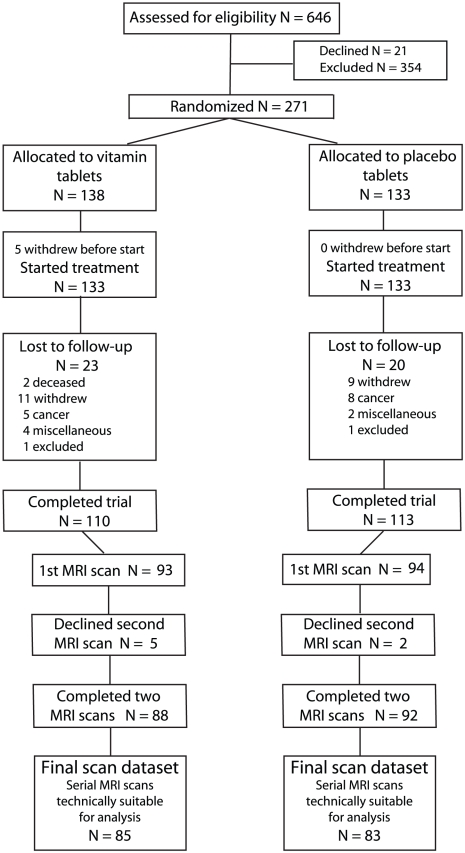
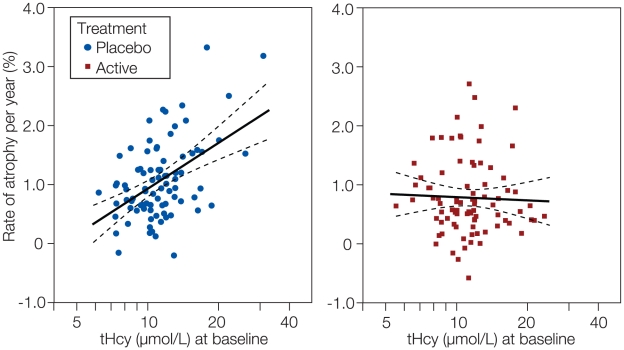
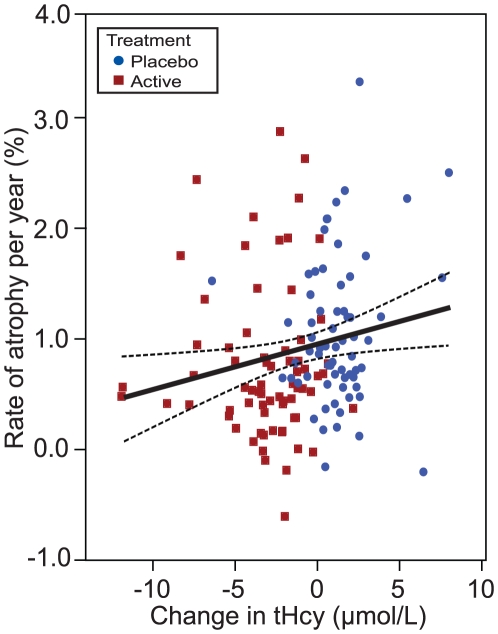
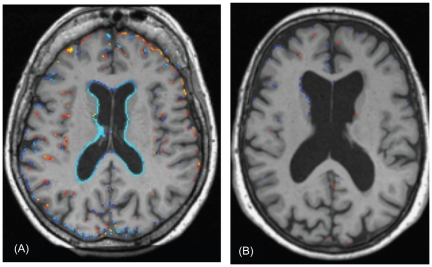
BACKGROUND: An increased rate of brain atrophy is often observed in older subjects, in particular those who suffer from cognitive decline. Homocysteine is a risk factor for brain atrophy, cognitive impairment and dementia. Plasma concentrations of homocysteine can be lowered by dietary administration of B vitamins. OBJECTIVE: To determine whether supplementation with B vitamins that lower levels of plasma total homocysteine can slow the rate of brain atrophy in subjects with mild cognitive impairment in a randomised controlled trial (VITACOG, ISRCTN 94410159). METHODS AND FINDINGS: Single-center, randomized, double-blind controlled trial of high-dose folic acid, vitamins B(6) and B(12) in 271 individuals (of 646 screened) over 70 y old with mild cognitive impairment. A subset (187) volunteered to have cranial MRI scans at the start and finish of the study. Participants were randomly assigned to two groups of equal size, one treated with folic acid (0.8 mg/d), vitamin B(12) (0.5 mg/d) and vitamin B(6) (20 mg/d), the other with placebo; treatment was for 24 months. The main outcome measure was the change in the rate of atrophy of the whole brain assessed by serial volumetric MRI scans. RESULTS: A total of 168 participants (85 in active treatment group; 83 receiving placebo) completed the MRI section of the trial. The mean rate of brain atrophy per year was 0.76% [95% CI, 0.63-0.90] in the active treatment group and 1.08% [0.94-1.22] in the placebo group (P = 0.001). The treatment response was related to baseline homocysteine levels: the rate of atrophy in participants with homocysteine >13 µmol/L was 53% lower in the active treatment group (P = 0.001). A greater rate of atrophy was associated with a lower final cognitive test scores. There was no difference in serious adverse events according to treatment category. CONCLUSIONS AND SIGNIFICANCE: The accelerated rate of brain atrophy in elderly with mild cognitive impairment can be slowed by treatment with homocysteine-lowering B vitamins. Sixteen percent of those over 70 y old have mild cognitive impairment and half of these develop Alzheimer's disease. Since accelerated brain atrophy is a characteristic of subjects with mild cognitive impairment who convert to Alzheimer's disease, trials are needed to see if the same treatment will delay the development of Alzheimer's disease. TRIAL REGISTRATION: Controlled-Trials.com ISRCTN94410159.
Overview
The claims and statistics of this paper haven’t been checked yet.
Run the check — free, no account needed. It reads the open-access text and checks the sources it cites.
Integrity signals
Registry
Cites
Statistics
Figures
Verification
Claims the paper makes
The claims and statistics of this paper haven’t been checked yet.
Run the check — free, no account needed. It reads the open-access text and checks the sources it cites.
Claims other papers make about this one
Each is checked against this paper’s own text: does it say what the citing paper says it does?
The source backs part of the claim, not all of it — or backs it for a different population, condition or comparison.
In the citing paper
“Finally, dietary approaches in terms of nutrition supplementation, such as combined formulation of specific active ingredients or probiotics, or nutritional guidance, such as fasting intermitting or Mediterranean diet, ameliorate both cognition and function of prodromal and mild AD patients [200,201,202].”
From Treatment of Alzheimer’s Disease: Beyond Symptomatic Therapies (2023) · cites this paper as [200]
Experimental — accuracy not yet measuredThe cited source says what the claim attributes to it.
In the citing paper
“While some degree of brain atrophy is common in older age, even in people who are cognitively healthy, atrophy is accelerated in people with Alzheimer's dementia.”
From 2024 Alzheimer's disease facts and figures (2024) · cites this paper as [20]
Self-check
Percentages, sums and reported differences re-computed from the paper’s own numbers.
The self-check needs the paper’s full text.
Citations
Cites
Folstein, M. F., Folstein, S. E., & McHugh, P. R. (1975) · Journal of Psychiatric Research · doi:10.1016/0022-3956(75)90026-6 · Cited by 88,282 · cited 5×
“First, in studies over longer periods (up to 5 years) it has been found that the rate of whole brain atrophy in MCI is correlated with cognitive decline in several tests, including the MMSE [5].”
InfluentialMoms, J. C., Heyman, A., Mohs, R. C., Hughes, J. P., van Belle, G., Fillenbaum, G., Mellits, E. D., & Clark, C. (1989) · Neurology · doi:10.1212/wnl.39.9.1159 · Cited by 4,130 · cited 1×
“…daily living based on the Cambridge Behavioural Inventory [26], an objective memory problem assessed with the ‘Telephone interview of cognitive status, modified’ (TICS-M) [27], a test without a ceiling effect [28], and category fluency [29] based on previously defined cut-off scores for MCI [28].”
Consortium to Establish a Registry for Alzheimer's Disease (CERAD)
Fillenbaum, G., & Heyman, A. (2002) · doi:10.1002/0470846410.ch42(iii · Cited by 2,859
Accurate, Robust, and Automated Longitudinal and Cross-Sectional Brain Change Analysis
Smith, S. M., Zhang, Y., Jenkinson, M., Chen, J. M., Matthews, P. M., Federico, A., & Stefano, N. D. (2002) · NeuroImage · doi:10.1006/nimg.2002.1040 · Cited by 2,013 · cited 3×
“A cross-sectional method (SIENAX) was used to estimate normalized brain volume from a single image, using the skull to normalize spatially, with respect to a standard image [31].”
InfluentialSelf-citationMild Cognitive Impairment: Ten Years Later
Petersen, R. C., Roberts, R. O., Knopman, D. S., Boeve, B. F., Geda, Y. E., Ivnik, R. J., Smith, G. E., & Jack, C. R. (2009) · Archives of Neurology · doi:10.1001/archneurol.2009.266 · Cited by 1,447
Longitudinal Magnetic Resonance Imaging Studies of Older Adults: A Shrinking Brain
Resnick, S. M., Pham, D. L., Kraut, M. A., Zonderman, A. B., & Davatzikos, C. (2003) · The Journal of Neuroscience · doi:10.1523/jneurosci.23-08-03295.2003 · Cited by 1,425 · cited 1×
“The atrophy occurs even in cognitively healthy subjects [1] but is much accelerated in patients suffering from Alzheimer’s disease [2,3,4,5].”
Folate, Vitamin B12, and Serum Total Homocysteine Levels in Confirmed Alzheimer Disease
Clarke, R., Smith, A. D., Jobst, K. A., Refsum, H., Sutton, L., & Ueland, P. M. (1998) · Archives of Neurology · doi:10.1001/archneur.55.11.1449 · Cited by 1,408 · cited 3×
“The results also fit with our earlier finding that raised tHcy predicts the rate of shrinkage of the medial temporal lobe in patients with Alzheimer’s disease [12].”
Self-citationMorris, J. C., Mohs, R. C., Rogers, H., Fillenbaum, G. G., & Heyman, A. (1988) · PubMed · Cited by 1,131
Facts and recommendations about total homocysteine determinations: an expert opinion
Refsum, H., Smith, A. D., Ueland, P. M., Nexo, E., Clarke, R., McPartlin, J., Johnston, C., Engbaek, F., Schneede, J., McPartlin, C., et al. (2004) · Clinical Chemistry · doi:10.1373/clinchem.2003.021634 · Cited by 1,056 · cited 1×
“The tissue and plasma concentrations of homocysteine are largely determined by the body’s status of certain B vitamins (folate, B6 and B12), which are cofactors or substrates for enzymes involved in homocysteine metabolism [22].”
Self-citationPrevalence of Cognitive Impairment without Dementia in the United States
Plassman, B. L., Langa, K. M., Fisher, G. G., Heeringa, S. G., Weir, D. R., Ofstedal, M. B., Burke, J. R., Hurd, M. D., Potter, G. G., Rodgers, W. L., et al. (2008) · Annals of Internal Medicine · doi:10.7326/0003-4819-148-6-200803180-00005 · Cited by 946 · cited 1×
“The prevalence of MCI is between 14% and 18% in those over 70 years-old [24,41], which means that about 5 million people in the USA and 14 million in greater Europe suffer from this condition.”
Cited by
Sorted by citations
Items 401–500 of 813
Schorgg, P., Karavasiloglou, N., Beyer, A., Cantwell, M. M., Danquah, I., Gojda, J., Rohrmann, S., Cassidy, A., Bärnighausen, T., Cahová, M., et al. (2022) · Clinical Nutrition · doi:10.1016/j.clnu.2022.04.023 · Cited by 13
Age-related lysosomal dysfunction: an unrecognized roadblock for cobalamin trafficking?
Zhao, H., Brunk, U. T., & Garner, B. (2011) · Cellular and Molecular Life Sciences · doi:10.1007/s00018-011-0861-9 · Cited by 13
Stough, C. K. K., Simpson, T. N., Lomas, J. E., McPhee, G. M., Billings, C., Myers, S. P., Oliver, C., & Downey, L. A. (2014) · Nutrition Journal · doi:10.1186/1475-2891-13-122 · Cited by 13
“For example, Smith and colleagues [32] investigated vitamin B6, B12 and folic acid supplementation with an older sample that were experiencing mild cognitive impairment, and observed that the rate of brain atrophy declined in those who consumed vitamins compared to placebo.”
BackgroundZhang, Y., Zhu, T., Wang, L., Pan, Y.-H., & Zhang, S. Y. (2013) · PLoS ONE · doi:10.1371/journal.pone.0085632 · Cited by 13
“B vitamin supplementation (vitamin B6, vitamin B12 and folate) and strengthening of the transulfuration and transmethylation pathways could lower homocysteine levels and slow the accelerated rate of neurological disease [12,52,53].”
BackgroundNutrient Requirements and Dietary Husbandry Principles for Captive Nonhuman Primates
Power, M. L., Toddes, B. D., & Koutsos, L. (2012) · Elsevier eBooks · doi:10.1016/b978-0-12-381365-7.00010-8 · Cited by 15
Wang, H., Odegaard, A., Thyagarajan, B., Hayes, J., Cruz, K. S., Derosiers, M. F., Tyas, S. L., & Gross, M. D. (2012) · Journal of Alzheimer s Disease · doi:10.3233/jad-2011-111271 · Cited by 13
Schaub, C., Uebachs, M., Beck, H., & Linnebank, M. (2013) · Experimental Brain Research · doi:10.1007/s00221-012-3392-1 · Cited by 13
“Thus, the rationale of this study is the assumption that homocysteine impacts the electrophysiology of neurons as one underlying mechanism of the association of hyperhomocysteinemia with mild cognitive impairment and dementia (Chan et al. 2008; Stanger et al. 2009; Smith et al. 2010).”
BackgroundAnalysis of Risk Factors for Vascular Cognitive Impairment in Patients with Cerebral Infarction
An, X.-L., & Li, C. (2014) · Cell Biochemistry and Biophysics · doi:10.1007/s12013-014-0246-4 · Cited by 12
Homocysteine and Psychiatric Disorders
Cavalcante‐Silva, V., de Oliveira, A. C., & D’Almeida, V. (2017) · Journal of Inborn Errors of Metabolism and Screening · doi:10.1177/2326409817701471 · Cited by 13
Formic Acid Pretreatment Enhances Untargeted Serum and Plasma Metabolomics
Kačerová, T., Pires, E., Dixon, A., Williams, R., Legge, I., Hippisley, M., Yates, A. G., Smith, A. D., Anthony, D. C., Probert, F., et al. (2025) · Analytical Chemistry · doi:10.1021/acs.analchem.5c03725 · Cited by 12
Self-citationYoung, L. M., Gauci, S., Arnoldy, L., Martin, L., Perry, N., White, D., Meyer, D., Lassemillante, A. M., Ogden, E., Silber, B. Y., et al. (2022) · Nutrients · doi:10.3390/nu14235079 · Cited by 13
“This finding contradicts previous studies which have consistently reported significant reductions in homocysteine following B-complex supplementation [17,56,57].”
ResultZhang, M., Wei, J., Sun, Y., He, C., Ma, S., Pan, X., & Zhu, X. (2024) · Journal of Advanced Research · doi:10.1016/j.jare.2024.03.008 · Cited by 15
“However, metformin use in older individuals may lead to deficits in folate-related B vitamins, which have been linked to a decline in cognitive function [117].”
Zhang, L., Chen, X., Chen, Y., Yan, J., Huang, G., & Li, W. (2024) · Nutrients · doi:10.3390/nu16142199 · Cited by 14
“…the 62 retained articles, 11 articles were removed, including 4 studies from the same team [12–15], 1 article did not perform a cognitive measure [16], three articles reanalyzed other articles [17–19], and 3 research studies used neuroimaging techniques to measure variation in outcomes [20–22].”
ResultA study of the association between cognitive abilities and dietary intake in young women
Askari, M., Abbaszadeh, A., Saharkhiz, M., Karbasi, S., Talebpour, A., Fashami, A. A. A., Rezapour, H., Hoseini, Z. S., Mahmoudzadeh, S., Ayadilord, M., et al. (2020) · Nutrition and Health · doi:10.1177/0260106020940116 · Cited by 12
“Email: Bahramia@bums.ac.ir several clinical trials that support these findings (Smith et al., 2010; Witte et al., 2014).”
BackgroundMild cognitive impairment: To diagnose or not to diagnose
Wang, K., Page, A. T., & Etherton‐Beer, C. (2021) · Australian Journal on Ageing · doi:10.1111/ajag.12913 · Cited by 12
Viel, C., Brandtner, A. T., Weißhaar, A., Lehto, A., Fuchs, M., & Klein, J. (2021) · Pharmaceuticals · doi:10.3390/ph14121218 · Cited by 13
“High doses of folic acid and vitamin B6 and B12 decelerated brain atrophy in patients suffering from mild cognitive impairment [51].”
BackgroundBello-Haas, V. P. M. D., O’Connell, M. E., & Morgan, D. (2014) · Rural and Remote Health · doi:10.22605/rrh2722 · Cited by 12
Anti‐ N ‐homocysteine‐protein autoantibodies are associated with impaired cognition
Włoczkowska, O., Perła‐Kaján, J., Smith, A. D., de Jager, C., Refsum, H., & Jakubowski, H. (2021) · Alzheimer s & Dementia Translational Research & Clinical Interventions · doi:10.1002/trc2.12159 · Cited by 10
Self-citationWu, Y., Smith, A. D., Bastani, N. E., Refsum, H., & Kwok, T. C. Y. (2021) · Human Molecular Genetics · doi:10.1093/hmg/ddab246 · Cited by 13
“The archived serum in the HK trial was sent to the same laboratory as in the UK trial (7,8) for serum creatinine and sulphur containing amino acids, including homocysteine, which were measured by liquid chromatography–mass spectrometry (LC–MS) as described before (31).”
InfluentialSelf-citationImpaired Lysosomal Cobalamin Transport in Alzheimer's Disease
Zhao, H., Li, H., Ruberu, K. R., & Garner, B. (2014) · Journal of Alzheimer s Disease · doi:10.3233/jad-140681 · Cited by 12
Homocysteine and Alzheimer disease: an intervention study
Sachdev, P. S. (2011) · Nature Reviews Neurology · doi:10.1038/nrneurol.2010.195 · Cited by 12
Supporting self-management in early dementia: a contribution towards ‘living well’?
Cheffey, J., Hill, L., Roberts, G. A., & Marlow, R. (2013) · Advances in Psychiatric Treatment · doi:10.1192/apt.bp.112.011023 · Cited by 12
B-vitamin trials meta-analysis: less than meets the eye
Garrard, P., & Jacoby, R. J. (2015) · American Journal of Clinical Nutrition · doi:10.3945/ajcn.114.097808 · Cited by 12
Self-citationOmega-3 polyunsaturated fatty acids in neurodegenerative disorders: Mixed designs = mixed results
Dyall, S. C., & Plourde, M. (2025) · Progress in Lipid Research · doi:10.1016/j.plipres.2025.101356 · Cited by 12
Homocysteine, neurodegenerative biomarkers, and APOE ε4 in neurodegenerative diseases
Lin, W. Z., Yu, D., Xiong, L. Y., Zebarth, J., Wang, R., Fischer, C. E., Rajji, T. K., Tang‐Wai, D. F., Tartaglia, M. C., Saposnik, G., et al. (2024) · Alzheimer s & Dementia · doi:10.1002/alz.14376 · Cited by 12
“45,46 The current study suggests that trials for vitamin B supplementation on neurodegeneration or cognition may consider stratifying by the presence of the APOE ε 4 allele.”
Albrahim, T. I. (2020) · Neurosciences · doi:10.17712/nsj.2020.1.20190037 · Cited by 11
Vascular dementia: a pragmatic review
Series, H. G., & Esiri, M. M. (2012) · Advances in Psychiatric Treatment · doi:10.1192/apt.bp.110.008888 · Cited by 13
Modelling and Simulation of Biochemical Processes Using Petri Nets
Cherdal, S., & Mouline, S. (2018) · Processes · doi:10.3390/pr6080097 · Cited by 11
“They also confirmed the fact that mutations in the system enzymes and/or metabolites, can be related to several mental disorders such as Alzheimer, Parkinson, Schizophrenia, and others which makes interesting to study this system and its behaviour in order to avoid causes of such disorders.”
BackgroundLower Vitamin B12 Level at Multiple System Atrophy Diagnosis Is Associated With Shorter Survival
McCarter, S. J., Coon, E. A., Savica, R., Louis, E. K. S., Bower, J. H., Benarroch, E. E., Sandroni, P., Low, P. A., & Singer, W. (2020) · Movement Disorders · doi:10.1002/mds.28070 · Cited by 11
“Preclinical data suggest that vitamin B12 prevents α-synuclein fibrillation and subsequent neurotoxicity, potentially through allosteric inhibition of LRRK2, which may have a disease-modifying effect in MSA.4,5 In addition to playing a role in Parkinson’s disease, there have been 2 case reports of patients with known…”
BackgroundInfluentialMoura, E. L. R., dos Santos, H., Celes, A. P. M., Bassani, T. B., Souza, L. C., & Vital, M. A. B. F. (2020) · Journal of Alzheimer s Disease Reports · doi:10.3233/adr-200175 · Cited by 11
“damage, which in turn leads to neuronal apoptosis and consequent neurodegeneration [62, 63].”
BackgroundАнатольевна, П. О. (2017) · Meditsinskiy sovet = Medical Council · doi:10.21518/2079-701x-2017-13-64-70 · Cited by 11
Plasma Homocysteine, Vitamin B12 and Folate Levels in Multiple System Atrophy: A Case-Control Study
Zhang, S., Shi, C., Mao, C., Song, B., Hou, H., Wu, J. W., Liu, X., Luo, H., Sun, S., & Xu, Y. (2015) · PLoS ONE · doi:10.1371/journal.pone.0136468 · Cited by 11
“Moreover, a randomized controlled study revealed a positive correlation between the levels of Hcy and the rate of brain atrophy [12].”
BackgroundDehomocysteinylation is catalysed by the sirtuin‐2‐like bacterial lysine deacetylase CobB
Mei, X., He, X., Huang, L., Qi, D., Nie, J., Li, Y., Si, W., & Zhao, S. (2016) · FEBS Journal · doi:10.1111/febs.13912 · Cited by 12
Homocysteine in the Cardiovascular Setting: What to Know, What to Do, and What Not to Do
D’Elia, S., Morello, M., Titolo, G., Caso, V. M., Solimene, A., Luisi, E., Serpico, C., Morello, A., Mura, L. L., Loffredo, F. S., et al. (2025) · Journal of Cardiovascular Development and Disease · doi:10.3390/jcdd12100383 · Cited by 13
“In neurology, the VITACOG study showed that B-vitamin supplementation significantly slowed brain atrophy in elderly subjects with mild cognitive impairment and elevated homocysteine, indicating a neuroprotective effect [35].”
Aguree, S., Zolnoori, M., Atwood, T. P., & Owora, A. H. (2023) · Frontiers in Aging Neuroscience · doi:10.3389/fnagi.2023.1242853 · Cited by 10
“For instance, homocysteine-lowering B vitamins intakes are reported to protect against brain atrophy in the elderly, slowing down mental decline (Smith et al., 2010; Douaud et al., 2013; de Jager, 2014).”
BackgroundSah, R. P., Vidya, C. S., Pereira, P., Jayaram, S., Yadav, A. K., & Sujatha, P. (2023) · Annals of Geriatric Medicine and Research · doi:10.4235/agmr.23.0135 · Cited by 10
Concurrent nutrient deficiencies are associated with dementia incidence
van Soest, A. P. M., de Groot, C. P. G. M., Witkamp, R. F., van Lent, D. M., Seshadri, S. S., & van de Rest, O. (2024) · Alzheimer s & Dementia · doi:10.1002/alz.13884 · Cited by 9
Tan, Z., Nie, Y., & Yan, N. (2024) · Frontiers in Nutrition · doi:10.3389/fnut.2024.1459638 · Cited by 9
Gordon, S., Hoey, L., McNulty, H., Keenan, J., Pangilinan, F., Brody, L. C., Ward, M. H., Strain, J. J., McAnena, L. B., McCann, A., et al. (2025) · BMC Medicine · doi:10.1186/s12916-025-04276-8 · Cited by 11
“Notably, participants with higher baseline homocysteine concentrations (> 11.3 μmol/L) who received B-vitamins experienced a 53% reduction in brain atrophy rates over the 2 years, as measured by MRI [18].”
InfluentialPistollato, F., Cano, S. S., Elío, I., Vergara, M. M., Giampieri, F., & Battino, M. (2015) · Journal of Alzheimer's Disease · doi:10.3233/jad-150301 · Cited by 11
“5 mg vitamin B12) reduced shrinkage of the whole brain volume [88]”
Giudici, K. V. (2021) · The Journal of Prevention of Alzheimer s Disease · doi:10.14283/jpad.2021.6 · Cited by 10
Gong, X., Shi, L., Wu, Y., Luo, Y., & Kwok, T. C. Y. (2022) · Journal of Alzheimer s Disease · doi:10.3233/jad-220685 · Cited by 11
“Aspirin users were excluded from data analysis because two randomized trials of B vitamins in older people with MCI found a negative interaction effect between aspirin use and B vitamin supplementation on brain atrophy and cognitive functioning [3, 13].”
Misdiagnosed vitamin B12 deficiency a challenge to be confronted by use of modern screening markers.
Iqtidar, N., & Chaudary, M. N. (2012) · PubMed · Cited by 10
Flitton, M., Rielly, N. J., Warman, R., Warden, D. R., Smith, A. D., MacDonald, I. A., & Knight, H. M. (2019) · Neurobiology of Aging · doi:10.1016/j.neurobiolaging.2019.02.001 · Cited by 10
Self-citationFruits, Vegetables, and Their Components and Mild Cognitive Impairment and Dementia: A Review
Dunham, A., & Johnson, E. J. (2013) · Food Reviews International · doi:10.1080/87559129.2013.818015 · Cited by 10
“These results suggest a possible delay in brain atrophy due to Bvitamin supplementation and thus a possible delay in the rate of conversion of MCI to AD.(39) The other research that came out of this same VITACOG trial was one that investigated cognitive and clinical decline in participants with MCI.”
BackgroundMethodResultInfluentialKurnat‐Thoma, E. L., Pangilinan, F., Matteini, A. M., Wong, B. G., Pepper, G. A., Stabler, S. P., Guralnik, J. M., & Brody, L. C. (2015) · Biological Research For Nursing · doi:10.1177/1099800415569506 · Cited by 12
“In a number of studies, supplementation with a combination of vitamin B12, vitamin B6, and folic acid has slowed the rate of brain atrophy and cognitive decline, suggesting a potential role for vitamin B12 in these age-related neurological changes (de Jager, Oulhaj, Jacoby, Refsum, & Smith, 2012; Douaud et al., 2013;…”
BackgroundPrevention Studies in Alzheimer’s Disease: Progress Towards the Development of New Therapeutics
Coley, N., Gallini, A., & Andrieu, S. (2015) · CNS Drugs · doi:10.1007/s40263-015-0256-9 · Cited by 11
Savic-Hartwig, M., Kerlikowsky, F., van de Flierdt, E., Hahn, A., & Schuchardt, J. P. (2023) · International Journal for Vitamin and Nutrition Research · doi:10.1024/0300-9831/a000777 · Cited by 9
Poulidou, V., Liampas, I., Arnaoutoglou, M., Dardiotis, E., & Siokas, V. (2024) · Biomolecules · doi:10.3390/biom14101213 · Cited by 11
“…controlled studies in patients with Mild Cognitive impairment (MCI) showed that treatments targeting Hcy (like vitamins of the B complex) can decrease the rate of brain atrophy and cognitive decline and that those with the highest baseline level of Hcy have the greatest treatment effect [78,79].”
BackgroundAn, Y., Cao, Z., Du, Y., Xu, G., Wang, J., Zheng, J., & Lu, Y. (2024) · Nutrients · doi:10.3390/nu16223929 · Cited by 10
Kačerová, T., Yates, A. G., Dai, J., Shepherd, D., Pires, E., de Jel, S., Gong, Q., Schiffer, E., Jernerén, F., Olsén, T., et al. (2025) · Alzheimer s & Dementia · doi:10.1002/alz.70521 · Cited by 9
“To investigate the effects of B vitamin–induced tHcy lowering on the serum metabolome in the VITACOG cohort, we conducted a stratified analysis following the criteria established by Smith et al. 4 The demo-graphicandclinicalcharacteristicsofbiologicallycompliantindividuals are summarized in”
InfluentialSelf-citationPerus, L., Busto, G. U., Mangin, J., Bars, E. L., & Gabelle, A. (2022) · Frontiers in Aging Neuroscience · doi:10.3389/fnagi.2022.1014559 · Cited by 10
Mutti, E., Lildballe, D. L., Kristensen, L., Birn, H., & Nexø, E. (2013) · Brain Research · doi:10.1016/j.brainres.2013.01.050 · Cited by 9
Asupan zat gizi mikro dengan fungsi kognitif pada lanjut usia
Rahmawati, A., Pramantara, I. D. P., & Purba, M. B. (2012) · Jurnal Gizi Klinik Indonesia · doi:10.22146/ijcn.18218 · Cited by 9
Rabensteiner, J., Hofer, E., Fauler, G., Fritz-Petrin, E., Benke, T., Dal‐Bianco, P., Ransmayr, G. N., Schmidt, R., & Herrmann, M. (2020) · Aging · doi:10.18632/aging.103714 · Cited by 9
“Furthermore, B-vitamin supplementation appears to slow down brain atrophy [11], but has no effect on cognition itself [12, 13].”
BackgroundPros and Cons of Increasing Folic Acid and Vitamin B12 Intake by Fortification
Allen, L. H. (2012) · Nestlé Nutrition Institute Workshop series · doi:10.1159/000337775 · Cited by 9
ω-3 fatty acids and their interactions
Smith, A. D., Jernerén, F., & Refsum, H. (2021) · American Journal of Clinical Nutrition · doi:10.1093/ajcn/nqab013 · Cited by 9
Self-citationMiller, J. W. (2013) · Elsevier eBooks · doi:10.1016/b978-0-12-375083-9.00144-6 · Cited by 9
White, D. J., Cox, K. H. M., Hughes, M. E., Pipingas, A., Peters, R., & Scholey, A. B. (2016) · Frontiers in Aging Neuroscience · doi:10.3389/fnagi.2016.00288 · Cited by 8
Przybycien-Gaweda, P. M., Lee, T.-S. W., Lim, W. S., Chong, M. S., Yap, P. L. K., Cheong, C. Y., Rawtaer, I., Liew, T. M., Gwee, X., Gao, Q., et al. (2022) · Nutrients · doi:10.3390/nu14173535 · Cited by 9
“On the other hand, in a study of over-70-year-olds with MCI, B-vitamin supplementation was found to be associated with both lower homocysteine and a slower rate of cognitive decline [38].”
BackgroundChang, K. H., Wang, C., Nester, C. O., Katz, M. J., Byrd, D., Lipton, R. B., & Rabin, L. A. (2023) · Frontiers in Aging Neuroscience · doi:10.3389/fnagi.2023.1221768 · Cited by 7
Dementia: challenges and promising developments
Ballard, C. G., Corbett, A., & Jones, E. L. (2010) · The Lancet Neurology · doi:10.1016/s1474-4422(10)70304-5 · Cited by 8
Digit symbol substitution test score and hyperhomocysteinemia in older adults
Hsu, W., Chu, Y.-C., Fung, H., Wai, Y., Wang, J., Lee, J.-D., & Chen, Y. (2016) · Medicine · doi:10.1097/md.0000000000004535 · Cited by 8
Siswanto, O., Smeall, K., Watson, T. D., Donnelly-Vanderloo, M., O'Connor, C., Foley, N. C., & Madill, J. (2015) · The journal of nutrition health & aging · doi:10.1007/s12603-015-0660-3 · Cited by 7
“The results of a randomized, controlled trial of homocysteine-lowering B vitamins (folic acid, B6, and B12) in subjects with mild cognitive impairment suggested that treatment with B vitamins may help reduce the rate of brain atrophy (30).”
Serum Homocysteine and Folate Levels are Associated With Late-life Dementia in a Korean Population
Song, J. H., Park, M. H., Han, C., Jo, S. A., & Ahn, K. (2010) · Osong Public Health and Research Perspectives · doi:10.1016/j.phrp.2010.12.006 · Cited by 8
“A recent clinical trial showed that the supplementation of high-dose B vitamins to MCI patients for 2 years reduced Hcy levels and had beneficial effects on brain shrinkage.(31) An interesting observation was that B vitamin treatment slowed the rate of brain atrophy and memory decline only in the group with initial Hc…”
Gupta, S., Fiertag, O., & Warner, J. P. (2009) · Advances in Psychiatric Treatment · doi:10.1192/apt.bp.107.003558 · Cited by 11
The effects of bioactive compounds on Alzheimer’s disease and mild cognitive impairment
McAnany, B., & Martirosyan, D. M. (2016) · Functional Foods in Health and Disease · doi:10.31989/ffhd.v6i6.257 · Cited by 8
“Smith AD, 2010 [26] Randomized controlled trial 271 individuals aged 70 years old or older diagnosed with MCI 0.”
BackgroundInfluentialHomocysteine Levels in Neurological Disorders
Moustafa, A. A., Hewedi, D. H., Eissa, A. M., Frydecka, D., & Misiak, B. (2015) · doi:10.1002/9781118840634.ch7 · Cited by 8
Kolanu, N. D., Ahmed, S., Kerimkulova, M. K., Stańczak, M., Vera, G. D. J. A., Shaikh, N., Addula, A. R., Cheran, M., Chilla, S. P., Lima, S. R. O. S., et al. (2024) · Cureus · doi:10.7759/cureus.53711 · Cited by 7
“Further research is imperative to refine nutritional care guidelines and optimize rehabilitation strategies in stroke care [17-19].”
BackgroundThe association of vitamin deficiency with depression risk in late-life depression: a review
Gao, Y., Song, X.-N., Wen, Z.-P., Hu, J.-Z., Du, X.-Z., Zhang, J., & Liu, S. (2025) · Frontiers in Nutrition · doi:10.3389/fnut.2025.1551375 · Cited by 7
Hien, N. K., Bay, M. V., Vo, Q. V., Ngô, S. T., Nhan, D. T., Nam, P. C., & Quang, D. T. (2025) · RSC Advances · doi:10.1039/d5ra07368e · Cited by 7
Probiotic and Dietary Supplements Intervention in Age-Related Neurodegenerative Disorders
Salles, C. B. D. D., Prajapati, S. K., Yadav, D., Rennar, J., Marcano-Rodriguez, A., Yadav, H., & Jain, S. (2026) · Microorganisms · doi:10.3390/microorganisms14020290 · Cited by 8
“While B vitamins exert neuroprotective effects by lowering homocysteine levels, a key contributor to hippocampal degeneration and vascular dysfunction [56,88,96].”
Folates, folic acid and preconception care – a review
House, S. H., Nichols, J. A., & Rae, S. (2021) · JRSM Open · doi:10.1177/2054270420980875 · Cited by 7
Garrido-Dzib, Á. G., Chávez-Loría, G., Magallón-Zertuche, V., Ávila-Nava, A., Palacios‐González, B., & Solis, A. L. G. (2023) · Journal of Alzheimer s Disease · doi:10.3233/jad-230231 · Cited by 7
“Some foods have been shown to have neuroprotective properties, especially some vitamins B [72], antioxidants (vitamins E and C) [73], and polyunsaturated fatty acids (PUFA) (omega-3 s) [74], which are the nutrients for which evidence has been reported in AD patients.”
Storoschuk, K. L., Gharios, R., Potter, G. D., Galpin, A. J., House, B. T., & Wood, T. R. (2023) · Lifestyle Medicine · doi:10.1002/lim2.90 · Cited by 7
Improving Cognition in the Elderly With Nutritional Supplements
Stough, C. K. K., & Pase, M. P. (2015) · Current Directions in Psychological Science · doi:10.1177/0963721414565449 · Cited by 8
Lind, M. V., Lauritzen, L., Pedersen, O. B., Vestergaard, H., Stark, K. D., Hansen, T. F., Ross, A. B., & Kristensen, M. (2017) · Nutrition Research · doi:10.1016/j.nutres.2017.09.008 · Cited by 7
“One-carbon metabolism and especially high circulating homocysteine (Hcy) levels have been linked to a wide range of diseases such as cardiovascular disease[1], cognitive diseases[2,3], cancer[4,5], metabolic syndrome[6–8] and type 2 diabetes[9–12].”
BackgroundGiudici, K. V., Barreto, P. D. S., Guyonnet, S., Cantet, C., Zetterberg, H., Boschat, C., Hudry, J., Andrieu, S., Schmitt, J. A. J., Vellas, B. J., et al. (2023) · Journal of Aging Research and Lifestyle · doi:10.14283/jarlife.2023.7 · Cited by 7
“While ambiguous results have been found in trials supplementing single nutrients (8), other studies evaluating the combination of several nutrients have suggested that this might be a better strategy (9-13).”
ResultDomínguez‐López, I., Casas, R. M., Chiva‐Blanch, G., Martínez‐González, M. Á., Fitó, M., Ros, E., Lamuela-Raventós, R. M., & Estruch, R. (2023) · Clinical Nutrition · doi:10.1016/j.clnu.2023.10.025 · Cited by 7
Diet and Mental Health: An Up-to-Date Analysis
Casper, R. C. (2011) · World review of nutrition and dietetics · doi:10.1159/000327798 · Cited by 7
Prevention of Alzheimer’s Disease: Intervention Studies
Mangialasche, F., Xu, W., & Kivipelto, M. (2013) · InTech eBooks · doi:10.5772/55034 · Cited by 7
“A more recent RCT testing the efficacy of B vitamins (B6, B12, folate) in subjects with MCI reported beneficial effects of the supplementation, in terms of reduced rate of brain atrophy and cognitive decline, which were more evident in subjects with elevated homocysteine levels [122, 123].”
BackgroundVaskinn, A., Wilsgård, I., Holm, A., Wootton, R., & Elvevåg, B. (2013) · Journal of Telemedicine and Telecare · doi:10.1177/1357633x12473904 · Cited by 7
Allam, M., Fahmy, E. M., Sharaf, S. A. E.-A., Amer, H. M. A., Abokrysha, N. T., & ELSawy, E. E. T. (2013) · Journal of the Neurological Sciences · doi:10.1016/j.jns.2013.06.023 · Cited by 7
Folic Acid, Selected Cancers and All-cause Mortality: A Meta-analysis
Mackerras, D., Tan, J., & Larter, C. Z. (2014) · International Food Risk Analysis Journal · doi:10.5772/58396 · Cited by 7
“…A Meta-analysis Author, Year, (Reference) (Study Name) Description Comparison (daily dosage unless otherwise stated) Data to allow calculation of Relative risks for Total cancer Site specific cancer Colorectal Adenoma Mortality Smith et al, 2010 [74] (VITACOG) 2 year trial, 271 UK patients with…”
InfluentialIntegrative health check reveals suboptimal levels in a number of vital biomarkers
Travica, N., Ried, K., Bujnowski, R., & Sali, A. (2015) · Advances in Integrative Medicine · doi:10.1016/j.aimed.2015.11.002 · Cited by 7
“When the serum level drops below 500 or 550 pg/ml the cerebrospinal fluid level can become deficient [37].”
BackgroundPourié, G., Guéant, J., & Quadros, E. V. (2022) · Vitamins and hormones · doi:10.1016/bs.vh.2022.02.002 · Cited by 7
Neuroprotection in Alzheimer’s Disease
Jain, K. K. (2011) · Humana Press eBooks · doi:10.1007/978-1-61779-049-2_8 · Cited by 7
Wahlqvist, M. L., Xiu, L., Lee, M., Chen, R. C.-Y., Chen, K. J., & Li, D. (2016) · PubMed · doi:10.6133/apjcn.112015.06 · Cited by 7
Bartley, M., Bokde, A. L. W., & O'Neill, D. (2011) · New England Journal of Medicine · doi:10.1056/nejmc1108238 · Cited by 7
Yadav, P., Nasir, F., & Sivanandam, T. M. (2024) · Neurochemistry International · doi:10.1016/j.neuint.2024.105869 · Cited by 6
Briglia, M., Allia, F., Avola, R., Signorini, C., Cardile, V., Romano, G. L., Giurdanella, G., Malaguarnera, R., Bellomo, M., & Graziano, A. C. E. (2024) · Nutrients · doi:10.3390/nu16183114 · Cited by 8
“Specifically, as for vitamins, it has been reported that the vitamins of the B group (B6 pyridoxine, B9 folic acid, and B12 cobalamin) may slow the progression of cognitive decline in patients with mild cognitive impairment [58,59] by a reduction in homocysteine levels.”
BackgroundAssociation of vitamin B12 deficiency in a dementia cohort with hippocampal atrophy on MRI
Ueno, A., Hamano, T., Nagata, M., Yamaguchi, T., Endo, Y., Enomoto, S., Kimura, H., Ikawa, M., Yamamura, O., Yamanaka, D., et al. (2025) · The Journal of Prevention of Alzheimer s Disease · doi:10.1016/j.tjpad.2025.100265 · Cited by 6
“As previous studies including VITACOG study [ 30 , 39 ] have shown, cognitive decline and brain atrophy may be slower by vitamin B 12 supplementation [ 40 ], necessitating earlier therapeutic interventions.”
Micronutrient balance and brain function: neuropsychological, metabolic, and clinical interactions
López-Sebastiani, V. A., Quiroz, K., Salazar, M. A. D. L. C., Monje-Bolivar, F., & Samillan, V. J. (2026) · Frontiers in Molecular Biosciences · doi:10.3389/fmolb.2026.1748487 · Cited by 8
“…for homocysteine metabolism and for methylation reactions required for DNA synthesis, myelin maintenance, and the production of neurotransmitters such as serotonin, dopamine, and noradrenaline (Kennedy, 2016; Verdin, 2015; Smith et al., 2010; Ford and Almeida, 2019; El-Mezayen et al., 2022).”
InfluentialChai, G., Gong, J., Mao, Y.-M., Wu, J.-J., Bi, S.-G., Wang, F., Zhang, Y., Shen, M.-T., Lei, Z.-Y., Nie, Y., et al. (2024) · Molecular Neurobiology · doi:10.1007/s12035-024-03995-y · Cited by 7
“Prospective studies have reported links between elevated Hcy and elevated global or regional atrophy rates in individuals with mild cognitive impairment (MCI) [4, 5].”
How Statins Could Be Evaluated Successfully in Clinical Trials for Alzheimer’s Disease?
Burgos, J. S., Bénavidès, J., Douillet, P., Velasco, J., & Valdivieso, F. (2012) · American Journal of Alzheimer s Disease & Other Dementias® · doi:10.1177/1533317512442998 · Cited by 6
Bailey, S., & Ayling, J. E. (2013) · Journal of Chromatography A · doi:10.1016/j.chroma.2013.09.027 · Cited by 6
Tannorella, P., Stoccoro, A., Tognoni, G., Bonuccelli, U., Migliore, L., & Coppedè, F. (2016) · Europe PMC (PubMed Central) · Cited by 6
Cheema, A. K., Wiener, L. E., McNeil, R. B., Abreu, M. M., Craddock, T. J. A., FLETCHER, M. A., Helmer, D. A., Ashford, J. W., Sullivan, K. A., & Klimas, N. G. (2021) · Life Sciences · doi:10.1016/j.lfs.2021.119819 · Cited by 5
Opicapone Protects Against Hyperhomocysteinemia-Induced Increase in Blood–Brain Barrier Permeability
Wang, J., Zheng, B., Yang, S., Zheng, H., & Wang, J. (2021) · Neurotoxicity Research · doi:10.1007/s12640-021-00429-8 · Cited by 6
Heffernan, M., Doherty, L. C., Mendes, R. H., Clarke, M., Hodge, S. J., Clements, M., McAnena, L. B., Rivelsrud, M., Ward, M., Strain, J. J., et al. (2021) · Nutrition & Metabolism · doi:10.1186/s12986-021-00630-8 · Cited by 6
Metadata
- Authors
- Smith, A. D., Smith, S. M., de Jager, C. A., Whitbread, P., Johnston, C., Agacinski, G., Oulhaj, A., Bradley, K. M., Jacoby, R., & Refsum, H.
- Affiliations
- University of Oxford (GB)
- University of Oslo (NO)
- Corresponding author
- Smith, A. David
- Venue
- PLoS ONE
- Publisher
- Public Library of Science (PLoS)
- Published
- 2010-09-08
- Volume
- 5
- Issue
- 9
- Pages
- e12244
- ISSN
- 1932-6203 (ISSN-L)
- PMC
- PMC2935890
- OpenAlex
- W2156635660
- Cited by
- 813
- References
- 49
- Citations by year
- 2026: 50 · 2025: 49 · 2024: 34 · 2023: 44 · 2022: 58 · 2021: 58 · 2020: 66 · 2019: 39 · 2018: 43 · 2017: 55 · 2016: 59 · 2015: 49 · 2014: 44 · 2013: 58 · 2012: 59
- FWCI
- 36.35
- Type
- journal article
- Language
- en
- Open access
- gold
- doi.org
- Locations
- PLoS ONE (publishedVersion, cc-by)
- PubMed Central (publishedVersion, cc-by)
- PubMed (publishedVersion)
- ORCA Online Research @Cardiff (Cardiff University) (acceptedVersion)
- DOAJ (DOAJ: Directory of Open Access Journals) (submittedVersion, cc-by-sa)
- Figshare (submittedVersion, cc-by)
- Funders
- Alzheimer's Research Trust
- National Institute for Health and Care Research
- University of Oxford
- Medical Research Council
- Topics
- Health Sciences › Nursing › Nutrition and Dietetics › Folate and B Vitamins Research
- Health Sciences › Medicine › Psychiatry and Mental health › Dementia and Cognitive Impairment Research
- Health Sciences › Medicine › Clinical Neurology › Alcoholism and Thiamine Deficiency
- Keywords
- homocysteine, B vitamins, folic acid, vitamin B6, vitamin B12, brain atrophy, mild cognitive impairment, cognitive decline, dementia prevention, older adults, plasma homocysteine, volumetric MRI, cognitive performance, adverse events
- MeSH terms
- Aged, Aged, 80 and over, Atrophy, Brain, Cognition Disorders, Female, Homocysteine, Humans, Magnetic Resonance Imaging, Male, Radiography, Vitamin B Complex, Treatment Outcome
About these checks
Registry, retraction, Cites and statistics results are computed, not judged, with one exception: a printed reference that no index lists is read once by a model before it counts as a citation error. Claims are extracted by a model and kept only when their quote appears verbatim in the text; each cited source is then checked, with a model’s help, for whether it says what the claim relies on. Those verdicts can be wrong — read the claim’s quote and the cited source before relying on one.
Statistics and arithmetic are recomputed, not judged.
Confidence bands are shown only for fields calibrated on our annotated test set. None is calibrated yet, so no band is shown.
What counts as a claim ›How we measure confidence ›How we check this ›
Are you an author, or do you see a problem with this page? Request a review
