

The DOI matches its Crossref record; 49 of the 49 references it cites were found in a registry or an index.
Homocysteine-Lowering by B Vitamins Slows the Rate of Accelerated Brain Atrophy in Mild Cognitive Impairment: A Randomized Controlled Trial
Open accessAbstract
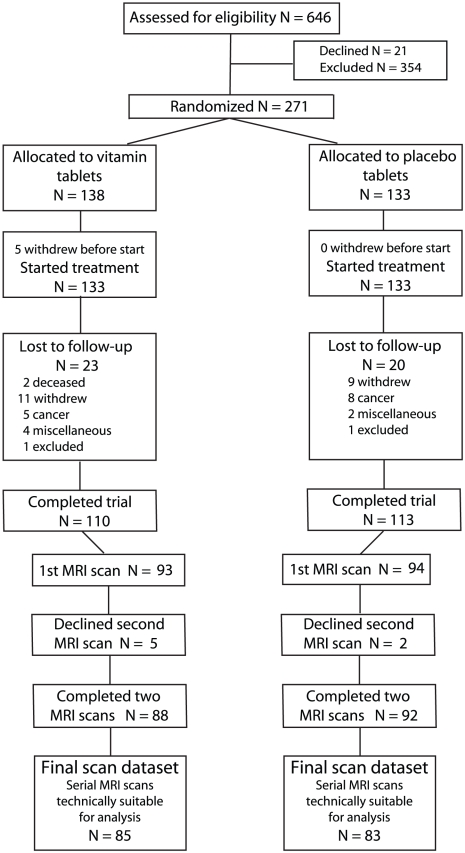
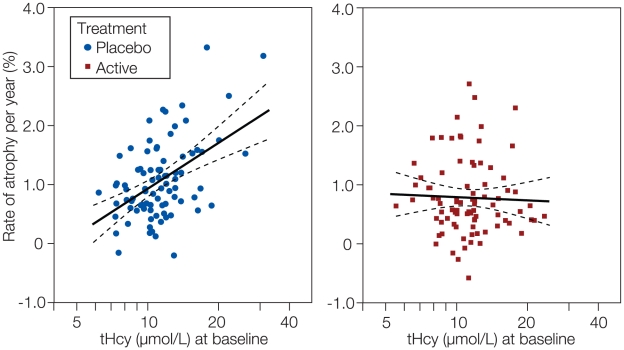
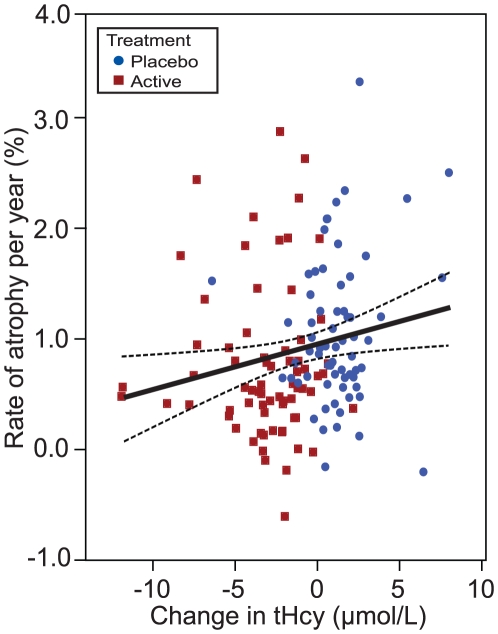
BACKGROUND: An increased rate of brain atrophy is often observed in older subjects, in particular those who suffer from cognitive decline. Homocysteine is a risk factor for brain atrophy, cognitive impairment and dementia. Plasma concentrations of homocysteine can be lowered by dietary administration of B vitamins. OBJECTIVE: To determine whether supplementation with B vitamins that lower levels of plasma total homocysteine can slow the rate of brain atrophy in subjects with mild cognitive impairment in a randomised controlled trial (VITACOG, ISRCTN 94410159). METHODS AND FINDINGS: Single-center, randomized, double-blind controlled trial of high-dose folic acid, vitamins B(6) and B(12) in 271 individuals (of 646 screened) over 70 y old with mild cognitive impairment. A subset (187) volunteered to have cranial MRI scans at the start and finish of the study. Participants were randomly assigned to two groups of equal size, one treated with folic acid (0.8 mg/d), vitamin B(12) (0.5 mg/d) and vitamin B(6) (20 mg/d), the other with placebo; treatment was for 24 months. The main outcome measure was the change in the rate of atrophy of the whole brain assessed by serial volumetric MRI scans. RESULTS: A total of 168 participants (85 in active treatment group; 83 receiving placebo) completed the MRI section of the trial. The mean rate of brain atrophy per year was 0.76% [95% CI, 0.63-0.90] in the active treatment group and 1.08% [0.94-1.22] in the placebo group (P = 0.001). The treatment response was related to baseline homocysteine levels: the rate of atrophy in participants with homocysteine >13 µmol/L was 53% lower in the active treatment group (P = 0.001). A greater rate of atrophy was associated with a lower final cognitive test scores. There was no difference in serious adverse events according to treatment category. CONCLUSIONS AND SIGNIFICANCE: The accelerated rate of brain atrophy in elderly with mild cognitive impairment can be slowed by treatment with homocysteine-lowering B vitamins. Sixteen percent of those over 70 y old have mild cognitive impairment and half of these develop Alzheimer's disease. Since accelerated brain atrophy is a characteristic of subjects with mild cognitive impairment who convert to Alzheimer's disease, trials are needed to see if the same treatment will delay the development of Alzheimer's disease. TRIAL REGISTRATION: Controlled-Trials.com ISRCTN94410159.
Overview
The claims and statistics of this paper haven’t been checked yet.
Run the check — free, no account needed. It reads the open-access text and checks the sources it cites.
Integrity signals
Registry
Cites
Statistics
Figures
Verification
Claims the paper makes
The claims and statistics of this paper haven’t been checked yet.
Run the check — free, no account needed. It reads the open-access text and checks the sources it cites.
Claims other papers make about this one
Each is checked against this paper’s own text: does it say what the citing paper says it does?
The source backs part of the claim, not all of it — or backs it for a different population, condition or comparison.
In the citing paper
“Finally, dietary approaches in terms of nutrition supplementation, such as combined formulation of specific active ingredients or probiotics, or nutritional guidance, such as fasting intermitting or Mediterranean diet, ameliorate both cognition and function of prodromal and mild AD patients [200,201,202].”
From Treatment of Alzheimer’s Disease: Beyond Symptomatic Therapies (2023) · cites this paper as [200]
Experimental — accuracy not yet measuredThe cited source says what the claim attributes to it.
In the citing paper
“While some degree of brain atrophy is common in older age, even in people who are cognitively healthy, atrophy is accelerated in people with Alzheimer's dementia.”
From 2024 Alzheimer's disease facts and figures (2024) · cites this paper as [20]
Self-check
Percentages, sums and reported differences re-computed from the paper’s own numbers.
The self-check needs the paper’s full text.
Citations
Cites
Folstein, M. F., Folstein, S. E., & McHugh, P. R. (1975) · Journal of Psychiatric Research · doi:10.1016/0022-3956(75)90026-6 · Cited by 88,282 · cited 5×
“First, in studies over longer periods (up to 5 years) it has been found that the rate of whole brain atrophy in MCI is correlated with cognitive decline in several tests, including the MMSE [5].”
InfluentialMoms, J. C., Heyman, A., Mohs, R. C., Hughes, J. P., van Belle, G., Fillenbaum, G., Mellits, E. D., & Clark, C. (1989) · Neurology · doi:10.1212/wnl.39.9.1159 · Cited by 4,130 · cited 1×
“…daily living based on the Cambridge Behavioural Inventory [26], an objective memory problem assessed with the ‘Telephone interview of cognitive status, modified’ (TICS-M) [27], a test without a ceiling effect [28], and category fluency [29] based on previously defined cut-off scores for MCI [28].”
Consortium to Establish a Registry for Alzheimer's Disease (CERAD)
Fillenbaum, G., & Heyman, A. (2002) · doi:10.1002/0470846410.ch42(iii · Cited by 2,859
Accurate, Robust, and Automated Longitudinal and Cross-Sectional Brain Change Analysis
Smith, S. M., Zhang, Y., Jenkinson, M., Chen, J. M., Matthews, P. M., Federico, A., & Stefano, N. D. (2002) · NeuroImage · doi:10.1006/nimg.2002.1040 · Cited by 2,013 · cited 3×
“A cross-sectional method (SIENAX) was used to estimate normalized brain volume from a single image, using the skull to normalize spatially, with respect to a standard image [31].”
InfluentialSelf-citationMild Cognitive Impairment: Ten Years Later
Petersen, R. C., Roberts, R. O., Knopman, D. S., Boeve, B. F., Geda, Y. E., Ivnik, R. J., Smith, G. E., & Jack, C. R. (2009) · Archives of Neurology · doi:10.1001/archneurol.2009.266 · Cited by 1,447
Longitudinal Magnetic Resonance Imaging Studies of Older Adults: A Shrinking Brain
Resnick, S. M., Pham, D. L., Kraut, M. A., Zonderman, A. B., & Davatzikos, C. (2003) · The Journal of Neuroscience · doi:10.1523/jneurosci.23-08-03295.2003 · Cited by 1,425 · cited 1×
“The atrophy occurs even in cognitively healthy subjects [1] but is much accelerated in patients suffering from Alzheimer’s disease [2,3,4,5].”
Folate, Vitamin B12, and Serum Total Homocysteine Levels in Confirmed Alzheimer Disease
Clarke, R., Smith, A. D., Jobst, K. A., Refsum, H., Sutton, L., & Ueland, P. M. (1998) · Archives of Neurology · doi:10.1001/archneur.55.11.1449 · Cited by 1,408 · cited 3×
“The results also fit with our earlier finding that raised tHcy predicts the rate of shrinkage of the medial temporal lobe in patients with Alzheimer’s disease [12].”
Self-citationMorris, J. C., Mohs, R. C., Rogers, H., Fillenbaum, G. G., & Heyman, A. (1988) · PubMed · Cited by 1,131
Facts and recommendations about total homocysteine determinations: an expert opinion
Refsum, H., Smith, A. D., Ueland, P. M., Nexo, E., Clarke, R., McPartlin, J., Johnston, C., Engbaek, F., Schneede, J., McPartlin, C., et al. (2004) · Clinical Chemistry · doi:10.1373/clinchem.2003.021634 · Cited by 1,056 · cited 1×
“The tissue and plasma concentrations of homocysteine are largely determined by the body’s status of certain B vitamins (folate, B6 and B12), which are cofactors or substrates for enzymes involved in homocysteine metabolism [22].”
Self-citationPrevalence of Cognitive Impairment without Dementia in the United States
Plassman, B. L., Langa, K. M., Fisher, G. G., Heeringa, S. G., Weir, D. R., Ofstedal, M. B., Burke, J. R., Hurd, M. D., Potter, G. G., Rodgers, W. L., et al. (2008) · Annals of Internal Medicine · doi:10.7326/0003-4819-148-6-200803180-00005 · Cited by 946 · cited 1×
“The prevalence of MCI is between 14% and 18% in those over 70 years-old [24,41], which means that about 5 million people in the USA and 14 million in greater Europe suffer from this condition.”
Cited by
Sorted by citations
Items 501–600 of 813
Knight, L. S., & Knight, T. A. (2023) · Frontiers in Neuroscience · doi:10.3389/fnins.2023.1214976 · Cited by 6
“Homocysteine toxicity in nervous tissue has been linked with seizure activity (Freed et al., 1979; Freed, 1984) and neurodegeneration (Oulhaj et al., 2010; Smith et al., 2010; Suszynska et al., 2010; Sun et al., 2017).”
BackgroundOuyang, Q., Xu, L., Zhang, Y., Huang, L.-W., Li, L., & Yu, M. (2024) · Neuropsychiatric Disease and Treatment · doi:10.2147/ndt.s460938 · Cited by 6
“…PD. 36,37 Data from a clinical study have shown that interventions aimed at lowering Hcy levels can effectively arrest cognitive decline in patients with non-PD-related MCI, 38,39 thereby further underscoring the association between elevated Hcy levels and the development of cognitive impairment.”
BackgroundTesting for qualitative heterogeneity: An application to composite endpoints in survival analysis
Oulhaj, A., Ghouch, A. E., & Holman, R. R. (2017) · Statistical Methods in Medical Research · doi:10.1177/0962280217717761 · Cited by 6
Self-citationAlzheimer’s Amyloidopathy: An Alternative Aspect
Regland, B., & McCaddon, A. (2019) · Journal of Alzheimer s Disease · doi:10.3233/jad-181007 · Cited by 6
“randomized double-blind controlled clinical trial 121 in which MCI patients (n = 168; age > 70 years) 122 were given either placebo or vitamins B12, B6 and 123 folic acid—all necessary for optimal homocysteine 124 metabolism [18].”
MethodHuang, L., Zhao, J., Chen, Y., Ma, F., Huang, G., & Li, W. (2021) · Aging & Mental Health · doi:10.1080/13607863.2021.1875194 · Cited by 6
“In addition to cognitive scales, altered brain capacity is used to reflect cognitive function (Douaud et al., 2013); Smith et al., 2010).”
BackgroundInfluentialGiudici, K. V., Guyonnet, S., Cantet, C., Barreto, P. D. S., Weiner, M. W., Tosun, D., Boschat, C., Hudry, J., Andrieu, S., Vellas, B. J., et al. (2022) · Alzheimer s & Dementia Translational Research & Clinical Interventions · doi:10.1002/trc2.12314 · Cited by 6
Sławek, J. W., & Białecka, M. A. (2014) · Elsevier eBooks · doi:10.1016/b978-0-12-407824-6.00057-4 · Cited by 6
Efficacy and Safety of Vitamin B12 Fortification
Allen, L. H. (2018) · Elsevier eBooks · doi:10.1016/b978-0-12-802861-2.00026-2 · Cited by 6
Fairbairn, P., Tsofliou, F., Johnson, A. J., & Dyall, S. C. (2019) · Prostaglandins Leukotrienes and Essential Fatty Acids · doi:10.1016/j.plefa.2019.04.001 · Cited by 6
“Dietary supplementation trials with B vitamins have shown mixed 128 results on cognitive function and physical outcomes [56, 57], with evidence suggesting those with 129 higher homocysteine levels are most responsive [58-60].”
ResultAssociation of Lower Extremity Peripheral Nerve Impairment and the Risk of Dementia
Paretsky, M. S., & Román, G. C. (2022) · Neurology · doi:10.1212/wnl.0000000000200300 · Cited by 6
“To date, the only study showing a halt to the progression of mild cognitive impairment to Alzheimer disease is the Oxford Project to Investigate Memory and Aging (OPTIMA) trial, which used B-group vitamins.(9,10) Future studies should use larger sample sizes and more measures of vitamin B deficiencies.”
MethodCorrelation Between Dietary Nutrition and Glymphatic System Activity in Healthy Participants
Ota, M., Nemoto, K., Hori, H., Ishida, I., Sato, S., Asada, T., Kunugi, H., & Arai, T. (2025) · Cureus · doi:10.7759/cureus.77860 · Cited by 6
Nogueira‐de‐Almeida, C. A., Cano, C. A., Ramos, L. R., Katz, M., González, M. M., Bárbara Angel, B., María, O., Torres, C. A. R., ́Neill, S. O., Reyes, M. G., et al. (2025) · Nutrients · doi:10.3390/nu17152545 · Cited by 5
“B vitamins (B6, B9, B12) regulate homocysteine metabolism: deficiencies are linked to increased brain atrophy and cognitive impairment [43].”
InfluentialGökçe, M., Velioğlu, H. A., Bektay, M. Y., & Güler, E. M. (2023) · Gerontology · doi:10.1159/000531849 · Cited by 5
Kashan, A. I., Mirzaasgari, Z., & Nouri-Shirazi, S. (2024) · Medicine · doi:10.1097/md.0000000000038680 · Cited by 5
Association of plasma homocysteine with cognitive impairment in patients with Parkinson’s disease
Xiao, Y. S., Gan, L., Liang, X., Xu, Z., Hu, T.-Y., Li, X., Tang, Y.-L., Wang, J., & Liu, Y. (2024) · Frontiers in Aging Neuroscience · doi:10.3389/fnagi.2024.1434943 · Cited by 5
Transcobalamin receptor gene polymorphisms and mutation in an elderly population
McCaddon, A., Carr, D. F., Peter, H., Moat, S. J., & Quadros, E. V. (2023) · Clinical Nutrition ESPEN · doi:10.1016/j.clnesp.2023.04.023 · Cited by 5
“Furthermore, intervention trials show that tHcy-lowering treatment with B vitamins markedly slows brain shrinkage and cognitive decline in elderly individuals with cognitive impairment [8 e 10].”
BackgroundSiswanto, O., Smeall, K., Watson, T. D., Donnelly-Vanderloo, M., O’Connor, C. P., Foley, N. C., & Madill, J. (2015) · The journal of nutrition health & aging · doi:10.1007/s12603-015-0531-y · Cited by 5
Nutrition and Dementia: Clinical Considerations for Identification and Intervention
Keller, H., & Bocock, M. A. (2011) · Neurodegenerative Disease Management · doi:10.2217/nmt.11.61 · Cited by 5
Miles, L. M., Allen, E., Clarke, R., Mills, K. R., Uauy, R. D., & Dangour, A. D. (2017) · European Journal of Clinical Nutrition · doi:10.1038/ejcn.2017.7 · Cited by 7
Cherdal, S., & Mouline, S. (2016) · International Conference on Sciences of Electronics, Technologies of Information and Telecommunications · doi:10.1109/setit.2016.7939880 · Cited by 5
“der, and abnormal accumulation of homocysteine [36], [37].”
BackgroundImpact of dietary supplementation of one-carbon metabolism on neural recovery
Jadavji, N. M., Emmerson, J. T., & Murray, L. K. (2017) · Neural Regeneration Research · doi:10.4103/1673-5374.211183 · Cited by 5
“A study published in 2010 reported that B-vitamin supplementation for 2 years reduced brain atrophy in patients with mild cognitive impairment within the UK (Smith et al., 2010).”
BackgroundNeuroprotection in Alzheimer Disease
Jain, K. K. (2019) · Springer protocols handbooks/Springer protocols · doi:10.1007/978-1-4939-9465-6_8 · Cited by 5
B vitamins and diseases of the nervous system: A review
Kamchatnov, P. R., Chugunov, A. V., & Кабанов, А. А. (2023) · Consilium Medicum · doi:10.26442/20751753.2022.11.202017 · Cited by 5
Wang, H., Zhang, F., Xu, T. W., Xu, Y., Tian, Y., Wu, Y., Xu, J., Hu, S., & Xu, G. (2023) · CNS Neuroscience & Therapeutics · doi:10.1111/cns.14131 · Cited by 5
Prinzi, G., Santoro, A., Lamonaca, P., Cardaci, V., Fini, M., & Russo, P. (2018) · Marine Drugs · doi:10.3390/md16090313 · Cited by 5
Oral and enteral nutrition in dementia: an overview
Brooke, J. M., & Ojo, O. (2015) · British Journal of Nursing · doi:10.12968/bjon.2015.24.12.624 · Cited by 5
“In dementia this includes Vitamin B12, Folate and Vitamin E. Oral B vitamins in patients with mild cognitive impairment has been demonstrated to lead to a reduction in the rate of brain atrophy over a period of 2 years (Smith et al. 2010).”
Backgroundvan Rensburg, S. J., Hattingh, C. J., Johannes, C., Moremi, K. E., Peeters, A. V., Heerden, C. J. V., Erasmus, R. T., Zemlin, A. E., Kemp, M. C., Jaftha, M., et al. (2021) · Metabolic Brain Disease · doi:10.1007/s11011-021-00712-9 · Cited by 5
Blasko, I. (2015) · American Journal of Clinical Nutrition · doi:10.3945/ajcn.115.114322 · Cited by 5
“The atrophy rate in participants with high baseline homocysteine concentrations was halved in the active treatment group, and this effect was associated with a slowing of cognitive and clinical decline (4, 5).”
BackgroundIsrael, A., Weizman, A., Israel, S., Ashkenazi, S., Vinker, S., Magen, E., & Merzon, E. (2026) · Brain Behavior and Immunity · doi:10.1016/j.bbi.2026.106473 · Cited by 4
Barberger‐Gateau, P., Samieri, C., Féart, C., & Cunnane, S. C. (2014) · AAPS advances in the pharmaceutical sciences series · doi:10.1007/978-3-319-06151-1_20 · Cited by 4
“The VITACOG RCT showed that supplementation with folic acid, vitamin B6, and vitamin B12 for 24 months was associated with lower rate of whole brain atrophy, the primary outcome, in elderly individuals with MCI [56].”
A mercury complex-based fluorescent sensor for biological thiols
Hien, N. K., Chau, T. T. G., Luyen, N. D., Vo, Q. V., Bay, M. V., Ngô, S. T., Nam, P. C., & Quang, D. T. (2025) · RSC Advances · doi:10.1039/d5ra02268a · Cited by 5
Novak, G., & Einstein, S. G. (2012) · Elsevier eBooks · doi:10.1016/b978-0-12-386945-6.00004-4 · Cited by 4
Nutrition et maladie d’Alzheimer
Secher, M., Guyonnet, S., & Nourhashémi, F. (2011) · Nutrition Clinique et Métabolisme · doi:10.1016/j.nupar.2011.09.004 · Cited by 4
Sicińska, E., Brzozowska, A., Roszkowski, W. F., & Finglas, P. M. (2017) · International Journal of Food Sciences and Nutrition · doi:10.1080/09637486.2017.1320536 · Cited by 4
“The reduced rate of brain shrinkage was dependent on the baseline Hcy level, with the most reduction observed in those with Hcy >13 lmol/L (Smith et al. 2010).”
BackgroundAssociation of Nutrients with Biomarkers of Alzheimer’s Disease
Kalli, Ε. G. (2017) · Advances in experimental medicine and biology · doi:10.1007/978-3-319-57379-3_23 · Cited by 4
“[19], conducted an in vacuom research, in order to determine”
MethodRolle der Vitamine im Alter – Evidenz und praktische Umsetzung
Weber, P. (2018) · Ernährung & Medizin · doi:10.1055/s-0044-101056 · Cited by 4
“[7] Smith AD, Smith SM, de Jager CA et al.”
BackgroundMcLimans, K. E., Martinez, A. D. C., Mochel, J. P., Allenspach, K., & Willette, A. A. (2020) · British Journal Of Nutrition · doi:10.1017/s0007114520000951 · Cited by 4
“Indeed, clinical trials have found that B12 supplementation may slow brain atrophy in Mild Cognitive Impairment, or MCI, which is often a precursor state to AD (10) , when Omega-3 fatty acid levels are sufficiently high, perhaps by changing homocysteine levels (11; 12) .”
Alghamdi, A. (2022) · Current Medical Imaging Formerly Current Medical Imaging Reviews · doi:10.2174/1573405618666220516113758 · Cited by 4
Homocysteine in the Pathogenesis of Chronic Glaucoma
Mustafa, R. A., & Colin, I. (2011) · InTech eBooks · doi:10.5772/18506 · Cited by 4
Volumetric MRI as a Diagnostic Tool in Alzheimer’s Disease
Westman, E., Cavallin, L., & Wahlund, L. (2016) · Methods in pharmacology and toxicology · doi:10.1007/978-1-4939-3560-4_12 · Cited by 4
Zajac, I. T., Cavuoto, P., Danthiir, V., Wittert, G., Krause, D., Lawson, L., Noakes, M., Syrette, J. A., Weaver, J., & Bennett, L. E. (2016) · Healthy Aging Research · doi:10.1097/01.hxr.0000511866.70301.d6 · Cited by 4
“Impaired function owing to altered genetic regulation or deficiency of the Bgroup vitamins predisposes to amplification of agerelated and chronic diseases [51].”
BackgroundVitamins and Cognition: A Nutrigenomics Perspective
Anitha, A., Viswambharan, V., Thanseem, I., Iype, M., Parakkal, R., Surendran, S. P., & Vasu, M. M. (2020) · Current Nutrition & Food Science · doi:10.2174/1573401316999200901180443 · Cited by 4
Coppedè, F., Bosco, P., Fuso, A., & Troen, A. M. (2012) · Current Gerontology and Geriatrics Research · doi:10.1155/2012/926082 · Cited by 5
Levy, M. A., McKinnon, T., Goldfine, H., Enomoto, A. C., Schneider, E. D., & Cuomo, J. (2019) · Journal of Functional Foods · doi:10.1016/j.jff.2019.103511 · Cited by 5
Special issue on advances and controversies in B vitamins and choline
Herrmann, W., & Obeid, R. (2013) · Clinical Chemistry and Laboratory Medicine (CCLM) · doi:10.1515/cclm-2013-0004 · Cited by 4
Steroids and One-Carbon Metabolism: Clinical Implications in Endocrine Disorders
Scheyer, N., Guéant‐Rodriguez, R., Agopiantz, M., & Leininger‐Muller, B. (2025) · Neuroendocrinology · doi:10.1159/000547151 · Cited by 3
Indirect influence of global climate change, mediated by nutrition, on anxiety disorders
Albuquerque, U. P., do Carmo, R. F. R., Gomes, S. M., Gusmão, R. A. F., Jacob, M. C. M., Magalhães, A. R., Silva, M. T. P., da Silva-Maia, J. K., Schiel, N., Júnior, M. D. S., et al. (2025) · Discover Food · doi:10.1007/s44187-025-00622-0 · Cited by 5
“Disturbances in this process can alter neurotransmitter production and heighten anxiety risk [112].”
Preventive Role of Cocoa-Enriched Extract Against Neuroinflammation in Mice
Carrera, I., Corzo, L., Martínez-Iglesias, O. A., Naidoo, V., & Cacabelos, R. (2025) · Neurology International · doi:10.3390/neurolint17040047 · Cited by 4
“After two years of taking vitamins [folic acid (B9), B6, and B12] at high doses orally, the authors found that brain shrinkage had decreased by 30% less in the treated group compared to the control group that had taken the placebo [62,63].”
Role of Nutraceuticals in Dementia Care
Ford, J. M., & Brandt, N. (2014) · Journal of Gerontological Nursing · doi:10.3928/00989134-20140304-99 · Cited by 3
B Vitamins Influence Vascular Cognitive Impairment
Scott, T. M., D’Anci, K. E., & Rosenberg, I. H. (2015) · Springer eBooks · doi:10.1007/978-3-319-22431-2_17 · Cited by 3
Treatment of Dementia: Pharmacological Approaches
Brandt, N., & Mansour, D. Z. (2015) · Springer eBooks · doi:10.1007/978-3-319-18377-0_6 · Cited by 2
Flitton, M., Macdonald, I. A., & Knight, H. M. (2017) · Nutritional Neuroscience · doi:10.1080/1028415x.2017.1395550 · Cited by 3
Tyrberg, E., Hagberg, L., Andersson, L., Nilsson, S., Yilmaz, A., Mellgren, Å., Blennow, K., Zetterberg, H., & Gisslén, M. (2022) · Brain Communications · doi:10.1093/braincomms/fcac259 · Cited by 3
“43,44 Early in the HIV pandemic, prior to the introduction of highly active ART low levels of vitamin B 12 in serum were frequently found in PLHIV.”
Li, Z., Cai, K., Sun, Y., Zhou, D., Yan, J., Luo, S., Huang, G., Gao, Y., & Li, W. (2023) · Applied Physiology, Nutrition, and Metabolism · doi:10.1139/apnm-2022-0111 · Cited by 3
The importance of serum homocysteine as a biomarker in diabetic and obese COVID-19 patients
Ahmed, H. S., & Noori, S. H. (2023) · Cellular and Molecular Biology · doi:10.14715/cmb/2023.69.2.9 · Cited by 3
“…patient develops atherosclerotic diseases at a young age, there is clear evidence that lowering the homocysteine level will minimize the possibility of acquiring atherosclerotic diseases in young adults (5); also, it is found that lowering homo-cysteine level will slow down the brain atrophy (6).”
BackgroundLai, H. C., Treisman, G. J., Celentano, D. D., Gerstenblith, G., Mandler, R. N., Khalsa, J. H., Charurat, M. E., Lai, S., & Pearson, G. (2023) · International Journal of STD & AIDS · doi:10.1177/09564624231218762 · Cited by 3
“55,57 These trials provide some evidence supporting the potential bene fi ts of B vitamin supplementation in reducing cognitive decline in individuals with elevated homocysteine levels.”
BackgroundVictorri‐Vigneau, C., Guerlais, M., Jaulin, E., Laforgue, E., & Pistorius, M. (2024) · Thrombosis Research · doi:10.1016/j.thromres.2024.109096 · Cited by 3
Justo, R., Cesar, M., Migowski, E., & Cisne, R. (2016) · International Journal of Basic and Applied Sciences · doi:10.14419/ijbas.v5i4.6707 · Cited by 3
Chiu, S., Khan, A. S., Badmaev, V., Terpstra, K. J., Cernovsky, Z. Z., Varghese, J., Khazaeipool, Z., Elias, H., Carriere, A., Husni, M., et al. (2017) · Journal of Systems and Integrative Neuroscience · doi:10.15761/jsin.1000158 · Cited by 2
“Elevated baseline fHcy subjects may be more likely to show positive cognitive responses to B-vitamin supplementation [47].”
BackgroundHow Age-Related Changes in the Brain Affect Cognition
Fjell, A. M., & Walhovd, K. B. (2020) · Cambridge University Press eBooks · doi:10.1017/9781108552684.004 · Cited by 4
Correlation between serum homocysteine level and ulcerative colitis: A meta-analysis
Zhong, Y.-F., Yan, F., Jie, W., Zhou, Y., & Fang, F. (2019) · Pteridines · doi:10.1515/pteridines-2019-0013 · Cited by 3
“Hyperhomocysteinemia was considered to be a significant risk factor for the development of a wide range of diseases, including thrombosis [2, 3], neuropsychiatric illness [4, 5], and fractures [6, 7].”
B-Vitamine in der Geriatrie – was bestimmen, was ersetzen?
Djukic, M., & Arnim, C. A. F. V. (2021) · DMW - Deutsche Medizinische Wochenschrift · doi:10.1055/a-1210-5030 · Cited by 3
Beversdorf, D. Q., Crosby, H. W., & Shenker, J. I. (2023) · PubMed Central · Cited by 3
Integrative and Complementary Medicine in Psychiatry
Sarris, J. J., Gerbarg, P. L., Brown, R. P., & Muskin, P. R. (2015) · Wiley eBooks · doi:10.1002/9781118753378.ch110 · Cited by 3
Evidence-based prevention and treatment of dementia – Authors' reply
Winblad, B. G., Qiu, C., Ballard, C. G., & Johansson, G. (2016) · The Lancet Neurology · doi:10.1016/s1474-4422(16)30128-4 · Cited by 3
Zhao, Y., Ge, Y., Zhang, Z., Tan, C., Lu, Y., Guo, X., Tian, Y., Feng, X., Wu, Y., Li, S., et al. (2025) · Geriatric Nursing · doi:10.1016/j.gerinurse.2025.03.038 · Cited by 2
Sphingolipid and methionine metabolism in aging
Adebayo, D., Obaseki, E., Vasudeva, K., Aboumourad, M., Sleiman, A., Bandyopadhyay, S., Kreinbring, L., & Hariri, H. H. (2025) · Journal of Cell Science · doi:10.1242/jcs.264026 · Cited by 2
Musich, M. L., Shenker, J. I., & Beversdorf, D. Q. (2026) · Journal of dementia and Alzheimer's disease · doi:10.3390/jdad3010004 · Cited by 2
Vitamin deficiencies and Alzheimer’s disease: evidence and implications for supplementation
Miteva, M. T., Laurenti, D., Mattioli, R., Risola, D. D., Mariano, A., & Mosca, L. N. (2026) · Frontiers in Nutrition · doi:10.3389/fnut.2026.1676497 · Cited by 2
Brain health across the lifespan and the impact of nutrition, exercise, microbiota, and sleep
Shin, A. C., Haque, Z. F., Galyean, S., Hefner, M., Esmaeili, M., Lawrence, J. J., & Watkins, B. A. (2026) · Ageing Research Reviews · doi:10.1016/j.arr.2026.103245 · Cited by 3
The Mechanism and Consequences of Homocysteine Incorporation Into Protein in Humans
Jakubowski, H. (2012) · Phosphorus, sulfur, and silicon and the related elements · doi:10.1080/10426507.2012.736104 · Cited by 2
Kulaksızoğlu, B., Kulaksızoğlu, S., Elli̇dağ, H. Y., Ci̇nemre, B., Baykal, A., & Yılmaz, N. (2016) · Neurochemical Journal · doi:10.1134/s1819712416020069 · Cited by 2
Wu, Y., Tan, K. C. B., Shiu, S. W. M., Luo, Y., Shi, L., & Kwok, T. C. Y. (2022) · Journal of Diabetes Investigation · doi:10.1111/jdi.13875 · Cited by 2
Liu, A. S. L. W., Neves, F. D. J., Pinto, J. M., Amorim, P. M. S., Bonilha, A. C., Mapurunga, M. V., Moscardi, A. A. V. D. S., Demarzo, M., Guerra‐Shinohara, E. M., D’Almeida, V., et al. (2022) · Nutrition Research · doi:10.1016/j.nutres.2022.10.008 · Cited by 2
Emerging Nutrition Approaches to Support the Mind and Muscle for Healthy Aging
Mey, G. M., & Mey, J. T. (2022) · Recent Progress in Nutrition · doi:10.21926/rpn.2204022 · Cited by 2
“Additionally, elevated plasma homocysteine (which reflects the functional status of the B vitamins folate, B6 and B12) is associated with dementia and cognitive decline [26–28], while the MIND diet has just recently been shown to lower plasma homocysteine [29].”
BackgroundVitamin B12 and Age-Related Cognitive Decline—Dementia and “Alzheimer’s Disease”
Rosenberg, I. H. (2024) · Food and Nutrition Bulletin · doi:10.1177/03795721241228060 · Cited by 2
Homocysteine- an amino acid culprit in ill health and disease
Satyanarayana, U., & Badikillaya, V. U. (2012) · Journal of Dr. YSR University of Health Sciences. · doi:10.4103/2277-8632.102435 · Cited by 2
Current evidence linking nutrition with brain health in ageing
Moore, K., O'Shea, M., Hughes, C., Hoey, L., Ward, M., & McNulty, H. (2017) · Nutrition Bulletin · doi:10.1111/nbu.12250 · Cited by 2
“MRI is a structural imaging technique that provides detailed pictures of brain tissue (white and grey matter, blood vessels and bone) using magnetic fields and radiofrequency pulses.”
BackgroundResultInfluentialLi, Z., Jin, Y., Wang, X., Cui, L., Gao, W., Si, J., & Liu, Y. (2019) · Frontiers of Nursing · doi:10.2478/fon-2019-0038 · Cited by 2
Psychosocial Interventions in Dementia
Kiridoshi, A. (2020) · Cambridge University Press eBooks · doi:10.1017/9781108594714.019 · Cited by 2
Review of Treatment for Late-Life Depression
Hay, K., Stageman, W., & Allan, C. L. (2020) · Cambridge University Press eBooks · doi:10.1017/9781108594714.021 · Cited by 2
Multiplexing of TMT labeling reveals folate-deficient diet-specific proteome changes in NTDs
Pei, P., Shen, J., He, X., Zeng, Y., Zhang, T., & Wang, S. (2024) · Frontiers in Cell and Developmental Biology · doi:10.3389/fcell.2024.1294726 · Cited by 2
Perkisas, S., & Vandewoude, M. F. J. (2019) · Cambridge University Press eBooks · doi:10.1017/9781316677018.013 · Cited by 2
Vitamin B6, B12, Asam Folat, Tekanan Darah dan Demensia pada Lanjut Usia
Krisdyana, B., Hanim, D., & Sugiarto, S. (2020) · Amerta Nutrition · doi:10.20473/amnt.v4i2.2020.123-131 · Cited by 2
Ganesh, A., Genesh, P., Adil, M. M., Varma, M., & Smith, E. E. (2020) · Neurology Clinical Practice · doi:10.1212/cpj.0000000000000890 · Cited by 2
Vitamins, Minerals, and Bioactive Compounds
Donati, E. (2017) · doi:10.1002/9781118906460.ch1e · Cited by 2
Homocysteine and Dementia in Parkinson Disease
Luo, J. J., Zhang, L., & Dun, N. J. (2022) · IntechOpen eBooks · doi:10.5772/intechopen.100192 · Cited by 1
Vitamin B12 and Folic Acid Levels in Patients with Breath Holding Spells
Aydın, H., Bucak, İ. H., & ERDOĞAN, S. (2022) · Turkish Journal of Pediatric Disease · doi:10.12956/tchd.1094163 · Cited by 1
Beydoun, M. A., Hooten, N. N., Georgescu, M. F., Beydoun, H. A., Kuczmarski, M. F., Weiss, J., Evans, M. K., & Zonderman, A. B. (2025) · GeroScience · doi:10.1007/s11357-025-01567-z · Cited by 1
“Multiple studies have also established an association between elevated levels of Hcy and a heightened susceptibility to developing Alzheimer’s Disease (AD) or dementia from any cause [6–12].”
Adolescent-onset hyperhomocysteinaemia: cases report and literature review
Li, Y., Wang, L., Yu, L., Miao, X., Zhang, L., Sun, S., Wang, C., & Sun, Y. (2025) · Neurocase · doi:10.1080/13554794.2025.2489928 · Cited by 1
“After receiving treatment with folic acid, vitamin B12, and B6, patients with mild cognitive impairment have reduced brain atrophy and slowed down cognitive decline (Smith et al., 2010).”
Lv, H., Li, J., Chen, L., Lu, K., Zhao, X., Guo, M., & Lu, H. (2025) · Frontiers in Medicine · doi:10.3389/fmed.2025.1522531 · Cited by 1
Kitagawa, K., Toi, S., Yoshizawa, H., & Todo, K. (2025) · Internal Medicine · doi:10.2169/internalmedicine.5966-25 · Cited by 1
“However, lowering homocysteine with vitamin B for two years has been shown to reduce the progression of brain atrophy, which might later influence the cognitive function (26).”
Carrera, I., Naidoo, V., Corzo, L., Martínez-Iglesias, O. A., & Cacabelos, R. (2025) · Genes · doi:10.3390/genes16101214 · Cited by 1
“Participants who received high-dose oral vitamins (folic acid [B9], B6, and B12) for two years experienced 30% less brain atrophy compared to the placebo group [70].”
Liu, Y., Wang, J., Wu, P., Tang, F., Guo, W., Li, R., Wang, X., Zhang, Y., & Fang, S. (2025) · PLoS ONE · doi:10.1371/journal.pone.0332987 · Cited by 1
“Among participants with elevated homocysteine (Hcy) levels, supplementation reduced the rate of brain atrophy by 53%, and changes in serum vitamin B12 or holo-TC levels were negatively correlated with atrophy rates [44].”
Nutrients and Drugs in Alzheimer’s Disease: Harnessing Antioxidants
Shteinberg, M., Nissim, T., Zaken, K. B., Sawaid, I. O., Segev, L., Mesfin, S., Frankel, P., Ezzy, R., Saha, T., Bloch, N., et al. (2025) · International journal of Nutrition Pharmacology Neurological Diseases · doi:10.4103/ijnpnd.ijnpnd_123_25 · Cited by 1
Nutraceutical interventions for neuroprotection: a comprehensive review
Ghosh, N., Ghosh, J., Ghosh, S., Sinha, K., & Sil, P. C. (2025) · Biochemical Pharmacology · doi:10.1016/j.bcp.2025.117637 · Cited by 2
Miao, J., & Zhao, D. (2026) · Brain and Behavior · doi:10.1002/brb3.71181 · Cited by 2
“A VITACOG intervention study targeting individuals with mild cognitive impairment showed that supplementing Group B vitamins can effectively slow down the process of brain atrophy in patients by reducing homocysteine levels (Smith et al. 2010 ).”
Prevention of Neural Tube Defects in India
Sharma, A., Vora, R. M., Dutta, H. K., Karmarkar, S. J., Modi, J., Vishnubhatla, S., Reddy, G. B., Kabra, M., Kancherla, V., Rao, S., et al. (2026) · Annals of the National Academy of Medical Sciences (India) · doi:10.25259/anams_tfr_18_2025 · Cited by 2
Rubini, E., Rousian, M., Schoenmakers, S., Koops, T., Bastiaansen, W., Willemsen, S. P., Sinclair, K. D., & Steegers‐Theunissen, R. P. M. (2026) · Early Human Development · doi:10.1016/j.earlhumdev.2026.106538 · Cited by 1
Metadata
- Authors
- Smith, A. D., Smith, S. M., de Jager, C. A., Whitbread, P., Johnston, C., Agacinski, G., Oulhaj, A., Bradley, K. M., Jacoby, R., & Refsum, H.
- Affiliations
- University of Oxford (GB)
- University of Oslo (NO)
- Corresponding author
- Smith, A. David
- Venue
- PLoS ONE
- Publisher
- Public Library of Science (PLoS)
- Published
- 2010-09-08
- Volume
- 5
- Issue
- 9
- Pages
- e12244
- ISSN
- 1932-6203 (ISSN-L)
- PMC
- PMC2935890
- OpenAlex
- W2156635660
- Cited by
- 813
- References
- 49
- Citations by year
- 2026: 50 · 2025: 49 · 2024: 34 · 2023: 44 · 2022: 58 · 2021: 58 · 2020: 66 · 2019: 39 · 2018: 43 · 2017: 55 · 2016: 59 · 2015: 49 · 2014: 44 · 2013: 58 · 2012: 59
- FWCI
- 36.35
- Type
- journal article
- Language
- en
- Open access
- gold
- doi.org
- Locations
- PLoS ONE (publishedVersion, cc-by)
- PubMed Central (publishedVersion, cc-by)
- PubMed (publishedVersion)
- ORCA Online Research @Cardiff (Cardiff University) (acceptedVersion)
- DOAJ (DOAJ: Directory of Open Access Journals) (submittedVersion, cc-by-sa)
- Figshare (submittedVersion, cc-by)
- Funders
- Alzheimer's Research Trust
- National Institute for Health and Care Research
- University of Oxford
- Medical Research Council
- Topics
- Health Sciences › Nursing › Nutrition and Dietetics › Folate and B Vitamins Research
- Health Sciences › Medicine › Psychiatry and Mental health › Dementia and Cognitive Impairment Research
- Health Sciences › Medicine › Clinical Neurology › Alcoholism and Thiamine Deficiency
- Keywords
- homocysteine, B vitamins, folic acid, vitamin B6, vitamin B12, brain atrophy, mild cognitive impairment, cognitive decline, dementia prevention, older adults, plasma homocysteine, volumetric MRI, cognitive performance, adverse events
- MeSH terms
- Aged, Aged, 80 and over, Atrophy, Brain, Cognition Disorders, Female, Homocysteine, Humans, Magnetic Resonance Imaging, Male, Radiography, Vitamin B Complex, Treatment Outcome
About these checks
Registry, retraction, Cites and statistics results are computed, not judged, with one exception: a printed reference that no index lists is read once by a model before it counts as a citation error. Claims are extracted by a model and kept only when their quote appears verbatim in the text; each cited source is then checked, with a model’s help, for whether it says what the claim relies on. Those verdicts can be wrong — read the claim’s quote and the cited source before relying on one.
Statistics and arithmetic are recomputed, not judged.
Confidence bands are shown only for fields calibrated on our annotated test set. None is calibrated yet, so no band is shown.
What counts as a claim ›How we measure confidence ›How we check this ›
Are you an author, or do you see a problem with this page? Request a review
