

The DOI matches its Crossref record; 49 of the 49 references it cites were found in a registry or an index.
Homocysteine-Lowering by B Vitamins Slows the Rate of Accelerated Brain Atrophy in Mild Cognitive Impairment: A Randomized Controlled Trial
Open accessAbstract
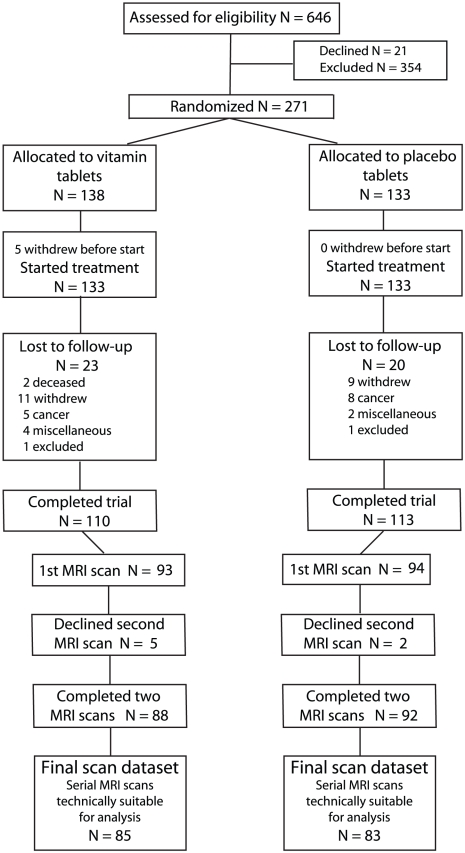
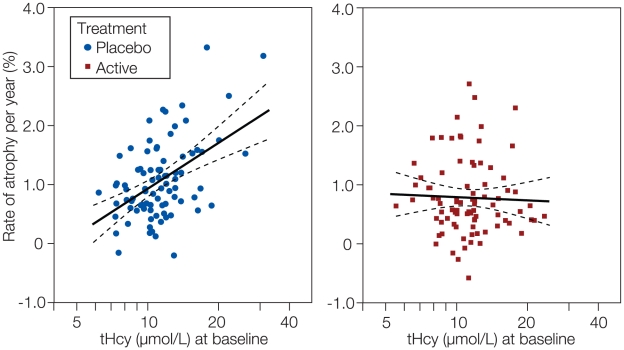
BACKGROUND: An increased rate of brain atrophy is often observed in older subjects, in particular those who suffer from cognitive decline. Homocysteine is a risk factor for brain atrophy, cognitive impairment and dementia. Plasma concentrations of homocysteine can be lowered by dietary administration of B vitamins. OBJECTIVE: To determine whether supplementation with B vitamins that lower levels of plasma total homocysteine can slow the rate of brain atrophy in subjects with mild cognitive impairment in a randomised controlled trial (VITACOG, ISRCTN 94410159). METHODS AND FINDINGS: Single-center, randomized, double-blind controlled trial of high-dose folic acid, vitamins B(6) and B(12) in 271 individuals (of 646 screened) over 70 y old with mild cognitive impairment. A subset (187) volunteered to have cranial MRI scans at the start and finish of the study. Participants were randomly assigned to two groups of equal size, one treated with folic acid (0.8 mg/d), vitamin B(12) (0.5 mg/d) and vitamin B(6) (20 mg/d), the other with placebo; treatment was for 24 months. The main outcome measure was the change in the rate of atrophy of the whole brain assessed by serial volumetric MRI scans. RESULTS: A total of 168 participants (85 in active treatment group; 83 receiving placebo) completed the MRI section of the trial. The mean rate of brain atrophy per year was 0.76% [95% CI, 0.63-0.90] in the active treatment group and 1.08% [0.94-1.22] in the placebo group (P = 0.001). The treatment response was related to baseline homocysteine levels: the rate of atrophy in participants with homocysteine >13 µmol/L was 53% lower in the active treatment group (P = 0.001). A greater rate of atrophy was associated with a lower final cognitive test scores. There was no difference in serious adverse events according to treatment category. CONCLUSIONS AND SIGNIFICANCE: The accelerated rate of brain atrophy in elderly with mild cognitive impairment can be slowed by treatment with homocysteine-lowering B vitamins. Sixteen percent of those over 70 y old have mild cognitive impairment and half of these develop Alzheimer's disease. Since accelerated brain atrophy is a characteristic of subjects with mild cognitive impairment who convert to Alzheimer's disease, trials are needed to see if the same treatment will delay the development of Alzheimer's disease. TRIAL REGISTRATION: Controlled-Trials.com ISRCTN94410159.
Overview
The claims and statistics of this paper haven’t been checked yet.
Run the check — free, no account needed. It reads the open-access text and checks the sources it cites.
Integrity signals
Registry
Cites
Statistics
Figures
Verification
Claims the paper makes
The claims and statistics of this paper haven’t been checked yet.
Run the check — free, no account needed. It reads the open-access text and checks the sources it cites.
Claims other papers make about this one
Each is checked against this paper’s own text: does it say what the citing paper says it does?
The source backs part of the claim, not all of it — or backs it for a different population, condition or comparison.
In the citing paper
“Finally, dietary approaches in terms of nutrition supplementation, such as combined formulation of specific active ingredients or probiotics, or nutritional guidance, such as fasting intermitting or Mediterranean diet, ameliorate both cognition and function of prodromal and mild AD patients [200,201,202].”
From Treatment of Alzheimer’s Disease: Beyond Symptomatic Therapies (2023) · cites this paper as [200]
Experimental — accuracy not yet measuredThe cited source says what the claim attributes to it.
In the citing paper
“While some degree of brain atrophy is common in older age, even in people who are cognitively healthy, atrophy is accelerated in people with Alzheimer's dementia.”
From 2024 Alzheimer's disease facts and figures (2024) · cites this paper as [20]
Self-check
Percentages, sums and reported differences re-computed from the paper’s own numbers.
The self-check needs the paper’s full text.
Citations
Cites
Folstein, M. F., Folstein, S. E., & McHugh, P. R. (1975) · Journal of Psychiatric Research · doi:10.1016/0022-3956(75)90026-6 · Cited by 88,282 · cited 5×
“First, in studies over longer periods (up to 5 years) it has been found that the rate of whole brain atrophy in MCI is correlated with cognitive decline in several tests, including the MMSE [5].”
InfluentialMoms, J. C., Heyman, A., Mohs, R. C., Hughes, J. P., van Belle, G., Fillenbaum, G., Mellits, E. D., & Clark, C. (1989) · Neurology · doi:10.1212/wnl.39.9.1159 · Cited by 4,130 · cited 1×
“…daily living based on the Cambridge Behavioural Inventory [26], an objective memory problem assessed with the ‘Telephone interview of cognitive status, modified’ (TICS-M) [27], a test without a ceiling effect [28], and category fluency [29] based on previously defined cut-off scores for MCI [28].”
Consortium to Establish a Registry for Alzheimer's Disease (CERAD)
Fillenbaum, G., & Heyman, A. (2002) · doi:10.1002/0470846410.ch42(iii · Cited by 2,859
Accurate, Robust, and Automated Longitudinal and Cross-Sectional Brain Change Analysis
Smith, S. M., Zhang, Y., Jenkinson, M., Chen, J. M., Matthews, P. M., Federico, A., & Stefano, N. D. (2002) · NeuroImage · doi:10.1006/nimg.2002.1040 · Cited by 2,013 · cited 3×
“A cross-sectional method (SIENAX) was used to estimate normalized brain volume from a single image, using the skull to normalize spatially, with respect to a standard image [31].”
InfluentialSelf-citationMild Cognitive Impairment: Ten Years Later
Petersen, R. C., Roberts, R. O., Knopman, D. S., Boeve, B. F., Geda, Y. E., Ivnik, R. J., Smith, G. E., & Jack, C. R. (2009) · Archives of Neurology · doi:10.1001/archneurol.2009.266 · Cited by 1,447
Longitudinal Magnetic Resonance Imaging Studies of Older Adults: A Shrinking Brain
Resnick, S. M., Pham, D. L., Kraut, M. A., Zonderman, A. B., & Davatzikos, C. (2003) · The Journal of Neuroscience · doi:10.1523/jneurosci.23-08-03295.2003 · Cited by 1,425 · cited 1×
“The atrophy occurs even in cognitively healthy subjects [1] but is much accelerated in patients suffering from Alzheimer’s disease [2,3,4,5].”
Folate, Vitamin B12, and Serum Total Homocysteine Levels in Confirmed Alzheimer Disease
Clarke, R., Smith, A. D., Jobst, K. A., Refsum, H., Sutton, L., & Ueland, P. M. (1998) · Archives of Neurology · doi:10.1001/archneur.55.11.1449 · Cited by 1,408 · cited 3×
“The results also fit with our earlier finding that raised tHcy predicts the rate of shrinkage of the medial temporal lobe in patients with Alzheimer’s disease [12].”
Self-citationMorris, J. C., Mohs, R. C., Rogers, H., Fillenbaum, G. G., & Heyman, A. (1988) · PubMed · Cited by 1,131
Facts and recommendations about total homocysteine determinations: an expert opinion
Refsum, H., Smith, A. D., Ueland, P. M., Nexo, E., Clarke, R., McPartlin, J., Johnston, C., Engbaek, F., Schneede, J., McPartlin, C., et al. (2004) · Clinical Chemistry · doi:10.1373/clinchem.2003.021634 · Cited by 1,056 · cited 1×
“The tissue and plasma concentrations of homocysteine are largely determined by the body’s status of certain B vitamins (folate, B6 and B12), which are cofactors or substrates for enzymes involved in homocysteine metabolism [22].”
Self-citationPrevalence of Cognitive Impairment without Dementia in the United States
Plassman, B. L., Langa, K. M., Fisher, G. G., Heeringa, S. G., Weir, D. R., Ofstedal, M. B., Burke, J. R., Hurd, M. D., Potter, G. G., Rodgers, W. L., et al. (2008) · Annals of Internal Medicine · doi:10.7326/0003-4819-148-6-200803180-00005 · Cited by 946 · cited 1×
“The prevalence of MCI is between 14% and 18% in those over 70 years-old [24,41], which means that about 5 million people in the USA and 14 million in greater Europe suffer from this condition.”
Cited by
Sorted by citations
Items 601–700 of 813
Li, C.-X., Cheng, G.-R., Liu, X., Chen, M., Dong, H., Meng, H., Peng, Y.-Y., Liu, N., Che, J.-W., Zhang, Y.-Y., et al. (2026) · Nutrition Research · doi:10.1016/j.nutres.2026.03.008 · Cited by 1
Nutraceuticals and the Microbiota–Gut–Brain Axis: A Pathway for Preventing Cognitive Decline
Castillo-Moral, Á., Toda-Ferran, C., Bulló, M., Teichenné, J., & Escoté, X. (2026) · Nutrition Reviews · doi:10.1093/nutrit/nuag017 · Cited by 1
Li, H., Chen, Y., Wang, Z., Wang, Y., Bi, R., Hou, J., Chen, H., Zhang, Z., Guo, Z., Chen, Z., et al. (2026) · Alzheimer s & Dementia · doi:10.1002/alz.71349 · Cited by 1
Siracusa, R., Arangia, A., Aparo, R., Cordaro, M., Fusco, R., Mandalari, G., Cuzzocrea, S., Impellizzeri, D., Paola, R. D., & D’Amico, R. (2026) · Food Science & Nutrition · doi:10.1002/fsn3.71714 · Cited by 1
“It has been shown that the consumption of folic acid, vitamins B2, B6, and B12 slowed the cognitive impairment (Smith et al. 2010).”
Nutritional modulation of the glymphatic system: mechanistic insights and clinical implications
Ko, J. W., & Jeon, S. (2026) · Critical Reviews in Food Science and Nutrition · doi:10.1080/10408398.2026.2659866 · Cited by 1
“…connecting B-vitamin supplementation with enhanced glymphatic activity remains limited, interventional trials demonstrate that lowering homocysteine through B-vitamin therapy can attenuate cognitive decline and brain atrophy in aging populations with mild cognitive impairment (Smith et al. 2010).”
Awashra, A., AbuBaha, M., Istetieh, K., Sandouka, D., Aldwaik, S. A., Abubaha, B., Saife, S., Emara, A., Zahran, A., Elgendy, M. S., et al. (2026) · Nutrition & Metabolism · doi:10.1186/s12986-026-01125-0 · Cited by 1
“…inter-ventional context, Smith et al. (VITACOG) showed that homocysteine-lowering with high-dose folate, B₆, and B₁₂ slowed brain atrophy in older adults with mild cognitive impairment, a result consistent with protection of vulnerable small-vessel territories and metabolically active tissue [87].”
Zuffa, S., Allaband, C., Charron‐Lamoureux, V., Caraballo‐Rodríguez, A. M., Patan, A., Mohanty, I., Agongo, J., Bostick, J. W., Connerly, T. J., Thron, T., et al. (2026) · Cell Reports · doi:10.1016/j.celrep.2026.117499 · Cited by 18
Nankivell, M. C., Rosenfeldt, F., Reddan, J. M., de Haan, J. B., Ping, C. Z., Campbell‐Brown, B., Pipingas, A., Pase, M. P., Ou, R., Cooke, M. B., et al. (2026) · Antioxidants · doi:10.3390/antiox15070806 · Cited by 1
“Indeed, the enhanced risk of decline over time was part of the reason patients with MCI were specifically recruited for the VITACOG study [62], which subsequently provided strong evidence that two years of daily supplementation with vitamin B6, B12, and folate mitigated decrements in brain…”
Berger, M. M., Blaauw, R., D’Amelio, P., Ehrhart, N. P., Gombart, A. F., Gramlich, L. M., Kressig, R. W., & Calder, P. C. (2026) · GeroScience · doi:10.1007/s11357-026-02402-9 · Cited by 1
The Relations Between the Vitamins and Alzheimer Dementia
Köseoğlu, E. (2011) · InTech eBooks · doi:10.5772/19673 · Cited by 1
“It was reported that trials were needed to see if the same treatment will delay the development of AD (Smith et al., 2010).”
Estilo de vida y riesgo de padecer demencia
Menéndez‐González, M., Fernández, B. S., & Lopez-Muniz, A. (2011) · Consultation of the Doctoral Thesis Database (TESEO) (Ministerio de Educación, Cultura y Deporte) · Cited by 1
Is There a Link Between Vitamin B12 Deficiency and Cognitive Decline in the Elderly?
Tangney, C. (2012) · Aging Health · doi:10.2217/ahe.12.50 · Cited by 1
74 Disease-modification in mild cognitive impairment by lowering homocysteine
Smith, A. D. (2012) · Neurobiology of Aging · doi:10.1016/j.neurobiolaging.2012.01.092 · Cited by 1
Self-citationVitamine B9, vitamine B12, homocystéine, et fonctions cognitives
Vogel, T., Kaltenbach, G., Gény, B., & Andrès, E. (2013) · NPG. Neurologie, psychiatrie, gériatrie/NPG · doi:10.1016/j.npg.2013.01.005 · Cited by 1
Kwok, T. C. Y. (2014) · Elsevier eBooks · doi:10.1016/b978-0-12-407824-6.00022-7 · Cited by 1
Impact of consumption of B-group vitamins on cognitive functions of women after menopause
Stępniak, A., Kot, K., Witczak, M., Kondracka, B., & Bojar, I. (2013) · Menopause Review/Przegląd Menopauzalny · doi:10.5114/pm.2013.39810 · Cited by 1
“W innym badaniu stwierdzono również mniejszą atrofię mózgu w porównaniu z grupą placebo [32].”
Nutrition and Central Nervous System
Álvarez, S. M., Gómez, N. N., Navigatore-Fonzo, L., Sanchez, E. S., & Giménez, M. S. (2017) · Springer eBooks · doi:10.1007/978-3-319-53126-7_35 · Cited by 1
Fetal Programming: Maternal Diets, Tryptophan, and Postnatal Development
Musumeci, G., Castrogiovanni, P., Trovato, F. M., Szychlinska, M. A., & Imbesi, R. (2017) · Springer eBooks · doi:10.1007/978-3-319-60289-9_24 · Cited by 1
Thaimory, M., Goudarzi, I., Lashkarbolouki, T., & Abrari, K. (2021) · Toxicology Research · doi:10.1093/toxres/tfab065 · Cited by 1
ALZHEİMER HASTALIĞINDA VİTAMİNLERİN ROLÜ
Müderrisoğlu, S., & Yarım, G. F. (2022) · Samsun Sağlık Bilimleri Dergisi · doi:10.47115/jshs.977442 · Cited by 1
Cognitive impairment—risk factors and prevention
Mangialasche, F., Ngandu, T., & Kivipelto, M. (2017) · doi:10.1093/med/9780198701590.003.0123 · Cited by 1
Integrative and Complementary Medicine in Psychiatry
Sarris, J. J., Gerbarg, P. L., Brown, R. P., & Muskin, P. R. (2023) · Springer eBooks · doi:10.1007/978-3-030-42825-9_145-1 · Cited by 1
Effect of Mediterranean Dietary Pattern on Cognitive Status in Community-Dwelling Older Adults
Yaghi, N., El-Hayeck, R., Boulos, C., Abifadel, M., & Yaghi, C. (2023) · Nutrients · doi:10.3390/nu15183911 · Cited by 2
“These parameters could be considered as confounding factors when comparing rural vs. urban prevalence of CD, since each of these factors is described by the literature as a risk factor for CD [7,72–78].”
BackgroundResultDoença de Alzheimer: é possível prevenir?
Leite, R. I. J. C. K., da Costa, B. T., Ferreira, L. G., Peixoto, A. G. A., Villela, E. V., & Canelas, F. M. A. M. (2024) · Brazilian Journal of Health Review · doi:10.34119/bjhrv7n2-157 · Cited by 1
Integrative and Complementary Medicine in Psychiatry
Sarris, J. J., Gerbarg, P. L., Brown, R. P., & Muskin, P. R. (2024) · Springer eBooks · doi:10.1007/978-3-030-51366-5_145 · Cited by 1
Neurological Manifestations of Vitamin B12 Deficiency
Meshram, A., & Meshram, C. (2025) · Elsevier eBooks · doi:10.1016/b978-0-323-95702-1.00457-7 · Cited by 1
Functional and Structural MRI in Alzheimer’s Disease: A Multimodal Approach
Grothe, M. J., Bokde, A. L. W., & Teipel, S. J. (2014) · Springer eBooks · doi:10.1007/978-3-642-54542-9_20 · Cited by 1
Clinical Issues in Alzheimer Drug Development
Schneider, L. S. S. (2016) · Elsevier eBooks · doi:10.1016/b978-0-12-802173-6.00019-8 · Cited by 1
An Overview on Vitamin B12 and Dementia with Behavioral and Executive Disturbances
Blundo, C., Gerace, C., & Ricci, M. (2014) · Elsevier eBooks · doi:10.1016/b978-0-12-407824-6.00060-4 · Cited by 1
Basheer, M. P., Soopy, K., Kumar, K. M., Sreekumaran, E., & Ramakrishna, T. (2016) · Journal of Neuroscience and Behavioral Health · doi:10.5897/jnbh2015.0130 · Cited by 1
“The B vitamins such as folic acid, vitamin B6 and vitamin B12 are known to control levels of homocysteine in the blood and high levels of Hcy are associated with an increased Alzheimer’s risk (Smith et al., 2010).”
Backgroundde Jager, C. A. (2013) · Vitamins & Trace Elements · doi:10.4172/2167-0390.1000e103 · Cited by 1
“After 2 years of intervention with high doses of vitamin B6, B12 and folic acid there was significantly less brain shrinkage in the treated group compared with the placebo group and this was related to the concentration of thcy at baseline [15].”
Vizcaíno, G., & Vizcaíno, J. (2017) · Redalyc (Universidad Autónoma del Estado de México) · Cited by 1
Homocisteina y trastornos neurocognitivos. ¿Una luz al final del tunel?
Vizcaíno, G. (2020) · Medicina y Laboratorio · doi:10.36384/01232576.210 · Cited by 1
“Aunque algunos estudios confirman el beneficio de esta asociación [82,83], en otros de tipo aleatorio controlados, metaanálisis [54,84-86] y revisiones de tipo narrativo [4,87-90], solo uno muestra conclusiones favorables [91]; el resto de ellos reporta que hay inconsistencia o conflicto en los resultados sobre la tri…”
BackgroundGhosh, R. (2020) · Elsevier eBooks · doi:10.1016/b978-0-12-820593-8.00026-4 · Cited by 1
Relevancia del metabolismo del folato en el contexto de enfermedades neurodegenerativas
Saínz, Y. J., Almarales, D. A. C., & Mederos, L. E. A. (2021) · Revista Habanera de Ciencias Médicas · Cited by 1
Clinical Topics in Old Age Psychiatry
Lilford, P., Adshead, G., & Hughes, J. (2020) · Cambridge University Press eBooks · doi:10.1017/9781108594714 · Cited by 1
Gesundheit im Alter ist kein Zufall
Friedrichsen, H.-P., & Gröber, U. (2021) · Zeitschrift für Orthomolekulare Medizin · doi:10.1055/a-1689-6792 · Cited by 1
What Can Person-Centred Care in Dementia Learn from the Recovery Movement?
Hill, L., Roberts, G. A., & Perkins, R. E. (2020) · Cambridge University Press eBooks · doi:10.1017/9781108594714.018 · Cited by 1
Tu, M.-C., Hsu, Y., Lo, C., & Huang, C.-F. (2019) · Springer eBooks · doi:10.1007/978-3-319-55387-0_35 · Cited by 1
Jakubowski, H. (2013) · Springer eBooks · doi:10.1007/978-3-7091-1410-0_1 · Cited by 1
Management of Neurogenic Hyperhomocysteinemia (HHcy) by a Plant-Based Formulation
Kesharwani, R. K., Dubey, G. P., Mishra, V. N., Jain, D., Dubey, R., & Ojha, R. P. (2022) · Springer eBooks · doi:10.1007/978-981-16-6867-8_12 · Cited by 1
Baloh, R. W. (2022) · Springer eBooks · doi:10.1007/978-3-031-13924-6_6 · Cited by 1
Fujii, T. (2022) · JOURNAL OF THE BREWING SOCIETY OF JAPAN · doi:10.6013/jbrewsocjapan.117.76 · Cited by 1
Diätetische Lebensmittel im Frühstadium der Alzheimer-Demenz
Rainer, M., & Ham, M. (2015) · Journal für Kardiologie (Krause & Pachernegg GmbH) · Cited by 1
Nutrition, epigenetics and ageing
McKay, J. A., & Wakeling, L. A. (2015) · Wiley eBooks · doi:10.1002/9781118823408.ch3 · Cited by 1
Yaghoubi, A. (2021) · Research Square · doi:10.21203/rs.3.rs-427829/v1 · Cited by 1
“Hyperhomocysteinemia is associated with increased cognitive decline in healthy older adults with a higher risk of cognitive impairment [2, 3].”
BackgroundAsociaciones entre dieta y función cognitiva en el Proyecto SUN
Muñoz, M. I. (2022) · Deposito Adademico Digital Universidad De Navarra (University of Navarra) · doi:10.15581/10171/63292 · Cited by 1
Zhu, H., Zhou, S., Xie, C., Cheng, H., Huang, G., Wang, Z., & Feng, L. (2021) · SSRN Electronic Journal · doi:10.2139/ssrn.3961644 · Cited by 1
Miller, J. W. (2022) · Elsevier eBooks · doi:10.1016/b978-0-12-821848-8.00136-0 · Cited by 1
Mental Health and Cognitive Function
Sharp, P., Rogers, P. J., McNulty, H., & Fox, K. R. (2017) · Wiley eBooks · doi:10.1002/9781119141150.ch22 · Cited by 1
Concerning the debate about homocysteine, B vitamins, and dementia
Miller, J. W., McCaddon, A., Yu, J., Hooshmand, B., Refsum, H., & Smith, A. D. (2025) · Journal of Alzheimer s Disease · doi:10.1177/13872877251350297 · Cited by 1
Self-citationビタミンB群および関連物質と臨床( 「ビタミン誘導体の臨床応用」(第64回大会シンポジウム))
栗山, 勝., & 濱野忠則 (2013) · ビタミン · doi:10.20632/vso.87.2_85
Medical Journal Watch: Context and Applications
Challem, J. (2011) · Alternative and Complementary Therapies · doi:10.1089/act.2011.17104
Primary Prevention of Dementia
Quinn, J. G. (2013) · doi:10.1002/9781118656082.ch12
Exploring B Vitamins Beyond Early Adulthood
Reay, J. L. (2012) · doi:10.1007/978-1-137-00689-9_6
Bases moleculares de alterações no metabolismo de ácido fólico, cobalamina e ferro
Guerra‐Shinohara, E. M. (2014) · Digital Library of Theses and Dissertations (Universidade de São Paulo) · doi:10.11606/t.9.2014.tde-29042014-125910
Current Controversies in Nutrition: Homocysteine Reduction and the B-Vitamin Controversy
Galland, L. (2012) · Alternative and Complementary Therapies · doi:10.1089/act.2012.18309
Rahmawati, A., Pramantara, I. D. P., & Purba, M. B. (2012) · Jurnal Gizi Klinik Indonesia
Does vitamin B reduce dementia risk?
Shepherd, A. B. (2010) · Nursing and Residential Care · doi:10.12968/nrec.2010.12.11.79133
Oral folic acid and vitamin B-12 supplementation to prevent cognitive decline
Feng, L. (2012) · American Journal of Clinical Nutrition · doi:10.3945/ajcn.112.034785
Welche Nahrungsergänzungsmittel braucht die Frau nach der Menopause?
Zyriax, B.-C., & Windler, E. E. T. (2012) · Journal für Kardiologie (Krause & Pachernegg GmbH)
Winkler, A., Bach, D., Croy, A., Fasching, P., Gatterer, G., Marksteiner, J., Monsch, A. U., Pils, K., Rainer, M., Roller‐Wirnsberger, R., et al. (2013) · Journal für Kardiologie (Krause & Pachernegg GmbH)
Ist die Vitaminsubstitution bei Epilepsie-Patienten sinnvoll?
Blaeser-Kiel, G. (2013) · DNP - Der Neurologe und Psychiater · doi:10.1007/s15202-013-0316-2
Cognitive Decline and Alzheimer's Disease
Simmons, A. (2011) · Nutrition and Health · doi:10.1177/026010601102000407
Vitamin B12 Requirements in Older Adults
Doets, E. L., & de Groot, C. P. G. M. (2016) · Elsevier eBooks · doi:10.1016/b978-0-12-801816-3.00042-x
Homocysteine and Endothelial Dysfunction in Rheumatic Diseases
Dinçel, A. S., & Gogus, F. N. (2013) · CRC Press eBooks · doi:10.1201/b14907-13
Müller, T. M. (2012) · DNP - Der Neurologe und Psychiater · doi:10.1007/s15202-012-0376-8
Evidence-based prevention and treatment of dementia
Smith, A. D., Refsum, H., & Jacoby, R. J. (2016) · The Lancet Neurology · doi:10.1016/s1474-4422(16)30074-6
Self-citationJadavji, N. M. (2013) · eScholarship@McGill (McGill) · doi:10.82308/49571
Neuroinflammation in Alzheimer's Disease and Vascular Cognitive Impairment
Weekman, E. M. (2017) · UKnowledge (University of Kentucky) · doi:10.13023/etd.2017.051
“5 mg) and vitamin B6 (20 mg) for two years (268).”
BackgroundNehls, M. C. (2017) · Erfahrungsheilkunde · doi:10.1055/s-0043-103001
“[25] Smith AD, Smith SM, de Jager CA et al.”
BackgroundFernández, S. S. M. (2016) · Digital Library of Theses and Dissertations (Universidade de São Paulo) · doi:10.11606/d.89.2016.tde-19102016-165329
A healthy diet to reduce the risk of dementia in people with a learning disability
Harper, L. (2017) · Learning Disability Practice · doi:10.7748/ldp.2017.e1829
Approaches to Ensuring Food and Nutrition Security in the Elderly
Mohajeri, M. H., Weber, P., & Eggersdorfer, M. L. (2017) · Springer eBooks · doi:10.1007/978-3-319-55942-1_28
Crowell, J. (2012) · TSpace (University of Toronto)
Cherdal, S., & Mouline, S. (2017) · International Conference on Information and Digital Technologies (IDT) · doi:10.1109/dt.2017.8012114
“der, and abnormal accumulation of homocysteine [36], [37].”
BackgroundHomocysteine, Tryptophan, and Cognition in the Very Old
Mendonça, N., Granic, A., Mathers, J. C., Martin-Ruiz, C. M., Wesnes, K. A., Seal, C. J., Jagger, C., & Hill, T. R. (2017) · Journal of the American Medical Directors Association · doi:10.1016/j.jamda.2017.07.010
“It was concluded that the decline in brain atrophy in older adults with mild cognitive impairment could be slowed through normalising tHcy concentrations by B vitamin supplementation ((3,4)).”
BackgroundTu, M.-C., Hsu, Y., Lo, C., & Huang, C.-F. (2017) · Springer eBooks · doi:10.1007/978-3-319-40007-5_35-2
Déficit de vitamina B12 en la práctica psiquiátrica
Bolivariana, U. D. A. U. P., Vargas, C., Noreña, D. C., & de Antioquia, U. (2017) · IATREIA · doi:10.17533/udea.iatreia.v30n4a04
“Vitamin B(12) deficiency and depression in physically disabled older women: epidemiologic evidence from the Women’s Health and Aging Study.”
BackgroundInfluentialPublic Health Approaches to Alzheimer’s Disease
Blank, R. H. (2018) · Springer eBooks · doi:10.1007/978-981-13-0656-3_5
21st Century Safer, Effective Nutritional Supplements to Enhance Health
Jaffe, R. (2018) · Novel Techniques in Nutrition & Food Science · doi:10.31031/ntnf.2018.01.000518
The Impact of Epigallocatechin-3-Gallate (EGCG) on Ts65Dn Down Syndrome Mouse Models
Santana, N. (2019) · Journal of International Crisis and Risk Communication Research
최영민 (2013) · Seoul National University Open Repository (Seoul National University)
Mental Health Laws from All UK Jurisdictions
Burrell, C., & Emmett, C. (2020) · Cambridge University Press eBooks · doi:10.1017/9781108594714.024
Igila, A. F., Aaron, O., & Bamigbowu, O. E. (2020) · International Journal of Clinical and Diagnostic Pathology · doi:10.33545/pathol.2020.v3.i1f.198
“type of antioxidant was reduced with increase in homocysteine level and this was in keeping with other studies [24, 25, 26] and supports the oxidative stress hypothesis of high homocysteine level and increase risk of type-2 diabetics since increase plasma homocysteine reduces the”
ResultNutrition and Behavioral Health/Mental Health/Neurological Health
Wallace, R. L. (2020) · Springer eBooks · doi:10.1007/978-3-030-30730-1_29
Lam, A. B., Kervin, K., & Tanis, J. E. (2021) · bioRxiv (Cold Spring Harbor Laboratory) · doi:10.1101/2021.02.22.432392
“slowed brain atrophy (Smith et al., 2010).”
ResultEpidemiology and Mental Health in Old Age
Lilford, P., & Hughes, J. C. (2020) · Cambridge University Press eBooks · doi:10.1017/9781108594714.004
Hyperhomocysteinemia and Risk of Cervical Cancer
Pratap, P. D., Raza, S. T., Pratap, S., & Rajput, M. (2021) · Springer eBooks · doi:10.1007/978-3-030-57839-8_9
Lysosomal cobalamin transport and its relevance to ageing and Alzheimer's disease
Zhao, H. (2014) · Research Online (University of Wollongong)
Aging, dietary patterns, and cognition
Abbatecola, A. M., & Marfella, R. (2021) · Elsevier eBooks · doi:10.1016/b978-0-12-817990-1.00045-7
Yu, J. H., Kim, R. E. Y., Jung, J., Park, S. Y., Lee, D. Y., Cho, H. J., Kim, N. H., Yoo, H. J., Seo, J. A., Kim, S. G., et al. (2020) · SSRN Electronic Journal · doi:10.2139/ssrn.3741260
B-Vitamine in der Geriatrie – was bestimmen, was ersetzen?
Djukic, M., & Arnim, C. A. F. V. (2021) · Aktuelle Ernährungsmedizin · doi:10.1055/a-1449-1786
“0,8mg Folsäure, 0,5mg Vitamin B12 und 20mg Vitamin B6 konnte in einer RCT bei Patienten mit einer leichten kognitiven Störung eine Verlangsamung der Hirnatrophie bewirkt werden [16].”
BackgroundThe Future Role of Biomarkers in Alzheimer’s Disease Diagnostics
Richens, J. L., Vafadar-Isfahani, B., Vere, K., Ball, G., Kalsheker, N. A., Rees, R. C., Bajaj, N. P. S., O’Shea, P., & Morgan, K. (2013) · Springer eBooks · doi:10.1007/978-1-4614-7309-1_13
Mental Health in Parkinson’s Disease
Jones, S., Torsney, K., Scourfield, L., Berryman, K., & Henderson, E. J. (2020) · Cambridge University Press eBooks · doi:10.1017/9781108594714.011
Mitchell, A. J. (2020) · Cambridge University Press eBooks · doi:10.1017/9781108594714.014
Metadata
- Authors
- Smith, A. D., Smith, S. M., de Jager, C. A., Whitbread, P., Johnston, C., Agacinski, G., Oulhaj, A., Bradley, K. M., Jacoby, R., & Refsum, H.
- Affiliations
- University of Oxford (GB)
- University of Oslo (NO)
- Corresponding author
- Smith, A. David
- Venue
- PLoS ONE
- Publisher
- Public Library of Science (PLoS)
- Published
- 2010-09-08
- Volume
- 5
- Issue
- 9
- Pages
- e12244
- ISSN
- 1932-6203 (ISSN-L)
- PMC
- PMC2935890
- OpenAlex
- W2156635660
- Cited by
- 813
- References
- 49
- Citations by year
- 2026: 50 · 2025: 49 · 2024: 34 · 2023: 44 · 2022: 58 · 2021: 58 · 2020: 66 · 2019: 39 · 2018: 43 · 2017: 55 · 2016: 59 · 2015: 49 · 2014: 44 · 2013: 58 · 2012: 59
- FWCI
- 36.35
- Type
- journal article
- Language
- en
- Open access
- gold
- doi.org
- Locations
- PLoS ONE (publishedVersion, cc-by)
- PubMed Central (publishedVersion, cc-by)
- PubMed (publishedVersion)
- ORCA Online Research @Cardiff (Cardiff University) (acceptedVersion)
- DOAJ (DOAJ: Directory of Open Access Journals) (submittedVersion, cc-by-sa)
- Figshare (submittedVersion, cc-by)
- Funders
- Alzheimer's Research Trust
- National Institute for Health and Care Research
- University of Oxford
- Medical Research Council
- Topics
- Health Sciences › Nursing › Nutrition and Dietetics › Folate and B Vitamins Research
- Health Sciences › Medicine › Psychiatry and Mental health › Dementia and Cognitive Impairment Research
- Health Sciences › Medicine › Clinical Neurology › Alcoholism and Thiamine Deficiency
- Keywords
- homocysteine, B vitamins, folic acid, vitamin B6, vitamin B12, brain atrophy, mild cognitive impairment, cognitive decline, dementia prevention, older adults, plasma homocysteine, volumetric MRI, cognitive performance, adverse events
- MeSH terms
- Aged, Aged, 80 and over, Atrophy, Brain, Cognition Disorders, Female, Homocysteine, Humans, Magnetic Resonance Imaging, Male, Radiography, Vitamin B Complex, Treatment Outcome
About these checks
Registry, retraction, Cites and statistics results are computed, not judged, with one exception: a printed reference that no index lists is read once by a model before it counts as a citation error. Claims are extracted by a model and kept only when their quote appears verbatim in the text; each cited source is then checked, with a model’s help, for whether it says what the claim relies on. Those verdicts can be wrong — read the claim’s quote and the cited source before relying on one.
Statistics and arithmetic are recomputed, not judged.
Confidence bands are shown only for fields calibrated on our annotated test set. None is calibrated yet, so no band is shown.
What counts as a claim ›How we measure confidence ›How we check this ›
Are you an author, or do you see a problem with this page? Request a review
