

The DOI matches its Crossref record; 49 of the 49 references it cites were found in a registry or an index.
Homocysteine-Lowering by B Vitamins Slows the Rate of Accelerated Brain Atrophy in Mild Cognitive Impairment: A Randomized Controlled Trial
Open accessAbstract
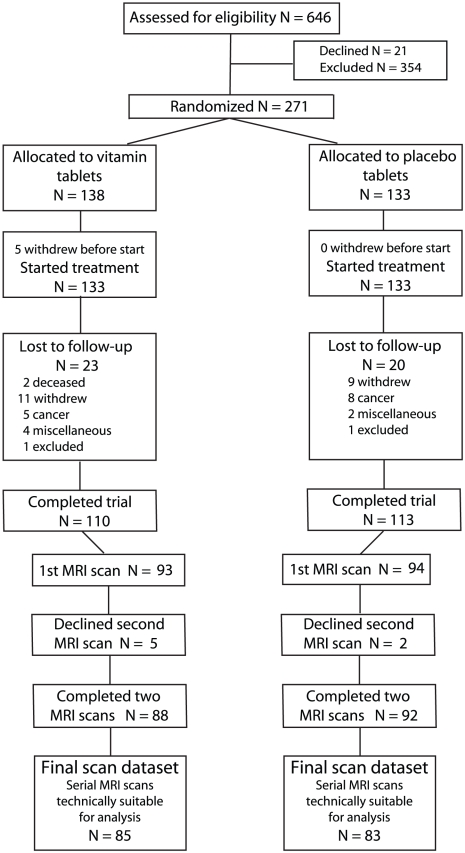
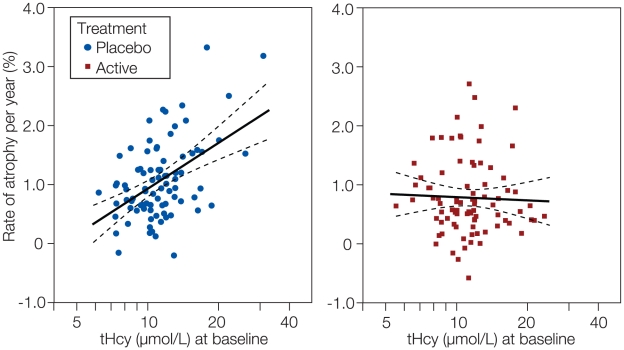
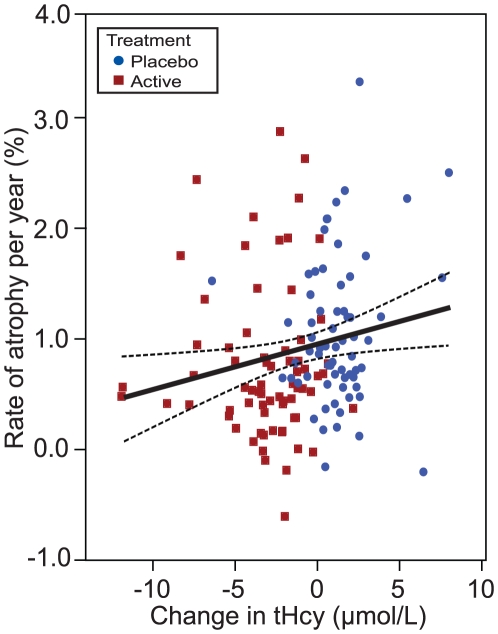
BACKGROUND: An increased rate of brain atrophy is often observed in older subjects, in particular those who suffer from cognitive decline. Homocysteine is a risk factor for brain atrophy, cognitive impairment and dementia. Plasma concentrations of homocysteine can be lowered by dietary administration of B vitamins. OBJECTIVE: To determine whether supplementation with B vitamins that lower levels of plasma total homocysteine can slow the rate of brain atrophy in subjects with mild cognitive impairment in a randomised controlled trial (VITACOG, ISRCTN 94410159). METHODS AND FINDINGS: Single-center, randomized, double-blind controlled trial of high-dose folic acid, vitamins B(6) and B(12) in 271 individuals (of 646 screened) over 70 y old with mild cognitive impairment. A subset (187) volunteered to have cranial MRI scans at the start and finish of the study. Participants were randomly assigned to two groups of equal size, one treated with folic acid (0.8 mg/d), vitamin B(12) (0.5 mg/d) and vitamin B(6) (20 mg/d), the other with placebo; treatment was for 24 months. The main outcome measure was the change in the rate of atrophy of the whole brain assessed by serial volumetric MRI scans. RESULTS: A total of 168 participants (85 in active treatment group; 83 receiving placebo) completed the MRI section of the trial. The mean rate of brain atrophy per year was 0.76% [95% CI, 0.63-0.90] in the active treatment group and 1.08% [0.94-1.22] in the placebo group (P = 0.001). The treatment response was related to baseline homocysteine levels: the rate of atrophy in participants with homocysteine >13 µmol/L was 53% lower in the active treatment group (P = 0.001). A greater rate of atrophy was associated with a lower final cognitive test scores. There was no difference in serious adverse events according to treatment category. CONCLUSIONS AND SIGNIFICANCE: The accelerated rate of brain atrophy in elderly with mild cognitive impairment can be slowed by treatment with homocysteine-lowering B vitamins. Sixteen percent of those over 70 y old have mild cognitive impairment and half of these develop Alzheimer's disease. Since accelerated brain atrophy is a characteristic of subjects with mild cognitive impairment who convert to Alzheimer's disease, trials are needed to see if the same treatment will delay the development of Alzheimer's disease. TRIAL REGISTRATION: Controlled-Trials.com ISRCTN94410159.
Overview
The claims and statistics of this paper haven’t been checked yet.
Run the check — free, no account needed. It reads the open-access text and checks the sources it cites.
Integrity signals
Registry
Cites
Statistics
Figures
Verification
Claims the paper makes
The claims and statistics of this paper haven’t been checked yet.
Run the check — free, no account needed. It reads the open-access text and checks the sources it cites.
Claims other papers make about this one
Each is checked against this paper’s own text: does it say what the citing paper says it does?
The source backs part of the claim, not all of it — or backs it for a different population, condition or comparison.
In the citing paper
“Finally, dietary approaches in terms of nutrition supplementation, such as combined formulation of specific active ingredients or probiotics, or nutritional guidance, such as fasting intermitting or Mediterranean diet, ameliorate both cognition and function of prodromal and mild AD patients [200,201,202].”
From Treatment of Alzheimer’s Disease: Beyond Symptomatic Therapies (2023) · cites this paper as [200]
Experimental — accuracy not yet measuredThe cited source says what the claim attributes to it.
In the citing paper
“While some degree of brain atrophy is common in older age, even in people who are cognitively healthy, atrophy is accelerated in people with Alzheimer's dementia.”
From 2024 Alzheimer's disease facts and figures (2024) · cites this paper as [20]
Self-check
Percentages, sums and reported differences re-computed from the paper’s own numbers.
The self-check needs the paper’s full text.
Citations
Cites
Folstein, M. F., Folstein, S. E., & McHugh, P. R. (1975) · Journal of Psychiatric Research · doi:10.1016/0022-3956(75)90026-6 · Cited by 88,282 · cited 5×
“First, in studies over longer periods (up to 5 years) it has been found that the rate of whole brain atrophy in MCI is correlated with cognitive decline in several tests, including the MMSE [5].”
InfluentialMoms, J. C., Heyman, A., Mohs, R. C., Hughes, J. P., van Belle, G., Fillenbaum, G., Mellits, E. D., & Clark, C. (1989) · Neurology · doi:10.1212/wnl.39.9.1159 · Cited by 4,130 · cited 1×
“…daily living based on the Cambridge Behavioural Inventory [26], an objective memory problem assessed with the ‘Telephone interview of cognitive status, modified’ (TICS-M) [27], a test without a ceiling effect [28], and category fluency [29] based on previously defined cut-off scores for MCI [28].”
Consortium to Establish a Registry for Alzheimer's Disease (CERAD)
Fillenbaum, G., & Heyman, A. (2002) · doi:10.1002/0470846410.ch42(iii · Cited by 2,859
Accurate, Robust, and Automated Longitudinal and Cross-Sectional Brain Change Analysis
Smith, S. M., Zhang, Y., Jenkinson, M., Chen, J. M., Matthews, P. M., Federico, A., & Stefano, N. D. (2002) · NeuroImage · doi:10.1006/nimg.2002.1040 · Cited by 2,013 · cited 3×
“A cross-sectional method (SIENAX) was used to estimate normalized brain volume from a single image, using the skull to normalize spatially, with respect to a standard image [31].”
InfluentialSelf-citationMild Cognitive Impairment: Ten Years Later
Petersen, R. C., Roberts, R. O., Knopman, D. S., Boeve, B. F., Geda, Y. E., Ivnik, R. J., Smith, G. E., & Jack, C. R. (2009) · Archives of Neurology · doi:10.1001/archneurol.2009.266 · Cited by 1,447
Longitudinal Magnetic Resonance Imaging Studies of Older Adults: A Shrinking Brain
Resnick, S. M., Pham, D. L., Kraut, M. A., Zonderman, A. B., & Davatzikos, C. (2003) · The Journal of Neuroscience · doi:10.1523/jneurosci.23-08-03295.2003 · Cited by 1,425 · cited 1×
“The atrophy occurs even in cognitively healthy subjects [1] but is much accelerated in patients suffering from Alzheimer’s disease [2,3,4,5].”
Folate, Vitamin B12, and Serum Total Homocysteine Levels in Confirmed Alzheimer Disease
Clarke, R., Smith, A. D., Jobst, K. A., Refsum, H., Sutton, L., & Ueland, P. M. (1998) · Archives of Neurology · doi:10.1001/archneur.55.11.1449 · Cited by 1,408 · cited 3×
“The results also fit with our earlier finding that raised tHcy predicts the rate of shrinkage of the medial temporal lobe in patients with Alzheimer’s disease [12].”
Self-citationMorris, J. C., Mohs, R. C., Rogers, H., Fillenbaum, G. G., & Heyman, A. (1988) · PubMed · Cited by 1,131
Facts and recommendations about total homocysteine determinations: an expert opinion
Refsum, H., Smith, A. D., Ueland, P. M., Nexo, E., Clarke, R., McPartlin, J., Johnston, C., Engbaek, F., Schneede, J., McPartlin, C., et al. (2004) · Clinical Chemistry · doi:10.1373/clinchem.2003.021634 · Cited by 1,056 · cited 1×
“The tissue and plasma concentrations of homocysteine are largely determined by the body’s status of certain B vitamins (folate, B6 and B12), which are cofactors or substrates for enzymes involved in homocysteine metabolism [22].”
Self-citationPrevalence of Cognitive Impairment without Dementia in the United States
Plassman, B. L., Langa, K. M., Fisher, G. G., Heeringa, S. G., Weir, D. R., Ofstedal, M. B., Burke, J. R., Hurd, M. D., Potter, G. G., Rodgers, W. L., et al. (2008) · Annals of Internal Medicine · doi:10.7326/0003-4819-148-6-200803180-00005 · Cited by 946 · cited 1×
“The prevalence of MCI is between 14% and 18% in those over 70 years-old [24,41], which means that about 5 million people in the USA and 14 million in greater Europe suffer from this condition.”
Cited by
Sorted by citations
Items 101–200 of 813
Troesch, B., Biesalski, H. K., Bos, R., Buskens, E., Calder, P. C., Saris, W. H. M., Spieldenner, J., Verkade, H. J., Weber, P., & Eggersdorfer, M. L. (2015) · Nutrients · doi:10.3390/nu7075266 · Cited by 103
“impairment [83].”
Vitamin B 12 and ageing: current issues and interaction with folate
Hughes, C., Ward, M., Hoey, L., & McNulty, H. (2013) · Annals of Clinical Biochemistry International Journal of Laboratory Medicine · doi:10.1177/0004563212473279 · Cited by 91
Magnetic resonance imaging: A biomarker for cognitive impairment in Parkinson's disease?
Duncan, G. W., Firbank, M., O'Brien, J. T., & Burn, D. J. (2013) · Movement Disorders · doi:10.1002/mds.25352 · Cited by 94
“In early PD, in which it is believed that a-synuclein deposition is restricted to the brainstem and some limbic structures, significant cortical atrophy in cognitively intact patients is not observed with VBM,33,59,61,73,74 however, one study did report limited focal atrophy compared with age-matched controls.59 Corti…”
MethodInfluentialMechanistic Link between Vitamin B12 and Alzheimer’s Disease
Lauer, A. A., Grimm, H. S., Apel, B., Golobrodska, N., Kruse, L., Ratanski, E., Schulten, N., Schwarze, L., Slawik, T., Sperlich, S., et al. (2022) · Publications of the UdS (Saarland University) · doi:10.22028/d291-35299 · Cited by 90
Results of 2-year vitamin B treatment on cognitive performance
van der Zwaluw, N. L., Dhonukshe-Rutten, R. A. M., van Wijngaarden, J. P., Brouwer-Brolsma, E. M., van de Rest, O., Veld, P. H. I. '., Enneman, A. W., van Dijk, S. C., Ham, A. C., Swart, K. M. A., et al. (2014) · Neurology · doi:10.1212/wnl.0000000000001050 · Cited by 88
Nutritional approaches in the risk reduction and management of Alzheimer's disease
Mi, W., van Wijk, N., Cansev, M., Sijben, J., & Kamphuis, P. J. G. H. (2013) · Nutrition · doi:10.1016/j.nut.2013.01.024 · Cited by 91
“Furthermore, lower nutrient status has been shown in subjects with mild cognitive impairment (MCI), that is, DHA content in phospholipids [26]; vitamins A, C, and E, lutein, zeaxanthin, and a-carotene [34,35]; and folate [36].”
InfluentialFolate and Alzheimer: when time matters
Hinterberger, M., & Fischer, P. A. (2012) · Journal of Neural Transmission · doi:10.1007/s00702-012-0822-y · Cited by 85
Hydrogen Sulfide Deactivates Common Nitrobenzofurazan-Based Fluorescent Thiol Labeling Reagents
Montoya, L. A., & Pluth, M. D. (2014) · Analytical Chemistry · doi:10.1021/ac501193r · Cited by 85
Vascular dementia: From pathobiology to emerging perspectives
Morgan, A. E., & Auley, M. T. M. (2024) · Ageing Research Reviews · doi:10.1016/j.arr.2024.102278 · Cited by 102
“To prevent cognitive decline, it has been suggested that supplementation might be key (Smith et al., 2010).”
BackgroundInfluentialQuality control in tRNA charging
Jakubowski, H. (2011) · Wiley Interdisciplinary Reviews - RNA · doi:10.1002/wrna.122 · Cited by 83
Kwok, T. C. Y., Lee, J.-H., Law, C. B., Pan, P. C., Yung, C. Y., Choi, K. C., & LAM, L. C. W. (2011) · Clinical Nutrition · doi:10.1016/j.clnu.2010.12.004 · Cited by 83
Folate, Vitamin B12, and S-Adenosylmethionine
Bottiglieri, T. (2013) · Psychiatric Clinics of North America · doi:10.1016/j.psc.2012.12.001 · Cited by 83
Symptomatic and Nonamyloid/Tau Based Pharmacologic Treatment for Alzheimer DiseasePreprint
Aisen, P. S. S., Cummings, J. L., & Schneider, L. S. (2011) · Cold Spring Harbor Perspectives in Medicine · doi:10.1101/cshperspect.a006395 · Cited by 83
“A study of a similar regimen in individuals with MCI showed reduction of whole brain atrophy with vitamin use for 2 years (Smith et al. 2010).”
ResultEffect of dietary interventions in mild cognitive impairment: a systematic review
McGrattan, A., McEvoy, C. T., McGuinness, B., McKinley, M. C., & Woodside, J. V. (2018) · British Journal Of Nutrition · doi:10.1017/s0007114518002945 · Cited by 87
“…been used in nutrition and cognition research, with investigations into B vitamins utilising MRI scanning to detect changes in brain atrophy in MCI (58,59) , functional MRI scanning to explore fi sh oil supplementation in older adults with subjective memory impairment (65) as well as investigations…”
Miranda-Massari, J. R., González, M. J., Jimenez, F. J., Allende-Vigo, M. Z., & Duconge-Soler, J. (2011) · Current Clinical Pharmacology · doi:10.2174/157488411798375967 · Cited by 80
“Reduced levels of L-methylfolate will reduce methylation and increase Hcy which in turn may increase the risk of myocardial infarction [120], stroke [121], depression [122, 123], migraine [124], birth defects [125], diabetic nephropathy [75] and memory loss [126, 127].”
BackgroundNutritional influences on visual development and function
Lien, E. L., & Hammond, B. R. (2011) · Progress in Retinal and Eye Research · doi:10.1016/j.preteyeres.2011.01.001 · Cited by 80
The effects and potential mechanisms of folic acid on cognitive function: a comprehensive review
Enderami, A., Zarghami, M., & Darvishi‐Khezri, H. (2018) · Neurological Sciences · doi:10.1007/s10072-018-3473-4 · Cited by 78
Iolascon, G., Gimigliano, R., Bianco, M., Alessandro de, S. I. R. E., Moretti, A., Giusti, A., Malavolta, N., Migliaccio, S., Migliore, A., Napoli, N., et al. (2016) · The journal of nutrition health & aging · doi:10.1007/s12603-016-0823-x · Cited by 81
“Recently, it was hypothesized an association between BMD and oxidative stress (59).”
InfluentialQin, B., Xun, P., Jacobs, D. R., Zhu, N., Daviglus, M. L., Reis, J. P., Steffen, L. M., Van Horn, L., Sidney, S., & He, K. (2017) · The American Journal of Clinical Nutrition · doi:10.3945/ajcn.117.157834 · Cited by 77
Chemical Biology of Homocysteine Thiolactone and Related Metabolites
Jakubowski, H., & Głowacki, R. (2011) · Advances in clinical chemistry · doi:10.1016/b978-0-12-387042-1.00005-8 · Cited by 77
Choe, Y. M., Sohn, B. K., Choi, H. J., Byun, M. S., Seo, E. H., Han, J., Kim, Y. K., Yoon, E. J., Lee, J. M., Park, J., et al. (2014) · Neurobiology of Aging · doi:10.1016/j.neurobiolaging.2014.01.013 · Cited by 75
Köbe, T., Witte, A. V., Schnelle, A., Grittner, U., Tesky, V. A., Pantel, J., Schuchardt, J. P., Hahn, A., Bohlken, J., Rujescu, D., et al. (2016) · American Journal of Clinical Nutrition · doi:10.3945/ajcn.115.116970 · Cited by 76
“High-dose B-vitamin treatment is able to slow down gray-matter atrophy in AD-related regions (21, 22).”
BackgroundFenech, M. F. (2017) · Advances in Nutrition · doi:10.3945/an.117.015610 · Cited by 76
“5 mg/d), and vitamin B-6 (20 mg/d) for 2 y (92).”
BackgroundInfluentialSubclinical cobalamin deficiency
Carmel, R. (2012) · Current Opinion in Gastroenterology · doi:10.1097/mog.0b013e3283505852 · Cited by 74
Hughes, C., Ward, M., Tracey, F., Hoey, L., Molloy, A. M., Pentieva, K. D., & McNulty, H. (2017) · Nutrients · doi:10.3390/nu9010053 · Cited by 78
Carmel, R. (2013) · Biochimie · doi:10.1016/j.biochi.2013.02.008 · Cited by 73
“Moreover, many study subjects with cognitive issues have had biochemical values that are below the study mean but well within the reference interval [69].”
BackgroundMacpherson, H., Ellis, K. A., Sali, A., & Pipingas, A. (2011) · Psychopharmacology · doi:10.1007/s00213-011-2481-3 · Cited by 75
“Lowering homocysteine through 12 months B vitamin treatment has slowed the rate of brain atrophy in subjects with mild cognitive impairment (Smith et al. 2010).”
BackgroundImplication of Hyperhomocysteinemia in Blood Retinal Barrier (BRB) Dysfunction
Tawfik, A. M., Samra, Y. A., Elsherbiny, N. M., & Al‐Shabrawey, M. (2020) · Biomolecules · doi:10.3390/biom10081119 · Cited by 79
“Clinical studies have demonstrated that HHcy is associated with the shift from being cognitively healthy to developing dementia [117,118] and that HHcy plays a role in the decline of cognitive performance in normal elderly subjects and in Alzheimer patients.”
BackgroundKhayati, K., Antikainen, H., Bonder, E. M., Weber, G. F., Kruger, W. D., Jakubowski, H., & Dobrowolski, R. (2016) · The FASEB Journal · doi:10.1096/fj.201600915r · Cited by 71
“Our findings identify a mechanism that may explain the role of Hcy in neurologic abnormalities observed inCBS-deficient (51)ormethylenetetrahydrofolate reductase-deficient patients (52) as well as in cognitive impairment and AD in the general population (53).”
BackgroundPistollato, F., & Battino, M. A. (2014) · Trends in Food Science & Technology · doi:10.1016/j.tifs.2014.07.012 · Cited by 73
Muratore, C., Hodgson, N., Trivedi, M. S., Abdolmaleky, H. M., Persico, A. M., Lintas, C., de la Monte, S. M., & Deth, R. C. (2013) · PLoS ONE · doi:10.1371/journal.pone.0056927 · Cited by 74
“In support of this perspective, supplementation with vitamins B6 and B12 and folic acid is reported to significantly reduce the progression of AD neurodegeneration [75].”
BackgroundStorsve, A. B., Fjell, A. M., Yendiki, A., & Walhovd, K. B. (2016) · PLoS ONE · doi:10.1371/journal.pone.0156770 · Cited by 71
D’Cunha, N. M., Georgousopoulou, E. N., Dadigamuwage, L., Kellett, J., Panagiotakos, D. B., Thomas, J., McKune, A. J., Mellor, D. D., & Naumovski, N. (2018) · British Journal of Nutrition · doi:10.1017/s0007114517003452 · Cited by 68
“As measured in the VITACOG study((64)), the”
BackgroundThe role of diet in preventing and reducing cognitive decline
Angeloni, C., Businaro, R., & Vauzour, D. (2020) · Current Opinion in Psychiatry · doi:10.1097/yco.0000000000000605 · Cited by 74
Nutrition and ageing: knowledge, gaps and research priorities
Mathers, J. C. (2013) · Proceedings of The Nutrition Society · doi:10.1017/s0029665112003023 · Cited by 71
“Using MRI to quantify the brain volume before and after the intervention, they showed that the extra B vitamins obliterated the relationship between baseline homocysteine and rate of brain atrophy and slowed brain atrophy in those with mild cognitive impairment((46)).”
InfluentialMcCaddon, A., & Miller, J. W. (2015) · Nutrition Reviews · doi:10.1093/nutrit/nuv022 · Cited by 69
Use of medical foods and nutritional approaches in the treatment of Alzheimer’s disease
Thaipisuttikul, P., & Galvin, J. E. (2012) · Clinical Practice · doi:10.2217/cpr.12.3 · Cited by 70
Borowczyk, K., Shih, D. M., & Jakubowski, H. (2012) · Journal of Alzheimer s Disease · doi:10.3233/jad-2012-111940 · Cited by 68
“Although much lower Hcy-thiolactone concentrations occur in pathological hyperhomocysteinemia [4], it is likely that under chronic exposure even small amounts of damage caused by Hcythiolactone can accumulate to significant levels over extended period of time that is usually required for the development of brain damag…”
BackgroundCarter, C. (2011) · International Journal of Alzheimer s Disease · doi:10.4061/2011/501862 · Cited by 70
“Statins [308] , fish consumption [309] , omega-3 polyunsaturated fatty acids [310] , the Mediterranean diet [311] , nonsteroidal antiinflammatories [312] , or the generally healthy life-style of nuns living in convents [313] have all been associated with a reduced incidence or severity of Alzheimer's disease, while ho…”
BackgroundKwok, T. C. Y., Lee, J., Ronald, C. W., Wong, S. Y. S., Kung, K., Lam, A. T., Ho, C. S., Lee, V. W. Y., Harrison, J., & LAM, L. C. W. (2016) · Clinical Nutrition · doi:10.1016/j.clnu.2016.10.018 · Cited by 68
Homocysteine effects on brain volumes mapped in 732 elderly individuals
Rajagopalan, P., Hua, X., Toga, A. W., Jack, C. R., Weiner, M. W., & Thompson, P. M. (2011) · Neuroreport · doi:10.1097/wnr.0b013e328346bf85 · Cited by 67
Homocysteine—a retrospective and prospective appraisal
McCaddon, A., & Miller, J. W. (2023) · Frontiers in Nutrition · doi:10.3389/fnut.2023.1179807 · Cited by 66
A holistic approach to healthy ageing: how can people live longer, healthier lives?
Calder, P. C., Carding, S. R., Christopher, G., Kuh, D. J., Langley‐Evans, S. C., & McNulty, H. (2018) · Journal of Human Nutrition and Dietetics · doi:10.1111/jhn.12566 · Cited by 72
“Lower serum vitamin D concentrations were associated with worse cognitive P. C. Calder et al. outcomes (40) and accelerated cognitive decline in longitu- dinal studies (41), whereas higher vitamin D status was associated with greater brain volumes in MRI studies (42).”
BackgroundInfluentialJernerén, F., Cederholm, T., Refsum, H., Smith, A. D., Turner, C., Palmblad, J. E. W., Eriksdotter, M., Hjorth, E., Irving, G. F., Wahlund, L., et al. (2019) · Journal of Alzheimer s Disease · doi:10.3233/jad-181148 · Cited by 66
“VITACOG is a randomized, double-blind, placebo-controlled study (RCT) evaluating the effect of high dose B vitamin treatment (folic acid, 0.8 mg; vitamin B 6 , 20 mg; vitamin B 12 , 0.5 mg) in elderly with mild cognitive impairment (MCI) [11].”
InfluentialSelf-citationMetabolic Syndrome, Cognitive Impairment and the Role of Diet: A Narrative Review
Kouvari, M., D'Cunha, N. M., Travica, N., Sergi, D., Zec, M. M., Marx, W., & Naumovski, N. (2022) · Nutrients · doi:10.3390/nu14020333 · Cited by 74
“Future research should focus on populations with increased risk of cognitive decline (e.g., people with MCI or ApoE ε4 genotype) and modifiable risk factors, such as their dietary habits.”
BackgroundInfluentialSobral, A. F., Cunha, A., Silva, V., Gil-Martins, E., Silva, R. V. D. S., & Barbosa, D. J. (2024) · International Journal of Molecular Sciences · doi:10.3390/ijms25179339 · Cited by 75
Madsen, S. K., Rajagopalan, P., Joshi, S. H., Toga, A. W., & Thompson, P. M. (2014) · Neurobiology of Aging · doi:10.1016/j.neurobiolaging.2014.01.154 · Cited by 65
“Our results also complement a recently published randomized double-blind placebo-controlled trial of folic acid, which slowed the acceleration of brain atrophy in elderly individuals with MCI signi fi cantly over a 2-year period in medial temporal areas (Smith et al., 2010).”
The road to precision medicine: Eliminating the “One Size Fits All” approach in Alzheimer’s disease
Behl, T., Kaur, I., Sehgal, A., Singh, S., Albarrati, A., Albratty, M., Najmi, A., Meraya, A. M., & BUNGAU, S. G. (2022) · Biomedicine & Pharmacotherapy · doi:10.1016/j.biopha.2022.113337 · Cited by 67
Blasko, I., Hinterberger, M., Kemmler, G., Jungwirth, S., Krampla, W. W., Leitha, T., Tragl, K. H., & Fischer, P. A. (2012) · The journal of nutrition health & aging · doi:10.1007/s12603-012-0051-y · Cited by 63
Carey, A. M., & Fossati, S. (2022) · Alzheimer s & Dementia · doi:10.1002/alz.12871 · Cited by 62
Importance and management of micronutrient deficiencies in patients with Alzheimer’s disease
Cardoso, B. R., Cominetti, & Cozzolino, S. M. F. (2013) · Clinical Interventions in Aging · doi:10.2147/cia.s27983 · Cited by 64
“On the other hand, Smith et al 105 observed a significant reduction in the brain atrophy rate in elderly people with mild cognitive alterations who received supplementation with 0.8 mg/day of folic acid, 0.5 mg/day of vitamin B12, and 20 mg/day of vitamin B6 for 2 years.”
InfluentialImaging endpoints for clinical trials in Alzheimer’s disease
Cash, D. M., Rohrer, J. D., Ryan, N. S., Sebastien Ourselin, A., & Fox, N. C. (2014) · Alzheimer s Research & Therapy · doi:10.1186/s13195-014-0087-9 · Cited by 62
“Finally, a UK study using B vitamins showed a significant treatment effect of a 30% reduction in the rate of brain atrophy [58].”
Dogs with Cognitive Dysfunction Syndrome: A Natural Model of Alzheimer’s Disease
Bosch, M. N., Pugliese, M., Gimeno‐Bayón, J., Rodríguez, M. J., & Mahy, N. (2012) · Current Alzheimer Research · doi:10.2174/156720512800107546 · Cited by 62
Troesch, B., Weber, P., & Mohajeri, M. H. (2016) · Nutrients · doi:10.3390/nu8120803 · Cited by 63
“Moreover, an intervention with B-vitamins (800 μg folic acid, 500 μg vitamin B12 and 20 mg vitamin B6 per day for 2 years) in elderly with mild cognitive impairment was shown to slow down the progression of brain atrophy and reduce Hcy levels, both of which were associated with improved cognitive performance [39].”
BackgroundTiozon, R. N., Fernie, A. R., & Sreenivasulu, N. (2021) · Trends in Food Science & Technology · doi:10.1016/j.tifs.2021.01.023 · Cited by 66
Coley, N., Giulioli, C., Aisen, P. S., Vellas, B., & Andrieu, S. (2022) · Ageing Research Reviews · doi:10.1016/j.arr.2022.101777 · Cited by 62
The Use of Multivitamin/Multimineral Supplements: A Modified Delphi Consensus Panel Report
Blumberg, J. B., Cena, H., Barr, S. I., Biesalski, H. K., Uauy, R. D., Delaney, B. C., Frei, B. B., González, M. I. M., Hwalla, N. C., Lategan-Potgieter, R., et al. (2018) · Clinical Therapeutics · doi:10.1016/j.clinthera.2018.02.014 · Cited by 63
Do we need to reconsider the desirable blood level of vitamin B12?
Smith, A. D., & Refsum, H. (2011) · Journal of Internal Medicine · doi:10.1111/j.1365-2796.2011.02485.x · Cited by 61
Self-citationHomocysteine, Cognitive Functions, and Degenerative Dementias: State of the Art
Luzzi, S., Cherubini, V., Falsetti, L., Viticchi, G., Silvestrini, M., & Toraldo, A. (2022) · Biomedicines · doi:10.3390/biomedicines10112741 · Cited by 62
“Indirect evidence supporting the notion that HHCy contributes to degeneration of specific brain areas comes from studies investigating the role of B vitamin administration, such as the VITACOG trial [99,177].”
BackgroundMethodVilar‐Bergua, A., Llena, I. R., Nafría, C., Bustamante, A., Llombart, V., Delgado, P., & Montaner, J. (2015) · Journal of Cerebral Blood Flow & Metabolism · doi:10.1038/jcbfm.2015.68 · Cited by 60
Watson, J., Lee, M., & Garcia‐Casal, M. N. (2018) · Current Geriatrics Reports · doi:10.1007/s13670-018-0241-5 · Cited by 60
The Relationship Between Hyperhomocysteinemia and Neurodegeneration
Bonetti, F., Brombo, G., & Zuliani, G. (2016) · Neurodegenerative Disease Management · doi:10.2217/nmt-2015-0008 · Cited by 58
Vitamin B12 Intake and Status and Cognitive Function in Elderly People
Doets, E. L., van Wijngaarden, J. P., Szczecińska, A., Dullemeijer, C., Souverein, O. W., Dhonukshe-Rutten, R. A. M., Cavelaars, A. E. J. M., van 't Veer, P., Brzozowska, A., & de Groot, L. C. P. G. M. (2013) · Epidemiologic Reviews · doi:10.1093/epirev/mxs003 · Cited by 67
García-Llorens, G., Ouardi, M. E., & Valls‐Bellés, V. (2025) · Applied Sciences · doi:10.3390/app151810191 · Cited by 66
Quality control in tRNA charging -- editing of homocysteine.
Jakubowski, H. (2011) · Acta Biochimica Polonica · doi:10.18388/abp.2011_2259 · Cited by 59
“Clinical studies have established that elevated Hcy is a risk factor for heart and brain diseases (Ebbing et al., 2010; Smith et al., 2010).”
Homocysteine and cognitive function in Parkinson's disease
Licking, N., Murchison, C., Cholerton, B., Zabetian, C. P., Hu, S., Montine, T. J., Peterson‐Hiller, A. L., Chung, K. A., Edwards, K. L., Leverenz, J. B., et al. (2017) · Parkinsonism & Related Disorders · doi:10.1016/j.parkreldis.2017.08.005 · Cited by 58
Pan, Y., Kennedy, A. D., Jönsson, T. J., & Milgram, N. W. (2018) · British Journal Of Nutrition · doi:10.1017/s0007114517003464 · Cited by 61
“B vitamins prevent and correct any B vitamin de fi ciency and minimise the risk of elevated blood homocysteine (19,26,27) .”
BackgroundChuang, S., Lo, Y.-L., Wu, S.-Y., Wang, P., & Pan, W. (2019) · Journal of the American Medical Directors Association · doi:10.1016/j.jamda.2018.10.017 · Cited by 58
Zhang, C., Luo, J., Yuan, C., & Ding, D. (2020) · Journal of Alzheimer s Disease · doi:10.3233/jad-200534 · Cited by 65
Li, S., Guo, Y., Men, J., Fu, H., & Xu, T. (2021) · BMC Geriatrics · doi:10.1186/s12877-021-02253-3 · Cited by 55
“The therapeutic efficacy of vitamin B supplements in participants was significantly associated with the baseline levels of serum Hcy [52]; third, the treatment duration of studies included ranged from 1 month to 3.”
BackgroundSławek, J. W., Roszmann, A., Robowski, P., Dubaniewicz, M., Sitek, E. J., Honczarenko, K., Gorzkowska, A., Budrewicz, S. P., Mak, M., Gołąb-Janowska, M., et al. (2012) · Neurodegenerative Diseases · doi:10.1159/000338610 · Cited by 55
Cacciapuoti, F. (2012) · Journal of Thrombosis and Thrombolysis · doi:10.1007/s11239-012-0856-x · Cited by 55
Pan, Y., Araujo, J. A., Burrows, J., de Rivera, C., Gore, A. M., Bhatnagar, S., & Milgram, N. W. (2012) · British Journal Of Nutrition · doi:10.1017/s0007114512004771 · Cited by 55
“B vitamins prevent and correct any B vitamin deficiency and minimise the risk of high homocysteine((18,29,30)).”
BackgroundTroen, A. M., Scott, T. M., D’Anci, K. E., Moorthy, D., Dobson, B., Rogers, G. T., Weiner, D. E., Levey, A. S., Dallal, G. E., Jacques, P. F., et al. (2011) · Journal of Renal Nutrition · doi:10.1053/j.jrn.2011.07.009 · Cited by 54
Hyperhomocysteinemia in Adult Patients: A Treatable Metabolic Condition
González‐Lamuño, D., Arrieta, F., Fuentes, E. D., Forga-Visa, M. T., Morales-Conejo, M., Quintana, L. P., & Vitoria, I. (2023) · Nutrients · doi:10.3390/nu16010135 · Cited by 53
“The The reduction in the Hcy levels has demonstrated e ffi cacy in slowing the processes related to brain atrophy [10]. reduction in the Hcy levels has demonstrated efficacy in slowing the processes related to brain atrophy [10].”
BackgroundMolecular Advances Leading to Treatment Implications for Fragile X Premutation Carriers
Hagerman, R. J. (2014) · Brain Disorders & Therapy · doi:10.4172/2168-975x.1000119 · Cited by 53
“This combination reduces brain atrophy in typically aging individuals and also in those with mild cognitive impairment (MCI) [175].”
BackgroundCarrasco‐Gallardo, C., Farias, G. A., Fuentes, P., Crespo, F., & Maccioni, R. B. (2012) · Archives of Medical Research · doi:10.1016/j.arcmed.2012.10.010 · Cited by 52
Nutritional interventions for Alzheimer's prevention: a clinical precision medicine approach
Schelke, M. W., Hackett, K., Chen, J. L., Shih, C., Shum, J., Montgomery, M. E., Chiang, G. C., Berkowitz, C., Seifan, A., Krikorian, R., et al. (2016) · Annals of the New York Academy of Sciences · doi:10.1111/nyas.13070 · Cited by 51
Farias, G. A., Guzmán‐Martínez, L., Delgado, C., & Maccioni, R. B. (2014) · Journal of Alzheimer s Disease · doi:10.3233/jad-132741 · Cited by 52
“5 mg/d) for 24 months, decreased the rate of brain atrophy in relation to the placebo group [40], and slowed cognitive and clinical deterioration [41].”
Rationale and clinical data supporting nutritional intervention in Alzheimer’s disease
Engelborghs, S., Gilles, C., Ivanoiu, A., & Vandewoude, M. F. J. (2014) · Acta Clinica Belgica · doi:10.1179/0001551213z.0000000006 · Cited by 52
Non-drug Therapies for Alzheimer’s Disease: A Review
Li, X., Ji, M., Zhang, H., Liu, Z., Chai, Y., Cheng, Q., Yang, Y., Cordato, D. J., & Gao, J. (2022) · Neurology and Therapy · doi:10.1007/s40120-022-00416-x · Cited by 52
“NUTRITION SUPPLEMENTATIONS Diet is an important modifiable risk factor for mild cognitive impairment (MCI) and dementia [93], and a nutrient intervention in MCI showed beneficial effects on brain atrophy [94].”
BackgroundHomocysteine concentrations in the cognitive progression of Alzheimer's disease
Farina, N., Jernerén, F., Turner, C., Hart, K. H., & Tabet, N. (2017) · Experimental Gerontology · doi:10.1016/j.exger.2017.10.008 · Cited by 51
“Mild Cognitive Impairment (MCI)) are able to slow down the rate of brain atrophy (Smith et al., 2010) as well as the cognitive decline (de Jager et al.”
BackgroundInfluentialGranero, R., Pardo-Garrido, A., Carpio-Toro, I. L., Ramírez‐Coronel, A. A., Martínez-Suárez, P. C., & Ortiz, G. G. R. (2021) · Nutrients · doi:10.3390/nu13114059 · Cited by 55
“These potential effects on the physical state could also contribute to improvements in mood state and cognition functions (also suggested in the literature [80,81]).”
Borowczyk, K., Tisończyk, J., & Jakubowski, H. (2012) · Amino Acids · doi:10.1007/s00726-011-1207-5 · Cited by 50
“…it is possible that under chronic exposure even small amounts of damage caused by Hcy-thiolactone can accumulate to significant levels over an extended period of time that is usually required for the development of brain damage, similar to that observed in Alzheimer’s disease (Smith et al. 2010).”
ResultSukumar, N., Adaikalakoteswari, A., Venkataraman, H., Maheswaran, H., & Saravanan, P. (2016) · BMJ Open · doi:10.1136/bmjopen-2016-011247 · Cited by 50
Jannusch, K., Jockwitz, C., Bidmon, H. J., Moebus, S., Amunts, K., & Caspers, S. (2017) · Frontiers in Neuroscience · doi:10.3389/fnins.2017.00596 · Cited by 50
“…frontal gyrus; fOP, frontal operculum; INS, insula; IPL, inferior parietal lobule; STG, superior temporal gyrus; MTG, middle temporal gyrus; ITG, inferior temporal gyrus. led to better preserved gray matter in patients with MCI and Alzheimer’s disease (Smith et al., 2010; Douaud et al., 2013).”
BackgroundCheng, Y., Chiu, M., Chen, Y., Cheng, T., Lai, Y., & Chen, T. (2020) · Alzheimer s Research & Therapy · doi:10.1186/s13195-020-00658-7 · Cited by 55
Bossenmeyer‐Pourié, C., Smith, A. D., Lehmann, S., Deramecourt, V., Sablonnière, B., Camadro, J., Pourié, G., Kerek, R., Helle, D., Umoret, R., et al. (2019) · The Journal of Pathology · doi:10.1002/path.5254 · Cited by 49
“Recently, B-vitamin treatment was shown to slow brain shrinkage [2] and cognitive decline [15] in patients with raised Hcy at baseline.”
BackgroundSelf-citationCritical levels of brain atrophy associated with homocysteine and cognitive decline
de Jager, C. A. (2014) · Neurobiology of Aging · doi:10.1016/j.neurobiolaging.2014.03.040 · Cited by 48
“The reduced rate of brain shrinkagewas dependent on the baselineHcy level,with the most reduction observed in thosewith Hcy>13 mmol/L (Smith et al., 2010).”
BackgroundMethodInfluentialDietary B Vitamins and a 10-Year Risk of Dementia in Older Persons
Lefèvre‐Arbogast, S., Féart, C., Dartigues, J., Helmer, C., Letenneur, L., & Samieri, C. (2016) · Nutrients · doi:10.3390/nu8120761 · Cited by 48
“In The Netherlands, the large FACIT trial included participants aged ≥50 years old with high levels of Hcy and found a significant benefit of folic acid supplementation over three years on memory and processing speed [19]; in the UK, the VITACOG study included older persons aged ≥70 years old with mild cognitive impai…”
BackgroundLam, A. B., Kervin, K., & Tanis, J. E. (2021) · Cell Reports · doi:10.1016/j.celrep.2021.109753 · Cited by 55
“Consistent with our work, studies focused on individuals with low dietary vitamin B showed that supplementation with B vitamins preserved cognition (Kang et al., 2008) and slowed brain atrophy (Smith et al., 2010).”
Living with mild cognitive impairment: the patient's and carer's experience
Dean, K., & Wilcock, G. (2012) · International Psychogeriatrics · doi:10.1017/s104161021100264x · Cited by 47
Bednarska‐Makaruk, M., Graban, A., Sobczyńska‐Malefora, A., Harrington, D. J., Mitchell, M. J., Voong, K., Dai, L., Łojkowska, W., Bochyńska, A., Ryglewicz, D., et al. (2016) · Experimental Gerontology · doi:10.1016/j.exger.2016.05.002 · Cited by 46
Ströhle, A., Richter, M., González‐Gross, M., Neuhäuser‐Berthold, M., Wagner, K., Leschik‐Bonnet, E., Egert, S., & for the German Nutrition Society (DGE) (2019) · Molecular Nutrition & Food Research · doi:10.1002/mnfr.201801178 · Cited by 46
Nutrition and Lifestyle Intervention on Mood and Neurological Disorders
Null, G., Pennesi, L., & Feldman, M. (2016) · Journal of Evidence-Based Complementary & Alternative Medicine · doi:10.1177/2156587216637539 · Cited by 45
L-DOPA-induced hyperhomocysteinemia in Parkinson's disease: Elephant in the room
Paul, R. K., & Borah, A. (2016) · Biochimica et Biophysica Acta (BBA) - General Subjects · doi:10.1016/j.bbagen.2016.06.018 · Cited by 45
The critical chemical and mechanical regulation of folic acid on neural engineering
Kim, G. B., Chen, Y., Kang, W., Guo, J., Payne, R. A., Li, H., Wei, Q., Baker, J., Dong, C., Zhang, S., et al. (2018) · Biomaterials · doi:10.1016/j.biomaterials.2018.03.059 · Cited by 45
Walters, M., Sterling, J. L., Quinn, C. G., Ganzer, C. A., Osorio, R. S., Andrews, R. D., Matthews, D. C., Vallabhajosula, S., de Leon, M. J., Isaacson, R., et al. (2018) · BMJ Open · doi:10.1136/bmjopen-2018-023664 · Cited by 45
Ahmed, S., Bogiatzi, C., Hackam, D. G., Rutledge, A. C., Sposato, L. A., Khaw, A. V., Mandzia, J. L., Azarpazhoo, M. R., Hachinski, V., & Spence, J. D. (2019) · BMJ Open · doi:10.1136/bmjopen-2018-026564 · Cited by 45
“It would also be very important to assess serum B12 and tHcy in patients with cognitive impairment.(20) 27 28”
BackgroundHama, Y., Hamano, T., Shirafuji, N., Hayashi, K., Ueno, A., Enomoto, S., Nagata, M., Kimura, H., Matsunaga, A., Ikawa, M., et al. (2020) · Nutrients · doi:10.3390/nu12103138 · Cited by 45
“Folate intake is associated with a lower long-term risk of dementia [49], the prevention of conversion of MCI to dementia [6], slower cognitive and clinical decline [50], and slower progression of brain atrophy [32,51], especially in the hippocampus, parahippocampal gyrus, interior parietal lobe, and retrosplenial cor…”
Background
Metadata
- Authors
- Smith, A. D., Smith, S. M., de Jager, C. A., Whitbread, P., Johnston, C., Agacinski, G., Oulhaj, A., Bradley, K. M., Jacoby, R., & Refsum, H.
- Affiliations
- University of Oxford (GB)
- University of Oslo (NO)
- Corresponding author
- Smith, A. David
- Venue
- PLoS ONE
- Publisher
- Public Library of Science (PLoS)
- Published
- 2010-09-08
- Volume
- 5
- Issue
- 9
- Pages
- e12244
- ISSN
- 1932-6203 (ISSN-L)
- PMC
- PMC2935890
- OpenAlex
- W2156635660
- Cited by
- 813
- References
- 49
- Citations by year
- 2026: 50 · 2025: 49 · 2024: 34 · 2023: 44 · 2022: 58 · 2021: 58 · 2020: 66 · 2019: 39 · 2018: 43 · 2017: 55 · 2016: 59 · 2015: 49 · 2014: 44 · 2013: 58 · 2012: 59
- FWCI
- 36.35
- Type
- journal article
- Language
- en
- Open access
- gold
- doi.org
- Locations
- PLoS ONE (publishedVersion, cc-by)
- PubMed Central (publishedVersion, cc-by)
- PubMed (publishedVersion)
- ORCA Online Research @Cardiff (Cardiff University) (acceptedVersion)
- DOAJ (DOAJ: Directory of Open Access Journals) (submittedVersion, cc-by-sa)
- Figshare (submittedVersion, cc-by)
- Funders
- Alzheimer's Research Trust
- National Institute for Health and Care Research
- University of Oxford
- Medical Research Council
- Topics
- Health Sciences › Nursing › Nutrition and Dietetics › Folate and B Vitamins Research
- Health Sciences › Medicine › Psychiatry and Mental health › Dementia and Cognitive Impairment Research
- Health Sciences › Medicine › Clinical Neurology › Alcoholism and Thiamine Deficiency
- Keywords
- homocysteine, B vitamins, folic acid, vitamin B6, vitamin B12, brain atrophy, mild cognitive impairment, cognitive decline, dementia prevention, older adults, plasma homocysteine, volumetric MRI, cognitive performance, adverse events
- MeSH terms
- Aged, Aged, 80 and over, Atrophy, Brain, Cognition Disorders, Female, Homocysteine, Humans, Magnetic Resonance Imaging, Male, Radiography, Vitamin B Complex, Treatment Outcome
About these checks
Registry, retraction, Cites and statistics results are computed, not judged, with one exception: a printed reference that no index lists is read once by a model before it counts as a citation error. Claims are extracted by a model and kept only when their quote appears verbatim in the text; each cited source is then checked, with a model’s help, for whether it says what the claim relies on. Those verdicts can be wrong — read the claim’s quote and the cited source before relying on one.
Statistics and arithmetic are recomputed, not judged.
Confidence bands are shown only for fields calibrated on our annotated test set. None is calibrated yet, so no band is shown.
What counts as a claim ›How we measure confidence ›How we check this ›
Are you an author, or do you see a problem with this page? Request a review
