

The DOI matches its Crossref record; 83 of the 83 references it cites were found in a registry or an index.
Experimental ‘Jet Lag’ Inhibits Adult Neurogenesis and Produces Long-Term Cognitive Deficits in Female Hamsters
Open accessAbstract
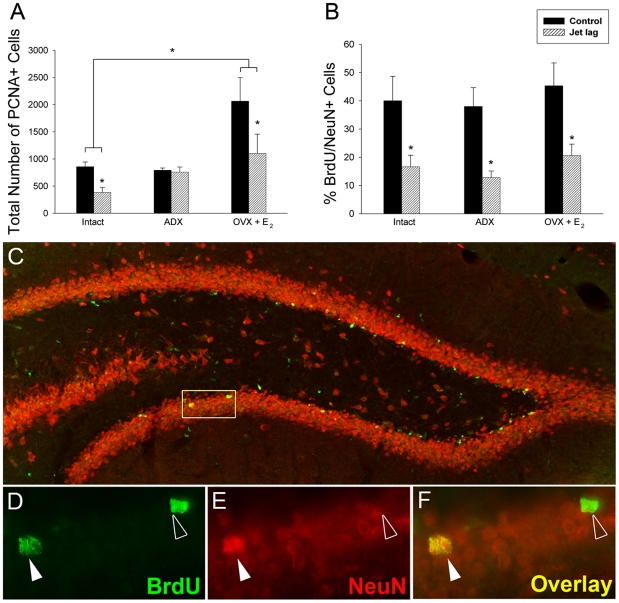
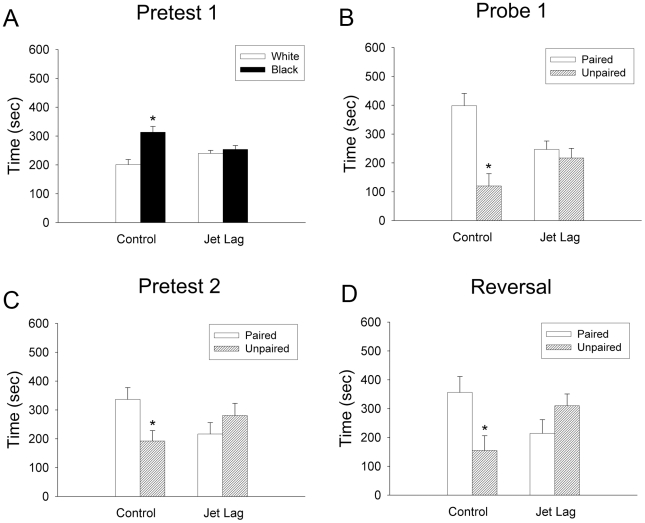
BACKGROUND: Circadian disruptions through frequent transmeridian travel, rotating shift work, and poor sleep hygiene are associated with an array of physical and mental health maladies, including marked deficits in human cognitive function. Despite anecdotal and correlational reports suggesting a negative impact of circadian disruptions on brain function, this possibility has not been experimentally examined. METHODOLOGY/PRINCIPAL FINDINGS: In the present study, we investigated whether experimental 'jet lag' (i.e., phase advances of the light:dark cycle) negatively impacts learning and memory and whether any deficits observed are associated with reductions in hippocampal cell proliferation and neurogenesis. Because insults to circadian timing alter circulating glucocorticoid and sex steroid concentrations, both of which influence neurogenesis and learning/memory, we assessed the contribution of these endocrine factors to any observed alterations. Circadian disruption resulted in pronounced deficits in learning and memory paralleled by marked reductions in hippocampal cell proliferation and neurogenesis. Significantly, deficits in hippocampal-dependent learning and memory were not only seen during the period of the circadian disruption, but also persisted well after the cessation of jet lag, suggesting long-lasting negative consequences on brain function. CONCLUSIONS/SIGNIFICANCE: Together, these findings support the view that circadian disruptions suppress hippocampal neurogenesis via a glucocorticoid-independent mechanism, imposing pronounced and persistent impairments on learning and memory.
Overview
The claims and statistics of this paper haven’t been checked yet.
Run the check — free, no account needed. It reads the open-access text and checks the sources it cites.
Integrity signals
Registry
Cites
Statistics
Figures
Verification
Claims the paper makes
The claims and statistics of this paper haven’t been checked yet.
Run the check — free, no account needed. It reads the open-access text and checks the sources it cites.
Claims other papers make about this one
Each is checked against this paper’s own text: does it say what the citing paper says it does?
In the citing paper
“When these disruptions are acute (e.g., in the case of a single ‘jet lag’), adults can achieve internal realignment with limited negative impact to health4.”
From Maternal and Early-Life Circadian Disruption Have Long-Lasting Negative Consequences on Offspring Development and Adult Behavior in Mice (2017) · cites this paper as [4]
Self-check
Percentages, sums and reported differences re-computed from the paper’s own numbers.
The self-check needs the paper’s full text.
Citations
Cites
Coordination of circadian timing in mammals
Reppert, S. M., & Weaver, D. R. (2002) · Nature · doi:10.1038/nature00965 · Cited by 4,379
The efficiency of systematic sampling in stereology and its prediction*
Gundersen, H. J. G., & Jensen, E. B. V. (1987) · Journal of Microscopy · doi:10.1111/j.1365-2818.1987.tb02837.x · Cited by 3,519
Social Jetlag: Misalignment of Biological and Social Time
Wittmann, M., Dinich, J., Merrow, M., & Roenneberg, T. (2006) · Chronobiology International · doi:10.1080/07420520500545979 · Cited by 2,625
Dibner, C., Schibler, U., & Albrecht, U. (2010) · Annual Review of Physiology · doi:10.1146/annurev-physiol-021909-135821 · Cited by 2,421
Learning enhances adult neurogenesis in the hippocampal formation
Gould, E., Beylin, A., Tanapat, P., Reeves, A., & Shors, T. J. (1999) · Nature Neuroscience · doi:10.1038/6365 · Cited by 2,157
Loss of a circadian adrenal corticosterone rhythm following suprachiasmatic lesions in the rat
Moore, R. Y., & Eichler, V. B. (1972) · Brain Research · doi:10.1016/0006-8993(72)90054-6 · Cited by 2,135
Neurogenesis in the adult is involved in the formation of trace memories
Shors, T. J., Miesegaes, G. R., Beylin, A. V., Zhao, M., Rydel, T. A., & Gould, E. (2001) · Nature · doi:10.1038/35066584 · Cited by 2,014
Resetting central and peripheral circadian oscillators in transgenic rats
Yamazaki, S., Numano, R., Abe, M., Hida, A., Takahashi, R.-I., Ueda, M., Block, G. D., Sakaki, Y., Menaker, M., & Tei, H. (2000) · Science · doi:10.1126/science.288.5466.682 · Cited by 1,907
A Functional Role for Adult Hippocampal Neurogenesis in Spatial Pattern Separation
Clelland, C. D., Choi, M., Romberg, C., Clemenson, G. D., Fragniere, A., Tyers, P., Jessberger, S., Saksida, L. M., Barker, R. A., Gage, F. H., et al. (2009) · Science · doi:10.1126/science.1173215 · Cited by 1,642
Walker, M. P., & Stickgold, R. (2006) · Annual Review of Psychology · doi:10.1146/annurev.psych.56.091103.070307 · Cited by 1,075 · cited 1×
“It is noteworthy that sleep deprivation has also been shown to disrupt neurogenesis in both a glucocorticoid-dependent and independent manner [69,70,81].”
BackgroundAdult neurogenesis is regulated by adrenal steroids in the dentate gyrus
Cameron, H. A., & Gould, E. (1994) · Neuroscience · doi:10.1016/0306-4522(94)90224-0 · Cited by 999
Rethinking interference theory: Executive control and the mechanisms of forgetting.
Anderson, M. (2003) · Journal of Memory and Language · doi:10.1016/j.jml.2003.08.006 · Cited by 918 · cited 1×
“In contrast, because the jet-lagged hamsters did not acquire the initial preference, they might more readily acquire the new preference [66].”
BackgroundA role for adult neurogenesis in spatial long-term memory
Snyder, J. S., Hong, N. S., McDonald, R. J., & Wojtowicz, J. M. (2005) · Neuroscience · doi:10.1016/j.neuroscience.2004.10.009 · Cited by 854
Stress and hippocampal neurogenesis
Gould, E., & Tanapat, P. (1999) · Biological Psychiatry · doi:10.1016/s0006-3223(99)00247-4 · Cited by 818
Raber, J., Rola, R., LeFevour, A., Morhardt, D. R., Curley, J., Mizumatsu, S., VandenBerg, S. R., & Fike, J. R. (2004) · Radiation Research · doi:10.1667/rr3206 · Cited by 721
Mirescu, C., & Gould, E. (2006) · Hippocampus · doi:10.1002/hipo.20155 · Cited by 701
Jessberger, S., Clark, R. E., Broadbent, N. J., Clemenson, G. D., Consiglio, A., Lie, D. C., Squire, L. R., & Gage, F. H. (2009) · Learning & Memory · doi:10.1101/lm.1172609 · Cited by 654
Genetic influence on neurogenesis in the dentate gyrus of adult mice
Kempermann, G., Kuhn, H. G., & Gage, F. H. (1997) · Proceedings of the National Academy of Sciences · doi:10.1073/pnas.94.19.10409 · Cited by 638
Early life experience alters response of adult neurogenesis to stress
Mirescu, C., Peters, J. D., & Gould, E. (2004) · Nature Neuroscience · doi:10.1038/nn1290 · Cited by 625
Is there a link between adult neurogenesis and learning?
Leuner, B., Gould, E., & Shors, T. J. (2006) · Hippocampus · doi:10.1002/hipo.20153 · Cited by 543
Madsen, T. M., Kristjansen, P. E. G., Bolwig, T. G., & Wörtwein, G. (2003) · Neuroscience · doi:10.1016/s0306-4522(03)00199-4 · Cited by 506
Chronic jet-lag increases mortality in aged mice
Davidson, A. J., Sellix, M. T., Daniel, J., Yamazaki, S., Menaker, M., & Block, G. D. (2006) · Current Biology · doi:10.1016/j.cub.2006.09.058 · Cited by 427
Effects of Chronic Jet Lag on Tumor Progression in Mice
Filipski, E., Delaunay, F., King, V. M., Wu, M., Claustrat, B., Gréchez‐Cassiau, A., Guettier, C., Hastings, M. H., & Lévi, F. (2004) · Cancer Research · doi:10.1158/0008-5472.can-04-0674 · Cited by 424
Tanapat, P., Hastings, N. B., Rydel, T. A., Galea, L. A. M., & Gould, E. (2001) · The Journal of Comparative Neurology · doi:10.1002/cne.1297 · Cited by 385
Estrogen Enhances Performance of Female Rats during Acquisition of a Radial Arm Maze
Daniel, J. M., Fader, A. J., Spencer, A. L., & Dohanich, G. P. (1997) · Hormones and Behavior · doi:10.1006/hbeh.1997.1433 · Cited by 359
Chronic 'jet lag' produces temporal lobe atrophy and spatial cognitive deficits
Cho, K. (2001) · Nature Neuroscience · doi:10.1038/88384 · Cited by 332
Shiftwork and Metabolic Risk Factors of Cardiovascular Disease
Ha, M., & Park, J. (2005) · Journal of Occupational Health · doi:10.1539/joh.47.89 · Cited by 276
Gonadal hormone modulation of neurogenesis in the dentate gyrus of adult male and female rodents
Galea, L. A. M. (2007) · Brain Research Reviews · doi:10.1016/j.brainresrev.2007.05.008 · Cited by 260
Meyer-Bernstein, E. L., Jetton, A. E., Matsumoto, S., Markuns, J. F., Lehman, M. N., & Bittman, E. L. (1999) · Endocrinology · doi:10.1210/endo.140.1.6428 · Cited by 252
Chronic Jet Lag Produces Cognitive Deficits
Cho, K., Ennaceur, A., Cole, J. C., & Suh, C. K. (2000) · Journal of Neuroscience · doi:10.1523/jneurosci.20-06-j0005.2000 · Cited by 239
Stressful Experience and Learning Across the Lifespan
Shors, T. J. (2005) · Annual Review of Psychology · doi:10.1146/annurev.psych.57.102904.190205 · Cited by 234
Hippocampal-dependent learning requires a functional circadian system
Ruby, N. F., Hwang, C. E., Wessells, C., Fernandez, F., Zhang, P., Sapolsky, R., & Heller, H. C. (2008) · Proceedings of the National Academy of Sciences · doi:10.1073/pnas.0808259105 · Cited by 234
Sleep deprivation inhibits adult neurogenesis in the hippocampus by elevating glucocorticoids
Mirescu, C., Peters, J. D., Noiman, L., & Gould, E. (2006) · Proceedings of the National Academy of Sciences · doi:10.1073/pnas.0608644103 · Cited by 233
Multipotential stem cells and progenitors in the vertebrate retina
Reh, T. A., & Levine, E. M. (1998) · Journal of Neurobiology · doi:10.1002/(sici)1097-4695(199808)36:2 · Cited by 231
Chen, R., Schirmer, A. E., Lee, Y., Lee, H.-M., Kumar, V., Yoo, S. H., Takahashi, J. S., & Lee, C. (2009) · Molecular Cell · doi:10.1016/j.molcel.2009.10.012 · Cited by 229
Rotating Shift Work and Risk of Prostate Cancer
Conlon, M., Lightfoot, N., & Kreiger, N. (2006) · Epidemiology · doi:10.1097/01.ede.0000249519.33978.31 · Cited by 225
Reddy, A. B., Field, M. D., Maywood, E. S., & Hastings, M. H. (2002) · Journal of Neuroscience · doi:10.1523/jneurosci.22-17-07326.2002 · Cited by 224
Irradiation attenuates neurogenesis and exacerbates ischemia‐induced deficits
Raber, J., Fan, Y., Matsumori, Y., Liu, Z., Weinstein, P. R., Fike, J. R., & Liu, J. (2004) · Annals of Neurology · doi:10.1002/ana.10853 · Cited by 220
Spatial learning affects immature granule cell survival in adult rat dentate gyrus
Ambrogini, P., Cuppini, R., Cuppini, C., Ciaroni, S., Cecchini, T., Ferri, P., Sartini, S., & Grande, P. D. (2000) · Neuroscience Letters · doi:10.1016/s0304-3940(00)01074-0 · Cited by 218
Riding Tandem: Circadian Clocks and the Cell Cycle
Hunt, T., & Sassone‐Corsi, P. (2007) · Cell · doi:10.1016/j.cell.2007.04.015 · Cited by 211
Gender differences in the effects from working conditions on mental health: A 4-year follow-up
Bildt, C., & Michélsen, H. (2002) · International Archives of Occupational and Environmental Health · doi:10.1007/s00420-001-0299-8 · Cited by 207
Dorsal/ventral hippocampus, fornix, and conditioned place preference
Ferbinteanu, J., & McDonald, R. J. (2001) · Hippocampus · doi:10.1002/hipo.1036 · Cited by 204
Barker, J. M., & Galea, L. A. M. (2008) · Neuroscience · doi:10.1016/j.neuroscience.2007.10.071 · Cited by 200
Epp, J. R., Spritzer, M. D., & Galea, L. A. M. (2007) · Neuroscience · doi:10.1016/j.neuroscience.2007.07.046 · Cited by 180
Visualizing jet lag in the mouse suprachiasmatic nucleus and peripheral circadian timing system
Davidson, A. J., Castanon‐Cervantes, O., Leise, T. L., Molyneux, P. C., & Harrington, M. E. (2009) · European Journal of Neuroscience · doi:10.1111/j.1460-9568.2008.06534.x · Cited by 171
Shift Work, Nitrous Oxide Exposure and Subfertility among Swedish Midwives
Ahlborg, G., Axelsson, G., & Bodin, L. (1996) · International Journal of Epidemiology · doi:10.1093/ije/25.4.783 · Cited by 168
Nerve growth factor promotes survival of new neurons in the adult hippocampus
Frielingsdorf, H., Simpson, D. R., Thal, L. J., & Pizzo, D. P. (2007) · Neurobiology of Disease · doi:10.1016/j.nbd.2006.11.015 · Cited by 151
Spatial reference memory and neocortical neurochemistry vary with the estrous cycle in C57BL/6 mice.
Frick, K. M., & Berger-Sweeney, J. E. (2001) · Behavioral Neuroscience · doi:10.1037/0735-7044.115.1.229 · Cited by 143
Lee, K. J., Kim, S.-J., Kim, S.-W., Choi, S.-H., Shin, Y.-C., Park, S.-H., Moon, B., Cho, E., Lee, M.-S., Choi, S.-H., et al. (2006) · Experimental & Molecular Medicine · doi:10.1038/emm.2006.6 · Cited by 139
Galea, L. A. M., Uban, K. A., Epp, J. R., Brummelte, S., Barha, C. K., Wilson, W. L., Lieblich, S. E., & Pawluski, J. L. (2008) · Canadian Journal of Experimental Psychology/Revue canadienne de psychologie expérimentale · doi:10.1037/a0014501 · Cited by 131
Phase Shifting Circadian Rhythms Produces Retrograde Amnesia
Tapp, W. N., & Holloway, F. A. (1981) · Science · doi:10.1126/science.7193351 · Cited by 130
Risk of Breast Cancer After Night- and Shift Work: Current Evidence and Ongoing Studies in Denmark
Hansen, J. (2006) · Cancer Causes & Control · doi:10.1007/s10552-005-9006-5 · Cited by 129
Stephan, F. K., & Zucker, I. (1972) · Physiology & Behavior · doi:10.1016/0031-9384(72)90379-4 · Cited by 122
Sleep deprivation can inhibit adult hippocampal neurogenesis independent of adrenal stress hormones
Mueller, A. D., Pollock, M. S., Lieblich, S. E., Epp, J. R., Galea, L. A. M., & Mistlberger, R. E. (2008) · American Journal of Physiology-Regulatory, Integrative and Comparative Physiology · doi:10.1152/ajpregu.00858.2007 · Cited by 122
Nurses and shiftwork: effects on physical health and mental depression
Skipper, J. K., Jung, F. D., & Coffey, L. C. (1990) · Journal of Advanced Nursing · doi:10.1111/j.1365-2648.1990.tb01915.x · Cited by 118
Cell “circadian” cycle: New role for mammalian core clock genes
Borgs, L., Beukelaers, P., Vandenbosch, R., Belachew, S. M., Nguyen, L., & Malgrange, B. (2009) · Cell Cycle · doi:10.4161/cc.8.6.7869 · Cited by 117
Glenn, M. J., Gibson, E. M., Kirby, E. D., Mellott, T. J., Blusztajn, J. K., & Williams, C. L. (2007) · European Journal of Neuroscience · doi:10.1111/j.1460-9568.2007.05505.x · Cited by 116
Self-citationMadsen, T. M., Newton, S. S., Eaton, M. E., Russell, D., & Duman, R. S. (2003) · Biological Psychiatry · doi:10.1016/s0006-3223(03)00700-5 · Cited by 112
Barha, C. K., Lieblich, S. E., & Galea, L. A. M. (2008) · Journal of Neuroendocrinology · doi:10.1111/j.1365-2826.2008.01809.x · Cited by 109
Shift work, duration of pregnancy, and birth weight:
Zhu, J. L., Hjøllund, N. H., & Olsen, J. (2004) · American Journal of Obstetrics and Gynecology · doi:10.1016/j.ajog.2003.12.002 · Cited by 106
Dagytė, G., Van der Zee, E. A., Postema, F., Luiten, P. G. M., Den Boer, J. A., Trentani, A., & Meerlo, P. (2009) · Neuroscience · doi:10.1016/j.neuroscience.2009.05.053 · Cited by 105
Rapid Changes in the Light/Dark Cycle Disrupt Memory of Conditioned Fear in Mice
Loh, D. H., Navarro, J., Hagopian, A., Wang, L. M., Deboer, T., & Colwell, C. S. (2010) · PLoS ONE · doi:10.1371/journal.pone.0012546 · Cited by 101
Circadian timing in health and disease
Maywood, E. S., O'Neill, J. S., Wong, G. K. Y., Reddy, A. B., & Hastings, M. H. (2006) · Progress in brain research · doi:10.1016/s0079-6123(06)53015-8 · Cited by 90
Period 2 regulates neural stem/progenitor cell proliferation in the adult hippocampus
Borgs, L., Beukelaers, P., Vandenbosch, R., Nguyen, L., Moonen, G., Maquet, P., Albrecht, U., Belachew, S. M., & Malgrange, B. (2009) · BMC Neuroscience · doi:10.1186/1471-2202-10-30 · Cited by 84
Meyer-Bernstein, E. L. (1999) · Endocrinology · doi:10.1210/en.140.1.207 · Cited by 74
The significance of circadian phase for performance on a reward-based learning task in hamsters
Ralph, M. R., Ko, C. H., Antoniadis, E. A., Seco, P., Irani, F., Presta, C., & McDonald, R. J. (2002) · Behavioural Brain Research · doi:10.1016/s0166-4328(02)00131-6 · Cited by 73
Jasnow, A. M., Drazen, D. L., Huhman, K. L., Nelson, R. J., & Demas, G. E. (2001) · Hormones and Behavior · doi:10.1006/hbeh.2001.1708 · Cited by 68
van der Borght, K., Meerlo, P., Luiten, P. G. M., Eggen, B. J. L., & van der Zee, E. A. (2004) · Behavioural Brain Research · doi:10.1016/j.bbr.2004.06.004 · Cited by 63
Genetic and Molecular Analysis of the Central and Peripheral Circadian Clockwork of MicePreprint
Maywood, E. S., O'Neill, J. S., Reddy, A. B., Chesham, J. E., Prosser, H. M., Kyriacou, C. P., Godinho, S. I. H., Nolan, P. M., & Hastings, M. H. (2007) · Cold Spring Harbor Symposia on Quantitative Biology · doi:10.1101/sqb.2007.72.005 · Cited by 63
Circadian Rhythms: In the Loop at Last
Gelder, R. N. V., Herzog, E. D., Schwartz, W. J., & Taghert, P. H. (2003) · Science · doi:10.1126/science.1085446 · Cited by 63
Plasma cortisol and corticosterone concentrations in the golden hamster, ()
Ottenweller, J. E., Tapp, W. N., Burke, J. M., & Natelson, B. H. (1985) · Life Sciences · doi:10.1016/0024-3205(85)90188-2 · Cited by 58
Prevalent cardiovascular disease, risk factors and selection out of shift work
Mika Kivimaki, B., Virtanen, M., Elovainio, M. J., Väänänen, A., Keltikangas‐Järvinen, L., & Vahtera, J. (2006) · Scandinavian Journal of Work Environment & Health · doi:10.5271/sjweh.1000 · Cited by 58
Takamure, M., Murakami, N., Takahashi, K., Kuroda, H., & Etoh, T. (1991) · Physiology & Behavior · doi:10.1016/0031-9384(91)90092-3 · Cited by 40
Anand, S., Losee-Olson, S. H., Turek, F. W., & Horton, T. H. (2002) · Endocrinology · doi:10.1210/endo.143.6.8839 · Cited by 39
Erratum: correction: Neurogenesis in the adult is involved in the formation of trace memories
Shors, T. J., Miesegaes, G. R., Beylin, A. V., Zhao, M., Rydel, T. A., & Gould, E. (2001) · Nature · doi:10.1038/414938a · Cited by 35
Séi, H., Fujihara, H., Ueta, Y., Morita, K., Kitahama, K., & Morita, Y. (2003) · Life Sciences · doi:10.1016/s0024-3205(03)00251-0 · Cited by 34
Golombek, D. A., & Cardinali, D. P. (1993) · Chronobiology International · doi:10.1080/07420529309059719 · Cited by 27
Control of diabetes mellitus in shift workers.
Poole, C., Wright, A. D., & Nattrass, M. (1992) · Occupational and Environmental Medicine · doi:10.1136/oem.49.7.513 · Cited by 26
Blunted cortisol rhythm is associated with learning impairment in aged hamsters
Cain, S. W., Karatsoreos, I. N., GAUTAM, N., Konar, Y., Funk, D. R., McDonald, R. J., & Ralph, M. R. (2004) · Physiology & Behavior · doi:10.1016/j.physbeh.2004.04.004 · Cited by 22
Pizzio, G. A., Hainich, E. C., Plano, S. A., Ralph, M. R., & Golombek, D. A. (2005) · European Journal of Neuroscience · doi:10.1111/j.1460-9568.2005.04247.x · Cited by 18
Anand, S., Turek, F. W., & Horton, T. H. (2004) · Biology of Reproduction · doi:10.1095/biolreprod.103.019380 · Cited by 14
A Time to Divide: Does the Circadian Clock Control Cell Cycle?
Walisser, J. A., & Bradfield, C. A. (2006) · Developmental Cell · doi:10.1016/j.devcel.2006.04.014 · Cited by 11
Article reviewed: Chronic ‘jet lag’ produces temporal lobe atrophy and spatial cognitive deficits
Someren, E. J. W. V. (2002) · Sleep Medicine · doi:10.1016/s1389-9457(01)00166-6 · Cited by 7
Research works printed but not linked: 1
- M Orsini, 1961, The external vaginal phenomena characterizing the stages of the estrous cycle, pregnancy, pseudopregnancy, lactation and anestrous hamster, Mesocricetus auratus Waterhouse., Proceedings of Animal Care Panel, 14, 193
Cited by
Sorted by citations
Light as a central modulator of circadian rhythms, sleep and affect
LeGates, T. A., Fernandez, D. C., & Hattar, S. (2014) · Nature Reviews Neuroscience · doi:10.1038/nrn3743 · Cited by 1,001
Mechanisms linking circadian clocks, sleep, and neurodegeneration
Musiek, E. S., & Holtzman, D. M. (2016) · Science · doi:10.1126/science.aah4968 · Cited by 878
Circadian clock control of endocrine factors
Gamble, K. L., Berry, R., Frank, S. J., & Young, M. E. (2014) · Nature Reviews Endocrinology · doi:10.1038/nrendo.2014.78 · Cited by 539
How might circadian rhythms control mood? Let me count the ways
McClung, C. A. (2013) · Biological Psychiatry · doi:10.1016/j.biopsych.2013.02.019 · Cited by 507
Circadian rest-activity pattern changes in aging and preclinical Alzheimer disease
Musiek, E. S., Bhimasani, M., Zangrilli, M. A., Morris, J. C., Holtzman, D. M., & Ju, Y.-E. S. (2018) · JAMA Neurology · doi:10.1001/jamaneurol.2017.4719 · Cited by 465
Metadata
- Authors
- Gibson, E. M., Wang, C., Tjho, S., Khattar, N., & Kriegsfeld, L. J.
- Affiliations
- University of California, Berkeley (US)
- Corresponding author
- Kriegsfeld, Lance J.
- Venue
- PLoS ONE
- Publisher
- Public Library of Science (PLoS)
- Published
- 2010-12-01
- Volume
- 5
- Issue
- 12
- Pages
- e15267
- ISSN
- 1932-6203 (ISSN-L)
- PMC
- PMC2995744
- OpenAlex
- W2116127629
- Cited by
- 196
- References
- 83
- Citations by year
- 2026: 2 · 2025: 6 · 2024: 8 · 2023: 17 · 2022: 12 · 2021: 12 · 2020: 17 · 2019: 10 · 2018: 18 · 2017: 16 · 2016: 10 · 2015: 17 · 2014: 20 · 2013: 15 · 2012: 10
- FWCI
- 3.14
- Type
- journal article
- Language
- en
- Open access
- gold
- doi.org
- Locations
- PLoS ONE (publishedVersion, cc-by)
- PubMed Central (publishedVersion, cc-by)
- PubMed (publishedVersion)
- DOAJ (DOAJ: Directory of Open Access Journals) (submittedVersion, cc-by-sa)
- eScholarship (California Digital Library) (submittedVersion)
- eScholarship (California Digital Library) (submittedVersion, cc-by)
- Figshare (submittedVersion, cc-by)
- Funders
- Northwestern University
- National Institutes of Health (050470, HD 050470)
- Eunice Kennedy Shriver National Institute of Child Health and Human Development (R01HD050470, HD 050470)
- Topics
- Life Sciences › Neuroscience › Developmental Neuroscience › Neurogenesis and neuroplasticity mechanisms
- Life Sciences › Neuroscience › Endocrine and Autonomic Systems › Circadian rhythm and melatonin
- Life Sciences › Neuroscience › Cognitive Neuroscience › Sleep and Wakefulness Research
- Keywords
- jet lag, circadian rhythm disruption, adult neurogenesis, hippocampal cell proliferation, learning and memory impairment, glucocorticoids, sex steroids, female hamsters, long-term cognitive deficits
- MeSH terms
- Animals, Brain, Cognition Disorders, Disease Models, Animal, Female, Glucocorticoids, Cricetinae, Hippocampus, Hypothalamo-Hypophyseal System, Memory, Neurons, Sleep, Jet Lag Syndrome, Cell Proliferation
About these checks
Registry, retraction, Cites and statistics results are computed, not judged, with one exception: a printed reference that no index lists is read once by a model before it counts as a citation error. Claims are extracted by a model and kept only when their quote appears verbatim in the text; each cited source is then checked, with a model’s help, for whether it says what the claim relies on. Those verdicts can be wrong — read the claim’s quote and the cited source before relying on one.
Statistics and arithmetic are recomputed, not judged.
Confidence bands are shown only for fields calibrated on our annotated test set. None is calibrated yet, so no band is shown.
What counts as a claim ›How we measure confidence ›How we check this ›
Are you an author, or do you see a problem with this page? Request a review
