

The DOI matches its Crossref record; 83 of the 83 references it cites were found in a registry or an index.
Experimental ‘Jet Lag’ Inhibits Adult Neurogenesis and Produces Long-Term Cognitive Deficits in Female Hamsters
Open accessAbstract
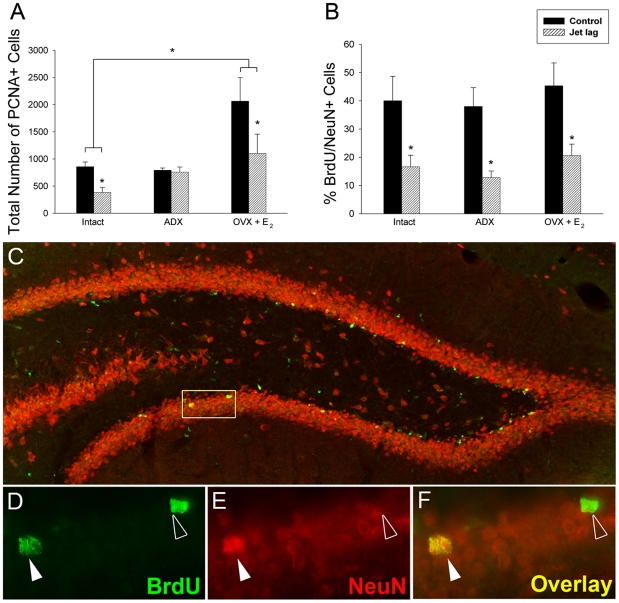
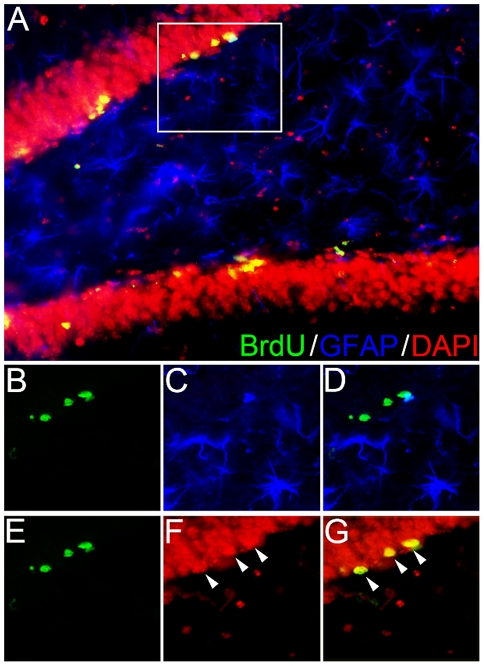
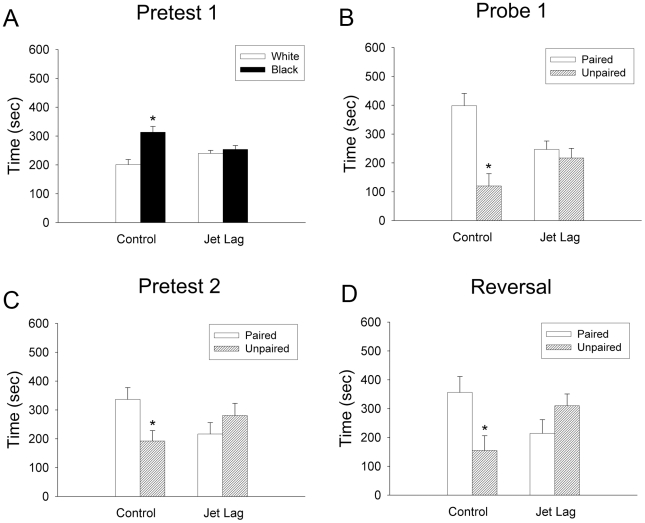
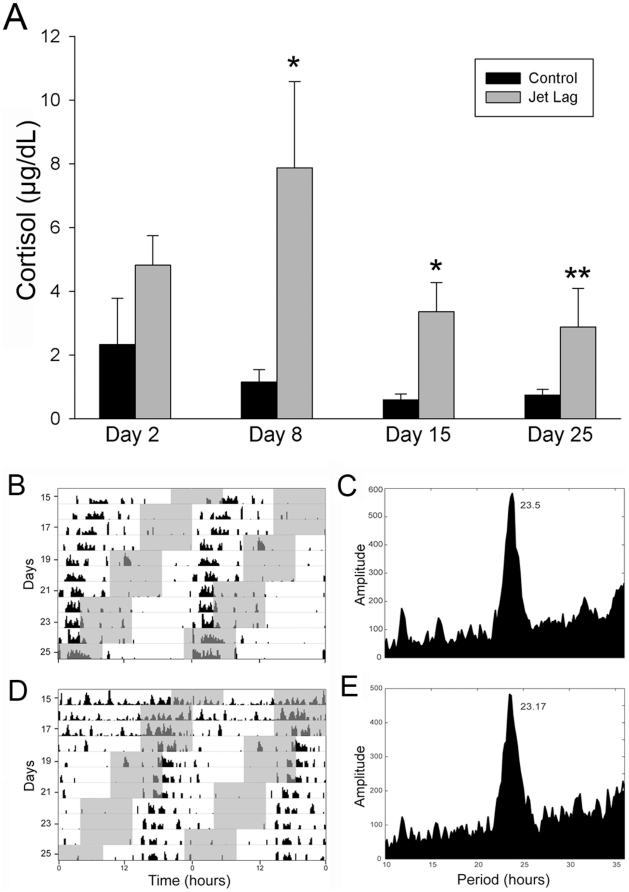
BACKGROUND: Circadian disruptions through frequent transmeridian travel, rotating shift work, and poor sleep hygiene are associated with an array of physical and mental health maladies, including marked deficits in human cognitive function. Despite anecdotal and correlational reports suggesting a negative impact of circadian disruptions on brain function, this possibility has not been experimentally examined. METHODOLOGY/PRINCIPAL FINDINGS: In the present study, we investigated whether experimental 'jet lag' (i.e., phase advances of the light:dark cycle) negatively impacts learning and memory and whether any deficits observed are associated with reductions in hippocampal cell proliferation and neurogenesis. Because insults to circadian timing alter circulating glucocorticoid and sex steroid concentrations, both of which influence neurogenesis and learning/memory, we assessed the contribution of these endocrine factors to any observed alterations. Circadian disruption resulted in pronounced deficits in learning and memory paralleled by marked reductions in hippocampal cell proliferation and neurogenesis. Significantly, deficits in hippocampal-dependent learning and memory were not only seen during the period of the circadian disruption, but also persisted well after the cessation of jet lag, suggesting long-lasting negative consequences on brain function. CONCLUSIONS/SIGNIFICANCE: Together, these findings support the view that circadian disruptions suppress hippocampal neurogenesis via a glucocorticoid-independent mechanism, imposing pronounced and persistent impairments on learning and memory.
Overview
The claims and statistics of this paper haven’t been checked yet.
Run the check — free, no account needed. It reads the open-access text and checks the sources it cites.
Integrity signals
Registry
Cites
Statistics
Figures
Verification
Claims the paper makes
The claims and statistics of this paper haven’t been checked yet.
Run the check — free, no account needed. It reads the open-access text and checks the sources it cites.
Claims other papers make about this one
Each is checked against this paper’s own text: does it say what the citing paper says it does?
In the citing paper
“When these disruptions are acute (e.g., in the case of a single ‘jet lag’), adults can achieve internal realignment with limited negative impact to health4.”
From Maternal and Early-Life Circadian Disruption Have Long-Lasting Negative Consequences on Offspring Development and Adult Behavior in Mice (2017) · cites this paper as [4]
Self-check
Percentages, sums and reported differences re-computed from the paper’s own numbers.
The self-check needs the paper’s full text.
Citations
Cites
Coordination of circadian timing in mammals
Reppert, S. M., & Weaver, D. R. (2002) · Nature · doi:10.1038/nature00965 · Cited by 4,379
The efficiency of systematic sampling in stereology and its prediction*
Gundersen, H. J. G., & Jensen, E. B. V. (1987) · Journal of Microscopy · doi:10.1111/j.1365-2818.1987.tb02837.x · Cited by 3,519
Social Jetlag: Misalignment of Biological and Social Time
Wittmann, M., Dinich, J., Merrow, M., & Roenneberg, T. (2006) · Chronobiology International · doi:10.1080/07420520500545979 · Cited by 2,625
Dibner, C., Schibler, U., & Albrecht, U. (2010) · Annual Review of Physiology · doi:10.1146/annurev-physiol-021909-135821 · Cited by 2,421
Learning enhances adult neurogenesis in the hippocampal formation
Gould, E., Beylin, A., Tanapat, P., Reeves, A., & Shors, T. J. (1999) · Nature Neuroscience · doi:10.1038/6365 · Cited by 2,157
Loss of a circadian adrenal corticosterone rhythm following suprachiasmatic lesions in the rat
Moore, R. Y., & Eichler, V. B. (1972) · Brain Research · doi:10.1016/0006-8993(72)90054-6 · Cited by 2,135
Neurogenesis in the adult is involved in the formation of trace memories
Shors, T. J., Miesegaes, G. R., Beylin, A. V., Zhao, M., Rydel, T. A., & Gould, E. (2001) · Nature · doi:10.1038/35066584 · Cited by 2,014
Resetting central and peripheral circadian oscillators in transgenic rats
Yamazaki, S., Numano, R., Abe, M., Hida, A., Takahashi, R.-I., Ueda, M., Block, G. D., Sakaki, Y., Menaker, M., & Tei, H. (2000) · Science · doi:10.1126/science.288.5466.682 · Cited by 1,907
A Functional Role for Adult Hippocampal Neurogenesis in Spatial Pattern Separation
Clelland, C. D., Choi, M., Romberg, C., Clemenson, G. D., Fragniere, A., Tyers, P., Jessberger, S., Saksida, L. M., Barker, R. A., Gage, F. H., et al. (2009) · Science · doi:10.1126/science.1173215 · Cited by 1,642
Walker, M. P., & Stickgold, R. (2006) · Annual Review of Psychology · doi:10.1146/annurev.psych.56.091103.070307 · Cited by 1,075 · cited 1×
“It is noteworthy that sleep deprivation has also been shown to disrupt neurogenesis in both a glucocorticoid-dependent and independent manner [69,70,81].”
Background
Research works printed but not linked: 1
- M Orsini, 1961, The external vaginal phenomena characterizing the stages of the estrous cycle, pregnancy, pseudopregnancy, lactation and anestrous hamster, Mesocricetus auratus Waterhouse., Proceedings of Animal Care Panel, 14, 193
Cited by
Sorted by citations
Light as a central modulator of circadian rhythms, sleep and affect
LeGates, T. A., Fernandez, D. C., & Hattar, S. (2014) · Nature Reviews Neuroscience · doi:10.1038/nrn3743 · Cited by 1,001
Mechanisms linking circadian clocks, sleep, and neurodegeneration
Musiek, E. S., & Holtzman, D. M. (2016) · Science · doi:10.1126/science.aah4968 · Cited by 878
Circadian clock control of endocrine factors
Gamble, K. L., Berry, R., Frank, S. J., & Young, M. E. (2014) · Nature Reviews Endocrinology · doi:10.1038/nrendo.2014.78 · Cited by 539
How might circadian rhythms control mood? Let me count the ways
McClung, C. A. (2013) · Biological Psychiatry · doi:10.1016/j.biopsych.2013.02.019 · Cited by 507
Circadian rest-activity pattern changes in aging and preclinical Alzheimer disease
Musiek, E. S., Bhimasani, M., Zangrilli, M. A., Morris, J. C., Holtzman, D. M., & Ju, Y.-E. S. (2018) · JAMA Neurology · doi:10.1001/jamaneurol.2017.4719 · Cited by 465
Timing of light exposure affects mood and brain circuits
Bedrosian, T. A., & Nelson, R. J. (2017) · Translational Psychiatry · doi:10.1038/tp.2016.262 · Cited by 356
Circadian Rhythms, Sleep, and Disorders of Aging
Mattis, J., & Sehgal, A. (2016) · Trends in Endocrinology & Metabolism · doi:10.1016/j.tem.2016.02.003 · Cited by 369
Sex differences in circadian timing systems: implications for disease
Bailey, M., & Silver, R. (2014) · Frontiers in Neuroendocrinology · doi:10.1016/j.yfrne.2013.11.003 · Cited by 348
Circadian rhythms, time-restricted feeding, and healthy aging
Manoogian, E. N. C., & Panda, S. (2017) · Ageing Research Reviews · doi:10.1016/j.arr.2016.12.006 · Cited by 330
Health Consequences of Circadian Disruption in Humans and Animal Models
Evans, J. A., & Davidson, A. J. (2013) · Progress in Molecular Biology and Translational Science · doi:10.1016/b978-0-12-396971-2.00010-5 · Cited by 291
Migraine Triggers and Oxidative Stress: A Narrative Review and Synthesis
Borkum, J. M. (2015) · Headache The Journal of Head and Face Pain · doi:10.1111/head.12725 · Cited by 283
Light and Cognition: Roles for Circadian Rhythms, Sleep, and Arousal
Fisk, A. S., Tam, S. K. E., Brown, L. A., Vyazovskiy, V. V., Bannerman, D. M., & Peirson, S. N. (2018) · Frontiers in Neurology · doi:10.3389/fneur.2018.00056 · Cited by 295
Interaction between circadian rhythms and stress
Koch, C. E., Leinweber, B., Drengberg, B. C., Blaum, C. M., & Oster, H. (2016) · Neurobiology of Stress · doi:10.1016/j.ynstr.2016.09.001 · Cited by 281
Dim nighttime light impairs cognition and provokes depressive-like responses in a diurnal rodent
Fonken, L. K., Kitsmiller, E., Smale, L., & Nelson, R. J. (2012) · Journal of Biological Rhythms · doi:10.1177/0748730412448324 · Cited by 203
Mitochondria, Metabolism, and Redox Mechanisms in Psychiatric Disorders
Kim, Y., Vadodaria, K. C., Lenkei, Z., Kato, T., Gage, F. H., Marchetto, M. C., & Santos, R. (2018) · Antioxidants and Redox Signaling · doi:10.1089/ars.2018.7606 · Cited by 193
The trouble with circadian clock dysfunction: Multiple deleterious effects on the brain and body
Zelinski, E. L., Deibel, S. H., & McDonald, R. J. (2014) · Neuroscience & Biobehavioral Reviews · doi:10.1016/j.neubiorev.2014.01.007 · Cited by 189
A time to remember: The role of circadian clocks in learning and memory.
Smarr, B. L., Jennings, K. J., Driscoll, J. R., & Kriegsfeld, L. J. (2014) · Behavioral Neuroscience · doi:10.1037/a0035963 · Cited by 166
Self-citationChronic Shift-Lag Alters the Circadian Clock of NK Cells and Promotes Lung Cancer Growth in Rats
Logan, R. W., Zhang, C., Murugan, S., O’Connell, S., Levitt, D., Rosenwasser, A. M., & Sarkar, D. K. (2012) · The Journal of Immunology · doi:10.4049/jimmunol.1102715 · Cited by 166
Links between circadian rhythms and psychiatric disease
Karatsoreos, I. N. (2014) · Frontiers in Behavioral Neuroscience · doi:10.3389/fnbeh.2014.00162 · Cited by 146
The times they’re a-changing: Effects of circadian desynchronization on physiology and disease
Golombek, D. A., Casiraghi, L. P., Agostino, P. V., Paladino, N., Duhart, J. M., Plano, S. A., & Chiesa, J. J. (2013) · Journal of Physiology-Paris · doi:10.1016/j.jphysparis.2013.03.007 · Cited by 150
Circadian rhythms and addiction: Mechanistic insights and future directions.
Logan, R. W., Williams, W. P., & McClung, C. A. (2014) · Behavioral Neuroscience · doi:10.1037/a0036268 · Cited by 142
Circadian clock disruption in neurodegenerative diseases: cause and effect?
Musiek, E. S. (2015) · Frontiers in Pharmacology · doi:10.3389/fphar.2015.00029 · Cited by 125
Circadian desynchrony and metabolic dysfunction; did light pollution make us fat?
Wyse, C. A., Selman, C., Page, M. M., Coogan, A. N., & Hazlerigg, D. G. (2011) · Medical Hypotheses · doi:10.1016/j.mehy.2011.09.023 · Cited by 115
The Nuclear Receptor REV-ERBα Regulates Fabp7 and Modulates Adult Hippocampal Neurogenesis
Schnell, A., Chappuis, S., Schmutz, I., Brai, E., Ripperger, J. A., Schaad, O., Welzl, H., Descombes, P., Alberi, L. A., & Albrecht, U. (2014) · PLoS ONE · doi:10.1371/journal.pone.0099883 · Cited by 108
Stem cells and the circadian clock
Weger, M., Diotel, N., Dorsemans, A.-C., Dickmeis, T., & Weger, B. D. (2017) · Developmental Biology · doi:10.1016/j.ydbio.2017.09.012 · Cited by 101
Bumgarner, J. R., Walker, W. H., & Nelson, R. J. (2021) · Neuroscience & Biobehavioral Reviews · doi:10.1016/j.neubiorev.2021.08.004 · Cited by 103
Dim light at night increases depressive-like responses in male C3H/HeNHsd mice
Fonken, L. K., & Nelson, R. J. (2013) · Behavioural Brain Research · doi:10.1016/j.bbr.2012.12.046 · Cited by 95
When brain clocks lose track of time: cause or consequence of neuropsychiatric disorders
Menet, J. S., & Rosbash, M. (2011) · Current Opinion in Neurobiology · doi:10.1016/j.conb.2011.06.008 · Cited by 95
Synchrony and desynchrony in circadian clocks: impacts on learning and memoryPreprint
Krishnan, H. C., & Lyons, L. C. (2015) · Learning & Memory · doi:10.1101/lm.038877.115 · Cited by 98
Molecular Connections Between Circadian Clocks and Aging
Welz, P.-S., & Benitah, S. A. (2019) · Journal of Molecular Biology · doi:10.1016/j.jmb.2019.12.036 · Cited by 90
Smarr, B. L., Grant, A. D., Perez, L., Zucker, I., & Kriegsfeld, L. J. (2017) · Scientific Reports · doi:10.1038/s41598-017-03406-4 · Cited by 86
Self-citationEffects of Circadian Disruption on Mental and Physical Health
Karatsoreos, I. N. (2012) · Current Neurology and Neuroscience Reports · doi:10.1007/s11910-012-0252-0 · Cited by 85
Minutes, days and years: molecular interactions among different scales of biological timing
Golombek, D. A., Bussi, I. L., & Agostino, P. V. (2014) · Philosophical Transactions of the Royal Society B Biological Sciences · doi:10.1098/rstb.2012.0465 · Cited by 80
Circadian Regulation of Adult Stem Cell Homeostasis and Aging
Benitah, S. A., & Welz, P.-S. (2020) · Cell stem cell · doi:10.1016/j.stem.2020.05.002 · Cited by 81
Kielb, S., Ancoli‐Israel, S., Rebok, G. W., & Spira, A. P. (2012) · NeuroMolecular Medicine · doi:10.1007/s12017-012-8182-1 · Cited by 85
Wadhwa, M., Prabhakar, A., Anand, J. P., Ray, K., Prasad, D. N., Kumar, B., & Panjwani, U. (2019) · Brain Behavior and Immunity · doi:10.1016/j.bbi.2019.08.004 · Cited by 82
RetractedArtificial light at night alters behavior in laboratory and wild animals
Russart, K. L. G., & Nelson, R. J. (2018) · Journal of Experimental Zoology Part A Ecological and Integrative Physiology · doi:10.1002/jez.2173 · Cited by 93
The Effects of Light and the Circadian System on Rhythmic Brain Function
von Gall, C. (2022) · International Journal of Molecular Sciences · doi:10.3390/ijms23052778 · Cited by 82
Ruby, N. F., Fernandez, F., Garrett, A., Klima, J., Zhang, P., Sapolsky, R. M., & Heller, H. C. (2013) · PLoS ONE · doi:10.1371/journal.pone.0072433 · Cited by 75
Pillai, J. A., & Leverenz, J. B. (2017) · CHEST Journal · doi:10.1016/j.chest.2017.01.002 · Cited by 85
Effects of continuous positive airway pressure on cognitition and neuroimaging data in sleep apnea
Ferini‐Strambi, L., Marelli, S., Galbiati, A., & Castronovo, C. (2013) · International Journal of Psychophysiology · doi:10.1016/j.ijpsycho.2013.03.022 · Cited by 73
Molecular Mechanisms in Mood Regulation Involving the Circadian Clock
Albrecht, U. (2017) · Frontiers in Neurology · doi:10.3389/fneur.2017.00030 · Cited by 69
Horsey, E., Maletta, T. A., Turner, H., Cole, C., Lehmann, H., & Fournier, N. M. (2020) · Frontiers in Behavioral Neuroscience · doi:10.3389/fnbeh.2019.00272 · Cited by 71
Sleep and Adult Neurogenesis: Implications for Cognition and Mood
Mueller, A. D., Meerlo, P., McGinty, D., & Mistlberger, R. E. (2013) · Current topics in behavioral neurosciences · doi:10.1007/7854_2013_251 · Cited by 71
Environmental disruption of the circadian clock leads to altered sleep and immune responses in mouse
Phillips, D. J., Savenkova, M. I., & Karatsoreos, I. N. (2014) · Brain Behavior and Immunity · doi:10.1016/j.bbi.2014.12.008 · Cited by 67
Sleep and hippocampal neurogenesis: Implications for Alzheimer’s disease
Kent, B. A., & Mistlberger, R. E. (2017) · Frontiers in Neuroendocrinology · doi:10.1016/j.yfrne.2017.02.004 · Cited by 64
Clow, A., Law, R. J., Evans, P. D., Vallence, A., Hodyl, N. A., Goldsworthy, M. R., Rothwell, J. C., & Ridding, M. C. (2014) · Stress · doi:10.3109/10253890.2014.905533 · Cited by 69
Sleep and circadian rhythm disruption and stress intersect in Alzheimer's disease
Phan, T., & Malkani, R. G. (2018) · Neurobiology of Stress · doi:10.1016/j.ynstr.2018.10.001 · Cited by 66
Direction-dependent effects of chronic “jet-lag” on hippocampal neurogenesis
Kott, J., Leach, G., & Yan, L. (2012) · Neuroscience Letters · doi:10.1016/j.neulet.2012.03.048 · Cited by 58
Reciprocal interactions between circadian clocks and aging
Banks, G. T., Nolan, P. M., & Peirson, S. N. (2016) · Mammalian Genome · doi:10.1007/s00335-016-9639-6 · Cited by 60
Fitzsimons, C. P., Herbert, J., Schouten, M., Meijer, O. C., Lucassen, P. J., & Lightman, S. L. (2016) · Frontiers in Neuroendocrinology · doi:10.1016/j.yfrne.2016.05.001 · Cited by 59
Webb, I. C. (2017) · Current Psychiatry Reports · doi:10.1007/s11920-017-0764-z · Cited by 59
Circadian dysfunction induces NAFLD-related human liver cancer in a mouse model
Padilla, J., Osman, N. M., Bissig-Choisat, B., Grimm, S. L., Qin, X., Major, A. M., Yang, L., Lopez-Terrada, D. H., Coarfa, C., Li, F., et al. (2023) · Journal of Hepatology · doi:10.1016/j.jhep.2023.10.018 · Cited by 60
Developmental exposure to Pb2+ induces transgenerational changes to zebrafish brain transcriptome
Meyer, D. N., Crofts, E. J., Akemann, C., Gurdziel, K., Farr, R. L., Baker, B. B., Weber, D. N., & Baker, T. R. (2019) · Chemosphere · doi:10.1016/j.chemosphere.2019.125527 · Cited by 56
Interacting influences of aging and Alzheimer's disease on circadian rhythms
Duncan, M. J. (2019) · European Journal of Neuroscience · doi:10.1111/ejn.14358 · Cited by 55
Mueller, A. D., Mear, R. J., & Mistlberger, R. E. (2011) · Neuroscience · doi:10.1016/j.neuroscience.2011.07.019 · Cited by 54
Sirtuins and the circadian clock interplay in cardioprotection: focus on sirtuin 1
Soni, S. K., Basu, P., Singaravel, M., Sharma, R., Pandi-Perumal, S. R., Cardinali, D. P., & Reiter, R. J. (2021) · Cellular and Molecular Life Sciences · doi:10.1007/s00018-020-03713-6 · Cited by 56
Bright nights and social interactions: a neglected issue
Kurvers, R. H. J. M., & Hölker, F. (2014) · Behavioral Ecology · doi:10.1093/beheco/aru223 · Cited by 53
Misaligned feeding impairs memories
Loh, D. H., Jami, S. A., Flores, R. E., Truong, D. A., Ghiani, C. A., O’Dell, T. J., & Colwell, C. S. (2015) · eLife · doi:10.7554/elife.09460 · Cited by 52
The Pathophysiologic Role of Disrupted Circadian and Neuroendocrine Rhythms in Breast Carcinogenesis
Ball, L. J., Palesh, O. G., & Kriegsfeld, L. J. (2016) · Endocrine Reviews · doi:10.1210/er.2015-1133 · Cited by 54
Self-citationVallée, A., Lecarpentier, Y., Guillevin, R., & Vallée, J.-N. (2018) · NeuroMolecular Medicine · doi:10.1007/s12017-018-8486-x · Cited by 54
The Circadian Clock, Reward, and Memory
Albrecht, U. (2011) · Frontiers in Molecular Neuroscience · doi:10.3389/fnmol.2011.00041 · Cited by 49
Iggena, D., Winter, Y., & Steiner, B. (2017) · Journal of Pineal Research · doi:10.1111/jpi.12397 · Cited by 48
Cognitive dysfunction and obstructive sleep apnea
Grigg-Damberger, M. M., & Ralls, F. M. (2012) · Current Opinion in Pulmonary Medicine · doi:10.1097/mcp.0b013e328358be18 · Cited by 47
Pundir, M., Papagerakis, S. M., Rosa, M. C. D., Chronis, N., Kurabayashi, K., Abdulmawjood, S., Prince, M. E. P., Lobanova, L., Chen, D., & Papagerakis, P. (2022) · Biotechnology Advances · doi:10.1016/j.biotechadv.2022.107961 · Cited by 45
Bullmann, T., Seeger, G., Stieler, J., Hanics, J., Reimann, K., Kretzschmann, T. P., Hilbrich, I., Holzer, M., Alpár, A., & Arendt, T. (2015) · Hippocampus · doi:10.1002/hipo.22522 · Cited by 46
Circadian Disruption Leads to Loss of Homeostasis and Disease
Escobar, C., Salgado‐Delgado, R., Guerra, E. G., Osorio, A. T., Castellanos, A., & Buijs, R. M. (2011) · Sleep Disorders · doi:10.1155/2011/964510 · Cited by 46
Calabrese, F., Savino, E., Papp, M., Molteni, R., & Riva, M. A. (2015) · Pharmacological Research · doi:10.1016/j.phrs.2015.12.023 · Cited by 47
Circadian control of neuroendocrine function: implications for health and disease
Gotlieb, N., Moeller, J., & Kriegsfeld, L. J. (2018) · Current Opinion in Physiology · doi:10.1016/j.cophys.2018.11.001 · Cited by 43
Self-citationCircadian and behavioural responses to shift work-like schedules of light/dark in the mouse
McGowan, N. M., & Coogan, A. N. (2013) · Journal of Molecular Psychiatry · doi:10.1186/2049-9256-1-7 · Cited by 41
Modulation of Adult Hippocampal Neurogenesis by Sleep: Impact on Mental Health
Navarro-Sanchis, C., Brock, O., Winsky‐Sommerer, R., & Thuret, S. (2017) · Frontiers in Neural Circuits · doi:10.3389/fncir.2017.00074 · Cited by 43
Dam, J. M. V., Garrett, A. J., Schneider, L. A., Hodyl, N. A., Goldsworthy, M. R., Coat, S., Rowan, J., Hague, W. M., & Pitcher, J. B. (2018) · EBioMedicine · doi:10.1016/j.ebiom.2018.04.011 · Cited by 40
Hartsock, M. J., & Spencer, R. L. (2020) · Neuroscience & Biobehavioral Reviews · doi:10.1016/j.neubiorev.2020.07.023 · Cited by 52
Circadian Rhythm Disruption and Alzheimer's Disease: The Dynamics of a Vicious Cycle
Sharma, A., Sethi, G., Tambuwala, M. M., Aljabali, A. A. A., Chellappan, D. K., Dua, K., & Goyal, R. (2020) · Current Neuropharmacology · doi:10.2174/1570159x18666200429013041 · Cited by 50
Timing and Time Perception: Procedures, Measures, & Applications
Vatakis, A., Balcı, F., Luca, M. D., & Correa, Á. (2018) · BRILL eBooks · doi:10.1163/9789004280205 · Cited by 45
Adult Neurogenesis under Control of the Circadian System
Ali, A. A. H., & von Gall, C. (2022) · Cells · doi:10.3390/cells11050764 · Cited by 40
Reprogramming energetic metabolism in Alzheimer's disease
Vallée, A., Lecarpentier, Y., Guillevin, R., & Vallée, J.-N. (2017) · Life Sciences · doi:10.1016/j.lfs.2017.10.033 · Cited by 38
Chen, M., Wang, W., Hao, Z., & Liu, H. (2020) · The Science of The Total Environment · doi:10.1016/j.scitotenv.2020.136972 · Cited by 37
Rezaie, M., Nasehi, M., Vaseghi, S., Mohammadi-Mahdiabadi-Hasani, M.-H., Zarrindast, M., & Khalili, M. A. N. (2020) · Naunyn-Schmiedeberg s Archives of Pharmacology · doi:10.1007/s00210-020-01916-z · Cited by 32
Zelinski, E. L., Hong, N. S., & McDonald, R. J. (2013) · Animal Cognition · doi:10.1007/s10071-013-0645-8 · Cited by 31
Smarr, B. L. (2015) · Journal of Biological Rhythms · doi:10.1177/0748730414565665 · Cited by 30
Law, R. J., Evans, P. D., Thorn, L., Hucklebridge, F. H., & Clow, A. (2015) · Stress · doi:10.3109/10253890.2015.1076789 · Cited by 31
The circadian clock in adult neural stem cell maintenance
Draijer, S., Chaves, I., & Hoekman, M. F. M. (2018) · Progress in Neurobiology · doi:10.1016/j.pneurobio.2018.05.007 · Cited by 31
Zelinski, E. L., Tyndall, A. V., Hong, N. S., & McDonald, R. J. (2012) · Experimental Brain Research · doi:10.1007/s00221-012-3293-3 · Cited by 29
Circadian rhythm disruption: health consequences
Sharma, A., Tiwari, S., & Singaravel, M. (2015) · Biological Rhythm Research · doi:10.1080/09291016.2015.1103942 · Cited by 28
Role of Omega-3 Fatty Acids as Non-Photic Zeitgebers and Circadian Clock Synchronizers
Checa-Ros, A., & D’Marco, L. (2022) · International Journal of Molecular Sciences · doi:10.3390/ijms232012162 · Cited by 28
Kollinger, I., & Fischlmayr, I. C. (2013) · German Journal of Human Resource Management Zeitschrift für Personalforschung · doi:10.1177/239700221302700303 · Cited by 30
Taufique, S. K. T., Prabhat, A., & Kumar, V. (2017) · Neurobiology of Learning and Memory · doi:10.1016/j.nlm.2017.12.001 · Cited by 26
Kordestani-Moghadam, P., Nasehi, M., Khodagholi, F., Vaseghi, S., Zarrindast, M., & Khani, M. (2020) · Brain Research · doi:10.1016/j.brainres.2020.146739 · Cited by 24
Yamakawa, G. R., Brady, R. D., Sun, M., McDonald, S. J., Shultz, S. R., & Mychasiuk, R. (2020) · Neurobiology of Sleep and Circadian Rhythms · doi:10.1016/j.nbscr.2020.100058 · Cited by 27
Disrupted Circadian Rhythm as a Common Player in Developmental Models of Neuropsychiatric Disorders
Marco, E. M., Velarde, E., Llorente, R., & Laviola, G. (2015) · Current topics in behavioral neurosciences · doi:10.1007/7854_2015_419 · Cited by 25
Duong, A., Reitz, C. J., Louth, E. L., Creighton, S. D., Rasouli, M., Zwaiman, A., Kroetsch, J. T., Bolz, S., Winters, B. D., Bailey, C. D. C., et al. (2019) · Scientific Reports · doi:10.1038/s41598-019-41469-7 · Cited by 21
Decreased emotional reactivity of rats exposed to repeated phase shifts of light–dark cycle
Okuliarová, M., Molčan, Ľ., & Zeman, M. (2016) · Physiology & Behavior · doi:10.1016/j.physbeh.2016.01.003 · Cited by 21
Impact of circadian clock dysfunction on human health
Samanta, S., & Ali, S. A. (2022) · Exploration of neuroscience · doi:10.37349/en.2022.00002 · Cited by 21
Short- and long-term treatment with modafinil differentially affects adult hippocampal neurogenesis
Brandt, M., Ellwardt, E., & Storch, A. (2014) · Neuroscience · doi:10.1016/j.neuroscience.2014.08.014 · Cited by 21
Sleep-Related Changes Prior to Cognitive Dysfunction
Pérez‐Carbonell, L., & Iranzo, Á. (2023) · Current Neurology and Neuroscience Reports · doi:10.1007/s11910-023-01258-2 · Cited by 20
The effects of chronic photoperiod shifting on the physiology of female Long-Evans rats
Deibel, S. H., Hong, N. S., Himmler, S. M., & McDonald, R. J. (2014) · Brain Research Bulletin · doi:10.1016/j.brainresbull.2014.03.001 · Cited by 19
Walton, J. C., Aubrecht, T. G., Weil, Z. M., Leuner, B., & Nelson, R. J. (2014) · European Journal of Neuroscience · doi:10.1111/ejn.12626 · Cited by 18
Chen, R., Weitzner, A. S., McKennon, L. A., & Fonken, L. K. (2021) · Brain Behavior & Immunity - Health · doi:10.1016/j.bbih.2021.100337 · Cited by 18
Kumar, D., Sharma, A., Taliyan, R., Urmera, M. T., Herrera-Calderón, O., Heinbockel, T., Rahman, S., & Goyal, R. (2021) · Ageing Research Reviews · doi:10.1016/j.arr.2021.101533 · Cited by 16
Metadata
- Authors
- Gibson, E. M., Wang, C., Tjho, S., Khattar, N., & Kriegsfeld, L. J.
- Affiliations
- University of California, Berkeley (US)
- Corresponding author
- Kriegsfeld, Lance J.
- Venue
- PLoS ONE
- Publisher
- Public Library of Science (PLoS)
- Published
- 2010-12-01
- Volume
- 5
- Issue
- 12
- Pages
- e15267
- ISSN
- 1932-6203 (ISSN-L)
- PMC
- PMC2995744
- OpenAlex
- W2116127629
- Cited by
- 196
- References
- 83
- Citations by year
- 2026: 2 · 2025: 6 · 2024: 8 · 2023: 17 · 2022: 12 · 2021: 12 · 2020: 17 · 2019: 10 · 2018: 18 · 2017: 16 · 2016: 10 · 2015: 17 · 2014: 20 · 2013: 15 · 2012: 10
- FWCI
- 3.14
- Type
- journal article
- Language
- en
- Open access
- gold
- doi.org
- Locations
- PLoS ONE (publishedVersion, cc-by)
- PubMed Central (publishedVersion, cc-by)
- PubMed (publishedVersion)
- DOAJ (DOAJ: Directory of Open Access Journals) (submittedVersion, cc-by-sa)
- eScholarship (California Digital Library) (submittedVersion)
- eScholarship (California Digital Library) (submittedVersion, cc-by)
- Figshare (submittedVersion, cc-by)
- Funders
- Northwestern University
- National Institutes of Health (050470, HD 050470)
- Eunice Kennedy Shriver National Institute of Child Health and Human Development (R01HD050470, HD 050470)
- Topics
- Life Sciences › Neuroscience › Developmental Neuroscience › Neurogenesis and neuroplasticity mechanisms
- Life Sciences › Neuroscience › Endocrine and Autonomic Systems › Circadian rhythm and melatonin
- Life Sciences › Neuroscience › Cognitive Neuroscience › Sleep and Wakefulness Research
- Keywords
- jet lag, circadian rhythm disruption, adult neurogenesis, hippocampal cell proliferation, learning and memory impairment, glucocorticoids, sex steroids, female hamsters, long-term cognitive deficits
- MeSH terms
- Animals, Brain, Cognition Disorders, Disease Models, Animal, Female, Glucocorticoids, Cricetinae, Hippocampus, Hypothalamo-Hypophyseal System, Memory, Neurons, Sleep, Jet Lag Syndrome, Cell Proliferation
About these checks
Registry, retraction, Cites and statistics results are computed, not judged, with one exception: a printed reference that no index lists is read once by a model before it counts as a citation error. Claims are extracted by a model and kept only when their quote appears verbatim in the text; each cited source is then checked, with a model’s help, for whether it says what the claim relies on. Those verdicts can be wrong — read the claim’s quote and the cited source before relying on one.
Statistics and arithmetic are recomputed, not judged.
Confidence bands are shown only for fields calibrated on our annotated test set. None is calibrated yet, so no band is shown.
What counts as a claim ›How we measure confidence ›How we check this ›
Are you an author, or do you see a problem with this page? Request a review
