

The DOI matches its Crossref record; 87 of the 87 references it cites were found in a registry or an index.
Prolonged Restraint Stress Increases IL-6, Reduces IL-10, and Causes Persistent Depressive-Like Behavior That Is Reversed by Recombinant IL-10
Open accessAbstract
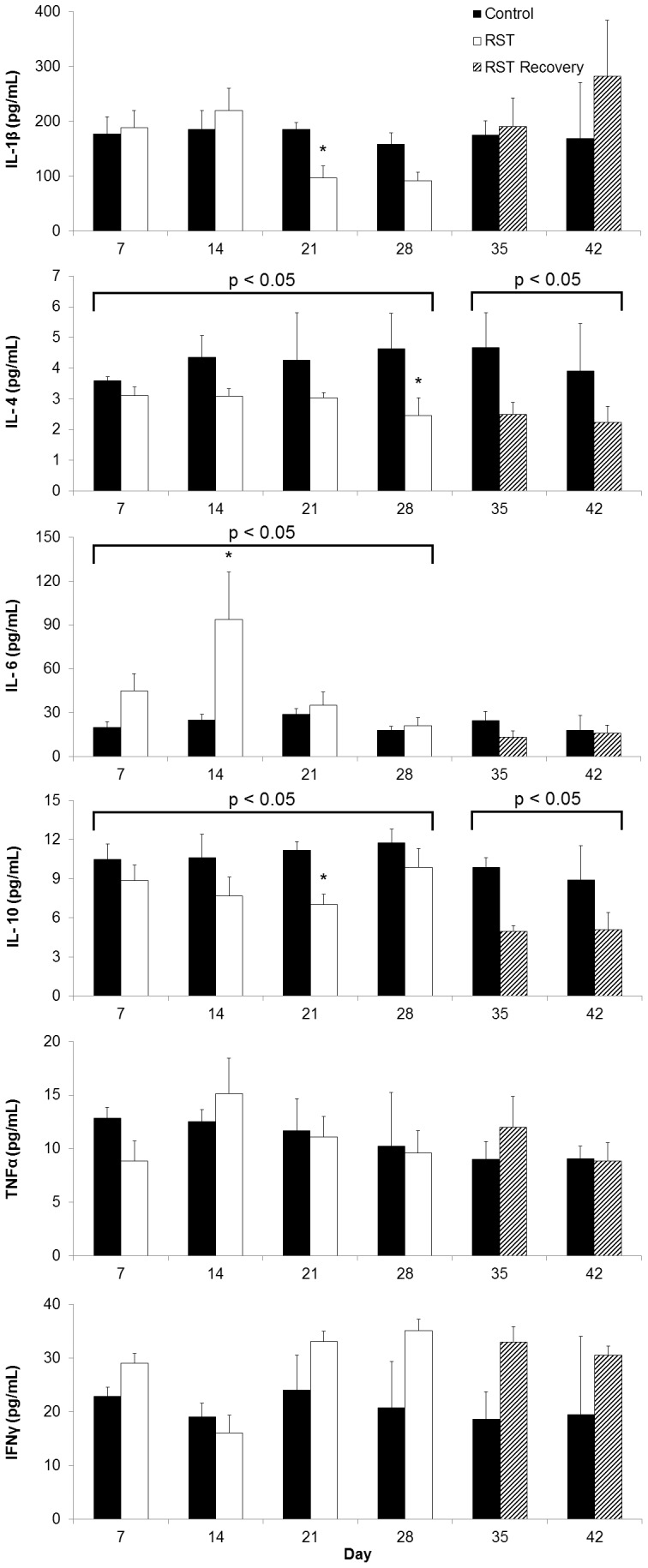
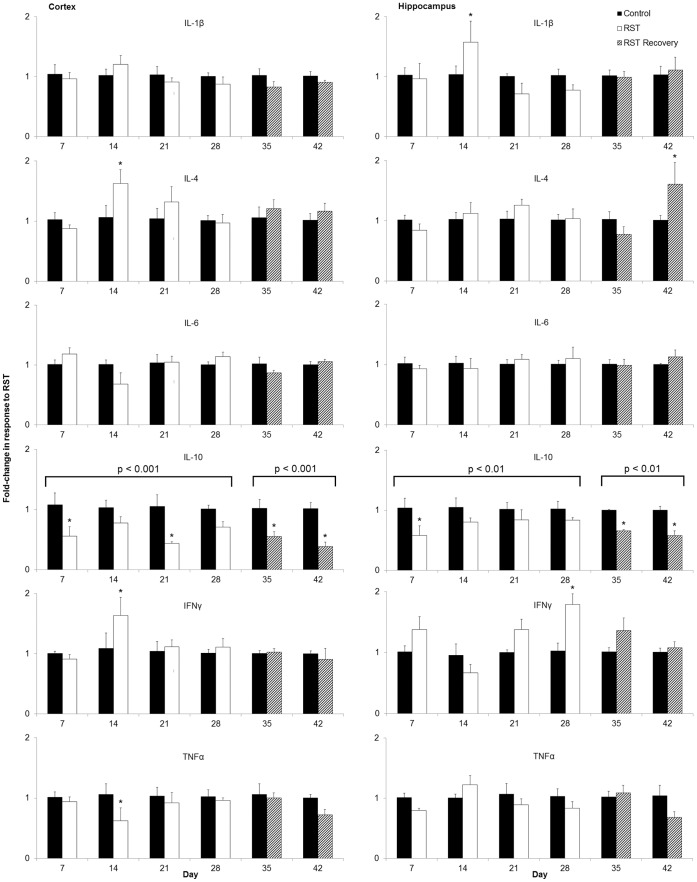
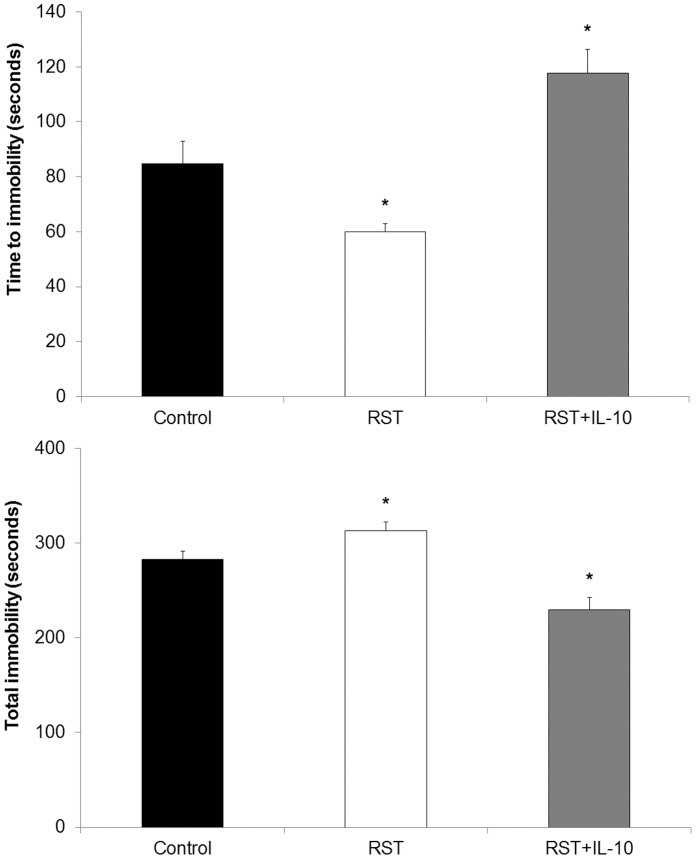
Altered inflammatory cytokine profiles are often observed in individuals suffering from major depression. Recent clinical work reports on elevated IL-6 and decreased IL-10 in depression. Elevated IL-6 has served as a consistent biomarker of depression and IL-10 is proposed to influence depressive behavior through its ability to counterbalance pro-inflammatory cytokine expression. Clinical and animal studies suggest a role for IL-10 in modifying depressive behavior. Murine restraint stress (RST) is regularly employed in the study of behavioral and biological symptoms associated with depressive disorders. While responses to acute RST exposure have been widely characterized, few studies have examined the ongoing and longitudinal effects of extended RST and fewer still have examined the lasting impact during the post-stress period. Consistent with clinical data, we report that a protocol of prolonged murine RST produced altered cytokine profiles similar to those observed in major depressive disorder. Parallel to these changes in circulating cytokines, IL-10 mRNA expression was diminished in the cortex and hippocampus throughout the stress period and following cessation of RST. Moreover, chronic RST promoted depressive-like behavior throughout the 28-day stress period and these depressive-like complications were maintained weeks after cessation of RST. Because of the correlation between IL-10 suppression and depressive behavior and because many successful antidepressant therapies yield increases in IL-10, we examined the effects of IL-10 treatment on RST-induced behavioral changes. Behavioral deficits induced by RST were reversed by exogenous administration of recombinant IL-10. This work provides one of the first reports describing the biological and behavioral impact following prolonged RST and, taken together, this study provides details on the correlation between responses to chronic RST and those seen in depressive disorders.
Overview
The claims and statistics of this paper haven’t been checked yet.
Run the check — free, no account needed. It reads the open-access text and checks the sources it cites.
Integrity signals
Registry
Cites
Statistics
Figures
Verification
Claims the paper makes
The claims and statistics of this paper haven’t been checked yet.
Run the check — free, no account needed. It reads the open-access text and checks the sources it cites.
Claims other papers make about this one
Each is checked against this paper’s own text: does it say what the citing paper says it does?
In the citing paper
“Further, prolonged restraint stress decreases anti-inflammatory IL-4 and IL-10 [176].”
From The molecular and cellular mechanisms of depression: a focus on reward circuitry (2019) · cites this paper as [176]
In the citing paper
“In the periphery, chronically stressed mice upregulate the pro-inflammatory cytokine interleukin 6 (IL-6) [175–177].”
From The molecular and cellular mechanisms of depression: a focus on reward circuitry (2019) · cites this paper as [176]
In the citing paper
“Parallel to clinical studies, rodents exposed to stressors (e.g., restraint, footshock and social defeat stress) have increased circulating IL-6 [14–17].”
From Interleukin-6 Induced by Social Stress Promotes a Unique Transcriptional Signature in the Monocytes That Facilitate Anxiety (2019) · cites this paper as [14]
Self-check
Percentages, sums and reported differences re-computed from the paper’s own numbers.
The self-check needs the paper’s full text.
Citations
Cites
A Simple Sequentially Rejective Multiple Test Procedure
(1979) · Scandinavian Journal of Statistics · doi:10.2307/4615733 · Cited by 21,526
Projections of Global Mortality and Burden of Disease from 2002 to 2030
Mathers, C. D., & Loncar, D. (2006) · PLoS Medicine · doi:10.1371/journal.pmed.0030442 · Cited by 11,386
From inflammation to sickness and depression: when the immune system subjugates the brain
Dantzer, R., O'Connor, J. C., Freund, G. G., Johnson, R. W., & Kelley, K. W. (2008) · Nature Reviews Neuroscience · doi:10.1038/nrn2297 · Cited by 7,395
A Meta-Analysis of Cytokines in Major Depression
Dowlati, Y., Herrmann, N., Swardfager, W., Liu, H., Sham, L., Reim, E. K., & Lanctôt, K. L. (2010) · Biological Psychiatry · doi:10.1016/j.biopsych.2009.09.033 · Cited by 4,729
Depression: a new animal model sensitive to antidepressant treatments
PORSOLT, R. D., LE PICHON, M., & JALFRE, M. (1977) · Nature · doi:10.1038/266730a0 · Cited by 4,451
Depression, chronic diseases, and decrements in health: results from the World Health Surveys
Moussavi, S., Chatterji, S., Verdes, E., Tandon, A., Patel, V., & Ustun, B. (2007) · The Lancet · doi:10.1016/s0140-6736(07)61415-9 · Cited by 4,070
Cytokines sing the blues: inflammation and the pathogenesis of depression
Raison, C. L., Capuron, L., & Miller, A. H. (2006) · Trends in Immunology · doi:10.1016/j.it.2005.11.006 · Cited by 3,009
Adult hippocampal neurogenesis buffers stress responses and depressive behaviour
Snyder, J. S., Soumier, A., Brewer, M., Pickel, J., & Cameron, H. A. (2011) · Nature · doi:10.1038/nature10287 · Cited by 1,473
Haematopoietic stem cell release is regulated by circadian oscillations
Méndez‐Ferrer, S., Lucas, D., Battista, M., & Frenette, P. S. (2008) · Nature · doi:10.1038/nature06685 · Cited by 1,310
Raison, C. L., & Miller, A. H. (2003) · American Journal of Psychiatry · doi:10.1176/appi.ajp.160.9.1554 · Cited by 1,197
The Relationship of Depression and Stressors to Immunological Assays: A Meta-Analytic Review
Zorrilla, E. P., Luborsky, L., McKay, J. R., Rosenthal, R., Houldin, A., Tax, A., McCorkle, R., Seligman, D. A., & Schmidt, K. (2001) · Brain, Behavior, and Immunity · doi:10.1006/brbi.2000.0597 · Cited by 995
Cytokine Production and Treatment Response in Major Depressive Disorder
Lanquillon, S. (2000) · Neuropsychopharmacology · doi:10.1016/s0893-133x(99)00134-7 · Cited by 735
Maes, M., Bosmans, E., De Jongh, R., Kenis, G., Vandoolaeghe, E., & Neels, H. (1997) · Cytokine · doi:10.1006/cyto.1997.0238 · Cited by 728
Inflammation-associated depression: From serotonin to kynurenine
Dantzer, R., O’Connor, J. C., Lawson, M. A., & Kelley, K. W. (2011) · Psychoneuroendocrinology · doi:10.1016/j.psyneuen.2010.09.012 · Cited by 726
Wohleb, E. S., Hanke, M. L., Corona, A. W., Powell, N. D., Stiner, L. M., Bailey, M. T., Nelson, R. J., Godbout, J. P., & Sheridan, J. F. (2011) · The Journal of Neuroscience · doi:10.1523/jneurosci.0450-11.2011 · Cited by 638
Self-citationLimbic Regulation of Hypothalamo‐Pituitary‐Adrenocortical Function during Acute and Chronic Stress
Jankord, R., & Herman, J. P. (2008) · Annals of the New York Academy of Sciences · doi:10.1196/annals.1410.012 · Cited by 578
Depression and immune function
Kiecolt-Glaser, J. K., & Glaser, R. (2002) · Journal of Psychosomatic Research · doi:10.1016/s0022-3999(02)00309-4 · Cited by 571
Shelton, R. C., Claiborne, J., Sidoryk-Wegrzynowicz, M., Reddy, R., Aschner, M., Lewis, D. A., & Mirnics, K. (2011) · Molecular Psychiatry · doi:10.1038/mp.2010.52 · Cited by 511
Pliakas, A. M., Carlson, R. R., Neve, R. L., Konradi, C., Nestler, E. J., & Carlezon, W. A. (2001) · The Journal of Neuroscience · doi:10.1523/jneurosci.21-18-07397.2001 · Cited by 509
Cytokine-specific central monoamine alterations induced by interleukin-1, -2 and -6
Zalcman, S., Green-Johnson, J. M., Murray, L., Nance, D. M., Dyck, D., Anisman, H., & Greenberg, A. H. (1994) · Brain Research · doi:10.1016/0006-8993(94)90006-x · Cited by 439
Zhao, T., Liang, G., Li, R. L., Xie, X., Sleeman, M. W., Murphy, A. J., Valenzuela, D. M., Yancopoulos, G. D., Goldstein, J. L., & Brown, M. S. (2010) · Proceedings of the National Academy of Sciences · doi:10.1073/pnas.1002271107 · Cited by 435
Restraint stress in biobehavioral research: Recent developments
Buynitsky, T., & Mostofsky, D. I. (2009) · Neuroscience & Biobehavioral Reviews · doi:10.1016/j.neubiorev.2009.05.004 · Cited by 426
Boyle, M. P., Brewer, J. A., Funatsu, M., Wozniak, D. F., Tsien, J. Z., Izumi, Y., & Muglia, L. J. (2005) · Proceedings of the National Academy of Sciences · doi:10.1073/pnas.0406458102 · Cited by 378 · cited 2×
“human depressive disorders [32–36].”
MethodAlesci, S., Martinez, P. E., Kelkar, S., Ilias, I., Ronsaville, D. S., Listwak, S. J., Ayala, A. R., Licinio, J., Gold, H. K., Kling, M. A., et al. (2005) · The Journal of Clinical Endocrinology & Metabolism · doi:10.1210/jc.2004-1667 · Cited by 372
Effects of antidepressants on the production of cytokines
Kenis, G., & Maes, M. (2002) · The International Journal of Neuropsychopharmacology · doi:10.1017/s1461145702003164 · Cited by 370
Maes, M. H. J. (1999) · Neuropsychopharmacology · doi:10.1016/s0893-133x(98)00088-8 · Cited by 357
O’Brien, S. M., Scully, P., Fitzgerald, P., Scott, L. V., & Dinan, T. G. (2007) · Journal of Psychiatric Research · doi:10.1016/j.jpsychires.2006.05.013 · Cited by 355
Khairova, R. A., Machado-Vieira, R., Du, J., & Manji, H. K. (2009) · The International Journal of Neuropsychopharmacology · doi:10.1017/s1461145709009924 · Cited by 350
Kubera, M., Lin, A.-H., Kenis, G., Bosmans, E., van Bockstaele, D., & Maes, M. (2001) · Journal of Clinical Psychopharmacology · doi:10.1097/00004714-200104000-00012 · Cited by 343
Immune suppression and immune activation in depression
Blume, J., Douglas, S. D., & Evans, D. L. (2011) · Brain, Behavior, and Immunity · doi:10.1016/j.bbi.2010.10.008 · Cited by 338
Cytokines: abnormalities in major depression and implications for pharmacological treatment
O’Brien, S. M., Scott, L. V., & Dinan, T. G. (2004) · Human Psychopharmacology Clinical and Experimental · doi:10.1002/hup.609 · Cited by 327
You, Z., Luo, C., Zhang, W., Chen, Y., He, J., Zhao, Q., Zuo, R. M., & Wu, Y. (2011) · Behavioural Brain Research · doi:10.1016/j.bbr.2011.07.006 · Cited by 312
Maccari, S., & Morley-Fletcher, S. (2007) · Psychoneuroendocrinology · doi:10.1016/j.psyneuen.2007.06.005 · Cited by 302
Godbout, J. P., Moreau, M., Lestage, J., Chen, J., Sparkman, N. L., Connor, J. O., Castanon, N., Kelley, K. W., Dantzer, R., & Johnson, R. W. (2008) · Neuropsychopharmacology · doi:10.1038/sj.npp.1301649 · Cited by 299
Self-citationAnimal Models of Depression: Utility for Transgenic Research
Porsolt, R. D. (2000) · Reviews in the Neurosciences · doi:10.1515/revneuro.2000.11.1.53 · Cited by 293
Windle, R. J., Wood, S. A., Shanks, N., Lightman, S. L., & Ingram, C. D. (1998) · Endocrinology · doi:10.1210/en.139.2.443 · Cited by 276
Yu, H., Wang, D.-D., Wang, Y., Liu, T., Lee, F. S., & Chen, Z.-Y. (2012) · The Journal of Neuroscience · doi:10.1523/jneurosci.5048-11.2012 · Cited by 275
Miller, A. H. (2009) · Brain, Behavior, and Immunity · doi:10.1016/j.bbi.2008.08.006 · Cited by 261
Loftis, J. M., Huckans, M. S., & Morasco, B. J. (2009) · Neurobiology of Disease · doi:10.1016/j.nbd.2009.11.015 · Cited by 257
Mozhui, K., Karlsson, R.-M., Kash, T. L., Ihne, J., Norcross, M., Patel, S., Farrell, M. R., Hill, E. E., Graybeal, C., Martin, K. P., et al. (2010) · The Journal of Neuroscience · doi:10.1523/jneurosci.5017-09.2010 · Cited by 226
Dhabhar, F. S., Burke, H. M., Epel, E. S., Mellon, S. H., Rosser, R., Reus, V. I., & Wolkowitz, O. M. (2009) · Journal of Psychiatric Research · doi:10.1016/j.jpsychires.2009.05.010 · Cited by 225
Stressor-specific alterations in corticosterone and immune responses in mice
Bowers, S. L., Bilbo, S. D., Dhabhar, F. S., & Nelson, R. J. (2008) · Brain, Behavior, and Immunity · doi:10.1016/j.bbi.2007.07.012 · Cited by 222
Inflammatory mechanisms in major depressive disorder
Raedler, T. J. (2011) · Current Opinion in Psychiatry · doi:10.1097/yco.0b013e32834b9db6 · Cited by 213
Kinsey, S. G., Bailey, M. T., Sheridan, J. F., Padgett, D. A., & Avitsur, R. (2007) · Brain, Behavior, and Immunity · doi:10.1016/j.bbi.2006.11.001 · Cited by 190 · cited 1×
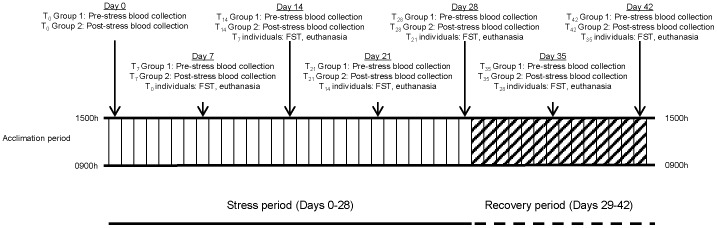
“On Days 7, 14, 21, 28, 35, and 42, approximately 18 hours following completion of the most recent restraint exposure, mice from which blood had been collected one week previously were subjected to a single forced swim test (FST) [48–51].”
MethodSelf-citationCentral injection of IL-10 antagonizes the behavioural effects of lipopolysaccharide in rats
Bluthé, R.-M., Castanon, N., Pousset, F., Bristow, A., Ball, C., Lestage, J., Michaud, B., KELLEY, K. W., & Dantzer, R. (1999) · Psychoneuroendocrinology · doi:10.1016/s0306-4530(98)00077-8 · Cited by 179
Restraint stress differentially affects anti-viral cellular and humoral immune responses in mice
Sheridan, J. F., Feng, N., Bonneau, R. H., Allen, C. M., Huneycutt, B. S., & Glaser, R. (1991) · Journal of Neuroimmunology · doi:10.1016/0165-5728(91)90046-a · Cited by 173
Self-citationIL-10 modulates depressive-like behavior
Mesquita, A. R., Correia‐Neves, M., Roque, S., Castro, A. G., Vieira, P., Pedrosa, J., Palha, J. A., & Sousa, N. (2008) · Journal of Psychiatric Research · doi:10.1016/j.jpsychires.2008.02.004 · Cited by 159
Soluble interleukin-6 (IL-6) receptor augments central effects of IL-6 in vivo.
Schöbitz, B., Pezeshki, G., Pohl, T., Hemmann, U., Heinrich, P. C., Holsboer, F., & Reul, J. M. H. M. (1995) · The FASEB Journal · doi:10.1096/fasebj.9.8.7768358 · Cited by 159
Mouse interleukin-6 stimulates the HPA axis and increases brain tryptophan and serotonin metabolism
Wang, J., & Dunn, A. J. (1998) · Neurochemistry International · doi:10.1016/s0197-0186(98)00016-3 · Cited by 144
Harris, R. B. S., Mitchell, T. D., Simpson, J., Redmann, S. M., Youngblood, B. D., & Ryan, D. H. (2002) · American Journal of Physiology-Regulatory, Integrative and Comparative Physiology · doi:10.1152/ajpregu.2002.282.1.r77 · Cited by 139
Chronic stress enhances progression of acute lymphoblastic leukemia via β-adrenergic signaling
Lamkin, D. M., Sloan, E. K., Patel, A. J., Chiang, B. S., Pimentel, M. A., Ma, J. C. Y., Arevalo, J. M. G., Morizono, K., & Cole, S. W. (2012) · Brain Behavior and Immunity · doi:10.1016/j.bbi.2012.01.013 · Cited by 136
CD4+CD25+ Regulatory T Cell Depletion Modulates Anxiety and Depression-Like Behaviors in Mice
Kim, S.-J., Lee, H., Lee, G., Oh, S.-J., Shin, M.-K., Shim, I., & Bae, H. (2012) · PLoS ONE · doi:10.1371/journal.pone.0042054 · Cited by 130
Role of hypothalamic inputs in maintaining pituitary-adrenal responsiveness in repeated restraint
Zelena, D., Mergl, Z., Földes, A., Kovács, K., Tóth, Z., & Makara, G. B. (2003) · American Journal of Physiology-Endocrinology and Metabolism · doi:10.1152/ajpendo.00219.2003 · Cited by 121
Interleukin-2 and -6 induce behavioral-activating effects in mice
Zalcman, S., Murray, L., Dyck, D. G., Greenberg, A. H., & Nance, D. M. (1998) · Brain Research · doi:10.1016/s0006-8993(98)00904-4 · Cited by 120
Lenczowski, M. J. P., Bluthé, R.-M., Roth, J., Rees, G. S., Rushforth, D. A., van Dam, A., Tilders, F. J. H., Dantzer, R., Rothwell, N. J., & Luheshi, G. N. (1999) · American Journal of Physiology-Regulatory, Integrative and Comparative Physiology · doi:10.1152/ajpregu.1999.276.3.r652 · Cited by 117
IL-10 as a mediator in the HPA axis and brain
Smith, E. M., Cadet, P., Stefano, G. B., Opp, M. R., & Hughes, T. K. (1999) · Journal of Neuroimmunology · doi:10.1016/s0165-5728(99)00206-4 · Cited by 116
Plasma corticosterone and brain catecholamines in stress: Effect of psychotropic drugs
Keim, K. L., & Sigg, E. B. (1977) · Pharmacology Biochemistry and Behavior · doi:10.1016/0091-3057(77)90162-9 · Cited by 114
Kubera, M., Maes, M., Holan, V., Basta-Kaim, A., Roman, A., & Shani, J. (2001) · Journal of Affective Disorders · doi:10.1016/s0165-0327(00)00182-8 · Cited by 103
Prolactin Stimulates Precursor Cells in the Adult Mouse Hippocampus
Walker, T. L., Vukovic, J., Koudijs, M. M., Blackmore, D. G., Mackay, E., Sykes, A. M., Overall, R. W., Hamlin, A. S., & Bartlett, P. F. (2012) · PLoS ONE · doi:10.1371/journal.pone.0044371 · Cited by 101
Reduced Preference for Sucrose in Autoimmune Mice
Šakić, B., Szechtman, H., Braciak, T. A., Richards, C. D., Gauldie, J., & Denburg, J. A. (1997) · Brain Research Bulletin · doi:10.1016/s0361-9230(97)00107-x · Cited by 96
Solomon, M. B., Furay, A. R., Jones, K., Packard, A. E. B., Packard, B. A., Wulsin, A. C., & Herman, J. P. (2012) · Neuroscience · doi:10.1016/j.neuroscience.2011.12.014 · Cited by 96
Chronic psychosocial stress down-regulates central cytokines mRNA
Bartolomucci, A., Palanza, P., Parmigiani, S., Pederzani, T., Merlot, É., Neveu, P. J., & Dantzer, R. (2003) · Brain Research Bulletin · doi:10.1016/j.brainresbull.2003.09.009 · Cited by 95
Leitch, M. M., Ingram, C. D., Young, A. H., McQuade, R., & Gartside, S. E. (2003) · Neuropsychopharmacology · doi:10.1038/sj.npp.1300016 · Cited by 93
Swiergiel, A. H., & Dunn, A. J. (1999) · Brain Behavior and Immunity · doi:10.1006/brbi.1999.0565 · Cited by 90
Lawson, M. A., Kelley, K. W., & Dantzer, R. (2011) · Brain Behavior and Immunity · doi:10.1016/j.bbi.2011.05.006 · Cited by 89
Interleukin-10: A Key Cytokine in Depression?
Roque, S., Correia-Neves, M., Mesquita, A. R., Palha, J. A., & Sousa, N. (2009) · Cardiovascular Psychiatry and Neurology · doi:10.1155/2009/187894 · Cited by 89
Connor, T. J., Brewer, C., Kelly, J. P., & Harkin, A. (2004) · Journal of Neuroimmunology · doi:10.1016/j.jneuroim.2004.10.016 · Cited by 85
Gaucher disease gene GBA functions in immune regulation
Liu, J., Halene, S., Yang, M., Iqbal, J. Z., Yang, R., Mehal, W. Z., Chuang, W., Jain, D., Yuen, T., Sun, L., et al. (2012) · Proceedings of the National Academy of Sciences · doi:10.1073/pnas.1200941109 · Cited by 84
Antidepressant-like effects of cytidine in the forced swim test in rats
Carlezon, W. A., Pliakas, A. M., Parow, A. M., Detke, M. J., Cohen, B. M., & Renshaw, P. F. (2002) · Biological Psychiatry · doi:10.1016/s0006-3223(01)01344-0 · Cited by 77
Effects of chronic and acute stressors and CRF on depression-like behavior in mice
Swiergiel, A. H., Leskov, I. L., & Dunn, A. J. (2007) · Behavioural Brain Research · doi:10.1016/j.bbr.2007.07.018 · Cited by 77
Anisman, H., Kokkinidis, L., Borowski, T. B., & Merali, Z. (1998) · Brain Research · doi:10.1016/s0006-8993(97)01114-1 · Cited by 74
Swiergiel, A. H., & Dunn, A. J. (2006) · Behavioural Brain Research · doi:10.1016/j.bbr.2006.03.024 · Cited by 69
Campbell, T. R., Meagher, M. W., Sieve, A. N., Scott, B., Storts, R. W., Welsh, T. H., & Welsh, C. J. (2001) · Brain Behavior and Immunity · doi:10.1006/brbi.2000.0598 · Cited by 68
Krzyszton, C. P., Sparkman, N. L., Grant, R. W., Buchanan, J. B., Broussard, S. R., Woods, J. A., & Johnson, R. W. (2008) · American Journal of Physiology-Regulatory, Integrative and Comparative Physiology · doi:10.1152/ajpregu.90302.2008 · Cited by 64
Houshyar, H., Cooper, Z. D., & Woods, J. H. (2001) · Journal of Neuroendocrinology · doi:10.1046/j.1365-2826.2001.00713.x · Cited by 62
Signaling mechanisms in the restoration of impaired immune function due to diet-induced obesity
Zhou, Q., Leeman, S. E., & Amar, S. (2011) · Proceedings of the National Academy of Sciences · doi:10.1073/pnas.1019270108 · Cited by 58
Behavioral Effects of Infection with IL-6 Adenovector
Šakić, B., Gauldie, J., Denburg, J. A., & Szechtman, H. (2001) · Brain Behavior and Immunity · doi:10.1006/brbi.1999.0576 · Cited by 56
Curtin, N. M., Mills, K. H. G., & Connor, T. J. (2009) · Brain Behavior and Immunity · doi:10.1016/j.bbi.2008.12.010 · Cited by 56
Bouhassani, M. E., Gilibert, S., Moreau, M., Saint-Charles, F., Tréguier, M., Potì, F., Chapman, M. J., Goff, W. L., Lesnik, P., & Huby, T. (2011) · Journal of Biological Chemistry · doi:10.1074/jbc.m111.220483 · Cited by 54
Koldzic‐Zivanovic, N., Tu, H., Juelich, T. L., Rady, P. L., Tyring, S. K., Hudnall, S. D., Smith, E. M., & Hughes, T. K. (2005) · Brain Behavior and Immunity · doi:10.1016/j.bbi.2005.09.003 · Cited by 45
Constantinides, P. C., & Carey, N. (1949) · Scientific American · doi:10.1038/scientificamerican0349-20 · Cited by 41
Restraint Stress Delays Reentrainment in Male and Female Diurnal and Nocturnal Rodents
Mohawk, J. A., & Lee, T. M. (2005) · Journal of Biological Rhythms · doi:10.1177/0748730405276323 · Cited by 30
Enhanced Resistance of Restraint-Stressed Mice to Sepsis
Wang, Y., Lü, Y., Yu, D. N., Wang, Y., Chen, F., Yang, H., & Zheng, S. J. (2008) · The Journal of Immunology · doi:10.4049/jimmunol.181.5.3441 · Cited by 26
Harvey, D. R., Smith, R., English, K., Mahon, B. P., & Commins, S. (2006) · Physiology & Behavior · doi:10.1016/j.physbeh.2006.03.002 · Cited by 25
Lundh, S. H., Soylu-Kucharz, R., & Petersén, Å. (2012) · PLoS ONE · doi:10.1371/journal.pone.0051168 · Cited by 22
Delgado‐Morales, R., del Río, E., Gómez-Román, A., Bisagno, V., Nadal, R. A., Felipe, C. D., & Armario, A. (2011) · Physiology & Behavior · doi:10.1016/j.physbeh.2011.10.008 · Cited by 18
Interleukin-10 Regulated Gene Expression in Cells of Hypothalamic-Pituitary-Adrenal Axis Origin
Tu, H., Rady, P. L., Juelich, T. L., Tyring, S. K., Koldzic‐Zivanovic, N., Smith, E. M., & Hughes, T. K. (2007) · Cellular and Molecular Neurobiology · doi:10.1007/s10571-006-9137-6 · Cited by 17
Cited by
Sorted by citations
Liang, S., Wang, T., Hu, X., Luo, J., Li, W., Wu, X., Duan, Y., & Jin, F. (2015) · Neuroscience · doi:10.1016/j.neuroscience.2015.09.033 · Cited by 651
Pathogenesis of depression: Insights from human and rodent studies
Ménard, C., Hodes, G. E., & Russo, S. J. (2016) · Neuroscience · doi:10.1016/j.neuroscience.2015.05.053 · Cited by 593
Leclercq, S., Mian, F. M., Stanisz, A. M., Bindels, L. B., Cambier, E., Ben-Amram, H., Koren, O., Forsythe, P., & Bienenstock, J. (2017) · Nature Communications · doi:10.1038/ncomms15062 · Cited by 434
Microglia Priming with Aging and Stress
Niraula, A., Sheridan, J. F., & Godbout, J. P. (2017) · Neuropsychopharmacology · doi:10.1038/npp.2016.185 · Cited by 398
Self-citationRole of Interleukin-6 in Depressive Disorder
Ting, E. Y.-C., Yang, A. C., & Tsai, S. (2020) · International Journal of Molecular Sciences · doi:10.3390/ijms21062194 · Cited by 404
Metadata
- Authors
- Voorhees, J. L., Tarr, A. J., Wohleb, E. S., Godbout, J. P., Mo, X., Sheridan, J. F., Eubank, T. D., & Marsh, C. B.
- Affiliations
- The Ohio State University (US)
- Corresponding author
- Eubank, Timothy D.
- Marsh, Clay B.
- Venue
- PLoS ONE
- Publisher
- Public Library of Science (PLoS)
- Published
- 2013-03-08
- Volume
- 8
- Issue
- 3
- Pages
- e58488
- ISSN
- 1932-6203 (ISSN-L)
- PMC
- PMC3592793
- OpenAlex
- W2044404835
- Cited by
- 236
- References
- 87
- Citations by year
- 2026: 8 · 2025: 11 · 2024: 19 · 2023: 14 · 2022: 20 · 2021: 19 · 2020: 19 · 2019: 22 · 2018: 22 · 2017: 21 · 2016: 18 · 2015: 22 · 2014: 12 · 2013: 9
- FWCI
- 6.58
- Type
- journal article
- Language
- en
- Open access
- gold
- doi.org
- Locations
- PLoS ONE (publishedVersion, cc-by)
- Europe PMC (PubMed Central) (publishedVersion, cc-by)
- PubMed Central (publishedVersion, cc-by)
- PubMed (publishedVersion)
- DOAJ (DOAJ: Directory of Open Access Journals) (submittedVersion, cc-by-sa)
- Funders
- National Institutes of Health (NIH-R01, UL1TR000090, T32 HL07946)
- National Heart, Lung, and Blood Institute (R01HL067176, T32HL007946, R01HL102464, T32 HL07946)
- National Cancer Institute (P30CA016058)
- National Center for Advancing Translational Sciences
- Topics
- Life Sciences › Neuroscience › Biological Psychiatry › Tryptophan and brain disorders
- Life Sciences › Neuroscience › Behavioral Neuroscience › Stress Responses and Cortisol
- Health Sciences › Medicine › Pharmacology (medical) › Treatment of Major Depression
- Keywords
- restraint stress, chronic stress, depression, interleukin-6, IL-10, inflammatory cytokines, depression-like behavior, recombinant IL-10, hippocampus, cortex, major depressive disorder, antidepressant mechanism
- MeSH terms
- Animals, Behavior, Animal, Depression, Immobilization, Recombinant Proteins, Stress, Physiological, Time Factors, Interleukin-6, Interleukin-10, Mice
About these checks
Registry, retraction, Cites and statistics results are computed, not judged, with one exception: a printed reference that no index lists is read once by a model before it counts as a citation error. Claims are extracted by a model and kept only when their quote appears verbatim in the text; each cited source is then checked, with a model’s help, for whether it says what the claim relies on. Those verdicts can be wrong — read the claim’s quote and the cited source before relying on one.
Statistics and arithmetic are recomputed, not judged.
Confidence bands are shown only for fields calibrated on our annotated test set. None is calibrated yet, so no band is shown.
What counts as a claim ›How we measure confidence ›How we check this ›
Are you an author, or do you see a problem with this page? Request a review
