

The DOI matches its Crossref record; 57 of the 57 references it cites were found in a registry or an index.
Enhancing Cognition with Video Games: A Multiple Game Training Study
Open accessAbstract
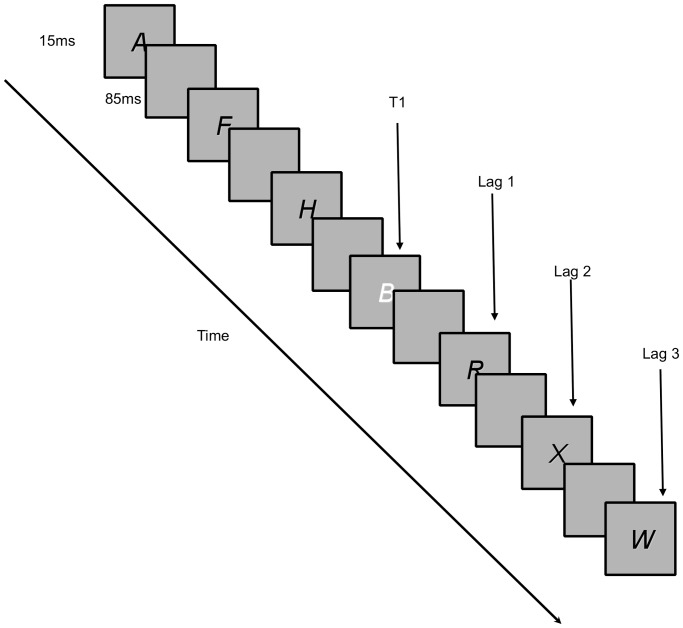
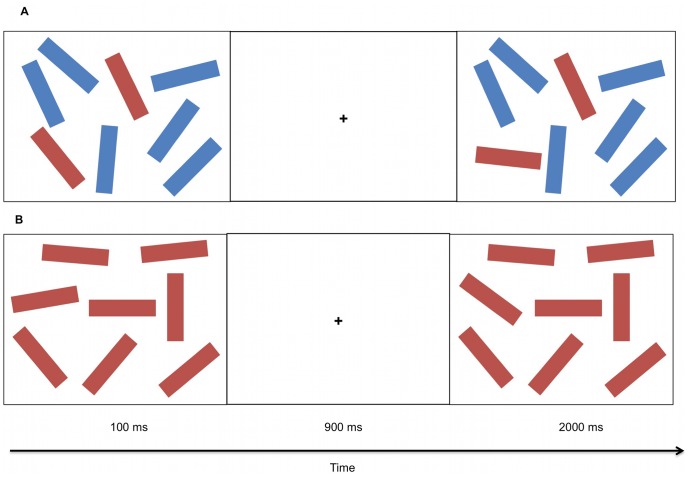
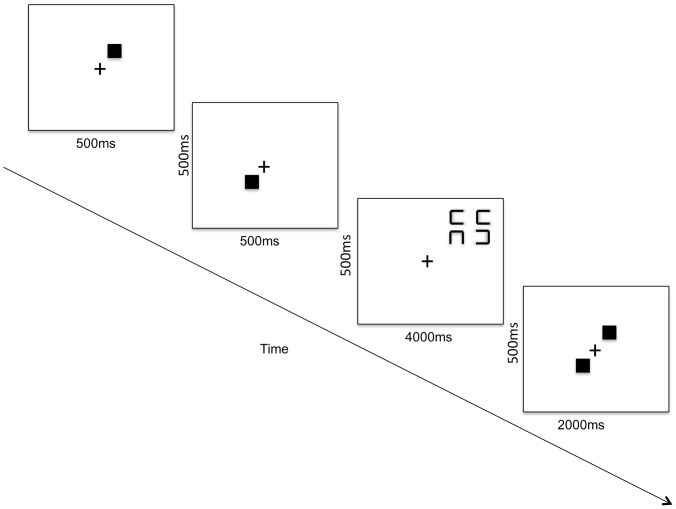
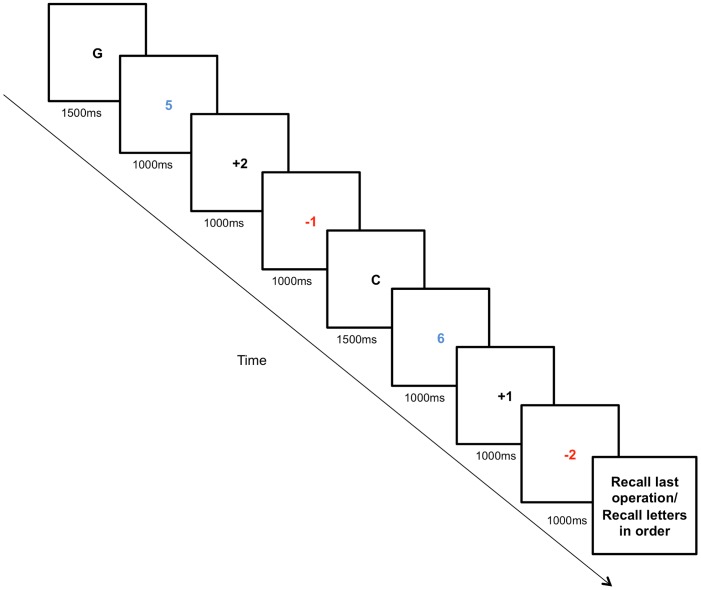
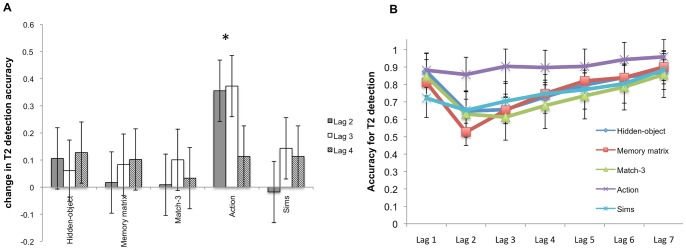
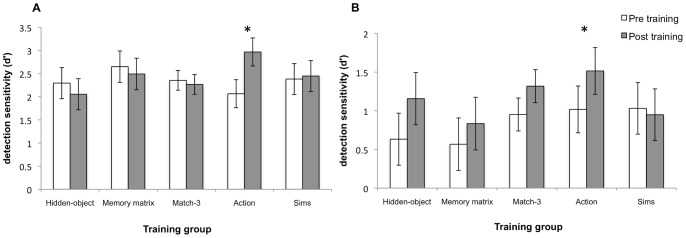
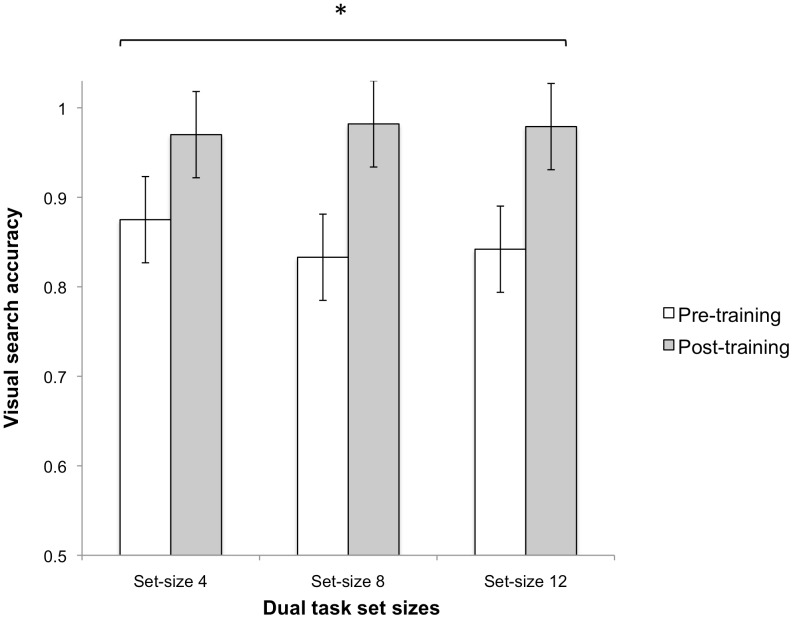
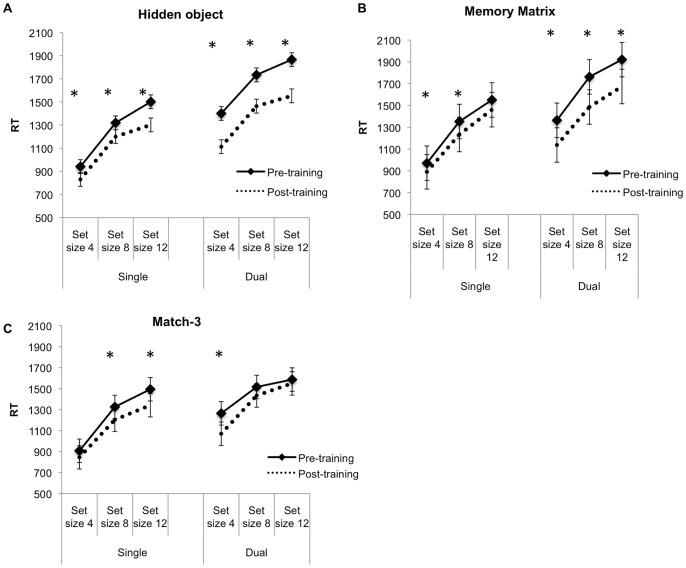
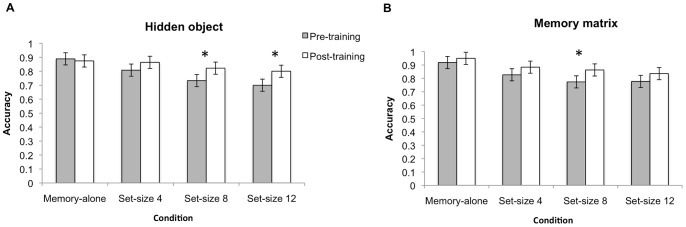
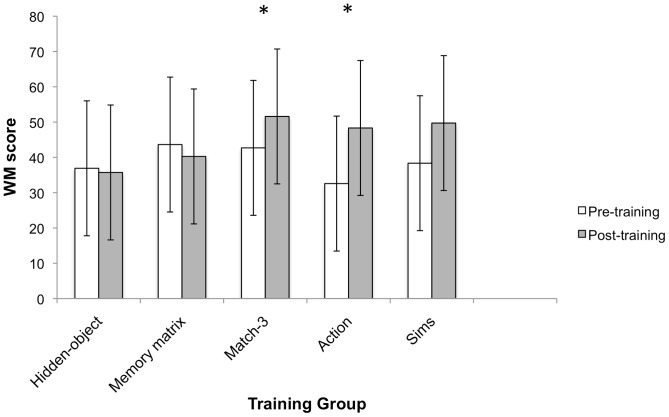
BACKGROUND: Previous evidence points to a causal link between playing action video games and enhanced cognition and perception. However, benefits of playing other video games are under-investigated. We examined whether playing non-action games also improves cognition. Hence, we compared transfer effects of an action and other non-action types that required different cognitive demands. METHODOLOGY/PRINCIPAL FINDINGS: We instructed 5 groups of non-gamer participants to play one game each on a mobile device (iPhone/iPod Touch) for one hour a day/five days a week over four weeks (20 hours). Games included action, spatial memory, match-3, hidden- object, and an agent-based life simulation. Participants performed four behavioral tasks before and after video game training to assess for transfer effects. Tasks included an attentional blink task, a spatial memory and visual search dual task, a visual filter memory task to assess for multiple object tracking and cognitive control, as well as a complex verbal span task. Action game playing eliminated attentional blink and improved cognitive control and multiple-object tracking. Match-3, spatial memory and hidden object games improved visual search performance while the latter two also improved spatial working memory. Complex verbal span improved after match-3 and action game training. CONCLUSION/SIGNIFICANCE: Cognitive improvements were not limited to action game training alone and different games enhanced different aspects of cognition. We conclude that training specific cognitive abilities frequently in a video game improves performance in tasks that share common underlying demands. Overall, these results suggest that many video game-related cognitive improvements may not be due to training of general broad cognitive systems such as executive attentional control, but instead due to frequent utilization of specific cognitive processes during game play. Thus, many video game training related improvements to cognition may be attributed to near-transfer effects.
Overview
The claims and statistics of this paper haven’t been checked yet.
Run the check — free, no account needed. It reads the open-access text and checks the sources it cites.
Integrity signals
Registry
Cites
Statistics
Figures
Verification
Claims the paper makes
The claims and statistics of this paper haven’t been checked yet.
Run the check — free, no account needed. It reads the open-access text and checks the sources it cites.
Claims other papers make about this one
Each is checked against this paper’s own text: does it say what the citing paper says it does?
In the citing paper
“This active control group played two casual video games used in previous training studies [15, 54–57], which do not specifically tap WM processes.”
From Nearest transfer effects of working memory training: A comparison of two programs focused on working memory updating (2019) · cites this paper as [54]
In the citing paper
“Boosted by the publication of a Nature letter showing that video game training can enhance cognitive control in older adults (343), SG specifically adapted to people with AD have been developed and employed to train physical and cognitive abilities, showing preliminary but encouraging results (341, 344–348).”
From The Multidisciplinary Approach to Alzheimer’s Disease and Dementia. A Narrative Review of Non-Pharmacological Treatment (2018) · cites this paper as [345]
Self-check
Percentages, sums and reported differences re-computed from the paper’s own numbers.
The self-check needs the paper’s full text.
Citations
Cites
Updating P300: An integrative theory of P3a and P3b
Polich, J. (2007) · Clinical Neurophysiology · doi:10.1016/j.clinph.2007.04.019 · Cited by 7,919
Calculation of signal detection theory measures
Stanislaw, H., & Todorov, N. (1999) · Behavior Research Methods, Instruments, & Computers · doi:10.3758/bf03207704 · Cited by 2,673
Action video game modifies visual selective attention
Green, C. S., & Bavelier, D. (2003) · Nature · doi:10.1038/nature01647 · Cited by 2,540
Using confidence intervals in within-subject designs
Loftus, G. R., & Masson, M. E. J. (1994) · Psychonomic Bulletin & Review · doi:10.3758/bf03210951 · Cited by 2,433
Is working memory capacity task dependent?
Turner, M. L., & Engle, R. W. (1989) · Journal of Memory and Language · doi:10.1016/0749-596x(89)90040-5 · Cited by 2,299
Temporary suppression of visual processing in an RSVP task: An attentional blink?
Raymond, J. E., Shapiro, K. L., & Arnell, K. M. (1992) · Journal of Experimental Psychology Human Perception & Performance · doi:10.1037//0096-1523.18.3.849 · Cited by 2,286
Video games and aggressive thoughts, feelings, and behavior in the laboratory and in life.
Anderson, C. A., & Dill, K. E. (2000) · Journal of Personality and Social Psychology · doi:10.1037//0022-3514.78.4.772 · Cited by 1,955
Cognitive control in media multitaskers
Ophir, E., Nass, C., & Wagner, A. D. (2009) · Proceedings of the National Academy of Sciences · doi:10.1073/pnas.0903620106 · Cited by 1,810
Video games and aggressive thoughts, feelings, and behavior in the laboratory and in life.
Anderson, C. A., & Dill, K. E. (2000) · Journal of Personality and Social Psychology · doi:10.1037/0022-3514.78.4.772 · Cited by 1,778
Temporary suppression of visual processing in an RSVP task: an attentional blink?
Raymond, J. E., Shapiro, K. L., & Arnell, K. M. (1992) · Journal of Experimental Psychology: Human Perception and Performance · doi:10.1037/0096-1523.18.3.849 · Cited by 1,649
Research works printed but not linked: 1
- Cohen JE, Green CS, Bavelier D (2008) Training visual attention with video games: Not all games are created equal. In: O’Neil HF, Perez RS, editors. Computer games and team and individual learning. Oxford, UK: Elseiver Ltd.
Cited by
Sorted by citations
Do “brain-training” programs work?
Simons, D. J., Boot, W. R., Charness, N., Gathercole, S. E., Chabris, C. F., Hambrick, D. Z., & Stine-Morrow, E. A. L. (2016) · Psychological Science in the Public Interest · doi:10.1177/1529100616661983 · Cited by 1,183
Meta-analysis of action video game impact on perceptual, attentional, and cognitive skills.
Bediou, B., Adams, D. M., Mayer, R. E., Tipton, E., Green, C. S., & Bavelier, D. (2018) · Psychological Bulletin · doi:10.1037/bul0000130 · Cited by 807
Zucchella, C., Sinforiani, E., Tamburin, S., Federico, A., Mantovani, E., Bernini, S., Casale, R., & Bartolo, M. (2018) · Frontiers in Neurology · doi:10.3389/fneur.2018.01058 · Cited by 297
Video game training does not enhance cognitive ability: A comprehensive meta-analytic investigation
Sala, G., Tatlidil, K. S., & Gobet, F. (2018) · Psychological Bulletin · doi:10.1037/bul0000139 · Cited by 257
Enhancing Attentional Control: Lessons from Action Video Games
Bavelier, D., & Green, C. S. (2019) · Neuron · doi:10.1016/j.neuron.2019.09.031 · Cited by 301
Real-Time Strategy Game Training: Emergence of a Cognitive Flexibility Trait
Glass, B. D., Maddox, W. T., & Love, B. C. (2013) · PLoS ONE · doi:10.1371/journal.pone.0070350 · Cited by 227
Pallavicini, F., Ferrari, A., & Mantovani, F. (2018) · Frontiers in Psychology · doi:10.3389/fpsyg.2018.02127 · Cited by 238
Franceschini, S., Trevisan, P., Ronconi, L., Bertoni, S., Colmar, S., Double, K. S., Facoetti, A., & Gori, S. (2017) · Scientific Reports · doi:10.1038/s41598-017-05826-8 · Cited by 214
Ballesteros, S., Prieto, A., Mayas, J., Toril, P., Pita, C., Ponce de León, L., Reales, J. M., & Waterworth, J. (2014) · Frontiers in Aging Neuroscience · doi:10.3389/fnagi.2014.00277 · Cited by 189
Novelty Interventions to Enhance Broad Cognitive Abilities and Prevent Dementia
Fissler, P., Küster, O. C., Schlee, W., & Kolassa, I. (2013) · Progress in brain research · doi:10.1016/b978-0-444-63327-9.00017-5 · Cited by 192
Vedechkina, M., & Borgonovi, F. (2021) · Frontiers in Psychology · doi:10.3389/fpsyg.2021.611155 · Cited by 263
Computerised cognitive training for preventing dementia in people with mild cognitive impairment
Gates, N. J., Vernooij, R. W. M., Nisio, M. D., Karim, S., March, E. G., Martínez, G., & Rutjes, A. W. (2019) · Cochrane Database of Systematic Reviews · doi:10.1002/14651858.cd012279.pub2 · Cited by 186
Action Video Game Training for Healthy Adults: A Meta-Analytic Study
Wang, P., Liu, H.-H., Zhu, X.-T., Meng, T., Li, H.-J., & Zuo, X.-N. (2016) · Frontiers in Psychology · doi:10.3389/fpsyg.2016.00907 · Cited by 145
The case for an ecological approach to cognitive training
Moreau, D., & Conway, A. R. A. (2014) · Trends in Cognitive Sciences · doi:10.1016/j.tics.2014.03.009 · Cited by 162
Effects of action video game training on visual working memory.
Blacker, K. J., Curby, K. M., Klobusicky, E., & Chein, J. M. (2014) · Journal of Experimental Psychology Human Perception & Performance · doi:10.1037/a0037556 · Cited by 140
Cognitive training with casual video games: points to consider
Baniqued, P. L., Kranz, M. B., Voss, M. W., Lee, H., Cosman, J. D., Severson, J., & Kramer, A. F. (2014) · Frontiers in Psychology · doi:10.3389/fpsyg.2013.01010 · Cited by 152
Dale, G., & Green, C. S. (2017) · Journal of Cognitive Enhancement · doi:10.1007/s41465-017-0015-6 · Cited by 148
Choi, E., Shin, S.-H., Ryu, J.-K., Jung, K.-I., Kim, S.-Y., & Park, M.-H. (2020) · Behavioral and Brain Functions · doi:10.1186/s12993-020-0165-z · Cited by 141
Video games, cognitive exercises, and the enhancement of cognitive abilities
Anguera, J. A., & Gazzaley, A. H. (2015) · Current Opinion in Behavioral Sciences · doi:10.1016/j.cobeha.2015.06.002 · Cited by 140
Kable, J. W., Caulfield, M. K., Falcone, M., McConnell, M., Bernardo, L., Parthasarathi, T., Cooper, N., Ashare, R., Audrain-McGovern, J., Hornik, R., et al. (2017) · The Journal of Neuroscience · doi:10.1523/jneurosci.2832-16.2017 · Cited by 124
Entertainment Video Games for Academic Learning: A Systematic Review
Martinez, L., Gimenes, M., & Lambert, E. G. (2022) · Journal of Educational Computing Research · doi:10.1177/07356331211053848 · Cited by 191
Enhanced visual short-term memory in action video game players
Blacker, K. J., & Curby, K. M. (2013) · Attention Perception & Psychophysics · doi:10.3758/s13414-013-0487-0 · Cited by 116
Reynaldo, C., Christian, R., Hosea, H., & Gunawan, A. A. S. (2021) · Procedia Computer Science · doi:10.1016/j.procs.2020.12.027 · Cited by 113
Cardoso-Leite, P., & Bavelier, D. (2014) · Current Opinion in Neurology · doi:10.1097/wco.0000000000000077 · Cited by 111
Cardoso-Leite, P., Kludt, R., Vignola, G., Ma, W. J., Green, C. S., & Bavelier, D. (2016) · Attention, Perception, & Psychophysics · doi:10.3758/s13414-015-0988-0 · Cited by 111
Dougherty, M. R., Hamovitz, T., & Tidwell, J. W. (2016) · Psychonomic Bulletin & Review · doi:10.3758/s13423-015-0865-9 · Cited by 112
Mayas, J., Parmentier, F. B. R., Andrés, P., & Ballesteros, S. (2014) · PLoS ONE · doi:10.1371/journal.pone.0092269 · Cited by 117
Gori, S., & Facoetti, A. (2013) · Vision Research · doi:10.1016/j.visres.2013.11.011 · Cited by 118
Bertoni, S., Franceschini, S., Puccio, G., Mancarella, M., Gori, S., & Facoetti, A. (2021) · Brain Sciences · doi:10.3390/brainsci11020171 · Cited by 96
Gates, N. J., Rutjes, A. W., Nisio, M. D., Karim, S., Chong, L., March, E. G., Martínez, G., & Vernooij, R. W. M. (2020) · Cochrane Database of Systematic Reviews · doi:10.1002/14651858.cd012277.pub3 · Cited by 100
What Older People Like to Play: Genre Preferences and Acceptance of Casual Games
Chesham, A., Wyss, P., Müri, R. M., Mosimann, U. P., & Nef, T. (2017) · JMIR Serious Games · doi:10.2196/games.7025 · Cited by 103
Playing a puzzle video game with changing requirements improves executive functions
Oei, A. C., & Patterson, M. D. (2014) · Computers in Human Behavior · doi:10.1016/j.chb.2014.04.046 · Cited by 105
Self-citationFranceschini, S., & Bertoni, S. (2018) · Neuropsychologia · doi:10.1016/j.neuropsychologia.2018.10.023 · Cited by 107
Ballesteros, S., Mayas, J., Prieto, A. F., Ruiz-Marquez, E., Toril, P., & Avilés, J. M. R. (2017) · Frontiers in Aging Neuroscience · doi:10.3389/fnagi.2017.00354 · Cited by 109
A systematic review: Virtual-reality-based techniques for human exercises and health improvement
Ali, S. G., Wang, X., Li, P., Jung, Y., Bi, L., Kim, J., Chen, Y., Feng, D. D., Magnenat‐Thalmann, N., Wang, J., et al. (2023) · Frontiers in Public Health · doi:10.3389/fpubh.2023.1143947 · Cited by 90
Transgenerational effects of early environmental insults on aging and disease incidence
Ambeskovic, M., Roseboom, T. J., & Metz, G. A. S. (2017) · Neuroscience & Biobehavioral Reviews · doi:10.1016/j.neubiorev.2017.08.002 · Cited by 81
Oei, A. C., & Patterson, M. D. (2015) · Frontiers in Psychology · doi:10.3389/fpsyg.2015.00113 · Cited by 76
Self-citationAre videogame training gains specific or general?
Oei, A. C., & Patterson, M. D. (2014) · Frontiers in Systems Neuroscience · doi:10.3389/fnsys.2014.00054 · Cited by 77
Self-citationThe Health Effects of Video Games in Children and Adolescents
Alanko, D. (2023) · Pediatrics in Review · doi:10.1542/pir.2022-005666 · Cited by 84
Gates, N. J., Rutjes, A. W., Nisio, M. D., Karim, S., Chong, L., March, E. G., Martínez, G., & Vernooij, R. W. M. (2019) · Cochrane Database of Systematic Reviews · doi:10.1002/14651858.cd012277.pub2 · Cited by 88
Gaming is related to enhanced working memory performance and task-related cortical activity
Moisala, M., Salmela, V. R., Hietajärvi, L., Carlson, S., Vuontela, V., Lonka, K., Hakkarainen, K., Salmela‐Aro, K., & Alho, K. (2016) · Brain Research · doi:10.1016/j.brainres.2016.10.027 · Cited by 80
Shams, T. A., Foussias, G., Zawadzki, J. A., Marshe, V. S., Siddiqui, I., Müller, D. J., & Wong, A. H. C. (2015) · Current Psychiatry Reports · doi:10.1007/s11920-015-0609-6 · Cited by 68
The Potential of Virtual Reality for Inducing Neuroplasticity in Children with Amblyopia
Coco-Martín, M. B., Pinero, D. P., Vega, L. L., Hernández-Rodríguez, C. J., Adiego, J., Molina‐Martín, A., Sáiz, D. D. F., & Arenillas, J. F. (2020) · Journal of Ophthalmology · doi:10.1155/2020/7067846 · Cited by 69
Video gaming in school children: How much is enough?
Pujol, J., Fenoll, R., Forns, J., Harrison, B. J., Martínez‐Vilavella, G., Macià, D., Alvarez‐Pedrerol, M., Blanco‐Hinojo, L., González‐Ortiz, S., Deus, J., et al. (2016) · Annals of Neurology · doi:10.1002/ana.24745 · Cited by 62
The Cambridge Handbook of Substance and Behavioral Addictions
Sussman, S. Y. (2020) · Cambridge University Press eBooks · doi:10.1017/9781108632591 · Cited by 64
Improved control of exogenous attention in action video game players
Cain, M. S., Prinzmetal, W., Shimamura, A. P., & Landau, A. N. (2014) · Frontiers in Psychology · doi:10.3389/fpsyg.2014.00069 · Cited by 64
“Shall We Play a Game?”: Improving Reading Through Action Video Games in Developmental Dyslexia
Franceschini, S., Bertoni, S., Ronconi, L., Molteni, M., Gori, S., & Facoetti, A. (2015) · Current Developmental Disorders Reports · doi:10.1007/s40474-015-0064-4 · Cited by 70
Ferreira-Brito, F., Fialho, M., Virgolino, A., Neves, I., Miranda, A. C., Sousa-Santos, N., Caneiras, C. S. G., Carriço, L. M., Verdelho, A., & Santos, O. (2019) · Journal of Biomedical Informatics · doi:10.1016/j.jbi.2019.103287 · Cited by 72
Abdel‐Baki, A., Lal, S., D.‐Charron, O., Stip, E., & Kara, N. (2017) · Early Intervention in Psychiatry · doi:10.1111/eip.12250 · Cited by 63
Video games and board games: Effects of playing practice on cognition
Martinez, L., Gimenes, M., & Lambert, E. G. (2023) · PLoS ONE · doi:10.1371/journal.pone.0283654 · Cited by 59
Real-Time Strategy Video Game Experience and Visual Perceptual Learning
Kim, Y., Kang, D., Kim, D., Kim, H. J., Sasaki, Y., & Watanabe, T. (2015) · Journal of Neuroscience · doi:10.1523/jneurosci.3340-14.2015 · Cited by 61
Perspective taking and decision-making in educational game play: A mixed-methods study
Hilliard, L. J., Buckingham, M. H., Geldhof, G. J., Gansert, P. K., Stack, C., Gelgoot, E. S., Bers, M. U., & Lerner, R. M. (2016) · Applied Developmental Science · doi:10.1080/10888691.2016.1204918 · Cited by 62
Bisoglio, J., Michaels, T. I., Mervis, J., & Ashinoff, B. K. (2014) · Frontiers in Psychology · doi:10.3389/fpsyg.2014.00136 · Cited by 63
Baniqued, P. L., Allen, C. M., Kranz, M. B., Johnson, K., Sipolins, A., Dickens, C., Ward, N., Geyer, A., & Kramer, A. F. (2015) · PLoS ONE · doi:10.1371/journal.pone.0142169 · Cited by 64
Föcker, J., Mortazavi, M., Khoe, W., Hillyard, S. A., & Bavelier, D. (2018) · Journal of Cognitive Neuroscience · doi:10.1162/jocn_a_01230 · Cited by 57
Usability of Gamified Knowledge Learning in VR and Desktop-3D
Oberdörfer, S., Heidrich, D., & Latoschik, M. E. (2019) · CHI Conference on Human Factors in Computing Systems · doi:10.1145/3290605.3300405 · Cited by 56
Kasumovic, M. M., & Kuznekoff, J. H. (2015) · PLoS ONE · doi:10.1371/journal.pone.0131613 · Cited by 76
On the impact of new technologies on multitasking
Cardoso-Leite, P., Green, C. S., & Bavelier, D. (2015) · Developmental Review · doi:10.1016/j.dr.2014.12.001 · Cited by 56
Exploring the effects of videogame play on creativity performance and emotional responses
Yeh, C. S. (2015) · Computers in Human Behavior · doi:10.1016/j.chb.2015.07.024 · Cited by 57
Alho, K., Moisala, M., & Salmela‐Aro, K. (2022) · European Psychologist · doi:10.1027/1016-9040/a000477 · Cited by 64
Time to see the bigger picture: Individual differences in the attentional blink
Willems, C., & Martens, S. (2015) · Psychonomic Bulletin & Review · doi:10.3758/s13423-015-0977-2 · Cited by 49
Reed, D. D., Naudé, G. P., Gelino, B. W., & Amlung, M. T. (2020) · Cambridge University Press eBooks · doi:10.1017/9781108632591.011 · Cited by 48
Smirni, D., Garufo, E., Falco, L. D., & Lavanco, G. (2021) · Pediatric Reports · doi:10.3390/pediatric13030047 · Cited by 63
The Prevention and Treatment of Gambling Disorders: Some Art, Some Science
Derevensky, J. L. (2020) · Cambridge University Press eBooks · doi:10.1017/9781108632591.024 · Cited by 45
Above averaging in literature reviews
Simonsohn, U., Simmons, J. P., & Nelson, L. D. (2022) · Nature Reviews Psychology · doi:10.1038/s44159-022-00101-8 · Cited by 44
Gates, N. J., Rutjes, A. W., Di Nisio, M., Karim, S., Chong, L.-Y., March, E., Martínez, G., & Vernooij, R. W. (2019) · Cochrane Database of Systematic Reviews · doi:10.1002/14651858.cd012278.pub2 · Cited by 46
Considering the Overlap and Nonoverlap of Compulsivity, Impulsivity, and Addiction
Blum, A. W., & Grant, J. E. (2020) · Cambridge University Press eBooks · doi:10.1017/9781108632591.038 · Cited by 44
Neurobiological Foundations of Behavioral Addictions
Vaccaro, A. G., & Potenza, M. N. (2020) · Cambridge University Press eBooks · doi:10.1017/9781108632591.016 · Cited by 45
Neurobiology of Substance Addictions
Christie, N. C., & Bechara, A. (2020) · Cambridge University Press eBooks · doi:10.1017/9781108632591.015 · Cited by 44
Sensitization of Incentive Salience and the Transition to Addiction
Warlow, S. M., Baumgartner, H. M., Freeland, C. M., Naffziger, E. E., Olney, J. J., Berridge, K. C., & Robinson, M. J. F. (2020) · Cambridge University Press eBooks · doi:10.1017/9781108632591.006 · Cited by 46
Mindfulness-Based Interventions Applied to Addiction Treatments
Kechter, A., & Black, D. S. (2020) · Cambridge University Press eBooks · doi:10.1017/9781108632591.040 · Cited by 43
Multiple Memory Systems, Addiction, and Health Habits: New Routes for Translational Science
Stacy, A. W., Pike, J. R., & Lee, A. Y. (2020) · Cambridge University Press eBooks · doi:10.1017/9781108632591.017 · Cited by 43
Tanning as an Addiction: The State of the Research and Implications for Intervention
Miller, K. A., & Mays, D. M. (2020) · Cambridge University Press eBooks · doi:10.1017/9781108632591.037 · Cited by 43
Schulte, E. M., Schiestl, E. T., & Gearhardt, A. N. (2020) · Cambridge University Press eBooks · doi:10.1017/9781108632591.035 · Cited by 43
Behavioral Economics and Addictive Disorders
Jarmolowicz, D. P., & Schneider, T. D. (2020) · Cambridge University Press eBooks · doi:10.1017/9781108632591.005 · Cited by 42
Prevention and Treatment of Compulsive Buying Disorder
Galimov, A., & Black, D. W. (2020) · Cambridge University Press eBooks · doi:10.1017/9781108632591.027 · Cited by 42
Blum, K., Roy, A. K., Podesta, A., Modestino, E. J., Steinberg, B., Gondré-Lewis, M. C., Baron, D. A., Thanos, P. K., Lott, L., Badgaiyan, S., et al. (2020) · Cambridge University Press eBooks · doi:10.1017/9781108632591.031 · Cited by 42
Prevention and Treatment of “Food Addiction”
Davis, C., & Mason, A. E. (2020) · Cambridge University Press eBooks · doi:10.1017/9781108632591.023 · Cited by 42
Human Neurobiological Approaches to Hedonically Motivated Behaviors
Burger, K. S., Shearrer, G. E., & Sadler, J. R. (2020) · Cambridge University Press eBooks · doi:10.1017/9781108632591.009 · Cited by 42
Feedback Models for Gambling Control: The Use and Efficacy of Online Responsible Gambling Tools
Griffiths, M. D. (2020) · Cambridge University Press eBooks · doi:10.1017/9781108632591.034 · Cited by 42
Coles, C. D., Kable, J. A., Taddeo, E., & Strickland, D. C. (2015) · Alcoholism Clinical and Experimental Research · doi:10.1111/acer.12885 · Cited by 43
Cognitive inhibitory control in children following early childhood music education
Joret, M.-E., Germeys, F., & Gidron, Y. (2016) · Musicae Scientiae · doi:10.1177/1029864916655477 · Cited by 51
Wiloth, S., Werner, C., Lemke, N. C., Bauer, J. M., & Hauer, K. A. (2017) · Aging & Mental Health · doi:10.1080/13607863.2017.1348472 · Cited by 41
Gender, videogames and navigation in virtual space
de Castell, S., Larios, H., & Jenson, J. (2019) · Acta Psychologica · doi:10.1016/j.actpsy.2019.102895 · Cited by 46
Linares, R., Borella, E., Lechuga, M. T., Carretti, B., & Pelegrina, S. (2019) · PLOS ONE · doi:10.1371/journal.pone.0211321 · Cited by 38
Kowalczyk‐Grębska, N., Shi, F., Magnuski, M., Skorko, M., Dobrowolski, P., Kossowski, B., Marchewka, A., Bielecki, M., Kossut, M. M., & Brzezicka, A. (2018) · Human Brain Mapping · doi:10.1002/hbm.24208 · Cited by 39
Role of Rehabilitation in Neural Plasticity
Keci, A., Tani, K., & Xhema, J. (2019) · Open Access Macedonian Journal of Medical Sciences · doi:10.3889/oamjms.2019.295 · Cited by 39
Dale, G., & Green, C. S. (2017) · Journal of Cognitive Enhancement · doi:10.1007/s41465-017-0021-8 · Cited by 40
Milani, L., Grumi, S., & Blasio, P. D. (2019) · Frontiers in Psychology · doi:10.3389/fpsyg.2019.01226 · Cited by 38
The Association Between Video Game Play and Cognitive Function: Does Gaming Platform Matter?
Huang, V., Young, M., & Fiocco, A. J. (2017) · Cyberpsychology Behavior and Social Networking · doi:10.1089/cyber.2017.0241 · Cited by 42
Nef, T., Chesham, A., Schütz, N., Botros, A., Vanbellingen, T., Burgunder, J., Muellner, J., Müri, R. M., & Urwyler, P. (2020) · Frontiers in Aging Neuroscience · doi:10.3389/fnagi.2020.00087 · Cited by 36
Coffey, A. J., Kamhawi, R., Fishwick, P. A., & Henderson, J. (2017) · Educational Technology Research and Development · doi:10.1007/s11423-017-9510-9 · Cited by 34
Response of brain‐derived neurotrophic factor to combining cognitive and physical exercise
Miyamoto, T., Hashimoto, S., Yanamoto, H., Ikawa, M., Nakano, Y., Sekiyama, T., Kou, K., Kashiwamura, S., Takeda, C., & Fujioka, H. (2018) · European Journal of Sport Science · doi:10.1080/17461391.2018.1470676 · Cited by 40
Sport-based video game causes mental fatigue and impairs visuomotor skill in male basketball players
Faro, H., Fortes, L. D. S., de Lima-Júnior, D. R. A. A., Barbosa, B. T., Ferreira, M. E. C., & Almeida, S. S. (2022) · International Journal of Sport and Exercise Psychology · doi:10.1080/1612197x.2022.2109187 · Cited by 31
Craven, M. P., & Groom, M. J. (2015) · International Conference on Interactive Technologies and Games (ITAG) · doi:10.1109/itag.2015.9 · Cited by 29
Video game players show higher performance but no difference in speed of attention shifts
Mack, D. J., Wiesmann, H., & Ilg, U. J. (2016) · Acta Psychologica · doi:10.1016/j.actpsy.2016.05.001 · Cited by 29
Jogos Digitais na Escola: aprimorando a atenção e a flexibilidade cognitiva
Ramos, D. K., & Segundo, F. R. (2018) · Educação & Realidade · doi:10.1590/2175-623665738 · Cited by 29
Cudo, A., Wojtasiński, M., Tużnik, P., Griffiths, M. D., & Zabielska‐Mendyk, E. (2020) · PLoS ONE · doi:10.1371/journal.pone.0237610 · Cited by 33
Datta, R. R., Chon, S., Dratsch, T., Timmermann, F., Müller, L., Plum, P. S., Haneder, S., dos Santos, D. P., Späth, M. R., Wahba, R., et al. (2020) · PLoS ONE · doi:10.1371/journal.pone.0232341 · Cited by 31
A game-factors approach to cognitive benefits from video-game training: A meta-analysis
Smith, E. T., & Basak, C. (2023) · PLOS ONE · doi:10.1371/journal.pone.0285925 · Cited by 28
Metadata
- Authors
- Oei, A. C., & Patterson, M. D.
- Affiliations
- Nanyang Technological University (SG)
- Corresponding author
- Oei, Adam C.
- ORCID
- Oei, Adam C.
- Venue
- PLoS ONE
- Publisher
- Public Library of Science (PLoS)
- Published
- 2013-03-13
- Volume
- 8
- Issue
- 3
- Pages
- e58546
- ISSN
- 1932-6203 (ISSN-L)
- PMC
- PMC3596277
- OpenAlex
- W2020754547
- Cited by
- 398
- References
- 56
- Citations by year
- 2026: 10 · 2025: 23 · 2024: 27 · 2023: 28 · 2022: 22 · 2021: 35 · 2020: 77 · 2019: 41 · 2018: 32 · 2017: 26 · 2016: 19 · 2015: 33 · 2014: 19 · 2013: 6
- FWCI
- 34.68
- Type
- journal article
- Language
- en
- Open access
- gold
- doi.org
- Locations
- PLoS ONE (publishedVersion, cc-by)
- Europe PMC (PubMed Central) (publishedVersion, cc-by)
- PubMed Central (publishedVersion, cc-by)
- PubMed (publishedVersion)
- DOAJ (DOAJ: Directory of Open Access Journals) (submittedVersion, cc-by-sa)
- DR-NTU (Nanyang Technological University) (submittedVersion)
- Topics
- Social Sciences › Psychology › Experimental and Cognitive Psychology › Cognitive Abilities and Testing
- Social Sciences › Psychology › Developmental and Educational Psychology › Educational Games and Gamification
- Social Sciences › Sociology and Political Science › Digital Games and Media
- Keywords
- video game training, action video games, transfer of learning, near transfer, attentional blink, multiple object tracking, cognitive control, spatial working memory, verbal span, visual search, mobile games, hidden object games, life simulation games
- MeSH terms
- Cognition, Female, Humans, Male, Memory, Reaction Time, Spatial Behavior, Video Games, Biomedical Enhancement, Attentional Blink
About these checks
Registry, retraction, Cites and statistics results are computed, not judged, with one exception: a printed reference that no index lists is read once by a model before it counts as a citation error. Claims are extracted by a model and kept only when their quote appears verbatim in the text; each cited source is then checked, with a model’s help, for whether it says what the claim relies on. Those verdicts can be wrong — read the claim’s quote and the cited source before relying on one.
Statistics and arithmetic are recomputed, not judged.
Confidence bands are shown only for fields calibrated on our annotated test set. None is calibrated yet, so no band is shown.
What counts as a claim ›How we measure confidence ›How we check this ›
Are you an author, or do you see a problem with this page? Request a review
