

Identifying the World's Most Climate Change Vulnerable Species: A Systematic Trait-Based Assessment of all Birds, Amphibians and Corals
Open accessThe DOI matches its Crossref record; 42 of the 43 references it cites were found in a registry or an index.
Abstract
Climate change will have far-reaching impacts on biodiversity, including increasing extinction rates. Current approaches to quantifying such impacts focus on measuring exposure to climatic change and largely ignore the biological differences between species that may significantly increase or reduce their vulnerability. To address this, we present a framework for assessing three dimensions of climate change vulnerability, namely sensitivity, exposure and adaptive capacity; this draws on species' biological traits and their modeled exposure to projected climatic changes. In the largest such assessment to date, we applied this approach to each of the world's birds, amphibians and corals (16,857 species). The resulting assessments identify the species with greatest relative vulnerability to climate change and the geographic areas in which they are concentrated, including the Amazon basin for amphibians and birds, and the central Indo-west Pacific (Coral Triangle) for corals. We found that high concentration areas for species with traits conferring highest sensitivity and lowest adaptive capacity differ from those of highly exposed species, and we identify areas where exposure-based assessments alone may over or under-estimate climate change impacts. We found that 608-851 bird (6-9%), 670-933 amphibian (11-15%), and 47-73 coral species (6-9%) are both highly climate change vulnerable and already threatened with extinction on the IUCN Red List. The remaining highly climate change vulnerable species represent new priorities for conservation. Fewer species are highly climate change vulnerable under lower IPCC SRES emissions scenarios, indicating that reducing greenhouse emissions will reduce climate change driven extinctions. Our study answers the growing call for a more biologically and ecologically inclusive approach to assessing climate change vulnerability. By facilitating independent assessment of the three dimensions of climate change vulnerability, our approach can be used to devise species and area-specific conservation interventions and indices. The priorities we identify will strengthen global strategies to mitigate climate change impacts.
Overview
The claims and statistics of this paper haven’t been checked yet.
Free: it reads the open-access text and checks the first 5 claims that cite a source we can check. Create a free account to check every claim.
Integrity signals
Registry
Cites
Statistics
Figures
Verification
Claims the paper makes
The claims and statistics of this paper haven’t been checked yet.
Free: it reads the open-access text and checks the first 5 claims that cite a source we can check. Create a free account to check every claim.
Claims other papers make about this one
Each is checked against this paper’s own text: does it say what the citing paper says it does?
The source backs part of the claim, not all of it — or backs it for a different population, condition or comparison.
In the citing paper
“Climate change will become an increasingly dominant problem in the biodiversity crisis 3 .”
From Biodiversity: The ravages of guns, nets and bulldozers (2016) · cites this paper as [3]
Experimental — accuracy not yet measuredThe cited source says what the claim attributes to it.
In the citing paper
“Finally, the balance of threats driving extinction risk for many of the world's species will change, even over the next few decades 3 .”
From Biodiversity: The ravages of guns, nets and bulldozers (2016) · cites this paper as [3]
Self-check
Percentages, sums and reported differences re-computed from the paper’s own numbers.
The self-check needs the paper’s full text.
Citations
Cites
Very high resolution interpolated climate surfaces for global land areas
Hijmans, R. J., Cameron, S. E., Parra, J. L., Jones, P. G., & Jarvis, A. (2005) · International Journal of Climatology · doi:10.1002/joc.1276 · Cited by 19,825
Global Biodiversity Scenarios for the Year 2100
Sala, O. E., Stuart Chapin, F., III, Armesto, J. J., Berlow, E., Bloomfield, J., Dirzo, R., Huber-Sanwald, E., Huenneke, L. F., Jackson, R. B., et al. (2000) · Science · doi:10.1126/science.287.5459.1770 · Cited by 9,280 · cited 1×
“However, anthropogenic climate change is becoming a significant new threat [4–7].”
BackgroundClimate Change 2007: Impacts, Adaptation and Vulnerability
Parry, M. L., Canziani, O. F., Palutikof, J. P., van der Linden, P., & Hanson, C. (2007) · Centre for Environmental Data Analysis Digital Repository (Centre for Environmental Data Analysis) · doi:10.5281/zenodo.7356334 · Cited by 9,136
Extinction risk from climate change
Thomas, C. D., Cameron, A., Green, R. E., Bakkenes, M., Beaumont, L. J., Collingham, Y. C., Erasmus, B. F. N., de Siqueira, M. F., Grainger, A., Hannah, L., et al. (2004) · Nature · doi:10.1038/nature02121 · Cited by 7,695
Predicting species distribution: offering more than simple habitat models
Guisan, A., & Thuiller, W. (2005) · Ecology Letters · doi:10.1111/j.1461-0248.2005.00792.x · Cited by 6,587 · cited 1×
“These and most other similar large-scale assessments are based primarily on species distribution (bioclimatic envelope) models, which use correlations between species’ observed distributions and climate variables to predict their distributions and hence their extinction risk under future climate scenarios [9–11].”
BackgroundSpecial report on emissions scenarios
Nakićenović, N., Alcamo, J., Davis, G. R., de Vries, B. J. M., Fenhann, J. V., Gaffin, S., Gregory, K., Grübler, A., Jung, T. Y., Kram, T., et al. (2000) · Cited by 6,262
Has the Earth’s sixth mass extinction already arrived?
Barnosky, A. D., Matzke, N., Tomiya, S., Wogan, G. O. U., Swartz, B., Quental, T. B., Marshall, C., McGuire, J. L., Lindsey, E. L., Maguire, K. C., et al. (2011) · Nature · doi:10.1038/nature09678 · Cited by 4,400 · cited 1×
“Vertebrate extinction rates are currently estimated to be 10–100 times greater than background [1], largely due to the effects of habitat loss, over-exploitation and invasive species [2,3].”
BackgroundPearson, R. G., & Dawson, T. P. (2003) · Global Ecology and Biogeography · doi:10.1046/j.1466-822x.2003.00042.x · Cited by 4,252
Impacts of climate warming on terrestrial ectotherms across latitude
Deutsch, C. A., Tewksbury, J. J., Huey, R. B., Sheldon, K. S., Ghalambor, C. K., Haak, D. C., & Martin, P. R. (2008) · Proceedings of the National Academy of Sciences · doi:10.1073/pnas.0709472105 · Cited by 3,840 · cited 1×
“ranges are particularly vulnerable to climate [16].”
Scenarios for Global Biodiversity in the 21st Century
Pereira, H. M., Leadley, P. W., Proença, V., Alkemade, R., Scharlemann, J. P. W., Fernandez-Manjarrés, J. F., Araújo, M. B., Balvanera, P., Biggs, R., Cheung, W. W. L., et al. (2010) · Science · doi:10.1126/science.1196624 · Cited by 2,077 · cited 1×
“However, anthropogenic climate change is becoming a significant new threat [4–7].”
BackgroundSelf-citation
Cited by
Items 101–200 of 989
The emperor penguin - Vulnerable to projected rates of warming and sea ice loss
Trathan, P. N., Wienecke, B. C., Barbraud, C., Jenouvrier, S., Kooyman, G. L., Bohec, C. L., Ainley, D. G., Ancel, A., Zitterbart, D. P., Chown, S. L., et al. (2019) · Biological Conservation · doi:10.1016/j.biocon.2019.108216 · Cited by 98
Fine‐ and coarse‐filter conservation strategies in a time of climate change
Tingley, M. W., Darling, E. S., & Wilcove, D. S. (2014) · Annals of the New York Academy of Sciences · doi:10.1111/nyas.12484 · Cited by 102
“climate change based on biological traits.(51)”
Choice of baseline climate data impacts projected species' responses to climate change
Baker, D. J., Hartley, A. J., Butchart, S. H. M., & Willis, S. G. (2016) · Global Change Biology · doi:10.1111/gcb.13273 · Cited by 98
“, 2008) and species-specific traits (Foden et al., 2013) into assessments of future climate change impacts on species.”
BackgroundInfluentialSelf-citationDennis, R. L. H., Dapporto, L., Dover, J. W., & Shreeve, T. G. (2013) · Biodiversity and Conservation · doi:10.1007/s10531-013-0540-2 · Cited by 106
“…in resourcing the landscape Faced with unprecedented losses to diversity from landscape fragmentation and climate change (Thomas et al. 2004a, b; Foden et al. 2013; Rybicki and Hanski 2013) maximizing habitat space and ensuring connectivity (conduits) are primary conservation targets, and…”
BackgroundWan, X., Jiang, G., Yan, C., He, F., Wen, R., Gu, J., Li, X., Ma, J., Stenseth, N. C., & Zhang, Z. (2019) · Proceedings of the National Academy of Sciences · doi:10.1073/pnas.1818019116 · Cited by 98
Towards future-oriented conservation: Managing protected areas in an era of climate change
van Kerkhoff, L., Munera, C., Dudley, N., Guevara, O., Wyborn, C., Figueroa, C., Dunlop, M., Hoyos, M. A., Castiblanco, J., & Becerra, L. (2019) · Ambio · doi:10.1007/s13280-018-1121-0 · Cited by 87
Geographical variation in species' population responses to changes in temperature and precipitation
Pearce‐Higgins, J. W., Ockendon, N., Baker, D. J., Carr, J., White, E. C., Almond, R. E. A., Amano, T., Bertram, E., Bradbury, R. B., Bradley, C., et al. (2015) · Proceedings of the Royal Society B Biological Sciences · doi:10.1098/rspb.2015.1561 · Cited by 97
Self-citationBiases in the current knowledge of threat status in lizards, and bridging the ‘assessment gap’
Meiri, S., & Chapple, D. G. (2016) · Biological Conservation · doi:10.1016/j.biocon.2016.03.009 · Cited by 101
“…loss and degradation, overexploitation, invasive species, and climate change (Thomas et al., 2004; Sinervo et al., 2010; Hoffmann et al., 2010; Foden et al., 2013; Böhm et al., 2016–in this issue), with most species impacted by multiple threat processes (Cardillo et al., 2005; Böhm et al.,…”
Maxted, N., Hunter, D., & Ríos, R. O. (2020) · Cambridge University Press eBooks · doi:10.1017/9781139024297 · Cited by 98
Adapting to a Changing Environment: Modeling the Interaction of Directional Selection and Plasticity
Nunney, L. (2015) · Journal of Heredity · doi:10.1093/jhered/esv084 · Cited by 95
“2013) and is adding significantly to the background extinction risk (Thomas et al. 2004; Malcolm et al. 2006; Williams et al. 2008; Maclean and Wilson 2011; Foden et al. 2013; Pacifici et al. 2015).”
Reboita, M. S., Kuki, C. A. C., Marrafon, V. H. D. A., de Souza, C. A., Ferreira, G. W. D. S., Teodoro, T. A., & Lima, J. W. M. (2021) · Climate Dynamics · doi:10.1007/s00382-021-05918-2 · Cited by 102
Mapping social–ecological vulnerability to inform local decision making
Thiault, L., Marshall, P., Gelcich, S., Collin, A., Chlous, F., & Claudet, J. (2018) · Conservation Biology · doi:10.1111/cobi.12989 · Cited by 102
Vulnerability of ecosystems to climate change moderated by habitat intactness
Eigenbrod, F., González, P., Dash, J., & Steyl, I. (2014) · Global Change Biology · doi:10.1111/gcb.12669 · Cited by 99
“, 2010) to global (e.g. Thomas et al., 2004; Foden et al., 2013), much less research has examined the additive effects of climate change and habitat loss.”
BackgroundAn Integrated Framework for Ecological Drought across Riverscapes of North America
Kovach, R. P., Dunham, J. B., Al‐Chokhachy, R. K., Snyder, C. D., Letcher, B. H., Young, J. A., Beever, E. A., Pederson, G. T., Lynch, A. J., Hitt, N. P., et al. (2019) · BioScience · doi:10.1093/biosci/biz040 · Cited by 96
Life or death: disease-tolerant coral species activate autophagy following immune challenge
Fuess, L. E., Pinzón, J. H., Weil, E. F., Grinshpon, R. D., & Mydlarz, L. D. (2017) · Proceedings of the Royal Society B Biological Sciences · doi:10.1098/rspb.2017.0771 · Cited by 92
Using species traits to guide conservation actions under climate change
Butt, N., & Gallagher, R. V. (2018) · Climatic Change · doi:10.1007/s10584-018-2294-z · Cited by 92
“…invasive species (Stohlgren and Schnase 2006; Pyšek et al. 2012; Hejda et al. 2017), and climate change (Angert et al. 2011; Cabrelli et al. 2014; Foden et al. 2013), and are a useful option for preliminary screening and prioritisation (e.g. Cabrelli et al. 2014; Fortuni and Schubert 2017;…”
BackgroundInfluentialCatullo, R. A., Ferrier, S., & Hoffmann, A. A. (2015) · Global Ecology and Biogeography · doi:10.1111/geb.12344 · Cited by 88
Species Richness and Relative Abundance of Reef-Building Corals in the Indo-West Pacific
DeVantier, L. M., & Turak, E. (2017) · Diversity · doi:10.3390/d9030025 · Cited by 97
“Some of the rarest corals in this study (Table 7) also qualified as highly vulnerable to future climate change impacts, using a traits-based approach, and incorporating habitat marginalization under various scenarios of bleaching and acidification [22].”
BackgroundMethodInfluentialSelf-citationBátori, Z., Vojtkó, A., Farkas, T., Szabó, A., Havadtői, K., E‐Vojtkó, A., Tölgyesi, C., Cseh, V., Erdős, L., Maák, I., et al. (2016) · Annals of Botany · doi:10.1093/aob/mcw233 · Cited by 91
“Anthropogenic climate change poses one of the greatest threats to biodiversity on our planet (Bellard et al., 2012; Foden et al., 2013).”
Rinnan, D. S., & Lawler, J. J. (2019) · Ecography · doi:10.1111/ecog.03937 · Cited by 83
The ecological and evolutionary consequences of tropicalisation
Zarzyczny, K., Rius, M., Williams, S. T., & Fenberg, P. B. (2023) · Trends in Ecology & Evolution · doi:10.1016/j.tree.2023.10.006 · Cited by 102
“Thermal tolerance [29,32], acclimation ability [33], dispersal capabilities [34], behavioural changes [35], and niche specialisation [34,36] all in fl uence tropicalisation dynamics.”
Sales, L. P., Ribeiro, B. R., Pires, M. M., Chapman, C. A., & Loyola, R. A. (2019) · Ecography · doi:10.1111/ecog.04499 · Cited by 86
Jarić, I., Lennox, R. J., Kalinkat, G., Cvijanović, G., & Radinger, J. (2019) · Global Change Biology · doi:10.1111/gcb.14518 · Cited by 79
Dixon, G., Bay, L. K., & Matz, M. V. (2014) · BMC Genomics · doi:10.1186/1471-2164-15-1109 · Cited by 87
“Phenotypic plasticity is predicted to significantly influence evolutionary responses to climate change [55] and corals, the foundation of the most biologically diverse ecosystem in the ocean, are among the species most vulnerable to extinction [56].”
Impacts of climate change on national biodiversity population trends
Martay, B., Brewer, M., Elston, D. A., Bell, J. R., Harrington, R., BRERETON, T. M., Barlow, K. E., Botham, M. S., & Pearce‐Higgins, J. W. (2016) · Ecography · doi:10.1111/ecog.02411 · Cited by 99
Beaumont, L. J., Esperón‐Rodríguez, M., Nipperess, D. A., Wauchope, M., & Baumgartner, J. B. (2019) · Biological Conservation · doi:10.1016/j.biocon.2019.07.013 · Cited by 83
North American birds require mitigation and adaptation to reduce vulnerability to climate change
Bateman, B. L., Wilsey, C. B., Taylor, L., Wu, J. X., LeBaron, G. S., & Langham, G. (2020) · Conservation Science and Practice · doi:10.1111/csp2.242 · Cited by 93
Incorporating Biological Traits into Conservation Strategies
Miatta, M., Bates, A. E., & Snelgrove, P. V. R. (2020) · Annual Review of Marine Science · doi:10.1146/annurev-marine-032320-094121 · Cited by 95
Slow shell building, a possible trait for resistance to the effects of acute ocean acidification
Waldbusser, G. G., Gray, M. W., Hales, B., Langdon, C. J., Haley, B. A., Gimenez, I., Smith, S. R., Brunner, E. L., & Hutchinson, G. P. (2016) · Limnology and Oceanography · doi:10.1002/lno.10348 · Cited by 80
“…global change impacts on various species through range expansion/contraction (in the case of temperature) (Phillips et al. 2010; Wethey et al. 2011; Foden et al. 2013) or through greater plasticity in acid-base regulation related to habitat variability in carbon dioxide (Pane and Barry 2007).”
BackgroundFull annual cycle climate change vulnerability assessment for migratory birds
Culp, L. A., Cohen, E. B., Scarpignato, A. L., Thogmartin, W. E., & Marra, P. P. (2017) · Ecosphere · doi:10.1002/ecs2.1565 · Cited by 77
“North American CCVAs have focused almost exclusively on the breeding season (e.g., Young et al. 2011, Gardali et al. 2012, Foden et al. 2013, but see Bagne et al. 2014) and ignored the complex annual cycles of migratory animals.”
BackgroundInfluentialSáenz‐Romero, C., Mendoza‐Maya, E., Gómez‐Pineda, E., Blanco‐García, A., Agramont, Á. R. E., Lindig-Cisneros, R. A., López-Upton, J., Trejo-Ramírez, O., Wehenkel, C., Cibrián-Tovar, D., et al. (2020) · Canadian Journal of Forest Research · doi:10.1139/cjfr-2019-0329 · Cited by 82
Shifts in bird ranges and conservation priorities in China under climate change
Hu, R., Gu, Y., Luo, M., Lü, Z., Wei, M., & Zhong, J. (2020) · PLoS ONE · doi:10.1371/journal.pone.0240225 · Cited by 83
“On a world scale, studies have presented maps of changes in species distribution ranges (birds, amphibians, and mammals) under future climate change scenarios [14, 15], and noted that biodiversity hotspots may move to high-latitudes.”
BackgroundHow Landscape Ecology Informs Global Land-Change Science and Policy
Mayer, A. L., Buma, B. J., Davis, A. Y., Gagné, S. A., Loudermilk, E. L., Scheller, R. M., Schmiegelow, F. K. A., Wiersma, Y. F., & Franklin, J. (2016) · BioScience · doi:10.1093/biosci/biw035 · Cited by 80
Managing climate refugia for freshwater fishes under an expanding human footprint
Ebersole, J. L., Quiñones, R. M., Clements, S., & Letcher, B. H. (2020) · Frontiers in Ecology and the Environment · doi:10.1002/fee.2206 · Cited by 86
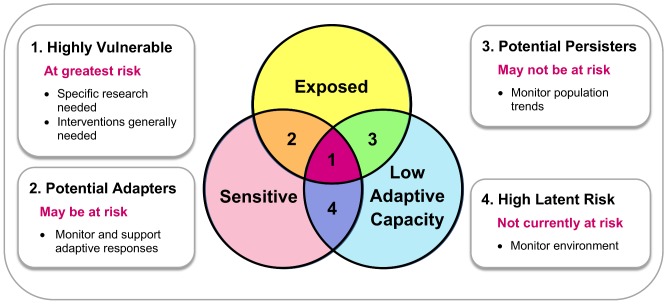
“This is particularly true where exposure (extent of environmental change) is greatest, sensitivity (extent of species’ response to change) is highest, and resilience and adaptive capacity (species’ ability to adapt via evolution or behavior) are lowest (Foden et al. 2013).”
BackgroundInfluentialVariation in avian egg shape and nest structure is explained by climatic conditions
Duursma, D. E., Gallagher, R. V., Price, J. J., & Griffith, S. C. (2018) · Scientific Reports · doi:10.1038/s41598-018-22436-0 · Cited by 78
Climate change vulnerability for species—Assessing the assessments
Wheatley, C. J., Beale, C. M., Bradbury, R. B., Pearce‐Higgins, J. W., Critchlow, R., & Thomas, C. D. (2017) · Global Change Biology · doi:10.1111/gcb.13759 · Cited by 86
Succulent plant diversity as natural capital
Grace, O. M. (2019) · Plants People Planet · doi:10.1002/ppp3.25 · Cited by 76
“Candidate species may already be used locally, or can be identified with trait‐based predictive methods (Díaz et al., 2015; Foden et al., 2013; Rønsted et al., 2012).”
BackgroundHeinrich, D. D. U., Rummer, J. L., Morash, A. J., Watson, S., Simpfendorfer, C. A., Heupel, M. R., & Munday, P. L. (2014) · Conservation Physiology · doi:10.1093/conphys/cou047 · Cited by 82
Butt, N., Possingham, H. P., Rios, C. D. L., Maggini, R., Fuller, R. A., Maxwell, S., & Watson, J. E. M. (2016) · Biological Conservation · doi:10.1016/j.biocon.2016.04.020 · Cited by 83
Influence of adaptive capacity on the outcome of climate change vulnerability assessment
Ofori, B. Y., Stow, A., Baumgartner, J. B., & Beaumont, L. J. (2017) · Scientific Reports · doi:10.1038/s41598-017-13245-y · Cited by 94
Coextinctions dominate future vertebrate losses from climate and land use change
Strona, G., & Bradshaw, C. J. A. (2022) · Science Advances · doi:10.1126/sciadv.abn4345 · Cited by 85
Zank, C., Becker, F. G., Abadie, M., Baldo, D., Maneyro, R., & Martins, M. B. (2014) · PLoS ONE · doi:10.1371/journal.pone.0094625 · Cited by 91
More than range exposure: Global otter vulnerability to climate change
Cianfrani, C., Broennimann, O., Loy, A., & Guisan, A. (2018) · Biological Conservation · doi:10.1016/j.biocon.2018.02.031 · Cited by 78
“Although not of immediate concern based on available climate change projections and emissions scenarios, sensitive species can be considered at high latent risk and could become increasingly vulnerable (Foden et al. 2013).”
BackgroundInfluentialReece, J. S., Noss, R. F., Oetting, J., Hoctor, T., & Volk, M. (2013) · PLoS ONE · doi:10.1371/journal.pone.0080658 · Cited by 78
Climate change and the future restructuring of Neotropical anuran biodiversity
Menéndez‐Guerrero, P. A., Green, D. M., & Davies, T. J. (2019) · Ecography · doi:10.1111/ecog.04510 · Cited by 77
Kayal, M., Vercelloni, J., WAND, M. P., & Adjeroud, M. (2015) · Ecological Complexity · doi:10.1016/j.ecocom.2015.07.003 · Cited by 79
“For example, the importance of life-strategies, i.e. how species allocate energy to survival, growth, and reproduction, to ecological success needs to be evaluated (Winemiller, 2005; van Woesik et al., 2012; Foden et al., 2013; Rees et al., 2014).”
BackgroundInfluentialSorte, F. A. L., Butchart, S. H. M., Jetz, W., & Böhning‐Gaese, K. (2014) · PLoS ONE · doi:10.1371/journal.pone.0098361 · Cited by 78
“Bird species occurring in the Amazon Basin are also considered to have low adaptive capacity, which may increase their vulnerability to climate change [51].”
BackgroundSelf-citationRon, S. R., & Caminer, M. A. (2014) · ZooKeys · doi:10.3897/zookeys.370.6291 · Cited by 73
“Hypsiboas fasciatus sensu stricto tiene un rango geográfico restringido a las estribaciones orientales de los Andes del sur del Ecuador, mientras que Hypsiboas calcaratus sensu stricto tiene una distribución amplia en la cuenca amazónica.”
BackgroundPatterns and biases of climate change threats in the IUCN Red List
Trull, N., Böhm, M., & Carr, J. (2017) · Conservation Biology · doi:10.1111/cobi.13022 · Cited by 75
Link, J. S., Huse, G., Gaichas, S., & Marshak, A. R. (2020) · Fish and Fisheries · doi:10.1111/faf.12438 · Cited by 77
Safety margins and adaptive capacity of vegetation to climate change
Gallagher, R. V., Allen, S. P., & Wright, I. J. (2019) · Scientific Reports · doi:10.1038/s41598-019-44483-x · Cited by 77
Ahmadi, M., Hemami, M., Kaboli, M., Malekian, M., & Zimmermann, N. E. (2019) · Scientific Reports · doi:10.1038/s41598-019-42792-9 · Cited by 73
Smith, A. B., Murphy, S. J., Henderson, D., & Erickson, K. D. (2023) · Global Ecology and Biogeography · doi:10.1111/geb.13628 · Cited by 77
Coping with climate change: limited behavioral responses to hot weather in a tropical carnivore
Rabaiotti, D., & Woodroffe, R. (2019) · Oecologia · doi:10.1007/s00442-018-04329-1 · Cited by 85
The Paris Agreement objectives will likely halt future declines of emperor penguins
Jenouvrier, S., Holland, M. M., Iles, D. T., Labrousse, S., Landrum, L., Garnier, J., Caswell, H., Weimerskirch, H., Larue, M. A., Ji, R., et al. (2019) · Global Change Biology · doi:10.1111/gcb.14864 · Cited by 72
“Global-scale vulnerability assessments based on species traits and expert opinion indicate that over one-quarter of birds, amphibians, and corals are highly vulnerable to 2°C degrees of warming (Foden et al., 2013).”
Bird populations most exposed to climate change are less sensitive to climatic variation
Bailey, L. D., van de Pol, M., Adriaensen, F., Arct, A., Barba, E., Bellamy, P. E., Bonamour, S., Bouvier, J., Burgess, M. D., Charmantier, A., et al. (2022) · Nature Communications · doi:10.1038/s41467-022-29635-4 · Cited by 77
Keppel, G., Robinson, T. P., Wardell‐Johnson, G., Yates, C. J., Niel, K. P. V., Byrne, M. M., & SCHUT, A. G. T. (2016) · Annals of Botany · doi:10.1093/aob/mcw182 · Cited by 71
A trait‐based framework for assessing the vulnerability of marine species to human impacts
Butt, N., Halpern, B. S., O’Hara, C. C., Allcock, A. L., Polidoro, B., Sherman, C. S., Byrne, M., Birkeland, C., Dwyer, R. G., Frazier, M. R., et al. (2022) · Ecosphere · doi:10.1002/ecs2.3919 · Cited by 72
Potter, K. M., Escanferla, M. E., Jetton, R. M., & Man, G. (2019) · Forests · doi:10.3390/f10040304 · Cited by 68
“Such an assessment, which accounts for the sensitivity and adaptive capacity of the host species as well as their exposure to the threat [54], was recently completed to categorize the vulnerability of 339 native United States tree species to climate change [28].”
BackgroundA Review of the Effects of Climate Change on Chelonians
Butler, C. J. (2019) · Diversity · doi:10.3390/d11080138 · Cited by 72
Future land‐use scenarios and the loss of wildlife habitats in the southeastern United States
Martinuzzi, S., Withey, J. C., Pidgeon, A. M., Plantinga, A. J., McKerrow, A. J., Williams, S. G., Helmers, D. P., & Radeloff, V. C. (2015) · Ecological Applications · doi:10.1890/13-2078.1 · Cited by 68
“Key words: biodiversity conservation; habitat loss; land-use change; land-use planning; southeast United States; wildlife habitat.”
BackgroundKeppel, G., Anderson, S., Williams, C. R., Kleindorfer, S., & O'Connell, C. (2017) · PLoS ONE · doi:10.1371/journal.pone.0183106 · Cited by 76
Assessing Mammal Exposure to Climate Change in the Brazilian Amazon
Ribeiro, B. R., Sales, L. P., Júnior, P. D. M., & Loyola, R. A. (2016) · PLoS ONE · doi:10.1371/journal.pone.0165073 · Cited by 69
Geography of current and future global mammal extinction risk
Davidson, A. D., Shoemaker, K. T., Weinstein, B. G., Costa, G. C., Brooks, T. M., Ceballos, G., Radeloff, V. C., Rondinini, C., & Graham, C. H. (2017) · PLoS ONE · doi:10.1371/journal.pone.0186934 · Cited by 76
Future climate change vulnerability of endemic island mammals
Leclerc, C., Courchamp, F., & Bellard, C. (2020) · Nature Communications · doi:10.1038/s41467-020-18740-x · Cited by 71
Platts, P. J., Garcia, R. A., Hof, C., Foden, W., Hansen, L. A., Rahbek, C., & Burgess, N. D. (2014) · Diversity and Distributions · doi:10.1111/ddi.12244 · Cited by 63
“…genetic and functional characteristics, combined with simple measures of exposure to climate change (e.g. Garcia et al., 2014b), to ascribe new measures of vulnerability to thousands of species for eventual inclusion in the Red List Categories and Criteria (IUCN, 2011; Foden et al., 2013).”
BackgroundSelf-citationLöbel, S., Mair, L., Lönnell, N., Schröder, B., & Snäll, T. (2018) · Journal of Ecology · doi:10.1111/1365-2745.12930 · Cited by 65
“Foden et al. (2013) distinguished between response trait sets associated with increased sensitivity to climate change, including narrow physiological tolerances and low competitive abilities, and response trait sets associated with low adaptive capacity, such as low dispersal capacity and poor…”
BackgroundInfluentialCoristine, L. E., Jacob, A. L., Schuster, R. H., Otto, S. P., Baron, N., Bennett, N. J., Bittick, S. J., Dey, C. J., Favaro, B., Ford, A. T., et al. (2018) · FACETS · doi:10.1139/facets-2017-0102 · Cited by 74
“Given Canada’s large area, position as a polar country, and the number of species whose ranges have already shifted, from birds (Foden et al. 2013; Coristine and Kerr 2015) to trees (Aitken et al. 2008), FACETS | 2018 | 3: 531–562 | DOI: 10.1139/facets-2017-0102 540 facetsjournal.com FA C E T S…”
BackgroundInfluentialIUCN SS C Guidelines for Assessing Species’ Vulnerability to Climate Change
(2018) · Climate Change and Law Collection · doi:10.1163/9789004322714_cclc_2016-0019-008 · Cited by 59
Ulloa, J. S., Aubin, T., Llusia, D., Courtois, E. A., Fouquet, A., Gaucher, P., Pavoine, S., & Sueur, J. (2019) · BMC Ecology · doi:10.1186/s12898-019-0243-y · Cited by 77
Continental-Scale Assessment of Risk to the Australian Odonata from Climate Change
Bush, A., Nipperess, D. A., Duursma, D. E., Theischinger, G., Turak, E., & Hughes, L. (2014) · PLoS ONE · doi:10.1371/journal.pone.0088958 · Cited by 67
Self-citationHeat tolerance predicts the importance of species interaction effects as the climate changes
Diamond, S. E., Chick, L. D., Penick, C. A., Nichols, L. M., Cahan, S. H., Dunn, R. R., Ellison, A. M., Sanders, N. J., & Gotelli, N. J. (2017) · Integrative and Comparative Biology · doi:10.1093/icb/icx008 · Cited by 59
“…considerable success in forecasting the relative performance of species—the winners and losers—under the direct effects of climate change (see Pacifici et al. 2017 for a recent data-driven review; see also for trait-based forecasting frameworks: Suding et al. 2008; Chown 2012; Foden et al. 2013).”
BackgroundInteracting with change: Diet mediates how larvae respond to their thermal environment
Kutz, T. C., Sgrò, C. M., & Mirth, C. K. (2019) · Functional Ecology · doi:10.1111/1365-2435.13414 · Cited by 63
“Rapid ongoing climate change will impact species' fitness by altering multiple aspects of their environment (Dawson, Jackson, House, Prentice, & Mace, 2011; Foden et al., 2013; Thomas et al., 2004).”
BackgroundAmphibian Assisted Reproductive Technologies: Moving from Technology to Application
Clulow, J., Upton, R. M. O., Trudeau, V. L., & Clulow, S. (2019) · Advances in experimental medicine and biology · doi:10.1007/978-3-030-23633-5_14 · Cited by 63
Fish Functional Traits Correlated with Environmental Variables in a Temperate Biodiversity Hotspot
Keck, B. P., Marion, Z. H., Martin, D. J., Kaufman, J., Harden, C. P., Schwartz, J. S., & Strange, R. J. (2014) · PLoS ONE · doi:10.1371/journal.pone.0093237 · Cited by 72
“Estimates for near-future extinctions due to climate change alone range from 10–33% of species [3,4].”
BackgroundMapping of climate change research in the Arab world: a bibliometric analysis
Zyoud, S. H., & Fuchs-Hanusch, D. (2019) · Environmental Science and Pollution Research · doi:10.1007/s11356-019-07100-y · Cited by 63
Parmesan, C., Williams-Anderson, A., Moskwik, M., Mikheyev, A. S., & Singer, M. C. (2014) · Journal of Insect Conservation · doi:10.1007/s10841-014-9743-4 · Cited by 55
Du, F., Wang, T., Wang, Y., Ueno, S., & de Lafontaine, G. (2020) · Evolutionary Applications · doi:10.1111/eva.13030 · Cited by 56
“…how adaptation would contribute to Q. aquifolioides response to ongoing climate change, we predicted the “adaptedness” (i.e., adaptive capacity; Foden et al., 2013) of Q. aquifolioides to future local climate F I G U R E 1 Geographical distribution, location of study sites, and mapping of…”
BackgroundPreventing species extinctions resulting from climate change
Akçakaya, H. R., Butchart, S. H. M., Watson, J. E. M., & Pearson, R. G. (2014) · Nature Climate Change · doi:10.1038/nclimate2455 · Cited by 62
Self-citationPredicting and mitigating future biodiversity loss using long-term ecological proxies
Fordham, D. A., Akçakaya, H. R., Alroy, J., Saltré, F., Wigley, T. M. L., & Brook, B. W. (2016) · Nature Climate Change · doi:10.1038/nclimate3086 · Cited by 65
Self-citationHarnessing the potential of vulnerability assessments for managing social-ecological systems
Thiault, L., Jupiter, S. D., Johnson, J. E., Cinner, J. E., Jarvis, R. M., Heron, S. F., Maina, J. M., Marshall, N., Marshall, P. A., & Claudet, J. (2021) · Ecology and Society · doi:10.5751/es-12167-260201 · Cited by 73
Dai, Y., Hacker, C., Zhang, Y., Li, W., Zhang, Y., Liu, H., Zhang, J., Ji, Y., Xue, Y., & Li, D. (2019) · Ecology and Evolution · doi:10.1002/ece3.5780 · Cited by 54
“Researchers have simulated models that minimize extinction risk by identifying species and habitats susceptible to climate change and how wildlife may respond to large scale environmental shifts (Balzotti, Kitchen, & McCarthy, 2016; Foden et al., 2013; Guisan et al., 2013).”
BackgroundClimate change sensitivity of threatened, and largely unprotected, Amazonian fishes
Frederico, R. G., Olden, J. D., & Zuanon, J. A. S. (2016) · Aquatic Conservation Marine and Freshwater Ecosystems · doi:10.1002/aqc.2658 · Cited by 56
“…2013; Pearson et al., 2014), past changes in geographic distribution (Bush et al., 2014), exposure to extrinsic conditions associated with climatic changes (Foden et al., 2013), and the combination of both intrinsic and extrinsic factors (Gardali et al., 2012; Bush et al., 2014; Case et al., 2015).”
BackgroundPrimates and climate change: a review of current knowledge
Korstjens, A. H., & Hillyer, A. P. (2016) · Oxford University Press eBooks · doi:10.1093/acprof:oso/9780198703389.003.0011 · Cited by 65
Spencer, P. D., Hollowed, A. B., Sigler, M. F., Hermann, A. J., & Nelson, M. (2019) · Global Change Biology · doi:10.1111/gcb.14763 · Cited by 64
“…climate vul‐ nerability assessments applied to terrestrial forest animals (Davison et al., 2011), birds (Gardali, Seavy, DiGaudio, & Comrack, 2012; Gregory et al., 2009), and a global analysis of birds, amphibians, and corals (Foden et al., 2013) share some aspects of data richness with this study.”
BackgroundResultInfluentialBianchi, T. S., Aller, R. C., Atwood, T. B., Brown, C. J., Buatois, L. A., Levin, L. A., Levinton, J. S., Middelburg, J. J., Morrison, E. S., Regnier, P. A. G., et al. (2021) · Elementa Science of the Anthropocene · doi:10.1525/elementa.2020.00180 · Cited by 67
McLean, N., Kruuk, L. E. B., van der Jeugd, H. P., Leech, D. I., van Turnhout, C. A. M., & van de Pol, M. (2022) · Proceedings of the National Academy of Sciences · doi:10.1073/pnas.2105416119 · Cited by 55
Unexpected high vulnerability of functions in wilderness areas: evidence from coral reef fishes
D’Agata, S., Vigliola, L., Graham, N. A. J., Wantiez, L., Parravicini, V., Villéger, S., Mou-Tham, G., Frolla, P., Friedlander, A. M., Kulbicki, M., et al. (2016) · Proceedings of the Royal Society B Biological Sciences · doi:10.1098/rspb.2016.0128 · Cited by 66
“…vulnerability as the combination of three components: (i) sensitivity , or the susceptibility of a system to threats, (ii) exposure , or the level of those threats on a system, and (iii) adaptive capacity , or the capacity of the system to prepare for and respond to those threats [41,52,53].”
Assessing the vulnerability of freshwater crayfish to climate change
Hossain, M. A., Lahoz‐Monfort, J. J., Burgman, M. A., Böhm, M., Kujala, H., & Bland, L. M. (2018) · Diversity and Distributions · doi:10.1111/ddi.12831 · Cited by 60
Climate readiness of recovery plans for threatened Australian species
Hoeppner, J. M., & Hughes, L. (2019) · Conservation Biology · doi:10.1111/cobi.13270 · Cited by 55
“A global survey of the climate-change vulnerability of birds, amphibians, and corals also included substantial numbers of Australian species (Foden et al. 2013).”
BackgroundScheffers, B. R., Shoo, L. P., Phillips, B. L., Macdonald, S., Anderson, A. S., VanDerWal, J. J., Storlie, C., Gourret, A., & Williams, S. E. (2017) · Global Ecology and Biogeography · doi:10.1111/geb.12585 · Cited by 63
Hershkovitz, Y., Dahm, V., Lorenz, A. W., & Hering, D. (2014) · Ecological Indicators · doi:10.1016/j.ecolind.2014.10.023 · Cited by 58
Hamilton, A. T., Schäfer, R. B., Pyne, M. I., Chessman, B. C., Kakouei, K., Boersma, K. S., Verdonschot, P. F. M., Verdonschot, P. F. M., Mims, M. C., Khamis, K., et al. (2019) · Global Change Biology · doi:10.1111/gcb.14846 · Cited by 60
“Trait‐based assessment is an alternative to taxonomically based characterization of communities and a promising and increasingly uti‐ lized tool for environmental assessment (e.g., Chessman, 2015; Foden et al., 2013; Griswold, Berzinis, Crisman, & Golladay, 2008).”
MethodKerr, J. T. (2020) · Proceedings of the Royal Society B Biological Sciences · doi:10.1098/rspb.2020.2061 · Cited by 59
“The potential effects of climate change, as mediated by changing weather, reflect organismal sensitivity to new conditions, exposure to those conditions and adaptive potential [89].”
BackgroundA cross-taxon analysis of the impact of climate change on abundance trends in central Europe
Bowler, D. E., Haase, P., Kröncke, I., Tackenberg, O., Bauer, H., Brendel, C., Brooker, R. W., Gerisch, M., Henle, K., Hickler, T., et al. (2015) · Biological Conservation · doi:10.1016/j.biocon.2015.03.034 · Cited by 58
“Many studies have suggested ways in which species attributes should modify species vulnerability to climate change (Foden et al., 2013; Garcia et al., 2014).”
BackgroundInfluentialJohnson, J. E., Welch, D. J., Maynard, J. A., Bell, J. D., Pecl, G. T., Robins, J. B., & Saunders, T. M. (2016) · Marine Policy · doi:10.1016/j.marpol.2016.09.024 · Cited by 62
Pearce‐Higgins, J. W., Beale, C. M., Oliver, T. H., August, T., Carroll, M. J., Massimino, D., Ockendon, N., Savage, J., Wheatley, C. J., Ausden, M., et al. (2017) · Biological Conservation · doi:10.1016/j.biocon.2017.06.035 · Cited by 51
Integrated spatial planning for biodiversity conservation and food production
Fastré, C., van Zeist, W., Watson, J. E. M., & Visconti, P. (2021) · One Earth · doi:10.1016/j.oneear.2021.10.014 · Cited by 59
Heat stress and amphibian immunity in a time of climate change
Rollins‐Smith, L. A., & Sage, E. H. L. (2023) · Philosophical Transactions of the Royal Society B Biological Sciences · doi:10.1098/rstb.2022.0132 · Cited by 59
“Thus, they are likely to be among the species most affected by climate change, with expectations that ranges for some species will contract until no suitable habitat will remain, especially in tropical regions and the Amazon [4,5].”
BackgroundBridge, T. C. L., Hoey, A. S., Campbell, S., Muttaqin, E., Rudi, E., Fadli, N., & Baird, A. H. (2013) · F1000Research · doi:10.12688/f1000research.2-187.v2 · Cited by 52
Metadata
- Authors
- Foden, W. B., Butchart, S. H. M., Stuart, S. N., Vié, J.-C., Akçakaya, H. R., Angulo, A., DeVantier, L. M., Gutsche, A., Turak, E., Cao, L., Donner, S. D., Katariya, V., Bernard, R., Holland, R. A., Hughes, A. F., O’Hanlon, S. E., Garnett, S. T., Şekercioğlu, Ç. H., & Mace, G. M.
- Affiliations
- University of the Witwatersrand (ZA)
- BirdLife International (KE)
- UN Environment Programme World Conservation Monitoring Centre (GB)
- International Union for Conservation of Nature (CH)
- Museum für Naturkunde (DE)
- James Cook University (AU)
- Zhejiang University (CN)
- University of British Columbia (CA)
- International Union for Conservation of Nature (United Kingdom) (GB)
- Imperial College London (GB)
- University of Southampton (GB)
- Anglia Ruskin University (GB)
- Charles Darwin University (AU)
- University College London (GB)
- Corresponding author
- Foden, Wendy B.
- Butchart, Stuart H. M.
- Stuart, Simon N.
- Vié, Jean-Christophe
- Angulo, Ariadne
- DeVantier, Lyndon M.
- Gutsche, Alexander
- Turak, Emre
- Cao, Long
- Donner, Simon D.
- Katariya, Vineet
- Bernard, Rodolphe
- Holland, Robert A.
- Hughes, Adrian F.
- O’Hanlon, Susannah E.
- Garnett, Stephen T.
- Mace, Georgina M.
- ORCID
- Venue
- PLoS ONE
- Publisher
- Public Library of Science (PLoS)
- Published
- 2013-06-12
- Volume
- 8
- Issue
- 6
- Pages
- e65427
- ISSN
- 1932-6203 (ISSN-L)
- PMC
- PMC3680427
- OpenAlex
- W2113487278
- Cited by
- 988
- References
- 43
- Citations by year
- 2026: 59 · 2025: 59 · 2024: 65 · 2023: 73 · 2022: 72 · 2021: 90 · 2020: 119 · 2019: 83 · 2018: 88 · 2017: 87 · 2016: 66 · 2015: 65 · 2014: 50 · 2013: 12
- FWCI
- 42.61
- Type
- journal article
- Language
- en
- Open access
- gold
- doi.org
- Locations
- PLoS ONE (publishedVersion, cc-by)
- Europe PMC (PubMed Central) (publishedVersion, other-oa)
- PubMed Central (publishedVersion, cc-by)
- PubMed (publishedVersion)
- ePrints Soton (University of Southampton) (acceptedVersion)
- CDU eSpace Institutional Repository (Charles Darwin University) (submittedVersion)
- ResearchOnline - JCU (James Cook University) (submittedVersion)
- DOAJ (DOAJ: Directory of Open Access Journals) (submittedVersion, cc-by-sa)
- UCL Discovery (University College London) (submittedVersion)
- Figshare (submittedVersion, cc-by)
- Funders
- John D. and Catherine T. MacArthur Foundation
- Imperial College London
- Topics
- Physical Sciences › Environmental Science › Ecological Modeling › Species Distribution and Climate Change
- Physical Sciences › Environmental Science › Nature and Landscape Conservation › Ecology and Vegetation Dynamics Studies
- Physical Sciences › Environmental Science › Global and Planetary Change › Climate Change and Environmental Impact
- Keywords
- climate change vulnerability, climate change sensitivity, climate change exposure, adaptive capacity, biological characteristics, birds, amphibians, coral, extinction risk, IUCN Red List, conservation prioritization, Amazon basin, Coral Triangle, biodiversity conservation
- MeSH terms
- Acclimatization, Amphibians, Animals, Birds, Conservation of Natural Resources, Anthozoa, Biodiversity, Climate Change
About these checks
Registry, retraction, Cites and statistics results are computed, not judged, with one exception: a printed reference that no index lists is read once by a model before it counts as a citation error. Claims are extracted by a model and kept only when their quote appears verbatim in the text; each cited source is then checked, with a model’s help, for whether it says what the claim relies on. Those verdicts can be wrong — read the claim’s quote and the cited source before relying on one.
Statistics and arithmetic are recomputed, not judged.
Confidence bands are shown only for fields calibrated on our annotated test set. None is calibrated yet, so no band is shown.
What counts as a claim ›How we measure confidence ›How we check this ›
Are you an author, or do you see a problem with this page? Request a review
Data sources
Bibliographic data: Semantic Scholar, OpenAlex, Crossref.
Contains information from the Semantic Scholar Academic Graph Datasets, made available under the ODC Attribution License (ODC-BY 1.0).
Semantic Scholar’s data is described in: Kinney, R., et al. (2023). The Semantic Scholar Open Data Platform. arXiv:2301.10140.
