

Identifying the World's Most Climate Change Vulnerable Species: A Systematic Trait-Based Assessment of all Birds, Amphibians and Corals
Open accessThe DOI matches its Crossref record; 42 of the 43 references it cites were found in a registry or an index.
Abstract
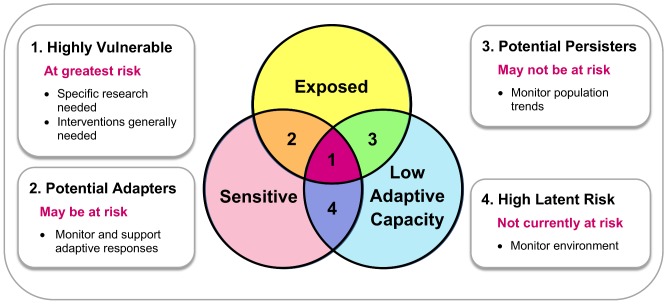
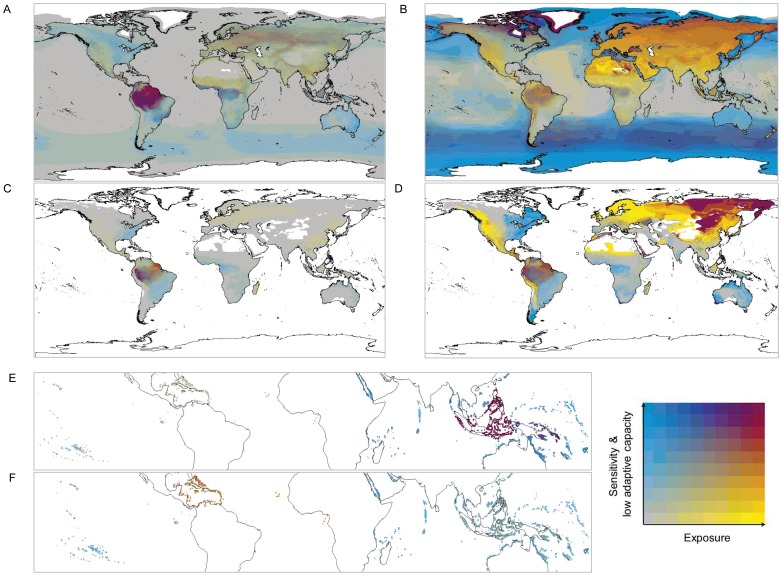
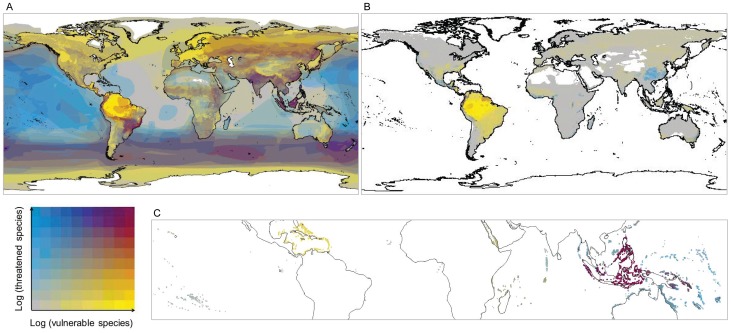
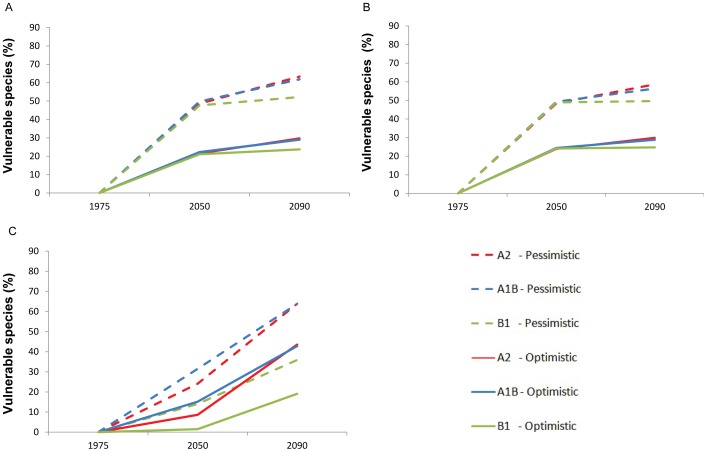
Climate change will have far-reaching impacts on biodiversity, including increasing extinction rates. Current approaches to quantifying such impacts focus on measuring exposure to climatic change and largely ignore the biological differences between species that may significantly increase or reduce their vulnerability. To address this, we present a framework for assessing three dimensions of climate change vulnerability, namely sensitivity, exposure and adaptive capacity; this draws on species' biological traits and their modeled exposure to projected climatic changes. In the largest such assessment to date, we applied this approach to each of the world's birds, amphibians and corals (16,857 species). The resulting assessments identify the species with greatest relative vulnerability to climate change and the geographic areas in which they are concentrated, including the Amazon basin for amphibians and birds, and the central Indo-west Pacific (Coral Triangle) for corals. We found that high concentration areas for species with traits conferring highest sensitivity and lowest adaptive capacity differ from those of highly exposed species, and we identify areas where exposure-based assessments alone may over or under-estimate climate change impacts. We found that 608-851 bird (6-9%), 670-933 amphibian (11-15%), and 47-73 coral species (6-9%) are both highly climate change vulnerable and already threatened with extinction on the IUCN Red List. The remaining highly climate change vulnerable species represent new priorities for conservation. Fewer species are highly climate change vulnerable under lower IPCC SRES emissions scenarios, indicating that reducing greenhouse emissions will reduce climate change driven extinctions. Our study answers the growing call for a more biologically and ecologically inclusive approach to assessing climate change vulnerability. By facilitating independent assessment of the three dimensions of climate change vulnerability, our approach can be used to devise species and area-specific conservation interventions and indices. The priorities we identify will strengthen global strategies to mitigate climate change impacts.
Overview
The claims and statistics of this paper haven’t been checked yet.
Free: it reads the open-access text and checks the first 5 claims that cite a source we can check. Create a free account to check every claim.
Integrity signals
Registry
Cites
Statistics
Figures
Verification
Claims the paper makes
The claims and statistics of this paper haven’t been checked yet.
Free: it reads the open-access text and checks the first 5 claims that cite a source we can check. Create a free account to check every claim.
Claims other papers make about this one
Each is checked against this paper’s own text: does it say what the citing paper says it does?
The source backs part of the claim, not all of it — or backs it for a different population, condition or comparison.
In the citing paper
“Climate change will become an increasingly dominant problem in the biodiversity crisis 3 .”
From Biodiversity: The ravages of guns, nets and bulldozers (2016) · cites this paper as [3]
Experimental — accuracy not yet measuredThe cited source says what the claim attributes to it.
In the citing paper
“Finally, the balance of threats driving extinction risk for many of the world's species will change, even over the next few decades 3 .”
From Biodiversity: The ravages of guns, nets and bulldozers (2016) · cites this paper as [3]
Self-check
Percentages, sums and reported differences re-computed from the paper’s own numbers.
The self-check needs the paper’s full text.
Citations
Cites
Very high resolution interpolated climate surfaces for global land areas
Hijmans, R. J., Cameron, S. E., Parra, J. L., Jones, P. G., & Jarvis, A. (2005) · International Journal of Climatology · doi:10.1002/joc.1276 · Cited by 19,825
Global Biodiversity Scenarios for the Year 2100
Sala, O. E., Stuart Chapin, F., III, Armesto, J. J., Berlow, E., Bloomfield, J., Dirzo, R., Huber-Sanwald, E., Huenneke, L. F., Jackson, R. B., et al. (2000) · Science · doi:10.1126/science.287.5459.1770 · Cited by 9,280 · cited 1×
“However, anthropogenic climate change is becoming a significant new threat [4–7].”
BackgroundClimate Change 2007: Impacts, Adaptation and Vulnerability
Parry, M. L., Canziani, O. F., Palutikof, J. P., van der Linden, P., & Hanson, C. (2007) · Centre for Environmental Data Analysis Digital Repository (Centre for Environmental Data Analysis) · doi:10.5281/zenodo.7356334 · Cited by 9,136
Extinction risk from climate change
Thomas, C. D., Cameron, A., Green, R. E., Bakkenes, M., Beaumont, L. J., Collingham, Y. C., Erasmus, B. F. N., de Siqueira, M. F., Grainger, A., Hannah, L., et al. (2004) · Nature · doi:10.1038/nature02121 · Cited by 7,695
Predicting species distribution: offering more than simple habitat models
Guisan, A., & Thuiller, W. (2005) · Ecology Letters · doi:10.1111/j.1461-0248.2005.00792.x · Cited by 6,587 · cited 1×
“These and most other similar large-scale assessments are based primarily on species distribution (bioclimatic envelope) models, which use correlations between species’ observed distributions and climate variables to predict their distributions and hence their extinction risk under future climate scenarios [9–11].”
BackgroundSpecial report on emissions scenarios
Nakićenović, N., Alcamo, J., Davis, G. R., de Vries, B. J. M., Fenhann, J. V., Gaffin, S., Gregory, K., Grübler, A., Jung, T. Y., Kram, T., et al. (2000) · Cited by 6,262
Has the Earth’s sixth mass extinction already arrived?
Barnosky, A. D., Matzke, N., Tomiya, S., Wogan, G. O. U., Swartz, B., Quental, T. B., Marshall, C., McGuire, J. L., Lindsey, E. L., Maguire, K. C., et al. (2011) · Nature · doi:10.1038/nature09678 · Cited by 4,400 · cited 1×
“Vertebrate extinction rates are currently estimated to be 10–100 times greater than background [1], largely due to the effects of habitat loss, over-exploitation and invasive species [2,3].”
BackgroundPearson, R. G., & Dawson, T. P. (2003) · Global Ecology and Biogeography · doi:10.1046/j.1466-822x.2003.00042.x · Cited by 4,252
Impacts of climate warming on terrestrial ectotherms across latitude
Deutsch, C. A., Tewksbury, J. J., Huey, R. B., Sheldon, K. S., Ghalambor, C. K., Haak, D. C., & Martin, P. R. (2008) · Proceedings of the National Academy of Sciences · doi:10.1073/pnas.0709472105 · Cited by 3,840 · cited 1×
“ranges are particularly vulnerable to climate [16].”
Scenarios for Global Biodiversity in the 21st Century
Pereira, H. M., Leadley, P. W., Proença, V., Alkemade, R., Scharlemann, J. P. W., Fernandez-Manjarrés, J. F., Araújo, M. B., Balvanera, P., Biggs, R., Cheung, W. W. L., et al. (2010) · Science · doi:10.1126/science.1196624 · Cited by 2,077 · cited 1×
“However, anthropogenic climate change is becoming a significant new threat [4–7].”
BackgroundSelf-citation
Cited by
Items 401–500 of 989
Mendes, P., & Júnior, P. D. M. (2017) · Environmental Conservation · doi:10.1017/s0376892917000194 · Cited by 25
Ditmer, M. A., Francis, C. D., Barber, J. R., Stoner, D. C., Seymoure, B., Fristrup, K. M., & Carter, N. (2021) · Integrative and Comparative Biology · doi:10.1093/icb/icab091 · Cited by 23
Pilliod, D. S., McCaffery, R. M., Arkle, R. S., Scherer, R. D., Cupples, J. B., Eby, L. A., Hossack, B. R., Lingo, H. A., Lohr, K., Maxell, B. A., et al. (2022) · Ecological Indicators · doi:10.1016/j.ecolind.2022.108648 · Cited by 22
Physiologically vulnerable or resilient? Tropical birds, global warming, and redistributions
Monge, O., Maggini, I., SCHULZE, C. H., Dullinger, S., & Fusani, L. (2023) · Ecology and Evolution · doi:10.1002/ece3.9985 · Cited by 25
“The effects of anthropogenic climate change can be particularly pervasive in tropical ecosystems (Foden et al., 2013; Laurance et al., 2011).”
BackgroundFouquet, A., Kok, P. J. R., Recoder, R. S., Prates, I., Camacho, A., Marques-Souza, S., Ghellere, J. M., McDiarmid, R. W., & Rodrigues, M. T. (2023) · Molecular Phylogenetics and Evolution · doi:10.1016/j.ympev.2023.107971 · Cited by 23
Morrison, L., Estrada, A., & Early, R. (2018) · Diversity and Distributions · doi:10.1111/ddi.12769 · Cited by 25
“Previous studies investigating the relationship between predictive traits and species response to climate change have selected traits based on expert opinion (Foden et al., 2013; Garcia et al., 2014; Triviño et al., 2013).”
BackgroundAdaptation potential of the copepod Eurytemora affinis to a future warmer Baltic Sea
Karlsson, K., & Winder, M. (2020) · Ecology and Evolution · doi:10.1002/ece3.6267 · Cited by 20
“Adaptive potential is essentially genetic variance (Foden et al., 2013; Urban et al., 2014), from which a series of estimates related to selection and adaptation can be calculated.”
BackgroundDeVantier, L. M., Turak, E., & Szava‐Kovats, R. (2020) · Frontiers in Marine Science · doi:10.3389/fmars.2020.00487 · Cited by 26
Self-citationConservation of Insects in the Face of Global Climate Change
Arribas, P., Abellán, P., Velasco, J., Millán, A., & Sánchez‐Fernández, D. (2016) · Wiley eBooks · doi:10.1002/9781119070894.ch17 · Cited by 22
Amazonian amphibians: diversity, spatial distribution patterns, conservation and sampling deficits
Penhacek, M., Sobral‐Souza, T., dos Santos, J. P., Guerra, V., CASTRO-SOUZA, R. A., & Rodrigues, D. D. J. (2024) · Biodiversity Data Journal · doi:10.3897/bdj.12.e109785 · Cited by 25
Carneiro, C. M., Shields‐Estrada, A., Boville, A. E., Alves‐Ferreira, G., Xu, T., Arnott, R. L. W., Allen‐Love, C. M., Puertas, M., Jacisin, J. J., Tripp, H. C., et al. (2025) · Molecular Ecology · doi:10.1111/mec.17729 · Cited by 24
“Characteristics including organisms' physiological limits, habitat requirements, and interspecific interactions can mediate vulnerability (Foden et al. 2013, 2019).”
Kirk, M. A., Galatowitsch, M. L., & Wissinger, S. A. (2019) · PLoS ONE · doi:10.1371/journal.pone.0222097 · Cited by 20
Foraging ecology mediates response to ecological mismatch during migratory stopover
Tucker, A. M., McGowan, C. P., Catalano, M. J., DeRose‐Wilson, A., Robinson, R. A., & Zimmerman, J. (2019) · Ecosphere · doi:10.1002/ecs2.2898 · Cited by 18
Pant, G. B., Maraseni, T., Apan, A., & Allen, B. L. (2020) · Global Ecology and Conservation · doi:10.1016/j.gecco.2020.e01180 · Cited by 21
“…the direct impacts of climate change requires long-term empirical data, climate change vulnerability assessment derived from available knowledge provides the basis for adaptation measures to species management until such information becomes available (Glick et al., 2011; Foden and Young, 2016).”
InfluentialPolidoro, B., Matson, C., Ottinger, M., Renegar, D., Romero, I., Schlenk, D., Wise, J. P., González, J. B., Bruns, P., Carpenter, K., et al. (2020) · Science of the Total Environment · doi:10.1016/j.scitotenv.2020.142986 · Cited by 11
Treatment of climate change in extinction risk assessments and recovery plans for threatened species
Naujokaitis‐Lewis, I., Endicott, S., & Guezen, J. (2021) · Conservation Science and Practice · doi:10.1111/csp2.450 · Cited by 28
“…the pervasive negative consequences of climate change across species and ecosystems is increasing (Pecl et al., 2017; Thackeray et al., 2016), including identification of climate-vulnerable species (Foden et al., 2013) and attributing extinctions to climate change (Gynther, Waller, & Leung, 2016).”
BackgroundHigh-latitude EU Habitats Directive species at risk due to climate change and land use
Heikkinen, R. K., Kartano, L., Leikola, N., Aalto, J., Aapala, K., Kuusela, S., & Virkkala, R. (2021) · Global Ecology and Conservation · doi:10.1016/j.gecco.2021.e01664 · Cited by 18
Bauder, J. M., Allen, M. L., Benson, T. J., Miller, C. A., & Stodola, K. W. (2021) · Biodiversity and Conservation · doi:10.1007/s10531-021-02259-8 · Cited by 20
Campo‐Celada, M., Mendoza, I., Benítez‐López, A., Gutiérrez‐Expósito, C., Rabadán‐González, J., & Jordano, P. (2022) · Oikos · doi:10.1111/oik.08387 · Cited by 23
“However, as the ability of species to locally adapt to a changing environment is limited, if the current drivers of biodiversity loss continue, either plant or bird species could reach a limit for their response potential (Foden et al. 2013).”
BackgroundCastillo, K. D., Bove, C. B., Hughes, A. M., Powell, M. E., Ries, J. B., & Davies, S. W. (2024) · Scientific Reports · doi:10.1038/s41598-024-57319-0 · Cited by 20
Self-citationSilva, Y. B. S. E., Ribeiro, B. R., Brum, F. T., Soares-Filho, B. S., Loyola, R. A., & Michalski, F. (2018) · Diversity and Distributions · doi:10.1111/ddi.12745 · Cited by 20
“Studies characterize the Amazon as an area of high vulnerability to climatic changes for amphibians (Foden et al., 2013) and other groups (Ribeiro et al., 2016), especially because of the great diversity of species that occur in this biome.”
BackgroundUsing traits to assess threatened plant species response to climate change
Dudley, A., Butt, N., Auld, T. D., & Gallagher, R. V. (2019) · Biodiversity and Conservation · doi:10.1007/s10531-019-01769-w · Cited by 23
Weerathunga, W. A. M. T., & Rajapaksa, G. (2020) · Frontiers in Zoology · doi:10.1186/s12983-019-0348-3 · Cited by 19
Amiri, N., Vaissi, S., Aghamir, F., Saberi‐Pirooz, R., Rödder, D., Ebrahimi, E., & Ahmadzadeh, F. (2021) · Journal of Zoological Systematics & Evolutionary Research · doi:10.1111/jzs.12503 · Cited by 19
Does climate change increase the risk of marine toxins? Insights from changing seawater conditions
Meng, R., Du, X., Ge, K., Wu, C., Zhang, Z., Liang, X., Yang, J., & Zhang, H. (2024) · Archives of Toxicology · doi:10.1007/s00204-024-03784-5 · Cited by 20
“In biology, more attention was paid to the damage to marine organisms and coastal ecosystems caused by climate change (Foden et al. 2013).”
Systemic inequalities in heat risk for greater London
Cole, R., Ferguson, L., Heaviside, C., Murage, P., Macintyre, H. L., Taylor, J., Simpson, C. H., Brousse, O., Symonds, P., Davies, M., et al. (2024) · Environment International · doi:10.1016/j.envint.2024.108925 · Cited by 19
Divergent adaptations in resource‐use traits explain how pikas thrive on the roof of the world
Feijó, A., Ge, D., Wen, Z., Xia, L., & Yang, Q. (2020) · Functional Ecology · doi:10.1111/1365-2435.13609 · Cited by 20
Mingozzi, T., Storino, P., Venuto, G., Massolo, A., & Tavecchia, G. (2021) · Current Zoology · doi:10.1093/cz/zoab029 · Cited by 18
“The most common response to the recent global warming (IPCC 2013) by migratory birds in the Palearctic regions is a shift of their breeding phenology (Parmesan and Yohe 2003; Parmesan 2006; Bellard et al. 2012; Foden et al. 2013; Pacifici et al. 2015).”
BackgroundXue, Y., Li, J., Zhang, Y., Li, D., Yuan, L., Cheng, Y., Liu, S., & Hacker, C. (2021) · Global Ecology and Conservation · doi:10.1016/j.gecco.2021.e01725 · Cited by 22
Coral assemblages at higher latitudes favor short‐term potential over long‐term performance
Cant, J., Reimer, J. D., Sommer, B., Cook, K. M., Kim, S. W., Sims, C. A., Mezaki, T., O’Flaherty, C., Brooks, M., Malcolm, H. A., et al. (2023) · Ecology · doi:10.1002/ecy.4138 · Cited by 23
“By linking the mechanisms driving heterospecific variation across population responses to environmental change, one can predict the resilience of whole communities to increased climatic variability (Dawson et al., 2011; Foden et al., 2013; Williams et al., 2008).”
Buchan, C., Gilroy, J. J., Catry, I., Hewson, C. M., Atkinson, P. W., & Franco, A. M. A. (2023) · Global Change Biology · doi:10.1111/gcb.16974 · Cited by 18
“…here are tailored to the cuckoo as a long-distance, habitat generalist migrant, measurements of accumulated change exposure represent only one el - ement of vulnerability to change, which can be defined as a combination of exposure, sensitivity, and capacity to respond (Foden et al., 2013 ).”
BackgroundVulnerability of A ustralian tropical savanna birds to climate change
Reside, A. E., VanDerWal, J. J., Garnett, S. T., & Kutt, A. S. (2015) · Austral Ecology · doi:10.1111/aec.12304 · Cited by 19
Self-citationImpacts of UVB radiation on food consumption of forest specialist tadpoles
Londero, J. E. L., dos Santos, C. P., Segatto, A. L. A., & Schuch, A. P. (2017) · Ecotoxicology and Environmental Safety · doi:10.1016/j.ecoenv.2017.05.002 · Cited by 18
Crowder, C. M., Meyer, E., Fan, T., & Weis, V. M. (2017) · Molecular Ecology · doi:10.1111/mec.14162 · Cited by 18
Incongruence between life-history traits and conservation status in reef corals
Bridge, T. C. L., Luiz, O. J., Kuo, C., Precoda, K., Madin, E. M. P., Madin, J. S., & Baird, A. H. (2020) · Coral Reefs · doi:10.1007/s00338-019-01885-7 · Cited by 23
“Given that extinction risk within a clade is non-random, species traits can be used to predict extinction vulnerability in the absence of empirical data on population trends (Foden et al. 2013; Howard and Bickford 2014; Luiz et al. 2016; Tietje and Rodel 2018).”
Goff, C. B., Walls, S. C., Rodríguez, D., & Gabor, C. R. (2020) · Conservation Physiology · doi:10.1093/conphys/coaa047 · Cited by 21
“Amphibians have the highest threat status of all vertebrate classes (Stuart et al., 2004; Foden et al., 2013) and are particularly susceptible to changes in habitat quality.”
BackgroundResponses of coral reef fishes to past climate changes are related to life‐history traits
Ottimofiore, E., Albouy, C. P., Leprieur, F., Descombes, P., Kulbicki, M., Mouillot, D., Parravicini, V., & Pellissier, L. (2017) · Ecology and Evolution · doi:10.1002/ece3.2800 · Cited by 17
“For instance, Foden et al. (2013) investigated which traits are associated with species vulnerability under climate change for birds, corals, and amphibians, and used the results to prioritize critical geographic areas for conservation.”
BackgroundThe geography of the Anthropocene differs between the land and the seaPreprint
Bowler, D. E., Bjorkman, A. D., Dornelas, M., Myers‐Smith, I. H., Navarro, L. M., Niamir, A., Supp, S. R., Waldock, C. A., Vellend, M., Blowes, S. A., et al. (2018) · bioRxiv (Cold Spring Harbor Laboratory) · doi:10.1101/432880 · Cited by 18
Beever, E. A., Wilkening, J. L., Billman, P. D., Thurman, L. L., Ernest, K. A., Wright, D. H., Gill, A. M., Craighead, A. C., Helmstetter, N. A., Svancara, L. K., et al. (2023) · Biological Conservation · doi:10.1016/j.biocon.2023.109942 · Cited by 19
Assessing the global vulnerability of dryland birds to heatwaves
Ding, C., Newbold, T., & Ameca, E. I. (2024) · Global Change Biology · doi:10.1111/gcb.17136 · Cited by 21
“Metrics of species' sensitivity and adaptive capacity are measured using knowledge about the species' intrinsic characteristics that are known to influence its potential to withstand or adapt to environmental conditions (Foden et al., 2013, 2018; Pacifici et al., 2017 ).”
BackgroundInfluentialBiologically grounded predictions of species resistance and resilience to climate change
Bernardo, J. (2014) · Proceedings of the National Academy of Sciences · doi:10.1073/pnas.1404505111 · Cited by 21
Biega, A. M., Greenberg, D. A., Mooers, A. Ø., Jones, O. R., & Martin, T. E. (2016) · Animal Conservation · doi:10.1111/acv.12297 · Cited by 22
“…extinction drivers, namely habitat loss and degradation (even within protected areas; Curran et al., 2004), accelerating effects of climate change (Foden et al., 2013) and the spread of emerging infectious diseases (Olson et al., 2013), 2 of the 11 chapters within the ACAP focus on the importance…”
BackgroundHughes, B. J., Martin, G. R., Giles, A. D., & Reynolds, S. J. (2017) · Population Ecology · doi:10.1007/s10144-017-0588-z · Cited by 18
Thailand Energy System Transition to Keep Warming Below 1.5 Degrees
Chunark, P., & Limmeechokchai, B. (2018) · Carbon Management · doi:10.1080/17583004.2018.1536169 · Cited by 19
“…et al. 2011; Huang et al. 2008); risks associated with crop yield (Porter et al. 2014); risks associated with global impacts (such as the risk of species’ extinction (Foden et al. 2013; Hijioka et al. 2014)), and risks associated with sea-level rise due to ice sheet loss (Church et al. 2013).”
BackgroundQuantifying the ecosystem vulnerability to drought based on data integration and processes coupling
Zhang, L., Gao, J., Tang, Z., & Jiao, K. (2021) · Agricultural and Forest Meteorology · doi:10.1016/j.agrformet.2021.108354 · Cited by 20
Ribeiro, V., Peterson, A. T., Werneck, F. P., & Machado, R. B. (2016) · Journal für Ornithologie · doi:10.1007/s10336-016-1398-3 · Cited by 21
“Among vertebrates, birds are the best studied major taxonomic group (Foden et al. 2013), which makes for abundant information about their biology and natural history, including large quantities of accessible occurrence”
BackgroundA standardized dataset for conservation prioritization of songbirds to support CITES
Jürgens, J., Bruslund, S., Staerk, J., Nielsen, R. O., Shepherd, C. R., Leupen, B. T. C., Krishnasamy, K., Chng, S., Jackson, J. A., da Silva, R., et al. (2021) · Data in Brief · doi:10.1016/j.dib.2021.107093 · Cited by 17
“Global Invasive Species Database 15 15 September 2020 HBW/Birdlife Invasive Species Specialist Group ISSG, The Global Invasive Species Database, Version 2015.1. (2015). http://www.”
BackgroundInfluentialImplications of scale-independent habitat specialization on persistence of a rare small mammal
Klinger, R., Cleaver, M., Anderson, S. R., Maier, P., & Clark, J. D. (2015) · Global Ecology and Conservation · doi:10.1016/j.gecco.2014.10.003 · Cited by 20
Fortini, L. B., & Dye, K. (2017) · Global Ecology and Conservation · doi:10.1016/j.gecco.2017.06.006 · Cited by 18
Gül, S., Kumlutaş, Y., & Ilgaz, Ç. (2018) · Biologia · doi:10.2478/s11756-018-0020-y · Cited by 20
“…we chose M. caucasica (the Caucasian salamander), because it is listed as vulnerable in the 2001 categories and criteria of the IUCN Red list, and also because this species has been identified as one of most vulnerable species to climate change according to recent research (Foden et al. 2013).”
BackgroundSmith, J. A., Benson, A. L., Chen, Y., Yamada, S. A., & Mims, M. C. (2019) · Ecological Indicators · doi:10.1016/j.ecolind.2019.105896 · Cited by 18
Singh, M. (2020) · Ecological Indicators · doi:10.1016/j.ecolind.2020.106307 · Cited by 19
Iwabuchi, B. L., & Gosselin, L. A. (2020) · Ecology and Evolution · doi:10.1002/ece3.6498 · Cited by 15
“Dispersal ability is of particular interest for studies of interpopulation variation, as local adaptation might be more likely in species with limited dispersal capability (Endler, 1977; Foden et al., 2013; Scheltema, 1971).”
BackgroundJohnson, J. E., & Holbrook, N. J. (2014) · International Journal of Ecology · doi:10.1155/2014/140354 · Cited by 21
“Conservation management is now undertaking vulnerability assessments to better understand the sources and scales of climate-related impacts and to inform response strategies that build adaptive capacity and enhance resilience [6, 18–20].”
BackgroundRelative vulnerability to climate change of trees in western North America
Case, M. J., & Lawler, J. J. (2016) · Climatic Change · doi:10.1007/s10584-016-1608-2 · Cited by 16
“Using sensitivity, exposure, and adaptive capacity, vulnerability assessments can identify 1) which species are most vulnerable, 2) why those species are vulnerable, and 3) which factors can potentially be leveraged to reduce vulnerability (Williams et al. 2008, Foden et al. 2013).”
BackgroundFilz, K. J., & Schmitt, T. (2015) · Organisms Diversity & Evolution · doi:10.1007/s13127-015-0210-1 · Cited by 17
Projected climate change will reduce habitat suitability for bumble bees in the Pacific NorthwestPreprint
Koch, J. B. U., Looney, C., Hopkins, B. K., Lichtenberg, E. M., Sheppard, W. S., & Strange, J. P. (2019) · bioRxiv (Cold Spring Harbor Laboratory) · doi:10.1101/610071 · Cited by 16
“Identifying the most at-risk or vulnerable species within a guild might allow for a more 57 effective approach to management and threat mitigation [12,13].”
BackgroundNeves, M. O., Cabral, H., Pedrozo, M., Ferreira, V. L., Moura, M. R., & Santana, D. J. (2020) · Nature Conservation · doi:10.3897/natureconservation.41.54265 · Cited by 18
“…2015, Guisan et al. 2019), forecast community structure and dynamics (Cadotte et al. 2015, Blonder et al. 2018), predict population trends (Lips et al. 2003, Williams et al. 2010, Coulthard et al. 2019), and to understand potential impacts of climate change (Diamond et al. 2011, Foden et al. 2013).”
BackgroundLévêque, L., Buettel, J. C., Carver, S., & Brook, B. W. (2021) · Royal Society Open Science · doi:10.1098/rsos.210262 · Cited by 14
Resilience of Avian Communities to Urbanization and Climate Change: an Integrative Review
McCloy, M. W. D., Andringa, R. K., & Grace, J. K. (2022) · Frontiers in Conservation Science · doi:10.3389/fcosc.2022.918873 · Cited by 23
“In this review, we focus on avian communities because birds are sensitive to environmental change (Foden et al., 2013) and resilience studies at the scale of the ecological community are generally lacking (Allen et al.”
BackgroundKougioumoutzis, K., Trigas, P., Tsakiri, M., Kokkoris, I., Koumoutsou, E., Dimopoulos, P., Tzanoudakis, D., Iatroú, G., & Panitsa, M. (2022) · Plants · doi:10.3390/plants11243548 · Cited by 18
“CCVAs excluding current and projected LULC data run the risk of underestimating the species future extinction risk [23,75,76].”
BackgroundA macroplastic vulnerability index for marine mammals, seabirds, and sea turtles in Hawai‘i
Murphy, E. L., Gerber, L. R., Rochman, C. M., & Polidoro, B. (2023) · The Science of The Total Environment · doi:10.1016/j.scitotenv.2023.168247 · Cited by 16
Vulnerability of Eastern Tropical Pacific chondrichthyan fish to climate change
Cerutti‐Pereyra, F., Drenkard, E. J., Espinoza, M., Finucci, B., Galván‐Magaña, F., Hacohen‐Domené, A., Hearn, A. R., Hoyos-Padilla, E. M., Ketchum, J. T., Mejía‐Falla, P. A., et al. (2024) · Global Change Biology · doi:10.1111/gcb.17373 · Cited by 19
“…nursery areas, which might increase stock resilience or decrease fishing mortality on high-risk species can contribute to the sustainable management of those species, or managing habitats or areas as refuges for vulnerable (VU) species (Foden et al., 2013; Hare et al., 2016; Quinlan et al., 2023).”
Saunders, S. P., DeLuca, W. V., Bateman, B. L., Deppe, J. L., Grand, J., Knight, E. J., Meehan, T. D., Michel, N. L., Seavy, N. E., Smith, M., et al. (2025) · Nature Ecology & Evolution · doi:10.1038/s41559-024-02575-6 · Cited by 15
“…on mean temperature change because: (1) it is often used in assessments of the vulnerability of species to climate change and climate change risk 68,69 ; (2) precipitation change projections from GCMs have greater uncertainty and variability 70 ; (3) long-term bird population trends have been…”
Vercelloni, J., Mengersen, K. L., Ruggeri, F., & Caley, M. J. (2017) · Ecosystems · doi:10.1007/s10021-017-0115-2 · Cited by 15
Thurman, L. L., & Garcia, T. S. (2017) · Journal of Herpetology · doi:10.1670/16-502 · Cited by 15
“…changes in habitable climate space have increased species extinction rates and significantly altered the evolutionary trajectories of multiple taxonomic groups including birds, butterflies, amphibians, and coral reef communities (Lawler et al., 2010; Thackeray et al., 2010; Foden et al., 2013).”
BackgroundHigh temperature and soil moisture reduce host‐plant quality for an insect herbivore
Kuczyk, J., Raharivololoniaina, A., & Fischer, K. (2021) · Ecological Entomology · doi:10.1111/een.13025 · Cited by 16
“Future climate change is predicted to comprise a substantial challenge to extant biodiversity, which may cause a global mass extinction (Foden et al., 2013; Keith et al., 2014).”
BackgroundSex-specific temperature dependence of foraging and growth of intertidal snails
Vaughn, D., Turnross, O. R., & Bell, E. C. (2013) · Marine Biology · doi:10.1007/s00227-013-2316-3 · Cited by 15
Elevation range shift after 40 years: The amphibians of Mount Gede Pangrango National Park revisited
Kusrini, M. D., Lubis, M. I., Endarwin, W., Yazid, M., Darmawan, B., Ul-Hasanah, A., Sholihat, N., Tajalli, A., Lestari, V., Utama, H., et al. (2016) · Biological Conservation · doi:10.1016/j.biocon.2016.12.018 · Cited by 17
Abandoned Foreigners: is the stage set for exotic pet reptiles to invade Central Europe?
Filz, K. J., Bohr, A., & Lötters, S. (2017) · Biodiversity and Conservation · doi:10.1007/s10531-017-1444-3 · Cited by 19
“At the same time, it cannot be ruled out that native species will suffer from climate change (Trautmann et al. 2012; Foden et al. 2013) so that in terms of resource competition ‘new’ niches favourable”
BackgroundKrug, C. B., Schaepman, M. E., Shannon, L. J., Cavender-Bares, J. M., Cheung, W. W. L., McIntyre, P. B., Metzger, J. P., Niinemets, Ü., Obura, D. O., Schmid, B., et al. (2017) · Current Opinion in Environmental Sustainability · doi:10.1016/j.cosust.2018.04.001 · Cited by 17
A critical sites network for freshwater biodiversity in the Lake Victoria Basin
Sayer, C. A., Carr, J., & Darwall, W. R. T. (2018) · Fisheries Management and Ecology · doi:10.1111/fme.12285 · Cited by 16
Katzenberger, M., Hammond, J. I., Tejedo, M., & Relyea, R. A. (2018) · Journal of Thermal Biology · doi:10.1016/j.jtherbio.2018.07.005 · Cited by 19
Assessing risk of ecosystem collapse in a changing climate
Rowland, J. A., Nicholson, E., Ferrer-Paris, J. R., Keith, D. A., Murray, N., Sato, C. F., Tóth, A. B., Tolsma, A. D., Venn, S., Asmüssen, M., et al. (2025) · Nature Climate Change · doi:10.1038/s41558-025-02324-y · Cited by 29
“Collapse thresholds for environmental changes can be defined by examining physiological tolerances of key native biota, informed by population theory 51,90 , species vulnerability to environmental changes 15,17,31 and data collated in species Red List assessments 15 .”
InfluentialThe Accelerating Exposure of European Protected Areas to Climate Change
Cimatti, M., Mezzanotte, V., Heikkinen, R. K., Hällfors, M., Karger, D. N., & Marco, M. D. (2025) · Global Change Biology · doi:10.1111/gcb.70261 · Cited by 19
Net effect of environmental fluctuations in multiple global-change drivers across the tree of life
Cabrerizo, M. J., & Emilio Marañón, C. (2022) · Proceedings of the National Academy of Sciences · doi:10.1073/pnas.2205495119 · Cited by 13
Predicting plant species climate niches on the basis of mechanistic traits
Medeiros, C. D., Henry, C., Trueba, S., Anghel, I. G., Guerrero, S. D. D. D. L., Pivovaroff, A. L., Fletcher, L. R., John, G. P., Lutz, J. A., Méndez‐Alonzo, R., et al. (2023) · Functional Ecology · doi:10.1111/1365-2435.14422 · Cited by 19
“…managers may improve their prioritization of threatened species for conservation based on consideration of traits (Schönbeck et al., in review ; Foden et al., 2013 ; Loiseau et al., 2020 ), that is, if the traits of the threatened species indicate that its mismatch from its optimal climate is…”
Backgroundd’Albertas, F., Sparovek, G., Pinto, L.-F. G., Hohlenwerger, C. C., & Metzger, J. P. (2023) · One Earth · doi:10.1016/j.oneear.2023.11.007 · Cited by 17
Erland, L. A. E. (2024) · Plant Signaling & Behavior · doi:10.1080/15592324.2024.2366545 · Cited by 16
“66,67 Though the first two factors have been widely investigated, more research is still needed on the traits mediating adaptive capacity.”
BackgroundA landscape-based assessment of climate change vulnerability for all native plants.
Fortini, L. B., Price, J. P., Jacobi, J. D., Vorsino, A. E., Burgett, J., Brinck, K. W., Amidon, F., Miller, S. J., Gon, S. M. ‘., Koob, G. A., et al. (2016) · Cited by 14
Koo, K. S., Park, D., & Oh, H.-S. (2018) · Journal of Asia-Pacific Biodiversity · doi:10.1016/j.japb.2018.11.001 · Cited by 13
Guidance for Developing Amphibian Population Models for Ecological Risk Assessment
Awkerman, J. A., Raimondo, S., Schmolke, A., Galić, N., Rueda‐Cediel, P., Kapo, K. E., Accolla, C., Vaugeois, M., & Forbes, V. E. (2019) · Integrated Environmental Assessment and Management · doi:10.1002/ieam.4215 · Cited by 16
“Trait‐based approaches like the one outlined here are being used to evaluate the vulnerability of species to climate change, demonstrating broad applicability of the approach to environmental issues on a global scale (Foden et al. 2013; Pearson et al. 2014).”
Mims, M. C., Moore, C. E., & Shadle, E. J. (2020) · Wiley Interdisciplinary Reviews Water · doi:10.1002/wat2.1449 · Cited by 17
“This diversity, particularly when considered in the context of traits-based inference (e.g., Foden et al., 2013; Winemiller, Fitzgerald, Bower, & Pianka, 2015), allows for testing of generalized responses to given threats that are rooted in mechanistic linkages between species and threats.”
BackgroundLonghini, L. S., Zena, L. A., Polymeropoulos, E. T., Rocha, A. C. G., Leandro, G. D. S., Prado, C. P. A., Bícego, K. C., & Gargaglioni, L. H. (2021) · Frontiers in Physiology · doi:10.3389/fphys.2021.726440 · Cited by 18
Low microbiome diversity in threatened amphibians from two biodiversity hotspots
Greenspan, S. E., Peloso, P. L. V., Fuentes-González, J. A., Bletz, M. C., Lyra, M. L., Machado, I. F., Martins, R. A., Medina, D., Moura‐Campos, D., Neely, W. J., et al. (2022) · Animal Microbiome · doi:10.1186/s42523-022-00220-w · Cited by 16
Escoriza, D., & Ruhí, A. (2016) · Diversity and Distributions · doi:10.1111/ddi.12421 · Cited by 16
“Similar approaches have been followed elsewhere (Forero-Medina et al., 2011; Foden et al., 2013).”
Oliveira, I., Rödder, D., Capinha, C., Ahmadzadeh, F., Karlokoski, A., & Toledo, L. F. (2016) · Studies on Neotropical Fauna and Environment · doi:10.1080/01650521.2016.1160610 · Cited by 14
“known (Foden et al. 2013), which favors data access and the comprehension of potential effects.”
BackgroundInfluentialNiche restriction and conservatism in a neotropical psittacine: the case of the Puerto Rican parrot
White, T. H., Collazo, J. A., Dinsmore, S. J., & Llerandi-Román, I. C. (2014) · Cited by 21
Pires, M. M., Périco, E., Renner, S., & Sahlén, G. (2018) · Journal of Insect Conservation · doi:10.1007/s10841-018-0063-y · Cited by 17
“Finally, species with restricted distribution such as endemic species are assumed to track their local climatic conditions (Foden et al. 2013), thus to our view using the M area as calibration region to restrict ENMs predictions constitutes into a reliable niche modelling procedure.”
BackgroundTrait‐based climate vulnerability of native rodents in southwestern Mexico
Ramírez‐Bautista, A., Thorne, J. H., Schwartz, M. W., & Williams, J. N. (2020) · Ecology and Evolution · doi:10.1002/ece3.6323 · Cited by 16
“Most of these factors are related to biological attributes and thus relatively fixed through time (Foden et al., 2013), making their classification relatively constant compared to categories dependent on more variable criteria or the accuracy of the latest climate model (Nenzén & Araújo, 2011;…”
BackgroundMethodInfluentialCostello, M. J. (2021) · Elsevier eBooks · doi:10.1016/b978-0-12-821139-7.00164-1 · Cited by 14
How to define, use, and interpret Pagel’s λ (lambda) in ecology and evolutionPreprint
Pearse, W. D., Davies, T. J., & Wolkovich, E. M. (2023) · bioRxiv (Cold Spring Harbor Laboratory) · doi:10.1101/2023.10.10.561651 · Cited by 14
“Species traits are fundamental to our understanding of community assembly, the functioning of ecosystems, and how species might respond to environmental change (Bolnick et al., 2011; Foden et al., 2013; Violle et al., 2007).”
BackgroundMicroclimate complexities at the trailing edge of the boreal forest
Gilbert, N. A., Anich, N. M., Worland, M., & Zuckerberg, B. (2022) · Forest Ecology and Management · doi:10.1016/j.foreco.2022.120533 · Cited by 13
Takekawa, J. Y., Prosser, D. J., Sullivan, J. D., Yin, S., Wang, X., Zhang, G., & Xiao, X. (2023) · Diversity · doi:10.3390/d15050601 · Cited by 18
Johnson, J. A., Athrey, G., Anderson, C. M., Bell, D. A., Dixon, A., Kumazawa, Y., Maechtle, T. L., Meeks, G. W., Mindell, D. P., Nakajima, K., et al. (2023) · Ecology and Evolution · doi:10.1002/ece3.10347 · Cited by 14
“…diversity (Frankham, 2015; Hoban et al., 2021; Laikre et al., 2020; Ralls et al., 2020) and predicting resiliency in the face of changing climates (Foden et al., 2013), more studies are needed to quantify to what degree genomic diversity varies among and within species characterized by different…”
BackgroundEtard, A., & Newbold, T. (2024) · Conservation Biology · doi:10.1111/cobi.14208 · Cited by 15
Ameca, E. I., Chamart, L., & Garber, P. A. (2023) · Scientific Reports · doi:10.1038/s41598-023-45756-2 · Cited by 15
“…sufficient observational data, we used the expanding literature of species’ attributes associated with behavioral responses to climate change 9,17,32 to identify attributes (habitat breadth, diet breadth, elevational range, and fission–fusion dynamics) relevant for primate species under exposure…”
BackgroundMethodExtinction risk of European bryophytes predicted by bioclimate and traits
van Zuijlen, K., Bisang, I., Nobis, M. P., & Bergamini, A. (2024) · Biological Conservation · doi:10.1016/j.biocon.2024.110584 · Cited by 20
“Multiple studies have shown that species threatened with extinction are characterised by certain traits (Chichorro et al., 2022; Foden et al., 2013; Gabrielov ´ a et al., 2013; Hagge et al., 2021; Pearson et al., 2014), and extrinsic factors such as habitat alterations, biological invasions, and…”
BackgroundVariation in the predictability of lake plankton metric types
Kakouei, K., Kraemer, B. M., & Adrian, R. (2022) · Limnology and Oceanography · doi:10.1002/lno.12021 · Cited by 13
Assessment of Amphibians Vulnerability to Climate Change in China
Zhao, C., Jiang, J., Xie, F., Li, C., & Zhao, T. (2022) · Frontiers in Ecology and Evolution · doi:10.3389/fevo.2022.826910 · Cited by 16
Metadata
- Authors
- Foden, W. B., Butchart, S. H. M., Stuart, S. N., Vié, J.-C., Akçakaya, H. R., Angulo, A., DeVantier, L. M., Gutsche, A., Turak, E., Cao, L., Donner, S. D., Katariya, V., Bernard, R., Holland, R. A., Hughes, A. F., O’Hanlon, S. E., Garnett, S. T., Şekercioğlu, Ç. H., & Mace, G. M.
- Affiliations
- University of the Witwatersrand (ZA)
- BirdLife International (KE)
- UN Environment Programme World Conservation Monitoring Centre (GB)
- International Union for Conservation of Nature (CH)
- Museum für Naturkunde (DE)
- James Cook University (AU)
- Zhejiang University (CN)
- University of British Columbia (CA)
- International Union for Conservation of Nature (United Kingdom) (GB)
- Imperial College London (GB)
- University of Southampton (GB)
- Anglia Ruskin University (GB)
- Charles Darwin University (AU)
- University College London (GB)
- Corresponding author
- Foden, Wendy B.
- Butchart, Stuart H. M.
- Stuart, Simon N.
- Vié, Jean-Christophe
- Angulo, Ariadne
- DeVantier, Lyndon M.
- Gutsche, Alexander
- Turak, Emre
- Cao, Long
- Donner, Simon D.
- Katariya, Vineet
- Bernard, Rodolphe
- Holland, Robert A.
- Hughes, Adrian F.
- O’Hanlon, Susannah E.
- Garnett, Stephen T.
- Mace, Georgina M.
- ORCID
- Venue
- PLoS ONE
- Publisher
- Public Library of Science (PLoS)
- Published
- 2013-06-12
- Volume
- 8
- Issue
- 6
- Pages
- e65427
- ISSN
- 1932-6203 (ISSN-L)
- PMC
- PMC3680427
- OpenAlex
- W2113487278
- Cited by
- 988
- References
- 43
- Citations by year
- 2026: 59 · 2025: 59 · 2024: 65 · 2023: 73 · 2022: 72 · 2021: 90 · 2020: 119 · 2019: 83 · 2018: 88 · 2017: 87 · 2016: 66 · 2015: 65 · 2014: 50 · 2013: 12
- FWCI
- 42.61
- Type
- journal article
- Language
- en
- Open access
- gold
- doi.org
- Locations
- PLoS ONE (publishedVersion, cc-by)
- Europe PMC (PubMed Central) (publishedVersion, other-oa)
- PubMed Central (publishedVersion, cc-by)
- PubMed (publishedVersion)
- ePrints Soton (University of Southampton) (acceptedVersion)
- CDU eSpace Institutional Repository (Charles Darwin University) (submittedVersion)
- ResearchOnline - JCU (James Cook University) (submittedVersion)
- DOAJ (DOAJ: Directory of Open Access Journals) (submittedVersion, cc-by-sa)
- UCL Discovery (University College London) (submittedVersion)
- Figshare (submittedVersion, cc-by)
- Funders
- John D. and Catherine T. MacArthur Foundation
- Imperial College London
- Topics
- Physical Sciences › Environmental Science › Ecological Modeling › Species Distribution and Climate Change
- Physical Sciences › Environmental Science › Nature and Landscape Conservation › Ecology and Vegetation Dynamics Studies
- Physical Sciences › Environmental Science › Global and Planetary Change › Climate Change and Environmental Impact
- Keywords
- climate change vulnerability, climate change sensitivity, climate change exposure, adaptive capacity, biological characteristics, birds, amphibians, coral, extinction risk, IUCN Red List, conservation prioritization, Amazon basin, Coral Triangle, biodiversity conservation
- MeSH terms
- Acclimatization, Amphibians, Animals, Birds, Conservation of Natural Resources, Anthozoa, Biodiversity, Climate Change
About these checks
Registry, retraction, Cites and statistics results are computed, not judged, with one exception: a printed reference that no index lists is read once by a model before it counts as a citation error. Claims are extracted by a model and kept only when their quote appears verbatim in the text; each cited source is then checked, with a model’s help, for whether it says what the claim relies on. Those verdicts can be wrong — read the claim’s quote and the cited source before relying on one.
Statistics and arithmetic are recomputed, not judged.
Confidence bands are shown only for fields calibrated on our annotated test set. None is calibrated yet, so no band is shown.
What counts as a claim ›How we measure confidence ›How we check this ›
Are you an author, or do you see a problem with this page? Request a review
Data sources
Bibliographic data: Semantic Scholar, OpenAlex, Crossref.
Contains information from the Semantic Scholar Academic Graph Datasets, made available under the ODC Attribution License (ODC-BY 1.0).
Semantic Scholar’s data is described in: Kinney, R., et al. (2023). The Semantic Scholar Open Data Platform. arXiv:2301.10140.
