

Identifying the World's Most Climate Change Vulnerable Species: A Systematic Trait-Based Assessment of all Birds, Amphibians and Corals
Open accessThe DOI matches its Crossref record; 42 of the 43 references it cites were found in a registry or an index.
Abstract
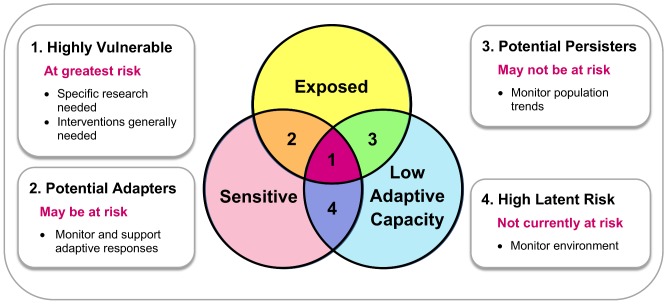
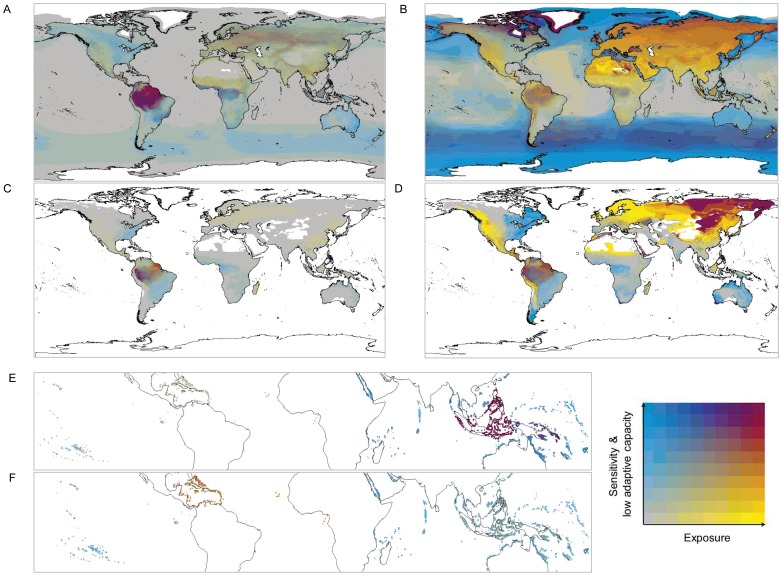
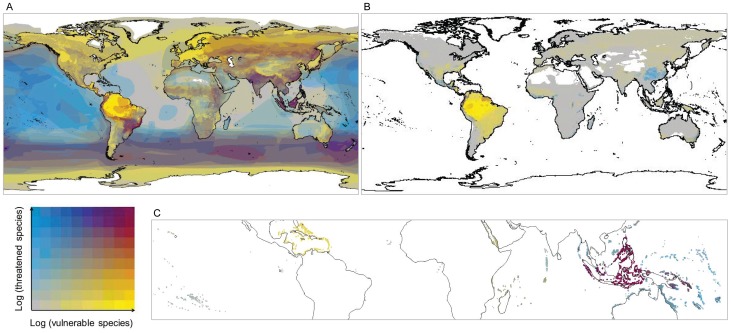
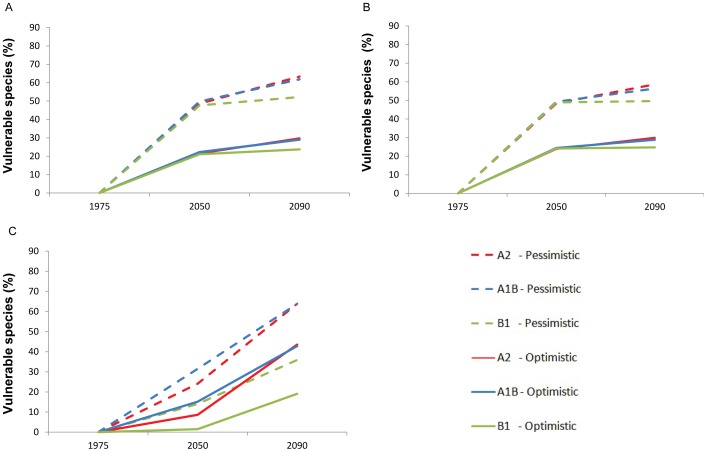
Climate change will have far-reaching impacts on biodiversity, including increasing extinction rates. Current approaches to quantifying such impacts focus on measuring exposure to climatic change and largely ignore the biological differences between species that may significantly increase or reduce their vulnerability. To address this, we present a framework for assessing three dimensions of climate change vulnerability, namely sensitivity, exposure and adaptive capacity; this draws on species' biological traits and their modeled exposure to projected climatic changes. In the largest such assessment to date, we applied this approach to each of the world's birds, amphibians and corals (16,857 species). The resulting assessments identify the species with greatest relative vulnerability to climate change and the geographic areas in which they are concentrated, including the Amazon basin for amphibians and birds, and the central Indo-west Pacific (Coral Triangle) for corals. We found that high concentration areas for species with traits conferring highest sensitivity and lowest adaptive capacity differ from those of highly exposed species, and we identify areas where exposure-based assessments alone may over or under-estimate climate change impacts. We found that 608-851 bird (6-9%), 670-933 amphibian (11-15%), and 47-73 coral species (6-9%) are both highly climate change vulnerable and already threatened with extinction on the IUCN Red List. The remaining highly climate change vulnerable species represent new priorities for conservation. Fewer species are highly climate change vulnerable under lower IPCC SRES emissions scenarios, indicating that reducing greenhouse emissions will reduce climate change driven extinctions. Our study answers the growing call for a more biologically and ecologically inclusive approach to assessing climate change vulnerability. By facilitating independent assessment of the three dimensions of climate change vulnerability, our approach can be used to devise species and area-specific conservation interventions and indices. The priorities we identify will strengthen global strategies to mitigate climate change impacts.
Overview
The claims and statistics of this paper haven’t been checked yet.
Free: it reads the open-access text and checks the first 5 claims that cite a source we can check. Create a free account to check every claim.
Integrity signals
Registry
Cites
Statistics
Figures
Verification
Claims the paper makes
The claims and statistics of this paper haven’t been checked yet.
Free: it reads the open-access text and checks the first 5 claims that cite a source we can check. Create a free account to check every claim.
Claims other papers make about this one
Each is checked against this paper’s own text: does it say what the citing paper says it does?
The source backs part of the claim, not all of it — or backs it for a different population, condition or comparison.
In the citing paper
“Climate change will become an increasingly dominant problem in the biodiversity crisis 3 .”
From Biodiversity: The ravages of guns, nets and bulldozers (2016) · cites this paper as [3]
Experimental — accuracy not yet measuredThe cited source says what the claim attributes to it.
In the citing paper
“Finally, the balance of threats driving extinction risk for many of the world's species will change, even over the next few decades 3 .”
From Biodiversity: The ravages of guns, nets and bulldozers (2016) · cites this paper as [3]
Self-check
Percentages, sums and reported differences re-computed from the paper’s own numbers.
The self-check needs the paper’s full text.
Citations
Cites
Very high resolution interpolated climate surfaces for global land areas
Hijmans, R. J., Cameron, S. E., Parra, J. L., Jones, P. G., & Jarvis, A. (2005) · International Journal of Climatology · doi:10.1002/joc.1276 · Cited by 19,825
Global Biodiversity Scenarios for the Year 2100
Sala, O. E., Stuart Chapin, F., III, Armesto, J. J., Berlow, E., Bloomfield, J., Dirzo, R., Huber-Sanwald, E., Huenneke, L. F., Jackson, R. B., et al. (2000) · Science · doi:10.1126/science.287.5459.1770 · Cited by 9,280 · cited 1×
“However, anthropogenic climate change is becoming a significant new threat [4–7].”
BackgroundClimate Change 2007: Impacts, Adaptation and Vulnerability
Parry, M. L., Canziani, O. F., Palutikof, J. P., van der Linden, P., & Hanson, C. (2007) · Centre for Environmental Data Analysis Digital Repository (Centre for Environmental Data Analysis) · doi:10.5281/zenodo.7356334 · Cited by 9,136
Extinction risk from climate change
Thomas, C. D., Cameron, A., Green, R. E., Bakkenes, M., Beaumont, L. J., Collingham, Y. C., Erasmus, B. F. N., de Siqueira, M. F., Grainger, A., Hannah, L., et al. (2004) · Nature · doi:10.1038/nature02121 · Cited by 7,695
Predicting species distribution: offering more than simple habitat models
Guisan, A., & Thuiller, W. (2005) · Ecology Letters · doi:10.1111/j.1461-0248.2005.00792.x · Cited by 6,587 · cited 1×
“These and most other similar large-scale assessments are based primarily on species distribution (bioclimatic envelope) models, which use correlations between species’ observed distributions and climate variables to predict their distributions and hence their extinction risk under future climate scenarios [9–11].”
BackgroundSpecial report on emissions scenarios
Nakićenović, N., Alcamo, J., Davis, G. R., de Vries, B. J. M., Fenhann, J. V., Gaffin, S., Gregory, K., Grübler, A., Jung, T. Y., Kram, T., et al. (2000) · Cited by 6,262
Has the Earth’s sixth mass extinction already arrived?
Barnosky, A. D., Matzke, N., Tomiya, S., Wogan, G. O. U., Swartz, B., Quental, T. B., Marshall, C., McGuire, J. L., Lindsey, E. L., Maguire, K. C., et al. (2011) · Nature · doi:10.1038/nature09678 · Cited by 4,400 · cited 1×
“Vertebrate extinction rates are currently estimated to be 10–100 times greater than background [1], largely due to the effects of habitat loss, over-exploitation and invasive species [2,3].”
BackgroundPearson, R. G., & Dawson, T. P. (2003) · Global Ecology and Biogeography · doi:10.1046/j.1466-822x.2003.00042.x · Cited by 4,252
Impacts of climate warming on terrestrial ectotherms across latitude
Deutsch, C. A., Tewksbury, J. J., Huey, R. B., Sheldon, K. S., Ghalambor, C. K., Haak, D. C., & Martin, P. R. (2008) · Proceedings of the National Academy of Sciences · doi:10.1073/pnas.0709472105 · Cited by 3,840 · cited 1×
“ranges are particularly vulnerable to climate [16].”
Scenarios for Global Biodiversity in the 21st Century
Pereira, H. M., Leadley, P. W., Proença, V., Alkemade, R., Scharlemann, J. P. W., Fernandez-Manjarrés, J. F., Araújo, M. B., Balvanera, P., Biggs, R., Cheung, W. W. L., et al. (2010) · Science · doi:10.1126/science.1196624 · Cited by 2,077 · cited 1×
“However, anthropogenic climate change is becoming a significant new threat [4–7].”
BackgroundSelf-citation
Cited by
Items 701–800 of 989
Auguste, R. J., Deacon, A. E., & Hulme, M. F. (2025) · Oryx · doi:10.1017/s0030605324000838 · Cited by 2
Vulnerability of an Endangered Amphibian to Climate‐Change Induced Hydrologic Change
Irving, K., Taniguchi‐Quan, K. T., Santana, A. C., Treglia, M. L., Fisher, R. N., Haas, J., Loflen, C. L., Brown, C., & Stein, E. D. (2025) · River Research and Applications · doi:10.1002/rra.4455 · Cited by 2
“Given that amphibians are among the most vulnerable taxa to climate change worldwide (Foden et al. 2013), effective conservation efforts hold the promise of yielding outcomes that surpass the mere sum of their parts.”
Guezen, J., & Anand, M. (2025) · Ecography · doi:10.1002/ecog.07815 · Cited by 3
Mapping the Azores Marine Park Vulnerability to Temperature Changes
Campanyà‐Llovet, N., Bates, A. E., & Colaço, A. (2025) · Diversity and Distributions · doi:10.1111/ddi.70059 · Cited by 2
“Sensitivity indicates the direct impact of specific threats on a species' survival and reproductive success, or on a community or ecosystem's persistence and growth (Dawson et al. 2011; Foden et al. 2013).”
InfluentialThe interacting effects of climate and land‐cover change on bird communities in the United States
Thompson, K. L., Chase, J. M., Remelgado, R., & Meyer, C. (2025) · Ecography · doi:10.1002/ecog.07949 · Cited by 7
Climate change will greatly alter multifaceted biodiversity patterns in goatfish species
Huang, H., Qin, G., Zhang, Z., & Lin, Q. (2025) · npj Biodiversity · doi:10.1038/s44185-025-00113-6 · Cited by 2
Phylogenetically‐Informed Crayfish Conservation in the Face of Climate Change
Pipins, S., Böhm, M., Bland, L., Crandall, K. A., Hossain, M. A., Rosindell, J., & Gumbs, R. (2026) · Animal Conservation · doi:10.1111/acv.70040 · Cited by 2
How vulnerable are amphibians to climate change? A mechanistic perspective
Riddell, E. A., Adams, D. R., & Womack, M. C. (2026) · Functional Ecology · doi:10.1111/1365-2435.70303 · Cited by 2
Keuth, R., Fritz, S. A., & Zurell, D. (2026) · Nature Ecology & Evolution · doi:10.1038/s41559-026-03125-y · Cited by 2
“Stronger dispersal ability is expected to improve climate tracking and the survival of range-shifting species under climate change 32,41 .”
Giermakowski, J. T., Hatten, J. R., Johnson, M. J., Holmes, J., Nowak, E. M., & Peters, M. (2015) · UNM’s Digital Repository (University of New Mexico) · doi:10.25844/ha9k-pk12 · Cited by 6
“Future suitability of landscape varies in time for the two bird and two gartersnake species examined, but also shows a downward trend in suitability for all species, which is consistent with other studies (Bucklin et al. 2012, Foden et al. 2013, Urban 2015).”
ResultBiological diversity and climate change
Leemans, R., Nunez, S., & Alkemade, R. (2021) · Elsevier eBooks · doi:10.1016/b978-0-12-821575-3.00026-8 · Cited by 4
Life-History Evolution in a Changing Environment
Hutchings, J. A. (2021) · Oxford University Press eBooks · doi:10.1093/oso/9780198839873.003.0006 · Cited by 1
Predicting shifts in demography of Orbicella franksi following simulated disturbance and restoration
Lewis, D. M., Vardi, T., Maher, R. L., Correa, A. M. S., & Cook, G. S. (2022) · Ecological Modelling · doi:10.1016/j.ecolmodel.2022.110104 · Cited by 2
How Can Climate Change Limit the Distribution of Cooperative Pseudoscorpions in Brazil?
Bedoya-Róqueme, E., & Tizo‐Pedroso, E. (2022) · Neotropical Entomology · doi:10.1007/s13744-022-01006-0 · Cited by 2
Bamigboye, S. O., & TSHISIKHAWE, M. P. (2022) · Contributii Botanice · doi:10.24193/contrib.bot.57.6 · Cited by 2
Emerging Infectious Diseases and Their Impacts on South American Amphibians
Azat, C., & Alvarado‐Rybak, M. (2024) · Springer eBooks · doi:10.1007/978-3-031-50531-7_3 · Cited by 2
Intenzivnost podnebnih sprememb na območjih Natura 2000 v Sloveniji
Ivajnšič, D., & Donša, D. (2018) · Journal for Geography · doi:10.18690/rg.13.2.3712 · Cited by 2
Spatial and life history variation in a trait-based species vulnerability and impact model
Fleury, A. G., O’Hara, C. C., Butt, N., Restrepo, J., Halpern, B. S., Klein, C. J., Kuempel, C. D., Gaynor, K. M., Bentley, L. K., Richardson, A. J., et al. (2024) · PLoS ONE · doi:10.1371/journal.pone.0305950 · Cited by 4
Tkachuk, R., & Nykytiuk, Y. A. (2024) · Agrology · doi:10.32819/202407 · Cited by 3
“Trait-based methods assess the sensitivity, adaptive capacity, and vulnerability of a species based on its biological traits and exposure to weather and climate change (Foden et al., 2013).”
MethodEcological Conservation and Restoration in the Indian Himalaya Region
Ali, H., Rafiq, M. K., & Shang, Z. (2024) · CABI eBooks · doi:10.1079/9781800622579.0009 · Cited by 2
A study of climate resilience in urban tree species of Peninsular Malaysia
Castelo, S., Carr, J., Khamis, S., Sivaraj, M., & Messina, T. (2024) · Eco Cities · doi:10.54517/ec.v5i1.2685 · Cited by 2
“Following Foden et al. [31], in our context ‘expert knowledge’ can include any of the following: published evidence (from primary or grey literature); direct observation (e.g., of a species experiencing a weather event, such as a flood); or inferences based on observations from ecologically similar…”
BackgroundMethodScheun, J., Venter, L., & Ganswindt, A. (2024) · PeerJ · doi:10.7717/peerj.17847 · Cited by 5
“This vulnerability is attributed to their distinctive physiology, specific habitat requirements, and a limited capacity to migrate over substantial distances in pursuit of new habitats ( Baldwin, Calhoun & De Maynadier, 2006 ; Carvalho, Navas & Pereira, 2010 ; Foden et al., 2013 ).”
BackgroundCuello, W. S., Schreiber, S. J., Gremer, J. R., Trimmer, P. C., Venable, D. L., & Sih, A. (2024) · The American Naturalist · doi:10.1086/733105 · Cited by 1
Wu, H. X., Yu, L., Shen, X., Hua, F., Zhao, Z., Li, Y., & Ma, K. (2025) · Global Sustainability · doi:10.1017/sus.2025.8 · Cited by 4
“Particularly noteworthy is that in South America, Australia, and New Zealand, the risk of species extinction is most pronounced (Foden et al., 2013; Malcolm et al., 2006; Urban, 2015; Warren et al., 2013).”
A watershed fragility index for assessing the vulnerability of river ecosystems
Lira, K. C. S., de Jong, M. V. Z., King, M., & Cowx, I. G. (2025) · Ecological Indicators · doi:10.1016/j.ecolind.2025.113908 · Cited by 4
Impactos del cambio climático sobre la flora acuática de las Lagunas Verdes, volcán Chiles, Ecuador
Terneus, E., Vallejo-Solano, B., & de la Torre, M. G. (2019) · Biota Colombiana · doi:10.21068/c2019.v20n02a02 · Cited by 2
“La vulnerabilidad, entendida como la susceptibilidad del sistema a los impactos negativos, se expresa en tres componentes: exposición, sensibilidad y capacidad adaptativa de las especies a los cambios en su hábitat (Foden et al., 2013).”
BackgroundRichardson, D. L., Bourke, G., Rissik, D., Fisk, G., & Iles, M. (2019) · Mine closure · doi:10.36487/acg_rep/1915_119_richardson · Cited by 2
“The vulnerability of a population, species or community is considered a function of three attributes (Foden et al. 2013, Ofori et al. 2017): • Exposure describes the probability/extent of a hazard (disturbance or stress) occurring.”
BackgroundSavage, A., Snowdon, C. T., Soto, L., Castro, J. K., Medina, F. S., Emeris, G., Garcia, L. C., & Guillen, R. R. (2022) · American Journal of Primatology · doi:10.1002/ajp.23415 · Cited by 3
“Foden et al. (2013) examined the species most vulnerable to extinction from a range of climate change‐induced stresses.”
BackgroundPompe, S., Hanspach, J., Badeck, F., Klotz, S., Bruelheide, H., & Kühn, I. (2014) · Frontiers of Biogeography · doi:10.21425/f5fbg22502 · Cited by 3
“We need to select representative as well as simple ecological and biological characteristics that are useful for assessing changes quantitatively and that are also ecologically meaningful (cf. Foden et al. 2013).”
BackgroundConclusions: The Future of Shark Management and Conservation in the Northeast Pacific Ocean
Lowry, D. (2017) · Advances in marine biology · doi:10.1016/bs.amb.2017.09.002 · Cited by 2
Drowsy Drosophila: Rapid Evolution in the Face of Climate Change
Broo, J., Mahoney, J., Bokor, J. R., & Hahn, D. A. (2018) · The American Biology Teacher · doi:10.1525/abt.2018.80.4.272 · Cited by 3
VanderWerf, E. A., Taylor, P. E., & Dittmar, E. M. (2020) · The Wilson Journal of Ornithology · doi:10.1676/20-00081 · Cited by 2
Greene, E. S., Deviche, P., & Dridi, S. (2021) · Elsevier eBooks · doi:10.1016/b978-0-12-819770-7.00052-9 · Cited by 2
Maxted, N., Hunter, D., & Ríos, R. O. (2020) · Cambridge University Press eBooks · doi:10.1017/9781139024297.012 · Cited by 2
Biodiversity and Environmental Impact from Climate Change: Causes and Consequences
Villa, F., Cimatti, M., & Marco, M. D. (2024) · Springer eBooks · doi:10.1007/978-3-031-56218-1_6 · Cited by 2
Internal Seed Structure of Alpine Plants and Extreme Cold Exposure
Jaganathan, G. K., & Dalrymple, S. E. (2019) · Data · doi:10.3390/data4030107 · Cited by 2
“Although this latter scenario is possible, heterogenous ice nucleation is more likely because in seeds and other living entities, water does not occur in its pure form and often exists in macromolecular structures [22].”
BackgroundA functional-structural coral model
Cresswell, A., Thomson, D. P., Trevenen, E. J., & Renton, M. (2017) · MODSIM · doi:10.36334/modsim.2017.b2.cresswell · Cited by 2
“In addition to approximately 800 extant hard coral species with diverse shapes described globally (Foden et al., 2013), at an intra-species level, high plasticity in growth form is common.”
BackgroundByrne, J. G. (2016) · White Rose eTheses Online (University of Leeds, The University of Sheffield, University of York) · Cited by 2
Development of crop wild relative conservation strategies for Norway
Phillips, J. (2017) · University of Birmingham Institutional Research Archive (University of Birmingham) · Cited by 2
Campbell, L. J., Garner, T. W. J., Tessa, G., Scheele, B. C., Griffiths, A. G. F., Wilfert, L., & Harrison, X. A. (2017) · bioRxiv (Cold Spring Harbor Laboratory) · doi:10.1101/178723 · Cited by 2
A century of change in avifauna of California's most transformed landscapes
MacLean, S. A. (2018) · eScholarship (California Digital Library) · Cited by 2
Åkesson, A., Curtsdotter, A., Eklöf, A., Ebenman, B., Norberg, J., & Barabás, G. (2020) · bioRxiv (Cold Spring Harbor Laboratory) · doi:10.1101/2020.03.23.003335 · Cited by 2
Coral assemblages at higher latitudes favour short-term potential over long-term performancePreprint
Cant, J., Reimer, J. D., Sommer, B., Cook, K. M., Kim, S. W., Sims, C. A., Mezaki, T., O’Flaherty, C., Brooks, M., Malcolm, H. A., et al. (2021) · bioRxiv (Cold Spring Harbor Laboratory) · doi:10.1101/2021.09.29.462350 · Cited by 2
Maxted, N., Hunter, D., & Ríos, R. O. (2020) · Cambridge University Press eBooks · doi:10.1017/9781139024297.006 · Cited by 2
Hutchings, J. A. (2021) · Oxford University Press eBooks · doi:10.1093/oso/9780198839873.003.0002 · Cited by 3
Climate Change: Anticipating and Adapting to the Impacts on Terrestrial Species
Lawler, J. J., Oakes, L. E., Ettinger, A. K., & Lin, Y. (2023) · Elsevier eBooks · doi:10.1016/b978-0-12-822562-2.00087-6 · Cited by 2
Assessing risk of ecosystem collapse in a changing climatePreprint
Rowland, J. A., Nicholson, E., Ferrer-Paris, J. R., Keith, D., Murray, N., Sato, C. F., Tóth, A. B., Tolsma, A. D., Venn, S., Asmüssen, M., et al. (2023) · doi:10.32942/x2hs4q · Cited by 2
Zanco, B., Morimoto, J., Cockerell, F. E., Mirth, C. K., & Sgrò, C. M. (2023) · bioRxiv (Cold Spring Harbor Laboratory) · doi:10.1101/2023.11.28.569099 · Cited by 2
Scott, J. M., Wiens, J. A., Horne, B. V., & Goble, D. D. (2020) · Cambridge University Press eBooks · doi:10.1017/9781108377898.007 · Cited by 1
Distribution, habitat and vulnerability to climate change of the Endangered Leptopelis xenodactylus
Kyle, K. J., Preez, L. D., Harvey, J., & Armstrong, A. J. (2024) · African Journal of Herpetology · doi:10.1080/21564574.2023.2279322 · Cited by 1
“One of the major threats facing biodiversity, including amphibians, is climate change (Foden et al. 2013).”
BackgroundRusch, T. W., Sawyer, S. J., Orr, A. E., Richter, N. J., Sohn, D., Gagner, L., Smith, A. A., Tomberlin, J. K., & Tarone, A. M. (2025) · Insects · doi:10.3390/insects16030310 · Cited by 2
“Understanding how the projected temperature shifts from climate change will impact organismal reproduction is vital for identifying vulnerable species [54,55], potential inva-Insects sive species [65,66], and changes in ecosystem services [67,68].”
Tran, D. V., Suzuki, T., Fukuyama, I., Vera, R. J., & Nishikawa, K. (2025) · Ecology and Evolution · doi:10.1002/ece3.71054 · Cited by 1
Edward, P. S., Regupathikannan, J., Samson, A., & Moinudheen, N. (2025) · Biology Bulletin · doi:10.1134/s1062359025601041 · Cited by 2
“…their limited distribution range (Outlaw and Voelker, 2006) and their preference for forest fringe habitats, deciduous forests and tea plantation settings (Grimmett et al., 2019) thus making this vulnerable species susceptible to various anthropogenic stresses from these areas (Foden et al., 2013).”
Assessing regional climate warming risk to plant species: a basis for adaptation planning
Hong, S., Lee, K., Oh, J., & Cha, J.-G. (2025) · Environmental Research Communications · doi:10.1088/2515-7620/ae09f9 · Cited by 1
A global sea turtle climate vulnerability assessment
Lettrich, M. D., Dick, D. M., Fahy, C. C., Griffis, R. B., Haas, H. L., Jones, T. T., Kelly, I., Klemm, D. L., Lauritsen, A. M., Sasso, C. R., et al. (2025) · Ecological Indicators · doi:10.1016/j.ecolind.2025.114143 · Cited by 3
Cejp, B., & Griebeler, E. M. (2025) · Ecography · doi:10.1002/ecog.08109 · Cited by 1
Change in Climate and Its Impact on Biodiversity
Butt, S., Chauhan, V. S., Yadav, S., Mishra, S., & Jaiswal, K. (2026) · Springer eBooks · doi:10.1007/978-981-97-9859-9_49 · Cited by 1
Exposure and sensitivity of threatened plant species to changing drought regimes: A global analysis
Everingham, S. E., Wright, I. J., Teckentrup, L., Allen, S. P., & Gallagher Rachael, V. (2026) · Biological Conservation · doi:10.1016/j.biocon.2025.111684 · Cited by 1
Moreno, A. K. M., de Morais, A. R., Lemes, P., Machado, I. F., Terribile, L. C., & Lima-Ribeiro, M. S. (2026) · Perspectives in Ecology and Conservation · doi:10.1016/j.pecon.2025.11.005 · Cited by 3
Tang, X., Jia, L., Zhong, L., Zhai, Z., Zhang, X., Zhang, T., Niu, Z., Zhang, P., Wang, H., Ma, M., et al. (2026) · Journal of Hazardous Materials · doi:10.1016/j.jhazmat.2026.141218 · Cited by 1
Divergent demographic responses of boreal-breeding ducks to growing season variability
Messmer, D. J., Slattery, S., Drever, M. C., Derksen, C., & Clark, R. G. (2026) · Oecologia · doi:10.1007/s00442-026-05865-x · Cited by 1
“Effects may be direct, such as weather-mediated mortality during sensitive life stages or indirect, such as trophic mismatches between peak food availability and breeding activity (Hansson et al. 2014), or climate-driven changes in habitat structure (Foden et al. 2013).”
Insecticide Resistance Alters Oviposition Preference in Drosophila melanogaster
Alves, A. N., Martelli, F., Yang, Y. T., & Wedell, N. (2026) · Ecology and Evolution · doi:10.1002/ece3.73067 · Cited by 2
“However, these ad-aptations are constantly challenged by environmental pressures, even more so with the effect of anthropogenic action (Dawson et al. 2011; Foden et al. 2013; Thomas et al. 2004).”
Ringim, A. S., Muhammad, S. I., & Abubakar, H. M. (2026) · Frontiers in Bird Science · doi:10.3389/fbirs.2026.1757541 · Cited by 1
Thorne, L. H., & Meyer‐Gutbrod, E. L. (2026) · ICES Journal of Marine Science · doi:10.1093/icesjms/fsag042 · Cited by 1
Risk to European birds from collisions with wind-energy facilities
Etard, A., Jung, M., & Visconti, P. (2026) · Biological Conservation · doi:10.1016/j.biocon.2026.111875 · Cited by 4
Rangel-Rivera, C. E., Rojas‐Soto, O., Guevara, R., López‐Barrera, F., Arias‐Alzate, A., & Prieto-Torres, D. A. (2026) · Regional Environmental Change · doi:10.1007/s10113-026-02595-x · Cited by 1
“This framework has been widely used to support climate change vulnerability assessments (Foden et al. 2013; Garcia et al. 2014), including the synthetic risk syndrome proposed by Morrison et al. (2018), a scheme that integrates climate exposure and species’ predictive traits to assess vulnerability…”
Bridging the data gap: Integration of spatial modelling in wildlife disease surveillance
Wijburg, S. R., Sprong, H., Rijks, J. M., Gröne, A., Baños, J. V., Fischer, E. A. J., Smith, G. C., & Maas, M. (2026) · Ecological Modelling · doi:10.1016/j.ecolmodel.2026.111675 · Cited by 1
Vulnerability of Bats in Australia to Wind Turbine Mortality: A Trait‐Based Assessment
Harris, C., & Turbill, C. (2026) · Austral Ecology · doi:10.1111/aec.70245 · Cited by 1
Mechanistic insights into avian and chiropteran thermal risk exposure in a warming world
Mdluli, V. M., Noakes, M. J., & Conradie, S. R. (2026) · Conservation Physiology · doi:10.1093/conphys/coag060 · Cited by 1
“Thermal vulnerability assessments typically use either correlative or mechanistic approaches to predict the impacts of climate change ( Erasmus et al., 2002; Williams et al., 2008; Foden et al., 2013; Briscoe et al., 2023).”
Currie, S. E., Bjarnason, Á., & Stawski, C. (2026) · Journal of Comparative Physiology B · doi:10.1007/s00360-026-01708-6 · Cited by 1
Turan, C., Soldo, A., & Uyan, A. (2026) · Biology · doi:10.3390/biology15211931 · Cited by 1
Global vegetation model diversity and the risks of climate-driven ecosystem shifts
Bond‐Lamberty, B. (2013) · Environmental Research Letters · doi:10.1088/1748-9326/8/4/041004 · Cited by 1
Hawlitschek, O., Brückmann, B., & Glaw, F. (2017) · African Journal of Ecology · doi:10.1111/aje.12380 · Cited by 2
Blandón, A. C., Robbins, C. S., Dowell, B. A., Ramírez, M., López, A., & Javier, O. (2016) · El Hornero · doi:10.56178/eh.v31i1.572 · Cited by 1
“…leaf flushing, fruiting and flowering periods, are associated (to different degrees) to the onset or end of the rainy season in the tropics (Frankie et al. 1974, Wolda 1978, van Schaik et al. 1993, Cattanio et al. 2004), and other studies from tropical sites have found that insect…”
Backgroundde la Cruz, Y. D. C. R., Leal, J. D. D. V., Figueroa, C. J. P., Campillo, L. M. G., Ordóñez, E. J. M., Ruíz, L. J. R., & Sánchez, F. J. H. (2019) · Kuxulkab · doi:10.19136/kuxulkab.a25n51.2847
Taylor, C. M., Keppel, G., O’Sullivan, S., Peters, S., Kerr, G. D., & Williams, C. R. (2020) · Australian Journal of Zoology · doi:10.1071/zo19042 · Cited by 1
Maxted, N., Hunter, D., & Ríos, R. O. (2020) · Cambridge University Press eBooks · doi:10.1017/9781139024297.011 · Cited by 1
Mokhatla, M. (2018) · SUNScholar (Stellenbosch University) · Cited by 1
Grogan, S., & Bell, S. (2021) · Marine Ecology Progress Series · doi:10.3354/meps13893 · Cited by 1
Maxted, N., Hunter, D., & Ríos, R. O. (2020) · Cambridge University Press eBooks · doi:10.1017/9781139024297.010 · Cited by 1
Hutchings, J. A. (2021) · Oxford University Press eBooks · doi:10.1093/oso/9780198839873.003.0001 · Cited by 1
Hutchings, J. A. (2021) · Oxford University Press eBooks · doi:10.1093/oso/9780198839873.003.0005 · Cited by 2
Wijburg, S. R., Maas, M., Sprong, H., Gröne, A., van der Schrier, G., & Rijks, J. M. (2023) · Transboundary and Emerging Diseases · doi:10.1155/2023/7628262 · Cited by 3
“TVAs are based on the hypothesis that a species ’ capability to deal with the impact of a threat depends on both external and internal factors, such as the level of exposure to the perturbation and their life history traits that allow a species to cope with or adapt to this exposure [11, 12].”
InfluentialConsiderations of Amphibian Models and Testing Paradigms for Ecological Risk Assessment
Johnson, M. S., & Pillard, D. A. (2023) · Royal Society of Chemistry eBooks · doi:10.1039/9781837672004-00006 · Cited by 1
Predicting the future of threatened birds from a Neotropical ecotone area
de Carvalho, D. L., Silva, S. M., Sousa‐Neves, T., Gonçalves, G. S. R., Silva, D. P., & Santos, M. P. D. (2023) · Environmental Monitoring and Assessment · doi:10.1007/s10661-023-12174-w · Cited by 3
“…for wildlife conservation, since several studies predict significant declines in their future geographic distributions (Anciães & Peterson, 2006; Foden et al., 2013; Loiselle et al., 2010; Marini et al., 2009a, b), which thus seriously threatens the world biodiversity (Lawler et al., 2009).”
Gonzalez, J. C., Cuezzo, M. G., Buitrago-Guacaneme, A., & Nieto, C. (2024) · Journal of Insect Conservation · doi:10.1007/s10841-024-00611-1 · Cited by 1
“This is essential for mitigating current threats and planning for future climate change adaptation interventions (Foden et al. 2013).”
Molina, J. T., Arantes, C. C., Murry, B. A., Veselka, W., & Anderson, J. T. (2024) · Ecological Indicators · doi:10.1016/j.ecolind.2024.112523 · Cited by 2
Using life history traits to assess climate change vulnerability in understudied species
Hinderer, R. K., Hossack, B. R., & Eby, L. A. (2024) · Integrative Conservation · doi:10.1002/inc3.77 · Cited by 1
“…than the typical time ‐ intensive expert elicitation process, and carefully chose characteristics from the literature, rather than using a more general suite of characteristics which may be unimportant or unknown in this group (e.g., Foden et al., 2013; Young et al., 2015; Harper et al., 2022).”
Birks, J., Johnstone, S., Snell, E., & MacPherson, J. (2025) · Stacks. · doi:10.60102/stacks-25006 · Cited by 2
Uncertainty in projected impacts of climate change on biodiversity — a focus on African vertebrates
Garcia, R. A. (2015) · Frontiers of Biogeography · doi:10.21425/f5fbg24114 · Cited by 1
“By projecting this characterisation to the future, these models provide estimates of species' exposure to climate change (see e.g., Foden et al. 2013, Dickinson et al. 2014).”
MethodInfluentialLaws, C. A., Hancock, N., & Leishman, M. R. (2019) · Pacific Conservation Biology · doi:10.1071/pc19021 · Cited by 1
Vacher, J., Graitson, É., Cauwenbergh, J., & Ursenbacher, S. (2021) · Conservation Genetics · doi:10.1007/s10592-021-01416-4 · Cited by 3
Borges, F. J. A., & Loyola, R. A. (2021) · Biota Neotropica · doi:10.1590/1676-0611-bn-2021-1204 · Cited by 1
“Vulnerability is assessed based on these three components: exposure, sensitivity, and adaptive capacity, so that species with high exposure, high sensitivity, and low adaptive capacity will be the most vulnerable to climate change (Dawson et al. 2011; Foden et al. 2013).”
BackgroundMethodInfluentialWhole Plant, Plantlet and DNA Conservation
Maxted, N., Hunter, D., & Ríos, R. O. (2020) · Cambridge University Press eBooks · doi:10.1017/9781139024297.015 · Cited by 1
Nowak, L., Schleuning, M., Bender, I. M. A., Kissling, W. D., & Fritz, S. A. (2022) · Diversity and Distributions · doi:10.1111/ddi.13518 · Cited by 2
“For instance, if species that are highly sensitive to climate change also have a low adaptive capacity, then their overall susceptibility to climate change might be higher than estimated from their climatic niche alone (Foden et al., 2013).”
InfluentialMOUMEGNI, L. F. M., Mane, D. D. Y., Tadjong, R. N., Vanessa, M. S., Raphaël, K. J., & Tchoumboué, J. (2021) · Genetics and Biodiversity Journal · doi:10.46325/gabj.v5i1.177 · Cited by 1
Probert, P. K. (2017) · Cambridge University Press eBooks · doi:10.1017/9781139043588.014 · Cited by 1
Donner, D. M., Ribic, C. A., Beck, A. J., Higgins, D. A., Eklund, D., & Reinecke, S. (2015) · The Journal of North American Herpetology · doi:10.17161/jnah.vi1.11904 · Cited by 1
Trait Correlates of Climatic Niche Tracking in British BirdsPreprint
Rapacciuolo, G., Robinson, R. A., Gillings, S., & Purvis, A. (2017) · bioRxiv (Cold Spring Harbor Laboratory) · doi:10.1101/103507 · Cited by 1
Metadata
- Authors
- Foden, W. B., Butchart, S. H. M., Stuart, S. N., Vié, J.-C., Akçakaya, H. R., Angulo, A., DeVantier, L. M., Gutsche, A., Turak, E., Cao, L., Donner, S. D., Katariya, V., Bernard, R., Holland, R. A., Hughes, A. F., O’Hanlon, S. E., Garnett, S. T., Şekercioğlu, Ç. H., & Mace, G. M.
- Affiliations
- University of the Witwatersrand (ZA)
- BirdLife International (KE)
- UN Environment Programme World Conservation Monitoring Centre (GB)
- International Union for Conservation of Nature (CH)
- Museum für Naturkunde (DE)
- James Cook University (AU)
- Zhejiang University (CN)
- University of British Columbia (CA)
- International Union for Conservation of Nature (United Kingdom) (GB)
- Imperial College London (GB)
- University of Southampton (GB)
- Anglia Ruskin University (GB)
- Charles Darwin University (AU)
- University College London (GB)
- Corresponding author
- Foden, Wendy B.
- Butchart, Stuart H. M.
- Stuart, Simon N.
- Vié, Jean-Christophe
- Angulo, Ariadne
- DeVantier, Lyndon M.
- Gutsche, Alexander
- Turak, Emre
- Cao, Long
- Donner, Simon D.
- Katariya, Vineet
- Bernard, Rodolphe
- Holland, Robert A.
- Hughes, Adrian F.
- O’Hanlon, Susannah E.
- Garnett, Stephen T.
- Mace, Georgina M.
- ORCID
- Venue
- PLoS ONE
- Publisher
- Public Library of Science (PLoS)
- Published
- 2013-06-12
- Volume
- 8
- Issue
- 6
- Pages
- e65427
- ISSN
- 1932-6203 (ISSN-L)
- PMC
- PMC3680427
- OpenAlex
- W2113487278
- Cited by
- 988
- References
- 43
- Citations by year
- 2026: 59 · 2025: 59 · 2024: 65 · 2023: 73 · 2022: 72 · 2021: 90 · 2020: 119 · 2019: 83 · 2018: 88 · 2017: 87 · 2016: 66 · 2015: 65 · 2014: 50 · 2013: 12
- FWCI
- 42.61
- Type
- journal article
- Language
- en
- Open access
- gold
- doi.org
- Locations
- PLoS ONE (publishedVersion, cc-by)
- Europe PMC (PubMed Central) (publishedVersion, other-oa)
- PubMed Central (publishedVersion, cc-by)
- PubMed (publishedVersion)
- ePrints Soton (University of Southampton) (acceptedVersion)
- CDU eSpace Institutional Repository (Charles Darwin University) (submittedVersion)
- ResearchOnline - JCU (James Cook University) (submittedVersion)
- DOAJ (DOAJ: Directory of Open Access Journals) (submittedVersion, cc-by-sa)
- UCL Discovery (University College London) (submittedVersion)
- Figshare (submittedVersion, cc-by)
- Funders
- John D. and Catherine T. MacArthur Foundation
- Imperial College London
- Topics
- Physical Sciences › Environmental Science › Ecological Modeling › Species Distribution and Climate Change
- Physical Sciences › Environmental Science › Nature and Landscape Conservation › Ecology and Vegetation Dynamics Studies
- Physical Sciences › Environmental Science › Global and Planetary Change › Climate Change and Environmental Impact
- Keywords
- climate change vulnerability, climate change sensitivity, climate change exposure, adaptive capacity, biological characteristics, birds, amphibians, coral, extinction risk, IUCN Red List, conservation prioritization, Amazon basin, Coral Triangle, biodiversity conservation
- MeSH terms
- Acclimatization, Amphibians, Animals, Birds, Conservation of Natural Resources, Anthozoa, Biodiversity, Climate Change
About these checks
Registry, retraction, Cites and statistics results are computed, not judged, with one exception: a printed reference that no index lists is read once by a model before it counts as a citation error. Claims are extracted by a model and kept only when their quote appears verbatim in the text; each cited source is then checked, with a model’s help, for whether it says what the claim relies on. Those verdicts can be wrong — read the claim’s quote and the cited source before relying on one.
Statistics and arithmetic are recomputed, not judged.
Confidence bands are shown only for fields calibrated on our annotated test set. None is calibrated yet, so no band is shown.
What counts as a claim ›How we measure confidence ›How we check this ›
Are you an author, or do you see a problem with this page? Request a review
Data sources
Bibliographic data: Semantic Scholar, OpenAlex, Crossref.
Contains information from the Semantic Scholar Academic Graph Datasets, made available under the ODC Attribution License (ODC-BY 1.0).
Semantic Scholar’s data is described in: Kinney, R., et al. (2023). The Semantic Scholar Open Data Platform. arXiv:2301.10140.
