

Identifying the World's Most Climate Change Vulnerable Species: A Systematic Trait-Based Assessment of all Birds, Amphibians and Corals
Open accessThe DOI matches its Crossref record; 42 of the 43 references it cites were found in a registry or an index.
Abstract
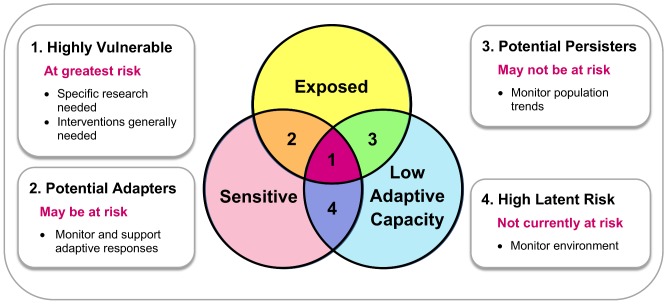
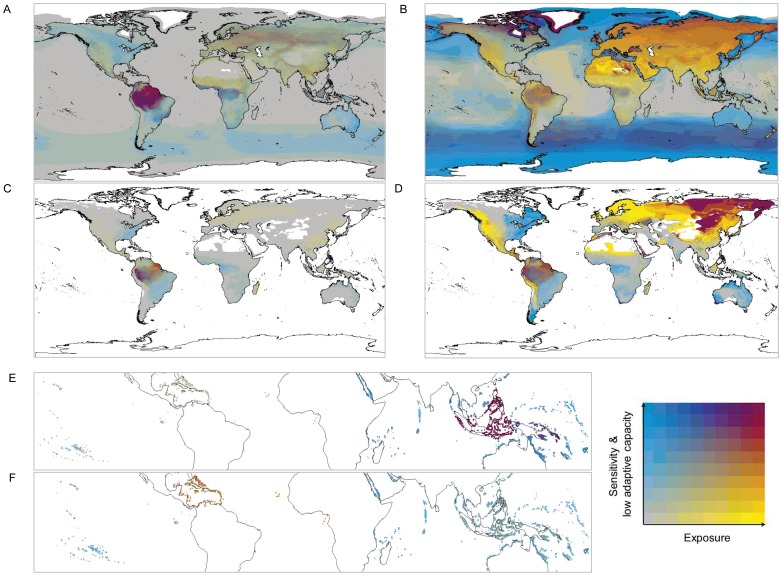
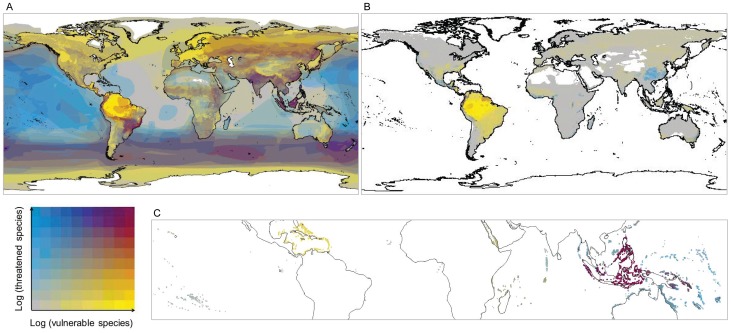
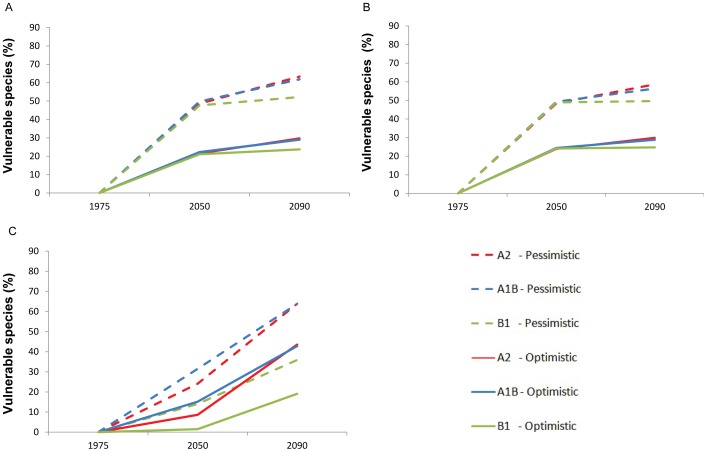
Climate change will have far-reaching impacts on biodiversity, including increasing extinction rates. Current approaches to quantifying such impacts focus on measuring exposure to climatic change and largely ignore the biological differences between species that may significantly increase or reduce their vulnerability. To address this, we present a framework for assessing three dimensions of climate change vulnerability, namely sensitivity, exposure and adaptive capacity; this draws on species' biological traits and their modeled exposure to projected climatic changes. In the largest such assessment to date, we applied this approach to each of the world's birds, amphibians and corals (16,857 species). The resulting assessments identify the species with greatest relative vulnerability to climate change and the geographic areas in which they are concentrated, including the Amazon basin for amphibians and birds, and the central Indo-west Pacific (Coral Triangle) for corals. We found that high concentration areas for species with traits conferring highest sensitivity and lowest adaptive capacity differ from those of highly exposed species, and we identify areas where exposure-based assessments alone may over or under-estimate climate change impacts. We found that 608-851 bird (6-9%), 670-933 amphibian (11-15%), and 47-73 coral species (6-9%) are both highly climate change vulnerable and already threatened with extinction on the IUCN Red List. The remaining highly climate change vulnerable species represent new priorities for conservation. Fewer species are highly climate change vulnerable under lower IPCC SRES emissions scenarios, indicating that reducing greenhouse emissions will reduce climate change driven extinctions. Our study answers the growing call for a more biologically and ecologically inclusive approach to assessing climate change vulnerability. By facilitating independent assessment of the three dimensions of climate change vulnerability, our approach can be used to devise species and area-specific conservation interventions and indices. The priorities we identify will strengthen global strategies to mitigate climate change impacts.
Overview
The claims and statistics of this paper haven’t been checked yet.
Free: it reads the open-access text and checks the first 5 claims that cite a source we can check. Create a free account to check every claim.
Integrity signals
Registry
Cites
Statistics
Figures
Verification
Claims the paper makes
The claims and statistics of this paper haven’t been checked yet.
Free: it reads the open-access text and checks the first 5 claims that cite a source we can check. Create a free account to check every claim.
Claims other papers make about this one
Each is checked against this paper’s own text: does it say what the citing paper says it does?
The source backs part of the claim, not all of it — or backs it for a different population, condition or comparison.
In the citing paper
“Climate change will become an increasingly dominant problem in the biodiversity crisis 3 .”
From Biodiversity: The ravages of guns, nets and bulldozers (2016) · cites this paper as [3]
Experimental — accuracy not yet measuredThe cited source says what the claim attributes to it.
In the citing paper
“Finally, the balance of threats driving extinction risk for many of the world's species will change, even over the next few decades 3 .”
From Biodiversity: The ravages of guns, nets and bulldozers (2016) · cites this paper as [3]
Self-check
Percentages, sums and reported differences re-computed from the paper’s own numbers.
The self-check needs the paper’s full text.
Citations
Cites
Very high resolution interpolated climate surfaces for global land areas
Hijmans, R. J., Cameron, S. E., Parra, J. L., Jones, P. G., & Jarvis, A. (2005) · International Journal of Climatology · doi:10.1002/joc.1276 · Cited by 19,825
Global Biodiversity Scenarios for the Year 2100
Sala, O. E., Stuart Chapin, F., III, Armesto, J. J., Berlow, E., Bloomfield, J., Dirzo, R., Huber-Sanwald, E., Huenneke, L. F., Jackson, R. B., et al. (2000) · Science · doi:10.1126/science.287.5459.1770 · Cited by 9,280 · cited 1×
“However, anthropogenic climate change is becoming a significant new threat [4–7].”
BackgroundClimate Change 2007: Impacts, Adaptation and Vulnerability
Parry, M. L., Canziani, O. F., Palutikof, J. P., van der Linden, P., & Hanson, C. (2007) · Centre for Environmental Data Analysis Digital Repository (Centre for Environmental Data Analysis) · doi:10.5281/zenodo.7356334 · Cited by 9,136
Extinction risk from climate change
Thomas, C. D., Cameron, A., Green, R. E., Bakkenes, M., Beaumont, L. J., Collingham, Y. C., Erasmus, B. F. N., de Siqueira, M. F., Grainger, A., Hannah, L., et al. (2004) · Nature · doi:10.1038/nature02121 · Cited by 7,695
Predicting species distribution: offering more than simple habitat models
Guisan, A., & Thuiller, W. (2005) · Ecology Letters · doi:10.1111/j.1461-0248.2005.00792.x · Cited by 6,587 · cited 1×
“These and most other similar large-scale assessments are based primarily on species distribution (bioclimatic envelope) models, which use correlations between species’ observed distributions and climate variables to predict their distributions and hence their extinction risk under future climate scenarios [9–11].”
BackgroundSpecial report on emissions scenarios
Nakićenović, N., Alcamo, J., Davis, G. R., de Vries, B. J. M., Fenhann, J. V., Gaffin, S., Gregory, K., Grübler, A., Jung, T. Y., Kram, T., et al. (2000) · Cited by 6,262
Has the Earth’s sixth mass extinction already arrived?
Barnosky, A. D., Matzke, N., Tomiya, S., Wogan, G. O. U., Swartz, B., Quental, T. B., Marshall, C., McGuire, J. L., Lindsey, E. L., Maguire, K. C., et al. (2011) · Nature · doi:10.1038/nature09678 · Cited by 4,400 · cited 1×
“Vertebrate extinction rates are currently estimated to be 10–100 times greater than background [1], largely due to the effects of habitat loss, over-exploitation and invasive species [2,3].”
BackgroundPearson, R. G., & Dawson, T. P. (2003) · Global Ecology and Biogeography · doi:10.1046/j.1466-822x.2003.00042.x · Cited by 4,252
Impacts of climate warming on terrestrial ectotherms across latitude
Deutsch, C. A., Tewksbury, J. J., Huey, R. B., Sheldon, K. S., Ghalambor, C. K., Haak, D. C., & Martin, P. R. (2008) · Proceedings of the National Academy of Sciences · doi:10.1073/pnas.0709472105 · Cited by 3,840 · cited 1×
“ranges are particularly vulnerable to climate [16].”
Scenarios for Global Biodiversity in the 21st Century
Pereira, H. M., Leadley, P. W., Proença, V., Alkemade, R., Scharlemann, J. P. W., Fernandez-Manjarrés, J. F., Araújo, M. B., Balvanera, P., Biggs, R., Cheung, W. W. L., et al. (2010) · Science · doi:10.1126/science.1196624 · Cited by 2,077 · cited 1×
“However, anthropogenic climate change is becoming a significant new threat [4–7].”
BackgroundSelf-citation
Cited by
Items 201–300 of 989
Vulnerability of Cerrado threatened mammals: an integrative landscape and climate modeling approach
Júnior, P. D. M., Villén‐Pérez, S., Mendes, P., Nóbrega, C. C., Côrtes, L. G., Castro, T., & de Souza, R. A. (2018) · Biodiversity and Conservation · doi:10.1007/s10531-018-1615-x · Cited by 54
Li, W., Yu, Y., Liu, P., Tang, R., Dai, Y., Li, L., & Zhang, L. (2019) · Global Ecology and Conservation · doi:10.1016/j.gecco.2019.e00664 · Cited by 53
Bird vulnerability to climate and land use changes in the Brazilian Cerrado
Borges, F. J. A., Ribeiro, B. R., Lopes, L. E., & Loyola, R. A. (2019) · Biological Conservation · doi:10.1016/j.biocon.2019.05.055 · Cited by 59
The dynamics underlying avian extinction trajectories forecast a wave of extinctions
Monroe, M. J., Butchart, S. H. M., Mooers, A. O., & Bokma, F. (2019) · Biology Letters · doi:10.1098/rsbl.2019.0633 · Cited by 48
“ecology, geography [23], traits [24] and phylogeny [25] could be combined to assign prior probabilities to the categorization of these species.”
BackgroundSelf-citationBueno‐Pardo, J., Nobre, D., Monteiro, J. N., Sousa, P. M., Costa, E. F. S., Baptista, V., Ovelheiro, A., Vieira, V. M. N. C. S., Chícharo, L. M. Z., Gaspar, M. B., et al. (2021) · Scientific Reports · doi:10.1038/s41598-021-82595-5 · Cited by 56
Bridge, T. C. L., Hoey, A. S., Campbell, S., Muttaqin, E., Rudi, E., Fadli, N., & Baird, A. H. (2014) · F1000Research · doi:10.12688/f1000research.2-187.v3 · Cited by 70
“The sensitivity of this symbiosis to elevated sea temperature is well-documented 5,6 , suggesting that many coral species will be highly vulnerable to the effects of global warming 7,8 .”
Avalos, V. D. R., & Hernández, J. (2015) · Global Ecology and Conservation · doi:10.1016/j.gecco.2015.08.004 · Cited by 54
Separating sensitivity from exposure in assessing extinction risk from climate change
Dickinson, M. G., Orme, C. D. L., Suttle, K. B., & Mace, G. M. (2014) · Scientific Reports · doi:10.1038/srep06898 · Cited by 61
“Separating sensitivity from exposure in assessing extinction risk from climate change”
BackgroundSelf-citationHansen, A. J., & Phillips, L. B. (2014) · Forest Ecology and Management · doi:10.1016/j.foreco.2014.11.008 · Cited by 57
“Consistent with Thomas et al. (2011) and Foden et al. (2013), we elected to assign cardinal variable rankings for each vulnerability metric as a basis for comparisons among species and as a way to derive an overall index of vulnerability for a species from the sum of the predictors (Table 3).”
BackgroundSpace and time matter in social-ecological vulnerability assessments
Thiault, L., Marshall, P., Gelcich, S., Collin, A., Chlous, F., & Claudet, J. (2017) · Marine Policy · doi:10.1016/j.marpol.2017.11.027 · Cited by 47
Tropical Protected Areas Under Increasing Threats from Climate Change and Deforestation
Tabor, K. M., Hewson, J. H., Tien, H., González‐Roglich, M., Hole, D., & Williams, J. W. (2018) · Land · doi:10.3390/land7030090 · Cited by 59
“Climate models are optimized for longer-term future projections (50–100 years), however, projecting the impacts of climate change on biodiversity is challenging given the uncertainties of how vulnerable or adaptable individual species are to climate change [34,35].”
BackgroundReece, J. S., Passeri, D. L., Ehrhart, L. M., Hagen, S., Hays, A. W., Long, C., Noss, R., Bilskie, M. V., Sanchez, C. L., Schwoerer, M., et al. (2013) · Marine Ecology Progress Series · doi:10.3354/meps10531 · Cited by 63
“Anthropogenic climate change (IPCC 2007) poses significant threats to biodiversity (Cahill et al. 2013, Foden et al. 2013), particularly because it is occurring in the midst of the Earth’s sixth mass extinction (Barnosky et al. 2011), where the adaptive capacity of species is compromised by habitat…”
BackgroundSchuch, A. P., dos Santos, M. B., Lipinski, V. M., Peres, L. V., dos Santos, C. P., Cechin, S. Z., Schuch, N. J., Pinheiro, D. K., & Loreto, É. L. S. (2015) · Ecotoxicology and Environmental Safety · doi:10.1016/j.ecoenv.2015.04.029 · Cited by 52
Strategies for mammal conservation under climate change in the Amazon
Ribeiro, B. R., Sales, L. P., & Loyola, R. A. (2018) · Biodiversity and Conservation · doi:10.1007/s10531-018-1518-x · Cited by 58
“With the fastest rates of climate change expected in the tropics (IPCC 2013), along with species’ high sensitivity and reduced adaptive capacity (Foden et al. 2013) in this region, decision makers face the challenge of selecting or avoiding the areas at the greatest risk for species as conservation priority (Boon and…”
BackgroundBeyond the model: expert knowledge improves predictions of species’ fates under climate change
Reside, A. E., Critchell, K., Crayn, D. M., Goosem, M., Goosem, S., Hoskin, C. J., Sydes, T., Vanderduys, E. P., & Pressey, R. L. (2018) · Ecological Applications · doi:10.1002/eap.1824 · Cited by 55
Nyboer, E. A., Liang, C., & Chapman, L. J. (2019) · Biological Conservation · doi:10.1016/j.biocon.2019.05.003 · Cited by 56
“Adaptive capacity was defined as the likelihood that a species can evade environmental threats through dispersal or micro-evolutionary change (Foden et al., 2013).”
BackgroundResultInfluentialMonaco, C. J., Bradshaw, C. J. A., Booth, D. J., Gillanders, B. M., Schoeman, D. S., & Nagelkerken, I. (2020) · Global Change Biology · doi:10.1111/gcb.15221 · Cited by 51
“to predict redistribution events of animals and plants in both aquatic and terrestrial environments (Foden et al., 2013; Sunday et al., 2015).”
BackgroundSpecies-specific traits mediate avian demographic responses under past climate change
Germain, R. R., Feng, S., Chen, G., Graves, G. R., Tobias, J. A., Rahbek, C., Lei, F., Fjeldså, J., Hosner, P. A., Gilbert, M. T. P., et al. (2023) · Nature Ecology & Evolution · doi:10.1038/s41559-023-02055-3 · Cited by 55
Distribución potencial histórica y contemporánea de la familia Psittacidae en México
Monterrubio-Rico, T. C., Charre‐Medellín, J. F., Figueroa, C. J. P., Arriaga-Weiss, S., Valdez-Leal, J. D. D., Cancino-Murillo, R., Escalona‐Segura, G., Bonilla-Ruz, C., & Rubio–Rocha, Y. (2016) · Revista Mexicana de Biodiversidad · doi:10.1016/j.rmb.2016.06.004 · Cited by 51
Comparison of climate vulnerability among desert herpetofauna
Griffis‐Kyle, K. L., Mougey, K., VanLandeghem, M. M., Swain, S., & Drake, J. C. (2018) · Biological Conservation · doi:10.1016/j.biocon.2018.06.009 · Cited by 53
Responses of urban reef corals during the 2016 mass bleaching event
Ng, C. S. L., Huang, D., Toh, K. B., Sam, S. Q., Kikuzawa, Y. P., Toh, T. C., Taira, D., Chan, Y. K. S., Hung, L. Z. T., Sim, W. T., et al. (2020) · Marine Pollution Bulletin · doi:10.1016/j.marpolbul.2020.111111 · Cited by 45
“, 2018), suggest that it is necessary for studies to be carried out at lower taxonomic levels than is currently practised, so that traits contributing most to the observed responses can be identified, and appropriate management strategies and response plans can be developed to protect the species that are most vulnera…”
BackgroundClimate and land-use change refugia for Brazilian Cerrado birds
Borges, F. J. A., & Loyola, R. A. (2020) · Perspectives in Ecology and Conservation · doi:10.1016/j.pecon.2020.04.002 · Cited by 49
Increasing importance of climate change and other threats to at-risk species in Canada
Woo-Durand, C., Matte, J. O., Cuddihy, G., McGourdji, C. L., Venter, O., & Grant, J. W. A. (2020) · Environmental Reviews · doi:10.1139/er-2020-0032 · Cited by 52
LeMoine, M. T., Eby, L. A., Clancy, C. G., Nyce, L. G., Jakober, M. J., & Isaak, D. J. (2020) · Global Change Biology · doi:10.1111/gcb.15281 · Cited by 51
“…conditions at ecologically relevant scales has long been an area of active research (Hijmans, Cameron, Parra, Jones, & Jarvis, 2005; Potter, Woods, & Pincebourde, 2013) but more recently, the important roles of species traits and landscape resistance have risen to prominence (Foden et al., 2013).”
BackgroundBlackburn, G., Broom, E., Ashton, B. J., Thornton, A., & Ridley, A. R. (2022) · Animal Behaviour · doi:10.1016/j.anbehav.2022.03.016 · Cited by 54
Pleistocene climatic changes drive diversification across a tropical savanna
Potter, S., Xue, A. T., Bragg, J. G., Rosauer, D. F., Roycroft, E., & Moritz, C. C. (2017) · Molecular Ecology · doi:10.1111/mec.14441 · Cited by 45
A Primer of Life Histories: Ecology, Evolution, and Application
Hutchings, J. A. (2021) · doi:10.1093/oso/9780198839873.001.0001 · Cited by 107
Johnson, J. E., & Welch, D. J. (2015) · Climatic Change · doi:10.1007/s10584-015-1583-z · Cited by 46
Potter, K. M., Escanferla, M. E., Jetton, R. M., Man, G., & Crane, B. S. (2019) · Global Ecology and Conservation · doi:10.1016/j.gecco.2019.e00622 · Cited by 50
Wilsey, C. B., Taylor, L., Bateman, B. L., Jensen, C. M., Michel, N. L., Panjabi, A. O., & Langham, G. (2019) · Conservation Science and Practice · doi:10.1111/csp2.21 · Cited by 55
“These include trait-based assessments conducted at continental (NABCI, 2010) and global scales (Foden et al., 2013) as well as model-based assessments (Langham et al.”
BackgroundMpakairi, K. S., Ndaimani, H., Tagwireyi, P., Zvidzai, M., & Madiri, T. H. (2019) · European Journal of Wildlife Research · doi:10.1007/s10344-019-1327-x · Cited by 46
“For instance, Foden et al. (2013) and Pimm (2009) reported that several coral, amphibian, and bird species are likely to be lost due to climate change impacts.”
BackgroundA standard approach for including climate change responses in IUCN Red List assessments
Mancini, G., Santini, L., Cazalis, V., Akçakaya, H. R., Lucas, P. M., Brooks, T. M., Foden, W., & Marco, M. D. (2024) · Conservation Biology · doi:10.1111/cobi.14227 · Cited by 48
Self-citationMeat from the Wild: Extractive Uses of Wildlife and Alternatives for Sustainability
van Vliet, N., Cornélis, D., Beck, H., Lindsey, P. A., Nasi, R., Lebel, S., Moreno, J., Fragoso, J. M. V., & Jori, F. (2016) · Wildlife research monographs · doi:10.1007/978-3-319-27912-1_10 · Cited by 54
Tanzania's reptile biodiversity: Distribution, threats and climate change vulnerability
Meng, H., Carr, J., Beraducci, J., Bowles, P., Branch, W. R., Capitani, C., Chenga, J., Cox, N. A., Howell, K. M., Malonza, P. K., et al. (2016) · Biological Conservation · doi:10.1016/j.biocon.2016.04.008 · Cited by 41
“Although this protocol broadly followed Foden et al. (2013), the use of reproductive output or generation length as a proxy for adaptive capacity may need further consideration.”
BackgroundMethodInfluentialBoisvert‐Marsh, L., Royer‐Tardif, S., Nolet, P., Doyon, F., & Aubin, I. (2020) · Forests · doi:10.3390/f11090989 · Cited by 49
“Traits could therefore inform vulnerability by providing a synthetic assessment of species-specific sensitivity [13,33,34].”
BackgroundProjected impacts of climate change on snow leopard habitat in Qinghai Province, China
Li, J., Xue, Y., Hacker, C., Zhang, Y., Li, Y., Cong, W., Jin, L., Li, G., Wu, B., Li, D., et al. (2021) · Ecology and Evolution · doi:10.1002/ece3.8358 · Cited by 43
Relative sensitivity to climate change of species in northwestern North America
Case, M. J., Lawler, J. J., & Tomasevic, J. A. (2015) · Biological Conservation · doi:10.1016/j.biocon.2015.04.013 · Cited by 43
“Other studies have more fully explored vulnerability to climate change (Gardali et al., 2012; Foden et al., 2013; Heikkinen et al., 2006) and tools similar to the index that we created have been built to assess vulnerability (e.g., the NatureServe Climate Change Vulnerability Index, Young et al.,…”
MethodResultManaging Invasive Mammals to Conserve Globally Threatened Seabirds in a Changing Climate
Spatz, D. R., Holmes, N. D., Reguero, B. G., Butchart, S. H. M., Tershy, B. R., & Croll, D. A. (2017) · Conservation Letters · doi:10.1111/conl.12373 · Cited by 48
“To address these data gaps, next steps should include speciesspecific climate vulnerability assessments at the island or colony level, including consideration of species’ sensitivity and adaptability to change (e.g., Foden et al. 2013).”
BackgroundSelf-citationProjected avifaunal responses to climate change across the U.S. National Park System
Wu, J. X., Wilsey, C. B., Taylor, L., & Schuurman, G. W. (2018) · PLoS ONE · doi:10.1371/journal.pone.0190557 · Cited by 47
The fate of Meconopsis species in the Tibeto‐Himalayan region under future climate change
Wang, W., Guo, W., Jarvie, S., & Svenning, J. (2020) · Ecology and Evolution · doi:10.1002/ece3.7096 · Cited by 43
Novel temperatures are already widespread beneath the world’s tropical forest canopies
Trew, B. T., Edwards, D. P., Lees, A. C., Klinges, D. H., Early, R., Svátek, M., Plichta, R., Matula, R., Okello, J., Niessner, A., et al. (2024) · Nature Climate Change · doi:10.1038/s41558-024-02031-0 · Cited by 55
“Consequently, we assume that temperature novelty is a better measure of climate vulnerability than the overall magnitude of temperature changes 27 .”
Young, B. E., Dubois, N. S., & Rowland, E. L. (2014) · Wildlife Society Bulletin · doi:10.1002/wsb.478 · Cited by 41
“Among the different methods, trait-based approaches are those that use species’ biological characteristics as predictors of extinction risk due to climate change, often in combination with estimates of exposure (Williams et al. 2008, Bagne et al. 2011, Foden et al. 2013).”
BackgroundMethodAssessing vulnerability of giant pandas to climate change in the Qinling Mountains of China
Li, J., Liu, F., Xue, Y., Zhang, Y., & Li, D. (2017) · Ecology and Evolution · doi:10.1002/ece3.2981 · Cited by 41
“…and approaches have been developed to assess species’ vulnerability to climate change, such as vulnerability indices (Bagne, Friggens, & Finch, 2011; Foden et al., 2013; Young et al., 2015), mechanistic distribution models (Kearney & Porter, 2009; Monahan, 2009), and bioclimatic envelope models…”
BackgroundMethodAlmpanidou, V., Katragkou, E., & Mazaris, A. D. (2017) · Mitigation and Adaptation Strategies for Global Change · doi:10.1007/s11027-017-9777-5 · Cited by 40
Vercelloni, J., Kayal, M., Chancerelle, Y., & Planes, S. (2019) · Scientific Reports · doi:10.1038/s41598-018-38228-5 · Cited by 42
Nyboer, E. A., Lin, H., Bennett, J., Gabriel, J., Twardek, W. M., Chhor, A. D., Daly, L., Dolson, S. J., Guitard, E., Holder, P. E., et al. (2021) · Global Change Biology · doi:10.1111/gcb.15768 · Cited by 46
“In the context of this study, sensitivity refers to a species’ capacity to cope with environmental changes in situ, and adaptive capacity refers to a species' ability to escape unfavorable conditions (Foden et al., 2013).”
BackgroundInfluentialAre Mediterranean marine threatened species at high risk by climate change?
Chatzimentor, A., Doxa, A., Katsanevakis, S., & Mazaris, A. D. (2023) · Global Change Biology · doi:10.1111/gcb.16577 · Cited by 48
“We considered that species not tightly connected to specific conditions and requirements in habitat and diet might show greater resilience toward climate change impacts due to a broader niche (Foden et al., 2013).”
BackgroundMethodPinceel, T., Buschke, F., Weckx, M., Brendonck, L., & Vanschoenwinkel, B. J. (2018) · BMC Ecology · doi:10.1186/s12898-018-0158-z · Cited by 39
“Next to that, vulnerability is also determined by the capacity of organisms to acclimate or adapt to novel environmental conditions [17, 38, 39].”
Guidelines for Species Conservation Planning - version 1.0
(2018) · doi:10.2305/iucn.ch.2017.18.en · Cited by 41
Capitani, C., van Soesbergen, A., Mukama, K., Malugu, I., Mbilinyi, B. P., Chamuya, N., Kempen, B., Malimbwi, R. E., Mant, R., Munishi, P. K., et al. (2018) · Environmental Conservation · doi:10.1017/s0376892918000255 · Cited by 39
“However, it does not consider other essential aspects of biodiversity (see Supplementary Material) or interactions with other sources of disturbance (e.g., climate change disturbance; Foden et al. 2013).”
Henríquez, W. A., Urbina-Cardona, N., & Armenteras, D. (2019) · Perspectives in Ecology and Conservation · doi:10.1016/j.pecon.2019.11.002 · Cited by 49
“A study of 46 species of anurans in the Sierra Nevada de Santa Marta, Colombia (Forero-Medina et al., 2011) found patterns similar to our results by the year 2100.”
ResultMapping the Drivers of Climate Change Vulnerability for Australia’s Threatened Species
Lee, J. R., Maggini, R., Taylor, M. F. J., & Fuller, R. A. (2015) · PLoS ONE · doi:10.1371/journal.pone.0124766 · Cited by 40
Crozier, L. G., Siegel, J. E., Wiesebron, L. E., Trujillo, E., Burke, B. J., Sandford, B. P., & Widener, D. L. (2020) · PLoS ONE · doi:10.1371/journal.pone.0238886 · Cited by 61
Body size predicts the rate of contemporary morphological change in birds
Zímová, M., Weeks, B. C., Willard, D. E., Giery, S. T., Jirinec, V., Burner, R. C., & Winger, B. M. (2023) · Proceedings of the National Academy of Sciences · doi:10.1073/pnas.2206971120 · Cited by 41
“…life history and ecological traits that make large species more vulnerable to extinction threats including small population size, lower fecundity, and increased range requirements (87, 89–91), or due to their reduced potential to evolve rapidly, presumably due to long generation lengths (92).”
How to Define, Use, and Interpret Pagel's λ$$ \lambda $$ (Lambda) in Ecology and Evolution
Pearse, W. D., Davies, T. J., & Wolkovich, E. M. (2025) · Global Ecology and Biogeography · doi:10.1111/geb.70012 · Cited by 72
Segan, D. B., Hole, D. G., Donatti, C. I., Zganjar, C., Martin, S., Butchart, S. H. M., & Watson, J. E. M. (2015) · Diversity and Distributions · doi:10.1111/ddi.12355 · Cited by 44
Self-citationMeta‐corridor solutions for climate‐vulnerable plant species groups in South Korea
Choe, H., Thorne, J. H., Hijmans, R. J., Kim, J., Kwon, H., & Seo, C. (2017) · Journal of Applied Ecology · doi:10.1111/1365-2664.12865 · Cited by 40
Rios, C. D. L., Watson, J. E. M., & Butt, N. (2018) · Global Ecology and Conservation · doi:10.1016/j.gecco.2018.e00412 · Cited by 46
Rather, T. A., Kumar, S., & Khan, J. A. (2020) · Ecological Processes · doi:10.1186/s13717-020-00265-2 · Cited by 43
“The species can adapt to climate change by either shifting their ranges to remain within the appropriate climatic conditions or by means of adaptations whereby species can alter their behavior or physiology in response to changing temperatures (Foden et al. 2013; Pacifici et al. 2015).”
BackgroundMorphological traits of reef corals predict extinction risk but not conservation status
Raja, N. B., Lauchstedt, A., Pandolfi, J. M., Kim, S. W., Budd, A. F., & Kiessling, W. (2021) · Global Ecology and Biogeography · doi:10.1111/geb.13321 · Cited by 42
“…traits of species can help to predict extinction risk as a result of climate change and direct human impacts (Collen et al., 2011; Dulvy & Reynolds, 2002; Foden et al., 2013; Murray & Hose, 2005; Pearson et al., 2014; Purvis, 2008; Purvis et al., 2000; Ribeiro et al., 2016; Tingley et al., 2013).”
BackgroundMethodInfluentialFarr, E. R., Johnson, M. R., Nelson, M., Hare, J. A., Morrison, W. E., Lettrich, M. D., Vogt, B., Meaney, C., Howson, U. A., Auster, P. J., et al. (2021) · PLoS ONE · doi:10.1371/journal.pone.0260654 · Cited by 48
“An expert elicitation process was used to estimate climate sensitivities and exposure, which can provide broad, transparent, and relatively rapid evaluation of the vulnerability of multiple species [80, 82–84], habitats [85, 86], or ecosystems [87].”
Hoveka, L. N., van der Bank, M., & Davies, T. J. (2022) · Diversity and Distributions · doi:10.1111/ddi.13488 · Cited by 50
Maximizing the potential for living cell banks to contribute to global conservation priorities
Mooney, A., Ryder, O. A., Houck, M. L., Staerk, J., Conde, D. A., & Buckley, Y. M. (2023) · Zoo Biology · doi:10.1002/zoo.21787 · Cited by 37
Estrada, A., Delgado, M. P., Arroyo, B., Traba, J., & Morales, M. B. (2016) · PLoS ONE · doi:10.1371/journal.pone.0149810 · Cited by 39
“Studies addressing the effect of climate change on biodiversity have been performed at different spatial extents and resolutions, varying from local or provincial studies [3,4] to national, continental or global ones [5–7].”
BackgroundMcLean, N., van der Jeugd, H. P., & van de Pol, M. (2018) · PLoS ONE · doi:10.1371/journal.pone.0192401 · Cited by 45
Morrison, W. E., Nelson, M., Howard, J., Teeters, E. J., Griffis, R. B., Hare, J. A., Scott, J. D., & Alexander, M. A. (2015) · University of North Texas Digital Library (University of North Texas) · doi:10.7289/v54x55tc · Cited by 44
Assessing the state of knowledge of contemporary climate change and primates
Bernard, A. B., & Marshall, A. J. (2020) · Evolutionary Anthropology Issues News and Reviews · doi:10.1002/evan.21874 · Cited by 42
“, Foden et al.(114)) despite their disproportionate vulnerability.”
BackgroundOil in the Sahara: mapping anthropogenic threats to Saharan biodiversity from space
Duncan, C., Kretz, D., Wegmann, M., Rabeil, T., & Pettorelli, N. (2014) · Philosophical Transactions of the Royal Society B Biological Sciences · doi:10.1098/rstb.2013.0191 · Cited by 44
Ameca, E. I., & Jiang, Z. (2016) · Biological Conservation · doi:10.1016/j.biocon.2016.04.021 · Cited by 39
Spatially explicit risk mapping reveals direct anthropogenic impacts on migratory birds
Buchan, C., Franco, A. M. A., Catry, I., Gamero, A., Klvaňová, A., & Gilroy, J. J. (2022) · Global Ecology and Biogeography · doi:10.1111/geb.13551 · Cited by 44
Faster ocean warming threatens richest areas of marine biodiversity
Brown, S. C., Mellin, C., Molinos, J. G., Lorenzen, E. D., & Fordham, D. A. (2022) · Global Change Biology · doi:10.1111/gcb.16328 · Cited by 39
“…hotspots of marine species richness are found, based on area— have small geographic ranges (Pellissier et al., 2014), high ecological specialisation (Foden et al., 2013), limited dispersal capacity (Pinsky et al., 2020), and narrow thermal safety margins (Vinagre et al., 2019), with species…”
BackgroundIndividual variation, personality, and the ability of animals to cope with climate change
Cockrem, J. F. (2022) · Frontiers in Ecology and Evolution · doi:10.3389/fevo.2022.897314 · Cited by 42
Geographic and taxonomic biases in the vertebrate tree of life
Šmíd, J. (2022) · Journal of Biogeography · doi:10.1111/jbi.14491 · Cited by 45
Scenarios of large mammal loss in Europe for the 21 st century
Rondinini, C., & Visconti, P. (2015) · Conservation Biology · doi:10.1111/cobi.12532 · Cited by 36
A United States national prioritization framework for tree species vulnerability to climate change
Potter, K. M., Crane, B. S., & Hargrove, W. W. (2017) · New Forests · doi:10.1007/s11056-017-9569-5 · Cited by 49
“2, based on Foden et al. (2013).”
BackgroundMethodInfluentialFortini, L. B., & Schubert, O. S. (2017) · Climate Change Responses · doi:10.1186/s40665-017-0030-y · Cited by 47
“Moreover, a response-based assessment is founded on responses that are directly observable and measurable, and thus can eventually be validated as opposed to a species VA based on the ESAC framework [12, 14].”
Schultz, L. D., Heck, M. P., Hockman-Wert, D. P., Allai, T., Wenger, S. J., Cook, N. A., & Dunham, J. B. (2017) · Journal of Arid Environments · doi:10.1016/j.jaridenv.2017.05.008 · Cited by 39
Mestre, F., Risk, B. B., Mira, A. P. P., Beja, P. R., & Pita, R. (2017) · Ecological Modelling · doi:10.1016/j.ecolmodel.2017.06.013 · Cited by 36
Assessing the conservation potential of fish and corals in aquariums globally
da Silva, R., Pearce‐Kelly, P., Zimmerman, B., Knott, M., Foden, W., & Conde, D. A. (2018) · Journal for Nature Conservation · doi:10.1016/j.jnc.2018.12.001 · Cited by 41
“The conservation potential of animals held in aquariums can be optimized when combined with species threat assessments and prioritization schemes, such as (1) their CITES designation (CITES, 1973), (2) their IUCN threat status (Baillie, HiltonTaylor, & Stuart, 2004), (3) their vulnerability to climate change (Foden et…”
BackgroundMethodSelf-citationAlves‐Ferreira, G., Talora, D. C., Solé, M., Cervantes‐López, M. D. J., & Heming, N. M. (2022) · Frontiers in Ecology and Evolution · doi:10.3389/fevo.2022.987237 · Cited by 43
“Life history traits can be important candidates to explain the variation in species vulnerability to global warming (Foden et al., 2013; Beissinger and Riddell, 2021).”
BackgroundInfluentialRisk assessment for Iberian birds under global change
Triviño, M., Cabeza, M., Thuiller, W., Hickler, T., & Araújo, M. B. (2013) · Biological Conservation · doi:10.1016/j.biocon.2013.10.005 · Cited by 40
Climate change and national crop wild relative conservation planning
Phillips, J., Brehm, J. M., van Oort, B., Asdal, Å., Rasmussen, M., & Maxted, N. (2017) · AMBIO · doi:10.1007/s13280-017-0905-y · Cited by 41
“An alternative to this method may be to use the framework suggested by Foden et al. (2013) and Foden and Young (2016) for assessing three different dimensions of climate change vulnerability of populations.”
MethodCampbell, L. J., Hammond, S. A., Price, S. J., Sharma, M. D., Garner, T. W. J., Birol, I., Helbing, C. C., Wilfert, L., & Griffiths, A. G. F. (2018) · Molecular Ecology · doi:10.1111/mec.14528 · Cited by 35
“They are faced with diverse and numerous threats that include habitat loss (Cushman, 2006), climate change (Foden et al., 2013), over-harvesting by humans (Xie, Lau, Stuart, & Cox, 2007), as well as emerging infectious diseases (Chinchar, 2002; Longcore, Pessier, Nichols, & Longcorel, 1999).”
BackgroundDecoupled erosion of amphibians’ phylogenetic and functional diversity due to extinction
Oliveira, B. F., Scheffers, B. R., & Costa, G. C. (2019) · Global Ecology and Biogeography · doi:10.1111/geb.13031 · Cited by 33
Camac, J., Umbers, K. D. L., Morgan, J. W., Geange, S. R., Hanea, A. M., Slatyer, R., McDougall, K. L., Venn, S., Vesk, P. A., Hoffmann, A. A., et al. (2021) · Global Change Biology · doi:10.1111/gcb.15750 · Cited by 39
“…indirect climate change impacts on other abiotic (e.g. disturbance regimes) and biotic (e.g. inter-specific competition, predation) stresses known to affect population ecology, physiology and ultimately species’ persistence (Guisan & Thuiller 2005; Geyer et al. 2011; Fordham et al. 2012).”
BackgroundCombined impacts of global changes on biodiversity across the USA
Bellard, C., Leclerc, C., & Courchamp, F. (2015) · Scientific Reports · doi:10.1038/srep11828 · Cited by 43
Impacts on terrestrial biodiversity of moving from a 2°C to a 1.5°C target
Smith, P., Price, J. T., Molotoks, A., Warren, R., & Malhi, Y. S. (2018) · Philosophical Transactions of the Royal Society A Mathematical Physical and Engineering Sciences · doi:10.1098/rsta.2016.0456 · Cited by 61
Assessing the effects of climate change on distributions of Cape Floristic Region amphibians
Mokhatla, M., Rödder, D., & Measey, J. G. (2015) · South African Journal of Science · doi:10.17159/sajs.2015/20140389 · Cited by 41
The role of thermal physiology in recent declines of birds in a biodiversity hotspot
Milne, R., Cunningham, S. J., Lee, A. T., & Smit, B. (2015) · Conservation Physiology · doi:10.1093/conphys/cov048 · Cited by 45
“Fynbos vegetation is found only in a small (entirely contained within the borders of a single country), fragmented and mountainous region and is therefore at risk of being heavily affected by climate change, owing to limited capacity for Fynbos species to shift their ranges (Thuiller et al., 2005; Huntley and Barnard,…”
BackgroundAssessing the vulnerability of freshwater fishes to climate change in Newfoundland and Labrador
Olusanya, H. O., & de Jong, M. V. Z. (2018) · PLoS ONE · doi:10.1371/journal.pone.0208182 · Cited by 48
Lettrich, M. D., Asaro, M. J., Borggaard, D. L., Dick, D. M., Griffis, R. B., Litz, J. A., Orphanides, C., Palka, D. L., Soldevilla, M. S., Balmer, B. C., et al. (2023) · PLoS ONE · doi:10.1371/journal.pone.0290643 · Cited by 41
Rate of forcing and the forecastability of critical transitions
Clements, C. F., & Özgül, A. (2016) · Ecology and Evolution · doi:10.1002/ece3.2531 · Cited by 34
“The pressures exerted on ecological systems take many different forms, such as climate- derived alterations of environmental conditions (Foden et al., 2013; Thomas et al., 2004), overexploitation of commercially important species (Hutchings & Myers, 1994), and emerging infectious diseases (Bosch,…”
BackgroundCaldwell, A. J., While, G. M., Beeton, N. J., & Wapstra, E. (2015) · Journal of Thermal Biology · doi:10.1016/j.jtherbio.2015.05.002 · Cited by 37
Bird extirpations and community dynamics in an Andean cloud forest over 100 years of land‐use change
Palacio, R. D., Kattan, G. H., & Pimm, S. L. (2019) · Conservation Biology · doi:10.1111/cobi.13423 · Cited by 36
“Rather, we were interested in identifying extirpation-prone species through vulnerability analysis at the local scale (Foden et al. 2013; Fortini & Schubert 2017).”
BackgroundVulnerability to climate change of managed stocks in the California Current large marine ecosystem
McClure, M. M., Haltuch, M. A., Willis‐Norton, E., Huff, D. D., Hazen, E. L., Crozier, L. G., Jacox, M. G., Nelson, M., Andrews, K. S., Barnett, L. A. K., et al. (2023) · Frontiers in Marine Science · doi:10.3389/fmars.2023.1103767 · Cited by 42
Endemic birds of the Fynbos biome: a conservation assessment and impacts of climate change
Lee, A. T., & Barnard, P. (2015) · Bird Conservation International · doi:10.1017/s0959270914000537 · Cited by 36
“Africa (excluding the Sahara and Congo basin) has been identified as one of these regions (Foden et al. 2013 ).”
BackgroundClimate Change, Zooplankton and Fisheries
Dam, H. G., & Baumann, H. (2017) · Wiley eBooks · doi:10.1002/9781119154051.ch25 · Cited by 37
Maxwell, S., Venter, O., Jones, K. R., & Watson, J. E. M. (2015) · Annals of the New York Academy of Sciences · doi:10.1111/nyas.12952 · Cited by 39
Key predictors of extinction risk in sea breams and porgies (Family: Sparidae)
Comeros‐Raynal, M. T., Polidoro, B., Broatch, J., Mann, B., Gorman, C. E., Buxton, C., Goodpaster, A. M., Iwatsuki, Y., MacDonald, T. C., Pollard, D. A., et al. (2016) · Biological Conservation · doi:10.1016/j.biocon.2016.08.027 · Cited by 34
Historical citizen science to understand and predict climate-driven trout decline
Clavero, M., Ninyerola, M., Hermoso, V., Filipe, A. F., Pla, M., Villero, D., Brotons, L., & Delibes, M. (2017) · Proceedings of the Royal Society B Biological Sciences · doi:10.1098/rspb.2016.1979 · Cited by 35
Metadata
- Authors
- Foden, W. B., Butchart, S. H. M., Stuart, S. N., Vié, J.-C., Akçakaya, H. R., Angulo, A., DeVantier, L. M., Gutsche, A., Turak, E., Cao, L., Donner, S. D., Katariya, V., Bernard, R., Holland, R. A., Hughes, A. F., O’Hanlon, S. E., Garnett, S. T., Şekercioğlu, Ç. H., & Mace, G. M.
- Affiliations
- University of the Witwatersrand (ZA)
- BirdLife International (KE)
- UN Environment Programme World Conservation Monitoring Centre (GB)
- International Union for Conservation of Nature (CH)
- Museum für Naturkunde (DE)
- James Cook University (AU)
- Zhejiang University (CN)
- University of British Columbia (CA)
- International Union for Conservation of Nature (United Kingdom) (GB)
- Imperial College London (GB)
- University of Southampton (GB)
- Anglia Ruskin University (GB)
- Charles Darwin University (AU)
- University College London (GB)
- Corresponding author
- Foden, Wendy B.
- Butchart, Stuart H. M.
- Stuart, Simon N.
- Vié, Jean-Christophe
- Angulo, Ariadne
- DeVantier, Lyndon M.
- Gutsche, Alexander
- Turak, Emre
- Cao, Long
- Donner, Simon D.
- Katariya, Vineet
- Bernard, Rodolphe
- Holland, Robert A.
- Hughes, Adrian F.
- O’Hanlon, Susannah E.
- Garnett, Stephen T.
- Mace, Georgina M.
- ORCID
- Venue
- PLoS ONE
- Publisher
- Public Library of Science (PLoS)
- Published
- 2013-06-12
- Volume
- 8
- Issue
- 6
- Pages
- e65427
- ISSN
- 1932-6203 (ISSN-L)
- PMC
- PMC3680427
- OpenAlex
- W2113487278
- Cited by
- 988
- References
- 43
- Citations by year
- 2026: 59 · 2025: 59 · 2024: 65 · 2023: 73 · 2022: 72 · 2021: 90 · 2020: 119 · 2019: 83 · 2018: 88 · 2017: 87 · 2016: 66 · 2015: 65 · 2014: 50 · 2013: 12
- FWCI
- 42.61
- Type
- journal article
- Language
- en
- Open access
- gold
- doi.org
- Locations
- PLoS ONE (publishedVersion, cc-by)
- Europe PMC (PubMed Central) (publishedVersion, other-oa)
- PubMed Central (publishedVersion, cc-by)
- PubMed (publishedVersion)
- ePrints Soton (University of Southampton) (acceptedVersion)
- CDU eSpace Institutional Repository (Charles Darwin University) (submittedVersion)
- ResearchOnline - JCU (James Cook University) (submittedVersion)
- DOAJ (DOAJ: Directory of Open Access Journals) (submittedVersion, cc-by-sa)
- UCL Discovery (University College London) (submittedVersion)
- Figshare (submittedVersion, cc-by)
- Funders
- John D. and Catherine T. MacArthur Foundation
- Imperial College London
- Topics
- Physical Sciences › Environmental Science › Ecological Modeling › Species Distribution and Climate Change
- Physical Sciences › Environmental Science › Nature and Landscape Conservation › Ecology and Vegetation Dynamics Studies
- Physical Sciences › Environmental Science › Global and Planetary Change › Climate Change and Environmental Impact
- Keywords
- climate change vulnerability, climate change sensitivity, climate change exposure, adaptive capacity, biological characteristics, birds, amphibians, coral, extinction risk, IUCN Red List, conservation prioritization, Amazon basin, Coral Triangle, biodiversity conservation
- MeSH terms
- Acclimatization, Amphibians, Animals, Birds, Conservation of Natural Resources, Anthozoa, Biodiversity, Climate Change
About these checks
Registry, retraction, Cites and statistics results are computed, not judged, with one exception: a printed reference that no index lists is read once by a model before it counts as a citation error. Claims are extracted by a model and kept only when their quote appears verbatim in the text; each cited source is then checked, with a model’s help, for whether it says what the claim relies on. Those verdicts can be wrong — read the claim’s quote and the cited source before relying on one.
Statistics and arithmetic are recomputed, not judged.
Confidence bands are shown only for fields calibrated on our annotated test set. None is calibrated yet, so no band is shown.
What counts as a claim ›How we measure confidence ›How we check this ›
Are you an author, or do you see a problem with this page? Request a review
Data sources
Bibliographic data: Semantic Scholar, OpenAlex, Crossref.
Contains information from the Semantic Scholar Academic Graph Datasets, made available under the ODC Attribution License (ODC-BY 1.0).
Semantic Scholar’s data is described in: Kinney, R., et al. (2023). The Semantic Scholar Open Data Platform. arXiv:2301.10140.
