

Identifying the World's Most Climate Change Vulnerable Species: A Systematic Trait-Based Assessment of all Birds, Amphibians and Corals
Open accessThe DOI matches its Crossref record; 42 of the 43 references it cites were found in a registry or an index.
Abstract
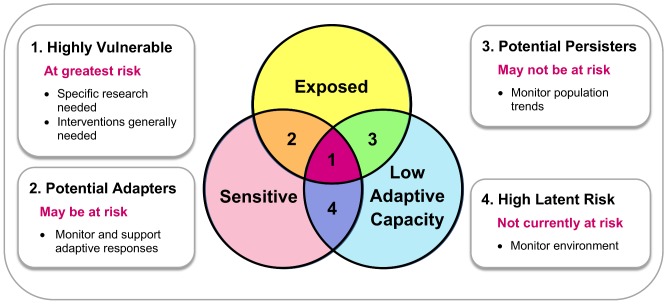
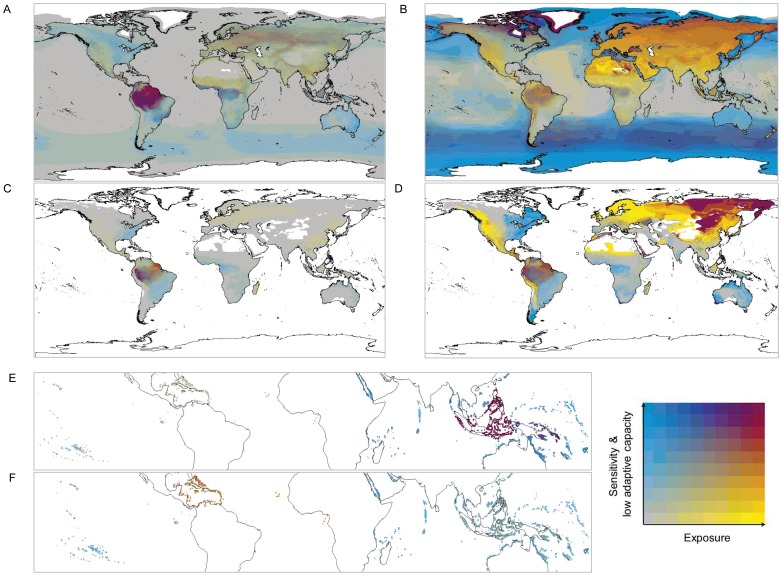
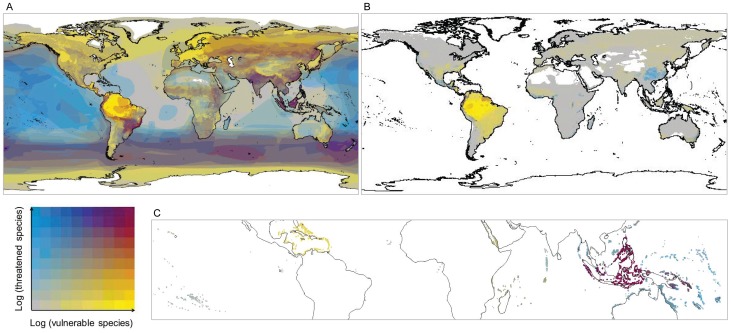
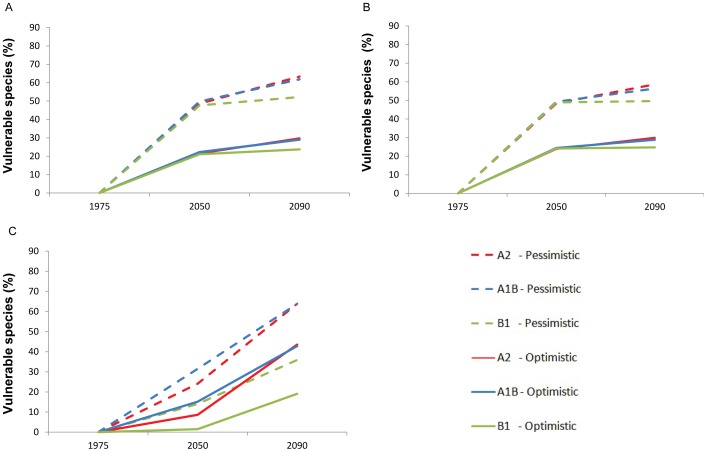
Climate change will have far-reaching impacts on biodiversity, including increasing extinction rates. Current approaches to quantifying such impacts focus on measuring exposure to climatic change and largely ignore the biological differences between species that may significantly increase or reduce their vulnerability. To address this, we present a framework for assessing three dimensions of climate change vulnerability, namely sensitivity, exposure and adaptive capacity; this draws on species' biological traits and their modeled exposure to projected climatic changes. In the largest such assessment to date, we applied this approach to each of the world's birds, amphibians and corals (16,857 species). The resulting assessments identify the species with greatest relative vulnerability to climate change and the geographic areas in which they are concentrated, including the Amazon basin for amphibians and birds, and the central Indo-west Pacific (Coral Triangle) for corals. We found that high concentration areas for species with traits conferring highest sensitivity and lowest adaptive capacity differ from those of highly exposed species, and we identify areas where exposure-based assessments alone may over or under-estimate climate change impacts. We found that 608-851 bird (6-9%), 670-933 amphibian (11-15%), and 47-73 coral species (6-9%) are both highly climate change vulnerable and already threatened with extinction on the IUCN Red List. The remaining highly climate change vulnerable species represent new priorities for conservation. Fewer species are highly climate change vulnerable under lower IPCC SRES emissions scenarios, indicating that reducing greenhouse emissions will reduce climate change driven extinctions. Our study answers the growing call for a more biologically and ecologically inclusive approach to assessing climate change vulnerability. By facilitating independent assessment of the three dimensions of climate change vulnerability, our approach can be used to devise species and area-specific conservation interventions and indices. The priorities we identify will strengthen global strategies to mitigate climate change impacts.
Overview
The claims and statistics of this paper haven’t been checked yet.
Free: it reads the open-access text and checks the first 5 claims that cite a source we can check. Create a free account to check every claim.
Integrity signals
Registry
Cites
Statistics
Figures
Verification
Claims the paper makes
The claims and statistics of this paper haven’t been checked yet.
Free: it reads the open-access text and checks the first 5 claims that cite a source we can check. Create a free account to check every claim.
Claims other papers make about this one
Each is checked against this paper’s own text: does it say what the citing paper says it does?
The source backs part of the claim, not all of it — or backs it for a different population, condition or comparison.
In the citing paper
“Climate change will become an increasingly dominant problem in the biodiversity crisis 3 .”
From Biodiversity: The ravages of guns, nets and bulldozers (2016) · cites this paper as [3]
Experimental — accuracy not yet measuredThe cited source says what the claim attributes to it.
In the citing paper
“Finally, the balance of threats driving extinction risk for many of the world's species will change, even over the next few decades 3 .”
From Biodiversity: The ravages of guns, nets and bulldozers (2016) · cites this paper as [3]
Self-check
Percentages, sums and reported differences re-computed from the paper’s own numbers.
The self-check needs the paper’s full text.
Citations
Cites
Very high resolution interpolated climate surfaces for global land areas
Hijmans, R. J., Cameron, S. E., Parra, J. L., Jones, P. G., & Jarvis, A. (2005) · International Journal of Climatology · doi:10.1002/joc.1276 · Cited by 19,825
Global Biodiversity Scenarios for the Year 2100
Sala, O. E., Stuart Chapin, F., III, Armesto, J. J., Berlow, E., Bloomfield, J., Dirzo, R., Huber-Sanwald, E., Huenneke, L. F., Jackson, R. B., et al. (2000) · Science · doi:10.1126/science.287.5459.1770 · Cited by 9,280 · cited 1×
“However, anthropogenic climate change is becoming a significant new threat [4–7].”
BackgroundClimate Change 2007: Impacts, Adaptation and Vulnerability
Parry, M. L., Canziani, O. F., Palutikof, J. P., van der Linden, P., & Hanson, C. (2007) · Centre for Environmental Data Analysis Digital Repository (Centre for Environmental Data Analysis) · doi:10.5281/zenodo.7356334 · Cited by 9,136
Extinction risk from climate change
Thomas, C. D., Cameron, A., Green, R. E., Bakkenes, M., Beaumont, L. J., Collingham, Y. C., Erasmus, B. F. N., de Siqueira, M. F., Grainger, A., Hannah, L., et al. (2004) · Nature · doi:10.1038/nature02121 · Cited by 7,695
Predicting species distribution: offering more than simple habitat models
Guisan, A., & Thuiller, W. (2005) · Ecology Letters · doi:10.1111/j.1461-0248.2005.00792.x · Cited by 6,587 · cited 1×
“These and most other similar large-scale assessments are based primarily on species distribution (bioclimatic envelope) models, which use correlations between species’ observed distributions and climate variables to predict their distributions and hence their extinction risk under future climate scenarios [9–11].”
BackgroundSpecial report on emissions scenarios
Nakićenović, N., Alcamo, J., Davis, G. R., de Vries, B. J. M., Fenhann, J. V., Gaffin, S., Gregory, K., Grübler, A., Jung, T. Y., Kram, T., et al. (2000) · Cited by 6,262
Has the Earth’s sixth mass extinction already arrived?
Barnosky, A. D., Matzke, N., Tomiya, S., Wogan, G. O. U., Swartz, B., Quental, T. B., Marshall, C., McGuire, J. L., Lindsey, E. L., Maguire, K. C., et al. (2011) · Nature · doi:10.1038/nature09678 · Cited by 4,400 · cited 1×
“Vertebrate extinction rates are currently estimated to be 10–100 times greater than background [1], largely due to the effects of habitat loss, over-exploitation and invasive species [2,3].”
BackgroundPearson, R. G., & Dawson, T. P. (2003) · Global Ecology and Biogeography · doi:10.1046/j.1466-822x.2003.00042.x · Cited by 4,252
Impacts of climate warming on terrestrial ectotherms across latitude
Deutsch, C. A., Tewksbury, J. J., Huey, R. B., Sheldon, K. S., Ghalambor, C. K., Haak, D. C., & Martin, P. R. (2008) · Proceedings of the National Academy of Sciences · doi:10.1073/pnas.0709472105 · Cited by 3,840 · cited 1×
“ranges are particularly vulnerable to climate [16].”
Scenarios for Global Biodiversity in the 21st Century
Pereira, H. M., Leadley, P. W., Proença, V., Alkemade, R., Scharlemann, J. P. W., Fernandez-Manjarrés, J. F., Araújo, M. B., Balvanera, P., Biggs, R., Cheung, W. W. L., et al. (2010) · Science · doi:10.1126/science.1196624 · Cited by 2,077 · cited 1×
“However, anthropogenic climate change is becoming a significant new threat [4–7].”
BackgroundSelf-citation
Cited by
Items 601–700 of 989
Ferreira, A. M. V., Marajó, L., Matoso, D. A., Ribeiro, L. B., & Feldberg, E. (2019) · Cytogenetic and Genome Research · doi:10.1159/000502926 · Cited by 7
“…@ gmail.com © 2019 S. Karger AG, Basel www.karger.com/cgr Viana Ferreira/Marajó/Matoso/Ribeiro/ Feldberg Cytogenet Genome Res 2019;159:39–47 DOI: 10.1159/000502926 40 in temperature, with 6–9% of the bird species likely to become extinct, and 11–15% of the amphibian species [Foden et al., 2013].”
BackgroundInfluentialNiche–trait relationships at individual and population level in three co‐occurring passerine species
Shaner, P. L., Chen, Y., & Hsu, Y. (2021) · Ecology and Evolution · doi:10.1002/ece3.7569 · Cited by 8
“Trait- based research is a powerful approach to explore complex ecoevolutionary dynamics (e.g., Adler et al., 2013; Foden et al., 2013; Luck et al., 2012; Pigot et al., 2020).”
BackgroundDenryter, K., & Fischer, J. K. (2022) · Animal Conservation · doi:10.1111/acv.12776 · Cited by 8
“…effects of climate change on species persistence, it is important to understand which species are likely to be adversely affected (i.e. vulnerable; Oppenheimer et al., 2014) and in what ways (Williams et al., 2008; Glick et al., 2011; Foden et al., 2013; Pacifici et al., 2015; Young et al., 2015).”
BackgroundTrew, B. T., Lees, A. C., Edwards, D. P., Early, R., & Maclean, I. M. D. (2024) · Conservation Letters · doi:10.1111/conl.13050 · Cited by 9
“Consequently, we posit that evaluating temperature novelty is a more reliable measure of climate vulnerability than simply the magnitude of temperature changes (Foden et al., 2013).”
Barve, S., Bakley, T. D., Tringali, A., Fitzpatrick, J. W., & Bowman, R. (2024) · The Auk · doi:10.1093/ornithology/ukae053 · Cited by 6
“Our results highlight that even protected populations of threatened species are not buffered against the consequences of climate warming (Du Plessis et al. 2012, Foden et al. 2013, Culp et al. 2017, Ridley et al. 2021, Cunningham et al. 2021).”
Identifying species traits that predict vulnerability to climate change
Fordham, D. A. (2024) · Cambridge Prisms Extinction · doi:10.1017/ext.2024.24 · Cited by 11
Forester, B. R., Cicchino, A. S., Shah, A. A., Mudd, A. B., Anderson, E. C., Bredeson, J. V., Crawford, A. J., Dunham, J. B., Ghalambor, C. K., Landguth, E. L., et al. (2025) · Molecular Ecology · doi:10.1111/mec.17651 · Cited by 9
How biodiversity conservation adapts to climate change: from a cross-spatial scale framework
Xu, M., Ji-Xia, L., Luan, S., & Qianming, Z. (2025) · Frontiers in Climate · doi:10.3389/fclim.2025.1646318 · Cited by 11
Roach, N. S., Castellanos, A. A., & Lacher, T. E. (2024) · Tropical Conservation Science · doi:10.1177/19400829231225236 · Cited by 7
“Our procedure closely follows the published recommendations for conducting CCVAs (Foden et al., 2013, 2019; IUCN Species Survival Commission, 2016; Thurman et al., 2020) and we outline all procedures below.”
InfluentialSilknetter, S., Benson, A. L., Smith, J. A., & Mims, M. C. (2024) · Ecosphere · doi:10.1002/ecs2.4779 · Cited by 6
Labadie, G., Cadieux, P., Moreau, L., Bognounou, F., Thiffault, É., Cyr, D., Boulanger, Y., Stralberg, D., Grondin, P., & Tremblay, J. A. (2024) · PLOS Climate · doi:10.1371/journal.pclm.0000293 · Cited by 8
A collaborative climate vulnerability assessment of California marine fishery species
Frawley, T. H., Provost, M., Bellquist, L. F., Ben‐Aderet, N. J., Blondin, H. E., Brodie, S. J., Buil, M. P., Jacox, M. G., Bograd, S. J., Hazen, E. L., et al. (2025) · PLOS Climate · doi:10.1371/journal.pclm.0000574 · Cited by 6
Sun, B., Lu, H., Cheng, K., Liu, W., Han, X., Cui, L., Li, X., Li, S., Hao, X., Fan, L., et al. (2025) · Advanced Science · doi:10.1002/advs.202414185 · Cited by 6
Occurrence data may provide unreliable thermal preferences and breadth of species
Villén‐Pérez, S., & Carrascal, L. M. (2015) · Current Zoology · doi:10.1093/czoolo/61.6.972 · Cited by 6
“The environmental tolerance or breadth of organisms is a cornerstone in ecology, enabling us to understand the rarity of species, their vulnerability to extinction and to predict how they may respond to potential future climate change (Foden et al., 2013; Slatyer et al., 2013).”
BackgroundReducing uncertainty in climate change responses of inland fishes: A decision‐path approach
Lynch, A. J., Myers, B. J. E., Wong, J. P., Chu, C., Tingley, R. W., Falke, J. A., Kwak, T. J., Paukert, C. P., & Krabbenhoft, T. J. (2022) · Conservation Science and Practice · doi:10.1111/csp2.12724 · Cited by 6
Implications of exceeding the Paris Agreement for mammalian biodiversity
Angarita, V. Y. M., Maiorano, L., Dragonetti, C., & Marco, M. D. (2023) · Conservation Science and Practice · doi:10.1111/csp2.12889 · Cited by 7
“Many studies have investigated species exposure to future climate change (e.g., Newbold, 2018; Trisos et al., 2020; Warren et al., 2018), but species sensitivity to it (i.e., their ability to tolerate climatic variations) remains only partly understood (Foden et al., 2013; Pacifici et al., 2015).”
BackgroundMusters, C. J. M., & van Bodegom, P. M. (2018) · Biological Conservation · doi:10.1016/j.biocon.2018.01.002 · Cited by 6
“Although climate change is a well-recognized cause of projected population changes and presents changes in phenology and range shifts (e.g., Visser et al., 1998; Foden et al., 2013; Elmhagen et al., 2015b; Kullberg et al., 2015; Kerr et al., 2015; Hovick et al., 2016), it was in the MEA (2005) regarded as having a low…”
BackgroundStatus review report : humphead wrasse (Cheilinus undulatus)
Graham, K. S., Boggs, C. H., DeMartini, E. E., Schroeder, R. E., & Trianni, M. S. (2016) · NOAA Institutional Repository · doi:10.7289/v55x26zr · Cited by 6
Assessing the evolutionary persistence of ecological relationships: A review and preview
Hecht, L., Thompson, P. C., & Rosenthal, B. M. (2020) · Infection Genetics and Evolution · doi:10.1016/j.meegid.2020.104441 · Cited by 8
“Species least capable of withstanding or escaping environmental extremes should be especially vulnerable to habitat loss and climate change (Foden et al., 2013).”
Measuring the Efficiency of Alternative Biodiversity Monitoring Sampling Strategies
Hernán, G., Dubel, A. K., Caselle, J. E., Kushner, D. J., Miller, R. J., Reed, D. C., Sprague, J. L., & Rassweiler, A. (2022) · Frontiers in Marine Science · doi:10.3389/fmars.2022.820790 · Cited by 6
“…sometimes be invasive or indicators of ecosystem change since they can be more sensitive to perturbations than common species as has been pointed out for Frontiers in Marine Science | www.frontiersin.org 7 February 2022 | Volume 9 | Article 820790 birds, amphibians and corals (Foden et al., 2013).”
BackgroundFuture Climate Change Will Have a Positive Effect on Populus davidiana in China
Li, J., Guan, L., Lu, Q., Zhang, Y., Li, G., & Du, S. (2019) · Forests · doi:10.3390/f10121120 · Cited by 6
Accounting for nonlinear responses to traits improves range shift predictions
Cannistra, A. F., & Buckley, L. B. (2024) · Ecosphere · doi:10.1002/ecs2.4860 · Cited by 7
Traits, Threats, and Popularity Explain Extinction Risk of Birds Globally
Serrano, J. D. A., Iversen, L. L., & Pollock, L. J. (2025) · Global Ecology and Biogeography · doi:10.1111/geb.70087 · Cited by 8
Microclimate Vulnerability Under Coupled Effects of Changing Climate and Forest Structure
Lumbsden-Pinto, J., Green, T., Schwager, K., & Dovčiak, M. (2025) · Agricultural and Forest Meteorology · doi:10.1016/j.agrformet.2025.110853 · Cited by 6
Uncertainty in projected impacts of climate change on biodiversity — a focus on African vertebrates
Garcia, R. A. (2015) · Frontiers of Biogeography · doi:10.21425/f57124114 · Cited by 5
Tuckett, Q. M., Hill, J. E., Everett, K. M., Goodman, C. M., Wooley, E. S., Donahou, A. D., Lapham, L. N., Buckman, K. M., Johnson, S. A., & Romagosa, C. M. (2024) · Journal of Thermal Biology · doi:10.1016/j.jtherbio.2024.103890 · Cited by 5
Wang, T., Xu, W., Comes, H., Zhang, X., Chen, J., Li, Y., & Qiu, Y. (2025) · Journal of Biogeography · doi:10.1111/jbi.15098 · Cited by 7
Zanco, B., Morimoto, J., Cockerell, F. E., Mirth, C. K., & Sgrò, C. M. (2025) · Journal of Insect Physiology · doi:10.1016/j.jinsphys.2025.104815 · Cited by 7
Assessing the vulnerability of wild bird populations to high pathogenicity avian influenza
Pearce‐Higgins, J. W., Clewley, G. D., Bolton, M., Banyard, A. C., Falchieri, M., Lindley, P. J., & Atkinson, P. W. (2025) · Bird Study · doi:10.1080/00063657.2025.2494164 · Cited by 5
“Here, we compare the ability of two different trait-based approaches from the vulnerability assessment literature (Foden et al. 2013, 2019, Certain et al. 2015), to assess avian vulnerability to HPAI, to evaluate the sensitivity of the outputs with respect to the assumptions made.”
Integrating climate‐change exposure and refugia into landscape planning: A practical guide
Stralberg, D., Lewis, D. W., Stolar, J., Kehm, G., Cosgrove, C. F., Morgan, D. G., Nelson, E. V., Kuntzemann, C. E., Sánchez, Á. R., Sang, Z., et al. (2025) · Conservation Science and Practice · doi:10.1111/csp2.70171 · Cited by 11
“Alternatively, species climate-change vulnerability assessment (CCVA) frameworks may be used to assess risk based on climate-change exposure, sensitivity, and adaptive capacity (Foden et al., 2013).”
Decoupled land–sea biodiversity trends
Comte, L., & Lenoir, J. (2020) · Nature Ecology & Evolution · doi:10.1038/s41559-020-1191-9 · Cited by 5
Development of a framework to predict the effects of climate change on birds
مقدم, ز. ر., Farashi, A., & Rashki, A. (2021) · Ecological Complexity · doi:10.1016/j.ecocom.2021.100952 · Cited by 6
Survival of climate warming through niche shifts: Evidence from frogs on tropical islands
Labisko, J., Bunbury, N., Griffiths, R. A., Groombridge, J. J., Chong‐Seng, L., Bradfield, K. S., & Streicher, J. W. (2021) · Global Change Biology · doi:10.1111/gcb.15997 · Cited by 6
“…of anthropogenic climate change may prevent many from tracking their preferred climate envelope (Collins & Storfer, 2003; Parmesan, 2006; Parra- Olea et al., 2005), with tropical and island species thought to be especially vulnerable (Cang et al., 2016; Foden et al., 2013; Jezkova & Wiens, 2016).”
BackgroundConservation of marine birds: Biosecurity, control, and eradication of invasive species threats
Holmes, N. D., Buxton, R. T., Jones, H. P., Sánchez, F. M., Oppel, S., Russell, J. C., Spatz, D. R., & Samaniego‐Herrera, A. (2022) · Elsevier eBooks · doi:10.1016/b978-0-323-88539-3.00019-4 · Cited by 6
Dias, R. (2023) · Seven Editora eBooks · doi:10.56238/alookdevelopv1-176 · Cited by 7
A trait-based assessment of southern African arid-zone birds' vulnerability to climate change
Payne, S. L., Cunningham, S. J., Howes, C. G., & McKechnie, A. E. (2023) · Biological Conservation · doi:10.1016/j.biocon.2023.110338 · Cited by 6
Species-specific traits affect bird species’ susceptibility to global change
Rivas‐Salvador, J., & Reif, J. (2023) · Die Naturwissenschaften · doi:10.1007/s00114-023-01883-4 · Cited by 9
“This is the case for reef corals (Raja et al. 2021), amphibians (Foden et al. 2013), reptiles (Pearson et al. 2014), birds (Ducatez et al. 2020), and terrestrial vertebrates (Munstermann et al. 2022).”
BackgroundMellin, C., Stuart‐Smith, R. D., Heather, F. J., Oh, E. S., Turak, E., & Edgar, G. J. (2024) · Proceedings of the Royal Society B Biological Sciences · doi:10.1098/rspb.2024.1538 · Cited by 7
“Indeed, coral life history strategies (e.g. competitive, weedy and stress-tolerant [19]) can help understand and predict how different coral taxa respond to heat stress, although these strategies remain to be quantified for most coral taxa of the world (but see e.g. [20]).”
Self-citationNarvaez, J. M., & Bolívar-G, W. (2016) · South American Journal of Herpetology · doi:10.2994/sajh-d-15-00015.1 · Cited by 5
Quantifying the effects of Anthropocene activities on Mexican endemic amphibians
Camarena‐Hernández, A., Ochoa‐Ochoa, L. M., & Yáñez‐Arenas, C. (2023) · Animal Conservation · doi:10.1111/acv.12918 · Cited by 7
Jiménez, A. G., Guisan, A., Broennimann, O., Gaboriau, T., & Salamin, N. (2026) · Ecological Monographs · doi:10.1002/ecm.70062 · Cited by 5
Glass, A., Caven, A. J., Kim, D., Sutton, M. O., & Arcilla, N. (2020) · Avian Conservation and Ecology · doi:10.5751/ace-01515-150104 · Cited by 7
Lou, Y., Kapfer, J., Smith, P., Liu, Y., Jiang, M., Lü, X., & Ashcroft, M. B. (2020) · Ecological Indicators · doi:10.1016/j.ecolind.2020.106639 · Cited by 5
Favorable stopover sites and fuel load dynamics of spring bird migrants under a changing climate
Kassara, C., Barboutis, C., & Bounas, A. (2024) · Climatic Change · doi:10.1007/s10584-024-03829-9 · Cited by 4
“Nevertheless, the complexity of their annual cycle renders them particularly sensitive to climate-induced changes (Foden et al. 2013), and such vulnerability becomes even more apparent among long-distance migrants (Both et al. 2010).”
Linking species traits and vulnerability indicators in European Odonata
Nicvert, L., Knijf, G. D., Bowler, D. E., Bried, J. T., Coulon, A., Engel, T., van Grunsven, R. H. A., Jeliazkov, A., Lamouille‐Hébert, M., Jeanmougin, M., et al. (2026) · Biological Conservation · doi:10.1016/j.biocon.2026.111786 · Cited by 4
Responses in the breeding parameters of the collared flycatcher to the changing climate
Laczi, M., Sarkadi, F., Herényi, M., Nagy, G., Hegyi, G., Jablonszky, M., Könczey, R., Krenhardt, K., Markó, G., Rosivall, B., et al. (2024) · The Science of The Total Environment · doi:10.1016/j.scitotenv.2024.171945 · Cited by 5
Castelo, S., Bussolotti, V. M., Pellegrini, I. U., Ferreira, F., Ismail, N. A., Poggi, F., & Amado, M. (2024) · Climate · doi:10.3390/cli12100154 · Cited by 5
Hot topics in biodiversity and climate change research
Brook, B. W., & Fordham, D. A. (2015) · F1000Research · doi:10.12688/f1000research.6508.1 · Cited by 5
Johan, O., Yulius, Y., Salim, H. L., Ardi, I., & Abrar, M. (2019) · Jurnal Segara · doi:10.15578/segara.v15i2.6592 · Cited by 4
Climate Change Impact on Eco-biology and Socio-economy—A Concise Discussion
Chatterjee, S., & Tandon, A. (2020) · Environmental science and engineering · doi:10.1007/978-3-030-32463-6_25 · Cited by 5
Rodriguez, L. J., Barbosa, O. A., Azat, C., Alvarado‐Rybak, M., Correa, C., Méndez, M. A., Moreno‐Gómez, F. N., Rabanal, F. E., Vidal, M. A., Velásquez, N. A., et al. (2022) · Biodiversity and Conservation · doi:10.1007/s10531-022-02444-3 · Cited by 7
Bristow, L. V., Grundel, R., Dzurisin, J. D. K., Wu, G. C., Li, Y., Hildreth, A. D., & Hellmann, J. J. (2023) · Journal of Insect Conservation · doi:10.1007/s10841-023-00518-3 · Cited by 9
“To ensure effective conservation, it is essential to evaluate vulnerabilities, devise strategies to mitigate them, and allocate conservation efforts accordingly (Foden et al. 2013; Fischlin et al. 2007; Harris et al. 2006; Liebesman and Peterson 2009; Parmesan and Yohe 2003).”
Measuring Lake Vulnerability to Biodiversity Loss: An Integrated Index (Ivcla)
Rocha, B. S., Jamoneau, A., Logez, M., Laplace-Treyture, C., Reynaud, N., & Argillier, C. (2023) · The Science of The Total Environment · doi:10.1016/j.scitotenv.2023.168205 · Cited by 7
Moore, C. E., & Mims, M. C. (2024) · Conservation Genetics · doi:10.1007/s10592-024-01602-0 · Cited by 5
“Amphibians are also among the most threatened taxa globally, with many factors exacerbating population declines including habitat alteration and climate change (Foden et al. 2013 ; Stuart et al. 2004 ; Reid et al. 2019 ).”
Banda, L. B., Dejene, S. W., Mzumara, T. I., McCarthy, C., & Pangapanga‐Phiri, I. (2024) · Ecology and Evolution · doi:10.1002/ece3.11283 · Cited by 3
“Furthermore, other factors such as population, dispersal, and physiological and evolutionary characteristics can also affect species under climate change conditions (Foden et al., 2013; Thuiller et al., 2005 ).”
BackgroundHamilton, D. A., Singleton, R., & Joslin, J. D. (2017) · Biotropica · doi:10.1111/btp.12502 · Cited by 4
“…of food resources, there are challenges posed by the unknown long-term consequences of climate change, fragmentation, and other anthropogenic threats (Pounds et al. 1999, Hughes 2000, Rodenhouse et al. 2008), especially for avian species in tropical regions (Foden et al. 2013, Bregman et al. 2014).”
BackgroundCambios en la distribución altitudinal de las aves de Río Macho, Cartago, Costa Rica
Ramírez-Alán, Ó., Vargas-Masís, R., & Cordero, R. A. (2015) · El Hornero · doi:10.56178/eh.v30i2.583 · Cited by 4
Rain water not in sewers but in the garden – the study case of the Netherlands and Polish experience
Berg, A. B., Jeznach, J., Adamcová, D., Brtnický, M., & Radziemska, M. (2018) · Acta Scientiarum Polonorum Architectura · doi:10.22630/aspa.2018.17.1.8 · Cited by 4
Consequences of climatic change for distributions
Huntley, B. (2019) · Oxford University Press eBooks · doi:10.1093/oso/9780198824268.003.0013 · Cited by 6
de Jong, Y. A., & Butynski, T. M. (2021) · American Journal of Primatology · doi:10.1002/ajp.23316 · Cited by 4
Pompe, S., Hanspach, J., Badeck, F., Klotz, S., Bruelheide, H., & Kühn, I. (2014) · Frontiers of Biogeography · doi:10.21425/f56322502 · Cited by 4
Scheun, J., & Nowack, J. (2023) · International Journal of Primatology · doi:10.1007/s10764-023-00373-8 · Cited by 6
“Several studies have shown that feeding specialists, who depend on specific resources and are unable to use additional food sources, are most at risk of extinction should these primary sources be unavailable (Foden et al., 2013; Garnett et al., 2013; Sánchez-Bayo & Wyckhuys, 2021).”
Germano, J., Earl, R., Tocher, M., Pearce, P. R., & Christie, J. (2023) · New Zealand Journal of Ecology · doi:10.20417/nzjecol.47.3535 · Cited by 4
Variation in Flatwoods Salamander Survival Is Unrelated to Temperature and Rainfall
Brooks, G. C., Gorman, T. A., & Haas, C. A. (2024) · Ichthyology & Herpetology · doi:10.1643/h2020131 · Cited by 4
“Regardless of the mechanism, there is much concern regarding the impact of climate change on amphibian populations (Means et al., 1996; Blaustein et al., 2001, 2010; Corn, 2005; Lawler et al., 2010; Shoo et al., 2011; Foden et al., 2013; Yiming et al., 2013).”
BackgroundFaunal Diversity in Chaparral Ecosystems
Jennings, M. K. (2018) · Springer series on environmental management · doi:10.1007/978-3-319-68303-4_3 · Cited by 6
Leite, J. V., Campos, J. C., Gangkofner, U., Vale, C. G., & Brito, J. C. (2019) · Journal of Arid Environments · doi:10.1016/j.jaridenv.2019.03.005 · Cited by 5
Graciá, E., Rodríguez‐Caro, R. C., Jiménez‐Franco, M. V., Sanz‐Aguilar, A., Botella, F., Anadón, J. D., García-García, Á. L., Wiegand, T., & Giménez, A. (2023) · Ecosistemas · doi:10.7818/ecos.2454 · Cited by 4
Hof, C., Dehling, D. M., Bonn, A., Burgess, N. D., Eigenbrod, F., Harfoot, M., Hickler, T., Jetz, W., Marquard, E., Pereira, H. M., et al. (2016) · Frontiers of Biogeography · doi:10.21425/f5fbg28888 · Cited by 8
“Trait data has similarly seen an increase in digital availability, thanks to recent trait databases for animals (Jones et al. 2009, Foden et al. 2013, Wilman et al. 2014) or plants (Kattge et al. 2011).”
BackgroundPrimer relevamiento de la riqueza algal de una laguna de montaña del Noroeste Argentino
Taboada, M. D. L. Á., Miranda, M. J., & Gavriloff, I. J. C. (2020) · Bonplandia · doi:10.30972/bon.3014589 · Cited by 4
Martinich, J. A., DeAngelo, B. J., Diaz, D., Ekwurzel, B., Franco, G., Frisch, C., MCFARLAND, J. R., & O’Neill, B. C. (2018) · doi:10.7930/nca4.2018.ch29 · Cited by 6
The interacting effects of climate and land-use/land-cover changes on ecological communitiesPreprint
Thompson, K. L., Chase, J. M., Remelgado, R., & Meyer, C. (2023) · bioRxiv (Cold Spring Harbor Laboratory) · doi:10.1101/2023.12.07.570587 · Cited by 4
Lacy, R. C., Kovacs, K. M., Lydersen, C., & Aars, J. (2024) · Frontiers in Conservation Science · doi:10.3389/fcosc.2024.1439386 · Cited by 3
Survival, rarity, and extinction in tropical stony corals
Wilson, B., & Edmunds, P. J. (2025) · Conservation Biology · doi:10.1111/cobi.70200 · Cited by 3
“Tolerance of extreme environmental conditions, such as those involving temperature, turbidity, and salinity, and traits that confer reproductive success may be important drivers of coral rarity (DeVantier & Turak, 2017; Foden et al., 2013).”
Biodiversity science and policy need more model intercomparisons
Zurell, D., Albert, C. H., Bocedi, G., Briscoe, N. J., Buckley, L. B., Gascoigne, S. J. L., Gonzalez, A., Guillera‐Arroita, G., Isaac, N. J. B., Karger, D. N., et al. (2026) · Nature Reviews Biodiversity · doi:10.1038/s44358-026-00134-4 · Cited by 10
“…approaches for assessing species-level extinction risks include vulnerability assessments based on species’ traits and other characteristics 66–68 , demographic models such as population viability analysis 69,70 and species distribution models that estimate habitat suitability of a given…”
Zhang, S., Han, Q., Liu, S., Wang, Y., & Jin, L. (2026) · Journal of Environmental Management · doi:10.1016/j.jenvman.2026.128928 · Cited by 4
Khalaf, S. M. H., Gaafar, A.-R. Z., Wainwright, M., & Taha, M. (2026) · Scientific Reports · doi:10.1038/s41598-026-48678-x · Cited by 3
Lettink, M., & Monks, J. M. (2018) · New Zealand Journal of Ecology · doi:10.20417/nzjecol.43.6 · Cited by 3
“%) and amphibians (72%; Foden et al. 2013).”
BackgroundResultA review of the conservation status of birds in the Guineo‐Congolian forest of Africa
Dean, W. R. (2021) · Journal of Field Ornithology · doi:10.1111/jofo.12388 · Cited by 3
Trophic guilds of marine predators in the California Current Large Marine Ecosystem
Bizzarro, J. J., Field, J. C., Santora, J. A., Curtis, K. A., & Wells, B. K. (2023) · Frontiers in Marine Science · doi:10.3389/fmars.2023.1195000 · Cited by 3
Phylogenomics and comparative genomic perspective on the avian radiation
Chen, G., Xie, Y., & Zhang, G. (2025) · Nature Reviews Biodiversity · doi:10.1038/s44358-025-00062-9 · Cited by 6
“Importantly, the ways in which species cope with or are affected by climate change can vary substantially, even among closely related or sympatric species, owing to differences in their biological traits and ecological roles 272,273 .”
Assessing gecko susceptibility to international wildlife trade: A novel trait-based framework
Cash, L., Gumbs, R., & Devenish‐Nelson, E. S. (2025) · Biological Conservation · doi:10.1016/j.biocon.2025.111397 · Cited by 4
“Aligning WTSF's “ exposure ” metric with CCVA's “ magnitude of impact ” (Foden et al., 2013), by incorporating trade intensity, would enhance its utility — though this is constrained by poor data on legal and illegal trade (Marshall et al., 2020; Esmail et al., 2020).”
Conservation outcomes of dietary transitions across different values of nature
von Jeetze, P., Weindl, I., Johnson, J. A., Borrelli, P., Panagos, P., Meyer, T., Humpenöder, F., Sauer, P., Dietrich, J. P., Lotze‐Campen, H., et al. (2025) · Nature Sustainability · doi:10.1038/s41893-025-01595-9 · Cited by 12
Gendreau, Y., Lachance, A., Ricard, M., Gilbert, H., Casajus, N., & Berteaux, D. (2017) · Le Naturaliste canadien · doi:10.7202/1042011ar · Cited by 3
Persistence of remnant boreal plants in the Chiricahua Mountains, southern Arizona
Fescenko, A., Downer, J. A., & Fescenko, I. (2020) · Global Ecology and Conservation · doi:10.1016/j.gecco.2020.e01131 · Cited by 3
Åkesson, A. (2022) · Linköping studies in science and technology. Dissertations · doi:10.3384/9789179292027 · Cited by 4
Climate Change Vulnerability Assessment for the Rondo Dwarf Galago in Coastal Forests, Tanzania
Haji, M., & Bakuza, J. S. (2022) · Environmental Management · doi:10.1007/s00267-022-01605-y · Cited by 5
“However, organisms that experience narrow ranges of temperature variation are likely to suffer severely in the event of extreme temperature changes (variation) (Foden et al. 2013).”
BackgroundGray, P., Garcia, C., Robinson, C., & Bremner, J. (2022) · ICES Journal of Marine Science · doi:10.1093/icesjms/fsac146 · Cited by 3
The vulnerability of Ireland's freshwater fish to climate change
Barry, J., Radinger, J., Connor, L., Coyne, J., Kelly, S., & Kelly, F. L. (2022) · Fisheries Management and Ecology · doi:10.1111/fme.12606 · Cited by 6
Co-variation of fish and coral traits in relation to habitat type and fishery status
Anderson, L., McLean, M. J., Houk, P., Graham, C., Kanemoto, K., Terk, E., Mcleod, E., & Beger, M. (2022) · Coral Reefs · doi:10.1007/s00338-022-02312-0 · Cited by 3
“Coral traits were growth form, larval development mode, growth rate (mm/year), lower depth limit (m), and bleaching susceptibility traits derived from The Coral Trait Database and bleaching vulnerability assessments (Madin et al. 2016; Foden et al. 2013).”
MethodEffect of climate change and deforestation on populations of Penelope pileata (Galliformes-Cracidae)
Ferreira, E. B. L., Gonçalves, G. S. R., de Moraes, K. F., Matotele, H. R., & Santos, M. P. D. (2024) · Journal für Ornithologie · doi:10.1007/s10336-024-02155-2 · Cited by 3
“It is acknowledged that the effects of climate change on species distribution are undoubtedly related to their environmental tolerances (Foden et al. 2013).”
Iannella, M., Cerasoli, F., Lunghi, E., Console, G., Biondi, M., & Sillero, N. (2024) · Journal of Biogeography · doi:10.1111/jbi.15064 · Cited by 3
“…conditions (Lanza et al. 2006; Ficetola et al. 2018) which are possibly disrupted by climate change, a strategy of species-(or taxon-) specific assessment (Foden et al. 2013) and subsequent management (Pabijan et al. 2020) seems the only way to avoid local, when not complete, extinctions.”
Impact of global change on the distribution of mountain mammals and birds
Dragonetti, C., Thuiller, W., Guéguen, M., Renaud, J., Visconti, P., & Marco, M. D. (2026) · Conservation Biology · doi:10.1111/cobi.70339 · Cited by 5
European Breeding Bird Declines Associated With Narrower Climatic Niches
Zalewska, K., Gilroy, J. J., Catry, I., Atkinson, P. W., Klvaňová, A., & Franco, A. M. A. (2025) · Journal of Biogeography · doi:10.1111/jbi.15127 · Cited by 4
“In turn, biodiversity conservation planning needs to consider the level of exposure to climate change, and species' ability to tolerate and adapt to changing climatic conditions, and the extent to which these can be predicted from trait-related susceptibilities (Foden et al. 2013).”
Iturralde‐Pólit, P., Araya‐Salas, M., Goerlitz, H. R., & Chaverri, G. (2025) · Journal of Experimental Biology · doi:10.1242/jeb.251076 · Cited by 3
“…in potential distributions of local and invasive species (Anderson, 2013; Crespo – Pérez et al., 2015; Gallardo et al., 2017; Iwamura et al., 2020; Pecl et al., 2017; Peterson et al., 2018), species phenology (Parmesan, 2006) and species vulnerability (Foden et al., 2013; Rahbari et al., 2017).”
Amphibians and Reptiles of Venezuelan Guayana: Diversity, Biogeography and Conservation
Señaris, J. C., & Rojas‐Runjaic, F. J. M. (2020) · Fascinating life sciences · doi:10.1007/978-3-030-31167-4_22 · Cited by 6
Richards, C., Cooke, R., Bowler, D. E., Boerder, K., & Bates, A. E. (2022) · Avian Conservation and Ecology · doi:10.5751/ace-02033-170134 · Cited by 4
Grey, K.-A., Foden, W., & Midgley, G. F. (2022) · Journal of Experimental Botany · doi:10.1093/jxb/erac343 · Cited by 3
Self-citationModes of climate variability and associated bird communities in India
Mehta, A. S., & Wilby, R. L. (2018) · Area · doi:10.1111/area.12412 · Cited by 3
“Birds are sensitive to climate variability and change (Foden et al. 2013).”
BackgroundVulnerability and fragility risk indices for non-renewable resources
Miller, A. E., Steele, N., & Tobin, B. W. (2018) · Environmental Monitoring and Assessment · doi:10.1007/s10661-018-6749-5 · Cited by 3
Pollom, R. A., Cheok, J., Pacoureau, N., Gledhill, K. S., Kyne, P. M., Ebert, D. A., Jabado, R. W., Herman, K. B., Bennett, R., Silva, C., et al. (2021) · Research Square · doi:10.21203/rs.3.rs-984080/v1 · Cited by 3
Metadata
- Authors
- Foden, W. B., Butchart, S. H. M., Stuart, S. N., Vié, J.-C., Akçakaya, H. R., Angulo, A., DeVantier, L. M., Gutsche, A., Turak, E., Cao, L., Donner, S. D., Katariya, V., Bernard, R., Holland, R. A., Hughes, A. F., O’Hanlon, S. E., Garnett, S. T., Şekercioğlu, Ç. H., & Mace, G. M.
- Affiliations
- University of the Witwatersrand (ZA)
- BirdLife International (KE)
- UN Environment Programme World Conservation Monitoring Centre (GB)
- International Union for Conservation of Nature (CH)
- Museum für Naturkunde (DE)
- James Cook University (AU)
- Zhejiang University (CN)
- University of British Columbia (CA)
- International Union for Conservation of Nature (United Kingdom) (GB)
- Imperial College London (GB)
- University of Southampton (GB)
- Anglia Ruskin University (GB)
- Charles Darwin University (AU)
- University College London (GB)
- Corresponding author
- Foden, Wendy B.
- Butchart, Stuart H. M.
- Stuart, Simon N.
- Vié, Jean-Christophe
- Angulo, Ariadne
- DeVantier, Lyndon M.
- Gutsche, Alexander
- Turak, Emre
- Cao, Long
- Donner, Simon D.
- Katariya, Vineet
- Bernard, Rodolphe
- Holland, Robert A.
- Hughes, Adrian F.
- O’Hanlon, Susannah E.
- Garnett, Stephen T.
- Mace, Georgina M.
- ORCID
- Venue
- PLoS ONE
- Publisher
- Public Library of Science (PLoS)
- Published
- 2013-06-12
- Volume
- 8
- Issue
- 6
- Pages
- e65427
- ISSN
- 1932-6203 (ISSN-L)
- PMC
- PMC3680427
- OpenAlex
- W2113487278
- Cited by
- 988
- References
- 43
- Citations by year
- 2026: 59 · 2025: 59 · 2024: 65 · 2023: 73 · 2022: 72 · 2021: 90 · 2020: 119 · 2019: 83 · 2018: 88 · 2017: 87 · 2016: 66 · 2015: 65 · 2014: 50 · 2013: 12
- FWCI
- 42.61
- Type
- journal article
- Language
- en
- Open access
- gold
- doi.org
- Locations
- PLoS ONE (publishedVersion, cc-by)
- Europe PMC (PubMed Central) (publishedVersion, other-oa)
- PubMed Central (publishedVersion, cc-by)
- PubMed (publishedVersion)
- ePrints Soton (University of Southampton) (acceptedVersion)
- CDU eSpace Institutional Repository (Charles Darwin University) (submittedVersion)
- ResearchOnline - JCU (James Cook University) (submittedVersion)
- DOAJ (DOAJ: Directory of Open Access Journals) (submittedVersion, cc-by-sa)
- UCL Discovery (University College London) (submittedVersion)
- Figshare (submittedVersion, cc-by)
- Funders
- John D. and Catherine T. MacArthur Foundation
- Imperial College London
- Topics
- Physical Sciences › Environmental Science › Ecological Modeling › Species Distribution and Climate Change
- Physical Sciences › Environmental Science › Nature and Landscape Conservation › Ecology and Vegetation Dynamics Studies
- Physical Sciences › Environmental Science › Global and Planetary Change › Climate Change and Environmental Impact
- Keywords
- climate change vulnerability, climate change sensitivity, climate change exposure, adaptive capacity, biological characteristics, birds, amphibians, coral, extinction risk, IUCN Red List, conservation prioritization, Amazon basin, Coral Triangle, biodiversity conservation
- MeSH terms
- Acclimatization, Amphibians, Animals, Birds, Conservation of Natural Resources, Anthozoa, Biodiversity, Climate Change
About these checks
Registry, retraction, Cites and statistics results are computed, not judged, with one exception: a printed reference that no index lists is read once by a model before it counts as a citation error. Claims are extracted by a model and kept only when their quote appears verbatim in the text; each cited source is then checked, with a model’s help, for whether it says what the claim relies on. Those verdicts can be wrong — read the claim’s quote and the cited source before relying on one.
Statistics and arithmetic are recomputed, not judged.
Confidence bands are shown only for fields calibrated on our annotated test set. None is calibrated yet, so no band is shown.
What counts as a claim ›How we measure confidence ›How we check this ›
Are you an author, or do you see a problem with this page? Request a review
Data sources
Bibliographic data: Semantic Scholar, OpenAlex, Crossref.
Contains information from the Semantic Scholar Academic Graph Datasets, made available under the ODC Attribution License (ODC-BY 1.0).
Semantic Scholar’s data is described in: Kinney, R., et al. (2023). The Semantic Scholar Open Data Platform. arXiv:2301.10140.
