

Identifying the World's Most Climate Change Vulnerable Species: A Systematic Trait-Based Assessment of all Birds, Amphibians and Corals
Open accessThe DOI matches its Crossref record; 42 of the 43 references it cites were found in a registry or an index.
Abstract
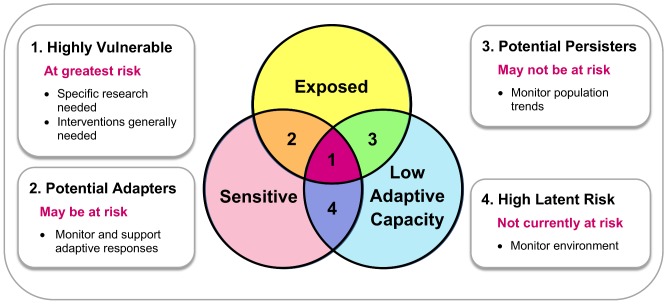
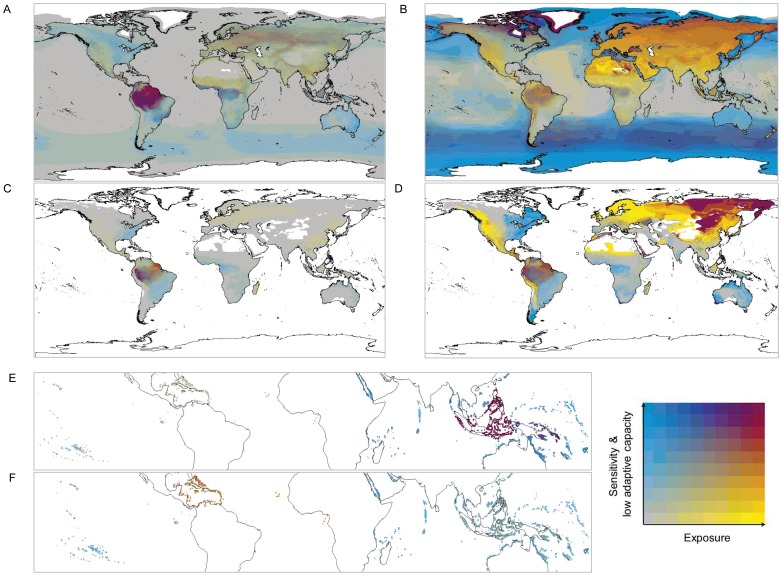
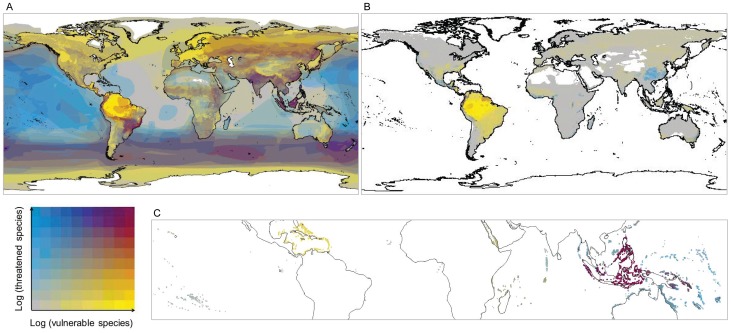
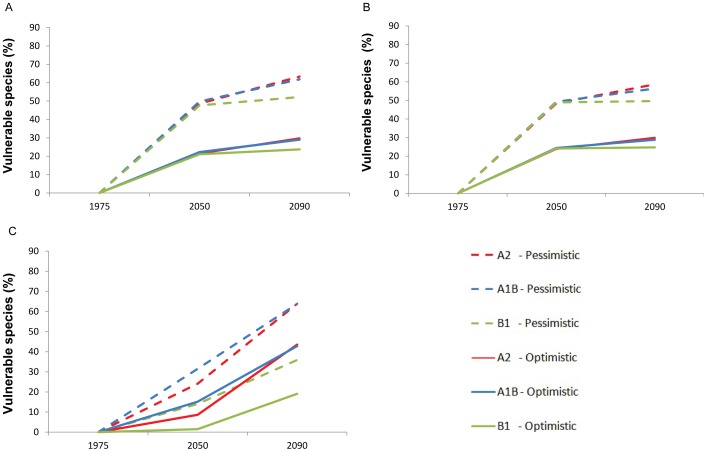
Climate change will have far-reaching impacts on biodiversity, including increasing extinction rates. Current approaches to quantifying such impacts focus on measuring exposure to climatic change and largely ignore the biological differences between species that may significantly increase or reduce their vulnerability. To address this, we present a framework for assessing three dimensions of climate change vulnerability, namely sensitivity, exposure and adaptive capacity; this draws on species' biological traits and their modeled exposure to projected climatic changes. In the largest such assessment to date, we applied this approach to each of the world's birds, amphibians and corals (16,857 species). The resulting assessments identify the species with greatest relative vulnerability to climate change and the geographic areas in which they are concentrated, including the Amazon basin for amphibians and birds, and the central Indo-west Pacific (Coral Triangle) for corals. We found that high concentration areas for species with traits conferring highest sensitivity and lowest adaptive capacity differ from those of highly exposed species, and we identify areas where exposure-based assessments alone may over or under-estimate climate change impacts. We found that 608-851 bird (6-9%), 670-933 amphibian (11-15%), and 47-73 coral species (6-9%) are both highly climate change vulnerable and already threatened with extinction on the IUCN Red List. The remaining highly climate change vulnerable species represent new priorities for conservation. Fewer species are highly climate change vulnerable under lower IPCC SRES emissions scenarios, indicating that reducing greenhouse emissions will reduce climate change driven extinctions. Our study answers the growing call for a more biologically and ecologically inclusive approach to assessing climate change vulnerability. By facilitating independent assessment of the three dimensions of climate change vulnerability, our approach can be used to devise species and area-specific conservation interventions and indices. The priorities we identify will strengthen global strategies to mitigate climate change impacts.
Overview
The claims and statistics of this paper haven’t been checked yet.
Free: it reads the open-access text and checks the first 5 claims that cite a source we can check. Create a free account to check every claim.
Integrity signals
Registry
Cites
Statistics
Figures
Verification
Claims the paper makes
The claims and statistics of this paper haven’t been checked yet.
Free: it reads the open-access text and checks the first 5 claims that cite a source we can check. Create a free account to check every claim.
Claims other papers make about this one
Each is checked against this paper’s own text: does it say what the citing paper says it does?
The source backs part of the claim, not all of it — or backs it for a different population, condition or comparison.
In the citing paper
“Climate change will become an increasingly dominant problem in the biodiversity crisis 3 .”
From Biodiversity: The ravages of guns, nets and bulldozers (2016) · cites this paper as [3]
Experimental — accuracy not yet measuredThe cited source says what the claim attributes to it.
In the citing paper
“Finally, the balance of threats driving extinction risk for many of the world's species will change, even over the next few decades 3 .”
From Biodiversity: The ravages of guns, nets and bulldozers (2016) · cites this paper as [3]
Self-check
Percentages, sums and reported differences re-computed from the paper’s own numbers.
The self-check needs the paper’s full text.
Citations
Cites
Very high resolution interpolated climate surfaces for global land areas
Hijmans, R. J., Cameron, S. E., Parra, J. L., Jones, P. G., & Jarvis, A. (2005) · International Journal of Climatology · doi:10.1002/joc.1276 · Cited by 19,825
Global Biodiversity Scenarios for the Year 2100
Sala, O. E., Stuart Chapin, F., III, Armesto, J. J., Berlow, E., Bloomfield, J., Dirzo, R., Huber-Sanwald, E., Huenneke, L. F., Jackson, R. B., et al. (2000) · Science · doi:10.1126/science.287.5459.1770 · Cited by 9,280 · cited 1×
“However, anthropogenic climate change is becoming a significant new threat [4–7].”
BackgroundClimate Change 2007: Impacts, Adaptation and Vulnerability
Parry, M. L., Canziani, O. F., Palutikof, J. P., van der Linden, P., & Hanson, C. (2007) · Centre for Environmental Data Analysis Digital Repository (Centre for Environmental Data Analysis) · doi:10.5281/zenodo.7356334 · Cited by 9,136
Extinction risk from climate change
Thomas, C. D., Cameron, A., Green, R. E., Bakkenes, M., Beaumont, L. J., Collingham, Y. C., Erasmus, B. F. N., de Siqueira, M. F., Grainger, A., Hannah, L., et al. (2004) · Nature · doi:10.1038/nature02121 · Cited by 7,695
Predicting species distribution: offering more than simple habitat models
Guisan, A., & Thuiller, W. (2005) · Ecology Letters · doi:10.1111/j.1461-0248.2005.00792.x · Cited by 6,587 · cited 1×
“These and most other similar large-scale assessments are based primarily on species distribution (bioclimatic envelope) models, which use correlations between species’ observed distributions and climate variables to predict their distributions and hence their extinction risk under future climate scenarios [9–11].”
BackgroundSpecial report on emissions scenarios
Nakićenović, N., Alcamo, J., Davis, G. R., de Vries, B. J. M., Fenhann, J. V., Gaffin, S., Gregory, K., Grübler, A., Jung, T. Y., Kram, T., et al. (2000) · Cited by 6,262
Has the Earth’s sixth mass extinction already arrived?
Barnosky, A. D., Matzke, N., Tomiya, S., Wogan, G. O. U., Swartz, B., Quental, T. B., Marshall, C., McGuire, J. L., Lindsey, E. L., Maguire, K. C., et al. (2011) · Nature · doi:10.1038/nature09678 · Cited by 4,400 · cited 1×
“Vertebrate extinction rates are currently estimated to be 10–100 times greater than background [1], largely due to the effects of habitat loss, over-exploitation and invasive species [2,3].”
BackgroundPearson, R. G., & Dawson, T. P. (2003) · Global Ecology and Biogeography · doi:10.1046/j.1466-822x.2003.00042.x · Cited by 4,252
Impacts of climate warming on terrestrial ectotherms across latitude
Deutsch, C. A., Tewksbury, J. J., Huey, R. B., Sheldon, K. S., Ghalambor, C. K., Haak, D. C., & Martin, P. R. (2008) · Proceedings of the National Academy of Sciences · doi:10.1073/pnas.0709472105 · Cited by 3,840 · cited 1×
“ranges are particularly vulnerable to climate [16].”
Scenarios for Global Biodiversity in the 21st Century
Pereira, H. M., Leadley, P. W., Proença, V., Alkemade, R., Scharlemann, J. P. W., Fernandez-Manjarrés, J. F., Araújo, M. B., Balvanera, P., Biggs, R., Cheung, W. W. L., et al. (2010) · Science · doi:10.1126/science.1196624 · Cited by 2,077 · cited 1×
“However, anthropogenic climate change is becoming a significant new threat [4–7].”
BackgroundSelf-citation
Cited by
Items 501–600 of 989
Inconsistent results from trait-based analyses of moth trends point to complex drivers of change
Tordoff, G. M., Dennis, E. B., Fox, R., Cook, P. M., Davis, T., Blumgart, D., & Bourn, N. A. D. (2022) · Biodiversity and Conservation · doi:10.1007/s10531-022-02469-8 · Cited by 17
“This desire has led to a burgeoning literature promoting the utility of trait-based approaches to explain and predict species’ responses to anthropogenic environmental change (Foden et al. 2013; Garcia et al. 2014; Pearson et al. 2014; Estrada et al. 2016).”
BackgroundBoyle, J., Sheets, H. D., Wu, S., Goldman, D., Melchin, M. J., Cooper, R. A., Sadler, P. M., & Mitchell, C. E. (2016) · Paleobiology · doi:10.1017/pab.2016.33 · Cited by 13
“—Geographic range and sampling affect the apparent extinction risk in all organisms, but the particular ecology of organisms makes some more vulnerable than others (Foden et al. 2013), and graptolites were no exception.”
BackgroundDe‐extinction and Conservation Genetics in the Anthropocene
Sandler, R. L. (2017) · The Hastings Center Report · doi:10.1002/hast.751 · Cited by 17
Gorman, K. B., Talbot, S. L., Sonsthagen, S. A., Sage, G. K., Gravely, M. C., Fraser, W. R., & Williams, T. D. (2017) · Antarctic Science · doi:10.1017/s0954102017000293 · Cited by 13
Traits-based approaches support the conservation relevance of landscape genetics
Mims, M. C., Kirk, E. E. H., Lytle, D. A., & Olden, J. D. (2017) · Conservation Genetics · doi:10.1007/s10592-017-1028-5 · Cited by 13
“Interest continues to grow for the use of species’ traits to identify at-risk species to environmental change when species-specific approaches are not feasible (Foden et al. 2013; Pacifici et al. 2015).”
BackgroundDineshbabu, A. P., Zacharia, P. U., Sujitha, T., Shoba, J., Rajesh, K., Vivekanandan, E., pillai, S. L., Sivadas, M., Ghosh, S., Ganga, U., et al. (2019) · Climate Research · doi:10.3354/cr01586 · Cited by 13
The future representativeness of Madagascar's protected area network in the face of climate change
Coldrey, K. M., & Turpie, J. K. (2020) · African Journal of Ecology · doi:10.1111/aje.12819 · Cited by 12
Climate change and terrestrial biodiversity
Warren, R., Price, J. T., & Jenkins, R. (2021) · Elsevier eBooks · doi:10.1016/b978-0-12-822373-4.00025-2 · Cited by 23
Virkkala, R., Heikkinen, R. K., Kuusela, S., Leikola, N., & Pöyry, J. (2018) · Climate change management · doi:10.1007/978-3-319-98681-4_23 · Cited by 16
Late Quaternary chironomid community structure shaped by rate and magnitude of climate change
Mayfield, R. J., Langdon, P. G., Doncaster, C. P., Dearing, J. A., Wang, R., Velle, G., Davies, K., & Brooks, S. J. (2021) · Journal of Quaternary Science · doi:10.1002/jqs.3301 · Cited by 13
“Climate change is projected to drive taxon richness and biodiversity loss (Thomas et al., 2006; Foden et al., 2013), with the extent of changes in the ecosystem depending on functional diversity (Chapin et al., 2000).”
BackgroundLight limitation and coral mortality in urbanised reef communities due to sea-level rise
Law, M. T., & Huang, D. (2023) · Climate Change Ecology · doi:10.1016/j.ecochg.2023.100073 · Cited by 21
Cheng, X., Han, Y., Lin, J., Jiang, F., Cai, Q., Shi, Y., Cui, D., & Wen, X. (2023) · Animals · doi:10.3390/ani13142341 · Cited by 14
“IUCN assessments primarily consider the current drivers of species declines, such as population fluctuations and human pressure on populations and their suitable habitats, without adequately identifying potential future risks, such as threats posed by climate change [54,55].”
BackgroundIncorporating Climate and Ocean Change into Extinction Risk Assessments for 82 Coral Species
Brainard, R. E., Weijerman, M., Eakin, C. M., McElhany, P., Miller, M. W., Patterson, M., Piniak, G. A., Dunlap, M. J., & Birkeland, C. (2013) · Conservation Biology · doi:10.1111/cobi.12171 · Cited by 12
Ameca, E. I., Ellis, E. A., & Rodríguez‐Luna, E. (2015) · American Journal of Primatology · doi:10.1002/ajp.22402 · Cited by 13
“…overall risk of a population experiencing negative impacts from extreme climatic events, however, is expected to depend not only on direct exposure but also the species’ intrinsic characteristics and adaptability gained over evolutionary time [Foden et al., 2013; Jiguet et al., 2011; Visser, 2008].”
BackgroundBellard, C., Leclerc, C., Hoffmann, B. D., & Courchamp, F. (2015) · Environmental Conservation · doi:10.1017/s037689291500020x · Cited by 15
Rentería, J. L., Rouget, M., & Visser, V. (2017) · Austral Ecology · doi:10.1111/aec.12528 · Cited by 14
A first approach to evaluate the vulnerability of islands’ vertebrates to climate change in Mexico
Laboratorio de Genética Molecular, D. Y. E. D. P., Ureta, C., Cuervo-Robayo, Á. P., (CONABIO), C. N. P. E. C. Y. U. D. L. B., Calixto-Pérez, E., Laboratorio de Análisis Espaciales, I. D. B., González‐Salazar, C., Departamento de Ciencias Ambientales, U. A. M., Fuentes-Conde, E., & Laboratorio de Análisis Espaciales, I. D. B. (2018) · Atmósfera · doi:10.20937/atm.2018.31.03.03 · Cited by 12
“This result was very surprising, because amphibians as a group have been reported to be very vulnerable to environmental and climate changes (Blaustein et al., 2003; Foden et al., 2013a).”
BackgroundSmith, A. B., Long, Q. G., & Albrecht, M. A. (2016) · Biodiversity and Conservation · doi:10.1007/s10531-016-1097-7 · Cited by 17
Land cover differentially affects abundance of common and rare birds
Davis, K. P., Sofaer, H. R., & Pejchar, L. (2023) · Global Change Biology · doi:10.1111/gcb.16700 · Cited by 12
“Rare species often are highly vulnerable to global change (Foden et al., 2013), but in global- scale analyses, rarity is weakly related to population trend and there are many increasing and decreasing populations of species along gradients of global abundance and range size (Daskalova et al., 2020).”
BackgroundSiddique, M. T., & Molinos, J. G. (2023) · The Science of The Total Environment · doi:10.1016/j.scitotenv.2024.169948 · Cited by 12
Gardiner, L. M., Rakotoarinivo, M., Rajaovelona, L., & Clubbe, C. P. (2017) · PeerJ · doi:10.7717/peerj.3248 · Cited by 11
Zyoud, S. H., & Zyoud, A. H. (2021) · Environmental Science and Pollution Research · doi:10.1007/s11356-021-13696-x · Cited by 11
“The second most cited article dealing with issues relevant to the assessment of species with high vulnerability to climatic changes and the geographic regions in which these species are concentrated (Foden et al. 2013).”
BackgroundInfluentialA multi-taxonomic, trait-based framework for assessing macroplastic vulnerability
Murphy, E. L., Fredette-Roman, C., Rochman, C. M., Gerber, L. R., & Polidoro, B. (2023) · The Science of The Total Environment · doi:10.1016/j.scitotenv.2023.164563 · Cited by 11
The impact of climate change on endangered plants and lichen
Wrobleski, A. C., Ernst, S., Weber, T. C., & Delach, A. (2023) · PLOS Climate · doi:10.1371/journal.pclm.0000225 · Cited by 14
“Additionally, many rare species may be abundant, but geographically restricted, meaning a whole species could be impacted by a single catastrophic event [12].”
InfluentialChiara, R. M., Björklund, N., Boberg, J. B., Bradshaw, C. P., Camac, J., Damus, M., Kompas, T., Li, C., MacLeod, A., Maggini, R., et al. (2024) · EPPO Bulletin · doi:10.1111/epp.12989 · Cited by 13
Correia, D. L. P., Chauvenet, A. L. M., Rowcliffe, J. M., & Ewen, J. G. (2015) · Biological Conservation · doi:10.1016/j.biocon.2015.09.010 · Cited by 11
“Climate change is an emergent global threat and is expected to become one of the major drivers of species extinctions of the 21st century (Foden et al., 2013).”
BackgroundPotter, S., Silva, A. C. A., Bragg, J. G., Catalano, S. R., Donnellan, S. C., Doughty, P., Scott, M. L., & Moritz, C. C. (2019) · Journal of Biogeography · doi:10.1111/jbi.13698 · Cited by 12
“…fluctuations are also expected to vary according to species’ ecological traits – dispersal potential, habitat preferences and physiological limits (Foden et al., 2013; Williams, Shoo, Isaac, Hoffmann, & Langham, 2008; Zamudio, Bell, & Mason, 2016), all of which could differ between species…”
BackgroundSingh, M., Badcock-Scruton, J., & Collins, C. M. (2021) · Sustainability · doi:10.3390/su13052792 · Cited by 12
“Many biodiversity hotspots, such as the Indo-Malayan region, which is home to many threatened and endemic species, are vulnerable to both these drivers of biodiversity decline [2,3].”
BackgroundAssessing the impacts of uncertainty in climate‐change vulnerability assessments
Hossain, M. A., Kujala, H., Bland, L. M., Burgman, M. A., & Lahoz‐Monfort, J. J. (2019) · Diversity and Distributions · doi:10.1111/ddi.12936 · Cited by 20
Maxted, N., Hunter, D., & Ríos, R. O. (2020) · Cambridge University Press eBooks · doi:10.1017/9781139024297.019 · Cited by 11
Franklin, J., Regan, H. M., & Syphard, A. D. (2021) · Frontiers of Biogeography · doi:10.21425/f5fbg51254 · Cited by 13
“Identifying traits associated with species decline has become the Holy Grail of conservation biology because of their potential as measurable surrogates for extinction risk, especially for poorly studied taxa (Lavorel and Garnier 2002, Foden et al. 2013).”
BackgroundWeinhäupl, C., & Devenish‐Nelson, E. S. (2024) · Biological Conservation · doi:10.1016/j.biocon.2024.110668 · Cited by 17
Marine biological responses to abrupt climate change in deep time
Kiessling, W., Reddin, C. J., Dowding, E. M., Dimitrijević, D., Raja, N. B., & Kocsis, Á. T. (2024) · Paleobiology · doi:10.1017/pab.2024.20 · Cited by 12
“Life-history traits such as growth rate and mode of reproduction are commonly discussed in their capacity to predict climate change impacts (Foden et al. 2013; Pearson et al. 2014; MacLean and Beissinger 2017; Kubicek et al. 2019).”
Will the California Current lose its nesting Tufted Puffins?
Hart, C. J., Kelly, R. P., & Pearson, S. F. (2018) · PeerJ · doi:10.7717/peerj.4519 · Cited by 12
“Foden et al. (2013) found that 83% of birds, How to cite this article Hart et al. (2018), Will the California Current lose its nesting Tufted Puffins?”
BackgroundBrown, C., Rodríguez‐Buriticá, S., Goldberg, D. E., Reichenbacher, F. W., Venable, D. L., Webb, R. H., & Wilder, B. T. (2023) · Ecology · doi:10.1002/ecy.4194 · Cited by 10
“Conversely, rare species have an inherent vulnerability to catastrophic events and a reduced capacity to recover after local extinction events (Foden et al., 2013), making them potentially more vulnerable to changes in climate.”
BackgroundEkman, E., Triviño, M., Blattert, C., Mazziotta, A., Potterf, M., & Eyvindson, K. (2024) · Journal of Forest Research · doi:10.1007/s11676-023-01678-3 · Cited by 10
“Particularly, we do not know whether the combination of these two factors will increase suitable habitats for saproxylic species, qualifying the species as a “winner”, or decrease it, qualifying the species as a “loser” (Foden et al 2013; Mazziotta et al 2016).”
Vulnerability of megapodes (Megapodiidae, Aves) to climate change and related threats
Radley, P. M., Davis, R. A., Dekker, R. W. R. J., Molloy, S. W., Blake, D., & Heinsohn, R. (2018) · Environmental Conservation · doi:10.1017/s0376892918000152 · Cited by 13
“Following the general methodologies of Williams et al. (2008), Gardali et al. (2012) and Foden et al. (2013), we assessed the vulnerability of megapodes based on their intrinsic sensitivity to climate change, their extrinsic exposure to its environmental pressures and their ability to adapt to…”
BackgroundMethodInfluentialAmeca, E. I., Mace, G. M., Cowlishaw, G., & Pettorelli, N. (2018) · Animal Conservation · doi:10.1111/acv.12461 · Cited by 10
“…22 (2019) 262–273 ª 2018 The Zoological Society of London 263 by the IUCN-SSC Guidelines for Assessing Species Vulnerability to Climate Change (Foden & Young, 2016) as well as recently published CCVAs using trait-based approaches (e.g. Graham et al., 2011; Foden et al., 2013; Garnett et al., 2013).”
BackgroundMethodSelf-citationVulnerability of birds to contaminated water sources in the Karoo region of South Africa
Lee, A. T., Geary, C., Wright, D. R., & Dean, W. R. J. (2019) · Ostrich · doi:10.2989/00306525.2019.1638846 · Cited by 10
“The approach follows Foden et al. (2013), who used this method to identify species (including birds) at risk from climate change.”
MethodAsymmetric competition shapes amphibian response to rapid environmental change
Thurman, L. L., & Garcia, T. S. (2019) · Ecosphere · doi:10.1002/ecs2.2950 · Cited by 14
Zanin, M., Palomares, F., & Albernaz, A. L. (2021) · Biodiversity and Conservation · doi:10.1007/s10531-021-02147-1 · Cited by 14
Projected responses of Cerrado anurans to climate change are mediated by biogeographic character
Alves‐Ferreira, G., Giné, G. A. F., Fortunato, D. D. S., Solé, M., & Heming, N. M. (2022) · Perspectives in Ecology and Conservation · doi:10.1016/j.pecon.2021.12.001 · Cited by 14
Current Symptoms of Climate Change in Boreal Forest Trees and Wildlife
D’Orangeville, L., St‐Laurent, M., Boisvert‐Marsh, L., Zhang, X., Bastille‐Rousseau, G., & Itter, M. S. (2023) · Advances in global change research · doi:10.1007/978-3-031-15988-6_30 · Cited by 15
Raja, N. B., Dimitrijević, D., Krause, M. C., & Kiessling, W. (2022) · Scientific Data · doi:10.1038/s41597-022-01486-0 · Cited by 12
From threats to solutions: A literature review of climate adaptation in anadromous salmon and trout
Crozier, L. G., & Siegel, J. E. (2025) · Ecosphere · doi:10.1002/ecs2.70054 · Cited by 22
A framework to quantify the vulnerability of insular biota to global changes
Bellard, C., Marino, C., Butt, N., Fernández‐Palacios, J. M., Rigal, F., Robuchon, M., Lenoir, J., Irl, S. D. H., Benítez‐López, A., Capdevila, P., et al. (2025) · Peer Community Journal · doi:10.24072/pcjournal.557 · Cited by 13
“For species identified as sensitive to climate change, but which may escape impact through high adaptive capacity, such responses (e.g. range shifts, phenological change) should be facilitated and monitored (Foden et al 2013a).”
InfluentialSelf-citationBolitho, L. J., Rowley, J. J. L., Hines, H. B., & Newell, D. (2021) · Australian Journal of Zoology · doi:10.1071/zo20037 · Cited by 9
“…effects of climate change on species include shifts in geographic range, changes to the timing of breeding activity, increased frequency of catastrophic events and ultimately further population declines and species extinctions (Foden et al. 2013; Pachauri et al. 2014; Harris et al. 2018).”
BackgroundWang, D., de Knegt, H. J., & Hof, A. R. (2022) · Frontiers in Ecology and Evolution · doi:10.3389/fevo.2022.984842 · Cited by 13
“Although the Hengduan Mountains likely served as a refugium during climatic changes in the past and maintained high diversity and endemism, this region is predicted to experience large changes in climatic conditions and land use (Wu et al., 2017; Enquist et al., 2019; Brown et al., 2020).”
BackgroundResultInfluentialLovrenčić, L., Temunović, M., Bonassin, L., Grandjean, F., Austin, C. M., & Maguire, I. (2022) · Global Ecology and Conservation · doi:10.1016/j.gecco.2022.e02301 · Cited by 13
“In addition, life history characteristics that include low reproductive output and long-life span coupled with small population sizes, limit the ability of ICS populations to respond to environmental change via local adaptation (Foden et al., 2013; Moore et al., 2013; Taylor et al., 2019).”
Wenzel, M., Rowland, Z., Nielsen, K. S., & Lange, F. (2023) · Journal of Environmental Psychology · doi:10.1016/j.jenvp.2023.102038 · Cited by 13
A novel tamanavirus (Flaviviridae) of the European common frog (Rana temporaria) from the UK
Parry, R. H., Slonchak, A., Campbell, L. J., Newton, N. D., Debat, H. J., Gifford, R. J., & Khromykh, A. A. (2023) · Journal of General Virology · doi:10.1099/jgv.0.001927 · Cited by 9
“Amphibians are the most threatened group of vertebrates globally, and their populations continue to decline [68] due to a variety of threats, including habitat loss [69], climate change [70] and emerging infectious diseases (EIDs).”
BackgroundDecline of the Endangered Morro Bay Kangaroo Rat in California
Kofron, C. P., & Villablanca, F. X. (2016) · Journal of Fish and Wildlife Management · doi:10.3996/102014-jfwm-078 · Cited by 9
“Species with small geographic ranges are more vulnerable to climate change (e.g., Foden et al. 2013), and of particular concern are associated extreme weather events (e.g., severe drought, harsh winter) that could also affect the food plants.”
BackgroundClimatically-mediated landcover change: impacts on Brazilian territory
Zanin, M., Tessarolo, G., Machado, N. I. G., & Albernaz, A. L. (2017) · Anais da Academia Brasileira de Ciências · doi:10.1590/0001-3765201720160226 · Cited by 13
Effects of Climate Change on Wildlife in the Northern Rockies
McKelvey, K. S., & Buotte, P. C. (2017) · Advances in global change research · doi:10.1007/978-3-319-56928-4_8 · Cited by 12
Iglesias‐Carrasco, M., Head, M. L., Martín, J. M., & Cabido, C. (2017) · Ecology and Evolution · doi:10.1002/ece3.3646 · Cited by 13
“For example, limited dispersal ability (Hamer & McDonnell, 2008), restricted geographic distribution (Foden et al., 2013), and narrow physiological tolerances (Buckley, 2010) can all increase the vulnerability of species and populations to environmental change, so they become more prone to extinction than others.”
BackgroundWang, X., Zhang, F., & Zhang, J. (2017) · Biodiversity Science · doi:10.17520/biods.2017184 · Cited by 9
Nason, S. E., Lloyd, N. A., Kelly, C. D., Brichieri‐Colombi, T. A., Dalrymple, S. E., & Moehrenschlager, A. (2021) · Biological Conservation · doi:10.1016/j.biocon.2020.108948 · Cited by 11
Voerman, S. E., Glasby, T. M., Gladstone, W. E., & Gribben, P. E. (2019) · Marine Environmental Research · doi:10.1016/j.marenvres.2019.02.017 · Cited by 14
Hypothesizing if responses to climate change affect herbicide exposure risk for amphibians
Lötters, S., Filz, K. J., Wagner, N., Schmidt, B. R., Emmerling, C., & Veith, M. (2014) · Environmental Sciences Europe · doi:10.1186/s12302-014-0031-4 · Cited by 10
“Amphibians are poikilothermic animals which are highly sensitive to changing climatic conditions [15].”
BackgroundBody Mass Shapes Most Life History Traits and a Fast‐Slow Continuum in Amphibians
Cejp, B., & Griebeler, E. M. (2024) · Ecology and Evolution · doi:10.1002/ece3.70377 · Cited by 9
“For all these species, Oliveira et al. (2017) give Foden et al. (2013) as the source in which we neither found empirical data, nor did these authors cite other sources on this trait.”
BackgroundConserving climate‐change refugia: Insights from research and practice
Morelli, T. L., Mozelewski, T. G., Cavalieri, C. N., Caven, A. J., Dreiss, L. M., Hovel, R. A., Hua, M., Jennings, M. K., John, A., Kehm, G., et al. (2025) · Conservation Science and Practice · doi:10.1111/csp2.70160 · Cited by 23
“Climate change vulnerability assessments (CCVAs) are often used to assess species sensitivity and adaptive capacity based on traits (Foden et al., 2013; Hidalgo-Triana et al., 2023) or correlations between occurrence and environmental variables (Cavalieri et al., 2026).”
Coping with seasonality: dynamics of adult body mass and survival in an alpine hibernator
Carrier, B., Hamel, S., Garel, M., & Côté, S. D. (2022) · Oikos · doi:10.1111/oik.09043 · Cited by 13
Nahli, A., Oubraim, S., & Chlaida, M. (2022) · Environmental Monitoring and Assessment · doi:10.1007/s10661-022-10812-3 · Cited by 8
“Thus, they reveal the effect of disturbances and stressors on aquatic ecosystems (Cummins et al., 2005; Edegbene et al., 2022; Foden et al., 2013).”
BackgroundAssessing resilience and sensitivity patterns for fish and phytoplankton in French lakes
Rocha, B. S., Logez, M., Jamoneau, A., & Argillier, C. (2023) · Global Ecology and Conservation · doi:10.1016/j.gecco.2023.e02458 · Cited by 10
Systems methods for analyzing trade-offs between food security and conserving biodiversity
Stuch, B., & Alcamo, J. M. (2023) · Environment Systems & Decisions · doi:10.1007/s10669-023-09909-y · Cited by 8
“This table links the standard global land cover database (GLC2000; Bartholomé und Belward 2005) with the IUCN habitat classification scheme based on Foden et al. (2013).”
Sutton, W. B., Grisnik, M., Williams, L. A., & Groves, J. D. (2023) · Global Ecology and Conservation · doi:10.1016/j.gecco.2023.e02554 · Cited by 10
Jameel, M. A., Nadeem, M. S., Haq, S. M., Mubeen, I., Shabbir, A., Aslam, S., Ahmad, R., Gaafar, A.-R. Z., ALMunqedhi, B. M. A., & Bussmann, R. W. (2023) · Biology · doi:10.3390/biology12071015 · Cited by 9
Wiethase, J. H., Mostert, P. S., Cooney, C. R., O’Hara, R. B., & Beale, C. M. (2024) · Global Ecology and Biogeography · doi:10.1111/geb.13819 · Cited by 11
Blackburn, G., Ashton, B. J., & Ridley, A. R. (2024) · Animal Behaviour · doi:10.1016/j.anbehav.2024.02.014 · Cited by 13
“Climate change and anthropogenic noise are considered to be two of the most widespread and detrimental human-induced stressors affecting wildlife populations globally (Foden et al., 2013; Kunc & Schmidt, 2019; Parmesan & Yohe, 2003; Shannon et al., 2016; Urban, 2015).”
BackgroundWilkes, L. N., Barner, A. K., Keyes, A. A., Morton, D. N., Byrnes, J. E. K., & Dee, L. E. (2024) · Global Change Biology · doi:10.1111/gcb.17422 · Cited by 14
“We classified swimming organisms as least susceptible, walking organisms as next most susceptible due to moderate mobility relative to swimmers, and sessile organisms as most susceptible (Chatzimentor et al., 2023; Foden et al., 2013; Giddens et al., 2022; Hare et al., 2016; Williams et al., 2008 ).”
Sahara and other African deserts
Chenchouni, H., Bouzekri, A., Bezzalla, A., & Neffar, S. (2025) · Elsevier eBooks · doi:10.1016/b978-0-443-36569-0.00007-0 · Cited by 10
Long-term changes of a waterbird community over 26 years at a Pakistani Ramsar Site
Khaliq, I., Arshad, M. I., Gill, A. H., Chaudhry, A. A., Maan, M. A., Iqbal, M. A., Akbar, M., & Bowler, D. E. (2019) · Wetlands Ecology and Management · doi:10.1007/s11273-019-09665-4 · Cited by 9
Hernández‐Lambraño, R. E., de la Cruz, D. R., & Agudo, J. Á. S. (2021) · Sustainability · doi:10.3390/su13063147 · Cited by 8
“Climate change will have far‐reaching impacts on biodiversity, including increasing extinction rates [63].”
BackgroundNelson, K. R., Davies, M. M., Thomson, H. M., Lawn, P., Kushneryk, K., Brouard-John, E. K., Paleczny, M., Helms, S., Hawkes, V. C., & Gerwing, T. G. (2021) · Environmental Monitoring and Assessment · doi:10.1007/s10661-021-09000-6 · Cited by 9
Wilson, S. M., Patterson, D., & Moore, J. (2022) · Marine Ecology Progress Series · doi:10.3354/meps14070 · Cited by 9
“Determining trait-based vulnerability to phenological mismatch among species and populations is imperative to predicting if and how species will be impacted by climate change and informing conservation efforts (Foden et al. 2013, Pearson et al. 2014, McLean et al. 2016).”
BackgroundInterspecific and Local Variation in Tern Chick Diets Across Nesting Colonies in the Gulf of Maine
Yakola, K. C., Jordaan, A., Kress, S. W., Shannon, P., & Staudinger, M. D. (2021) · Waterbirds · doi:10.1675/063.044.0402 · Cited by 8
Bolitho, L. J., Newell, D., & Hines, H. B. (2023) · Diversity · doi:10.3390/d15080931 · Cited by 9
Meta-analysis on the responses of traits of different taxonomic groups to global and local stressors
Mbaka, J. G., Szöcs, E., & Schäfer, R. B. (2015) · Acta Oecologica · doi:10.1016/j.actao.2015.09.002 · Cited by 9
Insights into the impacts of three current environmental problems on Amphibians
Dutta, H. (2018) · European Journal of Ecology · doi:10.2478/eje-2018-0009 · Cited by 9
“These species have shown a sharp decline in the population or a shrinking geographic range (Foden et al. 2013).”
BackgroundDrought vulnerability among China's ungulates and mitigation offered by protected areas
Zhang, L., Pacifici, M., Li, B. V., & Gibson, L. (2020) · Conservation Science and Practice · doi:10.1111/csp2.177 · Cited by 8
Señaris, J. C., & Rojas‐Runjaic, F. J. M. (2019) · Elsevier eBooks · doi:10.1016/b978-0-12-815591-2.00012-4 · Cited by 9
Gorman, K. B. (2015) · Summit (Simon Fraser University) · Cited by 18
Untangling plastic responses to combined thermal and dietary stress in insects
Chakraborty, A., Sgrò, C. M., & Mirth, C. K. (2024) · Current Opinion in Insect Science · doi:10.1016/j.cois.2024.101328 · Cited by 8
“Organisms face variable and often suboptimal environmental conditions, which is made worse with ongoing climate change (Chevin et al., 2010; Foden et al., 2013; Scheffers et al., 2016; Hoffmann and Bridle 2021*).”
Shepherding Nature: The Challenge of Conservation Reliance
Scott, J. M., Wiens, J. A., Horne, B. V., & Goble, D. D. (2020) · Cambridge University Press eBooks · doi:10.1017/9781108377898 · Cited by 35
Aldiansyah, S., & Wahid, K. A. (2023) · Geosfera Indonesia · doi:10.19184/geosi.v8i1.31862 · Cited by 7
Khaliq, I., Biber, M. F., Bowler, D. E., & Hof, C. (2023) · PeerJ · doi:10.7717/peerj.16212 · Cited by 8
“We use the vulnerability framework of Foden et al. (2013) and Williams et al. (2008) which decomposes impact into sensitivity ( i.e ., how much species are affected by a given change) and exposure ( i.e ., how much the environment is project to change).”
A decision framework to integrate in-situ and ex-situ management for species in the European Union
Staerk, J., Colchero, F., Kenney, M. A., Wilson, K. A., Foden, W., Carr, J., Pereboom, Z., Bland, L. M., Flesness, N., Martin, T. G., et al. (2024) · Frontiers in Conservation Science · doi:10.3389/fcosc.2023.1298850 · Cited by 7
Self-citationBerlino, M., Mangano, M. C., Bona, G. D., Lucchese, M., Terzo, S., Vittor, C. D., D'Alessandro, M., Esposito, V., Gambi, M. C., Negro, P. D., et al. (2024) · Marine Environmental Research · doi:10.1016/j.marenvres.2024.106520 · Cited by 11
Mapping ecoregional vulnerability to climate change for Africa
Twumasi-Ankrah, M. J., Zhan, J., & Asamoah, E. F. (2024) · The Science of The Total Environment · doi:10.1016/j.scitotenv.2024.176219 · Cited by 9
Trait‐Based Indicators of Marine Communities' Sensitivity to Climate Change and Fishing
Polo, J., López‐López, L., Engelhard, G. H., Punzón, A., Hidalgo, M., Rutterford, L. A., Sáinz‐Bariain, M., González‐Irusta, J. M., Esteban, A., García, E., et al. (2024) · Diversity and Distributions · doi:10.1111/ddi.13959 · Cited by 7
Avidon, S., Shelton, J., Marr, S. M., Bellingan, T. A., Esler, K. J., & Weyl, O. L. F. (2018) · African Journal of Aquatic Science · doi:10.2989/16085914.2018.1507898 · Cited by 7
“African Journal of Aquatic Science is co-published by NISC (Pty) Ltd and Informa UK Limited (trading as Taylor & Francis Group) Amphibians are the most threatened class of vertebrate in the world (Foden et al. 2013).”
BackgroundInfluentialPhenological tracking of a seasonal climate window in a recovering tropical island bird species
Taylor, J., Nicoll, M. A. C., Black, E. C. L., Wainwright, C. M., Jones, C. G., Tatayah, V., Vidale, P. L., & Norris, K. J. (2021) · Climatic Change · doi:10.1007/s10584-021-02971-y · Cited by 12
Löbel, S., Schröder, B., & Snäll, T. (2021) · Journal of Biogeography · doi:10.1111/jbi.14278 · Cited by 8
“Grouping species depending on their functional traits can be a useful tool to anticipate species’ responses to climate (see Foden et al., 2013; Pacifici et al., 2015) and habitat changes (e.g. Caners et al., 2013; Pavlacky et al., 2015).”
MethodDecoupling linked coral and fish trait structure
Anderson, L. M., McLean, M. J., Houk, P., Graham, C., Kanemoto, K., Terk, E., McLeod, E., & Beger, M. (2022) · Marine Ecology Progress Series · doi:10.3354/meps14023 · Cited by 7
Expert-based assessment of the climate change vulnerability of amphibians and reptiles of Uruguay
Vaz-Canosa, P., Laufer, G., Borteiro, C., Baldo, D., Prigioni, C., & Soutullo, Á. (2022) · Environmental Conservation · doi:10.1017/s0376892922000418 · Cited by 7
DuBose, T. P., Moore, C. E., Silknetter, S., Benson, A. L., Alexander, T., O’Malley, G., & Mims, M. C. (2022) · Biological Conservation · doi:10.1016/j.biocon.2022.109866 · Cited by 8
Gerstner, B. E., Bills, P., & Zarnetske, P. L. (2023) · Global Ecology and Biogeography · doi:10.1111/geb.13716 · Cited by 7
Pandey, R., Rawat, M., Pathak, A. K., Mehta, D., Bala, N., BHATT, I. D., & Chaturvedi, R. (2023) · Ecological Indicators · doi:10.1016/j.ecolind.2023.111302 · Cited by 11
Comparative demographics of a Hawaiian forest bird community
Guillaumet, A., Woodworth, B. L., Camp, R. J., & Paxton, E. H. (2015) · Journal of Avian Biology · doi:10.1111/jav.00756 · Cited by 7
A spatialized digital database for all bird species in China
Dai, S., Feng, D., Chan, K. K. Y., Gong, P., & Xu, B. (2019) · Science China Life Sciences · doi:10.1007/s11427-018-9419-2 · Cited by 7
Metadata
- Authors
- Foden, W. B., Butchart, S. H. M., Stuart, S. N., Vié, J.-C., Akçakaya, H. R., Angulo, A., DeVantier, L. M., Gutsche, A., Turak, E., Cao, L., Donner, S. D., Katariya, V., Bernard, R., Holland, R. A., Hughes, A. F., O’Hanlon, S. E., Garnett, S. T., Şekercioğlu, Ç. H., & Mace, G. M.
- Affiliations
- University of the Witwatersrand (ZA)
- BirdLife International (KE)
- UN Environment Programme World Conservation Monitoring Centre (GB)
- International Union for Conservation of Nature (CH)
- Museum für Naturkunde (DE)
- James Cook University (AU)
- Zhejiang University (CN)
- University of British Columbia (CA)
- International Union for Conservation of Nature (United Kingdom) (GB)
- Imperial College London (GB)
- University of Southampton (GB)
- Anglia Ruskin University (GB)
- Charles Darwin University (AU)
- University College London (GB)
- Corresponding author
- Foden, Wendy B.
- Butchart, Stuart H. M.
- Stuart, Simon N.
- Vié, Jean-Christophe
- Angulo, Ariadne
- DeVantier, Lyndon M.
- Gutsche, Alexander
- Turak, Emre
- Cao, Long
- Donner, Simon D.
- Katariya, Vineet
- Bernard, Rodolphe
- Holland, Robert A.
- Hughes, Adrian F.
- O’Hanlon, Susannah E.
- Garnett, Stephen T.
- Mace, Georgina M.
- ORCID
- Venue
- PLoS ONE
- Publisher
- Public Library of Science (PLoS)
- Published
- 2013-06-12
- Volume
- 8
- Issue
- 6
- Pages
- e65427
- ISSN
- 1932-6203 (ISSN-L)
- PMC
- PMC3680427
- OpenAlex
- W2113487278
- Cited by
- 988
- References
- 43
- Citations by year
- 2026: 59 · 2025: 59 · 2024: 65 · 2023: 73 · 2022: 72 · 2021: 90 · 2020: 119 · 2019: 83 · 2018: 88 · 2017: 87 · 2016: 66 · 2015: 65 · 2014: 50 · 2013: 12
- FWCI
- 42.61
- Type
- journal article
- Language
- en
- Open access
- gold
- doi.org
- Locations
- PLoS ONE (publishedVersion, cc-by)
- Europe PMC (PubMed Central) (publishedVersion, other-oa)
- PubMed Central (publishedVersion, cc-by)
- PubMed (publishedVersion)
- ePrints Soton (University of Southampton) (acceptedVersion)
- CDU eSpace Institutional Repository (Charles Darwin University) (submittedVersion)
- ResearchOnline - JCU (James Cook University) (submittedVersion)
- DOAJ (DOAJ: Directory of Open Access Journals) (submittedVersion, cc-by-sa)
- UCL Discovery (University College London) (submittedVersion)
- Figshare (submittedVersion, cc-by)
- Funders
- John D. and Catherine T. MacArthur Foundation
- Imperial College London
- Topics
- Physical Sciences › Environmental Science › Ecological Modeling › Species Distribution and Climate Change
- Physical Sciences › Environmental Science › Nature and Landscape Conservation › Ecology and Vegetation Dynamics Studies
- Physical Sciences › Environmental Science › Global and Planetary Change › Climate Change and Environmental Impact
- Keywords
- climate change vulnerability, climate change sensitivity, climate change exposure, adaptive capacity, biological characteristics, birds, amphibians, coral, extinction risk, IUCN Red List, conservation prioritization, Amazon basin, Coral Triangle, biodiversity conservation
- MeSH terms
- Acclimatization, Amphibians, Animals, Birds, Conservation of Natural Resources, Anthozoa, Biodiversity, Climate Change
About these checks
Registry, retraction, Cites and statistics results are computed, not judged, with one exception: a printed reference that no index lists is read once by a model before it counts as a citation error. Claims are extracted by a model and kept only when their quote appears verbatim in the text; each cited source is then checked, with a model’s help, for whether it says what the claim relies on. Those verdicts can be wrong — read the claim’s quote and the cited source before relying on one.
Statistics and arithmetic are recomputed, not judged.
Confidence bands are shown only for fields calibrated on our annotated test set. None is calibrated yet, so no band is shown.
What counts as a claim ›How we measure confidence ›How we check this ›
Are you an author, or do you see a problem with this page? Request a review
Data sources
Bibliographic data: Semantic Scholar, OpenAlex, Crossref.
Contains information from the Semantic Scholar Academic Graph Datasets, made available under the ODC Attribution License (ODC-BY 1.0).
Semantic Scholar’s data is described in: Kinney, R., et al. (2023). The Semantic Scholar Open Data Platform. arXiv:2301.10140.
