

Identifying the World's Most Climate Change Vulnerable Species: A Systematic Trait-Based Assessment of all Birds, Amphibians and Corals
Open accessThe DOI matches its Crossref record; 42 of the 43 references it cites were found in a registry or an index.
Abstract
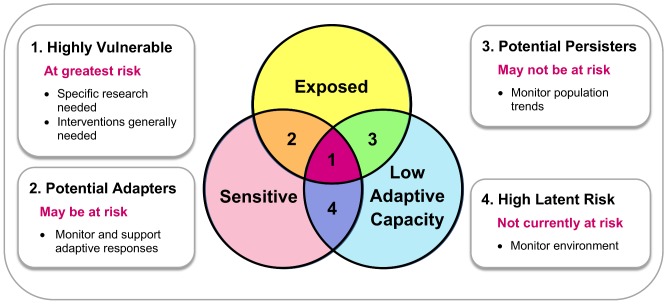
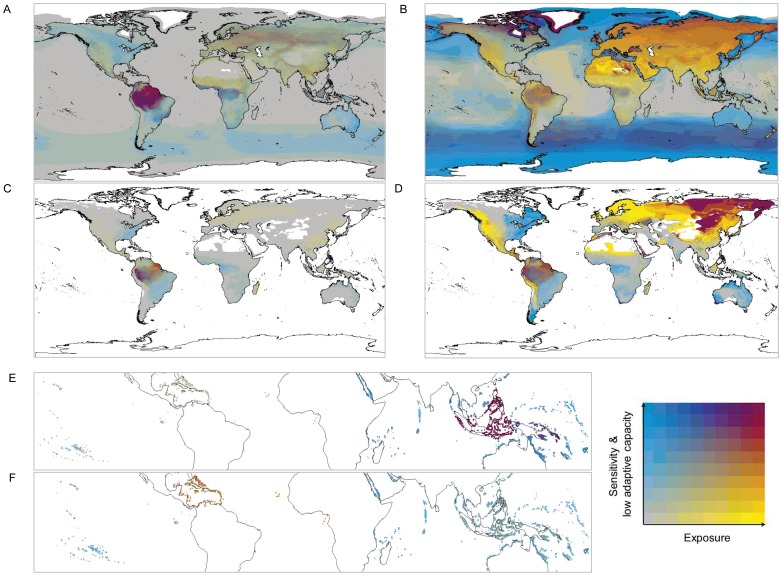
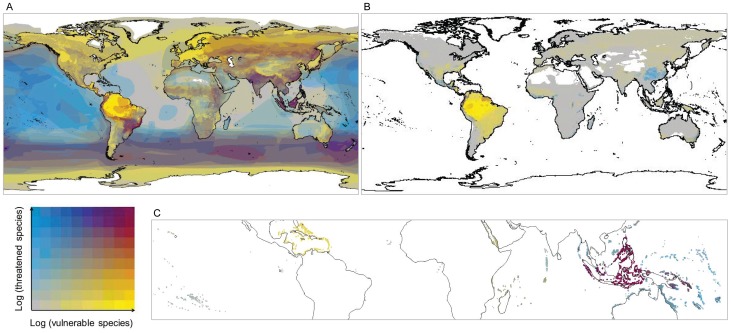
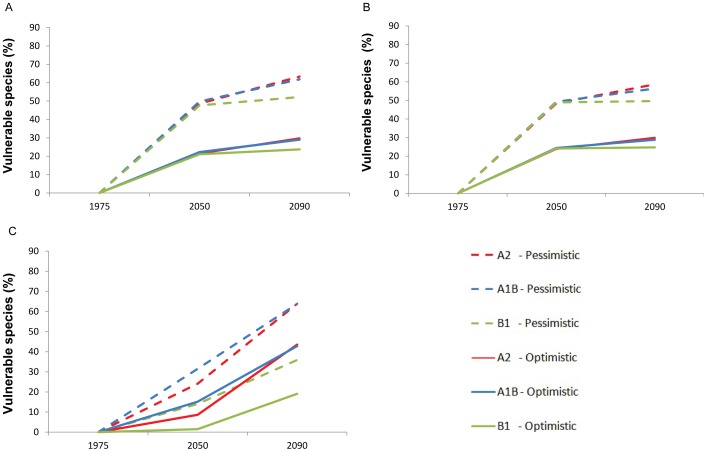
Climate change will have far-reaching impacts on biodiversity, including increasing extinction rates. Current approaches to quantifying such impacts focus on measuring exposure to climatic change and largely ignore the biological differences between species that may significantly increase or reduce their vulnerability. To address this, we present a framework for assessing three dimensions of climate change vulnerability, namely sensitivity, exposure and adaptive capacity; this draws on species' biological traits and their modeled exposure to projected climatic changes. In the largest such assessment to date, we applied this approach to each of the world's birds, amphibians and corals (16,857 species). The resulting assessments identify the species with greatest relative vulnerability to climate change and the geographic areas in which they are concentrated, including the Amazon basin for amphibians and birds, and the central Indo-west Pacific (Coral Triangle) for corals. We found that high concentration areas for species with traits conferring highest sensitivity and lowest adaptive capacity differ from those of highly exposed species, and we identify areas where exposure-based assessments alone may over or under-estimate climate change impacts. We found that 608-851 bird (6-9%), 670-933 amphibian (11-15%), and 47-73 coral species (6-9%) are both highly climate change vulnerable and already threatened with extinction on the IUCN Red List. The remaining highly climate change vulnerable species represent new priorities for conservation. Fewer species are highly climate change vulnerable under lower IPCC SRES emissions scenarios, indicating that reducing greenhouse emissions will reduce climate change driven extinctions. Our study answers the growing call for a more biologically and ecologically inclusive approach to assessing climate change vulnerability. By facilitating independent assessment of the three dimensions of climate change vulnerability, our approach can be used to devise species and area-specific conservation interventions and indices. The priorities we identify will strengthen global strategies to mitigate climate change impacts.
Overview
The claims and statistics of this paper haven’t been checked yet.
Free: it reads the open-access text and checks the first 5 claims that cite a source we can check. Create a free account to check every claim.
Integrity signals
Registry
Cites
Statistics
Figures
Verification
Claims the paper makes
The claims and statistics of this paper haven’t been checked yet.
Free: it reads the open-access text and checks the first 5 claims that cite a source we can check. Create a free account to check every claim.
Claims other papers make about this one
Each is checked against this paper’s own text: does it say what the citing paper says it does?
The source backs part of the claim, not all of it — or backs it for a different population, condition or comparison.
In the citing paper
“Climate change will become an increasingly dominant problem in the biodiversity crisis 3 .”
From Biodiversity: The ravages of guns, nets and bulldozers (2016) · cites this paper as [3]
Experimental — accuracy not yet measuredThe cited source says what the claim attributes to it.
In the citing paper
“Finally, the balance of threats driving extinction risk for many of the world's species will change, even over the next few decades 3 .”
From Biodiversity: The ravages of guns, nets and bulldozers (2016) · cites this paper as [3]
Self-check
Percentages, sums and reported differences re-computed from the paper’s own numbers.
The self-check needs the paper’s full text.
Citations
Cites
Very high resolution interpolated climate surfaces for global land areas
Hijmans, R. J., Cameron, S. E., Parra, J. L., Jones, P. G., & Jarvis, A. (2005) · International Journal of Climatology · doi:10.1002/joc.1276 · Cited by 19,825
Global Biodiversity Scenarios for the Year 2100
Sala, O. E., Stuart Chapin, F., III, Armesto, J. J., Berlow, E., Bloomfield, J., Dirzo, R., Huber-Sanwald, E., Huenneke, L. F., Jackson, R. B., et al. (2000) · Science · doi:10.1126/science.287.5459.1770 · Cited by 9,280 · cited 1×
“However, anthropogenic climate change is becoming a significant new threat [4–7].”
BackgroundClimate Change 2007: Impacts, Adaptation and Vulnerability
Parry, M. L., Canziani, O. F., Palutikof, J. P., van der Linden, P., & Hanson, C. (2007) · Centre for Environmental Data Analysis Digital Repository (Centre for Environmental Data Analysis) · doi:10.5281/zenodo.7356334 · Cited by 9,136
Extinction risk from climate change
Thomas, C. D., Cameron, A., Green, R. E., Bakkenes, M., Beaumont, L. J., Collingham, Y. C., Erasmus, B. F. N., de Siqueira, M. F., Grainger, A., Hannah, L., et al. (2004) · Nature · doi:10.1038/nature02121 · Cited by 7,695
Predicting species distribution: offering more than simple habitat models
Guisan, A., & Thuiller, W. (2005) · Ecology Letters · doi:10.1111/j.1461-0248.2005.00792.x · Cited by 6,587 · cited 1×
“These and most other similar large-scale assessments are based primarily on species distribution (bioclimatic envelope) models, which use correlations between species’ observed distributions and climate variables to predict their distributions and hence their extinction risk under future climate scenarios [9–11].”
BackgroundSpecial report on emissions scenarios
Nakićenović, N., Alcamo, J., Davis, G. R., de Vries, B. J. M., Fenhann, J. V., Gaffin, S., Gregory, K., Grübler, A., Jung, T. Y., Kram, T., et al. (2000) · Cited by 6,262
Has the Earth’s sixth mass extinction already arrived?
Barnosky, A. D., Matzke, N., Tomiya, S., Wogan, G. O. U., Swartz, B., Quental, T. B., Marshall, C., McGuire, J. L., Lindsey, E. L., Maguire, K. C., et al. (2011) · Nature · doi:10.1038/nature09678 · Cited by 4,400 · cited 1×
“Vertebrate extinction rates are currently estimated to be 10–100 times greater than background [1], largely due to the effects of habitat loss, over-exploitation and invasive species [2,3].”
BackgroundPearson, R. G., & Dawson, T. P. (2003) · Global Ecology and Biogeography · doi:10.1046/j.1466-822x.2003.00042.x · Cited by 4,252
Impacts of climate warming on terrestrial ectotherms across latitude
Deutsch, C. A., Tewksbury, J. J., Huey, R. B., Sheldon, K. S., Ghalambor, C. K., Haak, D. C., & Martin, P. R. (2008) · Proceedings of the National Academy of Sciences · doi:10.1073/pnas.0709472105 · Cited by 3,840 · cited 1×
“ranges are particularly vulnerable to climate [16].”
Scenarios for Global Biodiversity in the 21st Century
Pereira, H. M., Leadley, P. W., Proença, V., Alkemade, R., Scharlemann, J. P. W., Fernandez-Manjarrés, J. F., Araújo, M. B., Balvanera, P., Biggs, R., Cheung, W. W. L., et al. (2010) · Science · doi:10.1126/science.1196624 · Cited by 2,077 · cited 1×
“However, anthropogenic climate change is becoming a significant new threat [4–7].”
BackgroundSelf-citation
Cited by
Items 301–400 of 989
Rapacciuolo, G., Damerow, J., Zeilinger, A. R., & Resh, V. H. (2017) · Biodiversity and Conservation · doi:10.1007/s10531-017-1399-4 · Cited by 34
“The degree to which species increase or decline over time in response to environmental changes is likely to depend on their biological traits (Williams et al. 2008; Angert et al. 2011; Foden et al. 2013).”
Backgrounddos Anjos, L. J. S., de Souza, E. B., Torres-Amaral, C., Igawa, T. K., & de Toledo, P. M. (2021) · Global Ecology and Conservation · doi:10.1016/j.gecco.2020.e01441 · Cited by 37
Habibzadeh, N., Ghoddousi, A., Bleyhl, B., & Kuemmerle, T. (2021) · Conservation Science and Practice · doi:10.1111/csp2.375 · Cited by 34
“Finally, evolutionary traits of alpine species, such as narrow thermal tolerance, may further increase their vulnerability to climate change (Foden et al., 2013; Hof, Rodríguez-Castañeda, Allen, Jansson, & Nilsson, 2017).”
BackgroundCoral reef conservation in Bali in light of international best practice, a literature review
Boakes, Z., Hall, A. E., Ampou, E. E., French, G. C. A., Suryaputra, I. G. N. A., Mahyuni, L. P., Prasetijo, R., & Stafford, R. (2022) · Journal for Nature Conservation · doi:10.1016/j.jnc.2022.126190 · Cited by 41
Harper, J. R. M., van Wilgen, N. J., Turner, A. A., Tolley, K. A., Maritz, B., Clusella‐Trullas, S., da Silva, J. M., Cunningham, S. J., Cheney, C., de Villiers, A. L., et al. (2022) · Conservation Science and Practice · doi:10.1111/csp2.12756 · Cited by 38
“Ability to reproduce at any time of year Low = Can breed >1 per year at anytime 12 Unknown = Uncertain 7 Low Adaptive Capacity G RL1: Dispersal limited by physical barriers High Location of species' distribution relative to Cape Agulhas (Africa's southern tip) High = The species' entire distribution is within 10 latit…”
BackgroundMethodSelf-citationInsights into the impacts of four current environmental problems on flying birds
Dutta, H. (2017) · Energy Ecology and Environment · doi:10.1007/s40974-017-0075-6 · Cited by 38
“Consequently, biodiversity is already being impacted due to climate change, and many species are likely to suffer declines or even undergo extinction (Foden et al. 2013).”
BackgroundInfluentialBenchmarking DNA methylation assays in a reef‐building coral
Dixon, G., & Matz, M. V. (2020) · Molecular Ecology Resources · doi:10.1111/1755-0998.13282 · Cited by 30
“They are exceptional both in their socioecological value, and sensitivity to anthropogenic change (Cesar, 2000; Foden et al., 2013).”
BackgroundJenkins, R., Warren, R., & Price, J. T. (2021) · PLoS ONE · doi:10.1371/journal.pone.0254879 · Cited by 34
“The dangers of higher warming to biodiversity in terms of climatic range loss have previously been discussed [12, 47, 51].”
BackgroundPrioritizing climate change adaptation options for iconic marine species
Hobday, A. J., Chambers, L. E., & Arnould, J. P. Y. (2015) · Biodiversity and Conservation · doi:10.1007/s10531-015-1007-4 · Cited by 35
“…as a form of risk-based assessment have been widely used to quickly screen and assess impacts in a range of fields, including fisheries management (Hobday et al. 2011), conservation prioritisation (Donlan et al. 2010; Small et al. 2012) and climate change (Chin et al. 2010; Foden et al. 2013).”
BackgroundMethodLegrand, B., Benneveau, A., Jaeger, A., Pinet, P., Potin, G., Jaquemet, S., & Corre, M. L. (2016) · Marine Ecology Progress Series · doi:10.3354/meps11710 · Cited by 35
Transforming the global energy system is required to avoid the sixth mass extinction
Barnosky, A. D. (2015) · MRS Energy & Sustainability · doi:10.1557/mre.2015.11 · Cited by 35
Performance of generation time approximations for extinction risk assessments
Staerk, J., Conde, D. A., Ronget, V., Lemaître, J., Gaillard, J., & Colchero, F. (2019) · Journal of Applied Ecology · doi:10.1111/1365-2664.13368 · Cited by 33
“Moreover, generation time influences the mutation rate, 81 making it an indicator for species’ adaptability to climate change (Foden et al., 2013; 82 Pearson et al., 2014).”
Bridge, T. C. L., Hoey, A. S., Campbell, S., Muttaqin, E., Rudi, E., Fadli, N., & Baird, A. H. (2013) · F1000Research · doi:10.12688/f1000research.2-187.v1 · Cited by 33
Climatic change and extinction risk of two globally threatened Ethiopian endemic bird species
Bladon, A. J., Donald, P. F., Collar, N., Denge, J., Dadacha, G., Wondafrash, M., & Green, R. E. (2021) · PLoS ONE · doi:10.1371/journal.pone.0249633 · Cited by 29
“[20] assessed the family to which the one of the focal species of our study, the White-tailed Swallow (Hirundo megaensis) belongs (Hirundinidae; swallows and martins) as being the least vulnerable to climate change of all bird families [20].”
BackgroundDesigning a global assessment of climate change on inland fishes and fisheries: knowns and needs
Paukert, C. P., Lynch, A. J., Beard, T. D., Chen, Y., Cooke, S. J., Cooperman, M. S., Cowx, I. G., Ibengwe, L. J., Infante, D. M., Myers, B. J. E., et al. (2017) · Reviews in Fish Biology and Fisheries · doi:10.1007/s11160-017-9477-y · Cited by 35
“Quantifying the ability of inland fishes to adapt to novel environmental conditions will be an essential component to any assessment of how inland fisheries will respond to climate change (Huey et al. 2012; Foden et al. 2013).”
BackgroundMethodAn uncertain future for the endemic Galliformes of the Caucasus
Hof, A. R., & Allen, A. M. (2018) · The Science of The Total Environment · doi:10.1016/j.scitotenv.2018.09.227 · Cited by 35
Simplification of woody plant trait networks among communities along a climatic aridity gradient
Medeiros, C. D., Trueba, S., Henry, C., Fletcher, L. R., Lutz, J. A., Méndez‐Alonzo, R., Kraft, N. J. B., & Sack, L. (2025) · Journal of Ecology · doi:10.1111/1365-2745.70010 · Cited by 29
“…; Thuiller et al., 2004 ), community com - position (Cavender-Bares et al., 2004 ) and responses to changing climates (Tordoni et al., 2022 ; Trugman et al., 2019 , 2020 ), with appli - cations in species and ecosystem management (Carlucci et al., 2020; Foden et al., 2013 ; Loiseau et al., 2020 ).”
Equipped to cope with climate change: traits associated with range filling across European taxa
Estrada, A., Morales‐Castilla, I., Meireles, C. I. R., Caplat, P., & Early, R. (2017) · Ecography · doi:10.1111/ecog.02968 · Cited by 36
Yu, X., Huang, B., Zhou, Z., Tang, J., & Yu, Y. (2017) · Gene · doi:10.1016/j.gene.2017.09.040 · Cited by 29
“However, the survival and reproduction of stony corals are being threatened because the symbionts are more vulnerable to environmental change (Foden et al., 2013).”
BackgroundPrieto-Torres, D. A., Sánchez‐González, L. A., Ortiz‐Ramírez, M. F., Ramírez‐Albores, J. E., García-Trejo, E. A., & Navarro-Sigüenza, A. G. (2021) · Climatic Change · doi:10.1007/s10584-021-03091-3 · Cited by 35
Palmer, G., Hill, J. K., BRERETON, T. M., Brooks, D. R., Chapman, J. W., Fox, R., Oliver, T. H., & Thomas, C. D. (2015) · Science Advances · doi:10.1126/sciadv.1400220 · Cited by 31
RetractedAgroforestry for Climate Change Resilience in Degraded Landscapes
Gupta, S. R., Dagar, J. C., Sileshi, G. W., & Chaturvedi, R. K. (2023) · Sustainability Sciences in Asia and Africa · doi:10.1007/978-981-19-4602-8_5 · Cited by 47
Campbell, L. J., Garner, T. W. J., Tessa, G., Scheele, B. C., Griffiths, A. G. F., Wilfert, L., & Harrison, X. A. (2018) · PeerJ · doi:10.7717/peerj.5949 · Cited by 34
“41 Aside from threats such as habitat loss (Cushman, 2006), over-harvesting (Xie et al., 2007) and 42 climate change (Foden et al., 2013), one major driver of amphibian declines is the emergence of a 43 suite of infectious diseases (Daszak et al., 1999).”
BackgroundFocus and social contagion of environmental organization advocacy on Twitter
Barrios‐O’Neill, D. (2020) · Conservation Biology · doi:10.1111/cobi.13564 · Cited by 35
“…interact to drive extinctions (Graham et al. 2011), and threats, such as climate change, will become increasingly problematic in the coming decades (Foden et al. 2013), but reversing global biodiversity declines will necessarily hinge on moving the known, major, and contemporary threats down and…”
BackgroundGuillaumet, A., Kuntz, W. A., Samuel, M. D., & Paxton, E. H. (2017) · Ecological Monographs · doi:10.1002/ecm.1253 · Cited by 31
Liles, M. J., Peterson, T. R., Seminoff, J. A., Gaos, A. R., Altamirano, E., Henríquez, A. V., Gadea, V., Chavarría, S., Urteaga, J., Wallace, B. P., et al. (2019) · Ecology and Evolution · doi:10.1002/ece3.4774 · Cited by 36
“Anthropogenic climate change is widely considered a major threat to global biodiversity (Foden et al., 2013; Parmesan & Yohe, 2003; Poloczanska et al., 2013), with 15%–37% of Earth's species potentially “committed to extinction” by 2050 (Thomas et al., 2004).”
BackgroundShepherding Nature : The Challenge of Conservation Reliance
Scott, J. M., Wiens, J. A., Horne, B. V., & Goble, D. D. (2020) · Cited by 27
Conservation in the face of climate change: recent developments
Lawler, J. J., Watson, J. E. M., & Game, E. T. (2015) · F1000Research · doi:10.12688/f1000research.6490.1 · Cited by 31
Endoparasites infecting exotic captive amphibian pet and zoo animals (Anura, Caudata) in Germany
Hallinger, M. J., Taubert, A., & Hermosilla, C. R. (2020) · Parasitology Research · doi:10.1007/s00436-020-06876-0 · Cited by 27
Huang, Q., Bateman, B. L., Michel, N. L., Pidgeon, A. M., Radeloff, V. C., Heglund, P. J., Allstadt, A. J., Nowakowski, A. J., Wong, J. P., & Sauer, J. R. (2022) · The Science of The Total Environment · doi:10.1016/j.scitotenv.2022.159603 · Cited by 26
van Soesbergen, A., Arnell, A. P., Sassen, M., Stuch, B., Schaldach, R., Göpel, J., Vervoort, J., Mason-D’Croz, D., Islam, S., & Palazzo, A. (2016) · Regional Environmental Change · doi:10.1007/s10113-016-0983-6 · Cited by 32
“The suitable habitat for individual species is based on a crosswalk table between LandSHIFT land use types (adopted from GLC2000 land cover classes) and IUCN habitat classes, which are based on expert opinion and the literature and was originally developed by Foden et al. (2013).”
Therrien, J., Lecomte, N., Zgirski, T., Jaffré, M., Beardsell, A., Goodrich, L. J., Bêty, J., Franke, A., Zlonis, E. J., & Bildstein, K. L. (2017) · The Auk · doi:10.1642/auk-17-5.1 · Cited by 31
“The study of species’ sensitivity to climate change has become a growing discipline, in which identifying key links between climate and species traits has taken a central place (e.g., Foden et al. 2013, Pacifici et al. 2015, Thackeray et al. 2016).”
BackgroundBesacier-Monbertrand, A.-L., Timoner, P., Rahman, K., Burlando, P., Fatichi, S., Gonseth, Y., Moser, F., Castella, E., & Lehmann, A. (2019) · Water · doi:10.3390/w11040636 · Cited by 28
“Thus, an improvement to Red List Status would be to account for species vulnerability to climate change [10,12].”
BackgroundWild Plant and Animal Genetic Resources
Ingram, V. J., Vinceti, B., & van Vliet, N. (2017) · Routledge eBooks · doi:10.4324/9781317753285-5 · Cited by 27
A safe agricultural space for biodiversity
García-Vega, D., Dumas, P., Prudhomme, R., Kremen, C., & Aubert, P. (2024) · Frontiers in Sustainable Food Systems · doi:10.3389/fsufs.2024.1328800 · Cited by 38
Gutierrez, L. A., Polidoro, B., Obura, D. O., Cavada-Blanco, F., Linardich, C., Pettersson, E., Pearce‐Kelly, P., Kemppinen, K., Alvarado, J. J., Álvarez‐Filip, L., et al. (2024) · PLoS ONE · doi:10.1371/journal.pone.0309354 · Cited by 36
Molinos, J. G., Takao, S., Kumagai, N. H., Poloczanska, E. S., Burrows, M. T., Fujii, M., & Yamano, H. (2017) · Global Change Biology · doi:10.1111/gcb.13665 · Cited by 27
Abreu‐Jardim, T. P. F., Jardim, L., Ballesteros‐Mejia, L., Maciel, N. M., & Collevatti, R. G. (2021) · Diversity and Distributions · doi:10.1111/ddi.13299 · Cited by 28
“Amphibians are one of the most threatened groups by climate change, they are amongst the most vulnerable vertebrates, declining even faster than birds and mammals (Foden et al., 2013; Stuart et al., 2004).”
BackgroundCook, C. N., Beever, E. A., Thurman, L. L., Thompson, L. M., Gross, J., Whiteley, A. R., Nicotra, A. B., Szymanski, J. A., Botero, C. A., Hall, K. R., et al. (2021) · Evolutionary Applications · doi:10.1111/eva.13266 · Cited by 27
“…(e.g. Hoffmann & Sgrò, 2011; Nicotra et al., 2015; Stockwell et al., 2003) and the attributes, traits and conditions that influence the levels of tolerance and degree of flexibility species display in their responses to change (e.g. Beever et al., 2017; Foden et al., 2013; Mimura et al., 2017).”
BackgroundUsing Historical and Experimental Data to Reveal Warming Effects on Ant Assemblages
Resasco, J., Pelini, S. L., Stuble, K. L., Sanders, N. J., Dunn, R. R., Diamond, S. E., Ellison, A. M., Gotelli, N. J., & Levey, D. J. (2014) · PLoS ONE · doi:10.1371/journal.pone.0088029 · Cited by 27
“Species-specific responses may be linked to functional traits [57] such as thermal tolerance [24,25,57], whereas uncontrolled variables in observational studies and site-specific differences may mask assemblage-level changes [12].”
BackgroundCross-Scale Approaches to Forecasting Biogeographic Responses to Climate Change
Torossian, J. L., Kordas, R. L., & Helmuth, B. S. T. (2016) · Advances in ecological research/Advances in Ecological Research · doi:10.1016/bs.aecr.2016.08.003 · Cited by 30
Current approaches and future opportunities for climate-smart protected areas
Buenafe, K. C. V., Dunn, D. C., Meta×as, A., Schoeman, D. S., Everett, J. D., Pidd, A., Hanson, J. O., Bentley, L. K., Kim, S. W., Neubert, S., et al. (2025) · Nature Reviews Biodiversity · doi:10.1038/s44358-025-00041-0 · Cited by 31
“In fact, trait-based approaches in assessing climate vulnerability are frequently used 25 and can inform the initial steps of climate-smart conservation planning 146,147 .”
Genetic and Environmental Indicators of Climate Change Vulnerability for Desert Bighorn Sheep
Creech, T. G., Epps, C. W., Wehausen, J. D., Crowhurst, R. S., Jaeger, J. R., Longshore, K. M., Holton, B., Sloan, W. B., & Monello, R. J. (2020) · Frontiers in Ecology and Evolution · doi:10.3389/fevo.2020.00279 · Cited by 29
Community changes in odonate monitoring: why are long‐term studies so relevant?
Dolný, A., Pyszko, P., & Šigutová, H. (2021) · Insect Conservation and Diversity · doi:10.1111/icad.12491 · Cited by 28
“The extent to which species increase or decline over time depends on their biological traits (Angert et al., 2011; Foden et al., 2013) but, in general, disturbances favour generalists (Kassen, 2002; Marvier et al., 2004; Devictor & Robert, 2009) as evidenced in Odonata (Stewart & Samways, 1998;…”
BackgroundPérez‐Rosales, G., Brandl, S. J., Chancerelle, Y., Siu, G., Martinez, É., Parravicini, V., & Hédouin, L. (2021) · Marine Pollution Bulletin · doi:10.1016/j.marpolbul.2021.112659 · Cited by 31
Salas, E. A. L., Seamster, V. A., Boykin, K. G., Harings, N. M., & Dixon, K. W. (2017) · AIMS environmental science · doi:10.3934/environsci.2017.2.358 · Cited by 26
“the climate continues to change, associated changes to species habitat could be damaging [11], and could lead to reduction in species population sizes as suitable habitats disappear [35].”
BackgroundModel uncertainties do not affect observed patterns of species richness in the Amazon
Sales, L. P., Neves, O. V., Júnior, P. D. M., & Loyola, R. A. (2017) · PLoS ONE · doi:10.1371/journal.pone.0183785 · Cited by 31
Quantifying the value of monitoring species in multi‐species, multi‐threat systems
Bal, P., TULLOCH, A. I. T., Chadès, I., Carwardine, J., McDonald‐Madden, E., & Rhodes, J. R. (2018) · Methods in Ecology and Evolution · doi:10.1111/2041-210x.13037 · Cited by 27
“Species may be affected to varying degrees by threats depending on the severity of threats, and/or the species’ sensitivity and adaptive capacity to each threat (Foden et al., 2013).”
BackgroundPlant and ant assemblages predicted to decouple under climate change
Caddy‐Retalic, S., Hoffmann, B. D., Guerin, G. R., Andersen, A. N., Wardle, G. M., McInerney, F. A., & Lowe, A. J. (2018) · Diversity and Distributions · doi:10.1111/ddi.12858 · Cited by 25
“Component species are likely to vary markedly in terms of the relative importance of climatic drivers (Foden et al., 2013), such that major community deconstruction and recon‐ struction might be expected (Gilman, Urban, Tewksbury, Gilchrist, & Holt, 2010).”
BackgroundChakraborty, A., Sgrò, C. M., & Mirth, C. K. (2020) · Evolution · doi:10.1111/evo.14065 · Cited by 26
“…of plasticity comes from studies of thermal plasticity among populations (e.g., Liefting et al. 2009; Sgro et al. 2010; Rohr et al. 2018 and references therein) or species (Gunderson and Stillman 2015; Seebacher et al. 2015 and references therein) distributed across wide latitudinal gradients.”
BackgroundDejene, S. W., Mpakairi, K. S., Kanagaraj, R., Wato, Y., & Mengistu, S. (2021) · African Zoology · doi:10.1080/15627020.2020.1846617 · Cited by 27
Chakraborty, A., Walter, G. M., Monro, K., Alves, A. N., Mirth, C. K., & Sgrò, C. M. (2022) · Journal of Evolutionary Biology · doi:10.1111/jeb.14099 · Cited by 25
“Rapid climate change is making the world warmer and more variable (Blunden & Arndt, 2016; Chevin et al., 2010 ; Foden et al., 2013).”
BackgroundHabitat associations drive species vulnerability to climate change in boreal forests
Mazziotta, A., Triviño, M., Tikkanen, O., Kouki, J., Strandman, H., & Mönkkönen, M. (2016) · Climatic Change · doi:10.1007/s10584-015-1591-z · Cited by 28
Taking the lead on climate change: modelling and monitoring the fate of an Amazonian frog
Courtois, E. A., Michel, E., Martinez, Q., Pineau, K., Dewynter, M., Ficetola, G. F., & Fouquet, A. (2015) · Oryx · doi:10.1017/s0030605315000083 · Cited by 24
Integrating climate and host richness as drivers of global parasite diversity
Martins, P. M., Poulin, R., & Gonçalves‐Souza, T. (2020) · Global Ecology and Biogeography · doi:10.1111/geb.13213 · Cited by 25
“Along with their low dispersal abilities, these aspects of amphibian biology make them especially susceptible to changes in the temperature and water regimes as a result of climate change (Foden et al., 2013).”
BackgroundClimate change, woodpeckers, and forests: Current trends and future modeling needs
Walsh, E. S., Vierling, K. T., Strand, E. K., Bartowitz, K. J., & Hudiburg, T. W. (2019) · Ecology and Evolution · doi:10.1002/ece3.4876 · Cited by 24
“The adaptive capacity of these woodpeckers is considered high (Supporting information Table S1; Foden et al., 2013), so climate change alone may not drive responses and community dynamics may not scale to the species level.”
Xie, S., Tearle, R. G., & McWhorter, T. J. (2018) · Avian Biology Research · doi:10.3184/175815618x15366607700458 · Cited by 29
“As temperatures continue to rise with climate change, sensitive taxa of birds will be challenged (McKechnie et al., 2012; Foden et al., 2013; Garnett and Franklin, 2014).”
BackgroundMokhatla, M., Measey, J. G., & Smit, B. (2019) · PeerJ · doi:10.7717/peerj.7885 · Cited by 24
Standardized ethograms and a device for assessing amphibian thermal responses in a warming world
Meza-Parral, Y., García‐Robledo, C., Pineda, E., Escobar, F., & Donnelly, M. A. (2020) · Journal of Thermal Biology · doi:10.1016/j.jtherbio.2020.102565 · Cited by 23
OBREGÓN, R. L., Scolaro, J. A., Ibargüengoytía, N. R., & Medina, M. (2020) · Integrative Zoology · doi:10.1111/1749-4877.12481 · Cited by 24
Jacken, A., Rödder, D., & Ziegler, T. (2020) · International Zoo Yearbook · doi:10.1111/izy.12272 · Cited by 26
Evolutionary rescue and geographic range shifts under climate change for global amphibians
Souza, K. D. S. E., Fortunato, D. D. S., Jardim, L., Terribile, L. C., Lima‐Ribeiro, M. S., Mariano, C. Á., Pinto‐Ledezma, J. N., Loyola, R. A., Dobrovolski, R., Rangel, T. F., et al. (2023) · Frontiers in Ecology and Evolution · doi:10.3389/fevo.2023.1038018 · Cited by 34
“In general, tropical species with a small distribution are considered the most susceptible to extinction (Gibbons et al., 2000; Thomas et al., 2004; Foden et al., 2013; Manes et al., 2021).”
BackgroundVulnerability assessment of Korean fisheries to climate change
Kim, M.-J., Hong, J.-B., Han, I.-S., Lee, J., & Kim, D.-H. (2023) · Marine Policy · doi:10.1016/j.marpol.2023.105735 · Cited by 26
Suitable habitats shifting toward human-dominated landscapes of Asian elephants in China
Yu, Q., Hu, Z., Huang, C. W., Xu, T., Onditi, K. O., Li, X., & Jiang, X. (2023) · Biodiversity and Conservation · doi:10.1007/s10531-023-02766-w · Cited by 25
Schuetz, J. G., Langham, G., Soykan, C. U., Wilsey, C. B., Auer, T., & Sanchez, C. C. (2015) · Ecological Applications · doi:10.1890/14-1903.1 · Cited by 25
Steen, V. A., Skagen, S. K., & Noon, B. R. (2018) · Ecosphere · doi:10.1002/ecs2.2095 · Cited by 29
Mims, M. C., Olson, D. H., Pilliod, D. S., & Dunham, J. B. (2018) · Biological Conservation · doi:10.1016/j.biocon.2018.10.012 · Cited by 26
“Adaptive capacity, a third dimension, is the ability to cope with climate change through dispersal or evolutionary adaptation (Foden et al., 2013).”
BackgroundInfluentialButterfield, B. J., Holmgren, C. A., Anderson, R. S., & Betancourt, J. L. (2019) · Ecology · doi:10.1002/ecy.2817 · Cited by 23
Hancock, N., & Gallagher, R. V. (2014) · Austral Ecology · doi:10.1111/aec.12151 · Cited by 23
“…et al. 2008; Williams et al. 2008; Richardson et al. 2009; Vitt et al. 2010; Dawson et al. 2011; McDonald-Madden et al. 2011; Thomas et al. 2011; Haskins & Keel 2012; Moir et al. 2012; Chauvenet et al. 2013; Foden et al. 2013; Rout et al. 2013; Schwartz & Martin 2013; Shoo et al. 2013).”
BackgroundAwkerman, J. A., Glinski, D. A., Henderson, W. M., Meter, R. J. V., & Purucker, S. T. (2024) · Frontiers in Ecology and Evolution · doi:10.3389/fevo.2024.1336747 · Cited by 24
The exposure of the world’s mountains to global change drivers
Dragonetti, C., Daskalova, G. N., & Marco, M. D. (2024) · iScience · doi:10.1016/j.isci.2024.109734 · Cited by 28
“54,91 Additionally, it is crucial to recognize that not all species face the same level of risk from high exposure.”
BackgroundClimatic niche limits and community‐level vulnerability of obligate symbioses
Smith, R. J., Jovan, S., & McCune, B. (2019) · Journal of Biogeography · doi:10.1111/jbi.13719 · Cited by 20
“Climate change vulnerability assessments commonly incorporate exposure, sensitivity and adaptability to de‐ termine extinction risks at the species level (Ellis, 2013; Foden et al., 2013; Pacifici et al., 2015); however, we also need to understand global change responses at the community‐level.”
BackgroundCabrera-García, S., Forio, M. A. E., Lock, K., Vandenbroucke, M., Oña, T., Gualoto, M., Goethals, P. L. M., & der heyden, C. V. (2021) · Water · doi:10.3390/w13121692 · Cited by 22
“Although the longitudinal variations in FFG are generally consistent with the RCC predictions, these variations are also often affected by water quality, land use, and other local stressors [50,51].”
BackgroundLopez, J. W., DuBose, T. P., Franzen, A. J., Atkinson, C. L., & Vaughn, C. C. (2022) · Aquatic Conservation Marine and Freshwater Ecosystems · doi:10.1002/aqc.3884 · Cited by 32
Large‐scale spatial variability in urban tolerance of birds
Callaghan, C. T., Palacio, F. X., Benedetti, Y., Morelli, F., & Bowler, D. E. (2022) · Journal of Animal Ecology · doi:10.1111/1365-2656.13862 · Cited by 27
An indicator-based approach for assessing marine ecosystem resilience
Flensborg, L. C., Maureaud, A. A., Bravo, D. N., & Lindegren, M. (2023) · ICES Journal of Marine Science · doi:10.1093/icesjms/fsad077 · Cited by 27
“Traits can help determine a species’ response to environmental changes and provide insight into the functional role of the species in the ecosystem (Foden, 2013).”
BackgroundFouquet, A., de Souza, S. M., Nunes, P. M. S., Kok, P. J. R., Curcio, F. F., de Carvalho, C. M., Grant, T., & Rodrigues, M. T. (2015) · Zootaxa · doi:10.11646/zootaxa.3926.2.2 · Cited by 23
“The main causes of this decline are habitat destruction (Laurance 2007; Laurance et al. 2012; da Silva et al. 2005), worldwide disease outbreaks (Pounds et al. 2006; Rodriguez et al. 2014) and the effects of climate change (Foden et al. 2013; Rull & Vegas-Vilarrúbia 2006).”
Backgroundde Pous, P., Montori, A., Amat, F., & Sanuy, D. (2015) · Regional Environmental Change · doi:10.1007/s10113-015-0804-3 · Cited by 27
An indicator highlights seasonal variation in the response of Lepidoptera communities to warming
Martay, B., Monteith, D., Brewer, M., BRERETON, T. M., Shortall, C. R., & Pearce‐Higgins, J. W. (2016) · Ecological Indicators · doi:10.1016/j.ecolind.2016.01.057 · Cited by 22
Meter, R. J. V., Glinski, D. A., Henderson, W. M., & Purucker, S. T. (2016) · Environmental Toxicology and Chemistry · doi:10.1002/etc.3439 · Cited by 24
Vulnerability of Subarctic and Arctic breeding birds
Hof, A. R., Rodríguez‐Castañeda, G., Allen, A. M., Jansson, R., & Nilsson, C. F. (2017) · Ecological Applications · doi:10.1002/eap.1434 · Cited by 30
“Foden et al. (2013) assessed the globalscale vulnerability of birds to climate change by estimating their exposure to changes in sea level, temperature, and precipitation, and a limited number of traits such as their capacity to respond by dispersal or evolutionary change, and their sensitivity due…”
BackgroundMethodStewart, B. A., Ford, B. M., Helden, B. E. V., Roberts, J. D., Close, P. G., & Speldewinde, P. (2017) · Biodiversity and Conservation · doi:10.1007/s10531-017-1426-5 · Cited by 23
“…change likely to be experienced by the species), sensitivity (degree to which the persistence of a species is dependent on climatic factors) and adaptive capacity (capacity of a species to adapt to climate change) (Williams et al. 2008; Bagne et al. 2014; Dawson et al. 2011; Foden et al. 2013).”
BackgroundPredicting the sensitivity of marine populations to rising temperatures
Hughes, A. R., Hanley, T. C., Moore, A. F. P., Ramsay‐Newton, C., Zerebecki, R. A., & Sotka, E. E. (2018) · Frontiers in Ecology and the Environment · doi:10.1002/fee.1986 · Cited by 28
“Sensitivity is the degree to which a system or species is affected by changes in climate (IPCC 2014) and can be determined by traits that are intrinsic to a species (Foden et al. 2013).”
BackgroundSelf-citationAmphibian breeding phenology influences offspring size and response to a common wetland contaminant
Buss, N., Swierk, L., & Hua, J. (2021) · Frontiers in Zoology · doi:10.1186/s12983-021-00413-0 · Cited by 22
Zumbado‐Ulate, H., García‐Rodríguez, A., Vredenburg, V. T., & Searle, C. L. (2019) · Ecology and Evolution · doi:10.1002/ece3.5098 · Cited by 24
“…Batrachochytrium dendrobatidis, Chytridiomycosis, conservation, lowlands, population declines efforts should prioritize actions on endangered taxa that are rapidly declining and the habitats that protect these species (Brooks et al., 2006; Foden et al., 2013; Giraudo & Arzamendia, 2018).”
BackgroundThe future of endemic and threatened birds of the Amazon in the face of global climate change
de Moraes, K. F., Lima, M. G. M., Gonçalves, G. S. R., Cerqueira, P. V., & Santos, M. P. D. (2024) · Ecology and Evolution · doi:10.1002/ece3.11097 · Cited by 27
Rubenstein, M. A., Weiskopf, S. R., Carter, S. L., Eaton, M. J., Johnson, C. G., Lynch, A. J., Miller, B. W., Morelli, T. L., Rodriguez, M. A., Terando, A. J., et al. (2020) · Environmental Evidence · doi:10.1186/s13750-020-00194-9 · Cited by 27
Greater topoclimatic control of above‐ versus below‐ground communities
Mod, H. K., Scherrer, D., Cola, V. D., Broennimann, O., Blandenier, Q., Breiner, F. T., Buri, A., Goudet, J., Guex, N., Lara, E., et al. (2020) · Global Change Biology · doi:10.1111/gcb.15330 · Cited by 18
“However, these changes were not systematically gains or losses of habitat, making these rare specialists sensitive yet not necessarily vulnerable to climate change (Foden et al., 2013; Moritz & Agudo, 2013).”
BackgroundEarly Development Drives Variation in Amphibian Vulnerability to Global Change
Brooks, G. C., & Kindsvater, H. K. (2022) · Frontiers in Ecology and Evolution · doi:10.3389/fevo.2022.813414 · Cited by 25
Voskamp, A., Hof, C., Biber, M. F., Böhning‐Gaese, K., Hickler, T., Niamir, A., Willis, S. G., & Fritz, S. A. (2022) · Proceedings of the Royal Society B Biological Sciences · doi:10.1098/rspb.2021.2184 · Cited by 24
Assessing species vulnerability to climate change, and implementing practical solutions
Advani, N. K. (2023) · Biological Conservation · doi:10.1016/j.biocon.2023.110284 · Cited by 21
Zhang, Z., Ma, S., Bede‐Fazekas, Á., Mammola, S., Qu, M., Zhou, J., Feng, E. Y., Qin, G., & Lin, Q. (2023) · Journal of Biogeography · doi:10.1111/jbi.14789 · Cited by 24
“…one of the most vulnerable taxa to climate change (Carpenter et al., 2008 ; Hughes et al., 2018 ; Pandolfi, 2015 ); with the results of two previous studies (Carpenter et al., 2008; Foden et al., 2013 ), and highlights the need to prioritize the Indo-west Pacific region for coral conservation.”
Ahmadi, M., Nawaz, M. A., Asadi, H., Hemami, M., Naderi, M., Tehrany, M. S., & Shabani, F. (2024) · Diversity and Distributions · doi:10.1111/ddi.13826 · Cited by 22
“Alpine birds are crucial representatives of high-elevation biodiversity, and they are currently facing a decline in habitat and increased extinction rates due to environmental change (Foden et al., 2013; Lehikoinen et al., 2019).”
BackgroundMeller, L., Thuiller, W., Pironon, S., Barbet‐Massin, M., Hof, A. F., & Cabeza, M. (2014) · GCB Bioenergy · doi:10.1111/gcbb.12178 · Cited by 27
“Our results are in line with previous work suggesting that climate change mitigation is an important conservation strategy (Rogers & McCarty, 2000; Hannah et al., 2007; Foden et al., 2013; Warren et al., 2013).”
InfluentialNadeau, C. P., & Fuller, A. K. (2016) · Biological Conservation · doi:10.1016/j.biocon.2016.07.030 · Cited by 21
Climate change vulnerability of cetaceans in Macaronesia: Insights from a trait-based assessment
Sousa, A. F., Alves, F., Arranz, P., Dinis, A., Fernández, M., García, L. G., Morales, M., Lettrich, M. D., Coelho, R. E., Costa, H., et al. (2021) · The Science of The Total Environment · doi:10.1016/j.scitotenv.2021.148652 · Cited by 24
Fouquet, A., Martinez, Q., Courtois, E. A., Dewynter, M., Pineau, K., Gaucher, P., Blanc, M., Marty, C., & Kok, P. J. R. (2013) · Zootaxa · doi:10.11646/zootaxa.3750.5.8 · Cited by 24
Operationalizing climate risk in a global warming hotspot
Boyce, D. G., Tittensor, D. P., Fuller, S., Henson, S., Kaschner, K., Reygondeau, G., Schleit, K. E., Saba, V. S., Shackell, N. L., Stanley, R. R. E., et al. (2024) · npj Ocean Sustainability · doi:10.1038/s44183-024-00067-5 · Cited by 26
The status, threats and conservation of Critically Endangered species
Lacher, T. E., Butchart, S. H. M., Gumbs, R., Long, B., López‐Gallego, C., Raimondo, D. C., Simkins, A. T., Sunarto, S., & Hoffmann, M. (2025) · Nature Reviews Biodiversity · doi:10.1038/s44358-025-00059-4 · Cited by 31
Self-citation
Metadata
- Authors
- Foden, W. B., Butchart, S. H. M., Stuart, S. N., Vié, J.-C., Akçakaya, H. R., Angulo, A., DeVantier, L. M., Gutsche, A., Turak, E., Cao, L., Donner, S. D., Katariya, V., Bernard, R., Holland, R. A., Hughes, A. F., O’Hanlon, S. E., Garnett, S. T., Şekercioğlu, Ç. H., & Mace, G. M.
- Affiliations
- University of the Witwatersrand (ZA)
- BirdLife International (KE)
- UN Environment Programme World Conservation Monitoring Centre (GB)
- International Union for Conservation of Nature (CH)
- Museum für Naturkunde (DE)
- James Cook University (AU)
- Zhejiang University (CN)
- University of British Columbia (CA)
- International Union for Conservation of Nature (United Kingdom) (GB)
- Imperial College London (GB)
- University of Southampton (GB)
- Anglia Ruskin University (GB)
- Charles Darwin University (AU)
- University College London (GB)
- Corresponding author
- Foden, Wendy B.
- Butchart, Stuart H. M.
- Stuart, Simon N.
- Vié, Jean-Christophe
- Angulo, Ariadne
- DeVantier, Lyndon M.
- Gutsche, Alexander
- Turak, Emre
- Cao, Long
- Donner, Simon D.
- Katariya, Vineet
- Bernard, Rodolphe
- Holland, Robert A.
- Hughes, Adrian F.
- O’Hanlon, Susannah E.
- Garnett, Stephen T.
- Mace, Georgina M.
- ORCID
- Venue
- PLoS ONE
- Publisher
- Public Library of Science (PLoS)
- Published
- 2013-06-12
- Volume
- 8
- Issue
- 6
- Pages
- e65427
- ISSN
- 1932-6203 (ISSN-L)
- PMC
- PMC3680427
- OpenAlex
- W2113487278
- Cited by
- 988
- References
- 43
- Citations by year
- 2026: 59 · 2025: 59 · 2024: 65 · 2023: 73 · 2022: 72 · 2021: 90 · 2020: 119 · 2019: 83 · 2018: 88 · 2017: 87 · 2016: 66 · 2015: 65 · 2014: 50 · 2013: 12
- FWCI
- 42.61
- Type
- journal article
- Language
- en
- Open access
- gold
- doi.org
- Locations
- PLoS ONE (publishedVersion, cc-by)
- Europe PMC (PubMed Central) (publishedVersion, other-oa)
- PubMed Central (publishedVersion, cc-by)
- PubMed (publishedVersion)
- ePrints Soton (University of Southampton) (acceptedVersion)
- CDU eSpace Institutional Repository (Charles Darwin University) (submittedVersion)
- ResearchOnline - JCU (James Cook University) (submittedVersion)
- DOAJ (DOAJ: Directory of Open Access Journals) (submittedVersion, cc-by-sa)
- UCL Discovery (University College London) (submittedVersion)
- Figshare (submittedVersion, cc-by)
- Funders
- John D. and Catherine T. MacArthur Foundation
- Imperial College London
- Topics
- Physical Sciences › Environmental Science › Ecological Modeling › Species Distribution and Climate Change
- Physical Sciences › Environmental Science › Nature and Landscape Conservation › Ecology and Vegetation Dynamics Studies
- Physical Sciences › Environmental Science › Global and Planetary Change › Climate Change and Environmental Impact
- Keywords
- climate change vulnerability, climate change sensitivity, climate change exposure, adaptive capacity, biological characteristics, birds, amphibians, coral, extinction risk, IUCN Red List, conservation prioritization, Amazon basin, Coral Triangle, biodiversity conservation
- MeSH terms
- Acclimatization, Amphibians, Animals, Birds, Conservation of Natural Resources, Anthozoa, Biodiversity, Climate Change
About these checks
Registry, retraction, Cites and statistics results are computed, not judged, with one exception: a printed reference that no index lists is read once by a model before it counts as a citation error. Claims are extracted by a model and kept only when their quote appears verbatim in the text; each cited source is then checked, with a model’s help, for whether it says what the claim relies on. Those verdicts can be wrong — read the claim’s quote and the cited source before relying on one.
Statistics and arithmetic are recomputed, not judged.
Confidence bands are shown only for fields calibrated on our annotated test set. None is calibrated yet, so no band is shown.
What counts as a claim ›How we measure confidence ›How we check this ›
Are you an author, or do you see a problem with this page? Request a review
Data sources
Bibliographic data: Semantic Scholar, OpenAlex, Crossref.
Contains information from the Semantic Scholar Academic Graph Datasets, made available under the ODC Attribution License (ODC-BY 1.0).
Semantic Scholar’s data is described in: Kinney, R., et al. (2023). The Semantic Scholar Open Data Platform. arXiv:2301.10140.
