

Identifying the World's Most Climate Change Vulnerable Species: A Systematic Trait-Based Assessment of all Birds, Amphibians and Corals
Open accessThe DOI matches its Crossref record; 42 of the 43 references it cites were found in a registry or an index.
Abstract
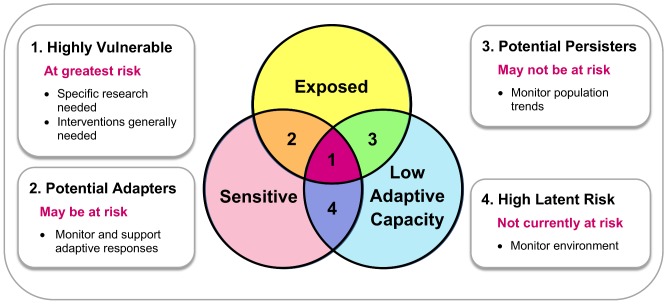
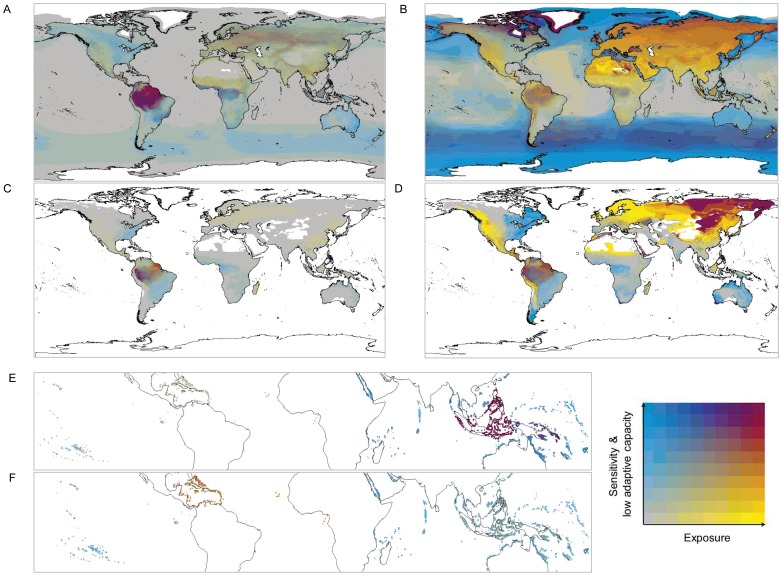
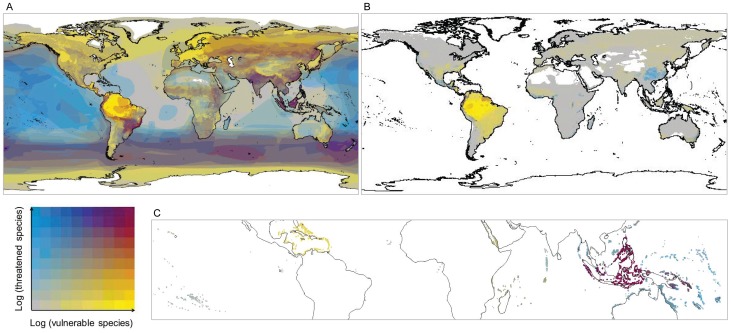
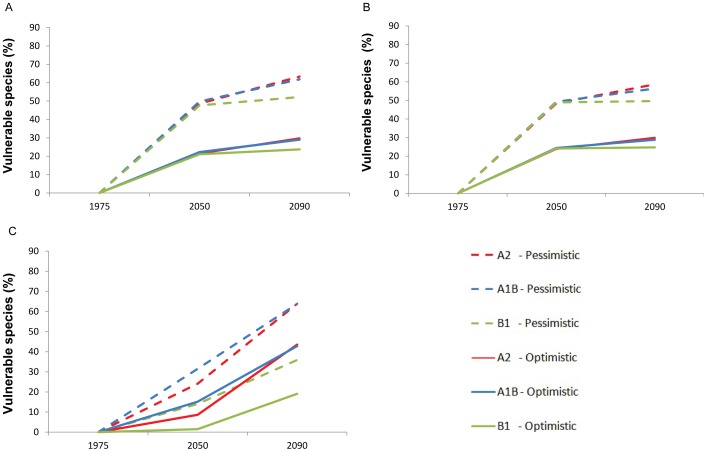
Climate change will have far-reaching impacts on biodiversity, including increasing extinction rates. Current approaches to quantifying such impacts focus on measuring exposure to climatic change and largely ignore the biological differences between species that may significantly increase or reduce their vulnerability. To address this, we present a framework for assessing three dimensions of climate change vulnerability, namely sensitivity, exposure and adaptive capacity; this draws on species' biological traits and their modeled exposure to projected climatic changes. In the largest such assessment to date, we applied this approach to each of the world's birds, amphibians and corals (16,857 species). The resulting assessments identify the species with greatest relative vulnerability to climate change and the geographic areas in which they are concentrated, including the Amazon basin for amphibians and birds, and the central Indo-west Pacific (Coral Triangle) for corals. We found that high concentration areas for species with traits conferring highest sensitivity and lowest adaptive capacity differ from those of highly exposed species, and we identify areas where exposure-based assessments alone may over or under-estimate climate change impacts. We found that 608-851 bird (6-9%), 670-933 amphibian (11-15%), and 47-73 coral species (6-9%) are both highly climate change vulnerable and already threatened with extinction on the IUCN Red List. The remaining highly climate change vulnerable species represent new priorities for conservation. Fewer species are highly climate change vulnerable under lower IPCC SRES emissions scenarios, indicating that reducing greenhouse emissions will reduce climate change driven extinctions. Our study answers the growing call for a more biologically and ecologically inclusive approach to assessing climate change vulnerability. By facilitating independent assessment of the three dimensions of climate change vulnerability, our approach can be used to devise species and area-specific conservation interventions and indices. The priorities we identify will strengthen global strategies to mitigate climate change impacts.
Overview
The claims and statistics of this paper haven’t been checked yet.
Free: it reads the open-access text and checks the first 5 claims that cite a source we can check. Create a free account to check every claim.
Integrity signals
Registry
Cites
Statistics
Figures
Verification
Claims the paper makes
The claims and statistics of this paper haven’t been checked yet.
Free: it reads the open-access text and checks the first 5 claims that cite a source we can check. Create a free account to check every claim.
Claims other papers make about this one
Each is checked against this paper’s own text: does it say what the citing paper says it does?
The source backs part of the claim, not all of it — or backs it for a different population, condition or comparison.
In the citing paper
“Climate change will become an increasingly dominant problem in the biodiversity crisis 3 .”
From Biodiversity: The ravages of guns, nets and bulldozers (2016) · cites this paper as [3]
Experimental — accuracy not yet measuredThe cited source says what the claim attributes to it.
In the citing paper
“Finally, the balance of threats driving extinction risk for many of the world's species will change, even over the next few decades 3 .”
From Biodiversity: The ravages of guns, nets and bulldozers (2016) · cites this paper as [3]
Self-check
Percentages, sums and reported differences re-computed from the paper’s own numbers.
The self-check needs the paper’s full text.
Citations
Cites
Very high resolution interpolated climate surfaces for global land areas
Hijmans, R. J., Cameron, S. E., Parra, J. L., Jones, P. G., & Jarvis, A. (2005) · International Journal of Climatology · doi:10.1002/joc.1276 · Cited by 19,825
Global Biodiversity Scenarios for the Year 2100
Sala, O. E., Stuart Chapin, F., III, Armesto, J. J., Berlow, E., Bloomfield, J., Dirzo, R., Huber-Sanwald, E., Huenneke, L. F., Jackson, R. B., et al. (2000) · Science · doi:10.1126/science.287.5459.1770 · Cited by 9,280 · cited 1×
“However, anthropogenic climate change is becoming a significant new threat [4–7].”
BackgroundClimate Change 2007: Impacts, Adaptation and Vulnerability
Parry, M. L., Canziani, O. F., Palutikof, J. P., van der Linden, P., & Hanson, C. (2007) · Centre for Environmental Data Analysis Digital Repository (Centre for Environmental Data Analysis) · doi:10.5281/zenodo.7356334 · Cited by 9,136
Extinction risk from climate change
Thomas, C. D., Cameron, A., Green, R. E., Bakkenes, M., Beaumont, L. J., Collingham, Y. C., Erasmus, B. F. N., de Siqueira, M. F., Grainger, A., Hannah, L., et al. (2004) · Nature · doi:10.1038/nature02121 · Cited by 7,695
Predicting species distribution: offering more than simple habitat models
Guisan, A., & Thuiller, W. (2005) · Ecology Letters · doi:10.1111/j.1461-0248.2005.00792.x · Cited by 6,587 · cited 1×
“These and most other similar large-scale assessments are based primarily on species distribution (bioclimatic envelope) models, which use correlations between species’ observed distributions and climate variables to predict their distributions and hence their extinction risk under future climate scenarios [9–11].”
BackgroundSpecial report on emissions scenarios
Nakićenović, N., Alcamo, J., Davis, G. R., de Vries, B. J. M., Fenhann, J. V., Gaffin, S., Gregory, K., Grübler, A., Jung, T. Y., Kram, T., et al. (2000) · Cited by 6,262
Has the Earth’s sixth mass extinction already arrived?
Barnosky, A. D., Matzke, N., Tomiya, S., Wogan, G. O. U., Swartz, B., Quental, T. B., Marshall, C., McGuire, J. L., Lindsey, E. L., Maguire, K. C., et al. (2011) · Nature · doi:10.1038/nature09678 · Cited by 4,400 · cited 1×
“Vertebrate extinction rates are currently estimated to be 10–100 times greater than background [1], largely due to the effects of habitat loss, over-exploitation and invasive species [2,3].”
BackgroundPearson, R. G., & Dawson, T. P. (2003) · Global Ecology and Biogeography · doi:10.1046/j.1466-822x.2003.00042.x · Cited by 4,252
Impacts of climate warming on terrestrial ectotherms across latitude
Deutsch, C. A., Tewksbury, J. J., Huey, R. B., Sheldon, K. S., Ghalambor, C. K., Haak, D. C., & Martin, P. R. (2008) · Proceedings of the National Academy of Sciences · doi:10.1073/pnas.0709472105 · Cited by 3,840 · cited 1×
“ranges are particularly vulnerable to climate [16].”
Scenarios for Global Biodiversity in the 21st Century
Pereira, H. M., Leadley, P. W., Proença, V., Alkemade, R., Scharlemann, J. P. W., Fernandez-Manjarrés, J. F., Araújo, M. B., Balvanera, P., Biggs, R., Cheung, W. W. L., et al. (2010) · Science · doi:10.1126/science.1196624 · Cited by 2,077 · cited 1×
“However, anthropogenic climate change is becoming a significant new threat [4–7].”
BackgroundSelf-citation
Cited by
Accelerating extinction risk from climate change
Urban, M. C. (2015) · Science · doi:10.1126/science.aaa4984 · Cited by 2,436
Biodiversity: The ravages of guns, nets and bulldozers
Maxwell, S. L., Fuller, R. A., Brooks, T. M., & Watson, J. E. M. (2016) · Nature · doi:10.1038/536143a · Cited by 1,979
Assessing species vulnerability to climate change
Pacifici, M., Foden, W. B., Visconti, P., Watson, J. E. M., Butchart, S. H. M., Kovacs, K. M., Scheffers, B. R., Hole, D. G., Martin, T. G., Akçakaya, H. R., et al. (2015) · Nature Climate Change · doi:10.1038/nclimate2448 · Cited by 1,274
Self-citationThermal-safety margins and the necessity of thermoregulatory behavior across latitude and elevation
Sunday, J. M., Bates, A. E., Kearney, M. R., Colwell, R. K., Dulvy, N. K., Longino, J. T., & Huey, R. B. (2014) · Proceedings of the National Academy of Sciences · doi:10.1073/pnas.1316145111 · Cited by 1,261
“P the organismal responses to climate change—a global priority—requires an understanding of the physiological, behavioral, ecological, and evolutionary factors that constrain where species can live (1, 2).”
Multiple Dimensions of Climate Change and Their Implications for Biodiversity
Garcia, R. A., Cabeza, M., Rahbek, C., & Araújo, M. B. (2014) · Science · doi:10.1126/science.1247579 · Cited by 765
“Some of the existing frameworks for conservation under changing climates rely on single metrics of climate change as proxies for exposure, including the velocity of climate change (106), local anomalies (107), and the availability of climatic conditions (11).”
BackgroundCold truths: how winter drives responses of terrestrial organisms to climate change
Williams, C. M., Henry, H. A. L., & Sinclair, B. J. (2015) · Biological Reviews · doi:10.1111/brv.12105 · Cited by 661
Climate change vulnerability assessment of species
Foden, W. B., Young, B. E., Akçakaya, H. R., Garcia, R. A., Hoffmann, A. A., Stein, B. A., Thomas, C. D., Wheatley, C. J., Bickford, D., Carr, J. A., et al. (2019) · WIREs Climate Change · doi:10.1002/wcc.551 · Cited by 527
“…data on species' distributions, physiological tolerances, interspecific interactions and ecological traits limits the application of CCVA methods for many species, especially those in uncharismatic groups and/or poorly studied regions (Butt et al., 2016; Foden et al., 2013; Table S7).”
BackgroundMethodInfluentialSelf-citationHare, J. A., Morrison, W. E., Nelson, M. W., Stachura, M. M., Teeters, E. J., Griffis, R. B., Alexander, M. A., Scott, J. D., Alade, L., Bell, R. J., et al. (2016) · PLOS ONE · doi:10.1371/journal.pone.0146756 · Cited by 513
“Including multiple stressors as exposure factors is possible in the vulnerability assessment framework [21, 23]; for management to result in long-term sustainability, the important stressors need to be identified and included in management considerations [88].”
Life history and spatial traits predict extinction risk due to climate change
Pearson, R. G., Stanton, J. C., Shoemaker, K. T., Aiello-Lammens, M. E., Ersts, P. J., Horning, N., Fordham, D. A., Raxworthy, C. J., Ryu, H. Y., McNees, J., et al. (2014) · Nature Climate Change · doi:10.1038/nclimate2113 · Cited by 434
Self-citationIPCC reasons for concern regarding climate change risks
O'Neill, B. C., Oppenheimer, M., Warren, R., Hallegatte, S., Kopp, R. E., Pörtner, H. O., Scholes, R., Birkmann, J., Foden, W., Licker, R., et al. (2017) · Nature Climate Change · doi:10.1038/nclimate3179 · Cited by 426
Self-citationSpecies’ traits influenced their response to recent climate change
Pacifici, M., Visconti, P., Butchart, S. H. M., Watson, J. E. M., Cassola, F. M., & Rondinini, C. (2017) · Nature Climate Change · doi:10.1038/nclimate3223 · Cited by 427
Self-citationGlobal protected area expansion is compromised by projected land-use and parochialism
Montesino Pouzols, F., Toivonen, T., Di Minin, E., Kukkala, A. S., Kullberg, P., Kuusterä, J., Lehtomäki, J., Tenkanen, H., Verburg, P. H., & Moilanen, A. (2014) · Nature · doi:10.1038/nature14032 · Cited by 423
Warren, R., Price, J., Graham, E., Forstenhaeusler, N., & VanDerWal, J. (2018) · Science · doi:10.1126/science.aar3646 · Cited by 404
Sintayehu, D. W. (2018) · Ecosystem Health and Sustainability · doi:10.1080/20964129.2018.1530054 · Cited by 371
“…these fires are likely to get more intense and extensive and may result in significant ecosystem changes that would affect biodiversity through species loss or changes in species composition (Bellard et al. 2012; Foden et al. 2013; Akcakaya et al. 2014; Bland et al. 2015; Pacifici et al. 2015).”
BackgroundGreen Plants in the Red: A Baseline Global Assessment for the IUCN Sampled Red List Index for Plants
Brummitt, N. A., Bachman, S. P., Griffiths-Lee, J., Lutz, M., Moat, J. F., Farjon, A., Donaldson, J. S., Hilton-Taylor, C., Meagher, T. R., Albuquerque, S., et al. (2015) · PLOS ONE · doi:10.1371/journal.pone.0135152 · Cited by 366
“A trait-based assessment of the vulnerability of species of other taxonomic groups to climate change has shown large numbers of species that are not currently threatened but which are highly vulnerable to climate change impacts (potentially as many as 41% of bird species, 29% of amphibian species and 22% of reef-formi…”
BackgroundMeasuring Terrestrial Area of Habitat (AOH) and Its Utility for the IUCN Red List
Brooks, T. M., Pimm, S. L., Akçakaya, H. R., Buchanan, G. M., Butchart, S. H. M., Foden, W., Hilton-Taylor, C., Hoffmann, M., Jenkins, C. N., Joppa, L., et al. (2019) · Trends in Ecology & Evolution · doi:10.1016/j.tree.2019.06.009 · Cited by 362
“The land-cover products used all derive from remote sensing and include Global Land Cover 2000 [27,34,35] and GlobCover [28,40].”
Self-citationMacLean, S. A., & Beissinger, S. R. (2017) · Global Change Biology · doi:10.1111/gcb.13736 · Cited by 360
“…Murphy, Reside, Mokany, & VanDerWal, 2013; Iverson, Prasad, Matthews, & Peters, 2011; Midgley, Hughes, Thuiller, & Rebelo, 2006; Schloss, Nu~nez, & Lawler, 2012) and climate change vulnerability assessments (Foden et al., 2013; Gardali, Seavy, DiGaudio, & Comrack, 2012; McClure et al., 2013).”
BackgroundInfluentialConservation implications of ecological responses to extreme weather and climate events
Maxwell, S. L., Butt, N., Maron, M., McAlpine, C. A., Chapman, S., Ullmann, A., Segan, D. B., & Watson, J. E. M. (2019) · Diversity and Distributions · doi:10.1111/ddi.12878 · Cited by 340
“A widely adopted framework for assessing vulnerability to climate change that measures species’ exposure, sensitivity and adaptive capacity (Foden et al., 2013) is also applicable to measurements of species’ vulnerability to extreme events.”
BackgroundTerrestrial and Inland Water Systems
(2015) · Climate Change 2014 Impacts, Adaptation, and Vulnerability · doi:10.1017/cbo9781107415379.009 · Cited by 293
AmphiBIO, a global database for amphibian ecological traits
Oliveira, B. F., São-Pedro, V. A., Santos-Barrera, G., Penone, C., & Costa, G. C. (2017) · Scientific Data · doi:10.1038/sdata.2017.123 · Cited by 320
Vulnerability of the global terrestrial ecosystems to climate change
Li, D., Wu, S., Liu, L., Zhang, Y., & Li, S. (2018) · Global Change Biology · doi:10.1111/gcb.14327 · Cited by 310
Climate change modifies risk of global biodiversity loss due to land-cover change
Mantyka-Pringle, C. S., Visconti, P., Di Marco, M., Martin, T. G., Rondinini, C., & Rhodes, J. R. (2015) · Biological Conservation · doi:10.1016/j.biocon.2015.04.016 · Cited by 306
Multi-model ensemble projections of climate change effects on global marine biodiversity
Jones, M. C., & Cheung, W. W. L. (2015) · ICES Journal of Marine Science · doi:10.1093/icesjms/fsu172 · Cited by 302
“Species may, however, vary considerably in the extent to which changes in their biophysical niche space impact their local, or overall, extinction risk due to particular life history characteristics, or traits (Foden et al., 2013; Garcia et al., 2014).”
BackgroundMapping human pressures on biodiversity across the planet uncovers anthropogenic threat complexes
Bowler, D. E., Bjorkman, A. D., Dornelas, M., Myers‐Smith, I. H., Navarro, L. M., Niamir, A., Supp, S. R., Waldock, C., Winter, M., Vellend, M., et al. (2020) · People and Nature · doi:10.1002/pan3.10071 · Cited by 287
“However, the realized outcome of different drivers on biodiversity will ultimately depend on a combination of both the magnitude of exposure to drivers and species' sensitivities to environmental change (Foden et al., 2013).”
BackgroundMapping Change in Human Pressure Globally on Land and within Protected Areas
GELDMANN, J., JOPPA, L. N., & BURGESS, N. D. (2014) · Conservation Biology · doi:10.1111/cobi.12332 · Cited by 258
Why do we map threats? Linking threat mapping with actions to make better conservation decisions
Tulloch, V. J., Tulloch, A. I., Visconti, P., Halpern, B. S., Watson, J. E., Evans, M. C., Auerbach, N. A., Barnes, M., Beger, M., Chadès, I., et al. (2015) · Frontiers in Ecology and the Environment · doi:10.1890/140022 · Cited by 257
Integrated Assessment of Urban Overheating Impacts on Human Life
Nazarian, N., Krayenhoff, E. S., Bechtel, B., Hondula, D. M., Paolini, R., Vanos, J., Cheung, T., Chow, W. T. L., de Dear, R., Jay, O., et al. (2022) · Earth's Future · doi:10.1029/2022ef002682 · Cited by 248
Schuurman, G. W., Cole, D. N., Cravens, A. E., Covington, S., Crausbay, S. D., Hoffman, C. H., Lawrence, D. J., Magness, D. R., Morton, J. M., Nelson, E. A., et al. (2022) · BioScience · doi:10.1093/biosci/biab067 · Cited by 248
Unveiling African rainforest composition and vulnerability to global change
Réjou-Méchain, M., Mortier, F., Bastin, J.-F., Cornu, G., Barbier, N., Bayol, N., Bénédet, F., Bry, X., Dauby, G., Deblauwe, V., et al. (2021) · Nature · doi:10.1038/s41586-021-03483-6 · Cited by 246
The effects of climate change and land‐use change on demographic rates and population viability
Selwood, K. E., McGeoch, M. A., & Mac Nally, R. (2015) · Biological Reviews · doi:10.1111/brv.12136 · Cited by 242
“Climate change has been recognized comparatively recently as a major driver, and its effect on plant and animal populations is increasing (Bellard et al., 2012; Foden et al., 2013).”
BackgroundPersist in place or shift in space? Evaluating the adaptive capacity of species to climate change
Thurman, L. L., Stein, B. A., Beever, E. A., Foden, W., Geange, S. R., Green, N., Gross, J. E., Lawrence, D. J., LeDee, O., Olden, J. D., et al. (2020) · Frontiers in Ecology and the Environment · doi:10.1002/fee.2253 · Cited by 235
“Most approaches to date have used a restricted subset of broadly defined traits (Foden et al. 2013) or traits applicable only to specific taxa (Cabrelli et al.”
BackgroundSelf-citationAubin, I., Munson, A. D., Cardou, F., Burton, P. J., Isabel, N., Pedlar, J. H., Paquette, A., Taylor, A. R., Delagrange, S., Kebli, H., et al. (2016) · Environmental Reviews · doi:10.1139/er-2015-0072 · Cited by 234
“The inclusion of functional traits in vulnerability assessments could permit a more quantitative assessment of species-specific sensitivity and adaptive capacity to climate change (Angert et al. 2011; Iverson et al. 2011; Matthews et al. 2011; McMahon et al. 2011; Foden et al. 2013; Prasad et al. 2013).”
BackgroundThermal biases and vulnerability to warming in the world’s marine fauna
Stuart-Smith, R. D., Edgar, G. J., Barrett, N. S., Kininmonth, S. J., & Bates, A. E. (2015) · Nature · doi:10.1038/nature16144 · Cited by 231
Tablado, Z., & Jenni, L. (2017) · Biological Reviews · doi:10.1111/brv.12224 · Cited by 225
“…impact populations or species, such as biological invasions, changes in land use, or detrimental effects of climate change on ecosystems and migration patterns, might further exacerbate negative effects of disturbance on populations or species (Dextrase & Mandrak, 2006; Foden et al., 2013).”
BackgroundMigratory marine species: their status, threats and conservation management needs
Lascelles, B., Notarbartolo Di Sciara, G., Agardy, T., Cuttelod, A., Eckert, S., Glowka, L., Hoyt, E., Llewellyn, F., Louzao, M., Ridoux, V., et al. (2014) · Aquatic Conservation: Marine and Freshwater Ecosystems · doi:10.1002/aqc.2512 · Cited by 221
“Species’ sensitivity and adaptive capacity depends on a suite of taxon-specific biological and ecological traits; as well as the degree to which they are exposed to changes in climate (Burek et al., 2008; Foden et al., 2013).”
BackgroundTimpane-Padgham, B. L., Beechie, T., & Klinger, T. (2017) · PLOS ONE · doi:10.1371/journal.pone.0173812 · Cited by 226
Using paleo-archives to safeguard biodiversity under climate change
Fordham, D. A., Jackson, S. T., Brown, S. C., Huntley, B., Brook, B. W., Dahl-Jensen, D., Gilbert, M. T. P., Otto-Bliesner, B. L., Svensson, A., Theodoridis, S., et al. (2020) · Science · doi:10.1126/science.abc5654 · Cited by 221
“4) (22), providing a deeper understanding of specieslevel responses to climate change (73) and improved capacity to detect ecological regime shifts (74).”
BackgroundJantz, S. M., Barker, B., Brooks, T. M., Chini, L. P., Huang, Q., Moore, R. M., Noel, J., & Hurtt, G. C. (2015) · Conservation Biology · doi:10.1111/cobi.12549 · Cited by 222
Usefulness of Species Traits in Predicting Range Shifts
Estrada, A., Morales-Castilla, I., Caplat, P., & Early, R. (2016) · Trends in Ecology & Evolution · doi:10.1016/j.tree.2015.12.014 · Cited by 211
Urban, M. C. (2024) · Science · doi:10.1126/science.adp4461 · Cited by 190
Rapacciuolo, G., Maher, S. P., Schneider, A. C., Hammond, T. T., Jabis, M. D., Walsh, R. E., Iknayan, K. J., Walden, G. K., Oldfather, M. F., Ackerly, D. D., et al. (2014) · Global Change Biology · doi:10.1111/gcb.12638 · Cited by 189
“Adaptive capacity depends on a variety of intrinsic factors, including phenotypic plasticity, genetic diversity, life history, and dispersal and colonization ability (Foden et al., 2013).”
BackgroundInfluentialBeever, E. A., O'Leary, J., Mengelt, C., West, J. M., Julius, S., Green, N., Magness, D., Petes, L., Stein, B., Nicotra, A. B., et al. (2016) · Conservation Letters · doi:10.1111/conl.12190 · Cited by 189
“…in species’ potential to behaviorally respond in situ, move, or physiologically cope with climate change ignores much of what is known about species’ phenotypic plasticity, physiological tolerances, and evolutionary history (e.g., Foden et al. 2013; Hamann & Aitken 2013; Vedder et al. 2013).”
BackgroundGlobal vulnerability of marine mammals to global warming
Albouy, C., Delattre, V., Donati, G., Frölicher, T. L., Albouy-Boyer, S., Rufino, M., Pellissier, L., Mouillot, D., & Leprieur, F. (2020) · Scientific Reports · doi:10.1038/s41598-019-57280-3 · Cited by 165
Nicotra, A. B., Beever, E. A., Robertson, A. L., Hofmann, G. E., & O'Leary, J. (2015) · Conservation Biology · doi:10.1111/cobi.12522 · Cited by 164
30% land conservation and climate action reduces tropical extinction risk by more than 50%
Hannah, L., Roehrdanz, P. R., Marquet, P. A., Enquist, B. J., Midgley, G., Foden, W., Lovett, J. C., Corlett, R. T., Corcoran, D., Butchart, S. H. M., et al. (2020) · Ecography · doi:10.1111/ecog.05166 · Cited by 164
Self-citationOcean acidification risk assessment for Alaska’s fishery sector
Mathis, J. T., Cooley, S. R., Lucey, N., Colt, S., Ekstrom, J., Hurst, T., Hauri, C., Evans, W., Cross, J. N., & Feely, R. A. (2015) · Progress in Oceanography · doi:10.1016/j.pocean.2014.07.001 · Cited by 162
MAgPIE 4 – a modular open-source framework for modeling global land systems
Dietrich, J. P., Bodirsky, B. L., Humpenöder, F., Weindl, I., Stevanović, M., Karstens, K., Kreidenweis, U., Wang, X., Mishra, A., Klein, D., et al. (2019) · Geoscientific Model Development · doi:10.5194/gmd-12-1299-2019 · Cited by 159
“Climate change has already had significant impacts on crop yields (Lobell et al., 2011; Rosenzweig et al., 2014), water availability (Strzepek and Boehlert, 2010) and biodiversity distribution (Foden et al., 2013).”
BackgroundMajor challenges for correlational ecological niche model projections to future climate conditions
Peterson, A. T., Cobos, M. E., & Jiménez‐García, D. (2018) · Annals of the New York Academy of Sciences · doi:10.1111/nyas.13873 · Cited by 179
Hallett, C. S., Hobday, A. J., Tweedley, J. R., THOMPSON, P. A., McMahon, K., & Valesini, F. J. (2017) · Regional Environmental Change · doi:10.1007/s10113-017-1264-8 · Cited by 181
“…reactive adaptation actions can decrease the exposure to climate effects, decrease the sensitivity or increase the adaptive capacity of species (e.g. Alderman and Hobday 2016; Foden et al. 2013; Williams et al. 2008) but have received limited attention at a habitat scale (see Thresher et al. 2015).”
BackgroundSilva, J. L. S., Cruz‐Neto, O., Peres, C. A., Tabarelli, M., & Lopes, A. V. (2019) · PLoS ONE · doi:10.1371/journal.pone.0217028 · Cited by 171
Integrating regional conservation priorities for multiple objectives into national policy
Beger, M., McGowan, J., Treml, E. A., Green, A. L., White, A. T., Wolff, N. H., Klein, C. J., Mumby, P. J., & Possingham, H. P. (2015) · Nature Communications · doi:10.1038/ncomms9208 · Cited by 160
Warren, R., Price, J. T., VanDerWal, J. J., Cornelius, S. E., & Sohl, H. (2018) · Climatic Change · doi:10.1007/s10584-018-2158-6 · Cited by 181
“2013), and there is evidence of increased extinction risks for warming of approximately 3 °C above pre-industrial levels (Foden et al. 2013; Urban 2015).”
BackgroundInfluentialDuan, R., Kong, X., Huang, M.-Y., Varela, S., & Ji, X. (2016) · PeerJ · doi:10.7717/peerj.2185 · Cited by 169
The importance of species interactions in eco-evolutionary community dynamics under climate change
Åkesson, A., Curtsdotter, A., Eklöf, A., Ebenman, B., Norberg, J., & Barabás, G. (2021) · Nature Communications · doi:10.1038/s41467-021-24977-x · Cited by 180
Fiddling in biodiversity hotspots while deserts burn? Collapse of the S ahara's megafauna
Durant, S. M., Wacher, T., Bashir, S. N., Woodroffe, R., Ornellas, P. D., Ransom, C., Newby, J., Abáigar, T., Abdelgadir, M., Alqamy, H. E., et al. (2013) · Diversity and Distributions · doi:10.1111/ddi.12157 · Cited by 156
“Vertebrate species are declining at rates 100–1000 times higher than those in evolutionary history (Dirzo & Raven, 2003; Mace et al., 2005), and climate change is projected to increase extinction rates further (Thomas et al., 2004; Foden et al., 2013).”
BackgroundBridging the research-implementation gap in IUCN Red List assessments
Cazalis, V., Marco, M. D., Butchart, S. H. M., Akçakaya, H. R., González‐Suárez, M., Meyer, C., Clausnitzer, V., Böhm, M., Zizka, A., Cardoso, P., et al. (2022) · Trends in Ecology & Evolution · doi:10.1016/j.tree.2021.12.002 · Cited by 172
Self-citationA climate risk index for marine life
Boyce, D. G., Tittensor, D. P., Garilao, C., Henson, S., Kaschner, K., Kesner‐Reyes, K., Pigot, A. L., Reyes, R. B., Reygondeau, G., Schleit, K. E., et al. (2022) · Nature Climate Change · doi:10.1038/s41558-022-01437-y · Cited by 170
Transforming conservation science and practice for a postnormal world
Colloff, M. J., Lavorel, S., van Kerkhoff, L. E., Wyborn, C. A., Fazey, I., Gorddard, R., Mace, G. M., Foden, W., Dunlop, M., Prentice, I. C., et al. (2017) · Conservation Biology · doi:10.1111/cobi.12912 · Cited by 161
Self-citationFouquet, A., Cassini, C. S., Haddad, C. F. B., Pech, N., & Rodrigues, M. T. (2013) · Journal of Biogeography · doi:10.1111/jbi.12250 · Cited by 162
Patterns and biases in climate change research on amphibians and reptiles: a systematic review
Winter, M., Fiedler, W., Hochachka, W. M., Koehncke, A., Meiri, S., & la Riva, I. D. (2016) · Royal Society Open Science · doi:10.1098/rsos.160158 · Cited by 162
The effects of temperature on offspring provisioning in a cooperative breeder
Wiley, E. M., & Ridley, A. R. (2016) · Animal Behaviour · doi:10.1016/j.anbehav.2016.05.009 · Cited by 156
Building confidence in projections of the responses of living marine resources to climate change
Cheung, W. W. L., Frölicher, T. L., Asch, R. G., Jones, M. C., Pinsky, M. L., Reygondeau, G., Rodgers, K. B., Rykaczewski, R. R., Sarmiento, J. L., Stock, C. A. A., et al. (2016) · ICES Journal of Marine Science · doi:10.1093/icesjms/fsv250 · Cited by 148
“For example, the actual response of LMRs to a particular level of environmental change may be limited by predator—prey interactions, or altered by species-specific sensitivity and adaptability to environmental fluctuations (Foden et al., 2013).”
BackgroundPredicting when climate‐driven phenotypic change affects population dynamics
McLean, N., Lawson, C. R., Leech, D. I., & van de Pol, M. (2016) · Ecology Letters · doi:10.1111/ele.12599 · Cited by 149
How many species will Earth lose to climate change?
Wiens, J. J., & Zelinka, J. (2024) · Global Change Biology · doi:10.1111/gcb.17125 · Cited by 160
Sensitivity of UK butterflies to local climatic extremes: which life stages are most at risk?
Long, O. M., Warren, R., Price, J. T., BRERETON, T. M., Botham, M. S., & Franco, A. M. A. (2016) · Journal of Animal Ecology · doi:10.1111/1365-2656.12594 · Cited by 154
Newbold, T., Adams, G. L., Albaladejo‐Robles, G., Boakes, E. H., Ferreira, G. B., Chapman, A. S. A., Etard, A., Gibb, R., Millard, J. W., Outhwaite, C. L., et al. (2019) · Emerging Topics in Life Sciences · doi:10.1042/etls20180135 · Cited by 139
“Furthermore, rare species have been predicted 219 (using models) or hypothesised (based on expert opinion) to be at greater risk from future climatic 220 changes than common species [92,93].”
BackgroundHas the IPCC’s revised vulnerability concept been well adopted?
Estoque, R. C., Ishtiaque, A., Jagadish, P. S., Athukorala, D., Rabby, Y. W., & Ooba, M. (2022) · AMBIO · doi:10.1007/s13280-022-01806-z · Cited by 149
“…vulnerability index [237], and integrated [218] and trait-based [228] frame- works for assesing species vulnerability, all of which are based on the TAR/AR4 conceptual framing of vulnerability (Williams et al. 2008; Hahn et al. 2009; Foden et al. 2013; Foden et al. 2013; Nguyen et al. 2017).”
BackgroundHot and bothered: Using trait-based approaches to assess climate change vulnerability in reptiles
Böhm, M., Cook, D., Ma, H., Davidson, A. D., García, A., Tapley, B., Pearce‐Kelly, P., & Carr, J. (2016) · Biological Conservation · doi:10.1016/j.biocon.2016.06.002 · Cited by 147
“Comparisons between analyses are therefore difficult (Foden et al., 2013; Pacifici et al., 2015).”
BackgroundMethodResultInfluentialWillis, S. G., Foden, W., Baker, D. J., Belle, E. M. S., Burgess, N. D., Carr, J., Doswald, N., Garcia, R. A., Hartley, A. J., Hof, C., et al. (2015) · Biological Conservation · doi:10.1016/j.biocon.2015.05.001 · Cited by 149
“…example, for species that face high exposure and have good inherent dispersal ability but face extrinsic barriers to dispersal (Dawson et al., 2011; Foden et al., 2013), it may be feasible to increase barrier permeability, or to plan for assisted colonisation (Hoegh-Guldberg et al., 2008; Willis…”
BackgroundMethodInfluentialSelf-citationGlobal assessment of primate vulnerability to extreme climatic events
Zhang, L., Ameca, E. I., Cowlishaw, G., Pettorelli, N., Foden, W., & Mace, G. M. (2019) · Nature Climate Change · doi:10.1038/s41558-019-0508-7 · Cited by 130
Self-citationSpecies traits and phylogenetic conservatism of climate-induced range shifts in stream fishes
Comte, L., Murienne, J., & Grenouillet, G. (2014) · Nature Communications · doi:10.1038/ncomms6053 · Cited by 142
Ye, B., Jiang, J., Liu, J., Zheng, Y., & Zhou, N. (2020) · Renewable and Sustainable Energy Reviews · doi:10.1016/j.rser.2020.110415 · Cited by 140
Vacher, J., Chave, J., Ficetola, G. F., Sommeria‐Klein, G., Tao, S., Thébaud, C., Blanc, M., Camacho, A., Cassimiro, J., Colston, T. J., et al. (2020) · Journal of Biogeography · doi:10.1111/jbi.13847 · Cited by 132
“Even though such analyses recently reported that Amazonian amphibians are greatly affected by upcoming threats, including climate change (Foden et al., 2013), it would be necessary to reassess these modelling results based on more solid species occurrence data (Ficetola, Rondinini, Bonardi,…”
BackgroundDesert-adapted species are vulnerable to climate change: Insights from the warmest region on Earth
Vale, C. G., & Brito, J. C. (2015) · Global Ecology and Conservation · doi:10.1016/j.gecco.2015.07.012 · Cited by 141
Trait-based approaches in rapidly changing ecosystems: A roadmap to the future polar oceans
Degen, R., Aune, M., Bluhm, B. A., Cassidy, C., Kędra, M., Kraan, C., Vandepitte, L., Włodarska‐Kowalczuk, M., Zhulay, I., Albano, P. G., et al. (2018) · Ecological Indicators · doi:10.1016/j.ecolind.2018.04.050 · Cited by 134
“There is no technical limitation to a trait-based approach, even in broad extents when combining algae, invertebrates, fish, mammals, and birds as long as every trait is measurable or possible to code in all organisms (Dolédec and Statzner, 1994; Foden et al., 2013).”
Laloë, J., Esteban, N., Berkel, J., & Hays, G. C. (2015) · Journal of Experimental Marine Biology and Ecology · doi:10.1016/j.jembe.2015.09.015 · Cited by 132
“Furthermore, climate change-induced habitat loss puts species at risk of extinction when no alternative adequate habitat is available (Foden et al., 2013).”
BackgroundVulnerability of European freshwater catchments to climate change
Markovic, D., Carrizo, S. F., Kärcher, O., Walz, A., & David, J. N. W. (2017) · Global Change Biology · doi:10.1111/gcb.13657 · Cited by 113
Climate change and pollution speed declines in zebrafish populations
Brown, A. R., Owen, S. F., Peters, J., Zhang, Y., Söffker, M., Paull, G. C., Hosken, D. J., Wahab, M. A., & Tyler, C. R. (2015) · Proceedings of the National Academy of Sciences · doi:10.1073/pnas.1416269112 · Cited by 115
“The long-term impacts of global environmental change on wildlife species will depend upon niche specificity, plasticity, and dispersal (70); dependence on environmental cues; ecological interactions (including sex-determining mechanisms); physiological tolerance; and adaptive capacity (71), each underpinned by genetic…”
BackgroundResurrecting biodiversity: Advanced assisted reproductive technologies and biobanking
Bolton, R. L., Mooney, A., Pettit, M. T., Bolton, A. E., Morgan, L., Drake, G. J., Appeltant, R., Walker, S. L., Gillis, J. D., & Hvilsom, C. (2022) · Reproduction and Fertility · doi:10.1530/raf-22-0005 · Cited by 108
Illán, J. G., Thomas, C. D., Jones, J. A., Wong, W., Shirley, S. M., & Betts, M. G. (2014) · Global Change Biology · doi:10.1111/gcb.12642 · Cited by 121
“This is consistent with previous studies showing high predictive ability for distribution models that are trained and tested in the same time period (Renwick et al., 2012; la Sorte & Jetz, 2012; Foden et al., 2013; Smith et al., 2013).”
ResultHot dogs: High ambient temperatures impact reproductive success in a tropical carnivore
Woodroffe, R., Groom, R. J., & McNutt, J. W. (2017) · Journal of Animal Ecology · doi:10.1111/1365-2656.12719 · Cited by 113
Estrada, A., Meireles, C. I. R., Morales‐Castilla, I., Poschlod, P., Vieites, D. R., Araújo, M. B., & Early, R. (2015) · Global Ecology and Biogeography · doi:10.1111/geb.12306 · Cited by 108
Using fuzzy logic to determine the vulnerability of marine species to climate change
Jones, M. C., & Cheung, W. W. L. (2017) · Global Change Biology · doi:10.1111/gcb.13869 · Cited by 119
Why Are Species’ Traits Weak Predictors of Range Shifts?
Beissinger, S. R., & Riddell, E. A. (2021) · Annual Review of Ecology Evolution and Systematics · doi:10.1146/annurev-ecolsys-012021-092849 · Cited by 125
Fremout, T., Thomas, E., Gaisberger, H., Meerbeek, K. V., Muenchow, J., Briers, S., Gutiérrez‐Miranda, C. E., Peña, J. L. M., Kindt, R., Atkinson, R., et al. (2020) · Global Change Biology · doi:10.1111/gcb.15028 · Cited by 118
“Most studies have focused on climate change (e.g. Foden et al., 2013; Thomas et al., 2011), or the combined effects of climate change and land use change (e.g. Elías-Velazco, Villalobos, Galvão, & De Marco Júnior, 2019; Reece, Noss, Oetting, Hoctor, & Volk, 2013).”
BackgroundMatching species traits to projected threats and opportunities from climate change
Garcia, R. A., Araújo, M. B., Burgess, N. D., Foden, W., Gutsche, A., Rahbek, C., & Cabeza, M. (2014) · Journal of Biogeography · doi:10.1111/jbi.12257 · Cited by 105
“First, for some of the traits the classification of vulnerability (Foden et al., 2008, 2013) is contingent on the initial pool of species used for scoring (704 subSaharan African species).”
BackgroundMethodInfluentialSelf-citationA guide to using species trait data in conservation
Gallagher, R. V., Butt, N., Carthey, A. J. R., TULLOCH, A. I. T., Bland, L. M., Clulow, S., Newsome, T. M., Dudaniec, R. Y., & Adams, V. M. (2021) · One Earth · doi:10.1016/j.oneear.2021.06.013 · Cited by 113
Abrupt expansion of climate change risks for species globally
Pigot, A. L., Merow, C., Wilson, A. M., & Trisos, C. H. (2023) · Nature Ecology & Evolution · doi:10.1038/s41559-023-02070-4 · Cited by 130
Warning times for species extinctions due to climate change
Stanton, J. C., Shoemaker, K. T., Pearson, R. G., & Akçakaya, H. R. (2014) · Global Change Biology · doi:10.1111/gcb.12721 · Cited by 120
“, 2012), and dependence on interspecific interactions that are likely to be disrupted by climate change (Foden et al., 2013).”
BackgroundMethodSelf-citationAubin, I., Boisvert‐Marsh, L., Kebli, H., McKenney, D. W., Pedlar, J., Lawrence, K., Hogg, E. H., Boulanger, Y., Gauthier, S., & Ste-Marie, C. (2018) · Ecosphere · doi:10.1002/ecs2.2108 · Cited by 116
A Global-Scale Evaluation of Primate Exposure and Vulnerability to Climate Change
Graham, T. L., Matthews, H. D., & Turner, S. E. (2016) · International Journal of Primatology · doi:10.1007/s10764-016-9890-4 · Cited by 103
“Specialized ecological requirements have also been identified in the literature as a factor that can increase a species’ vulnerability to climate changes (Foden et al. 2013; Pacifici et al. 2015).”
BackgroundDetecting Extinction Risk from Climate Change by IUCN Red List Criteria
KEITH, D. A., MAHONY, M., HINES, H., ELITH, J., REGAN, T. J., BAUMGARTNER, J. B., HUNTER, D., HEARD, G. W., MITCHELL, N. J., PARRIS, K. M., et al. (2014) · Conservation Biology · doi:10.1111/cobi.12234 · Cited by 97
Self-citationQuantifying global potential for coral evolutionary response to climate change
Logan, C. A., Dunne, J. P. P., Ryan, J. S., Baskett, M. L., & Donner, S. D. (2021) · Nature Climate Change · doi:10.1038/s41558-021-01037-2 · Cited by 105
Self-citationGarnett, S. T., Duursma, D. E., Ehmke, G. C., Guay, P., Stewart, A. J., Szabo, J. K., Weston, M. A., Bennett, S., Crowley, G., Drynan, D., et al. (2015) · Scientific Data · doi:10.1038/sdata.2015.61 · Cited by 102
Self-citationThe Arctic Traits Database – a repository of Arctic benthic invertebrate traits
Degen, R., & Faulwetter, S. (2019) · Earth system science data · doi:10.5194/essd-11-301-2019 · Cited by 95
Potter, K. M., Jetton, R. M., Bower, A. D., Jacobs, D. F., Man, G., Hipkins, V. D., & Westwood, M. (2017) · New Forests · doi:10.1007/s11056-017-9582-8 · Cited by 101
“Conceptually (Foden et al. 2013), Project CAPTURE categorizes species based on the three dimensions of vulnerability: threat exposure, threat sensitivity, and adaptive capacity relative to the threat.”
BackgroundAssisted colonization as a climate change adaptation tool
Gallagher, R. V., Makinson, R. O., Hogbin, P. M., & Hancock, N. (2014) · Austral Ecology · doi:10.1111/aec.12163 · Cited by 105
“…to climate change will depend on its sensitivity (the potential to persist in situ), exposure (the degree to which the physical environment will change) and adaptive capacity (persistence due to its ability to cope with microevolutionary change or dispersal) (Dawson et al. 2011; Foden et al. 2013).”
BackgroundSantos, M. J., Smith, A. B., Dekker, S. C., Eppinga, M. B., Leitão, P. J., Moreno‐Mateos, D., Morueta‐Holme, N., & Ruggeri, M. (2021) · Landscape Ecology · doi:10.1007/s10980-021-01276-w · Cited by 100
Light limitation selects for depth generalists in urbanised reef coral communities
Chow, G. S. E., Chan, Y. K. S., Jain, S. S., & Huang, D. (2019) · Marine Environmental Research · doi:10.1016/j.marenvres.2019.04.010 · Cited by 99
Metadata
- Authors
- Foden, W. B., Butchart, S. H. M., Stuart, S. N., Vié, J.-C., Akçakaya, H. R., Angulo, A., DeVantier, L. M., Gutsche, A., Turak, E., Cao, L., Donner, S. D., Katariya, V., Bernard, R., Holland, R. A., Hughes, A. F., O’Hanlon, S. E., Garnett, S. T., Şekercioğlu, Ç. H., & Mace, G. M.
- Affiliations
- University of the Witwatersrand (ZA)
- BirdLife International (KE)
- UN Environment Programme World Conservation Monitoring Centre (GB)
- International Union for Conservation of Nature (CH)
- Museum für Naturkunde (DE)
- James Cook University (AU)
- Zhejiang University (CN)
- University of British Columbia (CA)
- International Union for Conservation of Nature (United Kingdom) (GB)
- Imperial College London (GB)
- University of Southampton (GB)
- Anglia Ruskin University (GB)
- Charles Darwin University (AU)
- University College London (GB)
- Corresponding author
- Foden, Wendy B.
- Butchart, Stuart H. M.
- Stuart, Simon N.
- Vié, Jean-Christophe
- Angulo, Ariadne
- DeVantier, Lyndon M.
- Gutsche, Alexander
- Turak, Emre
- Cao, Long
- Donner, Simon D.
- Katariya, Vineet
- Bernard, Rodolphe
- Holland, Robert A.
- Hughes, Adrian F.
- O’Hanlon, Susannah E.
- Garnett, Stephen T.
- Mace, Georgina M.
- ORCID
- Venue
- PLoS ONE
- Publisher
- Public Library of Science (PLoS)
- Published
- 2013-06-12
- Volume
- 8
- Issue
- 6
- Pages
- e65427
- ISSN
- 1932-6203 (ISSN-L)
- PMC
- PMC3680427
- OpenAlex
- W2113487278
- Cited by
- 988
- References
- 43
- Citations by year
- 2026: 59 · 2025: 59 · 2024: 65 · 2023: 73 · 2022: 72 · 2021: 90 · 2020: 119 · 2019: 83 · 2018: 88 · 2017: 87 · 2016: 66 · 2015: 65 · 2014: 50 · 2013: 12
- FWCI
- 42.61
- Type
- journal article
- Language
- en
- Open access
- gold
- doi.org
- Locations
- PLoS ONE (publishedVersion, cc-by)
- Europe PMC (PubMed Central) (publishedVersion, other-oa)
- PubMed Central (publishedVersion, cc-by)
- PubMed (publishedVersion)
- ePrints Soton (University of Southampton) (acceptedVersion)
- CDU eSpace Institutional Repository (Charles Darwin University) (submittedVersion)
- ResearchOnline - JCU (James Cook University) (submittedVersion)
- DOAJ (DOAJ: Directory of Open Access Journals) (submittedVersion, cc-by-sa)
- UCL Discovery (University College London) (submittedVersion)
- Figshare (submittedVersion, cc-by)
- Funders
- John D. and Catherine T. MacArthur Foundation
- Imperial College London
- Topics
- Physical Sciences › Environmental Science › Ecological Modeling › Species Distribution and Climate Change
- Physical Sciences › Environmental Science › Nature and Landscape Conservation › Ecology and Vegetation Dynamics Studies
- Physical Sciences › Environmental Science › Global and Planetary Change › Climate Change and Environmental Impact
- Keywords
- climate change vulnerability, climate change sensitivity, climate change exposure, adaptive capacity, biological characteristics, birds, amphibians, coral, extinction risk, IUCN Red List, conservation prioritization, Amazon basin, Coral Triangle, biodiversity conservation
- MeSH terms
- Acclimatization, Amphibians, Animals, Birds, Conservation of Natural Resources, Anthozoa, Biodiversity, Climate Change
About these checks
Registry, retraction, Cites and statistics results are computed, not judged, with one exception: a printed reference that no index lists is read once by a model before it counts as a citation error. Claims are extracted by a model and kept only when their quote appears verbatim in the text; each cited source is then checked, with a model’s help, for whether it says what the claim relies on. Those verdicts can be wrong — read the claim’s quote and the cited source before relying on one.
Statistics and arithmetic are recomputed, not judged.
Confidence bands are shown only for fields calibrated on our annotated test set. None is calibrated yet, so no band is shown.
What counts as a claim ›How we measure confidence ›How we check this ›
Are you an author, or do you see a problem with this page? Request a review
Data sources
Bibliographic data: Semantic Scholar, OpenAlex, Crossref.
Contains information from the Semantic Scholar Academic Graph Datasets, made available under the ODC Attribution License (ODC-BY 1.0).
Semantic Scholar’s data is described in: Kinney, R., et al. (2023). The Semantic Scholar Open Data Platform. arXiv:2301.10140.
