

The DOI matches its Crossref record; 61 of the 61 references it cites were found in a registry or an index.
Time Course Analysis Reveals Gene-Specific Transcript and Protein Kinetics of Adaptation to Short-Term Aerobic Exercise Training in Human Skeletal Muscle
Open accessAbstract
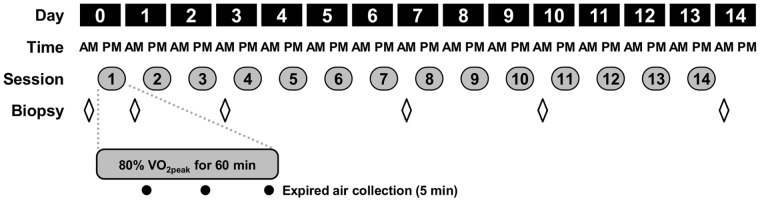
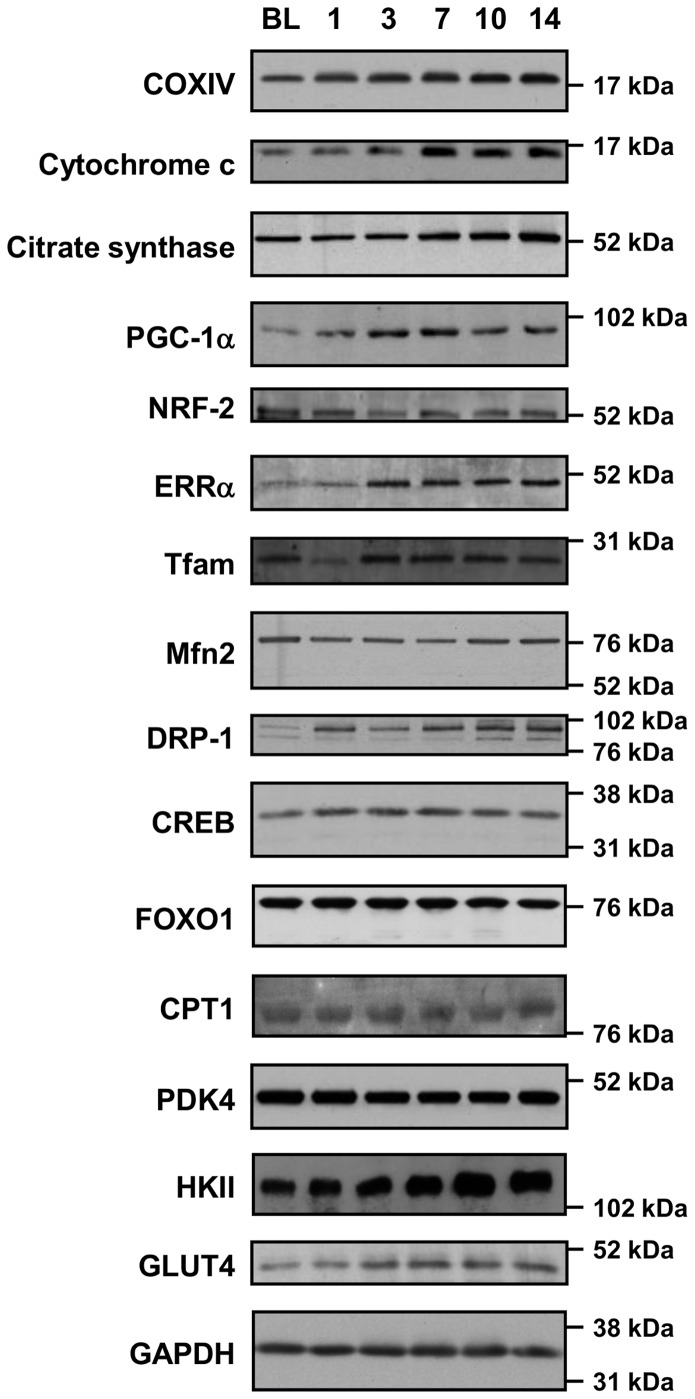
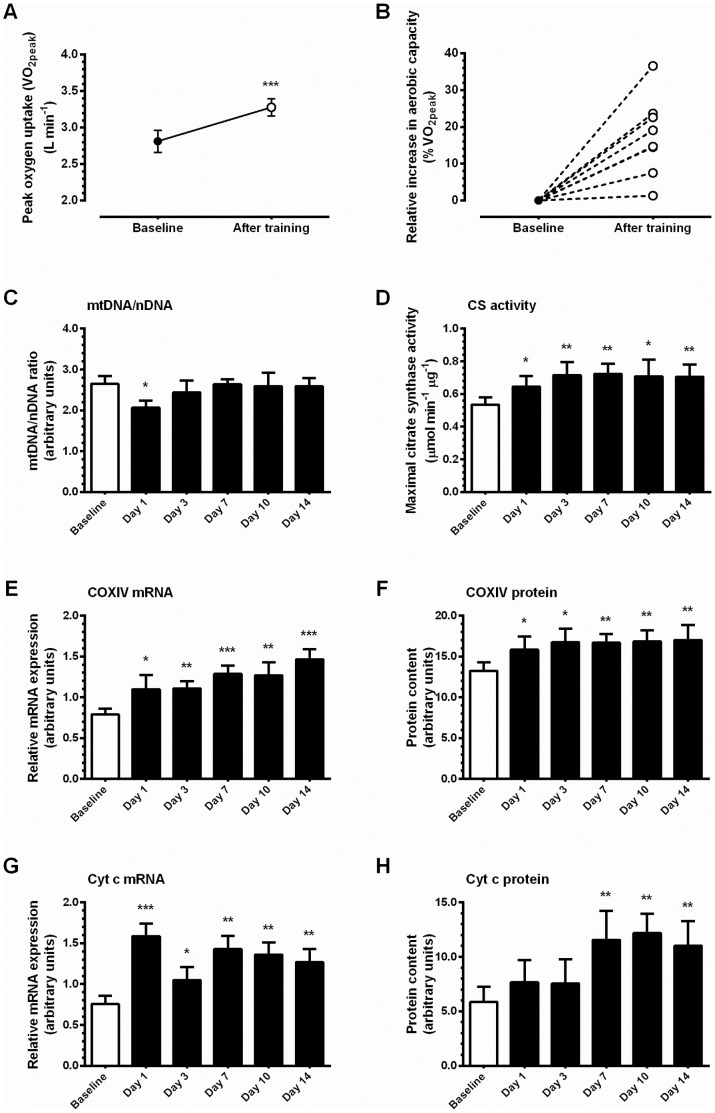
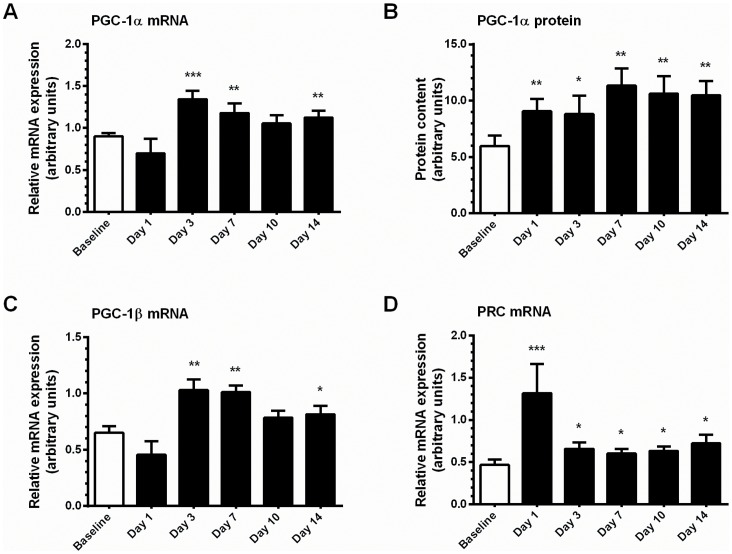
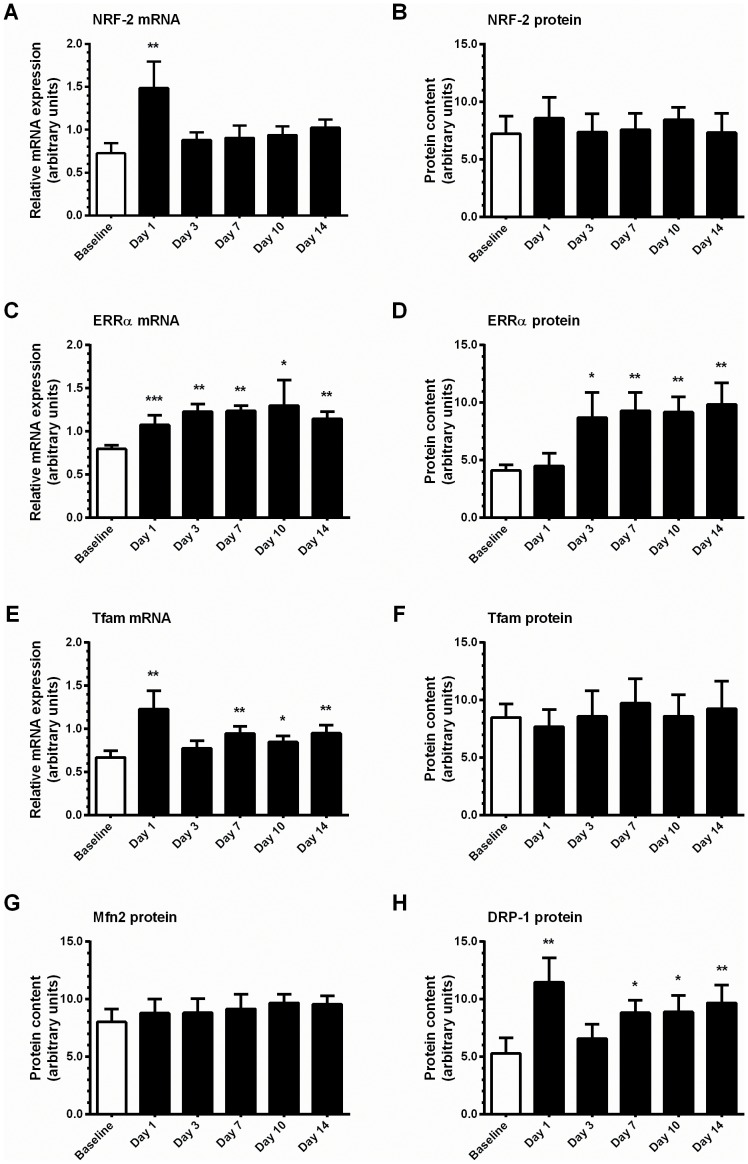
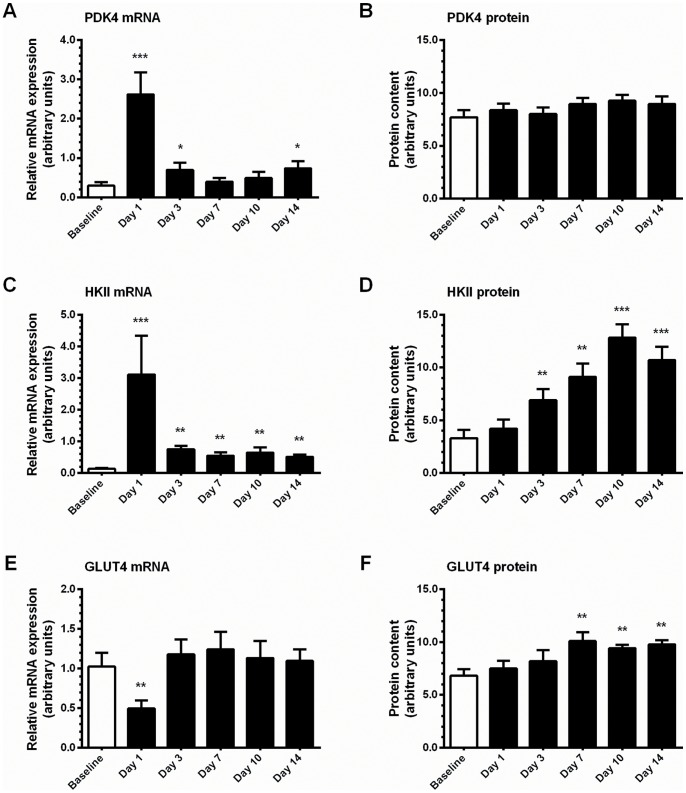
Repeated bouts of episodic myofibrillar contraction associated with exercise training are potent stimuli for physiological adaptation. However, the time course of adaptation and the continuity between alterations in mRNA expression and protein content are not well described in human skeletal muscle. Eight healthy, sedentary males cycled for 60 min at 80% of peak oxygen consumption (VO2peak) each day for fourteen consecutive days, resulting in an increase in VO2peak of 17.5±3.8%. Skeletal muscle biopsies were taken at baseline, and on the morning following (+16 h after exercise) the first, third, seventh, tenth and fourteenth training sessions. Markers of mitochondrial adaptation (Cyt c and COXIV expression, and citrate synthase activity) were increased within the first week of training, but the mtDNA/nDNA ratio was unchanged by two weeks of training. Accumulation of PGC-1α and ERRα protein during training suggests a regulatory role for these factors in adaptations of mitochondrial and metabolic gene expression. A subset of genes were transiently increased after one training session, but returned to baseline levels thereafter, which is supportive of the concept of transcriptional capacity being particularly sensitive to the onset of a new level of contractile activity. Thus, gene-specific temporal patterns of induction of mRNA expression and protein content are described. Our results illustrate the phenomenology of skeletal muscle plasticity and support the notion that transcript level adjustments, coupled to accumulation of encoded protein, underlie the modulation of skeletal muscle metabolism and phenotype by regular exercise.
Overview
The claims and statistics of this paper haven’t been checked yet.
Run the check — free, no account needed. It reads the open-access text and checks the sources it cites.
Integrity signals
Registry
Cites
Statistics
Figures
Verification
Claims the paper makes
The claims and statistics of this paper haven’t been checked yet.
Run the check — free, no account needed. It reads the open-access text and checks the sources it cites.
Claims other papers make about this one
Each is checked against this paper’s own text: does it say what the citing paper says it does?
The cited source says what the claim attributes to it.
In the citing paper
“If said exercise stimulus is repeated over time, chronic structural and functional changes occur [2,200].”
From Regulation of Energy Substrate Metabolism in Endurance Exercise (2021) · cites this paper as [200]
Self-check
Percentages, sums and reported differences re-computed from the paper’s own numbers.
The self-check needs the paper’s full text.
Citations
Cites
New methods for calculating metabolic rate with special reference to protein metabolism
Weir, J. B. D. V. (1949) · The Journal of Physiology · doi:10.1113/jphysiol.1949.sp004363 · Cited by 5,688
Wu, Z., Puigserver, P., Andersson, U., Zhang, C., Adelmant, G., Mootha, V., Troy, A., Cinti, S., Lowell, B., Scarpulla, R. C., et al. (1999) · Cell · doi:10.1016/s0092-8674(00)80611-x · Cited by 4,139
Metabolic control through the PGC-1 family of transcription coactivators
Lin, J., Handschin, C., & Spiegelman, B. M. (2005) · Cell Metabolism · doi:10.1016/j.cmet.2005.05.004 · Cited by 2,130 · cited 1×
“Altering the transcriptional activity of PGC-1a affects physiological responses that equip the cell to meet the energy demands of a changing environment, including augmentation of mitochondrial biogenesis, cellular respiration rates and substrate utilization [20].”
BackgroundExercise Metabolism and the Molecular Regulation of Skeletal Muscle Adaptation
Egan, B., & Zierath, J. R. (2013) · Cell Metabolism · doi:10.1016/j.cmet.2012.12.012 · Cited by 2,084
Self-citationAdaptations of skeletal muscle to endurance exercise and their metabolic consequences
Holloszy, J. O., & Coyle, E. F. (1984) · Journal of Applied Physiology · doi:10.1152/jappl.1984.56.4.831 · Cited by 1,985
Biochemical Adaptations in Muscle
Holloszy, J. O. (1967) · Journal of Biological Chemistry · doi:10.1016/s0021-9258(18)96046-1 · Cited by 1,517
Biomarkers of mitochondrial content in skeletal muscle of healthy young human subjects
Larsen, S., Nielsen, J., Hansen, C. N., Nielsen, L. B., Wibrand, F., Stride, N., Schroder, H. D., Boushel, R., Helge, J. W., Dela, F., et al. (2012) · The Journal of Physiology · doi:10.1113/jphysiol.2012.230185 · Cited by 1,180 · cited 2×
“Instead CS activity and markers of OXPHOS activity such as complex V protein content are considered more informative [35].”
BackgroundExercise induces transient transcriptional activation of the PGC‐1α gene in human skeletal muscle
Pilegaard, H., Saltin, B., & Neufer, P. D. (2003) · The Journal of Physiology · doi:10.1113/jphysiol.2002.034850 · Cited by 885
Reversible Ponceau staining as a loading control alternative to actin in Western blots
Romero-Calvo, I., Ocón, B., Martínez-Moya, P., Suárez, M. D., Zarzuelo, A., Martínez-Augustin, O., & de Medina, F. S. (2010) · Analytical Biochemistry · doi:10.1016/j.ab.2010.02.036 · Cited by 771
Molecular and cellular adaptation of muscle in response to exercise: perspectives of various models
Booth, F. W., & Thomason, D. B. (1991) · Physiological Reviews · doi:10.1152/physrev.1991.71.2.541 · Cited by 703
Cited by
Sorted by citations
Physiological adaptations to interval training and the role of exercise intensity
MacInnis, M. J., & Gibala, M. J. (2017) · The Journal of Physiology · doi:10.1113/jp273196 · Cited by 1,124
Gillen, J. B., Martin, B. J., MacInnis, M. J., Skelly, L. E., Tarnopolsky, M. A., & Gibala, M. J. (2016) · PLoS ONE · doi:10.1371/journal.pone.0154075 · Cited by 363
“[49], who examined the time course of increased mitochondrial content in response to 14 sessions of endurance training, these data seem to imply that much of the increase in mitochondrial content occurs relatively early in response to training.”
BackgroundFyfe, J. J., Bishop, D. J., & Stepto, N. K. (2014) · Sports Medicine · doi:10.1007/s40279-014-0162-1 · Cited by 347
Mitochondrial Dysfunction in Heart Failure With Preserved Ejection Fraction
Kumar, A. A., Kelly, D. P., & Chirinos, J. A. (2019) · Circulation · doi:10.1161/circulationaha.118.036259 · Cited by 297
Enhanced Respiratory Chain Supercomplex Formation in Response to Exercise in Human Skeletal Muscle
Greggio, C., Jha, P., Kulkarni, S. S., Lagarrigue, S., Broskey, N. T., Boutant, M., Wang, X., Conde Alonso, S., Ofori, E., Auwerx, J., et al. (2017) · Cell Metabolism · doi:10.1016/j.cmet.2016.11.004 · Cited by 286
Egan, B., & Sharples, A. P. (2023) · Physiological Reviews · doi:10.1152/physrev.00054.2021 · Cited by 278
Self-citationTraining-Induced Changes in Mitochondrial Content and Respiratory Function in Human Skeletal Muscle
Granata, C., Jamnick, N. A., & Bishop, D. J. (2018) · Sports Medicine · doi:10.1007/s40279-018-0936-y · Cited by 247
MacInnis, M. J., Zacharewicz, E., Martin, B. J., Haikalis, M. E., Skelly, L. E., Tarnopolsky, M. A., Murphy, R. M., & Gibala, M. J. (2017) · The Journal of Physiology · doi:10.1113/jp272570 · Cited by 224
Exercise adaptations: molecular mechanisms and potential targets for therapeutic benefit
McGee, S. L., & Hargreaves, M. (2020) · Nature Reviews Endocrinology · doi:10.1038/s41574-020-0377-1 · Cited by 226
Massart, J., Sjögren, R. J. O., Lundell, L. S., Mudry, J. M., Franck, N., O’Gorman, D. J., Egan, B., Zierath, J. R., & Krook, A. (2017) · Diabetes · doi:10.2337/db17-0141 · Cited by 201
Self-citationBlood mitochondrial DNA copy number: What are we counting?
Picard, M. A. (2021) · Mitochondrion · doi:10.1016/j.mito.2021.06.010 · Cited by 183
McGlory, C., Devries, M. C., & Phillips, S. M. (2017) · Journal of Applied Physiology · doi:10.1152/japplphysiol.00613.2016 · Cited by 135
Regulation of myokine expression: Role of exercise and cellular stress
Ost, M., Coleman, V., Kasch, J., & Klaus, S. (2016) · Free Radical Biology and Medicine · doi:10.1016/j.freeradbiomed.2016.02.018 · Cited by 135
Perry, C. G. R., & Hawley, J. A. (2018) · Cold Spring Harbor Perspectives in Medicine · doi:10.1101/cshperspect.a029686 · Cited by 130
Nader, G. A., von Walden, F., Liu, C., Lindvall, J., Gutmann, L., Pistilli, E. E., & Gordon, P. M. (2014) · Journal of Applied Physiology · doi:10.1152/japplphysiol.01366.2013 · Cited by 129
Granata, C., Jamnick, N. A., & Bishop, D. J. (2018) · Sports Medicine · doi:10.1007/s40279-018-0894-4 · Cited by 135
Bergouignan, A., Latouche, C., Heywood, S., Grace, M. S., Reddy-Luthmoodoo, M., Natoli, A. K., Owen, N., Dunstan, D. W., & Kingwell, B. A. (2016) · Scientific Reports · doi:10.1038/srep32044 · Cited by 121
Arribat, Y., Broskey, N. T., Greggio, C., Boutant, M., Conde Alonso, S., Kulkarni, S. S., Lagarrigue, S., Carnero, E. A., Besson, C., Cantó, C., et al. (2019) · Acta Physiologica · doi:10.1111/apha.13179 · Cited by 112
Regulation of Energy Substrate Metabolism in Endurance Exercise
Alghannam, A. F., Ghaith, M. M., & Alhussain, M. H. (2021) · International Journal of Environmental Research and Public Health · doi:10.3390/ijerph18094963 · Cited by 104
McGee, S. L., & Hargreaves, M. (2019) · Trends in Endocrinology and Metabolism · doi:10.1016/j.tem.2019.06.002 · Cited by 107
Coordination of mitochondrial biogenesis by PGC-1α in human skeletal muscle: A re-evaluation
Islam, H., Edgett, B. A., & Gurd, B. J. (2018) · Metabolism · doi:10.1016/j.metabol.2017.11.001 · Cited by 99
Intercellular: local and systemic actions of skeletal muscle PGC-1s
Correia, J. C., Ferreira, D. M. S., & Ruas, J. L. (2015) · Trends in Endocrinology and Metabolism · doi:10.1016/j.tem.2015.03.010 · Cited by 84
Exercise training alters the genomic response to acute exercise in human adipose tissue
Fabre, O., Ingerslev, L., Garde, C., Donkin, I., Simar, D., & Barrès, R. (2018) · Epigenomics · doi:10.2217/epi-2018-0039 · Cited by 71
Wen, Y., Dungan, C. M., Mobley, C. B., Valentino, T. R., von Walden, F., & Murach, K. A. (2021) · Function · doi:10.1093/function/zqab038 · Cited by 77
Heat therapy promotes the expression of angiogenic regulators in human skeletal muscle
Kuhlenhoelter, A. M., Kim, K., Neff, D., Nie, Y., Blaize, A. N., Wong, B. J., Kuang, S., Stout, J., Song, Q., Gavin, T. P., et al. (2016) · American Journal of Physiology-Regulatory, Integrative and Comparative Physiology · doi:10.1152/ajpregu.00134.2016 · Cited by 74
Lindholm, M. E., Giacomello, S., Solnestam, B. W., Fischer, H., Huss, M., Kjellqvist, S., & Sundberg, C. J. (2016) · PLoS Genetics · doi:10.1371/journal.pgen.1006294 · Cited by 67
The Effects of Acute and Chronic Exercise on Skeletal Muscle Proteome
Petriz, B. A., Gomes, C. P. C., de Almeida, J. A., de Oliveira, G. P., Ribeiro, F. M., Pereira, R. W., & Franco, O. L. (2016) · Journal of Cellular Physiology · doi:10.1002/jcp.25477 · Cited by 72
Endurance exercise training-responsive miR-19b-3p improves skeletal muscle glucose metabolism
Massart, J., Sjögren, R. J. O., Egan, B., Garde, C., Lindgren, M., Gu, W., Ferreira, D. M. S., Katayama, M., Ruas, J. L., Barrès, R., et al. (2021) · Nature Communications · doi:10.1038/s41467-021-26095-0 · Cited by 64
Self-citationSingle Muscle Fiber Gene Expression with Run Taper
Murach, K. A., Raue, U., Wilkerson, B. S., Minchev, K., Jemioło, B., Bagley, J. R., Luden, N. D., & Trappe, S. W. (2014) · PLoS ONE · doi:10.1371/journal.pone.0108547 · Cited by 61
Lavin, K. M., Coen, P. M., Baptista, L. C. P., Bell, M. B., Drummer, D. J., Harper, S. A., Lixandrão, M. E., McAdam, J. S., O’Bryan, S. M., Ramos, S. V., et al. (2022) · Comprehensive physiology · doi:10.1002/cphy.c200033 · Cited by 78
Jeffries, O., Waldron, M., Pattison, J. R., & Patterson, S. D. (2018) · Frontiers in Physiology · doi:10.3389/fphys.2018.00463 · Cited by 54
Lewis, D. J., & Lythgoe, M. P. (2015) · Journal of Immunology Research · doi:10.1155/2015/909406 · Cited by 54
SF-1 expression in the hypothalamus is required for beneficial metabolic effects of exercise
Fujikawa, T., Castorena, C. M., Pearson, M. J., Kusminski, C. M., Ahmed, N. I., Battiprolu, P. K., Kim, K. W., Lee, S., Hill, J. A., Scherer, P. E., et al. (2016) · eLife · doi:10.7554/elife.18206 · Cited by 51
Darragh, I. A. J., O’Driscoll, L., & Egan, B. (2021) · Frontiers in Physiology · doi:10.3389/fphys.2021.738333 · Cited by 48
Self-citationKuang, J., McGinley, C., Lee, M. J.-C., Saner, N. J., Garnham, A., & Bishop, D. J. (2022) · PeerJ · doi:10.7717/peerj.12856 · Cited by 45
Thomas, A. C. Q., Stead, C. A., Burniston, J. G., & Phillips, S. M. (2024) · Free Radical Biology and Medicine · doi:10.1016/j.freeradbiomed.2024.08.010 · Cited by 57
Gidlund, E., Ydfors, M., Appel, S., Rundqvist, H., Sundberg, C. J., & Norrbom, J. (2015) · Journal of Applied Physiology · doi:10.1152/japplphysiol.01000.2014 · Cited by 44
microManaging glucose and lipid metabolism in skeletal muscle: Role of microRNAs
Massart, J., Katayama, M., & Krook, A. (2016) · Biochimica et Biophysica Acta (BBA) - Molecular and Cell Biology of Lipids · doi:10.1016/j.bbalip.2016.05.006 · Cited by 46
Busquets-Cortés, C., Capó, X., Martorell, M., Tur, J. A., Sureda, A., & Pons, A. (2016) · Oxidative Medicine and Cellular Longevity · doi:10.1155/2016/8950384 · Cited by 45
Advancing behavioural genomics by considering timescale
Rittschof, C. C., & Hughes, K. A. (2018) · Nature Communications · doi:10.1038/s41467-018-02971-0 · Cited by 42
MacInnis, M. J., Skelly, L. E., & Gibala, M. J. (2019) · The Journal of Physiology · doi:10.1113/jp277633 · Cited by 41
Hwang, P. S., Machek, S. B., Cardaci, T. D., Wilburn, D. T., Kim, C. S., Suezaki, E. S., & Willoughby, D. S. (2019) · Journal of the American College of Nutrition · doi:10.1080/07315724.2019.1705203 · Cited by 38
Batterson, P. M., McGowan, E. M., Stierwalt, H. D., Ehrlicher, S. E., Newsom, S. A., & Robinson, M. M. (2023) · Journal of Applied Physiology · doi:10.1152/japplphysiol.00467.2022 · Cited by 44
Changes in Gene Expression in Responders and Nonresponders to a Low-Intensity Walking Intervention
Osler, M. E., Fritz, T., Caidahl, K., Krook, A., Zierath, J. R., & Wallberg‐Henriksson, H. (2015) · Diabetes Care · doi:10.2337/dc14-2606 · Cited by 39
Self-citationIslam, H., Edgett, B. A., Bonafiglia, J. T., Shulman, T., Ma, A., Quadrilatero, J., Simpson, C. A., & Gurd, B. J. (2019) · Experimental Physiology · doi:10.1113/ep087401 · Cited by 39
Fritzen, A. M., Thøgersen, F. B., Thybo, K., Vissing, C. R., Krag, T. O. B., Ruiz‐Ruiz, C., Risom, L., Wibrand, F., Høeg, L. D., Kiens, B., et al. (2019) · Cells · doi:10.3390/cells8030237 · Cited by 37
Granata, C., Oliveira, R. S. F., Little, J. P., & Bishop, D. J. (2019) · American Journal of Physiology-Endocrinology and Metabolism · doi:10.1152/ajpendo.00233.2019 · Cited by 39
Ballmann, C. G., Tang, Y., Bush, Z. D., & Rowe, G. C. (2016) · American Journal of Physiology-Endocrinology and Metabolism · doi:10.1152/ajpendo.00209.2016 · Cited by 36
Chung, H. C., Keiller, D. R., Roberts, J. D., & Gordon, D. A. (2021) · doi:10.1101/2021.03.22.436402 · Cited by 34
Popov, D. V., Lysenko, E. A., Bokov, R. O., Volodina, M. A., Kurochkina, N. S., Makhnovskii, P. A., Vyssokikh, M. Y., & Виноградова, О. Л. (2018) · Physiological Reports · doi:10.14814/phy2.13868 · Cited by 31
The 24-hour molecular landscape after exercise in humans reveals MYC is sufficient for muscle growth
Edman, S., Jones, R. G., Jannig, P. R., Fernandez‐Gonzalo, R., Norrbom, J., Thomas, N. T., Khadgi, S., Koopmans, P. J., da Silva, F. M., Chambers, T. L., et al. (2024) · EMBO Reports · doi:10.1038/s44319-024-00299-z · Cited by 44
Hargreaves, M. (2015) · Progress in molecular biology and translational science · doi:10.1016/bs.pmbts.2015.07.006 · Cited by 32
Murach, K. A., Walton, R. G., Fry, C. S., Michaelis, S. L., Groshong, J. S., Finlin, B. S., Kern, P. A., & Peterson, C. A. (2016) · Physiological Reports · doi:10.14814/phy2.12973 · Cited by 30
McGinley, C., & Bishop, D. J. (2016) · Experimental Physiology · doi:10.1113/ep085921 · Cited by 30
Petrie, M. A., Sharma, A., Taylor, E. B., Suneja, M., & Shields, R. K. (2019) · Physiological Genomics · doi:10.1152/physiolgenomics.00064.2019 · Cited by 31
Pérez‐Schindler, J., & Philp, A. (2015) · Clinical Science · doi:10.1042/cs20150246 · Cited by 28
Houzelle, A., Dahlmans, D., Nascimento, E. B. M., Schaart, G., Jörgensen, J. A., Moonen‐Kornips, E., Kersten, S., Wang, X., & Hoeks, J. (2020) · Journal of Cellular Physiology · doi:10.1002/jcp.29797 · Cited by 28
Exercise Induces Different Molecular Responses in Trained and Untrained Human Muscle
Moberg, M., Lindholm, M. E., Reitzner, S. M., Ekblom, B. T., Sundberg, C. J., & Psilander, N. (2020) · Medicine & Science in Sports & Exercise · doi:10.1249/mss.0000000000002310 · Cited by 27
Anti-Inflammatory Effect of Caffeine on Muscle under Lipopolysaccharide-Induced Inflammation
Eichwald, T., Solano, A. F., Souza, J., de Miranda, T. B., Carvalho, L. B., Sanna, P. L. D. S., da Silva, R. A., & Latini, A. (2023) · Antioxidants · doi:10.3390/antiox12030554 · Cited by 27
Bonafiglia, J. T., Edgett, B. A., Baechler, B. L., Nelms, M. W., Simpson, C. A., Quadrilatero, J., & Gurd, B. J. (2017) · Applied Physiology, Nutrition, and Metabolism · doi:10.1139/apnm-2016-0463 · Cited by 26
Exercise and health: historical perspectives and new insights
Hargreaves, M. (2021) · Journal of Applied Physiology · doi:10.1152/japplphysiol.00242.2021 · Cited by 26
Danaher, J., Stathis, C. G., Wilson, R. A., Moreno‐Asso, A., Wellard, R. M., & Cooke, M. B. (2020) · Nutrition & Metabolism · doi:10.1186/s12986-020-00489-1 · Cited by 22
Effects of exposure to environmental pollutants on mitochondrial DNA copy number: a meta-analysis
Avilés-Ramírez, C., Moreno‐Godínez, M. E., Bonner, M. R., Parra‐Rojas, I., Flores‐Alfaro, E., Ramírez, M., Huerta‐Beristain, G., & Ramírez‐Vargas, M. A. (2022) · Environmental Science and Pollution Research · doi:10.1007/s11356-022-19967-5 · Cited by 23
Jordan, A., Perry, C. G. R., & Cheng, A. J. (2021) · Free Radical Biology and Medicine · doi:10.1016/j.freeradbiomed.2021.09.014 · Cited by 23
Smith, A. R., Briseño, A. H., Picard, M. A., & Cárdenas, A. (2023) · Environmental Research · doi:10.1016/j.envres.2023.115798 · Cited by 20
Willis, C. R. G., Deane, C. S., Ames, R. M., Bass, J. J., Wilkinson, D. J., Smith, K., Phillips, B. E., Szewczyk, N. J., Atherton, P. J., & Etheridge, T. (2021) · Scientific Reports · doi:10.1038/s41598-021-03393-7 · Cited by 18
Kupsco, A. J., Bloomquist, T. R., Hu, H., Reddam, A., Tang, D. L., Goldsmith, J., Rundle, A., Baccarelli, A., & Herbstman, J. B. (2023) · Mitochondrion · doi:10.1016/j.mito.2023.02.008 · Cited by 17
Morissette, M., Susser, S. E., Stammers, A. N., Moffatt, T. L., Wigle, J. T., Wigle, T. J., Netticadan, T., Premecz, S., Jassal, D. S., O’Hara, K. A., et al. (2019) · Canadian Journal of Physiology and Pharmacology · doi:10.1139/cjpp-2018-0737 · Cited by 17
Muscle-Specific Sensitivity to Voluntary Physical Activity and Detraining
Hyatt, J. K., Brown, E., Deacon, H. M., & McCall, G. E. (2019) · Frontiers in Physiology · doi:10.3389/fphys.2019.01328 · Cited by 17
The Mitochondrial Proteomic Signatures of Human Skeletal Muscle Linked to Insulin Resistance
Kruse, R., Sahebekhtiari, N., & Højlund, K. (2020) · International Journal of Molecular Sciences · doi:10.3390/ijms21155374 · Cited by 19
MicroRNAs as the Sentinels of Redox and Hypertrophic Signalling
Kolodziej, F., McDonagh, B., Burns, N. C., & Goljanek‐Whysall, K. (2022) · International Journal of Molecular Sciences · doi:10.3390/ijms232314716 · Cited by 15
Wallace, R. G., Twomey, L. C., Custaud, M., Moyna, N. M., Cummins, P. M., Mangone, M., & Murphy, R. P. (2016) · BioMed Research International · doi:10.1155/2016/2465763 · Cited by 15
ERRα fosters running endurance by driving myofiber aerobic transformation and fuel efficiency
Xia, H., Scholtes, C., Dufour, C. R., Guluzian, C., & Giguère, V. (2023) · Molecular Metabolism · doi:10.1016/j.molmet.2023.101814 · Cited by 13
Podgórski, R., Cieśla, M., Podgórska, D., Bajorek, W., Płonka, A., Czarny, W., Trybulski, R., & Król, P. (2022) · Journal of Clinical Medicine · doi:10.3390/jcm11010263 · Cited by 15
Exercise Improves Insulin Sensitivity in the Absence of Changes in Cytokines
Verheggen, R. J. H. M., Poelkens, F., Roerink, S. H. P. P., Ramakers, R. E. F. S., Catoire, M., Hermus, A. R., Thijssen, D. H. J., & Hopman, M. T. E. (2016) · Medicine & Science in Sports & Exercise · doi:10.1249/mss.0000000000001035 · Cited by 15
The effect of neuromuscular electrical stimulation on the human skeletal muscle transcriptome
Flodin, J., Reitzner, S. M., Emanuelsson, E. B., Sundberg, C. J., & Ackermann, P. W. (2024) · Acta Physiologica · doi:10.1111/apha.14129 · Cited by 11
Acute simulated soccer-specific training increases PGC-1α mRNA expression in human skeletal muscle
Jeong, T.-S., Bartlett, J. D., Joo, C.-H., Louhelainen, J., Close, G. L., Morton, J. P., & Drust, B. (2014) · Journal of Sports Sciences · doi:10.1080/02640414.2014.992937 · Cited by 14
Hall, E. C. R., Murgatroyd, C., Stebbings, G. K., Cunniffe, B., Harle, L., Salter, M., Ramadass, A., Westra, J. W., Hunter, E., Akoulitchev, A. V., et al. (2020) · Genes · doi:10.3390/genes11080905 · Cited by 11
Popov, D. V., Lysenko, E. A., Miller, T. F., Bachinin, A. V., Perfilov, D. V., & Виноградова, О. Л. (2015) · Human Physiology · doi:10.1134/s0362119715030123 · Cited by 9
de Smalen, L. M., Adak, V., Leuchtmann, A. B., Schneider‐Heieck, K., Steurer, S. A., & Handschin, C. (2025) · Molecular Metabolism · doi:10.1016/j.molmet.2025.102206 · Cited by 8
Edman, S., Jones, R. G., Jannig, P. R., Fernandez‐Gonzalo, R., Norrbom, J., Thomas, N. T., Khadgi, S., Koopmans, P. J., da Silva, F. M., Peterson, C. S., et al. (2024) · bioRxiv (Cold Spring Harbor Laboratory) · doi:10.1101/2024.03.26.586857 · Cited by 8
Effect of carbohydrate–protein supplementation on endurance training adaptations
Alghannam, A. F., Templeman, I., Thomas, J. E., Jedrzejewski, D., Griffiths, S., Lemon, J., Byers, T., Reeves, S., Gonzalez, J. T., Thompson, D., et al. (2020) · European Journal of Applied Physiology · doi:10.1007/s00421-020-04450-1 · Cited by 7
Rodrigues, N. D. A., Gobatto, C. A., Forte, L. D. M., Sousa, F. A. D. B., Torsoni, A. S., de Fante, T., & Manchado-Gobatto, F. D. B. (2021) · Applied Physiology, Nutrition, and Metabolism · doi:10.1139/apnm-2020-1053 · Cited by 7
Exercise in the heat blunts improvements in aerobic power
Slivka, D. R., Shute, R. J., Hailes, W. S., Marshall, K., Opichka, M. A., Schnitzler, H., & Ruby, B. C. (2021) · European Journal of Applied Physiology · doi:10.1007/s00421-021-04653-0 · Cited by 7
Halle, J. L., Counts, B. R., Zhang, Q., James, K. M., Puppa, M., Alway, S. E., & Carson, J. A. (2023) · Frontiers in Physiology · doi:10.3389/fphys.2023.1283674 · Cited by 7
Peña-Vázquez, O., del Castillo, L. A. E., González‐Chávez, S. A., Arvizuo, J. G., Luján, R. C., Legleu, C. E. C., Hernández, N. C., & Pacheco‐Tena, C. (2023) · International Journal of Environmental Research and Public Health · doi:10.3390/ijerph20054404 · Cited by 6
Davie, A. J., Wen, L., Cust, A. R. E., Beavers, R., Fyfe, T., & Zhou, S. (2017) · Biology Open · doi:10.1242/bio.020388 · Cited by 6
Reitzner, S. M., Norrbom, J., Sundberg, C. J., & Gidlund, E. (2018) · Physiological Reports · doi:10.14814/phy2.13624 · Cited by 5
Currà, A., Gasbarrone, R., Gattabria, D., Bonifazi, G., Serranti, S., Greco, D., Missori, P., Fattapposta, F., Picciano, A., Maffucci, A., et al. (2024) · Photonics · doi:10.3390/photonics11111025 · Cited by 6
Maunder, E., King, A., Rothschild, J. A., Brick, M. J., Leigh, W. B., Hedges, C. P., Merry, T. L., & Kilding, A. E. (2024) · Pflügers Archiv - European Journal of Physiology · doi:10.1007/s00424-024-02939-8 · Cited by 4
Rosa, E. F., Alves, G., Luz, J., Silva, S. M. A., Suchecki, D., Pesquero, J. B., Aboulafia, J., & Nouailhetas, V. L. A. (2014) · Physiological Research · doi:10.33549/physiolres.932562 · Cited by 5
Piel, S., McManus, M. J., Heye, K., Beaulieu, F., Fazelinia, H., Janowska, J. I., MacTurk, B., Starr, J. P., Gaudio, H., Patel, N., et al. (2024) · Scientific Reports · doi:10.1038/s41598-024-64317-9 · Cited by 4
Drouin, P. J., Islam, H., Simpson, C. A., & Gurd, B. J. (2021) · Physiological Reports · doi:10.14814/phy2.15038 · Cited by 4
Pedersen, Z. O., Pedersen, B. S., Larsen, S., & Dysgaard, T. (2023) · International Journal of Molecular Sciences · doi:10.3390/ijms24098154 · Cited by 3
The Emerging Role of Hypoxic Training for the Equine Athlete
Davie, A. J., Beavers, R., Hargitaiova, K., & Denham, J. (2023) · Animals · doi:10.3390/ani13172799 · Cited by 3
Acute exercise modulates Trim63 and Bmal1 in the skeletal muscle of IL-10 knockout mice
da Mata, G. E., Brícola, R. S., Ribeiro, D. N., Simabuco, F. M., Pauli, J. R., de Freitas, E. C., Ropelle, E. R., da Silva, A. S. R., & Pinto, A. P. (2023) · Cytokine · doi:10.1016/j.cyto.2023.156484 · Cited by 4
Kontro, H., Mastracci, A., Cheung, S. S., & MacInnis, M. J. (2026) · PLoS ONE · doi:10.1371/journal.pone.0341721 · Cited by 5
Qiu, J., Huang, L., Davie, A. J., & Zhou, S. (2017) · The Journal of Strength and Conditioning Research · doi:10.1519/jsc.0000000000002407 · Cited by 2
Influence of genetics and epigenetics on the process of muscle hypertrophy: a systematic review
Fajardo, D., Jaramillo, R. C., & Arango, L. F. G. (2023) · Movement & Sport Sciences - Science & Motricité · doi:10.1051/sm/2023007 · Cited by 3
Sporcularda Kan Akımı Kısıtlamalı Antrenman ve Fizyolojik Mekanizması
YILMAZ, D. A., & Gökhan, D. E. G. E. (2021) · Gaziantep Üniversitesi Spor Bilimleri Dergisi · doi:10.31680/gaunjss.948063 · Cited by 2
Metadata
- Authors
- Egan, B., O’Connor, P. L., Zierath, J. R., & O’Gorman, D. J.
- Affiliations
- University College Dublin (IE)
- Dublin City University (IE)
- Karolinska Institutet (SE)
- Corresponding author
- O’Gorman, Donal J.
- Venue
- PLoS ONE
- Publisher
- Public Library of Science (PLoS)
- Published
- 2013-09-12
- Volume
- 8
- Issue
- 9
- Pages
- e74098
- ISSN
- 1932-6203 (ISSN-L)
- PMC
- PMC3771935
- OpenAlex
- W2020255277
- Cited by
- 120
- References
- 61
- Citations by year
- 2026: 4 · 2025: 3 · 2024: 7 · 2023: 11 · 2022: 10 · 2021: 14 · 2020: 7 · 2019: 12 · 2018: 10 · 2017: 8 · 2016: 20 · 2015: 8 · 2014: 5 · 2013: 1
- FWCI
- 26.79
- Type
- journal article
- Language
- en
- Open access
- gold
- doi.org
- Locations
- PLoS ONE (publishedVersion, cc-by)
- Europe PMC (PubMed Central) (publishedVersion, cc-by)
- PubMed Central (publishedVersion, cc-by)
- PubMed (publishedVersion)
- DOAJ (DOAJ: Directory of Open Access Journals) (submittedVersion, cc-by-sa)
- Funders
- Irish Research Council for Science, Engineering and Technology
- Dublin City University
- European Foundation for the Study of Diabetes
- Irish Research Council
- Karolinska Institutet
- Novo Nordisk
- Vetenskapsrådet
- Topics
- Health Sciences › Medicine › Physiology (medical) › Cardiovascular and exercise physiology
- Life Sciences › Biochemistry, Genetics and Molecular Biology › Molecular Biology › Muscle Physiology and Disorders
- Health Sciences › Medicine › Physiology (medical) › Adipose Tissue and Metabolism
- Keywords
- aerobic exercise training, skeletal muscle adaptation, temporal gene expression, mRNA expression, protein content, mitochondrial biogenesis, PGC-1α, estrogen-related receptor alpha, citrate synthase, cytochrome c, cytochrome c oxidase subunit IV, mtDNA/nDNA ratio, skeletal muscle plasticity, human skeletal muscle
- MeSH terms
- Peroxisome Proliferator-Activated Receptor Gamma Coactivator 1-alpha, Adaptation, Physiological, Adult, Carrier Proteins, Gene Expression Regulation, Humans, Kinetics, Male, Mitochondria, Oxygen Consumption, Time Factors, Transcription Factors, Transcription, Genetic, Biomarkers, Exercise, RNA-Binding Proteins, Muscle, Skeletal, Proteome, Young Adult, Transcriptome
About these checks
Registry, retraction, Cites and statistics results are computed, not judged, with one exception: a printed reference that no index lists is read once by a model before it counts as a citation error. Claims are extracted by a model and kept only when their quote appears verbatim in the text; each cited source is then checked, with a model’s help, for whether it says what the claim relies on. Those verdicts can be wrong — read the claim’s quote and the cited source before relying on one.
Statistics and arithmetic are recomputed, not judged.
Confidence bands are shown only for fields calibrated on our annotated test set. None is calibrated yet, so no band is shown.
What counts as a claim ›How we measure confidence ›How we check this ›
Are you an author, or do you see a problem with this page? Request a review
