

A modular plasmid assembly kit for multigene expression, gene silencing and silencing rescue in plants.
Open accessThe DOI matches its Crossref record; 48 of the 49 references it cites were found in a registry or an index.
Abstract
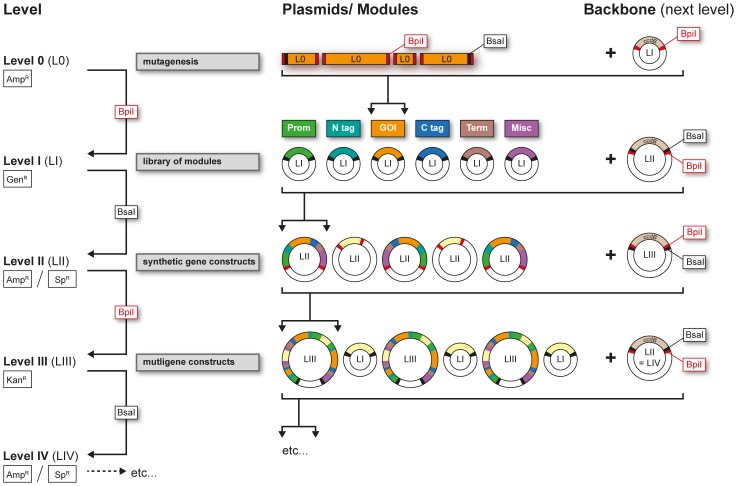
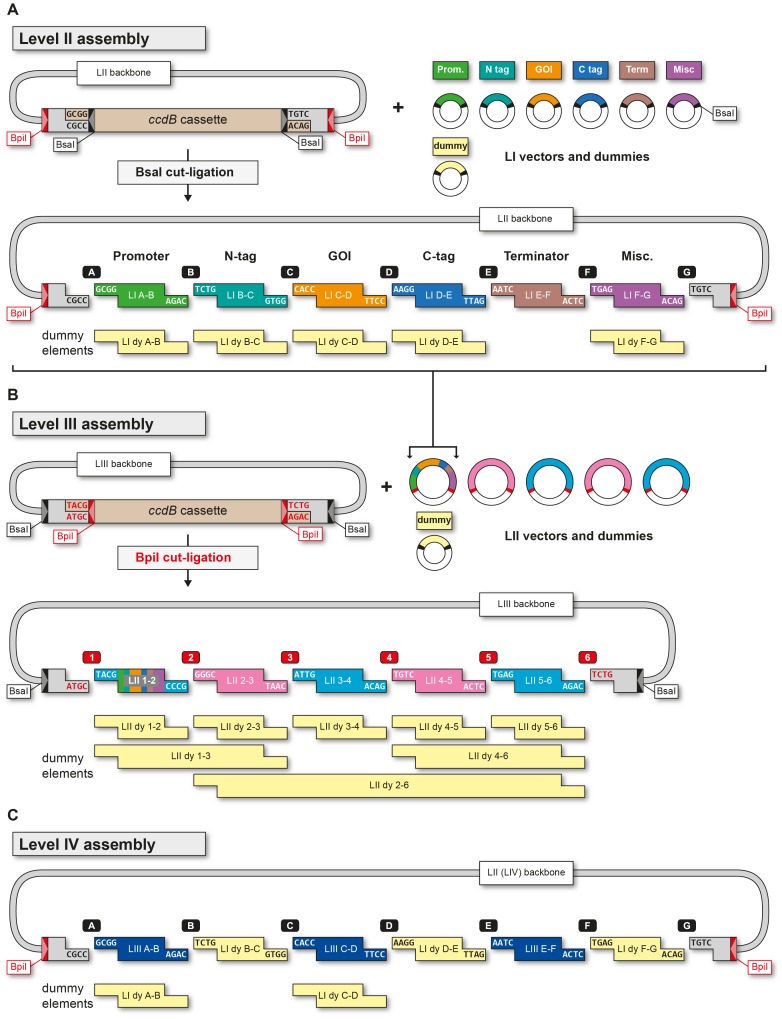
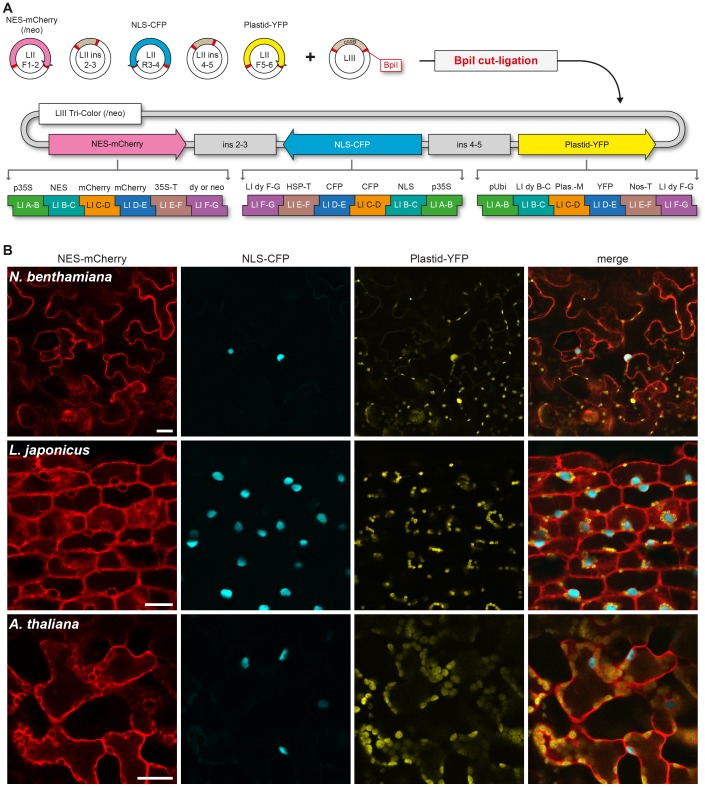
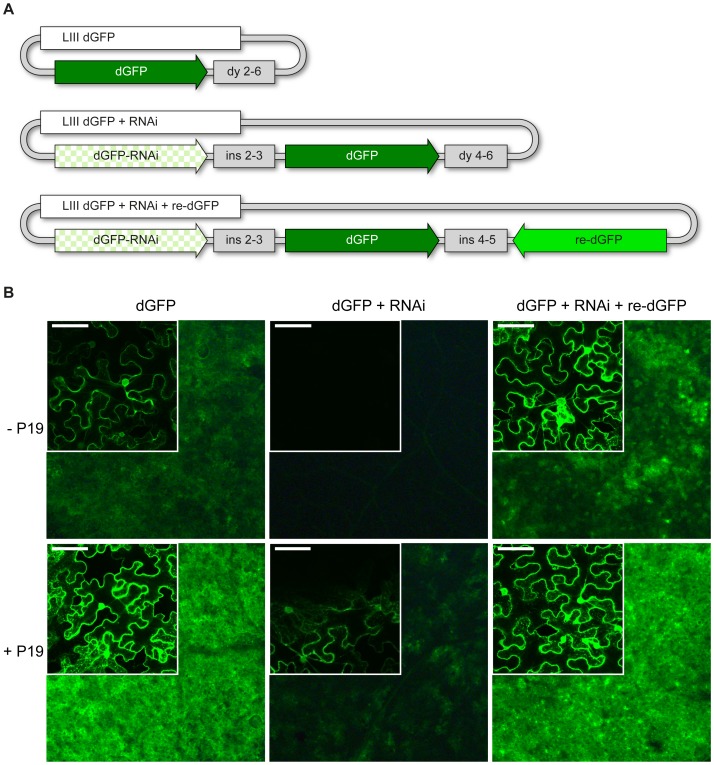
The Golden Gate (GG) modular assembly approach offers a standardized, inexpensive and reliable way to ligate multiple DNA fragments in a pre-defined order in a single-tube reaction. We developed a GG based toolkit for the flexible construction of binary plasmids for transgene expression in plants. Starting from a common set of modules, such as promoters, protein tags and transcribed regions of interest, synthetic genes are assembled, which can be further combined to multigene constructs. As an example, we created T-DNA constructs encoding multiple fluorescent proteins targeted to distinct cellular compartments (nucleus, cytosol, plastids) and demonstrated simultaneous expression of all genes in Nicotiana benthamiana, Lotus japonicus and Arabidopsis thaliana. We assembled an RNA interference (RNAi) module for the construction of intron-spliced hairpin RNA constructs and demonstrated silencing of GFP in N. benthamiana. By combination of the silencing construct together with a codon adapted rescue construct into one vector, our system facilitates genetic complementation and thus confirmation of the causative gene responsible for a given RNAi phenotype. As proof of principle, we silenced a destabilized GFP gene (dGFP) and restored GFP fluorescence by expression of a recoded version of dGFP, which was not targeted by the silencing construct.
Overview
The claims and statistics of this paper haven’t been checked yet.
Free: it reads the open-access text and checks the first 5 claims that cite a source we can check. Create a free account to check every claim.
Integrity signals
Registry
Cites
Statistics
Figures
Verification
Claims the paper makes
The claims and statistics of this paper haven’t been checked yet.
Free: it reads the open-access text and checks the first 5 claims that cite a source we can check. Create a free account to check every claim.
Claims other papers make about this one
Each is checked against this paper’s own text: does it say what the citing paper says it does?
The cited source says what the claim attributes to it.
In the citing paper
“The assembly of multimodular constructs for expression in plants is no longer an insurmountable challenge, thanks to the development of methods like the Gateway-mediated cloning (reviewed by Dafny-Yelin and Tzfira, 2007), Golden Gate (Binder et al., 2014), GoldenBraid (Sarrion-Perdigones et al., 2011), to name a few.”
From Cannabis sativa: The Plant of the Thousand and One Molecules (2016) · cites this paper as Binder et al., 2014
Self-check
Percentages, sums and reported differences re-computed from the paper’s own numbers.
The self-check needs the paper’s full text.
Citations
Cites
1 retracted
Voinnet, O., Rivas, S., Mestre, P., & Baulcombe, D. (2003) · The Plant Journal · doi:10.1046/j.1365-313x.2003.01676.x · Cited by 1,734 · cited 1×
“benthamiana leaves was done as previously described [36].”
MethodRetractedA Revised Medium for Rapid Growth and Bio Assays with Tobacco Tissue Cultures
Murashige, T., & Skoog, F. (1962) · Physiologia Plantarum · doi:10.1111/j.1399-3054.1962.tb08052.x · Cited by 67,392
Floral dip: a simplified method forAgrobacterium‐mediated transformation ofArabidopsis thaliana
Clough, S. J., & Bent, A. F. (1998) · The Plant Journal · doi:10.1046/j.1365-313x.1998.00343.x · Cited by 21,934 · cited 1×
“thaliana was performed by floral dip [47] and transformation of N.”
BackgroundEnzymatic assembly of DNA molecules up to several hundred kilobases
Gibson, D. G., Young, L., Chuang, R.-Y., Venter, J. C., Hutchison, C. A., & Smith, H. O. (2009) · Nature Methods · doi:10.1038/nmeth.1318 · Cited by 9,996 · cited 1×
“Examples for these include the recombination based in-fusion HD system (Clontech), sequence and ligase independent cloning (SLIC) [15], the Gibson assembly method [16], circular polymerase extension cloning (CPEC) [17] and the seamless ligation cloning extract method (SLiCE) [18].”
MethodGATEWAY™ vectors for Agrobacterium-mediated plant transformation
Karimi, M., Inzé, D., & Depicker, A. (2002) · Trends in Plant Science · doi:10.1016/s1360-1385(02)02251-3 · Cited by 3,635
A Gateway Cloning Vector Set for High-Throughput Functional Analysis of Genes in Planta
Curtis, M. D., & Grossniklaus, U. (2003) · Plant Physiology · doi:10.1104/pp.103.027979 · Cited by 2,644
A One Pot, One Step, Precision Cloning Method with High Throughput Capability
Engler, C., Kandzia, R., & Marillonnet, S. (2008) · PLoS ONE · doi:10.1371/journal.pone.0003647 · Cited by 2,389
Expression profiling reveals off-target gene regulation by RNAi
Jackson, A. L., Bartz, S. R., Schelter, J., Kobayashi, S. V., Burchard, J., Mao, M., Li, B., Cavet, G., & Linsley, P. S. (2003) · Nature Biotechnology · doi:10.1038/nbt831 · Cited by 2,370 · cited 1×
“Genome-wide profiling has shown that potentially dozens of transcripts (even with limited sequence similarity) can potentially be affected by silencing [39,40].”
BackgroundConstruction of Biologically Functional Bacterial Plasmids In Vitro
Cohen, S. N., Chang, A. C. Y., Boyer, H. W., & Helling, R. B. (1973) · Proceedings of the National Academy of Sciences · doi:10.1073/pnas.70.11.3240 · Cited by 1,802
Gateway‐compatible vectors for plant functional genomics and proteomics
Earley, K. W., Haag, J. R., Pontes, O., Opper, K., Juehne, T., Song, K., & Pikaard, C. S. (2006) · The Plant Journal · doi:10.1111/j.1365-313x.2005.02617.x · Cited by 1,790
Cermak, T., Doyle, E. L., Christian, M., Wang, L., Zhang, Y., Schmidt, C., Baller, J. A., Somia, N. V., Bogdanove, A. J., & Voytas, D. F. (2011) · Nucleic Acids Research · doi:10.1093/nar/gkr218 · Cited by 1,787
JCat: a novel tool to adapt codon usage of a target gene to its potential expression host
Grote, A., Hiller, K., Scheer, M., Munch, R., Nortemann, B., Hempel, D. C., & Jahn, D. (2005) · Nucleic Acids Research · doi:10.1093/nar/gki376 · Cited by 1,580 · cited 1×
“The resulting sequence was further codon adapted for in planta use by the jCat tool [35] and then manually edited to prevent sequence identical regions longer than 5 bp compared to the original dGFP (Figure S8).”
MethodPhytochromes and light signal perception by plants—an emerging synthesis
Smith, H. (2000) · Nature · doi:10.1038/35036500 · Cited by 1,380
A Modular Cloning System for Standardized Assembly of Multigene Constructs
Weber, E., Engler, C., Gruetzner, R., Werner, S., & Marillonnet, S. (2011) · PLoS ONE · doi:10.1371/journal.pone.0016765 · Cited by 1,377 · cited 1×
“Alternative GG Based Systems Recently two other GG based assembly systems termed ‘‘modular cloning’’ (MoClo) [22] and Goldenbraid/Goldenbraid 2.”
BackgroundSynthetic biology: applications come of age
Khalil, A. S., & Collins, J. J. (2010) · Nature Reviews Genetics · doi:10.1038/nrg2775 · Cited by 1,373
DNA Cloning Using In Vitro Site-Specific Recombination
Hartley, J. L. (2000) · Genome Research · doi:10.1101/gr.143000 · Cited by 1,130 · cited 1×
“Today several commercial and non-commercial systems are available, including Invitrogen’s GATEWAY system [7], Clontech’s Creator system, as well as the Univector cloning system developed in the”
MethodA DNA Transformation–Competent Arabidopsis Genomic Library in Agrobacterium
Lazo, G. R., Stein, P. A., & Ludwig, R. A. (1991) · Bio/Technology · doi:10.1038/nbt1091-963 · Cited by 1,048 · cited 2×
“Strains were grown in LB medium at 37uC (200 rpm) with kanamycin, carbenicillin (instead of ampi- PLOS ONE | www.plosone.org 11 February 2014 | Volume 9 | Issue 2 | e88218 cillin) at 50 mg/ml, spectinomycin at 100 mg/ml and gentamycin at 10 mg/ml. Agrobacterium tumefaciens AGL1 [44] was used for N. benthamiana and A.…”
MethodSelection of AUG initiation codons differs in plants and animals.
Lütcke, H. A., Chow, K. C., Mickel, F. S., Moss, K. A., Kern, H. F., & Scheele, G. A. (1987) · The EMBO Journal · doi:10.1002/j.1460-2075.1987.tb04716.x · Cited by 1,030 · cited 1×
“As KOZAK sequence we chose the plant consensus AACA(ATG) [30].”
MethodGolden Gate Shuffling: A One-Pot DNA Shuffling Method Based on Type IIs Restriction Enzymes
Engler, C., Gruetzner, R., Kandzia, R., & Marillonnet, S. (2009) · PLoS ONE · doi:10.1371/journal.pone.0005553 · Cited by 1,023 · cited 2×
“To increase the efficiency, the individual fragments are subcloned prior to assembly, since cut-ligations using circular plasmids as donors allow for the combination of at least 9 fragments in one reaction [20].”
BackgroundTotal silencing by intron-spliced hairpin RNAs
Smith, N. A., Singh, S. P., Wang, M.-B., Stoutjesdijk, P. A., Green, A. G., & Waterhouse, P. M. (2000) · Nature · doi:10.1038/35030305 · Cited by 957 · cited 1×
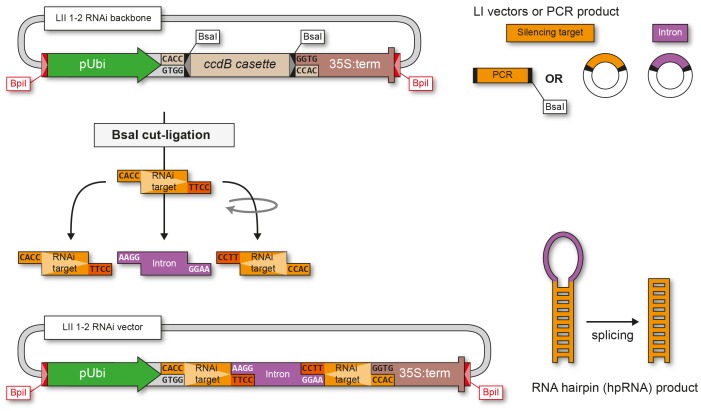
“Custom RNAi vectors (LII F 1–2 RNAi) are used to assemble silencing constructs that express intron-spliced hairpin (ihp) RNAs, which are able to induce strong silencing [32].”
BackgroundNAKAGAWA, T., SUZUKI, T., MURATA, S., NAKAMURA, S., HINO, T., MAEO, K., TABATA, R., KAWAI, T., TANAKA, K., NIWA, Y., et al. (2007) · Bioscience, Biotechnology, and Biochemistry · doi:10.1271/bbb.70216 · Cited by 957
Harnessing homologous recombination in vitro to generate recombinant DNA via SLIC
Li, M. Z., & Elledge, S. J. (2007) · Nature Methods · doi:10.1038/nmeth1010 · Cited by 953 · cited 2×
“Examples for these include the recombination based in-fusion HD system (Clontech), sequence and ligase independent cloning (SLIC) [15], the Gibson assembly method [16], circular polymerase extension cloning (CPEC) [17] and the seamless ligation cloning extract method (SLiCE) [18].”
MethodJackson, D. A., Symons, R. H., & Berg, P. (1972) · Proceedings of the National Academy of Sciences · doi:10.1073/pnas.69.10.2904 · Cited by 778
GreenGate - A Novel, Versatile, and Efficient Cloning System for Plant Transgenesis
Lampropoulos, A., Sutikovic, Z., Wenzl, C., Maegele, I., Lohmann, J. U., & Forner, J. (2013) · PLoS ONE · doi:10.1371/journal.pone.0083043 · Cited by 612
Circular Polymerase Extension Cloning of Complex Gene Libraries and Pathways
Quan, J., & Tian, J. (2009) · PLoS ONE · doi:10.1371/journal.pone.0006441 · Cited by 517 · cited 2×
“Examples for these include the recombination based in-fusion HD system (Clontech), sequence and ligase independent cloning (SLIC) [15], the Gibson assembly method [16], circular polymerase extension cloning (CPEC) [17] and the seamless ligation cloning extract method (SLiCE) [18].”
MethodCell killing by the F plasmid CcdB protein involves poisoning of DNA-topoisomerase II complexes
Bernard, P., & Couturier, M. (1992) · Journal of Molecular Biology · doi:10.1016/0022-2836(92)90629-x · Cited by 510 · cited 1×
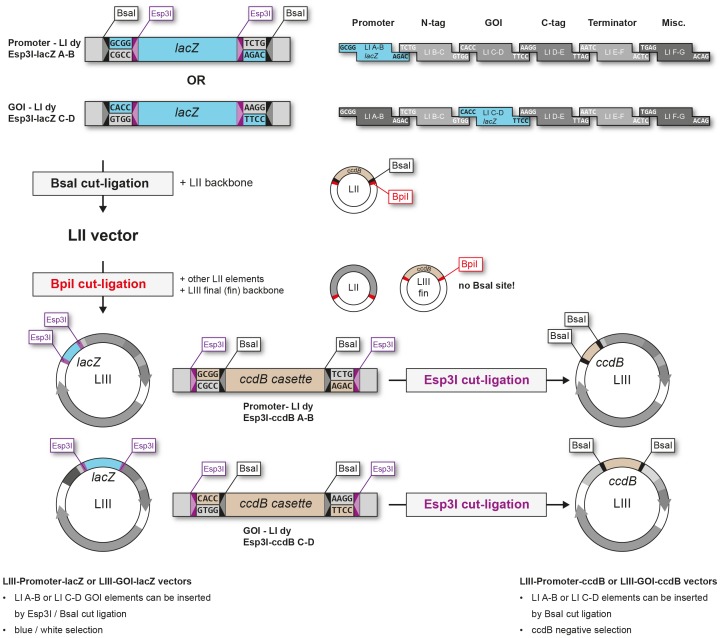
“coli DNA gyrase in most lab strains [29], therefore only bacteria containing correctly assembled constructs, which have lost the ccdB cassette, are able to grow.”
BackgroundSLiCE: a novel bacterial cell extract-based DNA cloning method
Zhang, Y., Werling, U., & Edelmann, W. (2012) · Nucleic Acids Research · doi:10.1093/nar/gkr1288 · Cited by 493 · cited 1×
“Examples for these include the recombination based in-fusion HD system (Clontech), sequence and ligase independent cloning (SLIC) [15], the Gibson assembly method [16], circular polymerase extension cloning (CPEC) [17] and the seamless ligation cloning extract method (SLiCE) [18].”
MethodGoldenBraid 2.0: A Comprehensive DNA Assembly Framework for Plant Synthetic Biology
Sarrion-Perdigones, A., Vazquez-Vilar, M., Palaci, J., Castelijns, B., Forment, J., Ziarsolo, P., Blanca, J., Granell, A., & Orzaez, D. (2013) · PLANT PHYSIOLOGY · doi:10.1104/pp.113.217661 · Cited by 461 · cited 1×
“0 defines 11 standard parts that form a transcriptional unit, which can be arranged into larger superclasses [24] and uses both multipartite as well as binary assemblies.”
BackgroundRecombinational Cloning with Plant Gateway Vectors
Karimi, M., Depicker, A., & Hilson, P. (2007) · Plant Physiology · doi:10.1104/pp.107.106989 · Cited by 457
Molecular mechanism of RNA silencing suppression mediated by p19 protein of tombusviruses
Lakatos, L., Szittya, G., Silhavy, D., & Burgyán, J. (2004) · The EMBO Journal · doi:10.1038/sj.emboj.7600096 · Cited by 422
GoldenBraid: an iterative cloning system for standardized assembly of reusable genetic modules.
Sarrion-Perdigones, A., Falconi, E. E., Zandalinas, S. I., Juárez, P., Fernández-del-Carmen, A., Granell, A., & Orzaez, D. (2011) · PLoS ONE · doi:10.1371/journal.pone.0021622 · Cited by 348
Prevalence of off-target effects in Drosophila RNA interference screens
Ma, Y., Creanga, A., Lum, L., & Beachy, P. A. (2006) · Nature · doi:10.1038/nature05179 · Cited by 293 · cited 1×
“Genome-wide profiling has shown that potentially dozens of transcripts (even with limited sequence similarity) can potentially be affected by silencing [39,40].”
BackgroundLiu, Q., Li, M. Z., Leibham, D., Cortez, D., & Elledge, S. J. (1998) · Current Biology · doi:10.1016/s0960-9822(07)00560-x · Cited by 281
Role of transgenic plants in agriculture and biopharming
Ahmad, P., Ashraf, M., Younis, M., Hu, X., Kumar, A., Akram, N. A., & Al-Qurainy, F. (2012) · Biotechnology Advances · doi:10.1016/j.biotechadv.2011.09.006 · Cited by 241
Assembly of Designer TAL Effectors by Golden Gate Cloning
Weber, E., Gruetzner, R., Werner, S., Engler, C., & Marillonnet, S. (2011) · PLoS ONE · doi:10.1371/journal.pone.0019722 · Cited by 237
Efficient TALEN construction and evaluation methods for human cell and animal applications
Sakuma, T., Hosoi, S., Woltjen, K., Suzuki, K., Kashiwagi, K., Wada, H., Ochiai, H., Miyamoto, T., Kawai, N., Sasakura, Y., et al. (2013) · Genes to Cells · doi:10.1111/gtc.12037 · Cited by 204
Assembly of custom TALE-type DNA binding domains by modular cloning
Morbitzer, R., Elsaesser, J., Hausner, J., & Lahaye, T. (2011) · Nucleic Acids Research · doi:10.1093/nar/gkr151 · Cited by 185
Self-citation(2005) · Springer eBooks · doi:10.1007/1-4020-3735-x · Cited by 159
(2003) · Nature Cell Biology · doi:10.1038/ncb0603-490 · Cited by 153
Many Paths to Many Clones: A Comparative Look at High-Throughput Cloning Methods
Marsischky, G., & LaBaer, J. (2004) · Genome Research · doi:10.1101/gr.2528804 · Cited by 131 · cited 1×
“Second generation cloning technologies based on homologous site-specific recombination enable very effective high-throughput construction of recombinant DNA and are not dependent on particular restriction sites [6].”
BackgroundPolyubiquitin Promoter-Based Binary Vectors for Overexpression and Gene Silencing in Lotus japonicus
Maekawa, T., Kusakabe, M., Shimoda, Y., Sato, S., Tabata, S., Murooka, Y., & Hayashi, M. (2008) · Molecular Plant-Microbe Interactions · doi:10.1094/mpmi-21-4-0375 · Cited by 128 · cited 2×
“For RNAi construct assembly, the LII F1–2 RNAi backbone is combined with the target LI C-D module and a LI plasmid containing an intron element (intron1 of AtWRKY33 [33]).”
BackgroundMethodThe Agrobacterium rhizogenes pRi TL-DNA segment as a gene vector system for transformation of plants
Stougaard, J., Abildsten, D., & Marcker, K. A. (1987) · Molecular and General Genetics MGG · doi:10.1007/bf00331586 · Cited by 111
High-Throughput Construction of Intron-Containing Hairpin RNA Vectors for RNAi in Plants
Yan, P., Shen, W., Gao, X., Li, X., Zhou, P., & Duan, J. (2012) · PLoS ONE · doi:10.1371/journal.pone.0038186 · Cited by 98
Generation of Families of Construct Variants Using Golden Gate Shuffling
Engler, C., & Marillonnet, S. (2011) · Methods in Molecular Biology · doi:10.1007/978-1-61779-065-2_11 · Cited by 72
GeneDesign 3.0 is an updated synthetic biology toolkit
Richardson, S. M., Nunley, P. W., Yarrington, R. M., Boeke, J. D., & Bader, J. S. (2010) · Nucleic Acids Research · doi:10.1093/nar/gkq143 · Cited by 69
Induction of hairy roots for symbiotic gene expression studies
Díaz, C. L., Grønlund, M., Schlaman, H. R. M., & Spaink, H. P. (2006) · Springer eBooks · doi:10.1007/1-4020-3735-x_26 · Cited by 47 · cited 1×
“japonicus hairy root plants were generated as previously described [46].”
MethodSynthetic biology: history, challenges and prospects
Haseloff, J. P., & Ajioka, J. W. (2009) · Journal of The Royal Society Interface · doi:10.1098/rsif.2009.0176.focus · Cited by 44
[32] Rapid construction of recombinant DNA by the univector plasmid-fusion system
Liu, Q., Li, M. Z., Liu, D., & Elledge, S. J. (2000) · Methods in enzymology on CD-ROM/Methods in enzymology · doi:10.1016/s0076-6879(00)28417-6 · Cited by 32
Research works printed but not linked: 1
- Karimi M, Inzé D, Depicker A (2002) GATEWAY” vectors for Agrobacterium-mediated plant transformation. Trends in plant science 7: 193– 195. 11992820 · DOI · Paper page
Cited by
Cannabis sativa: The Plant of the Thousand and One Molecules
Andre, C. M., Hausman, J.-F., & Guerriero, G. (2016) · Frontiers in Plant Science · doi:10.3389/fpls.2016.00019 · Cited by 1,544
“The creation of an artificial compartment can be used for the production of cannabinoids, because it can trap and stabilize the toxic secondary metabolites until extraction is performed, in a manner analogous to what discussed for artemisinin.”
BackgroundMethodLipid transfer from plants to arbuscular mycorrhiza fungi
Keymer, A., Pimprikar, P., Wewer, V., Huber, C., Brands, M., Bucerius, S. L., Delaux, P.-M., Klingl, V., Röpenack-Lahaye, E. V., Wang, T. L., et al. (2017) · eLife · doi:10.7554/elife.29107 · Cited by 465
Self-citationStandards for plant synthetic biology: a common syntax for exchange of DNA parts
Patron, N. J., Orzaez, D., Marillonnet, S., Warzecha, H., Matthewman, C., Youles, M., Raitskin, O., Leveau, A., Farré, G., Rogers, C., et al. (2015) · New Phytologist · doi:10.1111/nph.13532 · Cited by 281
Bricks and blueprints: methods and standards for DNA assembly.
Casini, A., Storch, M., Baldwin, G. S., & Ellis, T. (2015) · Nature Reviews Molecular Cell Biology · doi:10.1038/nrm4014 · Cited by 286
“Binder et al.(31) • No 3 2 Yes; yes Yes”
BackgroundPHOSPHATE STARVATION RESPONSE transcription factors enable arbuscular mycorrhiza symbiosis
Das, D., Paries, M., Hobecker, K., Gigl, M., Dawid, C., Lam, H.-M., Zhang, J., Chen, M., & Gutjahr, C. (2022) · Nature Communications · doi:10.1038/s41467-022-27976-8 · Cited by 238
Metadata
- Authors
- Binder, A., Lambert, J., Morbitzer, R., Popp, C., Ott, T., Lahaye, T., & Parniske, M.
- Affiliations
- Ludwig-Maximilians-Universität München (DE)
- Corresponding author
- Parniske, Martin
- Venue
- PLoS ONE
- Publisher
- Public Library of Science (PLoS)
- Published
- 2014-02-13
- Volume
- 9
- Issue
- 2
- Pages
- e88218
- ISSN
- 1932-6203 (ISSN-L)
- PMC
- PMC3923767
- OpenAlex
- W2042639289
- Semantic Scholar
- 939910cec9e020cd7e0c42f6d5acfdfe1cb3b6ef
- Cited by
- 160
- References
- 49
- Citations by year
- 2026: 15 · 2025: 21 · 2024: 15 · 2023: 21 · 2022: 16 · 2021: 13 · 2020: 15 · 2019: 9 · 2018: 13 · 2017: 7 · 2016: 7 · 2015: 5 · 2014: 3
- FWCI
- 3.01
- Type
- journal article
- Language
- en
- Open access
- gold
- doi.org
- Locations
- PLoS ONE (publishedVersion, cc-by)
- Europe PMC (PubMed Central) (publishedVersion, other-oa)
- PubMed Central (publishedVersion, cc-by)
- PubMed (publishedVersion)
- DOAJ (DOAJ: Directory of Open Access Journals) (submittedVersion, cc-by-sa)
- Open access LMU (Ludwid Maxmilian's Universitat Munchen) (submittedVersion)
- Figshare (submittedVersion, cc-by)
- Funders
- Deutsche Forschungsgemeinschaft (SFB 924)
- Topics
- Life Sciences › Biochemistry, Genetics and Molecular Biology › Molecular Biology › CRISPR and Genetic Engineering
- Life Sciences › Biochemistry, Genetics and Molecular Biology › Biotechnology › Transgenic Plants and Applications
- Life Sciences › Agricultural and Biological Sciences › Plant Science › Plant Molecular Biology Research
- Keywords
- Golden Gate cloning, RNA interference, gene silencing, gene complementation, Nicotiana benthamiana, Lotus japonicus, Arabidopsis thaliana
- MeSH terms
- Lotus, DNA, Bacterial, Genetic Complementation Test, Genetic Engineering, Introns, Phenotype, Plasmids, Nicotiana, Gene Expression, Arabidopsis, Gene Expression Regulation, Plant, Transgenes, Gene Silencing, Plants, Genetically Modified, Green Fluorescent Proteins
About these checks
Registry, retraction, Cites and statistics results are computed, not judged, with one exception: a printed reference that no index lists is read once by a model before it counts as a citation error. Claims are extracted by a model and kept only when their quote appears verbatim in the text; each cited source is then checked, with a model’s help, for whether it says what the claim relies on. Those verdicts can be wrong — read the claim’s quote and the cited source before relying on one.
Statistics and arithmetic are recomputed, not judged.
Confidence bands are shown only for fields calibrated on our annotated test set. None is calibrated yet, so no band is shown.
What counts as a claim ›How we measure confidence ›How we check this ›
Are you an author, or do you see a problem with this page? Request a review
Data sources
Bibliographic data: Semantic Scholar, OpenAlex, Crossref.
Contains information from the Semantic Scholar Academic Graph Datasets, made available under the ODC Attribution License (ODC-BY 1.0).
Semantic Scholar’s data is described in: Kinney, R., et al. (2023). The Semantic Scholar Open Data Platform. arXiv:2301.10140.
