

The DOI matches its Crossref record; 48 of the 49 references it cites were found in a registry or an index.
Interleukin-1β Induces Blood–Brain Barrier Disruption by Downregulating Sonic Hedgehog in Astrocytes
Open accessAbstract
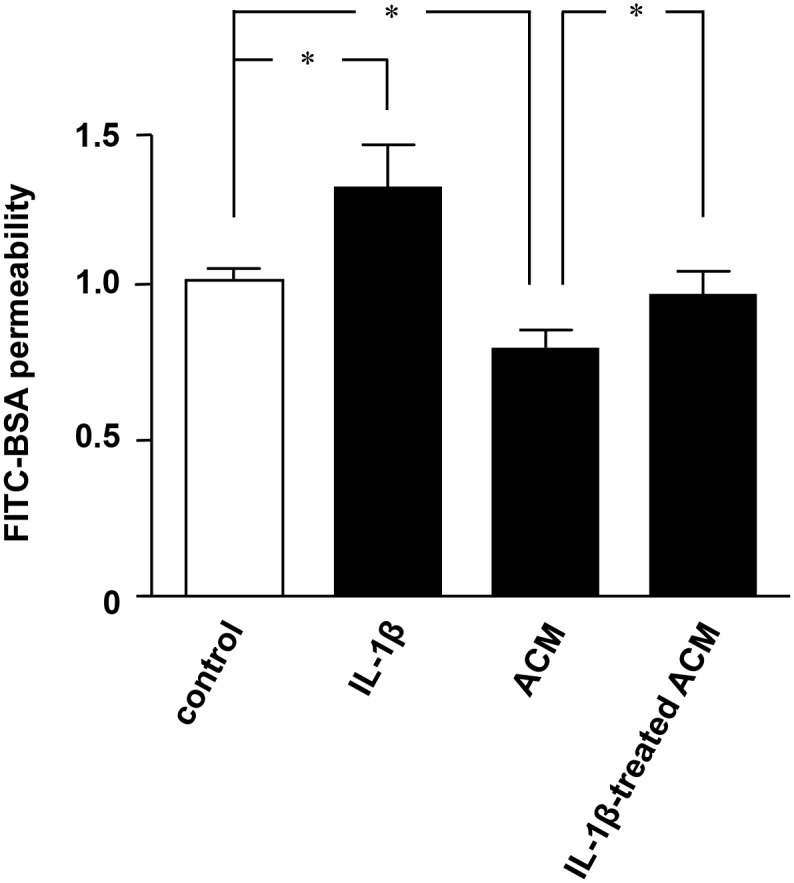
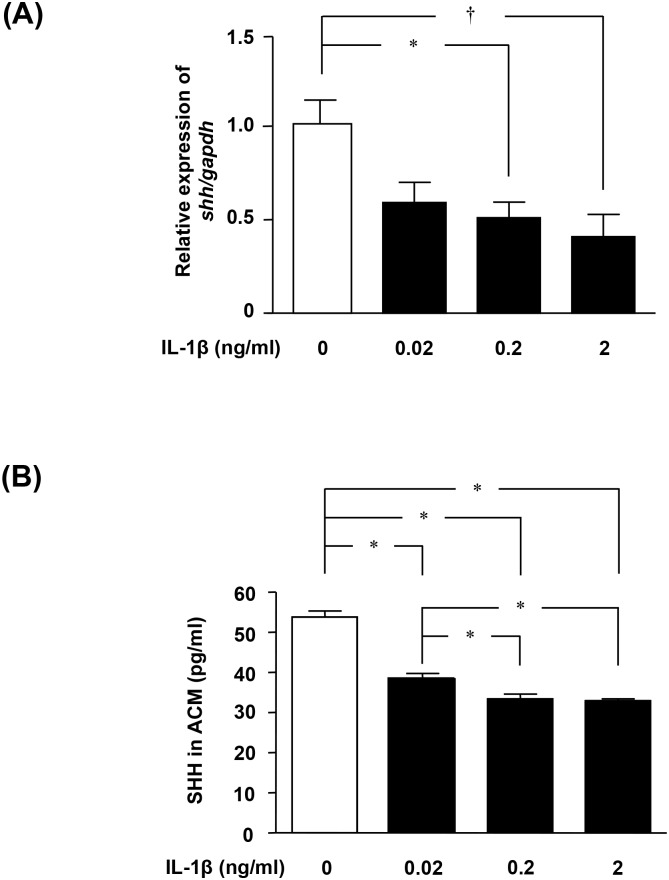
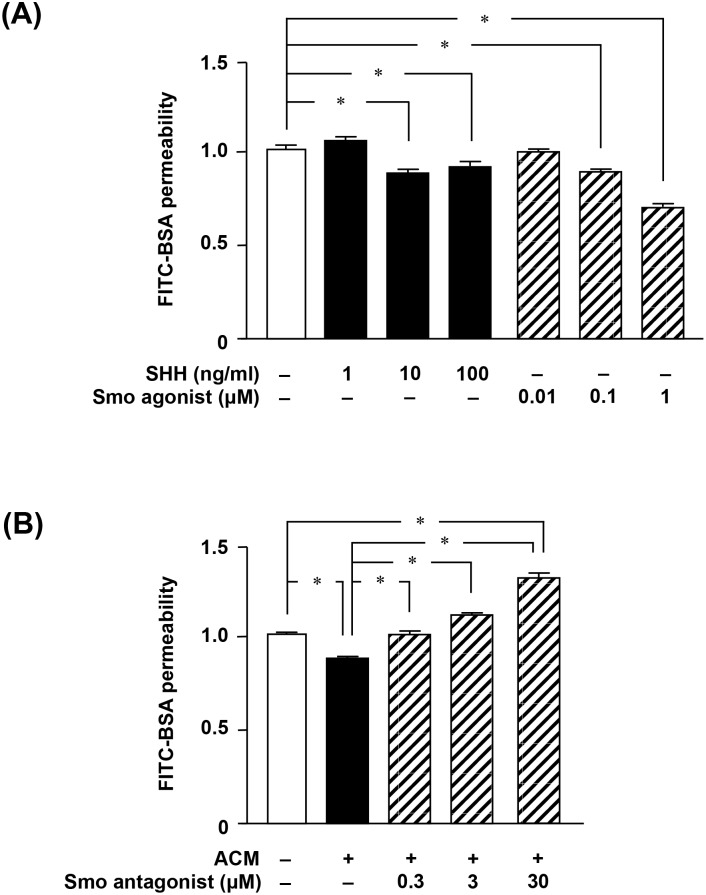
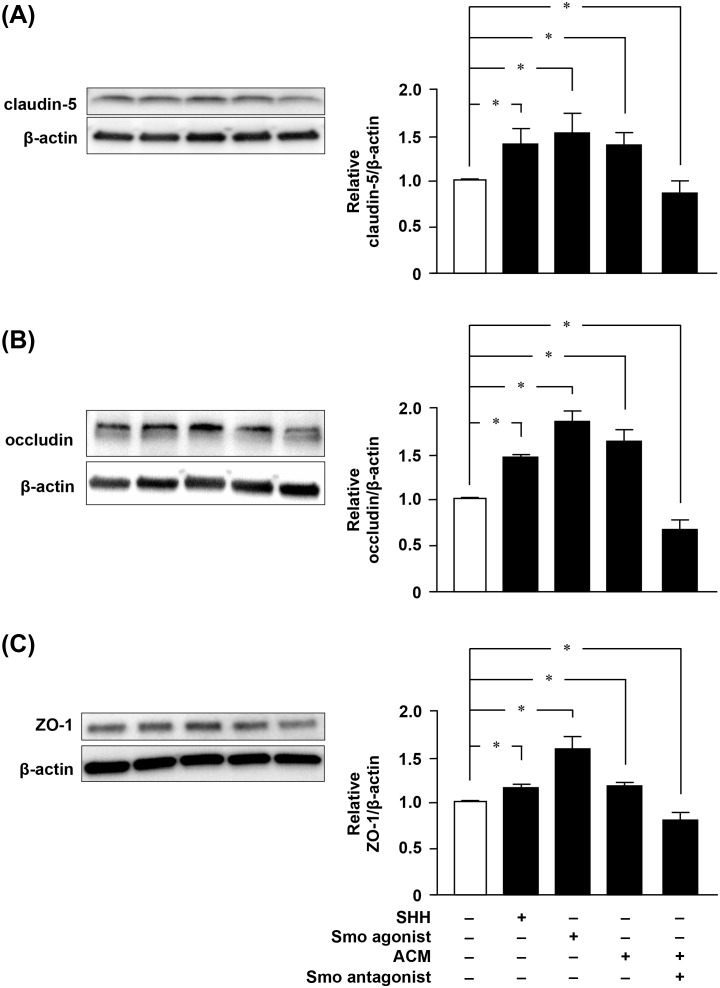
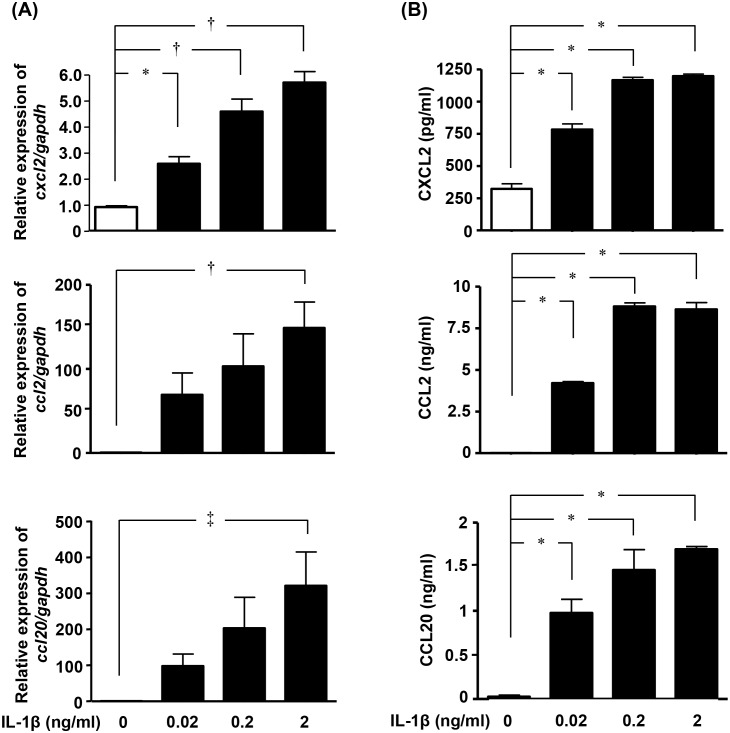
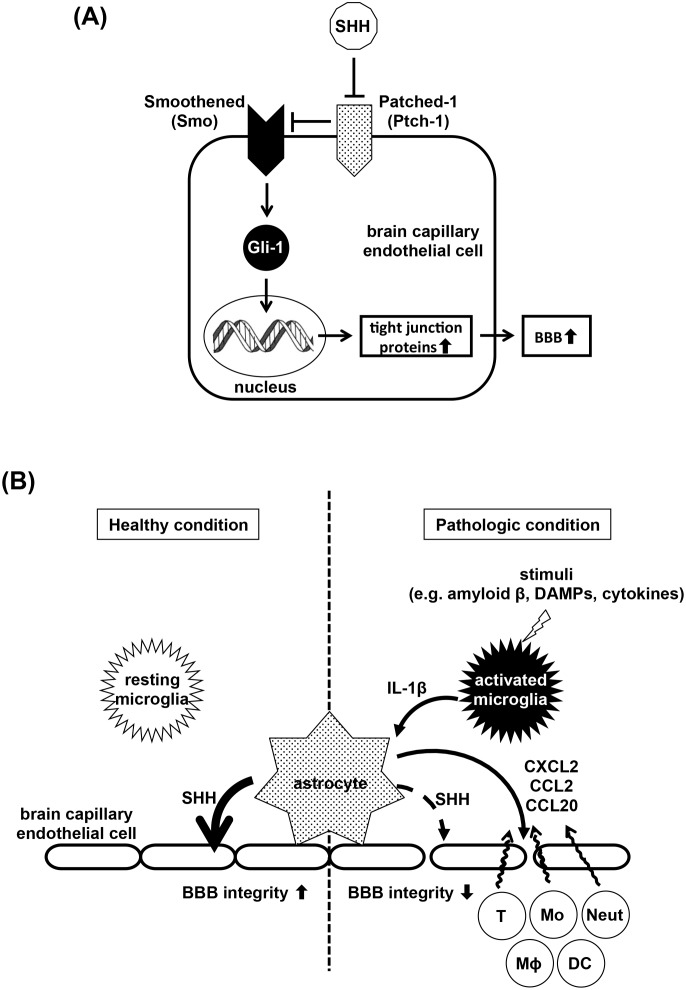
The blood-brain barrier (BBB) is composed of capillary endothelial cells, pericytes, and perivascular astrocytes, which regulate central nervous system homeostasis. Sonic hedgehog (SHH) released from astrocytes plays an important role in the maintenance of BBB integrity. BBB disruption and microglial activation are common pathological features of various neurologic diseases such as multiple sclerosis, Parkinson's disease, amyotrophic lateral sclerosis, and Alzheimer's disease. Interleukin-1β (IL-1β), a major pro-inflammatory cytokine released from activated microglia, increases BBB permeability. Here we show that IL-1β abolishes the protective effect of astrocytes on BBB integrity by suppressing astrocytic SHH production. Astrocyte conditioned media, SHH, or SHH signal agonist strengthened BBB integrity by upregulating tight junction proteins, whereas SHH signal inhibitor abrogated these effects. Moreover, IL-1β increased astrocytic production of pro-inflammatory chemokines such as CCL2, CCL20, and CXCL2, which induce immune cell migration and exacerbate BBB disruption and neuroinflammation. Our findings suggest that astrocytic SHH is a potential therapeutic target that could be used to restore disrupted BBB in patients with neurologic diseases.
Overview
The claims and statistics of this paper haven’t been checked yet.
Run the check — free, no account needed. It reads the open-access text and checks the sources it cites.
Integrity signals
Registry
Cites
Statistics
Figures
Verification
Claims the paper makes
The claims and statistics of this paper haven’t been checked yet.
Run the check — free, no account needed. It reads the open-access text and checks the sources it cites.
Claims other papers make about this one
Each is checked against this paper’s own text: does it say what the citing paper says it does?
The source backs part of the claim, not all of it — or backs it for a different population, condition or comparison.
In the citing paper
“CCL20 (55), CSF3 (56) and IL10 (57) are associated with the inflammatory response in AD.”
From Modeling late-onset Alzheimer’s disease neuropathology via direct neuronal reprogramming (2024) · cites this paper as [55]
Experimental — accuracy not yet measured
Self-check
Percentages, sums and reported differences re-computed from the paper’s own numbers.
The self-check needs the paper’s full text.
Citations
Cites
Structure and function of the blood–brain barrier
Abbott, N. J., Patabendige, A. A. K., Dolman, D. E. M., Yusof, S. R., & Begley, D. J. (2010) · Neurobiology of Disease · doi:10.1016/j.nbd.2009.07.030 · Cited by 5,185
Microglia-mediated neurotoxicity: uncovering the molecular mechanisms
Block, M. L., Zecca, L., & Hong, J.-S. (2007) · Nature Reviews Neuroscience · doi:10.1038/nrn2038 · Cited by 4,110
The Blood-Brain Barrier in Health and Chronic Neurodegenerative Disorders
Zlokovic, B. V. (2008) · Neuron · doi:10.1016/j.neuron.2008.01.003 · Cited by 3,280
Cyclopia and defective axial patterning in mice lacking Sonic hedgehog gene function
Chiang, C. C., Litingtung, Y., Lee, E., Young, K. E., Corden, J. L., Westphal, H., & Beachy, P. A. (1996) · Nature · doi:10.1038/383407a0 · Cited by 3,062
Astrocytes induce blood–brain barrier properties in endothelial cells
Janzer, R. C., & RAFF, M. C. (1987) · Nature · doi:10.1038/325253a0 · Cited by 1,613
A controlled trial of natalizumab for relapsing multiple sclerosis.
Miller, D. H., Khan, O., Sheremata, W., Blumhardt, L., Rice, G., Libonati, M., Willmer-Hulme, A., Dalton, C., Miszkiel, K., & O'Connor, P. (2003) · New England Journal of Medicine · doi:10.1056/nejmoa020696 · Cited by 1,265
The Hedgehog Pathway Promotes Blood-Brain Barrier Integrity and CNS Immune Quiescence
Alvarez, J. I., Dodelet-Devillers, A., Kebir, H., Ifergan, I., Fabre, P. J., Terouz, S., Sabbagh, M., Wosik, K., Bourbonnière, L., Bernard, M., et al. (2011) · Science · doi:10.1126/science.1206936 · Cited by 845
Evaluation of Patients Treated with Natalizumab for Progressive Multifocal Leukoencephalopathy
Yousry, T. A., Major, E. O., Ryschkewitsch, C. F., Fahle, G. A., Fischer, S. H., Hou, J., Curfman, B. L., Miszkiel, K., Mueller‐Lenke, N., Sánchez, E., et al. (2006) · New England Journal of Medicine · doi:10.1056/nejmoa054693 · Cited by 789
The Blood-Brain Barrier in Brain Homeostasis and Neurological Diseases
Weiss, N., Miller, F., Cazaubon, S., & Couraud, P.-O. (2009) · Biochimica et Biophysica Acta (BBA) - Biomembranes · doi:10.1016/j.bbamem.2008.10.022 · Cited by 731
Blood-brain barrier disruption in multiple sclerosis
Minagar, A., & Alexander, J. S. (2003) · Multiple Sclerosis · doi:10.1191/1352458503ms965oa · Cited by 685
Cited by
Sorted by citations
Role of pro-inflammatory cytokines released from microglia in Alzheimer's disease.
(2015) · Europe PMC (PubMed Central) · doi:10.3978/j.issn.2305-5839.2015.03.49 · Cited by 1,288
Blood-brain barrier dysfunction and recovery after ischemic stroke
Jiang, X., Andjelkovic, A. V., Zhu, L., Yang, T., Bennett, M. V. L., Chen, J., Keep, R. F., & Shi, Y. (2017) · Progress in Neurobiology · doi:10.1016/j.pneurobio.2017.10.001 · Cited by 967
The blood–brain barrier in health and disease: Important unanswered questions
Profaci, C. P., Munji, R. N., Pulido, R. S., & Daneman, R. (2020) · The Journal of Experimental Medicine · doi:10.1084/jem.20190062 · Cited by 811
The blood-brain barrier in Alzheimer’s disease
Zenaro, E., Piacentino, G., & Constantin, G. (2017) · Neurobiology of Disease · doi:10.1016/j.nbd.2016.07.007 · Cited by 767
Astrocytes, therapeutic targets for neuroprotection and neurorestoration in ischemic stroke
Liu, Z., & Chopp, M. (2015) · Progress in Neurobiology · doi:10.1016/j.pneurobio.2015.09.008 · Cited by 610
Inflammation: the link between comorbidities, genetics, and Alzheimer’s disease
Newcombe, E. A., Camats-Perna, J., Silva, M. L., Valmas, N., Huat, T. J., & Medeiros, R. (2018) · Journal of Neuroinflammation · doi:10.1186/s12974-018-1313-3 · Cited by 532
Mou, Y., Du, Y., Zhou, L., Yue, J., Hu, X., Liu, Y., Chen, S., Lin, X., Zhang, G., Xiao, H., et al. (2022) · Frontiers in Immunology · doi:10.3389/fimmu.2022.796288 · Cited by 432
Immune Cells in the BBB Disruption After Acute Ischemic Stroke: Targets for Immune Therapy?
Qiu, Y., Zhang, C., Chen, A., Wang, H.-L., Zhou, Y., Li, Y., & Hu, B. (2021) · Frontiers in Immunology · doi:10.3389/fimmu.2021.678744 · Cited by 414
Erickson, M. A., & Banks, W. A. (2018) · Pharmacological Reviews · doi:10.1124/pr.117.014647 · Cited by 398
Ronaldson, P. T., & Davis, T. P. (2020) · Journal of Cerebral Blood Flow & Metabolism · doi:10.1177/0271678x20951995 · Cited by 392
Rajeev, V., Fann, D. Y., Dinh, Q. N., Kim, H. A., Silva, T. M. D., Lai, M. K. P., Chen, C., Drummond, G. R., Sobey, C. G., & Arumugam, T. V. (2022) · Theranostics · doi:10.7150/thno.68304 · Cited by 320
Astrogliosis: An integral player in the pathogenesis of Alzheimer's disease
Osborn, L. M., Kamphuis, W., Wadman, W. J., & Hol, E. M. (2016) · Progress in Neurobiology · doi:10.1016/j.pneurobio.2016.01.001 · Cited by 312
Factors controlling permeability of the blood–brain barrier
Almutairi, M. M., Chen, G., Xu, Y. G., Chang, Y., & Shi, H. (2015) · Cellular and Molecular Life Sciences · doi:10.1007/s00018-015-2050-8 · Cited by 321
The dual roles of cytokines in Alzheimer’s disease: update on interleukins, TNF-α, TGF-β and IFN-γ
Zheng, C., Zhou, X.-W., & Wang, J.-Z. (2016) · Translational Neurodegeneration · doi:10.1186/s40035-016-0054-4 · Cited by 292
Michinaga, S., & Koyama, Y. (2019) · International Journal of Molecular Sciences · doi:10.3390/ijms20030571 · Cited by 263
Hussain, B., Fang, C., & Chang, J. (2021) · Frontiers in Neuroscience · doi:10.3389/fnins.2021.688090 · Cited by 255
Blood-Brain Barrier Dysfunction in CNS Disorders and Putative Therapeutic Targets: An Overview
Archie, S. R., Shoyaib, A. A., & Cucullo, L. (2021) · Pharmaceutics · doi:10.3390/pharmaceutics13111779 · Cited by 244
Control of autoimmune CNS inflammation by astrocytes
Rothhammer, V., & Quintana, F. J. (2015) · Seminars in Immunopathology · doi:10.1007/s00281-015-0515-3 · Cited by 214
Regulation of the Blood–Brain Barrier by Circadian Rhythms and Sleep
Cuddapah, V. A., Zhang, S., & Sehgal, A. (2019) · Trends in Neurosciences · doi:10.1016/j.tins.2019.05.001 · Cited by 208
Brain edema formation and therapy after intracerebral hemorrhage
Wan, Y., Holste, K. G., Hua, Y., Keep, R. F., & Xi, G. (2022) · Neurobiology of Disease · doi:10.1016/j.nbd.2022.105948 · Cited by 199
Manu, D. R., SLEVIN, M. A., Bărcuţean, L., Forró, T., Boghițoiu, T., & Bălașa, R. (2023) · International Journal of Molecular Sciences · doi:10.3390/ijms242417146 · Cited by 209
Calderón‐Garcidueñas, L., Reynoso-Robles, R., Martínez, J. V., Chew, A. G. M., Pérez-Guillé, B., Mukherjee, P. S., Torres‐Jardón, R., Perry, G. L., & González-Maciel, A. (2016) · Environmental Research · doi:10.1016/j.envres.2015.12.031 · Cited by 176
Lin, C., & Edelson, B. T. (2017) · The Journal of Immunology · doi:10.4049/jimmunol.1700263 · Cited by 164
Endothelial Wnt/β-catenin signaling reduces immune cell infiltration in multiple sclerosis
Lengfeld, J. E., Lutz, S. E., Smith, J. R., Diaconu, C., Scott, C., Kofman, S. B., Choi, C., Walsh, C. M., Raine, C. S., Agalliu, I., et al. (2017) · Proceedings of the National Academy of Sciences · doi:10.1073/pnas.1609905114 · Cited by 152
Inflammasome activation in multiple sclerosis and experimental autoimmune encephalomyelitis ( EAE )
Barclay, W., & Shinohara, M. L. (2016) · Brain Pathology · doi:10.1111/bpa.12477 · Cited by 154
Blood-Brain Barrier Disruption Induced by Chronic Sleep Loss: Low-Grade Inflammation May Be the Link
Hurtado‐Alvarado, G., Domı́nguez-Salazar, E., Pavón, L., Velázquez‐Moctezuma, J., & Gómez‐González, B. (2016) · Journal of Immunology Research · doi:10.1155/2016/4576012 · Cited by 145
Stress-induced blood brain barrier disruption: Molecular mechanisms and signaling pathways
Welcome, M. O., & Mastorakis, N. E. (2020) · Pharmacological Research · doi:10.1016/j.phrs.2020.104769 · Cited by 139
Obesity accelerates hair thinning by stem cell-centric converging mechanisms
Morinaga, H., Mohri, Y., Grachtchouk, M. A., Asakawa, K., Matsumura, H., Oshima, M., Takayama, N., Kato, T., Nishimori, Y., Sorimachi, Y., et al. (2021) · Nature · doi:10.1038/s41586-021-03624-x · Cited by 137
Breaking the Barrier: The Role of Proinflammatory Cytokines in BBB Dysfunction
Gryka-Marton, M., Grabowska, A. D., & Szukiewicz, D. (2025) · International Journal of Molecular Sciences · doi:10.3390/ijms26083532 · Cited by 144
Blood-brain barrier integrity in the pathogenesis of Alzheimer’s disease
Huang, Z., Wong, L., Su, Y., Huang, X., Wang, N., Chen, H., & Yi, C. (2020) · Frontiers in Neuroendocrinology · doi:10.1016/j.yfrne.2020.100857 · Cited by 135
Blood-brain barrier leakage in Alzheimer’s disease: From discovery to clinical relevance
Nehra, G., Bauer, B., & Hartz, A. M. S. (2022) · Pharmacology & Therapeutics · doi:10.1016/j.pharmthera.2022.108119 · Cited by 127
Obesity-induced inflammation: connecting the periphery to the brain
Le Thuc, O., & García-Cáceres, C. (2024) · Nature Metabolism · doi:10.1038/s42255-024-01079-8 · Cited by 125
Neuroinflammation as an etiological trigger for depression comorbid with inflammatory bowel disease
Craig, C. F., Filippone, R. T., Stavely, R., Bornstein, J. C., Apostolopoulos, V., & Nurgali, K. (2022) · Journal of Neuroinflammation · doi:10.1186/s12974-021-02354-1 · Cited by 124
Development of the brain vasculature and the blood-brain barrier in zebrafish
Quiñonez-Silvero, C., Hübner, K., & Herzog, W. (2019) · Developmental Biology · doi:10.1016/j.ydbio.2019.03.005 · Cited by 127
Neuropathogenesis-on-chips for neurodegenerative diseases
Amartumur, S., Nguyen, H. M., Huynh, T., Kim, T. S., Woo, R., Oh, E., Kim, K. K., Lee, L. P., & Heo, C. (2024) · Nature Communications · doi:10.1038/s41467-024-46554-8 · Cited by 131
Shigemoto‐Mogami, Y., Hoshikawa, K., & Sato, K. (2018) · Frontiers in Cellular Neuroscience · doi:10.3389/fncel.2018.00494 · Cited by 118
Glial-endothelial crosstalk regulates blood–brain barrier function
Cheslow, L., & Alvarez, J. I. (2015) · Current Opinion in Pharmacology · doi:10.1016/j.coph.2015.09.010 · Cited by 118
Improving CNS Delivery to Brain Metastases by Blood–Tumor Barrier Disruption
Sprowls, S. A., Arsiwala, T. A., Bumgarner, J. R., Shah, N., Lateef, S. S., Kielkowski, B. N., & Lockman, P. R. (2019) · Trends in cancer · doi:10.1016/j.trecan.2019.06.003 · Cited by 115
Microglial interactions with the neurovascular system in physiology and pathology
Zhao, X., Eyo, U. B., Murugan, M., & Wu, L. (2018) · Developmental Neurobiology · doi:10.1002/dneu.22576 · Cited by 112
N-3 polyunsaturated fatty acids in animal models with neuroinflammation: An update
Trépanier, M., Hopperton, K. E., Orr, S. K., & Bazinet, R. P. (2015) · European Journal of Pharmacology · doi:10.1016/j.ejphar.2015.05.045 · Cited by 114
Blood–brain barrier and its function during inflammation and autoimmunity
Sonar, S. A., & Lal, G. (2018) · Journal of Leukocyte Biology · doi:10.1002/jlb.1ru1117-428r · Cited by 114
Targeting pericytes for neurovascular regeneration
Geranmayeh, M. H., Rahbarghazi, R., & Farhoudi, M. (2019) · Cell Communication and Signaling · doi:10.1186/s12964-019-0340-8 · Cited by 106
Blood-brain barrier hyperpermeability precedes demyelination in the cuprizone model
Berghoff, S. A., Düking, T., Spieth, L., Winchenbach, J., Stumpf, S. K., Gerndt, N., Kusch, K., Ruhwedel, T., Möbius, W., & Saher, G. (2017) · Acta Neuropathologica Communications · doi:10.1186/s40478-017-0497-6 · Cited by 100
Blood‐brain barrier development: Systems modeling and predictive toxicology
Saili, K. S., Zurlinden, T. J., Schwab, A. J., Silvin, A., Baker, N., Hunter, E. S., Ginhoux, F., & Knudsen, T. B. (2017) · Birth Defects Research · doi:10.1002/bdr2.1180 · Cited by 101
Microvascular Changes in Parkinson’s Disease- Focus on the Neurovascular Unit
Paul, G., & Elabi, O. F. (2022) · Frontiers in Aging Neuroscience · doi:10.3389/fnagi.2022.853372 · Cited by 98
Ammar, R. A., Mohamed, A. F., Kamal, M. M., Safar, M. M., & Abdelkader, N. F. (2022) · Inflammopharmacology · doi:10.1007/s10787-022-00956-6 · Cited by 93
Gullotta, G. S., Costantino, G., Sortino, M. A., & Spampinato, S. F. (2023) · International Journal of Molecular Sciences · doi:10.3390/ijms24119144 · Cited by 97
Jurcău, M. C., Jurcău, A., Cristian, A., Hogea, V. O., Diaconu, R. G., & Nunkoo, V. S. (2024) · International Journal of Molecular Sciences · doi:10.3390/ijms251910535 · Cited by 100
Brilha, S., Ong, C. W. M., Weksler, B. B., Romero, N., Couraud, P., & Friedland, J. S. (2017) · Scientific Reports · doi:10.1038/s41598-017-16250-3 · Cited by 86
Bennett, C., Mohammed, F. S., Álvarez-Ciara, A., Nguyen, M. A., Dietrich, W. D., Rajguru, S. M., Streit, W. J., & Prasad, A. (2018) · Biomaterials · doi:10.1016/j.biomaterials.2018.09.040 · Cited by 87
Han, W., Umekawa, T., Zhou, K., Zhang, X., Ohshima, M., Dominguez, C. A., Harris, R. A., Zhu, C., & Blomgren, K. (2016) · Oncotarget · doi:10.18632/oncotarget.12929 · Cited by 87
The role of neutrophils in the dysfunction of central nervous system barriers
Santos-Lima, B., Pietronigro, E. C., Terrabuio, E., Zenaro, E., & Constantin, G. (2022) · Frontiers in Aging Neuroscience · doi:10.3389/fnagi.2022.965169 · Cited by 82
The link between neuroinflammation and the neurovascular unit in synucleinopathies
Wang, Q., Zheng, J., Pettersson, S., Reynolds, R., & Tan, E.-K. (2023) · Science Advances · doi:10.1126/sciadv.abq1141 · Cited by 81
The blood-brain barrier studied in vitro across species
Thomsen, M. S., Humle, N., Hede, E., Moos, T., Burkhart, A., & Thomsen, L. B. (2021) · PLoS ONE · doi:10.1371/journal.pone.0236770 · Cited by 83
Kozłowska, U., Nichols, C. D., Wiatr, K., & Figiel, M. (2021) · Journal of Neurochemistry · doi:10.1111/jnc.15509 · Cited by 86
Amyloid-β and Astrocytes Interplay in Amyloid-β Related Disorders
Batarseh, Y. S., Duong, Q.-V., Mousa, Y. M., Rihani, S. B. A., Elfakhri, K. H., & Kaddoumi, A. (2016) · International Journal of Molecular Sciences · doi:10.3390/ijms17030338 · Cited by 82
Systemic infection exacerbates cerebrovascular dysfunction in Alzheimer’s disease
Asby, D. J., Boche, D., Allan, S. M., Love, S., & Miners, J. S. (2021) · Brain · doi:10.1093/brain/awab094 · Cited by 83
Astrocytes: Heterogeneous and Dynamic Phenotypes in Neurodegeneration and Innate Immunity
Cunningham, C. M., Dunne, A., & López-Rodríguez, A. B. (2018) · The Neuroscientist · doi:10.1177/1073858418809941 · Cited by 80
Modeling late-onset Alzheimer’s disease neuropathology via direct neuronal reprogramming
Sun, Z., Kwon, J.-S., Ren, Y., Chen, S., Walker, C. K., Lu, X., Cates, K., Karahan, H., Sviben, S., Fitzpatrick, J. A. J., et al. (2024) · Science · doi:10.1126/science.adl2992 · Cited by 77
The impact of neuroinflammation on neuronal integrity
Tastan, B., & Heneka, M. T. (2024) · Immunological Reviews · doi:10.1111/imr.13419 · Cited by 81
Jeon, M.-T., Kim, K.-S., Kim, E. S., Lee, S., Kim, J., Hoe, H.-S., & Kim, D.-G. (2021) · Ageing Research Reviews · doi:10.1016/j.arr.2021.101333 · Cited by 76
Neuroinflammatory Signaling in the Pathogenesis of Alzheimer’s Disease
Uddin, M. S., Kabir, M. T., Jalouli, M., Rahman, M. A., Jeandet, P., Behl, T., Alexiou, A. T., Albadrani, G. M., Abdel‐Daim, M. M., Perveen, A., et al. (2021) · Current Neuropharmacology · doi:10.2174/1570159x19666210826130210 · Cited by 76
Yue, Q., & Hoi, M. P. M. (2023) · Neural Regeneration Research · doi:10.4103/1673-5374.367832 · Cited by 78
Parodi‐Rullán, R. M., Javadov, S. A., & Fossati, S. (2021) · Cells · doi:10.3390/cells10112903 · Cited by 75
Innate immune activation in Alzheimer’s disease
Wang, M., Miao, D., Cao, X., Tan, L., & Tan, L. (2018) · Annals of Translational Medicine · doi:10.21037/atm.2018.04.20 · Cited by 75
Gliotransmitters and cytokines in the control of blood-brain barrier permeability
Osipova, E. D., Semyachkina-Glushkovskaya, O. V., Morgun, A. V., Pisareva, N. V., Malinovskaya, N. A., Boitsova, E. B., Pozhilenkova, E. A., Belova, O. A., Salmin, V. V., Taranushenko, T. E., et al. (2018) · Reviews in the Neurosciences · doi:10.1515/revneuro-2017-0092 · Cited by 72
Aragón-González, A., Shaw, P. J., & Ferraiuolo, L. (2022) · International Journal of Molecular Sciences · doi:10.3390/ijms232315271 · Cited by 73
Girard, R., Zeineddine, H. A., Koskimäki, J., Fam, M. D., Cao, Y. J., Shi, C., Moore, T., Lightle, R., Stadnik, A., Chaudagar, K. K., et al. (2018) · Circulation Research · doi:10.1161/circresaha.118.312680 · Cited by 72
Psenicka, M. W., Smith, B. C., Tinkey, R. A., & Williams, J. L. (2021) · Frontiers in Cellular Neuroscience · doi:10.3389/fncel.2021.654284 · Cited by 73
Xie, J., Gorlé, N., Vandendriessche, C., Imschoot, G. V., Wonterghem, E. V., Cauwenberghe, C. V., Parthoens, E., Hamme, E. V., Lippens, S., Hoecke, L. V., et al. (2021) · Acta Neuropathologica Communications · doi:10.1186/s40478-021-01253-z · Cited by 69
Glial cells and energy balance
Argente-Arizón, P., Guerra-Cantera, S., García‐Segura, L. M., Argente, J., & Chowen, J. A. (2016) · Journal of Molecular Endocrinology · doi:10.1530/jme-16-0182 · Cited by 72
Role of Non-Neuronal Cells in Body Weight and Appetite Control
Argente-Arizón, P., Freire‐Regatillo, A., Argente, J., & Chowen, J. A. (2015) · Frontiers in Endocrinology · doi:10.3389/fendo.2015.00042 · Cited by 70
Sonic hedgehog signaling in astrocytes
Hill, S. A., Fu, M., & Garcia, A. D. R. (2020) · Cellular and Molecular Life Sciences · doi:10.1007/s00018-020-03668-8 · Cited by 70
Estrogen-immuno-neuromodulation disorders in menopausal depression
Zhang, Y., Tan, X., & Tang, C. (2024) · Journal of Neuroinflammation · doi:10.1186/s12974-024-03152-1 · Cited by 76
Jin, Y., Raviv, N., Barnett, A., Bambakidis, N. C., Filichia, E., & Luo, Y. (2015) · PLoS ONE · doi:10.1371/journal.pone.0124657 · Cited by 67
The Specific Role of Reactive Astrocytes in Stroke
Li, L., Zhou, J., Han, L., Wu, X., Shi, Y., Cui, W., Zhang, S., Hu, Q., Wang, J., Bai, H., et al. (2022) · Frontiers in Cellular Neuroscience · doi:10.3389/fncel.2022.850866 · Cited by 71
Role of Pyroptosis, a Pro-inflammatory Programmed Cell Death, in Epilepsy
Atabaki, R., Khaleghzadeh‐Ahangar, H., Esmaeili, N., & Moghaddam, P. M. (2022) · Cellular and Molecular Neurobiology · doi:10.1007/s10571-022-01250-3 · Cited by 66
Role of Hedgehog Signaling in Vasculature Development, Differentiation, and Maintenance
Chapouly, C., Guimbal, S., Hollier, P.-L., & Renault, M. (2019) · International Journal of Molecular Sciences · doi:10.3390/ijms20123076 · Cited by 65
Crosstalk of Astrocytes and Other Cells during Ischemic Stroke
He, T., Yang, G., & Zhang, Z. (2022) · Life · doi:10.3390/life12060910 · Cited by 63
Steinruecke, M., Lonergan, R. M., Selvaraj, B. T., Chandran, S., Castro, B. D., & Stavrou, M. (2023) · Journal of Cerebral Blood Flow & Metabolism · doi:10.1177/0271678x231153281 · Cited by 63
Astrocytes in functional recovery following central nervous system injuries
Alhadidi, Q., Bahader, G. A., Arvola, O., Kitchen, P., Shah, Z. A., & Salman, M. M. (2023) · The Journal of Physiology · doi:10.1113/jp284197 · Cited by 67
Neuron-glia Interaction as a Possible Pathophysiological Mechanism of Bipolar Disorder
Pinto, J. V., Passos, I. C., Librenza‐Garcia, D., Marcon, G., Schneider, M. A., Conte, J. H., da Silva, J. P. A., Lima, L. P., Quincozes‐Santos, A., Kauer‐Sant’Anna, M., et al. (2017) · Current Neuropharmacology · doi:10.2174/1570159x15666170828170921 · Cited by 61
Role of Microgliosis and NLRP3 Inflammasome in Parkinson’s Disease Pathogenesis and Therapy
de Araújo, F. M., Cuenca‐Bermejo, L., Fernández‐Villalba, E., Costa, S. L., da Silva, V. D. A., & Herrero, M. T. (2021) · Cellular and Molecular Neurobiology · doi:10.1007/s10571-020-01027-6 · Cited by 63
Tumour-associated macrophage-derived interleukin-1 mediates glioblastoma-associated cerebral oedema
Herting, C. J., Chen, Z., Maximov, V. D., Duffy, A. M., Szulzewsky, F., Shayakhmetov, D. M., & Hambardzumyan, D. (2019) · Brain · doi:10.1093/brain/awz331 · Cited by 62
Rahi, S., Gupta, R., Sharma, A., & Mehan, S. (2021) · Human & Experimental Toxicology · doi:10.1177/09603271211013456 · Cited by 59
Jha, N. K., Chen, W., Kumar, S., Dubey, R., Tsai, L.-W., Kar, R., Jha, S. K., Gupta, P. K., Sharma, A., Gundamaraju, R., et al. (2022) · Open Biology · doi:10.1098/rsob.210289 · Cited by 62
Emerging Roles of Sonic Hedgehog in Adult Neurological Diseases: Neurogenesis and Beyond
Chen, S., Yang, J., Hwang, W., & Yang, D. (2018) · International Journal of Molecular Sciences · doi:10.3390/ijms19082423 · Cited by 61
A New Hypothesis for Alzheimer’s Disease: The Lipid Invasion Model
Rudge, J. D. (2022) · Journal of Alzheimer's Disease Reports · doi:10.3233/adr-210299 · Cited by 58
Puech, C., Badran, M., Runion, A. R., Barrow, M. B., Cataldo, K., & Gozal, D. (2023) · International Journal of Molecular Sciences · doi:10.3390/ijms24129880 · Cited by 60
Mechanisms of inflammation after ischemic stroke in brain-peripheral crosstalk
Xie, L., He, M., Ying, C., & Chu, H. (2024) · Frontiers in Molecular Neuroscience · doi:10.3389/fnmol.2024.1400808 · Cited by 54
Disruption of the Blood-Brain Barrier During Neuroinflammatory and Neuroinfectious Diseases
Salimi, H., & Klein, R. S. (2019) · Contemporary clinical neuroscience · doi:10.1007/978-3-030-19515-1_7 · Cited by 56
The Glial Perspective on Sleep and Circadian Rhythms
Artiushin, G., & Sehgal, A. (2020) · Annual Review of Neuroscience · doi:10.1146/annurev-neuro-091819-094557 · Cited by 57
Xingi, E., Koutsoudaki, P. N., Thanou, I., Phan, M.-S., Margariti, M., Scheller, A., Tinévez, J.-Y., Kirchhoff, F., & Thomaidou, D. (2023) · Cells · doi:10.3390/cells12101418 · Cited by 53
Wu, J., He, J., Tian, X., Zhong, J., Li, H., & Sun, X. (2020) · Translational Stroke Research · doi:10.1007/s12975-019-00771-2 · Cited by 53
Neurological complications associated with Covid‐19; molecular mechanisms and therapeutic approaches
Mehrabani, M. M., Karvandi, M. S., Maafi, P., & Doroudian, M. (2022) · Reviews in Medical Virology · doi:10.1002/rmv.2334 · Cited by 53
Mantle, J. L., & Lee, K. H. (2018) · Neurobiology of Disease · doi:10.1016/j.nbd.2018.07.030 · Cited by 52
Yamanaka, G., Morıchı, S., Takamatsu, T., Watanabe, Y., Suzuki, S., Ishida, Y., Oana, S., Yamazaki, T., Takata, F., & Kawashima, H. (2021) · International Journal of Molecular Sciences · doi:10.3390/ijms22094395 · Cited by 54
Glial regulation of the blood-brain barrier in health and disease
Broux, B., Gowing, E., & Prat, A. (2015) · Seminars in Immunopathology · doi:10.1007/s00281-015-0516-2 · Cited by 53
The Post-amyloid Era in Alzheimer's Disease: Trust Your Gut Feeling
Osorio, C. P., Kanukuntla, T., Diaz, E. L., Jafri, N., Cummings, M., & Sfera, A. (2019) · Frontiers in Aging Neuroscience · doi:10.3389/fnagi.2019.00143 · Cited by 50
Chen, K., Chen, Y., Fan, Y., Lin, W., Lin, W., Wang, Y., Lin, L., Chiou, J., & Wei, J. C. (2017) · International Journal of Rheumatic Diseases · doi:10.1111/1756-185x.13246 · Cited by 49
Self-citation
Metadata
- Authors
- Wang, Y., Jin, S., Sonobe, Y., Cheng, Y., Horiuchi, H., Parajuli, B., Kawanokuchi, J., Mizuno, T., Takeuchi, H., & Suzumura, A.
- Affiliations
- Research Institute of Environmental Medicine, Nagoya University (JP)
- Corresponding author
- Takeuchi, Hideyuki
- ORCID
- Venue
- PLoS ONE
- Publisher
- Public Library of Science (PLoS)
- Published
- 2014-10-14
- Volume
- 9
- Issue
- 10
- Pages
- e110024
- ISSN
- 1932-6203 (ISSN-L)
- PMC
- PMC4196962
- OpenAlex
- W1974655099
- Cited by
- 286
- References
- 49
- Citations by year
- 2026: 13 · 2025: 26 · 2024: 28 · 2023: 28 · 2022: 31 · 2021: 38 · 2020: 22 · 2019: 19 · 2018: 24 · 2017: 20 · 2016: 16 · 2015: 19
- FWCI
- 9.55
- Type
- journal article
- Language
- en
- Open access
- gold
- doi.org
- Locations
- PLoS ONE (publishedVersion, cc-by)
- PubMed Central (publishedVersion, cc-by)
- PubMed (publishedVersion)
- Nagoya University Repository (NAGOYA Repository) (submittedVersion, other-oa)
- DOAJ (DOAJ: Directory of Open Access Journals) (submittedVersion, cc-by-sa)
- Institutional Repositories DataBase (IRDB) (submittedVersion, cc-by-nc-nd)
- Funders
- Ministry of Education, Culture, Sports, Science and Technology
- Ministry of Health, Labour and Welfare
- National Institute of Biomedical Innovation
- Topics
- Life Sciences › Neuroscience › Neurology › Barrier Structure and Function Studies
- Life Sciences › Neuroscience › Neurology › Neuroinflammation and Neurodegeneration Mechanisms
- Health Sciences › Medicine › Oncology › Drug Transport and Resistance Mechanisms
- Keywords
- IL-1β, blood-brain barrier disruption, Sonic hedgehog, astrocytes, tight junction proteins, blood-brain barrier permeability, neuroinflammation, chemokines, MCP-1, CCL20, CXCL2, microglial activation, neurological disorders
- MeSH terms
- Animals, Astrocytes, Blood-Brain Barrier, Cell Line, Down-Regulation, Gene Expression, Chemokines, Tight Junctions, Paracrine Communication, Mice, Interleukin-1beta, Hedgehog Proteins
About these checks
Registry, retraction, Cites and statistics results are computed, not judged, with one exception: a printed reference that no index lists is read once by a model before it counts as a citation error. Claims are extracted by a model and kept only when their quote appears verbatim in the text; each cited source is then checked, with a model’s help, for whether it says what the claim relies on. Those verdicts can be wrong — read the claim’s quote and the cited source before relying on one.
Statistics and arithmetic are recomputed, not judged.
Confidence bands are shown only for fields calibrated on our annotated test set. None is calibrated yet, so no band is shown.
What counts as a claim ›How we measure confidence ›How we check this ›
Are you an author, or do you see a problem with this page? Request a review
