

The DOI matches its Crossref record; 91 of the 95 references it cites were found in a registry or an index; 3 of the 70 sources its claims cite were checked for support.
Social Network Analysis for Program Implementation
Open accessAbstract
This paper introduces the use of social network analysis theory and tools for implementation research. The social network perspective is useful for understanding, monitoring, influencing, or evaluating the implementation process when programs, policies, practices, or principles are designed and scaled up or adapted to different settings. We briefly describe common barriers to implementation success and relate them to the social networks of implementation stakeholders. We introduce a few simple measures commonly used in social network analysis and discuss how these measures can be used in program implementation. Using the four stage model of program implementation (exploration, adoption, implementation, and sustainment) proposed by Aarons and colleagues [1] and our experience in developing multi-sector partnerships involving community leaders, organizations, practitioners, and researchers, we show how network measures can be used at each stage to monitor, intervene, and improve the implementation process. Examples are provided to illustrate these concepts. We conclude with expected benefits and challenges associated with this approach.
Overview
AI snapshot
Written from the paper’s full text.
TL;DR
This conceptual paper proposes using social network analysis (SNA) to monitor, intervene in, and evaluate program implementation across four stages: exploration, adoption, implementation, and sustainment. It illustrates network measures and thresholds with examples, arguing that network-informed implementation can improve design, delivery, and sustainability, while noting that evidence remains limited.
Key findings
- SNA can be applied at each of four implementation stages—exploration/needs assessment, adoption/program design, implementation, and sustainment/monitoring—with Table 1 mapping stage-specific research questions, measures, concepts, and outcomes (e.g., network ethnography, network interventions, network diagnostics, network surveillance).
- The paper offers illustrative thresholds: density below 0.30 as low, 0.30–0.50 as moderate, and above 0.50 as probably too high in many situations; modularity Q values greater than 0.30 indicate reasonably strong group structure and above 0.50 very strong group structure. In the illustrative 37-member organizational network, Q was 0.40 and the analysis identified 8 groups plus two isolates.
- For implementation-stage network diagnostics, Gesell et al.’s metrics are cited: include isolates in activities, minimize asymmetry, keep density greater than 15% but less than 50%, avoid distinct subgroups, minimize centralization, and encourage but limit transitivity/cohesion.
- Examples cited include: counties whose service-system leaders were identified as sources of information and advice showed significantly greater progress implementing Multidimensional Treatment Foster Care; Community Development Teams strengthened the network but led to no improvement in speed or stage of implementation while improving quality and quantity of implementation; and a cancer screening intervention increased community-based organizations’ linkage to themselves and to universities, but not universities’ links to CBOs.
Methods
- Conceptual/methodological paper introducing SNA theory and tools for implementation research; it does not report a primary empirical study.
- Uses the four-stage implementation model proposed by Aarons and colleagues and draws on examples from the authors’ work and others, including an illustrative organizational network of 37 members.
- Main analysis is descriptive: it defines network measures (components, density, centrality, isolates, centralization, reciprocity, transitivity, modularity Q) and maps their use to implementation stages, summarizing procedures in Table 1.
Limitations
- Stated: the paper is “not comprehensive”; many suggestions are based on limited evidence; there is “no rigorous comprehensive database of network experiences for this applied work”; only one study (Gesell et al.) is noted as having used network data during the implementation stage; and recommendations on metrics/thresholds are based primarily on one pilot study and are tentative/context-specific.
- Evident: the paper is conceptual and does not empirically test whether the proposed SNA procedures improve implementation outcomes; the proposed thresholds and stage-specific procedures lack validation across diverse settings.
Model-written summary. Check it against the paper before relying on it.
Integrity signals
Registry
Cites
Statistics
Figures
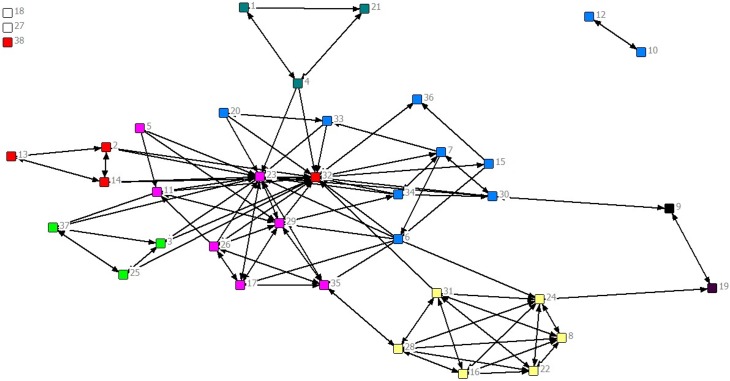
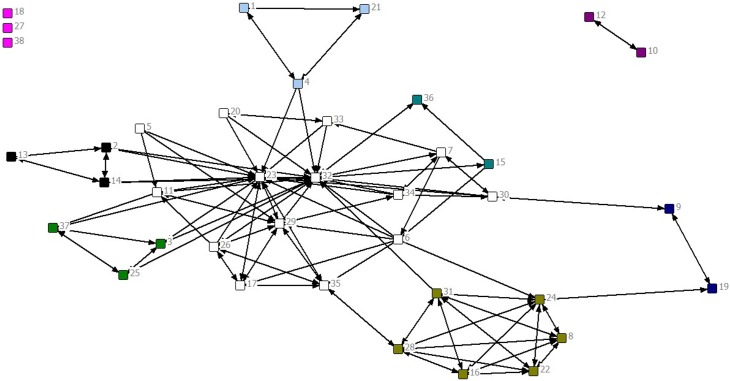
Verification
Claims the paper makes
50 Not checked yet · 34 Own interpretation · 2 No basis given · 1 Supported · 1 Partly supported · accuracy not yet measured
None of the sources cited for this claim have been checked yet.
In the paper
“Indeed, evidence-based programs that have progressed to implementation and translation stages report that effective partnerships with community-based, school, or implementing agencies are critical to their success [11, 17, 18].”
§ Social Network Analysis for Program Implementation > Why SNA Matters for Implementation
What the sources say
- Not checked yetcites [11] CH Brown, 2012, Partnerships for the design, conduct, and analysis of effectiveness, and implementation research: Experiences of the Prevention Science and Methodology Group, Administration and Policy in Mental Health source
- Not checked yetcites [17] LA Palinkas, 2014, Inter-organizational collaboration in the implementation of evidence-based practices among agencies serving abused and neglected youth, Administration and Policy in Mental Health and Mental Health Services Research source
- Not checked yetcites [18] LA Palinkas, 2012, Translation and implementation of evidence-based practice
plaindirect- Asserted: passes — The authors put it forward as true.
- Checkable: passes — It can be checked against evidence.
- Load-bearing: passes — The paper’s conclusions depend on it.
- Based: passes — The paper gives a reason why it holds.
In the paper
“Many programs use haphazard, invalid, or convenience methods to identify who delivers the program [19].”
§ Social Network Analysis for Program Implementation > Why SNA Matters for Implementation
What the sources say
- Not checked yetcites [19] TW Valente, 2007, Identifying opinion leaders to promote behavior change, Health Education & Behavior source
plain- Asserted: passes — The authors put it forward as true.
- Checkable: passes — It can be checked against evidence.
- Load-bearing: passes — The paper’s conclusions depend on it.
- Based: passes — The paper gives a reason why it holds.
None of the sources cited for this claim have been checked yet.
In the paper
“Yet interventions implemented by community-identified leaders are often more effective than those by non-leaders [20, 21].”
§ Social Network Analysis for Program Implementation > Why SNA Matters for Implementation
What the sources say
- Not checked yetcites [20] Flodgren G, Deane K, Dickinson HO, Kirk S, Alberti H, Beyer FR, et al. Interventions to change the behaviour of health professionals and the organisation of care to promote weight reduction in overweight and obese adults. Cochrane Collaboration: Systematic Reviews; 2010. source
- Not checked yetcites [21] TW Valente, 2010, Social networks and health: Models, methods, and applications source
plaincorrelational- Asserted: passes — The authors put it forward as true.
- Checkable: passes — It can be checked against evidence.
- Load-bearing: passes — The paper’s conclusions depend on it.
- Based: passes — The paper gives a reason why it holds.
None of the sources cited for this claim have been checked yet.
In the paper
“In general, interventions delivered by people from the community of the beneficiaries of the program will be more effective than those delivered by outside agencies that are less connected to program recipients [22, 23].”
§ Social Network Analysis for Program Implementation > Why SNA Matters for Implementation
What the sources say
- Not checked yetcites [22] T Valente, 2012, Network interventions, Science source
- Not checked yetcites [23] SG Kellam, 2012, Developing and maintaining partnerships as the foundation of implementation and implementation science: Reflections over a half century, Administration and Policy in Mental Health source
plaindirect- Asserted: passes — The authors put it forward as true.
- Checkable: passes — It can be checked against evidence.
- Load-bearing: passes — The paper’s conclusions depend on it.
- Based: passes — The paper gives a reason why it holds.
In the paper
“Research has shown that there is a considerable lag between an invention or innovation and its routine use in a clinical or applied setting [6].”
§ Social Network Analysis for Program Implementation > Why SNA Matters for Implementation
What the sources say
- Not checked yetcites [6] EA Balas, 2000, Yearbook of medical informatics
plain- Asserted: passes — The authors put it forward as true.
- Checkable: passes — It can be checked against evidence.
- Load-bearing: passes — The paper’s conclusions depend on it.
- Based: passes — The paper gives a reason why it holds.
None of the sources cited for this claim have been checked yet.
In the paper
“Current theories suggest that sustainability is affected not only by which communities in a network are represented in a supportive network, but also how early this network begins, whether there is a “champion” and/or whether the network represents the power structures in organizations who have the capacity to address long term financial and administrative viability [47, 48].”
§ Social Network Analysis for Program Implementation > Frameworks for the Stages of Implementation
What the sources say
- Not checked yetcites [47] T Backer, 2003, Evaluating community collaborations
- Not checked yetcites [48] DA Conrad, 2003, Community care networks: Linking vision to outcomes for community health improvement, Medical Care Research and Review source
hedgeddirect- Asserted: passes — The authors put it forward as true.
- Checkable: passes — It can be checked against evidence.
- Load-bearing: passes — The paper’s conclusions depend on it.
- Based: passes — The paper gives a reason why it holds.
None of the sources cited for this claim have been checked yet.
In the paper
“In order to apply social network theory and methods to implementation, we note first that implementation can be considered a developmental process, a transition through known stages [1, 34].”
§ Social Network Analysis for Program Implementation > Frameworks for the Stages of Implementation
What the sources say
- Not checked yetcites [1] GA Aarons, 2011, Advancing a conceptual model of evidence-based practice in implementation in public mental health and child welfare systems, Administration and Policy in Mental Health and Mental Health Services Research source
- Not checked yetcites [34] L Saldana, 2012, Predicting program start-up using the stages of implementation measure, Administration and Policy in Mental Health source
plain- Asserted: passes — The authors put it forward as true.
- Checkable: passes — It can be checked against evidence.
- Load-bearing: passes — The paper’s conclusions depend on it.
- Based: passes — The paper gives a reason why it holds.
None of the sources cited for this claim have been checked yet.
In the paper
“Research has shown that who delivers the program, and the social context of its receipt has a strong impact on program appeal and impact [22, 58].”
§ Social Network Analysis for Program Implementation > Network Measures and Metrics Useful for Program Implementation > Program design
What the sources say
boosteddirect- Asserted: passes — The authors put it forward as true.
- Checkable: passes — It can be checked against evidence.
- Load-bearing: passes — The paper’s conclusions depend on it.
- Based: passes — The paper gives a reason why it holds.
None of the sources cited for this claim have been checked yet.
In the paper
“Current theories suggest that sustainability is affected not only by which communities in a network are represented in a supportive network, but also how early this network begins, whether there is a “champion” and/or whether the network represents the power structures in organizations who have the capacity to address long term financial and administrative viability [47, 48].”
§ Social Network Analysis for Program Implementation > Frameworks for the Stages of Implementation
What the sources say
- Not checked yetcites [47] T Backer, 2003, Evaluating community collaborations
- Not checked yetcites [48] DA Conrad, 2003, Community care networks: Linking vision to outcomes for community health improvement, Medical Care Research and Review source
hedgeddirect- Asserted: passes — The authors put it forward as true.
- Checkable: passes — It can be checked against evidence.
- Load-bearing: unclear — It is unclear whether the paper’s conclusions depend on it.
- Based: passes — The paper gives a reason why it holds.
None of the sources cited for this claim have been checked yet.
In the paper
“Increasingly, researchers are learning that program effects demonstrated under idealized or laboratory conditions often do not translate into sustainable programs in practice [44, 45].”
§ Social Network Analysis for Program Implementation > Frameworks for the Stages of Implementation
What the sources say
- Not checked yetcites [44] S Ennett, 1994, How effective is drug abuse resistance education? A meta-analysis of Project DARE outcome evaluations, American Journal of Public Health source
- Not checked yetcites [45] RE Glasgow, 2003, Why don't we see more translation of health promotion research to practice? Rethinking the efficacy-to-effectiveness transition, American Journal of Public Health source
plain- Asserted: passes — The authors put it forward as true.
- Checkable: passes — It can be checked against evidence.
- Load-bearing: passes — The paper’s conclusions depend on it.
- Based: passes — The paper gives a reason why it holds.
- It may state two separate claims as one. 26
- Probably not a substantial claim. 36
None of the sources cited for this claim have been checked yet.
In the paper
“There is strong evidence that opinion leader and RDS interventions are effective behavior change approaches [20, 68].”
§ Social Network Analysis for Program Implementation > Network Measures and Metrics Useful for Program Implementation > Program design
What the sources say
- Could not verifycites [20] Flodgren G, Deane K, Dickinson HO, Kirk S, Alberti H, Beyer FR, et al. Interventions to change the behaviour of health professionals and the organisation of care to promote weight reduction in overweight and obese adults. Cochrane Collaboration: Systematic Reviews; 2010. sourceExperimental — accuracy not yet measured
The Discussion (Quality of the evidence) says the reviewed studies make firm conclusions about improving weight-loss management difficult, but it does not assess opinion-leader or RDS interventions. Searches for “opinion leader,” “RDS,” and related effectiveness terms found no passage addressing the specific claim. (LLM, conf=0.76)
- Not checked yetcites [68] DD Heckathorn, 2002, Extensions of respondent-driven sampling: a new approach to the study of injection drug users aged 18–25, AIDS and Behavior source
boosteddirect- Asserted: passes — The authors put it forward as true.
- Checkable: passes — It can be checked against evidence.
- Load-bearing: unclear — It is unclear whether the paper’s conclusions depend on it.
- Based: passes — The paper gives a reason why it holds.
It may state two separate claims as one.
- Could not verify
Every source the paper cites for this claim was checked and supports it.
In the paper
“Chambers and others [74] write (p. 118) “As a consequence, assessment of organizational characteristics (e.g., structure, climate, culture, resources) is seen as an essential component of sustainability, and indeed, the fit between context and the intervention is at the center of a sustainability phase.””
§ Social Network Analysis for Program Implementation > Network Measures and Metrics Useful for Program Implementation > Sustainment and Monitoring
What the sources say
- Supportedcites [74] DA Chambers, 2013, The dynamic sustainability framework: addressing the paradox of sustainment amid ongoing change, Implementation Science source
The cited paper’s Background section, under “Understanding and advancing sustainability research,” contains the quoted sentence verbatim. It states both that assessing organizational characteristics is essential to sustainability and that intervention–context fit is central to a sustainability phase. (LLM, conf=0.95)
plaincorrelational- Asserted: passes — The authors put it forward as true.
- Checkable: passes — It can be checked against evidence.
- Load-bearing: fails — The paper’s conclusions may not depend on it.
- Based: passes — The paper gives a reason why it holds.
Probably not a substantial claim. The paper’s conclusions may not depend on it. It may state two separate claims as one.
- Supported
The cited sources support only part of this claim — read each source’s verdict below.
In the paper
“At two intervals during the intervention (weeks 3 and 6), network data were collected and the results of the network analysis were given to the interventionist and provided specific advice on activities to use to increase group cohesiveness.”
§ Social Network Analysis for Program Implementation > Network Measures and Metrics Useful for Program Implementation > Implementation
What the sources say
- Partly supportedcites [70] S Gessel, 2013, Social network diagnostics: A tool for monitoring group interventions, Implementation Science sourceExperimental — accuracy not yet measured
The Methods (Measures) and Results report network data collection at weeks four and twelve, not weeks three and six. They also report that an action report based on week-four data gave the group leader specific recommendations to increase cohesion during sessions seven to twelve. Thus the feedback and advice are supported, but the stated timing is not. (LLM, conf=0.92)
plain- Asserted: passes — The authors put it forward as true.
- Checkable: passes — It can be checked against evidence.
- Load-bearing: passes — The paper’s conclusions depend on it.
- Based: passes — The paper gives a reason why it holds.
It may state two separate claims as one.
- Partly supported
In the paper
“For example, Valente and colleagues [10] showed that an academic-community intervention to improve cancer screening rates among Asian Pacific Islander communities in southern California was successful at increasing linkage between community based organizations (CBOs) and themselves, and links from CBOs to universities, but not between universities or from universities to CBOs.”
§ Social Network Analysis for Program Implementation > Why SNA Matters for Implementation
What the sources say
- Not checked yetcites [10] TW Valente, 2010, A network assessment of community-based participatory action: Linking communities and universities to reduce cancer disparities, American Journal of Public Health source
plaindirect- Asserted: passes — The authors put it forward as true.
- Checkable: passes — It can be checked against evidence.
- Load-bearing: passes — The paper’s conclusions depend on it.
- Based: passes — The paper gives a reason why it holds.
It may state two separate claims as one.
A conclusion the paper draws from its own results — it cites no other source for it, so there is none to check. The quote shows it is in the paper.
In the paper
“If positive, these actions may increase program participation and effects and can in some cases take on a life of their own.”
§ Social Network Analysis for Program Implementation > Network Measures and Metrics Useful for Program Implementation > Program design
hedgedconditional- Asserted: passes — The authors put it forward as true.
- Checkable: fails — It may be too vague to check against evidence.
- Load-bearing: passes — The paper’s conclusions depend on it.
- Based: passes — The paper gives a reason why it holds.
Probably not a substantial claim. It may be too vague to check against evidence. It may state two separate claims as one.
A conclusion the paper draws from its own results — it cites no other source for it, so there is none to check. The quote shows it is in the paper.
In the paper
“The discussion question identifies individuals who are trustworthy and who are “people people” and good communicators.”
§ Social Network Analysis for Program Implementation > Network Measures and Metrics Useful for Program Implementation > Program design
plaindirect- Asserted: passes — The authors put it forward as true.
- Checkable: passes — It can be checked against evidence.
- Load-bearing: passes — The paper’s conclusions depend on it.
- Based: passes — The paper gives a reason why it holds.
Probably not a substantial claim. It may state two separate claims as one.
A conclusion the paper draws from its own results — it cites no other source for it, so there is none to check. The quote shows it is in the paper.
In the paper
“There are many network tools and statistics that can be used to facilitate program implementation and enable mid-course program adjustments.”
§ Social Network Analysis for Program Implementation > Network Measures and Metrics Useful for Program Implementation > Implementation
plaindirect- Asserted: passes — The authors put it forward as true.
- Checkable: fails — It may be too vague to check against evidence.
- Load-bearing: fails — The paper’s conclusions may not depend on it.
- Based: fails — The paper may give no reason why it holds.
Probably not a substantial claim. It may be too vague to check against evidence. The paper’s conclusions may not depend on it. The paper may give no reason why it holds.
- Rests on an assumption: Most interventions are not one shot but implemented over many months and involve many sessions.
A conclusion the paper draws from its own results — it cites no other source for it, so there is none to check. The quote shows it is in the paper.
In the paper
“When the barriers to change are technical, advice networks are important; when the barriers to change are cultural, then discussion ones are important.”
- Also stated in: § Program design · plain
“In other words, when people report they do not know how to do the behavior, advice or expertise is needed, but when people report they do not know what behaviors to do, discussion or trust is needed.”
§ Social Network Analysis for Program Implementation > Network Measures and Metrics Useful for Program Implementation > Program design
plaincorrelational- Asserted: passes — The authors put it forward as true.
- Checkable: passes — It can be checked against evidence.
- Load-bearing: passes — The paper’s conclusions depend on it.
- Based: passes — The paper gives a reason why it holds.
It may state two separate claims as one.
- Also stated in: § Program design · plain
In the paper
“Many interventions are designed to be delivered in group settings in part to increase their cost-effectiveness and in part to harness the power of group dynamics to facilitate behavior change [63].”
§ Social Network Analysis for Program Implementation > Network Measures and Metrics Useful for Program Implementation > Program design
What the sources say
- Not checked yetcites [63] SL Barkin, 2012, Culturally tailored, family-centered, behavioral obesity intervention for Latino-American preschool-aged children, Pediatrics source
plaindirect- Asserted: passes — The authors put it forward as true.
- Checkable: passes — It can be checked against evidence.
- Load-bearing: unclear — It is unclear whether the paper’s conclusions depend on it.
- Based: passes — The paper gives a reason why it holds.
It may state two separate claims as one.
In the paper
“The four stages are: (1) Exploration or needs assessment; (2) Adoption or program design; (3) Program implementation, and (4) Sustainment and monitoring.”
§ Social Network Analysis for Program Implementation > Frameworks for the Stages of Implementation
What the sources say
- Not checked yetcites [1] GA Aarons, 2011, Advancing a conceptual model of evidence-based practice in implementation in public mental health and child welfare systems, Administration and Policy in Mental Health and Mental Health Services Research source
plain- Asserted: passes — The authors put it forward as true.
- Checkable: passes — It can be checked against evidence.
- Load-bearing: fails — The paper’s conclusions may not depend on it.
- Based: passes — The paper gives a reason why it holds.
Probably not a substantial claim. The paper’s conclusions may not depend on it.
None of the sources cited for this claim have been checked yet.
In the paper
“There is some evidence that identifying leaders and forming groups around them [58]; or forming groups and identifying leaders within them are also effective approaches [69].”
§ Social Network Analysis for Program Implementation > Network Measures and Metrics Useful for Program Implementation > Program design
What the sources say
- Not checked yetcites [58] TW Valente, 2003, The effects of a social network method for group assignment strategies on peer led tobacco prevention programs in schools, American Journal of Public Health source
- Not checked yetcites [69] DB Buller, 1999, Randomized trial testing the effect of a peer education at increasing fruit and vegetable intake, Journal of the National Cancer Institute source
hedgedconditional- Asserted: passes — The authors put it forward as true.
- Checkable: passes — It can be checked against evidence.
- Load-bearing: passes — The paper’s conclusions depend on it.
- Based: passes — The paper gives a reason why it holds.
It may state two separate claims as one.
A conclusion the paper draws from its own results — it cites no other source for it, so there is none to check. The quote shows it is in the paper.
In the paper
“Selecting a network intervention from this wide array of strategic, tactical and operational choices depends on the behavior of study, the goals and objectives of the intervention, the characteristics of the population, and the context in which the intervention will be implemented.”
§ Social Network Analysis for Program Implementation > Network Measures and Metrics Useful for Program Implementation > Program design
plaindirect- Asserted: passes — The authors put it forward as true.
- Checkable: passes — It can be checked against evidence.
- Load-bearing: fails — The paper’s conclusions may not depend on it.
- Based: passes — The paper gives a reason why it holds.
Probably not a substantial claim. The paper’s conclusions may not depend on it.
A conclusion the paper draws from its own results — it cites no other source for it, so there is none to check. The quote shows it is in the paper.
In the paper
“The advice question identifies individuals who are knowledgeable about the issue at hand and have the necessary technical know-how to persuade non-users.”
§ Social Network Analysis for Program Implementation > Network Measures and Metrics Useful for Program Implementation > Program design
plain- Asserted: passes — The authors put it forward as true.
- Checkable: passes — It can be checked against evidence.
- Load-bearing: passes — The paper’s conclusions depend on it.
- Based: passes — The paper gives a reason why it holds.
Probably not a substantial claim. It may state two separate claims as one.
In the paper
“Many other network interventions are possible, and Valente [22] classified them into four broad strategies, each comprised of several tactical alternatives with each tactic having from one to many operational choices.”
§ Social Network Analysis for Program Implementation > Network Measures and Metrics Useful for Program Implementation > Program design
What the sources say
- Not checked yetcites [22] T Valente, 2012, Network interventions, Science source
plain- Asserted: passes — The authors put it forward as true.
- Checkable: passes — It can be checked against evidence.
- Load-bearing: fails — The paper’s conclusions may not depend on it.
- Based: passes — The paper gives a reason why it holds.
Probably not a substantial claim. The paper’s conclusions may not depend on it.
A conclusion the paper draws from its own results — it cites no other source for it, so there is none to check. The quote shows it is in the paper.
In the paper
“Opinion leader interventions are effective because they solicit community input to determine who should implement the program, and because the leaders come from the community they often have considerable trust and social capital.”
§ Social Network Analysis for Program Implementation > Network Measures and Metrics Useful for Program Implementation > Program design
plaindirect- Asserted: passes — The authors put it forward as true.
- Checkable: passes — It can be checked against evidence.
- Load-bearing: passes — The paper’s conclusions depend on it.
- Based: passes — The paper gives a reason why it holds.
It may state two separate claims as one.
In the paper
“Bess and colleagues [38] found that initial coalition participation in a youth violence prevention program was associated with a pre-existing network of inter-organizational relations.”
§ Social Network Analysis for Program Implementation > Frameworks for the Stages of Implementation
What the sources say
- Not checked yetcites [38] KD Bess, 2012, Ecological contexts in the development of coalitions for youth violence prevention: an organizational network analysis, Health Education & Behavior source
plaincorrelational- Asserted: passes — The authors put it forward as true.
- Checkable: passes — It can be checked against evidence.
- Load-bearing: fails — The paper’s conclusions may not depend on it.
- Based: passes — The paper gives a reason why it holds.
Probably not a substantial claim. The paper’s conclusions may not depend on it.
In the paper
“Even this suggestion must be tentative however since even the most basic measure, network density, has been posited to be advantageous for spreading new information but deleterious when accepting new information from the outside [11].”
§ Social Network Analysis for Program Implementation > Network Measures and Metrics Useful for Program Implementation > Exploration and Needs Assessment
What the sources say
- Not checked yetcites [11] CH Brown, 2012, Partnerships for the design, conduct, and analysis of effectiveness, and implementation research: Experiences of the Prevention Science and Methodology Group, Administration and Policy in Mental Health source
hedgedconditional- Asserted: passes — The authors put it forward as true.
- Checkable: passes — It can be checked against evidence.
- Load-bearing: fails — The paper’s conclusions may not depend on it.
- Based: passes — The paper gives a reason why it holds.
Probably not a substantial claim. The paper’s conclusions may not depend on it. It may state two separate claims as one.
In the paper
“Finally, the increasing importance of social media use among all populations means that public health interventions are likely to re-imagined and re-interpreted with a social media lens [65].”
§ Social Network Analysis for Program Implementation > Network Measures and Metrics Useful for Program Implementation > Program design
What the sources say
- Not checked yetcites [65] D Capurro, 2014, The use of social networking sites for public health practice and research: A systematic review, Journal of Medical Internet Research source
hedgedconditional- Asserted: passes — The authors put it forward as true.
- Checkable: fails — It may be too vague to check against evidence.
- Load-bearing: fails — The paper’s conclusions may not depend on it.
- Based: passes — The paper gives a reason why it holds.
Probably not a substantial claim. It may be too vague to check against evidence. The paper’s conclusions may not depend on it.
In the paper
“(3) improved the quality and quantity of implementation [15].”
§ Social Network Analysis for Program Implementation > Why SNA Matters for Implementation
What the sources say
- Not checked yetcites [15] CH Brown, 2014, Advances in Prevention Science: Defining Prevention Science
plaindirect- Asserted: passes — The authors put it forward as true.
- Checkable: passes — It can be checked against evidence.
- Load-bearing: passes — The paper’s conclusions depend on it.
- Based: passes — The paper gives a reason why it holds.
It may state two separate claims as one.
In the paper
“Feinberg and colleagues [42] found network cohesion to be positively associated and network centralization to be negatively associated with community readiness to engage in the Communities That Care community-based prevention coalition.”
§ Social Network Analysis for Program Implementation > Frameworks for the Stages of Implementation
What the sources say
- Not checked yetcites [42] ME Feinberg, 2005, Social networks and community prevention coalitions
plaincorrelational- Asserted: passes — The authors put it forward as true.
- Checkable: passes — It can be checked against evidence.
- Load-bearing: unclear — It is unclear whether the paper’s conclusions depend on it.
- Based: passes — The paper gives a reason why it holds.
It may state two separate claims as one.
In the paper
“These investigators worked with a 12-week program designed to improve lifestyle choices for parents in underserved communities.”
§ Social Network Analysis for Program Implementation > Network Measures and Metrics Useful for Program Implementation > Implementation
What the sources say
- Not checked yetcites [70] S Gessel, 2013, Social network diagnostics: A tool for monitoring group interventions, Implementation Science source
plain- Asserted: passes — The authors put it forward as true.
- Checkable: passes — It can be checked against evidence.
- Load-bearing: fails — The paper’s conclusions may not depend on it.
- Based: passes — The paper gives a reason why it holds.
Probably not a substantial claim. The paper’s conclusions may not depend on it.
A conclusion the paper draws from its own results — it cites no other source for it, so there is none to check. The quote shows it is in the paper.
In the paper
“Network data will enable us to improve our programs without substantially increasing costs or revising existing interventions.”
§ Social Network Analysis for Program Implementation > Potential Benefits
plaindirect- Asserted: passes — The authors put it forward as true.
- Checkable: passes — It can be checked against evidence.
- Load-bearing: passes — The paper’s conclusions depend on it.
- Based: fails — The paper may give no reason why it holds.
Probably not a substantial claim. The paper may give no reason why it holds.
- Rests on an assumption: Existing evidence indicates that network-informed interventions and programs are more effective than non-networked ones.
In the paper
“The recommendations regarding appropriate metrics and thresholds for these metrics were based primarily on experiences with one pilot study, and much work remains to be done in this area.”
§ Social Network Analysis for Program Implementation > Network Measures and Metrics Useful for Program Implementation > Implementation
What the sources say
- Not checked yetcites [70] S Gessel, 2013, Social network diagnostics: A tool for monitoring group interventions, Implementation Science source
plainSingle case- Asserted: passes — The authors put it forward as true.
- Checkable: passes — It can be checked against evidence.
- Load-bearing: fails — The paper’s conclusions may not depend on it.
- Based: passes — The paper gives a reason why it holds.
Probably not a substantial claim. The paper’s conclusions may not depend on it. It may state two separate claims as one.
None of the sources cited for this claim have been checked yet.
In the paper
“Many studies have deplored the tendency for programs to lose funding, focus, or purpose once the initial investments are removed [71, 72].”
§ Social Network Analysis for Program Implementation > Network Measures and Metrics Useful for Program Implementation > Sustainment and Monitoring
What the sources say
- Not checked yetcites [71] M O’Connell, 2009, Preventing mental, emotional and behavioral disorders among young people: Progress and possibilities
- Not checked yetcites [72] R Spoth, 2013, Addressing challenges for the next generation of type 2 translation research: the translation science to population impact (TSci2PI) framework, Prevention Science source
plaindirect- Asserted: passes — The authors put it forward as true.
- Checkable: passes — It can be checked against evidence.
- Load-bearing: passes — The paper’s conclusions depend on it.
- Based: passes — The paper gives a reason why it holds.
Probably not a substantial claim.
A conclusion the paper draws from its own results — it cites no other source for it, so there is none to check. The quote shows it is in the paper.
In the paper
“Much of the technology that supports online interactions is inherently designed to connect different persons and groups, and thus is ideal for network exploration.”
§ Social Network Analysis for Program Implementation > Potential Benefits
plaindirect- Asserted: passes — The authors put it forward as true.
- Checkable: fails — It may be too vague to check against evidence.
- Load-bearing: fails — The paper’s conclusions may not depend on it.
- Based: fails — The paper may give no reason why it holds.
Probably not a substantial claim. It may be too vague to check against evidence. The paper’s conclusions may not depend on it. The paper may give no reason why it holds. It may state two separate claims as one.
In the paper
“The theory guiding the intervention was that increased social cohesion during the group sessions would improve information seeking and social support among group members, which would translate into better outcomes.”
§ Social Network Analysis for Program Implementation > Network Measures and Metrics Useful for Program Implementation > Implementation
What the sources say
- Not checked yetcites [70] S Gessel, 2013, Social network diagnostics: A tool for monitoring group interventions, Implementation Science source
hedgeddirect- Asserted: passes — The authors put it forward as true.
- Checkable: passes — It can be checked against evidence.
- Load-bearing: passes — The paper’s conclusions depend on it.
- Based: passes — The paper gives a reason why it holds.
Probably not a substantial claim. It may state two separate claims as one.
A conclusion the paper draws from its own results — it cites no other source for it, so there is none to check. The quote shows it is in the paper.
In the paper
“Interventionists may often think the program is still being embraced by the community because the people they come into contact with regularly still report that it is important.”
§ Social Network Analysis for Program Implementation > Network Measures and Metrics Useful for Program Implementation > Sustainment and Monitoring
hedgedconditional- Asserted: passes — The authors put it forward as true.
- Checkable: passes — It can be checked against evidence.
- Load-bearing: passes — The paper’s conclusions depend on it.
- Based: fails — The paper may give no reason why it holds.
Probably not a substantial claim. The paper may give no reason why it holds.
A conclusion the paper draws from its own results — it cites no other source for it, so there is none to check. The quote shows it is in the paper.
In the paper
“Using network data to inform all stages of program development and implementation offers considerable potential benefits in a number of areas.”
§ Social Network Analysis for Program Implementation > Potential Benefits
plainconditional- Asserted: passes — The authors put it forward as true.
- Checkable: fails — It may be too vague to check against evidence.
- Load-bearing: passes — The paper’s conclusions depend on it.
- Based: passes — The paper gives a reason why it holds.
Probably not a substantial claim. It may be too vague to check against evidence.
A conclusion the paper draws from its own results — it cites no other source for it, so there is none to check. The quote shows it is in the paper.
In the paper
“First, it will substantially advance theory about how programs work and how best to design and implement them.”
§ Social Network Analysis for Program Implementation > Potential Benefits
plaindirect- Asserted: passes — The authors put it forward as true.
- Checkable: fails — It may be too vague to check against evidence.
- Load-bearing: passes — The paper’s conclusions depend on it.
- Based: fails — The paper may give no reason why it holds.
Probably not a substantial claim. It may be too vague to check against evidence. The paper may give no reason why it holds.
The paper states this without a source or data behind it here, so there is nothing to check it against. The quote shows it is in the paper.
In the paper
“In addition, experience indicates that collecting network data via surveys, either electronically or with paper, is easy and efficient.”
§ Social Network Analysis for Program Implementation > Potential Benefits
hedged- Asserted: passes — The authors put it forward as true.
- Checkable: fails — It may be too vague to check against evidence.
- Load-bearing: fails — The paper’s conclusions may not depend on it.
- Based: fails — The paper may give no reason why it holds.
Probably not a substantial claim. It may be too vague to check against evidence. The paper’s conclusions may not depend on it. The paper may give no reason why it holds.
- Rests on an assumption: Everyone knows who they go to for advice or whom they spend time with.
A conclusion the paper draws from its own results — it cites no other source for it, so there is none to check. The quote shows it is in the paper.
In the paper
“There are at least four metrics/network analytic techniques that can be used to aid in the evaluation of sustainability: (1) documentation of the continuation of the network; (2) documentation of the behavior of leaders; (3) estimation of contagion (or learning) effects; and (4) strategies to help ensure that participants hear positive things about the program from their peers.”
§ Social Network Analysis for Program Implementation > Network Measures and Metrics Useful for Program Implementation > Sustainment and Monitoring
plain- Asserted: passes — The authors put it forward as true.
- Checkable: passes — It can be checked against evidence.
- Load-bearing: passes — The paper’s conclusions depend on it.
- Based: passes — The paper gives a reason why it holds.
Probably not a substantial claim. It may state two separate claims as one.
The paper states this without a source or data behind it here, so there is nothing to check it against. The quote shows it is in the paper.
In the paper
“Many of the suggestions provided here are based on limited evidence at this point in time, but the available evidence is promising.”
§ Social Network Analysis for Program Implementation > Conclusions
hedged- Asserted: passes — The authors put it forward as true.
- Checkable: fails — It may be too vague to check against evidence.
- Load-bearing: passes — The paper’s conclusions depend on it.
- Based: fails — The paper may give no reason why it holds.
Probably not a substantial claim. It may be too vague to check against evidence. The paper may give no reason why it holds. It may state two separate claims as one.
A conclusion the paper draws from its own results — it cites no other source for it, so there is none to check. The quote shows it is in the paper.
In the paper
“Online data can be used at any point during the different stages of program implementation, whether it is from emails for coordination, or fully integrating social media websites into an intervention.”
§ Social Network Analysis for Program Implementation > Potential Benefits
plain- Asserted: passes — The authors put it forward as true.
- Checkable: passes — It can be checked against evidence.
- Load-bearing: fails — The paper’s conclusions may not depend on it.
- Based: fails — The paper may give no reason why it holds.
Probably not a substantial claim. The paper’s conclusions may not depend on it. The paper may give no reason why it holds.
A conclusion the paper draws from its own results — it cites no other source for it, so there is none to check. The quote shows it is in the paper.
In the paper
“However, this example demonstrates the usefulness of the network analysis approach in the implementation stage of an intervention.”
§ Social Network Analysis for Program Implementation > Network Measures and Metrics Useful for Program Implementation > Implementation
boostedSingle case- Asserted: passes — The authors put it forward as true.
- Checkable: fails — It may be too vague to check against evidence.
- Load-bearing: passes — The paper’s conclusions depend on it.
- Based: passes — The paper gives a reason why it holds.
Probably not a substantial claim. It may be too vague to check against evidence.
A conclusion the paper draws from its own results — it cites no other source for it, so there is none to check. The quote shows it is in the paper.
In the paper
“Social network analyses can be applied to intervention development and implementation to foster and enhance the implementation process.”
§ Social Network Analysis for Program Implementation > Conclusions
plaindirect- Asserted: passes — The authors put it forward as true.
- Checkable: fails — It may be too vague to check against evidence.
- Load-bearing: passes — The paper’s conclusions depend on it.
- Based: fails — The paper may give no reason why it holds.
Probably not a substantial claim. It may be too vague to check against evidence. The paper may give no reason why it holds.
- Rests on an assumption: There is a wealth of knowledge about how to collect and analyze social network data, and a plethora of measures that can be used to improve the design, delivery, and assessment of public health interventions.
A conclusion the paper draws from its own results — it cites no other source for it, so there is none to check. The quote shows it is in the paper.
In the paper
“But these individuals may not be central in the network for which the programs are developed and so the surveillance information available to the interventionist is not a valid reflection of what is happening in the community.”
§ Social Network Analysis for Program Implementation > Network Measures and Metrics Useful for Program Implementation > Sustainment and Monitoring
hedgedconditional- Asserted: passes — The authors put it forward as true.
- Checkable: passes — It can be checked against evidence.
- Load-bearing: passes — The paper’s conclusions depend on it.
- Based: passes — The paper gives a reason why it holds.
It may state two separate claims as one.
A conclusion the paper draws from its own results — it cites no other source for it, so there is none to check. The quote shows it is in the paper.
In the paper
“Network analyses can document these perceived normative influences and determine if participants maintain a perception that their interpersonal environment supports and endorses the new behaviors.”
§ Social Network Analysis for Program Implementation > Network Measures and Metrics Useful for Program Implementation > Sustainment and Monitoring
plain- Asserted: passes — The authors put it forward as true.
- Checkable: passes — It can be checked against evidence.
- Load-bearing: passes — The paper’s conclusions depend on it.
- Based: passes — The paper gives a reason why it holds.
It may state two separate claims as one.
A conclusion the paper draws from its own results — it cites no other source for it, so there is none to check. The quote shows it is in the paper.
In the paper
“Moreover, truly successful programs turn program participants into advocates”
§ Social Network Analysis for Program Implementation > Network Measures and Metrics Useful for Program Implementation > Sustainment and Monitoring
plaindirect- Asserted: passes — The authors put it forward as true.
- Checkable: passes — It can be checked against evidence.
- Load-bearing: fails — The paper’s conclusions may not depend on it.
- Based: fails — The paper may give no reason why it holds.
Probably not a substantial claim. The paper’s conclusions may not depend on it. The paper may give no reason why it holds.
A conclusion the paper draws from its own results — it cites no other source for it, so there is none to check. The quote shows it is in the paper.
In the paper
“Finally, incorporating network data into program design and intervention may enable us to conceive of new interventions.”
§ Social Network Analysis for Program Implementation > Potential Benefits
hedgedconditional- Asserted: passes — The authors put it forward as true.
- Checkable: fails — It may be too vague to check against evidence.
- Load-bearing: passes — The paper’s conclusions depend on it.
- Based: passes — The paper gives a reason why it holds.
Probably not a substantial claim. It may be too vague to check against evidence.
A conclusion the paper draws from its own results — it cites no other source for it, so there is none to check. The quote shows it is in the paper.
In the paper
“By monitoring the network of delivery agents and organizations, researchers can more adequately determine how the program is changing and how its effects may vary.”
§ Social Network Analysis for Program Implementation > Network Measures and Metrics Useful for Program Implementation > Sustainment and Monitoring
plaindirect- Asserted: passes — The authors put it forward as true.
- Checkable: passes — It can be checked against evidence.
- Load-bearing: passes — The paper’s conclusions depend on it.
- Based: unclear — It is unclear why the paper says it holds.
It may state two separate claims as one.
A conclusion the paper draws from its own results — it cites no other source for it, so there is none to check. The quote shows it is in the paper.
In the paper
“Mining and analyzing online networks makes use of accurate data, is cost-effective, and may be less obtrusive than pen-and-paper surveys.”
§ Social Network Analysis for Program Implementation > Potential Benefits
hedged- Asserted: passes — The authors put it forward as true.
- Checkable: passes — It can be checked against evidence.
- Load-bearing: passes — The paper’s conclusions depend on it.
- Based: fails — The paper may give no reason why it holds.
Probably not a substantial claim. The paper may give no reason why it holds. It may state two separate claims as one.
A conclusion the paper draws from its own results — it cites no other source for it, so there is none to check. The quote shows it is in the paper.
In the paper
“Indeed, it is likely that network-based interventions are more cost-effective because of their stronger impacts and because local buy-in and delivery are enhanced.”
§ Social Network Analysis for Program Implementation > Potential Benefits
hedgedconditional- Asserted: passes — The authors put it forward as true.
- Checkable: passes — It can be checked against evidence.
- Load-bearing: passes — The paper’s conclusions depend on it.
- Based: unclear — It is unclear why the paper says it holds.
It may state two separate claims as one.
- Rests on an assumption: Existing evidence indicates that network-informed interventions and programs are more effective than non-networked ones.
In the paper
“Individuals change their behaviors because they perceive themselves to have the personal supports to change, because they see the new behavior as normative, and because they see how it benefits themselves and those around them [21].”
§ Social Network Analysis for Program Implementation > Network Measures and Metrics Useful for Program Implementation > Sustainment and Monitoring
What the sources say
- Not checked yetcites [21] TW Valente, 2010, Social networks and health: Models, methods, and applications source
plaindirect- Asserted: passes — The authors put it forward as true.
- Checkable: passes — It can be checked against evidence.
- Load-bearing: passes — The paper’s conclusions depend on it.
- Based: passes — The paper gives a reason why it holds.
It may state two separate claims as one.
A conclusion the paper draws from its own results — it cites no other source for it, so there is none to check. The quote shows it is in the paper.
In the paper
“Collecting network data has become easier in today’s digital world.”
§ Social Network Analysis for Program Implementation > Potential Benefits
plaindirect- Asserted: passes — The authors put it forward as true.
- Checkable: passes — It can be checked against evidence.
- Load-bearing: fails — The paper’s conclusions may not depend on it.
- Based: fails — The paper may give no reason why it holds.
Probably not a substantial claim. The paper’s conclusions may not depend on it. The paper may give no reason why it holds.
A conclusion the paper draws from its own results — it cites no other source for it, so there is none to check. The quote shows it is in the paper.
In the paper
“Finally, related to the last point above, sustainable programs have created “buzz” that makes people excited about the program and its success, especially within various social media platforms.”
§ Social Network Analysis for Program Implementation > Network Measures and Metrics Useful for Program Implementation > Sustainment and Monitoring
plaindirect- Asserted: passes — The authors put it forward as true.
- Checkable: passes — It can be checked against evidence.
- Load-bearing: fails — The paper’s conclusions may not depend on it.
- Based: fails — The paper may give no reason why it holds.
Probably not a substantial claim. The paper’s conclusions may not depend on it. The paper may give no reason why it holds.
A conclusion the paper draws from its own results — it cites no other source for it, so there is none to check. The quote shows it is in the paper.
In the paper
“so clearly more experience is needed to determine whether networks can be used to assist program implementation.”
§ Social Network Analysis for Program Implementation > Network Measures and Metrics Useful for Program Implementation > Implementation
boostedSingle case- Asserted: passes — The authors put it forward as true.
- Checkable: fails — It may be too vague to check against evidence.
- Load-bearing: passes — The paper’s conclusions depend on it.
- Based: passes — The paper gives a reason why it holds.
Probably not a substantial claim. It may be too vague to check against evidence.
A conclusion the paper draws from its own results — it cites no other source for it, so there is none to check. The quote shows it is in the paper.
In the paper
“A central tenet of this network paper is that a key organizational characteristic to assess is the network context of program delivery and receipt.”
§ Social Network Analysis for Program Implementation > Network Measures and Metrics Useful for Program Implementation > Sustainment and Monitoring
plain- Asserted: passes — The authors put it forward as true.
- Checkable: passes — It can be checked against evidence.
- Load-bearing: passes — The paper’s conclusions depend on it.
- Based: passes — The paper gives a reason why it holds.
Probably not a substantial claim.
In the paper
“And unfortunately many effective programs are discontinued prematurely and many ineffective ones continued when they should be terminated [73].”
§ Social Network Analysis for Program Implementation > Network Measures and Metrics Useful for Program Implementation > Sustainment and Monitoring
What the sources say
- Not checked yetcites [73] RC Brownson, 2015, Understanding mis-implementation in Public Health practice, American Journal of Preventive Medicine source
plain- Asserted: passes — The authors put it forward as true.
- Checkable: passes — It can be checked against evidence.
- Load-bearing: passes — The paper’s conclusions depend on it.
- Based: passes — The paper gives a reason why it holds.
It may state two separate claims as one.
A conclusion the paper draws from its own results — it cites no other source for it, so there is none to check. The quote shows it is in the paper.
In the paper
“Interventions can be conceived as programs that enable people to build and maintain better, health-promoting, and supportive networks in addition to individual changes in cognitions, attitudes, and/or behaviors.”
§ Social Network Analysis for Program Implementation > Potential Benefits
plaindirect- Asserted: passes — The authors put it forward as true.
- Checkable: fails — It may be too vague to check against evidence.
- Load-bearing: passes — The paper’s conclusions depend on it.
- Based: fails — The paper may give no reason why it holds.
Probably not a substantial claim. It may be too vague to check against evidence. The paper may give no reason why it holds.
A conclusion the paper draws from its own results — it cites no other source for it, so there is none to check. The quote shows it is in the paper.
In the paper
“Sustainable programs are ones for which these perceptions are maintained among program participants.”
§ Social Network Analysis for Program Implementation > Network Measures and Metrics Useful for Program Implementation > Sustainment and Monitoring
plain- Asserted: passes — The authors put it forward as true.
- Checkable: fails — It may be too vague to check against evidence.
- Load-bearing: passes — The paper’s conclusions depend on it.
- Based: passes — The paper gives a reason why it holds.
Probably not a substantial claim. It may be too vague to check against evidence.
A conclusion the paper draws from its own results — it cites no other source for it, so there is none to check. The quote shows it is in the paper.
In the paper
“We expect that following the guides provided here using network analysis to aid in needs assessment, program design, and implementation will result in programs that are more sustainable than ones that do not consider the importance of social networks.”
§ Social Network Analysis for Program Implementation > Network Measures and Metrics Useful for Program Implementation > Sustainment and Monitoring
hedgeddirect- Asserted: passes — The authors put it forward as true.
- Checkable: passes — It can be checked against evidence.
- Load-bearing: passes — The paper’s conclusions depend on it.
- Based: fails — The paper may give no reason why it holds.
Probably not a substantial claim. The paper may give no reason why it holds.
- Rests on an assumption: Existing evidence indicates that network-informed interventions and programs are more effective than non-networked ones.
The authors state this as an assumption.
Attention to the social networks of implementing agencies, change agents, larger social systems, and intervention recipients will substantially improve the implementation process.
“The premise of this paper is that attention to the social networks of implementing agencies, change agents, and larger social systems as well as the networks of intervention recipients will substantially improve the implementation process.”
The paper relies on this without support.
Most programs need to be adapted to local settings.
“Most programs, however, need to be adapted to local settings, which is considered in the exploration phase and developed during the adoption phase.”
The paper relies on this without support.
Program recipients interpret program content within their social and environmental contexts either explicitly or implicitly.
“Program recipients do not interpret program materials in a vacuum; rather they interpret the content within their social and environmental contexts either explicitly or implicitly.”
The paper relies on this without support.
There is rarely just one network that evolves; rather, there are often multiple networks, at multiple layers, with multiple perspectives that need to be coordinated.
“In addition, there is rarely just one network that evolves; rather, there are often multiple networks, at multiple layers, with multiple perspectives that need to be coordinated.”
The paper relies on this without support.
Many studies fail to document procedures for recruiting community leaders and partners to participate in health promotion interventions.
“Unfortunately, many studies fail to document these procedures and so research is needed on how community leaders and partners are recruited to participate in health promotion interventions.”
The paper relies on this without support.
What is lacking is comparison between network intervention methods.
“What is lacking is comparison between network intervention methods.”
The paper relies on this without support.
Most interventions are not one shot but implemented over many months and involve many sessions.
“Most interventions are not one shot “single-time, single dose,” but instead are implemented over many months and involve many sessions.”
The paper relies on this without support.
Existing evidence indicates that network-informed interventions and programs are more effective than non-networked ones.
“Existing evidence indicates that network-informed interventions and programs are more effective than non-networked ones.”
The paper relies on this without support.
All programs think about networks and most probably acknowledge that networks are important components of program design and delivery.
“All programs think about networks and most probably acknowledge that networks are important components of program design and delivery.”
The paper relies on this without support.
Most programs do not explicitly account for networks in their design, delivery, and evaluation.
“Yet, most programs do not explicitly account for networks in their design, delivery, and evaluation.”
The paper relies on this without support.
There are many studies showing that networks are important influences on behavior change, but few that directly assess whether intervention agents influence program recipients.
“There are many studies showing that networks are important influences on behavior change, but few that directly assess whether intervention agents influence program recipients.”
The paper relies on this without support.
There is no rigorous comprehensive database of network experiences for this applied work at the present time.
“There is no rigorous comprehensive database of network experiences for this applied work at the present time.”
The paper relies on this without support.
There is a wealth of knowledge about how to collect and analyze social network data, and a plethora of measures that can be used to improve the design, delivery, and assessment of public health interventions.
“There is, however, a wealth of knowledge about how to collect and analyze social network data, and a plethora of measures, both individual- and network-level, that can be used to improve the design, delivery, and assessment of public health interventions.”
The paper relies on this without support.
Everyone knows who they go to for advice or whom they spend time with.
“Everyone knows who they go to for advice or whom they spend time with.”
The paper relies on this without support.
Students cluster into identifiable cliques and groups.
“Yet, we know that students cluster into identifiable cliques and groups.”
The paper relies on this without support.
School-based programs are often created with the intention of delivering the same content to all students.
“For example, school-based programs are often created with the intention of delivering the same content to all students.”
The paper relies on this without support.
Program participants will tweet and post their reactions to intervention materials and activities.
“Program participants will tweet and post their reactions to intervention materials and activities.”
Claims other papers make about this one
Each is checked against this paper’s own text: does it say what the citing paper says it does?
The source backs part of the claim, not all of it — or backs it for a different population, condition or comparison.
In the citing paper
“For example, interorganizational networks may contribute to the adoption and utilization of practices that may be with or without an evidence base (Greenhalgh et al., 2004; Valente, 2010; Valente et al., 2015).”
From Implementation-as-Usual in Community-Based Organizations Providing Specialized Services to Individuals with Autism Spectrum Disorder: A Mixed Methods Study (2021) · cites this paper as Valente et al., 2015
Experimental — accuracy not yet measuredIn the citing paper
“Likewise, dissemination or implementation may involve one single community or organization, with a research focus on understanding the internal diffusion process (110) involving network connections inside this system (108).”
From An Overview of Research and Evaluation Designs for Dissemination and Implementation (2017) · cites this paper as [108]
Self-check
Percentages, sums and reported differences re-computed from the paper’s own numbers.
Each contradiction between two passages listed here was confirmed by an independent check.
Rated minor: it would not touch a result — a value no result rests on, a p-value that stays on the same side of the significance level, or a conflict that is clerical, resolved elsewhere in the paper, or outside its own findings.
In the paper
§ Social Network Analysis for Program Implementation > Network Measures and Metrics Useful for Program Implementation > Sustainment and Monitoring
“Iyengar et al., 2010 [75]”
§ Social Network Analysis for Program Implementation > References
“75. Iyengar R, Van den Bulte C, Valente TW. Opinion leadership and contagion in new product diffusion. Marketing Science 2011; 30: 195– 212.”
Rated minor: it would not touch a result — a value no result rests on, a p-value that stays on the same side of the significance level, or a conflict that is clerical, resolved elsewhere in the paper, or outside its own findings.
In the paper
§ Social Network Analysis for Program Implementation > Network Measures and Metrics Useful for Program Implementation > Implementation
“Gesell and colleagues [70] introduced the concept of network diagnostics”
§ Social Network Analysis for Program Implementation > References
“70. Gessel S, Barkin S, Valente TW. Social network diagnostics: A tool for monitoring group interventions.”
Citations
Cites
Rogers, E. M., Singhal, A., & Quinlan, M. M. (2019) · Routledge eBooks · doi:10.4324/9780203710753-35 · Cited by 37,670
Fast unfolding of communities in large networks
Blondel, V. D., Guillaume, J.-L., Lambiotte, R., & Lefebvre, E. (2008) · Journal of Statistical Mechanics: Theory and Experiment · doi:10.1088/1742-5468/2008/10/p10008 · Cited by 21,424
Valente, T. W. (2003) · Genetics in Medicine · doi:10.1097/01.gim.0000061743.67794.c4 · Cited by 20,559
Self-citationSocial Network Analysis: Methods and Applications
Wasserman, S. S., & Faust, K. (1994) · Cited by 18,005
Social Network Analysis: Methods and Applications
Wasserman, S., & Faust, K. (1994) · doi:10.1017/cbo9780511815478 · Cited by 17,557 · cited 1×
“We review four measures used in this description but the interested reader can consult other resources to learn of the many other measures commonly used in social network research [21, 31 – 33].”
MethodCommunity structure in social and biological networks
Girvan, M., & Newman, M. E. J. (2002) · Proceedings of the National Academy of Sciences · doi:10.1073/pnas.122653799 · Cited by 15,502
Damschroder, L. J., Aron, D. C., Keith, R. E., Kirsh, S. R., Alexander, J. A., & Lowery, J. C. (2009) · Implementation Science · doi:10.1186/1748-5908-4-50 · Cited by 14,496
Crossing the Quality Chasm: A New Health System for the 21st Century
Baker, A. (2001) · BMJ · doi:10.1136/bmj.323.7322.1192 · Cited by 10,779
Diffusion of Innovations in Service Organizations: Systematic Review and Recommendations
GREENHALGH, T., ROBERT, G., MACFARLANE, F., BATE, P., & KYRIAKIDOU, O. (2004) · The Milbank Quarterly · doi:10.1111/j.0887-378x.2004.00325.x · Cited by 7,448
Research methods in anthropology: qualitative and quantitative approaches
(2002) · Choice Reviews Online · doi:10.5860/choice.39-4047 · Cited by 5,622
Research works printed but not linked: 1
- A Neaigus, 1998, The network approach and interventions to prevent HIV among injection drug users, Public Health Reports, 113, 140
Cited by
Sorted by citations
An Overview of Research and Evaluation Designs for Dissemination and Implementation
Brown, C. H., Curran, G., Palinkas, L. A., Aarons, G. A., Wells, K. B., Jones, L., Collins, L. M., Duan, N., Mittman, B. S., Wallace, A., et al. (2017) · Annual Review of Public Health · doi:10.1146/annurev-publhealth-031816-044215 · Cited by 509
Self-citationSiew, C. S. Q., Wulff, D. U., Beckage, N., & Kenett, Y. N. (2019) · Complexity · doi:10.1155/2019/2108423 · Cited by 351
Waterlander, W. E., Pinzon, A. L., Verhoeff, A. P., den Hertog, K., Altenburg, T. M., Dijkstra, S. C., Halberstadt, J., Hermans, R. C. J., Renders, C. M., Seidell, J. C., et al. (2020) · International Journal of Environmental Research and Public Health · doi:10.3390/ijerph17144928 · Cited by 265
Valente, T. W., & Pitts, S. (2016) · Annual Review of Public Health · doi:10.1146/annurev-publhealth-031816-044528 · Cited by 222
Self-citationShelton, R. C., Lee, M., Brotzman, L., Wolfenden, L., Nathan, N., & Wainberg, M. L. (2020) · International Journal of Behavioral Medicine · doi:10.1007/s12529-020-09848-x · Cited by 148
Shelton, R. C., Lee, M., Brotzman, L., Crookes, D. M., Jandorf, L. H., Erwin, D. O., & Gage‐Bouchard, E. A. (2018) · Social Science & Medicine · doi:10.1016/j.socscimed.2018.10.013 · Cited by 141
Quantifying a Systems Map: Network Analysis of a Childhood Obesity Causal Loop Diagram
McGlashan, J., Johnstone, M., Creighton, D., de la Haye, K., & Allender, S. E. (2016) · PLoS ONE · doi:10.1371/journal.pone.0165459 · Cited by 135
Implementation of green innovations – The impact of stakeholders and their network relations
Fliaster, A., & Kolloch, M. (2017) · R and D Management · doi:10.1111/radm.12257 · Cited by 120
How the study of networks informs knowledge translation and implementation: a scoping review
Glegg, S., Jenkins, E., & Kothari, A. R. (2019) · Implementation Science · doi:10.1186/s13012-019-0879-1 · Cited by 104
Smith, N., Zivich, P. N., Frerichs, L., Moody, J. W., & Aiello, A. E. (2020) · American Journal of Preventive Medicine · doi:10.1016/j.amepre.2020.04.015 · Cited by 99
Applications of social network analysis to obesity: a systematic review
Zhang, S., de la Haye, K., Ji, M., & An, R. (2018) · Obesity Reviews · doi:10.1111/obr.12684 · Cited by 89
Jamshidi, E., Ardebili, H. E., Nooraie, R. Y., Raeisi, A., Ardakani, H. M., Sadeghi, R., Hanafi‐Bojd, A. A., & Majdzadeh, R. (2019) · Malaria Journal · doi:10.1186/s12936-018-2635-4 · Cited by 80
Prochnow, T. M., Delgado, H., Patterson, M. S., & Meyer, M. R. U. (2020) · Journal of Physical Activity and Health · doi:10.1123/jpah.2019-0350 · Cited by 75
Matthews, L., Pugmire, J., Moore, L., Kelson, M. J., McConnachie, A., McIntosh, E., Morgan‐Trimmer, S., Murphy, S., Hughes, K., Coulman, E., et al. (2017) · BMJ Open · doi:10.1136/bmjopen-2017-017159 · Cited by 69
Examining Sentiments and Popularity of Pro- and Anti-Vaccination Videos on YouTube
Song, M. Y., & Gruzd, A. A. (2017) · International Conference on Social Media and Society (SMSociety) · doi:10.1145/3097286.3097303 · Cited by 60
Putting the network in network interventions
Valente, T. W. (2017) · Proceedings of the National Academy of Sciences · doi:10.1073/pnas.1712473114 · Cited by 61
Self-citationDoub, A. E., Small, M. L., & Birch, L. L. (2016) · Appetite · doi:10.1016/j.appet.2016.01.003 · Cited by 52
Integrated urban water management applied to adaptation to climate change
Kirshen, P., Aytur, S., Hecht, J. S., Walker, A., Burdick, D. M., Jones, S. H., Fennessey, N. M., Bourdeau, R., & Mather, L. (2018) · Urban Climate · doi:10.1016/j.uclim.2018.03.005 · Cited by 49
Government as Network Catalyst: Accelerating Self-Organization in a Strategic Industry
Whetsell, T. A., Siciliano, M. D., Witkowski, K., & Leiblein, M. (2019) · Journal of public administration research and theory · doi:10.1093/jopart/muaa002 · Cited by 43
Wexler, L. M., Rataj, S., Ivanich, J., Plavin, J., Mullany, A., Moto, R., Kirk, T., Goldwater, E., Johnson, R., & Dombrowski, K. (2019) · Social Science & Medicine · doi:10.1016/j.socscimed.2019.05.028 · Cited by 45
Brownson, R. C., Jacob, R. R., Carothers, B. J., Chambers, D., Colditz, G. A., Emmons, K. M., Haire-Joshu, D. L., Kerner, J. F., Padek, M. M., Pfund, C., et al. (2020) · Academic Medicine · doi:10.1097/acm.0000000000003750 · Cited by 44
Network analysis for social and community interventions
Maya‐Jariego, I., & Ramos, D. H. (2015) · Psychosocial Intervention · doi:10.1016/j.psi.2015.10.001 · Cited by 43
Smit, L. C., Dikken, J., Schuurmans, M. J., de Wit, N. J., & Bleijenberg, N. (2020) · BMJ Open · doi:10.1136/bmjopen-2020-039681 · Cited by 42
Participatory action research and impact: an ecological ripples perspective
Trickett, E. J., & Beehler, S. (2017) · Educational Action Research · doi:10.1080/09650792.2017.1299025 · Cited by 43
Medical Mistrust, Discrimination, and the Domestic HIV Epidemic
Bogart, L. M., Takada, S., & Cunningham, W. E. (2020) · Springer eBooks · doi:10.1007/978-3-030-48744-7_12 · Cited by 42
Rosenthal, J. P., Arku, R. E., Baumgartner, J. C., Brown, J. M., Clasen, T., Eisenberg, J. N. S., Hovmand, P. S., Jagger, P., Luke, D. A., Quinn, A., et al. (2020) · Environmental Health Perspectives · doi:10.1289/ehp7010 · Cited by 43
Social professional networks: A survey and taxonomy
Brandão, M. A., & Moro, M. M. (2016) · Computer Communications · doi:10.1016/j.comcom.2016.12.011 · Cited by 40
Network approaches and interventions in healthcare settings: A systematic scoping review
Saatchi, A. G., Pallotti, F., & Sullivan, P. (2023) · PLoS ONE · doi:10.1371/journal.pone.0282050 · Cited by 37
Structural Dynamics of Inter-city Innovation Networks in China: A Perspective From TERGM
Zinilli, A., Gao, Y., & Scherngell, T. (2024) · Networks and Spatial Economics · doi:10.1007/s11067-024-09634-2 · Cited by 37
van Deen, W. K., Cho, E. S., Pustolski, K., Wixon, D. R., Lamb, S., Valente, T. W., & Menchine, M. D. (2019) · BMC Health Services Research · doi:10.1186/s12913-019-4084-3 · Cited by 35
Self-citationNarayan, A. S., Fischer, M., & Lüthi, C. (2020) · Frontiers in Environmental Science · doi:10.3389/fenvs.2019.00198 · Cited by 34
Kavanagh, S., Shiell, A., Hawe, P., & Garvey, K. (2020) · Critical Public Health · doi:10.1080/09581596.2020.1813255 · Cited by 34
Hewitt, K. K. (2015) · Education Policy Analysis Archives · doi:10.14507/epaa.v23.1968 · Cited by 39
Back to the core: A network approach to bolster harm reduction among persons who inject drugs
Bouchard, M., Hashimi, S., Tsai, K., Lampkin, H., & Jozaghi, E. (2017) · International Journal of Drug Policy · doi:10.1016/j.drugpo.2017.10.006 · Cited by 32
Bogart, L. M., Matovu, J. K. B., Wagner, G. J., Green, H. D., Storholm, E. D., Klein, D. J., Marsh, T., MacCarthy, S., & Kambugu, A. D. (2020) · AIDS and Behavior · doi:10.1007/s10461-020-02806-4 · Cited by 30
Nooraie, R. Y., Lohfeld, L. H., Marin, A., Hanneman, R. A., & Dobbins, M. (2017) · BMC Health Services Research · doi:10.1186/s12913-017-2067-9 · Cited by 31
Simulating the role of knowledge brokers in policy making in state agencies: An agent‐based model
Combs, T., Nelson, K. L., Luke, D. A., McGuire, F. H., Cruden, G., Henson, R. M., Adams, D. R., Hoagwood, K., & Purtle, J. (2022) · Health Services Research · doi:10.1111/1475-6773.13916 · Cited by 27
Ramanadhan, S., Minsky, S., Martinez-Dominguez, V., & Viswanath, K. (2017) · Translational Behavioral Medicine · doi:10.1007/s13142-017-0488-y · Cited by 26
A collaboration-driven mode for improving sustainable cooperation in smart industrial parks
Xiang, P., & Yuan, T. (2018) · Resources Conservation and Recycling · doi:10.1016/j.resconrec.2018.10.037 · Cited by 26
Villeval, M., Gaborit, É., Bérault, F., Lang, T., & Kelly‐Irving, M. (2019) · Implementation Science · doi:10.1186/s13012-019-0880-8 · Cited by 26
Liu, Z., & Wu, X. (2023) · International Journal of Computational Intelligence Systems · doi:10.1007/s44196-023-00277-8 · Cited by 26
Actor roles and networks in agricultural climate services in Ethiopia: a social network analysis
Tesfaye, A., Hansen, J., Radeny, M., Belay, S., & Solomon, D. (2019) · Climate and Development · doi:10.1080/17565529.2019.1691485 · Cited by 25
Poß-Doering, R., Kamradt, M., Glassen, K., Andres, E., Kaufmann-Kolle, P., & Wensing, M. (2020) · BMC Family Practice · doi:10.1186/s12875-020-01119-8 · Cited by 25
Hunter, R. F., Montes, F., Murray, J., Sánchez-Franco, S., Montgomery, S. C., Jaramillo, J., Tate, C., Kumar, R., Dunne, L., Ramalingam, A., et al. (2020) · Frontiers in Public Health · doi:10.3389/fpubh.2020.00377 · Cited by 25
Poudel, P. G., Horan, M. R., Brinkman, T. M., Wang, Z., Robison, L. L., Hudson, M. M., & Huang, I. (2023) · Cancers · doi:10.3390/cancers15194710 · Cited by 28
La intervención en red para catalizar la innovación agrícola
Aguilar-Gallegos, N., Martínez, J. A. O., Martínez-González, E. G., Ávila, J. A., Rodríguez, M. M., & Santoyo-Cortés, V. H. (2017) · Redes Revista hispana para el análisis de redes sociales · doi:10.5565/rev/redes.653 · Cited by 24
Drahota, A., Meza, R. D., Bustos, T. E., Sridhar, A., Martinez, J. I., Brikho, B., Stahmer, A. C., & Aarons, G. A. (2021) · Administration and Policy in Mental Health and Mental Health Services Research · doi:10.1007/s10488-020-01084-5 · Cited by 24
Nooraie, R. Y., Khan, S., Gutberg, J., & Baker, G. R. (2018) · Evaluation & the Health Professions · doi:10.1177/0163278718772887 · Cited by 23
Adoption of dental innovations
Ramoni, R. B., Etolue, J., Tokede, O. A., McClellan, L., Simmons, K. L., Yansane, A., White, J. M., Walji, M. F., & Kalenderian, E. (2017) · The Journal of the American Dental Association · doi:10.1016/j.adaj.2017.01.024 · Cited by 24
Sweeney, R., Moodie, M., Nguyen, P. K., Fraser, P., Bolton, K. A., Brown, A. D., Marks, J., Crooks, N., Strugnell, C., Bell, C., et al. (2018) · BMJ Open · doi:10.1136/bmjopen-2017-020551 · Cited by 22
Interorganizational Networks in Physical Activity Promotion: A Systematic Review
Timm, I., Rapp, S., Jeuter, C., Bachert, P., Reichert, M., Wöll, A., & Wäsche, H. (2021) · International Journal of Environmental Research and Public Health · doi:10.3390/ijerph18147306 · Cited by 22
Poß-Doering, R., Kronsteiner, D., Kamradt, M., Kaufmann-Kolle, P., Andres, E., Wambach, V., Bleek, J., Wensing, M., ARena Study group, & Szecsenyi, J. (2021) · Antibiotics · doi:10.3390/antibiotics10101151 · Cited by 22
Tanasoca, A. (2020) · doi:10.1093/oso/9780198851479.001.0001 · Cited by 44
Morris‐Perez, P., Abenavoli, R. M., Benzekri, A., Rosenbach‐Jordan, S., & Boccieri, G. R. (2023) · Child Policy Nexus · doi:10.1002/sop2.30 · Cited by 25
Lich, K. H., Frerichs, L., Fishbein, D. H., Bobashev, G., & Pentz, M. A. (2016) · Translational Behavioral Medicine · doi:10.1007/s13142-016-0390-z · Cited by 25
Simulating network intervention strategies: Implications for adoption of behaviour
Badham, J., Kee, F., & Hunter, R. F. (2018) · Network Science · doi:10.1017/nws.2018.4 · Cited by 22
High-Fidelity Agent-Based Modeling to Support Prevention Decision-Making: an Open Science Approach
Vermeer, W., Smith, J. D., Wilensky, U. J., & Brown, C. H. (2021) · Prevention Science · doi:10.1007/s11121-021-01319-3 · Cited by 21
Self-citationNooraie, R. Y., Warren, K. L., Juckett, L., Cao, Q., Bunger, A. C., & Patak‐Pietrafesa, M. (2021) · PLoS ONE · doi:10.1371/journal.pone.0253734 · Cited by 23
Prochnow, T. M., Curran, L. S., Amo, C., & Patterson, M. S. (2023) · Journal of Physical Activity and Health · doi:10.1123/jpah.2022-0403 · Cited by 21
The impact of phone calls on follow-up rates in an online depression prevention study
Muñoz, R. F., Leykin, Y., Barrera, A. Z., Brown, C. H., & Bunge, E. L. (2017) · Internet Interventions · doi:10.1016/j.invent.2017.02.001 · Cited by 20
Self-citationHoe, C., Adhikari, B., Glandon, D. M., Das, A. K., Kaur, N., & Gupta, S. (2019) · PLoS ONE · doi:10.1371/journal.pone.0219786 · Cited by 20
Marks, J., Sanigorski, A. J., Owen, B., McGlashan, J., Millar, L., Nichols, M. S., Strugnell, C., & Allender, S. E. (2018) · Translational Behavioral Medicine · doi:10.1093/tbm/iby026 · Cited by 19
Increasing Education Research Productivity: A Network Analysis
Peterson, W., Santen, S. A., House, J. B., Hopson, L. R., Wolff, M., Carney, M. M., & Cyrus, J. W. W. (2019) · Western Journal of Emergency Medicine · doi:10.5811/westjem.2019.12.44512 · Cited by 18
Loitz, C. C., Stearns, J. A., Fraser, S. N., Storey, K., & Spence, J. C. (2017) · BMC Public Health · doi:10.1186/s12889-017-4661-5 · Cited by 21
Okoro, O. N., Nelson, C. S., Witherspoon, S. P., Witherspoon, S. F., & Simmons, G. E. (2020) · American Journal of Men s Health · doi:10.1177/1557988320951321 · Cited by 17
Locke, J. J., Hassrick, E. M., Stahmer, A. C., Iadarola, S., Boyd, B. A., Mandell, D. S., Shih, W., Hund, L. M., Kasari, C. L., & AIR-B Network (2022) · BMC Psychiatry · doi:10.1186/s12888-022-04105-9 · Cited by 17
Zhao, J., Mao, J., & Tan, J. (2022) · Digital Health · doi:10.1177/20552076221131141 · Cited by 19
‘Without data, you’re just another person with an opinion’
Kolasa, K., Goettsch, W., Petrova, G. I., & Berler, A. (2020) · Expert Review of Pharmacoeconomics & Outcomes Research · doi:10.1080/14737167.2020.1751612 · Cited by 17
David, P., & Schiff, M. (2017) · Journal of Evidence-Informed Social Work · doi:10.1080/23761407.2017.1298072 · Cited by 16
Mondal, S., Bhojani, U. M., Lobbo, S., Law, S., Maioni, A., & Belle, S. V. (2022) · BMJ Global Health · doi:10.1136/bmjgh-2021-006471 · Cited by 16
Ofolsha, M. D., Kenee, F. B., Bimerew, D. A., Tefera, T. L., & Seyoum, A. (2022) · Sustainability · doi:10.3390/su14105838 · Cited by 16
Hoover, A., Heiger‐Bernays, W., Ojha, S., & Pennell, K. G. (2020) · Reviews on Environmental Health · doi:10.1515/reveh-2020-0092 · Cited by 18
CSR Initiatives and Practices: Empirical Evidence From Indian Metal and Mining Companies
Singal, A. K. (2021) · SAGE Open · doi:10.1177/21582440211032674 · Cited by 16
Mogo, E., Badillo, I., Majnemer, A., Duckworth, K., Kennedy, S., Symington, V., & Shikako-Thomas, K. (2020) · Leisure/Loisir · doi:10.1080/14927713.2020.1760121 · Cited by 14
Bunger, A. C., Nooraie, R. Y., Warren, K. L., Cao, Q., Dadgostar, P., & Bustos, T. E. (2023) · Implementation Science · doi:10.1186/s13012-023-01266-3 · Cited by 16
En Route to Implementation Science 3.0
Albers, B., Shlonsky, A., & Mildon, R. L. (2020) · Springer eBooks · doi:10.1007/978-3-030-03874-8_1 · Cited by 18
Purnell, J. Q., Dougherty, N. L., Kryzer, E., Bajracharya, S., Chaitan, V. L., Combs, T., Ballard, E., Simpson, A., Caburnay, C. A., Poor, T. J., et al. (2020) · Journal of School Health · doi:10.1111/josh.12958 · Cited by 15
Watson, K. S., Henderson, V., Murray, M., Murphy, A. B., Levi, J. B., McDowell, T. L., Holloway‐Beth, A., Gogana, P., Dixon, M., Moore, L., et al. (2019) · Progress in community health partnerships · doi:10.1353/cpr.2019.0043 · Cited by 15
A social network analysis approach to group and individual perceptions of child physical activity
Prochnow, T. M., Patterson, M. S., & Meyer, M. R. U. (2020) · Health Education Research · doi:10.1093/her/cyaa035 · Cited by 15
Fung, K. P.-L., Cheng, S., Ning, X., Li, A. T.-W., Zhang, J., Liu, J. J. W., Hilario, C. T., Cheng, X., Yu, M., Jia, C.-X., et al. (2021) · JMIR Research Protocols · doi:10.2196/25592 · Cited by 15
Awua, J., Tuliao, A. P., Gabben-Mensah, D., Kanjor, F., Botor, N. J. B., Ohene, L., & Meisel, M. K. (2024) · The American Journal of Drug and Alcohol Abuse · doi:10.1080/00952990.2024.2346928 · Cited by 14
Yuan, C. T., Lai, A. Y., Benishek, L. E., Marsteller, J. A., Mahabare, D., Kharrazi, H. H. K., & Dy, S. M. (2021) · Health Care Management Review · doi:10.1097/hmr.0000000000000314 · Cited by 14
Wojcik, D. J., Ardoin, N. M., & Gould, R. K. (2021) · Environmental Education Research · doi:10.1080/13504622.2021.1905779 · Cited by 14
Chen, L., Lian, D., & Wang, B. (2018) · PLoS ONE · doi:10.1371/journal.pone.0196116 · Cited by 14
Network Effects on Adolescents’ Perceived Barriers to Physical Activity
Prochnow, T. M., van Woudenberg, T. J., & Patterson, M. S. (2020) · Journal of Physical Activity and Health · doi:10.1123/jpah.2019-0655 · Cited by 18
Social Networks of Substance-Using Populations: Key Issues and Promising New Approaches for HIV
West, B. S. (2019) · Current HIV/AIDS Reports · doi:10.1007/s11904-019-00425-w · Cited by 13
Ramanadhan, S., Daly, J. J., Lee, R. M., Kruse, G. R., & Deutsch, C. (2020) · Frontiers in Public Health · doi:10.3389/fpubh.2020.00213 · Cited by 15
Moore, T. R., Pachucki, M. C., Calancie, L., Korn, A. R., Hennessy, E., & Economos, C. D. (2021) · Systems · doi:10.3390/systems9030066 · Cited by 12
Carothers, B. J., Allen, P. M., Walsh‐Bailey, C., Duncan, D. D., Pacheco, R. V., White, K. R., Jeckstadt, D., Tsai, E., & Brownson, R. C. (2022) · Cancer Epidemiology Biomarkers & Prevention · doi:10.1158/1055-9965.epi-21-1446 · Cited by 12
Wang, R., Tanjasiri, S. P., Palmer, P. H., & Valente, T. W. (2016) · Journal of Community Psychology · doi:10.1002/jcop.21801 · Cited by 12
Self-citationSpitzer, S., Shadmi, E., Goldfracht, M., Key, C., Hoshen, M. B., & Balicer, R. D. (2018) · PLoS ONE · doi:10.1371/journal.pone.0193179 · Cited by 12
Prusaczyk, B., Maki, J., Luke, D. A., & Lobb, R. (2018) · The Journal of Rural Health · doi:10.1111/jrh.12302 · Cited by 12
Caminhos Virtuais e Autismo: acesso aos serviços de saúde na perspectiva da Análise de Redes Sociais
Rossi, L. P., Lovisi, G. M., Abelha, L., & Gomide, M. (2018) · Ciência & Saúde Coletiva · doi:10.1590/1413-812320182310.13982018 · Cited by 12
Adapting Certified Safe Farm to North Carolina Agriculture: An Implementation Study
Storm, J. F., LePrevost, C. E., Tutor-Marcom, R., & Cope, W. G. (2016) · Journal of Agromedicine · doi:10.1080/1059924x.2016.1180273 · Cited by 12
Machado, J. G., Buccini, G., & Recine, E. (2023) · Current Developments in Nutrition · doi:10.1016/j.cdnut.2023.101961 · Cited by 11
Governance to enable climate resilient development of healthcare systems – A conceptual overview
Robinson, S., Hoetker, G., & Bowen, K. (2024) · The Journal of Climate Change and Health · doi:10.1016/j.joclim.2024.100334 · Cited by 11
Cruden, G., Powell, B. J., Frerichs, L., Lanier, P., Brown, C. H., Saldana, L., & Lich, K. H. (2024) · Implementation Science Communications · doi:10.1186/s43058-024-00660-2 · Cited by 12
Self-citationKoon, A. D., Hernández, A. L., Hoe, C., Vecino-Ortiz, A. I., Cunto, F. J. C., de Castro-Neto, M. M., & Bachani, A. M. (2022) · Traffic Injury Prevention · doi:10.1080/15389588.2021.2022129 · Cited by 11
Wolbring, L., Schmidt, S., Niessner, C., Wöll, A., & Wäsche, H. (2022) · BMC Public Health · doi:10.1186/s12889-022-14383-3 · Cited by 13
Clinical Scholars: Using Program Evaluation to Inform Leadership Development
Dave, G., Noble, C. C., Chandler, C., Corbie-Smith, G. M., & Fernandez, C. S. P. (2021) · IntechOpen eBooks · doi:10.5772/intechopen.98451 · Cited by 11
Metadata
- Authors
- Valente, T. W., Palinkas, L. A., Czaja, S., Chu, K.-H., & Brown, C. H.
- Affiliations
- University of Southern California (US)
- University of Miami (US)
- Northwestern University (US)
- Corresponding author
- Valente, Thomas W.
- Venue
- PLOS ONE
- Publisher
- Public Library of Science (PLoS)
- Published
- 2015-06-25
- Volume
- 10
- Issue
- 6
- Pages
- e0131712
- ISSN
- 1932-6203 (ISSN-L)
- PMC
- PMC4482437
- OpenAlex
- W772517852
- Semantic Scholar
- 0e62bf5e19d6c3aa97f3cc5ff33e80f1ed73499d
- Cited by
- 332
- References
- 95
- Citations by year
- 2026: 20 · 2025: 24 · 2024: 33 · 2023: 38 · 2022: 30 · 2021: 41 · 2020: 54 · 2019: 28 · 2018: 25 · 2017: 22 · 2016: 12 · 2015: 3
- FWCI
- 37.79
- Type
- journal article
- Language
- en
- Open access
- gold
- doi.org
- Licence
- Locations
- PLoS ONE (publishedVersion, cc-by)
- Europe PMC (PubMed Central) (publishedVersion, cc-by)
- PubMed Central (publishedVersion, cc-by)
- PubMed (publishedVersion)
- DOAJ (DOAJ: Directory of Open Access Journals) (submittedVersion, cc-by-sa)
- Funders
- National Institute on Drug Abuse (P30DA027828, DA027828)
- Topics
- Health Sciences › Health Professions › General Health Professions › Health Policy Implementation Science
- Social Sciences › Public Administration › Evaluation and Performance Assessment
- Social Sciences › Public Administration › Public Policy and Administration Research
- Keywords
- social network analysis, program implementation, implementation research, implementation barriers, network metrics, intersectoral collaboration, community leaders, implementation monitoring, program sustainability
- MeSH terms
- Algorithms, Behavioral Medicine, Health Education, Health Promotion, Health Services, Social Support, Health Behavior, Program Development, Evidence-Based Medicine, Substance-Related Disorders, Needs Assessment, Social Networking, Social Media
About these checks
Registry, retraction, Cites and statistics results are computed, not judged, with one exception: a printed reference that no index lists is read once by a model before it counts as a citation error. Claims are extracted by a model and kept only when their quote appears verbatim in the text; each cited source is then checked, with a model’s help, for whether it says what the claim relies on. Those verdicts can be wrong — read the claim’s quote and the cited source before relying on one.
A language model drew the claims from the paper on 2026-10-06, under version 3 of the claim definition (model deepseek-v4.1-flash, prompt extract-v3).
A second model labelled each claim on 2026-10-06 (model jev-1.13-20260917, definition revision gold-guideline-v0.2).
Cited sources are checked with a language model’s help (gpt-6-sol).
Statistics and arithmetic are recomputed, not judged.
Confidence bands are shown only for fields calibrated on our annotated test set. None is calibrated yet, so no band is shown.
What counts as a claim ›How we measure confidence ›How we check this ›
Are you an author, or do you see a problem with this page? Request a review
