

CATALISE: A Multinational and Multidisciplinary Delphi Consensus Study. Identifying Language Impairments in Children
Open accessThe DOI matches its Crossref record; 127 of the 129 references it cites were found in a registry or an index.
Abstract
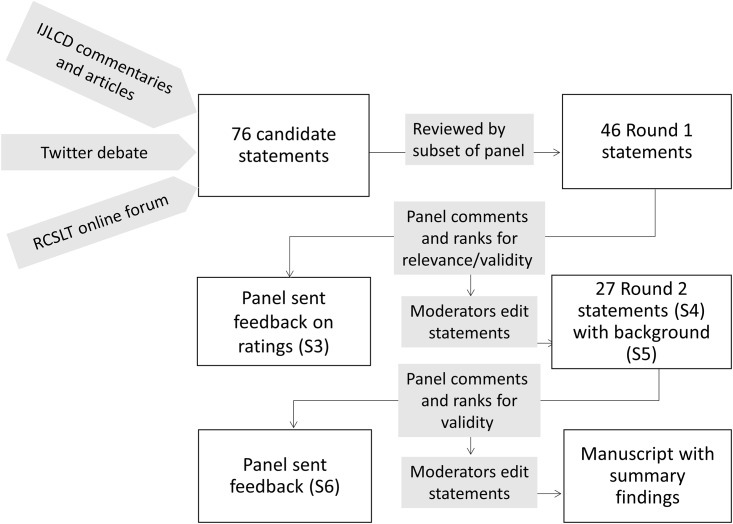
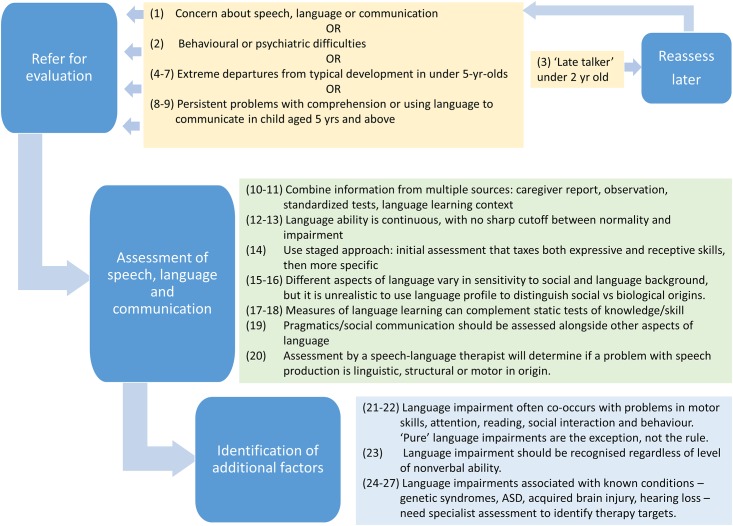
Delayed or impaired language development is a common developmental concern, yet there is little agreement about the criteria used to identify and classify language impairments in children. Children's language difficulties are at the interface between education, medicine and the allied professions, who may all adopt different approaches to conceptualising them. Our goal in this study was to use an online Delphi technique to see whether it was possible to achieve consensus among professionals on appropriate criteria for identifying children who might benefit from specialist services. We recruited a panel of 59 experts representing ten disciplines (including education, psychology, speech-language therapy/pathology, paediatrics and child psychiatry) from English-speaking countries (Australia, Canada, Ireland, New Zealand, United Kingdom and USA). The starting point for round 1 was a set of 46 statements based on articles and commentaries in a special issue of a journal focusing on this topic. Panel members rated each statement for both relevance and validity on a seven-point scale, and added free text comments. These responses were synthesised by the first two authors, who then removed, combined or modified items with a view to improving consensus. The resulting set of statements was returned to the panel for a second evaluation (round 2). Consensus (percentage reporting 'agree' or 'strongly agree') was at least 80 percent for 24 of 27 round 2 statements, though many respondents qualified their response with written comments. These were again synthesised by the first two authors. The resulting consensus statement is reported here, with additional summary of relevant evidence, and a concluding commentary on residual disagreements and gaps in the evidence base.
Overview
The claims and statistics of this paper haven’t been checked yet.
Free: it reads the open-access text and checks the first 5 claims that cite a source we can check. Create a free account to check every claim.
Integrity signals
Registry
Cites
Statistics
Figures
Verification
Claims the paper makes
The claims and statistics of this paper haven’t been checked yet.
Free: it reads the open-access text and checks the first 5 claims that cite a source we can check. Create a free account to check every claim.
Self-check
Percentages, sums and reported differences re-computed from the paper’s own numbers.
The self-check needs the paper’s full text.
Citations
Cites
R: A Language and Environment for Statistical Computing
R Core Team (2025) · doi:10.32614/r.manuals · Cited by 352,181
Diagnostic and Statistical Manual of Mental Disorders
Williams, J. B. W., & First, M. (2013) · Encyclopedia of Social Work · doi:10.1093/acrefore/9780199975839.013.104 · Cited by 109,519
Research guidelines for the Delphi survey technique
Hasson, F. (2000) · Journal of Advanced Nursing · doi:10.1046/j.1365-2648.2000.01567.x · Cited by 5,951 · cited 2×
“The issues we focused on are equally challenging in other countries, but manifestations of language difficulty, and terminology used to describe these, differ across languages [21].”
BackgroundMethodThe Delphi method as a research tool: an example, design considerations and applications
Okoli, C., & Pawlowski, S. D. (2004) · Information & Management · doi:10.1016/j.im.2003.11.002 · Cited by 4,771 · cited 1×
“The advantage of a larger panel is more representative coverage of experts, but a corresponding disadvantage is that the group discussion that is an inherent part of the process gets harder to achieve when more than 40 or 50 participants are involved [27].”
BackgroundThe Delphi Technique: Making Sense of Consensus
Hsu, C.-C., & Sandford, B. A. (2007) · University of Massachusetts Amherst · doi:10.7275/pdz9-th90 · Cited by 4,500
Principles and Practice of Screening for Disease.
(1968) · Annals of Internal Medicine · doi:10.7326/0003-4819-69-5-1085_2 · Cited by 3,066 · cited 1×
“However, as emphasised in the classic text by Wilson and Jungner [33], any screening program must beware of over-identification of problems, which can lead to resources being diverted to cases that do not need them.”
BackgroundPvclust: an R package for assessing the uncertainty in hierarchical clustering
Suzuki, R., & Shimodaira, H. (2006) · Bioinformatics · doi:10.1093/bioinformatics/btl117 · Cited by 2,451 · cited 1×
“The analysis was performed using the R statistical software [31] using the pvclust package [32], which performs hypothesis tests, via bootstrapping, to determine whether a cluster truly exists.”
MethodBoulkedid, R., Abdoul, H., Loustau, M., Sibony, O., & Alberti, C. (2011) · PLoS ONE · doi:10.1371/journal.pone.0020476 · Cited by 2,045 · cited 1×
“Selection of an expert panel is a key part of any Delphi exercise, and has been a topic of some debate in the literature [23].”
BackgroundCurrent validity of the Delphi method in social sciences
Landeta, J. (2006) · Technological Forecasting and Social Change · doi:10.1016/j.techfore.2005.09.002 · Cited by 1,353 · cited 1×
“Although we have noted the advantages of the Delphi technique over in-person consensus meetings, it is important also to recognise its limitations [120].”
BackgroundAn investigation of language impairment in autism: Implications for genetic subgroups
Kjelgaard, M. M., & Tager-Flusberg, H. (2001) · Language and Cognitive Processes · doi:10.1080/01690960042000058 · Cited by 1,130 · cited 1×
“On the other hand, a high proportion of verbal children with ASD have language difficulties similar to those seen in non-autistic children, especially with grammar or phonology [107], though there is debate as to whether the similarities are merely superficial [108].”
Background
Research works printed but not linked: 6
- Baird G (2014) Lumping, splitting, drawing lines, statistical cutoffs and impairment. Commentary on Bishop, D.V.M., 2014, Ten questions about terminology for children with unexplained language problems. Int J Lang Comm Disord 49: 381– 415. PMC4314704 25142090
- Hansson K, Sandgren O, Sahlén B (2014) Changing labels for a concept in change. Commentary on Bishop, D.V.M., 2014, Ten questions about terminology for children with unexplained language problems. Int J Lang Comm Disord 49: 381– 415. PMC4314704 25142090
- Rice M (2014) Advocating for SLI. Commentary on Bishop, D.V.M., 2014, Ten questions about terminology for children with unexplained language problems. Int J Lang Comm Disord 49: 381– 415. PMC4314704 25142090
- Snowling MJ (2014) SLI: Not just a semantic issue. Commentary on Reilly S., Tomblin B., Law J., McKean C., Mensah F. K., Morgan A., Goldfeld S., Nicholson J.M. and Wake M., 2014, Specific language impairment: a convenient label for whom? Int J Lang Comm Disord 49: 416– 451. PMC4303922 25142091 · DOI · Paper page
- Tomblin JB, Zhang X (1999) Are children with SLI a unique group of language learners? In: Tager-Flusberg H, editor. Neurodevelopmental Disorders: contributions to a New Framework from the Cognitive Neuroscience. Cambridge, MA: MIT Press pp. 361– 382.
- Stevenson J (1996) Developmental changes in the mechanisms linking language disabilities and behavior disorders In: Beitchman JH, Cohen NJ, Konstantareas MM, Tannock R, editors. Language, learning, and behavior disorders. Cambridge: Cambridge University Press pp. 78– 100.
Cited by
Items 201–300 of 1,001
Aguilera, M., Ahufinger, N., Esteve‐Gibert, N., Ferinu, L., Andreu, L., & Sanz‐Torrent, M. (2021) · Frontiers in Psychology · doi:10.3389/fpsyg.2021.748283 · Cited by 20
Horne, A. O. V., Curran, M. K., Cook, S. W., Cole, R. S., & McGregor, K. K. (2023) · International Journal of Language & Communication Disorders · doi:10.1111/1460-6984.12882 · Cited by 19
On the many terms for developmental language and learning impairments
Archibald, L. M. D. (2024) · Discover Education · doi:10.1007/s44217-024-00112-y · Cited by 20
“More recently, a group of experts published a consensus on terminology for childhood language disorders referred to as ‘The CATALISE studies’ [5, 6].”
Adverse Childhood Experiences: What Speech-Language Pathologists Need to Know
Westby, C. E. (2018) · Word of Mouth · doi:10.1177/1048395018796520 · Cited by 22
Ahufinger, N., Ferinu, L., Pacheco-Vera, F., Sanz‐Torrent, M., & Andreu, L. (2020) · Revista de Logopedia Foniatría y Audiología · doi:10.1016/j.rlfa.2019.12.001 · Cited by 29
Pratt, A., Grinstead, J., & McCauley, R. J. (2020) · Journal of Speech Language and Hearing Research · doi:10.1044/2020_jslhr-19-00239 · Cited by 20
“Evidence From English spectrum disorder, acquired brain injury, or hearing loss (Bishop et al., 2016; Leonard, 2014).”
BackgroundKnudsen, H. B. S., Jalali‐Moghadam, N., Nieva, S., Czaplewska, E., Laasonen, M. R., Gerrits, E., McKean, C., & Law, J. (2021) · Research in Developmental Disabilities · doi:10.1016/j.ridd.2021.104139 · Cited by 19
Walters, C. E., Nitin, R., Margulis, K., Boorom, O., Gustavson, D. E., Bush, C. T., Davis, L. K., Below, J. E., Cox, N. J., Camarata, S. M., et al. (2020) · Journal of Speech, Language, and Hearing Research · doi:10.1044/2020_jslhr-19-00397 · Cited by 18
“It is important to note that, because our phenotype was developed from definitions of DLD used primarily in English-speaking countries (see Bishop et al., 2016), this procedure may need additional validation when applied to EHRs in other international health systems.”
Developmental Language Disorder: Considerations for Implementing School-Based Screenings
Komesidou, R., & Summy, R. (2020) · Clinical Psychology and Special Education · doi:10.17759/cpse.2020090303 · Cited by 19
“A comparative study of the phonology of pre-school children with specific language impairment (SLI), language delay (LD) and normal acquisition.”
BackgroundInfluentialOttosson, S., Schachinger-Lorentzon, U., Kadesjö, B., Gillberg, C., & Miniscalco, C. (2021) · Acta Paediatrica · doi:10.1111/apa.16104 · Cited by 20
Hallin, A. E., & Partanen, P. (2022) · Logopedics Phoniatrics Vocology · doi:10.1080/14015439.2022.2158218 · Cited by 20
“In the CATALISE consensus studies [15,19] on identifying language disorders (LDs) in children, the importance of assessing all languages in multilingual clients was stressed, but the authors acknowledged that this might not always be possible [15], for example, when the SLP is monolingual or does…”
InfluentialHarvey, H., Allaway, H., & Jones, S. (2018) · International Journal of Bilingual Education and Bilingualism · doi:10.1080/13670050.2018.1536112 · Cited by 19
Children with mixed developmental language disorder have more insecure patterns of attachment
Assous, A., Borghini, A., Lévy-Rueff, M., Rittori, G., Rousselot‐Pailley, B., Gosme, C., Zigante, F., Golse, B., Falissard, B., & Robel, L. (2018) · BMC Psychology · doi:10.1186/s40359-018-0268-6 · Cited by 20
O'Neill, H., Murphy, C., & Chiat, S. (2019) · Journal of Speech Language and Hearing Research · doi:10.1044/2018_jslhr-l-17-0261 · Cited by 20
Analysis of the quality of online resources for parents of children who are late to talk
Coughler, C., Burke, S. M., & Cardy, J. O. (2020) · Autism & Developmental Language Impairments · doi:10.1177/2396941520917940 · Cited by 17
“This persistent, lifelong language impairment is known as developmental language disorder (previously known as specific language impairment; Bishop et al., 2016).”
BackgroundTighe, J. M., & Namazi, M. (2022) · American Journal of Speech-Language Pathology · doi:10.1044/2022_ajslp-21-00295 · Cited by 17
Shain, C., & Fedorenko, E. G. (2026) · Nature Communications · doi:10.1038/s41467-026-75745-8 · Cited by 24
Speech and language in bilateral perisylvian polymicrogyria: a systematic review
Braden, R. O., Leventer, R. J., Jansen, A., Scheffer, I. E., & Morgan, A. T. (2019) · Developmental Medicine & Child Neurology · doi:10.1111/dmcn.14153 · Cited by 20
Joye, N., Dockrell, J. E., & Marshall, C. R. (2020) · Frontiers in Psychology · doi:10.3389/fpsyg.2020.01789 · Cited by 17
Stankova, M., Ortiz, I. D. L. R. R., Matić, A., Levickis, P. A., Lyons, R., Messarra, C. M., Hreich, E. K., Vulchanova, M., Vulchanov, V., Czaplewska, E., et al. (2020) · Folia Phoniatrica et Logopaedica · doi:10.1159/000511903 · Cited by 18
Treatment intensity for developmental language disorder: A systematic review
Segura-Pujol, H., & Rojas, C. B. (2021) · International Journal of Speech-Language Pathology · doi:10.1080/17549507.2020.1856412 · Cited by 19
“…conceptualisation of this condition, towards a consensus among speech-language therapists regarding the benefits of using the same diagnostic label (Bishop et al., 2016; Reilly et al., 2014); and also to include children with symptoms that fall beyond the structure of language deficits, (see…”
BackgroundLa situación del trastorno específico del lenguaje en los países hispanohablantes
Andreu, L., Igualada, A., Ahufinger, N., & Sanz‐Torrent, M. (2022) · Revista de Investigación en Logopedia · doi:10.5209/rlog.74552 · Cited by 23
Using machine‐learning methods to identify early‐life predictors of 11‐year language outcome
Gasparini, L., Shepherd, D. A., Bavin, E. L., Eadie, P., Reilly, S., Morgan, A. T., & Wake, M. A. (2022) · Journal of Child Psychology and Psychiatry · doi:10.1111/jcpp.13733 · Cited by 19
Associations Between Manual Dexterity and Language Ability in School-Age Children
Obeid, R., & Brooks, P. J. (2018) · Language Speech and Hearing Services in Schools · doi:10.1044/2018_lshss-17-0124 · Cited by 17
Predictors of Treatment Response for Preschool Children With Developmental Language Disorder
Kapa, L. L., Meyers, C., Plante, E., & Doubleday, K. (2020) · American Journal of Speech-Language Pathology · doi:10.1044/2020_ajslp-19-00198 · Cited by 17
“Consistent with Bishop et al. (2016, 2017), all participants demonstrated language impairment not associated with other handicapping conditions, such as hearing impairment or cognitive impairment.”
BackgroundResultThe Fast-Mapping Abilities of Adults With Developmental Language Disorder
McGregor, K. K., Eden, N. M., Arbisi‐Kelm, T., & Oleson, J. (2020) · Journal of Speech Language and Hearing Research · doi:10.1044/2020_jslhr-19-00418 · Cited by 18
“People with DLD have difficulties learning, using, and comprehending spoken and written language (Bishop et al., 2016).”
BackgroundVermeij, B. A. M., Wiefferink, C. H., Scholte, R. H. J., & Knoors, H. E. T. (2021) · International Journal of Language & Communication Disorders · doi:10.1111/1460-6984.12665 · Cited by 17
Systemic support for learners with developmental language disorders in Zimbabwe and South Africa
Ndou-Chikwena, N. N., & Omidire, M. F. (2022) · South African Journal of Communication Disorders · doi:10.4102/sajcd.v69i1.850 · Cited by 17
“The literature concurs that although much had been done in the past five years to address issues of terminology and criteria to identify learners with language disorders (Bishop, 2017; Bishop et al., 2016), there was still not sufficient consensus between these professions.”
BackgroundA randomized study of parent‐ versus child‐directed intervention for Dutch toddlers with DLD
Zwitserlood-Nijenhuis, M., Wiefferink, C. H., & Gerrits, E. (2023) · International Journal of Language & Communication Disorders · doi:10.1111/1460-6984.12901 · Cited by 17
Prosody and gestures help pragmatic processing in children with Developmental Language Disorder
Giberga, A., Guerra, E., Ahufinger, N., Igualada, A., Aguilera, M., & Esteve‐Gibert, N. (2025) · Journal of Communication Disorders · doi:10.1016/j.jcomdis.2025.106525 · Cited by 16
What predicts nonword repetition performance?
Pigdon, L., Willmott, C., Reilly, S., Conti‐Ramsden, G., & Morgan, A. T. (2019) · Child Neuropsychology · doi:10.1080/09297049.2019.1674799 · Cited by 18
Magimairaj, B. M., Nagaraj, N. K., Champlin, C. A., Thibodeau, L., Loeb, D. F., & Gillam, R. B. (2021) · Frontiers in Psychology · doi:10.3389/fpsyg.2021.735026 · Cited by 17
“A variety of terms have been used to describe such children including language impairment, language-learning disability, specific language impairment, language-learning impairment, and the recently recommended term, developmental language disorder (DLD), (Bishop et al., 2016, 2017).”
BackgroundRetrospective bullying trajectories in adults with self‐reported oral language difficulties
Esteller, À., Buil‐Legaz, L., Penadés, R. L., Aguilar-Mediavilla, E. M., & Adrover‐Roig, D. (2022) · International Journal of Language & Communication Disorders · doi:10.1111/1460-6984.12708 · Cited by 47
Written Language Production in Children With Developmental Language Disorder
Ανδρέου, Γ., & Aslanoglou, V. (2022) · Frontiers in Psychology · doi:10.3389/fpsyg.2022.833429 · Cited by 17
Individual and cumulative risk factors in developmental language disorder: A case-control study
Valade, F., Béliveau, M., Breault, C., Chabot, B., & Labelle, F. (2022) · Clinical Child Psychology and Psychiatry · doi:10.1177/13591045221113389 · Cited by 19
“This work led to the adoption of the term developmental language disorder to designate persisting language problems that affect everyday life in the absence of biomedical conditions such as intellectual disability (ID) or autism spectrum disorder (ASD; Bishop et al., 2016).”
BackgroundForrest, C. L., Lloyd‐Esenkaya, V., Gibson, J. L., & Clair, M. S. (2022) · Journal of Autism and Developmental Disorders · doi:10.1007/s10803-022-05698-6 · Cited by 17
“…children with DLD have disordered language development, not simply a delay, with the majority of the literature investigating DLD and associated socioemotional difficulties examining DLD as an entity based on a clinical cut-off and parental report of poor language functioning (Bishop et al., 2016).”
BackgroundAuditory Lexical Decisions in Developmental Language Disorder: A Meta-Analysis of Behavioral Studies
Jones, S. D., & Brandt, S. (2018) · Journal of Speech Language and Hearing Research · doi:10.1044/2018_jslhr-l-17-0447 · Cited by 17
Paul, R. (2020) · Handbook of clinical neurology · doi:10.1016/b978-0-444-64148-9.00002-8 · Cited by 23
Antoniou, F., Ralli, A. M., Mouzaki, A., Diamanti, V., & Papaioannou, S. (2022) · Frontiers in Psychology · doi:10.3389/fpsyg.2022.900600 · Cited by 15
Kotsis, K. T., Boukouvala, M., Serdari, A., Koullourou, I., Siafaka, V., & Hyphantis, T. N. (2023) · Healthcare · doi:10.3390/healthcare11091332 · Cited by 17
“Moreover, the language abilities of a child with DLD are below age expectations [9,11].”
BackgroundGodin, M., Gagné, A., & Chapleau, N. (2018) · Child Language Teaching and Therapy · doi:10.1177/0265659018785938 · Cited by 16
“Recently, the SLI term was at the center of a large debate (e.g. Reilly et al., 2014a, 2014b), and the Delphi method was used to achieve consensus on the most convenient terminology (Bishop et al., 2016, 2017).”
BackgroundMethodArmstrong, R. M., Symons, M., Scott, J. G., Arnott, W. L., Copland, D. A., McMahon, K. L., & Whitehouse, A. (2018) · Journal of Speech Language and Hearing Research · doi:10.1044/2018_jslhr-l-17-0210 · Cited by 16
Guo, L.-Y., Eisenberg, S. L., Schneider, P., & Spencer, L. J. (2019) · Language Speech and Hearing Services in Schools · doi:10.1044/2019_lshss-19-0028 · Cited by 15
“, whether parents or teachers have concerns about the child’s language skills) and standardized tests because the diagnosis of LI must consider both environmental and norm-referenced expectations (Bishop et al., 2016; Paul et al., 2018).”
BackgroundDuncan, L. G., Gollek, C., & Potter, D. D. (2020) · Frontiers in Psychology · doi:10.3389/fpsyg.2020.01813 · Cited by 15
“The severe and persistent language difficulties that define DLD significantly interfere with everyday life with no clear biomedical etiology and a poor prognosis (see Bishop et al., 2016, 2017, for a full definition).”
BackgroundFerinu, L., Ahufinger, N., Pacheco-Vera, F., Andreu, L., & Sanz‐Torrent, M. (2020) · Revista de Logopedia Foniatría y Audiología · doi:10.1016/j.rlfa.2020.05.002 · Cited by 17
Kippin, N. R., Leitão, S., Watkins, R. E., & Finlay‐jones, A. L. (2021) · International Journal of Language & Communication Disorders · doi:10.1111/1460-6984.12644 · Cited by 15
The Cambridge Introduction to Applied Linguistics
Conrad, S., Hartig, A. J., & Santelmann, L. M. (2020) · Cambridge University Press eBooks · doi:10.1017/9781108658089 · Cited by 16
Public awareness of developmental language disorder in Croatia, Italy and Slovenia
Kraljević, J. K., Matić, A., Roch, M., Kogovšek, D., & Brce, J. N. (2022) · International Journal of Language & Communication Disorders · doi:10.1111/1460-6984.12752 · Cited by 16
“The complexity of DLD has led to longstanding discussions amongst researchers and clinicians regarding terminology, diagnostic criteria and ideal interventions in various settings (Bishop, 2010; Bishop et al., 2016, 2017; McGregor, 2020; McGregor et al., 2020).”
BackgroundMethodLadányi, E., Novakovic, M. M., Boorom, O. A., Aaron, A. S., Scartozzi, A., Gustavson, D. E., Nitin, R., Bamikole, P. O., Vaughan, C., Fromboluti, E. K., et al. (2023) · Neurobiology of Language · doi:10.1162/nol_a_00082 · Cited by 17
“…linguistic problems in children with DLD cannot be attributed to obvious global impairments in other cognitive domains or peripheral deficits, an intellectual disability, neurological disorders, trauma, emotional or social deficits, or environmental deprivation (Bishop et al., 2016; Leonard, 2014).”
Gordon, K. R., Storkel, H. L., Lowry, S. L., & Sultani, M. J. (2023) · American Journal of Speech-Language Pathology · doi:10.1044/2023_ajslp-23-00037 · Cited by 15
Belshaw, Z., Robinson, N. J., Brennan, M. L., & Dean, R. S. (2019) · Veterinary Record · doi:10.1136/vr.104970 · Cited by 16
Cunningham, B. J., Kwok, E. Y. L., Turkstra, L. S., & Cardy, J. O. (2019) · Journal of Communication Disorders · doi:10.1016/j.jcomdis.2019.105925 · Cited by 16
Retamal‐Walter, F., Waite, M., & Scarinci, N. (2022) · International Journal of Language & Communication Disorders · doi:10.1111/1460-6984.12714 · Cited by 15
Castilla-Earls, A. P., Ronderos, J., & Francis, D. J. (2023) · Journal of Speech Language and Hearing Research · doi:10.1044/2023_jslhr-22-00495 · Cited by 14
Castilla-Earls, A. P., & Horne, A. O. V. (2023) · Journal of Speech Language and Hearing Research · doi:10.1044/2023_jslhr-22-00452 · Cited by 14
Gibbard, D., Roulstone, S., Kandala, N.-B., Morgan, L., Harding, S. A., Smith, C. S., & Markham, C. M. (2024) · International Journal of Language & Communication Disorders · doi:10.1111/1460-6984.13016 · Cited by 15
Yahia, A., Li, D., Lejerkrans, S., Rajagopalan, S. S., Kalnak, N., & Tammimies, K. (2024) · Human Genetics · doi:10.1007/s00439-023-02636-z · Cited by 15
“…communication disorder characterized by persistent deficits in receptive and expressive language not attributable to other biomedical conditions and results in functional, psychological, social, and/or occupational limitations (American Psychiatric Association 2022; Bishop et al. 2016).”
BackgroundAntolí, A., Rodriguez-Lozano, F. J., Cañas, J. J., Vacas, J., Cuadrado, F., Sánchez-Raya, A., Dueñas, C. P., & Gámez, J. C. V. (2025) · Frontiers in Neuroscience · doi:10.3389/fnins.2025.1558621 · Cited by 16
Whiteside, K., & Norbury, C. (2017) · Journal of Speech Language and Hearing Research · doi:10.1044/2017_jslhr-l-16-0318 · Cited by 16
“However, the requirement for a discrepancy between language and nonverbal ability is no longer endorsed by the majority of researchers and practitioners (Bishop et al., 2016), nor is it supported by epidemiological evidence (Norbury et al., 2016; Reilly et al., 2014).”
BackgroundArslan, S., Broc, L., & Mathy, F. (2020) · Autism & Developmental Language Impairments · doi:10.1177/2396941520945519 · Cited by 14
“Please note that these studies used specific language impairment (SLI) criteria, we are referring to these under the term DLD in this paper following the CATALISE consortium recommendations (Bishop et al., 2016).”
BackgroundEfficient detection of specific language impairment in children using ResNet classifier
Kotarba, K., & Kotarba, M. (2020) · Signal Processing: Algorithms, Architectures, Arrangements, and Applications · doi:10.23919/spa50552.2020.9241289 · Cited by 15
“Unfortunately, SLI is likely to remain undiagnosed or confused with other disorders, and when it persists in school-age children it may lead to literacy problems and learning disabilities [7].”
BackgroundPark, J., Miller, C., Sanjeevan, T., van Hell, J. G., Weiss, D. J., & Mainela‐Arnold, E. (2021) · International Journal of Language & Communication Disorders · doi:10.1111/1460-6984.12632 · Cited by 14
Entwicklungsstörungen des Sprechens oder der Sprache nach ICD-11
Freitag, C. M., Noterdaeme, M., Snippe, K., Schulz, P. M., Kim, Z., & Teufel, K. (2021) · Zeitschrift für Kinder- und Jugendpsychiatrie und Psychotherapie · doi:10.1024/1422-4917/a000821 · Cited by 14
Kornev, A. N., & Balčiūnienė, I. (2021) · Children · doi:10.3390/children8121114 · Cited by 14
Holzinger, D., Weber, C., Barbaresi, W. J., Beitel, C., & Fellinger, J. (2021) · Frontiers in Pediatrics · doi:10.3389/fped.2021.752141 · Cited by 14
Jones, S. D., & Westermann, G. (2022) · Psychological Review · doi:10.1037/rev0000338 · Cited by 18
“In developmental language disorder (DLD), deficits in spoken language comprehension and production severe enough to affect the child’s wellbeing are observed despite no obvious biomedical cause (Bishop et al., 2016).”
BackgroundWest, G., Lervåg, A., Snowling, M. J., Worster, E., Duta, M. D., & Hulme, C. (2022) · Journal of School Psychology · doi:10.1016/j.jsp.2022.04.006 · Cited by 17
“Despite the established relationship between language and behavior regulation (Robson et al., 2020), many children with language difficulties are not identified until they are referred for behavioral problems (Bishop et al., 2016).”
BackgroundSelf-citationDelage, H., Stanford, E., Baratti, C., & Durrleman, S. (2023) · Frontiers in Rehabilitation Sciences · doi:10.3389/fresc.2022.1068959 · Cited by 32
Denman, D., Cordier, R., Munro, N., Kim, J., & Speyer, R. (2023) · Folia Phoniatrica et Logopaedica · doi:10.1159/000530718 · Cited by 16
“For example, evidence-based practice recommendations identify that measures targeting social abilities and discourse should include tasks that examine language in situations that are re fl ective of naturalistic, everyday communication environments [13 – 15].”
BackgroundMethodTense and plural formation in Welsh–English bilingual children with and without language impairment
Chondrogianni, V., & John, N. (2018) · International Journal of Language & Communication Disorders · doi:10.1111/1460-6984.12363 · Cited by 18
“…to be a vulnerable area for monolingual and bilingual children with Specific Language Impairment (SLI) (Mo-SLI, Bi-SLI) or with the recently coined term Developmental Language Disorder (DLD) (Bishop et al., 2017, Bishop et al., 2016),1 speaking a number of languages (Leonard, 2014a, Paradis, 2010).”
BackgroundAttentional shifting in children with developmental language disorder: A meta-analysis
Aljahlan, Y., & Spaulding, T. J. (2021) · Journal of Communication Disorders · doi:10.1016/j.jcomdis.2021.106105 · Cited by 15
The Interplay of Emotions, Executive Functions, Memory and Language: Challenges for Refugee Children
Franck, J., & Delage, H. (2022) · Languages · doi:10.3390/languages7040309 · Cited by 17
Medina, Y. F., Mendieta, C. V., Prieto, N., Felquer, M. L. A., & Soriano, E. R. (2024) · Journal of Multidisciplinary Healthcare · doi:10.2147/jmdh.s484715 · Cited by 14
Leitão, S., Clair, M. S., Botting, N., Gibson, J. L., & Jackson, E. (2025) · International Journal of Language & Communication Disorders · doi:10.1111/1460-6984.70003 · Cited by 13
“DLD is a neurodevelopmental condition characterised by difficulties in learning, expressing and/or comprehending language (Bishop et al., 2016).”
Habilidades pragmáticas em crianças com transtorno do espectro do autismo
Borges, M. H., Guimarães, V. D. C., Perilo, D. B. F., Fernandes, E. J. D. M., Oliveira, A. E., de Sousa, I. F., & Fernandes, F. D. M. (2025) · Distúrbios da Comunicação · doi:10.23925/2176-2724.2025v37i1e69731 · Cited by 13
Nicholas, K., Alt, M., & Hauwiller, E. (2019) · Child Language Teaching and Therapy · doi:10.1177/0265659019830455 · Cited by 13
Piazzalunga, S., Salerni, N., Limarzi, S., Fassina, S., & Schindler, A. (2020) · Folia Phoniatrica et Logopaedica · doi:10.1159/000506475 · Cited by 13
Sensory Profiles in School-Age Children with Developmental Language Disorder
Simpson, K., Paynter, J. M., Ziegenfusz, S., & Westerveld, M. F. (2020) · International Journal of Disability Development and Education · doi:10.1080/1034912x.2020.1740186 · Cited by 14
Regimes of motherhood: Social class, the word gap and the optimisation of mothers’ talk
Allen, A., & Spencer, S. (2022) · The Sociological Review · doi:10.1177/00380261221104378 · Cited by 19
“It has been argued, even within developmental psychology (Bishop et al., 2016; Pace et al., 2017), that any associations between maternal social class, maternal language features and child language outcomes may well be just that – associations rather than causal pathways:”
BackgroundBilingual Parents' Experiences Receiving Advice Regarding Language Use: A Qualitative Perspective
Blanc, C., Castilla-Earls, A. P., Bunta, F., & Fulcher-Rood, K. (2022) · Perspectives of the ASHA Special Interest Groups · doi:10.1044/2022_persp-22-00086 · Cited by 13
Lowe, H. I., & Joffe, V. L. (2017) · Support for Learning · doi:10.1111/1467-9604.12157 · Cited by 17
“This paper uses the term language disorder as a generic term to include those who have a language impairment as their primary need, as well as those whose language difficulties occur in association with a learning difficulty, medical condition, or social disadvantage (Bishop et al., 2016).”
MethodJustice, L. M., Chen, J., Jiang, H., Tambyraja, S. R., & Logan, J. A. R. (2019) · Journal of Autism and Developmental Disorders · doi:10.1007/s10803-019-03925-1 · Cited by 15
Kueser, J. B., Leonard, L. B., Deevy, P., Haebig, E., & Karpicke, J. D. (2021) · Journal of Communication Disorders · doi:10.1016/j.jcomdis.2021.106160 · Cited by 13
McGregor, K. K., Goffman, L., Plante, E., & Werfel, K. L. (2025) · Journal of Speech Language and Hearing Research · doi:10.1044/2025_jslhr-25-00089 · Cited by 13
“…pointing out that “ some children have language abilities — in spoken and/ or signed language — that are well below those of their hearing-impaired peer group, and may be regarded as having a disproportionate language impairment that is not secondary to hearing loss ” (Bishop et al., 2016, p. 16).”
InfluentialKoutsoftas, A. D., & Srivastava, P. (2020) · Exceptionality · doi:10.1080/09362835.2020.1801435 · Cited by 12
“Recent debate on the terminology for children with language impairments, difficulties, or disorders resulted in a consensus for use of the term developmental language disorders (DLD; Bishop et al., 2016; Bishop et al., 2017).”
BackgroundTeaching Visually Impaired Learners with Language Disorders: A Reflective Encounter in a Classroom
Mpolomoka, D. L., & Sakai, M. M. (2021) · The Educational Review USA · doi:10.26855/er.2021.01.003 · Cited by 12
“With the above information, the teacher saw it fit to formulate intervention goals too, by drawing the Individualized Education Programme (IEP), which was regarded as the first thing in helping children with special needs (Bishop et al., 2016; Bishop et al., 2017; Lewis & Boorlag, 1988).”
BackgroundBarragán-Pérez, E., Alvarez-Amado, D. E., García-Beristáin, J. C., Garfias-Rau, C., Oliva, M. P., de Guevara, M. L., Betancourt, A. A., & Chapa-Koloffon, G. (2021) · Revista Médica Clínica Las Condes · doi:10.1016/j.rmclc.2020.12.012 · Cited by 18
Intervención en el control inhibitorio en niños con y sin trastorno de lenguaje dentro del aula
Aguilar-Mediavilla, E. M., Guirado-Moreno, J. L., Sanchez-Azanza, V. A., Adrover‐Roig, D., & Valera-Pozo, M. (2021) · Revista de Investigación en Logopedia · doi:10.5209/rlog.69256 · Cited by 15
Taha, J., Stojanovik, V., & Pagnamenta, E. (2021) · Journal of Speech Language and Hearing Research · doi:10.1044/2021_jslhr-20-00556 · Cited by 15
Gracia‐Sánchez, A., López‐Pineda, A., Chicharro‐Luna, E., & Gil-Guillén, V. F. (2021) · International Journal of Environmental Research and Public Health · doi:10.3390/ijerph182010988 · Cited by 12
“Recent Delphi studies with multidisciplinary and international panels recruited fewer than 60 panelists [15,27]; others had panels with fewer than 40 panelists [28]; and multidisciplinary panels recruited as few as 19 experts [16].”
BackgroundCastilla-Earls, A. P., Ronderos, J., & Fitton, L. (2022) · Journal of Speech Language and Hearing Research · doi:10.1044/2022_jslhr-21-00675 · Cited by 12
Gibbons, M., Coughlan, K. S., & Gallagher, A. (2022) · Advances in Communication and Swallowing · doi:10.3233/acs-220010 · Cited by 17
Voicing discrimination as a diagnostic marker of developmental language disorder
Georgiou, G. P., & Theodorou, E. (2024) · Journal of Neurolinguistics · doi:10.1016/j.jneuroling.2024.101228 · Cited by 12
Billard, C., Thiébaut, É., Gassama, S., Touzin, M., Thalabard, J., Mirassou, A., & Münnich, A. (2021) · Frontiers in Pediatrics · doi:10.3389/fped.2021.656180 · Cited by 12
“For oral language, the reliability of current instruments is deemed insufficient to permit screening in young children without complaints (22); the quality of these instruments must be improved (45).”
BackgroundCalder, S. D., Claessen, M., Leitão, S., & Ebbels, S. H. (2021) · International Journal of Language & Communication Disorders · doi:10.1111/1460-6984.12667 · Cited by 14
Ziegenfusz, S., Westerveld, M. F., Flückiger, B., & Paynter, J. M. (2024) · International Journal of Language & Communication Disorders · doi:10.1111/1460-6984.13134 · Cited by 12
Alsiddiqi, Z. A., Stojanovik, V., & Pagnamenta, E. (2021) · Clinical Linguistics & Phonetics · doi:10.1080/02699206.2021.1955299 · Cited by 12
“…language disorder (DLD)1 affects approximately 7.58% of children (Norbury et al., 2016) and is characterized by language difficulties with no known differentiating conditions (e.g., Autism spectrum disorder, cerebral palsy, brain injury, sensorineural hearing loss) (Bishop et al., 2016, 2017).”
BackgroundInfluentialHelo, A., Guerra, E., Coloma, C. J., Reyes, M. A., & Rämä, P. (2021) · Language Learning and Development · doi:10.1080/15475441.2021.1977643 · Cited by 11
“Given that children with DLD usually have difficulties in language processing at phonological and lexical-semantic levels (Bishop et al., 2017, 2016), we expect to observe differences between the DLD and the TLD group in their preference for the linguistic competitors (i.e., semantic and the…”
BackgroundAguilar-Mediavilla, E. M., Pereira, M. P., Serrat, E., & Adrover‐Roig, D. (2022) · Children · doi:10.3390/children9030412 · Cited by 12
Toki, E. I., Zakopoulou, V., Tatsis, G., Plachouras, K., Siafaka, V., Kosma, E. I., Chronopoulos, S. K., Filippidis, D. E., Nikopoulos, G., Pange, J., et al. (2022) · Lecture notes in networks and systems · doi:10.1007/978-3-030-96296-8_50 · Cited by 12
Metadata
- Authors
- Bishop, D. V. M., Snowling, M. J., Thompson, P. A., Greenhalgh, T., & CATALISE consortium
- Affiliations
- University of Oxford (GB)
- Corresponding author
- Bishop, D. V. M.
- Venue
- PLOS ONE
- Publisher
- Public Library of Science (PLoS)
- Published
- 2016-07-08
- Volume
- 11
- Issue
- 7
- Pages
- e0158753
- ISSN
- 1932-6203 (ISSN-L)
- PMC
- PMC4938414
- OpenAlex
- W2336526731
- Cited by
- 831
- References
- 129
- Citations by year
- 2026: 73 · 2025: 105 · 2024: 89 · 2023: 85 · 2022: 99 · 2021: 104 · 2020: 118 · 2019: 67 · 2018: 55 · 2017: 30 · 2016: 4
- FWCI
- 121.75
- Type
- journal article
- Language
- en
- Update notices
- correction (2016-12-09)
- Open access
- gold
- doi.org
- Licence
- Locations
- PLoS ONE (publishedVersion, cc-by)
- PubMed Central (publishedVersion, cc-by)
- PubMed (publishedVersion)
- OpenBU (Boston University) (publishedVersion, cc-by)
- University of Birmingham Research Portal (University of Birmingham) (publishedVersion, other-oa)
- White Rose Research Online (University of Leeds, The University of Sheffield, University of York) (acceptedVersion)
- Strathprints: The University of Strathclyde institutional repository (University of Strathclyde) (acceptedVersion)
- Arrow@dit (Dublin Institute of Technology) (acceptedVersion)
- Griffith Research Online (submittedVersion, cc-by)
- UTUPub (University of Turku) (submittedVersion)
- UWA Profiles and Research Repository (UWA) (submittedVersion, cc-by)
- Cork Open Research Archive (University College Cork, Ireland) (submittedVersion, cc-by)
- DOAJ (DOAJ: Directory of Open Access Journals) (submittedVersion, cc-by-sa)
- Stirling Online Research Repository (University of Stirling) (submittedVersion, cc-by)
- UCL Discovery (University College London) (submittedVersion)
- Figshare (submittedVersion, cc-by-nc-sa)
- Figshare (submittedVersion)
- Figshare (submittedVersion, cc-by)
- The HKU Scholars Hub (University of Hong Kong) (submittedVersion, cc-by-nc-nd)
- Scholarship@Western (Western University) (submittedVersion, cc-by)
- Minerva Access (University of Melbourne) (submittedVersion, cc-by)
- Open Research Exeter (University of Exeter) (submittedVersion)
- Research Explorer (The University of Manchester) (submittedVersion, cc-by)
- Edinburgh Research Explorer (University of Edinburgh) (submittedVersion, cc-by)
- ResearchSpace (University of Auckland) (submittedVersion, cc-by)
- University of Limerick Institutional Repository (University of Limerick) (submittedVersion, cc-by-nc-sa)
- Scholarship@Western (Western University) (submittedVersion)
- Warwick Research Archive Portal (University of Warwick) (submittedVersion)
- Funders
- Wellcome Trust (082498/Z/07/Z)
- Topics
- Social Sciences › Psychology › Developmental and Educational Psychology › Language Development and Disorders
- Social Sciences › Psychology › Neuropsychology and Physiological Psychology › Developmental and Educational Neuropsychology
- Health Sciences › Health Professions › Speech and Hearing › Voice and Speech Disorders
- Keywords
- language impairment, children, diagnostic criteria, multidisciplinary consensus, language delay, speech-language pathology, child psychiatry
- MeSH terms
- Australia, Canada, Delphi Technique, United Kingdom, Humans, Ireland, Language Disorders, New Zealand, Interdisciplinary Studies
About these checks
Registry, retraction, Cites and statistics results are computed, not judged, with one exception: a printed reference that no index lists is read once by a model before it counts as a citation error. Claims are extracted by a model and kept only when their quote appears verbatim in the text; each cited source is then checked, with a model’s help, for whether it says what the claim relies on. Those verdicts can be wrong — read the claim’s quote and the cited source before relying on one.
Statistics and arithmetic are recomputed, not judged.
Confidence bands are shown only for fields calibrated on our annotated test set. None is calibrated yet, so no band is shown.
What counts as a claim ›How we measure confidence ›How we check this ›
Are you an author, or do you see a problem with this page? Request a review
Data sources
Bibliographic data: Semantic Scholar, OpenAlex, Crossref.
Contains information from the Semantic Scholar Academic Graph Datasets, made available under the ODC Attribution License (ODC-BY 1.0).
Semantic Scholar’s data is described in: Kinney, R., et al. (2023). The Semantic Scholar Open Data Platform. arXiv:2301.10140.
