

CATALISE: A Multinational and Multidisciplinary Delphi Consensus Study. Identifying Language Impairments in Children
Open accessThe DOI matches its Crossref record; 127 of the 129 references it cites were found in a registry or an index.
Abstract
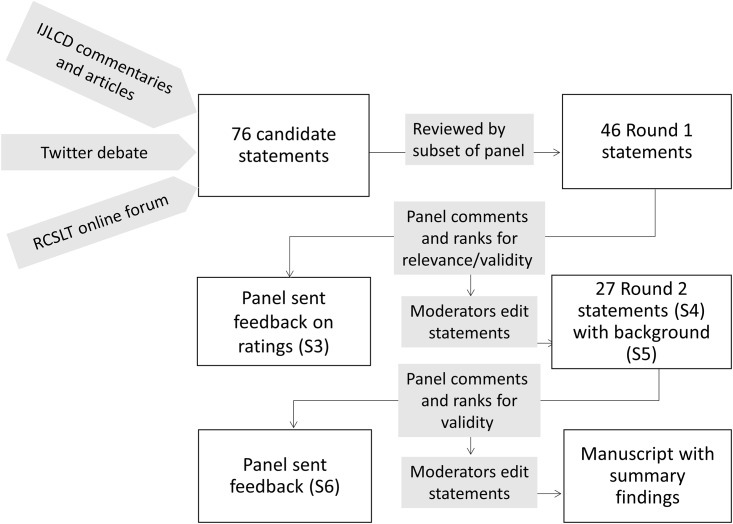
Delayed or impaired language development is a common developmental concern, yet there is little agreement about the criteria used to identify and classify language impairments in children. Children's language difficulties are at the interface between education, medicine and the allied professions, who may all adopt different approaches to conceptualising them. Our goal in this study was to use an online Delphi technique to see whether it was possible to achieve consensus among professionals on appropriate criteria for identifying children who might benefit from specialist services. We recruited a panel of 59 experts representing ten disciplines (including education, psychology, speech-language therapy/pathology, paediatrics and child psychiatry) from English-speaking countries (Australia, Canada, Ireland, New Zealand, United Kingdom and USA). The starting point for round 1 was a set of 46 statements based on articles and commentaries in a special issue of a journal focusing on this topic. Panel members rated each statement for both relevance and validity on a seven-point scale, and added free text comments. These responses were synthesised by the first two authors, who then removed, combined or modified items with a view to improving consensus. The resulting set of statements was returned to the panel for a second evaluation (round 2). Consensus (percentage reporting 'agree' or 'strongly agree') was at least 80 percent for 24 of 27 round 2 statements, though many respondents qualified their response with written comments. These were again synthesised by the first two authors. The resulting consensus statement is reported here, with additional summary of relevant evidence, and a concluding commentary on residual disagreements and gaps in the evidence base.
Overview
The claims and statistics of this paper haven’t been checked yet.
Free: it reads the open-access text and checks the first 5 claims that cite a source we can check. Create a free account to check every claim.
Integrity signals
Registry
Cites
Statistics
Figures
Verification
Claims the paper makes
The claims and statistics of this paper haven’t been checked yet.
Free: it reads the open-access text and checks the first 5 claims that cite a source we can check. Create a free account to check every claim.
Self-check
Percentages, sums and reported differences re-computed from the paper’s own numbers.
The self-check needs the paper’s full text.
Citations
Cites
R: A Language and Environment for Statistical Computing
R Core Team (2025) · doi:10.32614/r.manuals · Cited by 352,181
Diagnostic and Statistical Manual of Mental Disorders
Williams, J. B. W., & First, M. (2013) · Encyclopedia of Social Work · doi:10.1093/acrefore/9780199975839.013.104 · Cited by 109,519
Research guidelines for the Delphi survey technique
Hasson, F. (2000) · Journal of Advanced Nursing · doi:10.1046/j.1365-2648.2000.01567.x · Cited by 5,951 · cited 2×
“The issues we focused on are equally challenging in other countries, but manifestations of language difficulty, and terminology used to describe these, differ across languages [21].”
BackgroundMethodThe Delphi method as a research tool: an example, design considerations and applications
Okoli, C., & Pawlowski, S. D. (2004) · Information & Management · doi:10.1016/j.im.2003.11.002 · Cited by 4,771 · cited 1×
“The advantage of a larger panel is more representative coverage of experts, but a corresponding disadvantage is that the group discussion that is an inherent part of the process gets harder to achieve when more than 40 or 50 participants are involved [27].”
BackgroundThe Delphi Technique: Making Sense of Consensus
Hsu, C.-C., & Sandford, B. A. (2007) · University of Massachusetts Amherst · doi:10.7275/pdz9-th90 · Cited by 4,500
Principles and Practice of Screening for Disease.
(1968) · Annals of Internal Medicine · doi:10.7326/0003-4819-69-5-1085_2 · Cited by 3,066 · cited 1×
“However, as emphasised in the classic text by Wilson and Jungner [33], any screening program must beware of over-identification of problems, which can lead to resources being diverted to cases that do not need them.”
BackgroundPvclust: an R package for assessing the uncertainty in hierarchical clustering
Suzuki, R., & Shimodaira, H. (2006) · Bioinformatics · doi:10.1093/bioinformatics/btl117 · Cited by 2,451 · cited 1×
“The analysis was performed using the R statistical software [31] using the pvclust package [32], which performs hypothesis tests, via bootstrapping, to determine whether a cluster truly exists.”
MethodBoulkedid, R., Abdoul, H., Loustau, M., Sibony, O., & Alberti, C. (2011) · PLoS ONE · doi:10.1371/journal.pone.0020476 · Cited by 2,045 · cited 1×
“Selection of an expert panel is a key part of any Delphi exercise, and has been a topic of some debate in the literature [23].”
BackgroundCurrent validity of the Delphi method in social sciences
Landeta, J. (2006) · Technological Forecasting and Social Change · doi:10.1016/j.techfore.2005.09.002 · Cited by 1,353 · cited 1×
“Although we have noted the advantages of the Delphi technique over in-person consensus meetings, it is important also to recognise its limitations [120].”
BackgroundAn investigation of language impairment in autism: Implications for genetic subgroups
Kjelgaard, M. M., & Tager-Flusberg, H. (2001) · Language and Cognitive Processes · doi:10.1080/01690960042000058 · Cited by 1,130 · cited 1×
“On the other hand, a high proportion of verbal children with ASD have language difficulties similar to those seen in non-autistic children, especially with grammar or phonology [107], though there is debate as to whether the similarities are merely superficial [108].”
BackgroundNorbury, C. F., Gooch, D., Wray, C., Baird, G., Charman, T., Simonoff, E., Vamvakas, G., & Pickles, A. (2016) · Journal of Child Psychology and Psychiatry · doi:10.1111/jcpp.12573 · Cited by 1,088
The Delphi technique in health sciences education research
de Villiers, M. R., de Villiers, P. J. T., & Kent, A. P. (2005) · Medical Teacher · doi:10.1080/13611260500069947 · Cited by 1,006 · cited 1×
“There is no agreement about the optimal size of a Delphi panel, with many including under 20 people [24],[25],[26].”
BackgroundStability of response characteristics of a Delphi panel: application of bootstrap data expansion
Akins, R. B., Tolson, H., & Cole, B. R. (2005) · BMC Medical Research Methodology · doi:10.1186/1471-2288-5-37 · Cited by 994
Psycholinguistic markers for specific language impairment (SLI)
Conti‐Ramsden, G., Botting, N., & Faragher, B. (2001) · Journal of Child Psychology and Psychiatry · doi:10.1111/1469-7610.00770 · Cited by 879 · cited 1×
“Supplementary comments: A body of work on 'markers' for language impairment has identified these particular aspects of language as promising for identifying children with language difficulties [64,65,66,67].”
BackgroundToward Tense as a Clinical Marker of Specific Language Impairment in English-Speaking Children
Rice, M. L., & Wexler, K. (1996) · Journal of Speech, Language, and Hearing Research · doi:10.1044/jshr.3906.1239 · Cited by 871 · cited 1×
“Supplementary comments: A body of work on 'markers' for language impairment has identified these particular aspects of language as promising for identifying children with language difficulties [64,65,66,67].”
BackgroundDual Language Development and Disorders: A Handbook on Bilingualism and Second Language Learning
Genesee, F. H., Paradis, J., & Crago, M. (2004) · Cited by 785
Language-Impaired 4-Year-Olds: Distinguishing Transient from Persistent Impairment
Bishop, D. V. M., & Edmundson, A. (1987) · Journal of Speech and Hearing Disorders · doi:10.1044/jshd.5202.156 · Cited by 659
Self-citationRutter's Child and Adolescent Psychiatry
(2015) · doi:10.1002/9781118381953 · Cited by 639
Self-citationPrevalence of Speech Delay in 6-Year-Old Children and Comorbidity With Language Impairment
Shriberg, L. D., Tomblin, J. B., & McSweeny, J. L. (1999) · Journal of Speech, Language, and Hearing Research · doi:10.1044/jslhr.4206.1461 · Cited by 582 · cited 1×
“In practice, however, difficulties restricted to production of speech sounds often (but not invariably) occur in the absence of other language difficulties [92,93], and have different prognosis and intervention needs.”
BackgroundResponse to Intervention: Preventing and Remediating Academic Difficulties
Fletcher, J. M., & Vaughn, S. (2009) · Child Development Perspectives · doi:10.1111/j.1750-8606.2008.00072.x · Cited by 527 · cited 1×
“We might learn from the field of reading, where measures of Response to Intervention have been used as part of the criteria to identify children with reading disabilities [74,75,76] 18.”
MethodRelations Among Speech, Language, and Reading Disorders
Pennington, B. F., & Bishop, D. V. M. (2009) · Annual Review of Psychology · doi:10.1146/annurev.psych.60.110707.163548 · Cited by 522 · cited 1×
“Speech problems persisting into school age are associated with a risk of literacy problems, particularly when the child also has other language difficulties [94].”
BackgroundSelf-citationSpeech and Language Impairments in Children: Causes, Characteristics, Intervention, and Outcome
Needlman, R. (2001) · Journal of Developmental & Behavioral Pediatrics · doi:10.1097/00004703-200112000-00015 · Cited by 466
Nation, K., Clarke, P., Marshall, C. M., & Durand, M. (2004) · Journal of Speech, Language, and Hearing Research · doi:10.1044/1092-4388(2004/017 · Cited by 445
Language Disorders From Infancy Through Adolescence: Assessment & Intervention
Paul, R. (1995) · Medical Entomology and Zoology · Cited by 435
A System for the Diagnosis of Specific Language Impairment in Kindergarten Children
Tomblin, J. B., Records, N. L., & Zhang, X. (1996) · Journal of Speech, Language, and Hearing Research · doi:10.1044/jshr.3906.1284 · Cited by 429 · cited 1×
“[59] investigated a range of possible criteria in an epidemiological study.”
BackgroundKohnert, K. (2010) · Journal of Communication Disorders · doi:10.1016/j.jcomdis.2010.02.002 · Cited by 425 · cited 1×
“There has also been an active research focus on the use of dynamic assessment to identify children with language-learning impairments as opposed to those with lack of learning opportunity [83,84,85].”
BackgroundLanguage Development in Exceptional Circumstances
Goldin-Meadow, S. (1989) · Language and Speech · doi:10.1177/002383098903200306 · Cited by 421
Briscoe, J., Bishop, D., & Norbury, C. (2001) · Journal of Child Psychology and Psychiatry · doi:10.1017/s0021963001007041 · Cited by 409 · cited 1×
“Even with mild-moderate hearing loss, there is typically some delay in acquiring both spoken and written language [116].”
BackgroundSelf-citationTen questions about terminology for children with unexplained language problems
Bishop, D. V. M. (2014) · International Journal of Language & Communication Disorders · doi:10.1111/1460-6984.12101 · Cited by 378 · cited 2×
“Terms such as specific language impairment (SLI), language delay, developmental language disorder and developmental dysphasia are all used, sometimes with precise and sometimes with rather general meaning [1].”
BackgroundSelf-citationPredicting Language Outcomes at 4 Years of Age: Findings From Early Language in Victoria Study
Reilly, S., Wake, M., Ukoumunne, O. C., Bavin, E., Prior, M., Cini, E., Conway, L., Eadie, P., & Bretherton, L. (2010) · Pediatrics · doi:10.1542/peds.2010-0254 · Cited by 378 · cited 2×
“Supplementary comment: The desirability of early intervention is often taken as a given, but many late-talking toddlers catch up without special help [41], and there are disadvantages of intervening with children who would outgrow their problems [42,43].”
BackgroundSpeech and Language Impairments in Children
(2014) · Psychology Press eBooks · doi:10.4324/9781315784878 · Cited by 352
Assessment of English language learners: Using parent report on first language development
Paradis, J., Emmerzael, K., & Duncan, T. S. (2010) · Journal of Communication Disorders · doi:10.1016/j.jcomdis.2010.01.002 · Cited by 334 · cited 1×
“Even where translated assessments are not feasible, parental report can be used to indicate mastery of the home language [82].”
BackgroundLanguage Development In Exceptional Circumstances
(2013) · Psychology Press eBooks · doi:10.4324/9780203765319 · Cited by 329
Norbury, C. F., Nash, M., Baird, G., & Bishop, D. V. M. (2004) · International Journal of Language & Communication Disorders · doi:10.1080/13682820410001654883 · Cited by 315
Self-citationReducing Bias in Language Assessment: Processing-Dependent Measures
Campbell, T., Dollaghan, C., Needleman, H., & Janosky, J. (1997) · Journal of Speech, Language, and Hearing Research · doi:10.1044/jslhr.4003.519 · Cited by 310 · cited 1×
“, vocabulary, are more sensitive to social disadvantage than measures that reflect language processing, such as nonword repetition [61,62].”
BackgroundSpecific language impairment: a convenient label for whom?
Reilly, S., Tomblin, B., Law, J., McKean, C., Mensah, F. K., Morgan, A., Goldfeld, S., Nicholson, J. M., & Wake, M. (2014) · International Journal of Language & Communication Disorders · doi:10.1111/1460-6984.12102 · Cited by 301
Assessing Multilingual Children: Disentangling Bilingualism from Language Impairment
(2015) · Multilingual Matters eBooks · doi:10.21832/9781783093137 · Cited by 296
Protocol - realist and meta-narrative evidence synthesis: Evolving Standards (RAMESES)
Greenhalgh, T., Wong, G., Westhorp, G., & Pawson, R. (2011) · BMC Medical Research Methodology · doi:10.1186/1471-2288-11-115 · Cited by 283 · cited 1×
“In an effort to improve consensus in this area we adopted the Delphi technique [21], taking as our initial model the approach used by Greenhalgh and colleagues [22].”
MethodSelf-citationNorbury, C. F. (2014) · Journal of Child Psychology and Psychiatry · doi:10.1111/jcpp.12154 · Cited by 279 · cited 1×
“There has been concern that social communication disorder has been introduced in DSM-5 without any validation studies, and without clear diagnostic guidelines [87].”
BackgroundAdams, C., Lockton, E., Freed, J., Gaile, J., Earl, G., McBean, K., Nash, M., Green, J., Vail, A., & Law, J. (2012) · International Journal of Language & Communication Disorders · doi:10.1111/j.1460-6984.2011.00146.x · Cited by 255
Otitis Media and Speech and Language: A Meta-analysis of Prospective Studies
Roberts, J. E., Rosenfeld, R. M., & Zeisel, S. A. (2004) · Pediatrics · doi:10.1542/peds.113.3.e238 · Cited by 248 · cited 1×
“It used to be thought that a fluctuating, conductive hearing loss associated with otitis media could lead to persistent language impairment, but a meta-analysis of prospective studies indicated this was not the case [119].”
ResultDynamic Assessment and Response to Intervention: Two Sides of One Coin
Grigorenko, E. L. (2009) · Journal of Learning Disabilities · doi:10.1177/0022219408326207 · Cited by 239 · cited 1×
“We might learn from the field of reading, where measures of Response to Intervention have been used as part of the criteria to identify children with reading disabilities [74,75,76] 18.”
MethodLoucas, T., Charman, T., Pickles, A., Simonoff, E., Chandler, S., Meldrum, D., & Baird, G. (2008) · Journal of Child Psychology and Psychiatry · doi:10.1111/j.1469-7610.2008.01951.x · Cited by 238 · cited 1×
“Where structural language impairment co-occurs with ASD there are more severe problems with receptive language and functional communication [109].”
BackgroundDifferential Diagnosis of Pediatric Speech Sound Disorder
Dodd, B. (2014) · Current Developmental Disorders Reports · doi:10.1007/s40474-014-0017-3 · Cited by 236 · cited 1×
“Such problems have not been treated consistently in systems of terminology and classification [91].”
BackgroundAssessing multilingual children: disentangling bilingualism from language impairment
Armon-Lotem, S., de Jong, J. L., & Meir, N. (2015) · Cited by 231
Eadie, P., Morgan, A., Ukoumunne, O. C., Ttofari Eecen, K., Wake, M., & Reilly, S. (2015) · Developmental Medicine & Child Neurology · doi:10.1111/dmcn.12635 · Cited by 228 · cited 1×
“In practice, however, difficulties restricted to production of speech sounds often (but not invariably) occur in the absence of other language difficulties [92,93], and have different prognosis and intervention needs.”
BackgroundChanging patterns of childhood aphasia.
Woods, B. T., & Teuber, H. (1977) · PubMed · Cited by 224
Changing patterns of childhood aphasia
Woods, B. T., & Teuber, H. (1978) · Annals of Neurology · doi:10.1002/ana.410030315 · Cited by 223 · cited 1×
“There can be good recovery even after severe focal damage in young children [113,114].”
BackgroundBishop, D. V. M., Adams, C. V., & Norbury, C. F. (2006) · Genes, Brain and Behavior · doi:10.1111/j.1601-183x.2005.00148.x · Cited by 223 · cited 1×
“Both nonword repetition and aspects of grammatical inflection production have been shown to have strong genetic influence, and also to be relatively independent of social background [68,69].”
BackgroundSelf-citationDEVELOPMENTAL LANGUAGE DISORDERS: FROM PHENOTYPES TO ETIOLOGIES
Anderson, R. T. (2006) · Studies in Second Language Acquisition · doi:10.1017/s0272263106240063 · Cited by 221
Developmental Language Disorders
(2004) · Psychology Press eBooks · doi:10.4324/9781410610881 · Cited by 211
Law, J., Reilly, S., & Snow, P. C. (2013) · International Journal of Language & Communication Disorders · doi:10.1111/1460-6984.12027 · Cited by 183
Snowling, M. J., Duff, F. J., Nash, H. M., & Hulme, C. (2016) · Journal of Child Psychology and Psychiatry · doi:10.1111/jcpp.12497 · Cited by 168
Self-citationIdentifying language impairment in children: combining language test scores with parental report
Bishop, D. V. M., & McDonald, D. (2009) · International Journal of Language & Communication Disorders · doi:10.1080/13682820802259662 · Cited by 167 · cited 1×
“An interview with a caregiver and/or questionnaires completed by adults who know the child well can pick up functional impairments that may be missed by other methods [51,52,53].”
BackgroundSelf-citationTrajectories of language delay from age 3 to 5: Persistence, recovery and late onset
Zambrana, I. M., Pons, F., Eadie, P., & Ystrom, E. (2014) · International Journal of Language & Communication Disorders · doi:10.1111/1460-6984.12073 · Cited by 166 · cited 1×
“In addition, some children who have language difficulties at 4 to 5 years of age were not late talkers [41,44,45].”
BackgroundNormalizing Difference in Inclusive Teaching
Baglieri, S., & Knopf, J. H. (2004) · Journal of Learning Disabilities · doi:10.1177/00222194040370060701 · Cited by 164 · cited 1×
“Day-today management of their difficulties is typically the responsibility of teachers, who may reject a 'medical model' of disability [14,15].”
BackgroundPeña, E. D., Gillam, R. B., & Bedore, L. M. (2014) · Journal of Speech, Language, and Hearing Research · doi:10.1044/2014_jslhr-l-13-0151 · Cited by 158 · cited 1×
“There has also been an active research focus on the use of dynamic assessment to identify children with language-learning impairments as opposed to those with lack of learning opportunity [83,84,85].”
BackgroundRedmond, S. M., Thompson, H. L., & Goldstein, S. (2011) · Journal of Speech, Language, and Hearing Research · doi:10.1044/1092-4388(2010/10-0010 · Cited by 149
Thomas‐Stonell, N., Oddson, B. E., ROBERTSON, B., & Rosenbaum, P. (2009) · Developmental Medicine & Child Neurology · doi:10.1111/j.1469-8749.2009.03410.x · Cited by 148 · cited 2×
“An interview with a caregiver and/or questionnaires completed by adults who know the child well can pick up functional impairments that may be missed by other methods [51,52,53].”
BackgroundMethodCattani, A., Abbot‐Smith, K., Farag, R., Krott, A., Arreckx, F., Dennis, I., & Floccia, C. (2014) · International Journal of Language & Communication Disorders · doi:10.1111/1460-6984.12082 · Cited by 146 · cited 1×
“At 30 months of age, children who have at least 60% exposure to English will usually have similar language competence to a native English speaker [78].”
BackgroundO’Neill, D. K. (2007) · Journal of Speech, Language, and Hearing Research · doi:10.1044/1092-4388(2007/017 · Cited by 137
Verbal deficits in Down's syndrome and specific language impairment: a comparison
Laws, G., & Bishop, D. (2004) · International Journal of Language & Communication Disorders · doi:10.1080/13682820410001681207 · Cited by 136 · cited 1×
“In both Down syndrome and Klinefelter syndrome, the profile of language impairment is similar to that seen in classical specific language impairment [110,111].”
BackgroundSelf-citationBishop, D. (2014) · doi:10.4324/9781315784878-12 · Cited by 136 · cited 1×
“Supplementary comment: This item relates to the construct of pragmatic language impairment, a term used to refer to cases of non-autistic children with poor pragmatic skills [86].”
BackgroundSelf-citationClassification of Developmental Language Disorders: Theoretical Issues and Clinical Implications
(2003) · Psychology Press eBooks · doi:10.4324/9781410609021 · Cited by 130
Paradis, J. (2015) · Journal of Speech Language and Hearing Research · doi:10.1044/2015_jslhr-l-15-0008 · Cited by 126 · cited 1×
“Nevertheless, we should be alert to the possibility of children with EAL who have language learning difficulties in the home language [79,80].”
BackgroundBoyle, J., McCartney, E., Forbes, J., & O'Hare, A. (2007) · Health Technology Assessment · doi:10.3310/hta11250 · Cited by 124
Intellectual disability as a disorder of reasoning and judgement
Greenspan, S., & Woods, G. W. (2014) · Current Opinion in Psychiatry · doi:10.1097/yco.0000000000000037 · Cited by 122
Paul, R., & Roth, F. P. (2011) · Language, Speech, and Hearing Services in Schools · doi:10.1044/0161-1461(2010/09-0067 · Cited by 121
Children with specific speech and language impairment
Haynes, C., & Naidoo, S. (1991) · Medical Entomology and Zoology · Cited by 119
Specific Language Impairment as a Clinical Category
Leonard, L. B. (1991) · Language, Speech, and Hearing Services in Schools · doi:10.1044/0161-1461.2202.66 · Cited by 116 · cited 1×
“Supplementary comment: Language impairment can be a secondary consequence of known conditions, such as hearing loss, genetic syndromes, or epilepsy, but in many cases there is no known cause, and no clear cutoff between impairment and normal variation [55,56].”
BackgroundBishop, D., Adams, C., & Rosen, S. (2005) · International Journal of Language & Communication Disorders · doi:10.1080/13682820500144000 · Cited by 113 · cited 1×
“Second, it has been shown that, in children with language impairments, level of nonverbal skills is not a reliable indicator of potential, does not determine response to language intervention [98,99,100,101] and is not associated with a unique linguistic profile [102,103,104].”
BackgroundSelf-citationUsing Language Sample Databases
Heilmann, J. J., Miller, J. F., & Nockerts, A. (2010) · Language, Speech, and Hearing Services in Schools · doi:10.1044/0161-1461(2009/08-0075 · Cited by 110
Discriminating disorder from difference using dynamic assessment with bilingual children
Hasson, N., Camilleri, B., Jones, C., Smith, J., & Dodd, B. J. (2012) · Child Language Teaching and Therapy · doi:10.1177/0265659012459526 · Cited by 109 · cited 1×
“There has also been an active research focus on the use of dynamic assessment to identify children with language-learning impairments as opposed to those with lack of learning opportunity [83,84,85].”
BackgroundPsychometric profile of children with auditory processing disorder and children with dyslexia
Dawes, P., & Bishop, D. (2010) · Archives of Disease in Childhood · doi:10.1136/adc.2009.170118 · Cited by 108 · cited 1×
“Supplementary comment: The high prevalence of unsuspected language impairments in these populations motivates this recommendation [37,38,39,40].”
BackgroundSelf-citationTerminological debate over language impairment in children: forward movement and sticking points
Reilly, S., Bishop, D. V. M., & Tomblin, B. (2014) · International Journal of Language & Communication Disorders · doi:10.1111/1460-6984.12111 · Cited by 107 · cited 2×
“, severe and persistent enough to have serious negative consequences for their educational and social outcomes [6].”
BackgroundSelf-citationStrand, S., Malmberg, L., & Hall, J. (2015) · ePrints Soton (University of Southampton) · Cited by 107
Siu, A. L. (2015) · Pediatrics · doi:10.1542/peds.2015-1711 · Cited by 99 · cited 1×
“The most recent US Preventive Services Task Force recommendation on this topic stated that there was insufficient evidence to assess the benefits and harms of screening for speech and language delay and disorders in children aged 5 years and under [36], though they qualified this recommendation by stating it applied t…”
BackgroundLaw, J., Boyle, J., Harris, F., Harkness, A., & Nye, C. (2000) · Developmental Medicine & Child Neurology · doi:10.1017/s0012162200000335 · Cited by 99
Family Histories of Children With SLI Who Show Extended Optional Infinitives
Rice, M. L., Haney, K. R., & Wexler, K. (1998) · Journal of Speech, Language, and Hearing Research · doi:10.1044/jslhr.4102.419 · Cited by 95 · cited 1×
“Both nonword repetition and aspects of grammatical inflection production have been shown to have strong genetic influence, and also to be relatively independent of social background [68,69].”
BackgroundUnderstanding Developmental Language Disorders
(2008) · Psychology Press eBooks · doi:10.4324/9780203882580 · Cited by 94
Self-citationWilliams, D. M., Payne, H., & Marshall, C. R. (2012) · Journal of Autism and Developmental Disorders · doi:10.1007/s10803-012-1579-8 · Cited by 93 · cited 1×
“On the other hand, a high proportion of verbal children with ASD have language difficulties similar to those seen in non-autistic children, especially with grammar or phonology [107], though there is debate as to whether the similarities are merely superficial [108].”
BackgroundNorbury, C. F., Gooch, D., Baird, G., Charman, T., Simonoff, E., & Pickles, A. (2016) · Journal of Child Psychology and Psychiatry · doi:10.1111/jcpp.12431 · Cited by 91
Specific Language Impairment: Diagnostic Dilemmas
Bishop, D. (2003) · Psychology Press eBooks · doi:10.4324/9781410609021-21 · Cited by 90 · cited 1×
“In the context of language development, it could, for instance, refer to a limitation of short-term memory, poor auditory perception, or a failure to acquire mastery of grammatical inflections of the language [19].”
BackgroundSelf-citationNeurodevelopmental Disorders: Conceptual Issues
Bishop, D., & Rutter, M. (2008) · Rutter's Child and Adolescent Psychiatry · doi:10.1002/9781444300895.ch3 · Cited by 87 · cited 1×
“Supplementary comments: Co-occurring problems are common in clinically referred children and should not be a reason for ignoring a language impairment [95]; they should be documented, the presence of these additional difficulties may affect prognosis and intervention strategies.”
BackgroundSelf-citationDockrell, J. E., Lindsay, G., Letchford, B., & Mackie, C. (2006) · International Journal of Language & Communication Disorders · doi:10.1080/13682820500442073 · Cited by 84 · cited 1×
“Even within the SLT/SLP profession, there is no consistency of terminology and criteria [2].”
BackgroundSpencer, S., Clegg, J., & Stackhouse, J. (2012) · International Journal of Language & Communication Disorders · doi:10.1111/j.1460-6984.2011.00104.x · Cited by 84 · cited 1×
“, vocabulary, are more sensitive to social disadvantage than measures that reflect language processing, such as nonword repetition [61,62].”
BackgroundDefining language delay in young children by cognitive referencing: Are we saying more than we know?
Cole, K. N., Dale, P. S., & Mills, P. E. (1990) · Applied Psycholinguistics · doi:10.1017/s0142716400008900 · Cited by 83 · cited 1×
“Second, it has been shown that, in children with language impairments, level of nonverbal skills is not a reliable indicator of potential, does not determine response to language intervention [98,99,100,101] and is not associated with a unique linguistic profile [102,103,104].”
BackgroundBishop, D., & Scerif, G. (2011) · Acta Paediatrica · doi:10.1111/j.1651-2227.2011.02150.x · Cited by 82
Self-citationPrevalence of Unsuspected Language Disorders in a Child Psychiatric Population
Cohen, N. J., Davine, M., & MELOCHE-KELLY, M. (1989) · Journal of the American Academy of Child & Adolescent Psychiatry · doi:10.1097/00004583-198901000-00020 · Cited by 81 · cited 1×
“Supplementary comment: The high prevalence of unsuspected language impairments in these populations motivates this recommendation [37,38,39,40].”
BackgroundTaxometric Analyses of Specific Language Impairment in 6-Year-Old Children
Dollaghan, C. A. (2011) · Journal of Speech, Language, and Hearing Research · doi:10.1044/1092-4388(2011/10-0187 · Cited by 81
Current Issues in Developmental Disorders
(2012) · Psychology Press eBooks · doi:10.4324/9780203100288 · Cited by 79
Assessment of Language Disorders in Children
McCauley, R. J. (2013) · Psychology Press eBooks · doi:10.4324/9781410605719 · Cited by 78 · cited 1×
“Even where an instrument has good sensitivity and specificity, it may have weak positive predictive value (percentage of those identified who have problems) in the general population if the condition that is screened for is relatively uncommon [34].”
BackgroundDisproportionate Language Impairment in Children Using Cochlear Implants
Hawker, K., Ramirez-Inscoe, J., Bishop, D. V. M., Twomey, T., O’Donoghue, G. M., & Moore, D. R. (2008) · Ear & Hearing · doi:10.1097/aud.0b013e318167b857 · Cited by 78
Self-citationLanguage impairments in sign language: breakthroughs and puzzles
Morgan, G., Herman, R., & Woll, B. (2006) · International Journal of Language & Communication Disorders · doi:10.1080/13682820600783178 · Cited by 75 · cited 1×
“Nonetheless, it is possible to have an impairment in acquiring sign language, just as in spoken language [117].”
BackgroundUsing the ICF within speech-language pathology: Application to developmental language impairment
Washington, K. N. (2007) · International Journal of Speech-Language Pathology · doi:10.1080/14417040701261525 · Cited by 73 · cited 1×
“neurobiological factors contribute to children's language problems [16], there are no biomedical tests for language impairment, and language development is also influenced by the child's social environment [17].”
BackgroundIncorporating RTI in a Hybrid Model of Reading Disability
Spencer, M., Wagner, R. K., Schatschneider, C. W., Quinn, J. M., Lopez, D., & Petscher, Y. (2014) · Learning Disability Quarterly · doi:10.1177/0731948714530967 · Cited by 68 · cited 1×
“We might learn from the field of reading, where measures of Response to Intervention have been used as part of the criteria to identify children with reading disabilities [74,75,76] 18.”
MethodCapturing communication supporting classrooms: The development of a tool and feasibility study
Dockrell, J., Bakopoulou, I., Law, J., Spencer, S., & Lindsay, G. (2015) · Child Language Teaching and Therapy · doi:10.1177/0265659015572165 · Cited by 65 · cited 1×
“The ultimate aim is to provide classrooms that support good communication for all [123], enhanced provision for those ‘at risk’ and to know when to refer for specialist assessment.”
BackgroundSpaulding, T. J., Swartwout Szulga, M., & Figueroa, C. (2012) · Language, Speech, and Hearing Services in Schools · doi:10.1044/0161-1461(2011/10-0103 · Cited by 65
Rice, M. L. (2015) · Journal of Speech Language and Hearing Research · doi:10.1044/2015_jslhr-l-15-0255 · Cited by 63
Validation of the Focus on the Outcomes of Communication under Six outcome measure
Thomas‐Stonell, N., Oddson, B. E., Robertson, B., & Rosenbaum, P. (2013) · Developmental Medicine & Child Neurology · doi:10.1111/dmcn.12123 · Cited by 61 · cited 2×
“An interview with a caregiver and/or questionnaires completed by adults who know the child well can pick up functional impairments that may be missed by other methods [51,52,53].”
BackgroundMethodThe role of clinical judgements of modifiability in the diagnosis of language impairment
Peña, E. D., Reséndiz, M., & Gillam, R. B. (2007) · International Journal of Speech-Language Pathology · doi:10.1080/14417040701413738 · Cited by 56 · cited 1×
“Supplementary comments: An assessment that uses a test, teach, and retest approach can be helpful for indicating whether the child is ready for this level of language modification and for identifying intervention targets [71,72,73].”
BackgroundAcademic and Language Outcomes in Children after Traumatic Brain Injury: A Meta-Analysis
Vu, J. A.-T., Babikian, T., & Asarnow, R. F. (2011) · Exceptional Children · doi:10.1177/001440291107700301 · Cited by 54 · cited 1×
“Nevertheless, formal assessment is important because it may reveal persisting problems associated with poor academic outcomes [115].”
BackgroundExtending Use of the NRT to Preschool-Age Children With and Without Specific Language Impairment
Deevy, P., Weil, L. W., Leonard, L. B., & Goffman, L. (2010) · Language, Speech, and Hearing Services in Schools · doi:10.1044/0161-1461(2009/08-0096 · Cited by 54
Teasing apart disadvantage from disorder The case of poor language
Roy, P., & Chiat, S. (2013) · City Research Online (City University London) · Cited by 47
Dockrell, J. E., & Howell, P. (2015) · British Journal of Special Education · doi:10.1111/1467-8578.12115 · Cited by 44 · cited 1×
“Given the complexity of language impairment and co-occurring difficulties such as speech disorders, social impairments and reading disorders, there is an urgent need for better information and training [122].”
BackgroundEbbels, S. (2014) · International Journal of Language & Communication Disorders · doi:10.1111/1460-6984.12119 · Cited by 42 · cited 1×
“In 2014, the International Journal of Language and Communication Disorders (IJLCD) included a special issue focussing on the topic of Specific Language Impairment [4].”
BackgroundRALLI: An internet campaign for raising awareness of language learning impairments
Bishop, D., Clark, B., Conti‐Ramsden, G., Norbury, C., & Snowling, M. J. (2012) · Child Language Teaching and Therapy · doi:10.1177/0265659012459467 · Cited by 42 · cited 1×
“The current project was stimulated by discussions between a group of experts who initiated a campaign: Raising Awareness of Language Learning Impairments [3], which identified tackling these issues of criteria and terminology as a high priority.”
BackgroundSelf-citationThe validity of psychiatric diagnoses: The case of ‘specific’ developmental disorders
Dyck, M. J., Piek, J. P., & Patrick, J. C. (2011) · Research in Developmental Disabilities · doi:10.1016/j.ridd.2011.06.001 · Cited by 41 · cited 1×
“Supplementary comments: Criteria for language impairment will depend to some extent on the question being asked, and there will be occasions when researchers need to adopt narrow, exclusionary criteria to minimise confounding and define a homogeneous group; however, there is now ample evidence that many, perhaps most,…”
BackgroundClassification of developmental language disorders.
Verhoeven, L. T. W., & van Balkom, H. (2004) · University of Groningen research database (University of Groningen / Centre for Information Technology) · Cited by 39
Review of research on the clinical presentation of acquired childhood aphasia
Hout, A. V. (1997) · Acta Neurologica Scandinavica · doi:10.1111/j.1600-0404.1997.tb00107.x · Cited by 29 · cited 1×
“It is difficult to generalise about outcomes because these will depend on the age of the child and the nature and location of the lesion [112].”
Impairment, disability and handicap—old fashioned concepts?
Jones, R. B. (2001) · Journal of Medical Ethics · doi:10.1136/jme.27.6.377 · Cited by 27 · cited 1×
“The term "impairment" has been defined to mean "any loss or abnormality of psychological, physiological, or anatomical structure or function" [18].”
BackgroundResponse to Early Intervention of Children with Specific and General Language Impairment
Bowyer‐Crane, C., Snowling, M. J., Duff, F. J., & Hulme, C. (2011) · Research Bank (Australian Catholic University) · Cited by 26
Self-citationUnderstanding speech, language and communication needs: Profiles of need and provision (2012)
Dockrell, J. E., Ricketts, J., & Lindsay, G. (2012) · doi:10.13140/2.1.3064.9609 · Cited by 26
Speech-language pathology insights into genetics and neuroscience: Beyond surface behaviour
Morgan, A. T. (2013) · International Journal of Speech-Language Pathology · doi:10.3109/17549507.2013.777786 · Cited by 26 · cited 1×
“A further complication is that while genetic and neurobiological factors contribute to children's language problems [16], there are no biomedical tests for language impairment, and language development is also influenced by the child's social environment [17].”
BackgroundExamination of the stability of two methods of defining Specific Language Impairment
Cole, K. N., Schwartz, I. S., Notari, A. R., Dale, P. S., & Mills, P. E. (1995) · Applied Psycholinguistics · doi:10.1017/s0142716400006445 · Cited by 25 · cited 1×
“Third, discrepancy scores are so unstable that they cannot provide a reliable basis for classification or diagnosis [105].”
BackgroundDynamic assessment of word learning skills of pre-school children with primary language impairment
Camilleri, B., & Law, J. (2013) · International Journal of Speech-Language Pathology · doi:10.3109/17549507.2013.847497 · Cited by 24 · cited 1×
“Supplementary comments: An assessment that uses a test, teach, and retest approach can be helpful for indicating whether the child is ready for this level of language modification and for identifying intervention targets [71,72,73].”
BackgroundAtypical speech and language development: a consensus study on clinical signs in the Netherlands
Visser‐Bochane, M. I., Gerrits, E., van der Schans, C. P., Reijneveld, S. A., & Luinge, M. R. (2016) · International Journal of Language & Communication Disorders · doi:10.1111/1460-6984.12251 · Cited by 23
Review of research on the clinical presentation of acquired childhood aphasia
Paquier, P. F., & Dongen, H. R. V. (2009) · Acta Neurologica Scandinavica · doi:10.1111/j.1600-0404.1996.tb00022.x · Cited by 23
A German Perspective on Learning Disabilities
Opp, G. (1992) · Journal of Learning Disabilities · doi:10.1177/002221949202500603 · Cited by 19
Dynamic assessment and its application to children with speech and language learning difficulties
Law, J., & Camilleri, B. (2007) · International Journal of Speech-Language Pathology · doi:10.1080/14417040701516522 · Cited by 14
Language Disorders in Children and Adolescents
McManus, S. M., & O’Toole, K. (2014) · Child Neuropsychology · doi:10.1080/09297049.2014.914483 · Cited by 13 · cited 2×
“Supplementary comment: The high prevalence of unsuspected language impairments in these populations motivates this recommendation [37,38,39,40].”
BackgroundLanguage Disorders in Children and Adolescents
Author, A. (2017) · Language and Psychoanalysis · doi:10.7565/landp.v6i1.1569 · Cited by 6
Language disorders in children and adolescents
Beitchman, J. H., & Brownlie, E. B. (2014) · Cited by 6
A Perspective on Learning Disabilities
Snyder, R. D. (1981) · Journal of Developmental & Behavioral Pediatrics · doi:10.1097/00004703-198106000-00006 · Cited by 5
Assessment of English Language Learners
Elizalde-Utnick, G., & Romero, P. A. (2017) · doi:10.4324/9780203754948.ch11 · Cited by 4
Spaulding (2006) · doi:10.1044/0161-1461(2006/007
Archibald (2009) · doi:10.1044/1092-4388(2009/08-0099
Research works printed but not linked: 5
- G Baird, 2014, Lumping, splitting, drawing lines, statistical cutoffs and impairment. Commentary on Bishop, D.V.M., 2014, Ten questions about terminology for children with unexplained language problems, Int J Lang Comm Disord, 49, 381
- K Hansson, 2014, Changing labels for a concept in change. Commentary on Bishop, D.V.M., 2014, Ten questions about terminology for children with unexplained language problems, Int J Lang Comm Disord, 49, 381
- M Rice, 2014, Advocating for SLI. Commentary on Bishop, D.V.M., 2014, Ten questions about terminology for children with unexplained language problems, Int J Lang Comm Disord, 49, 381
- M Rutter, 2014, Specific language impairment: a convenient label for whom?, Int J Lang Comm Disord, 49, 416, 10.1111/1460-6984.12102 · DOI · Paper page
- MJ Snowling, 2014, Specific language impairment: a convenient label for whom?, Int J Lang Comm Disord, 49, 416, 10.1111/1460-6984.12102 · DOI · Paper page
Cited by
Bishop, D. V. M., Snowling, M. J., Thompson, P. A., Greenhalgh, T., & and the CATALISE‐2 consortium (2017) · Journal of Child Psychology and Psychiatry · doi:10.1111/jcpp.12721 · Cited by 1,641
“This interpretation has been widely adopted in some circles, but is discredited and is not part of our definition (Bishop et al., 2016) (see also Statement 8).”
InfluentialSelf-citationThe Lancet Commission on the future of care and clinical research in autism
Lord, C., Charman, T., Havdahl, A., Carbone, P., Anagnostou, E., Boyd, B., Carr, T., de Vries, P. J., Dissanayake, C., Divan, G., et al. (2022) · The Lancet · doi:10.1016/s0140-6736(21)01541-5 · Cited by 924
Bishop, D. V. M. (2017) · International Journal of Language & Communication Disorders · doi:10.1111/1460-6984.12335 · Cited by 294
Self-citationChildren’s reading difficulties, language, and reflections on the simple view of reading
Nation, K. (2019) · Australian Journal of Learning Difficulties · doi:10.1080/19404158.2019.1609272 · Cited by 159
Education and employment outcomes of young adults with a history of developmental language disorder
Conti‐Ramsden, G., Durkin, K., Toseeb, U., Botting, N., & Pickles, A. (2018) · International Journal of Language & Communication Disorders · doi:10.1111/1460-6984.12338 · Cited by 256
Metadata
- Authors
- Bishop, D. V. M., Snowling, M. J., Thompson, P. A., Greenhalgh, T., & CATALISE consortium
- Affiliations
- University of Oxford (GB)
- Corresponding author
- Bishop, D. V. M.
- Venue
- PLOS ONE
- Publisher
- Public Library of Science (PLoS)
- Published
- 2016-07-08
- Volume
- 11
- Issue
- 7
- Pages
- e0158753
- ISSN
- 1932-6203 (ISSN-L)
- PMC
- PMC4938414
- OpenAlex
- W2336526731
- Cited by
- 831
- References
- 129
- Citations by year
- 2026: 73 · 2025: 105 · 2024: 89 · 2023: 85 · 2022: 99 · 2021: 104 · 2020: 118 · 2019: 67 · 2018: 55 · 2017: 30 · 2016: 4
- FWCI
- 121.75
- Type
- journal article
- Language
- en
- Update notices
- correction (2016-12-09)
- Open access
- gold
- doi.org
- Licence
- Locations
- PLoS ONE (publishedVersion, cc-by)
- PubMed Central (publishedVersion, cc-by)
- PubMed (publishedVersion)
- OpenBU (Boston University) (publishedVersion, cc-by)
- University of Birmingham Research Portal (University of Birmingham) (publishedVersion, other-oa)
- White Rose Research Online (University of Leeds, The University of Sheffield, University of York) (acceptedVersion)
- Strathprints: The University of Strathclyde institutional repository (University of Strathclyde) (acceptedVersion)
- Arrow@dit (Dublin Institute of Technology) (acceptedVersion)
- Griffith Research Online (submittedVersion, cc-by)
- UTUPub (University of Turku) (submittedVersion)
- UWA Profiles and Research Repository (UWA) (submittedVersion, cc-by)
- Cork Open Research Archive (University College Cork, Ireland) (submittedVersion, cc-by)
- DOAJ (DOAJ: Directory of Open Access Journals) (submittedVersion, cc-by-sa)
- Stirling Online Research Repository (University of Stirling) (submittedVersion, cc-by)
- UCL Discovery (University College London) (submittedVersion)
- Figshare (submittedVersion, cc-by-nc-sa)
- Figshare (submittedVersion)
- Figshare (submittedVersion, cc-by)
- The HKU Scholars Hub (University of Hong Kong) (submittedVersion, cc-by-nc-nd)
- Scholarship@Western (Western University) (submittedVersion, cc-by)
- Minerva Access (University of Melbourne) (submittedVersion, cc-by)
- Open Research Exeter (University of Exeter) (submittedVersion)
- Research Explorer (The University of Manchester) (submittedVersion, cc-by)
- Edinburgh Research Explorer (University of Edinburgh) (submittedVersion, cc-by)
- ResearchSpace (University of Auckland) (submittedVersion, cc-by)
- University of Limerick Institutional Repository (University of Limerick) (submittedVersion, cc-by-nc-sa)
- Scholarship@Western (Western University) (submittedVersion)
- Warwick Research Archive Portal (University of Warwick) (submittedVersion)
- Funders
- Wellcome Trust (082498/Z/07/Z)
- Topics
- Social Sciences › Psychology › Developmental and Educational Psychology › Language Development and Disorders
- Social Sciences › Psychology › Neuropsychology and Physiological Psychology › Developmental and Educational Neuropsychology
- Health Sciences › Health Professions › Speech and Hearing › Voice and Speech Disorders
- Keywords
- language impairment, children, diagnostic criteria, multidisciplinary consensus, language delay, speech-language pathology, child psychiatry
- MeSH terms
- Australia, Canada, Delphi Technique, United Kingdom, Humans, Ireland, Language Disorders, New Zealand, Interdisciplinary Studies
About these checks
Registry, retraction, Cites and statistics results are computed, not judged, with one exception: a printed reference that no index lists is read once by a model before it counts as a citation error. Claims are extracted by a model and kept only when their quote appears verbatim in the text; each cited source is then checked, with a model’s help, for whether it says what the claim relies on. Those verdicts can be wrong — read the claim’s quote and the cited source before relying on one.
Statistics and arithmetic are recomputed, not judged.
Confidence bands are shown only for fields calibrated on our annotated test set. None is calibrated yet, so no band is shown.
What counts as a claim ›How we measure confidence ›How we check this ›
Are you an author, or do you see a problem with this page? Request a review
Data sources
Bibliographic data: Semantic Scholar, OpenAlex, Crossref.
Contains information from the Semantic Scholar Academic Graph Datasets, made available under the ODC Attribution License (ODC-BY 1.0).
Semantic Scholar’s data is described in: Kinney, R., et al. (2023). The Semantic Scholar Open Data Platform. arXiv:2301.10140.
