

Characterization of the Oral Fungal Microbiome (Mycobiome) in Healthy Individuals
Open accessThe DOI matches its Crossref record; 39 of the 40 references it cites were found in a registry or an index.
Abstract
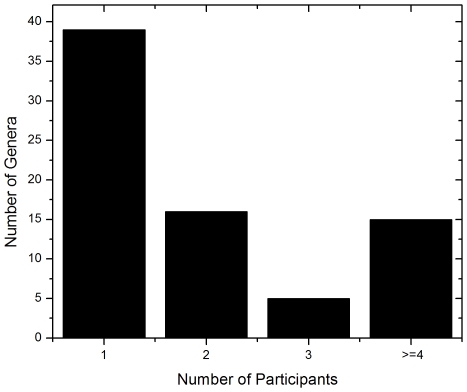
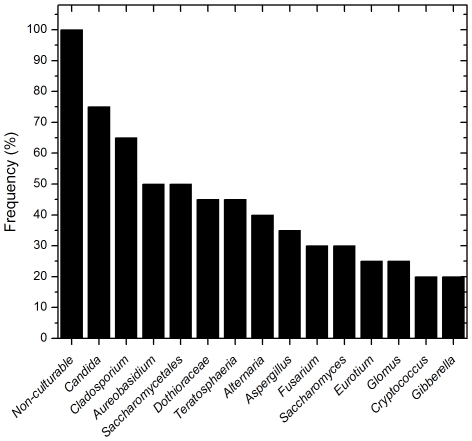
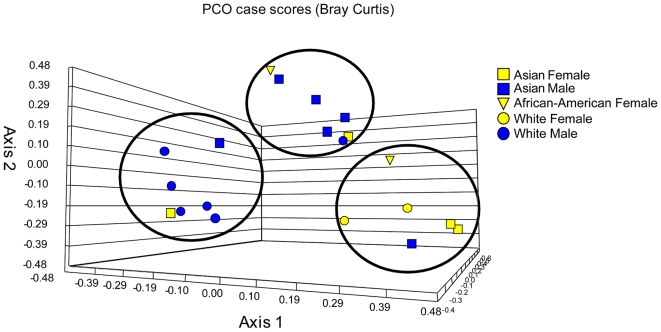
The oral microbiome-organisms residing in the oral cavity and their collective genome-are critical components of health and disease. The fungal component of the oral microbiota has not been characterized. In this study, we used a novel multitag pyrosequencing approach to characterize fungi present in the oral cavity of 20 healthy individuals, using the pan-fungal internal transcribed spacer (ITS) primers. Our results revealed the "basal" oral mycobiome profile of the enrolled individuals, and showed that across all the samples studied, the oral cavity contained 74 culturable and 11 non-culturable fungal genera. Among these genera, 39 were present in only one person, 16 genera were present in two participants, and 5 genera were present in three people, while 15 genera (including non-culturable organisms) were present in >/=4 (20%) participants. Candida species were the most frequent (isolated from 75% of participants), followed by Cladosporium (65%), Aureobasidium, Saccharomycetales (50% for both), Aspergillus (35%), Fusarium (30%), and Cryptococcus (20%). Four of these predominant genera are known to be pathogenic in humans. The low-abundance genera may represent environmental fungi present in the oral cavity and could simply be spores inhaled from the air or material ingested with food. Among the culturable genera, 61 were represented by one species each, while 13 genera comprised between 2 and 6 different species; the total number of species identified were 101. The number of species in the oral cavity of each individual ranged between 9 and 23. Principal component (PCO) analysis of the obtained data set followed by sample clustering and UniFrac analysis revealed that White males and Asian males clustered differently from each other, whereas both Asian and White females clustered together. This is the first study that identified the "basal mycobiome" of healthy individuals, and provides the basis for a detailed characterization of the oral mycobiome in health and disease.
Overview
The claims and statistics of this paper haven’t been checked yet.
Free: it reads the open-access text and checks the first 5 claims that cite a source we can check. Create a free account to check every claim.
Integrity signals
Registry
Cites
Statistics
Figures
Verification
Claims the paper makes
The claims and statistics of this paper haven’t been checked yet.
Free: it reads the open-access text and checks the first 5 claims that cite a source we can check. Create a free account to check every claim.
Claims other papers make about this one
Each is checked against this paper’s own text: does it say what the citing paper says it does?
The source backs part of the claim, not all of it — or backs it for a different population, condition or comparison.
In the citing paper
“Compared to bacteria, fungal constituents can be as low as 0.1% of the total microbiota and may show large diversity (Ghannoum et al., 2010; Qin et al., 2010).”
From Iron at the Centre of Candida albicans Interactions (2018) · cites this paper as Ghannoum et al., 2010
Experimental — accuracy not yet measuredIn the citing paper
“Periodontal disease severity is related to both modifiable (smoking, diet) and non-modifiable host risk factors (genetic susceptibility) as well as environmental factors [10,11,12].”
From A Cross-Talk between Diet and the Oral Microbiome: Balance of Nutrition on Inflammation and Immune System’s Response during Periodontitis (2022) · cites this paper as [11]
In the citing paper
“A recent study by Ghannoum et al. characterizing the mycobiome of the oral cavity of healthy individuals identified in this host milieu a complex and dynamic profile of fungal species, the number of which parallels that observed for bacteria [46].”
From Host Iron Withholding Demands Siderophore Utilization for Candida glabrata to Survive Macrophage Killing (2011) · cites this paper as [46]
In the citing paper
“Infections with C. albicans can range from superficial mucosal and dermatological infections to life-threatening infections of the bloodstream and vital organs.”
From Molecular and genetic basis of azole antifungal resistance in the opportunistic pathogenic fungus Candida albicans (2020) · cites this paper as [2]
Self-check
Percentages, sums and reported differences re-computed from the paper’s own numbers.
The self-check needs the paper’s full text.
Citations
Cites
Cd-hit: a fast program for clustering and comparing large sets of protein or nucleotide sequences
Li, W., & Godzik, A. (2006) · Bioinformatics · doi:10.1093/bioinformatics/btl158 · Cited by 11,410 · cited 1×
“. This test measures the probability that the designated classes are different based on the phylogenetic relatedness and the abundance of each cluster. We first clustered the MTPS reads using CD-HIT”
MethodPrincipal components analysis corrects for stratification in genome-wide association studies
Price, A. L., Patterson, N. J., Plenge, R. M., Weinblatt, M. E., Shadick, N. A., & Reich, D. (2006) · Nature Genetics · doi:10.1038/ng1847 · Cited by 10,248 · cited 1×
“Principal Coordinate (PCO) analysis has been recognized as a simple and straight-forward method to group or separate samples in a dataset, and has been used in disease-association studies [22,23].”
MethodUniFrac: a New Phylogenetic Method for Comparing Microbial Communities
Lozupone, C., & Knight, R. (2005) · Applied and Environmental Microbiology · doi:10.1128/aem.71.12.8228-8235.2005 · Cited by 8,227 · cited 1×
“To compare the phylogenetic distribution between the various gender and race classes and confirm the results of PCO analysis, we used UniFrac significance test [24,25].”
MethodA core gut microbiome in obese and lean twins
Turnbaugh, P. J., Hamady, M., Yatsunenko, T., Cantarel, B. L., Duncan, A., Ley, R. E., Sogin, M. L., Jones, W. J., Roe, B. A., Affourtit, J. P., et al. (2009) · Nature · doi:10.1038/nature07540 · Cited by 7,823 · cited 1×
“Several groups have subsequently employed various barcoding strategies to analyze multiple samples and this strategy is now well accepted [18–21].”
BackgroundDefining the normal bacterial flora of the oral cavity
Aas, J. A., Paster, B. J., Stokes, L. N., Olsen, I., & Dewhirst, F. E. (2005) · Journal of Clinical Microbiology · doi:10.1128/jcm.43.11.5721-5732.2005 · Cited by 3,092 · cited 2×
“Only two previous studies have investigated the profile of microbes present in the oral cavity of healthy individuals and both focused on the bacterial microbiome [32,33].”
BackgroundMethodBacterial Diversity in Human Subgingival Plaque
Paster, B. J., Boches, S. K., Galvin, J. L., Ericson, R. E., Lau, C. N., Levanos, V. A., Sahasrabudhe, A., & Dewhirst, F. E. (2001) · Journal of Bacteriology · doi:10.1128/jb.183.12.3770-3783.2001 · Cited by 2,011 · cited 1×
“[37,38], inability to grow these non-culturable organisms renders it difficult to gain insight into their role in health and disease.”
BackgroundUniFrac – An online tool for comparing microbial community diversity in a phylogenetic context
Lozupone, C., Hamady, M., & Knight, R. (2006) · BMC Bioinformatics · doi:10.1186/1471-2105-7-371 · Cited by 1,453 · cited 1×
“To compare the phylogenetic distribution between the various gender and race classes and confirm the results of PCO analysis, we used UniFrac significance test [24,25].”
MethodThe breadth of bacterial diversity in the human periodontal pocket and other oral sites
Paster, B. J., Olsen, I., Aas, J. A., & Dewhirst, F. E. (2006) · Periodontology 2000 · doi:10.1111/j.1600-0757.2006.00174.x · Cited by 861 · cited 1×
“[37,38], inability to grow these non-culturable organisms renders it difficult to gain insight into their role in health and disease.”
BackgroundOral microbial communities in sickness and in health
Jenkinson, H. F., & Lamont, R. J. (2005) · Trends in Microbiology · doi:10.1016/j.tim.2005.09.006 · Cited by 628 · cited 1×
“Organisms residing in the oral cavity and their collective genome–the oral microbiome–are critical components of health and disease. Disruption of the oral microbiome has been proposed to indicate, trigger, or influence the course of oral diseases, especially among immunocompromised patients (e.g. HIV-infected or canc…”
BackgroundA Genealogical Interpretation of Principal Components Analysis
McVean, G. (2009) · PLoS Genetics · doi:10.1371/journal.pgen.1000686 · Cited by 568 · cited 1×
“Principal Coordinate (PCO) analysis has been recognized as a simple and straight-forward method to group or separate samples in a dataset, and has been used in disease-association studies [22,23].”
Method
Cited by
Items 901–999 of 999
Applications of Microbes in Human Health
Jasmine, S., Sankarapandian, V., Vijayakumar, N., Krishnamoorthy, R., & Thangavelu, A. (2022) · Environmental and microbial biotechnology · doi:10.1007/978-981-16-2225-0_11 · Cited by 3
Fungal Forces in Mental Health: Microbial Meddlers or Function Fixers?
Severance, E. G. (2022) · Current topics in behavioral neurosciences · doi:10.1007/7854_2022_364 · Cited by 2
Jafarian, H., Hardani, A. K., Asnafi, A. A., & Mahmoudabadi, A. Z. (2022) · Microbial Pathogenesis · doi:10.1016/j.micpath.2022.105690 · Cited by 6
Clinical Management of Fungal Biofilm Infections
Ramage, G., Short, B., McKloud, E., Alshanta, O. A., Butcher, M. C., McLean, W., & Brown, J. L. (2022) · Springer series on biofilms · doi:10.1007/978-3-031-10992-8_17 · Cited by 2
Hazen, K. C. (2014) · Clinics in Laboratory Medicine · doi:10.1016/j.cll.2014.02.008 · Cited by 3
The Impact of Antifungal Drug Resistance in the Clinic
Lewis, R. E., & Kontoyiannis, D. P. (2014) · ASM Press eBooks · doi:10.1128/9781555817176.ch23 · Cited by 2
A Summary of the Second Annual HIV Microbiome Workshop
Williams, B., Ghosh, M., Boucher, C. A., Bushman, F. D., Carrington‐Lawrence, S., Collman, R. G., Dandekar, S., Dang, Q., Malaspina, A., Paredes, R., et al. (2017) · AIDS Research and Human Retroviruses · doi:10.1089/aid.2017.0137 · Cited by 3
“55 Data from Dr. Ghannoum’s group showed a shift in mycobiome among these groups with evidence for distinct bacterial–fungal interactions in infected versus un-infected individuals.”
Cell-free DNA Reveals Potential Zoonotic Reservoirs in Non-Human PrimatesPreprint
Kowarsky, M., Vlaminck, I. D., Okamoto, J., Neff, N. F., LeBreton, M., Nwobegabay, J., Tamoufé, U., Diffo, J. L. D., Tafon, B., Kiyang, J., et al. (2018) · bioRxiv (Cold Spring Harbor Laboratory) · doi:10.1101/481093 · Cited by 2
Role of EphA2 in host defense against oro-pharyngeal candidiasis
Olsen, I. (2020) · Journal of Oral Microbiology · doi:10.1080/20002297.2020.1711619 · Cited by 2
Radhamanalan, G., & Dharumadurai, D. (2023) · Research Square · doi:10.21203/rs.3.rs-2626646/v1 · Cited by 2
Boonanantanasarn, K., & Gill, S. R. (2011) · Wiley eBooks · doi:10.1128/9781555817107.ch2 · Cited by 3
Mycological Profile of the Integumentary System in Felin Ponies
Różański, P., Pluta, M., & Różańska, D. (2017) · Annals of Animal Science · doi:10.1515/aoas-2016-0093 · Cited by 2
“Yeast from the genera Candida, Cladosporium, Aureobasidium, Saccharomyces, and Cryptococcus have been isolated most frequently (Ghannoum et al., 2010).”
BackgroundFungi, Protozoa, Parasites, and Other Infective Agents Transmissible by Kissing
Posse, J. L., Dios, P. D., & Scully, C. M. (2017) · Elsevier eBooks · doi:10.1016/b978-0-12-813681-2.00005-6 · Cited by 1
Microbial Chemical Ecology in the Human Microbiome
Balaich, J. N., & Donia, M. S. (2020) · Elsevier eBooks · doi:10.1016/b978-0-12-409547-2.14847-4 · Cited by 2
Fungal composition in saliva and plaque in children with caries: Differences and influencing factors
Yin, M., You, Y., Zheng, X., Liang, Q., Wu, B., & Xu, W. (2023) · Medicine in Microecology · doi:10.1016/j.medmic.2023.100076 · Cited by 1
Microbiomes of native Aotearoa New Zealand animals
Ayriss, N., & Taylor, M. W. (2023) · New Zealand Journal of Ecology · doi:10.20417/nzjecol.47.3518 · Cited by 1
“Indeed, for humans, 454 pyrosequencing of the human oral microbiome revealed a diversity of fungal species that were hitherto unknown (Ghannoum et al. 2010), with later investigation into fungal colonisation of the human gut indicating that all fungal species present may only be transient, derived…”
BackgroundOral Yeast Load and Species of Young Individuals Aged 18-25
Ateş, G. Ö., & Otkun, M. T. (2023) · Brazilian Archives of Biology and Technology · doi:10.1590/1678-4324-2023230400 · Cited by 1
“[8].”
MethodBhattacharya, T., Saha, R. P., Majumder, R., & Ghosh, S. (2024) · Journal of Experimental Biology and Agricultural Sciences · doi:10.18006/2024.12(3).511.521 · Cited by 3
Suresh, A. (2024) · Elsevier eBooks · doi:10.1016/b978-0-443-22348-8.00011-8 · Cited by 1
Song, Y., Lin, Z., Liu, A., & Ma, J. (2025) · World Journal of Gastroenterology · doi:10.3748/wjg.v31.i7.101104 · Cited by 1
Exploring the Oral Mycobiome: Biofilms and Inter-kingdom Interactions in Health and Disease
Ellepola, K., & Seneviratne, C. J. (2025) · Springer series on biofilms · doi:10.1007/978-3-031-93315-8_4 · Cited by 1
Interpersonal bacterial and fungal transmission during intensive conversations
Fu, Y., Cheng, L., Liu, Y., Liu, L., & Hu, X. (2025) · Journal of Building Engineering · doi:10.1016/j.jobe.2025.114133 · Cited by 1
Rodriguez, V. A., Palma-Cortés, G., Hernandez, V., Zapotitla, E. S., Garfias, B. M., Montes, S. S., Becker, I., Grostieta, E., Paredes, J., Mendoza, D. H., et al. (2025) · Open Journal of Medical Microbiology · doi:10.4236/ojmm.2025.153016 · Cited by 1
Dental Disease Association with Bacterial Biofilm
Aryah, U. S., Prasanth, N., Stani, R., Kandanattu, B., & George, N. (2025) · Springer eBooks · doi:10.1007/978-981-96-8975-0_6 · Cited by 3
Li, H., Deng, Y., Geng, X., Song, X., Li, C., Tiribelli, F., Xu, J., Zhang, S., Daniels, L. D., Xu, J., et al. (2025) · Functional Ecology · doi:10.1111/1365-2435.70190 · Cited by 1
Dynamic alterations of oral fungal microbiota in Omicron infected patients
Ma, Y., Liu, S., Zhang, G., Liu, L., Sun, J., Zou, Y., Sun, Y., Li, L., Rao, B., Wang, H., et al. (2025) · Scientific Reports · doi:10.1038/s41598-025-19819-5 · Cited by 1
“Research has shown that the oral microbiome plays an important role in human health and disease 16,17 .”
Wang, S., Liu, S., Wen, Y., Hao, W., Zhao, Y., & Luo, S. (2025) · Agriculture · doi:10.3390/agriculture15222342 · Cited by 2
Microbial variations in the multibody sites of the pancreatic ductal adenocarcinoma patients
Zhu, Y., Zhi, M., Liang, X., Li, L., Dong, M., Zhang, G., Wang, L., Wang, P., Zhong, N., Feng, Q., et al. (2025) · International Journal of Surgery · doi:10.1097/js9.0000000000003799 · Cited by 3
Mishra, S. K. (2026) · Frontiers in Microbiology · doi:10.3389/fmicb.2025.1669039 · Cited by 1
“…cavity harbors over 700 species of bacteria, in addition to fungi, archaea, viruses, and protists, collectively comprising the human oral microbiome (Chen et al., 2010; Ghannoum et al., 2010; Belmok et al., 2020; Pride et al., 2012; Abeles et al., 2014; Wantland et al., 1958; Redanz et al., 2020).”
Li, Z., Wu, C., Huang, D., Liang, Y., Zhai, Y., Mai, C., Han, Y., Tang, L.-A., Wang, W., Ning, C., et al. (2026) · BMC Infectious Diseases · doi:10.1186/s12879-026-13107-x · Cited by 1
“A survey of oral fungal communities in healthy individuals revealed that 36.1% of fungal species were undetectable using conventional culture methods [47].”
InfluentialZhang, M., Du, M., Zhang, W., Huang, R., Li, W., Li, T., Bai, J., Zhang, N., Chen, J., Zhou, J., et al. (2026) · iMetaMed · doi:10.1002/imm3.70033 · Cited by 2
Influence of fungi on epithelial homeostasis and role in inflammatory diseases
Peterson, L. F., Wang, J., Gow, N. A. R., LeibundGut‐Landmann, S., & Brewer, M. G. (2026) · Clinical Microbiology Reviews · doi:10.1128/cmr.00319-25 · Cited by 1
Mehta, V., Galletti, C., Mathur, A. S., Suresh, N., Nandi, D., & Fraile, J. F. (2026) · Systematic Reviews · doi:10.1186/s13643-026-03249-z · Cited by 1
“Oral candidiasis (OC) is a common opportunistic fungal infection predominantly caused by Candida albicans and some other Candida species (spp.), including Candida parapsilosis , Candida metapsilosis , Candida tropicalis , and Candida khmerensis [1].”
Tam, W. Y. J., Tsui, C. K. M., Beardsley, J., & Barrs, V. R. (2026) · Fungal Biology Reviews · doi:10.1016/j.fbr.2026.100501 · Cited by 2
Yeasts in the gastrointestinal tract
Mueller, K. D., & Lee, S. C. (2026) · FEMS Yeast Research · doi:10.1093/femsyr/foag029 · Cited by 1
“Thus, the terms mycobiota and mycobiome are used to represent the fungal microbes found in these communities (Ghannoum et al. 2010 , Iliev et al. 2012 ).”
Salivary mycobial profiles of oral cancer patients – a cohort study
Mäkinen, A. I., van der Plas, D. W. K., Buijs, M. J., Mäkitie, A. A., Meurman, J. H., Zaura, E., & Brandt, B. W. (2026) · Journal of Oral Microbiology · doi:10.1080/20002297.2026.2696598 · Cited by 1
“The spectrum of fungal species identified from the oral cavity has increased since high-throughput sequencing methods have become mainstream, and a so-called core oral mycobiota consisting of 13 to 14 genera has been suggested by two separate groups [8,9].”
Möslinger, A., Weiner, A., Schäuble, S., Ramírez-Zavala, B., Jablonowski, N., Cseresnyés, Z., Schille, T. B., Figge, M. T., Panagiotou, G., Morschhäuser, J., et al. (2026) · mBio · doi:10.1128/mbio.01764-26 · Cited by 1
Dynamics of Microeukaryotes and Archaea in the Mammalian Gut Microbiome
Dollive, S. (2013) · Scholarly Commons (University of Pennsylvania) · Cited by 1
van Prehn, J., van Nieuwenhuizen, A. J., van Weert, S., van Seijen, M., & Budding, A. E. (2015) · JMM Case Reports · doi:10.1099/jmmcr.0.000064 · Cited by 1
“: the most abundant species was Candida albicans (40 %), followed by Candida parapsilosis (15 %), Candida tropicalis (15 %), Candida khmerensis and Candida metapsilosis (5 %) (Ghannoum et al., 2010).”
BackgroundExploring host–microbiota interactions in animal models and humans
Kostic, A. D., Howitt, M. R., & Garrett, W. S. (2013) · Genes & Development · doi:10.1101/gad.212522.112 · Cited by 494
“2011) and mycome (fungi) (Ghannoum et al. 2010) and have begun to investigate the reciprocal interactions between these constituents (Kane et al.”
AMPlified Defense: Antimicrobial Peptides During Candida albicans Infection
Ernst, J. F., & Swidergall, M. (2017) · Springer eBooks · doi:10.1007/978-3-319-50409-4_10 · Cited by 2
Beyond Bacteria: The Mycobiome and Virome in Urology
Ho, L., Parmar, S., & Scotland, K. B. (2019) · Springer eBooks · doi:10.1007/978-3-030-17542-9_13 · Cited by 1
Németh, T., Gácser, A., & Nosanchuk, J. D. (2018) · Elsevier eBooks · doi:10.1016/b978-0-12-809633-8.20709-7 · Cited by 2
Dhekane, R., Bandaru, D., Shaikh, N., Gholap, A., Murumkar, S., Barhate, M., Ugale, R., Tikhole, U., Kadam, S., Vandana, M., et al. (2022) · Springer series on biofilms · doi:10.1007/978-3-031-15349-5_1 · Cited by 2
The role of Candida species in the occurrence of dental caries in Thi Qar Governorate
Waheeb, E. H. A., Al-Yasiri, M. H., & Maktoof, A. A. (2023) · University of Thi-Qar Journal of Science · doi:10.32792/utq/utjsci/v10i1.921 · Cited by 4
Teodorowicz, P., Tokarska-Rodak, M., Michaluk, E., Zarębska, M., Plewik, D., Grudniewski, T., & Sacharczuk, M. (2023) · Animal Science Papers and Reports · doi:10.2478/aspr-2023-0006 · Cited by 2
“[ Ghannoum et al. 2010].”
Williams, K., Jones, R. J., & Al‐Rawi, M. (2023) · Environments · doi:10.3390/environments10100182 · Cited by 1
Rojas, O. C., Montesino, C. A., Mendoza-Olazarán, S., Carrión-Alvarez, D., González-Álvarez, R., & Montoya, A. M. (2023) · Indian Journal of Microbiology · doi:10.1007/s12088-023-01145-x · Cited by 1
“Fungi constitute a little part of the oral microbiome; it is also named oral fungal micro-biome or mycobiome [4].”
An Introduction to the Human Microbiome
Kotthapalli, P., & Archer, A. C. (2024) · Springer eBooks · doi:10.1007/978-981-97-3790-1_1 · Cited by 1
Pérez-González, O., Valencia-Ampudia, F., la Garza-Ramos, M. A. D., & Aguirre-Arzola, V. E. (2024) · Applied Microbiology · doi:10.3390/applmicrobiol4040097 · Cited by 1
“The human oral cavity contains a complex microbiome, estimated to include around 600 bacterial species [2] and 100 fungal species [3].”
InfluentialOral microbiome and human health
Cleatus, B., Thirunavukkarasu, R., Subramanian, K., & John, J. (2024) · Elsevier eBooks · doi:10.1016/b978-0-443-22348-8.00008-8 · Cited by 1
Metagenomics: Implications in oral health and disease
Prabhu, V. R., Bhavana, K., Deo, P. N., Suresh, A., Kamalakkannan, R., & Nagarajan, M. (2024) · Elsevier eBooks · doi:10.1016/b978-0-323-91631-8.00020-2 · Cited by 4
Tebbi, C. K., Sahakian, E., Shah, B. D., Yan, J., Mediavilla-Varela, M., & Patel, S. J. (2025) · Biomedicines · doi:10.3390/biomedicines13020488 · Cited by 1
“Generally, non-life-threatening infections by fungal agents in humans occur in the nails, skin, oral cavity, throat, and vagina [133–136].”
Rodrigue, L., & Rosa, A. (2016) · Journal of Infectious Diseases and Treatment · doi:10.21767/2254-609x.100018 · Cited by 1
Microbiome: Its Impact Is Being Revealed!
El‐Jurdi, N., Lima, M. J. G. D., Lazarus, H. M., & Ghannoum, M. A. (2017) · Current Clinical Microbiology Reports · doi:10.1007/s40588-017-0063-9 · Cited by 2
Self-citationOral microbiology in the microbiome era - when, how and why to perform microbiological diagnostics
Välimaa, H., Fröding, I., & Lau, E. F. (2018) · Den norske tannlegeforenings Tidende · doi:10.56373/2018-11-7 · Cited by 2
Ml, R., Ac, R., & Jewtuchowicz, V. M. (2018) · Journal of Microbial & Biochemical Technology · doi:10.4172/1948-5948.1000401 · Cited by 1
“Candida parapsilosis sensu stricto is part of the human mycobiome, and according to two studies on oral mycobiome, is the second most frequently isolated Candida species in the oral cavity [8,9].”
BackgroundNascimento, M. M. (2019) · Elsevier eBooks · doi:10.1016/b978-0-12-815249-2.00009-9 · Cited by 2
Allergie und der respiratorische Infekt
Stockert, K. (2020) · Springer eBooks · doi:10.1007/978-3-662-58140-7_5 · Cited by 1
An Ex vivo Assay to Study Candida albicans Hyphal Morphogenesis in the Gastrointestinal Tract
Monasky, R. C., Villa, S., & Thangamani, S. (2020) · Journal of Visualized Experiments · doi:10.3791/61488 · Cited by 1
JUMLAH KOLONI CANDIDA ALBICANS PADA PENDERITA HIPERTENSI DAN NON HIPERTENSI DENGAN COATED TONGUE
Nurfajrina, F. R., Nur’aeny, N., Herawati, E., & Malinda, Y. (2020) · B-Dent Jurnal Kedokteran Gigi Universitas Baiturrahmah · doi:10.33854/jbd.v1i1.471 · Cited by 1
Ml, R., Ac, R., Nastri, M. L., & Jewtuchowicz, V. M. (2021) · Dental Oral Biology and Craniofacial Research · doi:10.31487/j.dobcr.2021.01.07
A Modality in the Diagnosis and Treatment of Oral Candidiasis
Heta, S., Xhaferri, S., Kapaj, S., Kapaj, E., Robo, I., & Mavriqi, L. (2019) · Journal of Clinical Research in Dentistry · doi:10.33309/2639-8281.020202 · Cited by 1
“The chronic appearance is as follows:[1,2]”
BackgroundFungi associated oral cavity hygiene and denture stomatitis: A review on diagnostic and treatment
Farzanegan, A., Khalandi, H., Falahati, M., & Khozestani, P. K. (2021) · Journal of Current Biomedical Reports · doi:10.52547/jcbior.2.4.150 · Cited by 1
(2016) · doi:10.1128/9781555819071.ch7 · Cited by 1
Paul, D., Choudhury, S., & Bose, S. K. (2018) · Springer eBooks · doi:10.1007/978-981-13-2925-8_6 · Cited by 1
A six-year hospital-based surveillance study on burden of esophageal candidiasis in Gangtok, Sikkim
Gurung, S., Sharma, T. D., Rasaily, S. M., Singh, R., & Prakash, P. Y. (2022) · Iranian Journal of Microbiology · doi:10.18502/ijm.v14i4.10247 · Cited by 1
“The oral basal mycobiome of healthy individuals comprises predominantly of Candida species (12).”
BackgroundA Multi-Faceted Diagnostic Approach to Lung Infections in Patients with Cystic Fibrosis
Doud, M. S. (2010) · FIU - Digital Commons (Florida International University) · doi:10.25148/etd.fi10041609 · Cited by 1
“The 454 sequencing technique has been used to used to analyze the fungal mycobiome in the healthy human mouth (Ghannoum et al., 2010).”
BackgroundMethodInfluentialCummings, S., & Nelson, A. (2011) · OpenGrey (Institut de l'Information Scientifique et Technique) · Cited by 1
Myers, C. A. (2015) · Human Biology · Cited by 1
Fungi In Asthma - Investigation Of The Lung Mycobiome And Characterisation Of Allergens
Rick, E. (2019) · Figshare · Cited by 1
Community Dynamics of Fungi During the Progression of Human Non-Small-Cell Lung CancerPreprint
Zhao, Y., Yi, J., Xiang, J., Jia, W., Chen, A., Chen, L., Zheng, L., Zhou, W., Wu, M., Yu, Z., et al. (2021) · Research Square · doi:10.21203/rs.3.rs-616977/v1 · Cited by 1
Identification of a novel Candida metapsilosis isolate suggests ongoing hybridization.Preprint
O’Brien, C. E., Zhai, B., Ola, M., Cinnéide, E. Ó., O’Connor, Í., Rolling, T., Miranda, E., Babady, N. E., Hohl, T. M., & Butler, G. (2021) · bioRxiv (Cold Spring Harbor Laboratory) · doi:10.1101/2021.07.15.452539 · Cited by 1
“There is some suggestion that C. metapsilosis may be a human commensal, and it has been isolated from the oral cavity of healthy individuals (Ghannoum et al. 2010).”
BackgroundFungal-bacteria interactions provide shelter for bacteria in Caesarean section scar diverticulumPreprint
Chen, P., Chen, H., Liu, Z., Pan, X., Liu, Q., & Yang, X. (2023) · bioRxiv (Cold Spring Harbor Laboratory) · doi:10.1101/2023.08.07.552220 · Cited by 1
Liu, S., Wang, Y., & Xu, C. (2025) · Journal of Oral Biosciences · doi:10.1016/j.job.2025.100657 · Cited by 2
Development of In Vitro Denture Biofilm Models for Studying Denture-related Halitosis and Stomatitis
Wu, T. (2012) · eScholarship (California Digital Library)
Fungal Communities in Oral Health and Disease
Dupuy, A. K. (2015) · OpenCommons - UConn (University of Connecticut)
Naushad, S. (2015) · MacSphere (McMaster University) · doi:10.71548/23167
Miyazima, T. Y. (2014) · Digital Library of Theses and Dissertations (Universidade de São Paulo) · doi:10.11606/t.23.2014.tde-11092014-172928
Cabral, D. B. (2014) · Digital Library of Theses and Dissertations (Universidade de São Paulo) · doi:10.11606/t.22.2014.tde-08012015-104423 · Cited by 1
Identification and Characterization of Genetic Factors Involved in Candida-Bacterial Interactions
Fox, S. (2013) · Digital Commons - East Tennessee State University (East Tennessee State University)
Purcell, P. (2013) · Northumbria Research Link (Northumbria University)
CANDIDA YEASTS AND CARCINOGENIC ACETALDEHYDE IN UPPER DIGESTIVE TRACT CARCINOGENESIS
Nieminen, M. T. (2014) · Helda - University of Helsinki Institutional Repository
Techniques in Infectious Diseases
Errami, M. (2013)
Ífarandi myglusveppasýkingar á Landspítala háskólasjúkrahúsi á tímabilinu 2007-2012
Ásmundsson, H. G. (2014)
Bansal, N. (2015) · University Library - University of Saskatchewan (University of Saskatchewan)
Vasicek, E. M. (2013) · doi:10.21007/etd.cghs.2013.0335
“They act by inhibiting (1,3)-β-D-glucan synthase which is required for glucan synthesis, an important structure in the fungal cell wall (77).”
Implication de la flore fongique intestinale dans le développement de la maladie
Colombel, J., Poulain, D., & Sendid, B. (2013)
ERG11-Mediated Azole Resistance in Candida albicans
Flowers, S. A. (2013) · doi:10.21007/etd.cghs.2013.0096
“Candida species are part of the normal flora that exist commensally in over 70% of the healthy population (58).”
BackgroundAntifungal Activity of Type III Dental Gypsum Incorporated with 3-iodo-2- Propynyl-Butylcarbamate
Riyatanon, T., Sawaengkit, P., Thaweboon, S., Thaweboon, B., & Nisalak, P. (2017) · MATEC Web of Conferences · doi:10.1051/matecconf/20179501002
Rodrigues, A. N. (2017) · Digital Library of Theses and Dissertations (Universidade de São Paulo) · doi:10.11606/t.5.2017.tde-01032017-124220 · Cited by 1
The influence of human genetics and environment on the salivary microbiota
Stahringer, S. S. (2013) · CU Scholar (University of Colorado Boulder)
Composition and Diversity of Human Oral Microbiome
Balan, P., & Seneviratne, C. J. (2017) · CRC Press eBooks · doi:10.4324/9781315120119-4
Clinical Implications of Interkingdom Fungal and Bacterial Biofilms
Ramage, G., O’Donnell, L. E., Kean, R., Townsend, E. R., & Rajendran, R. (2017) · CRC Press eBooks · doi:10.4324/9781315120119-2 · Cited by 1
Understanding the Diversity of Penicillium Using Next-Generation Sequencing
Asthana, M., & Kumar, A. (2017) · Elsevier eBooks · doi:10.1016/b978-0-444-63501-3.00002-8 · Cited by 1
Karnaushkina, M. A., Fedosenko, S. V., Сазонов, А. Э., Петров, В. А., Ovsyannikov, D. Y., & Ogorodova, L. M. (2018) · Современные технологии в медицине · doi:10.17691/stm2018.10.2.11
“В многочисленных исследованиях [15, 18, 19] продемонстрирована роль в риске развития пневмоний и обострений хронических бронхолегочных заболеваний условно-патогенных орофарингеальных бактерий, которые поступают в нижние дыхательные пути посредством микроаспирации очагов хронической инфекции, локализованных в верхних д…”
Németh, T., Gácser, A., & Nosanchuk, J. D. (2018) · Elsevier eBooks · doi:10.1016/b978-0-12-819990-9.20709-9 · Cited by 1
Metadata
- Authors
- Ghannoum, M. A., Jurevic, R. J., Mukherjee, P. K., Cui, F., Sikaroodi, M., Naqvi, A., & Gillevet, P. M.
- Affiliations
- University Hospitals Cleveland Medical Center (US)
- Case Western Reserve University (US)
- George Mason University (US)
- Corresponding author
- Ghannoum, Mahmoud A.
- Venue
- PLoS Pathogens
- Publisher
- Public Library of Science (PLoS)
- Published
- 2010-01-08
- Volume
- 6
- Issue
- 1
- Pages
- e1000713
- ISSN
- 1553-7366 (ISSN-L)
- 1553-7374
- PMC
- PMC2795202
- OpenAlex
- W2077088073
- Cited by
- 1,150
- References
- 40
- Citations by year
- 2026: 67 · 2025: 79 · 2024: 90 · 2023: 90 · 2022: 92 · 2021: 92 · 2020: 93 · 2019: 81 · 2018: 74 · 2017: 73 · 2016: 63 · 2015: 64 · 2014: 64 · 2013: 53 · 2012: 35
- FWCI
- 26.55
- Type
- journal article
- Language
- en
- Open access
- gold
- doi.org
- Locations
- PLoS Pathogens (publishedVersion, cc-by)
- PubMed Central (publishedVersion, cc-by)
- PubMed (publishedVersion)
- DOAJ (DOAJ: Directory of Open Access Journals) (submittedVersion, cc-by-sa)
- Figshare (submittedVersion, cc-by)
- Funders
- Bristol-Myers Squibb
- National Institutes of Health
- National Institute of Allergy and Infectious Diseases (R21AI074077)
- National Institute of Dental and Craniofacial Research (R01DE017486, K23DE016110, P01DE019759)
- Topics
- Health Sciences › Medicine › Infectious Diseases › Antifungal resistance and susceptibility
- Health Sciences › Dentistry › Periodontics › Oral microbiology and periodontitis research
- Life Sciences › Agricultural and Biological Sciences › Plant Science › Plant Pathogens and Fungal Diseases
- Keywords
- oral mycobiome, oral fungi, fungal diversity, Candida, Cladosporium, Aureobasidium, Aspergillus, Fusarium, Cryptococcus, ITS sequencing, healthy individuals, environmental fungi
- MeSH terms
- Adult, Asian, DNA, Fungal, Female, Fungi, Humans, Male, Middle Aged, Mouth, Sex Factors, Polymerase Chain Reaction, White People, Racial Groups, Metagenome, Young Adult
About these checks
Registry, retraction, Cites and statistics results are computed, not judged, with one exception: a printed reference that no index lists is read once by a model before it counts as a citation error. Claims are extracted by a model and kept only when their quote appears verbatim in the text; each cited source is then checked, with a model’s help, for whether it says what the claim relies on. Those verdicts can be wrong — read the claim’s quote and the cited source before relying on one.
Statistics and arithmetic are recomputed, not judged.
Confidence bands are shown only for fields calibrated on our annotated test set. None is calibrated yet, so no band is shown.
What counts as a claim ›How we measure confidence ›How we check this ›
Are you an author, or do you see a problem with this page? Request a review
Data sources
Bibliographic data: Semantic Scholar, OpenAlex, Crossref.
Contains information from the Semantic Scholar Academic Graph Datasets, made available under the ODC Attribution License (ODC-BY 1.0).
Semantic Scholar’s data is described in: Kinney, R., et al. (2023). The Semantic Scholar Open Data Platform. arXiv:2301.10140.
