

Characterization of the Oral Fungal Microbiome (Mycobiome) in Healthy Individuals
Open accessThe DOI matches its Crossref record; 39 of the 40 references it cites were found in a registry or an index.
Abstract
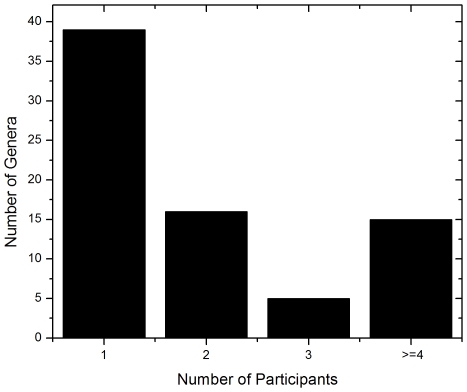
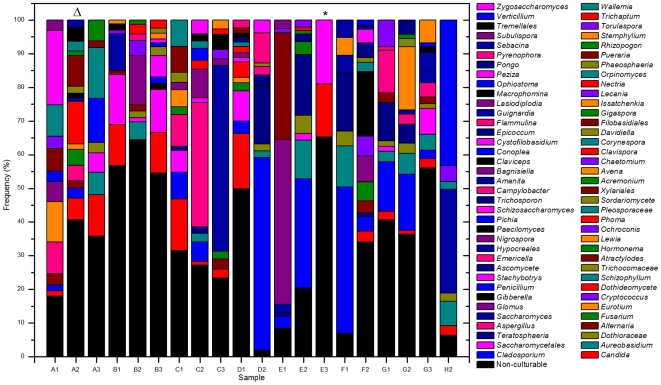
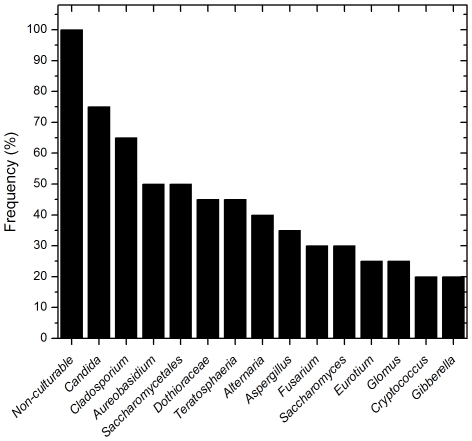
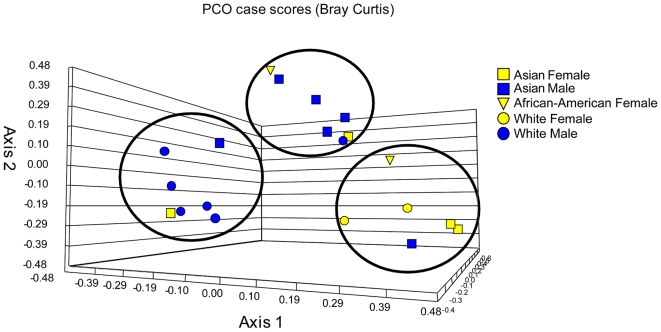
The oral microbiome-organisms residing in the oral cavity and their collective genome-are critical components of health and disease. The fungal component of the oral microbiota has not been characterized. In this study, we used a novel multitag pyrosequencing approach to characterize fungi present in the oral cavity of 20 healthy individuals, using the pan-fungal internal transcribed spacer (ITS) primers. Our results revealed the "basal" oral mycobiome profile of the enrolled individuals, and showed that across all the samples studied, the oral cavity contained 74 culturable and 11 non-culturable fungal genera. Among these genera, 39 were present in only one person, 16 genera were present in two participants, and 5 genera were present in three people, while 15 genera (including non-culturable organisms) were present in >/=4 (20%) participants. Candida species were the most frequent (isolated from 75% of participants), followed by Cladosporium (65%), Aureobasidium, Saccharomycetales (50% for both), Aspergillus (35%), Fusarium (30%), and Cryptococcus (20%). Four of these predominant genera are known to be pathogenic in humans. The low-abundance genera may represent environmental fungi present in the oral cavity and could simply be spores inhaled from the air or material ingested with food. Among the culturable genera, 61 were represented by one species each, while 13 genera comprised between 2 and 6 different species; the total number of species identified were 101. The number of species in the oral cavity of each individual ranged between 9 and 23. Principal component (PCO) analysis of the obtained data set followed by sample clustering and UniFrac analysis revealed that White males and Asian males clustered differently from each other, whereas both Asian and White females clustered together. This is the first study that identified the "basal mycobiome" of healthy individuals, and provides the basis for a detailed characterization of the oral mycobiome in health and disease.
Overview
The claims and statistics of this paper haven’t been checked yet.
Free: it reads the open-access text and checks the first 5 claims that cite a source we can check. Create a free account to check every claim.
Integrity signals
Registry
Cites
Statistics
Figures
Verification
Claims the paper makes
The claims and statistics of this paper haven’t been checked yet.
Free: it reads the open-access text and checks the first 5 claims that cite a source we can check. Create a free account to check every claim.
Claims other papers make about this one
Each is checked against this paper’s own text: does it say what the citing paper says it does?
The source backs part of the claim, not all of it — or backs it for a different population, condition or comparison.
In the citing paper
“Compared to bacteria, fungal constituents can be as low as 0.1% of the total microbiota and may show large diversity (Ghannoum et al., 2010; Qin et al., 2010).”
From Iron at the Centre of Candida albicans Interactions (2018) · cites this paper as Ghannoum et al., 2010
Experimental — accuracy not yet measuredIn the citing paper
“Periodontal disease severity is related to both modifiable (smoking, diet) and non-modifiable host risk factors (genetic susceptibility) as well as environmental factors [10,11,12].”
From A Cross-Talk between Diet and the Oral Microbiome: Balance of Nutrition on Inflammation and Immune System’s Response during Periodontitis (2022) · cites this paper as [11]
In the citing paper
“A recent study by Ghannoum et al. characterizing the mycobiome of the oral cavity of healthy individuals identified in this host milieu a complex and dynamic profile of fungal species, the number of which parallels that observed for bacteria [46].”
From Host Iron Withholding Demands Siderophore Utilization for Candida glabrata to Survive Macrophage Killing (2011) · cites this paper as [46]
In the citing paper
“Infections with C. albicans can range from superficial mucosal and dermatological infections to life-threatening infections of the bloodstream and vital organs.”
From Molecular and genetic basis of azole antifungal resistance in the opportunistic pathogenic fungus Candida albicans (2020) · cites this paper as [2]
Self-check
Percentages, sums and reported differences re-computed from the paper’s own numbers.
The self-check needs the paper’s full text.
Citations
Cites
Cd-hit: a fast program for clustering and comparing large sets of protein or nucleotide sequences
Li, W., & Godzik, A. (2006) · Bioinformatics · doi:10.1093/bioinformatics/btl158 · Cited by 11,410 · cited 1×
“. This test measures the probability that the designated classes are different based on the phylogenetic relatedness and the abundance of each cluster. We first clustered the MTPS reads using CD-HIT”
MethodPrincipal components analysis corrects for stratification in genome-wide association studies
Price, A. L., Patterson, N. J., Plenge, R. M., Weinblatt, M. E., Shadick, N. A., & Reich, D. (2006) · Nature Genetics · doi:10.1038/ng1847 · Cited by 10,248 · cited 1×
“Principal Coordinate (PCO) analysis has been recognized as a simple and straight-forward method to group or separate samples in a dataset, and has been used in disease-association studies [22,23].”
MethodUniFrac: a New Phylogenetic Method for Comparing Microbial Communities
Lozupone, C., & Knight, R. (2005) · Applied and Environmental Microbiology · doi:10.1128/aem.71.12.8228-8235.2005 · Cited by 8,227 · cited 1×
“To compare the phylogenetic distribution between the various gender and race classes and confirm the results of PCO analysis, we used UniFrac significance test [24,25].”
MethodA core gut microbiome in obese and lean twins
Turnbaugh, P. J., Hamady, M., Yatsunenko, T., Cantarel, B. L., Duncan, A., Ley, R. E., Sogin, M. L., Jones, W. J., Roe, B. A., Affourtit, J. P., et al. (2009) · Nature · doi:10.1038/nature07540 · Cited by 7,823 · cited 1×
“Several groups have subsequently employed various barcoding strategies to analyze multiple samples and this strategy is now well accepted [18–21].”
BackgroundDefining the normal bacterial flora of the oral cavity
Aas, J. A., Paster, B. J., Stokes, L. N., Olsen, I., & Dewhirst, F. E. (2005) · Journal of Clinical Microbiology · doi:10.1128/jcm.43.11.5721-5732.2005 · Cited by 3,092 · cited 2×
“Only two previous studies have investigated the profile of microbes present in the oral cavity of healthy individuals and both focused on the bacterial microbiome [32,33].”
BackgroundMethodBacterial Diversity in Human Subgingival Plaque
Paster, B. J., Boches, S. K., Galvin, J. L., Ericson, R. E., Lau, C. N., Levanos, V. A., Sahasrabudhe, A., & Dewhirst, F. E. (2001) · Journal of Bacteriology · doi:10.1128/jb.183.12.3770-3783.2001 · Cited by 2,011 · cited 1×
“[37,38], inability to grow these non-culturable organisms renders it difficult to gain insight into their role in health and disease.”
BackgroundUniFrac – An online tool for comparing microbial community diversity in a phylogenetic context
Lozupone, C., Hamady, M., & Knight, R. (2006) · BMC Bioinformatics · doi:10.1186/1471-2105-7-371 · Cited by 1,453 · cited 1×
“To compare the phylogenetic distribution between the various gender and race classes and confirm the results of PCO analysis, we used UniFrac significance test [24,25].”
MethodThe breadth of bacterial diversity in the human periodontal pocket and other oral sites
Paster, B. J., Olsen, I., Aas, J. A., & Dewhirst, F. E. (2006) · Periodontology 2000 · doi:10.1111/j.1600-0757.2006.00174.x · Cited by 861 · cited 1×
“[37,38], inability to grow these non-culturable organisms renders it difficult to gain insight into their role in health and disease.”
BackgroundOral microbial communities in sickness and in health
Jenkinson, H. F., & Lamont, R. J. (2005) · Trends in Microbiology · doi:10.1016/j.tim.2005.09.006 · Cited by 628 · cited 1×
“Organisms residing in the oral cavity and their collective genome–the oral microbiome–are critical components of health and disease. Disruption of the oral microbiome has been proposed to indicate, trigger, or influence the course of oral diseases, especially among immunocompromised patients (e.g. HIV-infected or canc…”
BackgroundA Genealogical Interpretation of Principal Components Analysis
McVean, G. (2009) · PLoS Genetics · doi:10.1371/journal.pgen.1000686 · Cited by 568 · cited 1×
“Principal Coordinate (PCO) analysis has been recognized as a simple and straight-forward method to group or separate samples in a dataset, and has been used in disease-association studies [22,23].”
Method
Cited by
Items 801–900 of 999
Lindemann‐Perez, E., Rodríguez, D. L., & Pérez, J. C. (2024) · mSphere · doi:10.1128/msphere.00282-24 · Cited by 5
Characterization of the oral mycobiome of Portuguese with allergic rhinitis and asthma
Pérez‐Losada, M., Castro‐Nallar, E., García‐Huidobro, J., Boechat, J. L., Delgado, L., Rama, T. A., & Oliveira, M. T. D. S. (2024) · Current Research in Microbial Sciences · doi:10.1016/j.crmicr.2024.100300 · Cited by 7
“…described in the airways of both healthy, asthmatic and rhinitic individuals, although with different abundances (van Tilburg Bernardes et al., 2020; Carpagnano et al., 2016; Goldman et al., 2018; Rick et al., 2020; Yuan et al., 2023; Jung et al., 2015; Dupuy et al., 2014; Ghannoum et al., 2010).”
Qin, X., Liu, Y., Xu, Q., Hu, C., Wu, S., Sun, X., & Tan, Q. (2025) · Geoderma · doi:10.1016/j.geoderma.2025.117242 · Cited by 6
Shen, J. M., Lin, H., Mo, K., Liang, Z., Zhang, Y., Quan, H., Wang, X., Zhang, C., & Chen, C. (2025) · Translational Oncology · doi:10.1016/j.tranon.2025.102361 · Cited by 6
“Using amplicon technology, scientists have identified more than 100 genera of fungi in the oral cavity [53].”
Pérez‐Losada, M. (2025) · Microorganisms · doi:10.3390/microorganisms13061204 · Cited by 7
Microbial Biofilms and Pathobiology of Gingivitis and Periodontitis
Miller, D. P. (2025) · Springer series on biofilms · doi:10.1007/978-3-031-82202-5_10 · Cited by 6
Rickerts, V., & Fredricks, D. N. (2012) · Current Fungal Infection Reports · doi:10.1007/s12281-012-0098-6 · Cited by 4
Oyiborhoro, O., & Oshomoh, E. O. (2018) · Journal of applied science and environmental management · doi:10.4314/jasem.v22i2.15 · Cited by 4
“Spilanthol is also believed to modulate chemosensory receptors and their ligands, with its derivatives having potent sensory effects on trigeminal nerves, including burning, tingling, numbing, warming, cooling, pungency and mouthwatering (salivating) effects (Jakob et al., 2006).”
BackgroundYou, H. S., Lee, S. H., Lee, Y. J., Sung, H. J., Kang, H., & Hyun, S. H. (2021) · FEMS Microbiology Letters · doi:10.1093/femsle/fnab023 · Cited by 5
The Role of Streptococcus salivarius as a Modulator of Homeostasis in the Oral Cavity
MacDonald, K. W. (2015) · Scholarship@Western (Western University) · Cited by 6
Fungi of the human eye: Culture to mycobiome
Shivaji, S., Jayasudha, R., Prashanthi, G. S., Arunasri, K., & Das, T. (2022) · Experimental Eye Research · doi:10.1016/j.exer.2022.108968 · Cited by 7
Bilateral Candidal abscess of the parotid gland: A case report and literature review
Poisbleau, D., Ducroz, C., Siest, R., Giot, J., & Fabre, C. (2022) · Journal of Stomatology Oral and Maxillofacial Surgery · doi:10.1016/j.jormas.2022.101355 · Cited by 4
Polymicrobial biofilms: Impact on fungal pathogenesis
Costa-Orlandi, C. B., Bila, N. M., Vaso, C. O., Pires, A. C. M. D. S., Silva, S. D. M., Medina‐Alarcón, K. P., Marcos, C. M., Fusco‐Almeida, A. M., & Mendes‐Giannini, M. J. S. (2023) · Elsevier eBooks · doi:10.1016/b978-0-323-99977-9.00040-5 · Cited by 9
Microbiome and Metagenome Signatures: The Potential Toolkit for Futuristic Forensic Investigations
Fatima, M. (2022) · International Journal of Forensic Sciences · doi:10.23880/ijfsc-16000277 · Cited by 5
Propolis as a Therapeutic Alternative Against Oral Candidiasis: A Systematic Review
Brito, J. C. M., Paiva, V. S., Martins, J. R., & Scoaris, D. D. O. (2023) · Bee World · doi:10.1080/0005772x.2023.2166736 · Cited by 4
“1% of the microbiome, based on CFU) but increasingly diverse, with more than 75 fungal genera (Ghannoum et al., 2010), with Candida, Cladosporium, Aureobasidium and Aspergillus being the most common.”
BackgroundInfluentialSahoo, S., Sharma, S., Singh, M. P., Singh, S. K., Vamanu, E., & Rao, K. H. (2023) · Biomedicines · doi:10.3390/biomedicines11071997 · Cited by 4
Le mycobiome humain : actualités et perspectives
Botterel, F., Angebault, C., & Bougnoux, M. (2015) · Revue Francophone des Laboratoires · doi:10.1016/s1773-035x(15)72823-6 · Cited by 5
MICROBIOTA ORAL E SUA IMPLICAÇÃO NO BINÔMIO SAÚDE-DOENÇA
Júnior, J. C. C. D. S., & Izabel, T. D. S. S. (2019) · Revista Contexto & Saúde · doi:10.21527/2176-7114.2019.36.91-99 · Cited by 45
Microbiological analysis of dental casts stored long-term
Gallão, S., Pizzolitto, A. C., dos Santos-Pinto, L. A. M., dos Santos-Pinto, A., Faltin, K., & Martins, L. P. (2013) · Journal of the World Federation of Orthodontists · doi:10.1016/j.ejwf.2013.07.003 · Cited by 4
“(20%) were detected in saliva [6].”
Human Mycobiota-Selected Ontocenoses of Students of Natural Science and Medicine
Góralska, K., & Biedunkiewicz, A. (2016) · Journal of Bacteriology & Parasitology · doi:10.4172/2155-9597.1000279 · Cited by 3
“The results of the conducted analysis confirm those of other current studies addressing the characteristics of a healthy human fungal microbiome [36].”
ResultWade, W. G. (2016) · Wiley eBooks · doi:10.1002/9781118982907.ch4 · Cited by 4
Bravo, E., Arce, M., Herrera, D., & Sanz, M. (2024) · Cells · doi:10.3390/cells13221877 · Cited by 5
Ma, L., Zhou, G., Chen, L., Jia, Z., Zou, H., Zhang, C., Ma, D., Han, C., & Zhang, J. (2024) · Plant and Soil · doi:10.1007/s11104-024-07134-3 · Cited by 3
“We targeted bacterial taxa with the 515F/907R primer pair (Biddle et al. 2008), fungi with the ITS1F/ITS2 primer pair (Ghannoum et al. 2010; Sun et al. 2022), and protists with the TAReuk454FWD1/TAReukREV3 primer pair (Stoeck et al. 2010).”
Azzollini, A., Sgorbini, B., Lecoultre, N., Bicchi, C. P., Wolfender, J., Rubiolo, P., & Gindro, K. (2025) · Frontiers in Microbiology · doi:10.3389/fmicb.2024.1417919 · Cited by 3
“These fungi have been selected as they have been possibly associated with the human oral mycobiome (Ghannoum et al., 2010), where gas-phase interactions relevant to both human microbiota and host physiology can take place (Hertel et al., 2018; Monedeiro-Milanowski et al., 2022; Kiss et al., 2023;…”
Huang, H., Song, H., Dong, M., Xie, C., Zhang, Y., Zhang, K., Wei, L., & Wang, X. (2025) · Aquaculture · doi:10.1016/j.aquaculture.2025.742633 · Cited by 3
Nageeb, W. M., Abo-Elsoud, A. A. E., Amin, M. K., Mahmoud, T. M. N. M. K., & Abdou, N. E.-S. F. (2025) · BMC Oral Health · doi:10.1186/s12903-025-06013-2 · Cited by 3
“In other studies, oral C. albicans was isolated at the rates of 18.6%, 30%, and 33.3% of healthy non-diabetic control subjects respectively [13, 18, 50].”
InfluentialThe hidden players: The mycobiome of pancreatic ductal adenocarcinoma tumors
Estrin, C., Bertout, S., & Bellet, V. (2025) · Microbiological Research · doi:10.1016/j.micres.2025.128392 · Cited by 3
Zhang, Q., Ma, J., Zhao, Q., Ma, Y., Ma, L. M., Jiang, X., Xin, Z., Huang, T., & Wang, Y. (2025) · Journal of Environmental Management · doi:10.1016/j.jenvman.2025.128122 · Cited by 3
Critical parameters of fungal pathogenicity at the epithelial interphase
Möslinger, A., Allert, S., Vylkova, S., & Hube, B. (2026) · microLife · doi:10.1093/femsml/uqag001 · Cited by 3
Tarrés-Solé, A., Battistini, F., Gerhold, J. M., Piétrement, O., Martínez‐García, B., Ruiz-López, E., Lyonnais, S., Bernadó, P., Roca, J., Orozco, M., et al. (2023) · Nucleic Acids Research · doi:10.1093/nar/gkad397 · Cited by 3
Preliminary analysis of the buccal mucosal fungal microbiome in oral lichen planus patients
Du, G., Jiang, X., Han, X., Pan, L., & Tang, G. (2023) · Journal of Oral Pathology and Medicine · doi:10.1111/jop.13439 · Cited by 3
Fungal–bacteria interactions provide shelter for bacteria in Caesarean section scar diverticulum
Chen, P., Chen, H., Liu, Z., Pan, X., Liu, Q., & Yang, X. (2023) · eLife · doi:10.7554/elife.90363 · Cited by 3
“The collection of genomes and genes 56 carried by fungal species coexisting within a specific environmental or biological niche 57 is commonly referred to as the "mycobiome" [13].”
BackgroundBreyer, G. M., Carli, S. D., da Silva, M. E. R. J., Dias, M. E., Varela, A. P. M., Mann, M. B., Frazzon, J., Mayer, F. Q., Goés‐Neto, A., & Siqueira, F. M. (2023) · Analytical Biochemistry · doi:10.1016/j.ab.2023.115449 · Cited by 3
Ashrafi‐Khozani, M., Abastabar, M., Moazeni, M., Rezai, M. S., Farhadi, R., Charati, J. Y., Mayahi, S., Haghani, I., Ghazanfari, M., Tavakoli, M., et al. (2024) · The Pediatric Infectious Disease Journal · doi:10.1097/inf.0000000000004495 · Cited by 4
Velez-Haro, J. M., Pérez-Rodríguez, F., Velazquéz‐Marquez, S., Medina, H. R., & Velázquez-Márquez, N. (2024) · Springer eBooks · doi:10.1007/978-3-031-62558-9_16 · Cited by 4
Asao, K., & Hashida, N. (2025) · Microorganisms · doi:10.3390/microorganisms13061300 · Cited by 5
“Resident fungi and their metabolites function as a barrier to remove invading pathogens and help maintain homeostasis in a diverse environment [87–91].”
Kerr, T. D., Silver, N. L., Duggal, R., Dai, J., Simmons, H. L., Singh, S., Shah, A. A., Fredenburg, K. M., Stacy, A., & McGrail, D. J. (2025) · Oncogene · doi:10.1038/s41388-025-03463-4 · Cited by 6
“The human oral microbiome consists of more than seven hundred species of bacteria, over one hundred species of fungi, and even some species of protozoa [14 – 16].”
Bakr, M. M., Caswell, G. M., Ankily, M. A., Zeitoun, S. I., Ahmed, N., Meer, M., & Shamel, M. (2025) · Oral · doi:10.3390/oral5030066 · Cited by 4
“Culture-independent studies have identified over 85 fungal genera, with Candida spp. being the most prevalent [34,35].”
Popowski, W., Domanowska, D., Koseski, D., Ostrowski, R., Zalewska, M., Małecka‐Giełdowska, M., Łasica, A. M., & Popowska, M. (2025) · Frontiers in Microbiology · doi:10.3389/fmicb.2025.1691046 · Cited by 4
Eukaryotic Microorganisms are Part of Holobionts
ROSENBERG, E. B. (2021) · The microbiomes of humans, animals, plants, and the environment · doi:10.1007/978-3-030-65317-0_6 · Cited by 3
Micobioma: diversidad fúngica en el cuerpo humano
Restrepo-Rivera, L., & Cardona-Castro, N. M. (2021) · CES Medicina · doi:10.21615/cesmedicina.5686 · Cited by 6
“Candida fue la más frecuente, seguida de Cladosporium, Aureobasidium, Aspergillus, Fusarium y Cryptococcus((29)).”
BackgroundInfluentialChen, R., Clark, S. T., Waldvogel‐Thurlow, S., Radcliff, F. J., Hoggard, M., Johnston, J. J., Douglas, R. G., & Biswas, K. (2022) · International Journal of Pediatric Otorhinolaryngology · doi:10.1016/j.ijporl.2022.111128 · Cited by 4
Polymicrobial Biofilm Models: The Case of Periodontal Disease as an Example
Ansbro, K., Farrugia, C., Stafford, G. P., & Shepherd, J. (2022) · Springer series on biofilms · doi:10.1007/978-3-031-15349-5_6 · Cited by 4
Rodríguez, D. L., Lindemann‐Perez, E., & Pérez, J. C. (2024) · Molecular Microbiology · doi:10.1111/mmi.15219 · Cited by 3
Metagenomic discovery of microbial eukaryotes in stool microbiomes
Crouch, A. L., Monsey, L., Rambeau, M., Ramos, C., Yracheta, J., & Anderson, M. Z. (2024) · mBio · doi:10.1128/mbio.02063-24 · Cited by 5
“Fungal, protist, and helminth species contribute to core functions in the human gut microbiome through host and microbe interactions (20–22).”
BackgroundTamang, A., Rawat, N., Hallan, V. K., & Pandey, S. S. (2024) · Springer eBooks · doi:10.1007/978-981-97-4292-9_8 · Cited by 3
Golipoor, M., Rafat, Z., Saberi, A., Roostaei, D., & Shabanpour, A.-M. (2024) · Frontiers in Cellular and Infection Microbiology · doi:10.3389/fcimb.2024.1477230 · Cited by 5
Yeasts Prefer Daycares and Molds Prefer Private Homes
Kauserud, H., Martin-Sanchez, P. M., Estensmo, E. L. F., Botnen, S. S., Morgado, L. N., Maurice, S., Høiland, K., & Skrede, I. (2025) · Microbial Ecology · doi:10.1007/s00248-025-02505-4 · Cited by 3
“Several fungal genera with yeast growth such as Candida , Malassezia , and Saccharomyces can also be found in the gastrointestinal tract [50, 51].”
The Microbiome at Other Mucosal Sites
Cárdenas, P., & Cookson, W. (2015) · Elsevier eBooks · doi:10.1016/b978-0-12-415847-4.00006-9 · Cited by 4
The oral cavity promotes virulence of Candida parapsilosis sensu stricto via up-regulation of BCR1
Coyago, M. D. L. R., Sabrina, A. E., Rosa, A. C., & Jewtuchowicz, V. M. (2020) · World Journal of Advanced Research and Reviews · doi:10.30574/wjarr.2020.6.1.0070 · Cited by 2
“Candida parapsilosis sensu stricto behaves as a frequent colonizer of the oral cavity [10-13], predominating in pathological conditions.”
BackgroundToberna, C. P., Kram, J. J. F., Beck, E. T., Ray, S., Gavinski, T., Sterkel, A., & Baumgardner, D. J. (2020) · Mycopathologia · doi:10.1007/s11046-020-00490-5 · Cited by 3
Sanapala, P., & Pola, S. (2021) · Springer eBooks · doi:10.1007/978-981-16-3156-6_2 · Cited by 4
(2023) · Journal of Dentistry and Oral Epidemiology · doi:10.54289/jdoe2300101 · Cited by 3
Structure and Function of the Human Microbiome
Ritchie, M. L. (2012) · Library and Archives Canada (Government of Canada) · Cited by 3
Probable case of Cephalotheca foveolata bloodstream infection
Lu, L. L., Weil, A. A., Wiederhold, N. P., Sutton, D. A., Chesnut, L., Lindner, J. R., Fan, H., Tingpej, B., El-Khoury, J., & Kwon, D. S. (2015) · JMM Case Reports · doi:10.1099/jmmcr.0.000045 · Cited by 3
Diversité physiopathologique du microbiote respiratoire
Michon, A.-L., & Marchandin, H. (2015) · Revue Francophone des Laboratoires · doi:10.1016/s1773-035x(15)72820-0 · Cited by 6
Fungal Biofilms: Formation, Resistance and Pathogenicity
Sardi, J. D. C. O., de Souza, N., Gullo, F. P., Fusco‐Almeida, A. M., & Mendes‐Giannini, M. J. S. (2015) · CRC Press eBooks · doi:10.1201/b18707-17 · Cited by 3
Stomatological problems and infectious complications after hematopoietic stem cell transplantation
Grigoriants, A. P., Rabinowitch, I. M., & Чухловин, А. Б. (2018) · Cellular Therapy and Transplantation · doi:10.18620/ctt-1866-8836-2018-7-2-10-19 · Cited by 3
Bacteriome and Archaeome: The Core Family Under the Microbiomic Roof
Patrinos, G. P., Zerva, L., Arabatzis, M., Giavasis, I., & Kambouris, M. E. (2020) · Elsevier eBooks · doi:10.1016/b978-0-12-816664-2.00002-5 · Cited by 4
ROSENBERG, E. B. (2021) · The microbiomes of humans, animals, plants, and the environment · doi:10.1007/978-3-030-65317-0_1 · Cited by 4
Li, Z., Wu, C., Tang, L.-A., Liang, Y., Ruhan, A., Huang, D., Ning, C., Wang, W., & Tan, W. (2023) · Biosafety and Health · doi:10.1016/j.bsheal.2023.04.004 · Cited by 3
“A study of the distribution of oral fungal communities in healthy populations found that 36.1% of fungal species are indetectable using traditional microbiological culture meth-ods [23].”
InfluentialYue, S., Zhang, Z., Bian, F., Zhang, Y., Gao, C., Zhu, Y., Li, J., & Picimbon, J. (2023) · Microbiology Research · doi:10.3390/microbiolres14030059 · Cited by 2
Ma, X., Zeng, X., Huang, Z. Z., Li, G., Liu, R., Luo, R., Li, X., Ling, S., Wang, C., & Gu, Y. (2025) · Frontiers in Microbiology · doi:10.3389/fmicb.2025.1522289 · Cited by 4
Zhang, H., & Zhai, B. (2025) · Current topics in microbiology and immunology · doi:10.1007/82_2025_315 · Cited by 3
Meng, Z., Wu, Y., Chen, J., Cui, Y., Hu, Y., Zhao, F., Li, H., Chen, W., & Ábalos, D. (2025) · The Innovation Geoscience · doi:10.59717/j.xinn-geo.2026.100178 · Cited by 4
The Oral Microbiota, Its Evolution, and Aspects of Support for Oral Health
Плескова, С. Н., & Bezrukov, N. A. (2025) · Molecular Oral Microbiology · doi:10.1111/omi.70011 · Cited by 4
“At the same time, fungi can be represented in the oral microbiome not only in the vegetative forms but also as transient spores that are inhaled or ingested with food (Ghannoum et al. 2010).”
Sun, H., Zhang, H., Liu, C., Wang, Y., Hu, X., Wang, S., Gao, Y., Xiao, J., Jin, K., Wu, L., et al. (2025) · Applied Soil Ecology · doi:10.1016/j.apsoil.2025.106671 · Cited by 3
Aridity-induced nonlinear shifts in soil organic carbon across Chinese grasslands
Fu, T., Jia, Z., Cheng, Y., Huhe, Tsubo, M., Ma, W., Zhao, L., Ai, R., Huang, X., & Li, M. (2025) · Ecological Indicators · doi:10.1016/j.ecolind.2025.114037 · Cited by 2
Yao, C., Tai, W., Liang, C., Tsai, M., Tsai, Y.-C., Wu, C., Huang, P., Chen, C., Kuo, Y., Chuah, S., et al. (2025) · Journal of Microbiology Immunology and Infection · doi:10.1016/j.jmii.2025.12.007 · Cited by 3
Fungal-Associated Endotypes as a Treatable Trait in Bronchiectasis
Thng, K. X., Aogáin, M. M., & Chotirmall, S. H. (2025) · Pulmonary Therapy · doi:10.1007/s41030-025-00339-6 · Cited by 3
“The clinical significance of Candida in bronchiectasis remains more uncertain given its equivalent detection in healthy individuals and the presence of confounding factors increasing detection such as antibiotic use [24, 30, 59, 60].”
Innovative use of unhulled rice in Baijiu brewing: impact on flavor and microbial composition
Liu, M., Liu, C.-Y., Tang, Y.-M., SU Yao, L. Y., Su, Y., Tian, X., Feng, J., & Ni, X. (2026) · Food Chemistry X · doi:10.1016/j.fochx.2026.103569 · Cited by 3
Pellón, A., Nasab, S. D. S., Bidkhori, G., Griffiths, J. S., Vaga, S., Begum, N., Blagojevic, M., Sigh, N. K., Kotowicz, N. K., Uzochukwu, I., et al. (2026) · Science Advances · doi:10.1126/sciadv.aea0405 · Cited by 7
“Candida albicans is a polymorphic fungal pathobiont considered a normal component of the human microbiome of multiple body sites ( 11 – 13 ).”
Metagenomic Evaluation of Oral Microbiota in Patients Affected by Oral Lichen Planus: A Pilot Study
Dormiente, A., Mancabelli, L., Ventura, M., Longhi, G., Mergoni, G., & Manfredi, M. (2026) · Oral Diseases · doi:10.1111/odi.70296 · Cited by 3
“However, the oral cavity hosts a highly diverse and dynamic microbial ecosystem, encompassing not only bacteria, but also fungi, viruses, and archaea (Ghannoum et al. 2010).”
Jayaraman, S., Mahalingam, S. S., Zhu, Z., Faddoul, F., da Silva, A. P., Asaad, R. J., Bhaskaran, N., Schneider, E., Taylor, T., Horne, S., et al. (2026) · Frontiers in Immunology · doi:10.3389/fimmu.2026.1714595 · Cited by 3
“The results demonstrate that the observed mycobiome aligned with previously established pro fi les (32).”
Cheng, H., & Wong, C. C. (2026) · Molecular Cancer · doi:10.1186/s12943-026-02698-3 · Cited by 3
“The accumulation of acetaldehyde-DNA adducts represents a well-established mechanism linking fungal colonization to oral carcinogenesis, particularly in the context of chronic alcohol consumption [196–200].”
Metagenomics of the human microbiome
Shestakov, S. V. (2011) · Biology Bulletin Reviews · doi:10.1134/s2079086411020095 · Cited by 3
Bai, L., He, L., Yu, P., Luo, J., Yang, M., Xiangren, A., & Wei, X. (2020) · Journal of Food Quality · doi:10.1155/2020/1752415 · Cited by 3
Oral Candida Mannan Concentrations Correlate with Symptoms/Signs of Ill Health and the Immune Status
Hakoyama, Y., Yamada, S., Nishimaki, F., Hayashi, K., Koizumi, T., & Kurita, H. (2020) · Mycopathologia · doi:10.1007/s11046-020-00458-5 · Cited by 2
Larena, I., Espeso, E. A., Carreras, M., Villarino, M., Cal, A. D., & Melgarejo, P. (2020) · Progress in biological control · doi:10.1007/978-3-030-53238-3_13 · Cited by 2
Andreou, N.-P., & Gazouli, M. (2021) · The microbiomes of humans, animals, plants, and the environment · doi:10.1007/978-3-030-59642-2_1 · Cited by 2
Speicher, D. J., & Aziz, R. K. (2021) · Methods in molecular biology · doi:10.1007/978-1-0716-1518-8_15 · Cited by 2
Antifungal susceptibility profile of yeasts isolated from the oral cavity of cats
Nikaein, D., Shirani, D., Sharifzadeh, A., Alavi, A., & Khosravi, A. (2023) · Veterinary Medicine and Science · doi:10.1002/vms3.1280 · Cited by 4
Pathogenesis of fungal infections
Ruiz‐Moyano, S., Nevado, F. P., Rodríguez, A., Córdoba, M. D. G., Martín, A., & Córdoba, J. J. (2024) · Elsevier eBooks · doi:10.1016/b978-0-12-818619-0.00124-6 · Cited by 4
Fungal–bacteria interactions provide shelter for bacteria in Caesarean section scar diverticulum
Chen, P., Chen, H., Liu, Z., Pan, X., Liu, Q., & Yang, X. (2024) · eLife · doi:10.7554/elife.90363.4 · Cited by 2
Hutomo, S., & Putri, D. U. (2023) · Bali Medical Journal · doi:10.15562/bmj.v12i3.4646 · Cited by 2
“13,14 Chronic periodontitis is associated with sub-gingival dysbiosis of the microbial communities and a dense immuno-inflammatory infiltrate in the periodontium.”
BackgroundMan, V. C. W., Neelakantan, P., & Yiu, C. K. Y. (2024) · Healthcare · doi:10.3390/healthcare12131359 · Cited by 2
“Fungi, specifically Candida , are commensal microorganisms that can colonize dental surfaces [18].”
BackgroundOral Microbiome and Its Implication on Systemic Diseases
Unakal, C. G., Saravanakumar, R., Akpaka, P. E., Pandit, B., Daniel, E., & Khurshid, M. (2024) · Springer eBooks · doi:10.1007/978-981-97-3790-1_7 · Cited by 2
Copper pyrazole addition regulates soil mineral nitrogen turnover by mediating microbial traits
Wang, Y., Zhong, W., Xiwen, Z., Cao, M., Zheng, N., Zhang, M., Li, J., Duan, Y. P., & Wu, L. (2024) · Frontiers in Microbiology · doi:10.3389/fmicb.2024.1433816 · Cited by 2
“The fungal ITS1 region was amplified via polymerase chain reaction (PCR) using the ITS1F (CTTGGTCATTTAGAGGAAGTAA) and ITS2 (GCTGCGTTCTTCATCGATGC) primers (Ghannoum et al., 2010; Duan et al., 2023).”
MethodTang, Q., Zhang, F., Wang, J., Dai, W., Li, Z., Yin, W., Yan, X., & Wang, X. (2025) · Applied Soil Ecology · doi:10.1016/j.apsoil.2025.106155 · Cited by 3
Variations in oral health outcomes and mycobiome composition among COVID-19 convalescents
Talaga-Ćwiertnia, K., Sroka-Oleksiak, A., Brzychczy-Sroka, B., Gurgul, A., Zarzecka-Francica, E., Krawczyk, A., Gosiewski, T., Ostrowski, W., Kąkol, J., Zarzecka, J., et al. (2025) · Scientific Reports · doi:10.1038/s41598-025-05078-x · Cited by 2
“The Candida genus is well known as the common opportunistic fungal genus in the oral cavity 32 .”
da Silva, I. A., Barbosa, L. K., Santos, D. B. D. N., de Oliveira, S. R., Mota, C. C. B. D. O., & Peres, A. L. (2022) · Revista Brasileira de Cancerologia · doi:10.32635/2176-9745.rbc.2022v68n1.1581 · Cited by 7
Implication de la flore fongique intestinale dans le développement de la maladie de Crohn
Hoarau, G., Colombel, J., Poulain, D., & Sendid, B. (2013) · médecine/sciences · doi:10.1051/medsci/2013298004 · Cited by 2
Molecular Analysis of the Microbiome in Colorectal Cancer
Clegg, F., Berry, S. H., Hansen, R., & Hold, G. L. (2018) · Methods in molecular biology · doi:10.1007/978-1-4939-7765-9_8 · Cited by 2
Liu, Z., Yong, X., Jiang, L., Zhang, L., Lin, X., Liu, W., Peng, Y., & Tao, R. (2018) · Oral Diseases · doi:10.1111/odi.12847 · Cited by 2
Cryptococcal Antigen Testing in an Integrated Medical System: Eastern Wisconsin
Klumph, M., Hoeynck, B., & Baumgardner, D. J. (2020) · Journal of patient-centered research and reviews · doi:10.17294/2330-0698.1717 · Cited by 2
Ml, R., Ac, R., Rodríguez, J. G., Nastri, L., & Jewtuchowicz, V. M. (2018) · SOJ Microbiology & Infectious Diseases · doi:10.15226/sojmid/6/2/00194 · Cited by 4
“in a study based on DNA analysis by multitag pyrosequencing [16].”
BackgroundCytotoxicity of fluconazole on canine dental pulp-derived stem cells
Utumi, P. H., Fracaro, L., Fragoso, F. Y. I., Miyasaki, D. M., dos Santos, P. J., Leite, L. M. B., Brofman, P. R. S., Villanova, J. A., & Senegaglia, A. C. (2020) · Journal of Oral Biology and Craniofacial Research · doi:10.1016/j.jobcr.2020.06.009 · Cited by 3
Candidalysin: From Mechanism of Action to Biomarker Development and Therapeutic Response
Chen, Y., Li, Q., Zhang, T., & Liu, N. (2020) · Innovations in Digital Health Diagnostics and Biomarkers · doi:10.36401/iddb-20-02 · Cited by 2
Mycobiome Dysbiosis in Oral Lichen Planus
Li, Y., Wang, K., Zhang, B., Tu, Q., Yao, Y., Cui, B., Ren, B., He, J., Shen, X., Nostrand, J. D. V., et al. (2020) · Springer eBooks · doi:10.1007/978-981-15-7899-1_9 · Cited by 3
Tejesvi, M. V., Tapiainen, T., Vänni, P., Uhari, M. K., Suokas, M., Lantto, U., Koivunen, P. T., & Renko, M. (2021) · Frontiers in Cellular and Infection Microbiology · doi:10.3389/fcimb.2020.616814 · Cited by 5
“In healthy adults, the oral mycobiota is dominated by members of the Ascomycota phylum, mainly Candida species (Ghannoum et al., 2010; Bandara et al., 2019).”
Background
Metadata
- Authors
- Ghannoum, M. A., Jurevic, R. J., Mukherjee, P. K., Cui, F., Sikaroodi, M., Naqvi, A., & Gillevet, P. M.
- Affiliations
- University Hospitals Cleveland Medical Center (US)
- Case Western Reserve University (US)
- George Mason University (US)
- Corresponding author
- Ghannoum, Mahmoud A.
- Venue
- PLoS Pathogens
- Publisher
- Public Library of Science (PLoS)
- Published
- 2010-01-08
- Volume
- 6
- Issue
- 1
- Pages
- e1000713
- ISSN
- 1553-7366 (ISSN-L)
- 1553-7374
- PMC
- PMC2795202
- OpenAlex
- W2077088073
- Cited by
- 1,150
- References
- 40
- Citations by year
- 2026: 67 · 2025: 79 · 2024: 90 · 2023: 90 · 2022: 92 · 2021: 92 · 2020: 93 · 2019: 81 · 2018: 74 · 2017: 73 · 2016: 63 · 2015: 64 · 2014: 64 · 2013: 53 · 2012: 35
- FWCI
- 26.55
- Type
- journal article
- Language
- en
- Open access
- gold
- doi.org
- Locations
- PLoS Pathogens (publishedVersion, cc-by)
- PubMed Central (publishedVersion, cc-by)
- PubMed (publishedVersion)
- DOAJ (DOAJ: Directory of Open Access Journals) (submittedVersion, cc-by-sa)
- Figshare (submittedVersion, cc-by)
- Funders
- Bristol-Myers Squibb
- National Institutes of Health
- National Institute of Allergy and Infectious Diseases (R21AI074077)
- National Institute of Dental and Craniofacial Research (R01DE017486, K23DE016110, P01DE019759)
- Topics
- Health Sciences › Medicine › Infectious Diseases › Antifungal resistance and susceptibility
- Health Sciences › Dentistry › Periodontics › Oral microbiology and periodontitis research
- Life Sciences › Agricultural and Biological Sciences › Plant Science › Plant Pathogens and Fungal Diseases
- Keywords
- oral mycobiome, oral fungi, fungal diversity, Candida, Cladosporium, Aureobasidium, Aspergillus, Fusarium, Cryptococcus, ITS sequencing, healthy individuals, environmental fungi
- MeSH terms
- Adult, Asian, DNA, Fungal, Female, Fungi, Humans, Male, Middle Aged, Mouth, Sex Factors, Polymerase Chain Reaction, White People, Racial Groups, Metagenome, Young Adult
About these checks
Registry, retraction, Cites and statistics results are computed, not judged, with one exception: a printed reference that no index lists is read once by a model before it counts as a citation error. Claims are extracted by a model and kept only when their quote appears verbatim in the text; each cited source is then checked, with a model’s help, for whether it says what the claim relies on. Those verdicts can be wrong — read the claim’s quote and the cited source before relying on one.
Statistics and arithmetic are recomputed, not judged.
Confidence bands are shown only for fields calibrated on our annotated test set. None is calibrated yet, so no band is shown.
What counts as a claim ›How we measure confidence ›How we check this ›
Are you an author, or do you see a problem with this page? Request a review
Data sources
Bibliographic data: Semantic Scholar, OpenAlex, Crossref.
Contains information from the Semantic Scholar Academic Graph Datasets, made available under the ODC Attribution License (ODC-BY 1.0).
Semantic Scholar’s data is described in: Kinney, R., et al. (2023). The Semantic Scholar Open Data Platform. arXiv:2301.10140.
