

Autophagy in major human diseases
Open accessThe DOI matches its Crossref record; 785 of the 786 references it cites were found in a registry or an index, and 1 are not checked yet; 164 of the 767 sources its claims cite were checked for support.
Abstract
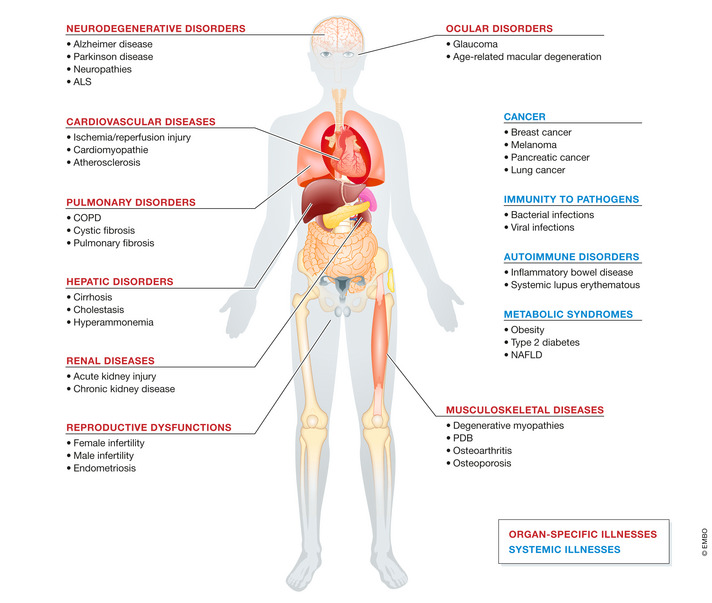
Autophagy is a core molecular pathway for the preservation of cellular and organismal homeostasis. Pharmacological and genetic interventions impairing autophagy responses promote or aggravate disease in a plethora of experimental models. Consistently, mutations in autophagy-related processes cause severe human pathologies. Here, we review and discuss preclinical data linking autophagy dysfunction to the pathogenesis of major human disorders including cancer as well as cardiovascular, neurodegenerative, metabolic, pulmonary, renal, infectious, musculoskeletal, and ocular disorders.
Verified 2026-10-07 · 1 reference not checked yet
Overview
CoChat Summary
TL;DR
This review argues that autophagy dysfunction contributes to the pathogenesis of major human diseases, including cancer, cardiovascular, neurodegenerative, metabolic, pulmonary, renal, infectious, musculoskeletal, and ocular disorders. It synthesizes preclinical genetic mouse-model evidence and human mutation data to propose autophagy modulation as a therapeutic strategy, while emphasizing that effects are highly context-dependent.
Key findings
- Autophagy defects are especially detrimental in post-mitotic cells (e.g., neurons, cardiomyocytes, memory T cells), and autophagic proficiency declines with age, contributing to multiple pathologies of the elderly.
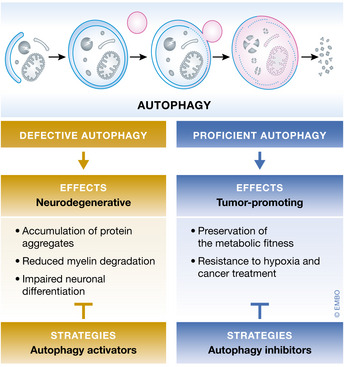
- In cancer, autophagy can be tumor-suppressive in healthy cells but tumor-promoting in established tumors; autophagy inhibition can improve anticancer immunity, e.g., ATG4B dominant-negative PDAC cells show increased MHC class I surface expression and CD8+ T-cell lysis.
- In Paget disease of bone, SQSTM1/p62 mutations are found in approximately 10% of patients; Optn deletion in mice recapitulates PDB-like bone lesions via decreased type I IFN production.
- In cystic fibrosis, TGM2 loss of function increases CFTR function by approximately 40% in a CF mouse model; VPS13D mutations occurred in 3 of 64 children with Leigh syndrome features.
Methods
- Design: narrative review; no primary experiments or new patient data.
- Data/sample: preclinical literature, especially murine genetic models of autophagy deficiency and human disease-associated mutations, organized by disease system (neurodegenerative, cardiovascular, musculoskeletal, pulmonary, kidney, metabolic, liver, cancer, immunity/inflammation, ocular, reproductive).
- Main analysis: qualitative synthesis of cited studies; tables summarize genetic interventions and disease phenotypes. No systematic review, meta-analysis, or quantitative pooling is described.
Limitations
- Stated: conditional knockout mouse models are limited because they are often non-inducible and establish autophagy defects during development, failing to recapitulate acute adult autophagy defects; they also cannot capture non-cell-autonomous and systemic interactions.
- Stated: because autophagy intersects with LAP, LANDO, and RCD, and most findings rely on deletion/downregulation of single autophagy components, phenotypes may arise from non-autophagic pathways; future studies should delete more than one autophagy gene and use models distinguishing canonical from non-canonical autophagy.
- Stated: human clinical studies, ideally at pre-pathological stages, are needed. Evident: as a narrative review, it does not provide a systematic search strategy or quantitative synthesis, so conclusions depend on the selected preclinical literature.
Model-written summary of a shortened version of the paper’s full text (it is longer than we read). Check it against the paper before relying on it.
Integrity signals
Registry
Cites
Statistics
Figures
Verification
Claims the paper makes
115 Valid · 10 Not valid · 431 Not checked · 39 Own results and interpretations
At least one cited source doesn’t support this claim or points to a different paper, and none confirmed it — see the verdicts below.
In the paper
“| IRI | Conditional cardiomyocyte‐specific deletion of mTORC1 | Exacerbated hypoxic injury and cardiomyocyte apoptosis after autophagy restoration | Sciarretta et al (2012) |”
§ Autophagy in major human diseases > Cardiovascular diseases
What the sources say
- Disputedcites Sciarretta et al (2012) matched to “Rheb is a Critical Regulator of Autophagy During Myocardial Ischemia: Pathophysiological Implications in Obesity and Metabolic Syndrome” (2012) sourceExperimental — accuracy not yet measured
The Results section on high-fat-diet-induced obesity reports that inducible cardiac-specific heterozygous mTOR deletion increased autophagy but reduced, rather than exacerbated, myocardial infarct size. The Abstract’s Methods and Results section likewise reports that restoring autophagy through mTORC1 inhibition reduced cardiomyocyte death. The supplied passages do not give page numbers. (LLM, conf=0.91)
Checked by a reasoning model — may be wrong.
plainstates a cause- Asserted: passes — The authors put it forward as true.
- Checkable: passes — It can be checked against evidence.
- Load-bearing: unclear — It is unclear whether the paper’s conclusions depend on it.
- Based: passes — The paper gives a reason why it holds.
- Disputed
At least one cited source doesn’t support this claim or points to a different paper, and none confirmed it — see the verdicts below.
In the paper
“Furthermore, HDAC6‐mediated deacetylation of TFEB, which triggers transcriptional autophagy activation, improves the outcome of DKD in rats (Brijmohan et al, 2018).”
§ Autophagy in major human diseases > Kidney diseases > Diabetic kidney disease
What the sources say
- Disputedcites Brijmohan et al, 2018 matched to “HDAC6 Inhibition Promotes Transcription Factor EB Activation and Is Protective in Experimental Kidney Disease” (2018) sourceExperimental — accuracy not yet measured
The Discussion says HDAC6 deacetylates TFEB and limits its activity, whereas HDAC6 inhibition increases TFEB acetylation and activity and protects subtotally nephrectomized rats. Thus the claimed direction of the mechanism is reversed. The rat model was chronic kidney disease, not diabetic kidney disease. (LLM, conf=0.90)
Checked by a reasoning model — may be wrong.
plainstates a cause- Asserted: passes — The authors put it forward as true.
- Checkable: passes — It can be checked against evidence.
- Load-bearing: unclear — It is unclear whether the paper’s conclusions depend on it.
- Based: passes — The paper gives a reason why it holds.
- Disputed
At least one cited source doesn’t support this claim or points to a different paper, and none confirmed it — see the verdicts below.
In the paper
“| Focal segmental glomerulosclerosis | Nephron‐specific deletion of Atg5 or Atg7 | Development of kidney dysfunction by 2 months and organ failure by 6 months | Kawakami et al (2015) |”
§ Autophagy in major human diseases > Kidney diseases > Diabetic kidney disease
What the sources say
- Disputedcites Kawakami et al (2015) matched to “Deficient Autophagy Results in Mitochondrial Dysfunction and FSGS” (2015) sourceExperimental — accuracy not yet measured
The Results section reports that Atg5-mutant mice had normal kidney function at 2 months, with loss of function evident by 4 months—not dysfunction by 2 months. The Atg7 Results section directly contradicts the claimed organ failure: kidney function was unchanged after 6 months, and the mice survived to 1 year. (LLM, conf=0.92)
Checked by a reasoning model — may be wrong.
plainstates a cause- Asserted: passes — The authors put it forward as true.
- Checkable: passes — It can be checked against evidence.
- Load-bearing: unclear — It is unclear whether the paper’s conclusions depend on it.
- Based: passes — The paper gives a reason why it holds.
- Disputed
Some cited sources support this claim and some don’t — read each source’s verdict below.
In the paper
“The genetic inhibition of autophagy in the parenchymal (Settembre et al, 2013), stromal (e.g., endothelial cells) (Hammoutene et al, 2020), and immune (Ilyas et al, 2016) compartment of the liver sensitizes mice to the development of NAFLD via both cell autonomous (Yang et al, 2010) and non‐cell autonomous effects, linked to aberrant inflammatory reactions (Aghajan et al, 2012).”
§ Autophagy in major human diseases > Metabolic syndromes > Non‐alcoholic fatty liver disease
What the sources say
- Supportedcites Settembre et al, 2013 matched to “TFEB controls cellular lipid metabolism through a starvation-induced autoregulatory loop” (2013) source
For this citation only the parenchymal clause is at stake, and our copy supports it: in 'TFEB regulates lipid breakdown in the liver' the authors generated hepatocyte (parenchymal)-specific Atg7 KO mice by HdAD-APOA1-CRE injection, in which autophagy is blocked, and report increased liver size, raised ALT/AST/ALP, p62 and lipid-droplet accumulation, with TFEB overexpression failing to reduce liver lipid content. The Discussion states plainly that in mice 'in which autophagy was genetically suppressed by deletion of Atg7 in the liver' TFEB overexpression 'did not rescue hepatic steatosis'. The paper does not use the term NAFLD and does not address the stromal/immune compartments, cell-autonomous versus non-cell-autonomous mechanisms or the inflammatory component, but those clauses carry their own citations (Hammoutene, Ilyas, Yang, Aghajan) and are not attributed here. (LLM, conf=0.82)
- Not checked yetcites Hammoutene et al, 2020 matched to “A defect in endothelial autophagy occurs in patients with non-alcoholic steatohepatitis and promotes inflammation and fibrosis” (2020) source
- Misattributedcites Ilyas et al, 2016 matched to “Macrophage autophagy limits acute toxic liver injury in mice through down regulation of interleukin-1β” (2016) sourceExperimental — accuracy not yet measured
Our copy of Ilyas et al. (2016) reports no NAFLD/steatosis experiment: its own genetic model (Atg5Δmye, myeloid/macrophage autophagy knockout) is tested for sensitization to acute toxic liver injury from GalN/LPS (Introduction; Results 'Inhibition of macrophage autophagy magnifies GalN/LPS liver injury'; Abstract Methods). The autophagy-in-immune-compartment/steatosis result is explicitly credited to another work it cites — the Discussion (p. 1 of section) contrasts 'that described in a mouse nonalcoholic steatosis model [16]' where 'inflammasome-independent proinflammatory cytokines such as TNF were increased due to a distortion of macrophage polarization to a more proinflammatory M1 phenotype', and the Introduction says 'Recently we demonstrated that in obesity-induced hepatic steatosis impaired macrophage autophagy increases liver inflammation and injury from LPS ... [16]', which the reference list identifies as Liu et al., Autophagy 2015. The only paracrine/non-cell-autonomous data in our copy (Results 'Inhibition of IL-1β blocks liver injury in knockout mice', conditioned-medium neutrophil activation) are likewise in the GalN/LPS setting, not NAFLD. (LLM, conf=0.80) It matches “Impaired macrophage autophagy increases the immune response in obese mice by promoting proinflammatory macrophage polarization” (2015) instead.
Checked by a reasoning model — may be wrong.
plainstates a cause- Asserted: passes — The authors put it forward as true.
- Checkable: passes — It can be checked against evidence.
- Load-bearing: passes — The paper’s conclusions depend on it.
- Based: passes — The paper gives a reason why it holds.
- Supported
Every source the paper cites for this claim was checked and supports it.
In the paper
“both insufficient and overactive nonselective or selective autophagy responses contribute to neurodegeneration (Chu, 2019).”
§ Autophagy in major human diseases > Neurodegenerative disorders
What the sources say
- Supportedcites Chu, 2019 matched to “Mechanisms of selective autophagy and mitophagy: Implications for neurodegenerative diseases” (2019) source
The ‘Cellular quality control and neurodegeneration’ section links both impaired autophagy and excessive mitochondrial degradation to neurodegenerative disease. The ‘Self-eating in neurodegeneration: future perspectives’ section explicitly implicates dysregulation of autophagy in general and selective forms, and says increased autophagy or mitophagy can be detrimental. Page numbers were not supplied. (LLM, conf=0.92)
plainstates a cause- Asserted: passes — The authors put it forward as true.
- Checkable: passes — It can be checked against evidence.
- Load-bearing: passes — The paper’s conclusions depend on it.
- Based: passes — The paper gives a reason why it holds.
- Supported
417 more claims · 99 with their cited sources checked
Create a free account to see all 595 claims and to verify the 603 references still open.
- It may state two separate claims as one. 163
- Probably not a substantial claim. 7
- The quote only partly states this claim. 4
Claims other papers make about this one
Each is checked against this paper’s own text: does it say what the citing paper says it does?
The source backs part of the claim, not all of it — or backs it for a different population, condition or comparison.
In the citing paper
“In patients, loss-of-function mutations of genes that regulate or execute autophagy have been causally linked to a broad spectrum of cardiovascular, infectious, neurodegenerative, metabolic, musculoskeletal, ocular and pulmonary disorders, many of which resemble to premature aging at the histopathological and functional levels 89,90 .”
From Hallmarks of aging: An expanding universe (2023) · cites this paper as [90]
Experimental — accuracy not yet measuredThe cited source says what the claim attributes to it.
In the citing paper
“Thus, in multiple instances, genetic or pharmacological suppression of autophagy can restrain tumor progression in mouse models.153”
From Meta-hallmarks of aging and cancer (2023) · cites this paper as [153]
The cited source says what the claim attributes to it.
In the citing paper
“Hence, autophagy apparently acts as a tumor-suppressive mechanism, that may involve cell-autonomous processes and cancer immunosurveillance 90 .”
From Hallmarks of aging: An expanding universe (2023) · cites this paper as [90]
In the citing paper
“At the cell-autonomous level, baseline autophagy is required for cellular homeostasis, for instance, by eliminating damaged mitochondria (that can produce DNA-damaging ROS or release other pro-inflammatory molecules) and maintaining cellular adenosine triphosphate (ATP) levels for efficient DNA repair.153”
From Meta-hallmarks of aging and cancer (2023) · cites this paper as [153]
In the citing paper
“Hence, autophagy allows cancer cells to increase their resistance to harsh endogenous conditions (such as hypoxia, scarce nutrients, absent trophic factors, or attack by immune effectors) and anticancer chemotherapeutics, radiotherapy, or targeted therapy.153”
From Meta-hallmarks of aging and cancer (2023) · cites this paper as [153]
Self-check
Percentages, sums and reported differences re-computed from the paper’s own numbers.
Each contradiction between two passages listed here was confirmed by an independent check.
Rated minor: it would not touch a result — a value no result rests on, a p-value that stays on the same side of the significance level, or a conflict that is clerical, resolved elsewhere in the paper, or outside its own findings.
In the paper
§ Autophagy in major human diseases > Ocular diseases
“| Cataract | LEC‐specific deletion of Vps34 | Development of congenital cataract and microphthalmia, through an autophagy‐independent mechanism | Morishita et al (2013) |”
§ Autophagy in major human diseases > Ocular diseases
“A similar effect occurs upon pik3c3/vps34 deletion in LECs, which also leads to age‐dependent cataracts (Morishita et al, 2013).”
Rated minor: it would not touch a result — a value no result rests on, a p-value that stays on the same side of the significance level, or a conflict that is clerical, resolved elsewhere in the paper, or outside its own findings.
In the paper
§ Autophagy in major human diseases > Musculoskeletal disorders > Muscular diseases
“| PDB | Whole‐body knock‐in of mutant p62P392L | Increased osteoclastogenic potential of bone microenvironment, but histologically normal bones | Hiruma et al (2008) |”
§ Autophagy in major human diseases > Musculoskeletal disorders > Bone disorders
“a mouse model carrying the P394L mutation exhibits a PDB‐like bone disorder with focal bone lesions, linked to enhanced autophagy activation in osteoclasts and detrimental bone remodeling (Hiruma et al, 2008).”
Citations
Cites
5 retracted
Items 601–786 of 786
Nam, S. A., Kim, W.-Y., Kim, J. W., Park, S. H., Kim, H. L., Lee, M.-S., Komatsu, M., Ha, H., Lim, J. H., Park, C. W., et al. (2019) · Cell Death & Disease · doi:10.1038/s41419-019-1356-0 · Cited by 92
Pros and Cons of Chaperone-Mediated Autophagy in Cancer Biology
Arias, E., & Cuervo, A. M. (2020) · Trends in Endocrinology & Metabolism · doi:10.1016/j.tem.2019.09.007 · Cited by 92
Self-citationNotomi, S., Ishihara, K., Efstathiou, N. E., Lee, J.-J., Hisatomi, T., Tachibana, T., Konstantinou, E. K., Ueta, T., Murakami, Y., Maidana, D. E., et al. (2019) · Proceedings of the National Academy of Sciences · doi:10.1073/pnas.1906643116 · Cited by 92
Self-citationGenetic heterogeneity in Leigh syndrome: Highlighting treatable and novel genetic causes
Lee, J. S., Yoo, T., Lee, M., Lee, Y., Jeon, E., Kim, S. Y., Lim, B. C., Kim, K. J., Choi, M., & Chae, J. (2020) · Clinical Genetics · doi:10.1111/cge.13713 · Cited by 92
Self-citationCrosstalk between apoptosis and autophagy signaling pathways
(2020) · International Review of Cell and Molecular Biology · doi:10.1016/bs.ircmb.2020.01.003 · Cited by 92
Inhibition of autophagy curtails visual loss in a model of autosomal dominant optic atrophy
Zaninello, M., Palikaras, K., Naon, D., Iwata, K., Herkenne, S., Quintana-Cabrera, R., Semenzato, M., Grespi, F., Ross-Cisneros, F. N., Carelli, V., et al. (2020) · Nature Communications · doi:10.1038/s41467-020-17821-1 · Cited by 92
Self-citationInhibition of monoacylglycerol lipase, an anti-inflammatory and antifibrogenic strategy in the liver
Habib, A., Chokr, D., Wan, J., Hegde, P., Mabire, M., Siebert, M., Ribeiro-Parenti, L., Le Gall, M., Lettéron, P., Pilard, N., et al. (2019) · Gut · doi:10.1136/gutjnl-2018-316137 · Cited by 91
Hiruma, Y., Kurihara, N., Subler, M. A., Zhou, H., Boykin, C. S., Zhang, H., Ishizuka, S., Dempster, D. W., Roodman, G. D., & Windle, J. J. (2008) · Human Molecular Genetics · doi:10.1093/hmg/ddn266 · Cited by 90
van Loosdregt, J., Rossetti, M., Spreafico, R., Moshref, M., Olmer, M., Williams, G. W., Kumar, P., Copeland, D., Pischel, K., Lotz, M., et al. (2016) · European Journal of Immunology · doi:10.1002/eji.201646375 · Cited by 90
Autophagy and microbial pathogenesis
Keller, M. D., Torres, V. J., & Cadwell, K. (2020) · Cell Death and Differentiation · doi:10.1038/s41418-019-0481-8 · Cited by 90
Self-citationMercury, volcanism, and mass extinctions
Bergquist, B. A. (2017) · Proceedings of the National Academy of Sciences · doi:10.1073/pnas.1709070114 · Cited by 90
TLR9 and beclin 1 crosstalk regulates muscle AMPK activation in exercise
Liu, Y., Nguyen, P., Wang, X., Zhao, Y., Meacham, C. E., Zou, Z., Bordieanu, B., Johanns, M., Vertommen, D., Wijshake, T., et al. (2020) · Nature · doi:10.1038/s41586-020-1992-7 · Cited by 89
Vainshtein, A., Grumati, P., Sandri, M., & Bonaldo, P. (2014) · Journal of Molecular Medicine · doi:10.1007/s00109-013-1096-z · Cited by 88
Septins Recognize and Entrap Dividing Bacterial Cells for Delivery to Lysosomes
Krokowski, S., Lobato-Márquez, D., Chastanet, A., Pereira, P. M., Angelis, D., Galea, D., Larrouy-Maumus, G., Henriques, R., Spiliotis, E. T., Carballido-López, R., et al. (2018) · Cell Host & Microbe · doi:10.1016/j.chom.2018.11.005 · Cited by 88
Autophagy supports survival and phototransduction protein levels in rod photoreceptors
Zhou, Z., Doggett, T. A., Sène, A., Apte, R. S., & Ferguson, T. A. (2015) · Cell Death and Differentiation · doi:10.1038/cdd.2014.229 · Cited by 87
Zhao, W., Li, Y., Jia, L., Pan, L., Li, H., & Du, J. (2014) · Free Radical Biology and Medicine · doi:10.1016/j.freeradbiomed.2014.01.002 · Cited by 87
Porciatti, V., Pizzorusso, T., Cenni, M. C., & Maffei, L. (1996) · Proceedings of the National Academy of Sciences · doi:10.1073/pnas.93.25.14955 · Cited by 87
Bhattacharya, A., Parillon, X., Zeng, S., Han, S., & Eissa, N. T. (2014) · Journal of Biological Chemistry · doi:10.1074/jbc.m114.575860 · Cited by 87
Targetome analysis of chaperone-mediated autophagy in cancer cells
Hao, Y., Kacal, M., Ouchida, A. T., Zhang, B., Norberg, E., & Vakifahmetoglu-Norberg, H. (2019) · Autophagy · doi:10.1080/15548627.2019.1586255 · Cited by 87
Autophagy in the cancer-immunity dialogue
Yamazaki, T., Pedro, J. M. B., Galluzzi, L., Kroemer, G., & Pietrocola, F. (2020) · Advanced Drug Delivery Reviews · doi:10.1016/j.addr.2020.12.003 · Cited by 87
Self-citationLévesque, S., Le Naour, J., Pietrocola, F., Paillet, J., Kremer, M., Castoldi, F., Baracco, E. E., Wang, Y., Vacchelli, E., Stoll, G., et al. (2019) · OncoImmunology · doi:10.1080/2162402x.2019.1657375 · Cited by 86
Self-citationCystic fibrosis: A disorder with defective autophagy
Luciani, A., Villella, V. R., Esposito, S., Brunetti-Pierri, N., Medina, D. L., Settembre, C., Gavina, M., Raia, V., Ballabio, A., & Maiuri, L. (2011) · Autophagy · doi:10.4161/auto.7.1.13987 · Cited by 85
Self-citationViral Bcl-2-Mediated Evasion of Autophagy Aids Chronic Infection of γHerpesvirus 68
E, X., Hwang, S., Oh, S., Lee, J.-S., Jeong, J. H., Gwack, Y., Kowalik, T. F., Sun, R., Jung, J. U., & Liang, C. (2009) · PLoS Pathogens · doi:10.1371/journal.ppat.1000609 · Cited by 85
Yang, A., Pantoom, S., & Wu, Y.-W. (2017) · eLife · doi:10.7554/elife.23905 · Cited by 85
Chen, K., Feng, L., Hu, W., Chen, J., Wang, X., Wang, L., & He, Y. (2019) · The FASEB Journal · doi:10.1096/fj.201801749rrr · Cited by 85
Mukhopadhyay, S., Biancur, D. E., Parker, S. J., Yamamoto, K., Banh, R. S., Paulo, J. A., Mancias, J. D., & Kimmelman, A. C. (2021) · Proceedings of the National Academy of Sciences · doi:10.1073/pnas.2021475118 · Cited by 85
Holdgaard, S. G., Cianfanelli, V., Pupo, E., Lambrughi, M., Lubas, M., Nielsen, J. C., Eibes, S., Maiani, E., Harder, L. M., Wesch, N., et al. (2019) · Nature Communications · doi:10.1038/s41467-019-12094-9 · Cited by 84
Self-citationAutophagy Reprograms Alveolar Progenitor Cell Metabolism in Response to Lung Injury
Li, X., Wu, J., Sun, X., Wu, Q., Li, Y., Li, K., Zhang, Q., Li, Y., Abel, E. D., & Chen, H. (2020) · Stem Cell Reports · doi:10.1016/j.stemcr.2020.01.008 · Cited by 84
NRBF2 is involved in the autophagic degradation process of APP-CTFs in Alzheimer disease models
Yang, C., Cai, C.-Z., Song, J.-X., Tan, J.-Q., Durairajan, S. S. K., Iyaswamy, A., Wu, M.-Y., Chen, L.-L., Yue, Z., Li, M., et al. (2017) · Autophagy · doi:10.1080/15548627.2017.1379633 · Cited by 83
Self-citationYang, H., Mei, J., Chang, K., Zhou, W., Huang, L., & Li, M. (2017) · Europe PMC (PubMed Central) · Cited by 83
Type I interferons and endoplasmic reticulum stress in health and disease
(2020) · International Review of Cell and Molecular Biology · doi:10.1016/bs.ircmb.2019.10.004 · Cited by 83
The Crucial Role of Atg5 in Cortical Neurogenesis During Early Brain Development
Lv, X., Jiang, H., Li, B., Liang, Q., Wang, S., Zhao, Q., & Jiao, J. (2014) · Scientific Reports · doi:10.1038/srep06010 · Cited by 82
Alirezaei, M., Flynn, C. T., Wood, M. R., & Whitton, J. L. (2012) · Cell Host & Microbe · doi:10.1016/j.chom.2012.01.014 · Cited by 82
Keller, C. W., Sina, C., Kotur, M. B., Ramelli, G., Mundt, S., Quast, I., Ligeon, L.-A., Weber, P., Becher, B., Münz, C., et al. (2017) · Proceedings of the National Academy of Sciences · doi:10.1073/pnas.1713664114 · Cited by 81
Self-citationMouse Cre Models for the Study of Bone Diseases
Dallas, S. L., Xie, Y., Shiflett, L. A., & Ueki, Y. (2018) · Current Osteoporosis Reports · doi:10.1007/s11914-018-0455-7 · Cited by 81
Targeting Autophagy to Counteract Obesity-Associated Oxidative Stress
Pietrocola, F., & Pedro, J. M. B. (2021) · Antioxidants · doi:10.3390/antiox10010102 · Cited by 81
Self-citationHan, Q., Deng, Y., Chen, S., Chen, R., Yang, M., Zhang, Z., Sun, X., Wang, W., He, Y., Wang, F., et al. (2017) · Scientific Reports · doi:10.1038/s41598-017-04994-x · Cited by 80
Autophagy in metabolic syndrome: breaking the wheel by targeting the renin–angiotensin system
Menikdiwela, K. R., Ramalingam, L., Rasha, F., Wang, S., Dufour, J. M., Kalupahana, N. S., Sunahara, K. K. S., Martins, J. O., & Moustaid-Moussa, N. (2020) · Cell Death & Disease · doi:10.1038/s41419-020-2275-9 · Cited by 80
PPT1 inhibition enhances the antitumor activity of anti–PD-1 antibody in melanoma
Sharma, G., Ojha, R., Noguera-Ortega, E., Rebecca, V. W., Attanasio, J., Liu, S., Piao, S., Lee, J. J., Nicastri, M. C., Harper, S. L., et al. (2020) · JCI Insight · doi:10.1172/jci.insight.133225 · Cited by 80
Self-citationAutophagy in Pulmonary Diseases
Nakahira, K., Pabon Porras, M. A., & Choi, A. M. K. (2016) · American Journal of Respiratory and Critical Care Medicine · doi:10.1164/rccm.201512-2468so · Cited by 78
Self-citationAutophagy in Stem Cell Biology: A Perspective on Stem Cell Self-Renewal and Differentiation
Chen, X., He, Y., & Lu, F. (2018) · Stem Cells International · doi:10.1155/2018/9131397 · Cited by 78
Age-related disease burden as a measure of population ageing
Kehler, D. S. (2019) · The Lancet Public Health · doi:10.1016/s2468-2667(19)30026-x · Cited by 78
Deep Multilayer Brain Proteomics Identifies Molecular Networks in Alzheimer’s Disease Progression
Bai, B., Wang, X., Li, Y., Chen, P.-C., Yu, K., Dey, K. K., Yarbro, J. M., Han, X., Lutz, B. M., Rao, S., et al. (2020) · Neuron · doi:10.1016/j.neuron.2020.04.031 · Cited by 78
Critical Role for IL-18 in Spontaneous Lung Inflammation Caused by Autophagy Deficiency
Abdel Fattah, E., Bhattacharya, A., Herron, A., Safdar, Z., & Eissa, N. T. (2015) · The Journal of Immunology · doi:10.4049/jimmunol.1402277 · Cited by 77
Wan, J., Weiss, E., Ben Mkaddem, S., Mabire, M., Choinier, P.-M., Picq, O., Thibault-Sogorb, T., Hegde, P., Pishvaie, D., Bens, M., et al. (2020) · Science Translational Medicine · doi:10.1126/scitranslmed.aaw8523 · Cited by 77
Self-citationMolecular regulation of autophagy and its implications for metabolic diseases
Ryter, S. W., Koo, J. K., & Choi, A. M. K. (2014) · Current Opinion in Clinical Nutrition & Metabolic Care · doi:10.1097/mco.0000000000000068 · Cited by 76
Self-citationHayashi, K., Taura, M., & Iwasaki, A. (2018) · Science Signaling · doi:10.1126/scisignal.aan4144 · Cited by 76
Tan, J. M. J., Mellouk, N., Osborne, S. E., Ammendolia, D. A., Dyer, D. N., Li, R., Brunen, D., van Rijn, J. M., Huang, J., Czuczman, M. A., et al. (2018) · Nature Microbiology · doi:10.1038/s41564-018-0293-5 · Cited by 76
Self-citationHuntington’s Disease Pathogenesis Is Modified In Vivo by Alfy/Wdfy3 and Selective Macroautophagy
Fox, L. M., Kim, K., Johnson, C. W., Chen, S., Croce, K. R., Victor, M. B., Eenjes, E., Bosco, J. R., Randolph, L. K., Dragatsis, I., et al. (2020) · Neuron · doi:10.1016/j.neuron.2019.12.003 · Cited by 76
Selective Autophagy Receptors in Neuronal Health and Disease
Conway, O., Akpinar, H. A., Rogov, V. V., & Kirkin, V. (2020) · Journal of Molecular Biology · doi:10.1016/j.jmb.2019.10.013 · Cited by 75
FXR-dependent Rubicon induction impairs autophagy in models of human cholestasis
Panzitt, K., Jungwirth, E., Krones, E., Lee, J. M., Pollheimer, M., Thallinger, G. G., Kolb-Lenz, D., Xiao, R., Thorell, A., Trauner, M., et al. (2020) · Journal of Hepatology · doi:10.1016/j.jhep.2020.01.014 · Cited by 75
Tumor cells induce LAMP2a expression in tumor-associated macrophage for cancer progression
Wang, R., Liu, Y., Liu, L., Chen, M., Wang, X., Yang, J., Gong, Y., Ding, B.-S., Wei, Y., & Wei, X. (2019) · EBioMedicine · doi:10.1016/j.ebiom.2019.01.045 · Cited by 74
Wang, Y., Sharma, P., Jefferson, M. A., Zhang, W., Bone, B., Kipar, A., Bitto, D., Coombes, J. L., Pearson, T., Man, A., et al. (2021) · The EMBO Journal · doi:10.15252/embj.2020105543 · Cited by 74
Autophagy in natural and therapy-driven anticancer immunosurveillance
Pietrocola, F., Bravo-San Pedro, J. M., Galluzzi, L., & Kroemer, G. (2017) · Autophagy · doi:10.1080/15548627.2017.1310356 · Cited by 73
Self-citationThe ALS-FTD-linked gene product, C9orf72, regulates neuronal morphogenesis via autophagy
Ho, W. Y., Tai, Y. K., Chang, J.-C., Liang, J., Tyan, S.-H., Chen, S., Guan, J.-L., Zhou, H., Shen, H.-M., Koo, E., et al. (2019) · Autophagy · doi:10.1080/15548627.2019.1569441 · Cited by 73
Impaired retrograde transport by the Dynein/Dynactin complex contributes to Tau-induced toxicity
Butzlaff, M., Hannan, S. B., Karsten, P., Lenz, S., Ng, J., Voßfeldt, H., Prüßing, K., Pflanz, R., Schulz, J. B., Rasse, T., et al. (2015) · Human Molecular Genetics · doi:10.1093/hmg/ddv107 · Cited by 72
The Journey of the Synaptic Autophagosome: A Cell Biological Perspective
Kargbo-Hill, S. E., & Colón-Ramos, D. A. (2020) · Neuron · doi:10.1016/j.neuron.2020.01.018 · Cited by 72
Rovetta, A. I., Peña, D., Hernández Del Pino, R. E., Recalde, G. M., Pellegrini, J., Bigi, F., Musella, R. M., Palmero, D. J., Gutierrez, M., Colombo, M. I., et al. (2014) · Autophagy · doi:10.4161/15548627.2014.981791 · Cited by 71
Self-citationBrijmohan, A. S., Batchu, S. N., Majumder, S., Alghamdi, T. A., Thieme, K., McGaugh, S., Liu, Y., Advani, S. L., Bowskill, B. B., Kabir, M. G., et al. (2018) · Frontiers in Pharmacology · doi:10.3389/fphar.2018.00034 · Cited by 71
Trial watch: dietary interventions for cancer therapy
Lévesque, S., Pol, J. G., Ferrere, G., Galluzzi, L., Zitvogel, L., & Kroemer, G. (2019) · OncoImmunology · doi:10.1080/2162402x.2019.1591878 · Cited by 70
Self-citationVrahnas, C., Blank, M., Dite, T. A., Tatarczuch, L., Ansari, N., Crimeen-Irwin, B., Nguyen, H., Forwood, M. R., Hu, Y., Ikegame, M., et al. (2019) · Nature Communications · doi:10.1038/s41467-019-11373-9 · Cited by 70
Autophagy Protects Cells From HCV-Induced Defects in Lipid Metabolism
Vescovo, T., Romagnoli, A., Perdomo, A. B., Corazzari, M., Ciccosanti, F., Alonzi, T., Nardacci, R., Ippolito, G., Tripodi, M., Garcia–Monzon, C., et al. (2012) · Gastroenterology · doi:10.1053/j.gastro.2011.11.033 · Cited by 69
Self-citationRegulation of cell death in the cardiovascular system
(2020) · International Review of Cell and Molecular Biology · doi:10.1016/bs.ircmb.2019.11.005 · Cited by 69
Hori, I., Otomo, T., Nakashima, M., Miya, F., Negishi, Y., Shiraishi, H., Nonoda, Y., Magara, S., Tohyama, J., Okamoto, N., et al. (2017) · Scientific Reports · doi:10.1038/s41598-017-02840-8 · Cited by 68
Self-citationThe Emerging Functions of LRRK2 and Rab GTPases in the Endolysosomal System
Kuwahara, T., & Iwatsubo, T. (2020) · Frontiers in Neuroscience · doi:10.3389/fnins.2020.00227 · Cited by 68
Xu, Y., Zhang, S., & Zheng, H. (2019) · Autophagy · doi:10.1080/15548627.2018.1532258 · Cited by 67
An intestinal organoid–based platform that recreates susceptibility to T-cell–mediated tissue injury
Matsuzawa, Y., Hine, A. M., Shono, Y., Rudensky, E., Lazrak, A., Yeung, F., Neil, J. A., Yao, X., Chen, Y.-H., Heaney, T., et al. (2020) · Blood · doi:10.1182/blood.2019004116 · Cited by 67
Self-citationLoss of Ambra1 promotes melanoma growth and invasion
Leo, L. D., Bodemeyer, V., Bosisio, F. M., Claps, G., Carretta, M., Rizza, S., Faienza, F., Frías, A., Khan, S., Bordi, M., et al. (2021) · Nature Communications · doi:10.1038/s41467-021-22772-2 · Cited by 67
Self-citationLoss of autophagy promotes murine acetaminophen hepatotoxicity
Igusa, Y., Yamashina, S., Izumi, K., Inami, Y., Fukada, H., Komatsu, M., Tanaka, K., Ikejima, K., & Watanabe, S. (2012) · Journal of Gastroenterology · doi:10.1007/s00535-011-0500-0 · Cited by 66
Cahill, T. J., Leo, V., Kelly, M., Stockenhuber, A., Kennedy, N. W., Bao, L., Cereghetti, G., Harper, A. R., Czibik, G., Lao, C., et al. (2015) · Journal of Biological Chemistry · doi:10.1074/jbc.m115.665695 · Cited by 66
Self-citationChong, C.-M., Ke, M., Tan, Y., Huang, Z., Zhang, K., Ai, N., Ge, W., Qin, D., Lu, J.-H., & Su, H. (2018) · Cell Death & Disease · doi:10.1038/s41419-018-0945-7 · Cited by 66
Springer, M. Z., Poole, L. P., Drake, L. E., Bock-Hughes, A., Boland, M. L., Smith, A. G., Hart, J. A. L., Chourasia, A. H., Liu, I. Z., Bozek, G., et al. (2021) · Autophagy · doi:10.1080/15548627.2021.1877469 · Cited by 66
Self-citationBonhoure, A., Vallentin, A., Martin, M., Senff‐Ribeiro, A., Amson, R. B., Telerman, A., & Vidal, M. (2017) · European Journal of Cell Biology · doi:10.1016/j.ejcb.2016.12.002 · Cited by 65
Chalasani, M. L. S., Kumari, A., Radha, V., & Swarup, G. (2014) · PLoS ONE · doi:10.1371/journal.pone.0095758 · Cited by 64
Autophagy: A key pathway of TNF-induced inflammatory bone loss
Lin, N.-Y., Stefanica, A., & Distler, J. H. W. (2013) · Autophagy · doi:10.4161/auto.25467 · Cited by 64
Autophagy and immunological aberrations in systemic lupus erythematosus
Qi, Y., Zhou, X., & Zhang, H. (2019) · European Journal of Immunology · doi:10.1002/eji.201847679 · Cited by 64
Comprehensive autophagy evaluation in cardiac disease models
Kaludercic, N., Maiuri, M. C., Kaushik, S., Fernández, Á. F., de Bruijn, J., Castoldi, F., Chen, Y., Ito, J., Mukai, R., Murakawa, T., et al. (2020) · Cardiovascular Research · doi:10.1093/cvr/cvz233 · Cited by 64
Self-citationDeficit in PINK1/PARKIN-mediated mitochondrial autophagy at late stages of dystrophic cardiomyopathy
Kang, C., Badr, M. A., Kyrychenko, V., Eskelinen, E., & Shirokova, N. (2017) · Cardiovascular Research · doi:10.1093/cvr/cvx201 · Cited by 63
Self-citationMutation in FAM134B causing severe hereditary sensory neuropathy: Figure 1
Murphy, S. M., Davidson, G. L., Brandner, S., Houlden, H., & Reilly, M. M. (2012) · Journal of Neurology, Neurosurgery & Psychiatry · doi:10.1136/jnnp.2010.228965 · Cited by 62
Mansilla Pareja, M. E., Bongiovanni, A., Lafont, F., & Colombo, M. I. (2017) · Frontiers in Cellular and Infection Microbiology · doi:10.3389/fcimb.2017.00112 · Cited by 62
Self-citationMallucci, G. R., Klenerman, D., & Rubinsztein, D. C. (2020) · Annual Review of Cell and Developmental Biology · doi:10.1146/annurev-cellbio-040320-120625 · Cited by 62
Self-citationEnhancement of hepatic autophagy increases ureagenesis and protects against hyperammonemia
Soria, L. R., Allegri, G., Melck, D., Pastore, N., Annunziata, P., Paris, D., Polishchuk, E., Nusco, E., Thöny, B., Motta, A., et al. (2018) · Proceedings of the National Academy of Sciences · doi:10.1073/pnas.1714670115 · Cited by 61
Self-citationA pathogenic role for cystic fibrosis transmembrane conductance regulator in celiac disease
Villella, V. R., Venerando, A., Cozza, G., Esposito, S., Ferrari, E., Monzani, R., Spinella, M. C., Oikonomou, V., Renga, G., Tosco, A., et al. (2018) · The EMBO Journal · doi:10.15252/embj.2018100101 · Cited by 61
Self-citationCathepsin D in Podocytes Is Important in the Pathogenesis of Proteinuria and CKD
Yamamoto-Nonaka, K., Koike, M., Asanuma, K., Takagi, M., Oliva Trejo, J. A., Seki, T., Hidaka, T., Ichimura, K., Sakai, T., Tada, N., et al. (2016) · Journal of the American Society of Nephrology · doi:10.1681/asn.2015040366 · Cited by 59
Lamp2a is required for tumor growth and promotes tumor recurrence of hepatocellular carcinoma
Ding, Z., Fu, X., Shi, Y., Zhou, J., Peng, Y., Liu, W., Shi, G., Gao, Q., Wang, X., Song, K., et al. (2016) · International Journal of Oncology · doi:10.3892/ijo.2016.3754 · Cited by 59
Ambra1knockdown in zebrafish leads to incomplete development due to severe defects in organogenesis
Benato, F., Skobo, T., Gioacchini, G., Moro, I., Ciccosanti, F., Piacentini, M., Fimia, G. M., Carnevali, O., & Valle, L. D. (2013) · Autophagy · doi:10.4161/auto.23278 · Cited by 58
Self-citationCancer Immunosurveillance by T Cells
(2019) · International Review of Cell and Molecular Biology · doi:10.1016/bs.ircmb.2018.08.001 · Cited by 58
Recent progress in the role of autophagy in neurological diseases
Meng, T., Lin, S., Zhuang, H., Huang, H., He, Z., Hu, Y., Gong, Q., & Feng, D. (2019) · Cell Stress · doi:10.15698/cst2019.05.186 · Cited by 58
Role of Wdr45b in maintaining neural autophagy and cognitive function
Ji, C., Zhao, H., Li, D., Sun, H., Hao, J., Chen, R., Wang, X., Zhang, H., & Zhao, Y. G. (2019) · Autophagy · doi:10.1080/15548627.2019.1632621 · Cited by 58
Garg, A. D., Dudek, A. M., & Agostinis, P. (2013) · Cell Death & Disease · doi:10.1038/cddis.2013.372 · Cited by 57
Taneike, M., Nishida, K., Omiya, S., Zarrinpashneh, E., Misaka, T., Kitazume-Taneike, R., Austin, R., Takaoka, M., Yamaguchi, O., Gambello, M. J., et al. (2016) · PLOS ONE · doi:10.1371/journal.pone.0152628 · Cited by 57
Genetic aberrations in macroautophagy genes leading to diseases
van Beek, N., Klionsky, D. J., & Reggiori, F. (2018) · Biochimica et Biophysica Acta (BBA) - Molecular Cell Research · doi:10.1016/j.bbamcr.2018.03.002 · Cited by 57
Self-citationAli, A. B., Nin, D. S., Tam, J., & Khan, M. (2011) · PLoS ONE · doi:10.1371/journal.pone.0025268 · Cited by 56
Novel Insights into the Anti-Aging Role of Mitophagy
(2018) · International Review of Cell and Molecular Biology · doi:10.1016/bs.ircmb.2018.05.005 · Cited by 56
Self-citationWipi3 is essential for alternative autophagy and its loss causes neurodegeneration
Yamaguchi, H., Honda, S., Torii, S., Shimizu, K., Katoh, K., Miyake, K., Miyake, N., Fujikake, N., Sakurai, H. T., Arakawa, S., et al. (2020) · Nature Communications · doi:10.1038/s41467-020-18892-w · Cited by 56
Gstrein, T., Edwards, A., Přistoupilová, A., Leca, I., Breuss, M., Pilat-Carotta, S., Hansen, A. H., Tripathy, R., Traunbauer, A. K., Hochstoeger, T., et al. (2018) · Nature Neuroscience · doi:10.1038/s41593-017-0053-5 · Cited by 55
Kasetti, R. B., Maddineni, P., Kiehlbauch, C. C., Patil, S., Searby, C. C., Levine, B., Sheffield, V. C., & Zode, G. S. (2021) · JCI Insight · doi:10.1172/jci.insight.143359 · Cited by 55
Deng, Z., Li, X., Ramírez, M. B., Purtell, K., Choi, I., Lu, J., Yu, Q., & Yue, Z. (2021) · Proceedings of the National Academy of Sciences · doi:10.1073/pnas.2020215118 · Cited by 55
Self-citationHispolon promotes MDM2 downregulation through chaperone-mediated autophagy
Lu, T., Huang, G., Wang, H.-J., Chen, J.-L., Hsu, H., & Lu, T. (2010) · Biochemical and Biophysical Research Communications · doi:10.1016/j.bbrc.2010.06.004 · Cited by 54
The role of autophagy in brown and beige adipose tissue plasticity
Cairó, M., & Villarroya, J. (2020) · Journal of Physiology and Biochemistry · doi:10.1007/s13105-019-00708-1 · Cited by 53
Garg, A. D., Krysko, D. V., Vandenabeele, P., & Agostinis, P. (2016) · Cell Death and Disease · doi:10.1038/cddis.2015.411 · Cited by 52
Thangaraj, A., Sil, S., Tripathi, A., Chivero, E. T., Periyasamy, P., & Buch, S. J. (2020) · International review of cytology · doi:10.1016/bs.ircmb.2019.11.001 · Cited by 52
Obesity, autophagy and the pathogenesis of liver and pancreatic cancers
Aghajan, M., Li, N., & Karin, M. (2012) · Journal of Gastroenterology and Hepatology · doi:10.1111/j.1440-1746.2011.07008.x · Cited by 51
The interplay of autophagy and non-apoptotic cell death pathways
(2020) · International Review of Cell and Molecular Biology · doi:10.1016/bs.ircmb.2019.12.004 · Cited by 50
Antonioli, M., Pagni, B., Vescovo, T., Ellis, R., Cosway, B., Rollo, F., Bordoni, V., Agrati, C., Labus, M. B., Covello, R., et al. (2020) · Autophagy · doi:10.1080/15548627.2020.1847444 · Cited by 50
Self-citationHeimer, G., Oz-Levi, D., Eyal, E., Edvardson, S., Nissenkorn, A., Ruzzo, E. K., Szeinberg, A., Maayan, C., Mai-Zahav, M., Efrati, O., et al. (2016) · European Journal of Paediatric Neurology · doi:10.1016/j.ejpn.2015.10.003 · Cited by 49
Castets, P., Frank, S., Sinnreich, M., & Rüegg, M. A. (2016) · Journal of Neuromuscular Diseases · doi:10.3233/jnd-160153 · Cited by 49
Hirt, J., Porter, K., Dixon, A., McKinnon, S., & Liton, P. B. (2018) · Cell Death Discovery · doi:10.1038/s41420-018-0077-y · Cited by 49
Wignes, J. A., Goldman, J. W., Weihl, C. C., Bartley, M. G., & Andley, U. P. (2013) · Experimental Eye Research · doi:10.1016/j.exer.2013.06.026 · Cited by 48
A disease causing ATLASTIN 3 mutation affects multiple endoplasmic reticulum-related pathways
Behrendt, L., Kurth, I., & Kaether, C. (2019) · Cellular and Molecular Life Sciences · doi:10.1007/s00018-019-03010-x · Cited by 48
A mutation in the major autophagy gene, WIPI2, associated with global developmental abnormalities
Jelani, M., Dooley, H. C., Gubas, A., Mohamoud, H. S. A., Khan, M. T. M., Ali, Z., Kang, C., Rahim, F., Jan, A., Vadgama, N., et al. (2019) · Brain · doi:10.1093/brain/awz075 · Cited by 48
Self-citationHDAC inhibition ameliorates cone survival in retinitis pigmentosa mice
Samardzija, M., Corna, A., Gomez-Sintes, R., Jarboui, M. A., Armento, A., Roger, J. E., Petridou, E., Haq, W., Paquet-Durand, F., Zrenner, E., et al. (2021) · Cell Death & Differentiation · doi:10.1038/s41418-020-00653-3 · Cited by 48
Self-citationAbebe, T., Mahadevan, J., Bogachus, L., Hahn, S., Black, M., Oseid, E., Urano, F., Cirulli, V., & Robertson, R. P. (2017) · JCI Insight · doi:10.1172/jci.insight.92854 · Cited by 47
The role of autophagy in axonal degeneration of the optic nerve
Koch, J. C., & Lingor, P. (2016) · Experimental Eye Research · doi:10.1016/j.exer.2015.08.016 · Cited by 46
TG2 regulates the heat‐shock response by the post‐translational modification of HSF1
Rossin, F., Villella, V. R., D'Eletto, M., Farrace, M. G., Esposito, S., Ferrari, E., Monzani, R., Occhigrossi, L., Pagliarini, V., Sette, C., et al. (2018) · The EMBO Reports · doi:10.15252/embr.201745067 · Cited by 46
Self-citationSelf-Eating for Muscle Fitness: Autophagy in the Control of Energy Metabolism
Sebastián, D., & Zorzano, A. (2020) · Developmental Cell · doi:10.1016/j.devcel.2020.06.030 · Cited by 46
Tateosian, N. L., Pellegrini, J. M., Amiano, N. O., Rolandelli, A., Casco, N., Palmero, D. J., Colombo, M. I., & García, V. E. (2017) · Autophagy · doi:10.1080/15548627.2017.1320636 · Cited by 45
Self-citationWang, K. Z. Q., Steer, E., Otero, P. A., Bateman, N. W., Cheng, M. H., Scott, A. L., Wu, C., Bahar, I., Shih, Y.-T., Hsueh, Y.-P., et al. (2018) · eneuro · doi:10.1523/eneuro.0466-18.2018 · Cited by 45
Self-citationmTORC1/2 and rapamycin in female Han:SPRD rats with polycystic kidney disease
Belibi, F., Ravichandran, K., Zafar, I., He, Z., & Edelstein, C. L. (2011) · American Journal of Physiology-Renal Physiology · doi:10.1152/ajprenal.00129.2010 · Cited by 44
Role of autophagy in the regulation of adipose tissue biology
Romero, M., & Zorzano, A. (2019) · Cell Cycle · doi:10.1080/15384101.2019.1624110 · Cited by 44
Interplay between dendritic cells and cancer cells
(2019) · International Review of Cell and Molecular Biology · doi:10.1016/bs.ircmb.2019.07.008 · Cited by 44
Metabolic effects of RUBCN/Rubicon deficiency in kidney proximal tubular epithelial cells
Matsuda, J., Takahashi, A., Takabatake, Y., Sakai, S., Minami, S., Yamamoto, T., Fujimura, R., Namba-Hamano, T., Yonishi, H., Nakamura, J., et al. (2020) · Autophagy · doi:10.1080/15548627.2020.1712107 · Cited by 44
Self-citationAge related retinal Ganglion cell susceptibility in context of autophagy deficiency
Bell, K. C., Rosignol, I., Sierra‐Filardi, E., Rodríguez‐Muela, N., Schmelter, C., Cecconi, F., Grus, F. H., & Boya, P. (2020) · Cell Death Discovery · doi:10.1038/s41420-020-0257-4 · Cited by 44
Self-citationJoseph, A., Moriceau, S., Sica, V., Anagnostopoulos, G., Pol, J., Martins, I., Lafarge, A., Maiuri, M. C., Leboyer, M., Loftus, J., et al. (2020) · Cell Death & Disease · doi:10.1038/s41419-020-2716-5 · Cited by 44
Self-citationNeutrophil autophagy during human active tuberculosis is modulated by SLAMF1
Pellegrini, J. M., Sabbione, F., Morelli, M. P., Tateosian, N. L., Castello, F. A., Amiano, N. O., Palmero, D., Levi, A., Ciallella, L. M., Colombo, M. I., et al. (2020) · Autophagy · doi:10.1080/15548627.2020.1825273 · Cited by 44
Self-citationMolecular Mechanisms of Noncanonical Autophagy
Dupont, N., Nascimbeni, A. C., Morel, É., & Codogno, P. (2016) · International review of cytology · doi:10.1016/bs.ircmb.2016.08.001 · Cited by 43
Self-citationSuleiman, J., Allingham‐Hawkins, D., Hashem, M., Shamseldin, H. E., Alkuraya, F. S., & El‐Hattab, A. W. (2018) · Clinical Genetics · doi:10.1111/cge.13054 · Cited by 43
Sun, Y., Li, T. Y., Song, L., Zhang, C., Li, J., Lin, Z., Lin, S., & Lin, S. (2018) · Hepatology · doi:10.1002/hep.29759 · Cited by 43
Wen, Y., Zhang, J., Kapupara, K., & Tsai, R. (2019) · Experimental & Molecular Medicine · doi:10.1038/s12276-019-0298-z · Cited by 43
Beffy, P., Del Carratore, R., Masini, M., Furling, D., Puymirat, J., Masiello, P., & Simili, M. (2010) · The International Journal of Biochemistry & Cell Biology · doi:10.1016/j.biocel.2010.08.010 · Cited by 42
In Vivo Remodeling of Altered Autophagy-Lysosomal Pathway by a Phosphopeptide in Lupus
Wang, F., Tasset, I., Cuervo, A. M., & Muller, S. (2020) · Cells · doi:10.3390/cells9102328 · Cited by 42
Self-citationWong, S.-W., Huang, B.-W., Hu, X., Ho Kim, E., Kolb, J. P., Padilla, R. J., Xue, P., Wang, L., Oguin, T. H., Miguez, P. A., et al. (2020) · Cell Death & Differentiation · doi:10.1038/s41418-019-0341-6 · Cited by 42
Self-citationAutophagy supports color vision
Zhou, Z., Vinberg, F., Schottler, F., Doggett, T. A., Kefalov, V. J., & Ferguson, T. A. (2015) · Autophagy · doi:10.1080/15548627.2015.1084456 · Cited by 40
A novel Atg5-shRNA mouse model enables temporal control of Autophagy in vivo
Cassidy, L. D., Young, A. R., Pérez-Mancera, P. A., Nimmervoll, B., Jaulim, A., Chen, H.-C., McIntyre, D. J. O., Brais, R., Ricketts, T., Pacey, S., et al. (2018) · Autophagy · doi:10.1080/15548627.2018.1458172 · Cited by 40
Self-citationKrols, M., Asselbergh, B., De Rycke, R., De Winter, V., Seyer, A., Müller, F.-J., Kurth, I., Bultynck, G., Timmerman, V., & Janssens, S. (2019) · Human Molecular Genetics · doi:10.1093/hmg/ddy352 · Cited by 40
The intralumenal fragment pathway mediates ESCRT-independent surface transporter down-regulation
McNally, E. K., & Brett, C. L. (2018) · Nature Communications · doi:10.1038/s41467-018-07734-5 · Cited by 40
Weindel, C. G., Richey, L. J., Mehta, A. J., Shah, M., & Huber, B. T. (2017) · The Journal of Immunology · doi:10.4049/jimmunol.1601307 · Cited by 39
MicroRNA-21 aggravates chronic obstructive pulmonary disease by promoting autophagy
Zeng, Z., He, S., Lu, J., Liu, C., Lin, H., Xu, C., Xie, L., & Sun, S. (2018) · Experimental Lung Research · doi:10.1080/01902148.2018.1439548 · Cited by 39
Autophagy-induced regression of hyaloid vessels in early ocular development
Kim, J. H., Kim, J. H., Yu, Y. S., Mun, J. Y., & Kim, K.-W. (2010) · Autophagy · doi:10.4161/auto.6.7.13306 · Cited by 38
Autophagy in the Aging and Experimental Ocular Hypertensive Mouse Model
Nettesheim, A., Dixon, A., Shim, M. S., Coyne, A., Walsh, M. M., & Liton, P. B. (2020) · Investigative Ophthalmology & Visual Science · doi:10.1167/iovs.61.10.31 · Cited by 38
Retromer regulates the lysosomal clearance of MAPT/tau
Carosi, J. M., Hein, L. K., van den Hurk, M., Adams, R., Milky, B., Singh, S., Bardy, C., Denton, D., Kumar, S., & Sargeant, T. J. (2021) · Autophagy · doi:10.1080/15548627.2020.1821545 · Cited by 38
Self-citationSuzuki, J., Nakajima, W., Suzuki, H., Asano, Y., & Tanaka, N. (2016) · Biochemical and Biophysical Research Communications · doi:10.1016/j.bbrc.2016.12.037 · Cited by 37
Mehta, S. L., Lin, Y., Chen, W., Yu, F., Cao, L., He, Q., Chan, P. H., & Li, P. A. (2011) · Translational Stroke Research · doi:10.1007/s12975-010-0027-3 · Cited by 36
Grieco, G., Janssens, V., Gaide Chevronnay, H. P., N’Kuli, F., Van Der Smissen, P., Wang, T., Shan, J., Vainio, S., Bilanges, B., Jouret, F., et al. (2018) · Scientific Reports · doi:10.1038/s41598-018-32389-z · Cited by 36
Liu, W., Zhuang, J., Jiang, Y., Sun, J. F., Prinz, R. A., Sun, J., Jiao, X., & Xu, X. (2019) · Cellular Microbiology · doi:10.1111/cmi.13095 · Cited by 36
Lysosomal targeting of autophagosomes by the TECPR domain of TECPR2
Fraiberg, M., Tamim-Yecheskel, B.-C., Kokabi, K., Subic, N., Heimer, G., Eck, F., Nalbach, K., Behrends, C., Ben‐Zeev, B., Shatz, O., et al. (2020) · Autophagy · doi:10.1080/15548627.2020.1852727 · Cited by 36
Self-citationShen, J. L., Fortier, T. M., Zhao, Y. G., Wang, R., Burmeister, M., & Baehrecke, E. H. (2021) · Current Biology · doi:10.1016/j.cub.2021.04.062 · Cited by 36
Self-citationThe versatile plasmacytoid dendritic cell: Function, heterogeneity, and plasticity
(2019) · International Review of Cell and Molecular Biology · doi:10.1016/bs.ircmb.2019.10.002 · Cited by 35
Beclin‐1‐mediated activation of autophagy improves proximal and distal urea cycle disorders
Soria, L. R., Gurung, S., Sabbata, G. D., Perocheau, D. P. B., Angelis, A. D., Bruno, G., Polishchuk, E., Paris, D., Cuomo, P., Motta, A., et al. (2020) · EMBO Molecular Medicine · doi:10.15252/emmm.202013158 · Cited by 35
Crosstalk of Autophagy and the Secretory Pathway and Its Role in Diseases
Zahoor, M., & Farhan, H. (2018) · International review of cytology · doi:10.1016/bs.ircmb.2017.12.004 · Cited by 34
Autophagy-induced regression of hyaloid vessels in early ocular development.
Kim, J. H., Kim, J. H., Yu, Y. S., et al. (2010) · PubMed · doi:10.4161/auto.6.8.13306 · Cited by 33
Yagi, T., Ito, D., & Suzuki, N. (2016) · Journal of Neuropathology & Experimental Neurology · doi:10.1093/jnen/nlw009 · Cited by 33
Lv, X., Liu, S., Li, K., Cui, B., Liu, C., & Hu, Z. (2017) · Oncotarget · doi:10.18632/oncotarget.20353 · Cited by 33
Systemic autophagy in the therapeutic response to anthracycline-based chemotherapy
Castoldi, F., Vacchelli, E., Zitvogel, L., Maiuri, M. C., Pietrocola, F., & Kroemer, G. (2019) · OncoImmunology · doi:10.1080/2162402x.2018.1498285 · Cited by 33
Self-citationThe Proton-Coupled Monocarboxylate Transporter Hermes Is Necessary for Autophagy during Cell Death
Velentzas, P. D., Zhang, L., Das, G., Chang, T.-K., Nelson, C., Kobertz, W. R., & Baehrecke, E. H. (2018) · Developmental Cell · doi:10.1016/j.devcel.2018.09.015 · Cited by 31
Self-citationMolecular mechanisms of selective autophagy in Drosophila
Gohel, R., Kournoutis, A., Petridi, S., & Nezis, I. P. (2020) · International review of cytology · doi:10.1016/bs.ircmb.2019.08.003 · Cited by 30
Firing up the cold tumors by targeting Vps34
Janji, B., Hasmim, M., Parpal, S., Berchem, G., & Noman, M. Z. (2020) · OncoImmunology · doi:10.1080/2162402x.2020.1809936 · Cited by 30
Lee, S. H., Shim, K. S., Kim, C. Y., & Park, T. K. (2021) · Scientific Reports · doi:10.1038/s41598-021-85181-x · Cited by 29
Autophagy suppresses the pathogenic immune response to dietary antigens in cystic fibrosis
Villella, V. R., Esposito, S., Ferrari, E., Monzani, R., Tosco, A., Rossin, F., Castaldo, A., Silano, M., Marseglia, G. L., Romani, L. R., et al. (2019) · Cell Death and Disease · doi:10.1038/s41419-019-1500-x · Cited by 28
Self-citationTamim-Yecheskel, B.-C., Fraiberg, M., Kokabi, K., Freud, S., Shatz, O., Marvaldi, L., Subic, N., Brenner, O. J., Tsoory, M., Eilam‐Altstadter, R., et al. (2020) · Autophagy · doi:10.1080/15548627.2020.1852724 · Cited by 28
Self-citationCellular Senescence in Chronic Obstructive Pulmonary Disease: Multifaceted and Multifunctional
Antony, V. B., & Thannickal, V. J. (2018) · American Journal of Respiratory Cell and Molecular Biology · doi:10.1165/rcmb.2018-0061ed · Cited by 27
Wong, S., Huang, B., Hu, X., Kim, E. H., Kolb, J. P., Padilla, R. J., Xue, P., Wang, L., Oguin, T. H., Miguez, P. A., et al. (2020) · Cell Death and Differentiation · doi:10.1038/s41418-020-0586-0 · Cited by 27
Self-citationAnti-tumor immunity influences cancer cell reliance upon ATG7
Arensman, M. D., Yang, X. S., Zhong, W., Bisulco, S., Upeslacis, E., Rosfjord, E. C., Deng, S., Abraham, R. T., & Eng, C. H. (2020) · OncoImmunology · doi:10.1080/2162402x.2020.1800162 · Cited by 27
Junín Virus Promotes Autophagy To Facilitate the Virus Life Cycle
Roldán, J. S., Candurra, N. A., Colombo, M. I., & Delgui, L. R. (2019) · Journal of Virology · doi:10.1128/jvi.02307-18 · Cited by 25
Self-citationTFG binds LC3C to regulate ULK1 localization and autophagosome formation
Carinci, M., Testa, B., Bordi, M., Milletti, G., Bonora, M., Antonucci, L., Ferraina, C., Carro, M., Kumar, M., Ceglie, D., et al. (2021) · The EMBO Journal · doi:10.15252/embj.2019103563 · Cited by 25
Self-citationTrejo, J. A. O., Asanuma, K., Kim, E., Takagi, M., Nonaka, K., Hidaka, T., Komatsu, M., Tada, N., Ueno, T., & Tomino, Y. (2014) · Biochemical and Biophysical Research Communications · doi:10.1016/j.bbrc.2014.03.088 · Cited by 24
The many-faced role of autophagy in liver diseases
Gracia‐Sancho, J., & Guixé‐Muntet, S. (2018) · Journal of Hepatology · doi:10.1016/j.jhep.2017.09.015 · Cited by 24
Redox signaling in the pathogenesis of human disease and the regulatory role of autophagy
Pervaiz, S., Bellot, G. L., Lemoine, A., & Brenner, C. (2020) · International review of cytology · doi:10.1016/bs.ircmb.2020.03.002 · Cited by 24
Manipulation of selective macroautophagy by pathogens at a glance
Cong, Y., Dinesh Kumar, N., Mauthe, M., Verlhac, P., & Reggiori, F. (2020) · Journal of Cell Science · doi:10.1242/jcs.240440 · Cited by 23
Self-citationTang, N., Zhao, H., Zhang, H., & Dong, Y. (2019) · Journal of Cellular Physiology · doi:10.1002/jcp.27304 · Cited by 21
ATL3 gene mutation in a Chinese family with hereditary sensory neuropathy type 1F
Xu, H., Zhang, C., Cao, L. H., Song, J., Xu, X., Zhang, B., Chen, B., & Zhao, G. (2019) · Journal of the Peripheral Nervous System · doi:10.1111/jns.12309 · Cited by 20
Loss of autophagy affects melanoma development in a manner dependent on PTEN status
Rosenfeldt, M. T., O’Prey, J., Lindsay, C. R., Nixon, C., Roth, S., Sansom, O. J., & Ryan, K. M. (2021) · Cell Death and Differentiation · doi:10.1038/s41418-021-00746-7 · Cited by 17
Self-citationErratum: Autophagy as a new therapeutic target in Duchenne muscular dystrophy
De Palma, C., Morisi, F., Cheli, S., Pambianco, S., Cappello, V, Vezzoli, M., Rovere-Querini, P., Moggio, M., Ripolone, M., Francolini, M., et al. (2014) · Cell Death & Disease · doi:10.1038/cddis.2014.312 · Cited by 16
Retromer dysfunction at the nexus of tauopathies
Carosi, J. M., Denton, D., Kumar, S., & Sargeant, T. J. (2021) · Cell Death & Differentiation · doi:10.1038/s41418-020-00727-2 · Cited by 16
Self-citationMitophagy turns beige adipocytes white
Wrighton, K. H. (2016) · Nature Reviews Molecular Cell Biology · doi:10.1038/nrm.2016.125 · Cited by 15
Caloric restriction promotes the stemness and antitumor activity of T lymphocytes
Pietrocola, F., & Kroemer, G. (2019) · OncoImmunology · doi:10.1080/2162402x.2019.1616153 · Cited by 15
Self-citationBalke, D., Tatenhorst, L., Dambeck, V., Ribas, V. T., Vahsen, B. F., Michel, U., Bähr, M., & Lingor, P. (2020) · Molecular Neurobiology · doi:10.1007/s12035-019-01744-0 · Cited by 14
Surgical procedures suppress autophagic flux in the kidney
Brown, C. N., Atwood, D. J., Pokhrel, D., Holditch, S. J., Altmann, C. J., Skrypnyk, N. I., Bourne, J. N., Klawitter, J., Blaine, J. T., Faubel, S. G., et al. (2021) · Cell Death and Disease · doi:10.1038/s41419-021-03518-w · Cited by 14
Ando, S., Hashida, N., Yamashita, D., Kawabata, T., Asao, K., Kawasaki, S., Sakurai, K., Yoshimori, T., & Nishida, K. (2021) · Biochemical and Biophysical Research Communications · doi:10.1016/j.bbrc.2021.02.148 · Cited by 14
Self-citationReviving the role of MET in liver cancer therapy and vaccination: an autophagic perspective
Huang, X., Zhang, G., Bai, X., & Liang, T. (2020) · OncoImmunology · doi:10.1080/2162402x.2020.1818438 · Cited by 13
Gaurón, M. C., Newton, A. C., & Colombo, M. I. (2021) · Frontiers in Immunology · doi:10.3389/fimmu.2021.662987 · Cited by 13
Self-citationLiu, P., Zhao, L., Ferrere, G., Alves-Costa-Silva, C., Ly, P., Wu, Q., Tian, A.-L., Derosa, L., Zitvogel, L., Kepp, O., et al. (2020) · OncoImmunology · doi:10.1080/2162402x.2020.1789284 · Cited by 10
Self-citationExtending the mode of action of triethylenetetramine (trientine): Autophagy besides copper chelation
Pietrocola, F., Castoldi, F., Zischka, H., & Kroemer, G. (2020) · Journal of Hepatology · doi:10.1016/j.jhep.2020.05.046 · Cited by 8
Self-citationNew emerging roles of Polycystin-2 in the regulation of autophagy
Peña‐Oyarzún, D., Batista‐González, A., Kretschmar, C., Burgos, P., Lavandero, S., Morselli, E., & Criollo, A. (2020) · International review of cytology · doi:10.1016/bs.ircmb.2020.02.006 · Cited by 7
Mauthe, M., & Reggiori, F. (2017) · Microbial Cell · doi:10.15698/mic2017.01.550 · Cited by 3
Self-citationLópez Giuliani, A. C., Hernández, E., Tohmé, M. J., Taisne, C., Roldán, J. S., García Samartino, C., Lussignol, M., Codogno, P., Colombo, M. I., Esclatine, A., et al. (2020) · Frontiers in Cellular and Infection Microbiology · doi:10.3389/fcimb.2020.00474 · Cited by 3
Self-citation
Cited by
Hallmarks of aging: An expanding universe
López-Otín, C., Blasco, M. A., Partridge, L., Serrano, M., & Kroemer, G. (2023) · Cell · doi:10.1016/j.cell.2022.11.001 · Cited by 6,549
Self-citationAutophagy and autophagy-related pathways in cancer
Debnath, J., Gammoh, N., & Ryan, K. M. (2023) · Nature Reviews Molecular Cell Biology · doi:10.1038/s41580-023-00585-z · Cited by 1,403
Self-citationImmunogenic cell stress and death
Kroemer, G., Galassi, C., Zitvogel, L., & Galluzzi, L. (2022) · Nature Immunology · doi:10.1038/s41590-022-01132-2 · Cited by 1,353
Self-citationMitochondrial control of inflammation
Marchi, S., Guilbaud, E., Tait, S. W. G., Yamazaki, T., & Galluzzi, L. (2023) · Nature Reviews Immunology · doi:10.1038/s41577-022-00760-x · Cited by 1,027
Self-citationTargeting p53 pathways: mechanisms, structures, and advances in therapy
Wang, H., Guo, M., Wei, H., & Chen, Y. (2023) · Signal Transduction and Targeted Therapy · doi:10.1038/s41392-023-01347-1 · Cited by 1,016
“166,167 p53 can directly activate damage-regulated autophagy regulators and induce autophagy.”
Background
Metadata
- Authors
- Klionsky, D. J., Petroni, G., Amaravadi, R. K., Baehrecke, E. H., Ballabio, A., Boya, P., Bravo‐San Pedro, J. M., Cadwell, K., Cecconi, F., Choi, A. M. K., Choi, M. E., Chu, C. T., Codogno, P., Colombo, M. I., Cuervo, A. M., Deretic, V., Dikic, I., Elazar, Z., Eskelinen, E., Fimia, G. M., Gewirtz, D. A., Green, D. R., Hansen, M., Jäättelä, M., Johansen, T., Juhász, G., Karantza, V., Kraft, C., Kroemer, G., Ktistakis, N. T., Kumar, S., Lopez‐Otin, C., Macleod, K. F., Madeo, F., Martinez, J., Meléndez, A., Mizushima, N., Münz, C., Penninger, J. M., Perera, R. M., Piacentini, M., Reggiori, F., Rubinsztein, D. C., Ryan, K. M., Sadoshima, J., Santambrogio, L., Scorrano, L., Simon, H., Simon, A. K., Simonsen, A., Stolz, A., Tavernarakis, N., Tooze, S. A., Yoshimori, T., Yuan, J., Yue, Z., Zhong, Q., Galluzzi, L., & Pietrocola, F.
- Affiliations
- University of Michigan (US)
- Weill Cornell Medicine (US)
- Abramson Cancer Center (US)
- University of Massachusetts Chan Medical School (US)
- Baylor College of Medicine (US)
- Consejo Superior de Investigaciones Científicas (ES)
- NYU Langone Health (US)
- University of Rome Tor Vergata (IT)
- NewYork–Presbyterian Hospital (US)
- University of Pittsburgh (US)
- Centre National de la Recherche Scientifique (FR)
- University of New Mexico (US)
- Weizmann Institute of Science (IL)
- University of Turku (FI)
- Virginia Commonwealth University (US)
- St. Jude Children's Research Hospital (US)
- Sanford Burnham Prebys Medical Discovery Institute (US)
- University of Copenhagen (DK)
- UiT The Arctic University of Norway (NO)
- Eötvös Loránd University (HU)
- Merck & Co., Inc., Rahway, NJ, USA (United States) (US)
- University of Freiburg (DE)
- Karolinska University Hospital (SE)
- Babraham Institute (GB)
- University of South Australia (AU)
- University of Chicago (US)
- University of Graz (AT)
- National Institutes of Health (US)
- Queens College, CUNY (US)
- The University of Tokyo (JP)
- University of Zurich (CH)
- Institute of Molecular Biotechnology (AT)
- University of California, San Francisco (US)
- University Medical Center Groningen (NL)
- University of Cambridge (GB)
- Cancer Research UK Scotland Institute (GB)
- Rutgers New Jersey Medical School (US)
- University of Padua (IT)
- University of Bern (CH)
- University of Oxford (GB)
- Oslo University Hospital (NO)
- Goethe University Frankfurt (DE)
- University of Crete (GR)
- The Francis Crick Institute (GB)
- Institute for Open and Transdisciplinary Research Initiatives (JP)
- Harvard University (US)
- Icahn School of Medicine at Mount Sinai (US)
- Shanghai Jiao Tong University (CN)
- Université Paris Cité (FR)
- Karolinska Institutet (SE)
- Corresponding author
- Galluzzi, Lorenzo
- Pietrocola, Federico
- ORCID
- Klionsky, Daniel J
- Petroni, Giulia
- Amaravadi, Ravi K
- Baehrecke, Eric H
- Ballabio, Andrea
- Boya, Patricia
- Cadwell, Ken
- Cecconi, Francesco
- Choi, Augustine M K
- Choi, Mary E
- Chu, Charleen T
- Codogno, Patrice
- Cuervo, Ana Maria
- Deretic, Vojo
- Dikic, Ivan
- Elazar, Zvulun
- Eskelinen, Eeva‐Liisa
- Fimia, Gian Maria
- Gewirtz, David A
- Green, Douglas R
- Hansen, Malene
- Jäättelä, Marja
- Johansen, Terje
- Juhász, Gábor
- Karantza, Vassiliki
- Kraft, Claudine
- Kroemer, Guido
- Ktistakis, Nicholas T
- Kumar, Sharad
- Lopez‐Otin, Carlos
- Macleod, Kay F
- Madeo, Frank
- Martinez, Jennifer
- Meléndez, Alicia
- Mizushima, Noboru
- Münz, Christian
- Penninger, Josef M
- Perera, Rushika M
- Piacentini, Mauro
- Reggiori, Fulvio
- Rubinsztein, David C
- Ryan, Kevin M
- Sadoshima, Junichi
- Santambrogio, Laura
- Scorrano, Luca
- Simon, Hans‐Uwe
- Simon, Anna Katharina
- Simonsen, Anne
- Stolz, Alexandra
- Tavernarakis, Nektarios
- Tooze, Sharon A
- Yoshimori, Tamotsu
- Yuan, Junying
- Yue, Zhenyu
- Zhong, Qing
- Galluzzi, Lorenzo
- Pietrocola, Federico
- Venue
- The EMBO Journal
- Published
- 2021-08-30
- Volume
- 40
- Issue
- 19
- Pages
- e108863-e108863
- ISSN
- 0261-4189 (ISSN-L)
- 1460-2075
- PMC
- PMC8488577
- OpenAlex
- W3198853168
- Semantic Scholar
- e361a5681c49c1247b63f509c143330232770018
- Cited by
- 1,585
- References
- 784
- Citations by year
- 2026: 231 · 2025: 381 · 2024: 417 · 2023: 318 · 2022: 218 · 2021: 19
- FWCI
- 37.39
- Type
- journal article
- Language
- en
- Open access
- hybrid
- doi.org
- Licence
- other-oa
- creativecommons.org/licenses/by/4.0/ (tdm)
- creativecommons.org/licenses/by/4.0/ (vor)
- Locations
- The EMBO Journal (publishedVersion, other-oa)
- PubMed Central (publishedVersion, cc-by)
- PubMed (publishedVersion)
- Research at the University of Copenhagen (University of Copenhagen) (publishedVersion, cc-by)
- MDC Repository (Max-Delbrueck-Center for Molecular Medicine) (acceptedVersion)
- ENLIGHTEN (Jurnal Bimbingan dan Konseling Islam) (acceptedVersion, other-oa)
- Repository of the Academy's Library (Library of the Hungarian Academy of Sciences) (acceptedVersion)
- Zurich Open Repository and Archive (University of Zurich) (acceptedVersion, cc-by)
- UniSA Research Outputs Repository (University of South Australia) (acceptedVersion, cc-by)
- Deep Blue (University of Michigan) (submittedVersion, other-oa)
- Florence Research (University of Florence) (submittedVersion, other-oa)
- UTUPub (University of Turku) (submittedVersion, other-oa)
- Apollo (University of Cambridge) (submittedVersion)
- The Journal of the American Medical Association (JAMA) Network (American Medical Association) (submittedVersion, cc-by)
- BORIS (University Library Bern) (submittedVersion, cc-by)
- Adelaide Research & Scholarship (AR&S) (University of Adelaide) (submittedVersion, cc-by)
- ELTE Digital Institutional Repository (EDIT) (Eötvös Loránd University) (submittedVersion, other-oa)
- IRIS Research product catalog (Sapienza University of Rome) (submittedVersion, cc-by)
- NORA - Norwegian Open Research Archives (submittedVersion, other-oa)
- PubliCatt (Università Cattolica del Sacro Cuore) (submittedVersion, other-oa)
- Publication Server of Goethe University Frankfurt am Main (Goethe University Frankfurt) (submittedVersion, cc-by)
- University of Groningen research database (University of Groningen / Centre for Information Technology) (submittedVersion, cc-by)
- Apollo (University of Cambridge) (submittedVersion, cc-by)
- Padua Research Archive (University of Padova) (submittedVersion, cc-by)
- Zurich Open Repository and Archive (University of Zurich) (submittedVersion, cc-by)
- Apollo
- Zurich Open Repository and Archive (University of Zurich)
- Funders
- Bristol-Myers Squibb
- Pfizer
- AstraZeneca
- Kenneth Rainin Foundation (KRA000116)
- Wellcome Trust (103830/Z/14/Z, 220784/Z/20/Z)
- Kennedy Trust for Rheumatology Research (KENN161708)
- Cancer Research UK (28686, 22903, 15816)
- National Institutes of Health (5r01ca251726-02)
- Biotechnology and Biological Sciences Research Council (BBS/E/B/000C0432, BBS/E/B/000C0413, BBS/E/B/000C0417, BBS/E/B/000C0434)
- National Institute on Aging (R01AG021904, P01AG031782, R01AG064892, R01AG038664)
- National Cancer Institute (P01CA114046, R01CA216242, R01 CA251726, R01CA260249, R01CA200310)
- National Institute of General Medical Sciences (R15GM102846, R35GM131689)
- National Institute of Allergy and Infectious Diseases (R01AI137198)
- Topics
- Life Sciences › Biochemistry, Genetics and Molecular Biology › Cell Biology › Autophagy in Disease and Therapy
- Life Sciences › Biochemistry, Genetics and Molecular Biology › Molecular Biology › Ubiquitin and proteasome pathways
- Life Sciences › Biochemistry, Genetics and Molecular Biology › Physiology › Calcium signaling and nucleotide metabolism
- Keywords
- autophagy, autophagy dysfunction, human disease, cancer, cardiovascular disease, neurodegenerative diseases, metabolic disorders, lung disease, kidney disease, infectious diseases, musculoskeletal disorders, eye diseases, cellular homeostasis
- MeSH terms
- Animals, Autophagy, Disease Susceptibility, Gene Expression Regulation, Homeostasis, Humans, Organ Specificity, Signal Transduction, Biomarkers, Genetic Predisposition to Disease, Host-Pathogen Interactions
About these checks
Registry, retraction, Cites and statistics results are computed, not judged, with one exception: a printed reference that no index lists is read once by a model before it counts as a citation error. Claims are extracted by a model and kept only when their quote appears verbatim in the text; each cited source is then checked, with a model’s help, for whether it says what the claim relies on. Those verdicts can be wrong — read the claim’s quote and the cited source before relying on one.
The claim verdicts this report counts are experimental: their accuracy is not yet measured.
A language model drew the claims from the paper on 2026-10-07, under version 3 of the claim definition (model deepseek-v4.1-flash, prompt extract-v3).
A second model labelled each claim on 2026-10-07 (model jev-1.13-20260917, definition revision gold-guideline-v0.2).
Cited sources are checked with a language model’s help (gpt-6-sol and qwen3.8-omni-flash).
Statistics and arithmetic are recomputed, not judged.
Confidence bands are shown only for fields calibrated on our annotated test set. None is calibrated yet, so no band is shown.
What counts as a claim ›How we measure confidence ›How we check this ›
Are you an author, or do you see a problem with this page? Request a review
Data sources
Bibliographic data: Semantic Scholar, OpenAlex, Crossref.
Contains information from the Semantic Scholar Academic Graph Datasets, made available under the ODC Attribution License (ODC-BY 1.0).
Semantic Scholar’s data is described in: Kinney, R., et al. (2023). The Semantic Scholar Open Data Platform. arXiv:2301.10140.
