

Autophagy in major human diseases
Open accessThe DOI matches its Crossref record; 785 of the 786 references it cites were found in a registry or an index, and 1 are not checked yet; 164 of the 767 sources its claims cite were checked for support.
Abstract
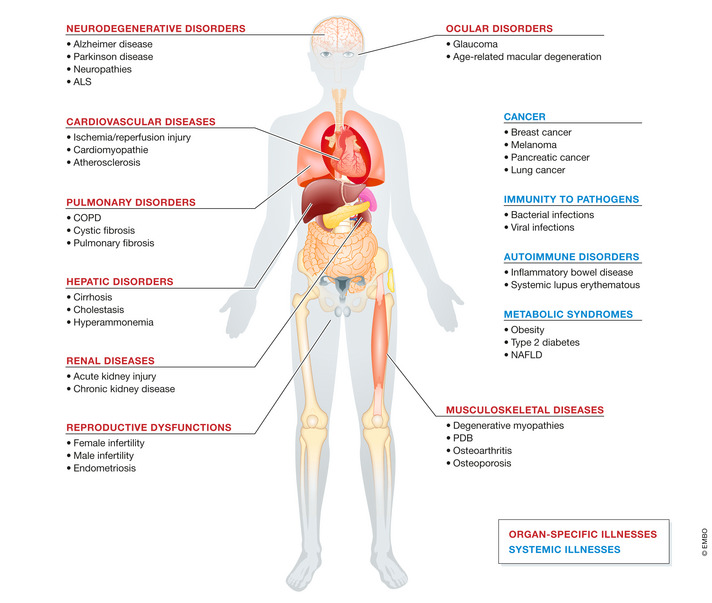
Autophagy is a core molecular pathway for the preservation of cellular and organismal homeostasis. Pharmacological and genetic interventions impairing autophagy responses promote or aggravate disease in a plethora of experimental models. Consistently, mutations in autophagy-related processes cause severe human pathologies. Here, we review and discuss preclinical data linking autophagy dysfunction to the pathogenesis of major human disorders including cancer as well as cardiovascular, neurodegenerative, metabolic, pulmonary, renal, infectious, musculoskeletal, and ocular disorders.
Verified 2026-10-07 · 1 reference not checked yet
Overview
CoChat Summary
TL;DR
This review argues that autophagy dysfunction contributes to the pathogenesis of major human diseases, including cancer, cardiovascular, neurodegenerative, metabolic, pulmonary, renal, infectious, musculoskeletal, and ocular disorders. It synthesizes preclinical genetic mouse-model evidence and human mutation data to propose autophagy modulation as a therapeutic strategy, while emphasizing that effects are highly context-dependent.
Key findings
- Autophagy defects are especially detrimental in post-mitotic cells (e.g., neurons, cardiomyocytes, memory T cells), and autophagic proficiency declines with age, contributing to multiple pathologies of the elderly.
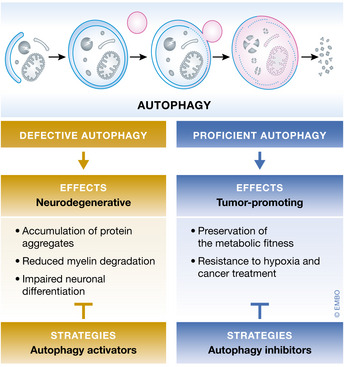
- In cancer, autophagy can be tumor-suppressive in healthy cells but tumor-promoting in established tumors; autophagy inhibition can improve anticancer immunity, e.g., ATG4B dominant-negative PDAC cells show increased MHC class I surface expression and CD8+ T-cell lysis.
- In Paget disease of bone, SQSTM1/p62 mutations are found in approximately 10% of patients; Optn deletion in mice recapitulates PDB-like bone lesions via decreased type I IFN production.
- In cystic fibrosis, TGM2 loss of function increases CFTR function by approximately 40% in a CF mouse model; VPS13D mutations occurred in 3 of 64 children with Leigh syndrome features.
Methods
- Design: narrative review; no primary experiments or new patient data.
- Data/sample: preclinical literature, especially murine genetic models of autophagy deficiency and human disease-associated mutations, organized by disease system (neurodegenerative, cardiovascular, musculoskeletal, pulmonary, kidney, metabolic, liver, cancer, immunity/inflammation, ocular, reproductive).
- Main analysis: qualitative synthesis of cited studies; tables summarize genetic interventions and disease phenotypes. No systematic review, meta-analysis, or quantitative pooling is described.
Limitations
- Stated: conditional knockout mouse models are limited because they are often non-inducible and establish autophagy defects during development, failing to recapitulate acute adult autophagy defects; they also cannot capture non-cell-autonomous and systemic interactions.
- Stated: because autophagy intersects with LAP, LANDO, and RCD, and most findings rely on deletion/downregulation of single autophagy components, phenotypes may arise from non-autophagic pathways; future studies should delete more than one autophagy gene and use models distinguishing canonical from non-canonical autophagy.
- Stated: human clinical studies, ideally at pre-pathological stages, are needed. Evident: as a narrative review, it does not provide a systematic search strategy or quantitative synthesis, so conclusions depend on the selected preclinical literature.
Model-written summary of a shortened version of the paper’s full text (it is longer than we read). Check it against the paper before relying on it.
Integrity signals
Registry
Cites
Statistics
Figures
Verification
Claims the paper makes
115 Valid · 10 Not valid · 431 Not checked · 39 Own results and interpretations
At least one cited source doesn’t support this claim or points to a different paper, and none confirmed it — see the verdicts below.
In the paper
“| IRI | Conditional cardiomyocyte‐specific deletion of mTORC1 | Exacerbated hypoxic injury and cardiomyocyte apoptosis after autophagy restoration | Sciarretta et al (2012) |”
§ Autophagy in major human diseases > Cardiovascular diseases
What the sources say
- Disputedcites Sciarretta et al (2012) matched to “Rheb is a Critical Regulator of Autophagy During Myocardial Ischemia: Pathophysiological Implications in Obesity and Metabolic Syndrome” (2012) sourceExperimental — accuracy not yet measured
The Results section on high-fat-diet-induced obesity reports that inducible cardiac-specific heterozygous mTOR deletion increased autophagy but reduced, rather than exacerbated, myocardial infarct size. The Abstract’s Methods and Results section likewise reports that restoring autophagy through mTORC1 inhibition reduced cardiomyocyte death. The supplied passages do not give page numbers. (LLM, conf=0.91)
Checked by a reasoning model — may be wrong.
plainstates a cause- Asserted: passes — The authors put it forward as true.
- Checkable: passes — It can be checked against evidence.
- Load-bearing: unclear — It is unclear whether the paper’s conclusions depend on it.
- Based: passes — The paper gives a reason why it holds.
- Disputed
At least one cited source doesn’t support this claim or points to a different paper, and none confirmed it — see the verdicts below.
In the paper
“Furthermore, HDAC6‐mediated deacetylation of TFEB, which triggers transcriptional autophagy activation, improves the outcome of DKD in rats (Brijmohan et al, 2018).”
§ Autophagy in major human diseases > Kidney diseases > Diabetic kidney disease
What the sources say
- Disputedcites Brijmohan et al, 2018 matched to “HDAC6 Inhibition Promotes Transcription Factor EB Activation and Is Protective in Experimental Kidney Disease” (2018) sourceExperimental — accuracy not yet measured
The Discussion says HDAC6 deacetylates TFEB and limits its activity, whereas HDAC6 inhibition increases TFEB acetylation and activity and protects subtotally nephrectomized rats. Thus the claimed direction of the mechanism is reversed. The rat model was chronic kidney disease, not diabetic kidney disease. (LLM, conf=0.90)
Checked by a reasoning model — may be wrong.
plainstates a cause- Asserted: passes — The authors put it forward as true.
- Checkable: passes — It can be checked against evidence.
- Load-bearing: unclear — It is unclear whether the paper’s conclusions depend on it.
- Based: passes — The paper gives a reason why it holds.
- Disputed
At least one cited source doesn’t support this claim or points to a different paper, and none confirmed it — see the verdicts below.
In the paper
“| Focal segmental glomerulosclerosis | Nephron‐specific deletion of Atg5 or Atg7 | Development of kidney dysfunction by 2 months and organ failure by 6 months | Kawakami et al (2015) |”
§ Autophagy in major human diseases > Kidney diseases > Diabetic kidney disease
What the sources say
- Disputedcites Kawakami et al (2015) matched to “Deficient Autophagy Results in Mitochondrial Dysfunction and FSGS” (2015) sourceExperimental — accuracy not yet measured
The Results section reports that Atg5-mutant mice had normal kidney function at 2 months, with loss of function evident by 4 months—not dysfunction by 2 months. The Atg7 Results section directly contradicts the claimed organ failure: kidney function was unchanged after 6 months, and the mice survived to 1 year. (LLM, conf=0.92)
Checked by a reasoning model — may be wrong.
plainstates a cause- Asserted: passes — The authors put it forward as true.
- Checkable: passes — It can be checked against evidence.
- Load-bearing: unclear — It is unclear whether the paper’s conclusions depend on it.
- Based: passes — The paper gives a reason why it holds.
- Disputed
Some cited sources support this claim and some don’t — read each source’s verdict below.
In the paper
“The genetic inhibition of autophagy in the parenchymal (Settembre et al, 2013), stromal (e.g., endothelial cells) (Hammoutene et al, 2020), and immune (Ilyas et al, 2016) compartment of the liver sensitizes mice to the development of NAFLD via both cell autonomous (Yang et al, 2010) and non‐cell autonomous effects, linked to aberrant inflammatory reactions (Aghajan et al, 2012).”
§ Autophagy in major human diseases > Metabolic syndromes > Non‐alcoholic fatty liver disease
What the sources say
- Supportedcites Settembre et al, 2013 matched to “TFEB controls cellular lipid metabolism through a starvation-induced autoregulatory loop” (2013) source
For this citation only the parenchymal clause is at stake, and our copy supports it: in 'TFEB regulates lipid breakdown in the liver' the authors generated hepatocyte (parenchymal)-specific Atg7 KO mice by HdAD-APOA1-CRE injection, in which autophagy is blocked, and report increased liver size, raised ALT/AST/ALP, p62 and lipid-droplet accumulation, with TFEB overexpression failing to reduce liver lipid content. The Discussion states plainly that in mice 'in which autophagy was genetically suppressed by deletion of Atg7 in the liver' TFEB overexpression 'did not rescue hepatic steatosis'. The paper does not use the term NAFLD and does not address the stromal/immune compartments, cell-autonomous versus non-cell-autonomous mechanisms or the inflammatory component, but those clauses carry their own citations (Hammoutene, Ilyas, Yang, Aghajan) and are not attributed here. (LLM, conf=0.82)
- Not checked yetcites Hammoutene et al, 2020 matched to “A defect in endothelial autophagy occurs in patients with non-alcoholic steatohepatitis and promotes inflammation and fibrosis” (2020) source
- Misattributedcites Ilyas et al, 2016 matched to “Macrophage autophagy limits acute toxic liver injury in mice through down regulation of interleukin-1β” (2016) sourceExperimental — accuracy not yet measured
Our copy of Ilyas et al. (2016) reports no NAFLD/steatosis experiment: its own genetic model (Atg5Δmye, myeloid/macrophage autophagy knockout) is tested for sensitization to acute toxic liver injury from GalN/LPS (Introduction; Results 'Inhibition of macrophage autophagy magnifies GalN/LPS liver injury'; Abstract Methods). The autophagy-in-immune-compartment/steatosis result is explicitly credited to another work it cites — the Discussion (p. 1 of section) contrasts 'that described in a mouse nonalcoholic steatosis model [16]' where 'inflammasome-independent proinflammatory cytokines such as TNF were increased due to a distortion of macrophage polarization to a more proinflammatory M1 phenotype', and the Introduction says 'Recently we demonstrated that in obesity-induced hepatic steatosis impaired macrophage autophagy increases liver inflammation and injury from LPS ... [16]', which the reference list identifies as Liu et al., Autophagy 2015. The only paracrine/non-cell-autonomous data in our copy (Results 'Inhibition of IL-1β blocks liver injury in knockout mice', conditioned-medium neutrophil activation) are likewise in the GalN/LPS setting, not NAFLD. (LLM, conf=0.80) It matches “Impaired macrophage autophagy increases the immune response in obese mice by promoting proinflammatory macrophage polarization” (2015) instead.
Checked by a reasoning model — may be wrong.
plainstates a cause- Asserted: passes — The authors put it forward as true.
- Checkable: passes — It can be checked against evidence.
- Load-bearing: passes — The paper’s conclusions depend on it.
- Based: passes — The paper gives a reason why it holds.
- Supported
Every source the paper cites for this claim was checked and supports it.
In the paper
“both insufficient and overactive nonselective or selective autophagy responses contribute to neurodegeneration (Chu, 2019).”
§ Autophagy in major human diseases > Neurodegenerative disorders
What the sources say
- Supportedcites Chu, 2019 matched to “Mechanisms of selective autophagy and mitophagy: Implications for neurodegenerative diseases” (2019) source
The ‘Cellular quality control and neurodegeneration’ section links both impaired autophagy and excessive mitochondrial degradation to neurodegenerative disease. The ‘Self-eating in neurodegeneration: future perspectives’ section explicitly implicates dysregulation of autophagy in general and selective forms, and says increased autophagy or mitophagy can be detrimental. Page numbers were not supplied. (LLM, conf=0.92)
plainstates a cause- Asserted: passes — The authors put it forward as true.
- Checkable: passes — It can be checked against evidence.
- Load-bearing: passes — The paper’s conclusions depend on it.
- Based: passes — The paper gives a reason why it holds.
- Supported
417 more claims · 99 with their cited sources checked
Create a free account to see all 595 claims and to verify the 603 references still open.
- It may state two separate claims as one. 163
- Probably not a substantial claim. 7
- The quote only partly states this claim. 4
Claims other papers make about this one
Each is checked against this paper’s own text: does it say what the citing paper says it does?
The source backs part of the claim, not all of it — or backs it for a different population, condition or comparison.
In the citing paper
“In patients, loss-of-function mutations of genes that regulate or execute autophagy have been causally linked to a broad spectrum of cardiovascular, infectious, neurodegenerative, metabolic, musculoskeletal, ocular and pulmonary disorders, many of which resemble to premature aging at the histopathological and functional levels 89,90 .”
From Hallmarks of aging: An expanding universe (2023) · cites this paper as [90]
Experimental — accuracy not yet measuredThe cited source says what the claim attributes to it.
In the citing paper
“Thus, in multiple instances, genetic or pharmacological suppression of autophagy can restrain tumor progression in mouse models.153”
From Meta-hallmarks of aging and cancer (2023) · cites this paper as [153]
The cited source says what the claim attributes to it.
In the citing paper
“Hence, autophagy apparently acts as a tumor-suppressive mechanism, that may involve cell-autonomous processes and cancer immunosurveillance 90 .”
From Hallmarks of aging: An expanding universe (2023) · cites this paper as [90]
In the citing paper
“At the cell-autonomous level, baseline autophagy is required for cellular homeostasis, for instance, by eliminating damaged mitochondria (that can produce DNA-damaging ROS or release other pro-inflammatory molecules) and maintaining cellular adenosine triphosphate (ATP) levels for efficient DNA repair.153”
From Meta-hallmarks of aging and cancer (2023) · cites this paper as [153]
In the citing paper
“Hence, autophagy allows cancer cells to increase their resistance to harsh endogenous conditions (such as hypoxia, scarce nutrients, absent trophic factors, or attack by immune effectors) and anticancer chemotherapeutics, radiotherapy, or targeted therapy.153”
From Meta-hallmarks of aging and cancer (2023) · cites this paper as [153]
Self-check
Percentages, sums and reported differences re-computed from the paper’s own numbers.
Each contradiction between two passages listed here was confirmed by an independent check.
Rated minor: it would not touch a result — a value no result rests on, a p-value that stays on the same side of the significance level, or a conflict that is clerical, resolved elsewhere in the paper, or outside its own findings.
In the paper
§ Autophagy in major human diseases > Ocular diseases
“| Cataract | LEC‐specific deletion of Vps34 | Development of congenital cataract and microphthalmia, through an autophagy‐independent mechanism | Morishita et al (2013) |”
§ Autophagy in major human diseases > Ocular diseases
“A similar effect occurs upon pik3c3/vps34 deletion in LECs, which also leads to age‐dependent cataracts (Morishita et al, 2013).”
Rated minor: it would not touch a result — a value no result rests on, a p-value that stays on the same side of the significance level, or a conflict that is clerical, resolved elsewhere in the paper, or outside its own findings.
In the paper
§ Autophagy in major human diseases > Musculoskeletal disorders > Muscular diseases
“| PDB | Whole‐body knock‐in of mutant p62P392L | Increased osteoclastogenic potential of bone microenvironment, but histologically normal bones | Hiruma et al (2008) |”
§ Autophagy in major human diseases > Musculoskeletal disorders > Bone disorders
“a mouse model carrying the P394L mutation exhibits a PDB‐like bone disorder with focal bone lesions, linked to enhanced autophagy activation in osteoclasts and detrimental bone remodeling (Hiruma et al, 2008).”
Citations
Cites
5 retracted
Items 201–400 of 786
Kubli, D. A., Zhang, X., Lee, Y., Hanna, R. A., Quinsay, M. N., Nguyen, C. K., Jimenez, R., Petrosyan, S., Murphy, A. N., & Gustafsson, Å. B. (2013) · Journal of Biological Chemistry · doi:10.1074/jbc.m112.411363 · Cited by 476
Reduced glucocerebrosidase is associated with increased α-synuclein in sporadic Parkinson’s disease
Murphy, K. E., Gysbers, A. M., Abbott, S. K., Tayebi, N., Kim, W. S., Sidransky, E., Cooper, A., Garner, B., & Halliday, G. M. (2014) · Brain · doi:10.1093/brain/awt367 · Cited by 475
Crosstalk between autophagy and inflammatory signalling pathways: balancing defence and homeostasis
Cadwell, K. (2016) · Nature Reviews Immunology · doi:10.1038/nri.2016.100 · Cited by 475
Self-citationSaitsu, H., Nishimura, T., Muramatsu, K., Kodera, H., Kumada, S., Sugai, K., Kasai-Yoshida, E., Sawaura, N., Nishida, H., Hoshino, A., et al. (2013) · Nature Genetics · doi:10.1038/ng.2562 · Cited by 474
Self-citationAPF lncRNA regulates autophagy and myocardial infarction by targeting miR-188-3p
Wang, K., Liu, C.-Y., Zhou, L.-Y., Wang, J.-X., Wang, M., Zhao, B., Zhao, W.-K., Xu, S.-J., Fan, L.-H., Zhang, X.-J., et al. (2015) · Nature Communications · doi:10.1038/ncomms7779 · Cited by 473
Luciani, A., Villella, V. R., Esposito, S., Brunetti-Pierri, N., Medina, D., Settembre, C., Gavina, M., Pulze, L., Giardino, I., Pettoello-Mantovani, M., et al. (2010) · Nature Cell Biology · doi:10.1038/ncb2090 · Cited by 467
Self-citationZavodszky, E., Seaman, M. N. J., Moreau, K., Jimenez-Sanchez, M., Breusegem, S. Y., Harbour, M. E., & Rubinsztein, D. C. (2014) · Nature Communications · doi:10.1038/ncomms4828 · Cited by 466
Self-citationEssential role for autophagy in life span extension
Madeo, F., Zimmermann, A., Maiuri, M. C., & Kroemer, G. (2015) · Journal of Clinical Investigation · doi:10.1172/jci73946 · Cited by 464
Self-citationHigh-speed recording of neural spikes in awake mice and flies with a fluorescent voltage sensor
Gong, Y., Huang, C., Li, J. Z., Grewe, B. F., Zhang, Y., Eismann, S., & Schnitzer, M. J. (2015) · Science · doi:10.1126/science.aab0810 · Cited by 462
FoxOs Cooperatively Regulate Diverse Pathways Governing Neural Stem Cell Homeostasis
Paik, J.-H., Ding, Z., Narurkar, R., Ramkissoon, S., Muller, F., Kamoun, W. S., Chae, S.-S., Zheng, H., Ying, H., Mahoney, J., et al. (2009) · Cell Stem Cell · doi:10.1016/j.stem.2009.09.013 · Cited by 459
Aβ Secretion and Plaque Formation Depend on Autophagy
Nilsson, P., Loganathan, K., Sekiguchi, M., Matsuba, Y., Hui, K., Tsubuki, S., Tanaka, M., Iwata, N., Saito, T., & Saido, T. C. (2013) · Cell Reports · doi:10.1016/j.celrep.2013.08.042 · Cited by 459
Microenvironmental autophagy promotes tumour growth
Katheder, N. S., Khezri, R., O’Farrell, F., Schultz, S. W., Jain, A., Rahman, M. M., Schink, K. O., Theodossiou, T. A., Johansen, T., Juhász, G., et al. (2017) · Nature · doi:10.1038/nature20815 · Cited by 459
Self-citationSchwann cell autophagy, myelinophagy, initiates myelin clearance from injured nerves
Gomez-Sanchez, J. A., Carty, L., Iruarrizaga-Lejarreta, M., Palomo-Irigoyen, M., Varela-Rey, M., Griffith, M., Hantke, J., Macias-Camara, N., Azkargorta, M., Aurrekoetxea, I., et al. (2015) · Journal of Cell Biology · doi:10.1083/jcb.201503019 · Cited by 453
Inhibition of autophagy in the heart induces age-related cardiomyopathy
Taneike, M., Yamaguchi, O., Nakai, A., Hikoso, S., Takeda, T., Mizote, I., Oka, T., Tamai, T., Oyabu, J., Murakawa, T., et al. (2010) · Autophagy · doi:10.4161/auto.6.5.11947 · Cited by 450
Self-citationMitter, S. K., Song, C., Qi, X., Mao, H., Rao, H., Akin, D., Lewin, A., Grant, M., Dunn, W., Ding, J., et al. (2014) · Autophagy · doi:10.4161/auto.36184 · Cited by 449
Autophagy and cellular immune responses
Ma, Y., Galluzzi, L., Zitvogel, L., & Kroemer, G. (2013) · Immunity · doi:10.1016/j.immuni.2013.07.017 · Cited by 447
Self-citationParkin-mediated mitophagy directs perinatal cardiac metabolic maturation in mice
Gong, G., Song, M., Csordas, G., Kelly, D. P., Matkovich, S. J., & Dorn, G. W. (2015) · Science · doi:10.1126/science.aad2459 · Cited by 444
Functional genomic landscape of cancer-intrinsic evasion of killing by T cells
Lawson, K. A., Sousa, C. M., Zhang, X., Kim, E., Akthar, R., Caumanns, J. J., Yao, Y., Mikolajewicz, N., Ross, C., Brown, K. R., et al. (2020) · Nature · doi:10.1038/s41586-020-2746-2 · Cited by 443
A dual role for autophagy in a murine model of lung cancer
Rao, S., Tortola, L., Perlot, T., Wirnsberger, G., Novatchkova, M., Nitsch, R., Sykacek, P., Frank, L., Schramek, D., Komnenovic, V., et al. (2014) · Nature Communications · doi:10.1038/ncomms4056 · Cited by 442
Self-citationAutophagy Sustains Mitochondrial Glutamine Metabolism and Growth of Braf V600E–Driven Lung Tumors
Strohecker, A. M., Guo, J. Y., Karsli-Uzunbas, G., Price, S. M., Chen, G. J., Mathew, R., McMahon, M., & White, E. (2013) · Cancer Discovery · doi:10.1158/2159-8290.cd-13-0397 · Cited by 435
Galectin-3 Coordinates a Cellular System for Lysosomal Repair and Removal
Jia, J., Claude-Taupin, A., Gu, Y., Choi, S. W., Peters, R., Bissa, B., Mudd, M. H., Allers, L., Pallikkuth, S., Lidke, K. A., et al. (2020) · Developmental Cell · doi:10.1016/j.devcel.2019.10.025 · Cited by 434
Self-citationAutophagy is essential for effector CD8+ T cell survival and memory formation
Xu, X., Araki, K., Li, S., Han, J.-H., Ye, L., Tan, W. G., Konieczny, B. T., Bruinsma, M. W., Martinez, J., Pearce, E. L., et al. (2014) · Nature Immunology · doi:10.1038/ni.3025 · Cited by 433
Self-citationActivation of Autophagy Protects Against Acetaminophen–Induced Hepatotoxicity
Ni, H., Bockus, A., Boggess, N., Jaeschke, H., & Ding, W. (2012) · Hepatology · doi:10.1002/hep.24690 · Cited by 430
Autophagy promotes the survival of dormant breast cancer cells and metastatic tumour recurrence
Vera-Ramirez, L., Vodnala, S. K., Nini, R., Hunter, K. W., & Green, J. E. (2018) · Nature Communications · doi:10.1038/s41467-018-04070-6 · Cited by 430
Autophagy and the cell biology of age-related disease
Leidal, A. M., Levine, B., & Debnath, J. (2018) · Nature Cell Biology · doi:10.1038/s41556-018-0235-8 · Cited by 424
Huntingtin functions as a scaffold for selective macroautophagy
Rui, Y.-N., Xu, Z., Patel, B., Chen, Z., Chen, D., Tito, A., David, G., Sun, Y., Stimming, E. F., Bellen, H. J., et al. (2015) · Nature Cell Biology · doi:10.1038/ncb3101 · Cited by 423
Self-citationAutophagy in osteoblasts is involved in mineralization and bone homeostasis
Nollet, M., Santucci-Darmanin, S., Breuil, V., Al-Sahlanee, R., Cros, C., Topi, M., Momier, D., Samson, M., Pagnotta, S., Cailleteau, L., et al. (2014) · Autophagy · doi:10.4161/auto.36182 · Cited by 422
PTEN-inducible kinase 1 (PINK1)/Park6 is indispensable for normal heart function
Billia, F., Hauck, L., Konecny, F., Rao, V., Shen, J., & Mak, T. W. (2011) · Proceedings of the National Academy of Sciences · doi:10.1073/pnas.1106291108 · Cited by 414
Autophagy promotes primary ciliogenesis by removing OFD1 from centriolar satellites
Tang, Z., Lin, M. G., Stowe, T. R., Chen, S., Zhu, M., Stearns, T., Franco, B., & Zhong, Q. (2013) · Nature · doi:10.1038/nature12606 · Cited by 414
Self-citationSellier, C., Campanari, M., Julie Corbier, C., Gaucherot, A., Kolb‐Cheynel, I., Oulad‐Abdelghani, M., Ruffenach, F., Page, A., Ciura, S., Kabashi, E., et al. (2016) · The EMBO Journal · doi:10.15252/embj.201593350 · Cited by 414
Devaraj, S. G., Wang, N., Chen, Z., Chen, Z., Tseng, M., Barretto, N., Lin, R., Peters, C. J., Tseng, C.-T. K., Baker, S. C., et al. (2007) · Journal of Biological Chemistry · doi:10.1074/jbc.m704870200 · Cited by 411
Ramonet, D., Daher, J. P. L., Lin, B. M., Stafa, K., Kim, J., Banerjee, R., Westerlund, M., Pletnikova, O., Glauser, L., Yang, L., et al. (2011) · PLoS ONE · doi:10.1371/journal.pone.0018568 · Cited by 405
The C9orf72 protein interacts with Rab1a and the ULK1 complex to regulate initiation of autophagy
Webster, C. P., Smith, E. F., Bauer, C. S., Moller, A., Hautbergue, G. M., Ferraiuolo, L., Myszczynska, M. A., Higginbottom, A., Walsh, M. J., Whitworth, A. J., et al. (2016) · The EMBO Journal · doi:10.15252/embj.201694401 · Cited by 404
Autophagy in tumour immunity and therapy
Xia, H., Green, D. R., & Zou, W. (2021) · Nature Reviews Cancer · doi:10.1038/s41568-021-00344-2 · Cited by 404
Self-citationEmerging therapies for idiopathic pulmonary fibrosis, a progressive age-related disease
Mora, A. L., Rojas, M., Pardo, A., & Selman, M. (2017) · Nature Reviews Drug Discovery · doi:10.1038/nrd.2017.170 · Cited by 402
Suppression of autophagy by FIP200 deletion inhibits mammary tumorigenesis
Wei, H., Wei, S., Gan, B., Peng, X., Zou, W., & Guan, J.-L. (2011) · Genes & Development · doi:10.1101/gad.2051011 · Cited by 401
Autophagy in lysosomal storage disorders
Lieberman, A. P., Puertollano, R., Raben, N., Slaugenhaupt, S., Walkley, S. U., & Ballabio, A. (2012) · Autophagy · doi:10.4161/auto.19469 · Cited by 399
Self-citationWong, Y. C., & Holzbaur, E. L. F. (2014) · The Journal of Neuroscience · doi:10.1523/jneurosci.1870-13.2014 · Cited by 398
Sebastián, D., Sorianello, E., Segalés, J., Irazoki, A., Ruiz‐Bonilla, V., Sala, D., Planet, E., Berenguer‐Llergo, A., Muñoz, J. P., Sánchez‐Feutrie, M., et al. (2016) · The EMBO Journal · doi:10.15252/embj.201593084 · Cited by 396
Juhász, G., Érdi, B., Sass, M., & Neufeld, T. P. (2007) · Genes & Development · doi:10.1101/gad.1600707 · Cited by 396
Self-citationPaneth cells secrete lysozyme via secretory autophagy during bacterial infection of the intestine
Bel, S., Pendse, M., Wang, Y., Li, Y., Ruhn, K. A., Hassell, B., Leal, T., Winter, S. E., Xavier, R. J., & Hooper, L. V. (2017) · Science · doi:10.1126/science.aal4677 · Cited by 396
MyD88 and Trif Target Beclin 1 to Trigger Autophagy in Macrophages
Shi, C.-S., & Kehrl, J. H. (2008) · Journal of Biological Chemistry · doi:10.1074/jbc.m804478200 · Cited by 395
p62 in Cancer: Signaling Adaptor Beyond Autophagy
Moscat, J., Karin, M., & Diaz-Meco, M. T. (2016) · Cell · doi:10.1016/j.cell.2016.09.030 · Cited by 391
Autophagy in acute kidney injury
Kaushal, G. P., & Shah, S. V. (2016) · Kidney International · doi:10.1016/j.kint.2015.11.021 · Cited by 389
Autophagy and cancer stem cells: molecular mechanisms and therapeutic applications
Nazio, F., Bordi, M., Cianfanelli, V., Locatelli, F., & Cecconi, F. (2019) · Cell Death & Differentiation · doi:10.1038/s41418-019-0292-y · Cited by 388
Self-citationA role for autophagy during hepatic stellate cell activation
Thoen, L. F. R., Guimarães, E. L. M., Dollé, L., Mannaerts, I., Najimi, M., Sokal, E., & van Grunsven, L. A. (2011) · Journal of Hepatology · doi:10.1016/j.jhep.2011.07.010 · Cited by 385
Autophagy in Hypothalamic AgRP Neurons Regulates Food Intake and Energy Balance
Kaushik, S., Rodriguez-Navarro, J. A., Arias, E., Kiffin, R., Sahu, S., Schwartz, G. J., Cuervo, A. M., & Singh, R. (2011) · Cell Metabolism · doi:10.1016/j.cmet.2011.06.008 · Cited by 382
Self-citationUnique role for ATG5 in neutrophil-mediated immunopathology during M. tuberculosis infection
Kimmey, J. M., Huynh, J. P., Weiss, L. A., Park, S., Kambal, A., Debnath, J., Virgin, H. W., & Stallings, C. L. (2015) · Nature · doi:10.1038/nature16451 · Cited by 382
Autophagy in Atherosclerosis: A Cell Survival and Death Phenomenon With Therapeutic Potential
Martinet, W., & De Meyer, G. R. Y. (2009) · Circulation Research · doi:10.1161/circresaha.108.188318 · Cited by 381
A Crohn’s disease variant in Atg16l1 enhances its degradation by caspase 3
Murthy, A., Li, Y., Peng, I., Reichelt, M., Katakam, A. K., Noubade, R., Roose-Girma, M., DeVoss, J., Diehl, L., Graham, R. R., et al. (2014) · Nature · doi:10.1038/nature13044 · Cited by 381
Chen, Z.-H., Lam, H. C., Jin, Y., Kim, H.-P., Cao, J., Lee, S.-J., Ifedigbo, E., Parameswaran, H., Ryter, S. W., & Choi, A. M. K. (2010) · Proceedings of the National Academy of Sciences · doi:10.1073/pnas.1005574107 · Cited by 380
Self-citationAutophagy in liver diseases: Time for translation?
Allaire, M., Rautou, P.-E., Codogno, P., & Lotersztajn, S. (2019) · Journal of Hepatology · doi:10.1016/j.jhep.2019.01.026 · Cited by 378
Self-citationTanaka, S., Hikita, H., Tatsumi, T., Sakamori, R., Nozaki, Y., Sakane, S., Shiode, Y., Nakabori, T., Saito, Y., Hiramatsu, N., et al. (2016) · Hepatology · doi:10.1002/hep.28820 · Cited by 376
Self-citationDiverse Cellular Roles of Autophagy
Morishita, H., & Mizushima, N. (2019) · Annual Review of Cell and Developmental Biology · doi:10.1146/annurev-cellbio-100818-125300 · Cited by 376
Self-citationLassen, K. G., Kuballa, P., Conway, K. L., Patel, K. K., Becker, C. E., Peloquin, J. M., Villablanca, E. J., Norman, J. M., Liu, T.-C., Heath, R. J., et al. (2014) · Proceedings of the National Academy of Sciences · doi:10.1073/pnas.1407001111 · Cited by 373
Autophagy in Idiopathic Pulmonary Fibrosis
Patel, A. S., Lin, L., Geyer, A., Haspel, J. A., An, C. H., Cao, J., Rosas, I. O., & Morse, D. (2012) · PLoS ONE · doi:10.1371/journal.pone.0041394 · Cited by 372
Matsuzawa-Ishimoto, Y., Hwang, S., & Cadwell, K. (2018) · Annual Review of Immunology · doi:10.1146/annurev-immunol-042617-053253 · Cited by 372
Self-citationVallon, V., Rose, M., Gerasimova, M., Satriano, J., Platt, K. A., Koepsell, H., Cunard, R., Sharma, K., Thomson, S. C., & Rieg, T. (2013) · American Journal of Physiology-Renal Physiology · doi:10.1152/ajprenal.00409.2012 · Cited by 370
Autophagy, cancer stem cells and drug resistance
Smith, A. G., & Macleod, K. F. (2019) · The Journal of Pathology · doi:10.1002/path.5222 · Cited by 365
Self-citationSingh, A. K., Riederer, B., Krabbenhöft, A., Rausch, B., Bonhagen, J., Lehmann, U., de Jonge, H. R., Donowitz, M., Yun, C., Weinman, E. J., et al. (2009) · Journal of Clinical Investigation · doi:10.1172/jci35541 · Cited by 364
Melzer, D., Pilling, L. C., & Ferrucci, L. (2020) · Nature Reviews Genetics · doi:10.1038/s41576-019-0183-6 · Cited by 363
Autophagy in the renewal, differentiation and homeostasis of immune cells
Clarke, A. J., & Simon, A. K. (2019) · Nature Reviews Immunology · doi:10.1038/s41577-018-0095-2 · Cited by 361
Self-citationAutophagy is a critical regulator of memory CD8+ T cell formation
Puleston, D. J., Zhang, H., Powell, T. J., Lipina, E., Sims, S., Panse, I., Watson, A. S., Cerundolo, V., Townsend, A. R., Klenerman, P., et al. (2014) · eLife · doi:10.7554/elife.03706 · Cited by 360
Self-citationAutophagy maintains tumour growth through circulating arginine
Poillet-Perez, L., Xie, X., Zhan, L., Yang, Y., Sharp, D. W., Hu, Z. S., Su, X., Maganti, A., Jiang, C., Lu, W., et al. (2018) · Nature · doi:10.1038/s41586-018-0697-7 · Cited by 360
Mitochondrial DNA drives abscopal responses to radiation that are inhibited by autophagy
Yamazaki, T., Kirchmair, A., Sato, A., Buqué, A., Rybstein, M., Petroni, G., Bloy, N., Finotello, F., Stafford, L., Navarro Manzano, E., et al. (2020) · Nature Immunology · doi:10.1038/s41590-020-0751-0 · Cited by 359
Self-citationMutations in a newly identified GTPase gene cause autosomal dominant hereditary spastic paraplegia
Zhao, X., Alvarado, D., Rainier, S., Lemons, R., Hedera, P., Weber, C. H., Tukel, T., Apak, M., Heiman-Patterson, T., Ming, L., et al. (2001) · Nature Genetics · doi:10.1038/ng758 · Cited by 357
Polyglutamine tracts regulate beclin 1-dependent autophagy
Ashkenazi, A., Bento, C. F., Ricketts, T., Vicinanza, M., Siddiqi, F., Pavel, M., Squitieri, F., Hardenberg, M. C., Imarisio, S., Menzies, F. M., et al. (2017) · Nature · doi:10.1038/nature22078 · Cited by 357
Self-citationGassen, N. C., Niemeyer, D., Muth, D., Corman, V. M., Martinelli, S., Gassen, A., Hafner, K., Papies, J., Mösbauer, K., Zellner, A., et al. (2019) · Nature Communications · doi:10.1038/s41467-019-13659-4 · Cited by 356
Selective autophagy as a potential therapeutic target for neurodegenerative disorders
Scrivo, A., Bourdenx, M., Pampliega, O., & Cuervo, A. M. (2018) · The Lancet Neurology · doi:10.1016/s1474-4422(18)30238-2 · Cited by 355
Self-citationMoore, A. S., & Holzbaur, E. L. F. (2016) · Proceedings of the National Academy of Sciences · doi:10.1073/pnas.1523810113 · Cited by 354
Miao, G., Zhao, H., Li, Y., Ji, M., Chen, Y., Shi, Y., Bi, Y., Wang, P., & Zhang, H. (2021) · Developmental Cell · doi:10.1016/j.devcel.2020.12.010 · Cited by 354
Exploiting macrophage autophagy-lysosomal biogenesis as a therapy for atherosclerosis
Sergin, I., Evans, T. D., Zhang, X., Bhattacharya, S., Stokes, C. J., Song, E., Ali, S., Dehestani, B., Holloway, K. B., Micevych, P. S., et al. (2017) · Nature Communications · doi:10.1038/ncomms15750 · Cited by 351
Self-citationAutophagy in Antimicrobial Immunity
Gomes, L. C., & Dikic, I. (2014) · Molecular Cell · doi:10.1016/j.molcel.2014.03.009 · Cited by 350
Autophagy in Huntington disease and huntingtin in autophagy
Martin, D. D. O., Ladha, S., Ehrnhoefer, D. E., & Hayden, M. R. (2015) · Trends in Neurosciences · doi:10.1016/j.tins.2014.09.003 · Cited by 350
Beige adipocyte maintenance is regulated by autophagy-induced mitochondrial clearance
Altshuler-Keylin, S., Shinoda, K., Hasegawa, Y., Ikeda, K., Hong, H., Kang, Q., Yang, Y., Perera, R. M., Debnath, J., & Kajimura, S. (2016) · Cell Metabolism · doi:10.1016/j.cmet.2016.08.002 · Cited by 349
Self-citationYang, A., Herter-Sprie, G., Zhang, H., Lin, E. Y., Biancur, D., Wang, X., Deng, J., Hai, J., Yang, S., Wong, K.-K., et al. (2018) · Cancer Discovery · doi:10.1158/2159-8290.cd-17-0952 · Cited by 349
Dendritic cell subsets and locations
(2019) · International Review of Cell and Molecular Biology · doi:10.1016/bs.ircmb.2019.07.004 · Cited by 349
Henault, J., Martinez, J., Riggs, J. M., Tian, J., Mehta, P., Clarke, L., Sasai, M., Latz, E., Brinkmann, M. M., Iwasaki, A., et al. (2012) · Immunity · doi:10.1016/j.immuni.2012.09.014 · Cited by 348
Self-citationBasal mitophagy is widespread in Drosophila but minimally affected by loss of Pink1 or parkin
Lee, J. J., Sanchez-Martinez, A., Zarate, A. M., Benincá, C., Mayor, U., Clague, M. J., & Whitworth, A. J. (2018) · Journal of Cell Biology · doi:10.1083/jcb.201801044 · Cited by 348
Noncanonical autophagy promotes the visual cycle
Kim, J.-Y., Zhao, H., Martinez, J., Doggett, T. A., Kolesnikov, A. V., Tang, P. H., Ablonczy, Z., Chan, C.-C., Zhou, Z., Green, D. R., et al. (2013) · Cell · doi:10.1016/j.cell.2013.06.012 · Cited by 347
Self-citationThe Phenotypic Consequences of CFTR Mutations
Rowntree, R. K., & Harris, A. (2003) · Annals of Human Genetics · doi:10.1046/j.1469-1809.2003.00028.x · Cited by 346
Baginska, J., Viry, E., Berchem, G., Poli, A., Noman, M. Z., van Moer, K., Medves, S., Zimmer, J., Oudin, A., Niclou, S. P., et al. (2013) · Proceedings of the National Academy of Sciences · doi:10.1073/pnas.1304790110 · Cited by 344
Chao, X., Wang, S., Zhao, K., Li, Y., Williams, J. A., Li, T., Chavan, H., Krishnamurthy, P., He, X. C., Li, L., et al. (2018) · Gastroenterology · doi:10.1053/j.gastro.2018.05.027 · Cited by 342
Self-citationTranscription factor EB (TFEB) is a new therapeutic target for Pompe disease
Spampanato, C., Feeney, E., Li, L., Cardone, M., Lim, J., Annunziata, F., Zare, H., Polishchuk, R., Puertollano, R., Parenti, G., et al. (2013) · EMBO Molecular Medicine · doi:10.1002/emmm.201202176 · Cited by 341
Self-citationDeficient Chaperone-Mediated Autophagy in Liver Leads to Metabolic Dysregulation
Schneider, J. L., Suh, Y., & Cuervo, A. M. (2014) · Cell Metabolism · doi:10.1016/j.cmet.2014.06.009 · Cited by 340
Self-citationTargeting autophagy in obesity: from pathophysiology to management
Zhang, Y., Sowers, J. R., & Ren, J. (2018) · Nature Reviews Endocrinology · doi:10.1038/s41574-018-0009-1 · Cited by 338
Chaperone-mediated autophagy prevents collapse of the neuronal metastable proteome
Bourdenx, M., Martín-Segura, A., Scrivo, A., Rodriguez-Navarro, J. A., Kaushik, S., Tasset, I., Diaz, A., Storm, N. J., Xin, Q., Juste, Y. R., et al. (2021) · Cell · doi:10.1016/j.cell.2021.03.048 · Cited by 337
Self-citationAutophagy-monitoring and autophagy-deficient mice
Kuma, A., Komatsu, M., & Mizushima, N. (2017) · Autophagy · doi:10.1080/15548627.2017.1343770 · Cited by 336
Self-citationProgrammed mitophagy is essential for the glycolytic switch during cell differentiation
Esteban‐Martínez, L., Sierra‐Filardi, E., McGreal, R. S., Salazar‐Roa, M., Mariño, G., Seco, E., Durand, S., Enot, D., Graña, O., Malumbres, M., et al. (2017) · The EMBO Journal · doi:10.15252/embj.201695916 · Cited by 334
Self-citationLC3-Associated Phagocytosis in Myeloid Cells Promotes Tumor Immune Tolerance
Cunha, L. D., Yang, M., Carter, R., Guy, C., Harris, L., Crawford, J. C., Quarato, G., Boada-Romero, E., Kalkavan, H., Johnson, M. D. L., et al. (2018) · Cell · doi:10.1016/j.cell.2018.08.061 · Cited by 334
Self-citationMitophagy defects arising from BNip3 loss promote mammary tumor progression to metastasis
Chourasia, A. H., Tracy, K., Frankenberger, C., Boland, M. L., Sharifi, M. N., Drake, L. E., Sachleben, J. R., Asara, J. M., Locasale, J. W., Karczmar, G. S., et al. (2015) · EMBO reports · doi:10.15252/embr.201540759 · Cited by 331
Self-citationAutophagy in cardiovascular biology
Lavandero, S., Chiong, M., Rothermel, B. A., & Hill, J. A. (2015) · Journal of Clinical Investigation · doi:10.1172/jci73943 · Cited by 331
Crippa, V., Sau, D., Rusmini, P., Boncoraglio, A., Onesto, E., Bolzoni, E., Galbiati, M., Fontana, E., Marino, M., Carra, S., et al. (2010) · Human Molecular Genetics · doi:10.1093/hmg/ddq257 · Cited by 330
Listeriolysin O allows Listeria monocytogenes replication in macrophage vacuoles
Birmingham, C. L., Canadien, V., Kaniuk, N. A., Steinberg, B. E., Higgins, D. E., & Brumell, J. H. (2008) · Nature · doi:10.1038/nature06479 · Cited by 330
Lim, J., Lachenmayer, M. L., Wu, S., Liu, W., Kundu, M., Wang, R., Komatsu, M., Oh, Y. J., Zhao, Y., & Yue, Z. (2015) · PLOS Genetics · doi:10.1371/journal.pgen.1004987 · Cited by 329
Self-citationPickrell, A. M., Huang, C.-H., Kennedy, S. R., Ordureau, A., Sideris, D. P., Hoekstra, J. G., Harper, J. W., & Youle, R. J. (2015) · Neuron · doi:10.1016/j.neuron.2015.06.034 · Cited by 327
Nrf2 reduces levels of phosphorylated tau protein by inducing autophagy adaptor protein NDP52
Jo, C., Gundemir, S., Pritchard, S., Jin, Y. N., Rahman, I., & Johnson, G. V. W. (2014) · Nature Communications · doi:10.1038/ncomms4496 · Cited by 323
Molecular Mechanisms of Mitochondrial Autophagy/Mitophagy in the Heart
Saito, T., & Sadoshima, J. (2015) · Circulation Research · doi:10.1161/circresaha.116.303790 · Cited by 322
Self-citationCloonan, S. M., & Choi, A. M. K. (2016) · Journal of Clinical Investigation · doi:10.1172/jci81113 · Cited by 322
Self-citationInteraction of tumor-associated macrophages and cancer chemotherapy
Larionova, I., Cherdyntseva, N., Liu, T., Patysheva, M., Rakina, M., & Kzhyshkowska, J. (2019) · OncoImmunology · doi:10.1080/2162402x.2019.1596004 · Cited by 322
Activating autophagy to potentiate immunogenic chemotherapy and radiation therapy
Galluzzi, L., Bravo-San Pedro, J. M., Demaria, S., Formenti, S. C., & Kroemer, G. (2017) · Nature Reviews Clinical Oncology · doi:10.1038/nrclinonc.2016.183 · Cited by 314
Self-citationRegulation of Liver Metabolism by Autophagy
Madrigal-Matute, J., & Cuervo, A. M. (2016) · Gastroenterology · doi:10.1053/j.gastro.2015.09.042 · Cited by 311
Self-citationTang, C., Han, H., Yan, M., Zhu, S., Liu, J., Liu, Z., He, L., Tan, J., Liu, Y., Liu, H., et al. (2018) · Autophagy · doi:10.1080/15548627.2017.1405880 · Cited by 309
Potential function for the Huntingtin protein as a scaffold for selective autophagy
Ochaba, J., Lukacsovich, T., Csikos, G., Zheng, S., Margulis, J., Salazar, L., Mao, K., Lau, A. L., Yeung, S. Y., Humbert, S., et al. (2014) · Proceedings of the National Academy of Sciences · doi:10.1073/pnas.1420103111 · Cited by 308
Self-citationHistone deacetylase 6–mediated selective autophagy regulates COPD-associated cilia dysfunction
Lam, H. C., Cloonan, S. M., Bhashyam, A. R., Haspel, J. A., Singh, A., Sathirapongsasuti, J. F., Cervo, M., Yao, H., Chung, A. L., Mizumura, K., et al. (2013) · Journal of Clinical Investigation · doi:10.1172/jci69636 · Cited by 307
Self-citationTargeted deletion of autophagy-related 5(atg5) impairs adipogenesis in a cellular model and in mice
Baerga, R., Zhang, Y., Chen, P.-H., Goldman, S., & Jin, S. V. (2009) · Autophagy · doi:10.4161/auto.5.8.9991 · Cited by 304
Regulation of the autophagy protein LC3 by phosphorylation
Cherra, S. J., Kulich, S. M., Uechi, G., Balasubramani, M., Mountzouris, J., Day, B. W., & Chu, C. T. (2010) · Journal of Cell Biology · doi:10.1083/jcb.201002108 · Cited by 304
Self-citationTumbarello, D. A., Waxse, B. J., Arden, S. D., Bright, N. A., Kendrick-Jones, J., & Buss, F. (2012) · Nature Cell Biology · doi:10.1038/ncb2589 · Cited by 301
Enhanced autophagy ameliorates cardiac proteinopathy
Bhuiyan, M. S., Pattison, J. S., Osinska, H., James, J., Gulick, J., McLendon, P. M., Hill, J. A., Sadoshima, J., & Robbins, J. (2013) · Journal of Clinical Investigation · doi:10.1172/jci70877 · Cited by 298
Self-citationLenoir, O., Jasiek, M., Hénique, C., Guyonnet, L., Hartleben, B., Bork, T., Chipont, A., Flosseau, K., Bensaada, I., Schmitt, A., et al. (2015) · Autophagy · doi:10.1080/15548627.2015.1049799 · Cited by 296
Sciarretta, S., Zhai, P., Shao, D., Maejima, Y., Robbins, J., Volpe, M., Condorelli, G., & Sadoshima, J. (2012) · Circulation · doi:10.1161/circulationaha.111.078212 · Cited by 292
Self-citationAutophagy protein ATG16L1 prevents necroptosis in the intestinal epithelium
Matsuzawa-Ishimoto, Y., Shono, Y., Gomez, L. E., Hubbard-Lucey, V. M., Cammer, M., Neil, J., Dewan, M. Z., Lieberman, S. R., Lazrak, A., Marinis, J. M., et al. (2017) · Journal of Experimental Medicine · doi:10.1084/jem.20170558 · Cited by 291
Self-citationThe autophagic network and cancer
Rybstein, M. D., Bravo-San Pedro, J. M., Kroemer, G., & Galluzzi, L. (2018) · Nature Cell Biology · doi:10.1038/s41556-018-0042-2 · Cited by 289
Self-citationLinke, M., Pham, H. T. T., Katholnig, K., Schnöller, T., Miller, A., Demel, F., Schütz, B., Rosner, M., Kovacic, B., Sukhbaatar, N., et al. (2017) · Nature Immunology · doi:10.1038/ni.3655 · Cited by 286
Watch What You (Self-) Eat: Autophagic Mechanisms that Modulate Metabolism
Lahiri, V., Hawkins, W. D., & Klionsky, D. J. (2019) · Cell Metabolism · doi:10.1016/j.cmet.2019.03.003 · Cited by 282
Self-citationGuan, J.-L., Simon, A. K., Prescott, M., Menendez, J. A., Liu, F., Wang, F., Wang, C., Wolvetang, E., Vazquez-Martin, A., & Zhang, J. (2013) · Autophagy · doi:10.4161/auto.24132 · Cited by 281
Self-citationHarnessing chaperone-mediated autophagy for the selective degradation of mutant huntingtin protein
Bauer, P. O., Goswami, A., Wong, H. K., Okuno, M., Kurosawa, M., Yamada, M., Miyazaki, H., Matsumoto, G., Kino, Y., Nagai, Y., et al. (2010) · Nature Biotechnology · doi:10.1038/nbt.1608 · Cited by 280
Starvation induces rapid degradation of selective autophagy receptors by endosomal microautophagy
Mejlvang, J., Olsvik, H., Svenning, S., Bruun, J.-A., Abudu, Y. P., Larsen, K. B., Brech, A., Hansen, T. E., Brenne, H., Hansen, T., et al. (2018) · Journal of Cell Biology · doi:10.1083/jcb.201711002 · Cited by 279
Self-citationMacroautophagy Regulates Energy Metabolism during Effector T Cell Activation
Hubbard, V. M., Valdor, R., Patel, B., Singh, R., Cuervo, A. M., & Macian, F. (2010) · The Journal of Immunology · doi:10.4049/jimmunol.1000576 · Cited by 275
Self-citationChaperone-mediated autophagy sustains haematopoietic stem-cell function
Dong, S., Wang, Q., Kao, Y.-R., Diaz, A., Tasset, I., Kaushik, S., Thiruthuvanathan, V., Zintiridou, A., Nieves, E., Dzieciatkowska, M., et al. (2021) · Nature · doi:10.1038/s41586-020-03129-z · Cited by 275
Self-citationKoesters, R., Kaissling, B., LeHir, M., Picard, N., Theilig, F., Gebhardt, R., Glick, A. B., Hähnel, B., Hosser, H., Gröne, H.-J., et al. (2010) · The American Journal of Pathology · doi:10.2353/ajpath.2010.091012 · Cited by 271
Autophagy plays a critical role in kidney tubule maintenance, aging and ischemia-reperfusion injury
Liu, S., Hartleben, B., Kretz, O., Wiech, T., Igarashi, P., Mizushima, N., Walz, G., & Huber, T. B. (2012) · Autophagy · doi:10.4161/auto.19419 · Cited by 271
Self-citationLC3-associated phagocytosis at a glance
Heckmann, B. L., & Green, D. R. (2019) · Journal of Cell Science · doi:10.1242/jcs.222984 · Cited by 270
Self-citationAutophagy as a new therapeutic target in Duchenne muscular dystrophy
De Palma, C., Morisi, F., Cheli, S., Pambianco, S., Cappello, V, Vezzoli, M., Rovere-Querini, P., Moggio, M., Ripolone, M., Francolini, M., et al. (2012) · Cell Death & Disease · doi:10.1038/cddis.2012.159 · Cited by 269
Macrophage autophagy protects against liver fibrosis in mice
Lodder, J., Denaës, T., Chobert, M.-N., Wan, J., El-Benna, J., Pawlotsky, J.-M., Lotersztajn, S., & Teixeira-Clerc, F. (2015) · Autophagy · doi:10.1080/15548627.2015.1058473 · Cited by 266
Autophagy modulates osteoarthritis‐related gene expression in human chondrocytes
Sasaki, H., Takayama, K., Matsushita, T., Ishida, K., Kubo, S., Matsumoto, T., Fujita, N., Oka, S., Kurosaka, M., & Kuroda, R. (2012) · Arthritis & Rheumatism · doi:10.1002/art.34323 · Cited by 266
Role of tumor and host autophagy in cancer metabolism
Poillet-Perez, L., & White, E. (2019) · Genes & Development · doi:10.1101/gad.325514.119 · Cited by 266
Polishchuk, E. V., Merolla, A., Lichtmannegger, J., Romano, A., Indrieri, A., Ilyechova, E. Y., Concilli, M., De Cegli, R., Crispino, R., Mariniello, M., et al. (2019) · Gastroenterology · doi:10.1053/j.gastro.2018.11.032 · Cited by 265
Self-citationDing, Y., Kim, S. L., Lee, S.-Y., Koo, J. K., Wang, Z., & Choi, M. E. (2014) · Journal of the American Society of Nephrology · doi:10.1681/asn.2013101068 · Cited by 264
Self-citationAhmad, T., Sundar, I. K., Lerner, C. A., Gerloff, J., Tormos, A. M., Yao, H., & Rahman, I. (2015) · The FASEB Journal · doi:10.1096/fj.14-268276 · Cited by 264
Cianfanelli, V., Fuoco, C., Lorente, M., Salazar, M., Quondamatteo, F., Gherardini, P. F., De Zio, D., Nazio, F., Antonioli, M., D’Orazio, M., et al. (2015) · Nature Cell Biology · doi:10.1038/ncb3072 · Cited by 261
Self-citationChaperone-Mediated Autophagy Is Required for Tumor Growth
Kon, M., Kiffin, R., Koga, H., Chapochnick, J., Macian, F., Varticovski, L., & Cuervo, A. M. (2011) · Science Translational Medicine · doi:10.1126/scitranslmed.3003182 · Cited by 261
Self-citationKurth, I., Pamminger, T., Hennings, J. C., Soehendra, D., Huebner, A. K., Rotthier, A., Baets, J., Senderek, J., Topaloglu, H., Farrell, S. A., et al. (2009) · Nature Genetics · doi:10.1038/ng.464 · Cited by 260
Kamimoto, T., Shoji, S., Hidvegi, T., Mizushima, N., Umebayashi, K., Perlmutter, D. H., & Yoshimori, T. (2006) · Journal of Biological Chemistry · doi:10.1074/jbc.m509409200 · Cited by 259
Self-citationA selective ER‐phagy exerts procollagen quality control via a Calnexin‐FAM134B complex
Forrester, A., De Leonibus, C., Grumati, P., Fasana, E., Piemontese, M., Staiano, L., Fregno, I., Raimondi, A., Marazza, A., Bruno, G., et al. (2019) · The EMBO Journal · doi:10.15252/embj.201899847 · Cited by 259
Genetic inactivation of p62 leads to accumulation of hyperphosphorylated tau and neurodegeneration
Ramesh Babu, J., Lamar Seibenhener, M., Peng, J., Strom, A., Kemppainen, R., Cox, N., Zhu, H., Wooten, M. C., Diaz‐Meco, M. T., Moscat, J., et al. (2008) · Journal of Neurochemistry · doi:10.1111/j.1471-4159.2008.05340.x · Cited by 258
Autophagy and organelle homeostasis in cancer
Miller, D. R., & Thorburn, A. (2021) · Developmental Cell · doi:10.1016/j.devcel.2021.02.010 · Cited by 258
Autophagy Is Required for Memory Formation and Reverses Age-Related Memory Decline
Glatigny, M., Moriceau, S., Rivagorda, M., Ramos-Brossier, M., Nascimbeni, A. C., Lante, F., Shanley, M. R., Boudarene, N., Rousseaud, A., Friedman, A. K., et al. (2019) · Current Biology · doi:10.1016/j.cub.2018.12.021 · Cited by 257
Self-citationNoman, M. Z., Parpal, S., Van Moer, K., Xiao, M., Yu, Y., Arakelian, T., Viklund, J., De Milito, A., Hasmim, M., Andersson, M., et al. (2020) · Science Advances · doi:10.1126/sciadv.aax7881 · Cited by 255
Self-citationLivingston, M. J., Ding, H.-F., Huang, S., Hill, J. A., Yin, X.-M., & Dong, Z. (2016) · Autophagy · doi:10.1080/15548627.2016.1166317 · Cited by 253
Ireland, J. M., & Unanue, E. R. (2011) · Journal of Experimental Medicine · doi:10.1084/jem.20110640 · Cited by 252
Autophagy is activated in systemic lupus erythematosus and required for plasmablast development
Clarke, A. J., Ellinghaus, U., Cortini, A., Stranks, A., Simon, A. K., Botto, M., & Vyse, T. J. (2015) · Annals of the Rheumatic Diseases · doi:10.1136/annrheumdis-2013-204343 · Cited by 252
Self-citationBNip3 Regulates Mitochondrial Function and Lipid Metabolism in the Liver
Glick, D., Zhang, W., Beaton, M., Marsboom, G., Gruber, M., Simon, M. C., Hart, J., Dorn, G. W., Brady, M. J., & Macleod, K. F. (2012) · Molecular and Cellular Biology · doi:10.1128/mcb.00167-12 · Cited by 251
Self-citationMitophagy in Cancer: A Tale of Adaptation
Vara-Perez, M., Felipe-Abrio, B., & Agostinis, P. (2019) · Cells · doi:10.3390/cells8050493 · Cited by 251
Fanconi Anemia Proteins Function in Mitophagy and Immunity
Sumpter, R., Sirasanagandla, S., Fernández, Á. F., Wei, Y., Dong, X., Franco, L., Zou, Z., Marchal, C., Lee, M. Y., Clapp, D. W., et al. (2016) · Cell · doi:10.1016/j.cell.2016.04.006 · Cited by 250
Cytosolic DNA Sensing in Organismal Tumor Control
Vanpouille-Box, C., Demaria, S., Formenti, S. C., & Galluzzi, L. (2018) · Cancer Cell · doi:10.1016/j.ccell.2018.05.013 · Cited by 250
Self-citationOudshoorn, D., Rijs, K., Limpens, R. W. A. L., Groen, K., Koster, A. J., Snijder, E. J., Kikkert, M., & Bárcena, M. (2017) · mBio · doi:10.1128/mbio.01658-17 · Cited by 245
Valdor, R., Mocholi, E., Botbol, Y., Guerrero-Ros, I., Chandra, D., Koga, H., Gravekamp, C., Cuervo, A. M., & Macian, F. (2014) · Nature Immunology · doi:10.1038/ni.3003 · Cited by 244
Self-citationKim, N. C., Tresse, E., Kolaitis, R.-M., Molliex, A., Thomas, R. E., Alami, N. H., Wang, B., Joshi, A., Smith, R. B., Ritson, G. P., et al. (2013) · Neuron · doi:10.1016/j.neuron.2013.02.029 · Cited by 242
Chaperone-mediated Autophagy Targets Hypoxia-inducible Factor-1α (HIF-1α) for Lysosomal Degradation
Hubbi, M. E., Hu, H., Kshitiz, Ahmed, I., Levchenko, A., & Semenza, G. L. (2013) · Journal of Biological Chemistry · doi:10.1074/jbc.m112.414771 · Cited by 242
Huett, A., Heath, R. J., Begun, J., Sassi, S. O., Baxt, L. A., Vyas, J. M., Goldberg, M. B., & Xavier, R. J. (2012) · Cell Host & Microbe · doi:10.1016/j.chom.2012.10.019 · Cited by 239
Mehto, S., Jena, K. K., Nath, P., Chauhan, S., Kolapalli, S. P., Das, S. K., Sahoo, P. K., Jain, A., Taylor, G. A., & Chauhan, S. (2019) · Molecular Cell · doi:10.1016/j.molcel.2018.11.018 · Cited by 238
Decoy exosomes provide protection against bacterial toxins
Keller, M. D., Ching, K. L., Liang, F.-X., Dhabaria, A., Tam, K., Ueberheide, B. M., Unutmaz, D., Torres, V. J., & Cadwell, K. (2020) · Nature · doi:10.1038/s41586-020-2066-6 · Cited by 238
Self-citationHe, A., Chen, X., Tan, M., Chen, Y., Lu, D., Zhang, X., Dean, J. M., Razani, B., & Lodhi, I. J. (2020) · Molecular Cell · doi:10.1016/j.molcel.2020.05.007 · Cited by 238
Autophagy in bone homeostasis and the onset of osteoporosis
Yin, X., Zhou, C., Li, J., Liu, R., Shi, B., Yuan, Q., & Zou, S. (2019) · Bone Research · doi:10.1038/s41413-019-0058-7 · Cited by 235
Nakamura, S., Shigeyama, S., Minami, S., Shima, T., Akayama, S., Matsuda, T., Esposito, A., Napolitano, G., Kuma, A., Namba-Hamano, T., et al. (2020) · Nature Cell Biology · doi:10.1038/s41556-020-00583-9 · Cited by 235
Self-citationAutophagy in acute brain injury
Galluzzi, L., Bravo-San Pedro, J. M., Blomgren, K., & Kroemer, G. (2016) · Nature Reviews Neuroscience · doi:10.1038/nrn.2016.51 · Cited by 234
Self-citationAutophagy is an adaptive response in desmin-related cardiomyopathy
Tannous, P., Zhu, H., Johnstone, J. L., Shelton, J. M., Rajasekaran, N. S., Benjamin, I. J., Nguyen, L., Gerard, R. D., Levine, B., Rothermel, B. A., et al. (2008) · Proceedings of the National Academy of Sciences · doi:10.1073/pnas.0706802105 · Cited by 233
Tian, Y., Chang, J. C., Fan, E. Y., Flajolet, M., & Greengard, P. (2013) · Proceedings of the National Academy of Sciences · doi:10.1073/pnas.1315110110 · Cited by 233
Tsc1 (hamartin) confers neuroprotection against ischemia by inducing autophagy
Papadakis, M., Hadley, G., Xilouri, M., Hoyte, L. C., Nagel, S., McMenamin, M. M., Tsaknakis, G., Watt, S. M., Drakesmith, C. W., Chen, R., et al. (2013) · Nature Medicine · doi:10.1038/nm.3097 · Cited by 232
Inhibition of prostaglandin-degrading enzyme 15-PGDH rejuvenates aged muscle mass and strength
Palla, A. R., Ravichandran, M., Wang, Y. X., Alexandrova, L., Yang, A. V., Kraft, P., Holbrook, C. A., Schürch, C. M., Ho, A. T. V., & Blau, H. M. (2021) · Science · doi:10.1126/science.abc8059 · Cited by 232
Autophagy in the eye: Development, degeneration, and aging
Boya, P., Esteban-Martínez, L., Serrano-Puebla, A., Gómez-Sintes, R., & Villarejo-Zori, B. (2016) · Progress in Retinal and Eye Research · doi:10.1016/j.preteyeres.2016.08.001 · Cited by 231
Self-citationVion, A.-C., Kheloufi, M., Hammoutene, A., Poisson, J., Lasselin, J., Devue, C., Pic, I., Dupont, N., Busse, J., Stark, K., et al. (2017) · Proceedings of the National Academy of Sciences · doi:10.1073/pnas.1702223114 · Cited by 229
Self-citationDeng, Z., Lim, J., Wang, Q., Purtell, K., Wu, S., Palomo, G. M., Tan, H., Manfredi, G., Zhao, Y., Peng, J., et al. (2020) · Autophagy · doi:10.1080/15548627.2019.1644076 · Cited by 228
Self-citationLiu, F., Fang, F., Yuan, H., Yang, D., Chen, Y., Williams, L., Goldstein, S. A., Krebsbach, P. H., & Guan, J.-L. (2013) · Journal of Bone and Mineral Research · doi:10.1002/jbmr.1971 · Cited by 226
Mgrditchian, T., Arakelian, T., Paggetti, J., Noman, M. Z., Viry, E., Moussay, E., Van Moer, K., Kreis, S., Guerin, C., Buart, S., et al. (2017) · Proceedings of the National Academy of Sciences · doi:10.1073/pnas.1703921114 · Cited by 226
Mutation in ATG5 reduces autophagy and leads to ataxia with developmental delay
Kim, M., Sandford, E., Gatica, D., Qiu, Y., Liu, X., Zheng, Y., Schulman, B. A., Xu, J., Semple, I., Ro, S.-H., et al. (2016) · eLife · doi:10.7554/elife.12245 · Cited by 225
Self-citationDietary spermidine improves cognitive function
Schroeder, S., Hofer, S. J., Zimmermann, A., Pechlaner, R., Dammbrueck, C., Pendl, T., Marcello, G. M., Pogatschnigg, V., Bergmann, M., Müller, M., et al. (2021) · Cell Reports · doi:10.1016/j.celrep.2021.108985 · Cited by 225
Self-citationA common role for Atg16L1, Atg5, and Atg7 in small intestinal Paneth cells and Crohn disease
Cadwell, K., Patel, K. K., Komatsu, M., Virgin, IV, & Stappenbeck, T. S. (2009) · Autophagy · doi:10.4161/auto.5.2.7560 · Cited by 224
Self-citationAcetylated tau inhibits chaperone-mediated autophagy and promotes tau pathology propagation in mice
Caballero, B., Bourdenx, M., Luengo, E., Diaz, A., Sohn, P. D., Chen, X., Wang, C., Juste, Y. R., Wegmann, S., Patel, B., et al. (2021) · Nature Communications · doi:10.1038/s41467-021-22501-9 · Cited by 223
Self-citationChloroquine and hydroxychloroquine for cancer therapy
Manic, G., Obrist, F., Kroemer, G., Vitale, I., & Galluzzi, L. (2014) · Molecular & Cellular Oncology · doi:10.4161/mco.29911 · Cited by 222
Self-citationChemical modulation of chaperone-mediated autophagy by retinoic acid derivatives
Anguiano, J., Garner, T. P., Mahalingam, M., Das, B. C., Gavathiotis, E., & Cuervo, A. M. (2013) · Nature Chemical Biology · doi:10.1038/nchembio.1230 · Cited by 222
Self-citationInflammation is genetically implicated in Parkinson’s disease
Dzamko, N., Geczy, C. L., & Halliday, G. M. (2015) · Neuroscience · doi:10.1016/j.neuroscience.2014.10.028 · Cited by 222
Zhu, Q., Jiang, J., Gendron, T. F., McAlonis-Downes, M., Jiang, L., Taylor, A., Diaz Garcia, S., Ghosh Dastidar, S., Rodriguez, M. J., King, P., et al. (2020) · Nature Neuroscience · doi:10.1038/s41593-020-0619-5 · Cited by 220
p53/microRNA-214/ULK1 axis impairs renal tubular autophagy in diabetic kidney disease
Ma, Z., Li, L., Livingston, M. J., Zhang, D., Mi, Q., Zhang, M., Ding, H.-F., Huo, Y., Mei, C., & Dong, Z. (2020) · Journal of Clinical Investigation · doi:10.1172/jci135536 · Cited by 220
Differential Roles of GSK-3β During Myocardial Ischemia and Ischemia/Reperfusion
Zhai, P., Sciarretta, S., Galeotti, J., Volpe, M., & Sadoshima, J. (2011) · Circulation Research · doi:10.1161/circresaha.111.249532 · Cited by 218
Self-citationMechanisms of selective autophagy and mitophagy: Implications for neurodegenerative diseases
Chu, C. T. (2019) · Neurobiology of Disease · doi:10.1016/j.nbd.2018.07.015 · Cited by 218
Self-citationAutophagy promotes survival of retinal ganglion cells after optic nerve axotomy in mice
Rodríguez-Muela, N., Germain, F., Mariño, G., Fitze, P. S., & Boya, P. (2012) · Cell Death & Differentiation · doi:10.1038/cdd.2011.88 · Cited by 216
Self-citationLi, H., Li, D., Ma, Z., Qian, Z., Kang, X., Jin, X., Li, F., Wang, X., Chen, Q., Sun, H., et al. (2018) · Autophagy · doi:10.1080/15548627.2018.1483807 · Cited by 216
Brady, O. A., Meng, P., Zheng, Y., Mao, Y., & Hu, F. (2011) · Journal of Neurochemistry · doi:10.1111/j.1471-4159.2010.07098.x · Cited by 215
Mitochondrial Pruning by Nix and BNip3: An Essential Function for Cardiac-Expressed Death Factors
Dorn, G. W. (2010) · Journal of Cardiovascular Translational Research · doi:10.1007/s12265-010-9174-x · Cited by 215
Noad, J., von der Malsburg, A., Pathe, C., Michel, M. A., Komander, D., & Randow, F. (2017) · Nature Microbiology · doi:10.1038/nmicrobiol.2017.63 · Cited by 215
Autophagy mediates pharmacological lifespan extension by spermidineand resveratrol
Morselli, E., Galluzzi, L., Kepp, O., Criollo, A., Maiuri, M. C., Tavernarakis, N., Madeo, F., & Kroemer, G. (2009) · Aging · doi:10.18632/aging.100110 · Cited by 213
Self-citationInterplay of pathogenic forms of human tau with different autophagic pathways
Caballero, B., Wang, Y., Diaz, A., Tasset, I., Juste, Y. R., Stiller, B., Mandelkow, E., Mandelkow, E., & Cuervo, A. M. (2018) · Aging Cell · doi:10.1111/acel.12692 · Cited by 213
Self-citationLoss of autophagy in hypothalamic POMC neurons impairs lipolysis
Kaushik, S., Arias, E., Kwon, H., Lopez, N. M., Athonvarangkul, D., Sahu, S., Schwartz, G. J., Pessin, J. E., & Singh, R. (2012) · The EMBO Reports · doi:10.1038/embor.2011.260 · Cited by 212
Immunomodulation by targeted anticancer agents
Petroni, G., Buqué, A., Zitvogel, L., Kroemer, G., & Galluzzi, L. (2021) · Cancer Cell · doi:10.1016/j.ccell.2020.11.009 · Cited by 212
Self-citationKim, E. K., Kwon, J.-E., Lee, S.-Y., Lee, E.-J., Kim, D. S., Moon, S.-J., Lee, J., Kwok, S.-K., Park, S.-H., & Cho, M.-L. (2017) · Cell Death & Disease · doi:10.1038/cddis.2016.490 · Cited by 209
ESCRT-mediated phagophore sealing during mitophagy
Zhen, Y., Spangenberg, H., Munson, M. J., Brech, A., Schink, K. O., Tan, K.-W., Sørensen, V., Wenzel, E. M., Radulovic, M., Engedal, N., et al. (2020) · Autophagy · doi:10.1080/15548627.2019.1639301 · Cited by 209
Self-citationAtg7 Overcomes Senescence and Promotes Growth of Braf V600E-Driven Melanoma
Xie, X., Koh, J. Y., Price, S., White, E., & Mehnert, J. M. (2015) · Cancer Discovery · doi:10.1158/2159-8290.cd-14-1473 · Cited by 208
Fregno, I., Fasana, E., Bergmann, T. J., Raimondi, A., Loi, M., Soldà, T., Galli, C., D'Antuono, R., Morone, D., Danieli, A., et al. (2018) · The EMBO Journal · doi:10.15252/embj.201899259 · Cited by 207
Suppression of Autophagy in Osteocytes Mimics Skeletal Aging
Onal, M., Piemontese, M., Xiong, J., Wang, Y., Han, L., Ye, S., Komatsu, M., Selig, M., Weinstein, R. S., Zhao, H., et al. (2013) · Journal of Biological Chemistry · doi:10.1074/jbc.m112.444190 · Cited by 206
New Autophagy Reporter Mice Reveal Dynamics of Proximal Tubular Autophagy
Li, L., Wang, Z. V., Hill, J. A., & Lin, F. (2014) · Journal of the American Society of Nephrology · doi:10.1681/asn.2013040374 · Cited by 206
Inhibition of the NLRP3 inflammasome prevents ovarian aging
Navarro-Pando, J. M., Alcocer-Gómez, E., Castejón-Vega, B., Navarro-Villarán, E., Condés-Hervás, M., Mundi-Roldan, M., Muntané, J., Pérez-Pulido, A. J., Bullon, P., Wang, C., et al. (2021) · Science Advances · doi:10.1126/sciadv.abc7409 · Cited by 206
Organelle-Specific Initiation of Autophagy
Sica, V., Galluzzi, L., Bravo-San Pedro, J. M., Izzo, V., Maiuri, M. C., & Kroemer, G. (2015) · Molecular Cell · doi:10.1016/j.molcel.2015.07.021 · Cited by 205
Self-citationKo, A., Kanehisa, A., Martins, I., Senovilla, L., Chargari, C., Dugue, D., Mariño, G., Kepp, O., Michaud, M., Perfettini, J.-L., et al. (2014) · Cell Death & Differentiation · doi:10.1038/cdd.2013.124 · Cited by 205
Self-citationPott, J., Kabat, A. M., & Maloy, K. J. (2018) · Cell Host & Microbe · doi:10.1016/j.chom.2017.12.017 · Cited by 205
Suppression of autophagic activity by Rubicon is a signature of aging
Nakamura, S., Oba, M., Suzuki, M., Takahashi, A., Yamamuro, T., Fujiwara, M., Ikenaka, K., Minami, S., Tabata, N., Yamamoto, K., et al. (2019) · Nature Communications · doi:10.1038/s41467-019-08729-6 · Cited by 205
Self-citationAutophagy regulates Notch degradation and modulates stem cell development and neurogenesis
Wu, X., Fleming, A., Ricketts, T., Pavel, M., Virgin, H., Menzies, F. M., & Rubinsztein, D. C. (2016) · Nature Communications · doi:10.1038/ncomms10533 · Cited by 204
Self-citationTherapeutic targeting of autophagy in neurodegenerative and infectious diseases
Rubinsztein, D. C., Bento, C. F., & Deretic, V. (2015) · Journal of Experimental Medicine · doi:10.1084/jem.20150956 · Cited by 202
Self-citationThe Role of Autophagy in Cancer
Santana-Codina, N., Mancias, J. D., & Kimmelman, A. C. (2017) · Annual Review of Cancer Biology · doi:10.1146/annurev-cancerbio-041816-122338 · Cited by 201
Cited by
Hallmarks of aging: An expanding universe
López-Otín, C., Blasco, M. A., Partridge, L., Serrano, M., & Kroemer, G. (2023) · Cell · doi:10.1016/j.cell.2022.11.001 · Cited by 6,549
Self-citationAutophagy and autophagy-related pathways in cancer
Debnath, J., Gammoh, N., & Ryan, K. M. (2023) · Nature Reviews Molecular Cell Biology · doi:10.1038/s41580-023-00585-z · Cited by 1,403
Self-citationImmunogenic cell stress and death
Kroemer, G., Galassi, C., Zitvogel, L., & Galluzzi, L. (2022) · Nature Immunology · doi:10.1038/s41590-022-01132-2 · Cited by 1,353
Self-citationMitochondrial control of inflammation
Marchi, S., Guilbaud, E., Tait, S. W. G., Yamazaki, T., & Galluzzi, L. (2023) · Nature Reviews Immunology · doi:10.1038/s41577-022-00760-x · Cited by 1,027
Self-citationTargeting p53 pathways: mechanisms, structures, and advances in therapy
Wang, H., Guo, M., Wei, H., & Chen, Y. (2023) · Signal Transduction and Targeted Therapy · doi:10.1038/s41392-023-01347-1 · Cited by 1,016
“166,167 p53 can directly activate damage-regulated autophagy regulators and induce autophagy.”
Background
Metadata
- Authors
- Klionsky, D. J., Petroni, G., Amaravadi, R. K., Baehrecke, E. H., Ballabio, A., Boya, P., Bravo‐San Pedro, J. M., Cadwell, K., Cecconi, F., Choi, A. M. K., Choi, M. E., Chu, C. T., Codogno, P., Colombo, M. I., Cuervo, A. M., Deretic, V., Dikic, I., Elazar, Z., Eskelinen, E., Fimia, G. M., Gewirtz, D. A., Green, D. R., Hansen, M., Jäättelä, M., Johansen, T., Juhász, G., Karantza, V., Kraft, C., Kroemer, G., Ktistakis, N. T., Kumar, S., Lopez‐Otin, C., Macleod, K. F., Madeo, F., Martinez, J., Meléndez, A., Mizushima, N., Münz, C., Penninger, J. M., Perera, R. M., Piacentini, M., Reggiori, F., Rubinsztein, D. C., Ryan, K. M., Sadoshima, J., Santambrogio, L., Scorrano, L., Simon, H., Simon, A. K., Simonsen, A., Stolz, A., Tavernarakis, N., Tooze, S. A., Yoshimori, T., Yuan, J., Yue, Z., Zhong, Q., Galluzzi, L., & Pietrocola, F.
- Affiliations
- University of Michigan (US)
- Weill Cornell Medicine (US)
- Abramson Cancer Center (US)
- University of Massachusetts Chan Medical School (US)
- Baylor College of Medicine (US)
- Consejo Superior de Investigaciones Científicas (ES)
- NYU Langone Health (US)
- University of Rome Tor Vergata (IT)
- NewYork–Presbyterian Hospital (US)
- University of Pittsburgh (US)
- Centre National de la Recherche Scientifique (FR)
- University of New Mexico (US)
- Weizmann Institute of Science (IL)
- University of Turku (FI)
- Virginia Commonwealth University (US)
- St. Jude Children's Research Hospital (US)
- Sanford Burnham Prebys Medical Discovery Institute (US)
- University of Copenhagen (DK)
- UiT The Arctic University of Norway (NO)
- Eötvös Loránd University (HU)
- Merck & Co., Inc., Rahway, NJ, USA (United States) (US)
- University of Freiburg (DE)
- Karolinska University Hospital (SE)
- Babraham Institute (GB)
- University of South Australia (AU)
- University of Chicago (US)
- University of Graz (AT)
- National Institutes of Health (US)
- Queens College, CUNY (US)
- The University of Tokyo (JP)
- University of Zurich (CH)
- Institute of Molecular Biotechnology (AT)
- University of California, San Francisco (US)
- University Medical Center Groningen (NL)
- University of Cambridge (GB)
- Cancer Research UK Scotland Institute (GB)
- Rutgers New Jersey Medical School (US)
- University of Padua (IT)
- University of Bern (CH)
- University of Oxford (GB)
- Oslo University Hospital (NO)
- Goethe University Frankfurt (DE)
- University of Crete (GR)
- The Francis Crick Institute (GB)
- Institute for Open and Transdisciplinary Research Initiatives (JP)
- Harvard University (US)
- Icahn School of Medicine at Mount Sinai (US)
- Shanghai Jiao Tong University (CN)
- Université Paris Cité (FR)
- Karolinska Institutet (SE)
- Corresponding author
- Galluzzi, Lorenzo
- Pietrocola, Federico
- ORCID
- Klionsky, Daniel J
- Petroni, Giulia
- Amaravadi, Ravi K
- Baehrecke, Eric H
- Ballabio, Andrea
- Boya, Patricia
- Cadwell, Ken
- Cecconi, Francesco
- Choi, Augustine M K
- Choi, Mary E
- Chu, Charleen T
- Codogno, Patrice
- Cuervo, Ana Maria
- Deretic, Vojo
- Dikic, Ivan
- Elazar, Zvulun
- Eskelinen, Eeva‐Liisa
- Fimia, Gian Maria
- Gewirtz, David A
- Green, Douglas R
- Hansen, Malene
- Jäättelä, Marja
- Johansen, Terje
- Juhász, Gábor
- Karantza, Vassiliki
- Kraft, Claudine
- Kroemer, Guido
- Ktistakis, Nicholas T
- Kumar, Sharad
- Lopez‐Otin, Carlos
- Macleod, Kay F
- Madeo, Frank
- Martinez, Jennifer
- Meléndez, Alicia
- Mizushima, Noboru
- Münz, Christian
- Penninger, Josef M
- Perera, Rushika M
- Piacentini, Mauro
- Reggiori, Fulvio
- Rubinsztein, David C
- Ryan, Kevin M
- Sadoshima, Junichi
- Santambrogio, Laura
- Scorrano, Luca
- Simon, Hans‐Uwe
- Simon, Anna Katharina
- Simonsen, Anne
- Stolz, Alexandra
- Tavernarakis, Nektarios
- Tooze, Sharon A
- Yoshimori, Tamotsu
- Yuan, Junying
- Yue, Zhenyu
- Zhong, Qing
- Galluzzi, Lorenzo
- Pietrocola, Federico
- Venue
- The EMBO Journal
- Published
- 2021-08-30
- Volume
- 40
- Issue
- 19
- Pages
- e108863-e108863
- ISSN
- 0261-4189 (ISSN-L)
- 1460-2075
- PMC
- PMC8488577
- OpenAlex
- W3198853168
- Semantic Scholar
- e361a5681c49c1247b63f509c143330232770018
- Cited by
- 1,585
- References
- 784
- Citations by year
- 2026: 231 · 2025: 381 · 2024: 417 · 2023: 318 · 2022: 218 · 2021: 19
- FWCI
- 37.39
- Type
- journal article
- Language
- en
- Open access
- hybrid
- doi.org
- Licence
- other-oa
- creativecommons.org/licenses/by/4.0/ (tdm)
- creativecommons.org/licenses/by/4.0/ (vor)
- Locations
- The EMBO Journal (publishedVersion, other-oa)
- PubMed Central (publishedVersion, cc-by)
- PubMed (publishedVersion)
- Research at the University of Copenhagen (University of Copenhagen) (publishedVersion, cc-by)
- MDC Repository (Max-Delbrueck-Center for Molecular Medicine) (acceptedVersion)
- ENLIGHTEN (Jurnal Bimbingan dan Konseling Islam) (acceptedVersion, other-oa)
- Repository of the Academy's Library (Library of the Hungarian Academy of Sciences) (acceptedVersion)
- Zurich Open Repository and Archive (University of Zurich) (acceptedVersion, cc-by)
- UniSA Research Outputs Repository (University of South Australia) (acceptedVersion, cc-by)
- Deep Blue (University of Michigan) (submittedVersion, other-oa)
- Florence Research (University of Florence) (submittedVersion, other-oa)
- UTUPub (University of Turku) (submittedVersion, other-oa)
- Apollo (University of Cambridge) (submittedVersion)
- The Journal of the American Medical Association (JAMA) Network (American Medical Association) (submittedVersion, cc-by)
- BORIS (University Library Bern) (submittedVersion, cc-by)
- Adelaide Research & Scholarship (AR&S) (University of Adelaide) (submittedVersion, cc-by)
- ELTE Digital Institutional Repository (EDIT) (Eötvös Loránd University) (submittedVersion, other-oa)
- IRIS Research product catalog (Sapienza University of Rome) (submittedVersion, cc-by)
- NORA - Norwegian Open Research Archives (submittedVersion, other-oa)
- PubliCatt (Università Cattolica del Sacro Cuore) (submittedVersion, other-oa)
- Publication Server of Goethe University Frankfurt am Main (Goethe University Frankfurt) (submittedVersion, cc-by)
- University of Groningen research database (University of Groningen / Centre for Information Technology) (submittedVersion, cc-by)
- Apollo (University of Cambridge) (submittedVersion, cc-by)
- Padua Research Archive (University of Padova) (submittedVersion, cc-by)
- Zurich Open Repository and Archive (University of Zurich) (submittedVersion, cc-by)
- Apollo
- Zurich Open Repository and Archive (University of Zurich)
- Funders
- Bristol-Myers Squibb
- Pfizer
- AstraZeneca
- Kenneth Rainin Foundation (KRA000116)
- Wellcome Trust (103830/Z/14/Z, 220784/Z/20/Z)
- Kennedy Trust for Rheumatology Research (KENN161708)
- Cancer Research UK (28686, 22903, 15816)
- National Institutes of Health (5r01ca251726-02)
- Biotechnology and Biological Sciences Research Council (BBS/E/B/000C0432, BBS/E/B/000C0413, BBS/E/B/000C0417, BBS/E/B/000C0434)
- National Institute on Aging (R01AG021904, P01AG031782, R01AG064892, R01AG038664)
- National Cancer Institute (P01CA114046, R01CA216242, R01 CA251726, R01CA260249, R01CA200310)
- National Institute of General Medical Sciences (R15GM102846, R35GM131689)
- National Institute of Allergy and Infectious Diseases (R01AI137198)
- Topics
- Life Sciences › Biochemistry, Genetics and Molecular Biology › Cell Biology › Autophagy in Disease and Therapy
- Life Sciences › Biochemistry, Genetics and Molecular Biology › Molecular Biology › Ubiquitin and proteasome pathways
- Life Sciences › Biochemistry, Genetics and Molecular Biology › Physiology › Calcium signaling and nucleotide metabolism
- Keywords
- autophagy, autophagy dysfunction, human disease, cancer, cardiovascular disease, neurodegenerative diseases, metabolic disorders, lung disease, kidney disease, infectious diseases, musculoskeletal disorders, eye diseases, cellular homeostasis
- MeSH terms
- Animals, Autophagy, Disease Susceptibility, Gene Expression Regulation, Homeostasis, Humans, Organ Specificity, Signal Transduction, Biomarkers, Genetic Predisposition to Disease, Host-Pathogen Interactions
About these checks
Registry, retraction, Cites and statistics results are computed, not judged, with one exception: a printed reference that no index lists is read once by a model before it counts as a citation error. Claims are extracted by a model and kept only when their quote appears verbatim in the text; each cited source is then checked, with a model’s help, for whether it says what the claim relies on. Those verdicts can be wrong — read the claim’s quote and the cited source before relying on one.
The claim verdicts this report counts are experimental: their accuracy is not yet measured.
A language model drew the claims from the paper on 2026-10-07, under version 3 of the claim definition (model deepseek-v4.1-flash, prompt extract-v3).
A second model labelled each claim on 2026-10-07 (model jev-1.13-20260917, definition revision gold-guideline-v0.2).
Cited sources are checked with a language model’s help (gpt-6-sol and qwen3.8-omni-flash).
Statistics and arithmetic are recomputed, not judged.
Confidence bands are shown only for fields calibrated on our annotated test set. None is calibrated yet, so no band is shown.
What counts as a claim ›How we measure confidence ›How we check this ›
Are you an author, or do you see a problem with this page? Request a review
Data sources
Bibliographic data: Semantic Scholar, OpenAlex, Crossref.
Contains information from the Semantic Scholar Academic Graph Datasets, made available under the ODC Attribution License (ODC-BY 1.0).
Semantic Scholar’s data is described in: Kinney, R., et al. (2023). The Semantic Scholar Open Data Platform. arXiv:2301.10140.
