

Autophagy in major human diseases
Open accessThe DOI matches its Crossref record; 785 of the 786 references it cites were found in a registry or an index, and 1 are not checked yet; 164 of the 767 sources its claims cite were checked for support.
Abstract
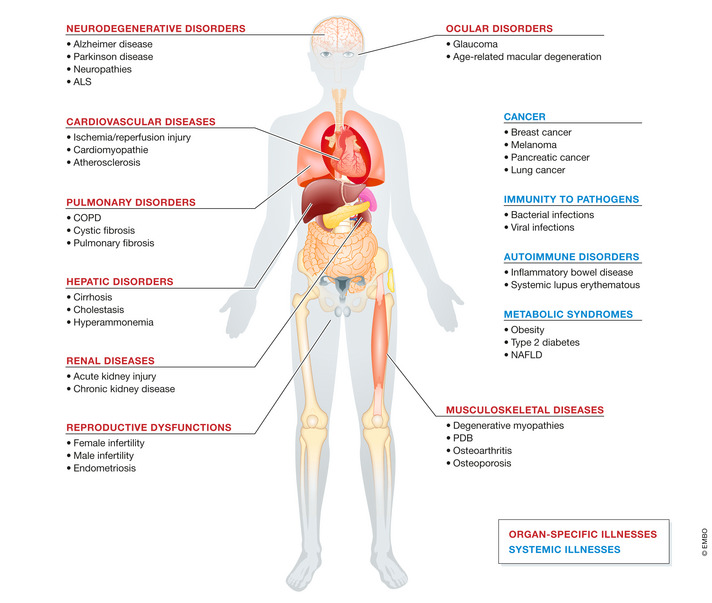
Autophagy is a core molecular pathway for the preservation of cellular and organismal homeostasis. Pharmacological and genetic interventions impairing autophagy responses promote or aggravate disease in a plethora of experimental models. Consistently, mutations in autophagy-related processes cause severe human pathologies. Here, we review and discuss preclinical data linking autophagy dysfunction to the pathogenesis of major human disorders including cancer as well as cardiovascular, neurodegenerative, metabolic, pulmonary, renal, infectious, musculoskeletal, and ocular disorders.
Verified 2026-10-07 · 1 reference not checked yet
Overview
CoChat Summary
TL;DR
This review argues that autophagy dysfunction contributes to the pathogenesis of major human diseases, including cancer, cardiovascular, neurodegenerative, metabolic, pulmonary, renal, infectious, musculoskeletal, and ocular disorders. It synthesizes preclinical genetic mouse-model evidence and human mutation data to propose autophagy modulation as a therapeutic strategy, while emphasizing that effects are highly context-dependent.
Key findings
- Autophagy defects are especially detrimental in post-mitotic cells (e.g., neurons, cardiomyocytes, memory T cells), and autophagic proficiency declines with age, contributing to multiple pathologies of the elderly.
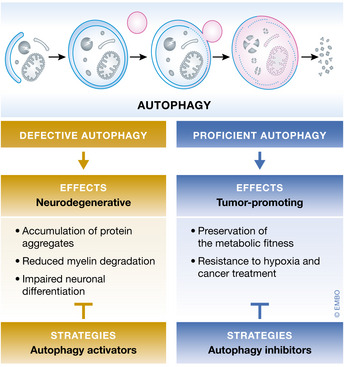
- In cancer, autophagy can be tumor-suppressive in healthy cells but tumor-promoting in established tumors; autophagy inhibition can improve anticancer immunity, e.g., ATG4B dominant-negative PDAC cells show increased MHC class I surface expression and CD8+ T-cell lysis.
- In Paget disease of bone, SQSTM1/p62 mutations are found in approximately 10% of patients; Optn deletion in mice recapitulates PDB-like bone lesions via decreased type I IFN production.
- In cystic fibrosis, TGM2 loss of function increases CFTR function by approximately 40% in a CF mouse model; VPS13D mutations occurred in 3 of 64 children with Leigh syndrome features.
Methods
- Design: narrative review; no primary experiments or new patient data.
- Data/sample: preclinical literature, especially murine genetic models of autophagy deficiency and human disease-associated mutations, organized by disease system (neurodegenerative, cardiovascular, musculoskeletal, pulmonary, kidney, metabolic, liver, cancer, immunity/inflammation, ocular, reproductive).
- Main analysis: qualitative synthesis of cited studies; tables summarize genetic interventions and disease phenotypes. No systematic review, meta-analysis, or quantitative pooling is described.
Limitations
- Stated: conditional knockout mouse models are limited because they are often non-inducible and establish autophagy defects during development, failing to recapitulate acute adult autophagy defects; they also cannot capture non-cell-autonomous and systemic interactions.
- Stated: because autophagy intersects with LAP, LANDO, and RCD, and most findings rely on deletion/downregulation of single autophagy components, phenotypes may arise from non-autophagic pathways; future studies should delete more than one autophagy gene and use models distinguishing canonical from non-canonical autophagy.
- Stated: human clinical studies, ideally at pre-pathological stages, are needed. Evident: as a narrative review, it does not provide a systematic search strategy or quantitative synthesis, so conclusions depend on the selected preclinical literature.
Model-written summary of a shortened version of the paper’s full text (it is longer than we read). Check it against the paper before relying on it.
Integrity signals
Registry
Cites
Statistics
Figures
Verification
Claims the paper makes
115 Valid · 10 Not valid · 431 Not checked · 39 Own results and interpretations
At least one cited source doesn’t support this claim or points to a different paper, and none confirmed it — see the verdicts below.
In the paper
“| IRI | Conditional cardiomyocyte‐specific deletion of mTORC1 | Exacerbated hypoxic injury and cardiomyocyte apoptosis after autophagy restoration | Sciarretta et al (2012) |”
§ Autophagy in major human diseases > Cardiovascular diseases
What the sources say
- Disputedcites Sciarretta et al (2012) matched to “Rheb is a Critical Regulator of Autophagy During Myocardial Ischemia: Pathophysiological Implications in Obesity and Metabolic Syndrome” (2012) sourceExperimental — accuracy not yet measured
The Results section on high-fat-diet-induced obesity reports that inducible cardiac-specific heterozygous mTOR deletion increased autophagy but reduced, rather than exacerbated, myocardial infarct size. The Abstract’s Methods and Results section likewise reports that restoring autophagy through mTORC1 inhibition reduced cardiomyocyte death. The supplied passages do not give page numbers. (LLM, conf=0.91)
Checked by a reasoning model — may be wrong.
plainstates a cause- Asserted: passes — The authors put it forward as true.
- Checkable: passes — It can be checked against evidence.
- Load-bearing: unclear — It is unclear whether the paper’s conclusions depend on it.
- Based: passes — The paper gives a reason why it holds.
- Disputed
At least one cited source doesn’t support this claim or points to a different paper, and none confirmed it — see the verdicts below.
In the paper
“Furthermore, HDAC6‐mediated deacetylation of TFEB, which triggers transcriptional autophagy activation, improves the outcome of DKD in rats (Brijmohan et al, 2018).”
§ Autophagy in major human diseases > Kidney diseases > Diabetic kidney disease
What the sources say
- Disputedcites Brijmohan et al, 2018 matched to “HDAC6 Inhibition Promotes Transcription Factor EB Activation and Is Protective in Experimental Kidney Disease” (2018) sourceExperimental — accuracy not yet measured
The Discussion says HDAC6 deacetylates TFEB and limits its activity, whereas HDAC6 inhibition increases TFEB acetylation and activity and protects subtotally nephrectomized rats. Thus the claimed direction of the mechanism is reversed. The rat model was chronic kidney disease, not diabetic kidney disease. (LLM, conf=0.90)
Checked by a reasoning model — may be wrong.
plainstates a cause- Asserted: passes — The authors put it forward as true.
- Checkable: passes — It can be checked against evidence.
- Load-bearing: unclear — It is unclear whether the paper’s conclusions depend on it.
- Based: passes — The paper gives a reason why it holds.
- Disputed
At least one cited source doesn’t support this claim or points to a different paper, and none confirmed it — see the verdicts below.
In the paper
“| Focal segmental glomerulosclerosis | Nephron‐specific deletion of Atg5 or Atg7 | Development of kidney dysfunction by 2 months and organ failure by 6 months | Kawakami et al (2015) |”
§ Autophagy in major human diseases > Kidney diseases > Diabetic kidney disease
What the sources say
- Disputedcites Kawakami et al (2015) matched to “Deficient Autophagy Results in Mitochondrial Dysfunction and FSGS” (2015) sourceExperimental — accuracy not yet measured
The Results section reports that Atg5-mutant mice had normal kidney function at 2 months, with loss of function evident by 4 months—not dysfunction by 2 months. The Atg7 Results section directly contradicts the claimed organ failure: kidney function was unchanged after 6 months, and the mice survived to 1 year. (LLM, conf=0.92)
Checked by a reasoning model — may be wrong.
plainstates a cause- Asserted: passes — The authors put it forward as true.
- Checkable: passes — It can be checked against evidence.
- Load-bearing: unclear — It is unclear whether the paper’s conclusions depend on it.
- Based: passes — The paper gives a reason why it holds.
- Disputed
Some cited sources support this claim and some don’t — read each source’s verdict below.
In the paper
“The genetic inhibition of autophagy in the parenchymal (Settembre et al, 2013), stromal (e.g., endothelial cells) (Hammoutene et al, 2020), and immune (Ilyas et al, 2016) compartment of the liver sensitizes mice to the development of NAFLD via both cell autonomous (Yang et al, 2010) and non‐cell autonomous effects, linked to aberrant inflammatory reactions (Aghajan et al, 2012).”
§ Autophagy in major human diseases > Metabolic syndromes > Non‐alcoholic fatty liver disease
What the sources say
- Supportedcites Settembre et al, 2013 matched to “TFEB controls cellular lipid metabolism through a starvation-induced autoregulatory loop” (2013) source
For this citation only the parenchymal clause is at stake, and our copy supports it: in 'TFEB regulates lipid breakdown in the liver' the authors generated hepatocyte (parenchymal)-specific Atg7 KO mice by HdAD-APOA1-CRE injection, in which autophagy is blocked, and report increased liver size, raised ALT/AST/ALP, p62 and lipid-droplet accumulation, with TFEB overexpression failing to reduce liver lipid content. The Discussion states plainly that in mice 'in which autophagy was genetically suppressed by deletion of Atg7 in the liver' TFEB overexpression 'did not rescue hepatic steatosis'. The paper does not use the term NAFLD and does not address the stromal/immune compartments, cell-autonomous versus non-cell-autonomous mechanisms or the inflammatory component, but those clauses carry their own citations (Hammoutene, Ilyas, Yang, Aghajan) and are not attributed here. (LLM, conf=0.82)
- Not checked yetcites Hammoutene et al, 2020 matched to “A defect in endothelial autophagy occurs in patients with non-alcoholic steatohepatitis and promotes inflammation and fibrosis” (2020) source
- Misattributedcites Ilyas et al, 2016 matched to “Macrophage autophagy limits acute toxic liver injury in mice through down regulation of interleukin-1β” (2016) sourceExperimental — accuracy not yet measured
Our copy of Ilyas et al. (2016) reports no NAFLD/steatosis experiment: its own genetic model (Atg5Δmye, myeloid/macrophage autophagy knockout) is tested for sensitization to acute toxic liver injury from GalN/LPS (Introduction; Results 'Inhibition of macrophage autophagy magnifies GalN/LPS liver injury'; Abstract Methods). The autophagy-in-immune-compartment/steatosis result is explicitly credited to another work it cites — the Discussion (p. 1 of section) contrasts 'that described in a mouse nonalcoholic steatosis model [16]' where 'inflammasome-independent proinflammatory cytokines such as TNF were increased due to a distortion of macrophage polarization to a more proinflammatory M1 phenotype', and the Introduction says 'Recently we demonstrated that in obesity-induced hepatic steatosis impaired macrophage autophagy increases liver inflammation and injury from LPS ... [16]', which the reference list identifies as Liu et al., Autophagy 2015. The only paracrine/non-cell-autonomous data in our copy (Results 'Inhibition of IL-1β blocks liver injury in knockout mice', conditioned-medium neutrophil activation) are likewise in the GalN/LPS setting, not NAFLD. (LLM, conf=0.80) It matches “Impaired macrophage autophagy increases the immune response in obese mice by promoting proinflammatory macrophage polarization” (2015) instead.
Checked by a reasoning model — may be wrong.
plainstates a cause- Asserted: passes — The authors put it forward as true.
- Checkable: passes — It can be checked against evidence.
- Load-bearing: passes — The paper’s conclusions depend on it.
- Based: passes — The paper gives a reason why it holds.
- Supported
Every source the paper cites for this claim was checked and supports it.
In the paper
“both insufficient and overactive nonselective or selective autophagy responses contribute to neurodegeneration (Chu, 2019).”
§ Autophagy in major human diseases > Neurodegenerative disorders
What the sources say
- Supportedcites Chu, 2019 matched to “Mechanisms of selective autophagy and mitophagy: Implications for neurodegenerative diseases” (2019) source
The ‘Cellular quality control and neurodegeneration’ section links both impaired autophagy and excessive mitochondrial degradation to neurodegenerative disease. The ‘Self-eating in neurodegeneration: future perspectives’ section explicitly implicates dysregulation of autophagy in general and selective forms, and says increased autophagy or mitophagy can be detrimental. Page numbers were not supplied. (LLM, conf=0.92)
plainstates a cause- Asserted: passes — The authors put it forward as true.
- Checkable: passes — It can be checked against evidence.
- Load-bearing: passes — The paper’s conclusions depend on it.
- Based: passes — The paper gives a reason why it holds.
- Supported
417 more claims · 99 with their cited sources checked
Create a free account to see all 595 claims and to verify the 603 references still open.
- It may state two separate claims as one. 163
- Probably not a substantial claim. 7
- The quote only partly states this claim. 4
Claims other papers make about this one
Each is checked against this paper’s own text: does it say what the citing paper says it does?
The source backs part of the claim, not all of it — or backs it for a different population, condition or comparison.
In the citing paper
“In patients, loss-of-function mutations of genes that regulate or execute autophagy have been causally linked to a broad spectrum of cardiovascular, infectious, neurodegenerative, metabolic, musculoskeletal, ocular and pulmonary disorders, many of which resemble to premature aging at the histopathological and functional levels 89,90 .”
From Hallmarks of aging: An expanding universe (2023) · cites this paper as [90]
Experimental — accuracy not yet measuredThe cited source says what the claim attributes to it.
In the citing paper
“Thus, in multiple instances, genetic or pharmacological suppression of autophagy can restrain tumor progression in mouse models.153”
From Meta-hallmarks of aging and cancer (2023) · cites this paper as [153]
The cited source says what the claim attributes to it.
In the citing paper
“Hence, autophagy apparently acts as a tumor-suppressive mechanism, that may involve cell-autonomous processes and cancer immunosurveillance 90 .”
From Hallmarks of aging: An expanding universe (2023) · cites this paper as [90]
In the citing paper
“At the cell-autonomous level, baseline autophagy is required for cellular homeostasis, for instance, by eliminating damaged mitochondria (that can produce DNA-damaging ROS or release other pro-inflammatory molecules) and maintaining cellular adenosine triphosphate (ATP) levels for efficient DNA repair.153”
From Meta-hallmarks of aging and cancer (2023) · cites this paper as [153]
In the citing paper
“Hence, autophagy allows cancer cells to increase their resistance to harsh endogenous conditions (such as hypoxia, scarce nutrients, absent trophic factors, or attack by immune effectors) and anticancer chemotherapeutics, radiotherapy, or targeted therapy.153”
From Meta-hallmarks of aging and cancer (2023) · cites this paper as [153]
Self-check
Percentages, sums and reported differences re-computed from the paper’s own numbers.
Each contradiction between two passages listed here was confirmed by an independent check.
Rated minor: it would not touch a result — a value no result rests on, a p-value that stays on the same side of the significance level, or a conflict that is clerical, resolved elsewhere in the paper, or outside its own findings.
In the paper
§ Autophagy in major human diseases > Ocular diseases
“| Cataract | LEC‐specific deletion of Vps34 | Development of congenital cataract and microphthalmia, through an autophagy‐independent mechanism | Morishita et al (2013) |”
§ Autophagy in major human diseases > Ocular diseases
“A similar effect occurs upon pik3c3/vps34 deletion in LECs, which also leads to age‐dependent cataracts (Morishita et al, 2013).”
Rated minor: it would not touch a result — a value no result rests on, a p-value that stays on the same side of the significance level, or a conflict that is clerical, resolved elsewhere in the paper, or outside its own findings.
In the paper
§ Autophagy in major human diseases > Musculoskeletal disorders > Muscular diseases
“| PDB | Whole‐body knock‐in of mutant p62P392L | Increased osteoclastogenic potential of bone microenvironment, but histologically normal bones | Hiruma et al (2008) |”
§ Autophagy in major human diseases > Musculoskeletal disorders > Bone disorders
“a mouse model carrying the P394L mutation exhibits a PDB‐like bone disorder with focal bone lesions, linked to enhanced autophagy activation in osteoclasts and detrimental bone remodeling (Hiruma et al, 2008).”
Citations
Cites
5 retracted
Items 401–600 of 786
PLA2G16 represents a switch between entry and clearance of Picornaviridae
Staring, J., von Castelmur, E., Blomen, V. A., van den Hengel, L. G., Brockmann, M., Baggen, J., Thibaut, H. J., Nieuwenhuis, J., Janssen, H., van Kuppeveld, F. J. M., et al. (2017) · Nature · doi:10.1038/nature21032 · Cited by 201
FGF signalling regulates bone growth through autophagy
Cinque, L., Forrester, A., Bartolomeo, R., Svelto, M., Venditti, R., Montefusco, S., Polishchuk, E., Nusco, E., Rossi, A., Medina, D. L., et al. (2015) · Nature · doi:10.1038/nature16063 · Cited by 199
Mechanisms and context underlying the role of autophagy in cancer metastasis
Dower, C. M., Wills, C. A., Frisch, S. M., & Wang, H.-G. (2018) · Autophagy · doi:10.1080/15548627.2018.1450020 · Cited by 198
Oncogenic KRAS induces NIX-mediated mitophagy to promote pancreatic cancer
Humpton, T. J., Alagesan, B., DeNicola, G. M., Lu, D., Yordanov, G. N., Leonhardt, C. S., Yao, M. A., Alagesan, P., Zaatari, M. N., Park, Y., et al. (2019) · Cancer Discovery · doi:10.1158/2159-8290.cd-18-1409 · Cited by 198
Self-citationAutophagy in stem cells: repair, remodelling and metabolic reprogramming
Boya, P., Codogno, P., & Rodriguez-Muela, N. (2018) · Development · doi:10.1242/dev.146506 · Cited by 197
Self-citationInhibitory effect of dietary lipids on chaperone-mediated autophagy
Rodriguez-Navarro, J. A., Kaushik, S., Koga, H., Dall'Armi, C., Shui, G., Wenk, M. R., Di Paolo, G., & Cuervo, A. M. (2012) · Proceedings of the National Academy of Sciences · doi:10.1073/pnas.1113036109 · Cited by 196
Self-citationMechanisms of Selective Autophagy in Normal Physiology and Cancer
Mancias, J. D., & Kimmelman, A. C. (2016) · Journal of Molecular Biology · doi:10.1016/j.jmb.2016.02.027 · Cited by 196
Autophagy Is a Component of Epithelial Cell Fate in Obstructive Uropathy
Li, L., Zepeda-Orozco, D., Black, R., & Lin, F. (2010) · The American Journal of Pathology · doi:10.2353/ajpath.2010.090345 · Cited by 195
Gut epithelial TSC1/mTOR controls RIPK3-dependent necroptosis in intestinal inflammation and cancer
Xie, Y., Zhao, Y., Shi, L., Li, W., Chen, K., Li, M., Chen, X., Zhang, H., Li, T., Matsuzawa-Ishimoto, Y., et al. (2020) · Journal of Clinical Investigation · doi:10.1172/jci133264 · Cited by 195
Self-citationAntigen processing and presentation
(2019) · International Review of Cell and Molecular Biology · doi:10.1016/bs.ircmb.2019.07.005 · Cited by 194
Kabat, A. M., Harrison, O. J., Riffelmacher, T., Moghaddam, A. E., Pearson, C. F., Laing, A., Abeler-Dörner, L., Forman, S. P., Grencis, R. K., Sattentau, Q., et al. (2016) · eLife · doi:10.7554/elife.12444 · Cited by 193
Self-citationProteostasis in cardiac health and disease
Henning, R. H., & Brundel, B. J. J. M. (2017) · Nature Reviews Cardiology · doi:10.1038/nrcardio.2017.89 · Cited by 193
Autophagy regulates lipid metabolism through selective turnover of NCoR1
Saito, T., Kuma, A., Sugiura, Y., Ichimura, Y., Obata, M., Kitamura, H., Okuda, S., Lee, H.-C., Ikeda, K., Kanegae, Y., et al. (2019) · Nature Communications · doi:10.1038/s41467-019-08829-3 · Cited by 193
Self-citationAutophagy in Neuroprotection and Neurodegeneration: A Question of Balance
Cherra 3rd, S. J., & Chu, C. T. (2008) · Future Neurology · doi:10.2217/14796708.3.3.309 · Cited by 192
Self-citationSciarretta, S., Zhai, P., Shao, D., Zablocki, D., Nagarajan, N., Terada, L. S., Volpe, M., & Sadoshima, J. (2013) · Circulation Research · doi:10.1161/circresaha.113.301787 · Cited by 192
Self-citationmiR-199a impairs autophagy and induces cardiac hypertrophy through mTOR activation
Li, Z., Song, Y., Liu, L., Hou, N., An, X., Zhan, D., Li, Y., Zhou, L., Li, P., Yu, L., et al. (2017) · Cell Death & Differentiation · doi:10.1038/cdd.2015.95 · Cited by 191
High-protein diets increase cardiovascular risk by activating macrophage mTOR to suppress mitophagy
Zhang, X., Sergin, I., Evans, T. D., Jeong, S.-J., Rodriguez-Velez, A., Kapoor, D., Chen, S., Song, E., Holloway, K. B., Crowley, J. R., et al. (2020) · Nature Metabolism · doi:10.1038/s42255-019-0162-4 · Cited by 191
Loss of hepatic chaperone‐mediated autophagy accelerates proteostasis failure in aging
Schneider, J. L., Villarroya, J., Diaz‐Carretero, A., Patel, B., Urbanska, A. M., Thi, M. M., Villarroya, F., Santambrogio, L., & Cuervo, A. M. (2015) · Aging Cell · doi:10.1111/acel.12310 · Cited by 190
Self-citationLévy, J., Cacheux, W., Bara, M. A., L’Hermitte, A., Lepage, P., Fraudeau, M., Trentesaux, C., Lemarchand, J., Durand, A., Crain, A.-M., et al. (2015) · Nature Cell Biology · doi:10.1038/ncb3206 · Cited by 189
Lim, Y.-M., Lim, H., Hur, K. Y., Quan, W., Lee, H.-Y., Cheon, H., Ryu, D., Koo, S.-H., Kim, H. L., Kim, J., et al. (2014) · Nature Communications · doi:10.1038/ncomms5934 · Cited by 189
Hearts deficient in both Mfn1 and Mfn2 are protected against acute myocardial infarction
Hall, A. R., Burke, N., Dongworth, R. K., Kalkhoran, S. B., Dyson, A., Vicencio, J. M., Dorn, G. W., Yellon, D. M., & Hausenloy, D. J. (2016) · Cell Death & Disease · doi:10.1038/cddis.2016.139 · Cited by 189
Liu, H., He, Z., von Rütte, T., Yousefi, S., Hunger, R. E., & Simon, H.-U. (2013) · Science Translational Medicine · doi:10.1126/scitranslmed.3005864 · Cited by 188
Self-citationHammoutene, A., Biquard, L., Lasselin, J., Kheloufi, M., Tanguy, M., Vion, A.-C., Mérian, J., Colnot, N., Loyer, X., Tedgui, A., et al. (2020) · Journal of Hepatology · doi:10.1016/j.jhep.2019.10.028 · Cited by 188
Self-citationSequestosome 1/p62 links familial ALS mutant SOD1 to LC3 via an ubiquitin‐independent mechanism
Gal, J., Ström, A., Kwinter, D. M., Kilty, R., Zhang, J., Shi, P., Fu, W., Wooten, M. W., & Zhu, H. (2009) · Journal of Neurochemistry · doi:10.1111/j.1471-4159.2009.06388.x · Cited by 187
Inflammatory signaling cascades and autophagy in cancer
Monkkonen, T., & Debnath, J. (2018) · Autophagy · doi:10.1080/15548627.2017.1345412 · Cited by 186
Autophagy Regulation of Metabolism Is Required for CD8+ T Cell Anti-tumor Immunity
DeVorkin, L., Pavey, N., Carleton, G., Comber, A., Ho, C., Lim, J., McNamara, E., Huang, H., Kim, P., Zacharias, L. G., et al. (2019) · Cell Reports · doi:10.1016/j.celrep.2019.03.037 · Cited by 185
Self-citationMitophagy-dependent macrophage reprogramming protects against kidney fibrosis
Bhatia, D., Chung, K.-P., Nakahira, K., Patino, E., Rice, M. C., Torres, L. K., Muthukumar, T., Choi, A. M. K., Akchurin, O. M., & Choi, M. E. (2019) · JCI Insight · doi:10.1172/jci.insight.132826 · Cited by 185
Self-citationQuan, W., Hur, K. Y., Lim, Y., Oh, S. H., Lee, J.-C., Kim, K. H., Kim, G. H., Kim, S.-W., Kim, H. L., Lee, M.-K., et al. (2012) · Diabetologia · doi:10.1007/s00125-011-2350-y · Cited by 184
Deletion of the Huntingtin Polyglutamine Stretch Enhances Neuronal Autophagy and Longevity in Mice
Zheng, S., Clabough, E. B. D., Sarkar, S., Futter, M., Rubinsztein, D. C., & Zeitlin, S. O. (2010) · PLoS Genetics · doi:10.1371/journal.pgen.1000838 · Cited by 183
Self-citationLu, H., Yang, H.-L., Zhou, W.-J., Lai, Z.-Z., Qiu, X.-M., Fu, Q., Zhao, J.-Y., Wang, J., Li, D.-J., & Li, M.-Q. (2021) · Autophagy · doi:10.1080/15548627.2020.1833515 · Cited by 179
αKlotho Mitigates Progression of AKI to CKD through Activation of Autophagy
Shi, M., Flores, B., Gillings, N., Bian, A., Cho, H. J., Yan, S., Liu, Y., Levine, B., Moe, O. W., & Hu, M. C. (2016) · Journal of the American Society of Nephrology · doi:10.1681/asn.2015060613 · Cited by 178
Human IAPP–induced pancreatic β cell toxicity and its regulation by autophagy
Shigihara, N., Fukunaka, A., Hara, A., Komiya, K., Honda, A., Uchida, T., Abe, H., Toyofuku, Y., Tamaki, M., Ogihara, T., et al. (2014) · Journal of Clinical Investigation · doi:10.1172/jci69866 · Cited by 177
Self-citationDeficient Autophagy Results in Mitochondrial Dysfunction and FSGS
Kawakami, T., Gomez, I. G., Ren, S., Hudkins, K., Roach, A., Alpers, C. E., Shankland, S. J., D’Agati, V. D., & Duffield, J. S. (2015) · Journal of the American Society of Nephrology · doi:10.1681/asn.2013111202 · Cited by 176
The role of autophagy in resistance to targeted therapies
Mele, L., del Vecchio, V., Liccardo, D., Prisco, C., Schwerdtfeger, M., Robinson, N., Desiderio, V., Tirino, V., Papaccio, G., & La Noce, M. (2020) · Cancer Treatment Reviews · doi:10.1016/j.ctrv.2020.102043 · Cited by 176
Balance between autophagic pathways preserves retinal homeostasis
Rodríguez‐Muela, N., Koga, H., García‐Ledo, L., de la Villa, P., de la Rosa, E. J., Cuervo, A. M., & Boya, P. (2013) · Aging Cell · doi:10.1111/acel.12072 · Cited by 175
Self-citationBoning up on autophagy: The role of autophagy in skeletal biology
Shapiro, I. M., Layfield, R., Lotz, M., Settembre, C., & Whitehouse, C. (2014) · Autophagy · doi:10.4161/auto.26679 · Cited by 175
Coupé, B., Ishii, Y., Dietrich, M. O., Komatsu, M., Horvath, T. L., & Bouret, S. G. (2012) · Cell Metabolism · doi:10.1016/j.cmet.2011.12.016 · Cited by 174
Gutierrez, M. G., Saka, H. A., Chinen, I., Zoppino, F. C. M., Yoshimori, T., Bocco, J. L., & Colombo, M. I. (2007) · Proceedings of the National Academy of Sciences · doi:10.1073/pnas.0601437104 · Cited by 174
Self-citationNi, H.-M., Boggess, N., McGill, M. R., Lebofsky, M., Borude, P., Apte, U., Jaeschke, H., & Ding, W.-X. (2012) · Toxicological Sciences · doi:10.1093/toxsci/kfs133 · Cited by 172
Hsc70-4 Deforms Membranes to Promote Synaptic Protein Turnover by Endosomal Microautophagy
Uytterhoeven, V., Lauwers, E., Maes, I., Miskiewicz, K., Melo, M. N., Swerts, J., Kuenen, S., Wittocx, R., Corthout, N., Marrink, S.-J., et al. (2015) · Neuron · doi:10.1016/j.neuron.2015.10.012 · Cited by 172
Repair, Reuse, Recycle: The Expanding Role of Autophagy in Genome Maintenance
Hewitt, G., & Korolchuk, V. I. (2017) · Trends in Cell Biology · doi:10.1016/j.tcb.2016.11.011 · Cited by 172
Anding, A. L., Wang, C., Chang, T.-K., Sliter, D. A., Powers, C. M., Hofmann, K., Youle, R. J., & Baehrecke, E. H. (2018) · Current Biology · doi:10.1016/j.cub.2017.11.064 · Cited by 172
Self-citationvan Wijk, S. J. L., Fricke, F., Herhaus, L., Gupta, J., Hötte, K., Pampaloni, F., Grumati, P., Kaulich, M., Sou, Y.-S., Komatsu, M., et al. (2017) · Nature Microbiology · doi:10.1038/nmicrobiol.2017.66 · Cited by 171
Montenegro, G., Rebelo, A. P., Connell, J., Allison, R., Babalini, C., D’Aloia, M., Montieri, P., Schüle, R., Ishiura, H., Price, J., et al. (2012) · Journal of Clinical Investigation · doi:10.1172/jci60560 · Cited by 170
Unsaturated fatty acids induce non‐canonical autophagy
Niso‐Santano, M., Malik, S. A., Pietrocola, F., Bravo‐San Pedro, J. M., Mariño, G., Cianfanelli, V., Ben‐Younès, A., Troncoso, R., Markaki, M., Sica, V., et al. (2015) · The EMBO Journal · doi:10.15252/embj.201489363 · Cited by 170
Self-citationAutophagy and Stem Cells: Self-Eating for Self-Renewal
Chang, N. C. (2020) · Frontiers in Cell and Developmental Biology · doi:10.3389/fcell.2020.00138 · Cited by 170
Kuijpers, M., Kochlamazashvili, G., Stumpf, A., Puchkov, D., Swaminathan, A., Lucht, M. T., Krause, E., Maritzen, T., Schmitz, D., & Haucke, V. (2021) · Neuron · doi:10.1016/j.neuron.2020.10.005 · Cited by 170
FIP200 is required for maintenance and differentiation of postnatal neural stem cells
Wang, C., Liang, C.-C., Bian, Z. C., Zhu, Y., & Guan, J.-L. (2013) · Nature Neuroscience · doi:10.1038/nn.3365 · Cited by 169
Mutation in TECPR2 Reveals a Role for Autophagy in Hereditary Spastic Paraparesis
Oz-Levi, D., Ben-Zeev, B., Ruzzo, E. K., Hitomi, Y., Gelman, A., Pelak, K., Anikster, Y., Reznik-Wolf, H., Bar-Joseph, I., Olender, T., et al. (2012) · The American Journal of Human Genetics · doi:10.1016/j.ajhg.2012.09.015 · Cited by 168
Self-citationATP13A2 regulates mitochondrial bioenergetics through macroautophagy
Gusdon, A. M., Zhu, J., Van Houten, B., & Chu, C. T. (2012) · Neurobiology of Disease · doi:10.1016/j.nbd.2011.12.015 · Cited by 167
Self-citationATG16L1 orchestrates interleukin-22 signaling in the intestinal epithelium via cGAS–STING
Aden, K., Tran, F., Ito, G., Sheibani-Tezerji, R., Lipinski, S., Kuiper, J. W., Tschurtschenthaler, M., Saveljeva, S., Bhattacharyya, J., Häsler, R., et al. (2018) · Journal of Experimental Medicine · doi:10.1084/jem.20171029 · Cited by 167
Essential role for the ATG4B protease and autophagy in bleomycin-induced pulmonary fibrosis
Cabrera, S., Maciel, M., Herrera, I., Nava, T., Vergara, F., Gaxiola, M., López-Otín, C., Selman, M., & Pardo, A. (2015) · Autophagy · doi:10.1080/15548627.2015.1034409 · Cited by 163
Hepatitis C Virus Upregulates Beclin1 for Induction of Autophagy and Activates mTOR Signaling
Shrivastava, S., Bhanja Chowdhury, J., Steele, R., Ray, R., & Ray, R. B. (2012) · Journal of Virology · doi:10.1128/jvi.00616-12 · Cited by 163
Mutations in VPS13D lead to a new recessive ataxia with spasticity and mitochondrial defects
Seong, E., Insolera, R., Dulovic, M., Kamsteeg, E., Trinh, J., Brüggemann, N., Sandford, E., Li, S., Ozel, A. B., Li, J. Z., et al. (2018) · Annals of Neurology · doi:10.1002/ana.25220 · Cited by 163
Li, Z.-L., Zhang, H.-L., Huang, Y., Huang, J.-H., Sun, P., Zhou, N.-N., Chen, Y.-H., Mai, J., Wang, Y., Yu, Y., et al. (2020) · Nature Communications · doi:10.1038/s41467-020-17395-y · Cited by 163
Liu, Z.-Z., Hong, C.-G., Hu, W.-B., Chen, M.-L., Duan, R., Li, H.-M., Yue, T., Cao, J., Wang, Z.-X., Chen, C.-Y., et al. (2021) · Autophagy · doi:10.1080/15548627.2020.1839286 · Cited by 163
Insulin secretory granules control autophagy in pancreatic β cells
Goginashvili, A., Zhang, Z., Erbs, E., Spiegelhalter, C., Kessler, P., Mihlan, M., Pasquier, A., Krupina, K., Schieber, N., Cinque, L., et al. (2015) · Science · doi:10.1126/science.aaa2628 · Cited by 160
Neuroprotection by selective neuronal deletion of Atg7 in neonatal brain injury
Xie, C., Ginet, V., Sun, Y., Koike, M., Zhou, K., Li, T., Li, H., Li, Q., Wang, X., Uchiyama, Y., et al. (2016) · Autophagy · doi:10.1080/15548627.2015.1132134 · Cited by 160
Self-citationAMBRA1 regulates cyclin D to guard S-phase entry and genomic integrity
Maiani, E., Milletti, G., Nazio, F., Holdgaard, S. G., Bartkova, J., Rizza, S., Cianfanelli, V., Lorente, M., Simoneschi, D., Di Marco, M., et al. (2021) · Nature · doi:10.1038/s41586-021-03422-5 · Cited by 160
Self-citationSaha, T. (2012) · Autophagy · doi:10.4161/auto.21654 · Cited by 159
Atlastins remodel the endoplasmic reticulum for selective autophagy
Liang, J. R., Lingeman, E., Ahmed, S., & Corn, J. E. (2018) · Journal of Cell Biology · doi:10.1083/jcb.201804185 · Cited by 158
Lee, H., Noh, J.-Y., Oh, Y., Kim, Y., Chang, J.-W., Chung, C.-W., Lee, S.-T., Kim, M., Ryu, H., & Jung, Y.-K. (2012) · Human Molecular Genetics · doi:10.1093/hmg/ddr445 · Cited by 157
The role of dendritic cells in cancer
(2019) · International Review of Cell and Molecular Biology · doi:10.1016/bs.ircmb.2019.07.006 · Cited by 157
Silva, M. C., Nandi, G. A., Tentarelli, S., Gurrell, I. K., Jamier, T., Lucente, D., Dickerson, B. C., Brown, D. G., Brandon, N. J., & Haggarty, S. J. (2020) · Nature Communications · doi:10.1038/s41467-020-16984-1 · Cited by 157
Autophagy regulates hypoxia‐induced osteoclastogenesis through the HIF‐1α/BNIP3 signaling pathway
Zhao, Y., Chen, G., Zhang, W., Xu, N., Zhu, J., Jia, J., Sun, Z., Wang, Y., & Zhao, Y. (2012) · Journal of Cellular Physiology · doi:10.1002/jcp.22768 · Cited by 156
Mitochondrial Protein PGAM5 Regulates Mitophagic Protection against Cell Necroptosis
Lu, W., Sun, J., Yoon, J. S., Zhang, Y., Zheng, L., Murphy, E., Mattson, M. P., & Lenardo, M. J. (2016) · PLOS ONE · doi:10.1371/journal.pone.0147792 · Cited by 156
Yang, H.-Z., Wang, J.-P., Mi, S., Liu, H.-Z., Cui, B., Yan, H.-M., Yan, J., Li, Z., Liu, H., Hua, F., et al. (2012) · The American Journal of Pathology · doi:10.1016/j.ajpath.2011.09.019 · Cited by 155
Autophagy is required for ectoplasmic specialization assembly in sertoli cells
Liu, C., Wang, H., Shang, Y., Liu, W., Song, Z., Zhao, H., Wang, L., Jia, P., Gao, F., Xu, Z., et al. (2016) · Autophagy · doi:10.1080/15548627.2016.1159377 · Cited by 154
Autophagy regulates spermatid differentiation via degradation of PDLIM1
Shang, Y., Wang, H., Jia, P., Zhao, H., Liu, C., Liu, W., Song, Z., Xu, Z., Yang, L., Wang, Y., et al. (2016) · Autophagy · doi:10.1080/15548627.2016.1192750 · Cited by 154
Mutations in FYCO1 Cause Autosomal-Recessive Congenital Cataracts
Chen, J., Ma, Z., Jiao, X., Fariss, R., Kantorow, W. L., Kantorow, M., Pras, E., Frydman, M., Pras, E., Riazuddin, S., et al. (2011) · The American Journal of Human Genetics · doi:10.1016/j.ajhg.2011.05.008 · Cited by 153
Cicchini, M., Chakrabarti, R., Kongara, S., Price, S., Nahar, R., Lozy, F., Zhong, H., Vazquez, A., Kang, Y., & Karantza, V. (2014) · Autophagy · doi:10.4161/auto.34398 · Cited by 153
Self-citationGoode, A., Butler, K., Long, J., Cavey, J., Scott, D., Shaw, B., Sollenberger, J., Gell, C., Johansen, T., Oldham, N. J., et al. (2016) · Autophagy · doi:10.1080/15548627.2016.1170257 · Cited by 153
Self-citationWold, M. S., Lim, J., Lachance, V., Deng, Z., & Yue, Z. (2016) · Molecular Neurodegeneration · doi:10.1186/s13024-016-0141-0 · Cited by 153
Self-citationLysosome biogenesis in health and disease
Bajaj, L., Lotfi, P., Pal, R., Ronza, A. D., Sharma, J., & Sardiello, M. (2019) · Journal of Neurochemistry · doi:10.1111/jnc.14564 · Cited by 153
Sestrin prevents atrophy of disused and aging muscles by integrating anabolic and catabolic signals
Segalés, J., Perdiguero, E., Serrano, A. L., Sousa-Victor, P., Ortet, L., Jardí, M., Budanov, A. V., Garcia-Prat, L., Sandri, M., Thomson, D. M., et al. (2020) · Nature Communications · doi:10.1038/s41467-019-13832-9 · Cited by 153
Autophagy protects the retina from light-induced degeneration
Chen, Y., Sawada, O., Kohno, H., Le, Y.-Z., Subauste, C., Maeda, T., & Maeda, A. (2013) · Journal of Biological Chemistry · doi:10.1074/jbc.m112.439935 · Cited by 152
Mestre, M. B., Fader, C. M., Sola, C., & Colombo, M. I. (2010) · Autophagy · doi:10.4161/auto.6.1.10698 · Cited by 152
Self-citationType 2 Diabetes Variants Disrupt Function of SLC16A11 through Two Distinct Mechanisms
Rusu, V., Hoch, E., Mercader, J. M., Tenen, D. E., Gymrek, M., Hartigan, C. R., DeRan, M., von Grotthuss, M., Fontanillas, P., Spooner, A., et al. (2017) · Cell · doi:10.1016/j.cell.2017.06.011 · Cited by 152
Chi, Z.-L., Akahori, M., Obazawa, M., Minami, M., Noda, T., Nakaya, N., Tomarev, S., Kawase, K., Yamamoto, T., Noda, S., et al. (2010) · Human Molecular Genetics · doi:10.1093/hmg/ddq146 · Cited by 151
King, B. C., Kulak, K., Krus, U., Rosberg, R., Golec, E., Wozniak, K., Gomez, M. F., Zhang, E., O'Connell, D. J., Renström, E., et al. (2019) · Cell Metabolism · doi:10.1016/j.cmet.2018.09.009 · Cited by 151
Autophagy in hepatic adaptation to stress
Hazari, Y., Bravo-San Pedro, J. M., Hetz, C., Galluzzi, L., & Kroemer, G. (2020) · Journal of Hepatology · doi:10.1016/j.jhep.2019.08.026 · Cited by 151
Self-citationBeclin 2 Functions in Autophagy, Degradation of G Protein-Coupled Receptors, and Metabolism
He, C., Wei, Y., Sun, K., Li, B., Dong, X., Zou, Z., Liu, Y., Kinch, L. N., Khan, S., Sinha, S., et al. (2013) · Cell · doi:10.1016/j.cell.2013.07.035 · Cited by 150
Self-citationChen, K., Dai, H., Yuan, J., Chen, J., Lin, L., Zhang, W., Wang, L., Zhang, J., Li, K., & He, Y. (2018) · Cell Death & Disease · doi:10.1038/s41419-017-0127-z · Cited by 150
Self-citationChoi, M. E. (2020) · Annual Review of Physiology · doi:10.1146/annurev-physiol-021119-034658 · Cited by 150
Self-citationUpregulation of Rubicon promotes autosis during myocardial ischemia/reperfusion injury
Nah, J., Zhai, P., Huang, C.-Y., Fernández, Á. F., Mareedu, S., Levine, B., & Sadoshima, J. (2020) · Journal of Clinical Investigation · doi:10.1172/jci132366 · Cited by 150
Self-citationRodríguez‐Muela, N., Hernández‐Pinto, A. M., Serrano‐Puebla, A., García‐Ledo, L., Latorre, S., de la Rosa, E. J., & Boya, P. (2014) · Cell Death and Differentiation · doi:10.1038/cdd.2014.203 · Cited by 149
Self-citationMitophagy in Intestinal Epithelial Cells Triggers Adaptive Immunity during Tumorigenesis
Ziegler, P. K., Bollrath, J., Pallangyo, C. K., Matsutani, T., Canli, Ö., De Oliveira, T., Diamanti, M. A., Müller, N., Gamrekelashvili, J., Putoczki, T., et al. (2018) · Cell · doi:10.1016/j.cell.2018.05.028 · Cited by 149
Defective autophagy in vascular smooth muscle cells enhances cell death and atherosclerosis
Osonoi, Y., Mita, T., Azuma, K., Nakajima, K., Masuyama, A., Goto, H., Nishida, Y., Miyatsuka, T., Fujitani, Y., Koike, M., et al. (2018) · Autophagy · doi:10.1080/15548627.2018.1501132 · Cited by 149
Microglial autophagy–associated phagocytosis is essential for recovery from neuroinflammation
Berglund, R., Guerreiro-Cacais, A. O., Adzemovic, M. Z., Zeitelhofer, M., Lund, H., Ewing, E., Ruhrmann, S., Nutma, E., Parsa, R., Thessen-Hedreul, M., et al. (2020) · Science Immunology · doi:10.1126/sciimmunol.abb5077 · Cited by 149
The autophagy gene Wdr45/Wipi4 regulates learning and memory function and axonal homeostasis
Zhao, Y. G., Sun, L., Miao, G., Ji, C., Zhao, H., Sun, H., Miao, L., Yoshii, S. R., Mizushima, N., Wang, X., et al. (2015) · Autophagy · doi:10.1080/15548627.2015.1047127 · Cited by 148
Self-citationAtrogin-1 deficiency promotes cardiomyopathy and premature death via impaired autophagy
Zaglia, T., Milan, G., Ruhs, A., Franzoso, M., Bertaggia, E., Pianca, N., Carpi, A., Carullo, P., Pesce, P., Sacerdoti, D., et al. (2014) · Journal of Clinical Investigation · doi:10.1172/jci66339 · Cited by 147
Autophagy Mediates Tolerance to Staphylococcus aureus Alpha-Toxin
Maurer, K., Reyes-Robles, T., Alonzo, F., Durbin, J., Torres, V. J., & Cadwell, K. (2015) · Cell Host & Microbe · doi:10.1016/j.chom.2015.03.001 · Cited by 146
Self-citationInvolvement of PARK2-Mediated Mitophagy in Idiopathic Pulmonary Fibrosis Pathogenesis
Kobayashi, K., Araya, J., Minagawa, S., Hara, H., Saito, N., Kadota, T., Sato, N., Yoshida, M., Tsubouchi, K., Kurita, Y., et al. (2016) · The Journal of Immunology · doi:10.4049/jimmunol.1600265 · Cited by 145
Ilyas, G., Zhao, E., Liu, K., Lin, Y., Tesfa, L., Tanaka, K. E., & Czaja, M. J. (2016) · Journal of Hepatology · doi:10.1016/j.jhep.2015.08.019 · Cited by 144
Cenni, M. C., Bonfanti, L., Martinou, J., Ratto, G. M., Strettoi, E., & Maffei, L. B. (1996) · European Journal of Neuroscience · doi:10.1111/j.1460-9568.1996.tb01317.x · Cited by 144
Dopamine-modified α-synuclein blocks chaperone-mediated autophagy
Martinez-Vicente, M., Talloczy, Z., Kaushik, S., Massey, A. C., Mazzulli, J., Mosharov, E. V., Hodara, R., Fredenburg, R., Wu, D.-C., Follenzi, A., et al. (2008) · Journal of Clinical Investigation · doi:10.1172/jci32806 · Cited by 144
Self-citationValapala, M., Wilson, C., Hose, S., Bhutto, I. A., Grebe, R., Dong, A., Greenbaum, S., Gu, L., Sengupta, S., Cano, M., et al. (2014) · Autophagy · doi:10.4161/auto.27292 · Cited by 144
Pernas, L., Bean, C., Boothroyd, J. C., & Scorrano, L. (2018) · Cell Metabolism · doi:10.1016/j.cmet.2018.02.018 · Cited by 144
Self-citationAutophagy Differentially Regulates Insulin Production and Insulin Sensitivity
Yamamoto, S., Kuramoto, K., Wang, N., Situ, X., Priyadarshini, M., Zhang, W., Cordoba-Chacon, J., Layden, B. T., & He, C. (2018) · Cell Reports · doi:10.1016/j.celrep.2018.05.032 · Cited by 144
Guelly, C., Zhu, P.-P., Leonardis, L., Papić, L., Zidar, J., Schabhüttl, M., Strohmaier, H., Weis, J., Strom, T. M., Baets, J., et al. (2011) · The American Journal of Human Genetics · doi:10.1016/j.ajhg.2010.12.003 · Cited by 143
Lu, X., Altshuler-Keylin, S., Wang, Q., Chen, Y., Henrique Sponton, C., Ikeda, K., Maretich, P., Yoneshiro, T., & Kajimura, S. (2018) · Science Signaling · doi:10.1126/scisignal.aap8526 · Cited by 143
Loss of TAX1BP1-Directed Autophagy Results in Protein Aggregate Accumulation in the Brain
Sarraf, S. A., Shah, H. V., Kanfer, G., Pickrell, A. M., Holtzclaw, L. A., Ward, M. E., & Youle, R. J. (2020) · Molecular Cell · doi:10.1016/j.molcel.2020.10.041 · Cited by 143
Pastore, N., Blomenkamp, K., Annunziata, F., Piccolo, P., Mithbaokar, P., Maria Sepe, R., Vetrini, F., Palmer, D., Ng, P., Polishchuk, E., et al. (2013) · EMBO Molecular Medicine · doi:10.1002/emmm.201202046 · Cited by 142
Self-citationHübner, C. A., & Đikić, I. (2019) · Cell Death and Differentiation · doi:10.1038/s41418-019-0444-0 · Cited by 142
Morishita, H., Eguchi, S., Kimura, H., Sasaki, J., Sakamaki, Y., Robinson, M. L., Sasaki, T., & Mizushima, N. (2013) · Journal of Biological Chemistry · doi:10.1074/jbc.m112.437103 · Cited by 141
Self-citationProgranulin deficiency causes impairment of autophagy and TDP-43 accumulation
Chang, M. C., Srinivasan, K., Friedman, B. A., Suto, E., Modrusan, Z., Lee, W. P., Kaminker, J. S., Hansen, D. V., & Sheng, M. (2017) · Journal of Experimental Medicine · doi:10.1084/jem.20160999 · Cited by 141
Reduced apoptosis correlates with enhanced autophagy in synovial tissues of rheumatoid arthritis
Xu, K., Xu, P., Yao, J., Zhang, Y., Hou, W., & Lu, S. (2012) · Inflammation Research · doi:10.1007/s00011-012-0572-1 · Cited by 139
Tanchot, C., Terme, M., Pere, H., Tran, T., Benhamouda, N., Strioga, M., Banissi, C., Galluzzi, L., Kroemer, G., & Tartour, E. (2013) · Cancer Microenvironment · doi:10.1007/s12307-012-0122-y · Cited by 138
Self-citationAutophagy and misfolded proteins in neurodegeneration
Metcalf, D. J., García-Arencibia, M., Hochfeld, W. E., & Rubinsztein, D. C. (2012) · Experimental Neurology · doi:10.1016/j.expneurol.2010.11.003 · Cited by 138
Self-citationMinegishi, Y., Iejima, D., Kobayashi, H., Chi, Z.-L., Kawase, K., Yamamoto, T., Seki, T., Yuasa, S., Fukuda, K., & Iwata, T. (2013) · Human Molecular Genetics · doi:10.1093/hmg/ddt210 · Cited by 138
Akt Suppresses Retrograde Degeneration of Dopaminergic Axons by Inhibition of Macroautophagy
Cheng, H.-C., Kim, S. R., Oo, T. F., Kareva, T., Yarygina, O., Rzhetskaya, M., Wang, C., During, M., Talloczy, Z., Tanaka, K., et al. (2011) · The Journal of Neuroscience · doi:10.1523/jneurosci.5519-10.2011 · Cited by 136
Hepatitis C virus triggers Golgi fragmentation and autophagy through the immunity-related GTPase M
Hansen, M. D., Johnsen, I. B., Stiberg, K. A., Sherstova, T., Wakita, T., Richard, G. M., Kandasamy, R. K., Meurs, E. F., & Anthonsen, M. W. (2017) · Proceedings of the National Academy of Sciences · doi:10.1073/pnas.1616683114 · Cited by 136
Self-citationRusso, R., Varano, G. P., Adornetto, A., Nazio, F., Tettamanti, G., Girardello, R., Cianfanelli, V., Cavaliere, F., Morrone, L. A., Corasaniti, M. T., et al. (2018) · Cell Death and Disease · doi:10.1038/s41419-018-1044-5 · Cited by 136
Self-citationWang, K., Zhang, T., Lei, Y., Li, X., Jiang, J., Lan, J., Liu, Y., Chen, H., Gao, W., Xie, N., et al. (2018) · Autophagy · doi:10.1080/15548627.2017.1409405 · Cited by 134
Huo, Y., Cai, H., Teplova, I., Bowman-Colin, C., Chen, G., Price, S., Barnard, N., Ganesan, S., Karantza, V., White, E., et al. (2013) · Cancer Discovery · doi:10.1158/2159-8290.cd-13-0011 · Cited by 133
Self-citationVps34 Deficiency Reveals the Importance of Endocytosis for Podocyte Homeostasis
Bechtel, W., Helmstädter, M., Balica, J., Hartleben, B., Kiefer, B., Hrnjic, F., Schell, C., Kretz, O., Liu, S., Geist, F., et al. (2013) · Journal of the American Society of Nephrology · doi:10.1681/asn.2012070700 · Cited by 132
Deletion of autophagy inducer RB1CC1 results in degeneration of the retinal pigment epithelium
Yao, J., Jia, L., Khan, N., Lin, C., Mitter, S. K., Boulton, M. E., Dunaief, J. L., Klionsky, D. J., Guan, J.-L., Thompson, D. A., et al. (2015) · Autophagy · doi:10.1080/15548627.2015.1041699 · Cited by 130
Self-citationChen, X., Wang, K., Xing, Y., Tu, J., Yang, X., Zhao, Q., Li, K., & Chen, Z. (2014) · Protein & Cell · doi:10.1007/s13238-014-0104-6 · Cited by 130
Mice deficient in Epg5 exhibit selective neuronal vulnerability to degeneration
Zhao, H., Zhao, Y. G., Wang, X., Xu, L., Miao, L., Feng, D., Chen, Q., Kovács, A. L., Fan, D., & Zhang, H. (2013) · Journal of Cell Biology · doi:10.1083/jcb.201211014 · Cited by 130
PKG1-modified TSC2 regulates mTORC1 activity to counter adverse cardiac stress
Ranek, M. J., Kokkonen-Simon, K. M., Chen, A., Dunkerly-Eyring, B. L., Vera, M. P., Oeing, C. U., Patel, C. H., Nakamura, T., Zhu, G., Bedja, D., et al. (2019) · Nature · doi:10.1038/s41586-019-0895-y · Cited by 130
Hormesis, cell death and aging
Martins, I., Galluzzi, L., & Kroemer, G. (2011) · Aging · doi:10.18632/aging.100380 · Cited by 128
Self-citationThe MHC I immunopeptidome conveys to the cell surface an integrative view of cellular regulation
Caron, E., Vincent, K., Fortier, M., Laverdure, J., Bramoullé, A., Hardy, M., Voisin, G., Roux, P. P., Lemieux, S., Thibault, P., et al. (2011) · Molecular Systems Biology · doi:10.1038/msb.2011.68 · Cited by 128
TECPR2 Cooperates with LC3C to Regulate COPII-Dependent ER Export
Stadel, D., Millarte, V., Tillmann, K. D., Huber, J., Tamin-Yecheskel, B.-C., Akutsu, M., Demishtein, A., Ben-Zeev, B., Anikster, Y., Perez, F., et al. (2015) · Molecular Cell · doi:10.1016/j.molcel.2015.09.010 · Cited by 128
Self-citationVerma, M., Callio, J., Otero, P. A., Sekler, I., Wills, Z. P., & Chu, C. T. (2017) · The Journal of Neuroscience · doi:10.1523/jneurosci.3791-16.2017 · Cited by 128
Self-citationYoshii, S. R., Kuma, A., Akashi, T., Hara, T., Yamamoto, A., Kurikawa, Y., Itakura, E., Tsukamoto, S., Shitara, H., Eishi, Y., et al. (2016) · Developmental Cell · doi:10.1016/j.devcel.2016.09.001 · Cited by 127
Self-citationLiu, H., Zhang, Z., Xiong, W., Zhang, L., Xiong, Y., Li, N., He, H., Du, Y., & Liu, Y. (2017) · Reproduction · doi:10.1530/rep-16-0643 · Cited by 127
Recessive mutations in VPS13D cause childhood onset movement disorders
Gauthier, J., Meijer, I. A., Lessel, D., Mencacci, N. E., Krainc, D., Hempel, M., Tsiakas, K., Prokisch, H., Rossignol, E., Helm, M. H., et al. (2018) · Annals of Neurology · doi:10.1002/ana.25204 · Cited by 127
Autophagy in animal development
Allen, E. A., & Baehrecke, E. H. (2020) · Cell Death & Differentiation · doi:10.1038/s41418-020-0497-0 · Cited by 127
Self-citationAcyl-CoA-Binding Protein Is a Lipogenic Factor that Triggers Food Intake and Obesity
Bravo-San Pedro, J. M., Sica, V., Martins, I., Pol, J., Loos, F., Maiuri, M. C., Durand, S., Bossut, N., Aprahamian, F., Anagnostopoulos, G., et al. (2019) · Cell Metabolism · doi:10.1016/j.cmet.2019.07.010 · Cited by 126
Self-citationAutophagic Degradation of NBR1 Restricts Metastatic Outgrowth during Mammary Tumor Progression
Marsh, T., Kenific, C. M., Suresh, D., Velozo, H. G., Shamir, E. R., Mei, W., Tankka, A. T., Leidal, A. M., Kalavacherla, S., Woo, K., et al. (2020) · Developmental Cell · doi:10.1016/j.devcel.2020.01.025 · Cited by 126
Impaired dopamine release and synaptic plasticity in the striatum of Parkin−/− mice
Kitada, T., Pisani, A., Karouani, M., Haburcak, M., Martella, G., Tscherter, A., Platania, P., Wu, B., Pothos, E. N., & Shen, J. (2009) · Journal of Neurochemistry · doi:10.1111/j.1471-4159.2009.06152.x · Cited by 125
Mealer, R. G., Murray, A. J., Shahani, N., Subramaniam, S., & Snyder, S. H. (2014) · Journal of Biological Chemistry · doi:10.1074/jbc.m113.536912 · Cited by 124
Type I interferons and dendritic cells in cancer immunotherapy
(2019) · International Review of Cell and Molecular Biology · doi:10.1016/bs.ircmb.2019.06.001 · Cited by 124
Steele, S., Brunton, J., Ziehr, B., Taft-Benz, S., Moorman, N., & Kawula, T. (2013) · PLoS Pathogens · doi:10.1371/journal.ppat.1003562 · Cited by 123
Inactivation of autophagy ameliorates glucocorticoid-induced and ovariectomy-induced bone loss
Lin, N.-Y., Chen, C.-W., Kagwiria, R., Liang, R., Beyer, C., Distler, A., Luther, J., Engelke, K., Schett, G., & Distler, J. H. (2016) · Annals of the Rheumatic Diseases · doi:10.1136/annrheumdis-2015-207240 · Cited by 123
Autophagy is impaired in cardiac ischemia-reperfusion injury
Ma, X., Liu, H., Foyil, S. R., Godar, R. J., Weinheimer, C. J., & Diwan, A. (2012) · Autophagy · doi:10.4161/auto.21036 · Cited by 122
Degradation of HK2 by chaperone-mediated autophagy promotes metabolic catastrophe and cell death
Xia, H.-G., Najafov, A., Geng, J., Galan-Acosta, L., Han, X., Guo, Y., Shan, B., Zhang, Y., Norberg, E., Zhang, T., et al. (2015) · Journal of Cell Biology · doi:10.1083/jcb.201503044 · Cited by 122
Self-citationChen, H., Zhang, C., Wang, H., & Zhao, L. (2021) · OncoImmunology · doi:10.1080/2162402x.2021.1887552 · Cited by 121
Lee, Y.-R., Kuo, S.-H., Lin, C.-Y., Fu, P.-J., Lin, Y.-S., Yeh, T.-M., & Liu, H.-S. (2018) · Scientific Reports · doi:10.1038/s41598-017-18909-3 · Cited by 120
B cell autophagy mediates TLR7-dependent autoimmunity and inflammation
Weindel, C. G., Richey, L. J., Bolland, S., Mehta, A. J., Kearney, J. F., & Huber, B. T. (2015) · Autophagy · doi:10.1080/15548627.2015.1052206 · Cited by 119
Zhang, L., Guo, Y.-F., Liu, Y.-Z., Liu, Y.-J., Xiong, D.-H., Liu, X.-G., Wang, L., Yang, T.-L., Lei, S.-F., Guo, Y., et al. (2010) · Journal of Bone and Mineral Research · doi:10.1002/jbmr.36 · Cited by 119
Satellite cell senescence underlies myopathy in a mouse model of limb-girdle muscular dystrophy 2H
Kudryashova, E., Kramerova, I., & Spencer, M. J. (2012) · Journal of Clinical Investigation · doi:10.1172/jci59581 · Cited by 119
β-cell autophagy: Mechanism and role in β-cell dysfunction
Lee, Y., Kim, J., Park, K., & Lee, M. (2019) · Molecular Metabolism · doi:10.1016/j.molmet.2019.06.014 · Cited by 119
Ladoire, S., Enot, D., Senovilla, L., Ghiringhelli, F., Poirier-Colame, V., Chaba, K., Semeraro, M., Chaix, M., Penault-Llorca, F., Arnould, L., et al. (2016) · Autophagy · doi:10.1080/15548627.2016.1154244 · Cited by 117
Self-citationValdor, R., García‐Bernal, D., Riquelme, D., Martínez, C. M., Moraleda, J. M., Cuervo, A. M., Macián, F., & Martínez, S. (2019) · Proceedings of the National Academy of Sciences · doi:10.1073/pnas.1903542116 · Cited by 115
Self-citationAutophagy, an important therapeutic target for pulmonary fibrosis diseases
Zhao, H., Wang, Y., Qiu, T., Liu, W., & Yao, P. (2020) · Clinica Chimica Acta · doi:10.1016/j.cca.2019.12.016 · Cited by 115
Nogalska, A., D'Agostino, C., Terracciano, C., Engel, W. K., & Askanas, V. (2010) · The American Journal of Pathology · doi:10.2353/ajpath.2010.100050 · Cited by 114
Global Analysis of Host and Bacterial Ubiquitinome in Response to Salmonella Typhimurium Infection
Fiskin, E., Bionda, T., Dikic, I., & Behrends, C. (2016) · Molecular Cell · doi:10.1016/j.molcel.2016.04.015 · Cited by 114
Yu, J.-J., Sun, H.-T., Zhang, Z.-F., Shi, R.-X., Liu, L.-B., Shang, W.-Q., Wei, C.-Y., Chang, K.-K., Shao, J., Wang, M.-Y., et al. (2016) · Reproduction · doi:10.1530/rep-16-0089 · Cited by 114
Park, S. M., Lim, J. S., Ramakrishina, S., Kim, S. H., Kim, W. K., Lee, J., Kang, H.-C., Reiter, J. F., Kim, D. S., Kim, H. (., et al. (2018) · Neuron · doi:10.1016/j.neuron.2018.05.039 · Cited by 114
Noncanonical function of an autophagy protein prevents spontaneous Alzheimer’s disease
Heckmann, B. L., Teubner, B. J. W., Boada-Romero, E., Tummers, B., Guy, C., Fitzgerald, P., Mayer, U., Carding, S., Zakharenko, S. S., Wileman, T., et al. (2020) · Science Advances · doi:10.1126/sciadv.abb9036 · Cited by 114
Self-citationAutophagy Deficiency by Hepatic FIP200 Deletion Uncouples Steatosis From Liver Injury in NAFLD
Ma, D., Molusky, M. M., Song, J., Hu, C.-R., Fang, F., Rui, C., Mathew, A. V., Pennathur, S., Liu, F., Cheng, J.-X., et al. (2013) · Molecular Endocrinology · doi:10.1210/me.2013-1153 · Cited by 113
Mitochondrial copper homeostasis and its derailment in Wilson disease
Zischka, H., & Einer, C. (2018) · The International Journal of Biochemistry & Cell Biology · doi:10.1016/j.biocel.2018.07.001 · Cited by 113
Organelle degradation in the lens by PLAAT phospholipases
Morishita, H., Eguchi, T., Tsukamoto, S., Sakamaki, Y., Takahashi, S., Saito, C., Koyama-Honda, I., & Mizushima, N. (2021) · Nature · doi:10.1038/s41586-021-03439-w · Cited by 111
Self-citationHubbi, M. E., Gilkes, D. M., Hu, H., Kshitiz, Ahmed, I., & Semenza, G. L. (2014) · Proceedings of the National Academy of Sciences · doi:10.1073/pnas.1412840111 · Cited by 110
Sensory neuropathy with bone destruction due to a mutation in the membrane-shaping atlastin GTPase 3
Kornak, U., Mademan, I., Schinke, M., Voigt, M., Krawitz, P., Hecht, J., Barvencik, F., Schinke, T., Gießelmann, S., Beil, F. T., et al. (2014) · Brain · doi:10.1093/brain/awt357 · Cited by 109
Fernández, Á. F., Bárcena, C., Martínez-García, G. G., Tamargo-Gómez, I., Suárez, M. F., Pietrocola, F., Castoldi, F., Esteban, L., Sierra-Filardi, E., Boya, P., et al. (2017) · Cell Death & Disease · doi:10.1038/cddis.2017.373 · Cited by 109
Self-citationIershov, A., Nemazanyy, I., Alkhoury, C., Girard, M., Barth, E., Cagnard, N., Montagner, A., Chretien, D., Rugarli, E. I., Guillou, H., et al. (2019) · Nature Communications · doi:10.1038/s41467-019-09598-9 · Cited by 109
Axonal protection by Nmnat3 overexpression with involvement of autophagy in optic nerve degeneration
Kitaoka, Y., Munemasa, Y., Kojima, K., Hirano, A., Ueno, S., & Takagi, H. (2013) · Cell Death & Disease · doi:10.1038/cddis.2013.391 · Cited by 108
Temporal inhibition of autophagy reveals segmental reversal of ageing with increased cancer risk
Cassidy, L. D., Young, A. R. J., Young, C. N. J., Soilleux, E. J., Fielder, E., Weigand, B. M., Lagnado, A., Brais, R., Ktistakis, N. T., Wiggins, K. A., et al. (2020) · Nature Communications · doi:10.1038/s41467-019-14187-x · Cited by 108
Self-citationGomes, L. R., Menck, C. F. M., & Cuervo, A. M. (2017) · Autophagy · doi:10.1080/15548627.2017.1293767 · Cited by 107
Self-citationCai, J., Pires, K. M., Ferhat, M., Chaurasia, B., Buffolo, M. A., Smalling, R., Sargsyan, A., Atkinson, D. L., Summers, S. A., Graham, T. E., et al. (2018) · Cell Reports · doi:10.1016/j.celrep.2018.10.040 · Cited by 107
Di Rienzo, M., Antonioli, M., Fusco, C., Liu, Y., Mari, M., Orhon, I., Refolo, G., Germani, F., Corazzari, M., Romagnoli, A., et al. (2019) · Science Advances · doi:10.1126/sciadv.aau8857 · Cited by 107
Self-citationPoillet-Perez, L., Sharp, D. W., Yang, Y., Laddha, S. V., Ibrahim, M., Bommareddy, P. K., Hu, Z. S., Vieth, J., Haas, M., Bosenberg, M. W., et al. (2020) · Nature Cancer · doi:10.1038/s43018-020-00110-7 · Cited by 107
Modulation of deregulated chaperone-mediated autophagy by a phosphopeptide
Macri, C., Wang, F., Tasset, I., Schall, N., Page, N., Briand, J.-P., Cuervo, A. M., & Muller, S. (2015) · Autophagy · doi:10.1080/15548627.2015.1017179 · Cited by 106
Self-citationBeetz, C., Johnson, A., Schuh, A. L., Thakur, S., Varga, R.-E., Fothergill, T., Hertel, N., Bomba-Warczak, E., Thiele, H., Nürnberg, G., et al. (2013) · Proceedings of the National Academy of Sciences · doi:10.1073/pnas.1217197110 · Cited by 106
The Role of Autophagy in Human Endometrium1
Choi, J., Jo, M., Lee, E., Oh, Y. K., & Choi, D. (2011) · Biology of Reproduction · doi:10.1095/biolreprod.111.096206 · Cited by 106
Lotfi, P., Tse, D. Y., Di Ronza, A., Seymour, M. L., Martano, G., Cooper, J. D., Pereira, F. A., Passafaro, M., Wu, S. M., & Sardiello, M. (2018) · Autophagy · doi:10.1080/15548627.2018.1474313 · Cited by 106
Tittarelli, A., Janji, B., Van Moer, K., Noman, M. Z., & Chouaib, S. (2015) · Journal of Biological Chemistry · doi:10.1074/jbc.m115.651547 · Cited by 105
Chaperone-mediated autophagy regulates proliferation by targeting RND3 in gastric cancer
Zhou, J., Yang, J., Fan, X., Hu, S., Zhou, F., Dong, J., Zhang, S., Shang, Y., Jiang, X., Guo, H., et al. (2016) · Autophagy · doi:10.1080/15548627.2015.1136770 · Cited by 104
The Retromer Complex: From Genesis to Revelations
Seaman, M. N. J. (2021) · Trends in Biochemical Sciences · doi:10.1016/j.tibs.2020.12.009 · Cited by 104
Autophagy and polyglutamine diseases
Jimenez-Sanchez, M., Thomson, F., Zavodszky, E., & Rubinsztein, D. C. (2012) · Progress in Neurobiology · doi:10.1016/j.pneurobio.2011.08.013 · Cited by 103
Self-citationGolgi membrane‐associated degradation pathway in yeast and mammals
Yamaguchi, H., Arakawa, S., Kanaseki, T., Miyatsuka, T., Fujitani, Y., Watada, H., Tsujimoto, Y., & Shimizu, S. (2016) · The EMBO Journal · doi:10.15252/embj.201593191 · Cited by 103
Wang, C., Shen, J., Ying, J., Xiao, D., & O’Keefe, R. J. (2020) · Proceedings of the National Academy of Sciences · doi:10.1073/pnas.2017056117 · Cited by 103
Zafar, I., Ravichandran, K., Belibi, F. A., Doctor, R. B., & Edelstein, C. L. (2010) · Kidney International · doi:10.1038/ki.2010.250 · Cited by 102
Gerbino, V., Kaunga, E., Ye, J., Canzio, D., O’Keeffe, S., Rudnick, N. D., Guarnieri, P., Lutz, C. M., & Maniatis, T. (2020) · Neuron · doi:10.1016/j.neuron.2020.03.005 · Cited by 102
Autophagy as a Potential Target for Sarcopenia: AUTOPHAGY REGULATION IN SARCOPENIA
Fan, J., Kou, X., Jia, S., Yang, X., Yang, Y., & Chen, N. (2016) · Journal of Cellular Physiology · doi:10.1002/jcp.25260 · Cited by 101
Reactivation of autophagy by spermidine ameliorates the myopathic defects of collagen VI-null mice
Chrisam, M., Pirozzi, M., Castagnaro, S., Blaauw, B., Polishchuck, R., Cecconi, F., Grumati, P., & Bonaldo, P. (2015) · Autophagy · doi:10.1080/15548627.2015.1108508 · Cited by 101
Self-citationLipid droplets and lipotoxicity during autophagy
Nguyen, T. B., & Olzmann, J. A. (2017) · Autophagy · doi:10.1080/15548627.2017.1359451 · Cited by 101
Pathogenic role of BECN1/Beclin 1 in the development of amyotrophic lateral sclerosis
Nassif, M., Valenzuela, V., Rojas-Rivera, D., Vidal, R., Matus, S., Castillo, K., Fuentealba, Y., Kroemer, G., Levine, B., & Hetz, C. (2014) · Autophagy · doi:10.4161/auto.28784 · Cited by 100
Self-citationSong, C., Mitter, S. K., Qi, X., Beli, E., Rao, H. V., Ding, J., Ip, C. S., Gu, H., Akin, D., Dunn, W. A., et al. (2017) · PLoS ONE · doi:10.1371/journal.pone.0171940 · Cited by 100
Eggermann, K., Gess, B., Häusler, M., Weis, J., Hahn, A., & Kurth, I. (2018) · Deutsches Ärzteblatt international · doi:10.3238/arztebl.2018.0091 · Cited by 100
Autophagy promotes mammalian survival by suppressing oxidative stress and p53
Yang, Y., Karsli-Uzunbas, G., Poillet-Perez, L., Sawant, A., Hu, Z. S., Zhao, Y., Moore, D., Hu, W., & White, E. (2020) · Genes & Development · doi:10.1101/gad.335570.119 · Cited by 100
Zhang, J., Bai, Y., Huang, L., Qi, Y., Zhang, Q., Li, S., Wu, Y., & Li, X. (2015) · Cell Death & Disease · doi:10.1038/cddis.2015.330 · Cited by 99
Sorting nexin 5 mediates virus-induced autophagy and immunity
Dong, X., Yang, Y., Zou, Z., Zhao, Y., Ci, B., Zhong, L., Bhave, M., Wang, L., Kuo, Y.-C., Zang, X., et al. (2021) · Nature · doi:10.1038/s41586-020-03056-z · Cited by 99
Self-citationZhao, X., Wei, S., Li, Z., Lin, C., Zhu, Z., Sun, D., Bai, R., Qian, J., Gao, X., Chen, G., et al. (2019) · Cell Death & Disease · doi:10.1038/s41419-019-1340-8 · Cited by 98
Rapamycin Is Neuroprotective in a Rat Chronic Hypertensive Glaucoma Model
Su, W., Li, Z., Jia, Y., & Zhuo, Y. (2014) · PLoS ONE · doi:10.1371/journal.pone.0099719 · Cited by 97
Autophagy Induces Prosenescent Changes in Proximal Tubular S3 Segments
Baisantry, A., Bhayana, S., Rong, S., Ermeling, E., Wrede, C., Hegermann, J., Pennekamp, P., Sörensen-Zender, I., Haller, H., Melk, A., et al. (2016) · Journal of the American Society of Nephrology · doi:10.1681/asn.2014111059 · Cited by 97
Age-dependent loss of adipose Rubicon promotes metabolic disorders via excess autophagy
Yamamuro, T., Kawabata, T., Fukuhara, A., Saita, S., Nakamura, S., Takeshita, H., Fujiwara, M., Enokidani, Y., Yoshida, G., Tabata, K., et al. (2020) · Nature Communications · doi:10.1038/s41467-020-17985-w · Cited by 97
Self-citationDefective Autophagy and mTORC1 Signaling in Myotubularin Null Mice
Fetalvero, K. M., Yu, Y., Goetschkes, M., Liang, G., Valdez, R. A., Gould, T., Triantafellow, E., Bergling, S., Loureiro, J., Eash, J., et al. (2013) · Molecular and Cellular Biology · doi:10.1128/mcb.01075-12 · Cited by 96
Cancer Cells Upregulate NRF2 Signaling to Adapt to Autophagy Inhibition
Towers, C. G., Fitzwalter, B. E., Regan, D., Goodspeed, A., Morgan, M. J., Liu, C.-W., Gustafson, D. L., & Thorburn, A. (2019) · Developmental Cell · doi:10.1016/j.devcel.2019.07.010 · Cited by 96
Lachance, V., Wang, Q., Sweet, E., Choi, I., Cai, C.-Z., Zhuang, X.-X., Zhang, Y., Jiang, J. L., Blitzer, R. D., Bozdagi-Gunal, O., et al. (2019) · Molecular Neurodegeneration · doi:10.1186/s13024-019-0342-4 · Cited by 96
Self-citationAge-Related Oxidative Stress Compromises Endosomal Proteostasis
Cannizzo, E. S., Clement, C. C., Morozova, K., Valdor, R., Kaushik, S., Almeida, L. N., Follo, C., Sahu, R., Cuervo, A. M., Macian, F., et al. (2012) · Cell Reports · doi:10.1016/j.celrep.2012.06.005 · Cited by 95
Self-citationKumar, S., Jain, A., Choi, S. W., da Silva, G. P. D., Allers, L., Mudd, M. H., Peters, R. S., Anonsen, J. H., Rusten, T.-E., Lazarou, M., et al. (2020) · Nature Cell Biology · doi:10.1038/s41556-020-0549-1 · Cited by 95
Self-citationmTOR Overactivation and Compromised Autophagy in the Pathogenesis of Pulmonary Fibrosis
Gui, Y.-S., Wang, L., Tian, X., Li, X., Ma, A., Zhou, W., Zeng, N., Zhang, J., Cai, B., Zhang, H., et al. (2015) · PLOS ONE · doi:10.1371/journal.pone.0138625 · Cited by 94
Jessop, F., Hamilton, R. F., Rhoderick, J. F., Shaw, P. K., & Holian, A. (2016) · Toxicology and Applied Pharmacology · doi:10.1016/j.taap.2016.08.029 · Cited by 94
Autophagy activators suppress cystogenesis in an autosomal dominant polycystic kidney disease model
Zhu, P., Sieben, C. J., Xu, X., Harris, P. C., & Lin, X. (2016) · Human Molecular Genetics · doi:10.1093/hmg/ddw376 · Cited by 94
Autophagy in Neuronal Development and Plasticity
Fleming, A., & Rubinsztein, D. C. (2020) · Trends in Neurosciences · doi:10.1016/j.tins.2020.07.003 · Cited by 93
Self-citationEffect of hydroxychloroquine and characterization of autophagy in a mouse model of endometriosis
Ruiz, A., Rockfield, S., Taran, N., Haller, E., Engelman, R. W., Flores, I., Panina-Bordignon, P., & Nanjundan, M. (2016) · Cell Death & Disease · doi:10.1038/cddis.2015.361 · Cited by 92
Tosco, A., De Gregorio, F., Esposito, S., De Stefano, D., Sana, I., Ferrari, E., Sepe, A., Salvadori, L., Buonpensiero, P., Di Pasqua, A., et al. (2016) · Cell Death & Differentiation · doi:10.1038/cdd.2016.22 · Cited by 92
Self-citation
Cited by
Hallmarks of aging: An expanding universe
López-Otín, C., Blasco, M. A., Partridge, L., Serrano, M., & Kroemer, G. (2023) · Cell · doi:10.1016/j.cell.2022.11.001 · Cited by 6,549
Self-citationAutophagy and autophagy-related pathways in cancer
Debnath, J., Gammoh, N., & Ryan, K. M. (2023) · Nature Reviews Molecular Cell Biology · doi:10.1038/s41580-023-00585-z · Cited by 1,403
Self-citationImmunogenic cell stress and death
Kroemer, G., Galassi, C., Zitvogel, L., & Galluzzi, L. (2022) · Nature Immunology · doi:10.1038/s41590-022-01132-2 · Cited by 1,353
Self-citationMitochondrial control of inflammation
Marchi, S., Guilbaud, E., Tait, S. W. G., Yamazaki, T., & Galluzzi, L. (2023) · Nature Reviews Immunology · doi:10.1038/s41577-022-00760-x · Cited by 1,027
Self-citationTargeting p53 pathways: mechanisms, structures, and advances in therapy
Wang, H., Guo, M., Wei, H., & Chen, Y. (2023) · Signal Transduction and Targeted Therapy · doi:10.1038/s41392-023-01347-1 · Cited by 1,016
“166,167 p53 can directly activate damage-regulated autophagy regulators and induce autophagy.”
Background
Metadata
- Authors
- Klionsky, D. J., Petroni, G., Amaravadi, R. K., Baehrecke, E. H., Ballabio, A., Boya, P., Bravo‐San Pedro, J. M., Cadwell, K., Cecconi, F., Choi, A. M. K., Choi, M. E., Chu, C. T., Codogno, P., Colombo, M. I., Cuervo, A. M., Deretic, V., Dikic, I., Elazar, Z., Eskelinen, E., Fimia, G. M., Gewirtz, D. A., Green, D. R., Hansen, M., Jäättelä, M., Johansen, T., Juhász, G., Karantza, V., Kraft, C., Kroemer, G., Ktistakis, N. T., Kumar, S., Lopez‐Otin, C., Macleod, K. F., Madeo, F., Martinez, J., Meléndez, A., Mizushima, N., Münz, C., Penninger, J. M., Perera, R. M., Piacentini, M., Reggiori, F., Rubinsztein, D. C., Ryan, K. M., Sadoshima, J., Santambrogio, L., Scorrano, L., Simon, H., Simon, A. K., Simonsen, A., Stolz, A., Tavernarakis, N., Tooze, S. A., Yoshimori, T., Yuan, J., Yue, Z., Zhong, Q., Galluzzi, L., & Pietrocola, F.
- Affiliations
- University of Michigan (US)
- Weill Cornell Medicine (US)
- Abramson Cancer Center (US)
- University of Massachusetts Chan Medical School (US)
- Baylor College of Medicine (US)
- Consejo Superior de Investigaciones Científicas (ES)
- NYU Langone Health (US)
- University of Rome Tor Vergata (IT)
- NewYork–Presbyterian Hospital (US)
- University of Pittsburgh (US)
- Centre National de la Recherche Scientifique (FR)
- University of New Mexico (US)
- Weizmann Institute of Science (IL)
- University of Turku (FI)
- Virginia Commonwealth University (US)
- St. Jude Children's Research Hospital (US)
- Sanford Burnham Prebys Medical Discovery Institute (US)
- University of Copenhagen (DK)
- UiT The Arctic University of Norway (NO)
- Eötvös Loránd University (HU)
- Merck & Co., Inc., Rahway, NJ, USA (United States) (US)
- University of Freiburg (DE)
- Karolinska University Hospital (SE)
- Babraham Institute (GB)
- University of South Australia (AU)
- University of Chicago (US)
- University of Graz (AT)
- National Institutes of Health (US)
- Queens College, CUNY (US)
- The University of Tokyo (JP)
- University of Zurich (CH)
- Institute of Molecular Biotechnology (AT)
- University of California, San Francisco (US)
- University Medical Center Groningen (NL)
- University of Cambridge (GB)
- Cancer Research UK Scotland Institute (GB)
- Rutgers New Jersey Medical School (US)
- University of Padua (IT)
- University of Bern (CH)
- University of Oxford (GB)
- Oslo University Hospital (NO)
- Goethe University Frankfurt (DE)
- University of Crete (GR)
- The Francis Crick Institute (GB)
- Institute for Open and Transdisciplinary Research Initiatives (JP)
- Harvard University (US)
- Icahn School of Medicine at Mount Sinai (US)
- Shanghai Jiao Tong University (CN)
- Université Paris Cité (FR)
- Karolinska Institutet (SE)
- Corresponding author
- Galluzzi, Lorenzo
- Pietrocola, Federico
- ORCID
- Klionsky, Daniel J
- Petroni, Giulia
- Amaravadi, Ravi K
- Baehrecke, Eric H
- Ballabio, Andrea
- Boya, Patricia
- Cadwell, Ken
- Cecconi, Francesco
- Choi, Augustine M K
- Choi, Mary E
- Chu, Charleen T
- Codogno, Patrice
- Cuervo, Ana Maria
- Deretic, Vojo
- Dikic, Ivan
- Elazar, Zvulun
- Eskelinen, Eeva‐Liisa
- Fimia, Gian Maria
- Gewirtz, David A
- Green, Douglas R
- Hansen, Malene
- Jäättelä, Marja
- Johansen, Terje
- Juhász, Gábor
- Karantza, Vassiliki
- Kraft, Claudine
- Kroemer, Guido
- Ktistakis, Nicholas T
- Kumar, Sharad
- Lopez‐Otin, Carlos
- Macleod, Kay F
- Madeo, Frank
- Martinez, Jennifer
- Meléndez, Alicia
- Mizushima, Noboru
- Münz, Christian
- Penninger, Josef M
- Perera, Rushika M
- Piacentini, Mauro
- Reggiori, Fulvio
- Rubinsztein, David C
- Ryan, Kevin M
- Sadoshima, Junichi
- Santambrogio, Laura
- Scorrano, Luca
- Simon, Hans‐Uwe
- Simon, Anna Katharina
- Simonsen, Anne
- Stolz, Alexandra
- Tavernarakis, Nektarios
- Tooze, Sharon A
- Yoshimori, Tamotsu
- Yuan, Junying
- Yue, Zhenyu
- Zhong, Qing
- Galluzzi, Lorenzo
- Pietrocola, Federico
- Venue
- The EMBO Journal
- Published
- 2021-08-30
- Volume
- 40
- Issue
- 19
- Pages
- e108863-e108863
- ISSN
- 0261-4189 (ISSN-L)
- 1460-2075
- PMC
- PMC8488577
- OpenAlex
- W3198853168
- Semantic Scholar
- e361a5681c49c1247b63f509c143330232770018
- Cited by
- 1,585
- References
- 784
- Citations by year
- 2026: 231 · 2025: 381 · 2024: 417 · 2023: 318 · 2022: 218 · 2021: 19
- FWCI
- 37.39
- Type
- journal article
- Language
- en
- Open access
- hybrid
- doi.org
- Licence
- other-oa
- creativecommons.org/licenses/by/4.0/ (tdm)
- creativecommons.org/licenses/by/4.0/ (vor)
- Locations
- The EMBO Journal (publishedVersion, other-oa)
- PubMed Central (publishedVersion, cc-by)
- PubMed (publishedVersion)
- Research at the University of Copenhagen (University of Copenhagen) (publishedVersion, cc-by)
- MDC Repository (Max-Delbrueck-Center for Molecular Medicine) (acceptedVersion)
- ENLIGHTEN (Jurnal Bimbingan dan Konseling Islam) (acceptedVersion, other-oa)
- Repository of the Academy's Library (Library of the Hungarian Academy of Sciences) (acceptedVersion)
- Zurich Open Repository and Archive (University of Zurich) (acceptedVersion, cc-by)
- UniSA Research Outputs Repository (University of South Australia) (acceptedVersion, cc-by)
- Deep Blue (University of Michigan) (submittedVersion, other-oa)
- Florence Research (University of Florence) (submittedVersion, other-oa)
- UTUPub (University of Turku) (submittedVersion, other-oa)
- Apollo (University of Cambridge) (submittedVersion)
- The Journal of the American Medical Association (JAMA) Network (American Medical Association) (submittedVersion, cc-by)
- BORIS (University Library Bern) (submittedVersion, cc-by)
- Adelaide Research & Scholarship (AR&S) (University of Adelaide) (submittedVersion, cc-by)
- ELTE Digital Institutional Repository (EDIT) (Eötvös Loránd University) (submittedVersion, other-oa)
- IRIS Research product catalog (Sapienza University of Rome) (submittedVersion, cc-by)
- NORA - Norwegian Open Research Archives (submittedVersion, other-oa)
- PubliCatt (Università Cattolica del Sacro Cuore) (submittedVersion, other-oa)
- Publication Server of Goethe University Frankfurt am Main (Goethe University Frankfurt) (submittedVersion, cc-by)
- University of Groningen research database (University of Groningen / Centre for Information Technology) (submittedVersion, cc-by)
- Apollo (University of Cambridge) (submittedVersion, cc-by)
- Padua Research Archive (University of Padova) (submittedVersion, cc-by)
- Zurich Open Repository and Archive (University of Zurich) (submittedVersion, cc-by)
- Apollo
- Zurich Open Repository and Archive (University of Zurich)
- Funders
- Bristol-Myers Squibb
- Pfizer
- AstraZeneca
- Kenneth Rainin Foundation (KRA000116)
- Wellcome Trust (103830/Z/14/Z, 220784/Z/20/Z)
- Kennedy Trust for Rheumatology Research (KENN161708)
- Cancer Research UK (28686, 22903, 15816)
- National Institutes of Health (5r01ca251726-02)
- Biotechnology and Biological Sciences Research Council (BBS/E/B/000C0432, BBS/E/B/000C0413, BBS/E/B/000C0417, BBS/E/B/000C0434)
- National Institute on Aging (R01AG021904, P01AG031782, R01AG064892, R01AG038664)
- National Cancer Institute (P01CA114046, R01CA216242, R01 CA251726, R01CA260249, R01CA200310)
- National Institute of General Medical Sciences (R15GM102846, R35GM131689)
- National Institute of Allergy and Infectious Diseases (R01AI137198)
- Topics
- Life Sciences › Biochemistry, Genetics and Molecular Biology › Cell Biology › Autophagy in Disease and Therapy
- Life Sciences › Biochemistry, Genetics and Molecular Biology › Molecular Biology › Ubiquitin and proteasome pathways
- Life Sciences › Biochemistry, Genetics and Molecular Biology › Physiology › Calcium signaling and nucleotide metabolism
- Keywords
- autophagy, autophagy dysfunction, human disease, cancer, cardiovascular disease, neurodegenerative diseases, metabolic disorders, lung disease, kidney disease, infectious diseases, musculoskeletal disorders, eye diseases, cellular homeostasis
- MeSH terms
- Animals, Autophagy, Disease Susceptibility, Gene Expression Regulation, Homeostasis, Humans, Organ Specificity, Signal Transduction, Biomarkers, Genetic Predisposition to Disease, Host-Pathogen Interactions
About these checks
Registry, retraction, Cites and statistics results are computed, not judged, with one exception: a printed reference that no index lists is read once by a model before it counts as a citation error. Claims are extracted by a model and kept only when their quote appears verbatim in the text; each cited source is then checked, with a model’s help, for whether it says what the claim relies on. Those verdicts can be wrong — read the claim’s quote and the cited source before relying on one.
The claim verdicts this report counts are experimental: their accuracy is not yet measured.
A language model drew the claims from the paper on 2026-10-07, under version 3 of the claim definition (model deepseek-v4.1-flash, prompt extract-v3).
A second model labelled each claim on 2026-10-07 (model jev-1.13-20260917, definition revision gold-guideline-v0.2).
Cited sources are checked with a language model’s help (gpt-6-sol and qwen3.8-omni-flash).
Statistics and arithmetic are recomputed, not judged.
Confidence bands are shown only for fields calibrated on our annotated test set. None is calibrated yet, so no band is shown.
What counts as a claim ›How we measure confidence ›How we check this ›
Are you an author, or do you see a problem with this page? Request a review
Data sources
Bibliographic data: Semantic Scholar, OpenAlex, Crossref.
Contains information from the Semantic Scholar Academic Graph Datasets, made available under the ODC Attribution License (ODC-BY 1.0).
Semantic Scholar’s data is described in: Kinney, R., et al. (2023). The Semantic Scholar Open Data Platform. arXiv:2301.10140.
