

Autophagy in major human diseases
Open accessThe DOI matches its Crossref record; 785 of the 786 references it cites were found in a registry or an index, and 1 are not checked yet; 164 of the 767 sources its claims cite were checked for support.
Abstract
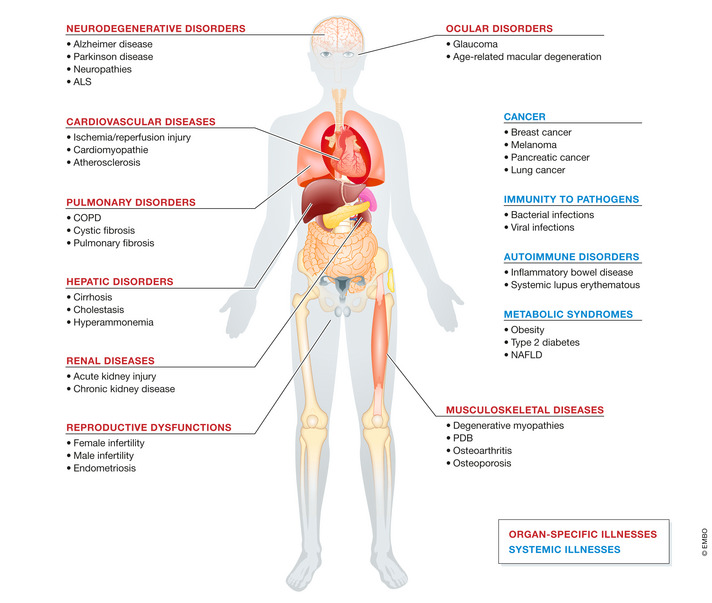
Autophagy is a core molecular pathway for the preservation of cellular and organismal homeostasis. Pharmacological and genetic interventions impairing autophagy responses promote or aggravate disease in a plethora of experimental models. Consistently, mutations in autophagy-related processes cause severe human pathologies. Here, we review and discuss preclinical data linking autophagy dysfunction to the pathogenesis of major human disorders including cancer as well as cardiovascular, neurodegenerative, metabolic, pulmonary, renal, infectious, musculoskeletal, and ocular disorders.
Verified 2026-10-07 · 1 reference not checked yet
Overview
CoChat Summary
TL;DR
This review argues that autophagy dysfunction contributes to the pathogenesis of major human diseases, including cancer, cardiovascular, neurodegenerative, metabolic, pulmonary, renal, infectious, musculoskeletal, and ocular disorders. It synthesizes preclinical genetic mouse-model evidence and human mutation data to propose autophagy modulation as a therapeutic strategy, while emphasizing that effects are highly context-dependent.
Key findings
- Autophagy defects are especially detrimental in post-mitotic cells (e.g., neurons, cardiomyocytes, memory T cells), and autophagic proficiency declines with age, contributing to multiple pathologies of the elderly.
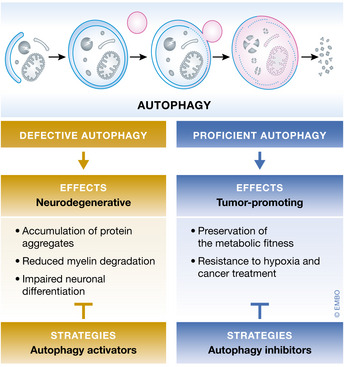
- In cancer, autophagy can be tumor-suppressive in healthy cells but tumor-promoting in established tumors; autophagy inhibition can improve anticancer immunity, e.g., ATG4B dominant-negative PDAC cells show increased MHC class I surface expression and CD8+ T-cell lysis.
- In Paget disease of bone, SQSTM1/p62 mutations are found in approximately 10% of patients; Optn deletion in mice recapitulates PDB-like bone lesions via decreased type I IFN production.
- In cystic fibrosis, TGM2 loss of function increases CFTR function by approximately 40% in a CF mouse model; VPS13D mutations occurred in 3 of 64 children with Leigh syndrome features.
Methods
- Design: narrative review; no primary experiments or new patient data.
- Data/sample: preclinical literature, especially murine genetic models of autophagy deficiency and human disease-associated mutations, organized by disease system (neurodegenerative, cardiovascular, musculoskeletal, pulmonary, kidney, metabolic, liver, cancer, immunity/inflammation, ocular, reproductive).
- Main analysis: qualitative synthesis of cited studies; tables summarize genetic interventions and disease phenotypes. No systematic review, meta-analysis, or quantitative pooling is described.
Limitations
- Stated: conditional knockout mouse models are limited because they are often non-inducible and establish autophagy defects during development, failing to recapitulate acute adult autophagy defects; they also cannot capture non-cell-autonomous and systemic interactions.
- Stated: because autophagy intersects with LAP, LANDO, and RCD, and most findings rely on deletion/downregulation of single autophagy components, phenotypes may arise from non-autophagic pathways; future studies should delete more than one autophagy gene and use models distinguishing canonical from non-canonical autophagy.
- Stated: human clinical studies, ideally at pre-pathological stages, are needed. Evident: as a narrative review, it does not provide a systematic search strategy or quantitative synthesis, so conclusions depend on the selected preclinical literature.
Model-written summary of a shortened version of the paper’s full text (it is longer than we read). Check it against the paper before relying on it.
Integrity signals
Registry
Cites
Statistics
Figures
Verification
Claims the paper makes
115 Valid · 10 Not valid · 431 Not checked · 39 Own results and interpretations
At least one cited source doesn’t support this claim or points to a different paper, and none confirmed it — see the verdicts below.
In the paper
“| IRI | Conditional cardiomyocyte‐specific deletion of mTORC1 | Exacerbated hypoxic injury and cardiomyocyte apoptosis after autophagy restoration | Sciarretta et al (2012) |”
§ Autophagy in major human diseases > Cardiovascular diseases
What the sources say
- Disputedcites Sciarretta et al (2012) matched to “Rheb is a Critical Regulator of Autophagy During Myocardial Ischemia: Pathophysiological Implications in Obesity and Metabolic Syndrome” (2012) sourceExperimental — accuracy not yet measured
The Results section on high-fat-diet-induced obesity reports that inducible cardiac-specific heterozygous mTOR deletion increased autophagy but reduced, rather than exacerbated, myocardial infarct size. The Abstract’s Methods and Results section likewise reports that restoring autophagy through mTORC1 inhibition reduced cardiomyocyte death. The supplied passages do not give page numbers. (LLM, conf=0.91)
Checked by a reasoning model — may be wrong.
plainstates a cause- Asserted: passes — The authors put it forward as true.
- Checkable: passes — It can be checked against evidence.
- Load-bearing: unclear — It is unclear whether the paper’s conclusions depend on it.
- Based: passes — The paper gives a reason why it holds.
- Disputed
At least one cited source doesn’t support this claim or points to a different paper, and none confirmed it — see the verdicts below.
In the paper
“Furthermore, HDAC6‐mediated deacetylation of TFEB, which triggers transcriptional autophagy activation, improves the outcome of DKD in rats (Brijmohan et al, 2018).”
§ Autophagy in major human diseases > Kidney diseases > Diabetic kidney disease
What the sources say
- Disputedcites Brijmohan et al, 2018 matched to “HDAC6 Inhibition Promotes Transcription Factor EB Activation and Is Protective in Experimental Kidney Disease” (2018) sourceExperimental — accuracy not yet measured
The Discussion says HDAC6 deacetylates TFEB and limits its activity, whereas HDAC6 inhibition increases TFEB acetylation and activity and protects subtotally nephrectomized rats. Thus the claimed direction of the mechanism is reversed. The rat model was chronic kidney disease, not diabetic kidney disease. (LLM, conf=0.90)
Checked by a reasoning model — may be wrong.
plainstates a cause- Asserted: passes — The authors put it forward as true.
- Checkable: passes — It can be checked against evidence.
- Load-bearing: unclear — It is unclear whether the paper’s conclusions depend on it.
- Based: passes — The paper gives a reason why it holds.
- Disputed
At least one cited source doesn’t support this claim or points to a different paper, and none confirmed it — see the verdicts below.
In the paper
“| Focal segmental glomerulosclerosis | Nephron‐specific deletion of Atg5 or Atg7 | Development of kidney dysfunction by 2 months and organ failure by 6 months | Kawakami et al (2015) |”
§ Autophagy in major human diseases > Kidney diseases > Diabetic kidney disease
What the sources say
- Disputedcites Kawakami et al (2015) matched to “Deficient Autophagy Results in Mitochondrial Dysfunction and FSGS” (2015) sourceExperimental — accuracy not yet measured
The Results section reports that Atg5-mutant mice had normal kidney function at 2 months, with loss of function evident by 4 months—not dysfunction by 2 months. The Atg7 Results section directly contradicts the claimed organ failure: kidney function was unchanged after 6 months, and the mice survived to 1 year. (LLM, conf=0.92)
Checked by a reasoning model — may be wrong.
plainstates a cause- Asserted: passes — The authors put it forward as true.
- Checkable: passes — It can be checked against evidence.
- Load-bearing: unclear — It is unclear whether the paper’s conclusions depend on it.
- Based: passes — The paper gives a reason why it holds.
- Disputed
Some cited sources support this claim and some don’t — read each source’s verdict below.
In the paper
“The genetic inhibition of autophagy in the parenchymal (Settembre et al, 2013), stromal (e.g., endothelial cells) (Hammoutene et al, 2020), and immune (Ilyas et al, 2016) compartment of the liver sensitizes mice to the development of NAFLD via both cell autonomous (Yang et al, 2010) and non‐cell autonomous effects, linked to aberrant inflammatory reactions (Aghajan et al, 2012).”
§ Autophagy in major human diseases > Metabolic syndromes > Non‐alcoholic fatty liver disease
What the sources say
- Supportedcites Settembre et al, 2013 matched to “TFEB controls cellular lipid metabolism through a starvation-induced autoregulatory loop” (2013) source
For this citation only the parenchymal clause is at stake, and our copy supports it: in 'TFEB regulates lipid breakdown in the liver' the authors generated hepatocyte (parenchymal)-specific Atg7 KO mice by HdAD-APOA1-CRE injection, in which autophagy is blocked, and report increased liver size, raised ALT/AST/ALP, p62 and lipid-droplet accumulation, with TFEB overexpression failing to reduce liver lipid content. The Discussion states plainly that in mice 'in which autophagy was genetically suppressed by deletion of Atg7 in the liver' TFEB overexpression 'did not rescue hepatic steatosis'. The paper does not use the term NAFLD and does not address the stromal/immune compartments, cell-autonomous versus non-cell-autonomous mechanisms or the inflammatory component, but those clauses carry their own citations (Hammoutene, Ilyas, Yang, Aghajan) and are not attributed here. (LLM, conf=0.82)
- Not checked yetcites Hammoutene et al, 2020 matched to “A defect in endothelial autophagy occurs in patients with non-alcoholic steatohepatitis and promotes inflammation and fibrosis” (2020) source
- Misattributedcites Ilyas et al, 2016 matched to “Macrophage autophagy limits acute toxic liver injury in mice through down regulation of interleukin-1β” (2016) sourceExperimental — accuracy not yet measured
Our copy of Ilyas et al. (2016) reports no NAFLD/steatosis experiment: its own genetic model (Atg5Δmye, myeloid/macrophage autophagy knockout) is tested for sensitization to acute toxic liver injury from GalN/LPS (Introduction; Results 'Inhibition of macrophage autophagy magnifies GalN/LPS liver injury'; Abstract Methods). The autophagy-in-immune-compartment/steatosis result is explicitly credited to another work it cites — the Discussion (p. 1 of section) contrasts 'that described in a mouse nonalcoholic steatosis model [16]' where 'inflammasome-independent proinflammatory cytokines such as TNF were increased due to a distortion of macrophage polarization to a more proinflammatory M1 phenotype', and the Introduction says 'Recently we demonstrated that in obesity-induced hepatic steatosis impaired macrophage autophagy increases liver inflammation and injury from LPS ... [16]', which the reference list identifies as Liu et al., Autophagy 2015. The only paracrine/non-cell-autonomous data in our copy (Results 'Inhibition of IL-1β blocks liver injury in knockout mice', conditioned-medium neutrophil activation) are likewise in the GalN/LPS setting, not NAFLD. (LLM, conf=0.80) It matches “Impaired macrophage autophagy increases the immune response in obese mice by promoting proinflammatory macrophage polarization” (2015) instead.
Checked by a reasoning model — may be wrong.
plainstates a cause- Asserted: passes — The authors put it forward as true.
- Checkable: passes — It can be checked against evidence.
- Load-bearing: passes — The paper’s conclusions depend on it.
- Based: passes — The paper gives a reason why it holds.
- Supported
Every source the paper cites for this claim was checked and supports it.
In the paper
“both insufficient and overactive nonselective or selective autophagy responses contribute to neurodegeneration (Chu, 2019).”
§ Autophagy in major human diseases > Neurodegenerative disorders
What the sources say
- Supportedcites Chu, 2019 matched to “Mechanisms of selective autophagy and mitophagy: Implications for neurodegenerative diseases” (2019) source
The ‘Cellular quality control and neurodegeneration’ section links both impaired autophagy and excessive mitochondrial degradation to neurodegenerative disease. The ‘Self-eating in neurodegeneration: future perspectives’ section explicitly implicates dysregulation of autophagy in general and selective forms, and says increased autophagy or mitophagy can be detrimental. Page numbers were not supplied. (LLM, conf=0.92)
plainstates a cause- Asserted: passes — The authors put it forward as true.
- Checkable: passes — It can be checked against evidence.
- Load-bearing: passes — The paper’s conclusions depend on it.
- Based: passes — The paper gives a reason why it holds.
- Supported
417 more claims · 99 with their cited sources checked
Create a free account to see all 595 claims and to verify the 603 references still open.
- It may state two separate claims as one. 163
- Probably not a substantial claim. 7
- The quote only partly states this claim. 4
Claims other papers make about this one
Each is checked against this paper’s own text: does it say what the citing paper says it does?
The source backs part of the claim, not all of it — or backs it for a different population, condition or comparison.
In the citing paper
“In patients, loss-of-function mutations of genes that regulate or execute autophagy have been causally linked to a broad spectrum of cardiovascular, infectious, neurodegenerative, metabolic, musculoskeletal, ocular and pulmonary disorders, many of which resemble to premature aging at the histopathological and functional levels 89,90 .”
From Hallmarks of aging: An expanding universe (2023) · cites this paper as [90]
Experimental — accuracy not yet measuredThe cited source says what the claim attributes to it.
In the citing paper
“Thus, in multiple instances, genetic or pharmacological suppression of autophagy can restrain tumor progression in mouse models.153”
From Meta-hallmarks of aging and cancer (2023) · cites this paper as [153]
The cited source says what the claim attributes to it.
In the citing paper
“Hence, autophagy apparently acts as a tumor-suppressive mechanism, that may involve cell-autonomous processes and cancer immunosurveillance 90 .”
From Hallmarks of aging: An expanding universe (2023) · cites this paper as [90]
In the citing paper
“At the cell-autonomous level, baseline autophagy is required for cellular homeostasis, for instance, by eliminating damaged mitochondria (that can produce DNA-damaging ROS or release other pro-inflammatory molecules) and maintaining cellular adenosine triphosphate (ATP) levels for efficient DNA repair.153”
From Meta-hallmarks of aging and cancer (2023) · cites this paper as [153]
In the citing paper
“Hence, autophagy allows cancer cells to increase their resistance to harsh endogenous conditions (such as hypoxia, scarce nutrients, absent trophic factors, or attack by immune effectors) and anticancer chemotherapeutics, radiotherapy, or targeted therapy.153”
From Meta-hallmarks of aging and cancer (2023) · cites this paper as [153]
Self-check
Percentages, sums and reported differences re-computed from the paper’s own numbers.
Each contradiction between two passages listed here was confirmed by an independent check.
Rated minor: it would not touch a result — a value no result rests on, a p-value that stays on the same side of the significance level, or a conflict that is clerical, resolved elsewhere in the paper, or outside its own findings.
In the paper
§ Autophagy in major human diseases > Ocular diseases
“| Cataract | LEC‐specific deletion of Vps34 | Development of congenital cataract and microphthalmia, through an autophagy‐independent mechanism | Morishita et al (2013) |”
§ Autophagy in major human diseases > Ocular diseases
“A similar effect occurs upon pik3c3/vps34 deletion in LECs, which also leads to age‐dependent cataracts (Morishita et al, 2013).”
Rated minor: it would not touch a result — a value no result rests on, a p-value that stays on the same side of the significance level, or a conflict that is clerical, resolved elsewhere in the paper, or outside its own findings.
In the paper
§ Autophagy in major human diseases > Musculoskeletal disorders > Muscular diseases
“| PDB | Whole‐body knock‐in of mutant p62P392L | Increased osteoclastogenic potential of bone microenvironment, but histologically normal bones | Hiruma et al (2008) |”
§ Autophagy in major human diseases > Musculoskeletal disorders > Bone disorders
“a mouse model carrying the P394L mutation exhibits a PDB‐like bone disorder with focal bone lesions, linked to enhanced autophagy activation in osteoclasts and detrimental bone remodeling (Hiruma et al, 2008).”
Citations
Cites
5 retracted
RETRACTED ARTICLE: Parkin and PINK1 mitigate STING-induced inflammation
Sliter, D. A., Martinez, J., Hao, L., Chen, X., Sun, N., Fischer, T. D., Burman, J. L., Li, Y., Zhang, Z., Narendra, D. P., et al. (2018) · Nature · doi:10.1038/s41586-018-0448-9 · Cited by 1,287
Self-citationRetractedMartinez, J., Malireddi, R. K. S., Lu, Q., Cunha, L. D., Pelletier, S., Gingras, S., Orchard, R., Guan, J.-L., Tan, H., Peng, J., et al. (2015) · Nature Cell Biology · doi:10.1038/ncb3192 · Cited by 758
Self-citationRetractedMartinez, J., Almendinger, J., Oberst, A., Ness, R., Dillon, C. P., Fitzgerald, P., Hengartner, M. O., & Green, D. R. (2011) · Proceedings of the National Academy of Sciences · doi:10.1073/pnas.1113421108 · Cited by 655
Self-citationRetractedMartinez, J., Cunha, L. D., Park, S., Yang, M., Lu, Q., Orchard, R., Li, Q.-Z., Yan, M., Janke, L., Guy, C., et al. (2016) · Nature · doi:10.1038/nature17950 · Cited by 381
Self-citationRetractedLi, T., Kong, L., Li, X., Wu, S., Attri, K. S., Li, Y., Gong, W., Zhao, B., Li, L., Herring, L. E., et al. (2021) · Nature Microbiology · doi:10.1038/s41564-020-00843-2 · Cited by 56
Self-citationRetractedRepertoires of Autophagy in the Pathogenesis of Ocular Diseases
Li, Y.-J., Jiang, Q., Cao, G.-F., Yao, J., & Yan, B. (2015) · Cellular Physiology and Biochemistry · doi:10.1159/000373980 · Cited by 16,304
López-Otín, C., Blasco, M. A., Partridge, L., Serrano, M., & Kroemer, G. (2013) · Cell · doi:10.1016/j.cell.2013.05.039 · Cited by 14,982
Self-citationGalluzzi, L., Vitale, I., Aaronson, S. A., Abrams, J. M., Adam, D., Agostinis, P., Alnemri, E. S., Altucci, L., Amelio, I., Andrews, D. W., et al. (2018) · Cell Death & Differentiation · doi:10.1038/s41418-017-0012-4 · Cited by 6,680
Self-citationAutophagy: Renovation of Cells and Tissues
Mizushima, N., & Komatsu, M. (2011) · Cell · doi:10.1016/j.cell.2011.10.026 · Cited by 6,418
Self-citationMutations in the parkin gene cause autosomal recessive juvenile parkinsonism
Kitada, T., Asakawa, S., Hattori, N., Matsumine, H., Yamamura, Y., Minoshima, S., Yokochi, M., Mizuno, Y., & Shimizu, N. (1998) · Nature · doi:10.1038/33416 · Cited by 5,227
Cui, C., Cui, J., Jin, F., Cui, Y., Li, R., Jiang, X., Tian, Y., Wang, K., Jiang, P., & Gao, J. (2017) · Cellular Physiology and Biochemistry · doi:10.1159/000479571 · Cited by 5,203
Autophagy and Viruses: Adversaries or Allies?
Dong, X., & Levine, B. (2013) · Journal of Innate Immunity · doi:10.1159/000346388 · Cited by 4,430
NLRP3 inflammasomes are required for atherogenesis and activated by cholesterol crystals
Duewell, P., Kono, H., Rayner, K. J., Sirois, C. M., Vladimer, G., Bauernfeind, F. G., Abela, G. S., Franchi, L., Nuñez, G., Schnurr, M., et al. (2010) · Nature · doi:10.1038/nature08938 · Cited by 4,026
Parkin is recruited selectively to impaired mitochondria and promotes their autophagy
Narendra, D., Tanaka, A., Suen, D.-F., & Youle, R. J. (2008) · The Journal of Cell Biology · doi:10.1083/jcb.200809125 · Cited by 4,026
Autophagy regulates lipid metabolism
Singh, R., Kaushik, S., Wang, Y., Xiang, Y., Novak, I., Komatsu, M., Tanaka, K., Cuervo, A. M., & Czaja, M. J. (2009) · Nature · doi:10.1038/nature07976 · Cited by 3,975
Self-citationSuppression of basal autophagy in neural cells causes neurodegenerative disease in mice
Hara, T., Nakamura, K., Matsui, M., Yamamoto, A., Nakahara, Y., Suzuki-Migishima, R., Yokoyama, M., Mishima, K., Saito, I., Okano, H., et al. (2006) · Nature · doi:10.1038/nature04724 · Cited by 3,882
Self-citationRegulation mechanisms and signaling pathways of autophagy
He, C., & Klionsky, D. J. (2009) · Annual Review of Genetics · doi:10.1146/annurev-genet-102808-114910 · Cited by 3,609
Self-citationAntimicrobial Autophagy: A Conserved Innate Immune Response in Drosophila
Moy, R. H., & Cherry, S. (2013) · Journal of Innate Immunity · doi:10.1159/000350326 · Cited by 3,539
Loss of autophagy in the central nervous system causes neurodegeneration in mice
Komatsu, M., Waguri, S., Chiba, T., Murata, S., Iwata, J.-I., Tanida, I., Ueno, T., Koike, M., Uchiyama, Y., Kominami, E., et al. (2006) · Nature · doi:10.1038/nature04723 · Cited by 3,500
Hereditary Early-Onset Parkinson's Disease Caused by Mutations in PINK1
Valente, E. M., Abou-Sleiman, P. M., Caputo, V., Muqit, M. M. K., Harvey, K., Gispert, S., Ali, Z., Del Turco, D., Bentivoglio, A. R., Healy, D. G., et al. (2004) · Science · doi:10.1126/science.1096284 · Cited by 3,481
Immunogenic Cell Death in Cancer Therapy
Kroemer, G., Galluzzi, L., Kepp, O., & Zitvogel, L. (2013) · Annual Review of Immunology · doi:10.1146/annurev-immunol-032712-100008 · Cited by 3,303
Self-citationAutophagy in immunity and inflammation
Levine, B., Mizushima, N., & Virgin, H. W. (2011) · Nature · doi:10.1038/nature09782 · Cited by 3,289
Self-citationImmunogenic cell death in cancer and infectious disease
Galluzzi, L., Buqué, A., Kepp, O., Zitvogel, L., & Kroemer, G. (2017) · Nature Reviews Immunology · doi:10.1038/nri.2016.107 · Cited by 3,119
Self-citationGuidelines for the use and interpretation of assays for monitoring autophagy (4th edition) 1
Klionsky, D. J., Abdel-Aziz, A. K., Abdelfatah, S., Abdellatif, M., Abdoli, A., Abel, S., Abeliovich, H., Abildgaard, M. H., Abudu, Y. P., Acevedo-Arozena, A., et al. (2021) · Autophagy · doi:10.1080/15548627.2020.1797280 · Cited by 2,897
Self-citationThe role of autophagy during the early neonatal starvation period
Kuma, A., Hatano, M., Matsui, M., Yamamoto, A., Nakaya, H., Yoshimori, T., Ohsumi, Y., Tokuhisa, T., & Mizushima, N. (2004) · Nature · doi:10.1038/nature03029 · Cited by 2,865
Self-citationBiological Functions of Autophagy Genes: A Disease Perspective
Levine, B., & Kroemer, G. (2019) · Cell · doi:10.1016/j.cell.2018.09.048 · Cited by 2,832
Self-citationMechanism and medical implications of mammalian autophagy
Dikic, I., & Elazar, Z. (2018) · Nature Reviews Molecular Cell Biology · doi:10.1038/s41580-018-0003-4 · Cited by 2,771
Self-citationGeroscience: Linking Aging to Chronic Disease
Kennedy, B. K., Berger, S. L., Brunet, A., Campisi, J., Cuervo, A. M., Epel, E. S., Franceschi, C., Lithgow, G. J., Morimoto, R. I., Pessin, J. E., et al. (2014) · Cell · doi:10.1016/j.cell.2014.10.039 · Cited by 2,764
Self-citationAutophagy in Human Health and Disease
Choi, A. M. K., Ryter, S. W., & Levine, B. (2013) · New England Journal of Medicine · doi:10.1056/nejmra1205406 · Cited by 2,583
Self-citationMechanisms and Functions of Inflammasomes
Lamkanfi, M., & Dixit, V. M. (2014) · Cell · doi:10.1016/j.cell.2014.04.007 · Cited by 2,503
Impairment of starvation-induced and constitutive autophagy in Atg7 -deficient mice
Komatsu, M., Waguri, S., Ueno, T., Iwata, J., Murata, S., Tanida, I., Ezaki, J., Mizushima, N., Ohsumi, Y., Uchiyama, Y., et al. (2005) · The Journal of Cell Biology · doi:10.1083/jcb.200412022 · Cited by 2,331
Self-citationPromotion of tumorigenesis by heterozygous disruption of the beclin 1 autophagy gene
Qu, X., Yu, J., Bhagat, G., Furuya, N., Hibshoosh, H., Troxel, A., Rosen, J., Eskelinen, E.-L., Mizushima, N., Ohsumi, Y., et al. (2003) · Journal of Clinical Investigation · doi:10.1172/jci20039 · Cited by 2,311
Self-citationGutierrez, M. G., Master, S. S., Singh, S. B., Taylor, G. A., Colombo, M. I., & Deretic, V. (2004) · Cell · doi:10.1016/j.cell.2004.11.038 · Cited by 2,252
Self-citationYue, Z., Jin, S., Yang, C., Levine, A. J., & Heintz, N. (2003) · Proceedings of the National Academy of Sciences · doi:10.1073/pnas.2436255100 · Cited by 2,116
Self-citationRubinsztein, D. C., Mariño, G., & Kroemer, G. (2011) · Cell · doi:10.1016/j.cell.2011.07.030 · Cited by 2,107
Self-citationThe role of autophagy in neurodegenerative disease
Nixon, R. A. (2013) · Nature Medicine · doi:10.1038/nm.3232 · Cited by 2,059
Impaired Degradation of Mutant α-Synuclein by Chaperone-Mediated Autophagy
Cuervo, A. M., Stefanis, L., Fredenburg, R., Lansbury, P. T., & Sulzer, D. (2004) · Science · doi:10.1126/science.1101738 · Cited by 2,024
Self-citationRabinowitz, J. D., & White, E. (2010) · Science · doi:10.1126/science.1193497 · Cited by 1,982
Matsuda, N., Sato, S., Shiba, K., Okatsu, K., Saisho, K., Gautier, C. A., Sou, Y.-S., Saiki, S., Kawajiri, S., Sato, F., et al. (2010) · Journal of Cell Biology · doi:10.1083/jcb.200910140 · Cited by 1,969
Fang, E. F., Hou, Y., Palikaras, K., Adriaanse, B. A., Kerr, J. S., Yang, B., Lautrup, S., Hasan-Olive, M. M., Caponio, D., Dan, X., et al. (2019) · Nature Neuroscience · doi:10.1038/s41593-018-0332-9 · Cited by 1,740
Self-citationAutophagy Suppresses Tumorigenesis through Elimination of p62
Mathew, R., Karp, C. M., Beaudoin, B., Vuong, N., Chen, G., Chen, H.-Y., Bray, K., Reddy, A., Bhanot, G., Gelinas, C., et al. (2009) · Cell · doi:10.1016/j.cell.2009.03.048 · Cited by 1,719
Molecular definitions of autophagy and related processes
Galluzzi, L., Baehrecke, E. H., Ballabio, A., Boya, P., Bravo‐San Pedro, J. M., Cecconi, F., Choi, A. M., Chu, C. T., Codogno, P., Colombo, M. I., et al. (2017) · The EMBO Journal · doi:10.15252/embj.201796697 · Cited by 1,646
Self-citationExtensive Involvement of Autophagy in Alzheimer Disease: An Immuno-Electron Microscopy Study
Nixon, R. A., Wegiel, J., Kumar, A., Yu, W. H., Peterhoff, C., Cataldo, A., & Cuervo, A. M. (2005) · Journal of Neuropathology & Experimental Neurology · doi:10.1093/jnen/64.2.113 · Cited by 1,588
Self-citationAutophagy in mammalian development and differentiation
Mizushima, N., & Levine, B. (2010) · Nature Cell Biology · doi:10.1038/ncb0910-823 · Cited by 1,555
Self-citationNetwork organization of the human autophagy system
Behrends, C., Sowa, M. E., Gygi, S. P., & Harper, J. W. (2010) · Nature · doi:10.1038/nature09204 · Cited by 1,554
The cell biology of mitochondrial membrane dynamics
Giacomello, M., Pyakurel, A., Glytsou, C., & Scorrano, L. (2020) · Nature Reviews Molecular Cell Biology · doi:10.1038/s41580-020-0210-7 · Cited by 1,550
Self-citationA key role for autophagy and the autophagy gene Atg16l1 in mouse and human intestinal Paneth cells
Cadwell, K., Liu, J. Y., Brown, S. L., Miyoshi, H., Loh, J., Lennerz, J. K., Kishi, C., Kc, W., Carrero, J. A., Hunt, S., et al. (2008) · Nature · doi:10.1038/nature07416 · Cited by 1,542
Self-citationImmunological effects of conventional chemotherapy and targeted anticancer agents
Galluzzi, L., Buqué, A., Kepp, O., Zitvogel, L., & Kroemer, G. (2015) · Cancer Cell · doi:10.1016/j.ccell.2015.10.012 · Cited by 1,530
Self-citationThe role of autophagy in cardiomyocytes in the basal state and in response to hemodynamic stress
Nakai, A., Yamaguchi, O., Takeda, T., Higuchi, Y., Hikoso, S., Taniike, M., Omiya, S., Mizote, I., Matsumura, Y., Asahi, M., et al. (2007) · Nature Medicine · doi:10.1038/nm1574 · Cited by 1,520
Self-citationMatsui, Y., Takagi, H., Qu, X., Abdellatif, M., Sakoda, H., Asano, T., Levine, B., & Sadoshima, J. (2007) · Circulation Research · doi:10.1161/01.res.0000261924.76669.36 · Cited by 1,505
Self-citationJain, A., Lamark, T., Sjøttem, E., Bowitz Larsen, K., Atesoh Awuh, J., Øvervatn, A., McMahon, M., Hayes, J. D., & Johansen, T. (2010) · Journal of Biological Chemistry · doi:10.1074/jbc.m110.118976 · Cited by 1,472
Self-citationMechanisms of mitophagy in cellular homeostasis, physiology and pathology
Palikaras, K., Lionaki, E., & Tavernarakis, N. (2018) · Nature Cell Biology · doi:10.1038/s41556-018-0176-2 · Cited by 1,472
Self-citationLysosomes as dynamic regulators of cell and organismal homeostasis
Ballabio, A., & Bonifacino, J. S. (2020) · Nature Reviews Molecular Cell Biology · doi:10.1038/s41580-019-0185-4 · Cited by 1,469
Self-citationα-Synuclein Is Degraded by Both Autophagy and the Proteasome
Webb, J. L., Ravikumar, B., Atkins, J., Skepper, J. N., & Rubinsztein, D. C. (2003) · Journal of Biological Chemistry · doi:10.1074/jbc.m300227200 · Cited by 1,429
Self-citationLiver Macrophages in Tissue Homeostasis and Disease
Krenkel, O., & Tacke, F. (2017) · Nature Reviews Immunology · doi:10.1038/nri.2017.11 · Cited by 1,424
The coming of age of chaperone-mediated autophagy
Kaushik, S., & Cuervo, A. M. (2018) · Nature Reviews Molecular Cell Biology · doi:10.1038/s41580-018-0001-6 · Cited by 1,407
Self-citationAcetyl coenzyme A: a central metabolite and second messenger
Pietrocola, F., Galluzzi, L., Bravo-San Pedro, J. M., Madeo, F., & Kroemer, G. (2015) · Cell Metabolism · doi:10.1016/j.cmet.2015.05.014 · Cited by 1,378
Self-citationAutophagy-Dependent Anticancer Immune Responses Induced by Chemotherapeutic Agents in Mice
Michaud, M., Martins, I., Sukkurwala, A. Q., Adjemian, S., Ma, Y., Pellegatti, P., Shen, S., Kepp, O., Scoazec, M., Mignot, G., et al. (2011) · Science · doi:10.1126/science.1208347 · Cited by 1,377
Self-citationAutophagy maintains stemness by preventing senescence
García-Prat, L., Martínez-Vicente, M., Perdiguero, E., Ortet, L., Rodríguez-Ubreva, J., Rebollo, E., Ruiz-Bonilla, V., Gutarra, S., Ballestar, E., Serrano, A. L., et al. (2016) · Nature · doi:10.1038/nature16187 · Cited by 1,355
Immunostimulation with chemotherapy in the era of immune checkpoint inhibitors
Galluzzi, L., Humeau, J., Buqué, A., Zitvogel, L., & Kroemer, G. (2020) · Nature Reviews Clinical Oncology · doi:10.1038/s41571-020-0413-z · Cited by 1,349
Self-citationAutophagy-deficient mice develop multiple liver tumors
Takamura, A., Komatsu, M., Hara, T., Sakamoto, A., Kishi, C., Waguri, S., Eishi, Y., Hino, O., Tanaka, K., & Mizushima, N. (2011) · Genes & Development · doi:10.1101/gad.2016211 · Cited by 1,342
Self-citationThe role for autophagy in cancer
White, E. (2015) · Journal of Clinical Investigation · doi:10.1172/jci73941 · Cited by 1,332
PINK1-Phosphorylated Mitofusin 2 Is a Parkin Receptor for Culling Damaged Mitochondria
Chen, Y., & Dorn, G. W. (2013) · Science · doi:10.1126/science.1231031 · Cited by 1,323
Travassos, L. H., Carneiro, L. A. M., Ramjeet, M., Hussey, S., Kim, Y.-G., Magalhães, J. G., Yuan, L., Soares, F., Chea, E., Le Bourhis, L., et al. (2010) · Nature Immunology · doi:10.1038/ni.1823 · Cited by 1,306
Type I interferons in anticancer immunity
Zitvogel, L., Galluzzi, L., Kepp, O., Smyth, M. J., & Kroemer, G. (2015) · Nature Reviews Immunology · doi:10.1038/nri3845 · Cited by 1,305
Self-citationPhosphorylation of the Autophagy Receptor Optineurin Restricts Salmonella Growth
Wild, P., Farhan, H., McEwan, D. G., Wagner, S., Rogov, V. V., Brady, N. R., Richter, B., Korac, J., Waidmann, O., Choudhary, C., et al. (2011) · Science · doi:10.1126/science.1205405 · Cited by 1,298
Autophagy is required to maintain muscle mass.
Masiero, E., Agatea, L., Mammucari, C., Blaauw, B., Loro, E., Komatsu, M., Metzger, D., Reggiani, C., Schiaffino, S., & Sandri, M. (2009) · Cell Metabolism · doi:10.1016/j.cmet.2009.10.008 · Cited by 1,282
Defective Hepatic Autophagy in Obesity Promotes ER Stress and Causes Insulin Resistance
Yang, L., Li, P., Fu, S., Calay, E. S., & Hotamisligil, G. S. (2010) · Cell Metabolism · doi:10.1016/j.cmet.2010.04.005 · Cited by 1,274
TREM2 Maintains Microglial Metabolic Fitness in Alzheimer’s Disease
Ulland, T. K., Song, W. M., Huang, S. C.-C., Ulrich, J. D., Sergushichev, A., Beatty, W. L., Loboda, A. A., Zhou, Y., Cairns, N. J., Kambal, A., et al. (2017) · Cell · doi:10.1016/j.cell.2017.07.023 · Cited by 1,263
Autophagy promotes immune evasion of pancreatic cancer by degrading MHC-I
Yamamoto, K., Venida, A., Yano, J., Biancur, D. E., Kakiuchi, M., Gupta, S., Sohn, A. S. W., Mukhopadhyay, S., Lin, E. Y., Parker, S. J., et al. (2020) · Nature · doi:10.1038/s41586-020-2229-5 · Cited by 1,240
Self-citationExome Sequencing Reveals VCP Mutations as a Cause of Familial ALS
Johnson, J. O., Mandrioli, J., Benatar, M., Abramzon, Y., Van Deerlin, V. M., Trojanowski, J. Q., Gibbs, J. R., Brunetti, M., Gronka, S., Wuu, J., et al. (2010) · Neuron · doi:10.1016/j.neuron.2010.11.036 · Cited by 1,235
Lee, J.-H., Yu, W. H., Kumar, A., Lee, S., Mohan, P. S., Peterhoff, C. M., Wolfe, D. M., Martinez-Vicente, M., Massey, A. C., Sovak, G., et al. (2010) · Cell · doi:10.1016/j.cell.2010.05.008 · Cited by 1,212
Self-citationRamirez, A., Heimbach, A., Gründemann, J., Stiller, B., Hampshire, D., Cid, L. P., Goebel, I., Mubaidin, A. F., Wriekat, A.-L., Roeper, J., et al. (2006) · Nature Genetics · doi:10.1038/ng1884 · Cited by 1,208
Mitochondrial DNA that escapes from autophagy causes inflammation and heart failure
Oka, T., Hikoso, S., Yamaguchi, O., Taneike, M., Takeda, T., Tamai, T., Oyabu, J., Murakawa, T., Nakayama, H., Nishida, K., et al. (2012) · Nature · doi:10.1038/nature10992 · Cited by 1,201
Autophagy in malignant transformation and cancer progression
Galluzzi, L., Pietrocola, F., Bravo‐San Pedro, J. M., Amaravadi, R. K., Baehrecke, E. H., Cecconi, F., Codogno, P., Debnath, J., Gewirtz, D. A., Karantza, V., et al. (2015) · The EMBO Journal · doi:10.15252/embj.201490784 · Cited by 1,182
Self-citationCardioprotection and lifespan extension by the natural polyamine spermidine
Eisenberg, T., Abdellatif, M., Schroeder, S., Primessnig, U., Stekovic, S., Pendl, T., Harger, A., Schipke, J., Zimmermann, A., Schmidt, A., et al. (2016) · Nature Medicine · doi:10.1038/nm.4222 · Cited by 1,168
Self-citationthe Wellcome Trust Case Control Consortium, Parkes, M., Barrett, J. C., Prescott, N. J., Tremelling, M., Anderson, C. A., Fisher, S. A., Roberts, R. G., Nimmo, E. R., Cummings, F. R., et al. (2007) · Nature Genetics · doi:10.1038/ng2061 · Cited by 1,155
Mizushima, N., & Levine, B. (2020) · New England Journal of Medicine · doi:10.1056/nejmra2022774 · Cited by 1,140
Self-citationExercise-induced BCL2-regulated autophagy is required for muscle glucose homeostasis
He, C., Bassik, M. C., Moresi, V., Sun, K., Wei, Y., Zou, Z., An, Z., Loh, J., Fisher, J., Sun, Q., et al. (2012) · Nature · doi:10.1038/nature10758 · Cited by 1,136
Autophagy and Neurodegeneration: Pathogenic Mechanisms and Therapeutic Opportunities
Menzies, F. M., Fleming, A., Caricasole, A., Bento, C. F., Andrews, S. P., Ashkenazi, A., Füllgrabe, J., Jackson, A., Jimenez Sanchez, M., Karabiyik, C., et al. (2017) · Neuron · doi:10.1016/j.neuron.2017.01.022 · Cited by 1,134
Self-citationPancreatic stellate cells support tumour metabolism through autophagic alanine secretion
Sousa, C. M., Biancur, D. E., Wang, X., Halbrook, C. J., Sherman, M. H., Zhang, L., Kremer, D., Hwang, R. F., Witkiewicz, A. K., Ying, H., et al. (2016) · Nature · doi:10.1038/nature19084 · Cited by 1,122
Boland, B., Kumar, A., Lee, S., Platt, F. M., Wegiel, J., Yu, W. H., & Nixon, R. A. (2008) · Journal of Neuroscience · doi:10.1523/jneurosci.0800-08.2008 · Cited by 1,119
Consensus guidelines for the definition, detection and interpretation of immunogenic cell death
Galluzzi, L., Vitale, I., Warren, S., Adjemian, S., Agostinis, P., Martinez, A. B., Chan, T. A., Coukos, G., Demaria, S., Deutsch, E., et al. (2020) · Journal for ImmunoTherapy of Cancer · doi:10.1136/jitc-2019-000337 · Cited by 1,119
Self-citationChu, C. T., Ji, J., Dagda, R. K., Jiang, J. F., Tyurina, Y. Y., Kapralov, A. A., Tyurin, V. A., Yanamala, N., Shrivastava, I. H., Mohammadyani, D., et al. (2013) · Nature Cell Biology · doi:10.1038/ncb2837 · Cited by 1,083
Self-citationAutophagy mediates the mitotic senescence transition
Young, A. R. J., Narita, M., Ferreira, M., Kirschner, K., Sadaie, M., Darot, J. F. J., Tavaré, S., Arakawa, S., Shimizu, S., Watt, F. M., et al. (2009) · Genes & Development · doi:10.1101/gad.519709 · Cited by 1,078
Galectin 8 targets damaged vesicles for autophagy to defend cells against bacterial invasion
Thurston, T. L. M., Wandel, M. P., von Muhlinen, N., Foeglein, Á., & Randow, F. (2012) · Nature · doi:10.1038/nature10744 · Cited by 1,034
TFEB controls cellular lipid metabolism through a starvation-induced autoregulatory loop
Settembre, C., De Cegli, R., Mansueto, G., Saha, P. K., Vetrini, F., Visvikis, O., Huynh, T., Carissimo, A., Palmer, D., Jürgen Klisch, T., et al. (2013) · Nature Cell Biology · doi:10.1038/ncb2718 · Cited by 1,022
Self-citationMitochondrial Dysfunction and Oxidative Damage in parkin-deficient Mice
Palacino, J. J., Sagi, D., Goldberg, M. S., Krauss, S., Motz, C., Wacker, M., Klose, J., & Shen, J. (2004) · Journal of Biological Chemistry · doi:10.1074/jbc.m401135200 · Cited by 995
Macroautophagy—a novel β-amyloid peptide-generating pathway activated in Alzheimer's disease
Yu, W. H., Cuervo, A. M., Kumar, A., Peterhoff, C. M., Schmidt, S. D., Lee, J.-H., Mohan, P. S., Mercken, M., Farmery, M. R., Tjernberg, L. O., et al. (2005) · The Journal of Cell Biology · doi:10.1083/jcb.200505082 · Cited by 967
Self-citationAutophagy—a key player in cellular and body metabolism
Kim, K. H., & Lee, M.-S. (2014) · Nature Reviews Endocrinology · doi:10.1038/nrendo.2014.35 · Cited by 963
Primary LAMP-2 deficiency causes X-linked vacuolar cardiomyopathy and myopathy (Danon disease)
Nishino, I., Fu, J., Tanji, K., Yamada, T., Shimojo, S., Koori, T., Mora, M., Riggs, J. E., Oh, S. J., Koga, Y., et al. (2000) · Nature · doi:10.1038/35022604 · Cited by 959
Regulation of endoplasmic reticulum turnover by selective autophagy
Khaminets, A., Heinrich, T., Mari, M., Grumati, P., Huebner, A. K., Akutsu, M., Liebmann, L., Stolz, A., Nietzsche, S., Koch, N., et al. (2015) · Nature · doi:10.1038/nature14498 · Cited by 956
Self-citationTargeting Autophagy in Cancer: Recent Advances and Future Directions
Amaravadi, R. K., Kimmelman, A. C., & Debnath, J. (2019) · Cancer Discovery · doi:10.1158/2159-8290.cd-19-0292 · Cited by 928
Self-citationAccumulation of autophagic vacuoles and cardiomyopathy in LAMP-2-deficient mice
Tanaka, Y., Guhde, G., Suter, A., Eskelinen, E.-L., Hartmann, D., Lüllmann-Rauch, R., Janssen, P. M. L., Blanz, J., von Figura, K., & Saftig, P. (2000) · Nature · doi:10.1038/35022595 · Cited by 925
Self-citationHuman IRGM Induces Autophagy to Eliminate Intracellular Mycobacteria
Singh, S. B., Davis, A. S., Taylor, G. A., & Deretic, V. (2006) · Science · doi:10.1126/science.1129577 · Cited by 915
Self-citationParkin-deficient Mice Exhibit Nigrostriatal Deficits but Not Loss of Dopaminergic Neurons
Goldberg, M. S., Fleming, S. M., Palacino, J. J., Cepeda, C., Lam, H. A., Bhatnagar, A., Meloni, E. G., Wu, N., Ackerson, L. C., Klapstein, G. J., et al. (2003) · Journal of Biological Chemistry · doi:10.1074/jbc.m308947200 · Cited by 913
Microautophagy of Cytosolic Proteins by Late Endosomes
Sahu, R., Kaushik, S., Clement, C. C., Cannizzo, E. S., Scharf, B., Follenzi, A., Potolicchio, I., Nieves, E., Cuervo, A. M., & Santambrogio, L. (2011) · Developmental Cell · doi:10.1016/j.devcel.2010.12.003 · Cited by 902
Self-citationCadwell, K., Patel, K. K., Maloney, N. S., Liu, T.-C., Ng, A. C. Y., Storer, C. E., Head, R. D., Xavier, R., Stappenbeck, T. S., & Virgin, H. W. (2010) · Cell · doi:10.1016/j.cell.2010.05.009 · Cited by 900
Self-citationKaushik, S., & Cuervo, A. M. (2015) · Nature Medicine · doi:10.1038/nm.4001 · Cited by 899
Self-citationAmino acid signalling upstream of mTOR
Jewell, J. L., Russell, R. C., & Guan, K.-L. (2013) · Nature Reviews Molecular Cell Biology · doi:10.1038/nrm3522 · Cited by 894
Cargo recognition failure is responsible for inefficient autophagy in Huntington’s disease
Martinez-Vicente, M., Talloczy, Z., Wong, E., Tang, G., Koga, H., Kaushik, S., de Vries, R., Arias, E., Harris, S., Sulzer, D., et al. (2010) · Nature Neuroscience · doi:10.1038/nn.2528 · Cited by 885
Self-citationMechanisms governing autophagosome biogenesis
Nakatogawa, H. (2020) · Nature Reviews Molecular Cell Biology · doi:10.1038/s41580-020-0241-0 · Cited by 879
Autophagy-Independent Functions of the Autophagy Machinery
Galluzzi, L., & Green, D. R. (2019) · Cell · doi:10.1016/j.cell.2019.05.026 · Cited by 863
Self-citationAutophagy in inflammation, infection, and immunometabolism
Deretic, V. (2021) · Immunity · doi:10.1016/j.immuni.2021.01.018 · Cited by 862
Self-citationHSV-1 ICP34.5 Confers Neurovirulence by Targeting the Beclin 1 Autophagy Protein
Orvedahl, A., Alexander, D., Tallóczy, Z., Sun, Q., Wei, Y., Zhang, W., Burns, D., Leib, D. A., & Levine, B. (2007) · Cell Host & Microbe · doi:10.1016/j.chom.2006.12.001 · Cited by 857
Metabolic control of autophagy
Galluzzi, L., Pietrocola, F., Levine, B., & Kroemer, G. (2014) · Cell · doi:10.1016/j.cell.2014.11.006 · Cited by 855
Self-citationAutophagy and mitophagy in cardiovascular disease
Bravo-San Pedro, J. M., Kroemer, G., & Galluzzi, L. (2017) · Circulation Research · doi:10.1161/circresaha.117.311082 · Cited by 843
Self-citationPharmacological modulation of autophagy: therapeutic potential and persisting obstacles
Galluzzi, L., Bravo-San Pedro, J. M., Levine, B., Green, D. R., & Kroemer, G. (2017) · Nature Reviews Drug Discovery · doi:10.1038/nrd.2017.22 · Cited by 842
Self-citationAutophagy during viral infection — a double-edged sword
Choi, Y., Bowman, J. W., & Jung, J. U. (2018) · Nature Reviews Microbiology · doi:10.1038/s41579-018-0003-6 · Cited by 838
Autophagy and Tumor Metabolism
Kimmelman, A. C., & White, E. (2017) · Cell Metabolism · doi:10.1016/j.cmet.2017.04.004 · Cited by 826
α-Synuclein impairs macroautophagy: implications for Parkinson’s disease
Winslow, A. R., Chen, C.-W., Corrochano, S., Acevedo-Arozena, A., Gordon, D. E., Peden, A. A., Lichtenberg, M., Menzies, F. M., Ravikumar, B., Imarisio, S., et al. (2010) · Journal of Cell Biology · doi:10.1083/jcb.201003122 · Cited by 825
Self-citationRecent insights into the function of autophagy in cancer
Amaravadi, R., Kimmelman, A. C., & White, E. (2016) · Genes & Development · doi:10.1101/gad.287524.116 · Cited by 813
Self-citationWong, Y. C., & Holzbaur, E. L. F. (2014) · Proceedings of the National Academy of Sciences · doi:10.1073/pnas.1405752111 · Cited by 812
Autophagy Regulates Cholesterol Efflux from Macrophage Foam Cells via Lysosomal Acid Lipase
Ouimet, M., Franklin, V., Mak, E., Liao, X., Tabas, I., & Marcel, Y. L. (2011) · Cell Metabolism · doi:10.1016/j.cmet.2011.03.023 · Cited by 774
Ebato, C., Uchida, T., Arakawa, M., Komatsu, M., Ueno, T., Komiya, K., Azuma, K., Hirose, T., Tanaka, K., Kominami, E., et al. (2008) · Cell Metabolism · doi:10.1016/j.cmet.2008.08.009 · Cited by 774
Mechanisms and therapeutic implications of cellular senescence in osteoarthritis
Coryell, P. R., Diekman, B. O., & Loeser, R. F. (2021) · Nature Reviews Rheumatology · doi:10.1038/s41584-020-00533-7 · Cited by 761
Identification of a candidate therapeutic autophagy-inducing peptide
Shoji-Kawata, S., Sumpter, R., Leveno, M., Campbell, G. R., Zou, Z., Kinch, L., Wilkins, A. D., Sun, Q., Pallauf, K., MacDuff, D., et al. (2013) · Nature · doi:10.1038/nature11866 · Cited by 760
Self-citationWatson, R. O., Manzanillo, P. S., & Cox, J. S. (2012) · Cell · doi:10.1016/j.cell.2012.06.040 · Cited by 755
Autophagy as a promoter of longevity: insights from model organisms
Hansen, M., Rubinsztein, D. C., & Walker, D. W. (2018) · Nature Reviews Molecular Cell Biology · doi:10.1038/s41580-018-0033-y · Cited by 754
Self-citationTFEB-mediated autophagy rescues midbrain dopamine neurons from α-synuclein toxicity
Decressac, M., Mattsson, B., Weikop, P., Lundblad, M., Jakobsson, J., & Björklund, A. (2013) · Proceedings of the National Academy of Sciences · doi:10.1073/pnas.1305623110 · Cited by 753
Metabolic Control of Longevity
López-Otín, C., Galluzzi, L., Freije, J. M. P., Madeo, F., & Kroemer, G. (2016) · Cell · doi:10.1016/j.cell.2016.07.031 · Cited by 753
Self-citationAutophagy regulates adipose mass and differentiation in mice
Singh, R., Xiang, Y., Wang, Y., Baikati, K., Cuervo, A. M., Luu, Y. K., Tang, Y., Pessin, J. E., Schwartz, G. J., & Czaja, M. J. (2009) · Journal of Clinical Investigation · doi:10.1172/jci39228 · Cited by 748
Self-citationYang, Y., Hentati, A., Deng, H.-X., Dabbagh, O., Sasaki, T., Hirano, M., Hung, W.-Y., Ouahchi, K., Yan, J., Azim, A. C., et al. (2001) · Nature Genetics · doi:10.1038/ng1001-160 · Cited by 743
Paneth cells as a site of origin for intestinal inflammation
Adolph, T. E., Tomczak, M. F., Niederreiter, L., Ko, H.-J., Böck, J., Martinez-Naves, E., Glickman, J. N., Tschurtschenthaler, M., Hartwig, J., Hosomi, S., et al. (2013) · Nature · doi:10.1038/nature12599 · Cited by 732
Self-citationHartleben, B., Gödel, M., Meyer-Schwesinger, C., Liu, S., Ulrich, T., Köbler, S., Wiech, T., Grahammer, F., Arnold, S. J., Lindenmeyer, M. T., et al. (2010) · Journal of Clinical Investigation · doi:10.1172/jci39492 · Cited by 721
Self-citationOverexpression of Atg5 in mice activates autophagy and extends lifespan
Pyo, J.-O., Yoo, S.-M., Ahn, H.-H., Nah, J., Hong, S.-H., Kam, T.-I., Jung, S., & Jung, Y.-K. (2013) · Nature Communications · doi:10.1038/ncomms3300 · Cited by 721
Simonsen, A., Cumming, R. C., Brech, A., Isakson, P., Schubert, D. R., & Finley, K. D. (2008) · Autophagy · doi:10.4161/auto.5269 · Cited by 716
Self-citationSmall Molecule Inhibition of the Autophagy Kinase ULK1 and Identification of ULK1 Substrates
Egan, D. F., Chun, M. G. H., Vamos, M., Zou, H., Rong, J., Miller, C. J., Lou, H. J., Raveendra-Panickar, D., Yang, C.-C., Sheffler, D. J., et al. (2015) · Molecular Cell · doi:10.1016/j.molcel.2015.05.031 · Cited by 715
Kaushik, S., & Cuervo, A. M. (2015) · Nature Cell Biology · doi:10.1038/ncb3166 · Cited by 714
Self-citationp53 status determines the role of autophagy in pancreatic tumour development
Rosenfeldt, M. T., O’Prey, J., Morton, J. P., Nixon, C., MacKay, G., Mrowinska, A., Au, A., Rai, T. S., Zheng, L., Ridgway, R., et al. (2013) · Nature · doi:10.1038/nature12865 · Cited by 713
Self-citationMa, Y., Adjemian, S., Mattarollo, S. R., Yamazaki, T., Aymeric, L., Yang, H., Portela Catani, J. P., Hannani, D., Duret, H., Steegh, K., et al. (2013) · Immunity · doi:10.1016/j.immuni.2013.03.003 · Cited by 699
Self-citationLoss of PINK1 causes mitochondrial functional defects and increased sensitivity to oxidative stress
Gautier, C. A., Kitada, T., & Shen, J. (2008) · Proceedings of the National Academy of Sciences · doi:10.1073/pnas.0802076105 · Cited by 698
A brief history of autophagy from cell biology to physiology and disease
Mizushima, N. (2018) · Nature Cell Biology · doi:10.1038/s41556-018-0092-5 · Cited by 696
Self-citationCombination of ERK and autophagy inhibition as a treatment approach for pancreatic cancer
Bryant, K. L., Stalnecker, C. A., Zeitouni, D., Klomp, J. E., Peng, S., Tikunov, A. P., Gunda, V., Pierobon, M., Waters, A. M., George, S. D., et al. (2019) · Nature Medicine · doi:10.1038/s41591-019-0368-8 · Cited by 692
Autophagy Controls Salmonella Infection in Response to Damage to the Salmonella-containing Vacuole
Birmingham, C. L., Smith, A. C., Bakowski, M. A., Yoshimori, T., & Brumell, J. H. (2006) · Journal of Biological Chemistry · doi:10.1074/jbc.m509157200 · Cited by 658
Self-citationRapamycin alleviates toxicity of different aggregate-prone proteins
Berger, Z., Ravikumar, B., Menzies, F. M., Oroz, L. G., Underwood, B. R., Pangalos, M. N., Schmitt, I., Wullner, U., Evert, B. O., O'Kane, C. J., et al. (2006) · Human Molecular Genetics · doi:10.1093/hmg/ddi458 · Cited by 657
Self-citationTBK-1 Promotes Autophagy-Mediated Antimicrobial Defense by Controlling Autophagosome Maturation
Pilli, M., Arko-Mensah, J., Ponpuak, M., Roberts, E., Master, S., Mandell, M. A., Dupont, N., Ornatowski, W., Jiang, S., Bradfute, S. B., et al. (2012) · Immunity · doi:10.1016/j.immuni.2012.04.015 · Cited by 655
Self-citationHernández–Gea, V., Ghiassi–Nejad, Z., Rozenfeld, R., Gordon, R., Fiel, M. I., Yue, Z., Czaja, M. J., & Friedman, S. L. (2012) · Gastroenterology · doi:10.1053/j.gastro.2011.12.044 · Cited by 654
Self-citationLoss of Autophagy Diminishes Pancreatic β Cell Mass and Function with Resultant Hyperglycemia
Jung, H. S., Chung, K. W., Won Kim, J., Kim, J., Komatsu, M., Tanaka, K., Nguyen, Y. H., Kang, T. M., Yoon, K.-H., Kim, J.-W., et al. (2008) · Cell Metabolism · doi:10.1016/j.cmet.2008.08.013 · Cited by 647
Gene-microbiota interactions contribute to the pathogenesis of inflammatory bowel disease
Chu, H., Khosravi, A., Kusumawardhani, I. P., Kwon, A. H. K., Vasconcelos, A. C., Cunha, L. D., Mayer, A. E., Shen, Y., Wu, W.-L., Kambal, A., et al. (2016) · Science · doi:10.1126/science.aad9948 · Cited by 647
Self-citationZhang, Y., Goldman, S., Baerga, R., Zhao, Y., Komatsu, M., & Jin, S. (2009) · Proceedings of the National Academy of Sciences · doi:10.1073/pnas.0906048106 · Cited by 634
Kinsey, C. G., Camolotto, S. A., Boespflug, A. M., Guillen, K. P., Foth, M., Truong, A., Schuman, S. S., Shea, J. E., Seipp, M. T., Yap, J. T., et al. (2019) · Nature Medicine · doi:10.1038/s41591-019-0367-9 · Cited by 634
Caramés, B., Taniguchi, N., Otsuki, S., Blanco, F. J., & Lotz, M. (2010) · Arthritis & Rheumatism · doi:10.1002/art.27305 · Cited by 632
Disruption of the beclin 1–BCL2 autophagy regulatory complex promotes longevity in mice
Fernández, Á. F., Sebti, S., Wei, Y., Zou, Z., Shi, M., McMillan, K. L., He, C., Ting, T., Liu, Y., Chiang, W.-C., et al. (2018) · Nature · doi:10.1038/s41586-018-0162-7 · Cited by 630
Macrophage Autophagy Plays a Protective Role in Advanced Atherosclerosis
Liao, X., Sluimer, J. C., Wang, Y., Subramanian, M., Brown, K., Pattison, J. S., Robbins, J., Martinez, J., & Tabas, I. (2012) · Cell Metabolism · doi:10.1016/j.cmet.2012.01.022 · Cited by 627
Self-citationPINK1 deficiency impairs mitochondrial homeostasis and promotes lung fibrosis
Bueno, M., Lai, Y.-C., Romero, Y., Brands, J., St. Croix, C. M., Kamga, C., Corey, C., Herazo-Maya, J. D., Sembrat, J., Lee, J. S., et al. (2015) · Journal of Clinical Investigation · doi:10.1172/jci74942 · Cited by 627
Self-citationFilimonenko, M., Stuffers, S., Raiborg, C., Yamamoto, A., Malerød, L., Fisher, E. M. C., Isaacs, A., Brech, A., Stenmark, H., & Simonsen, A. (2007) · The Journal of Cell Biology · doi:10.1083/jcb.200702115 · Cited by 626
Self-citationKomatsu, M., Wang, Q. J., Holstein, G. R., Friedrich, V. L., Iwata, J.-I., Kominami, E., Chait, B. T., Tanaka, K., & Yue, Z. (2007) · Proceedings of the National Academy of Sciences · doi:10.1073/pnas.0701311104 · Cited by 614
Self-citationMorselli, E., Maiuri, M. C., Markaki, M., Megalou, E., Pasparaki, A., Palikaras, K., Criollo, A., Galluzzi, L., Malik, S. A., Vitale, I., et al. (2010) · Cell Death & Disease · doi:10.1038/cddis.2009.8 · Cited by 613
Self-citationDai, E., Han, L., Liu, J., Xie, Y., Kroemer, G., Klionsky, D. J., Zeh, H. J., Kang, R., Wang, J., & Tang, D. (2020) · Autophagy · doi:10.1080/15548627.2020.1714209 · Cited by 613
Self-citationMitophagy-dependent necroptosis contributes to the pathogenesis of COPD
Mizumura, K., Cloonan, S. M., Nakahira, K., Bhashyam, A. R., Cervo, M., Kitada, T., Glass, K., Owen, C. A., Mahmood, A., Washko, G. R., et al. (2014) · Journal of Clinical Investigation · doi:10.1172/jci74985 · Cited by 611
Self-citationLv, L., Li, D., Zhao, D., Lin, R., Chu, Y., Zhang, H., Zha, Z., Liu, Y., Li, Z., Xu, Y., et al. (2011) · Molecular Cell · doi:10.1016/j.molcel.2011.04.025 · Cited by 610
The miRNA-212/132 family regulates both cardiac hypertrophy and cardiomyocyte autophagy
Ucar, A., Gupta, S. K., Fiedler, J., Erikci, E., Kardasinski, M., Batkai, S., Dangwal, S., Kumarswamy, R., Bang, C., Holzmann, A., et al. (2012) · Nature Communications · doi:10.1038/ncomms2090 · Cited by 610
Microglia clear neuron-released α-synuclein via selective autophagy and prevent neurodegeneration
Choi, I., Zhang, Y., Seegobin, S. P., Pruvost, M., Wang, Q., Purtell, K., Zhang, B., & Yue, Z. (2020) · Nature Communications · doi:10.1038/s41467-020-15119-w · Cited by 608
Self-citationLiu, Y., Shoji-Kawata, S., Sumpter, R. M., Wei, Y., Ginet, V., Zhang, L., Posner, B., Tran, K. A., Green, D. R., Xavier, R. J., et al. (2013) · Proceedings of the National Academy of Sciences · doi:10.1073/pnas.1319661110 · Cited by 607
Self-citationAutophagy Links Inflammasomes to Atherosclerotic Progression
Razani, B., Feng, C., Coleman, T., Emanuel, R., Wen, H., Hwang, S., Ting, J. P., Virgin, H. W., Kastan, M. B., & Semenkovich, C. F. (2012) · Cell Metabolism · doi:10.1016/j.cmet.2012.02.011 · Cited by 601
Spatial Coupling of mTOR and Autophagy Augments Secretory Phenotypes
Narita, M., Young, A. R. J., Arakawa, S., Samarajiwa, S. A., Nakashima, T., Yoshida, S., Hong, S., Berry, L. S., Reichelt, S., Ferreira, M., et al. (2011) · Science · doi:10.1126/science.1205407 · Cited by 594
Basal Mitophagy Occurs Independently of PINK1 in Mouse Tissues of High Metabolic Demand
McWilliams, T. G., Prescott, A. R., Montava-Garriga, L., Ball, G., Singh, F., Barini, E., Muqit, M. M. K., Brooks, S. P., & Ganley, I. G. (2018) · Cell Metabolism · doi:10.1016/j.cmet.2017.12.008 · Cited by 591
Guo, J. Y., Karsli-Uzunbas, G., Mathew, R., Aisner, S. C., Kamphorst, J. J., Strohecker, A. M., Chen, G., Price, S., Lu, W., Teng, X., et al. (2013) · Genes & Development · doi:10.1101/gad.219642.113 · Cited by 589
The ubiquitin ligase parkin mediates resistance to intracellular pathogens
Manzanillo, P. S., Ayres, J. S., Watson, R. O., Collins, A. C., Souza, G., Rae, C. S., Schneider, D. S., Nakamura, K., Shiloh, M. U., & Cox, J. S. (2013) · Nature · doi:10.1038/nature12566 · Cited by 588
Autophagy, Inflammation, and Immunity: A Troika Governing Cancer and Its Treatment
Zhong, Z., Sanchez-Lopez, E., & Karin, M. (2016) · Cell · doi:10.1016/j.cell.2016.05.051 · Cited by 576
The hallmarks of successful anticancer immunotherapy
Galluzzi, L., Chan, T. A., Kroemer, G., Wolchok, J. D., & López-Soto, A. (2018) · Science Translational Medicine · doi:10.1126/scitranslmed.aat7807 · Cited by 575
Self-citationInvolvement of cigarette smoke-induced epithelial cell ferroptosis in COPD pathogenesis
Yoshida, M., Minagawa, S., Araya, J., Sakamoto, T., Hara, H., Tsubouchi, K., Hosaka, Y., Ichikawa, A., Saito, N., Kadota, T., et al. (2019) · Nature Communications · doi:10.1038/s41467-019-10991-7 · Cited by 572
Endogenous Drp1 Mediates Mitochondrial Autophagy and Protects the Heart Against Energy Stress
Ikeda, Y., Shirakabe, A., Maejima, Y., Zhai, P., Sciarretta, S., Toli, J., Nomura, M., Mihara, K., Egashira, K., Ohishi, M., et al. (2015) · Circulation Research · doi:10.1161/circresaha.116.303356 · Cited by 571
Self-citationTezze, C., Romanello, V., Desbats, M. A., Fadini, G. P., Albiero, M., Favaro, G., Ciciliot, S., Soriano, M. E., Morbidoni, V., Cerqua, C., et al. (2017) · Cell Metabolism · doi:10.1016/j.cmet.2017.04.021 · Cited by 568
Self-citationMaintenance of Skeletal Muscle Mitochondria in Health, Exercise, and Aging
Hood, D. A., Memme, J. M., Oliveira, A. N., & Triolo, M. (2019) · Annual Review of Physiology · doi:10.1146/annurev-physiol-020518-114310 · Cited by 567
Heaton, N. S., Perera, R., Berger, K. L., Khadka, S., LaCount, D. J., Kuhn, R. J., & Randall, G. (2010) · Proceedings of the National Academy of Sciences · doi:10.1073/pnas.1010811107 · Cited by 566
Self-citationDeep Multilayer Brain Proteomics Identifies Molecular Networks in Alzheimer’s Disease Progression
Bai, B., Wang, X., Li, Y., Chen, P.-C., Yu, K., Dey, K. K., Yarbro, J. M., Han, X., Lutz, B. M., Rao, S., et al. (2020) · Neuron · doi:10.1016/j.neuron.2019.12.015 · Cited by 565
Molecular mechanisms of ATP secretion during immunogenic cell death
Martins, I., Wang, Y., Michaud, M., Ma, Y., Sukkurwala, A. Q., Shen, S., Kepp, O., Métivier, D., Galluzzi, L., Perfettini, J.-L., et al. (2014) · Cell Death & Differentiation · doi:10.1038/cdd.2013.75 · Cited by 563
Self-citationAutophagy is required for glucose homeostasis and lung tumor maintenance
Karsli-Uzunbas, G., Guo, J. Y., Price, S., Teng, X., Laddha, S. V., Khor, S., Kalaany, N. Y., Jacks, T., Chan, C. S., Rabinowitz, J. D., et al. (2014) · Cancer Discovery · doi:10.1158/2159-8290.cd-14-0363 · Cited by 560
The role of mitochondria in amyotrophic lateral sclerosis
Smith, E. F., Shaw, P. J., & De Vos, K. J. (2019) · Neuroscience Letters · doi:10.1016/j.neulet.2017.06.052 · Cited by 559
Autophagy Protects against Sindbis Virus Infection of the Central Nervous System
Orvedahl, A., MacPherson, S., Sumpter, R., Tallóczy, Z., Zou, Z., & Levine, B. (2010) · Cell Host & Microbe · doi:10.1016/j.chom.2010.01.007 · Cited by 558
T cell stemness and dysfunction in tumors are triggered by a common mechanism
Vodnala, S. K., Eil, R., Kishton, R. J., Sukumar, M., Yamamoto, T. N., Ha, N.-H., Lee, P.-H., Shin, M., Patel, S. J., Yu, Z., et al. (2019) · Science · doi:10.1126/science.aau0135 · Cited by 552
The Role of Autophagy in the Heart
Sciarretta, S., Maejima, Y., Zablocki, D., & Sadoshima, J. (2018) · Annual Review of Physiology · doi:10.1146/annurev-physiol-021317-121427 · Cited by 547
Self-citationAutophagy and inflammation in chronic respiratory disease
Racanelli, A. C., Kikkers, S. A., Choi, A. M. K., & Cloonan, S. M. (2018) · Autophagy · doi:10.1080/15548627.2017.1389823 · Cited by 547
Self-citationCaloric restriction mimetics enhance anticancer immunosurveillance
Pietrocola, F., Pol, J., Vacchelli, E., Rao, S., Enot, D. P., Baracco, E. E., Levesque, S., Castoldi, F., Jacquelot, N., Yamazaki, T., et al. (2016) · Cancer Cell · doi:10.1016/j.ccell.2016.05.016 · Cited by 542
Self-citationGrumati, P., Coletto, L., Sabatelli, P., Cescon, M., Angelin, A., Bertaggia, E., Blaauw, B., Urciuolo, A., Tiepolo, T., Merlini, L., et al. (2010) · Nature Medicine · doi:10.1038/nm.2247 · Cited by 540
Hoshino, A., Mita, Y., Okawa, Y., Ariyoshi, M., Iwai-Kanai, E., Ueyama, T., Ikeda, K., Ogata, T., & Matoba, S. (2013) · Nature Communications · doi:10.1038/ncomms3308 · Cited by 536
Hetz, C., Thielen, P., Matus, S., Nassif, M., Court, F., Kiffin, R., Martinez, G., Cuervo, A. M., Brown, R. H., & Glimcher, L. H. (2009) · Genes & Development · doi:10.1101/gad.1830709 · Cited by 530
Self-citationA Diversity of Selective Autophagy Receptors Determines the Specificity of the Autophagy Pathway
Kirkin, V., & Rogov, V. V. (2019) · Molecular Cell · doi:10.1016/j.molcel.2019.09.005 · Cited by 529
Autophagy Reduces Acute Ethanol-Induced Hepatotoxicity and Steatosis in Mice
Ding, W., Li, M., Chen, X., Ni, H., Lin, C., Gao, W., Lu, B., Stolz, D. B., Clemens, D. L., & Yin, X. (2010) · Gastroenterology · doi:10.1053/j.gastro.2010.07.041 · Cited by 515
Linking cellular stress responses to systemic homeostasis
Galluzzi, L., Yamazaki, T., & Kroemer, G. (2018) · Nature Reviews Molecular Cell Biology · doi:10.1038/s41580-018-0068-0 · Cited by 515
Self-citationAn enteric virus can replace the beneficial function of commensal bacteria
Kernbauer, E., Ding, Y., & Cadwell, K. (2014) · Nature · doi:10.1038/nature13960 · Cited by 512
Self-citationZhang, X., Yan, H., Yuan, Y., Gao, J., Shen, Z., Cheng, Y., Shen, Y., Wang, R.-R., Wang, X., Hu, W.-W., et al. (2013) · Autophagy · doi:10.4161/auto.25132 · Cited by 510
In vivo requirement for Atg5 in antigen presentation by dendritic cells
Lee, H. K., Mattei, L. M., Steinberg, B. E., Alberts, P., Lee, Y. H., Chervonsky, A., Mizushima, N., Grinstein, S., & Iwasaki, A. (2010) · Immunity · doi:10.1016/j.immuni.2009.12.006 · Cited by 506
Self-citationPonpuak, M., Mandell, M. A., Kimura, T., Chauhan, S., Cleyrat, C., & Deretic, V. (2015) · Current Opinion in Cell Biology · doi:10.1016/j.ceb.2015.04.016 · Cited by 506
Self-citationHeckmann, B. L., Teubner, B. J. W., Tummers, B., Boada-Romero, E., Harris, L., Yang, M., Guy, C. S., Zakharenko, S. S., & Green, D. R. (2019) · Cell · doi:10.1016/j.cell.2019.05.056 · Cited by 503
Self-citationAutophagy in the liver: functions in health and disease
Ueno, T., & Komatsu, M. (2017) · Nature Reviews Gastroenterology & Hepatology · doi:10.1038/nrgastro.2016.185 · Cited by 500
Mst1 inhibits autophagy by promoting the interaction between Beclin1 and Bcl-2
Maejima, Y., Kyoi, S., Zhai, P., Liu, T., Li, H., Ivessa, A., Sciarretta, S., Del Re, D. P., Zablocki, D. K., Hsu, C.-P., et al. (2013) · Nature Medicine · doi:10.1038/nm.3322 · Cited by 499
Self-citationLópez-Otín, C., & Kroemer, G. (2021) · Cell · doi:10.1016/j.cell.2020.11.034 · Cited by 499
Self-citationLipophagy: Connecting Autophagy and Lipid Metabolism
Singh, R., & Cuervo, A. M. (2012) · International Journal of Cell Biology · doi:10.1155/2012/282041 · Cited by 497
Self-citationAutophagy in kidney homeostasis and disease
Tang, C., Livingston, M. J., Liu, Z., & Dong, Z. (2020) · Nature Reviews Nephrology · doi:10.1038/s41581-020-0309-2 · Cited by 496
Role of autophagy in G2019S‐LRRK2‐associated neurite shortening in differentiated SH‐SY5Y cells
Plowey, E. D., Cherra, S. J., Liu, Y., & Chu, C. T. (2008) · Journal of Neurochemistry · doi:10.1111/j.1471-4159.2008.05217.x · Cited by 493
Self-citationImpaired Autophagosome Clearance Contributes to Cardiomyocyte Death in Ischemia/Reperfusion Injury
Ma, X., Liu, H., Foyil, S. R., Godar, R. J., Weinheimer, C. J., Hill, J. A., & Diwan, A. (2012) · Circulation · doi:10.1161/circulationaha.111.041814 · Cited by 491
Chen, D., Xie, J., Fiskesund, R., Dong, W., Liang, X., Lv, J., Jin, X., Liu, J., Mo, S., Zhang, T., et al. (2018) · Nature Communications · doi:10.1038/s41467-018-03225-9 · Cited by 489
Autophagy Proteins Regulate the Secretory Component of Osteoclastic Bone Resorption
DeSelm, C. J., Miller, B. C., Zou, W., Beatty, W. L., van Meel, E., Takahata, Y., Klumperman, J., Tooze, S. A., Teitelbaum, S. L., & Virgin, H. W. (2011) · Developmental Cell · doi:10.1016/j.devcel.2011.08.016 · Cited by 487
Self-citationInhibition of Autophagy Prevents Hippocampal Pyramidal Neuron Death after Hypoxic-Ischemic Injury
Koike, M., Shibata, M., Tadakoshi, M., Gotoh, K., Komatsu, M., Waguri, S., Kawahara, N., Kuida, K., Nagata, S., Kominami, E., et al. (2008) · The American Journal of Pathology · doi:10.2353/ajpath.2008.070876 · Cited by 486
Autophagy is critical for pancreatic tumor growth and progression in tumors with p53 alterations
Yang, A., Rajeshkumar, N. V., Wang, X., Yabuuchi, S., Alexander, B. M., Chu, G. C., Von Hoff, D. D., Maitra, A., & Kimmelman, A. C. (2014) · Cancer Discovery · doi:10.1158/2159-8290.cd-14-0362 · Cited by 486
Caspase-11 activation requires lysis of pathogen-containing vacuoles by IFN-induced GTPases
Meunier, E., Dick, M. S., Dreier, R. F., Schürmann, N., Broz, D. K., Warming, S., Roose-Girma, M., Bumann, D., Kayagaki, N., Takeda, K., et al. (2014) · Nature · doi:10.1038/nature13157 · Cited by 485
Parkin-deficient mice are not a robust model of parkinsonism
Perez, F. A., & Palmiter, R. D. (2005) · Proceedings of the National Academy of Sciences · doi:10.1073/pnas.0409598102 · Cited by 477
Cited by
Hallmarks of aging: An expanding universe
López-Otín, C., Blasco, M. A., Partridge, L., Serrano, M., & Kroemer, G. (2023) · Cell · doi:10.1016/j.cell.2022.11.001 · Cited by 6,549
Self-citationAutophagy and autophagy-related pathways in cancer
Debnath, J., Gammoh, N., & Ryan, K. M. (2023) · Nature Reviews Molecular Cell Biology · doi:10.1038/s41580-023-00585-z · Cited by 1,403
Self-citationImmunogenic cell stress and death
Kroemer, G., Galassi, C., Zitvogel, L., & Galluzzi, L. (2022) · Nature Immunology · doi:10.1038/s41590-022-01132-2 · Cited by 1,353
Self-citationMitochondrial control of inflammation
Marchi, S., Guilbaud, E., Tait, S. W. G., Yamazaki, T., & Galluzzi, L. (2023) · Nature Reviews Immunology · doi:10.1038/s41577-022-00760-x · Cited by 1,027
Self-citationTargeting p53 pathways: mechanisms, structures, and advances in therapy
Wang, H., Guo, M., Wei, H., & Chen, Y. (2023) · Signal Transduction and Targeted Therapy · doi:10.1038/s41392-023-01347-1 · Cited by 1,016
“166,167 p53 can directly activate damage-regulated autophagy regulators and induce autophagy.”
Background
Metadata
- Authors
- Klionsky, D. J., Petroni, G., Amaravadi, R. K., Baehrecke, E. H., Ballabio, A., Boya, P., Bravo‐San Pedro, J. M., Cadwell, K., Cecconi, F., Choi, A. M. K., Choi, M. E., Chu, C. T., Codogno, P., Colombo, M. I., Cuervo, A. M., Deretic, V., Dikic, I., Elazar, Z., Eskelinen, E., Fimia, G. M., Gewirtz, D. A., Green, D. R., Hansen, M., Jäättelä, M., Johansen, T., Juhász, G., Karantza, V., Kraft, C., Kroemer, G., Ktistakis, N. T., Kumar, S., Lopez‐Otin, C., Macleod, K. F., Madeo, F., Martinez, J., Meléndez, A., Mizushima, N., Münz, C., Penninger, J. M., Perera, R. M., Piacentini, M., Reggiori, F., Rubinsztein, D. C., Ryan, K. M., Sadoshima, J., Santambrogio, L., Scorrano, L., Simon, H., Simon, A. K., Simonsen, A., Stolz, A., Tavernarakis, N., Tooze, S. A., Yoshimori, T., Yuan, J., Yue, Z., Zhong, Q., Galluzzi, L., & Pietrocola, F.
- Affiliations
- University of Michigan (US)
- Weill Cornell Medicine (US)
- Abramson Cancer Center (US)
- University of Massachusetts Chan Medical School (US)
- Baylor College of Medicine (US)
- Consejo Superior de Investigaciones Científicas (ES)
- NYU Langone Health (US)
- University of Rome Tor Vergata (IT)
- NewYork–Presbyterian Hospital (US)
- University of Pittsburgh (US)
- Centre National de la Recherche Scientifique (FR)
- University of New Mexico (US)
- Weizmann Institute of Science (IL)
- University of Turku (FI)
- Virginia Commonwealth University (US)
- St. Jude Children's Research Hospital (US)
- Sanford Burnham Prebys Medical Discovery Institute (US)
- University of Copenhagen (DK)
- UiT The Arctic University of Norway (NO)
- Eötvös Loránd University (HU)
- Merck & Co., Inc., Rahway, NJ, USA (United States) (US)
- University of Freiburg (DE)
- Karolinska University Hospital (SE)
- Babraham Institute (GB)
- University of South Australia (AU)
- University of Chicago (US)
- University of Graz (AT)
- National Institutes of Health (US)
- Queens College, CUNY (US)
- The University of Tokyo (JP)
- University of Zurich (CH)
- Institute of Molecular Biotechnology (AT)
- University of California, San Francisco (US)
- University Medical Center Groningen (NL)
- University of Cambridge (GB)
- Cancer Research UK Scotland Institute (GB)
- Rutgers New Jersey Medical School (US)
- University of Padua (IT)
- University of Bern (CH)
- University of Oxford (GB)
- Oslo University Hospital (NO)
- Goethe University Frankfurt (DE)
- University of Crete (GR)
- The Francis Crick Institute (GB)
- Institute for Open and Transdisciplinary Research Initiatives (JP)
- Harvard University (US)
- Icahn School of Medicine at Mount Sinai (US)
- Shanghai Jiao Tong University (CN)
- Université Paris Cité (FR)
- Karolinska Institutet (SE)
- Corresponding author
- Galluzzi, Lorenzo
- Pietrocola, Federico
- ORCID
- Klionsky, Daniel J
- Petroni, Giulia
- Amaravadi, Ravi K
- Baehrecke, Eric H
- Ballabio, Andrea
- Boya, Patricia
- Cadwell, Ken
- Cecconi, Francesco
- Choi, Augustine M K
- Choi, Mary E
- Chu, Charleen T
- Codogno, Patrice
- Cuervo, Ana Maria
- Deretic, Vojo
- Dikic, Ivan
- Elazar, Zvulun
- Eskelinen, Eeva‐Liisa
- Fimia, Gian Maria
- Gewirtz, David A
- Green, Douglas R
- Hansen, Malene
- Jäättelä, Marja
- Johansen, Terje
- Juhász, Gábor
- Karantza, Vassiliki
- Kraft, Claudine
- Kroemer, Guido
- Ktistakis, Nicholas T
- Kumar, Sharad
- Lopez‐Otin, Carlos
- Macleod, Kay F
- Madeo, Frank
- Martinez, Jennifer
- Meléndez, Alicia
- Mizushima, Noboru
- Münz, Christian
- Penninger, Josef M
- Perera, Rushika M
- Piacentini, Mauro
- Reggiori, Fulvio
- Rubinsztein, David C
- Ryan, Kevin M
- Sadoshima, Junichi
- Santambrogio, Laura
- Scorrano, Luca
- Simon, Hans‐Uwe
- Simon, Anna Katharina
- Simonsen, Anne
- Stolz, Alexandra
- Tavernarakis, Nektarios
- Tooze, Sharon A
- Yoshimori, Tamotsu
- Yuan, Junying
- Yue, Zhenyu
- Zhong, Qing
- Galluzzi, Lorenzo
- Pietrocola, Federico
- Venue
- The EMBO Journal
- Published
- 2021-08-30
- Volume
- 40
- Issue
- 19
- Pages
- e108863-e108863
- ISSN
- 0261-4189 (ISSN-L)
- 1460-2075
- PMC
- PMC8488577
- OpenAlex
- W3198853168
- Semantic Scholar
- e361a5681c49c1247b63f509c143330232770018
- Cited by
- 1,585
- References
- 784
- Citations by year
- 2026: 231 · 2025: 381 · 2024: 417 · 2023: 318 · 2022: 218 · 2021: 19
- FWCI
- 37.39
- Type
- journal article
- Language
- en
- Open access
- hybrid
- doi.org
- Licence
- other-oa
- creativecommons.org/licenses/by/4.0/ (tdm)
- creativecommons.org/licenses/by/4.0/ (vor)
- Locations
- The EMBO Journal (publishedVersion, other-oa)
- PubMed Central (publishedVersion, cc-by)
- PubMed (publishedVersion)
- Research at the University of Copenhagen (University of Copenhagen) (publishedVersion, cc-by)
- MDC Repository (Max-Delbrueck-Center for Molecular Medicine) (acceptedVersion)
- ENLIGHTEN (Jurnal Bimbingan dan Konseling Islam) (acceptedVersion, other-oa)
- Repository of the Academy's Library (Library of the Hungarian Academy of Sciences) (acceptedVersion)
- Zurich Open Repository and Archive (University of Zurich) (acceptedVersion, cc-by)
- UniSA Research Outputs Repository (University of South Australia) (acceptedVersion, cc-by)
- Deep Blue (University of Michigan) (submittedVersion, other-oa)
- Florence Research (University of Florence) (submittedVersion, other-oa)
- UTUPub (University of Turku) (submittedVersion, other-oa)
- Apollo (University of Cambridge) (submittedVersion)
- The Journal of the American Medical Association (JAMA) Network (American Medical Association) (submittedVersion, cc-by)
- BORIS (University Library Bern) (submittedVersion, cc-by)
- Adelaide Research & Scholarship (AR&S) (University of Adelaide) (submittedVersion, cc-by)
- ELTE Digital Institutional Repository (EDIT) (Eötvös Loránd University) (submittedVersion, other-oa)
- IRIS Research product catalog (Sapienza University of Rome) (submittedVersion, cc-by)
- NORA - Norwegian Open Research Archives (submittedVersion, other-oa)
- PubliCatt (Università Cattolica del Sacro Cuore) (submittedVersion, other-oa)
- Publication Server of Goethe University Frankfurt am Main (Goethe University Frankfurt) (submittedVersion, cc-by)
- University of Groningen research database (University of Groningen / Centre for Information Technology) (submittedVersion, cc-by)
- Apollo (University of Cambridge) (submittedVersion, cc-by)
- Padua Research Archive (University of Padova) (submittedVersion, cc-by)
- Zurich Open Repository and Archive (University of Zurich) (submittedVersion, cc-by)
- Apollo
- Zurich Open Repository and Archive (University of Zurich)
- Funders
- Bristol-Myers Squibb
- Pfizer
- AstraZeneca
- Kenneth Rainin Foundation (KRA000116)
- Wellcome Trust (103830/Z/14/Z, 220784/Z/20/Z)
- Kennedy Trust for Rheumatology Research (KENN161708)
- Cancer Research UK (28686, 22903, 15816)
- National Institutes of Health (5r01ca251726-02)
- Biotechnology and Biological Sciences Research Council (BBS/E/B/000C0432, BBS/E/B/000C0413, BBS/E/B/000C0417, BBS/E/B/000C0434)
- National Institute on Aging (R01AG021904, P01AG031782, R01AG064892, R01AG038664)
- National Cancer Institute (P01CA114046, R01CA216242, R01 CA251726, R01CA260249, R01CA200310)
- National Institute of General Medical Sciences (R15GM102846, R35GM131689)
- National Institute of Allergy and Infectious Diseases (R01AI137198)
- Topics
- Life Sciences › Biochemistry, Genetics and Molecular Biology › Cell Biology › Autophagy in Disease and Therapy
- Life Sciences › Biochemistry, Genetics and Molecular Biology › Molecular Biology › Ubiquitin and proteasome pathways
- Life Sciences › Biochemistry, Genetics and Molecular Biology › Physiology › Calcium signaling and nucleotide metabolism
- Keywords
- autophagy, autophagy dysfunction, human disease, cancer, cardiovascular disease, neurodegenerative diseases, metabolic disorders, lung disease, kidney disease, infectious diseases, musculoskeletal disorders, eye diseases, cellular homeostasis
- MeSH terms
- Animals, Autophagy, Disease Susceptibility, Gene Expression Regulation, Homeostasis, Humans, Organ Specificity, Signal Transduction, Biomarkers, Genetic Predisposition to Disease, Host-Pathogen Interactions
About these checks
Registry, retraction, Cites and statistics results are computed, not judged, with one exception: a printed reference that no index lists is read once by a model before it counts as a citation error. Claims are extracted by a model and kept only when their quote appears verbatim in the text; each cited source is then checked, with a model’s help, for whether it says what the claim relies on. Those verdicts can be wrong — read the claim’s quote and the cited source before relying on one.
The claim verdicts this report counts are experimental: their accuracy is not yet measured.
A language model drew the claims from the paper on 2026-10-07, under version 3 of the claim definition (model deepseek-v4.1-flash, prompt extract-v3).
A second model labelled each claim on 2026-10-07 (model jev-1.13-20260917, definition revision gold-guideline-v0.2).
Cited sources are checked with a language model’s help (gpt-6-sol and qwen3.8-omni-flash).
Statistics and arithmetic are recomputed, not judged.
Confidence bands are shown only for fields calibrated on our annotated test set. None is calibrated yet, so no band is shown.
What counts as a claim ›How we measure confidence ›How we check this ›
Are you an author, or do you see a problem with this page? Request a review
Data sources
Bibliographic data: Semantic Scholar, OpenAlex, Crossref.
Contains information from the Semantic Scholar Academic Graph Datasets, made available under the ODC Attribution License (ODC-BY 1.0).
Semantic Scholar’s data is described in: Kinney, R., et al. (2023). The Semantic Scholar Open Data Platform. arXiv:2301.10140.
