

The DOI matches its Crossref record; 36 of the 36 references it cites were found in a registry or an index.
Prevalence of Autism Spectrum Disorder Among Children Aged 8 Years — Autism and Developmental Disabilities Monitoring Network, 11 Sites, United States, 2016
Open accessAbstract
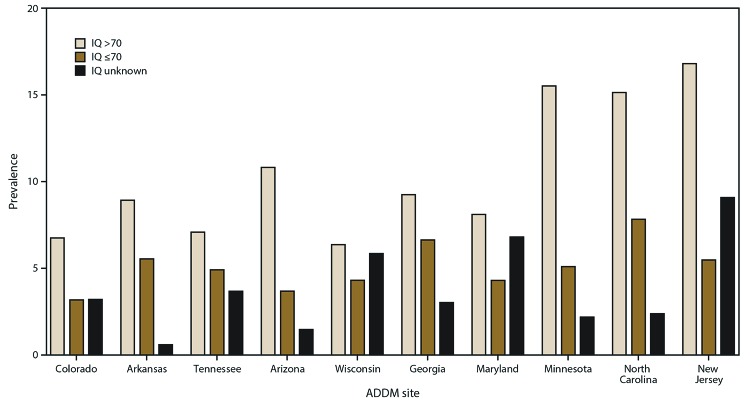
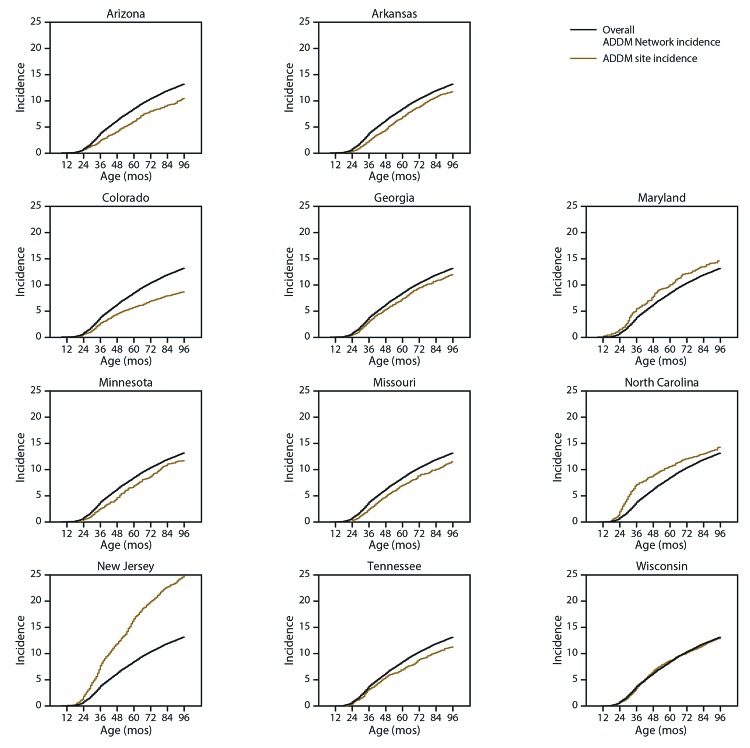
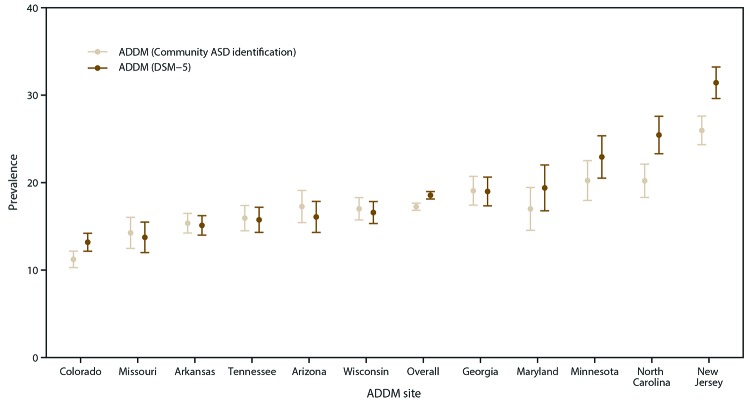
PROBLEM/CONDITION: Autism spectrum disorder (ASD). PERIOD COVERED: 2016. DESCRIPTION OF SYSTEM: The Autism and Developmental Disabilities Monitoring (ADDM) Network is an active surveillance program that provides estimates of the prevalence of ASD among children aged 8 years whose parents or guardians live in 11 ADDM Network sites in the United States (Arizona, Arkansas, Colorado, Georgia, Maryland, Minnesota, Missouri, New Jersey, North Carolina, Tennessee, and Wisconsin). Surveillance is conducted in two phases. The first phase involves review and abstraction of comprehensive evaluations that were completed by medical and educational service providers in the community. In the second phase, experienced clinicians who systematically review all abstracted information determine ASD case status. The case definition is based on ASD criteria described in the Diagnostic and Statistical Manual of Mental Disorders, Fifth Edition. RESULTS: For 2016, across all 11 sites, ASD prevalence was 18.5 per 1,000 (one in 54) children aged 8 years, and ASD was 4.3 times as prevalent among boys as among girls. ASD prevalence varied by site, ranging from 13.1 (Colorado) to 31.4 (New Jersey). Prevalence estimates were approximately identical for non-Hispanic white (white), non-Hispanic black (black), and Asian/Pacific Islander children (18.5, 18.3, and 17.9, respectively) but lower for Hispanic children (15.4). Among children with ASD for whom data on intellectual or cognitive functioning were available, 33% were classified as having intellectual disability (intelligence quotient [IQ] ≤70); this percentage was higher among girls than boys (39% versus 32%) and among black and Hispanic than white children (47%, 36%, and 27%, respectively) [corrected]. Black children with ASD were less likely to have a first evaluation by age 36 months than were white children with ASD (40% versus 45%). The overall median age at earliest known ASD diagnosis (51 months) was similar by sex and racial and ethnic groups; however, black children with IQ ≤70 had a later median age at ASD diagnosis than white children with IQ ≤70 (48 months versus 42 months). INTERPRETATION: The prevalence of ASD varied considerably across sites and was higher than previous estimates since 2014. Although no overall difference in ASD prevalence between black and white children aged 8 years was observed, the disparities for black children persisted in early evaluation and diagnosis of ASD. Hispanic children also continue to be identified as having ASD less frequently than white or black children. PUBLIC HEALTH ACTION: These findings highlight the variability in the evaluation and detection of ASD across communities and between sociodemographic groups. Continued efforts are needed for early and equitable identification of ASD and timely enrollment in services.
Overview
The claims and statistics of this paper haven’t been checked yet.
Run the check — free, no account needed. It reads the open-access text and checks the sources it cites.
Integrity signals
Registry
Cites
Statistics
Figures
Verification
Claims the paper makes
The claims and statistics of this paper haven’t been checked yet.
Run the check — free, no account needed. It reads the open-access text and checks the sources it cites.
Claims other papers make about this one
Each is checked against this paper’s own text: does it say what the citing paper says it does?
The source backs part of the claim, not all of it — or backs it for a different population, condition or comparison.
In the citing paper
“The U.S. reports a consistent pattern of increased ASD prevalence among higher socioeconomic status (SES) families (Baio et al. 2018; Durkin et al. 2010, 2017; Maenner et al. 2020; Pedersen et al. 2012), while European countries report increased prevalence among lower SES families (Delobel-Ayoub et al. 2015; Emerson 2012; Rai et al. 2012).”
From The Diagnosis of Autism: From Kanner to DSM-III to DSM-5 and Beyond (2021) · cites this paper as Maenner et al. 2020
Experimental — accuracy not yet measuredThe source backs part of the claim, not all of it — or backs it for a different population, condition or comparison.
In the citing paper
“In the U.S., African American, Hispanic, and Asian children are more likely to receive a diagnosis at a later age than Caucasian children (Maenner et al. 2020; Mandell et al. 2009; Palmer et al. 2010).”
From The Diagnosis of Autism: From Kanner to DSM-III to DSM-5 and Beyond (2021) · cites this paper as Maenner et al. 2020
Experimental — accuracy not yet measuredThe source backs part of the claim, not all of it — or backs it for a different population, condition or comparison.
In the citing paper
“While prevalence of ASD likely does not differ across racial and ethnic groups (Fombonne 2003; Maenner et al. 2020), the average age of diagnosis continues to differentiate these groups.”
From The Diagnosis of Autism: From Kanner to DSM-III to DSM-5 and Beyond (2021) · cites this paper as Maenner et al. 2020
Experimental — accuracy not yet measuredThe source backs part of the claim, not all of it — or backs it for a different population, condition or comparison.
In the citing paper
“Lastly, while the percentage of children diagnosed with ASD and intellectual disability is higher among African American and Hispanic children compared to Caucasian children in the U.S., African American and Hispanic children are nevertheless diagnosed at a later age on average than Caucasian children (Maenner et al. 2020).”
From The Diagnosis of Autism: From Kanner to DSM-III to DSM-5 and Beyond (2021) · cites this paper as Maenner et al. 2020
Experimental — accuracy not yet measuredThe source backs part of the claim, not all of it — or backs it for a different population, condition or comparison.
In the citing paper
“Surveillance among children aged 4 years in 2016 (8) indicated similar prevalence among children of different racial and ethnic groups, consistent with trends among children aged 8 years (9).”
From Early Identification of Autism Spectrum Disorder Among Children Aged 4 Years — Autism and Developmental Disabilities Monitoring Network, 11 Sites, United States, 2018 (2021) · cites this paper as [9]
Experimental — accuracy not yet measured
The source backs part of the claim, not all of it — or backs it for a different population, condition or comparison.
In the citing paper
“however, diagnosis typically occurs later in Europe (3.5 years), USA (4 years), and Canada (6 years), exposing an opportunity to decrease the age at diagnosis and accelerate access to specialized healthcare.”
From Tackling healthcare access barriers for individuals with autism from diagnosis to adulthood (2022) · cites this paper as [58]
Experimental — accuracy not yet measuredThe cited source says what the claim attributes to it.
In the citing paper
“ASD is ~4 times more prevalent in boys than in girls (16, 31).”
From Where Sex Meets Gender: How Sex and Gender Come Together to Cause Sex Differences in Mental Illness (2022) · cites this paper as [16]
In the citing paper
“and 1.85% (CI95%: 1.80–1.91%) in children aged eight year old (26).”
From Prevalence of Autism Spectrum Disorder and Co-morbidities in Children and Adolescents: A Systematic Literature Review (2021) · cites this paper as [26]
In the citing paper
“In the US, Christensen et al. (15) and Maenner et al. (26) assessed the prevalence of ID in ASD children aged 4y and 8y respectively based on the ADDM network and reported rates of 46.10% and 33.00%.”
From Prevalence of Autism Spectrum Disorder and Co-morbidities in Children and Adolescents: A Systematic Literature Review (2021) · cites this paper as [26]
In the citing paper
“The estimated prevalence of ASD has increased over 30-fold over the last four decades,18 primarily due to diagnostic expansion.19,20”
From The female protective effect against autism spectrum disorder (2022) · cites this paper as [20]
In the citing paper
“Members of previous generations, particularly those able to live independently as adults, were far less likely to receive an ASD diagnosis in childhood than children born as of writing.19,20”
From The female protective effect against autism spectrum disorder (2022) · cites this paper as [20]
In the citing paper
“For example, females are on average diagnosed later than males.20”
From The female protective effect against autism spectrum disorder (2022) · cites this paper as [20]
In the citing paper
“If consistent with the rate of ID in ASD cases in the United States or the United Kingdom, it would be approximately 40% over this diagnostic period.20”
From The female protective effect against autism spectrum disorder (2022) · cites this paper as [20]
In the citing paper
“The sex ratio is one example of how differences in identification of children without intellectual disability can affect patterns observed at older ages, with a higher ratio of boys to girls at age 8 years than at age 4 years, consistent with previous reports (8,9).”
In the citing paper
“In surveillance year 2018, ASD prevalence among Black children was higher than among White children at five of 11 sites and overall, the opposite of the pattern before surveillance year 2016 among children aged 8 years (9,17).”
In the citing paper
“Children with co-occurring intellectual disability are more likely to be identified earlier than children without intellectual disability, as indicated by an earlier median age at identification among this group (11) as well as the consistently higher proportion of children with intellectual disability at age 4 years (8,13) than at age 8 years (9,11,17).”
Self-check
Percentages, sums and reported differences re-computed from the paper’s own numbers.
The self-check needs the paper’s full text.
Citations
Cites
Diagnostic and Statistical Manual of Mental Disorders
American Psychiatric Association (2013) · doi:10.1176/appi.books.9780890425596 · Cited by 116,369
Baio, J., Wiggins, L., Christensen, D. L., Maenner, M. J., Daniels, J., Warren, Z., Kurzius-Spencer, M., Zahorodny, W., Robinson, C., Rosenberg, et al. (2018) · MMWR. Surveillance Summaries · doi:10.15585/mmwr.ss6706a1 · Cited by 6,078 · cited 5×
“8 per 1,000 (one in 59) children aged 8 years in 2014 (3).”
BackgroundMethodInfluentialSelf-citationDawson, G., Rogers, S., Munson, J., Smith, M., Winter, J., Greenson, J., Donaldson, A., & Varley, J. (2010) · Pediatrics · doi:10.1542/peds.2009-0958 · Cited by 2,835
Identification and Evaluation of Children With Autism Spectrum Disorders
Johnson, C. P., Myers, S. M., & and the Council on Children With Disabilities (2007) · Pediatrics · doi:10.1542/peds.2007-2361 · Cited by 2,011
Christensen, D. L., Baio, J., Braun, K. V. N., Bilder, D., Charles, J., Constantino, J. N., Daniels, J., Durkin, M. S., Fitzgerald, R. T., Kurzius-Spencer, M., et al. (2016) · MMWR. Surveillance Summaries · doi:10.15585/mmwr.ss6503a1 · Cited by 1,964
Self-citationNaarden Braun, K. V., Lopez, M., White, T., et al. (2023) · Carolina Digital Repository (University of North Carolina at Chapel Hill) · doi:10.17615/y3kk-5x30 · Cited by 1,381
Self-citationPrevalence of Autism in a US Metropolitan Area
Yeargin-Allsopp, M., Rice, C., Karapurkar, T., Doernberg, N., Boyle, C., & Murphy, C. (2003) · JAMA · doi:10.1001/jama.289.1.49 · Cited by 1,248 · cited 3×
“The ADDM Network uses a multiple-source, records-based surveillance methodology developed by CDC’s Metropolitan Atlanta Developmental Disabilities Surveillance Program (2,24).”
BackgroundMethodInfluentialPrevalence and Trends of Developmental Disabilities among Children in the United States: 2009–2017
Zablotsky, B., Black, L. I., Maenner, M. J., Schieve, L. A., Danielson, M. L., Bitsko, R. H., Blumberg, S. J., Kogan, M. D., & Boyle, C. A. (2019) · Pediatrics · doi:10.1542/peds.2019-0811 · Cited by 1,217 · cited 1×
“The 2016 NSCH and the 2015–2017 NHIS both estimated ASD prevalence at 25 per 1,000 children aged 3–17 years (13,29).”
BackgroundSelf-citation
Cited by
Sorted by citations
Items 901–1,000 of 1,017
Sadeghi, S., Pouretemad, H. R., Badv, R. S., & Brand, S. (2023) · Behavioral Sciences · doi:10.3390/bs13030208 · Cited by 36
Nitschke, A. S., do Valle, H. A., Vallance, B. A., Bickford, C., Ip, A., Lanphear, N. E., Lanphear, B. P., Weikum, W., Oberlander, T. F., & Hanley, G. E. (2023) · Paediatric and Perinatal Epidemiology · doi:10.1111/ppe.12972 · Cited by 28
Agomelatine: A Potential Multitarget Compound for Neurodevelopmental Disorders
Savino, R., Polito, A. N., Marsala, G., Ventriglio, A., Salvatore, M. D., de Stefano, M. I., Valenzano, A. A., Marinaccio, L., Bellomo, A., Cibelli, G., et al. (2023) · Brain Sciences · doi:10.3390/brainsci13050734 · Cited by 27
Jiang, Y., Dang, W., Hong, N., Kong, X., Jiang, Z., & Guo, J. (2023) · Frontiers in Psychiatry · doi:10.3389/fpsyt.2023.1238973 · Cited by 30
“7 Vitamin D in pediatric age: consensus of the Italian Pediatric Society and the Italian Society of Preventive and Social Pediatrics,jointly with the Italian Federation of Pediatricians (68) 2018 Italian Pediatric Society and the Italian Society of Preventive and Social Pediatrics <10 ng/mL <20 ng/mL 20–29 ng/mL ≥30 n…”
BackgroundInfluentialPrevalence of Autism/ASD Among Preschool and School-age Children in Norway
Özerk, K. Z., & Cardinal, D. N. (2020) · Contemporary School Psychology · doi:10.1007/s40688-020-00302-z · Cited by 28
“Furthermore, there are considerable geographical differences in prevalence rates among states and even among different counties or regions in the same state or county (Elsabbagh et al. 2012; Özerk 2016; Baio et al. 2018; Maenner et al. 2020).”
BackgroundClendon, S. A., Paynter, J. M., Walker, S., Bowen, R., & Westerveld, M. F. (2021) · Language Speech and Hearing Services in Schools · doi:10.1044/2020_lshss-20-00030 · Cited by 26
Knappik, M. (2020) · The WAC Clearinghouse; University Press of Colorado eBooks · doi:10.37514/per-b.2020.1053.2.04 · Cited by 25
Naftzinger, J. (2020) · The WAC Clearinghouse; University Press of Colorado eBooks · doi:10.37514/per-b.2020.1053.2.05 · Cited by 25
Sukiennik, R., Marchezan, J., & Scornavacca, F. (2022) · Frontiers in Neurology · doi:10.3389/fneur.2021.598073 · Cited by 30
Morales, J., Pierantozzi, E., Fukuda, D. H., Garcia, V., Guerra-Balic, M., Sevilla-Sánchez, M., & Carballeira, E. (2022) · Frontiers in Psychology · doi:10.3389/fpsyg.2022.1067310 · Cited by 25
Dückert, S., Gewohn, P., König, H., Schöttle, D., Konnopka, A., Rahlff, P., Erik, F., Vogeley, K. T., Schulz, H., David, N., et al. (2023) · BMC Psychiatry · doi:10.1186/s12888-023-05026-x · Cited by 37
Dong, L., Fan, R., Shen, B., Bo, J., Pang, Y., & Song, Y. (2024) · Frontiers in Psychology · doi:10.3389/fpsyg.2024.1287752 · Cited by 33
“This gender distribution reflects the well-documented gender disparity in ASD diagnoses, where males are diagnosed more frequently than females (Maenner, 2020).”
BackgroundContracted functional connectivity profiles in autism
Weber, C. F., Kebets, V., Benkarim, O. M., Larivière, S., Wang, Y., Ngo, A., Jiang, H., Chai, X. J., Park, B., Milham, M. P., et al. (2024) · Molecular Autism · doi:10.1186/s13229-024-00616-2 · Cited by 28
“Autism spectrum disorder (ASD) is a prevalent neurodevelopmental condition [1, 2], commonly manifesting in atypical social cognition and communication, repetitive behaviors and interests, sometimes together with imbalances in affective, sensory, and perceptual processing [2– 4].”
BackgroundTuricibacter and Catenibacterium as potential biomarkers in autism spectrum disorders
Gerges, P., Bangarusamy, D. K., Bitar, T., Alameddine, A., Nemer, G. M., & Hleihel, W. (2024) · Scientific Reports · doi:10.1038/s41598-024-73700-5 · Cited by 28
Sealey, L., Hughes, B. W., Pestaner, J. P., Steinemann, A. C., Pace, D. G., & Bagasra, O. (2015) · Environmental Research · doi:10.1016/j.envres.2015.08.025 · Cited by 28
Gender comparisons in children with ASD entering early intervention
Fulton, A. M., Paynter, J. M., & Trembath, D. L. (2017) · Research in Developmental Disabilities · doi:10.1016/j.ridd.2017.07.009 · Cited by 27
Kiani, R., Bhaumik, S., Tyrer, F., Bankart, J., Miller, H., Cooper, S., & Brugha, T. (2019) · Autism Research · doi:10.1002/aur.2138 · Cited by 16
SPECIAL EDUCATION AND AUTISM: FROM EVIDENCE-BASED PRACTICES TO SCHOOL
Nunes, D. R. D. P., & Schmidt, C. (2019) · Cadernos de Pesquisa · doi:10.1590/198053145494 · Cited by 25
Lim, N., O’Reilly, M. F., Londoño, F. V., & Russell-George, A. (2020) · Journal of Autism and Developmental Disorders · doi:10.1007/s10803-020-04754-3 · Cited by 25
Ammons, C. J., Winslett, M., Bice, J., Patel, P. H., May, K. E., & Kana, R. K. (2020) · Autism Research · doi:10.1002/aur.2425 · Cited by 27
Ketcheson, L. R., Staples, K. L., Pitchford, E. A., & Loetzner, F. (2021) · Journal of Autism and Developmental Disorders · doi:10.1007/s10803-021-04871-7 · Cited by 25
Kuschner, E. S., Kim, M., Bloy, L., DiPiero, M. A., Edgar, J. C., & Roberts, T. P. L. (2021) · Journal of Neurodevelopmental Disorders · doi:10.1186/s11689-020-09350-1 · Cited by 23
Yang, T., Zhu, J., Li, Q., Chen, L., Wu, L., Jia, F., Hao, Y., Ke, X., Yi, M., Jin, C., et al. (2021) · Frontiers in Psychiatry · doi:10.3389/fpsyt.2020.613519 · Cited by 25
“and family and social support for preschool children with ASD in China, (2) develop”
BackgroundMethodInfluentialPreliminary Results Regarding Sleep in a Zebrafish Model of Autism Spectrum Disorder
Robea, M. A., Ciobica, A. S., Curpăn, A.-Ș., Plavan, G. I., Strungaru, Ș.-A., Lefter, R. M., & Nicoară, M. (2021) · Brain Sciences · doi:10.3390/brainsci11050556 · Cited by 25
Still Left Behind: Fewer Black School-Aged Youth Receive ASD Diagnoses Compared to White Youth
Habayeb, S., Kenworthy, L. E., Torre, A. D. L., & Ratto, A. B. (2021) · Journal of Autism and Developmental Disorders · doi:10.1007/s10803-021-05118-1 · Cited by 25
The Role of Hippo Signaling Pathway in the Development of the Nervous System
Li, X., Li, K., Chen, Y., & Fang, F. (2021) · Developmental Neuroscience · doi:10.1159/000515633 · Cited by 27
Shenouda, J., Barrett, E. S., Davidow, A. L., Halperin, W., Silenzio, V., & Zahorodny, W. M. (2021) · Autism Research · doi:10.1002/aur.2628 · Cited by 28
“…an active surveillance method, using a two-phase approach to ASD ascertainment, using standard case identification procedures and standard DSM-specified ASD criteria (ADDM-CDC, 2007a, 2007b, 2012; Avchen et al., 2011; Baio, 2012; Baio et al., 2018; Christensen et al., 2016; Maenner et al., 2020).”
BackgroundMethodInfluentialSelf-citationHuang, J., Liu, J., Tian, R., Liu, K., Zhuang, P., Sherman, H. T., Budjan, C., Fong, M., Jeong, M.-S., & Kong, X. (2021) · Cells · doi:10.3390/cells11010010 · Cited by 25
Zhang, J., Jing, L., Zhao, X., Yao, F., Feng, C., He, Z., Cao, X., Gao, Y. L., Khan, N. U., Chen, M., et al. (2022) · Biological Trace Element Research · doi:10.1007/s12011-021-03082-6 · Cited by 25
“In the past decades, the number of children with ASD has increased at an alarming rate [3, 4].”
BackgroundDeep learning-based school attendance prediction for autistic students
Jarbou, M., Won, D., Mattson, J. G., & Romanczyk, R. G. (2022) · Scientific Reports · doi:10.1038/s41598-022-05258-z · Cited by 25
Sohl, K., Rynkiewicz, A., Nanclares-Nogués, V., Curran, A. B., Scorah, J., Steiman, M., Lord, C., Vasa, R. A., Słopień, A., Janas-Kozik, M. H., et al. (2022) · Brain Sciences · doi:10.3390/brainsci12030327 · Cited by 26
“The rising prevalence over the last couple of decades [8] has led to an increased demand for evaluations that has outpaced the number of specialists and specialty centers, often leading to significant waitlists and barriers for families [9–11].”
BackgroundHolingue, C., Kalb, L. G., Musci, R. J., Lukens, C. T., Lee, L., Kaczaniuk, J., Landrum, M., Buie, T. M., & Fallin, M. D. (2022) · Autism Research · doi:10.1002/aur.2707 · Cited by 25
“Feeding problems in ASD have been proposed to be related to sensory sensitivities, restricted or obsessive interests, fear of novelty, potential food intolerances, among other reasons (Cumine et al., 2009; Ledford & Gast, 2006; Maenner et al., 2020).”
BackgroundSelf-citationBriguglio, M., Turriziani, L., Currò, A., Gagliano, A., Rosa, G. D., Caccamo, D., Tonacci, A., & Gangemi, S. (2023) · Brain Sciences · doi:10.3390/brainsci13060883 · Cited by 26
“Autism spectrum disorder (ASD) is a neurodevelopmental disorder characterized by impairment in communication and social interaction as well as repetitive, stereotyped behavior [1,2].”
BackgroundAschner, M., Martins, A. C., Oliveira‐Paula, G. H., Skalny, A. V., Zaitseva, I. P., Bowman, A. B., Kirichuk, A. A., Santamarı́a, A., Tizabi, Y., & Tinkov, A. A. (2024) · Current Research in Toxicology · doi:10.1016/j.crtox.2024.100170 · Cited by 26
“Children in this category exhibit typical developmental progress during infancy but experience a decline in social and language skills, typically occurring between the first and second years of life (Brister et al., 2022; Maenner et al., 2020).”
BackgroundChapter 1. Across, Through, and With: Ontological Orientations for Lifespan Writing Research
Smith, A. H. (2020) · The WAC Clearinghouse; University Press of Colorado eBooks · doi:10.37514/per-b.2020.1053.2.01 · Cited by 25
Bowen, L. M. (2020) · The WAC Clearinghouse; University Press of Colorado eBooks · doi:10.37514/per-b.2020.1053.2.07 · Cited by 25
Chapter 6. Revisiting Participants After Publication: Continuing Writing Partnerships
Rosenberg, L. (2020) · The WAC Clearinghouse; University Press of Colorado eBooks · doi:10.37514/per-b.2020.1053.2.06 · Cited by 25
Zebroski, J. T. (2020) · The WAC Clearinghouse; University Press of Colorado eBooks · doi:10.37514/per-b.2020.1053.2.09 · Cited by 24
Bridging the Divide: Brain and Behavior in Developmental Language Disorder
Abbott, N. T., & Love, T. E. (2023) · Brain Sciences · doi:10.3390/brainsci13111606 · Cited by 29
Association of Prenatal Ultrasonography and Autism Spectrum Disorder
Rosman, N. P., Vassar, R. L., Doros, G. D., DeRosa, J., Froman, A., DiMauro, A., Santiago, S., & Abbott, J. F. (2018) · Archives of Pediatrics and Adolescent Medicine · doi:10.1001/jamapediatrics.2017.5634 · Cited by 24
Li, C., Zhu, G., Feng, J., Xu, Q., Zhou, Z., Zhou, B., Hu, C., Liu, C., Li, H., Wang, Y., et al. (2018) · Autism Research · doi:10.1002/aur.1984 · Cited by 27
Valenti, M., Vagnetti, R., Masedu, F., Pino, M. C., Rossi, A., Scattoni, M. L., Mazza, M., & EAGLE GROUP (2022) · Epidemiology Biostatistics and Public Health · doi:10.2427/13226 · Cited by 28
Romero-González, M., Marín, E., Parra, J. G., Navas, P., Aguilar, J. M., Lara, J. P., & Barbancho, M. Á. (2020) · Anales de Pediatría · doi:10.1016/j.anpedi.2020.03.012 · Cited by 24
Cheung, P. P. P., Brown, T., Yu, M., & Siu, A. M. H. (2020) · Journal of Autism and Developmental Disorders · doi:10.1007/s10803-020-04683-1 · Cited by 24
Hong, J. S., Singh, V., Kalb, L. G., Ashkar, A., & Landa, R. J. (2021) · Autism Research · doi:10.1002/aur.2496 · Cited by 24
“in ASD prevalence, and currently ASD is estimated to occur in 1 in 54 children (Kulage et al., 2014; Maenner, 2020; Sturmey & Dalfern, 2014).”
BackgroundOnishchenko, D., Huang, Y., van Horne, J., Smith, P. J. K., Msall, M. E., & Chattopadhyay, I. (2021) · Science Advances · doi:10.1126/sciadv.abf0354 · Cited by 26
Yong, Z., Dou, Y., Gao, Y., Xu, X., Xiao, Y., Zhu, H., Li, S., & Yuan, B. (2021) · Translational Pediatrics · doi:10.21037/tp-21-54 · Cited by 27
Benevides, T. W., Carretta, H. J., Rust, G. S., & Shea, L. (2021) · PLoS ONE · doi:10.1371/journal.pone.0251353 · Cited by 24
Santos‐Terra, J., Deckmann, I., Fontes‐Dutra, M., Schwingel, G. B., Bambini-Júnior, V., & Gottfried, C. (2021) · International Journal of Developmental Neuroscience · doi:10.1002/jdn.10141 · Cited by 25
Wickstrom, J., Dell’Armo, K., Salzman, E., Hooker, J. L., Delehanty, A. D., Bishop, S. L., Tassé, M. J., Wetherby, A. M., Piergies, A. M. H., Damiano, D. L., et al. (2021) · Archives of Rehabilitation Research and Clinical Translation · doi:10.1016/j.arrct.2021.100140 · Cited by 24
Hamner, T., Shih, E. K., Ichord, R., & Krivitzky, L. S. (2021) · The Clinical Neuropsychologist · doi:10.1080/13854046.2021.1955150 · Cited by 24
“%) compared to the general population in the United States (1 in 54 or 1.9%; Maenner et al., 2020).”
BackgroundResultInfluentialGuo, X., Wang, J., Wang, X., Liu, W., Yu, H., Xu, L., Li, H., Wu, J., Dong, M., Tan, W., et al. (2021) · European Radiology · doi:10.1007/s00330-021-08239-4 · Cited by 24
Ma, Z., Lu, B., Li, X., Mei, T., Guo, Y., Yang, L., Wang, H., Tang, X., Ji, Z.-Z., Liu, J., et al. (2021) · Autism · doi:10.1177/13623613211041904 · Cited by 25
Decreased cortical Nrf2 gene expression in autism and its relationship to thiol and cobalamin status
Schrier, M. S., Zhang, Y., Trivedi, M. S., & Deth, R. C. (2021) · Biochimie · doi:10.1016/j.biochi.2021.09.006 · Cited by 24
Symptoms of Autism Spectrum Disorder in Individuals with Down Syndrome
Nunnally, A. D., Nguyen, V. H., Anglo, C., Sterling, A. M., Edgin, J. O., Sherman, S. L., Berry‐Kravis, E., Soriano, L. D. H., Abbeduto, L., & Thurman, A. J. (2021) · Brain Sciences · doi:10.3390/brainsci11101278 · Cited by 24
“[13–15], nearly all studies have reported a prevalence higher than the 1.9% (i.e., 1 in 54) prevalence rate observed in the general population [16].”
BackgroundInfluentialBilingualism, Executive Function, and the Brain: Implications for Autism
Romero, C., & Uddin, L. Q. (2021) · Neurobiology of Language · doi:10.1162/nol_a_00057 · Cited by 30
Cheung, W. C., Meadan, H., & Xia, Y. R. (2021) · Journal of Autism and Developmental Disorders · doi:10.1007/s10803-021-05328-7 · Cited by 23
Involvement of the habenula in the pathophysiology of autism spectrum disorder
Germann, J., Gouveia, F. V., Brentani, H., Bedford, S. A., Tullo, S., Chakravarty, M. M., & Devenyi, G. A. (2021) · Scientific Reports · doi:10.1038/s41598-021-00603-0 · Cited by 25
Considering Toxic Chemicals in the Etiology of Autism
Volk, H. E., Ames, J. L., Chen, A., Fallin, M. D., Hertz-Picciotto, I., Halladay, A., Hirtz, D., Lavin, A., Ritz, B., Zoeller, T., et al. (2022) · Pediatrics · doi:10.1542/peds.2021-053012 · Cited by 24
“People who have autism exhibit a range of social and communication impairments, along with impairing, restricted, or repetitive patterns of behavior or interests and repetitive behaviors, that can impact activities of daily living.(1) Male children are 4 times more likely to be affected than female children.”
BackgroundInfluentialYoo, S. M., Kim, K., Kang, S., Kim, H. J., Yun, J., & Lee, J. Y. (2021) · Journal of Korean Medical Science · doi:10.3346/jkms.2022.37.e1 · Cited by 27
Werkman, M. F., Landsman-Dijkstra, J., Fokkens, A., Dijkxhoorn, Y. M., van Berckelaer‐Onnes, I. A., Begeer, S., & Reijneveld, S. A. (2022) · Review Journal of Autism and Developmental Disorders · doi:10.1007/s40489-022-00301-1 · Cited by 27
Yu, H. Y., Niu, Y., Jia, G., Liang, Y., Chen, B., Sun, R., Wang, M., Huang, S., Zeng, J., Lu, J., et al. (2022) · Communications Biology · doi:10.1038/s42003-022-03005-8 · Cited by 24
Wattanawongwan, S., Ganz, J. B., Hong, E. R., Dunn, C. M., Yllades, V. A., Pierson, L. M., Baek, E., & Foster, M. (2022) · Review Journal of Autism and Developmental Disorders · doi:10.1007/s40489-021-00300-8 · Cited by 24
“Vol.:(0123456789) Keywords Autism spectrum disorder · Social-communication interventions · Meta-analysis · Adolescents and adults with autism · Communication interventions The recent decade has seen a 15% increase in the prevalence of individuals with autism spectrum disorder (ASD) across the USA (Maenner et al., 2020…”
BackgroundInfluentialRönö, K., Rissanen, E., Bergh, C., Wennerholm, U., Opdahl, S., Romundstad, L. B., Henningsen, A.-K. A., Spangmose, A. L., Pinborg, A. B., Gissler, M., et al. (2022) · Fertility and Sterility · doi:10.1016/j.fertnstert.2022.01.010 · Cited by 26
Functional Brain Networks in Preschool Children With Autism Spectrum Disorders
Qin, B., Wang, L., Cai, J., Li, T., & Zhang, Y. (2022) · Frontiers in Psychiatry · doi:10.3389/fpsyt.2022.896388 · Cited by 24
“Patients with autism spectrum disorder (ASD) are characterized by impaired social interactions and communication skills and typically demonstrate restricted interests and/or repetitive behaviors (1).”
BackgroundMethodInfluentialWei, H., Li, Y., Zhang, Y., Luo, J., Wang, S., Dong, Q.-J., Tao, Y., Gong, L., Feng, Y., Shi, M., et al. (2022) · Frontiers in Psychiatry · doi:10.3389/fpsyt.2022.970611 · Cited by 24
Systematic Review and Meta-analysis: Real-World Accuracy of Children’s Developmental Screening Tests
Rah, S. S., Jung, M., Lee, K., Kang, H., Jang, S., Park, J., Yoon, J. Y., & Hong, S. (2022) · Journal of the American Academy of Child & Adolescent Psychiatry · doi:10.1016/j.jaac.2022.12.014 · Cited by 27
Goldblum, J., McFayden, T. C., Bristol, S. K., Putnam, O. C., Wylie, A. C., & Harrop, C. (2023) · Journal of Autism and Developmental Disorders · doi:10.1007/s10803-023-06104-5 · Cited by 28
“…interaction between female Multiracial children across ethnicities demonstrates and that earlier autism diagnoses in minority children – who are more likely to be diagnosed with ID (Maenner et al., 2020 ) - may actually be reflective of ID diagnoses received prior to their autism diagnosis.”
Villar-Pazos, S., Thomas, L., Yang, Y., Chen, K., Lyles, J. B., Deitch, B. J., Ochaba, J., Ling, K., Powers, B. E., Gingras, S., et al. (2023) · Nature Communications · doi:10.1038/s41467-023-42176-8 · Cited by 26
Maïsterrena, A., de Chaumont, F., Longueville, J.-E., Balado, É., Ey, E., & Jaber, M. (2024) · Progress in Neuro-Psychopharmacology and Biological Psychiatry · doi:10.1016/j.pnpbp.2024.110948 · Cited by 26
“These include (i) heightened awareness of the disease by family and practitioners leading to a better diagnosis and recognition and (ii) a potential increase in environmental insults from our modern way of living (Maenner et al., 2020; Hertz-Picciotto and Delwiche, 2009).”
BackgroundBitton, J., Demos, M. K., Elkouby, K., Connolly, M. B., Weiss, S. K., Donner, E. J., Whiting, S. E., Ronen, G. M., Bello‐Espinosa, L. E., Wirrell, E. C., et al. (2015) · Epilepsia · doi:10.1111/epi.12997 · Cited by 25
Gabriele, S., Lombardi, F., Sacco, R., Napolioni, V., Altieri, L., Tirindelli, M. C., Gregorj, C., Bravaccio, C., Rousseau, F., & Persico, A. M. (2014) · Journal of Psychiatric Research · doi:10.1016/j.jpsychires.2014.07.021 · Cited by 26
Vocational rehabilitation service usage and outcomes for individuals with Autism Spectrum Disorder
Nye-Lengerman, K. (2017) · Research in Autism · doi:10.1016/j.rasd.2017.08.003 · Cited by 24
Comparison of Two Tools to Assess Sensory Features in Children With Autism Spectrum Disorder
Dugas, C., Simard, M., Fombonne, E. J., & Couture, M. M. (2017) · American Journal of Occupational Therapy · doi:10.5014/ajot.2018.024604 · Cited by 24
Child disability and caregiving in low and middle income countries: Big data approach on open data
Bizzego, A., Lim, M., Schiavon, G., Setoh, P., Gabrieli, G., Dimitriou, D., & Esposito, G. (2020) · Research in Developmental Disabilities · doi:10.1016/j.ridd.2020.103795 · Cited by 24
Abrahamson, V., Zhang, W., Wilson, P. M., Farr, W. J., Reddy, V., Parr, J. R., Peckham, A., & Male, I. (2021) · BMJ Open · doi:10.1136/bmjopen-2021-051241 · Cited by 26
Workman, E. (2020) · The WAC Clearinghouse; University Press of Colorado eBooks · doi:10.37514/per-b.2020.1053.2.13 · Cited by 23
Chapter 2. Always Already Relocalized: The Protean Nature of Context in Lifespan Writing Research
Dippre, R. J., & Smith, A. H. (2020) · The WAC Clearinghouse; University Press of Colorado eBooks · doi:10.37514/per-b.2020.1053.2.02 · Cited by 23
Dippre, R. J., & Phillips, T. (2020) · The WAC Clearinghouse; University Press of Colorado eBooks · doi:10.37514/per-b.2020.1053.3.1 · Cited by 23
Ophthalmologic diagnoses in youths with autism spectrum disorder: Prevalence and clinical correlates
Wu, C., Tsai, T., Chen, W., Tsai, H., & Chien, Y. (2023) · Autism Research · doi:10.1002/aur.3019 · Cited by 23
“Furthermore, approximately 30% of the autistic individuals also have ID (Maenner et al., 2020).”
BackgroundKumar, M., Mehan, S., Kumar, A., Sharma, T., Khan, Z., Tiwari, A., Gupta, G. D., & Narula, A. S. (2024) · Brain Research · doi:10.1016/j.brainres.2024.149251 · Cited by 26
Sukasem, C., Hongkaew, Y., Ngamsamut, N., Puangpetch, A., Vanwong, N., Srisawasdi, P., Chamnanphon, M., Chamkrachchangpada, B., Tan-kam, T., & Puangpetch, A. (2015) · Neuropsychiatric Disease and Treatment · doi:10.2147/ndt.s76276 · Cited by 23
Neuropsychiatric Features in Primary Mitochondrial Disease
Marin, S. E., & Saneto, R. P. (2015) · Neurologic Clinics · doi:10.1016/j.ncl.2015.08.011 · Cited by 24
Risk of Autism Associated With Hyperbilirubinemia and Phototherapy
Wu, Y. W., Kuzniewicz, M. W., Croen, L., Walsh, E. M., McCulloch, C. E., & Newman, T. B. (2016) · PEDIATRICS · doi:10.1542/peds.2016-1813 · Cited by 23
Columna, L. A., Felizola, G., Prieto, L. A., Myers, B., Streete, D. A., & Lightburn, A. (2020) · Research in Developmental Disabilities · doi:10.1016/j.ridd.2020.103785 · Cited by 23
Autism spectrum disorders and natural killer cells: a review on pathogenesis and treatment
Meimand, S. E., Abadi, Y. R., & Rezaei, N. (2020) · Expert Review of Clinical Immunology · doi:10.1080/1744666x.2020.1850273 · Cited by 25
Altered metabolism of mothers of young children with Autism Spectrum Disorder: a case control study
Hollowood-Jones, K., Adams, J. B., Coleman, D. M., Ramamoorthy, S., Melnyk, S., James, S. J., Woodruff, B. K., Pollard, E. L., Snozek, C. L. H., Krüger, U., et al. (2020) · BMC Pediatrics · doi:10.1186/s12887-020-02437-7 · Cited by 24
Mealtime Behaviors and Food Preferences of Students with Autism Spectrum Disorder
Park, H. J., Choi, S. J., Kim, Y., Cho, M. S., Kim, Y., & Oh, J. (2020) · Foods · doi:10.3390/foods10010049 · Cited by 31
Hine, J. F., Wagner, L., Goode, R. H., Rodrigues, V. L., Taylor, J. L., Weitlauf, A. S., & Warren, Z. E. (2021) · Autism · doi:10.1177/1362361320984313 · Cited by 23
“Despite large-scale screening initiatives, the average age of diagnosis remains over 4 years of age (Maenner et al., 2020).”
BackgroundSelf-citationFutureTox IV Workshop Summary: Predictive Toxicology for Healthy Children
Knudsen, T. B., Fitzpatrick, S. C., Abrew, K. N. D., Birnbaum, L. S., Chappelle, A. H., Daston, G. P., Dolinoy, D. C., Elder, A. C. P., Euling, S. Y., Faustman, E. M., et al. (2021) · Toxicological Sciences · doi:10.1093/toxsci/kfab013 · Cited by 23
Improving Autism Screening and Referrals With Electronic Support and Evaluations in Primary Care
Campbell, K. M., Carbone, P. S., Liu, D., & Stipelman, C. H. (2021) · PEDIATRICS · doi:10.1542/peds.2020-1609 · Cited by 23
Autism: Screening of inborn errors of metabolism and unexpected results
İnci, A., Özaslan, A., Okur, İ., Biberoğlu, G., Güney, E., Ezgü, F. S., Tümer, L., & İşeri, E. (2021) · Autism Research · doi:10.1002/aur.2486 · Cited by 23
A Need for Consistency in Behavioral Phenotyping for ASD: Analysis of the Valproic Acid Model
Larner, O., Roberts, J. E., Twiss, J. L., & Freeman, L. R. (2021) · Autism Research and Treatment · doi:10.1155/2021/8863256 · Cited by 25
“3 times more prevalent among boys compared to girls [2].”
BackgroundRoitsch, J., Moore, R. L., & Horn, A. L. (2021) · Journal of Enabling Technologies · doi:10.1108/jet-12-2020-0053 · Cited by 27
Neuroplastin in Neuropsychiatric Diseases
Lin, X., Liang, Y. C., Herrera‐Molina, R., & Montag, D. (2021) · Genes · doi:10.3390/genes12101507 · Cited by 23
Infant vocalizing and phenotypic outcomes in autism: Evidence from the first 2 years
Plate, S. N., Yankowitz, L. D., Resorla, L., Swanson, M. R., Meera, S. S., Estes, A. M., Marrus, N. M., Cola, M., Petrulla, V., Faggen, A., et al. (2021) · Child Development · doi:10.1111/cdev.13697 · Cited by 28
Somatic Mosaicism and Autism Spectrum Disorder
D’Gama, A. M. (2021) · Genes · doi:10.3390/genes12111699 · Cited by 25
Metabolic Sex Dimorphism of the Brain at the Gene, Cell, and Tissue Level
Lee, J. W., Profant, M. R., & Wang, C. (2022) · The Journal of Immunology · doi:10.4049/jimmunol.2100853 · Cited by 25
Scheibel, G., Zane, T. L., & Zimmerman, K. N. (2022) · Exceptional Children · doi:10.1177/00144029211073522 · Cited by 24
“The prevalence of autism spectrum disorder (ASD) in the United States has continued to rise with current estimates at 1 in 52 children (Maenner et al., 2020).”
BackgroundFeldman, J. I., Thompson, E., Davis, H., Keceli-Kaysili, B., Dunham, K., Woynaroski, T., Tharpe, A. M., & Picou, E. M. (2022) · Ear and Hearing · doi:10.1097/aud.0000000000001058 · Cited by 22
“Autism is a highly prevalent neurodevelopmental condition (Maenner et al. 2020) defined by early-emerging social communication challenges and the presence of restricted, repetitive patterns of behavior, interests, or activities (American Psychiatric Association 2013).”
Background
Metadata
- Authors
- Maenner, M. J., Shaw, K. A., Baio, J., EdS1, Washington, A., Patrick, M., DiRienzo, M., Christensen, D. L., Wiggins, L. D., Pettygrove, S., Andrews, J. G., Lopez, M., Hudson, A., Baroud, T., Schwenk, Y., White, T., Rosenberg, C. R., Lee, L.-C., Harrington, R. A., Huston, M., Hewitt, A., PhD-7, Esler, A., Hall-Lande, J., Poynter, J. N., Hallas-Muchow, L., Constantino, J. N., Fitzgerald, R. T., Zahorodny, W., Shenouda, J., Daniels, J. L., Warren, Z., Vehorn, A., Salinas, A., Durkin, M. S., & Dietz, P. M.
- Affiliations
- Centers for Disease Control and Prevention (US)
- University of North Carolina at Chapel Hill (US)
- University of Arizona (US)
- University of Arkansas for Medical Sciences (US)
- Colorado Department of Public Health and Environment (US)
- Johns Hopkins University (US)
- University of Minnesota (US)
- Washington University in St. Louis (US)
- Rutgers New Jersey Medical School (US)
- University of Wisconsin–Madison (US)
- Corresponding author
- Maenner, Matthew J.
- ORCID
- Maenner, Matthew J.
- Shaw, Kelly A.
- Washington, Anita
- Patrick, Mary
- DiRienzo, Monica
- Wiggins, Lisa D.
- Pettygrove, Sydney
- Andrews, Jennifer G.
- Lopez, Maya
- Rosenberg, Cordelia Robinson
- Lee, Li-Ching
- Esler, Amy
- Poynter, Jenny N.
- Constantino, John N.
- Fitzgerald, Robert T.
- Zahorodny, Walter
- Shenouda, Josephine
- Daniels, Julie L.
- Warren, Zachary
- Durkin, Maureen S.
- Dietz, Patricia M.
- Venue
- MMWR. Surveillance Summaries
- Published
- 2020-03-27
- Volume
- 69
- Issue
- 4
- Pages
- 1-12
- ISSN
- 1545-8636 (ISSN-L)
- 1546-0738
- PMC
- PMC7119644
- OpenAlex
- W3027179734
- Semantic Scholar
- ddeb34dc450a7cdc9fd11cdb896b266be9fa1f05
- Cited by
- 3,780
- References
- 34
- Citations by year
- 2026: 107 · 2025: 199 · 2024: 335 · 2023: 473 · 2022: 732 · 2021: 904 · 2020: 393
- FWCI
- 336.19
- Type
- journal article
- Language
- en
- Open access
- diamond
- doi.org
- Licence
- public-domain
- Locations
- MMWR Surveillance Summaries (publishedVersion, public-domain)
- PubMed Central (publishedVersion, cc-by)
- PubMed (publishedVersion)
- UA Campus Repository (The University of Arizona) (acceptedVersion, public-domain)
- Funders
- Centers for Disease Control and Prevention
- Topics
- Life Sciences › Neuroscience › Cognitive Neuroscience › Autism Spectrum Disorder Research
- Health Sciences › Medicine › Psychiatry and Mental health › Child Nutrition and Feeding Issues
- Social Sciences › Psychology › Clinical Psychology › Family and Disability Support Research
- Keywords
- autism spectrum disorder, autism prevalence, sex differences, racial and ethnic disparities, intellectual disability, age at diagnosis, autism epidemiology, Black children, Hispanic children, white children, regional variation in prevalence, United States states and territories
- MeSH terms
- Autism Spectrum Disorder, Child, Female, Humans, Male, Population Surveillance, United States, Prevalence, Diagnostic and Statistical Manual of Mental Disorders
About these checks
Registry, retraction, Cites and statistics results are computed, not judged, with one exception: a printed reference that no index lists is read once by a model before it counts as a citation error. Claims are extracted by a model and kept only when their quote appears verbatim in the text; each cited source is then checked, with a model’s help, for whether it says what the claim relies on. Those verdicts can be wrong — read the claim’s quote and the cited source before relying on one.
Statistics and arithmetic are recomputed, not judged.
Confidence bands are shown only for fields calibrated on our annotated test set. None is calibrated yet, so no band is shown.
What counts as a claim ›How we measure confidence ›How we check this ›
Are you an author, or do you see a problem with this page? Request a review
