

The DOI matches its Crossref record; 36 of the 36 references it cites were found in a registry or an index.
Prevalence of Autism Spectrum Disorder Among Children Aged 8 Years — Autism and Developmental Disabilities Monitoring Network, 11 Sites, United States, 2016
Open accessAbstract
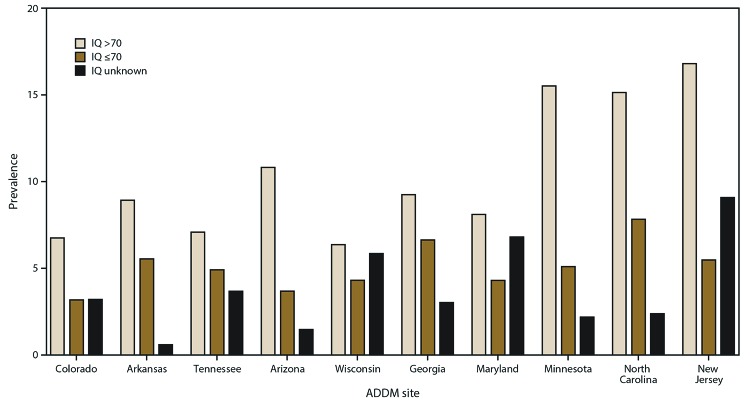
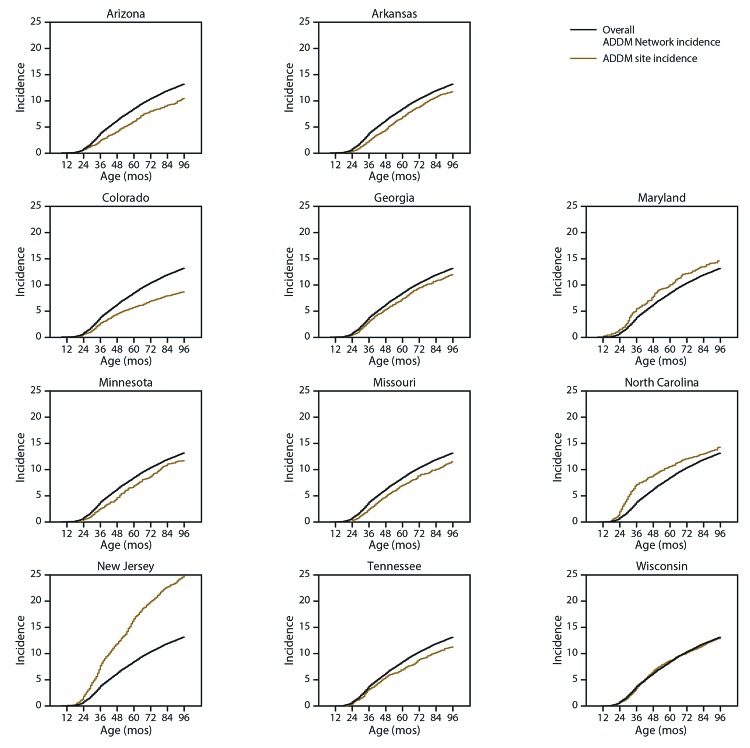
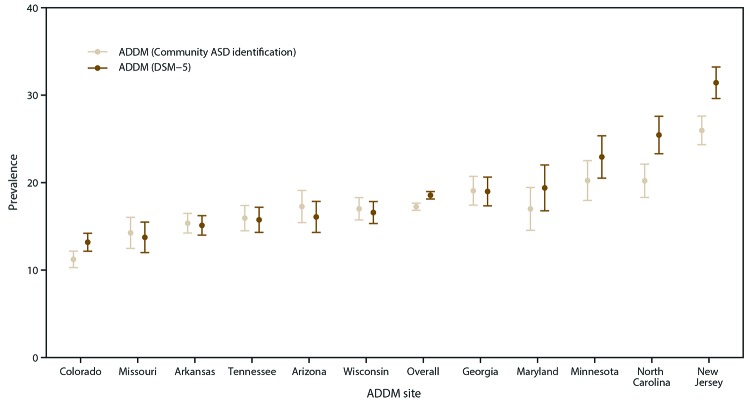
PROBLEM/CONDITION: Autism spectrum disorder (ASD). PERIOD COVERED: 2016. DESCRIPTION OF SYSTEM: The Autism and Developmental Disabilities Monitoring (ADDM) Network is an active surveillance program that provides estimates of the prevalence of ASD among children aged 8 years whose parents or guardians live in 11 ADDM Network sites in the United States (Arizona, Arkansas, Colorado, Georgia, Maryland, Minnesota, Missouri, New Jersey, North Carolina, Tennessee, and Wisconsin). Surveillance is conducted in two phases. The first phase involves review and abstraction of comprehensive evaluations that were completed by medical and educational service providers in the community. In the second phase, experienced clinicians who systematically review all abstracted information determine ASD case status. The case definition is based on ASD criteria described in the Diagnostic and Statistical Manual of Mental Disorders, Fifth Edition. RESULTS: For 2016, across all 11 sites, ASD prevalence was 18.5 per 1,000 (one in 54) children aged 8 years, and ASD was 4.3 times as prevalent among boys as among girls. ASD prevalence varied by site, ranging from 13.1 (Colorado) to 31.4 (New Jersey). Prevalence estimates were approximately identical for non-Hispanic white (white), non-Hispanic black (black), and Asian/Pacific Islander children (18.5, 18.3, and 17.9, respectively) but lower for Hispanic children (15.4). Among children with ASD for whom data on intellectual or cognitive functioning were available, 33% were classified as having intellectual disability (intelligence quotient [IQ] ≤70); this percentage was higher among girls than boys (39% versus 32%) and among black and Hispanic than white children (47%, 36%, and 27%, respectively) [corrected]. Black children with ASD were less likely to have a first evaluation by age 36 months than were white children with ASD (40% versus 45%). The overall median age at earliest known ASD diagnosis (51 months) was similar by sex and racial and ethnic groups; however, black children with IQ ≤70 had a later median age at ASD diagnosis than white children with IQ ≤70 (48 months versus 42 months). INTERPRETATION: The prevalence of ASD varied considerably across sites and was higher than previous estimates since 2014. Although no overall difference in ASD prevalence between black and white children aged 8 years was observed, the disparities for black children persisted in early evaluation and diagnosis of ASD. Hispanic children also continue to be identified as having ASD less frequently than white or black children. PUBLIC HEALTH ACTION: These findings highlight the variability in the evaluation and detection of ASD across communities and between sociodemographic groups. Continued efforts are needed for early and equitable identification of ASD and timely enrollment in services.
Overview
The claims and statistics of this paper haven’t been checked yet.
Run the check — free, no account needed. It reads the open-access text and checks the sources it cites.
Integrity signals
Registry
Cites
Statistics
Figures
Verification
Claims the paper makes
The claims and statistics of this paper haven’t been checked yet.
Run the check — free, no account needed. It reads the open-access text and checks the sources it cites.
Claims other papers make about this one
Each is checked against this paper’s own text: does it say what the citing paper says it does?
The source backs part of the claim, not all of it — or backs it for a different population, condition or comparison.
In the citing paper
“The U.S. reports a consistent pattern of increased ASD prevalence among higher socioeconomic status (SES) families (Baio et al. 2018; Durkin et al. 2010, 2017; Maenner et al. 2020; Pedersen et al. 2012), while European countries report increased prevalence among lower SES families (Delobel-Ayoub et al. 2015; Emerson 2012; Rai et al. 2012).”
From The Diagnosis of Autism: From Kanner to DSM-III to DSM-5 and Beyond (2021) · cites this paper as Maenner et al. 2020
Experimental — accuracy not yet measuredThe source backs part of the claim, not all of it — or backs it for a different population, condition or comparison.
In the citing paper
“In the U.S., African American, Hispanic, and Asian children are more likely to receive a diagnosis at a later age than Caucasian children (Maenner et al. 2020; Mandell et al. 2009; Palmer et al. 2010).”
From The Diagnosis of Autism: From Kanner to DSM-III to DSM-5 and Beyond (2021) · cites this paper as Maenner et al. 2020
Experimental — accuracy not yet measuredThe source backs part of the claim, not all of it — or backs it for a different population, condition or comparison.
In the citing paper
“While prevalence of ASD likely does not differ across racial and ethnic groups (Fombonne 2003; Maenner et al. 2020), the average age of diagnosis continues to differentiate these groups.”
From The Diagnosis of Autism: From Kanner to DSM-III to DSM-5 and Beyond (2021) · cites this paper as Maenner et al. 2020
Experimental — accuracy not yet measuredThe source backs part of the claim, not all of it — or backs it for a different population, condition or comparison.
In the citing paper
“Lastly, while the percentage of children diagnosed with ASD and intellectual disability is higher among African American and Hispanic children compared to Caucasian children in the U.S., African American and Hispanic children are nevertheless diagnosed at a later age on average than Caucasian children (Maenner et al. 2020).”
From The Diagnosis of Autism: From Kanner to DSM-III to DSM-5 and Beyond (2021) · cites this paper as Maenner et al. 2020
Experimental — accuracy not yet measuredThe source backs part of the claim, not all of it — or backs it for a different population, condition or comparison.
In the citing paper
“Surveillance among children aged 4 years in 2016 (8) indicated similar prevalence among children of different racial and ethnic groups, consistent with trends among children aged 8 years (9).”
From Early Identification of Autism Spectrum Disorder Among Children Aged 4 Years — Autism and Developmental Disabilities Monitoring Network, 11 Sites, United States, 2018 (2021) · cites this paper as [9]
Experimental — accuracy not yet measured
The source backs part of the claim, not all of it — or backs it for a different population, condition or comparison.
In the citing paper
“however, diagnosis typically occurs later in Europe (3.5 years), USA (4 years), and Canada (6 years), exposing an opportunity to decrease the age at diagnosis and accelerate access to specialized healthcare.”
From Tackling healthcare access barriers for individuals with autism from diagnosis to adulthood (2022) · cites this paper as [58]
Experimental — accuracy not yet measuredThe cited source says what the claim attributes to it.
In the citing paper
“ASD is ~4 times more prevalent in boys than in girls (16, 31).”
From Where Sex Meets Gender: How Sex and Gender Come Together to Cause Sex Differences in Mental Illness (2022) · cites this paper as [16]
In the citing paper
“and 1.85% (CI95%: 1.80–1.91%) in children aged eight year old (26).”
From Prevalence of Autism Spectrum Disorder and Co-morbidities in Children and Adolescents: A Systematic Literature Review (2021) · cites this paper as [26]
In the citing paper
“In the US, Christensen et al. (15) and Maenner et al. (26) assessed the prevalence of ID in ASD children aged 4y and 8y respectively based on the ADDM network and reported rates of 46.10% and 33.00%.”
From Prevalence of Autism Spectrum Disorder and Co-morbidities in Children and Adolescents: A Systematic Literature Review (2021) · cites this paper as [26]
In the citing paper
“The estimated prevalence of ASD has increased over 30-fold over the last four decades,18 primarily due to diagnostic expansion.19,20”
From The female protective effect against autism spectrum disorder (2022) · cites this paper as [20]
In the citing paper
“Members of previous generations, particularly those able to live independently as adults, were far less likely to receive an ASD diagnosis in childhood than children born as of writing.19,20”
From The female protective effect against autism spectrum disorder (2022) · cites this paper as [20]
In the citing paper
“For example, females are on average diagnosed later than males.20”
From The female protective effect against autism spectrum disorder (2022) · cites this paper as [20]
In the citing paper
“If consistent with the rate of ID in ASD cases in the United States or the United Kingdom, it would be approximately 40% over this diagnostic period.20”
From The female protective effect against autism spectrum disorder (2022) · cites this paper as [20]
In the citing paper
“The sex ratio is one example of how differences in identification of children without intellectual disability can affect patterns observed at older ages, with a higher ratio of boys to girls at age 8 years than at age 4 years, consistent with previous reports (8,9).”
In the citing paper
“In surveillance year 2018, ASD prevalence among Black children was higher than among White children at five of 11 sites and overall, the opposite of the pattern before surveillance year 2016 among children aged 8 years (9,17).”
In the citing paper
“Children with co-occurring intellectual disability are more likely to be identified earlier than children without intellectual disability, as indicated by an earlier median age at identification among this group (11) as well as the consistently higher proportion of children with intellectual disability at age 4 years (8,13) than at age 8 years (9,11,17).”
Self-check
Percentages, sums and reported differences re-computed from the paper’s own numbers.
The self-check needs the paper’s full text.
Citations
Cites
Diagnostic and Statistical Manual of Mental Disorders
American Psychiatric Association (2013) · doi:10.1176/appi.books.9780890425596 · Cited by 116,369
Baio, J., Wiggins, L., Christensen, D. L., Maenner, M. J., Daniels, J., Warren, Z., Kurzius-Spencer, M., Zahorodny, W., Robinson, C., Rosenberg, et al. (2018) · MMWR. Surveillance Summaries · doi:10.15585/mmwr.ss6706a1 · Cited by 6,078 · cited 5×
“8 per 1,000 (one in 59) children aged 8 years in 2014 (3).”
BackgroundMethodInfluentialSelf-citationDawson, G., Rogers, S., Munson, J., Smith, M., Winter, J., Greenson, J., Donaldson, A., & Varley, J. (2010) · Pediatrics · doi:10.1542/peds.2009-0958 · Cited by 2,835
Identification and Evaluation of Children With Autism Spectrum Disorders
Johnson, C. P., Myers, S. M., & and the Council on Children With Disabilities (2007) · Pediatrics · doi:10.1542/peds.2007-2361 · Cited by 2,011
Christensen, D. L., Baio, J., Braun, K. V. N., Bilder, D., Charles, J., Constantino, J. N., Daniels, J., Durkin, M. S., Fitzgerald, R. T., Kurzius-Spencer, M., et al. (2016) · MMWR. Surveillance Summaries · doi:10.15585/mmwr.ss6503a1 · Cited by 1,964
Self-citationNaarden Braun, K. V., Lopez, M., White, T., et al. (2023) · Carolina Digital Repository (University of North Carolina at Chapel Hill) · doi:10.17615/y3kk-5x30 · Cited by 1,381
Self-citationPrevalence of Autism in a US Metropolitan Area
Yeargin-Allsopp, M., Rice, C., Karapurkar, T., Doernberg, N., Boyle, C., & Murphy, C. (2003) · JAMA · doi:10.1001/jama.289.1.49 · Cited by 1,248 · cited 3×
“The ADDM Network uses a multiple-source, records-based surveillance methodology developed by CDC’s Metropolitan Atlanta Developmental Disabilities Surveillance Program (2,24).”
BackgroundMethodInfluentialPrevalence and Trends of Developmental Disabilities among Children in the United States: 2009–2017
Zablotsky, B., Black, L. I., Maenner, M. J., Schieve, L. A., Danielson, M. L., Bitsko, R. H., Blumberg, S. J., Kogan, M. D., & Boyle, C. A. (2019) · Pediatrics · doi:10.1542/peds.2019-0811 · Cited by 1,217 · cited 1×
“The 2016 NSCH and the 2015–2017 NHIS both estimated ASD prevalence at 25 per 1,000 children aged 3–17 years (13,29).”
BackgroundSelf-citation
Cited by
Sorted by citations
Global prevalence of autism: A systematic review update
Zeidan, J., Fombonne, E., Scorah, J., Ibrahim, A., Durkin, M. S., Saxena, S., Yusuf, A., Shih, A., & Elsabbagh, M. (2022) · Autism Research · doi:10.1002/aur.2696 · Cited by 3,117
Self-citationMaenner, M. J., Warren, Z., Williams, A. R., Amoakohene, E., Bakian, A. V., Bilder, D. A., Durkin, M. S., Fitzgerald, R. T., Furnier, S. M., Hughes, M. M., et al. (2023) · MMWR. Surveillance Summaries · doi:10.15585/mmwr.ss7202a1 · Cited by 2,706
“2 3 US Department of Health and Human Services/Centers for Disease Control and Prevention necessitate record review if those codes closely aligned with program-recommended ICD codes (11).”
BackgroundSelf-citationMaenner, M. J., Shaw, K. A., Bakian, A. V., Bilder, D. A., Durkin, M. S., Esler, A., Furnier, S. M., Hallas, L., Hall-Lande, J., Hudson, A., et al. (2021) · MMWR. Surveillance Summaries · doi:10.15585/mmwr.ss7011a1 · Cited by 1,818
“Recommended ICD codes were described previously (10).”
BackgroundMethodInfluentialSelf-citationIdentification, Evaluation, and Management of Children With Autism Spectrum Disorder
Hyman, S. L., Levy, S. E., Myers, S. M., COUNCIL ON CHILDREN WITH DISABILITIES, S. O. D. A. B. P., Kuo, D. Z., Apkon, S., Davidson, L. F., Ellerbeck, K. A., Foster, J. E. A., Noritz, G. H., et al. (2020) · Pediatrics · doi:10.1542/peds.2019-3447 · Cited by 1,798
Sex/Gender Differences and Autism: Setting the Scene for Future Research
Lai, M.-C., Lombardo, M. V., Auyeung, B., Chakrabarti, B., & Baron-Cohen, S. (2015) · Journal of the American Academy of Child & Adolescent Psychiatry · doi:10.1016/j.jaac.2014.10.003 · Cited by 1,120
Autism spectrum disorder: Definition, epidemiology, causes, and clinical evaluation
Hodges, H., Fealko, C., & Soares, N. (2020) · Translational Pediatrics · doi:10.21037/tp.2019.09.09 · Cited by 1,127
The Lancet Commission on the future of care and clinical research in autism
Lord, C., Charman, T., Havdahl, A., Carbone, P., Anagnostou, E., Boyd, B., Carr, T., de Vries, P. J., Dissanayake, C., Divan, G., et al. (2022) · The Lancet · doi:10.1016/s0140-6736(21)01541-5 · Cited by 924
Maternal immune activation and neuroinflammation in human neurodevelopmental disorders
Han, V. X., Patel, S., Jones, H. F., & Dale, R. C. (2021) · Nature Reviews Neurology · doi:10.1038/s41582-021-00530-8 · Cited by 683
Gastrointestinal microbiota in children with autism in Slovakia
Tomova, A., Husarova, V., Lakatosova, S., Bakos, J., Vlkova, B., Babinska, K., & Ostatnikova, D. (2015) · Physiology & Behavior · doi:10.1016/j.physbeh.2014.10.033 · Cited by 632
Evidence-Based Practices for Children, Youth, and Young Adults with Autism: Third Generation Review
Hume, K., Steinbrenner, J. R. D., Odom, S. L., Morin, K. L., Nowell, S. W., Tomaszewski, B. R., Szendrey, S., McIntyre, N. S., Özkan, Ş. Y., & Savage, M. (2021) · Journal of Autism and Developmental Disorders · doi:10.1007/s10803-020-04844-2 · Cited by 794
The valproic acid-induced rodent model of autism
Nicolini, C., & Fahnestock, M. L. (2017) · Experimental Neurology · doi:10.1016/j.expneurol.2017.04.017 · Cited by 622
Epidemiology of autism spectrum disorders: a review of worldwide prevalence estimates since 2014
Chiarotti, F., & Venerosi, A. (2020) · Brain Sciences · doi:10.3390/brainsci10050274 · Cited by 580
“Changing definitions and labelling practices that change over time, as in the case of the introduction of diagnostic manuals’ revisions, can produce change in labelling but also “diagnostic substitution” whereby similar symptoms can be classified under different disabilities during different time periods [11,12].”
BackgroundMethodSalari, N., Rasoulpoor, S., Rasoulpoor, S., Shohaimi, S., Jafarpour, S., Abdoli, N., Khaledi-Paveh, B., & Mohammadi, M. (2022) · Italian Journal of Pediatrics · doi:10.1186/s13052-022-01310-w · Cited by 571
“5/1000 in the latest estimate in 2016 [15, 61, 103].”
BackgroundA Comprehensive Review on the Role of the Gut Microbiome in Human Neurological Disorders
Sorboni, S. G., Moghaddam, H. S., Esfehani, R. J., & Soleimanpour, S. (2022) · Clinical Microbiology Reviews · doi:10.1128/cmr.00338-20 · Cited by 586
Early Identification of Autism Spectrum Disorder: Recommendations for Practice and Research
Zwaigenbaum, L., Bauman, M. L., Stone, W. L., Yirmiya, N., Estes, A. M., Hansen, R. L., McPartland, J. C., Natowicz, M. R., Choueiri, R., FEIN, D. A., et al. (2015) · PEDIATRICS · doi:10.1542/peds.2014-3667c · Cited by 555
Zhou, X., Feliciano, P., Shu, C., Wang, T., Astrovskaya, I., Hall, J. B., Obiajulu, J. U., Wright, J. R., Murali, S. C., Xu, S. X., et al. (2022) · Nature Genetics · doi:10.1038/s41588-022-01148-2 · Cited by 453
Self-citationSulforaphane treatment of autism spectrum disorder (ASD)
Singh, K., Connors, S. L., Macklin, E. A., Smith, K. D., Fahey, J. W., Talalay, P., & Zimmerman, A. W. (2014) · Proceedings of the National Academy of Sciences · doi:10.1073/pnas.1416940111 · Cited by 449
Mechanisms governing activity-dependent synaptic pruning in the developing mammalian CNS
Faust, T. E., Gunner, G., & Schafer, D. P. (2021) · Nature reviews. Neuroscience · doi:10.1038/s41583-021-00507-y · Cited by 477
Differences in fecal microbial metabolites and microbiota of children with autism spectrum disorders
Kang, D.-W., Ilhan, Z. E., Isern, N. G., Hoyt, D. W., Howsmon, D. P., Shaffer, M., Lozupone, C. A., Hahn, J., Adams, J. B., & Krajmalnik-Brown, R. (2018) · Anaerobe · doi:10.1016/j.anaerobe.2017.12.007 · Cited by 381
Intranasal oxytocin treatment for social deficits and biomarkers of response in children with autism
Parker, K. J., Oztan, O., Libove, R. A., Sumiyoshi, R. D., Jackson, L. P., Karhson, D. S., Summers, J. E., Hinman, K. E., Motonaga, K. S., Phillips, J. M., et al. (2017) · Proceedings of the National Academy of Sciences · doi:10.1073/pnas.1705521114 · Cited by 349
Neece, C., McIntyre, L. L., & Fenning, R. (2020) · Journal of Intellectual Disability Research · doi:10.1111/jir.12769 · Cited by 344
“M (SD) Parent characteristics Age 37.75 (7.27) Gender (% mothers) 55 (71.40) Ethnicity (Latinx) 59 (76.60) Monolingual Spanish speaking 45 (58.44) Marital status (married) 53 (68.60) Parent education (without high school diploma) 32 (41.60) Family income (<$50 000) 43 (55.80) Receiving government financial assistance…”
BackgroundInfluentialChristensen, D. L., Maenner, M. J., Bilder, D., Constantino, J. N., Daniels, J., Durkin, M. S., Fitzgerald, R. T., Kurzius-Spencer, M., Pettygrove, S. D., Robinson, C., et al. (2019) · MMWR. Surveillance Summaries · doi:10.15585/mmwr.ss6802a1 · Cited by 344
Self-citationFacial Emotion Recognition Using Transfer Learning in the Deep CNN
Akhand, M. A. H., Roy, S., Siddique, N. H., Kamal, M. A. S., & Shimamura, T. (2021) · Electronics · doi:10.3390/electronics10091036 · Cited by 375
Bougeard, C., Picarel-Blanchot, F., Schmid, R., Campbell, R., & Buitelaar, J. (2021) · Frontiers in Psychiatry · doi:10.3389/fpsyt.2021.744709 · Cited by 330
“(26) assessed the prevalence of ID in ASD children aged 4y and 8y respectively based on the ADDM network and reported rates of 46.”
BackgroundMethodChisholm, K., Lin, A. P., Abu-Akel, A. M., & Wood, S. J. (2015) · Neuroscience & Biobehavioral Reviews · doi:10.1016/j.neubiorev.2015.04.012 · Cited by 347
Tackling healthcare access barriers for individuals with autism from diagnosis to adulthood
Malik-Soni, N., Shaker, A., Luck, H., Mullin, A. E., Wiley, R. E., Lewis, M. E. S., Fuentes, J., & Frazier, T. W. (2022) · Pediatric Research · doi:10.1038/s41390-021-01465-y · Cited by 309
The global prevalence of autism spectrum disorder: A three-level meta-analysis
Talantseva, O. I., Romanova, R. S., Shurdova, E. M., Dolgorukova, T. A., Sologub, P. S., Titova, O. S., Kleeva, D. F., & Grigorenko, E. L. (2023) · Frontiers in Psychiatry · doi:10.3389/fpsyt.2023.1071181 · Cited by 318
The Diagnosis of Autism: From Kanner to DSM-III to DSM-5 and Beyond
Rosen, N. E., Lord, C., & Volkmar, F. R. (2021) · Journal of Autism and Developmental Disorders · doi:10.1007/s10803-021-04904-1 · Cited by 302
Narzisi, A. (2020) · Brain Sciences · doi:10.3390/brainsci10040207 · Cited by 299
“The incidence of ASC is worldwide and recent epidemiological data estimated it to be higher than 1/100 [3,4].”
BackgroundShaw, K. A., Maenner, M. J., Baio, J., EdS1, Washington, A., Christensen, D. L., Wiggins, L. D., Pettygrove, S., Andrews, J. G., White, T., et al. (2020) · MMWR. Surveillance Summaries · doi:10.15585/mmwr.ss6903a1 · Cited by 286
“In contrast, children aged 8 years with ASD and intellectual disability were more likely to be evaluated and receive an ASD diagnosis at a younger age (8).”
BackgroundInfluentialSelf-citationComorbidities in autism spectrum disorder and their etiologies
Khachadourian, V., Mahjani, B., Sandin, S., Kolevzon, A., Buxbaum, J. D., Reichenberg, A., & Janecka, M. (2023) · Translational Psychiatry · doi:10.1038/s41398-023-02374-w · Cited by 291
Disparities in Diagnosis and Treatment of Autism in Latino and Non-Latino White Families
Zuckerman, K. E., Lindly, O. J., Reyes, N., Chavez, A. E., Macias, K., Smith, K. N., & Reynolds, A. (2017) · PEDIATRICS · doi:10.1542/peds.2016-3010 · Cited by 303
Kalkbrenner, A. E., Schmidt, R. J., & Penlesky, A. C. (2014) · Current Problems in Pediatric and Adolescent Health Care · doi:10.1016/j.cppeds.2014.06.001 · Cited by 268
Sacco, R., Camilleri, N., Eberhardt, J., Umla‐Runge, K., & Newbury‐Birch, D. (2022) · European Child & Adolescent Psychiatry · doi:10.1007/s00787-022-02131-2 · Cited by 341
“This rate was comparable to 1.85% in the United States [90], and that of “around 1%” published by Autism Europe [91].”
InfluentialKhodatars, M., Shoeibi, A., Sadeghi, D., Ghaasemi, N., Jafari, M., Moridian, P., Khadem, A. A., Alizadehsani, R., Zare, A., Kong, Y., et al. (2021) · Computers in Biology and Medicine · doi:10.1016/j.compbiomed.2021.104949 · Cited by 294
Birth Prevalence of Cerebral Palsy: A Population-Based Study
Braun, K. V. N., Doernberg, N. S., Schieve, L. A., Christensen, D., Goodman, A. B., & Yeargin‐Allsopp, M. (2015) · PEDIATRICS · doi:10.1542/peds.2015-2872 · Cited by 265
Self-citationSiu, A. L., and the US Preventive Services Task Force (USPSTF), Bibbins-Domingo, K., Grossman, D. C., Baumann, L. C., Davidson, K. W., Ebell, M., García, F. A. R., Gillman, M., Herzstein, J., et al. (2016) · JAMA · doi:10.1001/jama.2016.0018 · Cited by 261
The microbiota-gut-brain axis and its potential therapeutic role in autism spectrum disorder
Li, Q., & Zhou, J.-M. (2016) · Neuroscience · doi:10.1016/j.neuroscience.2016.03.013 · Cited by 253
Cheroni, C., Caporale, N., & Testa, G. (2020) · Molecular Autism · doi:10.1186/s13229-020-00370-1 · Cited by 290
Roman-Urrestarazu, A., van Kessel, R., Allison, C., Matthews, F. E., Brayne, C., & Baron-Cohen, S. (2021) · JAMA Pediatrics · doi:10.1001/jamapediatrics.2021.0054 · Cited by 242
Hill, A. P., Zuckerman, K. E., & Fombonne, E. J. (2015) · PEDIATRICS · doi:10.1542/peds.2015-1437 · Cited by 256
Mitrea, L., Nemeș, S. A., Szabo, K., Teleky, B., & Vodnar, D. C. (2022) · Frontiers in Medicine · doi:10.3389/fmed.2022.813204 · Cited by 253
“According to an article from 2017, 1 in 68 children is affected by ASD in the United States (143), while in two publications from 2019 to 2020 it was reported that 1 in 59 individuals is diagnosed with ASD in the United States (144, 145).”
BackgroundRaghavan, R., Riley, A. W., Volk, H., Caruso, D., Hironaka, L., Sices, L., Hong, X., Wang, G., Ji, Y., Brucato, M., et al. (2018) · Paediatric and Perinatal Epidemiology · doi:10.1111/ppe.12414 · Cited by 233
Rose, D. R., Yang, H., Serena, G., Sturgeon, C., Ma, B., Careaga, M., Hughes, H. K., Angkustsiri, K., Rose, M., Hertz-Picciotto, I., et al. (2018) · Brain, Behavior, and Immunity · doi:10.1016/j.bbi.2018.03.025 · Cited by 227
Son, J. S., Zheng, L. J., Rowehl, L. M., Tian, X., Zhang, Y., Zhu, W., Litcher-Kelly, L., Gadow, K. D., Gathungu, G., Robertson, C. E., et al. (2015) · PLOS ONE · doi:10.1371/journal.pone.0137725 · Cited by 229
Hardan, A. Y., Gengoux, G. W., Berquist, K. L., Libove, R. A., Ardel, C. M., Phillips, J. M., Frazier, T. W., & Minjarez, M. (2014) · Journal of Child Psychology and Psychiatry · doi:10.1111/jcpp.12354 · Cited by 225
Bone, D., Bishop, S. L., Black, M. P., Goodwin, M. S., Lord, C., & Narayanan, S. S. (2016) · Journal of Child Psychology and Psychiatry · doi:10.1111/jcpp.12559 · Cited by 220
Interactions of innate and adaptive immunity in brain development and function
Filiano, A. J., Gadani, S. P., & Kipnis, J. (2014) · Brain Research · doi:10.1016/j.brainres.2014.07.050 · Cited by 229
Papadopoulos, D. (2021) · Brain Sciences · doi:10.3390/brainsci11030309 · Cited by 285
Grzadzinski, R., Dick, C., Lord, C., & Bishop, S. (2016) · Molecular Autism · doi:10.1186/s13229-016-0072-1 · Cited by 192
Perceptions of Families of Individuals with Autism Spectrum Disorder during the COVID-19 Crisis
Manning, J. H., Billian, J., Matson, J., Allen, C., & Soares, N. S. (2020) · Journal of Autism and Developmental Disorders · doi:10.1007/s10803-020-04760-5 · Cited by 229
Changes in the Gut Microbiota of Children with Autism Spectrum Disorder
Zou, R., Xu, F., Wang, Y., Duan, M., Guo, M., Zhang, Q., Zhao, H., & Zheng, H. (2020) · Autism Research · doi:10.1002/aur.2358 · Cited by 216
Chen, H., Xujun, D., Liu, F., Lu, F., Ma, X., Zhang, Y., Uddin, L. Q., & Chen, H. (2015) · Progress in Neuro-Psychopharmacology and Biological Psychiatry · doi:10.1016/j.pnpbp.2015.06.014 · Cited by 202
Aylward, B. S., Gal‐Szabo, D. E., & Taraman, S. (2021) · Journal of Developmental & Behavioral Pediatrics · doi:10.1097/dbp.0000000000000996 · Cited by 241
“The prevalence of autism spectrum disorder (ASD) has increased dramatically in the past 2 decades, with current reported US prevalence rates of around 1 in 54 children.(1) Behavioral symptoms of ASD have been detected in children between 12 and 14 months of age,(2) and ASD can be reliably diagnosed by 2 years of age(3…”
BackgroundAnderson, A. H., Stephenson, J., & Carter, M. (2017) · Research in Autism Spectrum Disorders · doi:10.1016/j.rasd.2017.04.002 · Cited by 196
Maternal Intake of Supplemental Iron and Risk of Autism Spectrum Disorder
Schmidt, R. J., Tancredi, D. J., Krakowiak, P., Hansen, R. L., & Ozonoff, S. (2014) · American Journal of Epidemiology · doi:10.1093/aje/kwu208 · Cited by 184
Steinbrenner, J. R., McIntyre, N., Rentschler, L. F., Pearson, J. N., Luelmo, P., Jaramillo, M., Boyd, B., Wong, C. S., Nowell, S. W., Odom, S., et al. (2022) · Autism · doi:10.1177/13623613211072593 · Cited by 178
“autism, interventions —psychosocial/behavioral, race, ethnicity, systematic review As the prevalence of autism has increased in recent years (Maenner et al., 2020), so has the racial and ethnic diversity of children who are identified.”
BackgroundWen, G., Cao, P., Bao, H., Yang, W., Zheng, T., & Zai͏̈ane, O. R. (2022) · Computers in Biology and Medicine · doi:10.1016/j.compbiomed.2022.105239 · Cited by 190
“Only relying on the psychological criteria [6] complicates the disease diagnosis, which could be biased by the subjective opinions of clinicians.”
BackgroundFuentes, J., Amaia Hervas, G., Howlin, P., & Party), (. A. W. (2020) · European Child & Adolescent Psychiatry · doi:10.1007/s00787-020-01587-4 · Cited by 246
Applications of Pose Estimation in Human Health and Performance across the Lifespan
Stenum, J., Cherry‐Allen, K. M., Pyles, C. O., Reetzke, R., Vignos, M. F., & Roemmich, R. T. (2021) · Sensors · doi:10.3390/s21217315 · Cited by 181
“The detrimental impact of diagnostic delays has resulted in federal prioritization of early identification of ASD and an urgency to develop accessible and accurate early screening methods [64].”
BackgroundVirtual Reality–Based Social Skills Training for Children With Autism Spectrum Disorder
Ke, F., Moon, J., & Sokolikj, Z. (2020) · Journal of Special Education Technology · doi:10.1177/0162643420945603 · Cited by 188
Lim, Y. H., Partridge, K., Girdler, S. J., & Morris, S. L. (2017) · Journal of Autism and Developmental Disorders · doi:10.1007/s10803-017-3144-y · Cited by 189
Snigdha, S., Ha, K., Tsai, P., Dinan, T. G., Bartos, J. D., & Shahid, M. (2021) · Pharmacology & Therapeutics · doi:10.1016/j.pharmthera.2021.107978 · Cited by 173
Zawadzka, A., Cieślik, M., & Adamczyk, A. (2021) · International Journal of Molecular Sciences · doi:10.3390/ijms222111516 · Cited by 197
“ASD is diagnosed in all racial, ethnic, and socioeconomic groups, but it has a stark difference in the rate of diagnoses when it comes to sex: ASD is four times more common in males than in females [3].”
BackgroundKeil, K. P., & Lein, P. J. (2016) · Environmental Epigenetics · doi:10.1093/eep/dvv012 · Cited by 167
Microglia and Neurodevelopmental Disorders
Lukens, J. R., & Eyo, U. B. (2022) · Annual Review of Neuroscience · doi:10.1146/annurev-neuro-110920-023056 · Cited by 171
Project TENDR: Targeting Environmental Neuro-Developmental Risks The TENDR Consensus Statement
Bennett, D., Bellinger, D. C., Birnbaum, L. S., DABT, A.T.S, Bradman, A., Chen, A., Cory-Slechta, D. A., Engel, S. M., Fallin, M. D., et al. (2016) · Environmental Health Perspectives · doi:10.1289/ehp358 · Cited by 169
Mental health problems in children with intellectual disability
Totsika, V., Liew, A., Absoud, M., Adnams, C. M., & Emerson, E. (2022) · The Lancet Child & Adolescent Health · doi:10.1016/s2352-4642(22)00067-0 · Cited by 191
Evidence supporting an altered immune response in ASD
Mead, J., & Ashwood, P. (2015) · Immunology Letters · doi:10.1016/j.imlet.2014.11.006 · Cited by 165
Acetaminophen use in pregnancy and neurodevelopment: attention function and autism spectrum symptoms
Avella-García, C. B., Júlvez, J., Fortuny, J., Rebordosa, C., García‐Esteban, R., Galán, I. R., Tardón, A., Rodríguez-Bernal, C. L., Íñiguez, C., Andiarena, A., et al. (2016) · International Journal of Epidemiology · doi:10.1093/ije/dyw115 · Cited by 166
Language Acquisition and Language Disorders
(2013) · Language acquisition & language disorders · doi:10.1075/lald · Cited by 166
Shaw, K. A., Maenner, M. J., Bakian, A. V., Bilder, D. A., Durkin, M. S., Furnier, S. M., Hughes, M. M., Patrick, M., Pierce, K., Salinas, A., et al. (2021) · MMWR. Surveillance Summaries · doi:10.15585/mmwr.ss7010a1 · Cited by 165
“In surveillance year 2018, ASD prevalence among Black children was higher than among White children at five of 11 sites and overall, the opposite of the pattern before surveillance year 2016 among children aged 8 years (9,17).”
BackgroundResultInfluentialSelf-citationBail, C. A. (2016) · Proceedings of the National Academy of Sciences · doi:10.1073/pnas.1607151113 · Cited by 165
Zwaigenbaum, L., Bryson, S. E., Brian, J., Smith, I. M., Roberts, W., Szatmari, P., Roncadin, C., Garon, N., & Vaillancourt, T. (2016) · Autism Research · doi:10.1002/aur.1585 · Cited by 165
Wood‐Downie, H., Wong, B., Kovshoff, H., Cortese, S., & Hadwin, J. A. (2021) · Journal of Child Psychology and Psychiatry · doi:10.1111/jcpp.13337 · Cited by 162
“The reported sex/gender ratio in ASD varies depending on the specific demographics – such as IQ – of the participants included in the study (Maenner et al., 2020).”
BackgroundAutism Spectrum Disorders: Etiology and Pathology
Sauer, A. K., Stanton, J. E., Hans, S., & Grabrucker, A. M. (2021) · Exon Publications eBooks · doi:10.36255/exonpublications.autismspectrumdisorders.2021.etiology · Cited by 195
Language in autism: domains, profiles and co-occurring conditions
Schaeffer, J. C., El-Raziq, M. A., Castroviejo, E., Durrleman, S., Ferré, S., Grama, I., Hendriks, P., Kissine, M., Manenti, M., Marinis, T., et al. (2023) · Journal of Neural Transmission · doi:10.1007/s00702-023-02592-y · Cited by 204
“intelligence; this leaves one-third of autistic individuals with ID (Maenner et al. 2020).”
BackgroundAutomated ASD detection using hybrid deep lightweight features extracted from EEG signals
Bayğın, M., Doğan, Ş., Tuncer, T., Barua, P. D., Faust, O., Arunkumar, N., Abdulhay, E., Palmer, E. E., & Acharya, U. R. (2021) · Computers in Biology and Medicine · doi:10.1016/j.compbiomed.2021.104548 · Cited by 160
Sacrey, L.-A. R., Armstrong, V. L., Bryson, S. E., & Zwaigenbaum, L. (2014) · Neuroscience & Biobehavioral Reviews · doi:10.1016/j.neubiorev.2014.10.011 · Cited by 174
Liu, R., Salisbury, J. P., Vahabzadeh, A., & Sahin, N. T. (2017) · Frontiers in Pediatrics · doi:10.3389/fped.2017.00145 · Cited by 160
Jack, A., & A. Pelphrey, K. (2017) · Journal of Child Psychology and Psychiatry · doi:10.1111/jcpp.12687 · Cited by 159
Gordon‐Lipkin, E. M., Foster, J., & Peacock, G. (2016) · Pediatric Clinics of North America · doi:10.1016/j.pcl.2016.06.007 · Cited by 158
Fuller, E. A., Oliver, K., Vejnoska, S., & Rogers, S. J. (2020) · Brain Sciences · doi:10.3390/brainsci10060368 · Cited by 158
“The estimated prevalence of autism spectrum disorders (ASD) has continuously increased in recent decades with the most current prevalence rates estimating that 1 in 54 children under 8 years of age are diagnosed with ASD [1].”
BackgroundGenetic correlates of phenotypic heterogeneity in autism
Warrier, V., Zhang, X., Reed, P., Havdahl, A., Moore, T. M., Cliquet, F., Leblond, C. S., Rolland, T., Rosengren, A., LEAP, E.-A., et al. (2022) · Nature Genetics · doi:10.1038/s41588-022-01072-5 · Cited by 152
Curran, E. A., Dalman, C., Kearney, P. M., Kenny, L. C., Cryan, J. F., Dinan, T. G., & Khashan, A. S. (2015) · JAMA Psychiatry · doi:10.1001/jamapsychiatry.2015.0846 · Cited by 146
Prenatal Environment and Neurodevelopmental Disorders
Doi, M., Usui, N., & Shimada, S. (2022) · Frontiers in Endocrinology · doi:10.3389/fendo.2022.860110 · Cited by 185
Targeted DNA Sequencing from Autism Spectrum Disorder Brains Implicates Multiple Genetic Mechanisms
D’Gama, A. M., Pochareddy, S., Li, M., Jamuar, S. S., Rodin, R. E., Lam, A.-T. N., Šestan, N., & Walsh, C. A. (2015) · Neuron · doi:10.1016/j.neuron.2015.11.009 · Cited by 153
Exploring the Experience of Self-Diagnosis of Autism Spectrum Disorder in Adults
Lewis, L. F. (2016) · Archives of Psychiatric Nursing · doi:10.1016/j.apnu.2016.03.009 · Cited by 155
Liew, Z., Ritz, B. R., Virk, J., & Olsen, J. (2015) · Autism Research · doi:10.1002/aur.1591 · Cited by 165
Suk, W. A., Ahanchian, H., Asante, K. A., Carpenter, D. O., Díaz‐Barriga, F., Ha, E., Huo, X., King, M., Ruchirawat, M., da Silva, E. R., et al. (2016) · Environmental Health Perspectives · doi:10.1289/ehp.1510517 · Cited by 156
Neuron-Glia Interactions in Neurodevelopmental Disorders
Kim, Y. S., Choi, J., & Yoon, B. (2020) · Cells · doi:10.3390/cells9102176 · Cited by 154
Vogan, V., Lake, J. K., Tint, A., Weiss, J. A., & Lunsky, Y. (2017) · Disability and Health Journal · doi:10.1016/j.dhjo.2016.11.002 · Cited by 151
Epidemiological surveys of ASD: advances and remaining challenges
Fombonne, E., MacFarlane, H., & Salem, A. C. (2021) · Journal of Autism and Developmental Disorders · doi:10.1007/s10803-021-05005-9 · Cited by 147
Kong, X.-J., Liu, J., Liu, K., Koh, M., Sherman, H., Liu, S., Tian, R., Sukijthamapan, P., Wang, J., Fong, M., et al. (2021) · Nutrients · doi:10.3390/nu13051552 · Cited by 150
Current knowledge on the genetics of autism and propositions for future research
Bourgeron, T. (2016) · Comptes Rendus Biologies · doi:10.1016/j.crvi.2016.05.004 · Cited by 164
English, M. C. W., Gignac, G. E., Visser, T. A. W., Whitehouse, A., Enns, J. T., & Maybery, M. T. (2021) · Molecular Autism · doi:10.1186/s13229-021-00445-7 · Cited by 160
Metabolic Dysfunction Underlying Autism Spectrum Disorder and Potential Treatment Approaches
Cheng, N., Rho, J. M., & Masino, S. A. (2017) · Frontiers in Molecular Neuroscience · doi:10.3389/fnmol.2017.00034 · Cited by 162
Joseph, R. M., O’Shea, T. M., Allred, E. N., Heeren, T., Hirtz, D., Paneth, N., Leviton, A., & Kuban, K. (2016) · Autism Research · doi:10.1002/aur.1644 · Cited by 154
A review on neural network models of schizophrenia and autism spectrum disorder
Lanillos, P., Oliva, D., Philippsen, A. K., Yamashita, Y., Nagai, Y., & Cheng, G. (2019) · Neural Networks · doi:10.1016/j.neunet.2019.10.014 · Cited by 156
Metadata
- Authors
- Maenner, M. J., Shaw, K. A., Baio, J., EdS1, Washington, A., Patrick, M., DiRienzo, M., Christensen, D. L., Wiggins, L. D., Pettygrove, S., Andrews, J. G., Lopez, M., Hudson, A., Baroud, T., Schwenk, Y., White, T., Rosenberg, C. R., Lee, L.-C., Harrington, R. A., Huston, M., Hewitt, A., PhD-7, Esler, A., Hall-Lande, J., Poynter, J. N., Hallas-Muchow, L., Constantino, J. N., Fitzgerald, R. T., Zahorodny, W., Shenouda, J., Daniels, J. L., Warren, Z., Vehorn, A., Salinas, A., Durkin, M. S., & Dietz, P. M.
- Affiliations
- Centers for Disease Control and Prevention (US)
- University of North Carolina at Chapel Hill (US)
- University of Arizona (US)
- University of Arkansas for Medical Sciences (US)
- Colorado Department of Public Health and Environment (US)
- Johns Hopkins University (US)
- University of Minnesota (US)
- Washington University in St. Louis (US)
- Rutgers New Jersey Medical School (US)
- University of Wisconsin–Madison (US)
- Corresponding author
- Maenner, Matthew J.
- ORCID
- Maenner, Matthew J.
- Shaw, Kelly A.
- Washington, Anita
- Patrick, Mary
- DiRienzo, Monica
- Wiggins, Lisa D.
- Pettygrove, Sydney
- Andrews, Jennifer G.
- Lopez, Maya
- Rosenberg, Cordelia Robinson
- Lee, Li-Ching
- Esler, Amy
- Poynter, Jenny N.
- Constantino, John N.
- Fitzgerald, Robert T.
- Zahorodny, Walter
- Shenouda, Josephine
- Daniels, Julie L.
- Warren, Zachary
- Durkin, Maureen S.
- Dietz, Patricia M.
- Venue
- MMWR. Surveillance Summaries
- Published
- 2020-03-27
- Volume
- 69
- Issue
- 4
- Pages
- 1-12
- ISSN
- 1545-8636 (ISSN-L)
- 1546-0738
- PMC
- PMC7119644
- OpenAlex
- W3027179734
- Semantic Scholar
- ddeb34dc450a7cdc9fd11cdb896b266be9fa1f05
- Cited by
- 3,780
- References
- 34
- Citations by year
- 2026: 107 · 2025: 199 · 2024: 335 · 2023: 473 · 2022: 732 · 2021: 904 · 2020: 393
- FWCI
- 336.19
- Type
- journal article
- Language
- en
- Open access
- diamond
- doi.org
- Licence
- public-domain
- Locations
- MMWR Surveillance Summaries (publishedVersion, public-domain)
- PubMed Central (publishedVersion, cc-by)
- PubMed (publishedVersion)
- UA Campus Repository (The University of Arizona) (acceptedVersion, public-domain)
- Funders
- Centers for Disease Control and Prevention
- Topics
- Life Sciences › Neuroscience › Cognitive Neuroscience › Autism Spectrum Disorder Research
- Health Sciences › Medicine › Psychiatry and Mental health › Child Nutrition and Feeding Issues
- Social Sciences › Psychology › Clinical Psychology › Family and Disability Support Research
- Keywords
- autism spectrum disorder, autism prevalence, sex differences, racial and ethnic disparities, intellectual disability, age at diagnosis, autism epidemiology, Black children, Hispanic children, white children, regional variation in prevalence, United States states and territories
- MeSH terms
- Autism Spectrum Disorder, Child, Female, Humans, Male, Population Surveillance, United States, Prevalence, Diagnostic and Statistical Manual of Mental Disorders
About these checks
Registry, retraction, Cites and statistics results are computed, not judged, with one exception: a printed reference that no index lists is read once by a model before it counts as a citation error. Claims are extracted by a model and kept only when their quote appears verbatim in the text; each cited source is then checked, with a model’s help, for whether it says what the claim relies on. Those verdicts can be wrong — read the claim’s quote and the cited source before relying on one.
Statistics and arithmetic are recomputed, not judged.
Confidence bands are shown only for fields calibrated on our annotated test set. None is calibrated yet, so no band is shown.
What counts as a claim ›How we measure confidence ›How we check this ›
Are you an author, or do you see a problem with this page? Request a review
