

The DOI matches its Crossref record; 36 of the 36 references it cites were found in a registry or an index.
Prevalence of Autism Spectrum Disorder Among Children Aged 8 Years — Autism and Developmental Disabilities Monitoring Network, 11 Sites, United States, 2016
Open accessAbstract
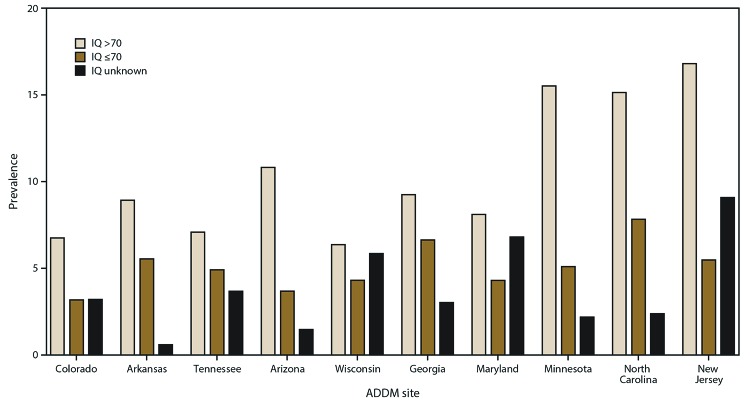
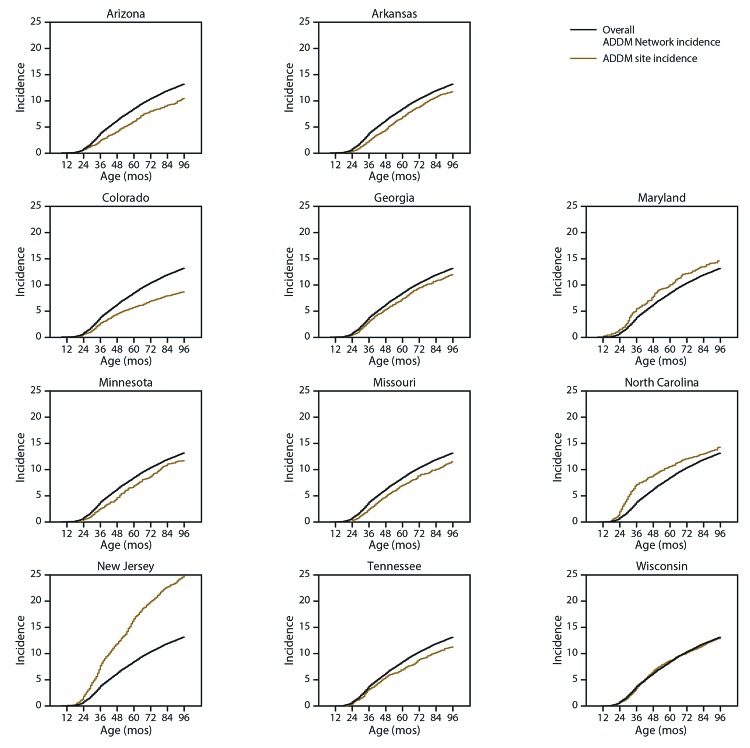
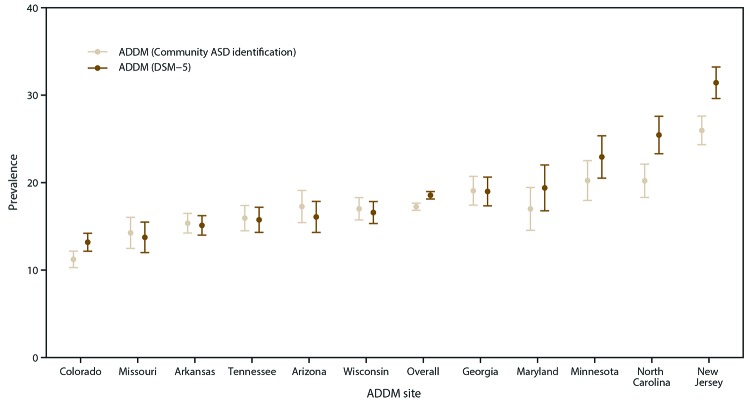
PROBLEM/CONDITION: Autism spectrum disorder (ASD). PERIOD COVERED: 2016. DESCRIPTION OF SYSTEM: The Autism and Developmental Disabilities Monitoring (ADDM) Network is an active surveillance program that provides estimates of the prevalence of ASD among children aged 8 years whose parents or guardians live in 11 ADDM Network sites in the United States (Arizona, Arkansas, Colorado, Georgia, Maryland, Minnesota, Missouri, New Jersey, North Carolina, Tennessee, and Wisconsin). Surveillance is conducted in two phases. The first phase involves review and abstraction of comprehensive evaluations that were completed by medical and educational service providers in the community. In the second phase, experienced clinicians who systematically review all abstracted information determine ASD case status. The case definition is based on ASD criteria described in the Diagnostic and Statistical Manual of Mental Disorders, Fifth Edition. RESULTS: For 2016, across all 11 sites, ASD prevalence was 18.5 per 1,000 (one in 54) children aged 8 years, and ASD was 4.3 times as prevalent among boys as among girls. ASD prevalence varied by site, ranging from 13.1 (Colorado) to 31.4 (New Jersey). Prevalence estimates were approximately identical for non-Hispanic white (white), non-Hispanic black (black), and Asian/Pacific Islander children (18.5, 18.3, and 17.9, respectively) but lower for Hispanic children (15.4). Among children with ASD for whom data on intellectual or cognitive functioning were available, 33% were classified as having intellectual disability (intelligence quotient [IQ] ≤70); this percentage was higher among girls than boys (39% versus 32%) and among black and Hispanic than white children (47%, 36%, and 27%, respectively) [corrected]. Black children with ASD were less likely to have a first evaluation by age 36 months than were white children with ASD (40% versus 45%). The overall median age at earliest known ASD diagnosis (51 months) was similar by sex and racial and ethnic groups; however, black children with IQ ≤70 had a later median age at ASD diagnosis than white children with IQ ≤70 (48 months versus 42 months). INTERPRETATION: The prevalence of ASD varied considerably across sites and was higher than previous estimates since 2014. Although no overall difference in ASD prevalence between black and white children aged 8 years was observed, the disparities for black children persisted in early evaluation and diagnosis of ASD. Hispanic children also continue to be identified as having ASD less frequently than white or black children. PUBLIC HEALTH ACTION: These findings highlight the variability in the evaluation and detection of ASD across communities and between sociodemographic groups. Continued efforts are needed for early and equitable identification of ASD and timely enrollment in services.
Overview
The claims and statistics of this paper haven’t been checked yet.
Run the check — free, no account needed. It reads the open-access text and checks the sources it cites.
Integrity signals
Registry
Cites
Statistics
Figures
Verification
Claims the paper makes
The claims and statistics of this paper haven’t been checked yet.
Run the check — free, no account needed. It reads the open-access text and checks the sources it cites.
Claims other papers make about this one
Each is checked against this paper’s own text: does it say what the citing paper says it does?
The source backs part of the claim, not all of it — or backs it for a different population, condition or comparison.
In the citing paper
“The U.S. reports a consistent pattern of increased ASD prevalence among higher socioeconomic status (SES) families (Baio et al. 2018; Durkin et al. 2010, 2017; Maenner et al. 2020; Pedersen et al. 2012), while European countries report increased prevalence among lower SES families (Delobel-Ayoub et al. 2015; Emerson 2012; Rai et al. 2012).”
From The Diagnosis of Autism: From Kanner to DSM-III to DSM-5 and Beyond (2021) · cites this paper as Maenner et al. 2020
Experimental — accuracy not yet measuredThe source backs part of the claim, not all of it — or backs it for a different population, condition or comparison.
In the citing paper
“In the U.S., African American, Hispanic, and Asian children are more likely to receive a diagnosis at a later age than Caucasian children (Maenner et al. 2020; Mandell et al. 2009; Palmer et al. 2010).”
From The Diagnosis of Autism: From Kanner to DSM-III to DSM-5 and Beyond (2021) · cites this paper as Maenner et al. 2020
Experimental — accuracy not yet measuredThe source backs part of the claim, not all of it — or backs it for a different population, condition or comparison.
In the citing paper
“While prevalence of ASD likely does not differ across racial and ethnic groups (Fombonne 2003; Maenner et al. 2020), the average age of diagnosis continues to differentiate these groups.”
From The Diagnosis of Autism: From Kanner to DSM-III to DSM-5 and Beyond (2021) · cites this paper as Maenner et al. 2020
Experimental — accuracy not yet measuredThe source backs part of the claim, not all of it — or backs it for a different population, condition or comparison.
In the citing paper
“Lastly, while the percentage of children diagnosed with ASD and intellectual disability is higher among African American and Hispanic children compared to Caucasian children in the U.S., African American and Hispanic children are nevertheless diagnosed at a later age on average than Caucasian children (Maenner et al. 2020).”
From The Diagnosis of Autism: From Kanner to DSM-III to DSM-5 and Beyond (2021) · cites this paper as Maenner et al. 2020
Experimental — accuracy not yet measuredThe source backs part of the claim, not all of it — or backs it for a different population, condition or comparison.
In the citing paper
“Surveillance among children aged 4 years in 2016 (8) indicated similar prevalence among children of different racial and ethnic groups, consistent with trends among children aged 8 years (9).”
From Early Identification of Autism Spectrum Disorder Among Children Aged 4 Years — Autism and Developmental Disabilities Monitoring Network, 11 Sites, United States, 2018 (2021) · cites this paper as [9]
Experimental — accuracy not yet measured
The source backs part of the claim, not all of it — or backs it for a different population, condition or comparison.
In the citing paper
“however, diagnosis typically occurs later in Europe (3.5 years), USA (4 years), and Canada (6 years), exposing an opportunity to decrease the age at diagnosis and accelerate access to specialized healthcare.”
From Tackling healthcare access barriers for individuals with autism from diagnosis to adulthood (2022) · cites this paper as [58]
Experimental — accuracy not yet measuredThe cited source says what the claim attributes to it.
In the citing paper
“ASD is ~4 times more prevalent in boys than in girls (16, 31).”
From Where Sex Meets Gender: How Sex and Gender Come Together to Cause Sex Differences in Mental Illness (2022) · cites this paper as [16]
In the citing paper
“and 1.85% (CI95%: 1.80–1.91%) in children aged eight year old (26).”
From Prevalence of Autism Spectrum Disorder and Co-morbidities in Children and Adolescents: A Systematic Literature Review (2021) · cites this paper as [26]
In the citing paper
“In the US, Christensen et al. (15) and Maenner et al. (26) assessed the prevalence of ID in ASD children aged 4y and 8y respectively based on the ADDM network and reported rates of 46.10% and 33.00%.”
From Prevalence of Autism Spectrum Disorder and Co-morbidities in Children and Adolescents: A Systematic Literature Review (2021) · cites this paper as [26]
In the citing paper
“The estimated prevalence of ASD has increased over 30-fold over the last four decades,18 primarily due to diagnostic expansion.19,20”
From The female protective effect against autism spectrum disorder (2022) · cites this paper as [20]
In the citing paper
“Members of previous generations, particularly those able to live independently as adults, were far less likely to receive an ASD diagnosis in childhood than children born as of writing.19,20”
From The female protective effect against autism spectrum disorder (2022) · cites this paper as [20]
In the citing paper
“For example, females are on average diagnosed later than males.20”
From The female protective effect against autism spectrum disorder (2022) · cites this paper as [20]
In the citing paper
“If consistent with the rate of ID in ASD cases in the United States or the United Kingdom, it would be approximately 40% over this diagnostic period.20”
From The female protective effect against autism spectrum disorder (2022) · cites this paper as [20]
In the citing paper
“The sex ratio is one example of how differences in identification of children without intellectual disability can affect patterns observed at older ages, with a higher ratio of boys to girls at age 8 years than at age 4 years, consistent with previous reports (8,9).”
In the citing paper
“In surveillance year 2018, ASD prevalence among Black children was higher than among White children at five of 11 sites and overall, the opposite of the pattern before surveillance year 2016 among children aged 8 years (9,17).”
In the citing paper
“Children with co-occurring intellectual disability are more likely to be identified earlier than children without intellectual disability, as indicated by an earlier median age at identification among this group (11) as well as the consistently higher proportion of children with intellectual disability at age 4 years (8,13) than at age 8 years (9,11,17).”
Self-check
Percentages, sums and reported differences re-computed from the paper’s own numbers.
The self-check needs the paper’s full text.
Citations
Cites
Diagnostic and Statistical Manual of Mental Disorders
American Psychiatric Association (2013) · doi:10.1176/appi.books.9780890425596 · Cited by 116,369
Baio, J., Wiggins, L., Christensen, D. L., Maenner, M. J., Daniels, J., Warren, Z., Kurzius-Spencer, M., Zahorodny, W., Robinson, C., Rosenberg, et al. (2018) · MMWR. Surveillance Summaries · doi:10.15585/mmwr.ss6706a1 · Cited by 6,078 · cited 5×
“8 per 1,000 (one in 59) children aged 8 years in 2014 (3).”
BackgroundMethodInfluentialSelf-citationDawson, G., Rogers, S., Munson, J., Smith, M., Winter, J., Greenson, J., Donaldson, A., & Varley, J. (2010) · Pediatrics · doi:10.1542/peds.2009-0958 · Cited by 2,835
Identification and Evaluation of Children With Autism Spectrum Disorders
Johnson, C. P., Myers, S. M., & and the Council on Children With Disabilities (2007) · Pediatrics · doi:10.1542/peds.2007-2361 · Cited by 2,011
Christensen, D. L., Baio, J., Braun, K. V. N., Bilder, D., Charles, J., Constantino, J. N., Daniels, J., Durkin, M. S., Fitzgerald, R. T., Kurzius-Spencer, M., et al. (2016) · MMWR. Surveillance Summaries · doi:10.15585/mmwr.ss6503a1 · Cited by 1,964
Self-citationNaarden Braun, K. V., Lopez, M., White, T., et al. (2023) · Carolina Digital Repository (University of North Carolina at Chapel Hill) · doi:10.17615/y3kk-5x30 · Cited by 1,381
Self-citationPrevalence of Autism in a US Metropolitan Area
Yeargin-Allsopp, M., Rice, C., Karapurkar, T., Doernberg, N., Boyle, C., & Murphy, C. (2003) · JAMA · doi:10.1001/jama.289.1.49 · Cited by 1,248 · cited 3×
“The ADDM Network uses a multiple-source, records-based surveillance methodology developed by CDC’s Metropolitan Atlanta Developmental Disabilities Surveillance Program (2,24).”
BackgroundMethodInfluentialPrevalence and Trends of Developmental Disabilities among Children in the United States: 2009–2017
Zablotsky, B., Black, L. I., Maenner, M. J., Schieve, L. A., Danielson, M. L., Bitsko, R. H., Blumberg, S. J., Kogan, M. D., & Boyle, C. A. (2019) · Pediatrics · doi:10.1542/peds.2019-0811 · Cited by 1,217 · cited 1×
“The 2016 NSCH and the 2015–2017 NHIS both estimated ASD prevalence at 25 per 1,000 children aged 3–17 years (13,29).”
BackgroundSelf-citation
Cited by
Sorted by citations
Items 601–700 of 1,017
Estimación de la prevalencia de trastorno del Espectro Autista en población urbana chilena
Yáñez, C., Maira, P., Elgueta, C., Brito, M., Crockett, M. A., Troncoso, L., López, C., & Troncoso, M. (2021) · Andes pediatrica · doi:10.32641/andespediatr.v92i4.2503 · Cited by 38
Zheng, Z., Sarkar, N., Swanson, A. R., Weitlauf, A. S., Warren, Z. E., & Sarkar, N. (2021) · ACM Transactions on Accessible Computing · doi:10.1145/3481642 · Cited by 38
Self-citationTakarae, Y., Zanesco, A. P., Keehn, B., Chukoskie, L., Müller, R., & Townsend, J. (2022) · Developmental Science · doi:10.1111/desc.13231 · Cited by 40
Bertelli, M. O., Azeem, M. W., Underwood, L., Scattoni, M. L., Persico, A. M., Ricciardello, A., Sappok, T., Bergmann, T. J., Keller, R., Bianco, A., et al. (2022) · Springer eBooks · doi:10.1007/978-3-319-95720-3_16 · Cited by 43
Sex Differences in the Developmental Trajectories of Autism Spectrum Disorder
McFayden, T. C., Putnam, O. C., Grzadzinski, R., & Harrop, C. (2023) · Current Developmental Disorders Reports · doi:10.1007/s40474-023-00270-y · Cited by 45
“5 years [47, 48, 49], many youths and a disproportionate number of females are still receiving first-time diagnoses between the ages of 6–17 years [7].”
BackgroundThe social life of health records: Understanding families' experiences of autism
Angell, A. M., & Solomon, O. (2014) · Social Science & Medicine · doi:10.1016/j.socscimed.2014.07.020 · Cited by 43
The “Western disease”: Autism and Somali parents' embodied health movements
Decoteau, C. L. (2017) · Social Science & Medicine · doi:10.1016/j.socscimed.2017.01.064 · Cited by 45
Perfil nutricional de crianças portadoras do transtorno do espectro autista
Caetano, M. V., & Gurgel, D. C. (2018) · Revista Brasileira em Promoção da saúde · doi:10.5020/18061230.2018.6714 · Cited by 45
Chahin, S. S., Apple, R. W., Kuo, K. H., & Dickson, C. A. (2020) · Translational Pediatrics · doi:10.21037/tp.2019.11.06 · Cited by 39
Fu, Y., Zhang, J., Li, Y., Shi, J., Zou, Y., Guo, H., Li, Y., Yao, Z., Wang, Y., & Hu, B. (2020) · Progress in Neuro-Psychopharmacology and Biological Psychiatry · doi:10.1016/j.pnpbp.2020.109989 · Cited by 38
Keller, R., Chieregato, S., Bari, S., Castaldo, R., Rutto, F., Chiocchetti, A., & Dianzani, U. (2020) · Brain Sciences · doi:10.3390/brainsci10070416 · Cited by 42
Qureshi, F. A., Adams, J. B., Hanagan, K., Kang, D., Krajmalnik‐Brown, R., & Hahn, J. (2020) · Journal of Personalized Medicine · doi:10.3390/jpm10040152 · Cited by 40
Mitochondria May Mediate Prenatal Environmental Influences in Autism Spectrum Disorder
Frye, R. E., Cakir, J., Rose, S., Palmer, R. F., Austin, C. E., Curtin, P. C. P., & Arora, M. (2021) · Journal of Personalized Medicine · doi:10.3390/jpm11030218 · Cited by 38
Altered Gut Microbiota in Korean Children with Autism Spectrum Disorders
Ha, S., Oh, D., Lee, S., Park, J., Ahn, J., Choi, S., & Cheon, K.-A. A. (2021) · Nutrients · doi:10.3390/nu13103300 · Cited by 43
Guzmán‐Salas, S., Weber, A., Malci, A., Lin, X., Herrera‐Molina, R., Cerpa, W. F., Dorador, C., Signorelli, J. R., & Zamorano, P. L. (2022) · Journal of Neurochemistry · doi:10.1111/jnc.15604 · Cited by 40
Challenges and opportunities for precision medicine in neurodevelopmental disorders
Chen, G. T., & Geschwind, D. H. (2022) · Advanced Drug Delivery Reviews · doi:10.1016/j.addr.2022.114564 · Cited by 40
Finke, E. H., Hickerson, B. D., & McLaughlin, E. A. (2015) · Language Speech and Hearing Services in Schools · doi:10.1044/2015_lshss-13-0080 · Cited by 41
Parenting work and autism trajectories of care
Singh, J. S. (2016) · Sociology of Health & Illness · doi:10.1111/1467-9566.12437 · Cited by 38
Corbett, B. A., Muscatello, R. A., Kim, A., Patel, K., & Vandekar, S. (2020) · Psychoneuroendocrinology · doi:10.1016/j.psyneuen.2020.105115 · Cited by 38
Teh, E. J., Vijayakumar, R., Tan, T. X. J., & Yap, M. J.-M. (2021) · Journal of Autism and Developmental Disorders · doi:10.1007/s10803-021-05152-z · Cited by 42
Elliott, T. S. J., James, K. F., Coleman, K. J., Jeffers, K. S., Nau, C., & Choi, K. R. (2022) · JAMA Network Open · doi:10.1001/jamanetworkopen.2022.34453 · Cited by 41
Age of autism diagnosis in Latin American and Caribbean countries
Montiel‐Nava, C., Montenegro, M. C., Ramírez, A. C., Valdez, D., Rosoli, A., García, R. N., Garrido, G., Cukier, S., Rattazzi, A., & Paula, C. S. (2023) · Autism · doi:10.1177/13623613221147345 · Cited by 42
“For example, autistic children without cognitive impairment are diagnosed later than those with more noticeable symptomatology (Maenner et al., 2020, van’t Hof et al., 2021).”
BackgroundAdams, D., Dargue, N., & Paynter, J. M. (2023) · Clinical Psychology Review · doi:10.1016/j.cpr.2023.102320 · Cited by 37
MEBook: Kinect-based self-modeling intervention for children with autism
Uzuegbunam, N., Wong, W. H., Cheung, S.-C. S., & Ruble, L. A. (2015) · IEEE International Conference on Multimedia and Expo (ICME) · doi:10.1109/icme.2015.7177518 · Cited by 37
Desarkar, P., Rajji, T. K., Ameis, S. H., & Daskalakis, Z. J. (2015) · Frontiers in Psychiatry · doi:10.3389/fpsyt.2015.00124 · Cited by 42
Houser, L., McCarthy, M. J., Shea, L., & Mandell, D. S. (2014) · Journal of Social Service Research · doi:10.1080/01488376.2014.930944 · Cited by 49
Gestational Age and Autism Spectrum Disorder: Trends in Risk Over Time
Atladóttir, H. Ó., Schendel, D., Henriksen, T. B., Hjort, L., & Parner, E. T. (2015) · Autism Research · doi:10.1002/aur.1525 · Cited by 40
Autism‐specific maternal anti‐fetal brain autoantibodies are associated with metabolic conditions
Krakowiak, P., Walker, C. K., Tancredi, D. J., Hertz‐Picciotto, I., & de Water, J. V. (2016) · Autism Research · doi:10.1002/aur.1657 · Cited by 37
Hoffman, K., Weisskopf, M. G., Roberts, A. L., Raz, R., Hart, J. E., Lyall, K., Hoffman, E. M., Laden, F., & Vieira, V. M. (2017) · American Journal of Epidemiology · doi:10.1093/aje/kwx158 · Cited by 36
Dunn, R., Elgart, J., Lokshina, L., Faisman, A., Khokhlovich, E., Gankin, Y. V., & Vyshedskiy, A. (2017) · Autism - Open Access · doi:10.4172/2165-7890.1000217 · Cited by 37
Roberts, J., Adams, D., Heussler, H., Keen, D., Paynter, J. M., Trembath, D. L., Westerveld, M. F., & Williams, K. J. (2018) · BMJ Open · doi:10.1136/bmjopen-2017-017082 · Cited by 37
Work-Related Communication Barriers for Individuals with Autism: A Pilot Qualitative Study
McKnight-Lizotte, M. (2018) · Australian Journal of Rehabilitation Counselling · doi:10.1017/jrc.2018.4 · Cited by 37
Coelho-Medeiros, M. E., Bronstein, J., Aedo, K., Pereira, J. A., Arraño, V., Perez, C. A., Valenzuela, P. M., Moore, R., Garrido, I., & Bedregal, P. (2019) · Revista chilena de pediatría · doi:10.32641/rchped.v90i5.703 · Cited by 37
Provider Responses to Positive Developmental Screening: Disparities in Referral Practices?
Wallis, K. E., Rivera, L. B. D., Guthrie, W., Bennett, A. E., Mandell, D. S., & Miller, J. S. (2020) · Journal of Developmental & Behavioral Pediatrics · doi:10.1097/dbp.0000000000000855 · Cited by 37
Li, H., Liu, H., Chen, X., Zhang, J., Tong, G., & Sun, Y. (2020) · European Journal of Pediatrics · doi:10.1007/s00431-020-03826-x · Cited by 37
“Researchers have found evidence of sex differences in ASD; that is, ASD is more common in boys than in girls [2, 3].”
BackgroundChen, Y., Fang, H., Li, C., Wu, G. G., Xu, T., Yang, X., Zhao, L., Ke, X., & Zhang, C. (2020) · mSphere · doi:10.1128/msphere.01044-20 · Cited by 39
Abnormal Levels of Metal Micronutrients and Autism Spectrum Disorder: A Perspective Review
Behl, S., Mehta, S., & Pandey, M. K. (2020) · Frontiers in Molecular Neuroscience · doi:10.3389/fnmol.2020.586209 · Cited by 38
Nie, G., Ullal, A., Zheng, Z., Swanson, A. R., Weitlauf, A. S., Warren, Z. E., & Sarkar, N. (2021) · IEEE Transactions on Neural Systems and Rehabilitation Engineering · doi:10.1109/tnsre.2021.3077480 · Cited by 44
“The most recent prevalence estimates indicate that 1 in 54 children in the US is estimated has ASD [2].”
BackgroundSelf-citationCorona, L. L., Stainbrook, J. A., Simcoe, K., Wagner, L., Fowler, B., Weitlauf, A. S., Juárez, A. O. R., & Warren, Z. E. (2021) · Journal of Neurodevelopmental Disorders · doi:10.1186/s11689-021-09387-w · Cited by 37
Self-citationSupekar, K., Ryali, S., Yuan, R., Kumar, D., Angeles, C. D. L., & Menon, V. (2022) · Biological Psychiatry · doi:10.1016/j.biopsych.2022.02.005 · Cited by 40
Tools for early screening of autism spectrum disorders in primary health care – a scoping review
Sobieski, M., Sobieska, A., Sekułowicz, M., & Bujnowska–Fedak, M. M. (2022) · BMC Family Practice · doi:10.1186/s12875-022-01645-7 · Cited by 50
Bennetto, L., Keith, J. M., Allen, P. D., & Luebke, A. E. (2017) · Autism Research · doi:10.1002/aur.1663 · Cited by 36
Neural correlates of hierarchical predictive processes in autistic adults
Sapey-Triomphe, L.-A., Pattyn, L., Weilnhammer, V., Sterzer, P., & Wagemans, J. (2023) · Nature Communications · doi:10.1038/s41467-023-38580-9 · Cited by 35
“Even though this neurodevelopmental condition affects >1% of the population 16 , the core mechanisms of ASD remain to be identi fi ed.”
Autism in Action: Reduced Bodily Connectedness during Social Interactions?
Peper, C. E., van der Wal, S. J., & Begeer, S. (2016) · Frontiers in Psychology · doi:10.3389/fpsyg.2016.01862 · Cited by 34
Introduction. Generating Murmurations for an Actionable Coherence
Dippre, R. J., & Phillips, T. (2020) · The WAC Clearinghouse; University Press of Colorado eBooks · doi:10.37514/per-b.2020.1053.1.3 · Cited by 39
Nutrition and Autism Spectrum Disorder: Between False Myths and Real Research-Based Opportunities
Narzisi, A., Masi, G., & Grossi, E. (2021) · Nutrients · doi:10.3390/nu13062068 · Cited by 40
Jenks, C. M., Hoff, S. R., Haney, J., Tournis, E., Thomas, D., & Young, N. M. (2021) · Otology & Neurotology · doi:10.1097/mao.0000000000003463 · Cited by 36
Research Progress on the Role of Vitamin D in Autism Spectrum Disorder
Wang, J., Huang, H., Liu, C., Zhang, Y., Wang, W., Zou, Z., Yang, L. F., He, X., Wu, J.-T., Ma, J., et al. (2022) · Frontiers in Behavioral Neuroscience · doi:10.3389/fnbeh.2022.859151 · Cited by 38
Montiel‐Nava, C., Tregnago, M., Marshall, J., Sohl, K., Curran, A. B., Mahurin, M. A., Warne-Griggs, M. D., WHO CST Team, & Dixon, P. (2022) · Frontiers in Psychiatry · doi:10.3389/fpsyt.2022.909947 · Cited by 38
“Autism prevalence has doubled in the last decade, increasing service demands and becoming a public health concern (24, 25).”
BackgroundSong, C., Jiang, Z., Hu, L.-F., Li, W., Liu, X., Wang, Y., Jin, W.-Y., & Zhu, Z.-W. (2022) · Frontiers in Psychiatry · doi:10.3389/fpsyt.2022.993077 · Cited by 36
“The proportion of ASD combined with intellectual disability (ID) is about 33–35% (2, 6), with more comorbidities, such as epilepsy and self-injurious behavior (7, 8), and more medical expenses (9), but they may be less effective in social skills training through behavioral interventions (10).”
BackgroundAutism: plants with neuro-psychopharmacotherapeutic potential
Sevindik, М., Mohammed, F. S., & Uysal, İ. (2023) · Prospects in Pharmaceutical Sciences · doi:10.56782/pps.143 · Cited by 37
Mhiri, I., & Rekik, I. (2019) · Medical Image Analysis · doi:10.1016/j.media.2019.101596 · Cited by 37
Association of sensory sensitivities and toothbrushing cooperation in autism spectrum disorder
Khrautieo, T., Srimaneekarn, N., Rirattanapong, P., & Smutkeeree, A. (2020) · International Journal of Paediatric Dentistry · doi:10.1111/ipd.12623 · Cited by 36
Tatehana, M., Kimura, R., Mochizuki, K., Inada, H., & Osumi, N. (2020) · PLoS ONE · doi:10.1371/journal.pone.0230930 · Cited by 38
Troisi, J., Autio, R., Beopoulos, T., Bravaccio, C., Carraturo, F., Corrivetti, G., Cunningham, S., Devane, S., Fallin, M. D., Fetissov, S. O., et al. (2020) · Brain Sciences · doi:10.3390/brainsci10100743 · Cited by 34
Attention Deficit Hyperactivity Disorder Symptoms in Young Children with Autism Spectrum Disorder
Hong, J. S., Singh, V., & Kalb, L. G. (2020) · Autism Research · doi:10.1002/aur.2414 · Cited by 37
A scalable computational approach to assessing response to name in toddlers with autism
Perochon, S., Martino, J. M. D., Aiello, R. E., Baker, J. P., Carpenter, K. L. H., Chang, Z., Compton, S. N., Davis, N. O., Eichner, B., Espinosa, S., et al. (2021) · Journal of Child Psychology and Psychiatry · doi:10.1111/jcpp.13381 · Cited by 36
Srinivasan, S. M., Ekbladh, A., Freedman, B. H., & Bhat, A. N. (2021) · Autism Research · doi:10.1002/aur.2514 · Cited by 49
“Presently, 1 in every 54 children qualifies for an ASD diagnosis (Maenner et al., 2020).”
BackgroundStallworthy, I. C., Lasch, C., Berry, D. J., Wolff, J. J., Pruett, J. R., Marrus, N. M., Swanson, M. R., Botteron, K. N., Dager, S. R., Estes, A. M., et al. (2021) · Journal of the American Academy of Child & Adolescent Psychiatry · doi:10.1016/j.jaac.2021.03.023 · Cited by 41
Comparing Fathers’ and Mothers’ Perspectives About Their Child’s Autism Spectrum Disorder
Grebe, S. C., Mire, S. S., Kim, H., & Keller‐Margulis, M. A. (2021) · Journal of Autism and Developmental Disorders · doi:10.1007/s10803-021-05077-7 · Cited by 47
Panjwani, A. A., Bailey, R. L., & Kelleher, B. (2021) · Research in Developmental Disabilities · doi:10.1016/j.ridd.2021.104002 · Cited by 40
Blaxill, M. F., Rogers, T., & Nevison, C. D. (2021) · Journal of Autism and Developmental Disorders · doi:10.1007/s10803-021-05120-7 · Cited by 36
RetractedUpdate about “minimally verbal” children with autism spectrum disorder
Posar, A., & Visconti, P. (2021) · Revista Paulista de Pediatria · doi:10.1590/1984-0462/2022/40/2020158 · Cited by 59
Olakkaran, S., Anupama, K. P., Antony, A., & Gurushankara, H. P. (2021) · Molecular Neurobiology · doi:10.1007/s12035-021-02546-z · Cited by 38
“3 times as prevalent among males as among females [17, 18].”
BackgroundKlefbeck, K. (2021) · Scandinavian Journal of Educational Research · doi:10.1080/00313831.2021.1983862 · Cited by 36
Bakulski, K. M., Dou, J., Feinberg, J. I., Aung, M. T., Ladd‐Acosta, C., Volk, H. E., Newschaffer, C. J., Croen, L., Hertz‐Picciotto, I., Levy, S. E., et al. (2021) · Frontiers in Molecular Neuroscience · doi:10.3389/fnmol.2021.775390 · Cited by 40
Holingue, C., Poku, O. B., Pfeiffer, D. L., Murray, S. M., & Fallin, M. D. (2021) · Autism · doi:10.1177/13623613211062667 · Cited by 36
“Email: choling1@jhu.edu indicate that 1 in 54 school-age children have autism (Maenner et al., 2020).”
BackgroundChen, Z., Shi, K., Liu, X., Dai, Y., Liu, Y., Zhang, L., Du, X., Zhu, T., Yu, J., Fang, S., et al. (2021) · Frontiers in Psychiatry · doi:10.3389/fpsyt.2021.789864 · Cited by 43
“A significant increase in the overall prevalence of ASD has been observed, which is now estimated at 1 in 54 in the United States (2).”
BackgroundIles, A. N. (2021) · Primary Care Clinics in Office Practice · doi:10.1016/j.pop.2021.04.003 · Cited by 37
Salivary proteomics and biomarkers in neurology and psychiatry
Wormwood, K. L., Aslebagh, R., Channaveerappa, D., Dupree, E. J., Borland, M. M., Ryan, J. P., Darie, C. C., & Woods, A. G. (2015) · PROTEOMICS - CLINICAL APPLICATIONS · doi:10.1002/prca.201400153 · Cited by 36
NS ‐Pten knockout mice show sex‐ and age‐specific differences in ultrasonic vocalizations
Binder, M. S., & Lugo, J. N. (2017) · Brain and Behavior · doi:10.1002/brb3.857 · Cited by 36
Development of the Classroom Sensory Environment Assessment (CSEA)
Miller-Kuhaneck, H., & Kelleher, J. (2015) · American Journal of Occupational Therapy · doi:10.5014/ajot.2015.019430 · Cited by 41
Narzisi, A., Bondioli, M., Pardossi, F., Billeci, L., Buzzi, M. C., Buzzi, M., Pinzino, M., Senette, C., Semucci, V., Tonacci, A., et al. (2020) · Brain Sciences · doi:10.3390/brainsci10070444 · Cited by 35
Iannuzzi, D. A., Fell, L. A., Luberto, C. M., Goshe, B., Perez, G. K., Park, E. R., Crute, S., Kuhlthau, K. A., & Traeger, L. N. (2021) · Journal of Autism and Developmental Disorders · doi:10.1007/s10803-021-05135-0 · Cited by 35
Sex differences in childhood sleep and health implications
Smidt, S. D. E., Hitt, T. A., Zemel, B. S., & Mitchell, J. A. (2021) · Annals of Human Biology · doi:10.1080/03014460.2021.1998624 · Cited by 35
“…and (4) examine sex differences and sleep in the context of a common neurodevelopmental disorder, autism spectrum disorder (ASD), that has a male-predominance in diagnosis to determine if sleep patterns are similar or different to general childhood sleep patterns (Maenner et al. 2020).”
BackgroundInfluentialWattel, L. L., Walsh, R. J., & Krabbendam, L. (2022) · Review Journal of Autism and Developmental Disorders · doi:10.1007/s40489-022-00338-2 · Cited by 47
“This is significantly higher than the prevalence of ASC in the general population, which has been estimated to be around 1.85% (Maenner et al., 2020).”
BackgroundInfluentialRezayi, S., Tehrani‐Doost, M., & Shahmoradi, L. (2023) · BMC Psychiatry · doi:10.1186/s12888-022-04501-1 · Cited by 39
Ochoa‐Lubinoff, C., Makol, B. A., & Dillon, E. F. (2023) · Neurologic Clinics · doi:10.1016/j.ncl.2022.10.006 · Cited by 65
Subbaraju, V., Sundaram, S., Sundararajan, N., & Mahanand, B. S. (2015) · Expert Systems with Applications · doi:10.1016/j.eswa.2015.07.031 · Cited by 35
Guyatt, A. L., Heron, J., Knight, B., Golding, J., & Rai, D. (2015) · BMJ Open · doi:10.1136/bmjopen-2014-007433 · Cited by 39
McEwen, F. S., Stewart, C. S., Colvert, E., Woodhouse, E., Curran, S. R., Gillan, N., Hallett, V., Lietz, S., Garnett, T., Ronald, A., et al. (2015) · Journal of Child Psychology and Psychiatry · doi:10.1111/jcpp.12447 · Cited by 35
Lith, T. V., Stallings, J. W., & Harris, C. E. (2017) · The Arts in Psychotherapy · doi:10.1016/j.aip.2017.01.002 · Cited by 35
Advances, challenges, and promises in pediatric neuroimaging of neurodevelopmental disorders
Bednarz, H. M., & Kana, R. K. (2018) · Neuroscience & Biobehavioral Reviews · doi:10.1016/j.neubiorev.2018.03.025 · Cited by 36
Osório, A., & Brunoni, A. R. (2018) · Developmental Medicine & Child Neurology · doi:10.1111/dmcn.14104 · Cited by 37
Gender differences in language are small but matter for disorders
Wallentin, M. (2020) · Handbook of clinical neurology · doi:10.1016/b978-0-444-64123-6.00007-2 · Cited by 42
To reduce the average age of autism diagnosis, screen preschoolers in primary care
Zuckerman, K. E., Broder‐Fingert, S., & Sheldrick, R. C. (2020) · Autism · doi:10.1177/1362361320968974 · Cited by 35
Martinez-Torres, K. A., Boorom, O. A., Peredo, T. N., Camarata, S., & Lense, M. (2021) · Research in Developmental Disabilities · doi:10.1016/j.ridd.2021.104012 · Cited by 40
Streuli, S. A., Ibrahim, N. B., Mohamed, A. I., Sharma, M., Esmailian, M., Sezan, I., Farrell, C., Sawyer, M., Meyer, D. M., El-Maleh, K., et al. (2021) · BMJ Open · doi:10.1136/bmjopen-2021-051184 · Cited by 35
Zhao, G., Liu, S.-J., Gan, X.-Y., Li, J., Wu, X.-X., Liu, S.-Y., Jin, Y.-S., Zhang, K., & Wu, H. (2022) · Biological Trace Element Research · doi:10.1007/s12011-022-03197-4 · Cited by 37
Saeliw, T., Permpoon, T., Iadsee, N., Tencomnao, T., Hu, V. W., Sarachana, T., GREEN, D. J., & Sae‐Lee, C. (2022) · Scientific Reports · doi:10.1038/s41598-022-18232-6 · Cited by 35
Prenatal Tetanus, Diphtheria, Acellular Pertussis Vaccination and Autism Spectrum Disorder
Becerra-Culqui, T. A., Getahun, D. T., Chiu, V. Y., Sy, L. S., & Tseng, H. F. (2018) · PEDIATRICS · doi:10.1542/peds.2018-0120 · Cited by 35
Timperio, A. M., Gevi, F., Cucinotta, F., Ricciardello, A., Turriziani, L., Scattoni, M. L., & Persico, A. M. (2022) · Metabolites · doi:10.3390/metabo12090797 · Cited by 33
“Its prevalence rates range from 1/54 children and 1/45 adults in the United States [2,3] to 1/87 children in Italy and 1/102 adults in England [4,5].”
BackgroundThongkorn, S., Kanlayaprasit, S., Kasitipradit, K., Lertpeerapan, P., Panjabud, P., Hu, V. W., Jindatip, D., & Sarachana, T. (2023) · Biology of Sex Differences · doi:10.1186/s13293-023-00496-w · Cited by 33
“ASD is a male-biased disorder that is at least four times more common in males than in females [17].”
BackgroundLi, C., Belter, M., Liu, J., & Lukosch, H. K. (2023) · Electronics · doi:10.3390/electronics12112497 · Cited by 46
Escolarização de Alunos com Autismo
Lima, S. M., & de Laplane, A. L. F. (2016) · Revista Brasileira de Educação Especial · doi:10.1590/s1413-65382216000200009 · Cited by 34
Dunn, R., Elgart, J., Lokshina, L., Faisman, A., Waslick, M., Gankin, Y. V., & Vyshedskiy, A. (2017) · Clinical Psychiatry · doi:10.21767/2471-9854.100037 · Cited by 34
Identification of the antigenic epitopes of maternal autoantibodies in autism spectrum disorders
Edmiston, E., Jones, K. L., Vu, T., Ashwood, P., & de Water, J. V. (2017) · Brain Behavior and Immunity · doi:10.1016/j.bbi.2017.12.014 · Cited by 38
Click‐evoked auditory brainstem responses and autism spectrum disorder: A meta‐analytic review
Talge, N. M., Tudor, B. M., & Kileny, P. R. (2018) · Autism Research · doi:10.1002/aur.1946 · Cited by 40
Brunissen, L., Rapoport, E., Chawarska, K., & ADESMAN, A. R. (2020) · Autism Research · doi:10.1002/aur.2441 · Cited by 34
Katz, J., Reichenberg, A., & Kolevzon, A. L. (2020) · Current Opinion in Psychiatry · doi:10.1097/yco.0000000000000673 · Cited by 37
“Financial support and sponsorship This study was supported by grant HD098883 from the Eunice Kennedy Shriver National Institute of Child Health and Human Development (A.R. and A.K.) and by the Beatrice and Samuel A. Seaver Foundation. Conflicts of interest A.K. receives research support from AMO Pharma and consults to…”
Method
Metadata
- Authors
- Maenner, M. J., Shaw, K. A., Baio, J., EdS1, Washington, A., Patrick, M., DiRienzo, M., Christensen, D. L., Wiggins, L. D., Pettygrove, S., Andrews, J. G., Lopez, M., Hudson, A., Baroud, T., Schwenk, Y., White, T., Rosenberg, C. R., Lee, L.-C., Harrington, R. A., Huston, M., Hewitt, A., PhD-7, Esler, A., Hall-Lande, J., Poynter, J. N., Hallas-Muchow, L., Constantino, J. N., Fitzgerald, R. T., Zahorodny, W., Shenouda, J., Daniels, J. L., Warren, Z., Vehorn, A., Salinas, A., Durkin, M. S., & Dietz, P. M.
- Affiliations
- Centers for Disease Control and Prevention (US)
- University of North Carolina at Chapel Hill (US)
- University of Arizona (US)
- University of Arkansas for Medical Sciences (US)
- Colorado Department of Public Health and Environment (US)
- Johns Hopkins University (US)
- University of Minnesota (US)
- Washington University in St. Louis (US)
- Rutgers New Jersey Medical School (US)
- University of Wisconsin–Madison (US)
- Corresponding author
- Maenner, Matthew J.
- ORCID
- Maenner, Matthew J.
- Shaw, Kelly A.
- Washington, Anita
- Patrick, Mary
- DiRienzo, Monica
- Wiggins, Lisa D.
- Pettygrove, Sydney
- Andrews, Jennifer G.
- Lopez, Maya
- Rosenberg, Cordelia Robinson
- Lee, Li-Ching
- Esler, Amy
- Poynter, Jenny N.
- Constantino, John N.
- Fitzgerald, Robert T.
- Zahorodny, Walter
- Shenouda, Josephine
- Daniels, Julie L.
- Warren, Zachary
- Durkin, Maureen S.
- Dietz, Patricia M.
- Venue
- MMWR. Surveillance Summaries
- Published
- 2020-03-27
- Volume
- 69
- Issue
- 4
- Pages
- 1-12
- ISSN
- 1545-8636 (ISSN-L)
- 1546-0738
- PMC
- PMC7119644
- OpenAlex
- W3027179734
- Semantic Scholar
- ddeb34dc450a7cdc9fd11cdb896b266be9fa1f05
- Cited by
- 3,780
- References
- 34
- Citations by year
- 2026: 107 · 2025: 199 · 2024: 335 · 2023: 473 · 2022: 732 · 2021: 904 · 2020: 393
- FWCI
- 336.19
- Type
- journal article
- Language
- en
- Open access
- diamond
- doi.org
- Licence
- public-domain
- Locations
- MMWR Surveillance Summaries (publishedVersion, public-domain)
- PubMed Central (publishedVersion, cc-by)
- PubMed (publishedVersion)
- UA Campus Repository (The University of Arizona) (acceptedVersion, public-domain)
- Funders
- Centers for Disease Control and Prevention
- Topics
- Life Sciences › Neuroscience › Cognitive Neuroscience › Autism Spectrum Disorder Research
- Health Sciences › Medicine › Psychiatry and Mental health › Child Nutrition and Feeding Issues
- Social Sciences › Psychology › Clinical Psychology › Family and Disability Support Research
- Keywords
- autism spectrum disorder, autism prevalence, sex differences, racial and ethnic disparities, intellectual disability, age at diagnosis, autism epidemiology, Black children, Hispanic children, white children, regional variation in prevalence, United States states and territories
- MeSH terms
- Autism Spectrum Disorder, Child, Female, Humans, Male, Population Surveillance, United States, Prevalence, Diagnostic and Statistical Manual of Mental Disorders
About these checks
Registry, retraction, Cites and statistics results are computed, not judged, with one exception: a printed reference that no index lists is read once by a model before it counts as a citation error. Claims are extracted by a model and kept only when their quote appears verbatim in the text; each cited source is then checked, with a model’s help, for whether it says what the claim relies on. Those verdicts can be wrong — read the claim’s quote and the cited source before relying on one.
Statistics and arithmetic are recomputed, not judged.
Confidence bands are shown only for fields calibrated on our annotated test set. None is calibrated yet, so no band is shown.
What counts as a claim ›How we measure confidence ›How we check this ›
Are you an author, or do you see a problem with this page? Request a review
