

The DOI matches its Crossref record; 36 of the 36 references it cites were found in a registry or an index.
Prevalence of Autism Spectrum Disorder Among Children Aged 8 Years — Autism and Developmental Disabilities Monitoring Network, 11 Sites, United States, 2016
Open accessAbstract
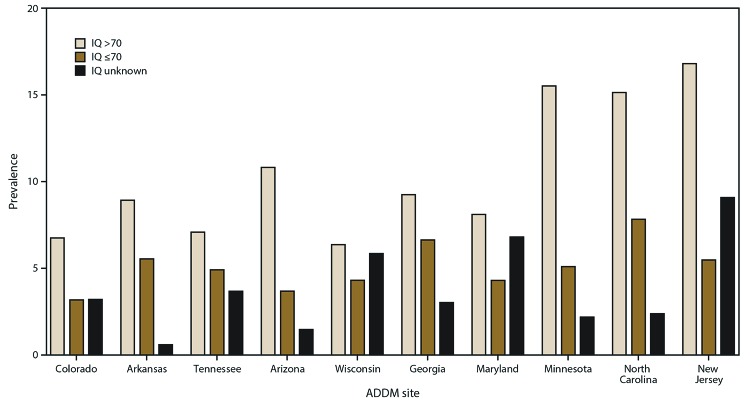
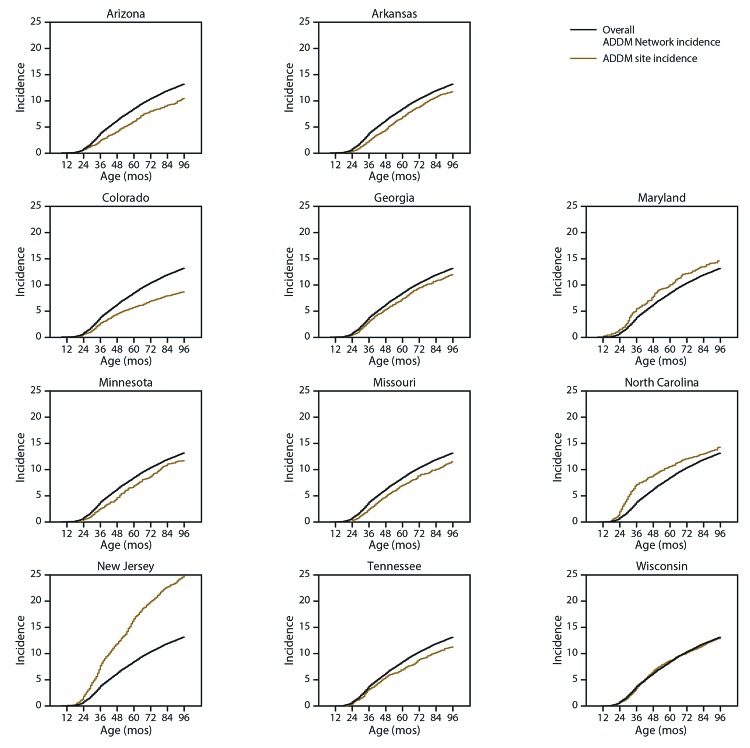
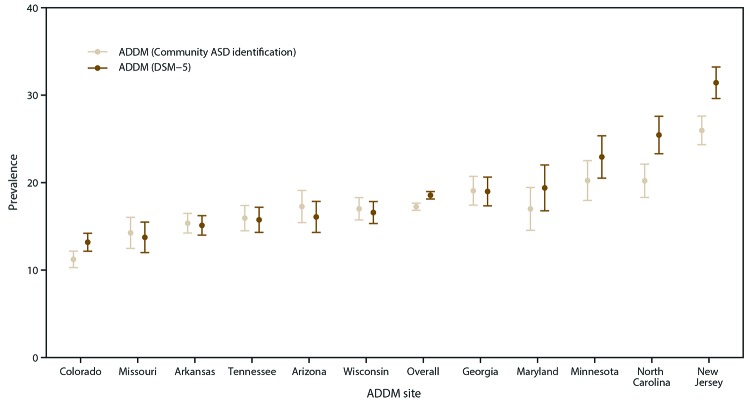
PROBLEM/CONDITION: Autism spectrum disorder (ASD). PERIOD COVERED: 2016. DESCRIPTION OF SYSTEM: The Autism and Developmental Disabilities Monitoring (ADDM) Network is an active surveillance program that provides estimates of the prevalence of ASD among children aged 8 years whose parents or guardians live in 11 ADDM Network sites in the United States (Arizona, Arkansas, Colorado, Georgia, Maryland, Minnesota, Missouri, New Jersey, North Carolina, Tennessee, and Wisconsin). Surveillance is conducted in two phases. The first phase involves review and abstraction of comprehensive evaluations that were completed by medical and educational service providers in the community. In the second phase, experienced clinicians who systematically review all abstracted information determine ASD case status. The case definition is based on ASD criteria described in the Diagnostic and Statistical Manual of Mental Disorders, Fifth Edition. RESULTS: For 2016, across all 11 sites, ASD prevalence was 18.5 per 1,000 (one in 54) children aged 8 years, and ASD was 4.3 times as prevalent among boys as among girls. ASD prevalence varied by site, ranging from 13.1 (Colorado) to 31.4 (New Jersey). Prevalence estimates were approximately identical for non-Hispanic white (white), non-Hispanic black (black), and Asian/Pacific Islander children (18.5, 18.3, and 17.9, respectively) but lower for Hispanic children (15.4). Among children with ASD for whom data on intellectual or cognitive functioning were available, 33% were classified as having intellectual disability (intelligence quotient [IQ] ≤70); this percentage was higher among girls than boys (39% versus 32%) and among black and Hispanic than white children (47%, 36%, and 27%, respectively) [corrected]. Black children with ASD were less likely to have a first evaluation by age 36 months than were white children with ASD (40% versus 45%). The overall median age at earliest known ASD diagnosis (51 months) was similar by sex and racial and ethnic groups; however, black children with IQ ≤70 had a later median age at ASD diagnosis than white children with IQ ≤70 (48 months versus 42 months). INTERPRETATION: The prevalence of ASD varied considerably across sites and was higher than previous estimates since 2014. Although no overall difference in ASD prevalence between black and white children aged 8 years was observed, the disparities for black children persisted in early evaluation and diagnosis of ASD. Hispanic children also continue to be identified as having ASD less frequently than white or black children. PUBLIC HEALTH ACTION: These findings highlight the variability in the evaluation and detection of ASD across communities and between sociodemographic groups. Continued efforts are needed for early and equitable identification of ASD and timely enrollment in services.
Overview
The claims and statistics of this paper haven’t been checked yet.
Run the check — free, no account needed. It reads the open-access text and checks the sources it cites.
Integrity signals
Registry
Cites
Statistics
Figures
Verification
Claims the paper makes
The claims and statistics of this paper haven’t been checked yet.
Run the check — free, no account needed. It reads the open-access text and checks the sources it cites.
Claims other papers make about this one
Each is checked against this paper’s own text: does it say what the citing paper says it does?
The source backs part of the claim, not all of it — or backs it for a different population, condition or comparison.
In the citing paper
“The U.S. reports a consistent pattern of increased ASD prevalence among higher socioeconomic status (SES) families (Baio et al. 2018; Durkin et al. 2010, 2017; Maenner et al. 2020; Pedersen et al. 2012), while European countries report increased prevalence among lower SES families (Delobel-Ayoub et al. 2015; Emerson 2012; Rai et al. 2012).”
From The Diagnosis of Autism: From Kanner to DSM-III to DSM-5 and Beyond (2021) · cites this paper as Maenner et al. 2020
Experimental — accuracy not yet measuredThe source backs part of the claim, not all of it — or backs it for a different population, condition or comparison.
In the citing paper
“In the U.S., African American, Hispanic, and Asian children are more likely to receive a diagnosis at a later age than Caucasian children (Maenner et al. 2020; Mandell et al. 2009; Palmer et al. 2010).”
From The Diagnosis of Autism: From Kanner to DSM-III to DSM-5 and Beyond (2021) · cites this paper as Maenner et al. 2020
Experimental — accuracy not yet measuredThe source backs part of the claim, not all of it — or backs it for a different population, condition or comparison.
In the citing paper
“While prevalence of ASD likely does not differ across racial and ethnic groups (Fombonne 2003; Maenner et al. 2020), the average age of diagnosis continues to differentiate these groups.”
From The Diagnosis of Autism: From Kanner to DSM-III to DSM-5 and Beyond (2021) · cites this paper as Maenner et al. 2020
Experimental — accuracy not yet measuredThe source backs part of the claim, not all of it — or backs it for a different population, condition or comparison.
In the citing paper
“Lastly, while the percentage of children diagnosed with ASD and intellectual disability is higher among African American and Hispanic children compared to Caucasian children in the U.S., African American and Hispanic children are nevertheless diagnosed at a later age on average than Caucasian children (Maenner et al. 2020).”
From The Diagnosis of Autism: From Kanner to DSM-III to DSM-5 and Beyond (2021) · cites this paper as Maenner et al. 2020
Experimental — accuracy not yet measuredThe source backs part of the claim, not all of it — or backs it for a different population, condition or comparison.
In the citing paper
“Surveillance among children aged 4 years in 2016 (8) indicated similar prevalence among children of different racial and ethnic groups, consistent with trends among children aged 8 years (9).”
From Early Identification of Autism Spectrum Disorder Among Children Aged 4 Years — Autism and Developmental Disabilities Monitoring Network, 11 Sites, United States, 2018 (2021) · cites this paper as [9]
Experimental — accuracy not yet measured
The source backs part of the claim, not all of it — or backs it for a different population, condition or comparison.
In the citing paper
“however, diagnosis typically occurs later in Europe (3.5 years), USA (4 years), and Canada (6 years), exposing an opportunity to decrease the age at diagnosis and accelerate access to specialized healthcare.”
From Tackling healthcare access barriers for individuals with autism from diagnosis to adulthood (2022) · cites this paper as [58]
Experimental — accuracy not yet measuredThe cited source says what the claim attributes to it.
In the citing paper
“ASD is ~4 times more prevalent in boys than in girls (16, 31).”
From Where Sex Meets Gender: How Sex and Gender Come Together to Cause Sex Differences in Mental Illness (2022) · cites this paper as [16]
In the citing paper
“and 1.85% (CI95%: 1.80–1.91%) in children aged eight year old (26).”
From Prevalence of Autism Spectrum Disorder and Co-morbidities in Children and Adolescents: A Systematic Literature Review (2021) · cites this paper as [26]
In the citing paper
“In the US, Christensen et al. (15) and Maenner et al. (26) assessed the prevalence of ID in ASD children aged 4y and 8y respectively based on the ADDM network and reported rates of 46.10% and 33.00%.”
From Prevalence of Autism Spectrum Disorder and Co-morbidities in Children and Adolescents: A Systematic Literature Review (2021) · cites this paper as [26]
In the citing paper
“The estimated prevalence of ASD has increased over 30-fold over the last four decades,18 primarily due to diagnostic expansion.19,20”
From The female protective effect against autism spectrum disorder (2022) · cites this paper as [20]
In the citing paper
“Members of previous generations, particularly those able to live independently as adults, were far less likely to receive an ASD diagnosis in childhood than children born as of writing.19,20”
From The female protective effect against autism spectrum disorder (2022) · cites this paper as [20]
In the citing paper
“For example, females are on average diagnosed later than males.20”
From The female protective effect against autism spectrum disorder (2022) · cites this paper as [20]
In the citing paper
“If consistent with the rate of ID in ASD cases in the United States or the United Kingdom, it would be approximately 40% over this diagnostic period.20”
From The female protective effect against autism spectrum disorder (2022) · cites this paper as [20]
In the citing paper
“The sex ratio is one example of how differences in identification of children without intellectual disability can affect patterns observed at older ages, with a higher ratio of boys to girls at age 8 years than at age 4 years, consistent with previous reports (8,9).”
In the citing paper
“In surveillance year 2018, ASD prevalence among Black children was higher than among White children at five of 11 sites and overall, the opposite of the pattern before surveillance year 2016 among children aged 8 years (9,17).”
In the citing paper
“Children with co-occurring intellectual disability are more likely to be identified earlier than children without intellectual disability, as indicated by an earlier median age at identification among this group (11) as well as the consistently higher proportion of children with intellectual disability at age 4 years (8,13) than at age 8 years (9,11,17).”
Self-check
Percentages, sums and reported differences re-computed from the paper’s own numbers.
The self-check needs the paper’s full text.
Citations
Cites
Diagnostic and Statistical Manual of Mental Disorders
American Psychiatric Association (2013) · doi:10.1176/appi.books.9780890425596 · Cited by 116,369
Baio, J., Wiggins, L., Christensen, D. L., Maenner, M. J., Daniels, J., Warren, Z., Kurzius-Spencer, M., Zahorodny, W., Robinson, C., Rosenberg, et al. (2018) · MMWR. Surveillance Summaries · doi:10.15585/mmwr.ss6706a1 · Cited by 6,078 · cited 5×
“8 per 1,000 (one in 59) children aged 8 years in 2014 (3).”
BackgroundMethodInfluentialSelf-citationDawson, G., Rogers, S., Munson, J., Smith, M., Winter, J., Greenson, J., Donaldson, A., & Varley, J. (2010) · Pediatrics · doi:10.1542/peds.2009-0958 · Cited by 2,835
Identification and Evaluation of Children With Autism Spectrum Disorders
Johnson, C. P., Myers, S. M., & and the Council on Children With Disabilities (2007) · Pediatrics · doi:10.1542/peds.2007-2361 · Cited by 2,011
Christensen, D. L., Baio, J., Braun, K. V. N., Bilder, D., Charles, J., Constantino, J. N., Daniels, J., Durkin, M. S., Fitzgerald, R. T., Kurzius-Spencer, M., et al. (2016) · MMWR. Surveillance Summaries · doi:10.15585/mmwr.ss6503a1 · Cited by 1,964
Self-citationNaarden Braun, K. V., Lopez, M., White, T., et al. (2023) · Carolina Digital Repository (University of North Carolina at Chapel Hill) · doi:10.17615/y3kk-5x30 · Cited by 1,381
Self-citationPrevalence of Autism in a US Metropolitan Area
Yeargin-Allsopp, M., Rice, C., Karapurkar, T., Doernberg, N., Boyle, C., & Murphy, C. (2003) · JAMA · doi:10.1001/jama.289.1.49 · Cited by 1,248 · cited 3×
“The ADDM Network uses a multiple-source, records-based surveillance methodology developed by CDC’s Metropolitan Atlanta Developmental Disabilities Surveillance Program (2,24).”
BackgroundMethodInfluentialPrevalence and Trends of Developmental Disabilities among Children in the United States: 2009–2017
Zablotsky, B., Black, L. I., Maenner, M. J., Schieve, L. A., Danielson, M. L., Bitsko, R. H., Blumberg, S. J., Kogan, M. D., & Boyle, C. A. (2019) · Pediatrics · doi:10.1542/peds.2019-0811 · Cited by 1,217 · cited 1×
“The 2016 NSCH and the 2015–2017 NHIS both estimated ASD prevalence at 25 per 1,000 children aged 3–17 years (13,29).”
BackgroundSelf-citation
Cited by
Sorted by citations
Items 201–300 of 1,017
Educational Interventions for Children and Youth with Autism: A 40-Year Perspective
Odom, S. L., Hall, L. J., Morin, K. L., Kraemer, B., Hume, K., McIntyre, N. S., Nowell, S. W., Steinbrenner, J. R. D., Tomaszewski, B. R., Sam, A. M., et al. (2021) · Journal of Autism and Developmental Disorders · doi:10.1007/s10803-021-04990-1 · Cited by 105
“…level, children from minoritized racial and ethnic groups, as well as children of parents with lower levels of education are less likely to receive related services or autism-specific therapies than their peers (Smith et al., 2020), and there are also diagnostic disparities (Maenner et al., 2020).”
BackgroundThe therapeutic potential of insulin-like growth factor-1 in central nervous system disorders
Costales, J. L., & Kolevzon, A. (2016) · Neuroscience & Biobehavioral Reviews · doi:10.1016/j.neubiorev.2016.01.001 · Cited by 98
Rai, D., Heuvelman, H., Dalman, C., Culpin, I., Lundberg, M., Carpenter, P., & Magnusson, C. (2018) · JAMA Network Open · doi:10.1001/jamanetworkopen.2018.1465 · Cited by 93
A Subset of Autism-Associated Genes Regulate the Structural Stability of Neurons
Lin, Y., Frei, J. A., Kilander, M. B. C., Shen, W., & Blatt, G. J. (2016) · Frontiers in Cellular Neuroscience · doi:10.3389/fncel.2016.00263 · Cited by 97
Optimal robot for intervention for individuals with autism spectrum disorders
Kumazaki, H., Muramatsu, T., Yoshikawa, Y., Matsumoto, Y., Ishiguro, H., Kikuchi, M., Sumiyoshi, T., & Mimura, M. (2020) · Psychiatry and Clinical Neurosciences · doi:10.1111/pcn.13132 · Cited by 92
The association between placental histopathology and autism spectrum disorder
Straughen, J. K., Misra, D. P., Divine, G., Shah, R., Perez, G., VanHorn, S., Onbreyt, V., Dygulska, B., Schmitt, R., Lederman, S., et al. (2017) · Placenta · doi:10.1016/j.placenta.2017.07.006 · Cited by 93
Perinatal Exposure to Traffic-Related Air Pollution and Autism Spectrum Disorders
Gong, T., Dalman, C., Wicks, S., Dal, H., Magnusson, C., Lundholm, C., Almqvist, C., & Pershagen, G. (2016) · Environmental Health Perspectives · doi:10.1289/ehp118 · Cited by 94
A Pilot Proteomic Analysis of Salivary Biomarkers in Autism Spectrum Disorder
Wetie, A. G. N., Wormwood, K. L., Russell, S., Ryan, J. P., Darie, C. C., & Woods, A. G. (2015) · Autism Research · doi:10.1002/aur.1450 · Cited by 90
Adjorlu, A., Høeg, E. R., Mangano, L., & Serafin, S. (2017) · Proceedings - International Symposium on Mixed and Augmented Reality, ISMAR · doi:10.1109/ismar-adjunct.2017.93 · Cited by 89
Dimensions of family–school partnerships for autistic children: Context and congruence.
Santiago, R. T., McIntyre, L. L., & Garbacz, S. A. (2021) · School Psychology · doi:10.1037/spq0000473 · Cited by 89
TRANSTORNO DO ESPECTRO AUTISTA: ONDE ESTAMOS E PARA ONDE VAMOS
Schmidt, C. (2017) · Psicologia em Estudo · doi:10.4025/psicolestud.v22i2.34651 · Cited by 96
Wnt/β-Catenin-Dependent Transcription in Autism Spectrum Disorders
Caracci, M. O., Ávila, M. E., Espinoza-Cavieres, F. A., López, H. R., Ugarte, G. D., & Ferrari, G. V. D. (2021) · Frontiers in Molecular Neuroscience · doi:10.3389/fnmol.2021.764756 · Cited by 86
Rossignol, D. A., & Frye, R. E. (2021) · Journal of Personalized Medicine · doi:10.3390/jpm11111141 · Cited by 86
“Autism spectrum disorder (ASD) is a behaviorally defined disorder that affects approximately 2% of children in the United States [1].”
BackgroundInfluentialTranstorno do Espectro do Autismo
Vital, A. A. F., GARCIA, A. H. C., SANTOS, A. P. D., Saad, A. G. D. F., DIAS, C. G. D. F., Miccas, C., de Araújo, C. O., MAGALHÃES, C. M., LOURENÇO, D. P. L., Galeti, F., et al. (2021) · doi:10.29327/558796 · Cited by 86
Prenatal maternal stress events and phenotypic outcomes in Autism Spectrum Disorder
Varcin, K. J., Alvares, G. A., Uljarević, M., & Whitehouse, A. (2017) · Autism Research · doi:10.1002/aur.1830 · Cited by 91
Sex Differences in the Gut-Brain Axis: Implications for Mental Health
Holingue, C., Budavari, A. C., Rodriguez, K. M., Zisman, C. R., Windheim, G., & Fallin, M. D. (2020) · Current Psychiatry Reports · doi:10.1007/s11920-020-01202-y · Cited by 85
The Role of the Pediatric Cerebellum in Motor Functions, Cognition, and Behavior
Salman, M. S., & Tsai, P. T. (2016) · Neuroimaging Clinics of North America · doi:10.1016/j.nic.2016.03.003 · Cited by 90
Petersson‐Bloom, L., & Holmqvist, M. (2022) · Autism & Developmental Language Impairments · doi:10.1177/23969415221123429 · Cited by 88
“This has resulted in an increased prevalence of autistic students in ordinary classroom education during the last decade (Maenner et al., 2020).”
BackgroundCannabinoids for People with ASD: A Systematic Review of Published and Ongoing Studies
Fusar‐Poli, L., Cavone, V., Tinacci, S., Concas, I., Petralia, A., Signorelli, M. S., Díaz‐Caneja, C. M., & Aguglia, E. (2020) · Brain Sciences · doi:10.3390/brainsci10090572 · Cited by 87
Lidstone, D. E., & Mostofsky, S. H. (2021) · Pediatric Neurology · doi:10.1016/j.pediatrneurol.2021.06.010 · Cited by 84
Brain MRI in Autism Spectrum Disorder: Narrative Review and Recent Advances
Rafiee, F., Habibabadi, R. R., Motaghi, M., Yousem, D. M., & Yousem, I. J. (2021) · Journal of Magnetic Resonance Imaging · doi:10.1002/jmri.27949 · Cited by 100
Balancing Proliferation and Connectivity in PTEN-associated Autism Spectrum Disorder
Tilot, A. K., Frazier, T. W., & Eng, C. (2015) · Neurotherapeutics · doi:10.1007/s13311-015-0356-8 · Cited by 87
Cortico-Cerebellar Connectivity in Autism Spectrum Disorder: What Do We Know So Far?
Crippa, A., Vecchio, G. D., Ceccarelli, S. B., Nobile, M., Arrigoni, F., & Brambilla, P. (2016) · Frontiers in Psychiatry · doi:10.3389/fpsyt.2016.00020 · Cited by 90
Whitehead, A. L. (2018) · Journal for the Scientific Study of Religion · doi:10.1111/jssr.12521 · Cited by 83
Parent Perceptions of Caregiver-Mediated Telemedicine Tools for Assessing Autism Risk in Toddlers
Corona, L. L., Weitlauf, A. S., Hine, J. F., Berman, A. F., Miceli, A., Nicholson, A. G., Stone, C., Broderick, N. A., Francis, S. M. S., Juárez, A. O. R., et al. (2020) · Journal of Autism and Developmental Disorders · doi:10.1007/s10803-020-04554-9 · Cited by 90
“2019; Zwaigenbaum and Maguire 2019), and many children are not diagnosed with ASD until after four years of age even when developmental concerns are present during their toddler years (Maenner et al. 2020).”
BackgroundSelf-citation(2022) · American Psychiatric Association Publishing eBooks · doi:10.1176/appi.books.9780890425787.x01_neurodevelopmental_disorders · Cited by 105
The transcriptional regulatorADNPlinks the BAF (SWI/SNF) complexes with autism
Vandeweyer, G., Helsmoortel, C., Dijck, A. V., Silfhout, A. T. V., Coe, B. P., Bernier, R., Gerdts, J. A., Rooms, L., van den Ende, J., Bakshi, M., et al. (2014) · American Journal of Medical Genetics Part C Seminars in Medical Genetics · doi:10.1002/ajmg.c.31413 · Cited by 81
Luo, Y., Eran, A., Palmer, N., Avillach, P., Levy-Moonshine, A., Szolovits, P., & Kohane, I. S. (2020) · Nature Medicine · doi:10.1038/s41591-020-1007-0 · Cited by 78
Silleresi, S., Prévost, P., Zebib, R., Bonnet‐Brilhault, F., Conte, D., & Tuller, L. (2020) · Autism Research · doi:10.1002/aur.2268 · Cited by 88
Single Volume Image Generator and Deep Learning-Based ASD Classification
Ahmed, M. R., Zhang, Y., Inan, O. T., & Liao, H. (2020) · IEEE Journal of Biomedical and Health Informatics · doi:10.1109/jbhi.2020.2998603 · Cited by 80
Neurodevelopmental Disorders Commonly Presenting with Sleep Disturbances
Shelton, A. R., & Malow, B. A. (2021) · Neurotherapeutics · doi:10.1007/s13311-020-00982-8 · Cited by 84
The Dopamine Hypothesis of Autism Spectrum Disorder Revisited: Current Status and Future Prospects
Pavăl, D., & Micluția, I. (2021) · Developmental Neuroscience · doi:10.1159/000515751 · Cited by 81
Neuroinflammation in autism spectrum disorders: Exercise as a “pharmacological” tool
Toscano, C. V. A., Barros, L., Lima, A. B., Nunes, T., Carvalho, H. M., & Gaspar, J. M. (2021) · Neuroscience & Biobehavioral Reviews · doi:10.1016/j.neubiorev.2021.07.023 · Cited by 91
Li, F. R., Tang, Y., Li, F., Fang, S., Liu, X., Tao, M., Wu, D., & Jiang, L. (2022) · Journal of Pediatric Nursing · doi:10.1016/j.pedn.2022.02.006 · Cited by 81
Living with autism spectrum disorder in Hanoi, Vietnam
Ha, V. S., Whittaker, A. M., Whittaker, M. A., & Rodger, S. (2014) · Social Science & Medicine · doi:10.1016/j.socscimed.2014.09.038 · Cited by 81
A current view on contactin-4, -5, and -6: Implications in neurodevelopmental disorders
Oguro‐Ando, A., Zuko, A., Kleijer, K. T. E., & Burbach, J. P. H. (2017) · Molecular and Cellular Neuroscience · doi:10.1016/j.mcn.2016.12.004 · Cited by 84
Wallis, K. E., Guthrie, W., Bennett, A. E., Gerdes, M., Levy, S. E., Mandell, D. S., & Miller, J. S. (2020) · PLoS ONE · doi:10.1371/journal.pone.0232335 · Cited by 89
Attachment Patterns in Children and Adolescents With Gender Dysphoria
Kozlowska, K., Chudleigh, C., McClure, G., Maguire, A., & Ambler, G. R. (2021) · Frontiers in Psychology · doi:10.3389/fpsyg.2020.582688 · Cited by 86
“…presenting to health services with distress and a range of psychiatric symptoms—anxiety, depression, suicidal ideation, self-harm, suicide attempts, and autism—often comorbid one with another (Weinberger et al., 2018; World Health Organization [WHO], 2019; Maenner et al., 2020; May et al., 2020).”
BackgroundZhang, J., Li, X., Shen, L., Khan, N. U., Zhang, X., Chen, L., Zhao, H., & Luo, P. (2021) · Journal of Trace Elements in Medicine and Biology · doi:10.1016/j.jtemb.2021.126782 · Cited by 79
The sexual health, orientation, and activity of autistic adolescents and adults
Weir, E. M., Allison, C. L., & Baron‐Cohen, S. (2021) · Autism Research · doi:10.1002/aur.2604 · Cited by 92
Understanding autism spectrum disorders with animal models: applications, insights, and perspectives
Zhu, L., 昆明650500,中国, 云., Zhu, Y., Gu, L., & Cheng, Y. (2021) · 动物学研究 · doi:10.24272/j.issn.2095-8137.2021.251 · Cited by 91
Maturation of auditory neural processes in autism spectrum disorder — A longitudinal MEG study
Port, R. G., Edgar, J. C., Ku, M., Bloy, L., Murray, R., Blaskey, L., Levy, S. E., & Roberts, T. P. L. (2016) · NeuroImage: Clinical · doi:10.1016/j.nicl.2016.03.021 · Cited by 79
Hiremath, C., Kommu, J. V. S., Yamini, B. K., Girimaji, A. S., Kumar, K. R., Sravanti, S. L., Padmanabha, H., Raju, K. N. V., Kishore, M. T., Jacob, P., et al. (2021) · Translational Psychiatry · doi:10.1038/s41398-020-01178-6 · Cited by 90
Large scale validation of an early-age eye-tracking biomarker of an autism spectrum disorder subtype
Wen, T. H., Cheng, A., Andreason, C., Zahiri, J., Xiao, Y., Xu, R., Bao, B., Courchesne, E., Barnes, C. C., Arias, S. J., et al. (2022) · Scientific Reports · doi:10.1038/s41598-022-08102-6 · Cited by 83
Resting state EEG power spectrum and functional connectivity in autism: a cross-sectional analysis
Garcés, P., Baumeister, S., Mason, L., Chatham, C. H., Holiga, Š., Dukart, J., Jones, E. J. H., Banaschewski, T., Baron‐Cohen, S., Bölte, S., et al. (2022) · Molecular Autism · doi:10.1186/s13229-022-00500-x · Cited by 87
“Background Autism spectrum disorder (ASD) is a prevalent neurodevelopmental condition, affecting around 1 in 54 children [1].”
Overview of Mouse Models of Autism Spectrum Disorders
Bey, A. L., & Jiang, Y. (2014) · Current Protocols in Pharmacology · doi:10.1002/0471141755.ph0566s66 · Cited by 85
A pilot study on evaluating children with autism spectrum disorder using computer games
Chen, J., Wang, G., Zhang, K., Wang, G., & Liu, L. (2018) · Computers in Human Behavior · doi:10.1016/j.chb.2018.08.057 · Cited by 82
Jo, H., Eckel, S. P., Chen, J., Cockburn, M., Martinez, M. P., Chow, T., Lurmann, F. W., Funk, W. E., McConnell, R., & Xiang, A. H. (2019) · Environment International · doi:10.1016/j.envint.2019.104933 · Cited by 77
Autism and Epilepsy in Patients With Tuberous Sclerosis Complex
Specchio, N., Pietrafusa, N., Trivisano, M., Moavero, R., Palma, L. D., Ferretti, A., Vigevano, F., & Curatolo, P. (2020) · Frontiers in Neurology · doi:10.3389/fneur.2020.00639 · Cited by 78
Peristeri, E., Baldimtsi, E. N., Vogelzang, M., Tsimpli, I. M., & Durrleman, S. (2021) · Autism Research · doi:10.1002/aur.2542 · Cited by 85
Ruskin, D. N., Fortin, J. A., Bisnauth, S. N., & Masino, S. A. (2016) · Physiology & Behavior · doi:10.1016/j.physbeh.2016.10.023 · Cited by 82
Sex differences in the association between infant markers and later autistic traits
Bedford, R., Jones, E. J. H., Johnson, M. H., Pickles, A. R., Charman, T., & Gliga, T. (2016) · Molecular Autism · doi:10.1186/s13229-016-0081-0 · Cited by 79
Oxytocin-augmented labor and risk for autism in males
Weisman, O., Agerbo, E., Carter, C. S., Harris, J. C., Uldbjerg, N., Henriksen, T. B., Thygesen, M., Mortensen, P. B., Leckman, J. F., & Dalsgaard, S. (2015) · Behavioural Brain Research · doi:10.1016/j.bbr.2015.02.028 · Cited by 78
Gender Dependent Evaluation of Autism like Behavior in Mice Exposed to Prenatal Zinc Deficiency
Grabrucker, S., Boeckers, T. M., & Grabrucker, A. M. (2016) · Frontiers in Behavioral Neuroscience · doi:10.3389/fnbeh.2016.00037 · Cited by 79
Townes, P., Liu, C., Panesar, P., Devoe, D., Lee, S. Y., Taylor, G., Arnold, P. D., Crosbie, J., & Schachar, R. (2023) · Journal of Attention Disorders · doi:10.1177/10870547231190494 · Cited by 75
“About 2% of school-aged children are diagnosed with ASD (Maenner et al., 2020).”
BackgroundMandell, D. S., Barry, C. L., Marcus, S. C., Xie, M., Shea, K., Mullan, K., & Epstein, A. J. (2016) · JAMA Pediatrics · doi:10.1001/jamapediatrics.2016.1049 · Cited by 75
Predictive Validity of the Modified Checklist for Autism in Toddlers (M-CHAT) Born Very Preterm
Kim, S. H., Joseph, R. M., Frazier, J. A., O'Shea, T. M., Chawarska, K., Allred, E. N., Leviton, A., & Kuban, K. K. (2016) · The Journal of Pediatrics · doi:10.1016/j.jpeds.2016.07.052 · Cited by 74
Jo, H., Eckel, S. P., Wang, X., Chen, J., Cockburn, M., Martinez, M. P., Chow, T., Molshatzki, N., Lurmann, F., Funk, W. E., et al. (2019) · Environmental Pollution · doi:10.1016/j.envpol.2019.113010 · Cited by 78
Predicting ASD diagnosis in children with synthetic and image-based eye gaze data
Liaqat, S., Wu, C., Duggirala, P. R., Cheung, S.-C. S., Chuah, C., Ozonoff, S. J., & Young, G. S. (2021) · Signal Processing Image Communication · doi:10.1016/j.image.2021.116198 · Cited by 77
Social Support and Family Functioning in Chinese Families of Children with Autism Spectrum Disorder
Lei, X., & Kantor, J. (2021) · International Journal of Environmental Research and Public Health · doi:10.3390/ijerph18073504 · Cited by 75
Inborn Errors of Metabolism Associated With Autism Spectrum Disorders: Approaches to Intervention
Žigman, T., Ramadža, D. P., Šimić, G., & Barić, I. (2021) · Frontiers in Neuroscience · doi:10.3389/fnins.2021.673600 · Cited by 75
Mallory, C. L., & Keehn, B. (2021) · Frontiers in Psychiatry · doi:10.3389/fpsyt.2021.695825 · Cited by 109
Laverty, C., Surtees, A. D. R., O’Sullivan, R., Sutherland, D., Jones, C. A., & Richards, C. (2021) · Journal of Neurodevelopmental Disorders · doi:10.1186/s11689-021-09382-1 · Cited by 81
Diemer, M. C., Gerstein, E. D., & Regester, A. (2022) · Autism · doi:10.1177/13623613221113501 · Cited by 98
“…and Prevention [CDC], 2014; Nowell et al., 2015), and recent data from the Centers for Disease Control and Prevention (CDC) indicate that Black children have similar (age 8; Maenner et al., 2020) or higher rates (ages 4 and 8; Shaw et al., 2021) of autism than White children across 11 US sites.”
BackgroundBabinska, K., Celusakova, H., Belica, I., Szapuova, Z., Waczulikova, I., Nemcsicsova, D., Tomova, A., & Ostatnikova, D. (2020) · International Journal of Environmental Research and Public Health · doi:10.3390/ijerph17176372 · Cited by 74
Holmes, L. G., Zampella, C., Clements, C. C., McCleery, J. P., Maddox, B. B., Parish‐Morris, J., Udhnani, M. D., Schultz, R. T., & Miller, J. S. (2020) · Autism Research · doi:10.1002/aur.2275 · Cited by 76
Tsiplova, K., Zur, R. M., Marshall, C. R., Stavropoulos, D. J., Pereira, S. L., Merico, D., Young, E. J., Sung, W. W. L., Scherer, S. W., & Ungar, W. J. (2017) · Genetics in Medicine · doi:10.1038/gim.2017.47 · Cited by 74
Transtorno do espectro autista
Gonçalves, P. D. C. (2017) · doi:10.47749/t/unicamp.2017.991335 · Cited by 74
Pierce, K., Gazestani, V., Bacon, E., Courchesne, E., Cheng, A., Barnes, C. C., Nalabolu, S., Cha, D., Arias, S., Lopez, L., et al. (2021) · The Journal of Pediatrics · doi:10.1016/j.jpeds.2021.04.041 · Cited by 66
Understanding the pediatric psychiatric phenotype of 22q11.2 deletion syndrome
Fiksinski, A., Schneider, M., Murphy, C. M., Armando, M., Vicari, S., Morey-Canyelles, J., Gothelf, D., Eliez, S., Breetvelt, E., Arango, C., et al. (2018) · American Journal of Medical Genetics Part A · doi:10.1002/ajmg.a.40387 · Cited by 77
Piccardi, E. S., Ali, J. B., Jones, E. J. H., Mason, L., Charman, T., Johnson, M. H., Gliga, T., BASIS/STAARS Team, Agyapong, M., Bazelmans, T., et al. (2021) · Journal of Neurodevelopmental Disorders · doi:10.1186/s11689-020-09334-1 · Cited by 79
Welch, C. J., & Mulligan, K. A. (2022) · International Journal of Molecular Sciences · doi:10.3390/ijms23052894 · Cited by 76
“Studies have also found that the prevalence of NDDs has increased significantly over the past several decades—most notably, the incidence ASD has increased by almost 300 percent in the last 20 years [2,3].”
BackgroundEpigenomic signatures reveal mechanistic clues and predictive markers for autism spectrum disorder
LaSalle, J. M. (2023) · Molecular Psychiatry · doi:10.1038/s41380-022-01917-9 · Cited by 83
“The prevalence of ASD has been steadily increasing over the past 20 years, from US child estimates of 0.66% in 2002 [1], 1.13% in 2008 [2], 1.85 in 2016 [3], and 2.27% in 2018 [4].”
BackgroundInfluentialJiang, X., Chen, X., Su, J., & Liu, N. (2024) · BMC Psychiatry · doi:10.1186/s12888-024-05729-9 · Cited by 73
“This marked an increase of 17.8% from the 2018 prevalence of 22.7/1000 (1/44) [17] and a 32.97% increase from the 2016 prevalence [18] of 18.5/1000 (1/54).”
InfluentialWong, C. T., Wais, J., & Crawford, D. A. (2015) · European Journal of Neuroscience · doi:10.1111/ejn.13028 · Cited by 79
Dunaway, K. W., Islam, M. S., Coulson, R. L., Lopez, S. J., Ciernia, A. V., Chu, R. G., Yasui, D. H., Pessah, I. N., Lott, P. C., Mordaunt, C. E., et al. (2016) · Cell Reports · doi:10.1016/j.celrep.2016.11.058 · Cited by 70
Feroe, A. G., Uppal, N., Gutiérrez-Sacristán, A., Mousavi, S., Greenspun, P., Surati, R., Kohane, I. S., & Avillach, P. (2021) · JAMA Pediatrics · doi:10.1001/jamapediatrics.2021.1329 · Cited by 72
Williams, Z. J., Abdelmessih, P., Key, A. P. F., & Woynaroski, T. G. (2020) · Biological Psychiatry Cognitive Neuroscience and Neuroimaging · doi:10.1016/j.bpsc.2020.09.011 · Cited by 72
Severe Childhood Autism: The Family Lived Experience
Gorlin, J. B., Peden‐McAlpine, C., Garwick, A. W., & Wieling, E. A. (2016) · Journal of Pediatric Nursing · doi:10.1016/j.pedn.2016.09.002 · Cited by 101
Microglia mediated neuroinflammation in autism spectrum disorder
Liao, X., Yang, J., Wang, H., & Li, Y. (2020) · Journal of Psychiatric Research · doi:10.1016/j.jpsychires.2020.07.013 · Cited by 79
García-González, S., Lugo‐Marín, J., Setién-Ramos, I., Gisbert, L., Arteaga-Henríquez, G., Villoria, E. D., & Ramos‐Quiroga, J. A. (2021) · European Neuropsychopharmacology · doi:10.1016/j.euroneuro.2021.02.017 · Cited by 81
Ghaffari, S., Abbasi, A., Somi, M. H., Moaddab, S. Y., Nikniaz, L., Kafil, H. S., & Leylabadlo, H. E. (2022) · Critical Reviews in Food Science and Nutrition · doi:10.1080/10408398.2022.2045894 · Cited by 74
Arginine Vasopressin Is a Blood-Based Biomarker of Social Functioning in Children with Autism
Carson, D. S., Garner, J. P., Hyde, S. A., Libove, R. A., Berquist, S. W., Hornbeak, K. B., Jackson, L. P., Sumiyoshi, R. D., Howerton, C. L., Hannah, S. L., et al. (2015) · PLoS ONE · doi:10.1371/journal.pone.0132224 · Cited by 71
Katrancha, S. M., Wu, Y., Zhu, M., Eipper, B. A., Koleske, A. J., & Mains, R. E. (2017) · Human Molecular Genetics · doi:10.1093/hmg/ddx355 · Cited by 68
The autism spectrum phenotype in ADNP syndrome
Arnett, A. B., Rhoads, C. L., Hoekzema, K., Turner, T. N., Gerdts, J. A., Wallace, A. S., Bedrosian‐Sermone, S., Eichler, E. E., & Bernier, R. (2018) · Autism Research · doi:10.1002/aur.1980 · Cited by 70
Salazar, P. L., Villaseca, P., Cisternas, P., & Inestrosa, N. C. (2021) · Environmental Research · doi:10.1016/j.envres.2021.111345 · Cited by 73
Amat, A. Z., Zhao, H., Swanson, A. R., Weitlauf, A. S., Warren, Z. E., & Sarkar, N. (2021) · IEEE Transactions on Neural Systems and Rehabilitation Engineering · doi:10.1109/tnsre.2021.3108351 · Cited by 70
“AUTISM spectrum disorder (ASD) affects approximately 1 in 54 children in the US [1] with significant associated costs [2].”
BackgroundSelf-citationNg, C. S. M., & Ng, S. S. L. (2022) · Scientific Reports · doi:10.1038/s41598-022-23978-0 · Cited by 70
Dental care protocol based on visual supports for children with autism spectrum disorders
Cagetti, M., Mastroberardino, S., Campus, G., Olivari, B., Faggioli, R., Lenti, C., & Strohmenger, L. (2015) · Medicina Oral Patología Oral y Cirugia Bucal · doi:10.4317/medoral.20424 · Cited by 70
Liu, T., Liu, X., Yi, L., Zhu, C., Markey, P. S., & Pelowski, M. J. (2017) · NeuroImage · doi:10.1016/j.neuroimage.2017.09.044 · Cited by 70
Exploring sensory phenotypes in autism spectrum disorder
Scheerer, N. E., Curcin, K., Stojanoski, B., Anagnostou, E., Nicolson, R., Kelley, E., Georgiades, S., Liu, X., & Stevenson, R. A. (2021) · Molecular Autism · doi:10.1186/s13229-021-00471-5 · Cited by 65
“2% of the individuals had an intellectual disability (ID; IQ less than 70), while estimates of ID in the autistic population are currently ~ 33% [52], suggesting we underrepresented autistic individuals with ID in our sample.”
BackgroundDahiya, A. V., DeLucia, E. A., McDonnell, C. G., & Scarpa, A. (2021) · Research in Developmental Disabilities · doi:10.1016/j.ridd.2021.103852 · Cited by 69
Karpur, A., Vasudevan, V., Shih, A. J., & Frazier, T. W. (2021) · Journal of Autism and Developmental Disorders · doi:10.1007/s10803-021-05100-x · Cited by 73
The Mechanisms of CHD8 in Neurodevelopment and Autism Spectrum Disorders
Weissberg, O., & Elliott, E. (2021) · Genes · doi:10.3390/genes12081133 · Cited by 72
Autism Spectrum Disorder from the Womb to Adulthood: Suggestions for a Paradigm Shift
Panisi, C., Guerini, F. R., Abruzzo, P. M., Balzola, F. A., Biava, P. M., Bolotta, A., Brunero, M., Burgio, E., Chiara, A., Clerici, M., et al. (2021) · Journal of Personalized Medicine · doi:10.3390/jpm11020070 · Cited by 73
Face-Based Attention Recognition Model for Children with Autism Spectrum Disorder
Banire, B., Al‐Thani, D., Qaraqe, M., & Mansoor, B. (2021) · Journal of Healthcare Informatics Research · doi:10.1007/s41666-021-00101-y · Cited by 71
Rossignol, D. A., & Frye, R. E. (2021) · Journal of Personalized Medicine · doi:10.3390/jpm11080784 · Cited by 76
“Autism spectrum disorder (ASD) is a common neurodevelopmental disorder affecting 2% of children in the United States [1].”
BackgroundTransidentities and autism spectrum disorder: A systematic review
Bouzy, J., Brunelle, J., Cohen, D., & Condat, A. (2023) · Psychiatry Research · doi:10.1016/j.psychres.2023.115176 · Cited by 83
Mandleco, B. L., & Webb, A. E. M. (2015) · Journal for Specialists in Pediatric Nursing · doi:10.1111/jspn.12117 · Cited by 83
Improving Access to Care at Autism Treatment Centers: A System Analysis Approach
Austin, J., Manning‐Courtney, P., Johnson, M. L., Weber, R., Johnson, H., Murray, D. S., Ratliff-Schaub, K. L., Tadlock, A. M., & Murray, M. F. (2016) · PEDIATRICS · doi:10.1542/peds.2015-2851m · Cited by 68
Metadata
- Authors
- Maenner, M. J., Shaw, K. A., Baio, J., EdS1, Washington, A., Patrick, M., DiRienzo, M., Christensen, D. L., Wiggins, L. D., Pettygrove, S., Andrews, J. G., Lopez, M., Hudson, A., Baroud, T., Schwenk, Y., White, T., Rosenberg, C. R., Lee, L.-C., Harrington, R. A., Huston, M., Hewitt, A., PhD-7, Esler, A., Hall-Lande, J., Poynter, J. N., Hallas-Muchow, L., Constantino, J. N., Fitzgerald, R. T., Zahorodny, W., Shenouda, J., Daniels, J. L., Warren, Z., Vehorn, A., Salinas, A., Durkin, M. S., & Dietz, P. M.
- Affiliations
- Centers for Disease Control and Prevention (US)
- University of North Carolina at Chapel Hill (US)
- University of Arizona (US)
- University of Arkansas for Medical Sciences (US)
- Colorado Department of Public Health and Environment (US)
- Johns Hopkins University (US)
- University of Minnesota (US)
- Washington University in St. Louis (US)
- Rutgers New Jersey Medical School (US)
- University of Wisconsin–Madison (US)
- Corresponding author
- Maenner, Matthew J.
- ORCID
- Maenner, Matthew J.
- Shaw, Kelly A.
- Washington, Anita
- Patrick, Mary
- DiRienzo, Monica
- Wiggins, Lisa D.
- Pettygrove, Sydney
- Andrews, Jennifer G.
- Lopez, Maya
- Rosenberg, Cordelia Robinson
- Lee, Li-Ching
- Esler, Amy
- Poynter, Jenny N.
- Constantino, John N.
- Fitzgerald, Robert T.
- Zahorodny, Walter
- Shenouda, Josephine
- Daniels, Julie L.
- Warren, Zachary
- Durkin, Maureen S.
- Dietz, Patricia M.
- Venue
- MMWR. Surveillance Summaries
- Published
- 2020-03-27
- Volume
- 69
- Issue
- 4
- Pages
- 1-12
- ISSN
- 1545-8636 (ISSN-L)
- 1546-0738
- PMC
- PMC7119644
- OpenAlex
- W3027179734
- Semantic Scholar
- ddeb34dc450a7cdc9fd11cdb896b266be9fa1f05
- Cited by
- 3,780
- References
- 34
- Citations by year
- 2026: 107 · 2025: 199 · 2024: 335 · 2023: 473 · 2022: 732 · 2021: 904 · 2020: 393
- FWCI
- 336.19
- Type
- journal article
- Language
- en
- Open access
- diamond
- doi.org
- Licence
- public-domain
- Locations
- MMWR Surveillance Summaries (publishedVersion, public-domain)
- PubMed Central (publishedVersion, cc-by)
- PubMed (publishedVersion)
- UA Campus Repository (The University of Arizona) (acceptedVersion, public-domain)
- Funders
- Centers for Disease Control and Prevention
- Topics
- Life Sciences › Neuroscience › Cognitive Neuroscience › Autism Spectrum Disorder Research
- Health Sciences › Medicine › Psychiatry and Mental health › Child Nutrition and Feeding Issues
- Social Sciences › Psychology › Clinical Psychology › Family and Disability Support Research
- Keywords
- autism spectrum disorder, autism prevalence, sex differences, racial and ethnic disparities, intellectual disability, age at diagnosis, autism epidemiology, Black children, Hispanic children, white children, regional variation in prevalence, United States states and territories
- MeSH terms
- Autism Spectrum Disorder, Child, Female, Humans, Male, Population Surveillance, United States, Prevalence, Diagnostic and Statistical Manual of Mental Disorders
About these checks
Registry, retraction, Cites and statistics results are computed, not judged, with one exception: a printed reference that no index lists is read once by a model before it counts as a citation error. Claims are extracted by a model and kept only when their quote appears verbatim in the text; each cited source is then checked, with a model’s help, for whether it says what the claim relies on. Those verdicts can be wrong — read the claim’s quote and the cited source before relying on one.
Statistics and arithmetic are recomputed, not judged.
Confidence bands are shown only for fields calibrated on our annotated test set. None is calibrated yet, so no band is shown.
What counts as a claim ›How we measure confidence ›How we check this ›
Are you an author, or do you see a problem with this page? Request a review
