

The DOI matches its Crossref record; 36 of the 36 references it cites were found in a registry or an index.
Prevalence of Autism Spectrum Disorder Among Children Aged 8 Years — Autism and Developmental Disabilities Monitoring Network, 11 Sites, United States, 2016
Open accessAbstract
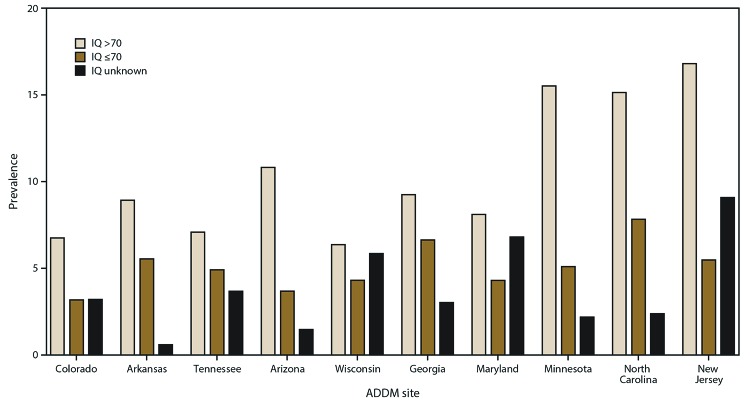
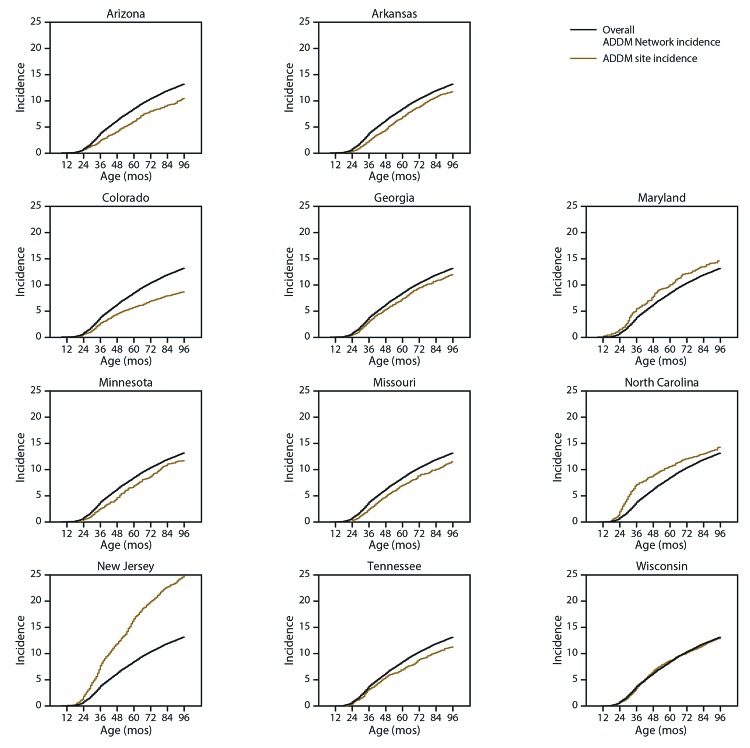
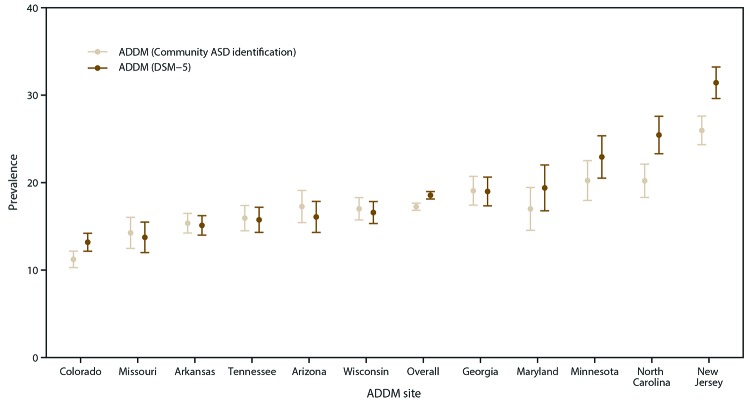
PROBLEM/CONDITION: Autism spectrum disorder (ASD). PERIOD COVERED: 2016. DESCRIPTION OF SYSTEM: The Autism and Developmental Disabilities Monitoring (ADDM) Network is an active surveillance program that provides estimates of the prevalence of ASD among children aged 8 years whose parents or guardians live in 11 ADDM Network sites in the United States (Arizona, Arkansas, Colorado, Georgia, Maryland, Minnesota, Missouri, New Jersey, North Carolina, Tennessee, and Wisconsin). Surveillance is conducted in two phases. The first phase involves review and abstraction of comprehensive evaluations that were completed by medical and educational service providers in the community. In the second phase, experienced clinicians who systematically review all abstracted information determine ASD case status. The case definition is based on ASD criteria described in the Diagnostic and Statistical Manual of Mental Disorders, Fifth Edition. RESULTS: For 2016, across all 11 sites, ASD prevalence was 18.5 per 1,000 (one in 54) children aged 8 years, and ASD was 4.3 times as prevalent among boys as among girls. ASD prevalence varied by site, ranging from 13.1 (Colorado) to 31.4 (New Jersey). Prevalence estimates were approximately identical for non-Hispanic white (white), non-Hispanic black (black), and Asian/Pacific Islander children (18.5, 18.3, and 17.9, respectively) but lower for Hispanic children (15.4). Among children with ASD for whom data on intellectual or cognitive functioning were available, 33% were classified as having intellectual disability (intelligence quotient [IQ] ≤70); this percentage was higher among girls than boys (39% versus 32%) and among black and Hispanic than white children (47%, 36%, and 27%, respectively) [corrected]. Black children with ASD were less likely to have a first evaluation by age 36 months than were white children with ASD (40% versus 45%). The overall median age at earliest known ASD diagnosis (51 months) was similar by sex and racial and ethnic groups; however, black children with IQ ≤70 had a later median age at ASD diagnosis than white children with IQ ≤70 (48 months versus 42 months). INTERPRETATION: The prevalence of ASD varied considerably across sites and was higher than previous estimates since 2014. Although no overall difference in ASD prevalence between black and white children aged 8 years was observed, the disparities for black children persisted in early evaluation and diagnosis of ASD. Hispanic children also continue to be identified as having ASD less frequently than white or black children. PUBLIC HEALTH ACTION: These findings highlight the variability in the evaluation and detection of ASD across communities and between sociodemographic groups. Continued efforts are needed for early and equitable identification of ASD and timely enrollment in services.
Overview
The claims and statistics of this paper haven’t been checked yet.
Run the check — free, no account needed. It reads the open-access text and checks the sources it cites.
Integrity signals
Registry
Cites
Statistics
Figures
Verification
Claims the paper makes
The claims and statistics of this paper haven’t been checked yet.
Run the check — free, no account needed. It reads the open-access text and checks the sources it cites.
Claims other papers make about this one
Each is checked against this paper’s own text: does it say what the citing paper says it does?
The source backs part of the claim, not all of it — or backs it for a different population, condition or comparison.
In the citing paper
“The U.S. reports a consistent pattern of increased ASD prevalence among higher socioeconomic status (SES) families (Baio et al. 2018; Durkin et al. 2010, 2017; Maenner et al. 2020; Pedersen et al. 2012), while European countries report increased prevalence among lower SES families (Delobel-Ayoub et al. 2015; Emerson 2012; Rai et al. 2012).”
From The Diagnosis of Autism: From Kanner to DSM-III to DSM-5 and Beyond (2021) · cites this paper as Maenner et al. 2020
Experimental — accuracy not yet measuredThe source backs part of the claim, not all of it — or backs it for a different population, condition or comparison.
In the citing paper
“In the U.S., African American, Hispanic, and Asian children are more likely to receive a diagnosis at a later age than Caucasian children (Maenner et al. 2020; Mandell et al. 2009; Palmer et al. 2010).”
From The Diagnosis of Autism: From Kanner to DSM-III to DSM-5 and Beyond (2021) · cites this paper as Maenner et al. 2020
Experimental — accuracy not yet measuredThe source backs part of the claim, not all of it — or backs it for a different population, condition or comparison.
In the citing paper
“While prevalence of ASD likely does not differ across racial and ethnic groups (Fombonne 2003; Maenner et al. 2020), the average age of diagnosis continues to differentiate these groups.”
From The Diagnosis of Autism: From Kanner to DSM-III to DSM-5 and Beyond (2021) · cites this paper as Maenner et al. 2020
Experimental — accuracy not yet measuredThe source backs part of the claim, not all of it — or backs it for a different population, condition or comparison.
In the citing paper
“Lastly, while the percentage of children diagnosed with ASD and intellectual disability is higher among African American and Hispanic children compared to Caucasian children in the U.S., African American and Hispanic children are nevertheless diagnosed at a later age on average than Caucasian children (Maenner et al. 2020).”
From The Diagnosis of Autism: From Kanner to DSM-III to DSM-5 and Beyond (2021) · cites this paper as Maenner et al. 2020
Experimental — accuracy not yet measuredThe source backs part of the claim, not all of it — or backs it for a different population, condition or comparison.
In the citing paper
“Surveillance among children aged 4 years in 2016 (8) indicated similar prevalence among children of different racial and ethnic groups, consistent with trends among children aged 8 years (9).”
From Early Identification of Autism Spectrum Disorder Among Children Aged 4 Years — Autism and Developmental Disabilities Monitoring Network, 11 Sites, United States, 2018 (2021) · cites this paper as [9]
Experimental — accuracy not yet measured
The source backs part of the claim, not all of it — or backs it for a different population, condition or comparison.
In the citing paper
“however, diagnosis typically occurs later in Europe (3.5 years), USA (4 years), and Canada (6 years), exposing an opportunity to decrease the age at diagnosis and accelerate access to specialized healthcare.”
From Tackling healthcare access barriers for individuals with autism from diagnosis to adulthood (2022) · cites this paper as [58]
Experimental — accuracy not yet measuredThe cited source says what the claim attributes to it.
In the citing paper
“ASD is ~4 times more prevalent in boys than in girls (16, 31).”
From Where Sex Meets Gender: How Sex and Gender Come Together to Cause Sex Differences in Mental Illness (2022) · cites this paper as [16]
In the citing paper
“and 1.85% (CI95%: 1.80–1.91%) in children aged eight year old (26).”
From Prevalence of Autism Spectrum Disorder and Co-morbidities in Children and Adolescents: A Systematic Literature Review (2021) · cites this paper as [26]
In the citing paper
“In the US, Christensen et al. (15) and Maenner et al. (26) assessed the prevalence of ID in ASD children aged 4y and 8y respectively based on the ADDM network and reported rates of 46.10% and 33.00%.”
From Prevalence of Autism Spectrum Disorder and Co-morbidities in Children and Adolescents: A Systematic Literature Review (2021) · cites this paper as [26]
In the citing paper
“The estimated prevalence of ASD has increased over 30-fold over the last four decades,18 primarily due to diagnostic expansion.19,20”
From The female protective effect against autism spectrum disorder (2022) · cites this paper as [20]
In the citing paper
“Members of previous generations, particularly those able to live independently as adults, were far less likely to receive an ASD diagnosis in childhood than children born as of writing.19,20”
From The female protective effect against autism spectrum disorder (2022) · cites this paper as [20]
In the citing paper
“For example, females are on average diagnosed later than males.20”
From The female protective effect against autism spectrum disorder (2022) · cites this paper as [20]
In the citing paper
“If consistent with the rate of ID in ASD cases in the United States or the United Kingdom, it would be approximately 40% over this diagnostic period.20”
From The female protective effect against autism spectrum disorder (2022) · cites this paper as [20]
In the citing paper
“The sex ratio is one example of how differences in identification of children without intellectual disability can affect patterns observed at older ages, with a higher ratio of boys to girls at age 8 years than at age 4 years, consistent with previous reports (8,9).”
In the citing paper
“In surveillance year 2018, ASD prevalence among Black children was higher than among White children at five of 11 sites and overall, the opposite of the pattern before surveillance year 2016 among children aged 8 years (9,17).”
In the citing paper
“Children with co-occurring intellectual disability are more likely to be identified earlier than children without intellectual disability, as indicated by an earlier median age at identification among this group (11) as well as the consistently higher proportion of children with intellectual disability at age 4 years (8,13) than at age 8 years (9,11,17).”
Self-check
Percentages, sums and reported differences re-computed from the paper’s own numbers.
The self-check needs the paper’s full text.
Citations
Cites
Diagnostic and Statistical Manual of Mental Disorders
American Psychiatric Association (2013) · doi:10.1176/appi.books.9780890425596 · Cited by 116,369
Baio, J., Wiggins, L., Christensen, D. L., Maenner, M. J., Daniels, J., Warren, Z., Kurzius-Spencer, M., Zahorodny, W., Robinson, C., Rosenberg, et al. (2018) · MMWR. Surveillance Summaries · doi:10.15585/mmwr.ss6706a1 · Cited by 6,078 · cited 5×
“8 per 1,000 (one in 59) children aged 8 years in 2014 (3).”
BackgroundMethodInfluentialSelf-citationDawson, G., Rogers, S., Munson, J., Smith, M., Winter, J., Greenson, J., Donaldson, A., & Varley, J. (2010) · Pediatrics · doi:10.1542/peds.2009-0958 · Cited by 2,835
Identification and Evaluation of Children With Autism Spectrum Disorders
Johnson, C. P., Myers, S. M., & and the Council on Children With Disabilities (2007) · Pediatrics · doi:10.1542/peds.2007-2361 · Cited by 2,011
Christensen, D. L., Baio, J., Braun, K. V. N., Bilder, D., Charles, J., Constantino, J. N., Daniels, J., Durkin, M. S., Fitzgerald, R. T., Kurzius-Spencer, M., et al. (2016) · MMWR. Surveillance Summaries · doi:10.15585/mmwr.ss6503a1 · Cited by 1,964
Self-citationNaarden Braun, K. V., Lopez, M., White, T., et al. (2023) · Carolina Digital Repository (University of North Carolina at Chapel Hill) · doi:10.17615/y3kk-5x30 · Cited by 1,381
Self-citationPrevalence of Autism in a US Metropolitan Area
Yeargin-Allsopp, M., Rice, C., Karapurkar, T., Doernberg, N., Boyle, C., & Murphy, C. (2003) · JAMA · doi:10.1001/jama.289.1.49 · Cited by 1,248 · cited 3×
“The ADDM Network uses a multiple-source, records-based surveillance methodology developed by CDC’s Metropolitan Atlanta Developmental Disabilities Surveillance Program (2,24).”
BackgroundMethodInfluentialPrevalence and Trends of Developmental Disabilities among Children in the United States: 2009–2017
Zablotsky, B., Black, L. I., Maenner, M. J., Schieve, L. A., Danielson, M. L., Bitsko, R. H., Blumberg, S. J., Kogan, M. D., & Boyle, C. A. (2019) · Pediatrics · doi:10.1542/peds.2019-0811 · Cited by 1,217 · cited 1×
“The 2016 NSCH and the 2015–2017 NHIS both estimated ASD prevalence at 25 per 1,000 children aged 3–17 years (13,29).”
BackgroundSelf-citation
Cited by
Sorted by citations
Items 401–500 of 1,017
Metabolomic Signatures of Autism Spectrum Disorder
Brister, D., Rose, S., Delhey, L. M., Tippett, M., Jin, Y., Gu, H., & Frye, R. E. (2022) · Journal of Personalized Medicine · doi:10.3390/jpm12101727 · Cited by 55
“ASD continues to increase in prevalence with the most recent Autism and Developmental Disabilities Monitoring Network estimates suggesting that 1 in 44 children have the disorder [1] and a more recent study estimating that it might reach a prevalence of 1 in 30 [2].”
BackgroundGori, I., Giuliano, A., Muratori, F., Saviozzi, I., Oliva, P., Tancredi, R., Cosenza, A., Tosetti, M., Calderoni, S., & Retico, A. (2015) · Journal of Neuroimaging · doi:10.1111/jon.12280 · Cited by 58
Mid‐childhood outcomes of infant siblings at familial high‐risk of autism spectrum disorder
Shephard, E., Milosavljevic, B., Pasco, G., Jones, E. J. H., Gliga, T., Happe, F. G. E., Johnson, M. H., Charman, T., & The BASIS Team (2016) · Autism Research · doi:10.1002/aur.1733 · Cited by 60
Parent-Mediated Interventions for Children with ASD in Low-Resource Settings: a Scoping Review
Lee, J. D., & Meadan, H. (2020) · Review Journal of Autism and Developmental Disorders · doi:10.1007/s40489-020-00218-7 · Cited by 55
Laue, H. E., Korrick, S., Baker, E., Karagas, M. R., & Madan, J. C. (2020) · Scientific Reports · doi:10.1038/s41598-020-72386-9 · Cited by 59
Ketcheson, L. R., Pitchford, E. A., & Wentz, C. F. (2021) · Autism Research · doi:10.1002/aur.2469 · Cited by 55
Schwartzman, J. M., & Corbett, B. A. (2020) · Research in Autism Spectrum Disorders · doi:10.1016/j.rasd.2020.101613 · Cited by 53
“Volume 61, Number 3 Centers for Disease Control and Prevention.”
ResultInterneuron development and dysfunction
Yang, J., Yang, X. W., & Tang, K. (2021) · FEBS Journal · doi:10.1111/febs.15872 · Cited by 54
Barriers general education teachers face regarding the inclusion of students with autism
Jaffal, M. A. (2022) · Frontiers in Psychology · doi:10.3389/fpsyg.2022.873248 · Cited by 54
Centering the Inner Experience of Autism: Development of the Self-Assessment of Autistic Traits
Ratto, A. B., Bascom, J., daVanport, S., Strang, J. F., Anthony, L. G., Verbalis, A. D., Pugliese, C. E., Nadwodny, N., Brown, L. X. Z., Cruz, M., et al. (2022) · Autism in Adulthood · doi:10.1089/aut.2021.0099 · Cited by 64
Reducing Barriers to Care in the Office-Based Health Care Setting for Children With Autism
Bultas, M. W., McMillin, S. E., & Zand, D. H. (2015) · Journal of Pediatric Health Care · doi:10.1016/j.pedhc.2015.08.007 · Cited by 61
Sun, X., Allison, C. L., Bonnie Auyeung, B., Baron‐Cohen, S., & Brayne, C. (2014) · Research in Developmental Disabilities · doi:10.1016/j.ridd.2014.07.037 · Cited by 58
Hyperplasticity in Autism Spectrum Disorder confers protection from Alzheimer’s disease
Oberman, L. M., & Pascual‐Leone, Á. (2014) · Medical Hypotheses · doi:10.1016/j.mehy.2014.06.008 · Cited by 60
McDermott, S. W., Royer, J. A., Cope, T., Lindgren, S. D., Momany, E. T., Lee, J. C., McDuffie, M. J., Lauer, E., Kurtz, S., & Armour, B. S. (2018) · American Journal on Intellectual and Developmental Disabilities · doi:10.1352/1944-7558-123.4.371 · Cited by 54
Belardo, A., Gevi, F., & Zolla, L. (2019) · The Journal of Nutritional Biochemistry · doi:10.1016/j.jnutbio.2019.04.004 · Cited by 54
Gestational diabetes mellitus, prenatal air pollution exposure, and autism spectrum disorder
Jo, H., Eckel, S. P., Chen, J., Cockburn, M., Martinez, M. P., Chow, T., Lurmann, F., Funk, W. E., Xiang, A. H., & McConnell, R. (2019) · Environment International · doi:10.1016/j.envint.2019.105110 · Cited by 54
Narzisi, A. (2020) · Journal of Clinical Medicine · doi:10.3390/jcm9061850 · Cited by 52
“Among the infant disorders, it is well recognized that autism spectrum disorder (ASD) has an elevated incidence, higher than 1/100 [2,3], and the requests for evaluation are many.”
BackgroundSilva, G. M., Souto, J. J. S., Fernandes, T. P., Bolis, I., & dos Santos, N. A. (2021) · Developmental Neuropsychology · doi:10.1080/87565641.2021.1981905 · Cited by 55
“ASD has a prevalence of 18.5 per 1,000 people in the general population (Maenner et al., 2020).”
BackgroundInfluentialNeurogenetic disorders across the lifespan: from aberrant development to degeneration
Hickman, R. A., O’Shea, S. A., Mehler, M. F., & Chung, W. K. (2022) · Nature Reviews Neurology · doi:10.1038/s41582-021-00595-5 · Cited by 59
Smith, J. R., DiSalvo, M., Green, A., Ceranoglu, T. A., Anteraper, S. A., Croarkin, P. E., & Joshi, G. (2022) · Neuropsychology Review · doi:10.1007/s11065-022-09564-1 · Cited by 57
“Ten studies measuring behavioral outcomes (Casanova et al., 2012, 2020, 2021; Sokhadze et al., 2012, 2018) and eight studies measuring cognitive outcomes (Casanova et al., 2014, 2020; Sokhadze et al., 2009, 2010, 2016, 2018; Wang et al., 2016) possessed data for inclusion.”
InfluentialDeepMNF: Deep Multimodal Neuroimaging Framework for Diagnosing Autism Spectrum Disorder
Abbas, S. Q., Chi, L., & Chen, Y. P. (2022) · Artificial Intelligence in Medicine · doi:10.1016/j.artmed.2022.102475 · Cited by 56
Kurzius‐Spencer, M., Pettygrove, S. D., Christensen, D., Pedersen, A. L., Cunniff, C. M., Meaney, F. J., Soke, G. N., Harrington, R. A., Durkin, M. S., & Rice, S. A. (2018) · Research in Autism · doi:10.1016/j.rasd.2018.09.002 · Cited by 58
Self-citationWhy Do We Find it so Hard to Calculate the Burden of Neurodevelopmental Disorders
Cleaton, M. A. M., & Kirby, A. (2018) · Journal of Childhood & Developmental Disorders · doi:10.4172/2472-1786.100073 · Cited by 74
Imbriani, G., Panìco, A., Grassi, T., Idolo, A., Serio, F., Bagordo, F., Filippis, G. D., Giorgi, D. D., Antonucci, G., Piscitelli, P., et al. (2021) · International Journal of Environmental Research and Public Health · doi:10.3390/ijerph18031204 · Cited by 57
Making Research Possible: Barriers and Solutions For Those With ASD and ID
Thurm, A., Halladay, A., Mandell, D., Maye, M., Ethridge, S., & Farmer, C. (2022) · Journal of Autism and Developmental Disorders · doi:10.1007/s10803-021-05320-1 · Cited by 52
Relations between language and cognition in native‐signing children with autism spectrum disorder
Shield, A., Pyers, J. E., Martin, A. J., & Tager-Flusberg, H. B. (2016) · Autism Research · doi:10.1002/aur.1621 · Cited by 52
Thinning faster? Age-related cortical thickness differences in adults with autism spectrum disorder
Braden, B. B., & Riecken, C. (2019) · Research in Autism · doi:10.1016/j.rasd.2019.03.005 · Cited by 52
Dendritic Integration Dysfunction in Neurodevelopmental Disorders
Nelson, A. D., & Bender, K. J. (2021) · Developmental Neuroscience · doi:10.1159/000516657 · Cited by 54
Bi, X.-B., He, H.-Z., Lin, H., & Fan, X.-Z. (2022) · Frontiers in Psychology · doi:10.3389/fpsyg.2022.835110 · Cited by 61
“Around 2% of children worldwide are diagnosed with ASD (Maenner et al., 2020; Zablotsky and Black, 2020); in China, the observed ASD prevalence rate was 0.”
BackgroundCorrêa, I. S., Gallina, F., & Schultz, L. F. (2021) · Revista de APS · doi:10.34019/1809-8363.2021.v24.32438 · Cited by 52
Are the diagnostic rates of autistic females increasing? An examination of state‐wide trends
Harrop, C., Tomaszewski, B. R., Putnam, O. C., Klein, C. B., Lamarche, E., & Klinger, L. G. (2024) · Journal of Child Psychology and Psychiatry · doi:10.1111/jcpp.13939 · Cited by 65
Johnson, N. E., Ekström, A., Campbell, C., Hung, M., Adams, H., Chen, W., Luebbe, E. A., Hilbert, J. E., Moxley, R. T., & Heatwole, C. R. (2015) · Developmental Medicine & Child Neurology · doi:10.1111/dmcn.12948 · Cited by 55
Contamination in the Prospective Study of Child Maltreatment and Female Adolescent Health
Shenk, C. E., Noll, J. G., Peugh, J. L., Griffin, A. M., & Bensman, H. E. (2016) · Journal of Pediatric Psychology · doi:10.1093/jpepsy/jsv017 · Cited by 52
Stem cell therapy in autism: recent insights
Siniscalco, D., Kannan, S., Semprún-Hernández, N., Eshraghi, A. A., Brigida, A. L., & Antonucci, N. (2018) · Stem Cells and Cloning Advances and Applications · doi:10.2147/sccaa.s155410 · Cited by 56
A prospective birth cohort study on cord blood folate subtypes and risk of autism spectrum disorder
Raghavan, R., Selhub, J., Paul, L., Ji, Y., Wang, G., Hong, X., ZUCKERMAN, B. S., Fallin, M. D., & Wang, X. (2020) · American Journal of Clinical Nutrition · doi:10.1093/ajcn/nqaa208 · Cited by 56
He, X., Tu, Y., Song, Y., Yang, G., & You, M. (2021) · Environmental Research · doi:10.1016/j.envres.2021.111902 · Cited by 51
Epilepsy in adults with neurodevelopmental disability ‐ what every neurologist should know
Watkins, L. V., Linehan, C., Brandt, C., Snoeijen‐Schouwenaars, F. M., McGowan, P., & Shankar, R. (2022) · Epileptic Disorders · doi:10.1684/epd.2021.1366 · Cited by 51
“A report by the Centre for Disease Control and Prevention (CDC) in the United States (US) reports an autism prevalence of 1 in 54 children [14].”
BackgroundVerpeut, J. L., DiCicco-Bloom, E. M., & Bello, N. T. (2016) · Physiology & Behavior · doi:10.1016/j.physbeh.2016.04.001 · Cited by 55
Anemia Associated with Autism Spectrum Disorder
Castro, K., Marchezan, J., & Faccioli, L. S. (2016) · International Journal of Pediatric Health Care & Advancements · doi:10.19070/2572-7354-160006 · Cited by 52
Maternal cytomegalovirus sero‐positivity and autism symptoms in children
Slawinski, B. L., Talge, N. M., Ingersoll, B. R., Smith, A. L., Essalmi, A. G., Kerver, J. M., Paneth, N., & Racicot, K. E. (2018) · American Journal of Reproductive Immunology · doi:10.1111/aji.12840 · Cited by 52
State of the Art of Genetic Testing for Patients With Autism: A Practical Guide for Clinicians
Kreiman, B. L., & Boles, R. G. (2020) · Seminars in Pediatric Neurology · doi:10.1016/j.spen.2020.100804 · Cited by 52
In utero exposure to near-roadway air pollution and autism spectrum disorder in children
Carter, S., Rahman, M. M., Lin, J. C., Shu, Y., Chow, T., Yu, X., Martinez, M. P., Eckel, S. P., Chen, J., Chen, Z., et al. (2021) · Environment International · doi:10.1016/j.envint.2021.106898 · Cited by 52
Executive functioning in children with ASD+ ADHD and ASD+ ID: A systematic review.
Benallie, K. J., McClain, M. B., Bakner, K. E., Roanhorse, T., & Ha, J. (2021) · Research in Autism Spectrum Disorders · doi:10.1016/j.rasd.2021.101807 · Cited by 50
Kissel, L. T., & Werling, D. M. (2022) · Biological Psychiatry · doi:10.1016/j.biopsych.2020.11.023 · Cited by 46
Shan, L., Feng, J., Wang, T., Xu, Z., & Jia, F. (2022) · Frontiers in Psychiatry · doi:10.3389/fpsyt.2021.794238 · Cited by 50
The Bidirectional Social-Cognitive Mechanisms of the Social-Attention Symptoms of Autism
Mundy, P. C., & Bullen, J. C. (2022) · Frontiers in Psychiatry · doi:10.3389/fpsyt.2021.752274 · Cited by 57
Infant Visual Brain Development and Inherited Genetic Liability in Autism
Girault, J. B., Donovan, K., Hawks, Z., Talović, M., Forsen, E., Elison, J. T., Shen, M. D., Swanson, M. R., Wolff, J. J., Kim, S. H., et al. (2022) · American Journal of Psychiatry · doi:10.1176/appi.ajp.21101002 · Cited by 49
Self-citationα 5GABA A receptor deficiency causes autism‐like behaviors
Zurek, A. A., Kemp, S. W. P., Aga, Z., Walker, S., Milenkovic, M., Ramsey, A. J., Sibille, E. L., Scherer, S. W., & Orser, B. A. (2016) · Annals of Clinical and Translational Neurology · doi:10.1002/acn3.303 · Cited by 51
Hormesis, cellular stress response, and redox homeostasis in autism spectrum disorders
Calabrese, V., Giordano, J., Ruggieri, M., Berritta, D., Salinaro, A. T., Ontario, M. L., Bianchini, R., & Calabrese, E. J. (2016) · Journal of Neuroscience Research · doi:10.1002/jnr.23893 · Cited by 50
UNPACKING THE BURDEN OF CARE FOR INFANTS IN THE NICU
D’Agata, A. L., Sanders, M. R., Grasso, D. J., Young, E. E., Cong, X. S., & McGrath, J. M. (2017) · Infant Mental Health Journal · doi:10.1002/imhj.21636 · Cited by 53
Sign Language Echolalia in Deaf Children With Autism Spectrum Disorder
Shield, A., Cooley, F. G., & Meier, R. P. (2017) · Journal of Speech Language and Hearing Research · doi:10.1044/2016_jslhr-l-16-0292 · Cited by 50
Pillay, S., Duncan, M., & de Vries, P. J. (2020) · Autism · doi:10.1177/1362361320978042 · Cited by 61
Clinical and Translational Implications of an Emerging Developmental Substructure for Autism
Constantino, J. N., Charman, T., & Jones, E. J. H. (2021) · Annual Review of Clinical Psychology · doi:10.1146/annurev-clinpsy-081219-110503 · Cited by 54
Self-citationYang, S., Liu, Z., Xiong, X., Cai, K., Zhu, L., Dong, X., Wang, J., Zhu, H., Shi, Y., & Chen, A. (2021) · International Journal of Environmental Research and Public Health · doi:10.3390/ijerph18105132 · Cited by 50
“Centers for Disease Control and Prevention (CDC), the prevalence of ASD has increased to 1 in 54 children [2].”
BackgroundAllison, C. L., Matthews, F. E., Ruta, L., Pasco, G., Soufer, R., Brayne, C., Charman, T., & Baron‐Cohen, S. (2021) · BMJ Paediatrics Open · doi:10.1136/bmjpo-2020-000700 · Cited by 55
Varma, M., Washington, P. Y., Chrisman, B., Kline, A., Leblanc, É., Paskov, K. M., Stockham, N., Jung, J.-Y., Sun, M., & Wall, D. P. (2022) · Journal of Medical Internet Research · doi:10.2196/31830 · Cited by 52
“Currently, 1 in 44 children in the United States have been diagnosed with ASD, with males 4 times more likely to be affected than females [1,2].”
BackgroundLu, M., Chen, J., He, W., Pang, F., & Zou, Y. (2021) · Research in Developmental Disabilities · doi:10.1016/j.ridd.2021.103933 · Cited by 52
Clinical Profiles of Black and White Children Referred for Autism Diagnosis
Fombonne, E. J., & Zuckerman, K. E. (2021) · Journal of Autism and Developmental Disorders · doi:10.1007/s10803-021-05019-3 · Cited by 49
Schwartzman, J. M., Williams, Z. J., & Corbett, B. A. (2021) · Autism · doi:10.1177/13623613211025895 · Cited by 53
“Although the sex ratio of participants in the ASD group was not balanced, it resembled the 4:1 sex ratio reported in recent prevalence estimates (Maenner et al., 2020).”
ResultRethinking autism spectrum disorder assessment for children during COVID ‐19 and beyond
Zwaigenbaum, L., Bishop, S. L., Stone, W. L., Ibañez, L. V., Halladay, A. K., Goldman, S., Kelly, A. M., Klaiman, C., Lai, M., Miller, M. R., et al. (2021) · Autism Research · doi:10.1002/aur.2615 · Cited by 58
“While ASD prevalence rates have increased steadily (Maenner et al., 2020), the number of professionals (especially those from diverse backgrounds) trained in conducting ASD assessments has not kept pace (Bridgemohan et al.”
BackgroundSelf-citationJameson, C., Boulton, K., Silove, N., Nanan, R. K. H., & Guastella, A. J. (2022) · Molecular Psychiatry · doi:10.1038/s41380-022-01829-8 · Cited by 49
“Interestingly, the global prevalence of these ‘atopic diseases’ has risen in parallel to childhood-onset ASD, recently reported to affect one in 54 children in the United States [4, 5].”
BackgroundWetie, A. G. N., Wormwood, K. L., Charette, L., Ryan, J. P., Woods, A. G., & Darie, C. C. (2015) · Journal of Cellular and Molecular Medicine · doi:10.1111/jcmm.12658 · Cited by 49
A Survey of Parents with Children on the Autism Spectrum: Experience with Services and Treatments
Becerra, T. A., Massolo, M. L., Yau, V. M., Owen-Smith, A. A., Lynch, F. L., Crawford, P. M., Pearson, K. A., Pomichowski, M. E., Quinn, V. P., Yoshida, C. K., et al. (2017) · The Permanente Journal · doi:10.7812/tpp/16-009 · Cited by 49
Leader, G., O’Reilly, M., Gilroy, S. P., Chen, J. L., Ferrari, C., & Mannion, A. (2020) · Developmental Neurorehabilitation · doi:10.1080/17518423.2020.1770354 · Cited by 68
“The SSP has good internal consistency, with coefficient alpha ranging from 0.70 to 0.90,67 and has been widely used with children diagnosed with ASD.46 2.2.6 Behavior Problems Inventory–Short Form.”
BackgroundInfluentialCitrigno, L., Muglia, M., Qualtieri, A., Spadafora, P., Cavalcanti, F., Pioggia, G., & Cerasa, A. (2020) · International Journal of Molecular Sciences · doi:10.3390/ijms21165785 · Cited by 51
Thanh, L. N., Nguyen, H.-P., Ngo, M., Bui, V. A., Dam, P. T. M., Bui, H. T. P., Ngo, D. V., Kiên, T. T., Dang, T. T. T., Duong, B. D., et al. (2020) · Stem Cells Translational Medicine · doi:10.1002/sctm.20-0102 · Cited by 49
Employing Evidence-Based Practices for Children with Autism in Elementary Schools
Sam, A. M., Odom, S. L., Tomaszewski, B. R., Perkins, Y., & Cox, A. W. (2020) · Journal of Autism and Developmental Disorders · doi:10.1007/s10803-020-04706-x · Cited by 49
The Autism Phenome Project: Toward Identifying Clinically Meaningful Subgroups of Autism
Nordahl, C. W., Andrews, D. S., Dwyer, P. S. R., Waizbard‐Bartov, E., Restrepo, B., Lee, J. K., Heath, B. E., Saron, C. D., Rivera, S. M., Solomon, M., et al. (2022) · Frontiers in Neuroscience · doi:10.3389/fnins.2021.786220 · Cited by 49
“Intellectual functioning is one of the most heterogeneous aspects of autism (Maenner, 2020).”
BackgroundAfif, I. Y., Farkhan, M., Kurdi, O., Maula, M. I., Ammarullah, M. I., Setiyana, B., Jamari, J., & Winarni, T. I. (2022) · Bioengineering · doi:10.3390/bioengineering9020048 · Cited by 49
The Lag Structure of Intrinsic Activity is Focally Altered in High Functioning Adults with Autism
Mitra, A., Snyder, A. Z., Constantino, J. N., & Raichle, M. E. (2015) · Cerebral Cortex · doi:10.1093/cercor/bhv294 · Cited by 49
Self-citationLi, Y., & Yu, D. (2016) · Brain and Cognition · doi:10.1016/j.bandc.2016.07.006 · Cited by 49
Social communication disorder: a narrative review on current insights
Topal, Z., Demir, N., Taskiran, S. A., Tufan, A. E., & Semerci, B. (2018) · Neuropsychiatric Disease and Treatment · doi:10.2147/ndt.s121124 · Cited by 48
Relationship between Vitamin Deficiencies and Co-Occurring Symptoms in Autism Spectrum Disorder
Robea, M. A., Luca, A.-C., & Ciobica, A. S. (2020) · Medicina · doi:10.3390/medicina56050245 · Cited by 54
“A recent report added new insights regarding ASD prevalence for 2016 in United States, stating that one in 54 eight-year-olds was diagnosed with autism, according to Centers for Disease Control and Prevention [2].”
BackgroundTreatment of Folate Metabolism Abnormalities in Autism Spectrum Disorder
Frye, R. E., Rossignol, D. A., Scahill, L. D., McDougle, C. J., Huberman, H. S., & Quadros, E. V. (2020) · Seminars in Pediatric Neurology · doi:10.1016/j.spen.2020.100835 · Cited by 48
Treatment of Aggression in Adults with Autism Spectrum Disorder: A Review
Im, D. S. (2021) · Harvard Review of Psychiatry · doi:10.1097/hrp.0000000000000282 · Cited by 53
Liang, S., Sabri, A. Q. M., Alnajjar, F., & Loo, C. K. (2021) · IEEE Access · doi:10.1109/access.2021.3061455 · Cited by 55
“Disabilities Monitoring Network [1].”
Ebrahim, M. T., & Alothman, A. A. (2021) · Research in Developmental Disabilities · doi:10.1016/j.ridd.2021.103943 · Cited by 60
Human IPSC-Derived Model to Study Myelin Disruption
Chesnut, M., Paschoud, H., Repond, C., Smirnova, L., Härtung, T., Zurich, M., Högberg, H. T., & Pamies, D. (2021) · International Journal of Molecular Sciences · doi:10.3390/ijms22179473 · Cited by 56
“Centers for Disease Control and Prevention (CDC), for example, estimated that one in 54 children born in the US was diagnosed with autism spectrum disorder (ASD) [22], and reported that 9.”
BackgroundInfluentialPiccininni, C., Bisnaire, L., & Penner, M. (2017) · JAMA Pediatrics · doi:10.1001/jamapediatrics.2016.2695 · Cited by 47
Allard, M., Bergeron, J. D., Baharnoori, M., Srivastava, L. K., Fortier, L., Poyart, C., & Sébire, G. (2017) · Autism Research · doi:10.1002/aur.1647 · Cited by 48
Heffler, K. F., & Oestreicher, L. M. (2016) · Medical Hypotheses · doi:10.1016/j.mehy.2015.06.019 · Cited by 59
Intensive Child‐Centered Play Therapy for Children on the Autism Spectrum: A Pilot Study
Schottelkorb, A. A., Swan, K. L., & Ogawa, Y. (2020) · Journal of Counseling & Development · doi:10.1002/jcad.12300 · Cited by 47
Loubersac, J., Michelon, C., Ferrando, L., Picot, M., & Baghdadli, A. (2021) · European Child & Adolescent Psychiatry · doi:10.1007/s00787-021-01792-9 · Cited by 62
Hayashi, M., Mishima, K., Fukumizu, M., Takahashi, H., Ishikawa, Y., Hamada, I., Sugioka, H., Yotsuya, O., & Yamashita, Y. (2021) · Journal of Autism and Developmental Disorders · doi:10.1007/s10803-021-05139-w · Cited by 38
Muscle strength and executive function in children and adolescents with autism spectrum disorder
Ludyga, S., Pühse, U., Gerber, M., & Mücke, M. (2021) · Autism Research · doi:10.1002/aur.2587 · Cited by 61
“A survey of the Autism and Developmental Disabilities Monitoring Network supports that the prevalence of autism spectrum disorder (ASD) increased from 1 in 150 cases in 2006 to 1 in 54 cases in 2016 (Maenner et al., 2020).”
BackgroundAdiani, D., Itzkovitz, A., Bian, D., Katz, H., Breen, M., Hunt, S., Swanson, A. R., Vogus, T. J., Wade, J. W., & Sarkar, N. (2022) · ACM Transactions on Accessible Computing · doi:10.1145/3505560 · Cited by 47
“Autism Spectrum Disorder (ASD) is a lifelong neurodevelopmental condition characterized by differences in social communication as well as restrictive or repetitive patterns of behavior or interests, with a current prevalence of 1 in 54 children (approximately 2% of the entire population) in the United States [1, 50].”
BackgroundSuárez-Manzano, S., Ruiz‐Ariza, A., Loureiro, N., & López, E. J. M. (2024) · Behavioral Sciences · doi:10.3390/bs14040330 · Cited by 63
CRISPR activation for SCN2A-related neurodevelopmental disorders
Tamura, S., Nelson, A. D., Spratt, P. W. E., Hamada, E. C., Zhou, X., Kyoung, H., Li, Z., Arnould, C., Barskyi, V., Krupkin, B., et al. (2025) · Nature · doi:10.1038/s41586-025-09522-w · Cited by 52
Characteristics of prisoners with neurodevelopmental disorders and difficulties
McCarthy, J. M., Chaplin, E., Underwood, L., Forrester, A., Hayward, H., Sabet, J., Young, S., Asherson, P. J., Mills, R., & Murphy, D. (2015) · Journal of Intellectual Disability Research · doi:10.1111/jir.12237 · Cited by 47
Global Data on Autism Spectrum Disorders Prevalence: A Review of Facts, Fallacies and Limitations
Onaolapo, A. Y., & Onaolapo, O. J. (2017) · Universal Journal of Clinical Medicine · doi:10.13189/ujcm.2017.050202 · Cited by 53
Natural language markers of social phenotype in girls with autism
Song, A. Y., Cola, M., Plate, S. N., Petrulla, V., Yankowitz, L. D., Pandey, J., Schultz, R. T., & Parish‐Morris, J. (2020) · Journal of Child Psychology and Psychiatry · doi:10.1111/jcpp.13348 · Cited by 55
Gluten and Autism Spectrum Disorder
Croall, I. D., Hoggard, N., & Hadjivassiliou, M. (2021) · Nutrients · doi:10.3390/nu13020572 · Cited by 50
“As the name implies its phenotype exists on a spectrum, and overall it is estimated to affect as many as one in 69 children [2].”
BackgroundKisbu‐Sakarya, Y., & Doenyas, C. (2021) · Research in Developmental Disabilities · doi:10.1016/j.ridd.2021.103941 · Cited by 46
Samuel, P., Yew, R. Y., Hooley, M., Hickey, M., & Stokes, M. A. (2021) · Archives of Gynecology and Obstetrics · doi:10.1007/s00404-021-06109-4 · Cited by 46
Wu, S., Zhao, J. H., de Villiers, J., Liu, X. L., Rolfhus, E. L., Sun, X., Li, X., Pan, H., Wang, H., Zhu, Q., et al. (2023) · The Lancet Regional Health - Western Pacific · doi:10.1016/j.lanwpc.2023.100713 · Cited by 46
Autism Spectrum Disorder and Medical Cannabis: Review and Clinical Experience
Mostafavi, M., & Gaitanis, J. N. (2020) · Seminars in Pediatric Neurology · doi:10.1016/j.spen.2020.100833 · Cited by 56
VLDL-specific increases of fatty acids in autism spectrum disorder correlate with social interaction
Usui, N., Iwata, K., Miyachi, T., Takagai, S., Wakusawa, K., Nara, T., Tsuchiya, K. J., Matsumoto, K., Kurita, D., Kameno, Y., et al. (2020) · EBioMedicine · doi:10.1016/j.ebiom.2020.102917 · Cited by 45
“Worldwide, the prevalence of children diagnosed with ASD has increased significantly over recent decades [1,2].”
BackgroundItskovich, E., Zyga, O., Libove, R. A., Phillips, J. M., Garner, J. P., & Parker, K. J. (2020) · Autism Research · doi:10.1002/aur.2409 · Cited by 53
“Third, although we endeavored to include as many female participants in this study as possible, ASD is male-biased [Maenner et al., 2020], and our study cohort composition roughly reflects its prevalence.”
Early and Repeated Screening Detects Autism Spectrum Disorder
Wieckowski, A. T., Hamner, T., Nanovic, S., Porto, K. S., Coulter, K. L., Eldeeb, S. Y., Chen, C. A., FEIN, D. A., Barton, M. L., Adamson, L. B., et al. (2021) · The Journal of Pediatrics · doi:10.1016/j.jpeds.2021.03.009 · Cited by 46
A Convolutional Neural Network Model for Early-Stage Detection of Autism Spectrum Disorder
Rabbi, M. F., Hasan, S. M. M., Champa, A. I., & Zaman, M. A. (2021) · International Conference on Information and Communication Technology for Sustainable Development (ICICT4SD) · doi:10.1109/icict4sd50815.2021.9397020 · Cited by 46
Metadata
- Authors
- Maenner, M. J., Shaw, K. A., Baio, J., EdS1, Washington, A., Patrick, M., DiRienzo, M., Christensen, D. L., Wiggins, L. D., Pettygrove, S., Andrews, J. G., Lopez, M., Hudson, A., Baroud, T., Schwenk, Y., White, T., Rosenberg, C. R., Lee, L.-C., Harrington, R. A., Huston, M., Hewitt, A., PhD-7, Esler, A., Hall-Lande, J., Poynter, J. N., Hallas-Muchow, L., Constantino, J. N., Fitzgerald, R. T., Zahorodny, W., Shenouda, J., Daniels, J. L., Warren, Z., Vehorn, A., Salinas, A., Durkin, M. S., & Dietz, P. M.
- Affiliations
- Centers for Disease Control and Prevention (US)
- University of North Carolina at Chapel Hill (US)
- University of Arizona (US)
- University of Arkansas for Medical Sciences (US)
- Colorado Department of Public Health and Environment (US)
- Johns Hopkins University (US)
- University of Minnesota (US)
- Washington University in St. Louis (US)
- Rutgers New Jersey Medical School (US)
- University of Wisconsin–Madison (US)
- Corresponding author
- Maenner, Matthew J.
- ORCID
- Maenner, Matthew J.
- Shaw, Kelly A.
- Washington, Anita
- Patrick, Mary
- DiRienzo, Monica
- Wiggins, Lisa D.
- Pettygrove, Sydney
- Andrews, Jennifer G.
- Lopez, Maya
- Rosenberg, Cordelia Robinson
- Lee, Li-Ching
- Esler, Amy
- Poynter, Jenny N.
- Constantino, John N.
- Fitzgerald, Robert T.
- Zahorodny, Walter
- Shenouda, Josephine
- Daniels, Julie L.
- Warren, Zachary
- Durkin, Maureen S.
- Dietz, Patricia M.
- Venue
- MMWR. Surveillance Summaries
- Published
- 2020-03-27
- Volume
- 69
- Issue
- 4
- Pages
- 1-12
- ISSN
- 1545-8636 (ISSN-L)
- 1546-0738
- PMC
- PMC7119644
- OpenAlex
- W3027179734
- Semantic Scholar
- ddeb34dc450a7cdc9fd11cdb896b266be9fa1f05
- Cited by
- 3,780
- References
- 34
- Citations by year
- 2026: 107 · 2025: 199 · 2024: 335 · 2023: 473 · 2022: 732 · 2021: 904 · 2020: 393
- FWCI
- 336.19
- Type
- journal article
- Language
- en
- Open access
- diamond
- doi.org
- Licence
- public-domain
- Locations
- MMWR Surveillance Summaries (publishedVersion, public-domain)
- PubMed Central (publishedVersion, cc-by)
- PubMed (publishedVersion)
- UA Campus Repository (The University of Arizona) (acceptedVersion, public-domain)
- Funders
- Centers for Disease Control and Prevention
- Topics
- Life Sciences › Neuroscience › Cognitive Neuroscience › Autism Spectrum Disorder Research
- Health Sciences › Medicine › Psychiatry and Mental health › Child Nutrition and Feeding Issues
- Social Sciences › Psychology › Clinical Psychology › Family and Disability Support Research
- Keywords
- autism spectrum disorder, autism prevalence, sex differences, racial and ethnic disparities, intellectual disability, age at diagnosis, autism epidemiology, Black children, Hispanic children, white children, regional variation in prevalence, United States states and territories
- MeSH terms
- Autism Spectrum Disorder, Child, Female, Humans, Male, Population Surveillance, United States, Prevalence, Diagnostic and Statistical Manual of Mental Disorders
About these checks
Registry, retraction, Cites and statistics results are computed, not judged, with one exception: a printed reference that no index lists is read once by a model before it counts as a citation error. Claims are extracted by a model and kept only when their quote appears verbatim in the text; each cited source is then checked, with a model’s help, for whether it says what the claim relies on. Those verdicts can be wrong — read the claim’s quote and the cited source before relying on one.
Statistics and arithmetic are recomputed, not judged.
Confidence bands are shown only for fields calibrated on our annotated test set. None is calibrated yet, so no band is shown.
What counts as a claim ›How we measure confidence ›How we check this ›
Are you an author, or do you see a problem with this page? Request a review
