

The DOI matches its Crossref record; 36 of the 36 references it cites were found in a registry or an index.
Prevalence of Autism Spectrum Disorder Among Children Aged 8 Years — Autism and Developmental Disabilities Monitoring Network, 11 Sites, United States, 2016
Open accessAbstract
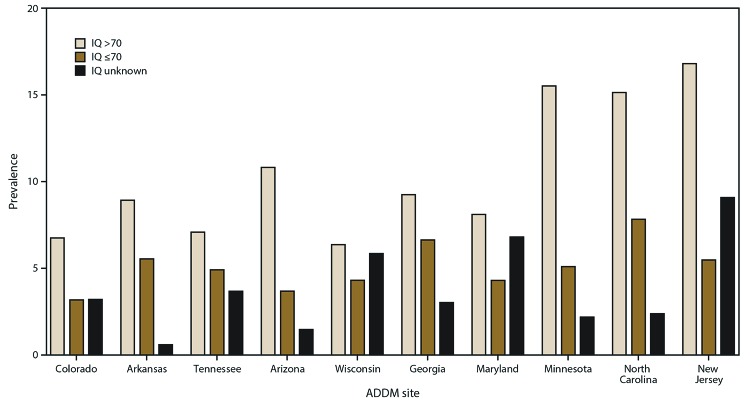
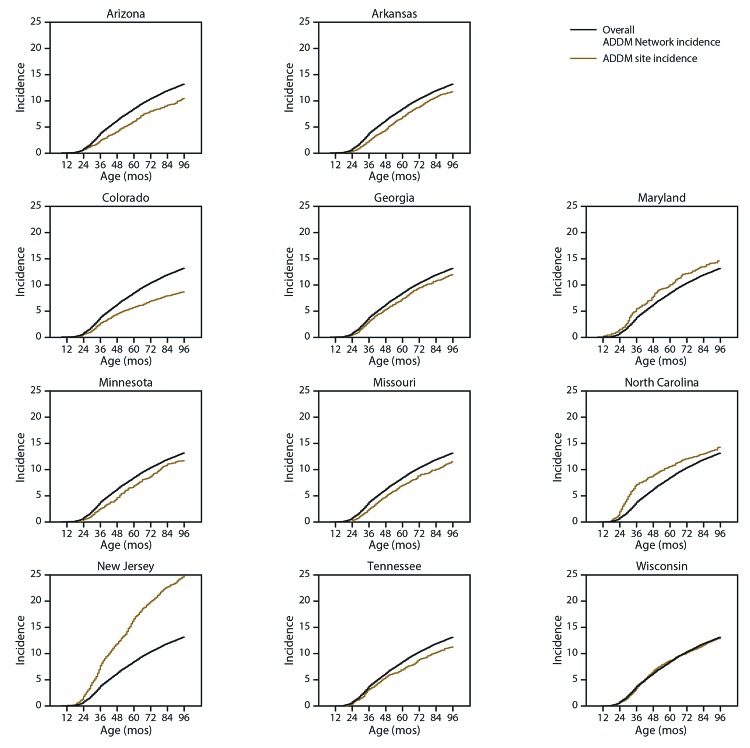
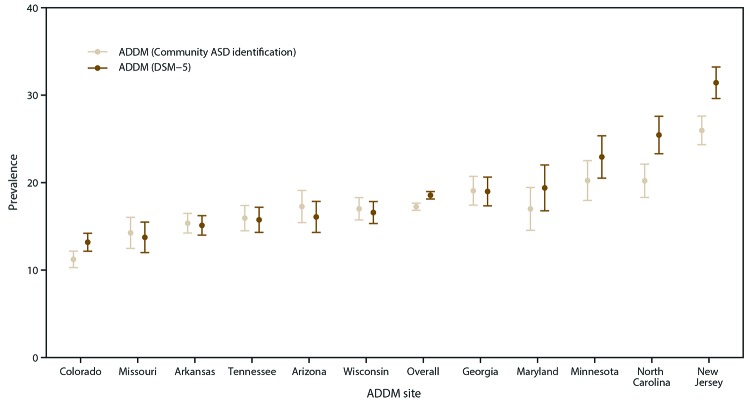
PROBLEM/CONDITION: Autism spectrum disorder (ASD). PERIOD COVERED: 2016. DESCRIPTION OF SYSTEM: The Autism and Developmental Disabilities Monitoring (ADDM) Network is an active surveillance program that provides estimates of the prevalence of ASD among children aged 8 years whose parents or guardians live in 11 ADDM Network sites in the United States (Arizona, Arkansas, Colorado, Georgia, Maryland, Minnesota, Missouri, New Jersey, North Carolina, Tennessee, and Wisconsin). Surveillance is conducted in two phases. The first phase involves review and abstraction of comprehensive evaluations that were completed by medical and educational service providers in the community. In the second phase, experienced clinicians who systematically review all abstracted information determine ASD case status. The case definition is based on ASD criteria described in the Diagnostic and Statistical Manual of Mental Disorders, Fifth Edition. RESULTS: For 2016, across all 11 sites, ASD prevalence was 18.5 per 1,000 (one in 54) children aged 8 years, and ASD was 4.3 times as prevalent among boys as among girls. ASD prevalence varied by site, ranging from 13.1 (Colorado) to 31.4 (New Jersey). Prevalence estimates were approximately identical for non-Hispanic white (white), non-Hispanic black (black), and Asian/Pacific Islander children (18.5, 18.3, and 17.9, respectively) but lower for Hispanic children (15.4). Among children with ASD for whom data on intellectual or cognitive functioning were available, 33% were classified as having intellectual disability (intelligence quotient [IQ] ≤70); this percentage was higher among girls than boys (39% versus 32%) and among black and Hispanic than white children (47%, 36%, and 27%, respectively) [corrected]. Black children with ASD were less likely to have a first evaluation by age 36 months than were white children with ASD (40% versus 45%). The overall median age at earliest known ASD diagnosis (51 months) was similar by sex and racial and ethnic groups; however, black children with IQ ≤70 had a later median age at ASD diagnosis than white children with IQ ≤70 (48 months versus 42 months). INTERPRETATION: The prevalence of ASD varied considerably across sites and was higher than previous estimates since 2014. Although no overall difference in ASD prevalence between black and white children aged 8 years was observed, the disparities for black children persisted in early evaluation and diagnosis of ASD. Hispanic children also continue to be identified as having ASD less frequently than white or black children. PUBLIC HEALTH ACTION: These findings highlight the variability in the evaluation and detection of ASD across communities and between sociodemographic groups. Continued efforts are needed for early and equitable identification of ASD and timely enrollment in services.
Overview
The claims and statistics of this paper haven’t been checked yet.
Run the check — free, no account needed. It reads the open-access text and checks the sources it cites.
Integrity signals
Registry
Cites
Statistics
Figures
Verification
Claims the paper makes
The claims and statistics of this paper haven’t been checked yet.
Run the check — free, no account needed. It reads the open-access text and checks the sources it cites.
Claims other papers make about this one
Each is checked against this paper’s own text: does it say what the citing paper says it does?
The source backs part of the claim, not all of it — or backs it for a different population, condition or comparison.
In the citing paper
“The U.S. reports a consistent pattern of increased ASD prevalence among higher socioeconomic status (SES) families (Baio et al. 2018; Durkin et al. 2010, 2017; Maenner et al. 2020; Pedersen et al. 2012), while European countries report increased prevalence among lower SES families (Delobel-Ayoub et al. 2015; Emerson 2012; Rai et al. 2012).”
From The Diagnosis of Autism: From Kanner to DSM-III to DSM-5 and Beyond (2021) · cites this paper as Maenner et al. 2020
Experimental — accuracy not yet measuredThe source backs part of the claim, not all of it — or backs it for a different population, condition or comparison.
In the citing paper
“In the U.S., African American, Hispanic, and Asian children are more likely to receive a diagnosis at a later age than Caucasian children (Maenner et al. 2020; Mandell et al. 2009; Palmer et al. 2010).”
From The Diagnosis of Autism: From Kanner to DSM-III to DSM-5 and Beyond (2021) · cites this paper as Maenner et al. 2020
Experimental — accuracy not yet measuredThe source backs part of the claim, not all of it — or backs it for a different population, condition or comparison.
In the citing paper
“While prevalence of ASD likely does not differ across racial and ethnic groups (Fombonne 2003; Maenner et al. 2020), the average age of diagnosis continues to differentiate these groups.”
From The Diagnosis of Autism: From Kanner to DSM-III to DSM-5 and Beyond (2021) · cites this paper as Maenner et al. 2020
Experimental — accuracy not yet measuredThe source backs part of the claim, not all of it — or backs it for a different population, condition or comparison.
In the citing paper
“Lastly, while the percentage of children diagnosed with ASD and intellectual disability is higher among African American and Hispanic children compared to Caucasian children in the U.S., African American and Hispanic children are nevertheless diagnosed at a later age on average than Caucasian children (Maenner et al. 2020).”
From The Diagnosis of Autism: From Kanner to DSM-III to DSM-5 and Beyond (2021) · cites this paper as Maenner et al. 2020
Experimental — accuracy not yet measuredThe source backs part of the claim, not all of it — or backs it for a different population, condition or comparison.
In the citing paper
“If consistent with the rate of ID in ASD cases in the United States or the United Kingdom, it would be approximately 40% over this diagnostic period.20”
From The female protective effect against autism spectrum disorder (2022) · cites this paper as [20]
Experimental — accuracy not yet measured
The source backs part of the claim, not all of it — or backs it for a different population, condition or comparison.
In the citing paper
“Surveillance among children aged 4 years in 2016 (8) indicated similar prevalence among children of different racial and ethnic groups, consistent with trends among children aged 8 years (9).”
From Early Identification of Autism Spectrum Disorder Among Children Aged 4 Years — Autism and Developmental Disabilities Monitoring Network, 11 Sites, United States, 2018 (2021) · cites this paper as [9]
Experimental — accuracy not yet measuredThe source backs part of the claim, not all of it — or backs it for a different population, condition or comparison.
In the citing paper
“however, diagnosis typically occurs later in Europe (3.5 years), USA (4 years), and Canada (6 years), exposing an opportunity to decrease the age at diagnosis and accelerate access to specialized healthcare.”
From Tackling healthcare access barriers for individuals with autism from diagnosis to adulthood (2022) · cites this paper as [58]
Experimental — accuracy not yet measuredThe cited source says what the claim attributes to it.
In the citing paper
“ASD is ~4 times more prevalent in boys than in girls (16, 31).”
From Where Sex Meets Gender: How Sex and Gender Come Together to Cause Sex Differences in Mental Illness (2022) · cites this paper as [16]
In the citing paper
“and 1.85% (CI95%: 1.80–1.91%) in children aged eight year old (26).”
From Prevalence of Autism Spectrum Disorder and Co-morbidities in Children and Adolescents: A Systematic Literature Review (2021) · cites this paper as [26]
In the citing paper
“In the US, Christensen et al. (15) and Maenner et al. (26) assessed the prevalence of ID in ASD children aged 4y and 8y respectively based on the ADDM network and reported rates of 46.10% and 33.00%.”
From Prevalence of Autism Spectrum Disorder and Co-morbidities in Children and Adolescents: A Systematic Literature Review (2021) · cites this paper as [26]
In the citing paper
“The estimated prevalence of ASD has increased over 30-fold over the last four decades,18 primarily due to diagnostic expansion.19,20”
From The female protective effect against autism spectrum disorder (2022) · cites this paper as [20]
In the citing paper
“Members of previous generations, particularly those able to live independently as adults, were far less likely to receive an ASD diagnosis in childhood than children born as of writing.19,20”
From The female protective effect against autism spectrum disorder (2022) · cites this paper as [20]
In the citing paper
“For example, females are on average diagnosed later than males.20”
From The female protective effect against autism spectrum disorder (2022) · cites this paper as [20]
In the citing paper
“The sex ratio is one example of how differences in identification of children without intellectual disability can affect patterns observed at older ages, with a higher ratio of boys to girls at age 8 years than at age 4 years, consistent with previous reports (8,9).”
In the citing paper
“In surveillance year 2018, ASD prevalence among Black children was higher than among White children at five of 11 sites and overall, the opposite of the pattern before surveillance year 2016 among children aged 8 years (9,17).”
In the citing paper
“Children with co-occurring intellectual disability are more likely to be identified earlier than children without intellectual disability, as indicated by an earlier median age at identification among this group (11) as well as the consistently higher proportion of children with intellectual disability at age 4 years (8,13) than at age 8 years (9,11,17).”
Self-check
Percentages, sums and reported differences re-computed from the paper’s own numbers.
The self-check needs the paper’s full text.
Citations
Cites
Diagnostic and Statistical Manual of Mental Disorders
American Psychiatric Association (2013) · doi:10.1176/appi.books.9780890425596 · Cited by 116,369
Baio, J., Wiggins, L., Christensen, D. L., Maenner, M. J., Daniels, J., Warren, Z., Kurzius-Spencer, M., Zahorodny, W., Robinson, C., Rosenberg, et al. (2018) · MMWR. Surveillance Summaries · doi:10.15585/mmwr.ss6706a1 · Cited by 6,078 · cited 5×
“8 per 1,000 (one in 59) children aged 8 years in 2014 (3).”
BackgroundMethodInfluentialSelf-citationDawson, G., Rogers, S., Munson, J., Smith, M., Winter, J., Greenson, J., Donaldson, A., & Varley, J. (2010) · Pediatrics · doi:10.1542/peds.2009-0958 · Cited by 2,835
Identification and Evaluation of Children With Autism Spectrum Disorders
Johnson, C. P., Myers, S. M., & and the Council on Children With Disabilities (2007) · Pediatrics · doi:10.1542/peds.2007-2361 · Cited by 2,011
Christensen, D. L., Baio, J., Braun, K. V. N., Bilder, D., Charles, J., Constantino, J. N., Daniels, J., Durkin, M. S., Fitzgerald, R. T., Kurzius-Spencer, M., et al. (2016) · MMWR. Surveillance Summaries · doi:10.15585/mmwr.ss6503a1 · Cited by 1,964
Self-citationNaarden Braun, K. V., Lopez, M., White, T., et al. (2023) · Carolina Digital Repository (University of North Carolina at Chapel Hill) · doi:10.17615/y3kk-5x30 · Cited by 1,381
Self-citationPrevalence of Autism in a US Metropolitan Area
Yeargin-Allsopp, M., Rice, C., Karapurkar, T., Doernberg, N., Boyle, C., & Murphy, C. (2003) · JAMA · doi:10.1001/jama.289.1.49 · Cited by 1,248 · cited 3×
“The ADDM Network uses a multiple-source, records-based surveillance methodology developed by CDC’s Metropolitan Atlanta Developmental Disabilities Surveillance Program (2,24).”
BackgroundMethodInfluentialPrevalence and Trends of Developmental Disabilities among Children in the United States: 2009–2017
Zablotsky, B., Black, L. I., Maenner, M. J., Schieve, L. A., Danielson, M. L., Bitsko, R. H., Blumberg, S. J., Kogan, M. D., & Boyle, C. A. (2019) · Pediatrics · doi:10.1542/peds.2019-0811 · Cited by 1,217 · cited 1×
“The 2016 NSCH and the 2015–2017 NHIS both estimated ASD prevalence at 25 per 1,000 children aged 3–17 years (13,29).”
BackgroundSelf-citation
Cited by
Sorted by citations
Items 501–600 of 1,017
A pilot study of dialectical behaviour therapy skills training for autistic adults
Ritschel, L., Guy, L., & Maddox, B. (2021) · Behavioural and Cognitive Psychotherapy · doi:10.1017/s1352465821000370 · Cited by 33
“According to the most recent estimates provided by the Centers for Disease Control and Prevention (CDC), ASD affects approximately 1.85% of the population in the USA (Maenner et al., 2020), and prevalence rates are on the rise.”
BackgroundMethodInfluentialKuo, H., & Liu, F. (2022) · Biomedicines · doi:10.3390/biomedicines10030560 · Cited by 50
“Note that a high proportion of patients with autism show sleep disturbance, especially insomnia [101,102]. Regarding the causality of abnormal serotonergic systems and behavioral abnormalities, Wang et al. (2013) have treated VPA-induced ASD rats with 5-HT1A receptor agonists during behavioral tests.”
BackgroundRamirez-Celis, A., Croen, L., Yoshida, C. K., Alexeeff, S., Schauer, J. D., Yolken, R. H., Ashwood, P., & de Water, J. V. (2022) · Molecular Psychiatry · doi:10.1038/s41380-022-01633-4 · Cited by 47
“There is a high co-occurrence of ASD with intellectual disability (30–70%) [3, 57], and the ability to distinguish between ID, ASD no-ID and ASD+ ID in the first years of life would enable clinicians to provide more targeted behavioral interventions [10].”
BackgroundSkowron, K., Budzyńska, A., Wiktorczyk-Kapischke, N., Chomacka, K., Grudlewska‐Buda, K., Wilk, M., Wałecka-Zacharska, E., Andrzejewska, M., & Gospodarek-Komkowska, E. (2022) · International Journal of Molecular Sciences · doi:10.3390/ijms23147820 · Cited by 48
“The disease is often accompanied by digestive problems, such as diarrhea, constipation, flatulence, or autistic enteritis [129].”
BackgroundSingh, R., Kisku, A., Kungumaraj, H. J., Nagaraj, V., Pal, A., Kumar, S., & Sulakhiya, K. (2023) · Biomedicines · doi:10.3390/biomedicines11010115 · Cited by 45
“Numerous causes, including hereditary and environmental toxins, stress, weakened immunological function, mitochondrial dysfunction, and neuroinflammation, are mentioned in the unidentified pathogenesis [8].”
BackgroundPeketi, S., & Dhok, S. B. (2023) · Brain Sciences · doi:10.3390/brainsci13020315 · Cited by 45
“According to the United States Centers for Disease Control and Prevention (CDC) Autism and Developmental Disabilities Monitoring (ADDM) Network, 1 in 54 children have been diagnosed with ASD [3].”
MethodZhang, P., Omanska-Klusek, A., Ander, B. P., Gandal, M. J., Stamova, B. S., & Schumann, C. M. (2023) · Proceedings of the National Academy of Sciences · doi:10.1073/pnas.2206758120 · Cited by 51
Wagner, J., Luyster, R., Tager-Flusberg, H. B., & Nelson, C. A. (2016) · Infancy · doi:10.1111/infa.12128 · Cited by 48
Diagnosing autism: Contemporaneous surveys of parent needs and paediatric practice
Hennel, S., Coates, C., Symeonides, C., Gülenç, A., Smith, L., Price, A. M. H., & Hiscock, H. (2016) · Journal of Paediatrics and Child Health · doi:10.1111/jpc.13157 · Cited by 45
Zee, M., de Bree, E. H., Hakvoort, B. E., & Koomen, H. M. Y. (2019) · Journal of Applied Developmental Psychology · doi:10.1016/j.appdev.2019.101101 · Cited by 45
Rooks-Ellis, D. L., Howorth, S. K., Kunze, M. G., Boulette, S., & Sulinski, E. (2020) · Journal of Childhood Education & Society · doi:10.37291/2717638x.20201242 · Cited by 46
“Using the U.S. Census Bureau’s measure of population size and density to define rural, 100% of participating families lived in rural settings.”
BackgroundAn mtDNA mutant mouse demonstrates that mitochondrial deficiency can result in autism endophenotypes
Yardeni, T., Cristancho, A. G., McCoy, A. J., Schaefer, P. M., McManus, M. J., Marsh, E. D., & Wallace, D. C. (2021) · Proceedings of the National Academy of Sciences · doi:10.1073/pnas.2021429118 · Cited by 46
“We analyzed male ND6 mice since males have a higher predilection to ASD than females (1, 21, 31).”
Deep phenotyping in 3q29 deletion syndrome: recommendations for clinical care
Russo, R. S., Gambello, M. J., Murphy, M. M., Aberizk, K., Black, E., Burrell, T. L., Carlock, G., Cubells, J. F., Epstein, M. T., España, R., et al. (2021) · Genetics in Medicine · doi:10.1038/s41436-020-01053-1 · Cited by 43
Arutiunian, V., Lopukhina, A., Minnigulova, A., Shlyakhova, A., Юрьевна, Д. Е., Станиславаовна, П. Д., Sorokin, A. B., Анатольевна, Т. С., Mamokhina, U. A., Касимовна, Д. К., et al. (2021) · Research in Developmental Disabilities · doi:10.1016/j.ridd.2021.104042 · Cited by 44
Duan, Y., Zhao, W., Luo, C., Liu, X., Jiang, H., Tang, Y., Liu, C., & Yao, D. (2022) · Frontiers in Human Neuroscience · doi:10.3389/fnhum.2021.765517 · Cited by 45
What Makes an Intervention a Life Course Intervention?
Russ, S. A., Hotez, E., Berghaus, M., Verbiest, S., Hoover, C. G., Schor, E. L., & Halfon, N. (2022) · PEDIATRICS · doi:10.1542/peds.2021-053509d · Cited by 44
Gut Microbiota Ecology and Inferred Functions in Children With ASD Compared to Neurotypical Subjects
Vernocchi, P., Ristori, M. V., Guerrera, S., Guarrasi, V., Conte, F., Russo, A., Lupi, E., Albitar‐Nehme, S., Gardini, S., Paci, P., et al. (2022) · Frontiers in Microbiology · doi:10.3389/fmicb.2022.871086 · Cited by 47
“5 per 1,000 (one in 54) children aged 8 years (Maenner et al., 2020), and European studies have reported prevalence of 1 and 2% in the childhood population (Carta et al.”
BackgroundMethodInfluentialRe-emerging concepts of immune dysregulation in autism spectrum disorders
Erbescu, A., Papuc, S. M., Budișteanu, M., Arghir, A., & Neagu, M. T. (2022) · Frontiers in Psychiatry · doi:10.3389/fpsyt.2022.1006612 · Cited by 50
“ASD prevalence has increased in recent decades, with current estimates of at least 1% of all children (2, 3).”
BackgroundPathology and Astrocytes in Autism
Vakilzadeh, G., & Martínez‐Cerdeño, V. (2023) · Neuropsychiatric Disease and Treatment · doi:10.2147/ndt.s390053 · Cited by 47
Edwards, H., Wright, S. M., Sargeant, C., Cortese, S., & Wood‐Downie, H. (2023) · Journal of Child Psychology and Psychiatry · doi:10.1111/jcpp.13855 · Cited by 44
College-Based Support Programs for Students With Autism
Viezel, K., Williams, E., & Dotson, W. H. (2020) · Focus on Autism and Other Developmental Disabilities · doi:10.1177/1088357620954369 · Cited by 48
The Urine Metabolome of Young Autistic Children Correlates with Their Clinical Profile Severity
Mussap, M., Siracusano, M., Noto, A., Fattuoni, C., Riccioni, A., Rajula, H. S. R., Fanos, V., Curatolo, P., Barberini, L., & Mazzone, L. (2020) · Metabolites · doi:10.3390/metabo10110476 · Cited by 47
“The prevalence of autism spectrum disorder (ASD), a pervasive brain-based developmental disorder, is abruptly increasing worldwide [1,2]; in 2020, the Autism Developmental Disabilities Monitoring (ADDM) Network estimated that 1 in 54 children are affected by ASD in the United States [3].”
BackgroundPeck, F. C., Gabard-Durnam, L. J., Wilkinson, C. L., Bosl, W. J., Tager-Flusberg, H. B., & Nelson, C. A. (2021) · Journal of Neurodevelopmental Disorders · doi:10.1186/s11689-021-09405-x · Cited by 48
Mitochondrial morphology is associated with respiratory chain uncoupling in autism spectrum disorder
Frye, R. E., Lionnard, L., Singh, I. N., Karim, M. A., Chajra, H., Fréchet, M., Kissa, K., Racine, V., Ammanamanchi, A., McCarty, P. J., et al. (2021) · Translational Psychiatry · doi:10.1038/s41398-021-01647-6 · Cited by 49
Bilingual language development in autism
Prévost, P., & Tuller, L. (2021) · Linguistic Approaches to Bilingualism · doi:10.1075/lab.21018.pre · Cited by 48
Cortical myelination in toddlers and preschoolers with autism spectrum disorder
Chen, B., Linke, A. C., Olson, L., Kohli, J. S., Kinnear, M., Sereno, M. I., Müller, R., Carper, R. A., & Fishman, I. (2022) · Developmental Neurobiology · doi:10.1002/dneu.22874 · Cited by 40
Examination of Race and Autism Intersectionality Among African American/Black Young Adults
Davis, A., Solomon, M., & Belcher, H. M. E. (2022) · Autism in Adulthood · doi:10.1089/aut.2021.0091 · Cited by 71
“19,20 Although researchers have employed empirical approaches to examine discrimination in the lives of AA/B adolescents and adults, the exploration of discrimination in the context of dual social identities and emerging adulthood is less explored.”
Prenatal air pollution, maternal immune activation, and autism spectrum disorder
Yu, X., Rahman, M. M., Carter, S., Lin, J. C., Zhuang, Z., Chow, T., Lurmann, F., Kleeman, M. J., Martinez, M. P., van Donkelaar, A., et al. (2023) · Environment International · doi:10.1016/j.envint.2023.108148 · Cited by 47
Autism, thy name is man: Exploring implicit and explicit gender bias in autism perceptions
Brickhill, R., Atherton, G., Piovesan, A., & Cross, L. (2023) · PLoS ONE · doi:10.1371/journal.pone.0284013 · Cited by 57
Exploring the gut-brain Axis: Potential therapeutic impact of Psychobiotics on mental health
Cocean, A.-M., & Vodnar, D. C. (2024) · Progress in Neuro-Psychopharmacology and Biological Psychiatry · doi:10.1016/j.pnpbp.2024.111073 · Cited by 52
Implications of the FMR1 Premutation for Children, Adolescents, Adults, and Their Families
Wheeler, A., Raspa, M., Hagerman, R. J., Seltzer, M. M., & Riley, C. M. (2017) · PEDIATRICS · doi:10.1542/peds.2016-1159d · Cited by 43
Social Cognitive Interventions for Adolescents with Autism Spectrum Disorders: A Systematic Review
Tseng, A., Biagianti, B., Francis, S. M., Conelea, C. A., & Jacob, S. (2020) · Journal of Affective Disorders · doi:10.1016/j.jad.2020.05.134 · Cited by 43
Arutiunian, V., Lopukhina, A., Minnigulova, A., Shlyakhova, A., Юрьевна, Д. Е., Станиславаовна, П. Д., Sorokin, A. B., Анатольевна, Т. С., Mamokhina, U. A., Касимовна, Д. К., et al. (2021) · Journal of Autism and Developmental Disorders · doi:10.1007/s10803-021-04967-0 · Cited by 43
ADHD and autism symptoms in youth: a network analysis
Farhat, L. C., Brentani, H., de Toledo, V. H. C., Shephard, E., Mattos, P., Baron‐Cohen, S., Thapar, A., Casella, E. B., & Polanczyk, G. V. (2021) · Journal of Child Psychology and Psychiatry · doi:10.1111/jcpp.13436 · Cited by 45
Molecular Alterations of the Endocannabinoid System in Psychiatric Disorders
Navarro, D., Gasparyan, A., Navarrete, F., Torregrosa, A. B., Rubio, G., Marín, M., Acosta, G. B., García‐Gutiérrez, M. S., & Manzanares, J. (2022) · International Journal of Molecular Sciences · doi:10.3390/ijms23094764 · Cited by 47
“jury [339] and intellectual disability (ID) [340].”
BackgroundMcKinney, A., Weisblatt, E. J. L., Hotson, K. L., Ahmed, Z. B., Días, C., Shalom, D. B., Foster, J., Murphy, S., Villar, S. S., & Belmonte, M. K. (2021) · Autism · doi:10.1177/1362361321998916 · Cited by 42
“Approximately, 30% of children with autism are non-verbal or minimally verbal (Tager-Flusberg & Kasari, 2013) and 33% have an ID (Maenner et al., 2020).”
BackgroundJung, S., & Park, M. (2022) · Pharmacological Research · doi:10.1016/j.phrs.2022.106340 · Cited by 42
Γώγου, Μ., & Kolios, G. C. (2017) · Brain and Development · doi:10.1016/j.braindev.2017.03.029 · Cited by 44
Cheon, S., Kaur, K. J., Nijem, N., Tuncay, İ. O., Kumar, P., Dean, M., Juusola, J., Sacoto, M. J. G., Bedoukian, E. C., Ierardi-Curto, L. A., et al. (2019) · Proceedings of the National Academy of Sciences · doi:10.1073/pnas.1818751116 · Cited by 42
Early Autism Diagnosis in the Primary Care Setting
James, S., & Smith, C. J. (2020) · Seminars in Pediatric Neurology · doi:10.1016/j.spen.2020.100827 · Cited by 59
Changes in the topological organization of the default mode network in autism spectrum disorder
Chen, L., Chen, Y., Zheng, H., Zhang, B., Wang, F., Jin, F., Li, Y., Chen, Q., & Zhang, S. (2020) · Brain Imaging and Behavior · doi:10.1007/s11682-020-00312-8 · Cited by 45
A wearable heart rate measurement device for children with autism spectrum disorder
Fioriello, F., Maugeri, A., D’Alvia, L., Pittella, E., Piuzzi, E., Rizzuto, E., Prete, Z. D., Manti, F., & Sogos, C. (2020) · Scientific Reports · doi:10.1038/s41598-020-75768-1 · Cited by 44
Barkoski, J. M., Philippat, C., Tancredi, D. J., Schmidt, R. J., Ozonoff, S. J., Barr, D. B., Elms, W., Bennett, D. H., & Hertz‐Picciotto, I. (2020) · Environmental Research · doi:10.1016/j.envres.2020.110495 · Cited by 45
Matias, S. L., Pearl, M., Lyall, K., Croen, L., Kral, T. V. E., Fallin, M. D., Lee, L., Bradley, C., Schieve, L. A., & Windham, G. C. (2021) · Obesity · doi:10.1002/oby.23228 · Cited by 42
“Children with (1) a previous ASD diagnosis, (2) an SCQ score ≥11, and/or (3) ASD symptoms noted by a SEED research clinician during the general developmental assessment were administered a full ASD developmental evaluation.”
BackgroundInfluentialSelf-citationLee, A. S. E., Ji, Y., Raghavan, R., Wang, G., Hong, X., Pearson, C., Mirolli, G., Bind, E. P., Steffens, A. M., Mukherjee, J., et al. (2021) · Autism Research · doi:10.1002/aur.2617 · Cited by 43
Márquez-Caraveo, M. E., Rodríguez‐Valentín, R., Pérez-Barrón, V., Vázquez‐Salas, R. A., Sánchez‐Ferrer, J. C., de Castro, F., Allen‐Leigh, B., & Lazcano-Ponce, E. C. (2021) · Scientific Reports · doi:10.1038/s41598-021-97551-6 · Cited by 52
Kim, D., Lee, J. Y., Jeong, B., Ahn, J., Kim, J. I., Lee, E. S., Kim, H., Lee, H. J., & Han, C. E. (2021) · Autism Research · doi:10.1002/aur.2609 · Cited by 42
“This was followed by using the Fiber Assignment by Continuous Tracking (FACT) algorithm, with a 45 angular threshold, through the diffusion toolkit along with TrackVis (Mori & Barker, 1999; Wang et al., 2007).”
Lavigne, J. V., Feldman, M. A., & Meyers, K. M. (2016) · Journal of Pediatric Psychology · doi:10.1093/jpepsy/jsw048 · Cited by 44
Dreiling, N. G., Cook, M. L., Lamarche, E., & Klinger, L. G. (2022) · Autism · doi:10.1177/13623613211028000 · Cited by 41
Pierce, S., Kadlaskar, G., Edmondson, D. A., McNally Keehn, R., Dydak, U., & Keehn, B. (2021) · Journal of Neurodevelopmental Disorders · doi:10.1186/s11689-020-09351-0 · Cited by 42
Diagnóstico precoce do autismo e outros transtornos do desenvolvimento, Brasil, 2013–2019
Girianelli, V. R., Tomazelli, J. G., da Silva, C. M. F. P., & Fernandes, C. S. (2023) · Revista de Saúde Pública · doi:10.11606/s1518-8787.2023057004710 · Cited by 41
Diversity and Classification of Genetic Variations in Autism Spectrum Disorder
Kereszturi, É. (2023) · International Journal of Molecular Sciences · doi:10.3390/ijms242316768 · Cited by 51
Racial Differences in the Prevalence of Autism Spectrum Disorder: A Systematic Review
Gallin, Z., Kolevzon, A. M., Reichenberg, A., Hankerson, S. H., & Kolevzon, A. L. (2024) · Journal of Autism and Developmental Disorders · doi:10.1007/s10803-024-06403-5 · Cited by 49
“…sample size between race groups also affect the integrity of the data: in the 2008 and 2010 ADDM birth cohorts, the confidence interval for ASD prevalence among API children is so large that it overlaps with the confidence intervals for every other race group included (Maenner et al., 2020, 2021).”
InfluentialBitsika, V., Sharpley, C. F., Andronicos, N. M., & Agnew, L. L. (2014) · Physiology & Behavior · doi:10.1016/j.physbeh.2014.11.010 · Cited by 41
Sociodemographic differences in parental satisfaction with an autism spectrum disorder diagnosis
Hidalgo, N. J., McIntyre, L. L., & McWhirter, E. H. (2015) · Journal of Intellectual & Developmental Disability · doi:10.3109/13668250.2014.994171 · Cited by 47
Hesapçıoğlu, S. T., Ceylan, M. F., Kaşak, M., & Şen, C. P. (2020) · Research in Autism · doi:10.1016/j.rasd.2020.101520 · Cited by 41
Tsilioni, I., Pantazopoulos, H., Conti, P., Leeman, S. E., & Theoharides, T. C. (2020) · Proceedings of the National Academy of Sciences · doi:10.1073/pnas.2004666117 · Cited by 41
Barnes, J. A., Park, C. H., Howard, A., & Jeon, M. (2020) · International Journal of Human-Computer Interaction · doi:10.1080/10447318.2020.1819667 · Cited by 42
“…not otherwise specified in the previous fourth edition of the Diagnostic and Statistical Manual of Mental Disorders (DSM-IV) (American The Centers for Disease Control and Prevention estimate that 1 in 54 children in the US aged 8 years old in 2016 had ASD (Maenner, Shaw, Baio et al., 2020).”
BackgroundTrends Over a Decade in NIH Funding for Autism Spectrum Disorder Services Research
Cervantes, P. E., Matheis, M., Estabillo, J. A., Seag, D. E. M., Nelson, K. L., Peth-Pierce, R., Hoagwood, K., & Horwitz, S. M. (2020) · Journal of Autism and Developmental Disorders · doi:10.1007/s10803-020-04746-3 · Cited by 43
Aviel-Shekler, K., Hamshawi, Y., Sirhan, W., Getselter, D., Srikanth, K. D., Malka, A., Piran, R., & Elliott, E. (2020) · Translational Psychiatry · doi:10.1038/s41398-020-01096-7 · Cited by 41
DeSpenza, T., Carlson, M., Panchagnula, S., Robert, S. M., Duy, P. Q., Mermin‐Bunnell, K., Reeves, B. C., Kundishora, A. J., Elsamadicy, A. A., Smith, H. L., et al. (2021) · Trends in Neurosciences · doi:10.1016/j.tins.2021.08.007 · Cited by 42
Kanlayaprasit, S., Thongkorn, S., Panjabud, P., Jindatip, D., Hu, V. W., Kikkawa, T., Osumi, N., & Sarachana, T. (2021) · International Journal of Molecular Sciences · doi:10.3390/ijms222413201 · Cited by 42
“In the United States, the Centers for Disease Control and Prevention (CDC) estimated the prevalence of ASD in children by the age of eight to be 1 in 54, with at least four times higher in males than in females [2].”
BackgroundBuprenorphine Microdose Induction for the Management of Prescription Opioid Dependence
Robbins, J. L., Englander, H. L., & Gregg, J. L. (2021) · The Journal of the American Board of Family Medicine · doi:10.3122/jabfm.2021.s1.200236 · Cited by 40
von Below, R., Spaeth, E., & Horlin, C. (2021) · International Journal of Inclusive Education · doi:10.1080/13603116.2021.1988159 · Cited by 54
Greene, R. K., Vasile, I., Bradbury, K. R., Olsen, A., & Duvall, S. W. (2021) · The Clinical Neuropsychologist · doi:10.1080/13854046.2021.1942220 · Cited by 42
“It is currently estimated that approximately 1 in 54 children in the United States have a diagnosis of autism spectrum disorder (ASD; Maenner et al., 2020), up from 1 in 150 children from 2000 through 2002 (Braun et al., 2007) and 3.4 in 1000 in 1996 (Yeargin-Allsopp et al., 2003).”
BackgroundInfluentialKaur, M., Eigsti, I., & Bhat, A. N. (2021) · Research in Autism · doi:10.1016/j.rasd.2021.101860 · Cited by 40
Corbett, B. A., Muscatello, R. A., Kim, A., Vandekar, S., Duffus, S. H., Sparks, S., & Tanguturi, Y. C. (2022) · Autism Research · doi:10.1002/aur.2786 · Cited by 44
“Frequently, a male bias is reported showing a 4:1 maleto-female ratio (Maenner et al., 2020); however, other evidence suggests the ratio may be closer to 2:1 or 3:1 due to under-diagnosis (Kim et al., 2011; Loomes et al., 2017) and a unique female phenotype (Corbett et al., 2020; Kreiser & White,…”
BackgroundOh, J., Shin, H., Kannan, K., Busgang, S. A., Schmidt, R. J., Schweitzer, J. B., Hertz‐Picciotto, I., & Bennett, D. H. (2022) · Environmental Research · doi:10.1016/j.envres.2022.114322 · Cited by 41
New valproate regulations, informed choice and seizure risk
Angus‐Leppan, H., Arkell, R., Watkins, L. V., Heaney, D. C., Cooper, P. N., & Shankar, R. (2024) · Journal of Neurology · doi:10.1007/s00415-024-12436-8 · Cited by 40
“In 2016, 1.85% of children in USA were estimated to have autism compared to 0.67% in 2000 [51].”
InfluentialTanner, K. J., Case‐Smith, J., Nahikian-Nelms, M. L., Ratliff-Schaub, K. L., Spees, C., & Darragh, A. R. (2015) · American Journal of Occupational Therapy · doi:10.5014/ajot.2015.019273 · Cited by 45
Behavioral outcomes of picky eating in childhood: a prospective study in the general population
Cano, S. C., Hoek, H. W., van Hoeken, D., de Barse, L. M., Jaddoe, V. W. V., Verhulst, F. C., & Tiemeier, H. W. (2016) · Journal of Child Psychology and Psychiatry · doi:10.1111/jcpp.12530 · Cited by 47
Autism Spectrum Disorder and the Child's Weight–Related Behaviors: A Parents' Perspective
Polfuss, M. L., Johnson, N. L., Bonis, S. A., Hovis, S., Apollon, F., & Sawin, K. J. (2016) · Journal of Pediatric Nursing · doi:10.1016/j.pedn.2016.05.006 · Cited by 42
Antipurinergic therapy for autism—An in-depth review
Naviaux, R. K. (2017) · Mitochondrion · doi:10.1016/j.mito.2017.12.007 · Cited by 42
Hedgecock, J. B., Dannemiller, L., Shui, A. M., Rapport, M. J., & Katz, T. (2018) · Physical Therapy · doi:10.1093/ptj/pzy006 · Cited by 40
Central Auditory Processing Disorders in Individuals with Autism Spectrum Disorders
Ocak, E., Eshraghi, R. S., Danesh, A. A., Mittal, R., & Eshraghi, A. A. (2018) · Balkan Medical Journal · doi:10.4274/balkanmedj.2018.0853 · Cited by 48
Yu, D., Jiao, X., Cao, T., & Huang, F. (2018) · Neuroreport · doi:10.1097/wnr.0000000000001107 · Cited by 40
Yang, J., Fu, X. B., Liao, X., & Li, Y. (2020) · Frontiers in Psychiatry · doi:10.3389/fpsyt.2020.561998 · Cited by 41
“(4) RSV + VPA: RSV injection plus VPA injection Intervention duration: 13 days RSV attenuated VPA-triggered down-regulation of SIRT1”
BackgroundMethodInfluentialNguyen, U. T.-H., Tinsley, B., Sen, Y., Stein, J., Palacios, Y., Ceballos, A., Welch, C. J., Nzenkue, K., Penn, A., Murphy, L., et al. (2020) · NeuroToxicology · doi:10.1016/j.neuro.2020.12.007 · Cited by 40
“The prevalence of NDDs has increased significantly over the past several decades—perhaps most notably, the incidence of autism spectrum disorder (ASD) has increased by almost 300 percent in the last 20 years [2, 3].”
BackgroundPotassium channels and autism spectrum disorder: An overview
Cheng, P., Qiu, Z., & Du, Y. (2021) · International Journal of Developmental Neuroscience · doi:10.1002/jdn.10123 · Cited by 40
Shankopathies in the Developing Brain in Autism Spectrum Disorders
Vyas, Y., Cheyne, J. E., Lee, K., Jung, Y., Cheung, P. Y., & Montgomery, J. M. (2021) · Frontiers in Neuroscience · doi:10.3389/fnins.2021.775431 · Cited by 46
Bilge, S., & Ekici, B. (2021) · Journal of Cannabis Research · doi:10.1186/s42238-021-00108-7 · Cited by 40
“Currently, it affects up to 1 in 54 individuals (Maenner et al. 2020).”
BackgroundJamali, A. R., Zarei, M. A., Sanjari, M. A., Akbarfahimi, M., & Saneii, S. H. (2021) · British Journal of Occupational Therapy · doi:10.1177/03080226211061492 · Cited by 39
“Children with ASD and their families need a variety of interventions to address their problems.”
MethodInfluentialChen, L. S., Xu, L., Dhar, S. U., Li, M., Talwar, D., & Jung, E. (2014) · Clinical Genetics · doi:10.1111/cge.12504 · Cited by 46
Testing two screening instruments for autism spectrum disorder in UK community child health services
Charman, T., Baird, G., Simonoff, E., Chandler, S., Davison‐Jenkins, A., Sharma, A., O'Sullivan, T., & Pickles, A. (2016) · Developmental Medicine & Child Neurology · doi:10.1111/dmcn.12874 · Cited by 43
Chang, M. Y., Doppee, D., Yu, F., Perez, C., Coleman, A. L., & Pineles, S. L. (2020) · American Journal of Ophthalmology · doi:10.1016/j.ajo.2020.08.048 · Cited by 41
Columna, L. A., Prieto, L. A., Beach, P., Russo, N. N., & Foley, J. T. (2021) · International Journal of Environmental Research and Public Health · doi:10.3390/ijerph182312398 · Cited by 39
“Diagnosed in approximately 1 in every 54 children, autism spectrum disorder (ASD) is one of the most common developmental disabilities in the United States [1].”
BackgroundInfluentialCervantes, P. E., Brown, D. S., & Horwitz, S. M. (2022) · Autism · doi:10.1177/13623613221091316 · Cited by 39
“…injury diagnosis across groups, youth in the ASD group were much more likely to be male; this finding is unsurprising given the sex ratio found in population-level ASD prevalence studies (Maenner et al., 2020) and existing barriers to ASD diagnosis for females (Lockwood Estrin et al., 2021).”
BackgroundResultInfluentialBehavior Analytic Feeding Interventions: Current State of the Literature
Williams, K. E., & Seiverling, L. J. (2022) · Behavior Modification · doi:10.1177/01454455221098118 · Cited by 39
“For comparison, 1 in 54 children aged 8 years are diagnosed with ASD (Maenner et al., 2020).”
BackgroundAutistic women’s diagnostic experiences: Interactions with identity and impacts on well-being
Harmens, M., Sedgewick, F., & Hobson, H. (2022) · Women s Health · doi:10.1177/17455057221137477 · Cited by 41
Nielsen, T. C., Nassar, N., Boulton, K., Guastella, A. J., & Lain, S. J. (2023) · Journal of Autism and Developmental Disorders · doi:10.1007/s10803-022-05887-3 · Cited by 40
Zhang, Q.-B., Jiang, L., Kong, L., & Lu, Y. (2014) · International Journal of Developmental Neuroscience · doi:10.1016/j.ijdevneu.2014.06.013 · Cited by 38
Dioxins as potential risk factors for autism spectrum disorder
Guo, Z., Xie, H. Q., Zhang, P., Luo, Y., Xu, T., Liu, Y., Fu, H., Xu, S. L., Valsami‐Jones, E., Boksa, P., et al. (2018) · Environment International · doi:10.1016/j.envint.2018.10.028 · Cited by 39
Neonatal EEG linked to individual differences in socioemotional outcomes and autism risk in toddlers
Brito, N. H., Elliott, A., Isler, J. R., Rodríguez, C., Friedrich, C., Shuffrey, L. C., & Fifer, W. P. (2019) · Developmental Psychobiology · doi:10.1002/dev.21870 · Cited by 39
Robea, M. A., Jijie, R., Nicoară, M., Plavan, G. I., Ciobica, A. S., Solcan, C., Audira, G., Hsiao, C., & Strungaru, Ș.-A. (2020) · Antioxidants · doi:10.3390/antiox9100944 · Cited by 39
A meta-analysis of prosody in autism, Williams syndrome, and Down syndrome
Loveall, S. J., Hawthorne, K. E., & Gaines, M. (2020) · Journal of Communication Disorders · doi:10.1016/j.jcomdis.2020.106055 · Cited by 43
Icht, M., Zukerman, G., Ben‐Itzchak, E., & Ben‐David, B. M. (2021) · Autism Research · doi:10.1002/aur.2551 · Cited by 44
Gaming Disorder in Adults with Autism Spectrum Disorder
Murray, A., Mannion, A., Chen, J. L., & Leader, G. (2021) · Journal of Autism and Developmental Disorders · doi:10.1007/s10803-021-05138-x · Cited by 39
Capal, J. K., Williams, M. E., Pearson, D. A., Kissinger, R. D., Horn, P. S., Murray, D. S., Currans, K., Kent, B., Bebin, M., Northrup, H., et al. (2021) · Annals of Neurology · doi:10.1002/ana.26249 · Cited by 41
“ASD is one of the most common co-occurring TAND diagnoses, and prior studies have estimated that approximately 30% to 50% of individuals with TSC meet criteria for ASD(6,8,9) as compared to a prevalence of 1 in 54 (2%) for the general population.(10) Risk correlates for ASD in TSC include presence of developmental del…”
BackgroundUnderwood, J. F. G., DelPozo‐Baños, M., Frizzati, A., John, A. M., & Hall, J. (2021) · Autism · doi:10.1177/13623613211059674 · Cited by 47
Mast cell activation disease and the modern epidemic of chronic inflammatory disease
Afrin, L. B. (2016) · Translational Research · doi:10.1016/j.trsl.2016.01.003 · Cited by 39
Metadata
- Authors
- Maenner, M. J., Shaw, K. A., Baio, J., EdS1, Washington, A., Patrick, M., DiRienzo, M., Christensen, D. L., Wiggins, L. D., Pettygrove, S., Andrews, J. G., Lopez, M., Hudson, A., Baroud, T., Schwenk, Y., White, T., Rosenberg, C. R., Lee, L.-C., Harrington, R. A., Huston, M., Hewitt, A., PhD-7, Esler, A., Hall-Lande, J., Poynter, J. N., Hallas-Muchow, L., Constantino, J. N., Fitzgerald, R. T., Zahorodny, W., Shenouda, J., Daniels, J. L., Warren, Z., Vehorn, A., Salinas, A., Durkin, M. S., & Dietz, P. M.
- Affiliations
- Centers for Disease Control and Prevention (US)
- University of North Carolina at Chapel Hill (US)
- University of Arizona (US)
- University of Arkansas for Medical Sciences (US)
- Colorado Department of Public Health and Environment (US)
- Johns Hopkins University (US)
- University of Minnesota (US)
- Washington University in St. Louis (US)
- Rutgers New Jersey Medical School (US)
- University of Wisconsin–Madison (US)
- Corresponding author
- Maenner, Matthew J.
- ORCID
- Maenner, Matthew J.
- Shaw, Kelly A.
- Washington, Anita
- Patrick, Mary
- DiRienzo, Monica
- Wiggins, Lisa D.
- Pettygrove, Sydney
- Andrews, Jennifer G.
- Lopez, Maya
- Rosenberg, Cordelia Robinson
- Lee, Li-Ching
- Esler, Amy
- Poynter, Jenny N.
- Constantino, John N.
- Fitzgerald, Robert T.
- Zahorodny, Walter
- Shenouda, Josephine
- Daniels, Julie L.
- Warren, Zachary
- Durkin, Maureen S.
- Dietz, Patricia M.
- Venue
- MMWR. Surveillance Summaries
- Published
- 2020-03-27
- Volume
- 69
- Issue
- 4
- Pages
- 1-12
- ISSN
- 1545-8636 (ISSN-L)
- 1546-0738
- PMC
- PMC7119644
- OpenAlex
- W3027179734
- Semantic Scholar
- ddeb34dc450a7cdc9fd11cdb896b266be9fa1f05
- Cited by
- 3,780
- References
- 34
- Citations by year
- 2026: 107 · 2025: 199 · 2024: 335 · 2023: 473 · 2022: 732 · 2021: 904 · 2020: 393
- FWCI
- 336.19
- Type
- journal article
- Language
- en
- Open access
- diamond
- doi.org
- Licence
- public-domain
- Locations
- MMWR Surveillance Summaries (publishedVersion, public-domain)
- PubMed Central (publishedVersion, cc-by)
- PubMed (publishedVersion)
- UA Campus Repository (The University of Arizona) (acceptedVersion, public-domain)
- Funders
- Centers for Disease Control and Prevention
- Topics
- Life Sciences › Neuroscience › Cognitive Neuroscience › Autism Spectrum Disorder Research
- Health Sciences › Medicine › Psychiatry and Mental health › Child Nutrition and Feeding Issues
- Social Sciences › Psychology › Clinical Psychology › Family and Disability Support Research
- Keywords
- autism spectrum disorder, autism prevalence, sex differences, racial and ethnic disparities, intellectual disability, age at diagnosis, autism epidemiology, Black children, Hispanic children, white children, regional variation in prevalence, United States states and territories
- MeSH terms
- Autism Spectrum Disorder, Child, Female, Humans, Male, Population Surveillance, United States, Prevalence, Diagnostic and Statistical Manual of Mental Disorders
About these checks
Registry, retraction, Cites and statistics results are computed, not judged, with one exception: a printed reference that no index lists is read once by a model before it counts as a citation error. Claims are extracted by a model and kept only when their quote appears verbatim in the text; each cited source is then checked, with a model’s help, for whether it says what the claim relies on. Those verdicts can be wrong — read the claim’s quote and the cited source before relying on one.
Statistics and arithmetic are recomputed, not judged.
Confidence bands are shown only for fields calibrated on our annotated test set. None is calibrated yet, so no band is shown.
What counts as a claim ›How we measure confidence ›How we check this ›
Are you an author, or do you see a problem with this page? Request a review
