

The DOI matches its Crossref record; 36 of the 36 references it cites were found in a registry or an index.
Prevalence of Autism Spectrum Disorder Among Children Aged 8 Years — Autism and Developmental Disabilities Monitoring Network, 11 Sites, United States, 2016
Open accessAbstract
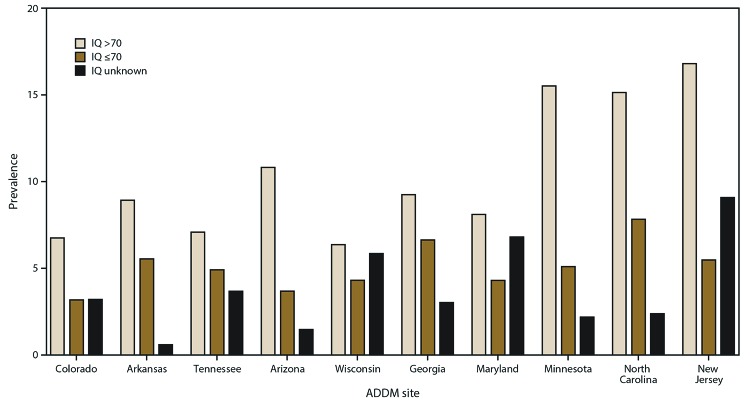
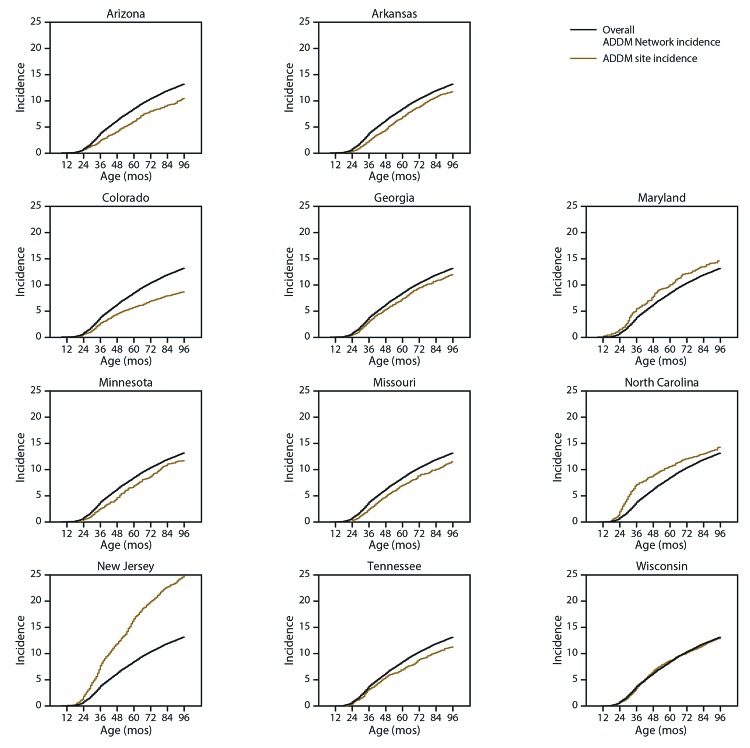
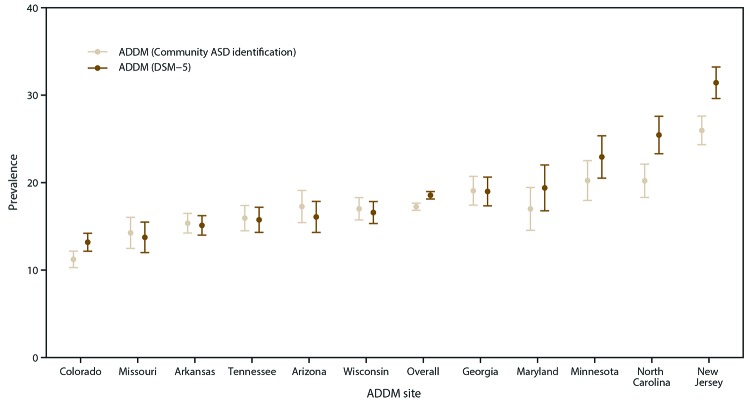
PROBLEM/CONDITION: Autism spectrum disorder (ASD). PERIOD COVERED: 2016. DESCRIPTION OF SYSTEM: The Autism and Developmental Disabilities Monitoring (ADDM) Network is an active surveillance program that provides estimates of the prevalence of ASD among children aged 8 years whose parents or guardians live in 11 ADDM Network sites in the United States (Arizona, Arkansas, Colorado, Georgia, Maryland, Minnesota, Missouri, New Jersey, North Carolina, Tennessee, and Wisconsin). Surveillance is conducted in two phases. The first phase involves review and abstraction of comprehensive evaluations that were completed by medical and educational service providers in the community. In the second phase, experienced clinicians who systematically review all abstracted information determine ASD case status. The case definition is based on ASD criteria described in the Diagnostic and Statistical Manual of Mental Disorders, Fifth Edition. RESULTS: For 2016, across all 11 sites, ASD prevalence was 18.5 per 1,000 (one in 54) children aged 8 years, and ASD was 4.3 times as prevalent among boys as among girls. ASD prevalence varied by site, ranging from 13.1 (Colorado) to 31.4 (New Jersey). Prevalence estimates were approximately identical for non-Hispanic white (white), non-Hispanic black (black), and Asian/Pacific Islander children (18.5, 18.3, and 17.9, respectively) but lower for Hispanic children (15.4). Among children with ASD for whom data on intellectual or cognitive functioning were available, 33% were classified as having intellectual disability (intelligence quotient [IQ] ≤70); this percentage was higher among girls than boys (39% versus 32%) and among black and Hispanic than white children (47%, 36%, and 27%, respectively) [corrected]. Black children with ASD were less likely to have a first evaluation by age 36 months than were white children with ASD (40% versus 45%). The overall median age at earliest known ASD diagnosis (51 months) was similar by sex and racial and ethnic groups; however, black children with IQ ≤70 had a later median age at ASD diagnosis than white children with IQ ≤70 (48 months versus 42 months). INTERPRETATION: The prevalence of ASD varied considerably across sites and was higher than previous estimates since 2014. Although no overall difference in ASD prevalence between black and white children aged 8 years was observed, the disparities for black children persisted in early evaluation and diagnosis of ASD. Hispanic children also continue to be identified as having ASD less frequently than white or black children. PUBLIC HEALTH ACTION: These findings highlight the variability in the evaluation and detection of ASD across communities and between sociodemographic groups. Continued efforts are needed for early and equitable identification of ASD and timely enrollment in services.
Overview
The claims and statistics of this paper haven’t been checked yet.
Run the check — free, no account needed. It reads the open-access text and checks the sources it cites.
Integrity signals
Registry
Cites
Statistics
Figures
Verification
Claims the paper makes
The claims and statistics of this paper haven’t been checked yet.
Run the check — free, no account needed. It reads the open-access text and checks the sources it cites.
Claims other papers make about this one
Each is checked against this paper’s own text: does it say what the citing paper says it does?
The source backs part of the claim, not all of it — or backs it for a different population, condition or comparison.
In the citing paper
“The U.S. reports a consistent pattern of increased ASD prevalence among higher socioeconomic status (SES) families (Baio et al. 2018; Durkin et al. 2010, 2017; Maenner et al. 2020; Pedersen et al. 2012), while European countries report increased prevalence among lower SES families (Delobel-Ayoub et al. 2015; Emerson 2012; Rai et al. 2012).”
From The Diagnosis of Autism: From Kanner to DSM-III to DSM-5 and Beyond (2021) · cites this paper as Maenner et al. 2020
Experimental — accuracy not yet measuredThe source backs part of the claim, not all of it — or backs it for a different population, condition or comparison.
In the citing paper
“In the U.S., African American, Hispanic, and Asian children are more likely to receive a diagnosis at a later age than Caucasian children (Maenner et al. 2020; Mandell et al. 2009; Palmer et al. 2010).”
From The Diagnosis of Autism: From Kanner to DSM-III to DSM-5 and Beyond (2021) · cites this paper as Maenner et al. 2020
Experimental — accuracy not yet measuredThe source backs part of the claim, not all of it — or backs it for a different population, condition or comparison.
In the citing paper
“While prevalence of ASD likely does not differ across racial and ethnic groups (Fombonne 2003; Maenner et al. 2020), the average age of diagnosis continues to differentiate these groups.”
From The Diagnosis of Autism: From Kanner to DSM-III to DSM-5 and Beyond (2021) · cites this paper as Maenner et al. 2020
Experimental — accuracy not yet measuredThe source backs part of the claim, not all of it — or backs it for a different population, condition or comparison.
In the citing paper
“Lastly, while the percentage of children diagnosed with ASD and intellectual disability is higher among African American and Hispanic children compared to Caucasian children in the U.S., African American and Hispanic children are nevertheless diagnosed at a later age on average than Caucasian children (Maenner et al. 2020).”
From The Diagnosis of Autism: From Kanner to DSM-III to DSM-5 and Beyond (2021) · cites this paper as Maenner et al. 2020
Experimental — accuracy not yet measuredThe source backs part of the claim, not all of it — or backs it for a different population, condition or comparison.
In the citing paper
“If consistent with the rate of ID in ASD cases in the United States or the United Kingdom, it would be approximately 40% over this diagnostic period.20”
From The female protective effect against autism spectrum disorder (2022) · cites this paper as [20]
Experimental — accuracy not yet measured
The source backs part of the claim, not all of it — or backs it for a different population, condition or comparison.
In the citing paper
“Surveillance among children aged 4 years in 2016 (8) indicated similar prevalence among children of different racial and ethnic groups, consistent with trends among children aged 8 years (9).”
From Early Identification of Autism Spectrum Disorder Among Children Aged 4 Years — Autism and Developmental Disabilities Monitoring Network, 11 Sites, United States, 2018 (2021) · cites this paper as [9]
Experimental — accuracy not yet measuredThe source backs part of the claim, not all of it — or backs it for a different population, condition or comparison.
In the citing paper
“however, diagnosis typically occurs later in Europe (3.5 years), USA (4 years), and Canada (6 years), exposing an opportunity to decrease the age at diagnosis and accelerate access to specialized healthcare.”
From Tackling healthcare access barriers for individuals with autism from diagnosis to adulthood (2022) · cites this paper as [58]
Experimental — accuracy not yet measuredThe cited source says what the claim attributes to it.
In the citing paper
“ASD is ~4 times more prevalent in boys than in girls (16, 31).”
From Where Sex Meets Gender: How Sex and Gender Come Together to Cause Sex Differences in Mental Illness (2022) · cites this paper as [16]
In the citing paper
“and 1.85% (CI95%: 1.80–1.91%) in children aged eight year old (26).”
From Prevalence of Autism Spectrum Disorder and Co-morbidities in Children and Adolescents: A Systematic Literature Review (2021) · cites this paper as [26]
In the citing paper
“In the US, Christensen et al. (15) and Maenner et al. (26) assessed the prevalence of ID in ASD children aged 4y and 8y respectively based on the ADDM network and reported rates of 46.10% and 33.00%.”
From Prevalence of Autism Spectrum Disorder and Co-morbidities in Children and Adolescents: A Systematic Literature Review (2021) · cites this paper as [26]
In the citing paper
“The estimated prevalence of ASD has increased over 30-fold over the last four decades,18 primarily due to diagnostic expansion.19,20”
From The female protective effect against autism spectrum disorder (2022) · cites this paper as [20]
In the citing paper
“Members of previous generations, particularly those able to live independently as adults, were far less likely to receive an ASD diagnosis in childhood than children born as of writing.19,20”
From The female protective effect against autism spectrum disorder (2022) · cites this paper as [20]
In the citing paper
“For example, females are on average diagnosed later than males.20”
From The female protective effect against autism spectrum disorder (2022) · cites this paper as [20]
In the citing paper
“The sex ratio is one example of how differences in identification of children without intellectual disability can affect patterns observed at older ages, with a higher ratio of boys to girls at age 8 years than at age 4 years, consistent with previous reports (8,9).”
In the citing paper
“In surveillance year 2018, ASD prevalence among Black children was higher than among White children at five of 11 sites and overall, the opposite of the pattern before surveillance year 2016 among children aged 8 years (9,17).”
In the citing paper
“Children with co-occurring intellectual disability are more likely to be identified earlier than children without intellectual disability, as indicated by an earlier median age at identification among this group (11) as well as the consistently higher proportion of children with intellectual disability at age 4 years (8,13) than at age 8 years (9,11,17).”
Self-check
Percentages, sums and reported differences re-computed from the paper’s own numbers.
The self-check needs the paper’s full text.
Citations
Cites
Diagnostic and Statistical Manual of Mental Disorders
American Psychiatric Association (2013) · doi:10.1176/appi.books.9780890425596 · Cited by 116,369
Baio, J., Wiggins, L., Christensen, D. L., Maenner, M. J., Daniels, J., Warren, Z., Kurzius-Spencer, M., Zahorodny, W., Robinson, C., Rosenberg, et al. (2018) · MMWR. Surveillance Summaries · doi:10.15585/mmwr.ss6706a1 · Cited by 6,078 · cited 5×
“8 per 1,000 (one in 59) children aged 8 years in 2014 (3).”
BackgroundMethodInfluentialSelf-citationDawson, G., Rogers, S., Munson, J., Smith, M., Winter, J., Greenson, J., Donaldson, A., & Varley, J. (2010) · Pediatrics · doi:10.1542/peds.2009-0958 · Cited by 2,835
Identification and Evaluation of Children With Autism Spectrum Disorders
Johnson, C. P., Myers, S. M., & and the Council on Children With Disabilities (2007) · Pediatrics · doi:10.1542/peds.2007-2361 · Cited by 2,011
Christensen, D. L., Baio, J., Braun, K. V. N., Bilder, D., Charles, J., Constantino, J. N., Daniels, J., Durkin, M. S., Fitzgerald, R. T., Kurzius-Spencer, M., et al. (2016) · MMWR. Surveillance Summaries · doi:10.15585/mmwr.ss6503a1 · Cited by 1,964
Self-citationNaarden Braun, K. V., Lopez, M., White, T., et al. (2023) · Carolina Digital Repository (University of North Carolina at Chapel Hill) · doi:10.17615/y3kk-5x30 · Cited by 1,381
Self-citationPrevalence of Autism in a US Metropolitan Area
Yeargin-Allsopp, M., Rice, C., Karapurkar, T., Doernberg, N., Boyle, C., & Murphy, C. (2003) · JAMA · doi:10.1001/jama.289.1.49 · Cited by 1,248 · cited 3×
“The ADDM Network uses a multiple-source, records-based surveillance methodology developed by CDC’s Metropolitan Atlanta Developmental Disabilities Surveillance Program (2,24).”
BackgroundMethodInfluentialPrevalence and Trends of Developmental Disabilities among Children in the United States: 2009–2017
Zablotsky, B., Black, L. I., Maenner, M. J., Schieve, L. A., Danielson, M. L., Bitsko, R. H., Blumberg, S. J., Kogan, M. D., & Boyle, C. A. (2019) · Pediatrics · doi:10.1542/peds.2019-0811 · Cited by 1,217 · cited 1×
“The 2016 NSCH and the 2015–2017 NHIS both estimated ASD prevalence at 25 per 1,000 children aged 3–17 years (13,29).”
BackgroundSelf-citation
Cited by
Sorted by citations
Items 801–900 of 1,017
Calcium signaling in neurodevelopment and pathophysiology of autism spectrum disorders
Pourtavakoli, A., & Ghafouri‐Fard, S. (2022) · Molecular Biology Reports · doi:10.1007/s11033-022-07775-6 · Cited by 32
“Statistics show a prevalence of 1 in 54 children for ASD [2].”
BackgroundViruses and autism: A Bi-mutual cause and effect
Al‐Beltagi, M., Saeed, N. K., Elbeltagi, R. M., Bediwy, A. S., Aftab, S. A. S., & Alhawamdeh, R. (2023) · World Journal of Virology · doi:10.5501/wjv.v12.i3.172 · Cited by 32
Midya, V., Alcala, C. S., Rechtman, E., Gregory, J. K., Kannan, K., Hertz‐Picciotto, I., Teitelbaum, S. L., Gennings, C., Rosa, M. J., & Valvi, D. (2023) · Environmental Science & Technology · doi:10.1021/acs.est.3c00848 · Cited by 32
Shared and distinct developmental pathways to ASD and ADHD phenotypes among infants at familial risk
Miller, M. R., Austin, S., Iosif, A., de la Paz, L., Chuang, A., Hatch, B., & Ozonoff, S. J. (2020) · Development and Psychopathology · doi:10.1017/s0954579420000735 · Cited by 30
Large increase in ASD prevalence in Israel between 2017 and 2021
Dinstein, I., Solomon, S., Zats, M., Shusel, R., Lottner, R., Gershon, B. B., Meiri, G., Menashe, I., & Shmueli, D. (2024) · Autism Research · doi:10.1002/aur.3085 · Cited by 35
“In contrast, a 2016 estimate based on systematic record review by the Autism and Developmental Disabilities Monitoring (ADDM) network in 11 sites throughout the USA suggested an ASD prevalence rate of 1.85% in 8-year-old children (Maenner et al., 2020).”
BackgroundInfluentialAlteration of the gut microbiota profile in children with autism spectrum disorder in China
Li, H., Guo, W., Li, S., Sun, B., Li, N., Xie, D., Dong, Z., Luo, D., Chen, W., Fu, W., et al. (2024) · Frontiers in Microbiology · doi:10.3389/fmicb.2023.1326870 · Cited by 31
Role of parental occupation in autism spectrum disorder diagnosis and severity
Dickerson, A. S., Pearson, D. A., Loveland, K. A., Rahbar, M. H., & Filipek, P. A. (2014) · Research in Autism · doi:10.1016/j.rasd.2014.05.007 · Cited by 29
Zheng, F., Kasper, L. H., Bedford, D. C., Lerach, S., Teubner, B. J. W., & Brindle, P. K. (2016) · PLoS ONE · doi:10.1371/journal.pone.0146366 · Cited by 28
Autism genetic testing information needs among parents of affected children: A qualitative study
Li, M., Amuta, A. O., Xu, L., Dhar, S. U., Talwar, D., Jung, E., & Chen, L. (2016) · Patient Education and Counseling · doi:10.1016/j.pec.2015.12.023 · Cited by 29
Wongpakaran, R., Suansanae, T., Tan‐Khum, T., Kraivichian, C., Ongarjsakulman, R., & Suthisisang, C. C. (2017) · Journal of Clinical Pharmacy and Therapeutics · doi:10.1111/jcpt.12518 · Cited by 30
Brewe, A. M., Mazefsky, C. A., & White, S. W. (2020) · Journal of Autism and Developmental Disorders · doi:10.1007/s10803-020-04623-z · Cited by 30
Gandawijaya, J., Bamford, R. A., Burbach, J. P. H., & Oguro‐Ando, A. (2021) · Frontiers in Cellular Neuroscience · doi:10.3389/fncel.2020.611379 · Cited by 33
“This is important since not only is APP linked with neurodegeneration but also neurodevelopment Frontiers in Cellular Neuroscience | www.frontiersin.org 13 January 2021 | Volume 14 | Article 611379 (Steinbach et al., 1998; Magara et al., 1999; Osterfield et al., 2008).”
BackgroundPrevention in Autism Spectrum Disorder: A Lifelong Focused Approach
Francis, K., Karantanos, G., Al-Ozairi, A., & AlKhadhari, S. (2021) · Brain Sciences · doi:10.3390/brainsci11020151 · Cited by 33
“Note that, according to the CDC latest (2020) report [3], the prevalence estimate for ASD has soared up to 1.”
BackgroundDavid, M. M., Tataru, C. A., Daniels, J., Schwartz, J. N., Keating, J., Hampton‐Marcell, J., Gottel, N., Gilbert, J. A., & Wall, D. P. (2021) · mSystems · doi:10.1128/msystems.00193-20 · Cited by 33
Self-citationQ-CHAT-NAO: A robotic approach to autism screening in toddlers
Romero-García, R., Martínez‐Tomás, R., Pozo, P., López, F. D. L. P., & Sarriá, E. (2021) · Journal of Biomedical Informatics · doi:10.1016/j.jbi.2021.103797 · Cited by 29
Human Oligodendrocytes and Myelin In Vitro to Evaluate Developmental Neurotoxicity
Chesnut, M., Härtung, T., Högberg, H. T., & Pamies, D. (2021) · International Journal of Molecular Sciences · doi:10.3390/ijms22157929 · Cited by 30
Patient Outcomes After Applied Behavior Analysis for Autism Spectrum Disorder
Choi, K. R., Bhakta, B., Knight, E. A., Becerra-Culqui, T. A., Gahre, T. L., Zima, B. T., & Coleman, K. J. (2021) · Journal of Developmental & Behavioral Pediatrics · doi:10.1097/dbp.0000000000000995 · Cited by 36
“(J Dev Behav Pediatr 43:9–16, 2022) Autism spectrum disorder (ASD) is a developmental disorder characterized by impairments in social skills, behavior, and communication that affects 2.5% of children between the ages of 3 and 17 years in the United States.1 It is 4 times more common in boys than girls and often co-occ…”
BackgroundInfluentialTheoharides, T. C. (2021) · Journal of Personalized Medicine · doi:10.3390/jpm11090860 · Cited by 29
The effect of probiotic, prebiotic and gut microbiota on ASD: A review and future perspectives
Şanlıer, N., & Kocabaş, Ş. (2021) · Critical Reviews in Food Science and Nutrition · doi:10.1080/10408398.2021.1973957 · Cited by 30
Self-Determination in Autistic Transition-Aged Youth without Intellectual Disability
Tomaszewski, B. R., Klinger, L. G., & Pugliese, C. E. (2021) · Journal of Autism and Developmental Disorders · doi:10.1007/s10803-021-05280-6 · Cited by 39
Novel Probable Glance at Inflammatory Scenario Development in Autistic Pathology
Harutyunyan, A., Harutyunyan, H. A., & Yenkoyan, K. B. (2021) · Frontiers in Psychiatry · doi:10.3389/fpsyt.2021.788779 · Cited by 29
“According to CDC studies, the number of children diagnosed with ASD has increased over the last decade and ASD currently affects as many as 1 out of 54 individuals (2).”
BackgroundRecognition of Emotions for People with Autism: An Approach to Improve Skills
Dantas, A. C., & do Nascimento, M. D. (2022) · Int. J. Comput. Games Technol. · doi:10.1155/2022/6738068 · Cited by 21
“In 2020 in the United States, the Centers for Disease Control and Prevention reported an increase of 178% in the number of children diagnosed with ASD compared to data published in 2000 [14].”
BackgroundSimms, M. D., & Jin, X. M. (2015) · Pediatrics in Review · doi:10.1542/pir.36-8-355 · Cited by 61
A bibliometrics analysis and visualization of autism spectrum disorder
Rong, P., Fu, Q., Zhang, X., Liu, H., Zhao, S., Song, X., Gao, P., & Ma, R. (2022) · Frontiers in Psychiatry · doi:10.3389/fpsyt.2022.884600 · Cited by 30
Inflammatory Conditions During Pregnancy and Risk of Autism and Other Neurodevelopmental Disorders
Croen, L., Ames, J., Qian, Y., Alexeeff, S., Ashwood, P., Gunderson, E. P., Wu, Y. W., Boghossian, A. S., Yolken, R. H., de Water, J. V., et al. (2023) · Biological Psychiatry Global Open Science · doi:10.1016/j.bpsgos.2023.09.008 · Cited by 29
“The observed ASD prevalence of approximately 2% among KPNC members , 10 years old approximates recent fi gures from multisource surveillance systems (99), and the demographic pro fi le of KPNC ’ s patients with autism is similar to that of other populations (e.g., 80% male).”
ResultModeling autism spectrum disorders with human neurons
Beltrão-Braga, P. C. B., & Muotri, A. R. (2016) · Brain Research · doi:10.1016/j.brainres.2016.01.057 · Cited by 36
Gu, F., Chauhan, V. P. S., & Chauhan, A. (2017) · Journal of Neuroscience Research · doi:10.1002/jnr.24027 · Cited by 29
Elliott, A. B., Holley, A. L., Ross, A. C., Soleta, A. O., & Koh, J. L. (2017) · Pediatric Anesthesia · doi:10.1111/pan.13298 · Cited by 29
“5%.(1) Children with ASD are more likely to experience medical complexities as compared to their typically developing peers and more frequently utilize the healthcare system.”
BackgroundHeterogeneity thwarts autism explanatory power: A proposal for endophenotypes
Waterhouse, L. (2022) · Frontiers in Psychiatry · doi:10.3389/fpsyt.2022.947653 · Cited by 29
“85% (35), and a 2022 study of data from the National Health Interview Survey (36) reported that the prevalence of ASD was 2.”
BackgroundCurrent state of autism knowledge in the general population of the United States
Golson, M. E., Benallie, K. J., Benney, C. M., Schwartz, S., McClain, M. B., & Harris, B. (2021) · Research in Autism · doi:10.1016/j.rasd.2021.101886 · Cited by 28
Cycyk, L. M., Anda, S. D., Ramsey, K., Sheppard, B. S., & Zuckerman, K. E. (2022) · Educational Researcher · doi:10.3102/0013189x221120262 · Cited by 28
“However, these results reflect similar national patterns regarding Latino/a disparities in ASD diagnosis in particular (Maenner et al., 2020), likely related to biased evaluation practices; bias in diagnostic tools; and/or differences in parental knowledge, social capital, empowerment, and/or…”
ResultTrends in documented co-occurring conditions in children with autism spectrum disorder, 2002–2010
Rubenstein, E., Schieve, L. A., Wiggins, L. D., Rice, C. E., Braun, K. V. N., Christensen, D., Durkin, M. S., Daniels, J. L., & Lee, L.-C. (2018) · Research in Developmental Disabilities · doi:10.1016/j.ridd.2018.08.015 · Cited by 29
Self-citationPredicting Autism Diagnosis using Image with Fixations and Synthetic Saccade Patterns
Wu, C., Liaqat, S., Cheung, S.-C. S., Chuah, C., & Ozonoff, S. J. (2019) · IEEE International Conference on Multimedia & Expo Workshops (ICMEW) · doi:10.1109/icmew.2019.00125 · Cited by 28
Gonçalves, C. L., de Vasconcelos, F. F. P., Wessler, L. B., Lemos, I. D. S., Candiotto, G., Lin, J. H. X., Matias, M. B. D., Rico, E. P., & STRECK, E. L. (2020) · Metabolic Brain Disease · doi:10.1007/s11011-020-00610-6 · Cited by 32
Peripheral Blood S100B Levels in Autism Spectrum Disorder: A Systematic Review and Meta-Analysis
Zheng, Z., Zheng, P., & Zou, X. (2020) · Journal of Autism and Developmental Disorders · doi:10.1007/s10803-020-04710-1 · Cited by 28
Najafi, M. L., Zarei, M., Gohari, A., Haghighi, L., Heydari, H., & Miri, M. (2020) · Environmental Health · doi:10.1186/s12940-020-00682-y · Cited by 29
Esteban-Figuerola, P., Morales‐Hidalgo, P., Arija, V., & Canals, J. (2021) · Autism · doi:10.1177/1362361320987724 · Cited by 30
“It now affects 1 in 54 children, with higher rates in boys than in girls (4:1) (Maenner et al., 2020; MoralesHidalgo et al., 2017).”
BackgroundŻebrowska-Różańska, P., Łaczmańska, I., & Łaczmański, Ł. (2021) · Frontiers in Cellular and Infection Microbiology · doi:10.3389/fcimb.2021.630052 · Cited by 32
Milgramm, A., Corona, L. L., Janicki-Menzie, C., & Christodulu, K. V. (2021) · Journal of Autism and Developmental Disorders · doi:10.1007/s10803-021-05025-5 · Cited by 28
Bhavnani, S., Estrin, G. L., Arora, R., Kumar, D., Abhilashi, M. K., Vajaratkar, V. P., Juneja, M., Gulati, S., Patel, V., Green, J., et al. (2021) · Journal of Autism and Developmental Disorders · doi:10.1007/s10803-021-05047-z · Cited by 28
Thornton, A. M., Humphrey, R. M., Kerr, D. M., Finn, D. P., & Roche, M. (2021) · Molecules · doi:10.3390/molecules26123720 · Cited by 29
“Autism is diagnosed three to four times more commonly in males than females [4,5].”
BackgroundPerihan, C., Biçer, A., & Bocanegra, J. O. (2021) · School Mental Health · doi:10.1007/s12310-021-09461-7 · Cited by 28
“This rate is higher than the reported 4:1 male/female ratio typically reported in studies with gender differences in the diagnosis of ASD (Maenner et al., 2020).”
BackgroundResultWeismer, S. E., Tomblin, J. B., Durkin, M. S., Bolt, D. M., & Palta, M. (2021) · International Journal of Language & Communication Disorders · doi:10.1111/1460-6984.12664 · Cited by 38
Self-citationParellada, M., Cáceres, A. S. J., Palmer, M. L., Delorme, R., Jones, E. J. H., Parr, J. R., Anagnostou, E. A., Murphy, D., Loth, E., Wang, P. P., et al. (2021) · Frontiers in Psychiatry · doi:10.3389/fpsyt.2021.701729 · Cited by 28
Castejon, A. M., Spaw, J. A., Rozenfeld, I., Sheinberg, N., Kabot, S., Shaw, A., Hardigan, P. C., Faillace, R., & Packer, E. E. (2021) · Frontiers in Psychiatry · doi:10.3389/fpsyt.2021.669089 · Cited by 28
Biological implications of genetic variations in autism spectrum disorders from genomics studies
Zhang, Y., Liu, X., Guo, R., Xu, W., Guo, Q. J., Hao, C., Ni, X., & Li, W. (2021) · Bioscience Reports · doi:10.1042/bsr20210593 · Cited by 33
Wang, T., Shan, L., Miao, C., Xu, Z., & Jia, F. (2021) · Frontiers in Psychiatry · doi:10.3389/fpsyt.2021.751575 · Cited by 28
Siani-Rose, M., Cox, S. M., Goldstein, B., Abrams, D. I., Taylor, M., & Kurek, I. (2021) · Cannabis and Cannabinoid Research · doi:10.1089/can.2021.0129 · Cited by 28
“population.(4) ASD is diagnosed through an extensive evaluation of the child’s developmental history, parental reports, and in-person behavioral assessment by a qualified clinician.”
BackgroundLudwig, N. N., Jashar, D. T., Sheperd, K. A., Pineda, J. L., Previ, D., Reesman, J. H., Holingue, C., & Gerner, G. J. (2021) · The Clinical Neuropsychologist · doi:10.1080/13854046.2021.2002933 · Cited by 28
Anxiety and Trauma-Related Disorders in Children on the Autism Spectrum
Ng‐Cordell, E., Wardell, V., Stewardson, C. I., & Kerns, C. M. (2022) · Current Psychiatry Reports · doi:10.1007/s11920-022-01331-6 · Cited by 28
“Recent estimates suggest that approximately one-third of autistic children have co-occurring intellectual disability (ID) [2].”
BackgroundCurrent Status of Mesenchymal Stem/Stromal Cells for Treatment of Neurological Diseases
Soares, M. B. P., Gonçalves, R. G. D. J., Vasques, J. F., da Silva‐Junior, A. J., Gubert, F., Santos, G. C., de Santana, T. A., Sampaio, G. L. D. A., Silva, D. N., Dominici, M., et al. (2022) · Frontiers in Molecular Neuroscience · doi:10.3389/fnmol.2022.883378 · Cited by 30
Nutrient intake and adequacy in children with autism spectrum disorder: EPINED epidemiological study
Arija, V., Esteban-Figuerola, P., Morales‐Hidalgo, P., Jardí, C., & Canals, J. (2022) · Autism · doi:10.1177/13623613221098237 · Cited by 29
“Email: josefa.canals@urv.cat increased in recent years, with ASD being diagnosed in 1 of 53/54 children (Maenner et al., 2020; Morales-Hidalgo et al., 2021) and subdiagnostic autistic symptoms requiring support in 3%–4% of the child population (Jussila et al., 2020; Morales-Hidalgo et al., 2018).”
BackgroundCarter, S., Lin, J. C., Chow, T., Yu, X., Rahman, M. M., Martinez, M. P., Feldman, K., Eckel, S. P., Chen, J., Chen, Z., et al. (2022) · Autism · doi:10.1177/13623613221118430 · Cited by 28
“Autism spectrum disorder (ASD) is a neurodevelopmental disorder characterized by impaired social communication, repetitive behaviors and restricted interests, and disturbances in sensory processing (Maenner et al., 2020).”
BackgroundWang, F., Lao, U., Xing, Y.-P., Zhou, P., Deng, W., Wang, Y., Ji, Y., Chen, M., Li, H., & Zou, X. (2022) · Translational Pediatrics · doi:10.21037/tp-22-113 · Cited by 28
“Over the last few years, studies have been reporting an increasing trend in the prevalence of ASD (2,3), the most recently reported alarming prevalence rate being 1 in 54 individuals, which was reported by the American Centers for Disease Control (4).”
Bougeard, C., Picarel-Blanchot, F., Schmid, R., Campbell, R., & Buitelaar, J. K. (2024) · FOCUS The Journal of Lifelong Learning in Psychiatry · doi:10.1176/appi.focus.24022005 · Cited by 28
David, M. M., Enard, D., Ozturk, A., Daniels, J., Jung, J.-Y., Díaz-Beltrán, L., & Wall, D. P. (2016) · PLoS ONE · doi:10.1371/journal.pone.0157937 · Cited by 27
Self-citationGenetics implicate common mechanisms in autism and schizophrenia: synaptic activity and immunity
Liu, X., Li, Z., Fan, C., Zhang, D., & Chen, J. (2017) · Journal of Medical Genetics · doi:10.1136/jmedgenet-2016-104487 · Cited by 27
Bourke, J., Wong, K., & Leonard, H. (2018) · BMJ Open · doi:10.1136/bmjopen-2017-019113 · Cited by 28
Molecular diagnosis of 405 individuals with autism spectrum disorder
Miyake, N., Tsurusaki, Y., Fukai, R., Kushima, I., Okamoto, N., Ohashi, K., Nakamura, K., Hashimoto, R., Hiraki, Y., Son, S., et al. (2023) · European Journal of Human Genetics · doi:10.1038/s41431-023-01335-7 · Cited by 29
“The prevalence of ASD is estimated to be 1 in 54 – 100 children, and the male-to-female ratio has been reported as 4.2 – 4.3:1 [ 1, 2].”
InfluentialPrevalence of Creatine Deficiency Syndromes in Children With Nonsyndromic Autism
Schulze, A., Bauman, M. L., Tsai, A. C., Reynolds, A., Roberts, W., Anagnostou, E. A., Cameron, J. M., Nozzolillo, A. A., Chen, S., Kyriakopoulou, L. G., et al. (2015) · PEDIATRICS · doi:10.1542/peds.2015-2672 · Cited by 27
Tsermentseli, S. K., Tabares, J. F., & Kouklari, E.-C. (2018) · Research in Autism · doi:10.1016/j.rasd.2018.05.006 · Cited by 35
“Always a glass ceiling.” Gender or autism; the barrier to occupational inclusion
Hayward, S. M., McVilly, K., & Stokes, M. A. (2018) · Research in Autism · doi:10.1016/j.rasd.2018.09.001 · Cited by 29
Azad, G. F., Minton, K. E., Mandell, D. S., & Landa, R. J. (2020) · Administration and Policy in Mental Health and Mental Health Services Research · doi:10.1007/s10488-020-01064-9 · Cited by 29
Buro, A. W., Gray, H. L., Kirby, R. S., Berkman, K. A., Agazzi, H. C., & Shaffer‐Hudkins, E. (2020) · Disability and health journal · doi:10.1016/j.dhjo.2020.100981 · Cited by 30
Loss, C. M., Teodoro, L., Rodrigues, G. D., Moreira, L. R., Peres, F. F., Zuardi, A. W., Crippa, J. A. S., Hallak, J. E. C., & Abílio, V. C. (2021) · Frontiers in Pharmacology · doi:10.3389/fphar.2020.635763 · Cited by 27
Health-Related Quality of Life in Pediatric Patients with Syndromic Autism and their Caregivers
Bolbocean, C., Andújar, F. N., McCormack, M., Suter, B., & Holder, J. L. (2021) · Journal of Autism and Developmental Disorders · doi:10.1007/s10803-021-05030-8 · Cited by 27
“7%) by the age of 8, with boys diagnosed 4 to 5 times more often than girls (Maenner et al., 2020).”
BackgroundEvaluation of Zn, Cu, and Se Levels in the North American Autism Spectrum Disorder Population
Mehta, S., Behl, S., Day, P. L., Delgado, A. M., Larson, N. B., Stromback, L. R., Huebner, A. R., DeGrado, T. R., Davis, J. M., Jannetto, P. J., et al. (2021) · Frontiers in Molecular Neuroscience · doi:10.3389/fnmol.2021.665686 · Cited by 27
Sex Differences in Autism Spectrum Disorder: Repetitive Behaviors and Adaptive Functioning
Siracusano, M., Postorino, V., Riccioni, A., Gialloreti, L. E., Terribili, M., Curatolo, P., & Mazzone, L. (2021) · Children · doi:10.3390/children8050325 · Cited by 27
“…of individuals with ASD belonging to preschooler and older ages—investigating sex differences in the relationship between repetitive behaviors and adaptive functioning are required in this clinical population in order to better clarify the long-term effect of these behaviors on subsequent outcomes.”
BackgroundResurgence of Clinically Relevant Behavior: A Systematic Review
Perrin, J., Morris, C., & Kestner, K. M. (2021) · Education and Treatment of Children · doi:10.1007/s43494-021-00054-2 · Cited by 27
“This predominance of male participants is not too surprising, considering the majority of participants were diagnosed with ASD, and current prevalence rates show that ASD is four times more common in males (Maenner et al., 2020).”
BackgroundAutism Spectrum Disorder and Prenatal or Early Life Exposure to Pesticides: A Short Review
Miani, A., Imbriani, G., Filippis, G. D., Giorgi, D. D., Peccarisi, L., Colangelo, M., Pulimeno, M., Castellone, M. D., Nicolardi, G., Logroscino, G., et al. (2021) · International Journal of Environmental Research and Public Health · doi:10.3390/ijerph182010991 · Cited by 29
Imputing cognitive impairment in SPARK , a large autism cohort
Shu, C., Snyder, L. G., Shen, Y., & Chung, W. K. (2021) · Autism Research · doi:10.1002/aur.2622 · Cited by 28
Vaıoulı, P., & Panayiotou, G. (2021) · Frontiers in Neuroscience · doi:10.3389/fnins.2021.733775 · Cited by 30
Esechie, A., Kuo, Y., Goodwin, J. S., Westra, J. R., & Raji, M. A. (2021) · BMJ Open · doi:10.1136/bmjopen-2021-053487 · Cited by 28
Kim, D. H. J., Krakowiak, P., Meltzer, A., Hertz‐Picciotto, I., & de Water, J. V. (2021) · Brain Behavior and Immunity · doi:10.1016/j.bbi.2021.11.009 · Cited by 27
Yu, X., Rahman, M. M., Wang, Z., Carter, S., Schwartz, J. D., Chen, Z., Eckel, S. P., Hackman, D. A., Chen, J., Xiang, A. H., et al. (2021) · Environmental Research · doi:10.1016/j.envres.2021.112590 · Cited by 29
Straub, L., Huybrechts, K. F., Mogun, H., & Bateman, B. T. (2021) · JAMA Network Open · doi:10.1001/jamanetworkopen.2021.40458 · Cited by 27
Tseng, A. (2022) · Journal of Autism and Developmental Disorders · doi:10.1007/s10803-021-05410-0 · Cited by 27
Song, C., Jiang, Z., Liu, D., & Wu, L. (2022) · Frontiers in Psychiatry · doi:10.3389/fpsyt.2022.960672 · Cited by 31
“68%, representing a 10% increase compared with 2018 (5).”
BackgroundDiagnosis and treatment of children and adolescents with autism and ADHD
Hatch, B., Kadlaskar, G., & Miller, M. R. (2022) · Psychology in the Schools · doi:10.1002/pits.22808 · Cited by 28
“Autism and attention‐deficit/hyperactivity disorder (ADHD) are two prevalent neurodevelopmental disorders, with estimates of 1.5%–2% (Maenner et al., 2020) and 5%–9% (Danielson et al., 2018), respectively.”
BackgroundInfluentialSleep problems in autism: Sex differences in the school‐age population
Estes, A. M., MUNSON, J. A., John, T. S., Finlayson, R., Pandey, J., Gottlieb, B., Herrington, J. D., & Schultz, R. T. (2022) · Autism Research · doi:10.1002/aur.2848 · Cited by 33
Inconsistent staffing and its impact on service delivery in ASD early-intervention.
Sulek, R., Trembath, D., Paynter, J., Keen, D., & Simpson, K. (2017) · Research in Developmental Disabilities · doi:10.1016/j.ridd.2017.02.007 · Cited by 25
Shank3‐deficient rats exhibit degraded cortical responses to sound
Engineer, C. T., Rahebi, K. C., Borland, M. S., Buell, E. P., Im, K. W., Wilson, L. G., Sharma, P., Vanneste, S., Harony‐Nicolas, H., Buxbaum, J. D., et al. (2017) · Autism Research · doi:10.1002/aur.1883 · Cited by 26
An altered glial phenotype in the NL3R451C mouse model of autism
Matta, S. M., Moore, Z., Walker, F. R., Hill‐Yardin, E. L., & Crack, P. J. (2020) · Scientific Reports · doi:10.1038/s41598-020-71171-y · Cited by 28
Muscatello, R. A., Vandekar, S. N., & Corbett, B. A. (2021) · Journal of Neurodevelopmental Disorders · doi:10.1186/s11689-020-09354-x · Cited by 23
Lombardo, M. V., Busuoli, E. M., Schreibman, L., Stahmer, A. C., Pramparo, T., Landi, I., Mandelli, V., Bertelsen, N., Barnes, C. C., Gazestani, V., et al. (2021) · Molecular Psychiatry · doi:10.1038/s41380-021-01239-2 · Cited by 29
Promises, Pitfalls, and Clinical Applications of Artificial Intelligence in Pediatrics
Bhargava, H., Salomon, C., Suresh, S., Chang, A. C., Kilian, R., van Stijn, D., Oriol, A., Low, D. H., Knebel, A., & Taraman, S. (2024) · Journal of Medical Internet Research · doi:10.2196/49022 · Cited by 26
“The majority of these children are diagnosed in specialty care; however, the increasing demand for evaluations coupled with a shortage of specialists has contributed to lengthy waits for assessments [20,22,23].”
Ramkumar, D. P., Marty, A. M., Ramkumar, J., Rosencranz, H., Vedantham, R., Goldman, M., Meyer, E., Steinmetz, J., Weckle, A. L., Bloedorn, K., et al. (2024) · One Health · doi:10.1016/j.onehlt.2024.100734 · Cited by 29
“Autism spectrum disorder (ASD) is a neurodevelopmental condition that is diagnosed in children with significant social and behavioral challenges and has a prevalence of > 19% as of 2016 [78].”
Alsharif, N. H., Al-Adhaileh, M. H., Al‐Yaari, M., Farhah, N. S., & Khan, Z. I. (2024) · Frontiers in Medicine · doi:10.3389/fmed.2024.1436646 · Cited by 26
Zhao, H., Zheng, Z., Swanson, A. R., Weitlauf, A. S., Warren, Z. E., & Sarkar, N. (2018) · ACM Transactions on Accessible Computing · doi:10.1145/3231938 · Cited by 26
Self-citationThe Gestures in 2–4-Year-Old Children With Autism Spectrum Disorder
Ye, Q., Liu, L., Lv, S., Cheng, S., Zhu, H., Xu, Y., Zou, X., & Deng, H. (2021) · Frontiers in Psychology · doi:10.3389/fpsyg.2021.604542 · Cited by 26
Đorđević, M., Glumbić, N., Memišević, H., Brojčin, B., & Krstov, A. (2021) · International Journal of Developmental Disabilities · doi:10.1080/20473869.2021.1896962 · Cited by 26
Delehanty, A. D., & Wetherby, A. M. (2021) · American Journal of Speech-Language Pathology · doi:10.1044/2020_ajslp-19-00206 · Cited by 26
“Epidemiological trends suggest that fewer children with ASD over time are being diagnosed with co-occurring DD and intellectual disabilities (Maenner et al., 2020).”
BackgroundComunicação Alternativa para Alunos com Autismo na Escola: uma Revisão da Literatura
Nunes, D. R. D. P., Barbosa, J. P. D. S., & Nunes, L. R. D. D. P. (2021) · Revista Brasileira de Educação Especial · doi:10.1590/1980-54702021v27e0212 · Cited by 26
Marital Satisfaction, Parenting Styles, and Child Outcomes in Families of Autistic Children
Greenlee, J. L., Piro-Gambetti, B., Putney, J., Papp, L. M., & Hartley, S. (2021) · Family Process · doi:10.1111/famp.12708 · Cited by 26
Lindly, O. J., Cabral, J., Mohammed, R., Garber, I., Mistry, K. B., & Kuhlthau, K. A. (2021) · Journal of Autism and Developmental Disorders · doi:10.1007/s10803-021-05240-0 · Cited by 26
Rolison, M. J., Lacadie, C., Chawarska, K., Spann, M. N., & Scheinost, D. (2021) · Cerebral Cortex · doi:10.1093/cercor/bhab284 · Cited by 26
“Autism spectrum disorder (ASD) is a neurodevelopmental disorder that affects 1 in 54 children (Maenner et al. 2020).”
BackgroundCriss‐crossing autism spectrum disorder and adult neurogenesis
Bicker, F., Nardi, L., Maier, J., Vasić, V., & Schmeißer, M. J. (2021) · Journal of Neurochemistry · doi:10.1111/jnc.15501 · Cited by 26
Efficacy of a School-Based Comprehensive Intervention Program for Adolescents With Autism
Hume, K., Odom, S. L., Steinbrenner, J. R. D., DaWalt, L. S., Hall, L. J., Kraemer, B., Tomaszewski, B. R., Brum, C., Szidon, K., & Bolt, D. M. (2021) · Exceptional Children · doi:10.1177/00144029211062589 · Cited by 26
Vakilzadeh, G., Falcone, C., Dufour, B. D., Hong, T., Noctor, S. C., & Martínez‐Cerdeño, V. (2022) · Cerebral Cortex · doi:10.1093/cercor/bhab523 · Cited by 26
Autism and Down syndrome: early identification and diagnosis
Diniz, N. L. F., Parlato-Oliveira, É., Pimenta, P. G. A., de Araújo, L. A., & Valadares, E. R. (2022) · Arquivos de Neuro-Psiquiatria · doi:10.1590/0004-282x-anp-2021-0156 · Cited by 31
Metadata
- Authors
- Maenner, M. J., Shaw, K. A., Baio, J., EdS1, Washington, A., Patrick, M., DiRienzo, M., Christensen, D. L., Wiggins, L. D., Pettygrove, S., Andrews, J. G., Lopez, M., Hudson, A., Baroud, T., Schwenk, Y., White, T., Rosenberg, C. R., Lee, L.-C., Harrington, R. A., Huston, M., Hewitt, A., PhD-7, Esler, A., Hall-Lande, J., Poynter, J. N., Hallas-Muchow, L., Constantino, J. N., Fitzgerald, R. T., Zahorodny, W., Shenouda, J., Daniels, J. L., Warren, Z., Vehorn, A., Salinas, A., Durkin, M. S., & Dietz, P. M.
- Affiliations
- Centers for Disease Control and Prevention (US)
- University of North Carolina at Chapel Hill (US)
- University of Arizona (US)
- University of Arkansas for Medical Sciences (US)
- Colorado Department of Public Health and Environment (US)
- Johns Hopkins University (US)
- University of Minnesota (US)
- Washington University in St. Louis (US)
- Rutgers New Jersey Medical School (US)
- University of Wisconsin–Madison (US)
- Corresponding author
- Maenner, Matthew J.
- ORCID
- Maenner, Matthew J.
- Shaw, Kelly A.
- Washington, Anita
- Patrick, Mary
- DiRienzo, Monica
- Wiggins, Lisa D.
- Pettygrove, Sydney
- Andrews, Jennifer G.
- Lopez, Maya
- Rosenberg, Cordelia Robinson
- Lee, Li-Ching
- Esler, Amy
- Poynter, Jenny N.
- Constantino, John N.
- Fitzgerald, Robert T.
- Zahorodny, Walter
- Shenouda, Josephine
- Daniels, Julie L.
- Warren, Zachary
- Durkin, Maureen S.
- Dietz, Patricia M.
- Venue
- MMWR. Surveillance Summaries
- Published
- 2020-03-27
- Volume
- 69
- Issue
- 4
- Pages
- 1-12
- ISSN
- 1545-8636 (ISSN-L)
- 1546-0738
- PMC
- PMC7119644
- OpenAlex
- W3027179734
- Semantic Scholar
- ddeb34dc450a7cdc9fd11cdb896b266be9fa1f05
- Cited by
- 3,780
- References
- 34
- Citations by year
- 2026: 107 · 2025: 199 · 2024: 335 · 2023: 473 · 2022: 732 · 2021: 904 · 2020: 393
- FWCI
- 336.19
- Type
- journal article
- Language
- en
- Open access
- diamond
- doi.org
- Licence
- public-domain
- Locations
- MMWR Surveillance Summaries (publishedVersion, public-domain)
- PubMed Central (publishedVersion, cc-by)
- PubMed (publishedVersion)
- UA Campus Repository (The University of Arizona) (acceptedVersion, public-domain)
- Funders
- Centers for Disease Control and Prevention
- Topics
- Life Sciences › Neuroscience › Cognitive Neuroscience › Autism Spectrum Disorder Research
- Health Sciences › Medicine › Psychiatry and Mental health › Child Nutrition and Feeding Issues
- Social Sciences › Psychology › Clinical Psychology › Family and Disability Support Research
- Keywords
- autism spectrum disorder, autism prevalence, sex differences, racial and ethnic disparities, intellectual disability, age at diagnosis, autism epidemiology, Black children, Hispanic children, white children, regional variation in prevalence, United States states and territories
- MeSH terms
- Autism Spectrum Disorder, Child, Female, Humans, Male, Population Surveillance, United States, Prevalence, Diagnostic and Statistical Manual of Mental Disorders
About these checks
Registry, retraction, Cites and statistics results are computed, not judged, with one exception: a printed reference that no index lists is read once by a model before it counts as a citation error. Claims are extracted by a model and kept only when their quote appears verbatim in the text; each cited source is then checked, with a model’s help, for whether it says what the claim relies on. Those verdicts can be wrong — read the claim’s quote and the cited source before relying on one.
Statistics and arithmetic are recomputed, not judged.
Confidence bands are shown only for fields calibrated on our annotated test set. None is calibrated yet, so no band is shown.
What counts as a claim ›How we measure confidence ›How we check this ›
Are you an author, or do you see a problem with this page? Request a review
