

The DOI matches its Crossref record; 36 of the 36 references it cites were found in a registry or an index.
Prevalence of Autism Spectrum Disorder Among Children Aged 8 Years — Autism and Developmental Disabilities Monitoring Network, 11 Sites, United States, 2016
Open accessAbstract
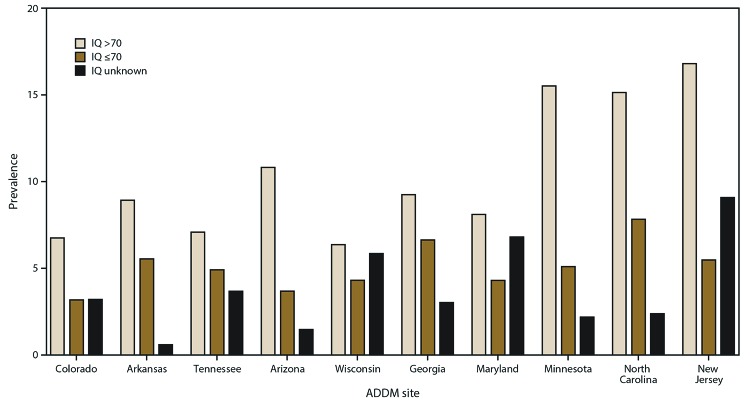
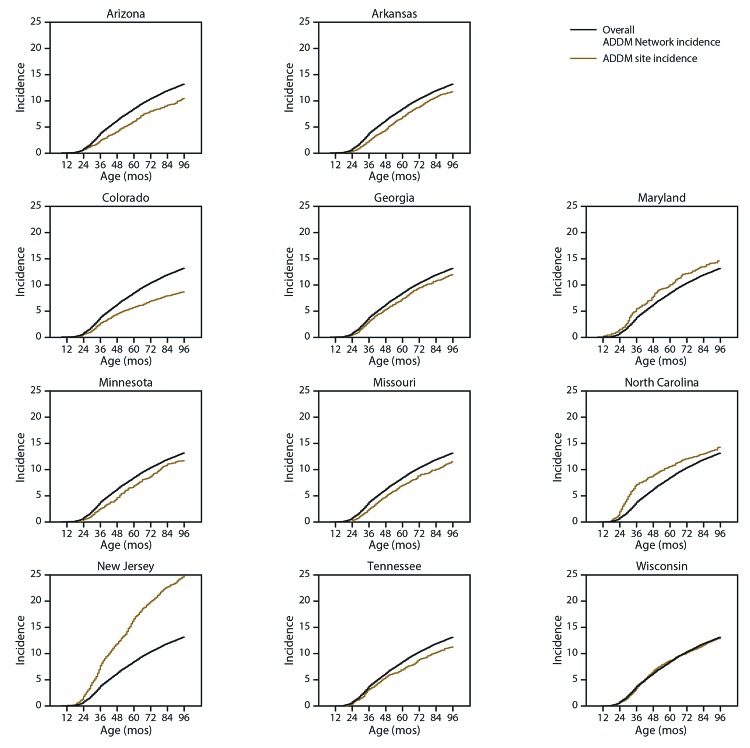
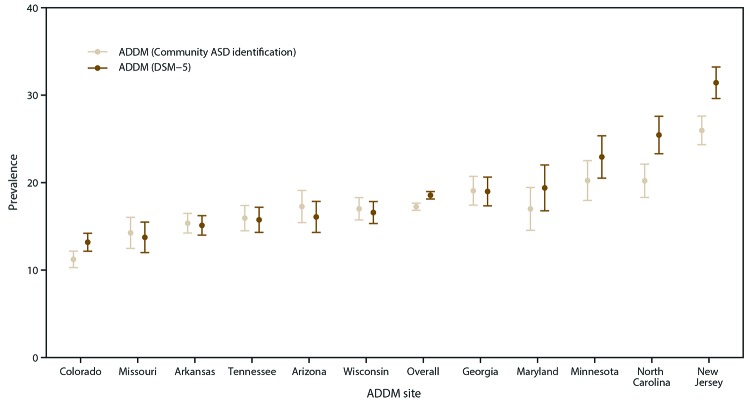
PROBLEM/CONDITION: Autism spectrum disorder (ASD). PERIOD COVERED: 2016. DESCRIPTION OF SYSTEM: The Autism and Developmental Disabilities Monitoring (ADDM) Network is an active surveillance program that provides estimates of the prevalence of ASD among children aged 8 years whose parents or guardians live in 11 ADDM Network sites in the United States (Arizona, Arkansas, Colorado, Georgia, Maryland, Minnesota, Missouri, New Jersey, North Carolina, Tennessee, and Wisconsin). Surveillance is conducted in two phases. The first phase involves review and abstraction of comprehensive evaluations that were completed by medical and educational service providers in the community. In the second phase, experienced clinicians who systematically review all abstracted information determine ASD case status. The case definition is based on ASD criteria described in the Diagnostic and Statistical Manual of Mental Disorders, Fifth Edition. RESULTS: For 2016, across all 11 sites, ASD prevalence was 18.5 per 1,000 (one in 54) children aged 8 years, and ASD was 4.3 times as prevalent among boys as among girls. ASD prevalence varied by site, ranging from 13.1 (Colorado) to 31.4 (New Jersey). Prevalence estimates were approximately identical for non-Hispanic white (white), non-Hispanic black (black), and Asian/Pacific Islander children (18.5, 18.3, and 17.9, respectively) but lower for Hispanic children (15.4). Among children with ASD for whom data on intellectual or cognitive functioning were available, 33% were classified as having intellectual disability (intelligence quotient [IQ] ≤70); this percentage was higher among girls than boys (39% versus 32%) and among black and Hispanic than white children (47%, 36%, and 27%, respectively) [corrected]. Black children with ASD were less likely to have a first evaluation by age 36 months than were white children with ASD (40% versus 45%). The overall median age at earliest known ASD diagnosis (51 months) was similar by sex and racial and ethnic groups; however, black children with IQ ≤70 had a later median age at ASD diagnosis than white children with IQ ≤70 (48 months versus 42 months). INTERPRETATION: The prevalence of ASD varied considerably across sites and was higher than previous estimates since 2014. Although no overall difference in ASD prevalence between black and white children aged 8 years was observed, the disparities for black children persisted in early evaluation and diagnosis of ASD. Hispanic children also continue to be identified as having ASD less frequently than white or black children. PUBLIC HEALTH ACTION: These findings highlight the variability in the evaluation and detection of ASD across communities and between sociodemographic groups. Continued efforts are needed for early and equitable identification of ASD and timely enrollment in services.
Overview
The claims and statistics of this paper haven’t been checked yet.
Run the check — free, no account needed. It reads the open-access text and checks the sources it cites.
Integrity signals
Registry
Cites
Statistics
Figures
Verification
Claims the paper makes
The claims and statistics of this paper haven’t been checked yet.
Run the check — free, no account needed. It reads the open-access text and checks the sources it cites.
Claims other papers make about this one
Each is checked against this paper’s own text: does it say what the citing paper says it does?
The source backs part of the claim, not all of it — or backs it for a different population, condition or comparison.
In the citing paper
“The U.S. reports a consistent pattern of increased ASD prevalence among higher socioeconomic status (SES) families (Baio et al. 2018; Durkin et al. 2010, 2017; Maenner et al. 2020; Pedersen et al. 2012), while European countries report increased prevalence among lower SES families (Delobel-Ayoub et al. 2015; Emerson 2012; Rai et al. 2012).”
From The Diagnosis of Autism: From Kanner to DSM-III to DSM-5 and Beyond (2021) · cites this paper as Maenner et al. 2020
Experimental — accuracy not yet measuredThe source backs part of the claim, not all of it — or backs it for a different population, condition or comparison.
In the citing paper
“In the U.S., African American, Hispanic, and Asian children are more likely to receive a diagnosis at a later age than Caucasian children (Maenner et al. 2020; Mandell et al. 2009; Palmer et al. 2010).”
From The Diagnosis of Autism: From Kanner to DSM-III to DSM-5 and Beyond (2021) · cites this paper as Maenner et al. 2020
Experimental — accuracy not yet measuredThe source backs part of the claim, not all of it — or backs it for a different population, condition or comparison.
In the citing paper
“While prevalence of ASD likely does not differ across racial and ethnic groups (Fombonne 2003; Maenner et al. 2020), the average age of diagnosis continues to differentiate these groups.”
From The Diagnosis of Autism: From Kanner to DSM-III to DSM-5 and Beyond (2021) · cites this paper as Maenner et al. 2020
Experimental — accuracy not yet measuredThe source backs part of the claim, not all of it — or backs it for a different population, condition or comparison.
In the citing paper
“Lastly, while the percentage of children diagnosed with ASD and intellectual disability is higher among African American and Hispanic children compared to Caucasian children in the U.S., African American and Hispanic children are nevertheless diagnosed at a later age on average than Caucasian children (Maenner et al. 2020).”
From The Diagnosis of Autism: From Kanner to DSM-III to DSM-5 and Beyond (2021) · cites this paper as Maenner et al. 2020
Experimental — accuracy not yet measuredThe source backs part of the claim, not all of it — or backs it for a different population, condition or comparison.
In the citing paper
“Surveillance among children aged 4 years in 2016 (8) indicated similar prevalence among children of different racial and ethnic groups, consistent with trends among children aged 8 years (9).”
From Early Identification of Autism Spectrum Disorder Among Children Aged 4 Years — Autism and Developmental Disabilities Monitoring Network, 11 Sites, United States, 2018 (2021) · cites this paper as [9]
Experimental — accuracy not yet measured
The source backs part of the claim, not all of it — or backs it for a different population, condition or comparison.
In the citing paper
“however, diagnosis typically occurs later in Europe (3.5 years), USA (4 years), and Canada (6 years), exposing an opportunity to decrease the age at diagnosis and accelerate access to specialized healthcare.”
From Tackling healthcare access barriers for individuals with autism from diagnosis to adulthood (2022) · cites this paper as [58]
Experimental — accuracy not yet measuredThe cited source says what the claim attributes to it.
In the citing paper
“ASD is ~4 times more prevalent in boys than in girls (16, 31).”
From Where Sex Meets Gender: How Sex and Gender Come Together to Cause Sex Differences in Mental Illness (2022) · cites this paper as [16]
In the citing paper
“and 1.85% (CI95%: 1.80–1.91%) in children aged eight year old (26).”
From Prevalence of Autism Spectrum Disorder and Co-morbidities in Children and Adolescents: A Systematic Literature Review (2021) · cites this paper as [26]
In the citing paper
“In the US, Christensen et al. (15) and Maenner et al. (26) assessed the prevalence of ID in ASD children aged 4y and 8y respectively based on the ADDM network and reported rates of 46.10% and 33.00%.”
From Prevalence of Autism Spectrum Disorder and Co-morbidities in Children and Adolescents: A Systematic Literature Review (2021) · cites this paper as [26]
In the citing paper
“The estimated prevalence of ASD has increased over 30-fold over the last four decades,18 primarily due to diagnostic expansion.19,20”
From The female protective effect against autism spectrum disorder (2022) · cites this paper as [20]
In the citing paper
“Members of previous generations, particularly those able to live independently as adults, were far less likely to receive an ASD diagnosis in childhood than children born as of writing.19,20”
From The female protective effect against autism spectrum disorder (2022) · cites this paper as [20]
In the citing paper
“For example, females are on average diagnosed later than males.20”
From The female protective effect against autism spectrum disorder (2022) · cites this paper as [20]
In the citing paper
“If consistent with the rate of ID in ASD cases in the United States or the United Kingdom, it would be approximately 40% over this diagnostic period.20”
From The female protective effect against autism spectrum disorder (2022) · cites this paper as [20]
In the citing paper
“The sex ratio is one example of how differences in identification of children without intellectual disability can affect patterns observed at older ages, with a higher ratio of boys to girls at age 8 years than at age 4 years, consistent with previous reports (8,9).”
In the citing paper
“In surveillance year 2018, ASD prevalence among Black children was higher than among White children at five of 11 sites and overall, the opposite of the pattern before surveillance year 2016 among children aged 8 years (9,17).”
In the citing paper
“Children with co-occurring intellectual disability are more likely to be identified earlier than children without intellectual disability, as indicated by an earlier median age at identification among this group (11) as well as the consistently higher proportion of children with intellectual disability at age 4 years (8,13) than at age 8 years (9,11,17).”
Self-check
Percentages, sums and reported differences re-computed from the paper’s own numbers.
The self-check needs the paper’s full text.
Citations
Cites
Diagnostic and Statistical Manual of Mental Disorders
American Psychiatric Association (2013) · doi:10.1176/appi.books.9780890425596 · Cited by 116,369
Baio, J., Wiggins, L., Christensen, D. L., Maenner, M. J., Daniels, J., Warren, Z., Kurzius-Spencer, M., Zahorodny, W., Robinson, C., Rosenberg, et al. (2018) · MMWR. Surveillance Summaries · doi:10.15585/mmwr.ss6706a1 · Cited by 6,078 · cited 5×
“8 per 1,000 (one in 59) children aged 8 years in 2014 (3).”
BackgroundMethodInfluentialSelf-citationDawson, G., Rogers, S., Munson, J., Smith, M., Winter, J., Greenson, J., Donaldson, A., & Varley, J. (2010) · Pediatrics · doi:10.1542/peds.2009-0958 · Cited by 2,835
Identification and Evaluation of Children With Autism Spectrum Disorders
Johnson, C. P., Myers, S. M., & and the Council on Children With Disabilities (2007) · Pediatrics · doi:10.1542/peds.2007-2361 · Cited by 2,011
Christensen, D. L., Baio, J., Braun, K. V. N., Bilder, D., Charles, J., Constantino, J. N., Daniels, J., Durkin, M. S., Fitzgerald, R. T., Kurzius-Spencer, M., et al. (2016) · MMWR. Surveillance Summaries · doi:10.15585/mmwr.ss6503a1 · Cited by 1,964
Self-citationNaarden Braun, K. V., Lopez, M., White, T., et al. (2023) · Carolina Digital Repository (University of North Carolina at Chapel Hill) · doi:10.17615/y3kk-5x30 · Cited by 1,381
Self-citationPrevalence of Autism in a US Metropolitan Area
Yeargin-Allsopp, M., Rice, C., Karapurkar, T., Doernberg, N., Boyle, C., & Murphy, C. (2003) · JAMA · doi:10.1001/jama.289.1.49 · Cited by 1,248 · cited 3×
“The ADDM Network uses a multiple-source, records-based surveillance methodology developed by CDC’s Metropolitan Atlanta Developmental Disabilities Surveillance Program (2,24).”
BackgroundMethodInfluentialPrevalence and Trends of Developmental Disabilities among Children in the United States: 2009–2017
Zablotsky, B., Black, L. I., Maenner, M. J., Schieve, L. A., Danielson, M. L., Bitsko, R. H., Blumberg, S. J., Kogan, M. D., & Boyle, C. A. (2019) · Pediatrics · doi:10.1542/peds.2019-0811 · Cited by 1,217 · cited 1×
“The 2016 NSCH and the 2015–2017 NHIS both estimated ASD prevalence at 25 per 1,000 children aged 3–17 years (13,29).”
BackgroundSelf-citation
Cited by
Sorted by citations
Items 301–400 of 1,017
a qualitative study of autism policy in canada: Seeking consensus on children’s services
Shepherd, C. A., & Waddell, C. (2015) · Journal of Autism and Developmental Disorders · doi:10.1007/s10803-015-2502-x · Cited by 67
A Systematic Review of Passing as Non-autistic in Autism Spectrum Disorder
Libsack, E. J., Keenan, E. G., Freden, C. E., Mirmina, J., Iskhakov, N., Krishnathasan, D., & Lerner, M. D. (2021) · Clinical Child and Family Psychology Review · doi:10.1007/s10567-021-00365-1 · Cited by 68
Lussu, M., Noto, A., Masili, A., Rinaldi, A. C., Dessì, A., De Angelis, M., De Giacomo, A., Fanos, V., Atzori, L., & Francavilla, R. (2017) · Autism Research · doi:10.1002/aur.1748 · Cited by 67
Fluegge, K. (2016) · Environmental Toxicology and Pharmacology · doi:10.1016/j.etap.2016.08.013 · Cited by 68
Fundamental movement skills in children with autism spectrum disorder: A systematic review
Gandotra, A., Kótyuk, E., Székely, A., Kasos, K., Csirmaz, L., & Cserjési, R. (2020) · Research in Autism · doi:10.1016/j.rasd.2020.101632 · Cited by 67
Understanding Data Accessibility for People with Intellectual and Developmental Disabilities
Wu, K., Petersen, E. P., Ahmad, T., Burlinson, D., Tanis, S., & Szafir, D. A. (2021) · CHI Conference on Human Factors in Computing Systems · doi:10.1145/3411764.3445743 · Cited by 67
Prenatal hyperandrogenic environment induced autistic-like behavior in rat offspring
Xu, X., Zhang, H., Shou, X., Li, J., Jing, W.-L., Zhou, Y., Qian, Y., Han, S., Zhang, R., & Han, J. (2014) · Physiology & Behavior · doi:10.1016/j.physbeh.2014.09.014 · Cited by 67
In the eye of the beholder: Reports of autism symptoms by Anglo and Latino mothers
Blacher, J., Cohen, S. R., & Azad, G. F. (2014) · Research in Autism · doi:10.1016/j.rasd.2014.08.017 · Cited by 77
Huang, F., Long, Z., Zhao, C. N., Li, J., Hu, Z., Qiu, R., Zhuang, W., Tang, B., Xia, K., & Jiang, H. F. (2015) · PLoS ONE · doi:10.1371/journal.pone.0129052 · Cited by 69
Frye, R. E., Delhey, L. M., Slattery, J. M., Tippett, M., Wynne, R. A., Rose, S., Kahler, S. G., Bennuri, S. C., Melnyk, S., Sequeira, J. M., et al. (2016) · Frontiers in Neuroscience · doi:10.3389/fnins.2016.00080 · Cited by 67
Oxytocin: Parallel Processing in the Social Brain?
Dölen, G. (2015) · Journal of Neuroendocrinology · doi:10.1111/jne.12284 · Cited by 65
Bilaver, L. A., Sobotka, S. A., & Mandell, D. S. (2021) · Journal of Autism and Developmental Disorders · doi:10.1007/s10803-020-04797-6 · Cited by 67
“(CDC 2018; Maenner 2020) This discrepancy may mean that minority children have more delays to diagnosis and fewer diagnoses overall and that those with fewer functional limitations are less likely to be diagnosed in racial/ethnic minority children.”
BackgroundAssociation of Epidural Labor Analgesia With Offspring Risk of Autism Spectrum Disorders
Wall‐Wieler, E., Bateman, B. T., Hanlon‐Dearman, A., Roos, L. L., & Butwick, A. J. (2021) · Archives of Pediatrics and Adolescent Medicine · doi:10.1001/jamapediatrics.2021.0376 · Cited by 66
Neuropsychological Assessment in Autism Spectrum Disorder
Braconnier, M. L., & Siper, P. M. (2021) · Current Psychiatry Reports · doi:10.1007/s11920-021-01277-1 · Cited by 73
“Journal : Large 11920 Article No : 1277 Pages : 9 MS Code : 1277 Dispatch : 2-8-2021 Vol.:(0123456789) Current Psychiatry Reports (2021) 23:63 https://doi.”
Nieforth, L. O., Schwichtenberg, A. J., & O’Haire, M. E. (2021) · Review Journal of Autism and Developmental Disorders · doi:10.1007/s40489-021-00291-6 · Cited by 79
A scoping review of telehealth diagnosis of autism spectrum disorder
Stavropoulos, K. K. M., Bolourian, Y., & Blacher, J. (2022) · PLoS ONE · doi:10.1371/journal.pone.0263062 · Cited by 75
“On average, children from Latinx families are diagnosed later than children from non-Latinx families [2].”
BackgroundInfluentialPatel, A. D., Arya, A., Agarwal, V., Gupta, P. K., & Agarwal, M. (2022) · Asian Journal of Psychiatry · doi:10.1016/j.ajp.2022.103030 · Cited by 66
Symeonides, C., Vacy, K., Thomson, S., Tanner, S., Chua, H. K., Dixit, S., Mansell, T., O’Hely, M., Novakovic, B., Herbstman, J. B., et al. (2024) · Nature Communications · doi:10.1038/s41467-024-48897-8 · Cited by 66
“The estimated prevalence of ASD is approximately 1 – 2% in Western countries 2 , with evidence that the incidence of ASD is increasing over time 3 .”
Feinberg, E., Augustyn, M., Broder-Fingert, S., Bennett, A., Weitzman, C., Kuhn, J., Hickey, E., Chu, A., Levinson, J., Sandler Eilenberg, J., et al. (2021) · JAMA Pediatrics · doi:10.1001/jamapediatrics.2020.5218 · Cited by 66
Where Sex Meets Gender: How Sex and Gender Come Together to Cause Sex Differences in Mental Illness
Christiansen, D. M., McCarthy, M. M., & Seeman, M. V. (2022) · Frontiers in Psychiatry · doi:10.3389/fpsyt.2022.856436 · Cited by 65
Ecker, C., Andrews, D. S., Gudbrandsen, C. M., Marquand, A. F., Ginestet, C. E., Daly, E., Murphy, C. M., Lai, M., Lombardo, M. V., Ruigrok, A. N. V., et al. (2017) · JAMA Psychiatry · doi:10.1001/jamapsychiatry.2016.3990 · Cited by 69
RetractedUnderstanding the substance use of autistic adolescents and adults: a mixed-methods approach
Weir, E. M., Allison, C. L., & Baron‐Cohen, S. (2021) · The Lancet Psychiatry · doi:10.1016/s2215-0366(21)00160-7 · Cited by 65
Kalb, L. G., Badillo‐Goicoechea, E., Holingue, C., Riehm, K. E., Thrul, J., Stuart, E. A., Smail, E. J., Law, K., Lehman, C., & Fallin, M. D. (2021) · Autism Research · doi:10.1002/aur.2589 · Cited by 65
Prevalence of autism spectrum disorder among Saudi children between 2 and 4 years old in Riyadh
Albatti, T. H., Alsaghan, L. B., Alsharif, M. F., Alharbi, J., BinOmair, A. I., Alghurair, H. A., Aleissa, G. A., & Bashiri, F. A. (2022) · Asian Journal of Psychiatry · doi:10.1016/j.ajp.2022.103054 · Cited by 65
van Elst, K., Bruining, H., Birtoli, B., Terreaux, C., Buitelaar, J. K., & Kas, M. J. (2014) · Neuroscience & Biobehavioral Reviews · doi:10.1016/j.neubiorev.2014.07.004 · Cited by 70
Efficient autism spectrum disorder prediction with eye movement: A machine learning framework
Liu, W., Yu, X., Raj, B., Yi, L., Zou, X., & Li, M. (2015) · International Conference on Affective Computing and Intelligent Interaction and workshops · doi:10.1109/acii.2015.7344638 · Cited by 65
Bakhireva, L. N., Sharkis, J., Shrestha, S., Miranda‐Sohrabji, T. J., Williams, S., & Miranda, R. C. (2017) · Alcoholism Clinical and Experimental Research · doi:10.1111/acer.13375 · Cited by 65
Alterations in plasma cytokine levels in chinese children with autism spectrum disorder
Hu, C., Xu, X., Xiong, G., Xu, Q., Zhou, B., Li, C., Qin, Q., Liu, C., Li, H., Sun, Y., et al. (2018) · Autism Research · doi:10.1002/aur.1940 · Cited by 68
Kingsbury, M. A., & Bilbo, S. D. (2019) · Frontiers in Neuroendocrinology · doi:10.1016/j.yfrne.2019.100794 · Cited by 68
Thongkorn, S., Kanlayaprasit, S., Panjabud, P., Saeliw, T., Jantheang, T., Kasitipradit, K., Sarobol, S., Jindatip, D., Hu, V. W., Tencomnao, T., et al. (2021) · Scientific Reports · doi:10.1038/s41598-020-80390-2 · Cited by 66
Autism in Toddlers Born Very Preterm
Pritchard, M. A., de Dassel, T., Beller, E., Bogossian, F. E., Johnston, L., Paynter, J. M., Russo, S., & Scott, J. G. (2016) · PEDIATRICS · doi:10.1542/peds.2015-1949 · Cited by 65
Socially assistive robots: current status and future prospects for autism interventions
Dickstein-Fischer, L., Crone‐Todd, D. E., Chapman, I. M., Fathima, A. T., & Fischer, G. S. (2018) · Innovation and Entrepreneurship in Health · doi:10.2147/ieh.s138753 · Cited by 64
Lee, J. K., Andrews, D. S., Ozonoff, S. J., Solomon, M., Rogers, S. J., Amaral, D. G., & Nordahl, C. W. (2020) · Biological Psychiatry · doi:10.1016/j.biopsych.2020.10.014 · Cited by 71
Tomeny, T. S., Ellis, B. M., Rankin, J. A., & Barry, T. D. (2017) · Research in Developmental Disabilities · doi:10.1016/j.ridd.2017.01.008 · Cited by 64
A Statewide Tiered System for Screening and Diagnosis of Autism Spectrum Disorder
Keehn, R. M., Ciccarelli, M. R., Szczepaniak, D., Tomlin, A. M., Lock, T. M., & Swigonski, N. L. (2020) · PEDIATRICS · doi:10.1542/peds.2019-3876 · Cited by 63
Rahman, M. R., Petralia, M. C., Ciurleo, R., Bramanti, A., Fagone, P., Shahjaman, M., Wu, L., Sun, Y., Turanlı, B., Arğa, K. Y., et al. (2020) · Brain Sciences · doi:10.3390/brainsci10100747 · Cited by 62
Morales‐Hidalgo, P., Voltas, N., & Canals, J. (2021) · Autism · doi:10.1177/13623613211007717 · Cited by 63
Annual Research Review: Translational machine learning for child and adolescent psychiatry
Dwyer, D., & Koutsouleris, N. (2022) · Journal of Child Psychology and Psychiatry · doi:10.1111/jcpp.13545 · Cited by 71
Rollnik‐Sadowska, E., & Grabińska, V. (2024) · Sustainability · doi:10.3390/su16156594 · Cited by 105
Miron, O., Beam, A. L., & Kohane, I. S. (2017) · Autism Research · doi:10.1002/aur.1886 · Cited by 68
Yousefian, F., Mahvi, A. H., Yunesian, M., Hassanvand, M. S., Kashani, H., & Amini, H. (2018) · The Science of The Total Environment · doi:10.1016/j.scitotenv.2018.06.259 · Cited by 63
Sperdin, H. F., & Schaer, M. (2016) · Frontiers in Neuroscience · doi:10.3389/fnins.2016.00393 · Cited by 66
Hadoush, H., Nazzal, M. S., Almasri, N. A., Khalil, H. W., & Alafeef, M. (2020) · Autism Research · doi:10.1002/aur.2290 · Cited by 65
Amonkar, N., Su, W.-C., Bhat, A. N., & Srinivasan, S. M. (2021) · Frontiers in Psychiatry · doi:10.3389/fpsyt.2021.722874 · Cited by 79
Alam, S., Raja, P., & Gulzar, Y. (2022) · Wireless Communications and Mobile Computing · doi:10.1155/2022/5766386 · Cited by 65
Perceived Stress among Caregivers of Children with Autism Spectrum Disorder: A State-Wide Study
Adib, N. A. N., Ibrahim, M. I., Rahman, A. A., Bakar, R. S., Yahaya, N. A., Hussin, S., & Arifin, W. N. (2019) · International Journal of Environmental Research and Public Health · doi:10.3390/ijerph16081468 · Cited by 61
Roussin, L., Prince, N., Perez‐Pardo, P., Kraneveld, A. D., Rabot, S., & Naudon, L. (2020) · Microorganisms · doi:10.3390/microorganisms8091369 · Cited by 64
Microbiota-gut-brain axis in autism spectrum disorder
Yu, Y., & Zhao, F. (2021) · Journal of genetics and genomics/Journal of Genetics and Genomics · doi:10.1016/j.jgg.2021.07.001 · Cited by 64
Jacquemont, S., Huguet, G., Klein, M., Chawner, S. J. R. A., Donald, K. A., van den Bree, M. B. M., Sebat, J. L., Ledbetter, D. H., Constantino, J. N., Earl, R. K., et al. (2022) · American Journal of Psychiatry · doi:10.1176/appi.ajp.2021.21040432 · Cited by 65
Self-citationJoon, P., Kumar, A., & Parle, M. (2021) · Pharmacological Reports · doi:10.1007/s43440-021-00244-0 · Cited by 83
Placental methylome reveals a 22q13.33 brain regulatory gene locus associated with autism
Zhu, Y., Gomez, J. A., Laufer, B. I., Mordaunt, C. E., Mouat, J. S., Soto, D. C., Dennis, M. Y., Benke, K. S., Bakulski, K. M., Dou, J., et al. (2022) · Genome biology · doi:10.1186/s13059-022-02613-1 · Cited by 62
Self-citationRodrigues, J. V. S., Poli, M. C. F., Petrilli, P. H., Dornelles, R. C. M., Túrcio, K. H. L., & Theodoro, L. H. (2022) · Nutrition Reviews · doi:10.1093/nutrit/nuac112 · Cited by 74
Dental stories for children with autism
Marion, I., Nelson, T., Sheller, B. L., McKinney, C. M., & Scott, J. M. (2016) · Special Care in Dentistry · doi:10.1111/scd.12167 · Cited by 61
Rates of autism and potential risk factors in children with congenital heart defects
Jaworski, J. L. B., Flynn, T. B., Burnham, N. B., Chittams, J. L., Sammarco, T. E., Gerdes, M., BERNBAUM, J. C., Clancy, R. R., Solot, C. B., Zackai, E. H., et al. (2017) · Congenital Heart Disease · doi:10.1111/chd.12461 · Cited by 62
Nelson, L. H., Saulsbery, A. I., & Lenz, K. M. (2018) · Progress in Neurobiology · doi:10.1016/j.pneurobio.2018.09.002 · Cited by 62
Revisiting the excitation/inhibition imbalance hypothesis of ASD through a clinical lens
Port, R. G., Oberman, L. M., & Roberts, T. P. L. (2019) · British Journal of Radiology · doi:10.1259/bjr.20180944 · Cited by 68
Stress System Activation in Children and Adolescents With Autism Spectrum Disorder
Makris, G., Agorastos, A., Chrousos, G. P., & Pervanidou, P. (2022) · Frontiers in Neuroscience · doi:10.3389/fnins.2021.756628 · Cited by 66
How can the work environment be redesigned to enhance the well-being of individuals with autism?
Tomczak, M. T. (2022) · Employee Relations · doi:10.1108/er-12-2021-0535 · Cited by 74
West, K., Yin, X., Rutherford, E. M., Wee, B., Choi, J., Chrisman, B., Dunlap, K., Hannibal, R. L., Hartono, W., Lin, M., et al. (2022) · Scientific Reports · doi:10.1038/s41598-022-21327-9 · Cited by 67
Kissine, M., Luffin, X., Aïad, F., Bourourou, R., Deliens, G., & Gaddour, N. (2018) · Language Learning · doi:10.1111/lang.12312 · Cited by 66
Zwaigenbaum, L., Duku, E., Fombonne, E. J., Szatmári, P., Smith, I. M., Bryson, S. E., Mirenda, P., Vaillancourt, T., Volden, J., Georgiades, S., et al. (2018) · Paediatrics & Child Health · doi:10.1093/pch/pxy076 · Cited by 62
Calderoni, S. (2022) · Journal of Neuroscience Research · doi:10.1002/jnr.25000 · Cited by 70
A Personalized Multidisciplinary Approach to Evaluating and Treating Autism Spectrum Disorder
Frye, R. E. (2022) · Journal of Personalized Medicine · doi:10.3390/jpm12030464 · Cited by 59
“Autism spectrum disorder (ASD) is a behaviorally defined disorder [1] with the most recent Center for Disease Control and Prevention estimates suggesting that it affects 1 in 44 children in the United States (US) [2].”
BackgroundAutism Spectrum Disorder and IQ – A Complex Interplay
Wolff, N., Stroth, S., Kamp‐Becker, I., Roepke, S., & Roessner, V. (2022) · Frontiers in Psychiatry · doi:10.3389/fpsyt.2022.856084 · Cited by 78
“, either offer no information (8) or summarize the percentages of the group with mean and the group with above average IQ (7, 9).”
BackgroundGordon, K., Murin, M., Baykaner, Ö., Roughan, L. A., Livermore‐Hardy, V., Skuse, D., & Mandy, W. (2014) · Journal of Child Psychology and Psychiatry · doi:10.1111/jcpp.12304 · Cited by 59
Holmes, G. L., Tian, C., Hernan, A. E., Flynn, S. P., Camp, D., & Barry, J. M. (2015) · Neurobiology of Disease · doi:10.1016/j.nbd.2015.02.015 · Cited by 61
Birth Spacing and Risk of Autism and Other Neurodevelopmental Disabilities: A Systematic Review
Conde‐Agudelo, A., Rosas-Bermúdez, A., & Norton, M. H. (2016) · PEDIATRICS · doi:10.1542/peds.2015-3482 · Cited by 59
Growth status of children with autism spectrum disorder: a case–control study
Barnhill, K. M., Gutierrez, A., Ghossainy, M. E., Marediya, Z., Marti, C. N., & Hewitson, L. C. (2016) · Journal of Human Nutrition and Dietetics · doi:10.1111/jhn.12396 · Cited by 59
An investigation of the diet, exercise, sleep, BMI, and health outcomes of autistic adults
Weir, E., Allison, C., Ong, K. K., & Baron-Cohen, S. (2021) · Molecular Autism · doi:10.1186/s13229-021-00441-x · Cited by 58
Affording autism an early brain development re-definition
Klin, A. J., Micheletti, M., Klaiman, C., Shultz, S., Constantino, J. N., & JONES, W. R. (2020) · Development and Psychopathology · doi:10.1017/s0954579420000802 · Cited by 63
“And yet, the median age of ASD diagnosis in the US remains stubbornly stuck at the late age of 4–5 years (Baio et al., 2018; Christensen et al., 2016; Maenner et al., 2020), and later still in low-income families (Christensen et al.”
BackgroundInfluentialSelf-citationSivaraman, M., & Fahmie, T. A. (2020) · Journal of Applied Behavior Analysis · doi:10.1002/jaba.763 · Cited by 62
Alterations of the endocannabinoid system and its therapeutic potential in autism spectrum disorder
Zou, M., Liu, Y., Xie, S. H., Wang, L., Li, D., Li, L., Wang, F., Zhang, Y., Xia, W. T., Sun, C., et al. (2021) · Open Biology · doi:10.1098/rsob.200306 · Cited by 58
Liu, X., Zou, M., Sun, C., Wu, L., & Chen, W.-X. (2022) · Journal of Autism and Developmental Disorders · doi:10.1007/s10803-021-04951-8 · Cited by 58
Cultural differences in social communication and interaction: A gap in autism research
Golson, M. E., Ficklin, E., Haverkamp, C. R., McClain, M. B., & Harris, B. (2021) · Autism Research · doi:10.1002/aur.2657 · Cited by 58
The Prevalence of Autism Spectrum Disorders in West Pomeranian and Pomeranian Regions of Poland
Skonieczna‐Żydecka, K., Gorzkowska, I., Pierzak‐Sominka, J., & Adler, G. (2016) · Journal of Applied Research in Intellectual Disabilities · doi:10.1111/jar.12238 · Cited by 63
Cogill, S., & Wang, L. (2016) · Bioinformatics · doi:10.1093/bioinformatics/btw498 · Cited by 58
Abuaish, S., Al-Otaibi, N. M., Abujamel, T. S., Alzahrani, S. A., Alotaibi, S. M., Alshawakir, Y. A., Aabed, K., & El-Ansary, A. K. (2021) · Brain Sciences · doi:10.3390/brainsci11081038 · Cited by 61
“The reported incidence of ASD has increased dramatically over the past decade to 1 in 54 births, with males having a higher prevalence than females with a ratio of 4:1 [1].”
BackgroundWalsh, J. J., Llorach, P., Cardozo Pinto, D. F., Wenderski, W., Christoffel, D. J., Salgado, J. S., Heifets, B. D., Crabtree, G. R., & Malenka, R. C. (2021) · Neuropsychopharmacology · doi:10.1038/s41386-021-01091-6 · Cited by 56
Dimian, A. F., Symons, F. J., & Wolff, J. J. (2020) · Journal of Autism and Developmental Disorders · doi:10.1007/s10803-020-04586-1 · Cited by 62
Oakley, B. F. M., Loth, E., & Murphy, D. (2021) · International Review of Psychiatry · doi:10.1080/09540261.2021.1872506 · Cited by 61
FMR1 and Autism, an Intriguing Connection Revisited
Fyke, W., & Velinov, M. T. (2021) · Genes · doi:10.3390/genes12081218 · Cited by 60
Bennett, D. H., Busgang, S. A., Kannan, K., Parsons, P. J., Takazawa, M., Palmer, C. D., Schmidt, R. J., Doucette, J. T., Schweitzer, J. B., Gennings, C., et al. (2022) · Environment International · doi:10.1016/j.envint.2021.107075 · Cited by 61
Dufek, J. S., Eggleston, J. D., Harry, J. R., & Hickman, R. A. (2017) · Medical Sciences · doi:10.3390/medsci5010001 · Cited by 57
Pfeiffer, B., Braun, K., Kinnealey, M., Derstine, M., & Polatajko, H. J. (2017) · Journal of Vocational Rehabilitation · doi:10.3233/jvr-170878 · Cited by 57
Robson, M. J., Quinlan, M. A., Margolis, K. G., Gajewski-Kurdziel, P. A., Veenstra-VanderWeele, J. M., Gershon, M. D., Watterson, D. M., & Blakely, R. (2018) · Proceedings of the National Academy of Sciences · doi:10.1073/pnas.1809137115 · Cited by 58
Thomaidis, L., Mavroeidi, N., Richardson, C., Choleva, A., Damianos, G., Bolias, K., & Tsolia, M. (2020) · Journal of Clinical Medicine · doi:10.3390/jcm9072163 · Cited by 57
IQ in Autism Spectrum Disorder: A Population-Based Birth Cohort Study
Katusic, M. Z., Myers, S. M., Weaver, A. L., & Voigt, R. G. (2021) · Pediatrics · doi:10.1542/peds.2020-049899 · Cited by 54
Plaza-Diaz, J., Flores-Rojas, K., Torre-Aguilar, M. J. D. L., Gomez-Fernández, A. R., Martín-Borreguero, P., Perez-Navero, J. L., Gil, A., & Gil-Campos, M. (2021) · Nutrients · doi:10.3390/nu13103551 · Cited by 56
“3 times as prevalent among boys as among girls [2].”
BackgroundSung, M., Ku, B., Leung, W. C. W., & MacDonald, M. (2021) · Journal of Autism and Developmental Disorders · doi:10.1007/s10803-021-05009-5 · Cited by 67
Zbtb16 regulates social cognitive behaviors and neocortical development
Usui, N., Berto, S., Konishi, A., Kondo, M., Konopka, G., Matsuzaki, H., & Shimada, S. (2021) · Translational Psychiatry · doi:10.1038/s41398-021-01358-y · Cited by 56
Meral, B. F. (2021) · Journal of Autism and Developmental Disorders · doi:10.1007/s10803-021-05070-0 · Cited by 58
“‘Stay home’ or ‘stay-at-home’ has become a worldwide motto/mantra during the quarantine associated with the COVID-19 pandemic (CDC, 2020a; WHO, 2020; Ministry of the Interior of Turkey, 2020).”
BackgroundInfluentialLovelace, T. S., Comis, M., Tabb, J., & Oshokoya, O. (2021) · Behavior Analysis in Practice · doi:10.1007/s40617-021-00654-9 · Cited by 69
Maddox, B. B., Dickson, K. S., Stadnick, N. A., Mandell, D. S., & Brookman-Frazee, L. I. (2021) · Current Psychiatry Reports · doi:10.1007/s11920-021-01278-0 · Cited by 62
Bemben, M. A., Nguyen, Q.-A., Wang, T., Li, Y., Nicoll, R. A., & Roche, K. W. (2015) · Proceedings of the National Academy of Sciences · doi:10.1073/pnas.1500501112 · Cited by 56
Bickel, J., Bridgemohan, C. F., Sideridis, G. D., & Huntington, N. L. (2015) · Journal of Developmental & Behavioral Pediatrics · doi:10.1097/dbp.0000000000000117 · Cited by 57
A National Research Agenda for the Transition of Youth With Autism
Shattuck, P., Lau, L., Anderson, K., & Kuo, A. (2018) · Pediatrics · doi:10.1542/peds.2016-4300m · Cited by 44
NKCC1: Newly Found as a Human Disease-Causing Ion Transporter
Koumangoye, R. B., Bastarache, L. A., & Delpire, E. J. (2020) · Function · doi:10.1093/function/zqaa028 · Cited by 56
Klinger, L. G., Cook, M. L., & Dudley, K. M. (2020) · Journal of Clinical Child & Adolescent Psychology · doi:10.1080/15374416.2020.1833735 · Cited by 57
“Current prevalence estimates from the Centers for Disease Control and Prevention (CDC) indicate a 178% increase in school-age children diagnosed with Autism Spectrum Disorder (ASD) from 1 in 150 eight-year-olds in 2002 to 1 in 54 eight-year-olds in 2016 (Maenner et al., 2020).”
BackgroundFriend matters: sex differences in social language during autism diagnostic interviews
Cola, M., Yankowitz, L. D., Tena, K. G., Russell, A. R. B., Bateman, L., Knox, A., Plate, S. N., Cubit, L. S., Zampella, C., Pandey, J., et al. (2022) · Molecular Autism · doi:10.1186/s13229-021-00483-1 · Cited by 68
“Sex differences in linguistic markers of social phenotype in autism are especially important in light of the late [8] or missed [18] diagnoses that disproportionately affect autistic girls.”
BackgroundKohli, M., Kar, A. K., & Sinha, S. (2022) · IEEE Access · doi:10.1109/access.2022.3208587 · Cited by 62
“Though early ASD indicators are evident at 12 months, and diagnosis is possible at earlier than 18 months [11], most children are diagnosed between 48-60 months [12], [13], highlighting a delay of two years.”
Background
Metadata
- Authors
- Maenner, M. J., Shaw, K. A., Baio, J., EdS1, Washington, A., Patrick, M., DiRienzo, M., Christensen, D. L., Wiggins, L. D., Pettygrove, S., Andrews, J. G., Lopez, M., Hudson, A., Baroud, T., Schwenk, Y., White, T., Rosenberg, C. R., Lee, L.-C., Harrington, R. A., Huston, M., Hewitt, A., PhD-7, Esler, A., Hall-Lande, J., Poynter, J. N., Hallas-Muchow, L., Constantino, J. N., Fitzgerald, R. T., Zahorodny, W., Shenouda, J., Daniels, J. L., Warren, Z., Vehorn, A., Salinas, A., Durkin, M. S., & Dietz, P. M.
- Affiliations
- Centers for Disease Control and Prevention (US)
- University of North Carolina at Chapel Hill (US)
- University of Arizona (US)
- University of Arkansas for Medical Sciences (US)
- Colorado Department of Public Health and Environment (US)
- Johns Hopkins University (US)
- University of Minnesota (US)
- Washington University in St. Louis (US)
- Rutgers New Jersey Medical School (US)
- University of Wisconsin–Madison (US)
- Corresponding author
- Maenner, Matthew J.
- ORCID
- Maenner, Matthew J.
- Shaw, Kelly A.
- Washington, Anita
- Patrick, Mary
- DiRienzo, Monica
- Wiggins, Lisa D.
- Pettygrove, Sydney
- Andrews, Jennifer G.
- Lopez, Maya
- Rosenberg, Cordelia Robinson
- Lee, Li-Ching
- Esler, Amy
- Poynter, Jenny N.
- Constantino, John N.
- Fitzgerald, Robert T.
- Zahorodny, Walter
- Shenouda, Josephine
- Daniels, Julie L.
- Warren, Zachary
- Durkin, Maureen S.
- Dietz, Patricia M.
- Venue
- MMWR. Surveillance Summaries
- Published
- 2020-03-27
- Volume
- 69
- Issue
- 4
- Pages
- 1-12
- ISSN
- 1545-8636 (ISSN-L)
- 1546-0738
- PMC
- PMC7119644
- OpenAlex
- W3027179734
- Semantic Scholar
- ddeb34dc450a7cdc9fd11cdb896b266be9fa1f05
- Cited by
- 3,780
- References
- 34
- Citations by year
- 2026: 107 · 2025: 199 · 2024: 335 · 2023: 473 · 2022: 732 · 2021: 904 · 2020: 393
- FWCI
- 336.19
- Type
- journal article
- Language
- en
- Open access
- diamond
- doi.org
- Licence
- public-domain
- Locations
- MMWR Surveillance Summaries (publishedVersion, public-domain)
- PubMed Central (publishedVersion, cc-by)
- PubMed (publishedVersion)
- UA Campus Repository (The University of Arizona) (acceptedVersion, public-domain)
- Funders
- Centers for Disease Control and Prevention
- Topics
- Life Sciences › Neuroscience › Cognitive Neuroscience › Autism Spectrum Disorder Research
- Health Sciences › Medicine › Psychiatry and Mental health › Child Nutrition and Feeding Issues
- Social Sciences › Psychology › Clinical Psychology › Family and Disability Support Research
- Keywords
- autism spectrum disorder, autism prevalence, sex differences, racial and ethnic disparities, intellectual disability, age at diagnosis, autism epidemiology, Black children, Hispanic children, white children, regional variation in prevalence, United States states and territories
- MeSH terms
- Autism Spectrum Disorder, Child, Female, Humans, Male, Population Surveillance, United States, Prevalence, Diagnostic and Statistical Manual of Mental Disorders
About these checks
Registry, retraction, Cites and statistics results are computed, not judged, with one exception: a printed reference that no index lists is read once by a model before it counts as a citation error. Claims are extracted by a model and kept only when their quote appears verbatim in the text; each cited source is then checked, with a model’s help, for whether it says what the claim relies on. Those verdicts can be wrong — read the claim’s quote and the cited source before relying on one.
Statistics and arithmetic are recomputed, not judged.
Confidence bands are shown only for fields calibrated on our annotated test set. None is calibrated yet, so no band is shown.
What counts as a claim ›How we measure confidence ›How we check this ›
Are you an author, or do you see a problem with this page? Request a review
