

Efficient Low-rank Multimodal Fusion With Modality-Specific Factors
Open accessThe DOI matches its Crossref record; 33 of the 33 references it cites were found in a registry or an index.
Abstract
Zhun Liu, Ying Shen, Varun Bharadhwaj Lakshminarasimhan, Paul Pu Liang, AmirAli Bagher Zadeh, Louis-Philippe Morency. Proceedings of the 56th Annual Meeting of the Association for Computational Linguistics (Volume 1: Long Papers). 2018.
Overview
The claims and statistics of this paper haven’t been checked yet.
Free: it reads the open-access text and checks the first 5 claims that cite a source we can check. Create a free account to check every claim.
Integrity signals
Registry
Cites
Statistics
Figures
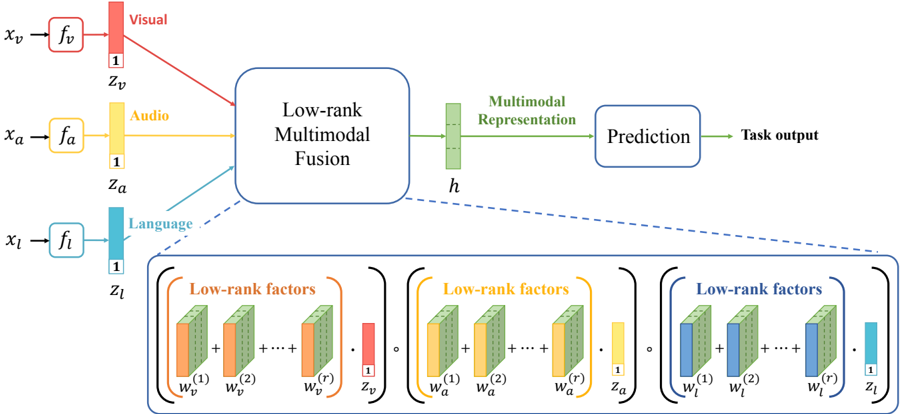
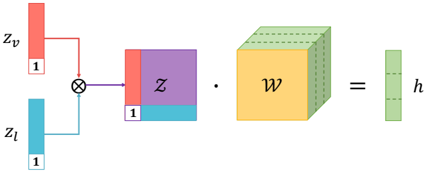
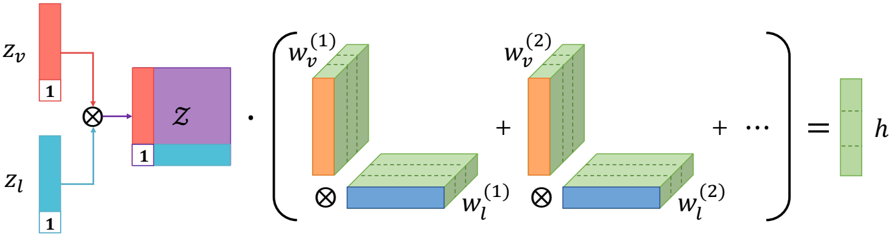
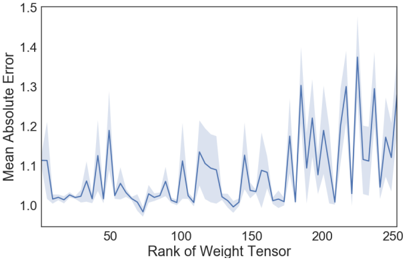
Verification
Claims the paper makes
The claims and statistics of this paper haven’t been checked yet.
Free: it reads the open-access text and checks the first 5 claims that cite a source we can check. Create a free account to check every claim.
Claims other papers make about this one
Each is checked against this paper’s own text: does it say what the citing paper says it does?
The cited source says what the claim attributes to it.
In the citing paper
“The experiment confirmed that the LMF effectively improves the training and testing efficiency compared to TFN.”
From A Survey of Deep Learning-Based Multimodal Emotion Recognition: Speech, Text, and Face (2023) · cites this paper as [100]
The cited source says what the claim attributes to it.
In the citing paper
“Several efficient variants have been proposed to approximate expensive full tensor products with cheaper variants while maintaining performance [71, 101, 106].”
From MultiBench: Multiscale Benchmarks for Multimodal Representation Learning (2021) · cites this paper as [106]
In the citing paper
“we compared vector concatenation and a low-rank implementation of Kronecker Product Fusion, which similarly outperform unimodal approaches (Table S3) (Liu et al., 2018).”
From Pan-cancer integrative histology-genomic analysis via multimodal deep learning (2022) · cites this paper as Liu et al., 2018
Self-check
Percentages, sums and reported differences re-computed from the paper’s own numbers.
The self-check needs the paper’s full text.
Citations
Cites
Hochreiter, S., & Schmidhuber, J. (1997) · Neural Computation · doi:10.1162/neco.1997.9.8.1735 · Cited by 102,318 · cited 4×
“Multi-View LSTM Multi-View LSTM (MV-LSTM) (Rajagopalan et al., 2016) aims to capture both modality-specific and cross-modality interactions from multiple modalities by partitioning the memory cell and the gates corresponding to multiple modalities.”
MethodInfluentialCortes, C., & Vapnik, V. (1995) · Machine Learning · doi:10.1007/bf00994018 · Cited by 59,421
Glove: Global Vectors for Word Representation
Pennington, J., Socher, R., & Manning, C. (2014) · Proceedings of the 2014 Conference on Empirical Methods in Natural Language Processing (EMNLP) · doi:10.3115/v1/d14-1162 · Cited by 34,071 · cited 1×
“Language We use pre-trained 300-dimensional Glove word embeddings (Pennington et al., 2014) to encode a sequence of transcribed words into a sequence of word vectors.”
MethodIEMOCAP: Interactive emotional dyadic motion capture database
Busso, C., Bulut, M., Lee, C.-C., Kazemzadeh, A., Mower, E., Kim, S., Chang, J. N., Lee, S., & Narayanan, S. S. (2008) · Language Resources and Evaluation · doi:10.1007/s10579-008-9076-6 · Cited by 3,869 · cited 4×
“We perform our experiments on the following multi-modal datasets, CMU-MOSI (Zadeh et al., 2016a POM (Park et al., 2014b), and IEMOCAP (Busso et al., 2008) for sentiment analysis, speaker traits recognition, and emotion recognition task, where the goal is to identify speakers emotions based on the speakers’ verbal and…”
BackgroundMethodInfluentialTensor Fusion Network for Multimodal Sentiment Analysis
Zadeh, A., Chen, M., Poria, S., Cambria, E., & Morency, L.-P. (2017) · Proceedings of the 2017 Conference on Empirical Methods in Natural Language Processing · doi:10.18653/v1/d17-1115 · Cited by 2,102 · cited 12×
“In addition, in order to be able to model the interactions between any subset of modalities using one tensor, Zadeh et al. (2017) proposed a simple extension to append 1 s to the unimodal representations before taking the outer product.”
BackgroundMethodInfluentialSelf-citationMultimodal Compact Bilinear Pooling for Visual Question Answering and Visual Grounding
Fukui, A., Park, D. H., Yang, D., Rohrbach, A., Darrell, T., & Rohrbach, M. (2016) · Proceedings of the 2016 Conference on Empirical Methods in Natural Language Processing · doi:10.18653/v1/d16-1044 · Cited by 1,582 · cited 6×
“, 2017), (Fukui et al., 2016) performs contextdependent fusion of multimodal data.”
BackgroundMethodResultInfluentialFast Human Detection Using a Cascade of Histograms of Oriented Gradients
Zhu, Q., Yeh, M.-C., Cheng, K.-T., & Avidan, S. (2006) · 2006 IEEE Computer Society Conference on Computer Vision and Pattern Recognition - Volume 2 (CVPR'06) · doi:10.1109/cvpr.2006.119 · Cited by 1,399 · cited 2×
“Visual The library Facet1 is used to extract a set of visual features for each frame (sampled at 30Hz) including 20 facial action units, 68 facial landmarks, head pose, gaze tracking and HOG features (Zhu et al., 2006).”
MethodMemory Fusion Network for Multi-view Sequential Learning
Zadeh, A., Liang, P. P., Mazumder, N., Poria, S., Cambria, E., & Morency, L.-P. (2018) · Proceedings of the AAAI Conference on Artificial Intelligence · doi:10.1609/aaai.v32i1.12021 · Cited by 855
Self-citationMultimodal Sentiment Intensity Analysis in Videos: Facial Gestures and Verbal Messages
Zadeh, A., Zellers, R., Pincus, E., & Morency, L.-P. (2016) · IEEE Intelligent Systems · doi:10.1109/mis.2016.94 · Cited by 852 · cited 6×
“We perform our experiments on the following multi-modal datasets, CMU-MOSI (Zadeh et al., 2016a POM (Park et al., 2014b), and IEMOCAP (Busso et al., 2008) for sentiment analysis, speaker traits recognition, and emotion recognition task, where the goal is to identify speakers emotions based on the…”
MethodInfluentialSelf-citationCOVAREP — A collaborative voice analysis repository for speech technologies
Degottex, G., Kane, J., Drugman, T., Raitio, T., & Scherer, S. (2014) · 2014 IEEE International Conference on Acoustics, Speech and Signal Processing (ICASSP) · doi:10.1109/icassp.2014.6853739 · Cited by 695 · cited 1×
“Acoustic We use COVAREP acoustic analysis framework (Degottex et al., 2014) to extract a set of low-level acoustic features, including 12 Mel frequency cepstral coefficients (MFCCs), pitch, voiced/unvoiced segmentation, glottal source, peak slope, and maxima dispersion quotient features.”
Method
Research works printed but not linked: 5
- [6]6. Gilles Degottex, John Kane, Thomas Drugman, Tuomo Raitio, and Stefan Scherer. 2014. Covarepa collabo- rative voice analysis repository for speech technolo- gies. In Acoustics, Speech and Signal Processing (ICASSP), 2014 IEEE International Conference on. IEEE, pages 960-964.
- [10]10. Othmar Koch and Christian Lubich. 2010. Dynami- cal tensor approximation. SIAM Journal on Matrix Analysis and Applications 31(5):2360-2375.
- [14]14. Sunghyun Park, Han Suk Shim, Moitreya Chatterjee, Kenji Sagae, and Louis-Philippe Morency. 2014a. Computational analysis of persuasiveness in social multimedia: A novel dataset and multimodal predic- tion approach. In Proceedings of the 16th Interna- tional Conference on Multimodal Interaction. ACM, pages 50-57.
- [22]22. Hongcheng Wang and Narendra Ahuja. 2008. A ten- sor approximation approach to dimensionality re- duction. International Journal of Computer Vision 76(3):217-229.
- [24]24. Torsten Wortwein and Stefan Scherer. 2017. What really mattersan information gain analysis of ques- tions and reactions in automated ptsd screenings. In 2017 Seventh International Conference on Affective Computing and Intelligent Interaction (ACII). IEEE, pages 15-20.
Cited by
Items 201–300 of 1,001
DeepCU: Integrating both Common and Unique Latent Information for Multimodal Sentiment Analysis
Verma, S., Wang, C., Zhu, L., & Liu, W. (2019) · International Joint Conference on Artificial Intelligence · doi:10.24963/ijcai.2019/503 · Cited by 56
Multimodal Language Analysis with Recurrent Multistage FusionPreprint
Liang, P. P., Ziyin, L., Zadeh, A., & Morency, L. (2018) · arXiv (Cornell University) · doi:10.48550/arxiv.1808.03920 · Cited by 56
“Modeling these interactions lie at the heart of human multimodal language analysis and has recently become a centric research direction in multimodal natural language processing (Liu et al., 2018; Pham et al., 2018; Chen et al., 2017), multimodal speech recognition (Sun et al.”
BackgroundInfluentialSelf-citationMIA-Net: Multi-Modal Interactive Attention Network for Multi-Modal Affective Analysis
Li, S., Zhang, T., Chen, B., & Chen, C. L. P. (2023) · IEEE Transactions on Affective Computing · doi:10.1109/taffc.2023.3259010 · Cited by 54
Multimodal Sentiment Analysis with Preferential Fusion and Distance-aware Contrastive Learning
Ma, F., Zhang, Y., & Sun, X. (2023) · IEEE International Conference on Multimedia and Expo (ICME) · doi:10.1109/icme55011.2023.00237 · Cited by 54
“On the SIMS dataset, we reproduce TFN [21], LMF [22], MulT [8] and Self-MM [7], and compare them under the same conditions.”
MethodGLoMo: Global-Local Modal Fusion for Multimodal Sentiment Analysis
Yan, Z., Zhang, Y., Hu, Z., Zhang, X., Deng, J., & Ren, F. (2024) · ACM International Conference on Multimedia (ACM MM) · doi:10.1145/3664647.3681527 · Cited by 54
“These methods include models such as TFN [57], LMF [29], MFM [52], GFN [35], and ICCN [48], which directly fuse the global representations of the three modalities.”
Towards Multimodal Sentiment Analysis Debiasing via Bias Purification
Yang, D., Li, M., Xiao, D., Liu, Y., Yang, K., Chen, Z., Wang, Y., Zhai, P., Li, K. J., & Zhang, L. (2024) · Lecture notes in computer science · doi:10.1007/978-3-031-73636-0_27 · Cited by 54
Video-Based Cross-Modal Auxiliary Network for Multimodal Sentiment Analysis
Chen, R., Zhou, W., Li, Y., & Zhou, H. (2022) · IEEE Transactions on Circuits and Systems for Video Technology · doi:10.1109/tcsvt.2022.3197420 · Cited by 54
“Six advanced algorithms (including LFN, SWAFN, BBFN, BC_LSTM, MMMU-BA, and Dialogue-RNN) are introduced as benchmark methods.”
MethodInfluentialLin, R., & Hu, H. (2022) · Findings of the Association for Computational Linguistics: EMNLP (Findings of EMNLP) · doi:10.18653/v1/2022.findings-emnlp.36 · Cited by 55
“As shown in Table 1, noted that except for unaligned models TFN and LMF, the multimodal data are token-aligned in the pre-processing stage.”
BackgroundInfluentialToken-disentangling Mutual Transformer for multimodal emotion recognition
Yin, G., Liu, Y., Liu, T., Zhang, H., Fang, F., Tang, C., & Jiang, L. (2024) · Engineering Applications of Artificial Intelligence · doi:10.1016/j.engappai.2024.108348 · Cited by 53
OV-MER: Towards Open-Vocabulary Multimodal Emotion RecognitionPreprint
Lian, Z., Sun, H., Sun, L., Chen, H., Chen, L., Gu, H., Wen, Z., Chen, S., Zhang, S., Yao, H., et al. (2024) · arXiv (Cornell University) · doi:10.48550/arxiv.2410.01495 · Cited by 55
MF-BERT: Multimodal Fusion in Pre-Trained BERT for Sentiment Analysis
He, J., & Hu, H. (2021) · IEEE Signal Processing Letters · doi:10.1109/lsp.2021.3139856 · Cited by 53
Tan, T., Wang, D., Shull, P. B., & Halilaj, E. (2022) · IEEE Transactions on Industrial Informatics · doi:10.1109/tii.2022.3189648 · Cited by 53
“” 2) Low-rank multimodal fusion network [33]: This method uses a set of low-rank factors to recover a low-rank weight”
MethodAIA-Net: Adaptive Interactive Attention Network for Text–Audio Emotion Recognition
Zhang, T., Li, S., Chen, B., Yuan, H., & Chen, C. L. P. (2022) · IEEE Transactions on Cybernetics · doi:10.1109/tcyb.2022.3195739 · Cited by 52
i-Code: An Integrative and Composable Multimodal Learning Framework
Yang, Z., Fang, Y., Zhu, C., Pryzant, R., Chen, D., Shi, Y., Yi‐chong, X., Qian, Y., Gao, M., Chen, Y., et al. (2023) · Proceedings of the AAAI Conference on Artificial Intelligence · doi:10.1609/aaai.v37i9.26290 · Cited by 53
Multimodal Boosting: Addressing Noisy Modalities and Identifying Modality Contribution
Mai, S., Ya, S., Xiong, A., Zeng, Y., & Hu, H. (2023) · IEEE Transactions on Multimedia · doi:10.1109/tmm.2023.3306489 · Cited by 54
Co-space Representation Interaction Network for multimodal sentiment analysis
Shi, H., Pu, Y., Zhao, Z., Huang, J., Zhou, D., Xu, D., & Cao, J. (2023) · Knowledge-Based Systems · doi:10.1016/j.knosys.2023.111149 · Cited by 53
Multimodal Local-Global Ranking Fusion for Emotion Recognition
Liang, P. P., Zadeh, A., & Morency, L.-P. (2018) · Proceedings of the 20th ACM International Conference on Multimodal Interaction · doi:10.1145/3242969.3243019 · Cited by 43
“More advanced models use memory mechanisms [32], low-rank approximations to tensor products [14], multiple attention stages [13] or assignments [33] or generative-discriminative objectives to learn factorized [27] or joint multimodal representations [19].”
Self-citationSIFDriveNet: Speed and Image Fusion for Driving Behavior Classification Network
Gong, Y., Lu, J., Liu, W., Li, Z., Jiang, X., Gao, X., & Wu, X. (2023) · IEEE Transactions on Computational Social Systems · doi:10.1109/tcss.2023.3303334 · Cited by 51
“For the feature fusion of image data and vehicle speed data, we propose a tensor fusion method based on weight decomposition motivated by [22], which can maintain the fusion effect of tensor outer product and has a low computational cost by weight decomposition to map the result of tensor outer…”
MethodGeneral Debiasing for Multimodal Sentiment Analysis
Sun, T., Ni, J., Wang, W., Jing, L., Wei, Y., & Nie, L. (2023) · ACM International Conference on Multimedia (ACM MM) · doi:10.1145/3581783.3612051 · Cited by 51
“And 2) late fusion [4, 15, 40] indicates that the intra-modal representation is learned first and inter-modal fusion is performed last.”
BackgroundVLP2MSA: Expanding vision-language pre-training to multimodal sentiment analysis
Yi, G., Fan, C., Zhu, K., Lv, Z., Liang, S., Wen, Z., Pei, G., Li, T., & Tao, J. (2023) · Knowledge-Based Systems · doi:10.1016/j.knosys.2023.111136 · Cited by 51
FMSA-SC: A Fine-Grained Multimodal Sentiment Analysis Dataset Based on Stock Comment Videos
Song, L., Chen, S., Meng, Z., Sun, M., & Shang, X. (2024) · IEEE Transactions on Multimedia · doi:10.1109/tmm.2024.3363641 · Cited by 51
Multi-Group Encoder-Decoder Networks to Fuse Heterogeneous Data for Next-Day Air Quality Prediction
Zhang, Y., Lv, Q., Gao, D., Shen, S., Dick, R. P., Hannigan, M., & Liu, Q. (2019) · International Joint Conference on Artificial Intelligence · doi:10.24963/ijcai.2019/603 · Cited by 51
Recent advances in deep learning based sentiment analysis
Yuan, J., Wu, Y., Lu, X., Zhao, Y., Qin, B., & Liu, T. (2020) · Science China Technological Sciences · doi:10.1007/s11431-020-1634-3 · Cited by 52
Adapt and explore: Multimodal mixup for representation learning
Lin, R., & Hu, H. (2023) · Information Fusion · doi:10.1016/j.inffus.2023.102216 · Cited by 52
Vollmer, A., Hartmann, S., Vollmer, M., Shavlokhova, V., Brands, R. C., Kübler, A. C., Wollborn, J., Hassel, F., Couillard‐Després, S., Lang, G. M., et al. (2024) · Scientific Reports · doi:10.1038/s41598-024-56172-5 · Cited by 52
“However, it may introduce a large number of parameters, increasing computational costs and risking overfitting 47,48 .”
BackgroundWu, Z., Zhang, Q., Miao, D., Yi, K., Fan, W., & Hu, L. (2024) · International Joint Conference on Artificial Intelligence · doi:10.24963/ijcai.2024/724 · Cited by 50
Yang, Y., Dong, X., & Qiang, Y. (2025) · Proceedings of the AAAI Conference on Artificial Intelligence · doi:10.1609/aaai.v39i24.34755 · Cited by 51
Multimodal Mutual Attention-Based Sentiment Analysis Framework Adapted to Complicated Contexts
He, L., Wang, Z., Wang, L., & Li, F. (2023) · IEEE Transactions on Circuits and Systems for Video Technology · doi:10.1109/tcsvt.2023.3276075 · Cited by 49
“Moreover, the work in [35] employed the low-rank multimodal fusion method to decompose the weight tensor to more effectively reduce the computational complexity.”
BackgroundMethodTian, X., Bai, X., & Zhou, F. (2023) · IEEE Transactions on Geoscience and Remote Sensing · doi:10.1109/tgrs.2023.3275991 · Cited by 53
“In this section, we compare the proposed method with two typical feature-level fusion methods [47], [48].”
MethodPrivacy-Preserving and Secure Industrial Big Data Analytics: A Survey and the Research Framework
Liu, L., Li, J., Lv, J., Wang, J., Zhao, S., & Lu, Q. (2024) · IEEE Internet of Things Journal · doi:10.1109/jiot.2024.3353727 · Cited by 49
Weakening the Dominant Role of Text: CMOSI Dataset and Multimodal Semantic Enhancement Network
Jin, C., Luo, C., Yan, M. G., Zhao, G., Zhang, G., & Zhang, S. (2023) · IEEE Transactions on Neural Networks and Learning Systems · doi:10.1109/tnnls.2023.3282953 · Cited by 48
“4) Low-Rank Multimodal Fusion (LMF): LMF [51] improves on TFN by using low-rank multimodal tensor fusion techniques to improve efficiency and reduce the complexity of the model.”
MDKAT: Multimodal Decoupling With Knowledge Aggregation and Transfer for Video Emotion Recognition
Wang, J., Wang, C., Guo, L., Zhao, S., Wang, D., Zhang, S., Zhao, X., Yu, J., Wang, Y., Yang, Y., et al. (2025) · IEEE Transactions on Circuits and Systems for Video Technology · doi:10.1109/tcsvt.2025.3571534 · Cited by 48
Chen, F., Sun, Z., Ouyang, D., Liu, X., & Shao, J. (2021) · ACM International Conference on Multimedia (ACM MM) · doi:10.1145/3474085.3475661 · Cited by 48
“A majority of approaches focus on aggregation-based fusion, through which unimodal branches aggregate into a single network, by concatenation [10, 21], attention [23, 29] or tensor product [18, 19, 33], etc.”
BackgroundSentiment Word Aware Multimodal Refinement for Multimodal Sentiment Analysis with ASR Errors
Wu, Y., Zhao, Y., Yang, H., Chen, S., Qin, B., Cao, X., & Zhao, W. (2022) · Findings of the Association for Computational Linguistics: ACL (Findings of ACL) · doi:10.18653/v1/2022.findings-acl.109 · Cited by 48
A feature-based restoration dynamic interaction network for multimodal sentiment analysis
Zeng, Y., Li, Z., Chen, Z., & Ma, H. (2023) · Engineering Applications of Artificial Intelligence · doi:10.1016/j.engappai.2023.107335 · Cited by 47
AcFormer: An Aligned and Compact Transformer for Multimodal Sentiment Analysis
Zong, D., Ding, C., Li, B., Li, J., Zheng, K., & Zhou, Q. (2023) · ACM International Conference on Multimedia (ACM MM) · doi:10.1145/3581783.3611974 · Cited by 47
A context-sensitive multi-tier deep learning framework for multimodal sentiment analysis
Ganeshkumar, P., Vijay, S. A. A., Prakash, J., V, Paul, A., & Nayyar, A. (2023) · Multimedia Tools and Applications · doi:10.1007/s11042-023-17601-1 · Cited by 47
Wang, K., Shan, S., Dou, W., Wei, H., & Zhang, K. (2024) · IEEE Transactions on Sustainable Energy · doi:10.1109/tste.2024.3494266 · Cited by 49
Multimodal Sentiment Analysis—A Comprehensive Survey From a Fusion Methods Perspective
Zhao, K., Zheng, M., Li, Q., & Liu, J. (2025) · IEEE Access · doi:10.1109/access.2025.3554665 · Cited by 48
“Tensor fusion typically involves two fundamental models: Tensor Fusion Network (TFN) [34] as well as Low-Rank Multimodal Fusion (TWF) [48].”
Jiang, H., Chen, X., Miao, D., Zhang, H., Qin, X., Du, S., & Lu, P. (2025) · Information Sciences · doi:10.1016/j.ins.2025.122704 · Cited by 48
Improving Medical Predictions by Irregular Multimodal Electronic Health Records Modeling
Zhang, X., Li, S., Chen, Z., Yan, X., & Petzold, L. R. (2023) · International Conference on Machine Learning · doi:10.48550/arxiv.2210.12156 · Cited by 47
“Tensor Fusion (TF) (Zadeh et al., 2017; Liu et al., 2018): Performs an outer product on representations of different modalities.”
BackgroundMethodNeuro-Inspired Information-Theoretic Hierarchical Perception for Multimodal Learning
Xiao, X., Liu, G., Gupta, G., Cao, D., Li, S., Li, Y., Fang, T., Cheng, M., & Bogdan, P. (2024) · International Conference on Learning Representations · doi:10.48550/arxiv.2404.09403 · Cited by 50
“This advanced model enhances BERT and RoBERTa (Liu et al., 2019) through disentangled attention and a sophisticated mask decoder.”
MethodInfluentialMAG+: An Extended Multimodal Adaptation Gate for Multimodal Sentiment Analysis
Zhao, X., Chen, Y., Li, W., Gao, L., & Tang, B. (2022) · IEEE International Conference on Acoustics Speech and Signal Processing · doi:10.1109/icassp43922.2022.9746536 · Cited by 46
Ensemble Pretrained Models for Multimodal Sentiment Analysis using Textual and Video Data Fusion
Liu, Z., Braytee, A., Anaissi, A., Zhang, G., Qin, L., & Akram, J. (2024) · International World Wide Web Conference (WWW) · doi:10.1145/3589335.3651971 · Cited by 46
“A comprehensive benchmarking was conducted to evaluate our models against MSA the recent state-of-arts methods, including LMF[16],TFN[32],MTAG [29],ICCN[23],MulT[25],andMISA[9].”
Self-citationComprehensive Multisource Learning Network for Cross-Subject Multimodal Emotion Recognition
Chen, C., Li, Z., Kou, K. I., Du, J., Li, C., Wang, H., & Vong, C. (2024) · IEEE Transactions on Emerging Topics in Computational Intelligence · doi:10.1109/tetci.2024.3406422 · Cited by 46
Li, M., Zhu, Z., Li, K., & Pei, H. (2024) · IEEE Transactions on Affective Computing · doi:10.1109/taffc.2024.3430045 · Cited by 49
Modality-Transferable Emotion Embeddings for Low-Resource Multimodal Emotion Recognition
Dai, W., Liu, Z., Yu, T., & Fung, P. (2020) · Conference of the Asia-Pacific Chapter of the Association for Computational Linguistics and the International Joint Conference on Natural Language Processing (AACL-IJCNLP) · doi:10.18653/v1/2020.aacl-main.30 · Cited by 48
Self-citationMulti-modal multi-step wind power forecasting based on stacking deep learning model
Xing, Z., & He, Y. (2023) · Renewable Energy · doi:10.1016/j.renene.2023.118991 · Cited by 46
MultiViz: Towards Visualizing and Understanding Multimodal ModelsPreprint
Liang, P. P., Lyu, Y., Chhablani, G., Jain, N., Deng, Z., Wang, X., Morency, L., & Salakhutdinov, R. (2022) · arXiv (Cornell University) · doi:10.48550/arxiv.2207.00056 · Cited by 46
“For each dataset, we test a corresponding state-of-the-art model: MULT (Tsai et al., 2019), LRTF (Liu et al., 2018), LF (Baltrušaitis et al., 2018), VILT (Kim et al., 2021), CLIP (Radford et al., 2021), CNN-LSTM-SA (Johnson et al., 2017), MDETR (Kamath et al., 2021), and LXMERT (Tan and Bansal, 2019).”
MethodInfluentialSelf-citationA Comprehensive Survey on Multi-modal Conversational Emotion Recognition with Deep LearningPreprint
Shou, Y., Meng, T., Ai, W., Fu, F., Yin, N., & Li, K. (2023) · arXiv (Cornell University) · doi:10.48550/arxiv.2312.05735 · Cited by 46
“Therefore, the Add method can be considered in scenarios where there is strong complementarity between modalities, limited computing resources, or requirements for model complexity.”
Peng, C., Chen, K., Shou, L., & Chen, G. (2024) · Proceedings of the AAAI Conference on Artificial Intelligence · doi:10.1609/aaai.v38i13.29374 · Cited by 45
Zhou, X., Chen, C., Lv, X., Zuo, E., Li, M., Wu, L., Chen, X., Wu, X., & Chen, C. (2024) · Information Processing & Management · doi:10.1016/j.ipm.2024.103804 · Cited by 45
Noise-Resistant Multimodal Transformer for Emotion Recognition
Liu, Y., Zhang, H., Zhan, Y., Chen, Z., Yin, G., Wei, L., & Chen, Z. (2024) · International Journal of Computer Vision · doi:10.1007/s11263-024-02304-3 · Cited by 47
“In the field of multimodal emotion recognition, increasing number of works (Liu et al., 2018; Hazarika et al., 2020; Wang et al., 2022) introduce multi-task learning to achieve more robust emotion recognition performance.”
InfluentialShou, Y., Meng, T., Ai, W., & Li, K. (2025) · Lecture notes in computer science · doi:10.1007/978-3-032-06078-5_29 · Cited by 45
Shou, Y., Ai, W., Du, J., Meng, T., & Liu, H. (2026) · Journal of Parallel and Distributed Computing · doi:10.1016/j.jpdc.2026.105269 · Cited by 45
NHFNET: A Non-Homogeneous Fusion Network for Multimodal Sentiment Analysis
Fu, Z., Liu, F., Xu, Q., Qi, J., Fu, X., Zhou, A., & Li, Z. (2022) · IEEE International Conference on Multimedia and Expo (ICME) · doi:10.1109/icme52920.2022.9859836 · Cited by 45
PriMonitor: An adaptive tuning privacy-preserving approach for multimodal emotion detection
Yin, L., Lin, S., Sun, Z., Wang, S., Li, R., & He, Y. (2024) · World Wide Web · doi:10.1007/s11280-024-01246-7 · Cited by 44
“…experiments are performed on 2 publicly available datasets (CH-SIMS and CMU-MOSI) with 4 state-of-the-art multimodal fusion models, including Later Fusion Deep Neural Network (LF-DNN) [21], Tensor Fusion Network (TFN) [54], Low-rank Multimodal Fusion (LMF) [55] and Memory Fusion Network (MFN) [56].”
FDR-MSA: Enhancing multimodal sentiment analysis through feature disentanglement and reconstruction
Fu, Y., Huang, B., Wen, Y., & Zhang, P. (2024) · Knowledge-Based Systems · doi:10.1016/j.knosys.2024.111965 · Cited by 44
Quantum Cognitively Motivated Decision Fusion for Video Sentiment Analysis
Gkoumas, D., Li, Q., Dehdashti, S., Melucci, M., Yu, Y., & Song, D. (2021) · Proceedings of the AAAI Conference on Artificial Intelligence · doi:10.1609/aaai.v35i1.16165 · Cited by 44
Progressive Fusion for Multimodal IntegrationPreprint
Shankar, S., Thompson, L., & Fiterau, M. (2022) · arXiv (Cornell University) · doi:10.48550/arxiv.2209.00302 · Cited by 44
“Fusion Techniques Other than basic fusion layers such as pooling and concatenation, other common layers used include aggregation (Khan et al. 2012), tensor factorisation (Liu et al. 2018; Zadeh et al. 2017), attention (Tsai et al. 2019a) and memory modules (Zadeh et al. 2018a).”
MethodMultimodal Emotion Recognition using Audio-Video Transformer Fusion with Cross AttentionPreprint
Dhanith, P. R. J., Venkatraman, S., Sharma, V., & Malarvannan, S. (2024) · arXiv (Cornell University) · doi:10.48550/arxiv.2407.18552 · Cited by 45
“Unified backbones spanning video, audio, and text [46, 47], tensor-based fusion [48, 49], temporal alignment with experts [47, 50], CLIP-based retrieval transformers [51], and residual self-attention networks for MER [52] further extend this line.”
InfluentialM2Lens: Visualizing and Explaining Multimodal Models for Sentiment Analysis
Wang, X., He, J., Jin, Z., Yang, M., Wang, Y., & Qu, H. (2022) · IEEE Transactions on Visualization and Computer Graphics · doi:10.1109/tvcg.2021.3114794 · Cited by 91
“To address such issues, some work explicitly computed the unimodal, bimodal, and trimodal features and fused them with tensor product [36, 76] and dynamic routing [70].”
MethodGLMDriveNet: Global–local Multimodal Fusion Driving Behavior Classification Network
Liu, W., Gong, Y., Zhang, G., Lu, J., Zhou, Y., & Liao, J. (2023) · Engineering Applications of Artificial Intelligence · doi:10.1016/j.engappai.2023.107575 · Cited by 43
Muti-Modal Emotion Recognition via Hierarchical Knowledge Distillation
Sun, T., Wei, Y., Ni, J., Liu, Z., Song, X., Wang, Y., & Nie, L. (2024) · IEEE Transactions on Multimedia · doi:10.1109/tmm.2024.3385180 · Cited by 43
Self-citationLi, Z., Huang, Z., Pan, Y., Yu, J., Liu, W., Chen, H., Luo, Y., Wu, D., & Wang, H. H. (2024) · Expert Systems with Applications · doi:10.1016/j.eswa.2024.124236 · Cited by 43
On Robustness of Multi-Modal Fusion—Robotics Perspective
Bednarek, M., Kicki, P., & Walas, K. (2020) · Electronics · doi:10.3390/electronics9071152 · Cited by 43
“However, the approach proposed in [13], did not multiply high-dimensional weight tensor with the tensor representation of the data directly.”
BackgroundMethodInfluentialIntegrating Multimodal Information in Large Pretrained TransformersPreprint
Rahman, W., Hasan, M. K., Lee, S., Zadeh, A., Mao, C., Morency, L., & Hoque, M. E. (2019) · arXiv (Cornell University) · doi:10.48550/arxiv.1908.05787 · Cited by 56
“Remarkable works in this area have been done on novel multimodal neural architectures (Wang et al., 2018; Pham et al., 2019; Hazarika et al., 2018; Poria et al., 2017; Zadeh et al., 2017) and multimodal fusion approaches (Liang et al., 2018; Tsai et al., 2018; Liu et al., 2018; Barezi et al., 2018).”
BackgroundSelf-citationModality-based Factorization for Multimodal Fusion
Barezi, E. J., & Fung, P. (2019) · Proceedings of the 4th Workshop on Representation Learning for NLP (RepL4NLP-2019) · doi:10.18653/v1/w19-4331 · Cited by 32
“Late fusion combines the decision for each modality (either classification, or regression), by voting (Morvant et al., 2014), averaging (Shutova et al., 2016) or weighted sum of the outputs of the learned models (Glodek et al., 2011; Shutova et al., 2016).”
BackgroundDOMFN: A Divergence-Orientated Multi-Modal Fusion Network for Resume Assessment
Yang, Y., Zhang, J., Gao, F., Gao, X., & Zhu, H. (2022) · ACM International Conference on Multimedia (ACM MM) · doi:10.1145/3503161.3548203 · Cited by 42
“Moreover, we compare our model with multi-modal fusion methods, i.e., LMF [22], MIMN [36], OGR [34], MIMM [9], TMC [11], LF [29] and CMML [39].”
BackgroundMethodLearning speaker-independent multimodal representation for sentiment analysis
Wang, J., Wang, S., Lin, M., Xu, Z., & Guo, W. (2023) · Information Sciences · doi:10.1016/j.ins.2023.01.116 · Cited by 42
Real-time multimodal interaction in virtual reality - a case study with a large virtual interface
Cao, L., Zhang, H., Peng, C. Y., & Hansberger, J. T. (2023) · Multimedia Tools and Applications · doi:10.1007/s11042-023-14381-6 · Cited by 42
Liu, H., Shi, Y., Li, A., & Wang, M. (2023) · Computers in Biology and Medicine · doi:10.1016/j.compbiomed.2023.107796 · Cited by 41
Fcdnet: Fuzzy Cognition-Based Dynamic Fusion Network for Multimodal Sentiment Analysis
Liu, S., Luo, Z., & Fu, W. (2024) · IEEE Transactions on Fuzzy Systems · doi:10.1109/tfuzz.2024.3407739 · Cited by 41
Zhou, X., Chen, C., Zuo, E., Chen, C., & Lv, X. (2024) · Applied Soft Computing · doi:10.1016/j.asoc.2024.112204 · Cited by 42
Kang, P., Li, J., Jiang, S., & Shull, P. B. (2022) · IEEE Transactions on Instrumentation and Measurement · doi:10.1109/tim.2022.3232159 · Cited by 43
“However, since the TFN method requires lots of tensor outer product during the fusion process, which requires huge computation resources and lacks high-order fusion ability, modified versions of this method such as row-rank multimodal fusion [29] and polynomial tensor pooling [30] were also proposed.”
MethodTowards Multimodal Prediction of Spontaneous Humor: A Novel Dataset and First Results
Christ, L., Amiriparian, S., Kathan, A., Müller, N., Konig, A. S., & Schuller, B. W. (2024) · IEEE Transactions on Affective Computing · doi:10.1109/taffc.2024.3475736 · Cited by 41
Zhang, H., Wang, X. Y., Xu, H., Zhou, Q., Gao, K., Su, J., Zhao, J., Li, W., & Chen, Y.-T. (2024) · International Conference on Learning Representations · doi:10.48550/arxiv.2403.10943 · Cited by 45
“Early methods aim to learn cross-modal relations and single-modal properties (Fukui et al., 2016; Zadeh et al., 2017; 2018a; Hazarika et al., 2020) or efficient multimodal representations (Liu et al., 2018).”
Foundations of Multimodal Co-learning
Zadeh, A., Liang, P. P., & Morency, L.-P. (2020) · Information Fusion · doi:10.1016/j.inffus.2020.06.001 · Cited by 40
Self-citationRobust-MSA: Understanding the Impact of Modality Noise on Multimodal Sentiment Analysis
Mao, H., Zhang, B., Xu, H., Yuan, Z., & Liu, Y. (2023) · Proceedings of the AAAI Conference on Artificial Intelligence · doi:10.1609/aaai.v37i13.27078 · Cited by 40
Aruna Gladys, A., & Vetriselvi, V. (2024) · Applied Soft Computing · doi:10.1016/j.asoc.2024.111553 · Cited by 41
SSLMM: Semi-Supervised Learning with Missing Modalities for Multimodal Sentiment Analysis
Wang, Y., Jian, H., Zhuang, J., Guo, H., & Leng, Y. (2025) · Information Fusion · doi:10.1016/j.inffus.2025.103058 · Cited by 41
EMVAS: end-to-end multimodal emotion visualization analysis system
Zhu, X., Feng, H., Cambria, E., Huang, Y., Ju, M., Yuan, H., & Wang, R. (2025) · Complex & Intelligent Systems · doi:10.1007/s40747-025-01931-8 · Cited by 40
A Comprehensive Survey on Multi-modal Conversational Emotion Recognition with Deep Learning
Shou, Y., Meng, T., Ai, W., Fu, F., Yin, N., & Li, K. (2026) · ACM Transactions on Information Systems · doi:10.1145/3786343 · Cited by 44
“Therefore, the Add method can be considered in scenarios where there is strong complementarity between modalities, limited computing resources, or requirements for model complexity.”
A Unimodal Reinforced Transformer With Time Squeeze Fusion for Multimodal Sentiment Analysis
He, J., Mai, S., & Hu, H. (2021) · IEEE Signal Processing Letters · doi:10.1109/lsp.2021.3078074 · Cited by 40
“This may due to the fact that the generated multimodal embedding by the original tensor fusion is quite redundant and introduces noise such that the discriminative information cannot be highlighted, while LMF manages to reduce redundancy and noise of the multimodal embedding and its weights.”
MethodInfluentialShou, Y., Meng, T., Ai, W., Yin, N., & Li, K. (2023) · arXiv (Cornell University) · doi:10.48550/arxiv.2312.16778 · Cited by 40
“Low-rank Fusion Network (LFN) [8] utilizes low-rank decomposition operations to combine correlated feature vectors highly and fuse three modal features.”
BackgroundMultimodal Attention Network for Continuous-Time Emotion Recognition Using Video and EEG Signals
Choi, D. Y., Kim, D.-H., & Song, B. C. (2020) · IEEE Access · doi:10.1109/access.2020.3036877 · Cited by 39
“To solve this problem, we propose a new multimodal attention network using low-rank decomposition [39], [42].”
BackgroundMethodEUPA: Embodied Uncertainty-Aware Multimodal Affect Perception for Consumer Electronic Systems
Zhu, X., Wang, R., Cascone, L., Xiaosong, E., & Chen, H. (2026) · IEEE Transactions on Consumer Electronics · doi:10.1109/tce.2026.3679325 · Cited by 39
Improving Multimodal fusion via Mutual Dependency Maximisation
Colombo, P., Chapuis, É., Labeau, M., & Clavel, C. (2021) · Conference on Empirical Methods in Natural Language Processing (EMNLP) · doi:10.18653/v1/2021.emnlp-main.21 · Cited by 39
“We apply our new set of objectives to five different architectures relying on LSTM cells (Huang et al., 2015) (e.g EF-LSTM, LFN, MFN) or transformer layers (e.g MAGBERT, MAG-XLNET).”
BackgroundMethodInfluentialZeng, Y., Mai, S., & Hu, H. (2021) · Findings of the Association for Computational Linguistics: EMNLP (Findings of EMNLP) · doi:10.18653/v1/2021.findings-emnlp.109 · Cited by 40
PIRNet: Personality-Enhanced Iterative Refinement Network for Emotion Recognition in Conversation
Lian, Z., Liu, B., & Tao, J. (2022) · IEEE Transactions on Neural Networks and Learning Systems · doi:10.1109/tnnls.2022.3192469 · Cited by 39
AdaMoW: Multimodal Sentiment Analysis Based on Adaptive Modality-Specific Weight Fusion Network
Zhang, J., Wu, X., & Huang, C. (2023) · IEEE Access · doi:10.1109/access.2023.3276932 · Cited by 40
“Inspired by TFN, [3] adopts a low-rank weight for multimodal fusion, which reduces the number of parameters and improves the calculation speed.”
MethodLowFER: Low-rank Bilinear Pooling for Link Prediction
Amin, S., Varanasi, S., Dunfield, K. A., & Neumann, G. (2020) · arXiv · doi:10.48550/arxiv.2008.10858
“Our work is based on the MFB model but can also be seen as related to Liu et al. (2018).”
BackgroundMethodInfluentialMulti-label Emotion Analysis in Conversation via Multimodal Knowledge Distillation
Anand, S., Devulapally, N. K., Bhattacharjee, S. D., & Yuan, J. (2023) · ACM International Conference on Multimedia (ACM MM) · doi:10.1145/3581783.3612517 · Cited by 38
“…learning approach, MMS2S [77] that uses the sequence-to-set approach of DRS2S to model modality-label depndencies, Low-rank Multi-modal Fusion LMF [45]; Multimodal Factorization Model(MFM) [64]; sparse phased Transformer (SPC) [15]; interaction canonical correlation network (ICCN) [62];…”
MethodInfluentialCross-modal contrastive learning for multimodal sentiment recognition
Yang, S., Cui, L., Wang, L., & Wang, T. (2024) · Applied Intelligence · doi:10.1007/s10489-024-05355-8 · Cited by 38
“LMF: LMF (Low-order Multimodal Fusion) [38] is a more efficient version of TFN that utilizes low-order multimodal tensor fusion techniques for improved performance.”
MSAmba: Exploring Multimodal Sentiment Analysis with State Space Models
He, X., Liang, H., Peng, B., Xie, W., Khan, M. H., Song, S., & Yu, Z. (2025) · Proceedings of the AAAI Conference on Artificial Intelligence · doi:10.1609/aaai.v39i2.32120 · Cited by 38
“…learning-based (Hazarika, Zimmermann, and Poria 2020; Yang et al. 2022; Li, Wang, and Cui 2023; Li et al. 2023; Yang et al. 2023; Yang, Dong, and Qiang 2024) and cross-modal interaction-based (Zadeh et al. 2017; Liu et al. 2018; Tsai et al. 2019a; Huang et al. 2020; Zhang et al. 2023).”
InfluentialMultimodal Biological Knowledge Graph Completion via Triple Co-Attention Mechanism
Xu, D., Zhou, J., Xu, T., Yuan, X., Liu, J., Chen, E., & Dou, D. (2023) · IEEE International Conference on Data Engineering (ICDE) · doi:10.1109/icde55515.2023.10231041 · Cited by 38
“Finally, we consider a low-rank bilinear fusion method, which is proposed to reduce the ranks of the bilinear weight matrix without losing representation capacity [43], [44].”
MethodStructure Aware Multi-Graph Network for Multi-Modal Emotion Recognition in Conversations
Zhang, D., Chen, F., Chang, J., Chen, X., & Tian, Q. C. (2023) · IEEE Transactions on Multimedia · doi:10.1109/tmm.2023.3238314 · Cited by 39
A Multi-Focus-Driven Multi-Branch Network for Robust Multimodal Sentiment Analysis
Tao, C., Li, J., Zang, T., & Gao, P. (2025) · Proceedings of the AAAI Conference on Artificial Intelligence · doi:10.1609/aaai.v39i2.32146 · Cited by 37
“LMF (Liu et al. 2018) leverages low-rank multimodal fusion methods that utilize low-rank tensors to improve efficiency and reduce the complexity of tensor fusion.”
Yang, Z., He, Q., Yu, M., Du, N., & Lu, Y. (2025) · Information Fusion · doi:10.1016/j.inffus.2025.103571 · Cited by 37
A Optimized BERT for Multimodal Sentiment Analysis
Wu, J., Zhu, T., Zhu, J., Li, T., & Wang, C. (2023) · ACM Transactions on Multimedia Computing Communications and Applications · doi:10.1145/3566126 · Cited by 38
“Liu [16] degraded the three-dimensional feature matrix by optimizing the fused features, so as to achieve high efficiency in the operation process.”
BackgroundMethod
Metadata
- Authors
- Liu, Z., Shen, Y., Lakshminarasimhan, V. B., Liang, P. P., Bagher Zadeh, A., & Morency, L.-P.
- Affiliations
- Carnegie Mellon University (US)
- Venue
- Proceedings of the 56th Annual Meeting of the Association for Computational Linguistics (Volume 1: Long Papers)
- Published
- 2018
- Pages
- 2247-2256
- ISSN
- 0736-587X (ISSN-L)
- OpenAlex
- W2964346351
- Cited by
- 1,170
- References
- 31
- Citations by year
- 2026: 213 · 2025: 262 · 2024: 255 · 2023: 176 · 2022: 126 · 2021: 85 · 2020: 39 · 2019: 12 · 2018: 2
- FWCI
- 10.40
- Type
- conference paper
- Language
- en
- Open access
- hybrid
- doi.org
- Licence
- cc-by
- Locations
- Proceedings of the conference - Association for Computational Linguistics. Meeting (publishedVersion, cc-by)
- Funders
- National Science Foundation
- Topics
- Physical Sciences › Computer Science › Computer Vision and Pattern Recognition › Multimodal Machine Learning Applications
- Physical Sciences › Engineering › Media Technology › Advanced Image Fusion Techniques
- Physical Sciences › Computer Science › Artificial Intelligence › Topic Modeling
- Keywords
- multimodal fusion, cross-modal representation learning
About these checks
Registry, retraction, Cites and statistics results are computed, not judged, with one exception: a printed reference that no index lists is read once by a model before it counts as a citation error. Claims are extracted by a model and kept only when their quote appears verbatim in the text; each cited source is then checked, with a model’s help, for whether it says what the claim relies on. Those verdicts can be wrong — read the claim’s quote and the cited source before relying on one.
Statistics and arithmetic are recomputed, not judged.
Confidence bands are shown only for fields calibrated on our annotated test set. None is calibrated yet, so no band is shown.
What counts as a claim ›How we measure confidence ›How we check this ›
Are you an author, or do you see a problem with this page? Request a review
Data sources
Bibliographic data: Semantic Scholar, OpenAlex, Crossref.
Contains information from the Semantic Scholar Academic Graph Datasets, made available under the ODC Attribution License (ODC-BY 1.0).
Semantic Scholar’s data is described in: Kinney, R., et al. (2023). The Semantic Scholar Open Data Platform. arXiv:2301.10140.
